Emmeline Pankhurst
Emmeline Pankhurst — an illustrated biography story, set in Global. 10 illustrated pages, free to read on Wonder People.
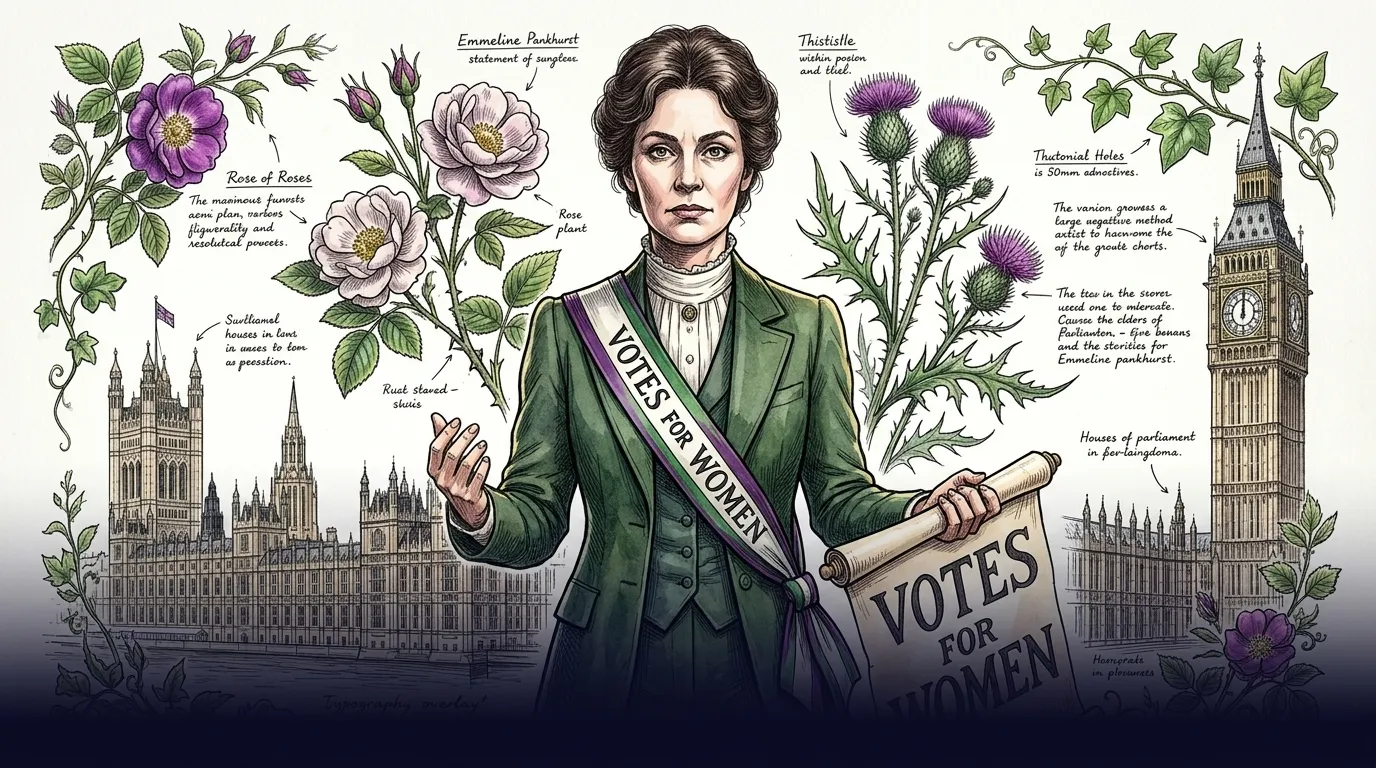
Page 1
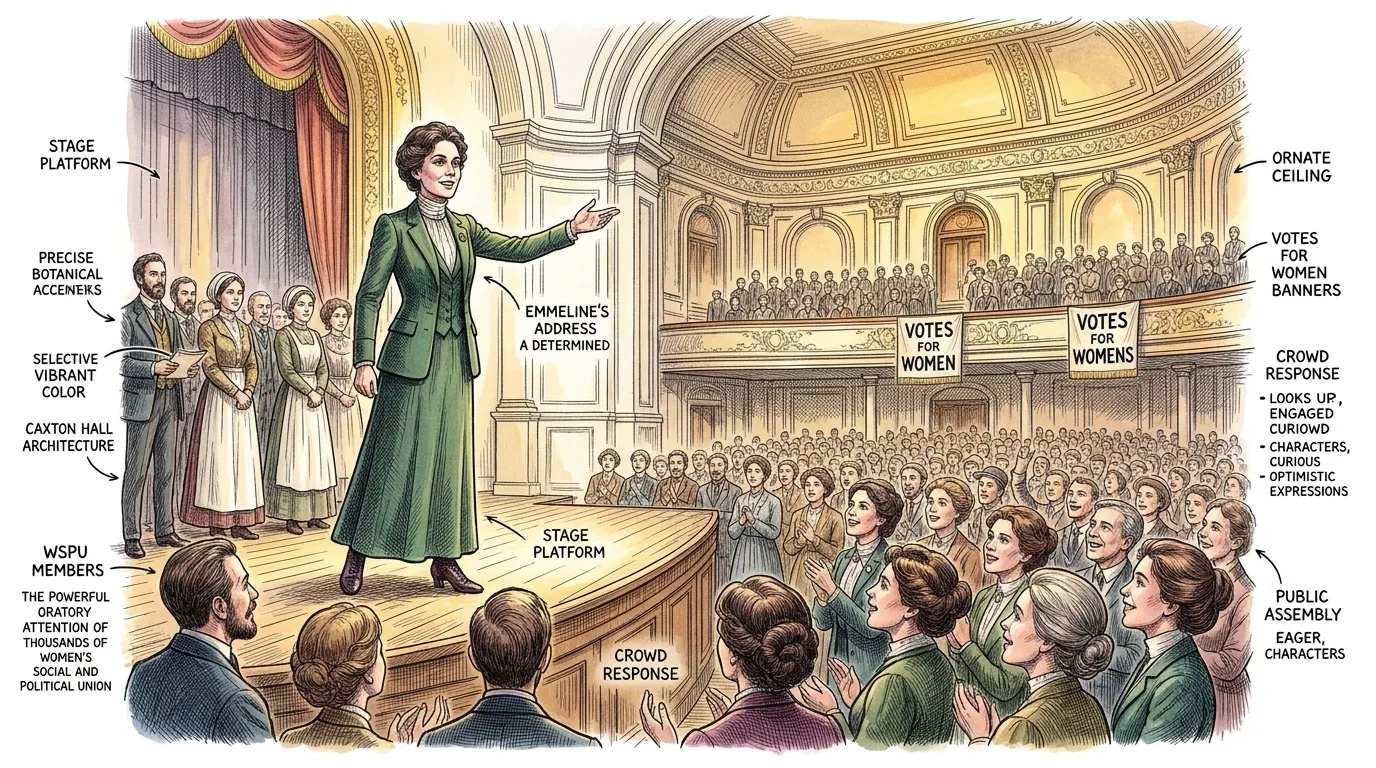
At Caxton Hall, Westminster, in October 1908, Emmeline Pankhurst stood before a vast, expectant assembly. The air crackled with defiance. She had openly declared her intent to 'rush' the Houses of Parliament, challenging a direct government prohibition. As thousands of Women's Social and Political Union members gathered, prepared for confrontation, Pankhurst's address solidified the WSPU's strategy of direct action, fundamentally altering the landscape of British political protest.
Biographical Fact: Emmeline Pankhurst's public declaration to defy the government by 'rushing' Parliament was a calculated act of civil disobedience, moving the suffrage movement from polite petitioning to direct confrontation. The event led to her first significant imprisonment for inciting public disorder.
Page 2
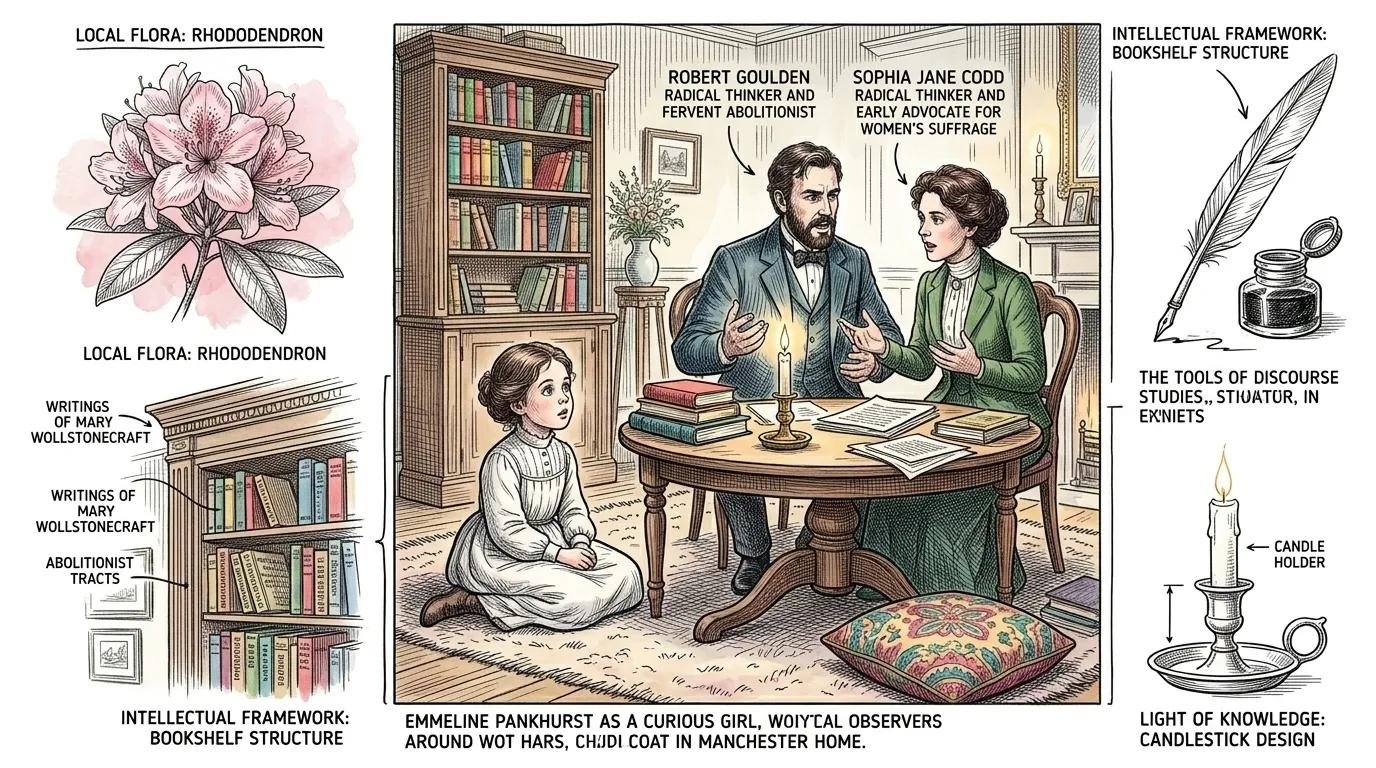
Emmeline Goulden's early life in Manchester was steeped in radical politics. Her parents, Robert Goulden and Sophia Jane Codd, were fervent abolitionists and early advocates for women's suffrage. From her childhood, Emmeline observed impassioned discussions and political meetings, absorbing the principles of social justice and equality. This environment cultivated a deep-seated conviction that fueled her later uncompromising resolve.
Biographical Fact: Emmeline Pankhurst's political education began at home. Her parents, Robert Goulden and Sophia Jane Codd, were radical thinkers who championed abolition, women's rights, and parliamentary reform, instilling in her an early commitment to social justice.
Page 3
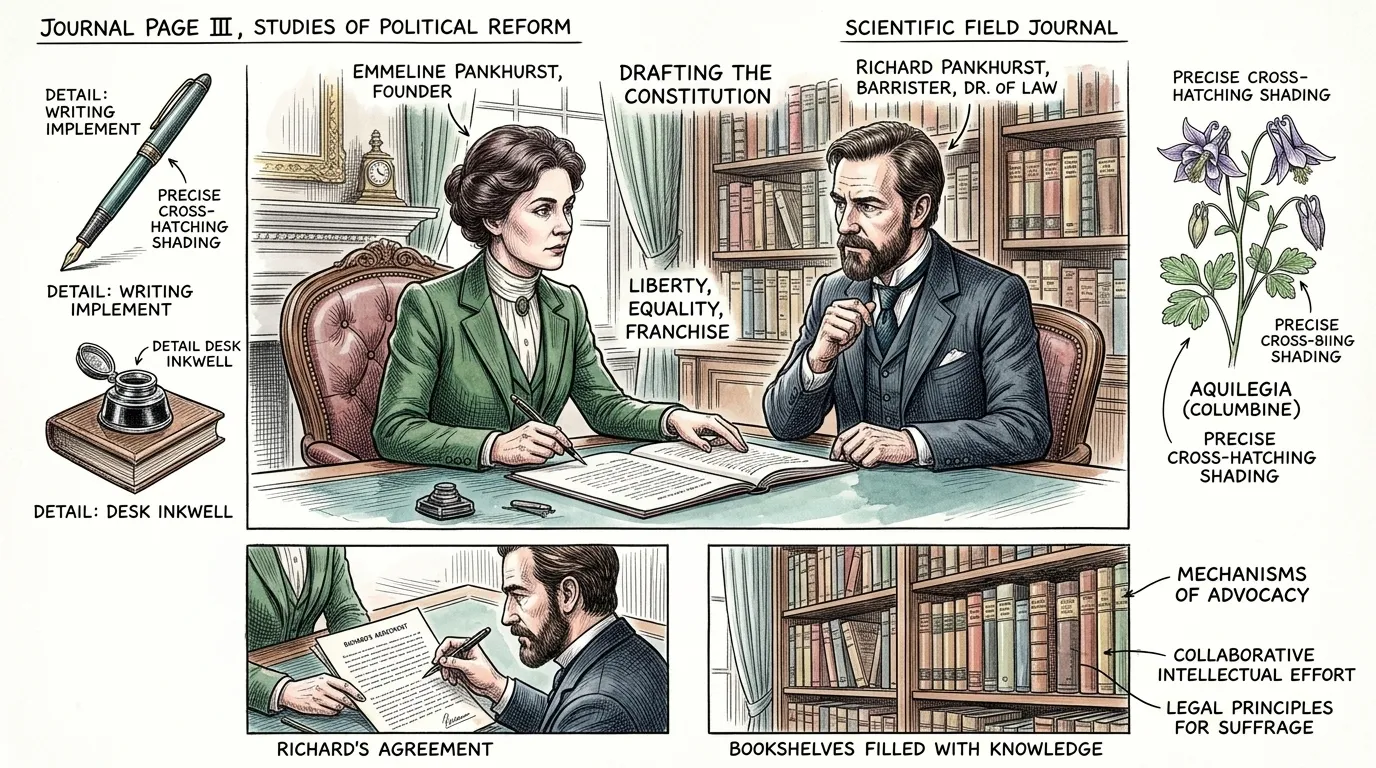
In 1889, Emmeline, now Emmeline Pankhurst, channeled her early convictions into tangible action by co-founding the Women's Franchise League alongside her husband, Richard Pankhurst. This organization sought to extend voting rights to all women, including married women, a more radical stance than many contemporary suffrage groups. She began to forge her skills in political organization and advocacy, moving beyond observation to active leadership.
Biographical Fact: The Women's Franchise League, founded by Emmeline and Richard Pankhurst, was a progressive organization that advocated for suffrage for all women, including married women, a more inclusive demand than other suffrage movements of the time.
Page 4
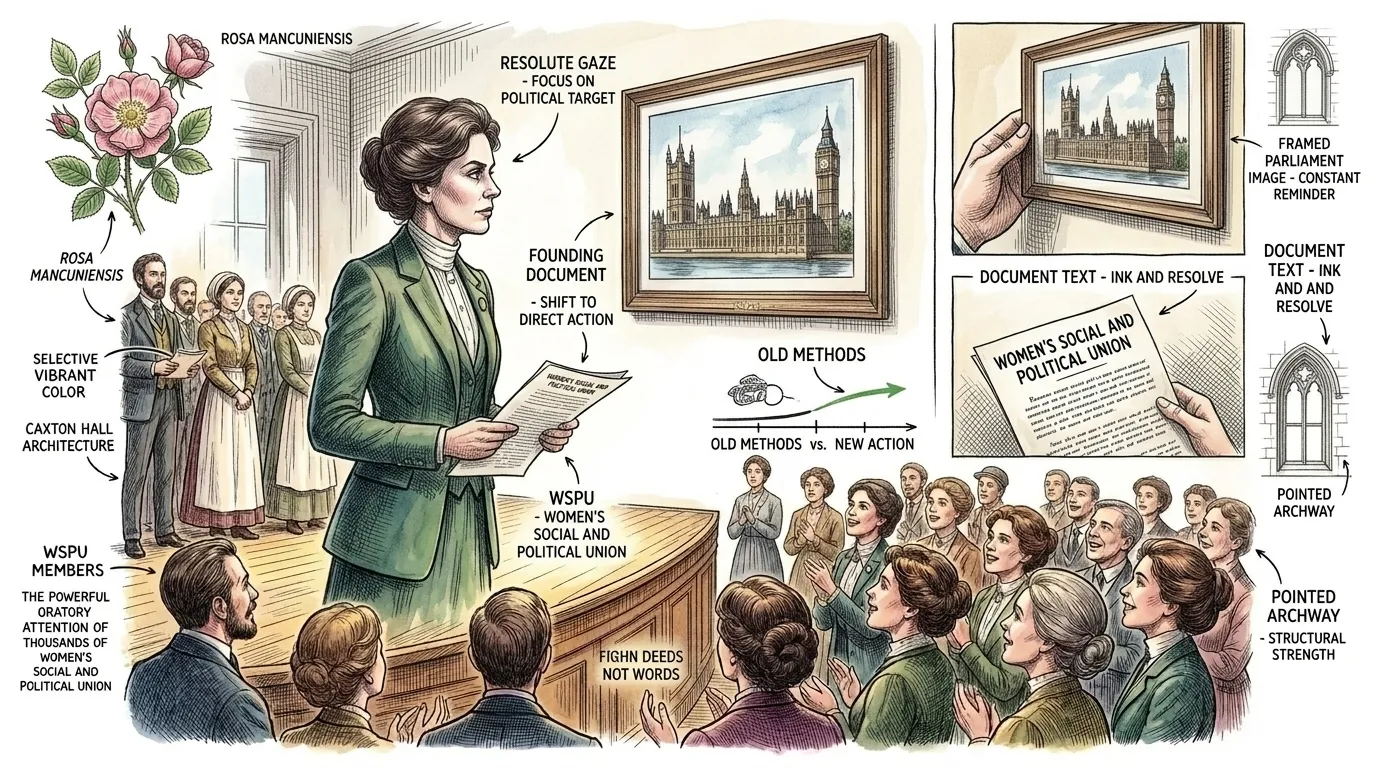
The slow pace of parliamentary reform and the perceived inadequacy of existing suffrage societies eventually led Emmeline Pankhurst to a critical decision. In October 1903, disillusioned with traditional political avenues, she founded the Women's Social and Political Union (WSPU) in her Manchester home. This marked a seismic shift from polite persuasion to a militant, 'deeds not words' approach, believing that only direct action could compel change.
Biographical Fact: Frustrated by decades of inaction, Emmeline Pankhurst established the WSPU, an organization distinct from existing suffrage groups due to its commitment to militant tactics. This moment in her home signaled a new, more confrontational era for women's suffrage.
Page 5
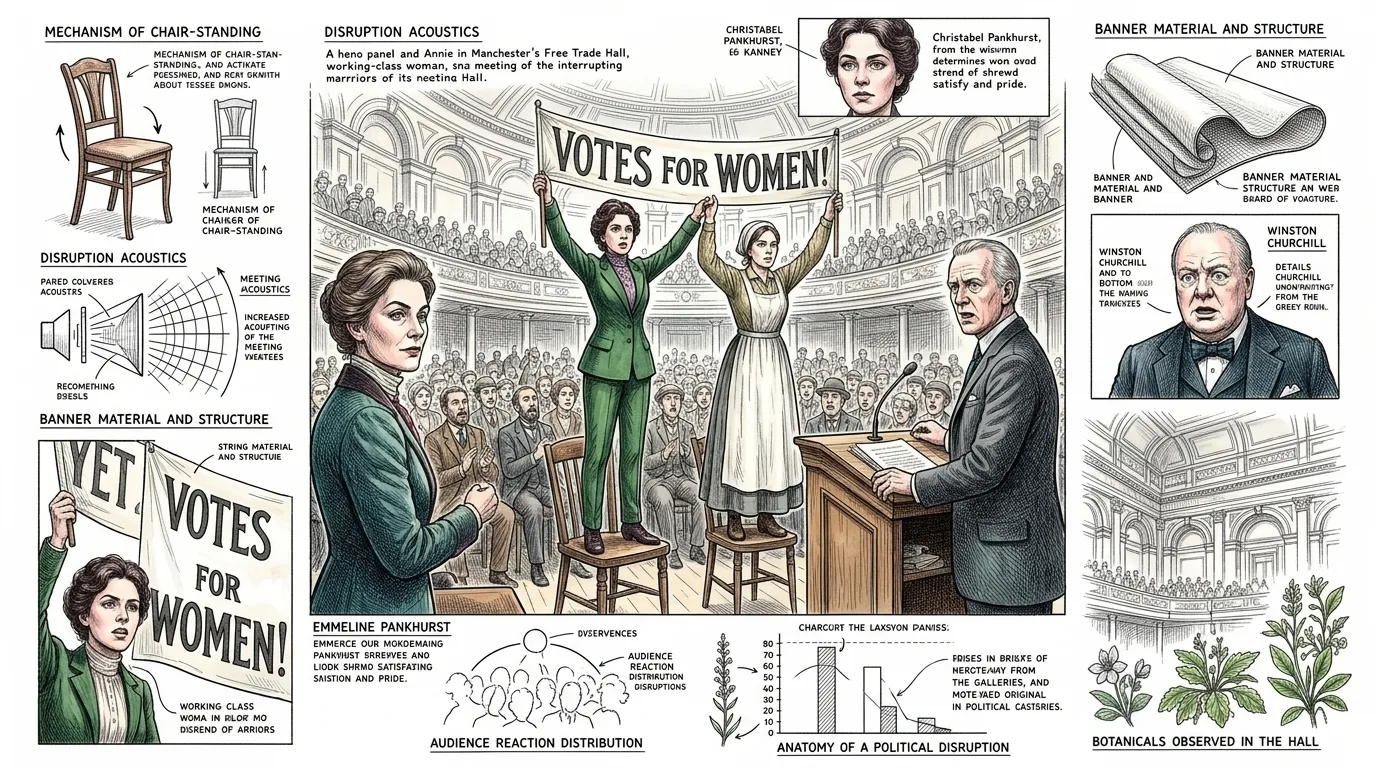
The WSPU's militant strategy ignited at Manchester's Free Trade Hall in October 1905. During a Liberal Party meeting, Emmeline's daughter Christabel Pankhurst and activist Annie Kenney disrupted a speech by Winston Churchill and Sir Edward Grey, demanding 'Votes for Women!' Their subsequent arrest and imprisonment for assault and obstruction, orchestrated by Emmeline, became a national sensation. It was the WSPU's deliberate act of confrontation, proving 'deeds not words' was a living creed.
Biographical Fact: The arrest of Christabel Pankhurst and Annie Kenney at the Free Trade Hall marked the WSPU's public debut of militant tactics. It was a calculated provocation designed by Emmeline to force the issue of women's suffrage onto the national agenda through direct action and media attention.
Page 6
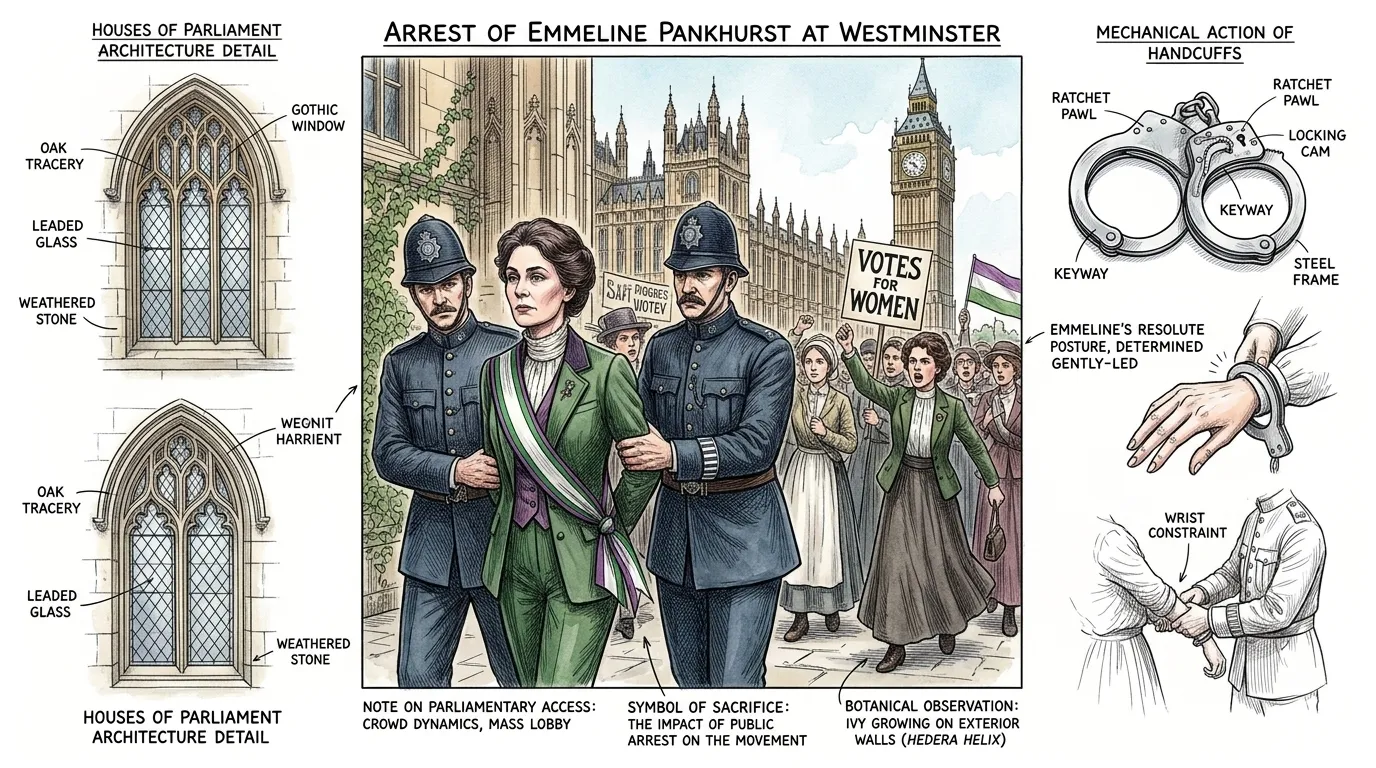
Emmeline Pankhurst did not merely direct militancy; she embodied it. In October 1908, she led a 'mass lobby' on Parliament, urging women to defy police orders. This direct challenge to authority, a public call to break the law, resulted in her arrest and a six-week sentence in Holloway Prison. Her imprisonment became a powerful symbol, demonstrating that even the movement's leader was willing to sacrifice her liberty for the cause.
Biographical Fact: Emmeline Pankhurst's arrest for inciting public disorder during a 'mass lobby' of Parliament in 1908 was a crucial moment. It demonstrated her personal commitment to civil disobedience and cemented the WSPU's reputation for unwavering, confrontational activism.
Page 7
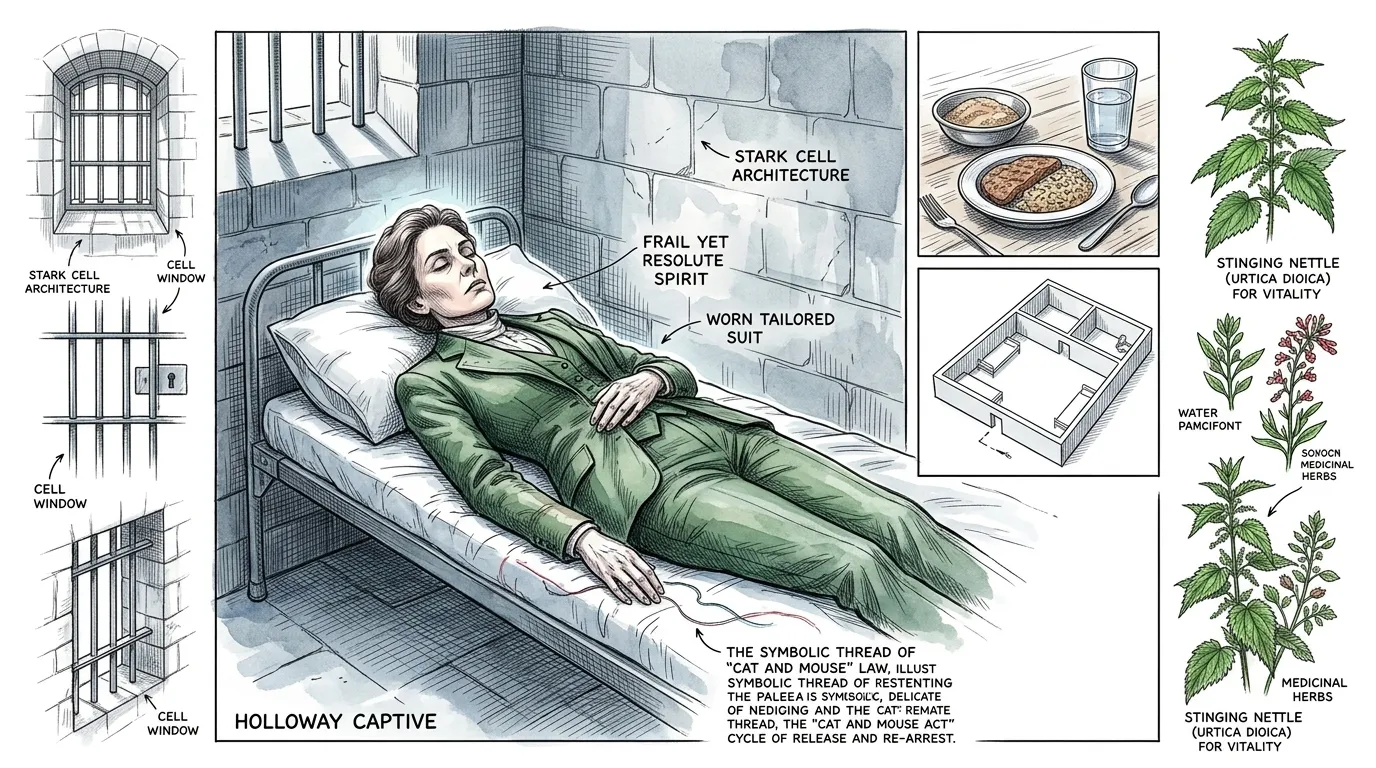
The government's response to WSPU militancy escalated to brutal force-feeding of hunger-striking prisoners. In 1913, under the 'Cat and Mouse Act,' Emmeline Pankhurst endured repeated cycles of imprisonment, hunger strike, and temporary release when her health deteriorated. This ordeal, often in Holloway Prison, showcased her incredible fortitude but also the extreme measures taken by the state to suppress the movement. Each release and re-arrest served only to highlight her unwavering commitment.
Biographical Fact: Emmeline Pankhurst's repeated hunger strikes and the ensuing force-feeding, sanctioned by the 'Cat and Mouse Act,' became a potent symbol of state repression against the suffragettes. Her physical suffering in Holloway Prison galvanized public opinion and showcased her extraordinary endurance.
Page 8
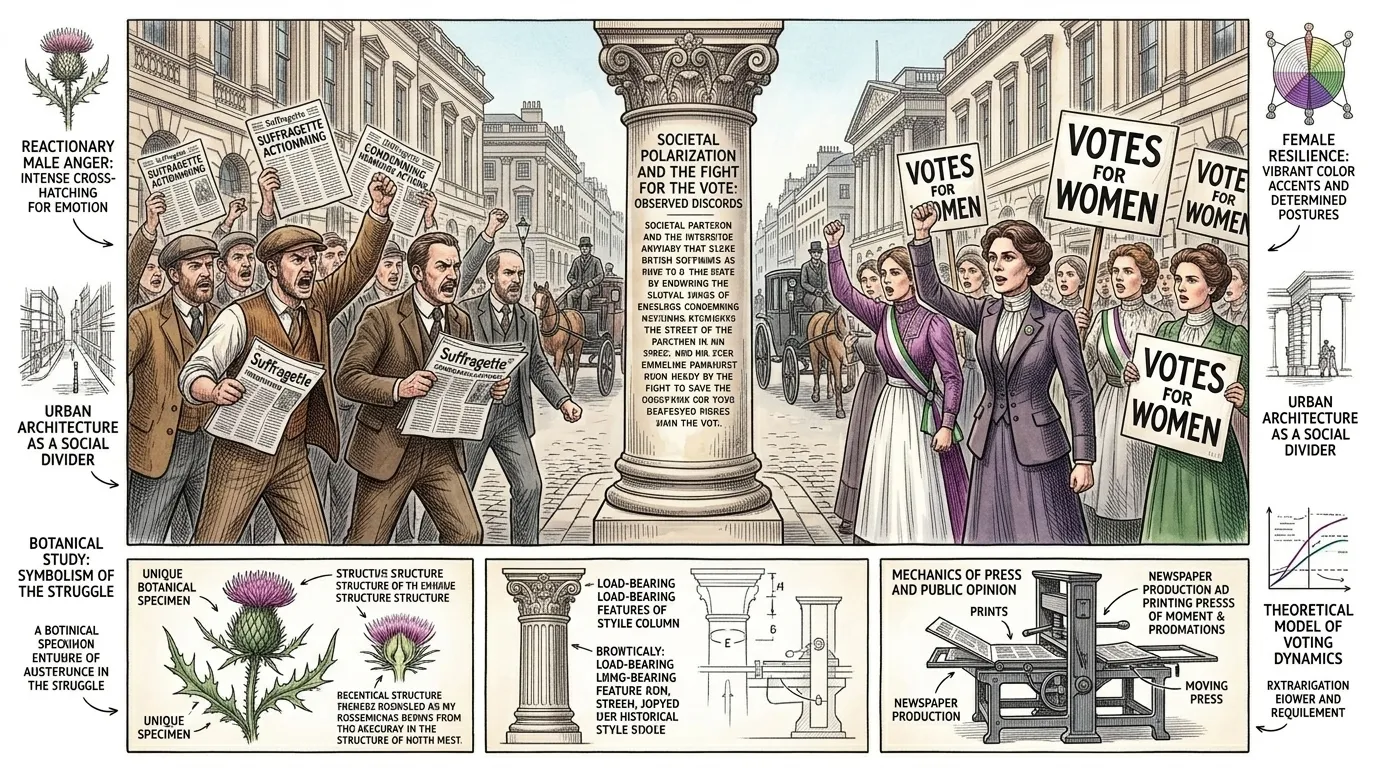
The WSPU's escalating militancy and the government's harsh reaction polarized British society. While some condemned the 'suffragettes' as lawbreakers, others viewed Emmeline Pankhurst and her followers as martyrs fighting for fundamental rights. Public demonstrations became battlegrounds of opinion, with newspapers filled with both outrage and impassioned defense. The struggle for the vote was no longer a fringe issue but a central, divisive debate across the nation.
Biographical Fact: By 1913, the 'Votes for Women' campaign, driven by Emmeline Pankhurst's WSPU, had irrevocably polarized British society. The intense public debate, fueled by militant actions and government repression, thrust women's suffrage to the forefront of national consciousness, making it impossible to ignore.
Page 9
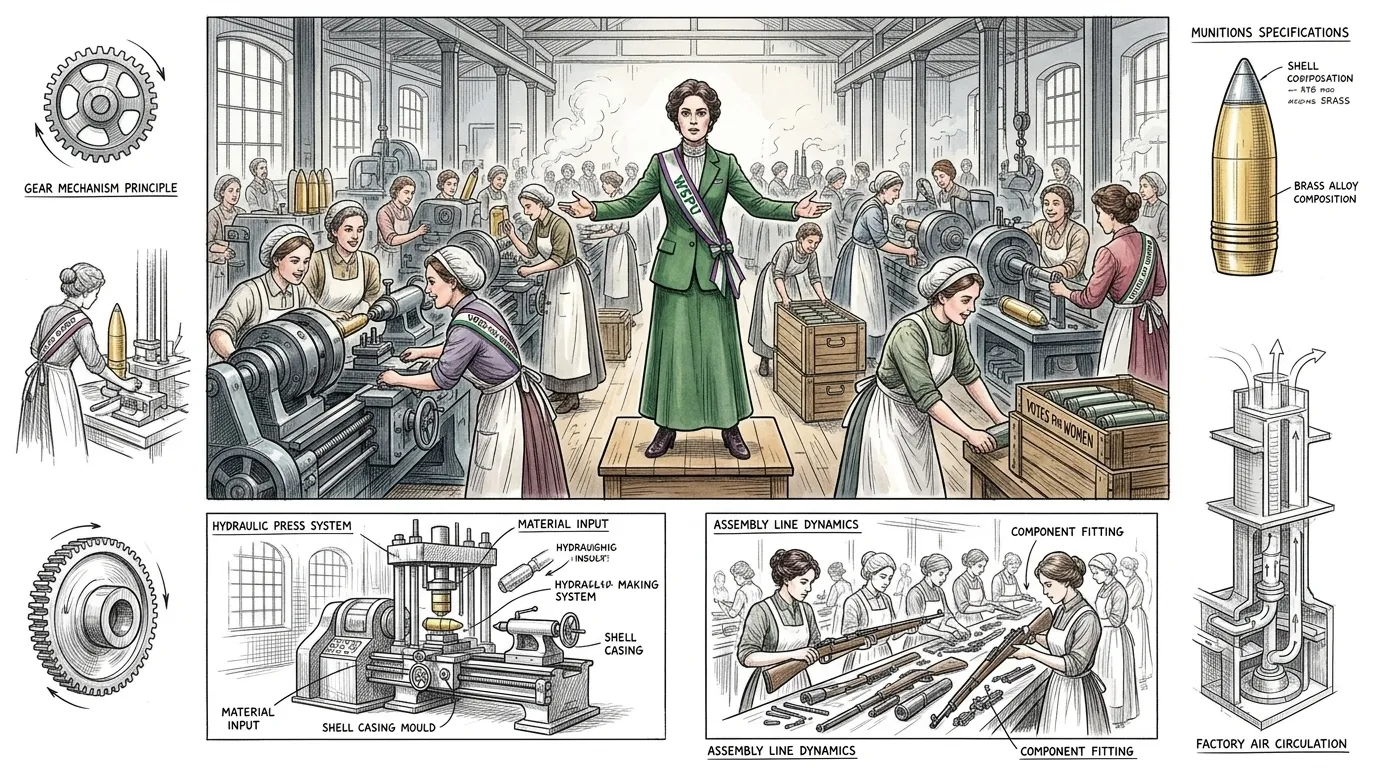
With the outbreak of World War I in August 1914, Emmeline Pankhurst made a swift and decisive strategic pivot. She immediately suspended all militant suffrage activity, redirecting the WSPU's formidable organizing power towards supporting the national war effort. She argued that national unity was paramount, urging women to contribute to war industries. This controversial decision temporarily sidelined the suffrage cause but dramatically demonstrated women's patriotic capabilities, fundamentally altering perceptions.
Biographical Fact: Emmeline Pankhurst's decision to suspend suffrage militancy and rally WSPU members for the war effort in 1914 was a pivotal strategic move. It demonstrated women's capacity for national service, undermining arguments against their political competence and inadvertently strengthening the case for suffrage post-war.
Page 10
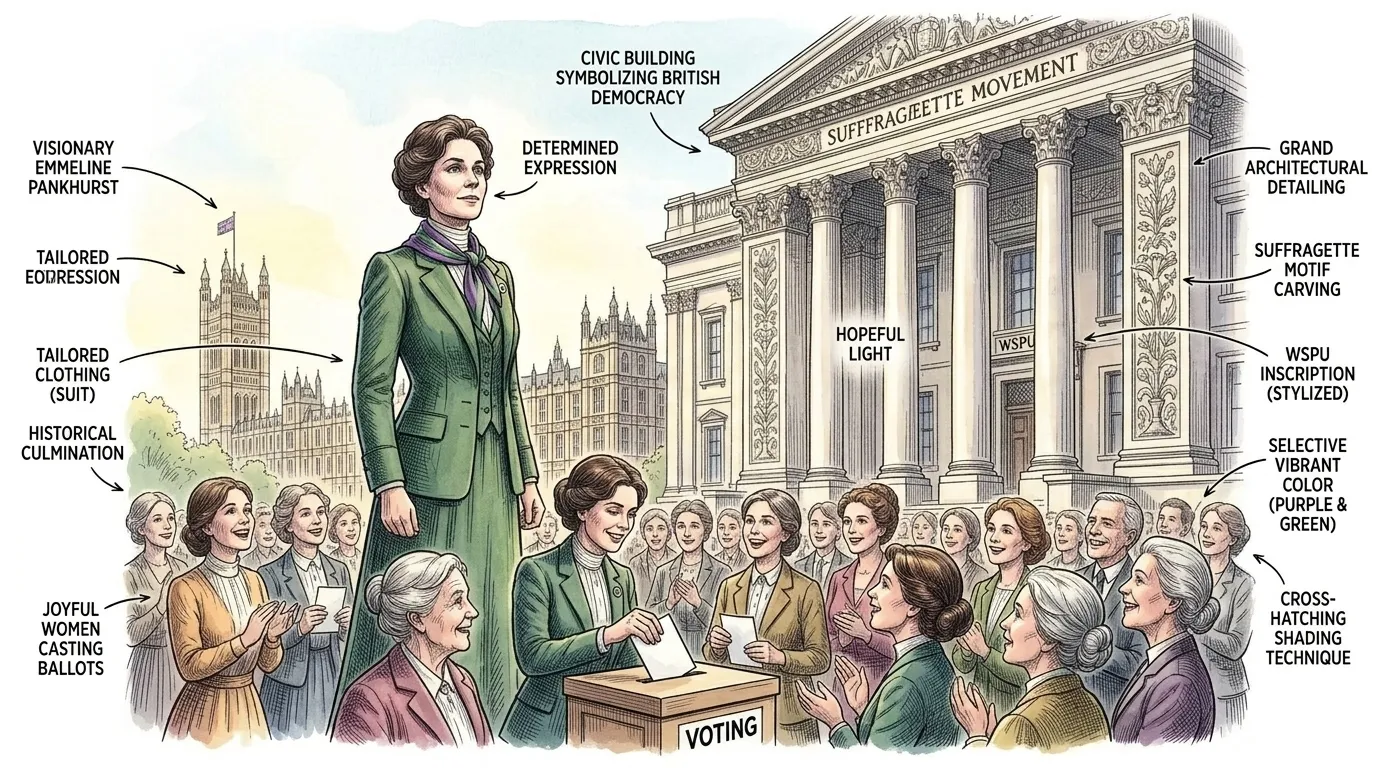
Emmeline Pankhurst's relentless campaign culminated in the Representation of the People Act of 1918, which granted voting rights to women over 30 who met property qualifications. Though she died in 1928, just weeks before the Equal Franchise Act finally extended the vote to all women over 21 on equal terms with men, her indelible impact had reshaped British democracy. Her uncompromising vision and militant tactics forged a path that could not be reversed.
Biographical Fact: Emmeline Pankhurst did not live to see full universal suffrage for women in Britain, but her decades of militant activism created the irresistible momentum for the Representation of the People Act (1918) and the Equal Franchise Act (1928). Her legacy is etched into the foundations of modern democracy.
About this story
- Location: Global
- Audience: general readers
Questions and answers
Read Wonder People on your phone
Wonder People is available on Android. Get Wonder People on Google Play.