Emily Dickinson
Emily Dickinson — an illustrated biography story, set in Global. 10 illustrated pages, free to read on Wonder People.
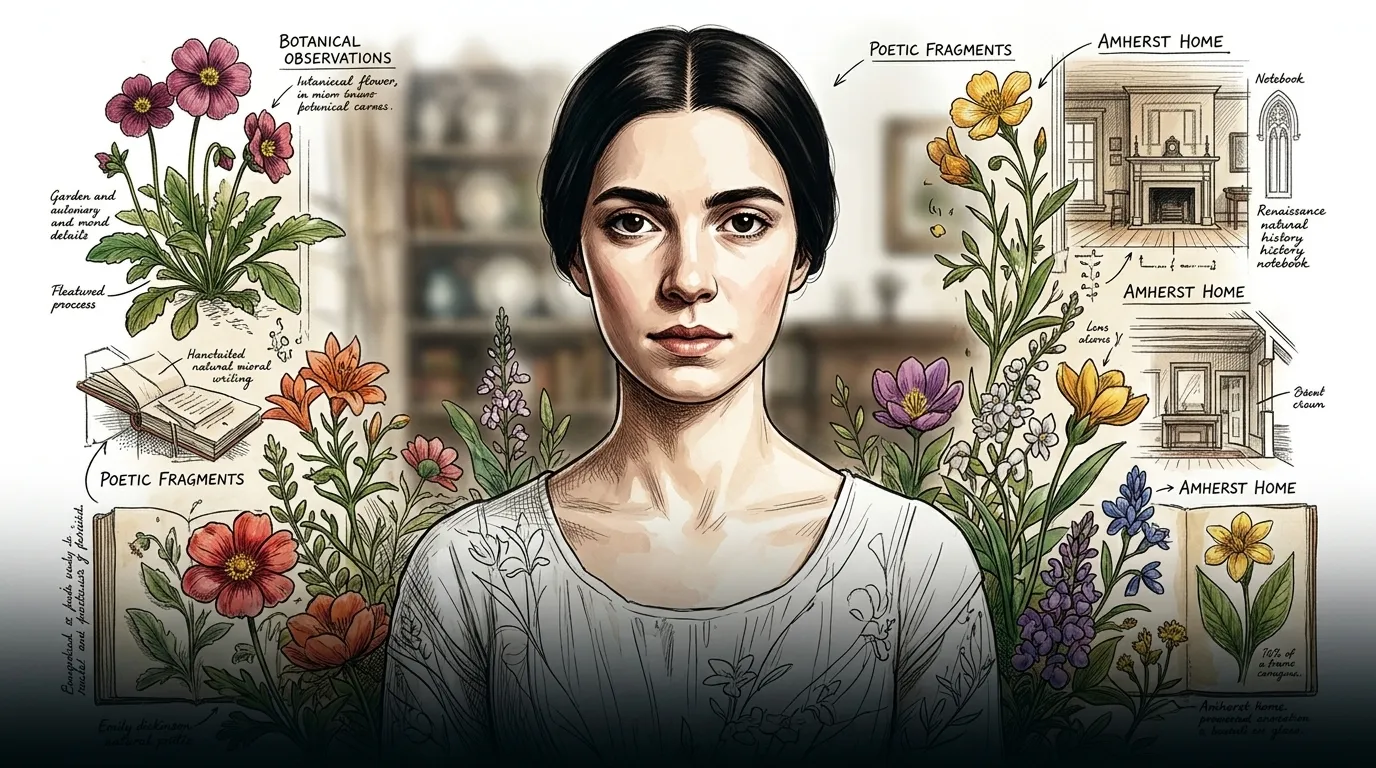
Page 1
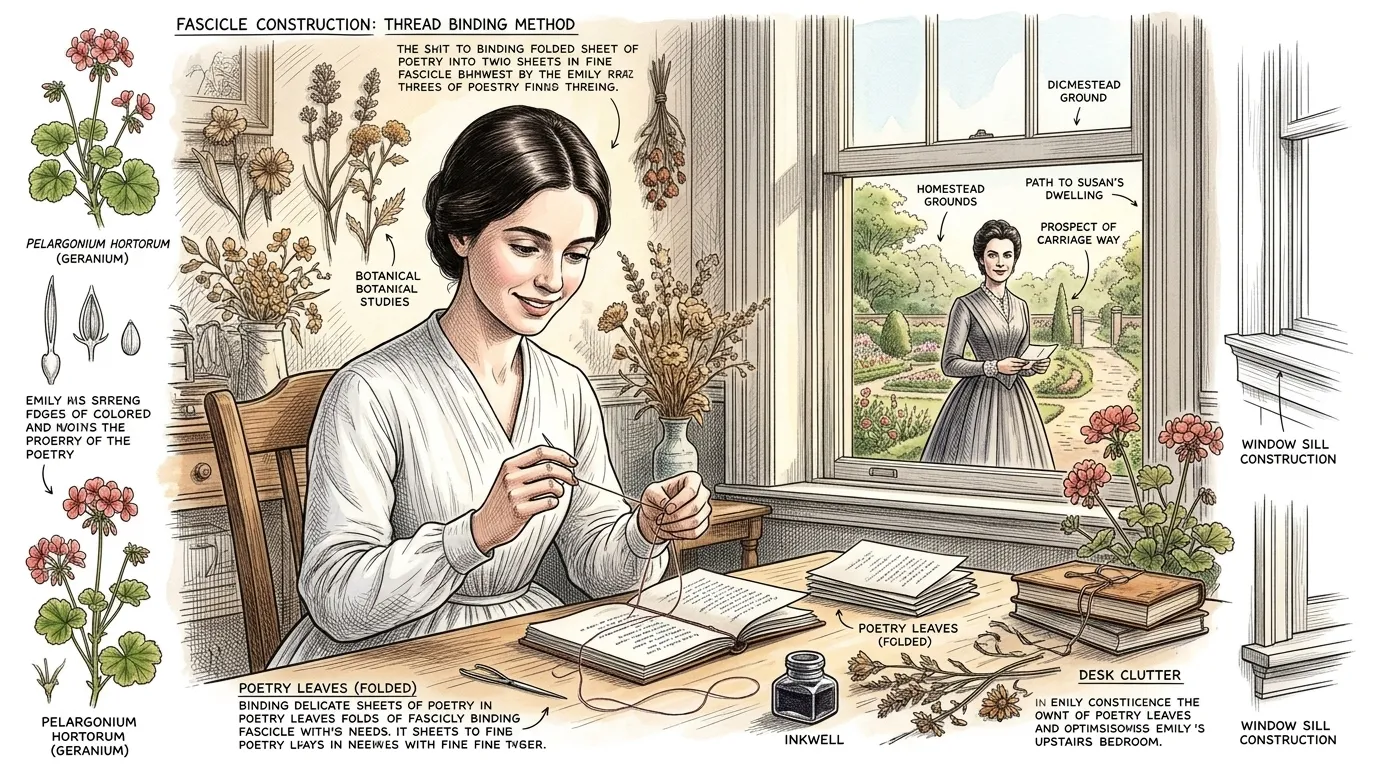
In the quietude of her upstairs bedroom at the Dickinson Homestead in Amherst, Massachusetts, circa 1865, Emily Dickinson meticulously bound her poems. An unparalleled act of private creation, she was assembling the precise manuscript books, known as fascicles, that would eventually define American poetry. No public stage awaited her, only the silent, determined work of a singular mind. Across the property, her beloved sister-in-law, Susan Huntington Gilbert Dickinson, a kindred spirit, would receive only a fraction of these verses, while the literary world, represented by figures like Thomas Wentworth Higginson, remained entirely unaware of the more than 1,800 poems and forty distinct fascicles being painstakingly preserved. This solitary act of compilation, far removed from public acclaim, formed the bedrock of her monumental, yet then unknown, legacy.
Page 2
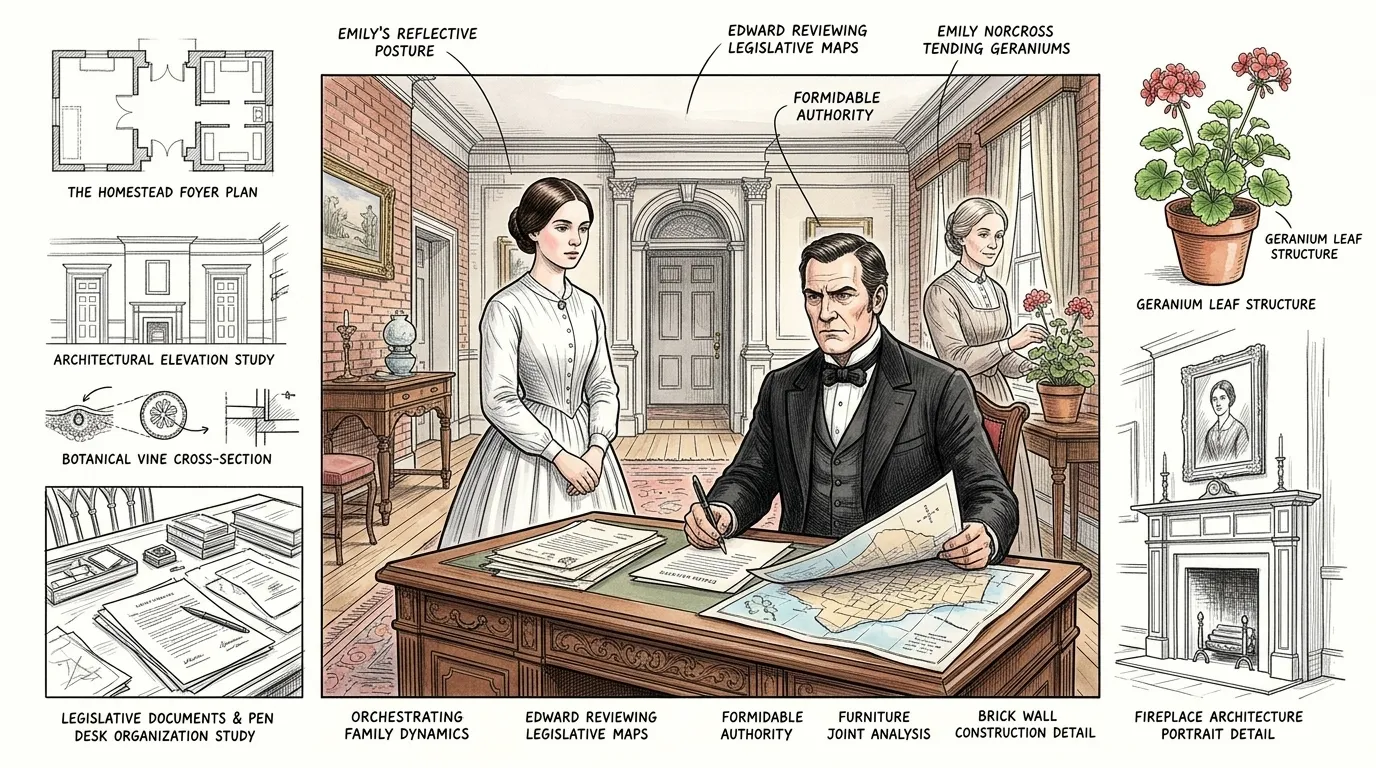
Emily Dickinson's identity was inextricably linked to Amherst, Massachusetts, a town shaped by academic rigor and Puritan legacy. Born in 1830 into a prominent family, her father, Edward Dickinson, was a formidable lawyer, treasurer of Amherst College, and a state legislator. Her mother, Emily Norcross Dickinson, was a more reserved figure. The Dickinson Homestead, a grand brick house, was not merely a residence but a crucible of intellectual activity and social expectation. This environment provided a complex foundation: a deep connection to New England's intellectual traditions alongside the rigid social conventions she would later increasingly challenge through her withdrawal and artistic pursuit.
Page 3
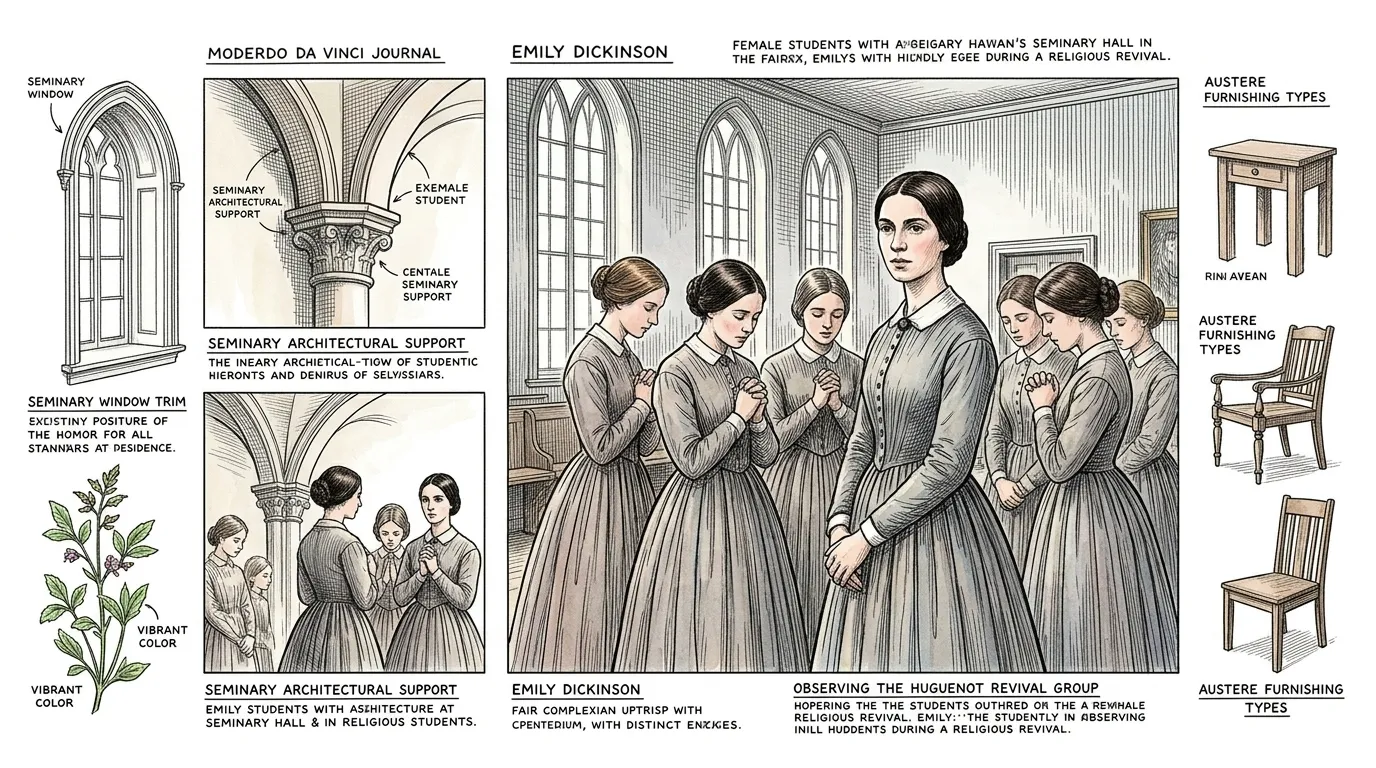
In 1847, Emily enrolled at Mount Holyoke Female Seminary, an institution renowned for its rigorous academic curriculum and evangelical fervor. Here, amidst strict rules and intense religious revivals, Emily wrestled with conformity. She stood apart, notably refusing to declare herself 'found for Christ' during revival meetings, a pivotal act of independent conviction. This refusal set her on a path distinct from her peers, signaling an early assertion of her own spiritual and intellectual autonomy. The seminary, intended to shape young women into pious educators, instead clarified Emily's unique, unyielding spirit, marking a decisive moment in her self-definition.
Page 4
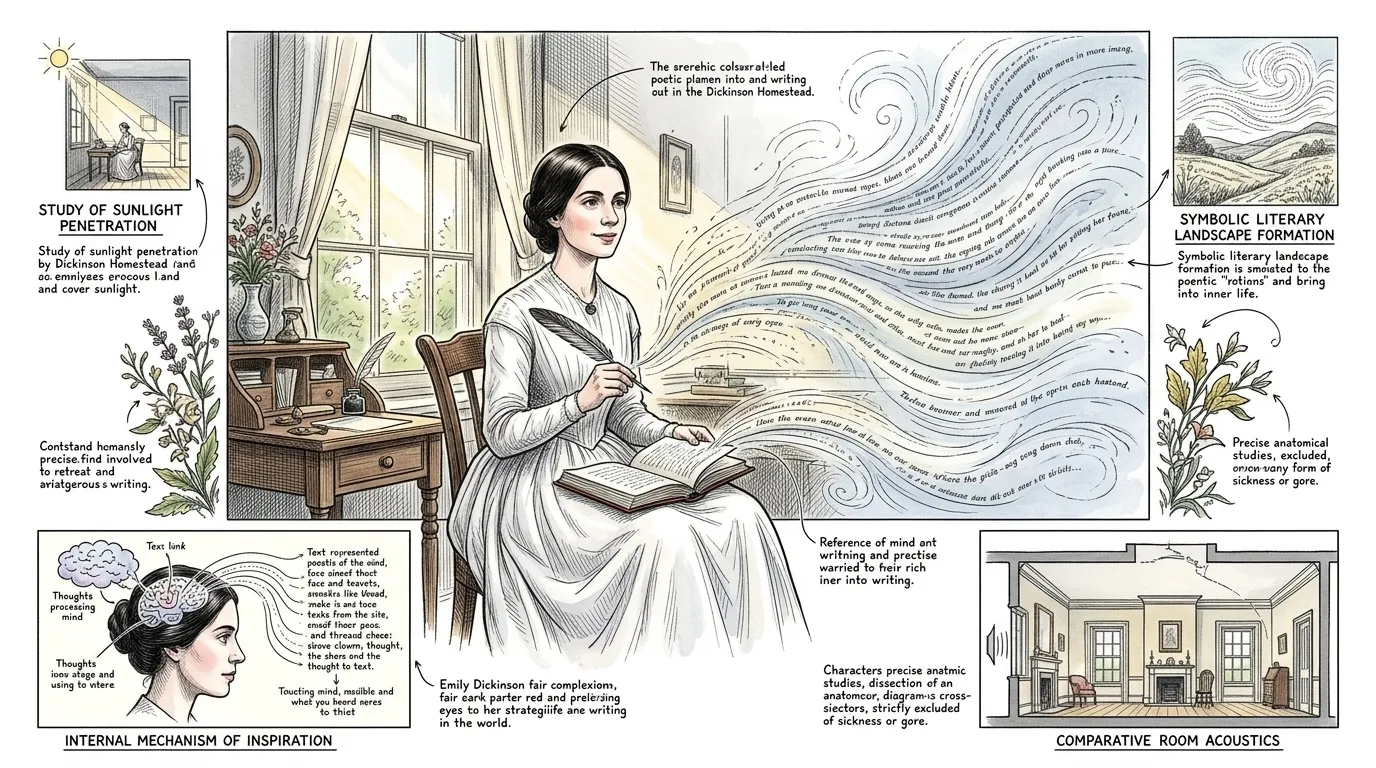
By the late 1850s, Emily Dickinson began a deliberate withdrawal from the social conventions of Amherst. She increasingly confined herself to the Homestead, cultivating an intense inner life and rejecting traditional expectations of marriage and domesticity. This was not merely reclusiveness; it was a conscious choice, a strategic retreat to preserve an uninterrupted interior space essential for her radical poetic experimentation. This decision, baffling to many of her contemporaries, was the definitive act that allowed her to forge her distinct voice, turning her private world into an expansive universe for her art. The world outside the Homestead walls now largely faded from her direct engagement, replaced by the boundless landscapes of language.
Page 5
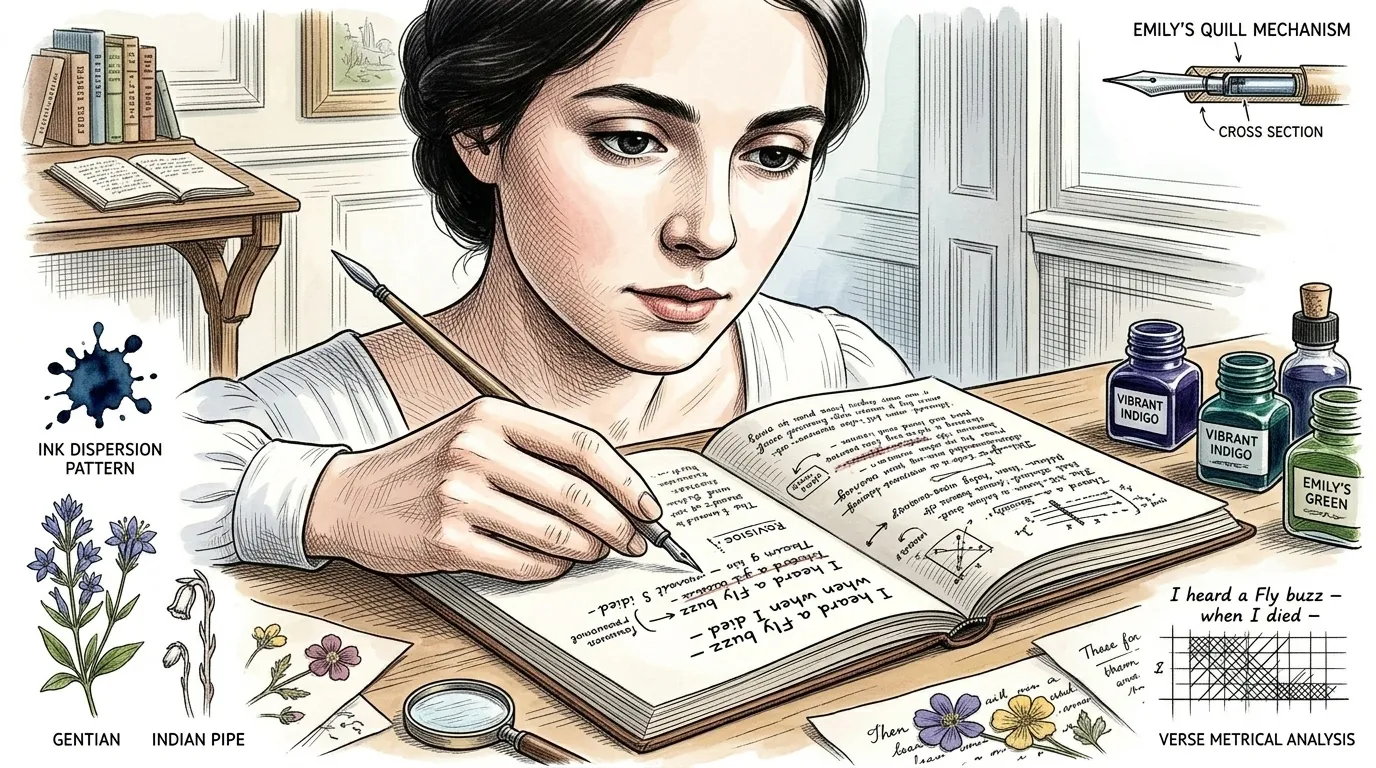
Within the sanctuary of her rooms, Emily Dickinson's poetic voice intensified. She filled notebooks and loose sheets with verse, meticulously revising and refining her craft. Her poems defied the sentimental traditions of the era, experimenting with meter, slant rhyme, and cryptic imagery. This period, particularly in the early 1860s, saw her most prolific output, a torrent of creativity that few knew existed. This was her laboratory, where language was dissected and reassembled, creating a singular aesthetic that would later shock and captivate readers. This unseen labor, the relentless pursuit of artistic truth in solitude, was the crucible where her enduring impact was forged.
Page 6
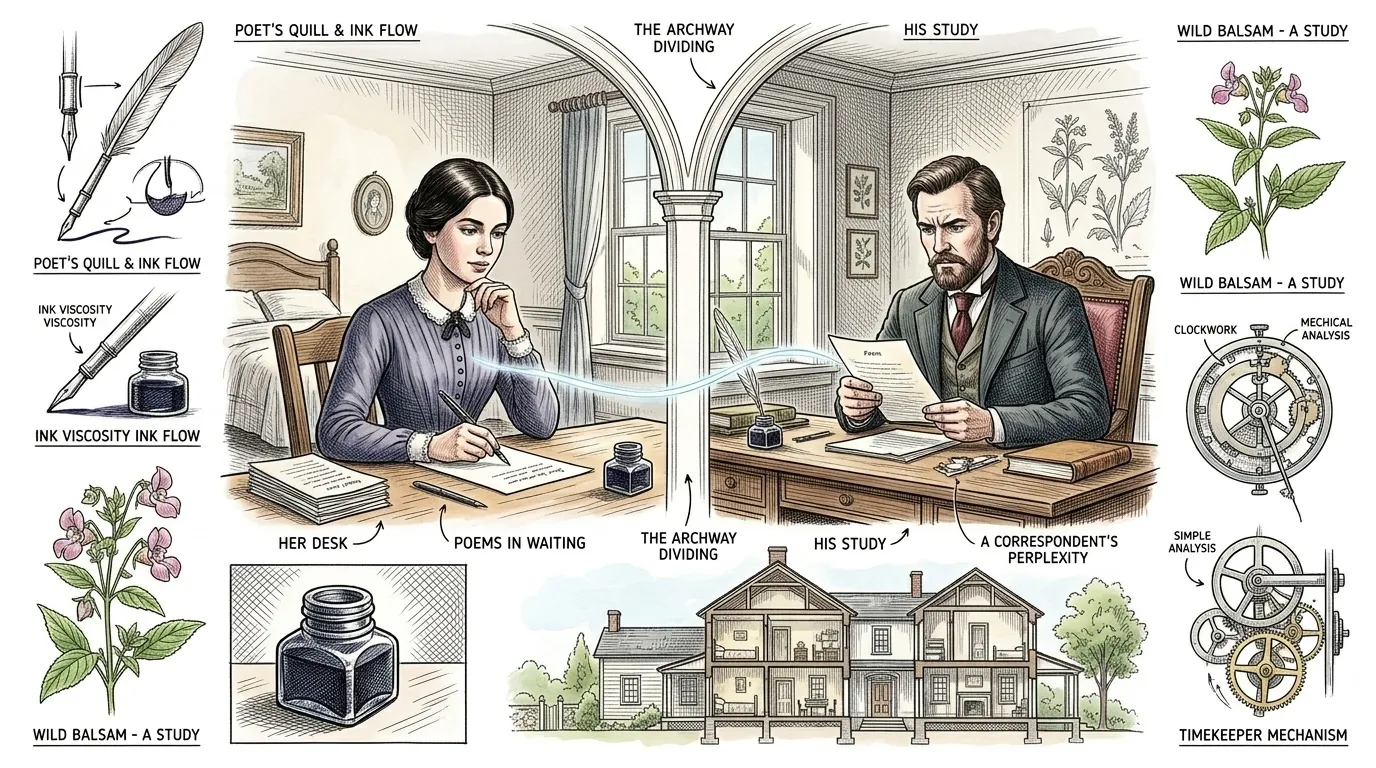
In 1862, Emily Dickinson initiated a correspondence with Thomas Wentworth Higginson, a prominent literary critic and abolitionist, sending him four poems and asking, 'Are you too deeply occupied to say if my Verse is alive?' She sought not publication, but validation, a 'Preceptor' to guide her nascent talent. Higginson, accustomed to conventional verse, was perplexed yet intrigued by her unconventional style. His cautious advice, though appreciated, ultimately highlighted the chasm between her radical vision and the literary standards of her time. This exchange was a critical test of her artistic conviction, affirming her unique path despite external incomprehension.
Page 7
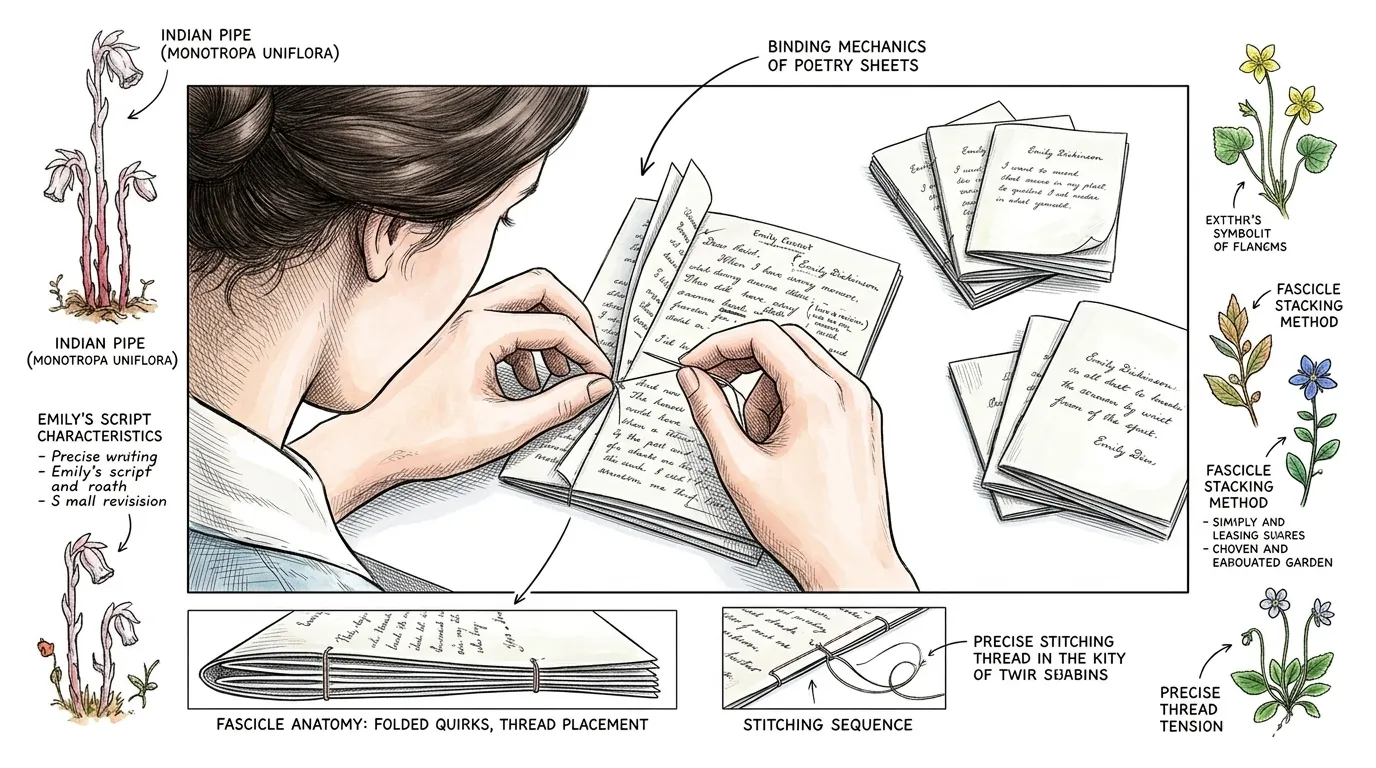
As her poetic output swelled, Emily Dickinson developed a highly personal system for organizing her work: the fascicles. She copied poems onto folded sheets of stationery, then stitched them together with string, creating small, hand-sewn booklets. These 40 unique compilations, meticulously arranged and often revised, were her private archive, her personal publications. This wasn't merely storage; it was an artistic decision, a silent declaration of the value and coherence of her vast body of work. Each fascicle represented a carefully constructed universe of thought, a testament to an artistic vision that would not wait for external validation. This systematic preservation ensured her future discovery.
Page 8
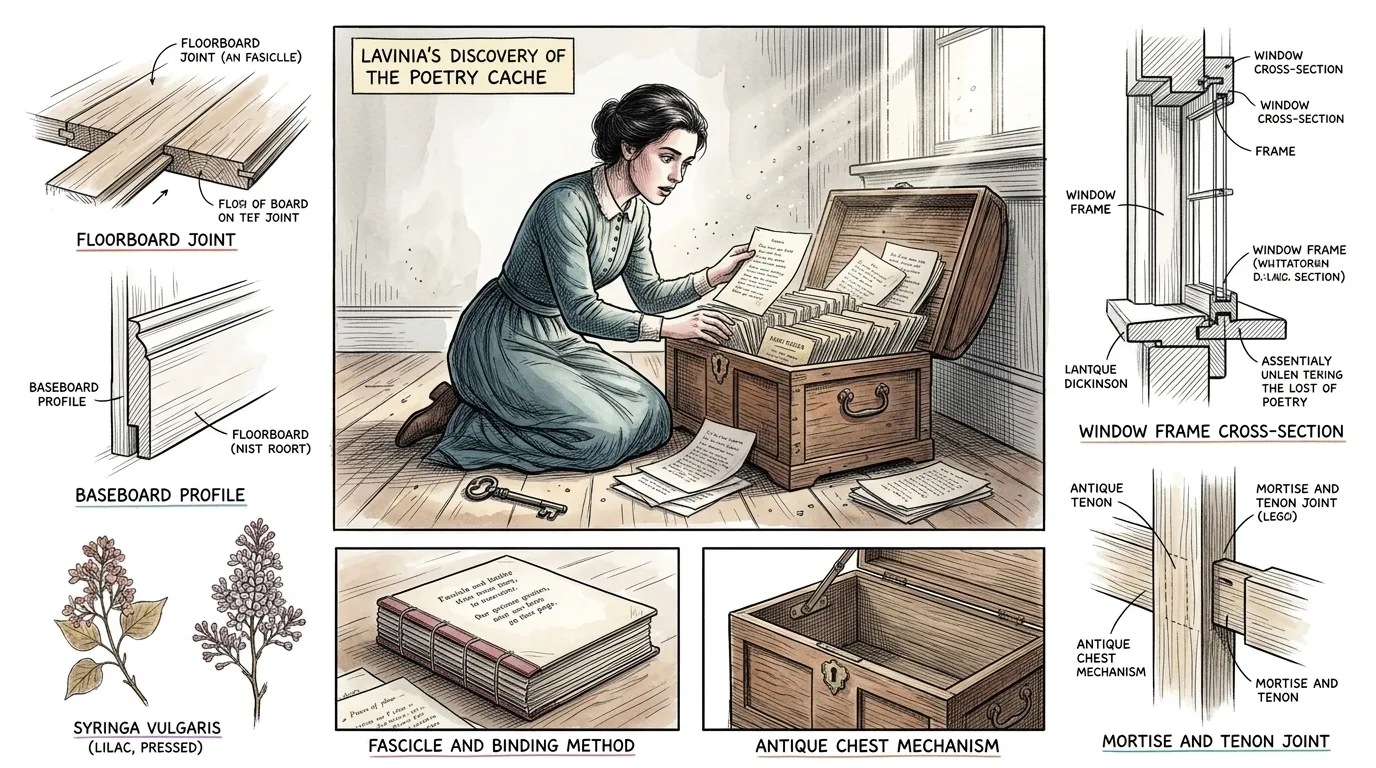
After Emily Dickinson's death in 1886, her younger sister, Lavinia Dickinson, discovered a locked chest containing the vast trove of fascicles and loose poems. Confronted with the immense, unparalleled volume of work, Lavinia immediately understood its significance, despite Emily's wishes for her poems to be destroyed. This discovery was a profound, accidental unveiling, an event that single-handedly shifted the trajectory of American literature. Lavinia's immediate decision to seek publication, defying her sister's private directive, was the critical act that prevented this extraordinary body of work from vanishing forever, initiating Emily's posthumous journey into the public sphere.
Page 9
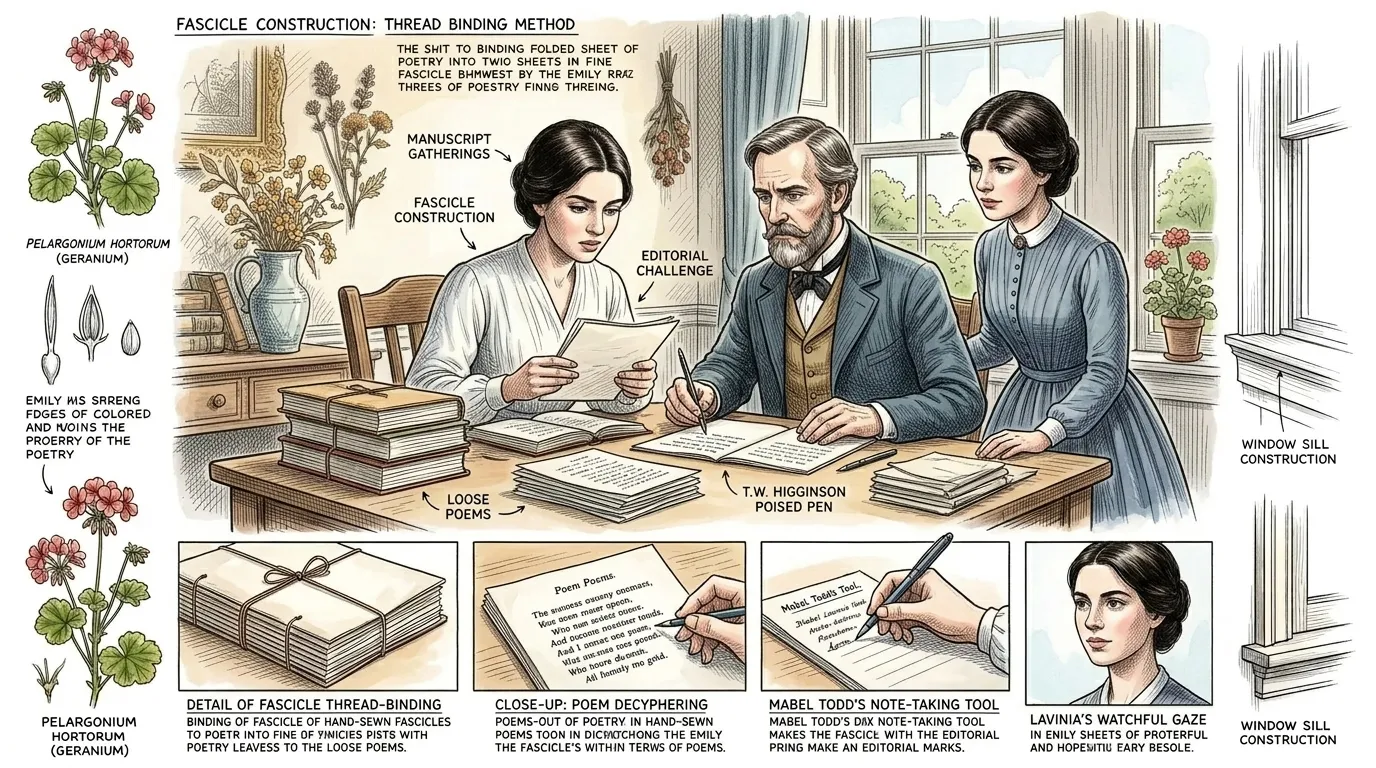
The path to publication was fraught. Lavinia Dickinson enlisted the help of Mabel Loomis Todd, a local intellectual, and Thomas Wentworth Higginson. They faced an immense editorial challenge: Emily Dickinson's unconventional syntax, punctuation, and radical forms defied contemporary publishing norms. Todd and Higginson edited heavily, attempting to 'regularize' her verse for public consumption, a process that both introduced her to the world and, paradoxically, obscured her true artistic intent. The first volume of her 'Poems' appeared in 1890, met with both bewilderment and profound admiration. This crucial, imperfect act of mediation ultimately established her as an inescapable force in American letters, despite the ongoing debate over editorial fidelity.
Page 10
Emily Dickinson, the reclusive poet of Amherst, achieved posthumous immortality. Her work, once considered eccentric, is now celebrated as foundational to modern poetry, influencing generations of writers. Her radical use of language, her exploration of death, immortality, nature, and the self, continues to resonate globally. The initial editorial alterations have been largely reversed by modern scholarship, revealing the stark brilliance of her original compositions. Her impact transcends her lifetime, positioning her as an enduring voice whose quiet revolution reshaped the landscape of literature, proving that the deepest impact can spring from the most profound solitude. Her poems remain alive, eternally questioning and illuminating the human experience.
About this story
- Location: Global
- Audience: general readers
Questions and answers
Read Wonder People on your phone
Wonder People is available on Android. Get Wonder People on Google Play.