Dante Alighieri
Dante Alighieri — an illustrated biography story, set in Global. 10 illustrated pages, free to read on Wonder People.
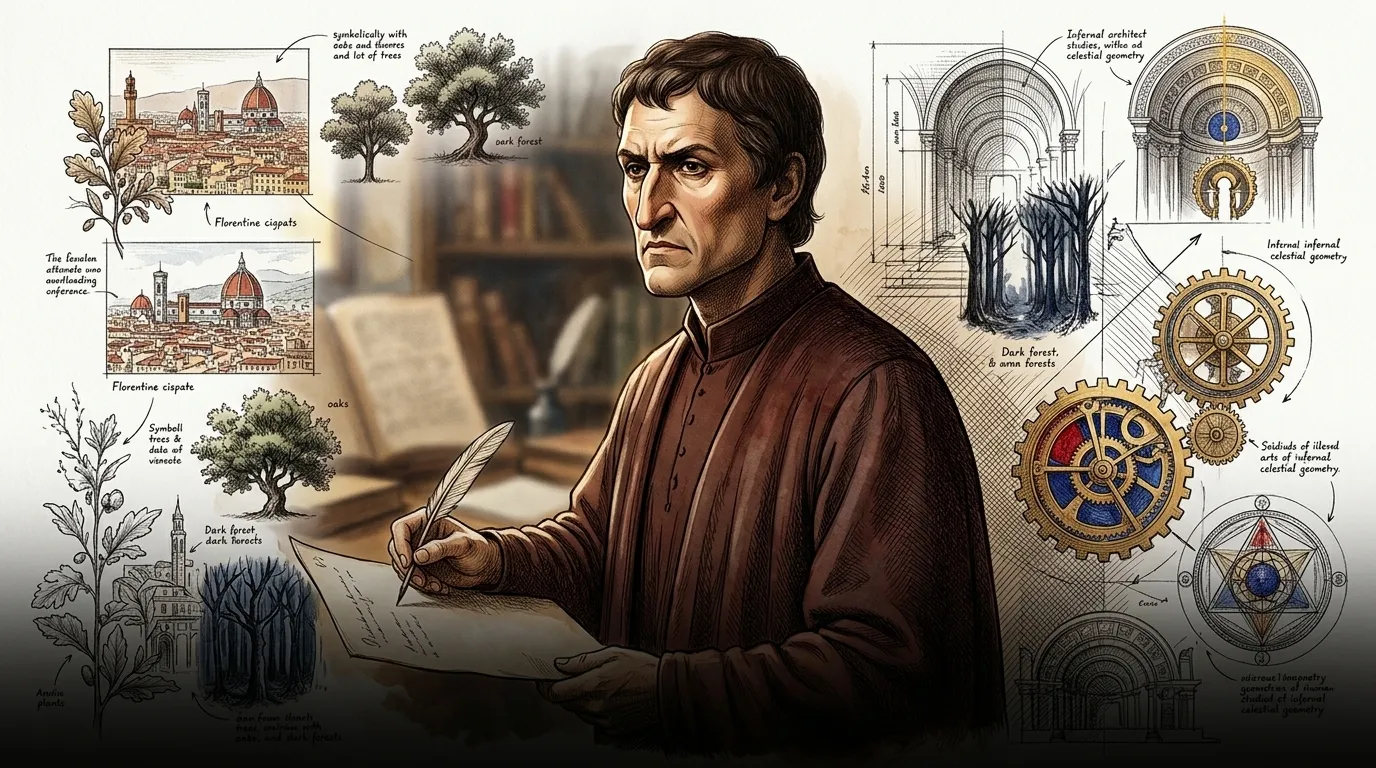
Page 1
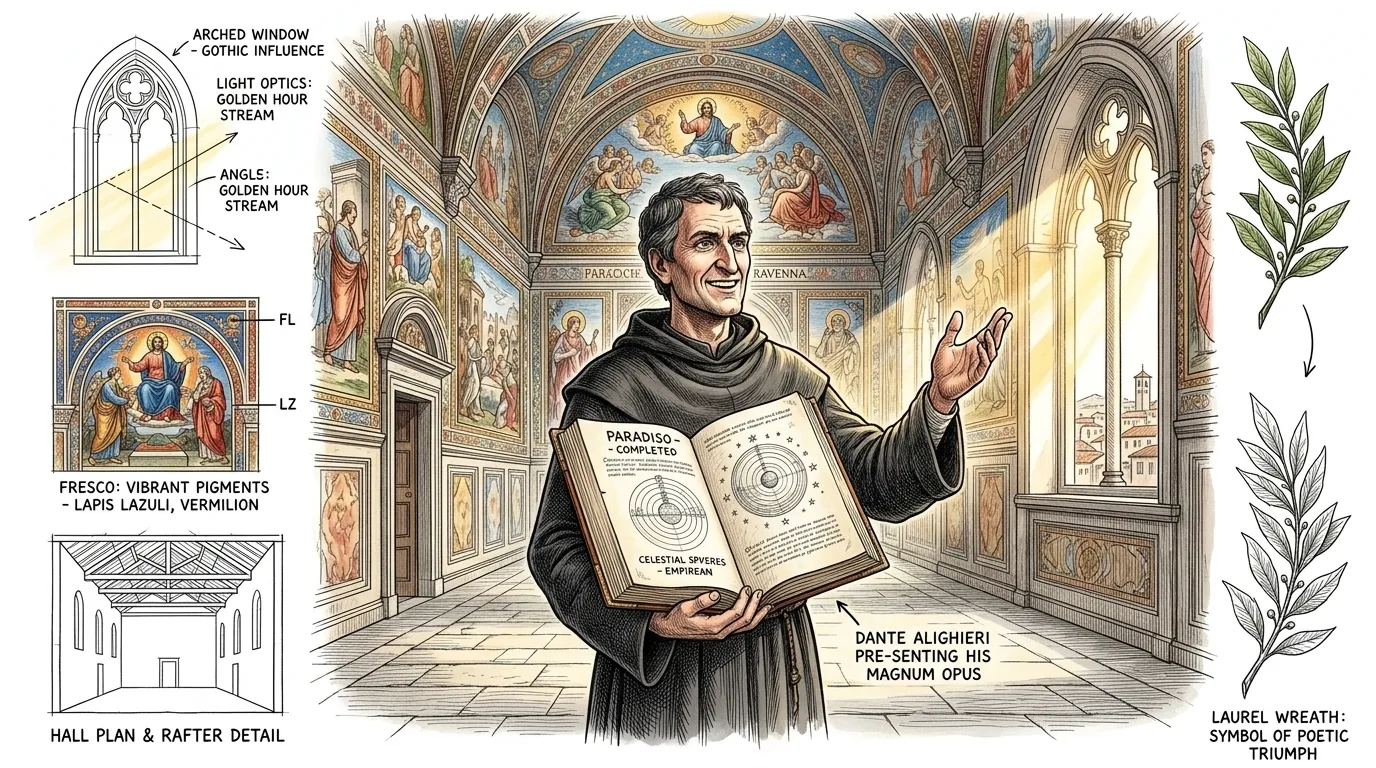
In the vibrant city of Ravenna, in the year 1321, Dante Alighieri presented the completed Cantica of Paradiso, formally concluding The Divine Comedy.
"This work, a monumental journey through the afterlife, would redefine the Italian language and the scope of human imagination. Its completion, spanning over a decade of exile, marked the birth of a literary epoch."
Biographical Fact: Dante Alighieri's Divine Comedy comprises 14,233 lines and became the cornerstone of modern Italian, influencing countless artists and thinkers across centuries.
Page 2
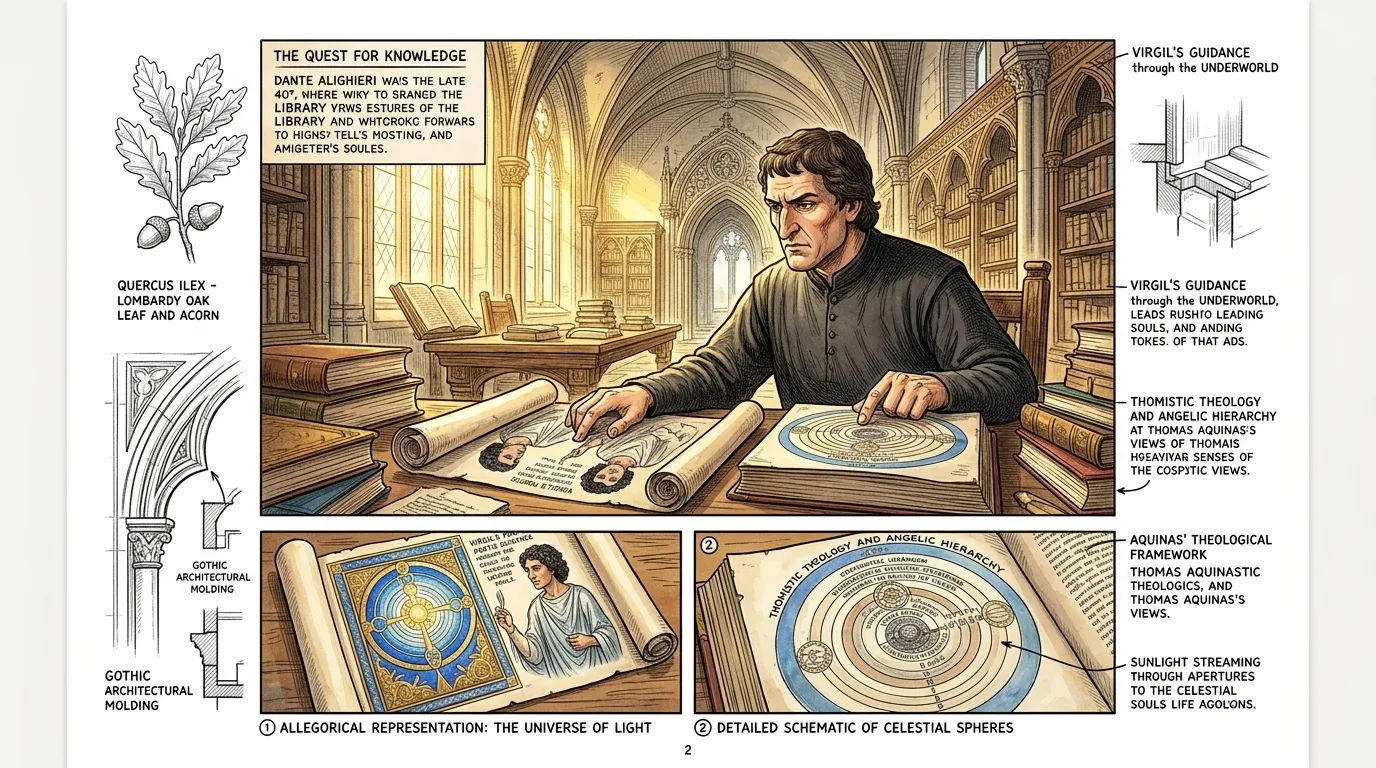
Before exile, Florence sculpted Dante Alighieri, immersing him in classical thought and civic life, igniting his profound intellect.
"He meticulously studied the intricate allegories of Virgil and the theological structures championed by scholastic philosophers like Thomas Aquinas. These frameworks, he believed, were essential for understanding the universe's divine order, a truth he yearned to articulate."
Biographical Fact: Born in Florence in 1265, Dante's early education provided the grounding in classical literature, philosophy, and theology that would later underpin his epic work.
Page 3
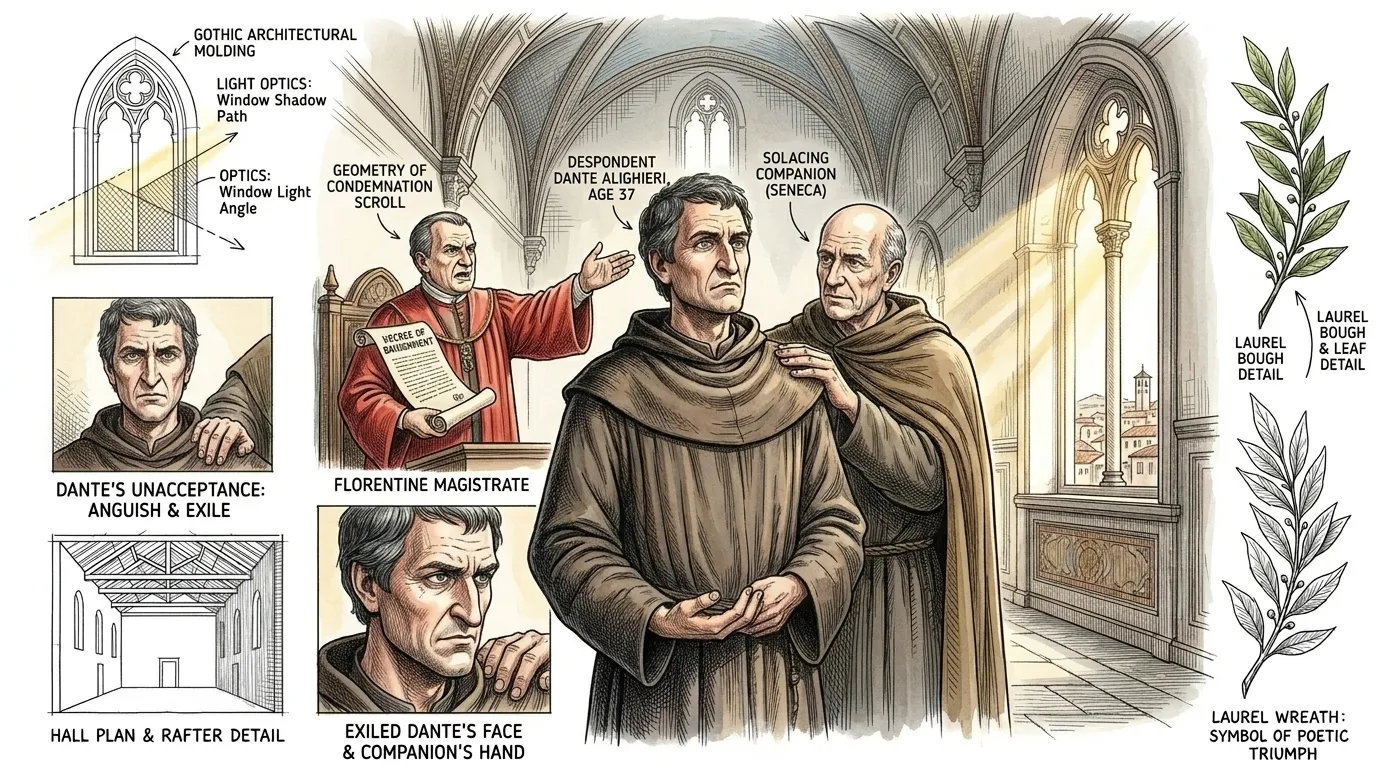
In 1302, Florentine political rivals condemned Dante Alighieri to perpetual exile, stripping him of his property and severing his ties to his beloved city.
"A Florentine magistrate, a stern 50-year-old man in official robes, declared, 'The city will not suffer those who undermine its peace.' A despondent Dante, then 37, heard the news, realizing this catastrophic decree would force him into an itinerant existence. His friend, a scholarly 40-year-old companion in a simple brown cloak, placed a hand on his shoulder, observing, 'As the Roman philosopher Seneca once wrote, 'Every new beginning comes from some other beginning's end.''"
Biographical Fact: Dante's political involvement with the White Guelphs led to his banishment by the Black Guelphs, a life-altering event that profoundly shaped his perspective and literary output.
Page 4
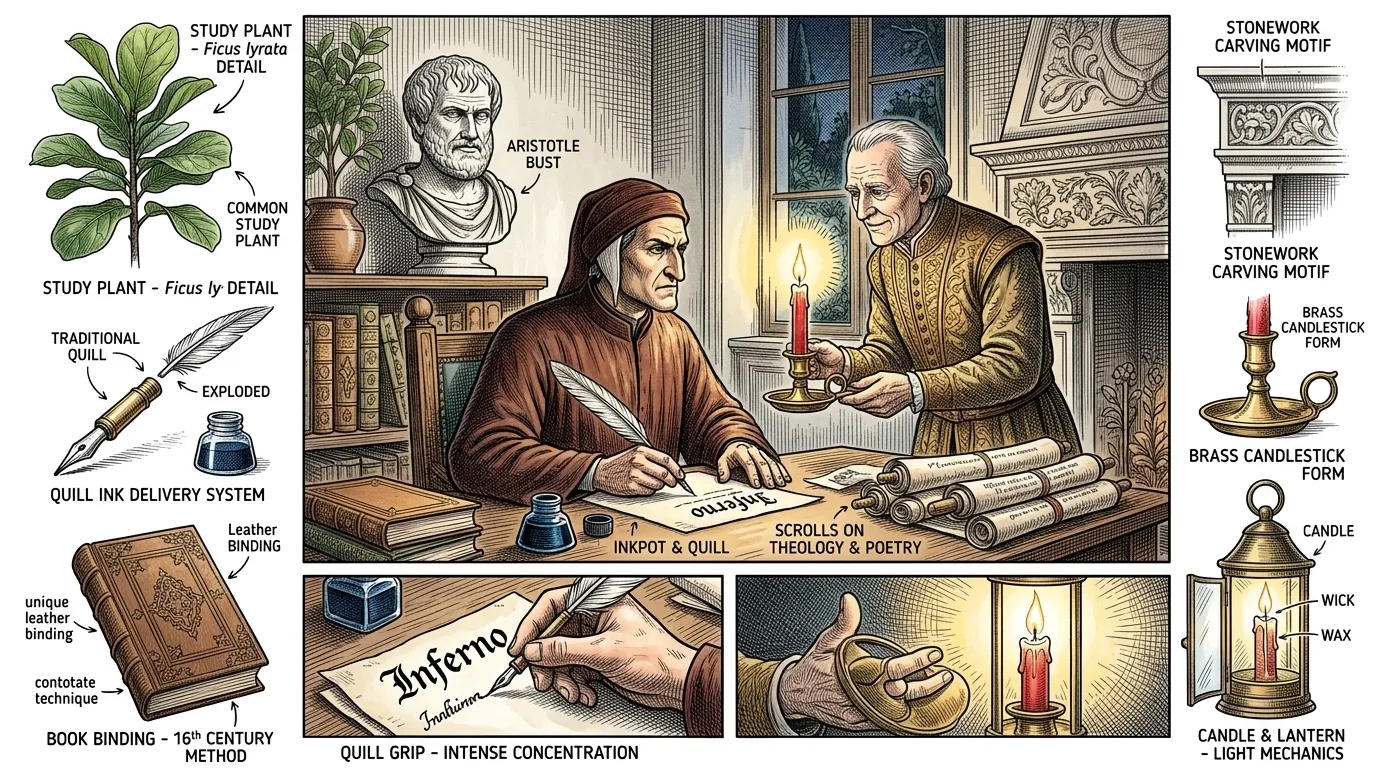
Exile forged a new purpose: Dante Alighieri began to channel his personal suffering and vast knowledge into an ambitious new poetic form, starting with Inferno.
"In a secluded corner of a borrowed study, he declared, 'Poetry is finer and more philosophical than history; for history expresses the particular, and poetry the universal,' reflecting on the wisdom of Aristotle. His host, a kind 50-year-old nobleman, approached, asking, 'What grand design now fills your mind, my friend?' 'A journey, through hell and beyond,' Dante replied, gripping his quill tighter."
Biographical Fact: Dante began writing The Divine Comedy around 1308, using the vernacular Tuscan dialect to ensure a wider audience and assert its literary legitimacy.
Page 5
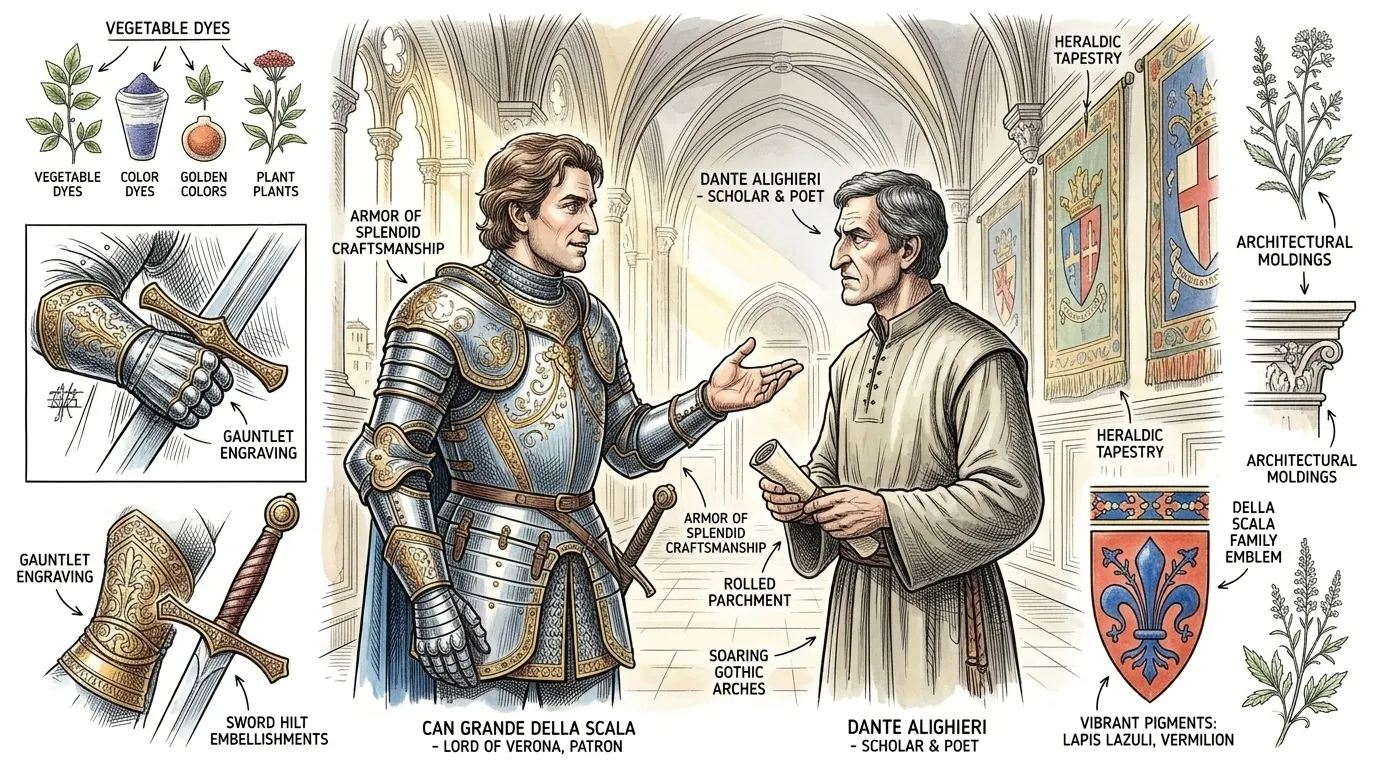
Dante Alighieri, seeking stability for his monumental task, found crucial patronage in Verona, particularly from the powerful Ghibelline leader Can Grande della Scala.
"Can Grande della Scala, a charismatic 30-year-old lord in splendid armor, addressed Dante, 'Your verses, master poet, breathe life into truth! How may Verona aid your prodigious endeavor?' Dante, a seasoned 45-year-old now, responded, 'My Lord, a quiet haven and scholarly resources are all a poet requires to build worlds from words.' This critical support ensured the Commedia's continuation through its most complex sections."
Biographical Fact: Can Grande della Scala (1291-1329), Lord of Verona, was one of Dante's most significant patrons, providing refuge and support during his long exile.
Page 6
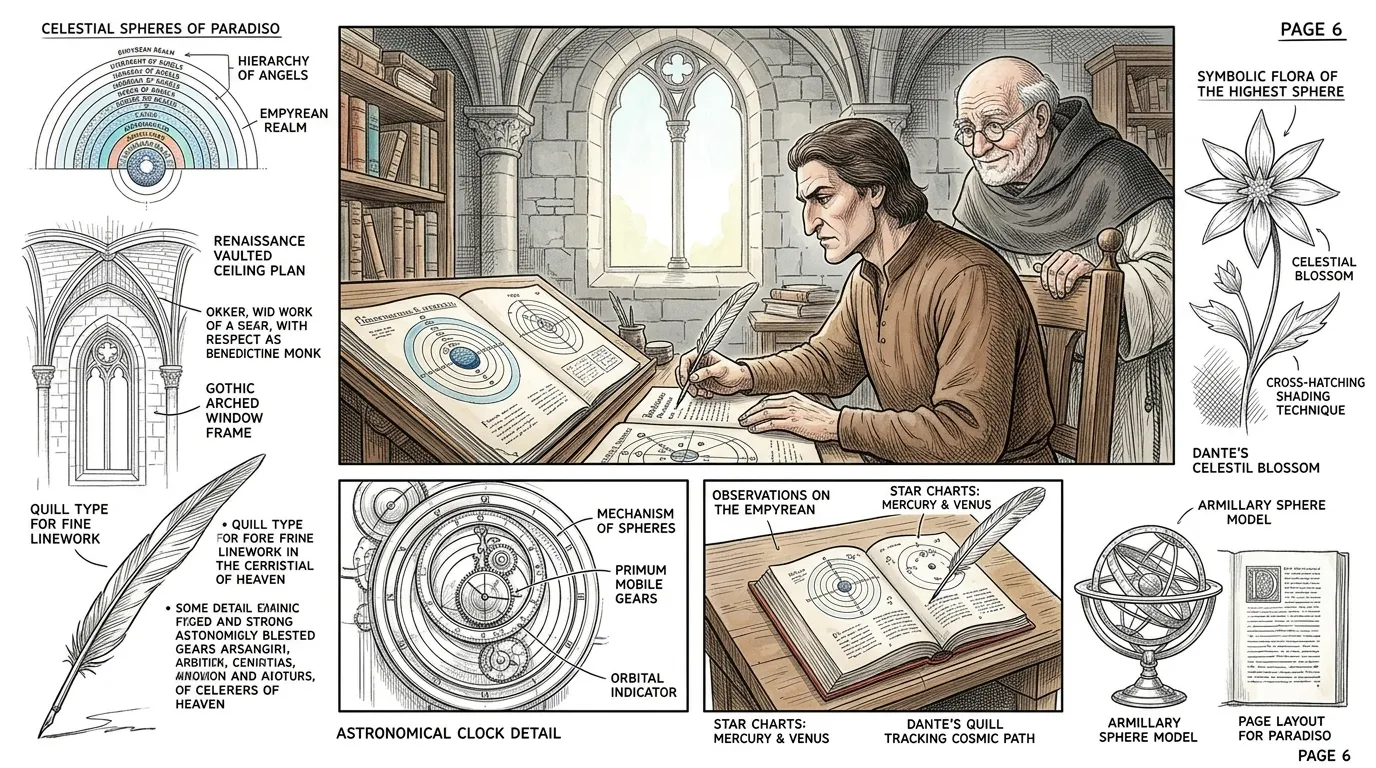
Driven by an unyielding vision, Dante Alighieri meticulously constructed Paradiso, the final and most complex cantica of his epic, pushing the boundaries of language and theological representation.
"An old, wise Benedictine monk, a 70-year-old with a kind face and spectacles, observing Dante's tireless work, remarked, 'Master, you seek to render the ineffable into verse; a task few would dare.' Dante, now 50, replied, 'The ascent through Paradise demands the utmost clarity, for here, the soul truly seeks its divine purpose.' His resolve deepened with every completed canto."
Biographical Fact: The Paradiso is the most abstract and complex section of The Divine Comedy, depicting Dante's ascent through the nine celestial spheres of Heaven, guided by Beatrice.
Page 7
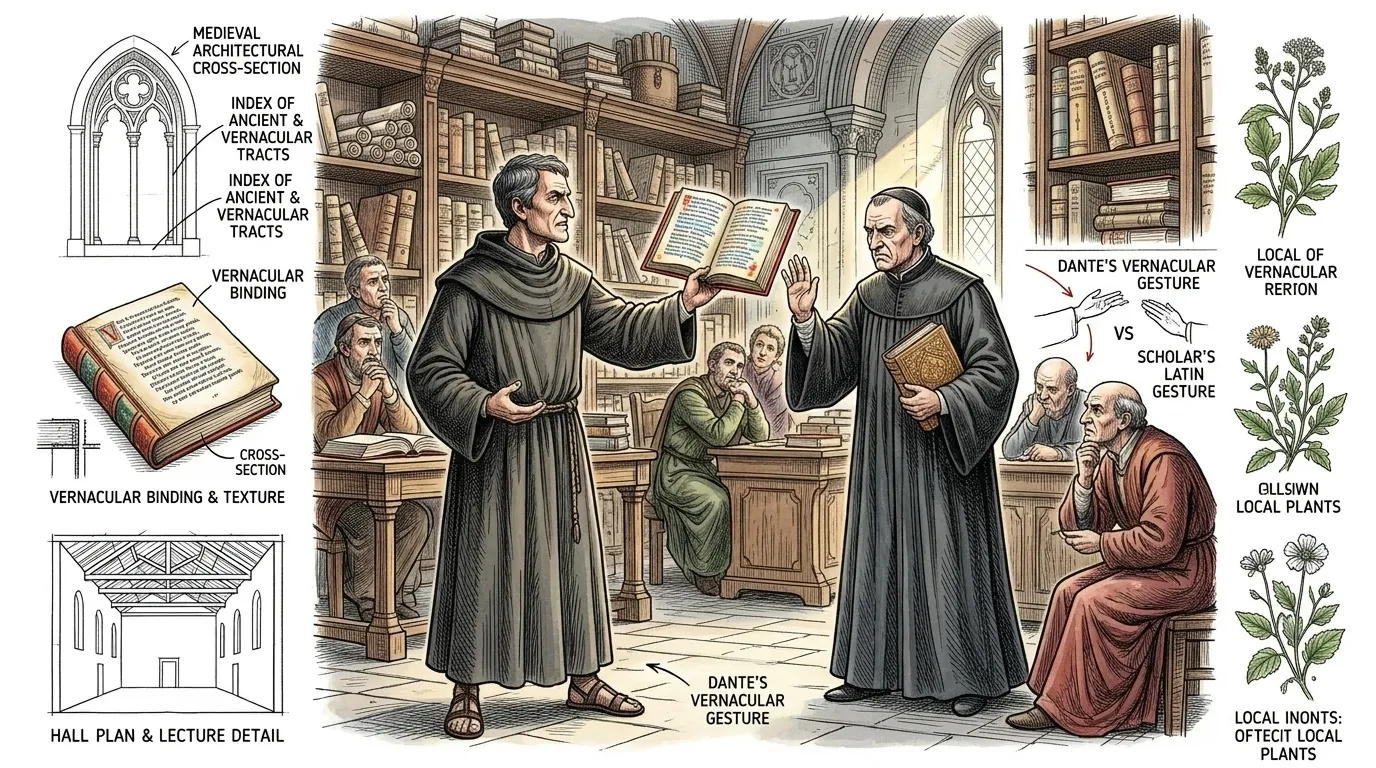
While crafting his masterpiece, Dante Alighieri passionately advocated for the use of the vernacular language, Italian, as a legitimate vehicle for high literature, a radical stance against the dominance of Latin.
"Addressing a group of skeptical 14th-century scholars, a resolute 52-year-old Dante declared, 'The vernacular tongue, not Latin, holds the true 'sun of reason' for our people!' A frowning 60-year-old scholar in a long, dark gown challenged him, 'But Master, Latin carries the weight of ages, the grandeur of Rome!' Dante countered, 'And the vernacular carries the living soul of our nation, waiting to soar.'"
Biographical Fact: Dante's treatise De Vulgari Eloquentia (On Eloquence in the Vernacular) argued for the artistic potential of the common language, setting the stage for its adoption by future literary giants.
Page 8
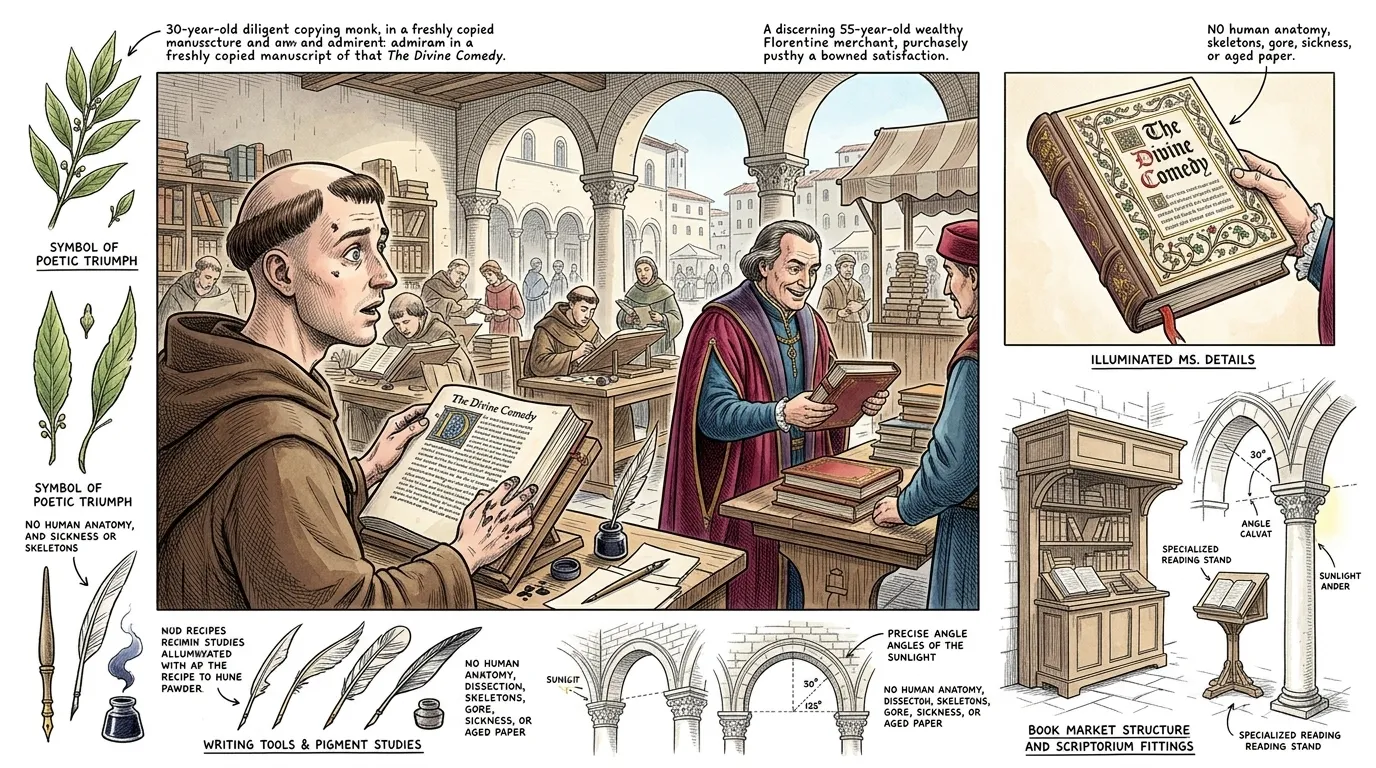
The completion and rapid dissemination of The Divine Comedy caused an immediate sensation across Italy, irrevocably altering the literary landscape and establishing the Tuscan dialect as a language of high art.
"A copying monk, a diligent 30-year-old with ink-stained fingers, marvelled, 'Never has such a work captivated so many souls, weaving together classical allegories and theological structures so masterfully!' A wealthy Florentine merchant, a discerning 55-year-old man, purchasing a copied manuscript, proclaimed, 'This book speaks not only to the learned but to the common man; it is a true marvel!'"
Biographical Fact: Within decades of its completion, hundreds of copies of The Divine Comedy were circulating, cementing its status and demonstrating the power of vernacular literature.
Page 9
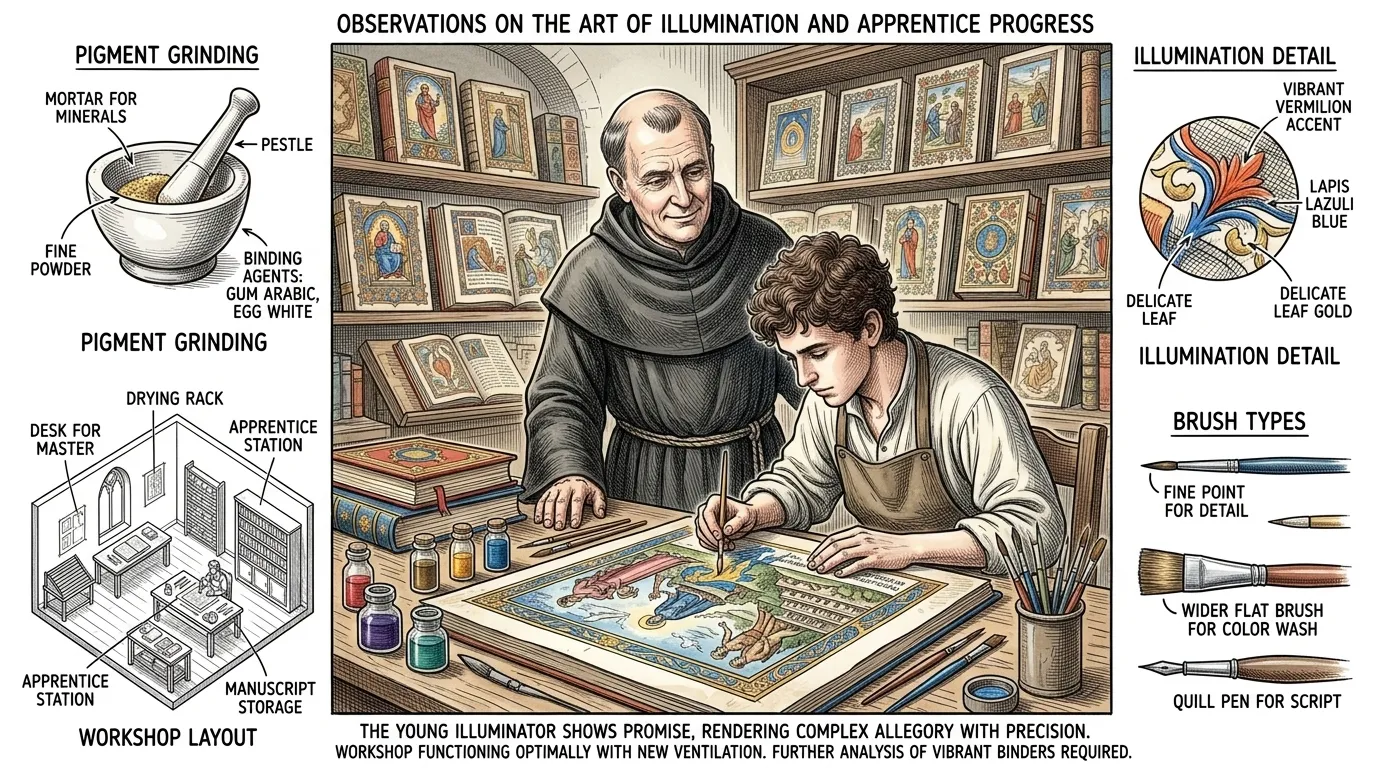
Even in death, Dante Alighieri's influence continued to expand, with countless scribes and artists working tirelessly to reproduce and illuminate copies of The Divine Comedy, ensuring its widespread reach.
"A scholarly priest, a thoughtful 60-year-old man, overseeing the production of a richly illustrated manuscript, declared, 'Master Dante's vision now reaches beyond the spoken word, into the very fabric of our culture.' A young apprentice, a diligent 15-year-old boy, carefully painting an allegorical scene from Purgatorio, whispered, 'His words make me see worlds I never imagined.'"
Biographical Fact: The labor of scribes and illuminators in the 14th and 15th centuries was instrumental in propagating Dante's work, making it accessible to a burgeoning readership.
Page 10
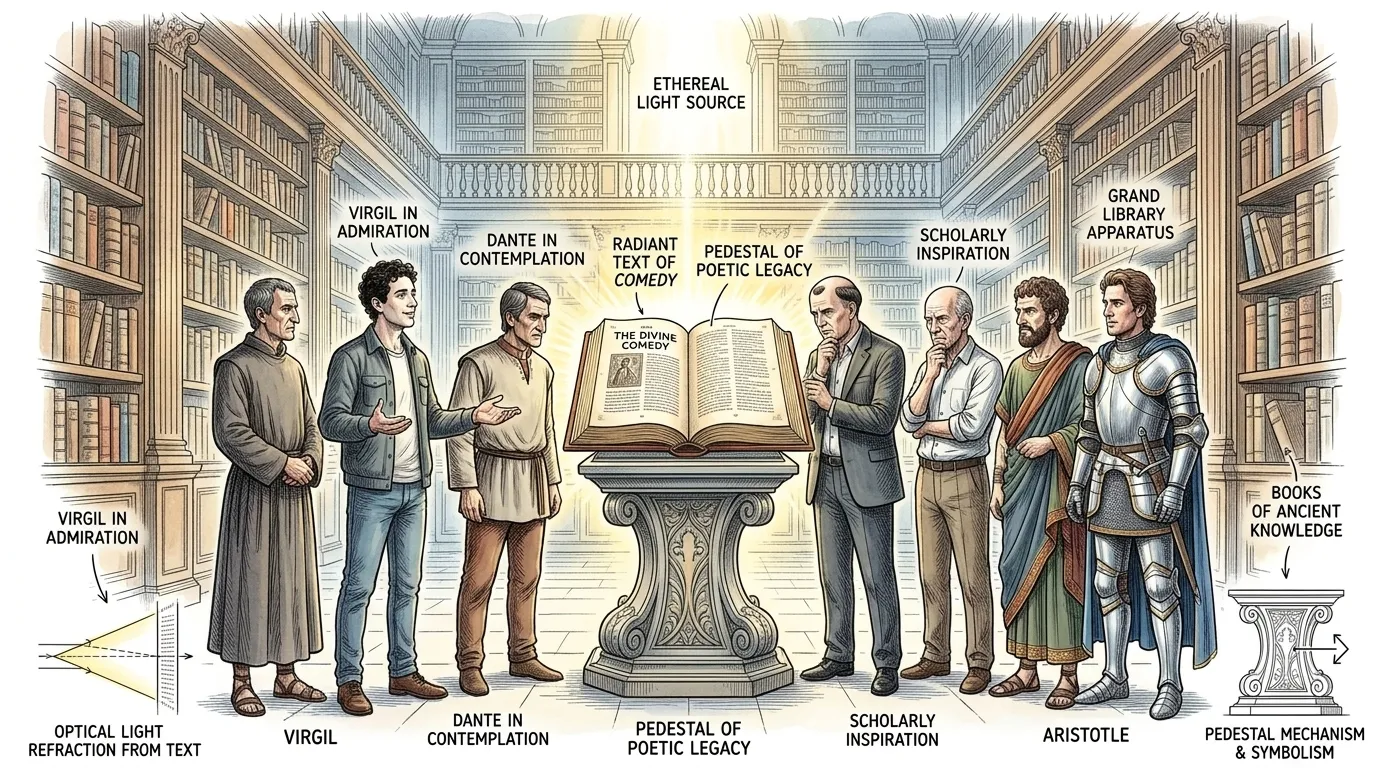
Dante Alighieri's The Divine Comedy transcended its era, becoming not merely a book but a foundational pillar of Western civilization, its profound spiritual and intellectual journey resonating across centuries.
"Generations have looked to his words to understand humanity's struggles and aspirations. His work, a testament to the power of language, continues to inspire scholars, artists, and leaders, an eternal flame for the human spirit."
Biographical Fact: Dante's Divine Comedy remains a cornerstone of world literature, its themes of sin, redemption, and divine love universally relevant, profoundly shaping philosophy, art, and language.
About this story
- Location: Global
- Audience: general readers
Questions and answers
Read Wonder People on your phone
Wonder People is available on Android. Get Wonder People on Google Play.