Carl Linnaeus
Carl Linnaeus — an illustrated biography story, set in Global. 10 illustrated pages, free to read on Wonder People.
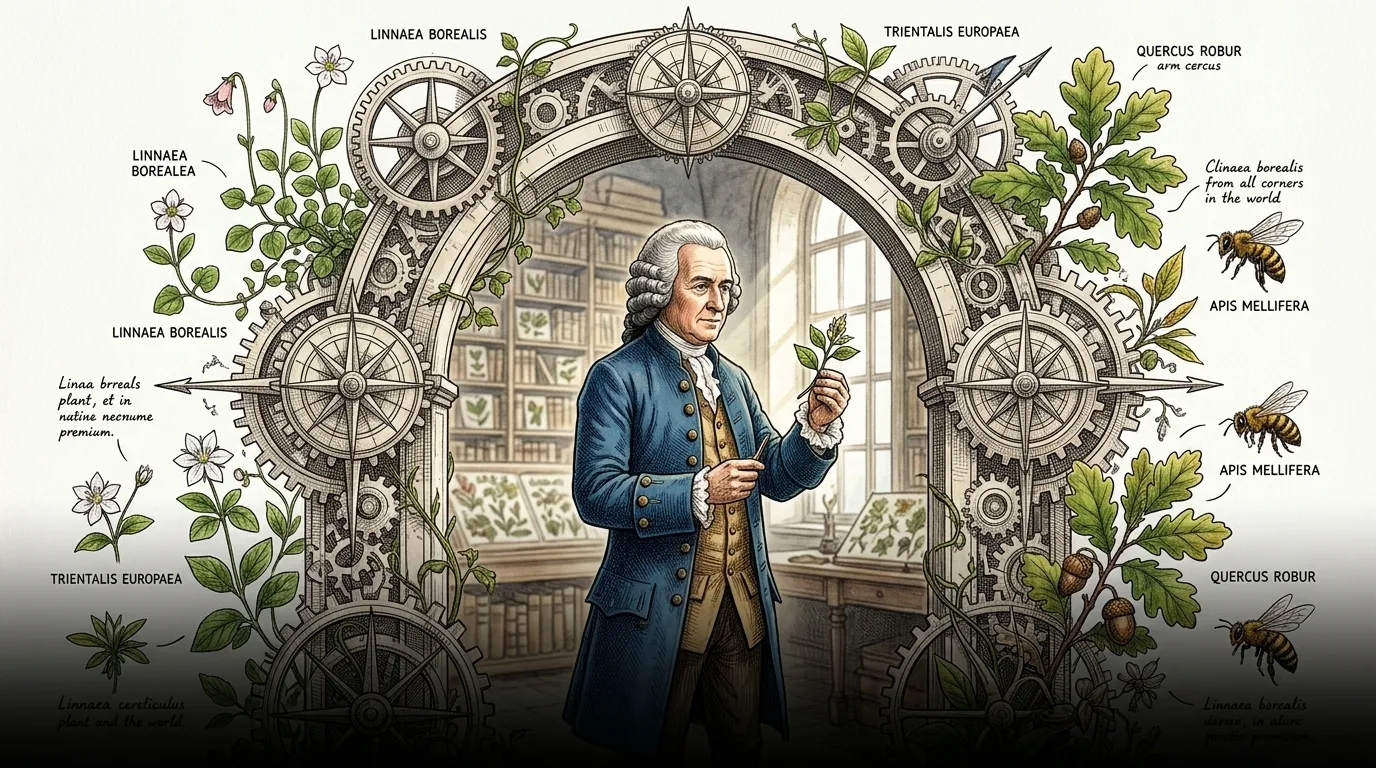
Page 1
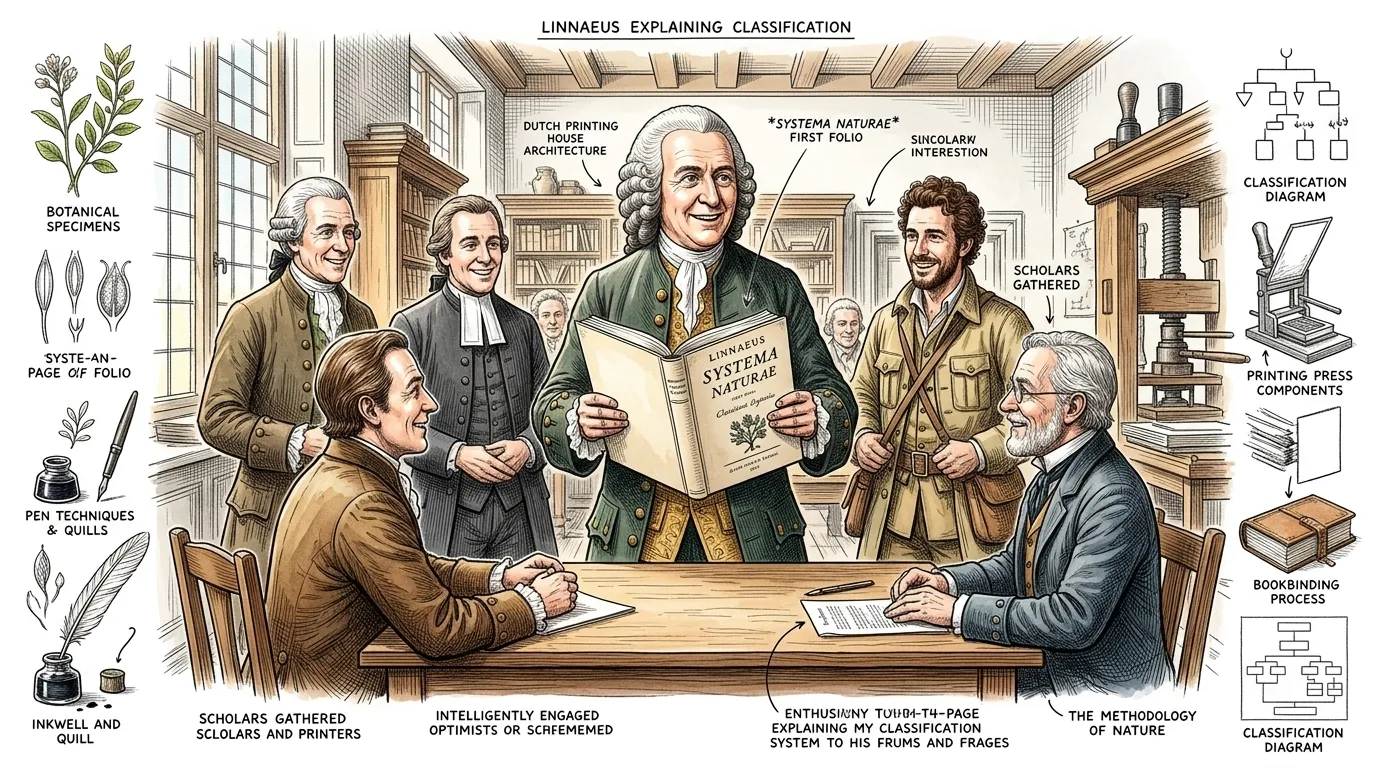
In Leiden, Netherlands, in the year 1735, a pivotal document emerged that would reshape humanity's understanding of the natural world. Carl Linnaeus, a young Swedish physician, unveiled the first edition of his Systema Naturae, a concise yet revolutionary attempt to classify all known living organisms. This slim, fourteen-page folio introduced a sexual system for plants and a hierarchical structure for animals and minerals, offering the first consistent framework to organize biodiversity. Surrounded by skeptical but intrigued European scholars and printers, Linnaeus established a new intellectual foundation, daring to bring order to the bewildering complexity of life. His audacity in codifying nature's vastness into a systematic catalog ignited a global scientific revolution, making him, in that moment, impossible to ignore.
Page 2
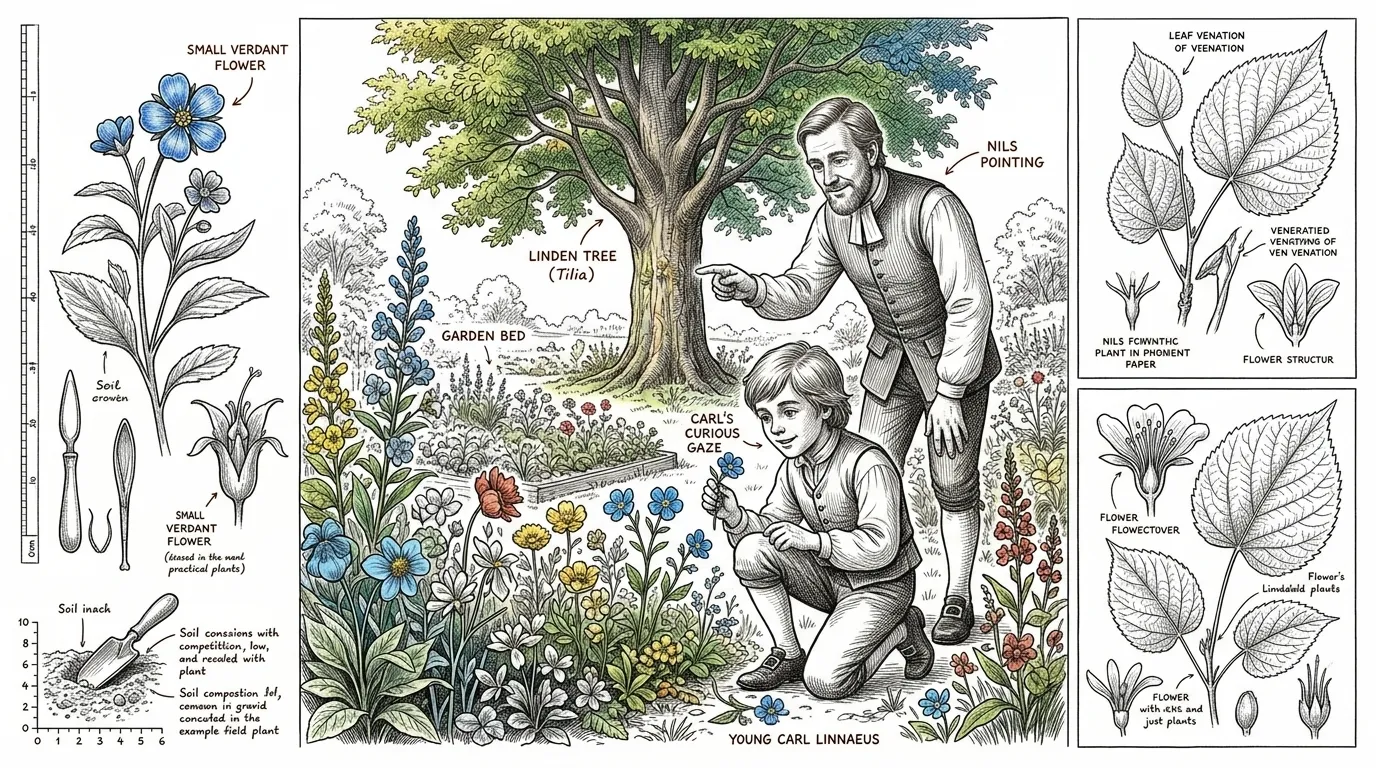
Carl Linnaeus's destiny was etched early, amidst the verdant grounds of Råshult, Småland, Sweden. Born in 1707, the son of Nils Linnaeus, a passionate amateur botanist and Lutheran minister, Carl found his first classroom in the family's extensive garden. From a tender age, he was captivated by plants, learning their names and properties, often neglecting more conventional studies. His father, a meticulous gardener who named his son Carl for a flower and even adopted the Latinized name Linnaeus from a linden tree, nurtured this innate curiosity. This immersive environment, where every leaf held a lesson and every bloom sparked inquiry, instilled in young Carl a profound reverence for nature and a nascent drive to comprehend its inherent order. It was here, surrounded by the uncontrolled beauty of flora, that the seed of systematic classification was sown.
Page 3
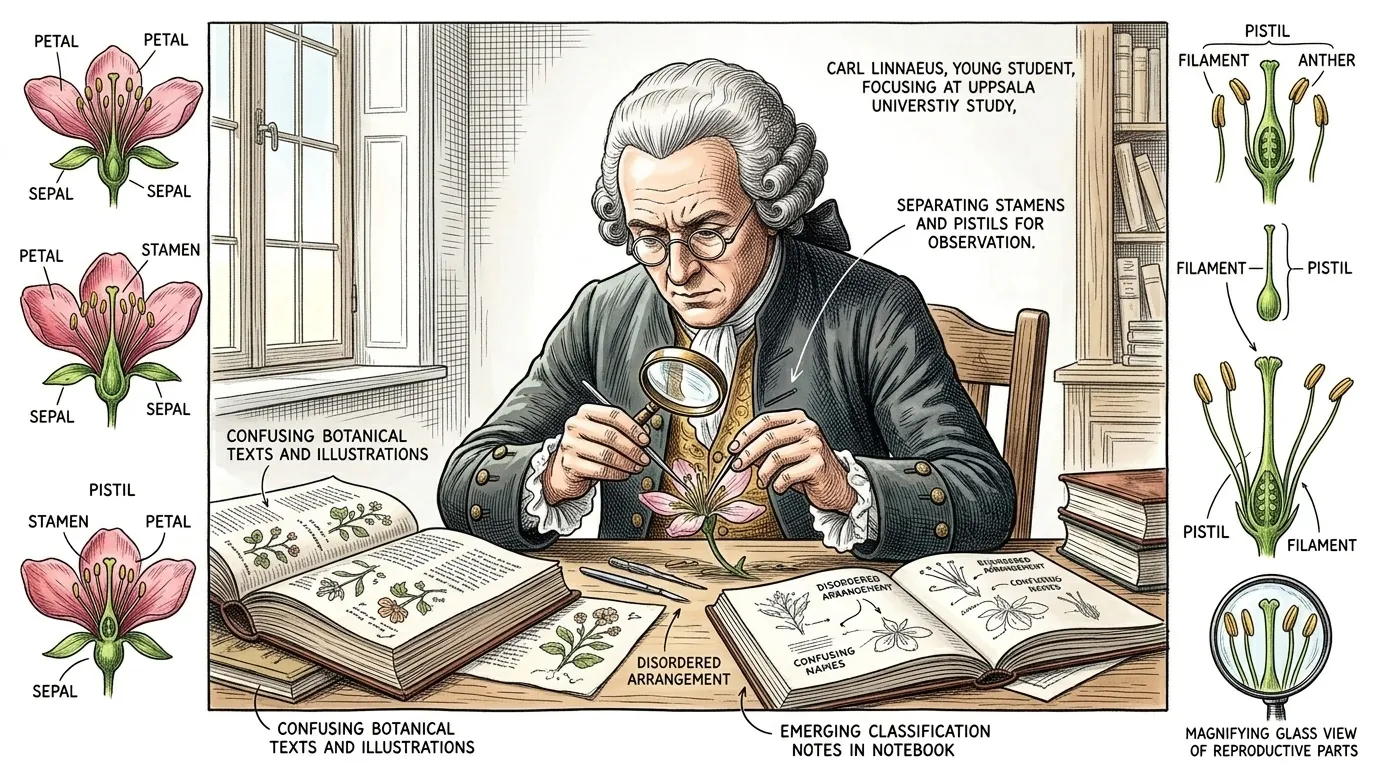
By the late 1720s, as a young student at Uppsala University, Linnaeus confronted the overwhelming disorder in botanical nomenclature. Existing systems were fragmented, often relying on lengthy descriptive phrases that varied wildly between botanists, creating utter confusion. He saw a field in disarray, where identical plants bore dozens of names and unrelated species were grouped together. This intellectual frustration fueled his resolve. He meticulously examined plant specimens in the university's collections, seeking patterns, dissecting flowers to understand their reproductive organs – the stamens and pistils – which he intuitively recognized as key to a consistent classification system. This was not merely study; it was an act of intellectual rebellion against an established chaos, an early declaration of intent to impose a rational structure.
Page 4
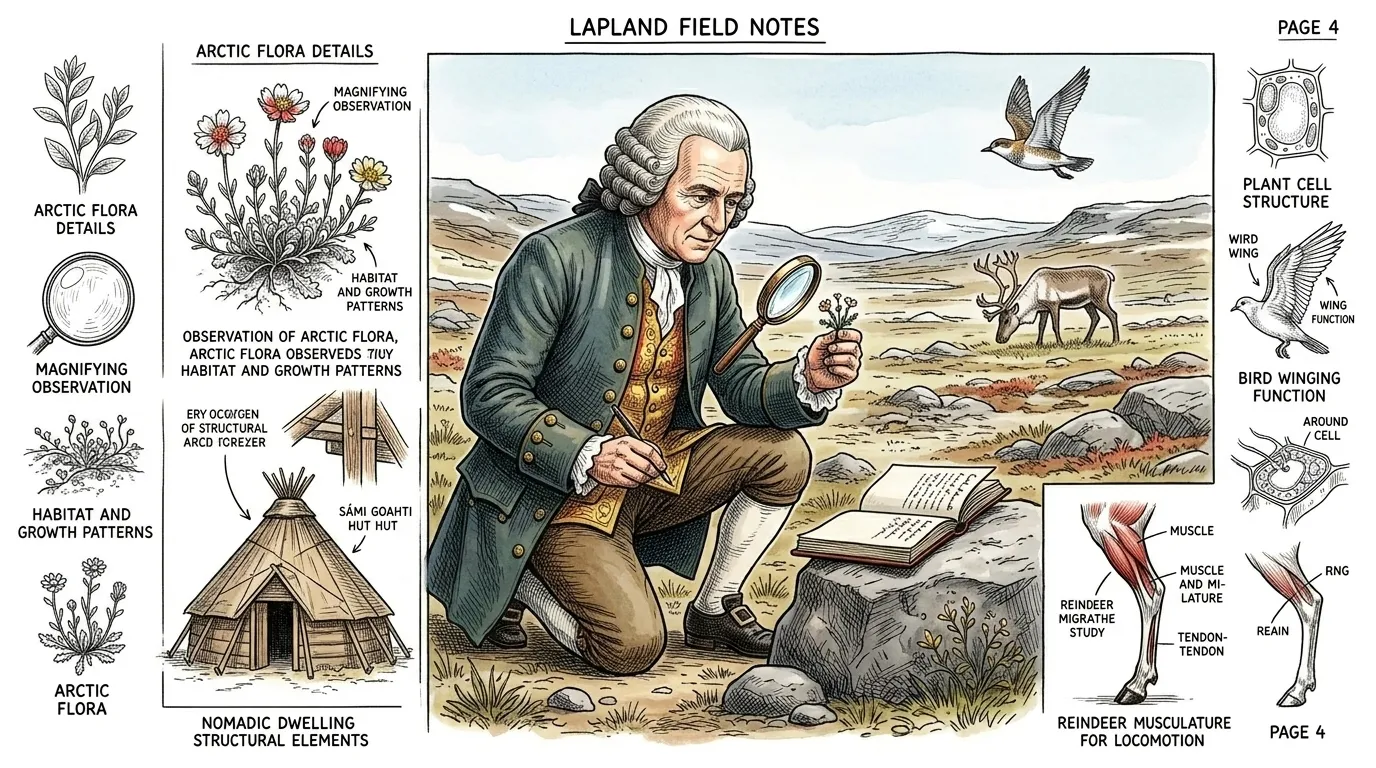
In 1732, the Royal Society of Sciences in Uppsala dispatched Linnaeus on an extraordinary expedition to Lapland, Sweden's northern wilderness. This journey, covering thousands of kilometers by foot, horse, and boat, became his ultimate field laboratory. He encountered an explosion of unknown species, from Arctic flora to unique animal life, far removed from the cultivated gardens of Europe. With a magnifying glass, pen, and paper, he meticulously recorded, described, and classified everything he saw, testing his nascent theories against the raw, untamed diversity of nature. He adapted his method of using floral reproductive organs for classification, observing how species intermingled and varied. The rigors of the Arctic landscape forged his empirical approach, transforming theoretical concepts into practical, verifiable tools for understanding the natural world.
Page 5
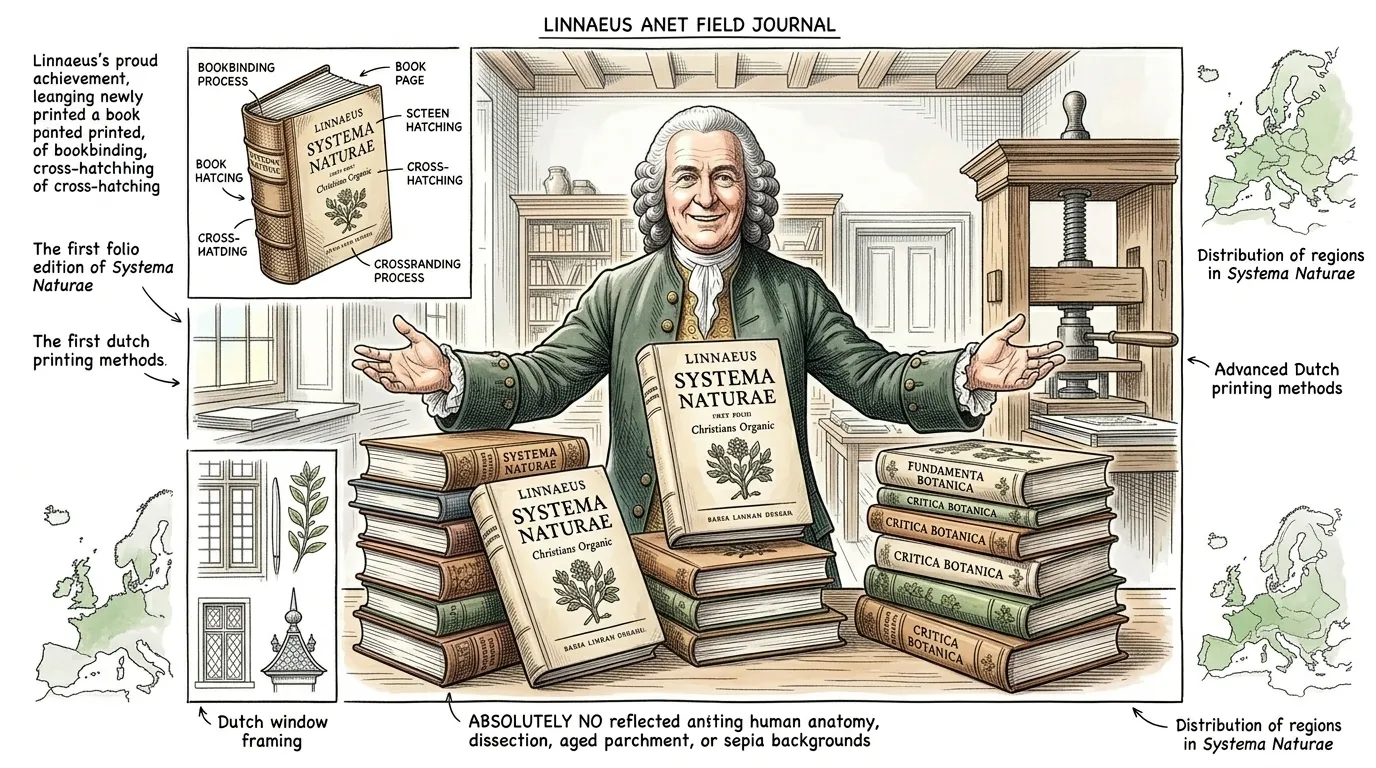
Arriving in the Netherlands in 1735, Linnaeus found a vibrant intellectual environment and the crucial financial backing needed to publish his burgeoning ideas. Within a remarkably short period, he completed a medical doctorate at the University of Harderwijk, solidifying his academic standing. More significantly, in rapid succession, he released a series of groundbreaking works: Systema Naturae, Fundamenta Botanica, and Critica Botanica. These texts systematically laid out his revolutionary principles for biological classification and nomenclature, advocating for a standardized, Latin-based naming system. His intellectual fervor, combined with the Netherlands' advanced printing capabilities and scientific openness, created a perfect storm of productivity, launching his system onto the European stage with unprecedented speed and impact.
Page 6
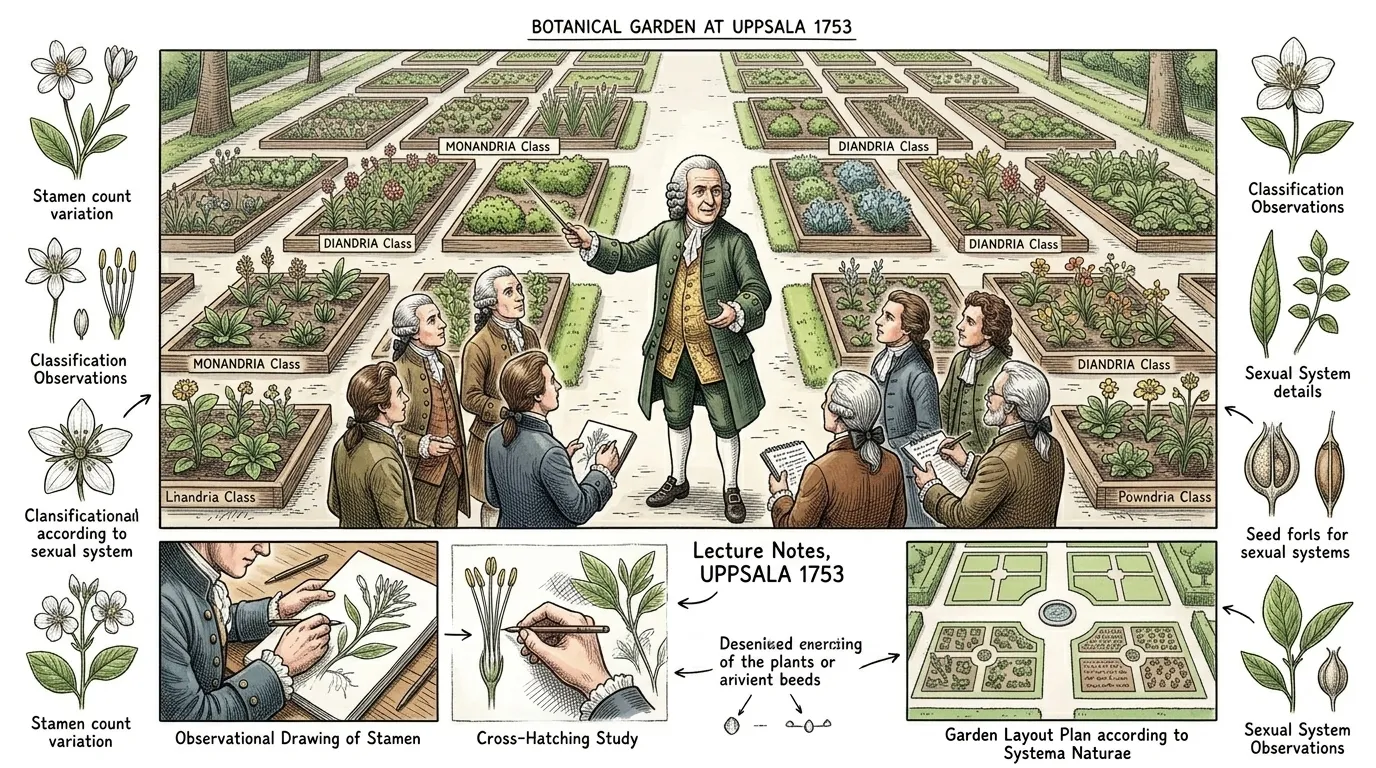
Upon his eventual return to Sweden, Linnaeus ascended to the professorship of medicine and botany at Uppsala University in 1741, a position he would hold for decades. From this esteemed chair, he transformed the university's botanical garden into a living laboratory, meticulously arranging plants according to his new sexual system. He became a charismatic and demanding teacher, drawing students from across Europe who were eager to learn his method. Through his lectures, demonstrations, and tireless revisions of Systema Naturae—which saw twelve editions during his lifetime—he solidified his system as the definitive approach to botanical classification. This period marked the true institutionalization of his ideas, as he trained a new generation of naturalists to see and categorize the world through his lens.
Page 7
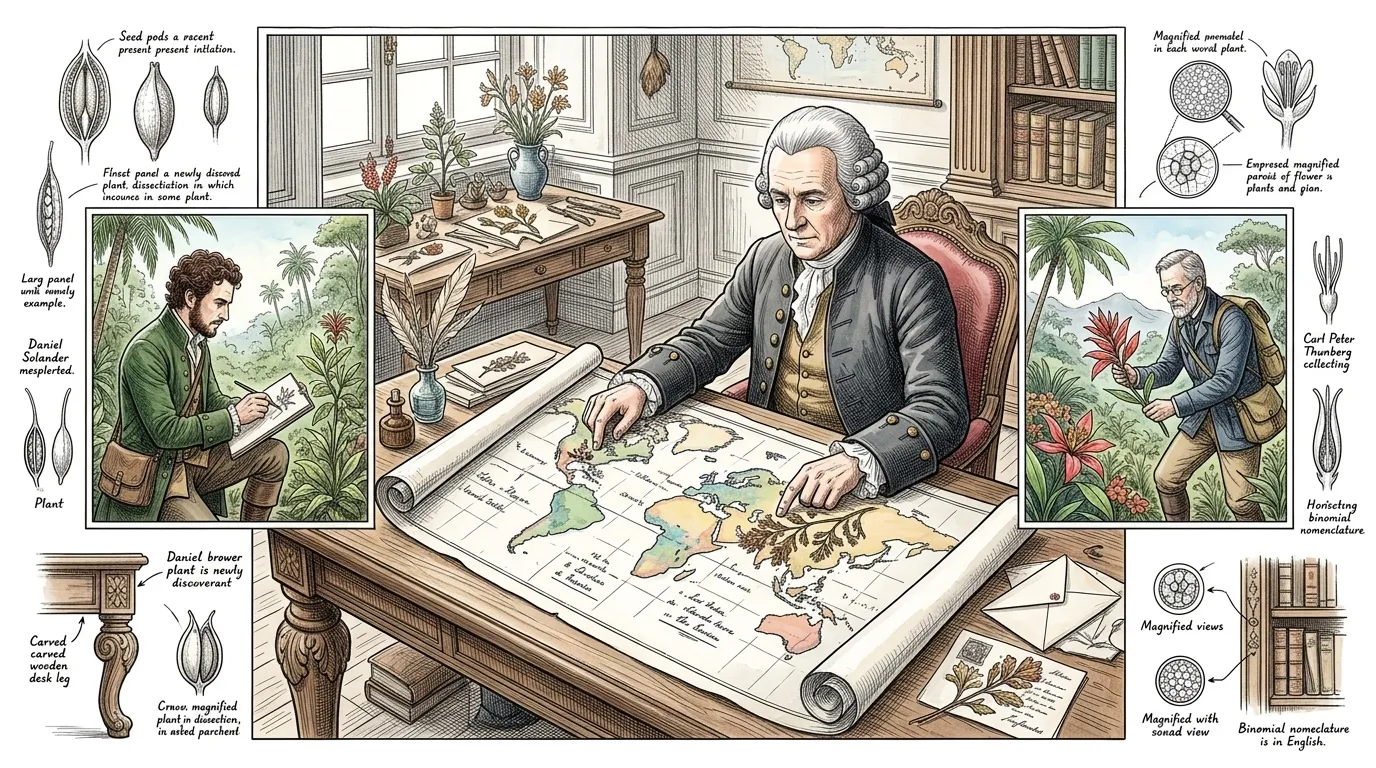
Linnaeus's influence transcended the lecture halls of Uppsala. He dispatched a network of his most talented students, famously known as his 'Apostles,' to the farthest corners of the globe: North America, the Middle East, Southeast Asia, and even the Arctic. These intrepid explorers, including figures like Daniel Solander and Carl Peter Thunberg, collected vast numbers of new species, meticulously describing them using Linnaeus's binomial nomenclature and sending them back to Uppsala. This systematic global collection effort, unprecedented in its scope, transformed botanical knowledge, enriching European collections and validating the universal applicability of his system. Linnaeus orchestrated this grand scientific enterprise from his study, a hub of global discovery, ensuring his framework became the lingua franca for natural history.
Page 8
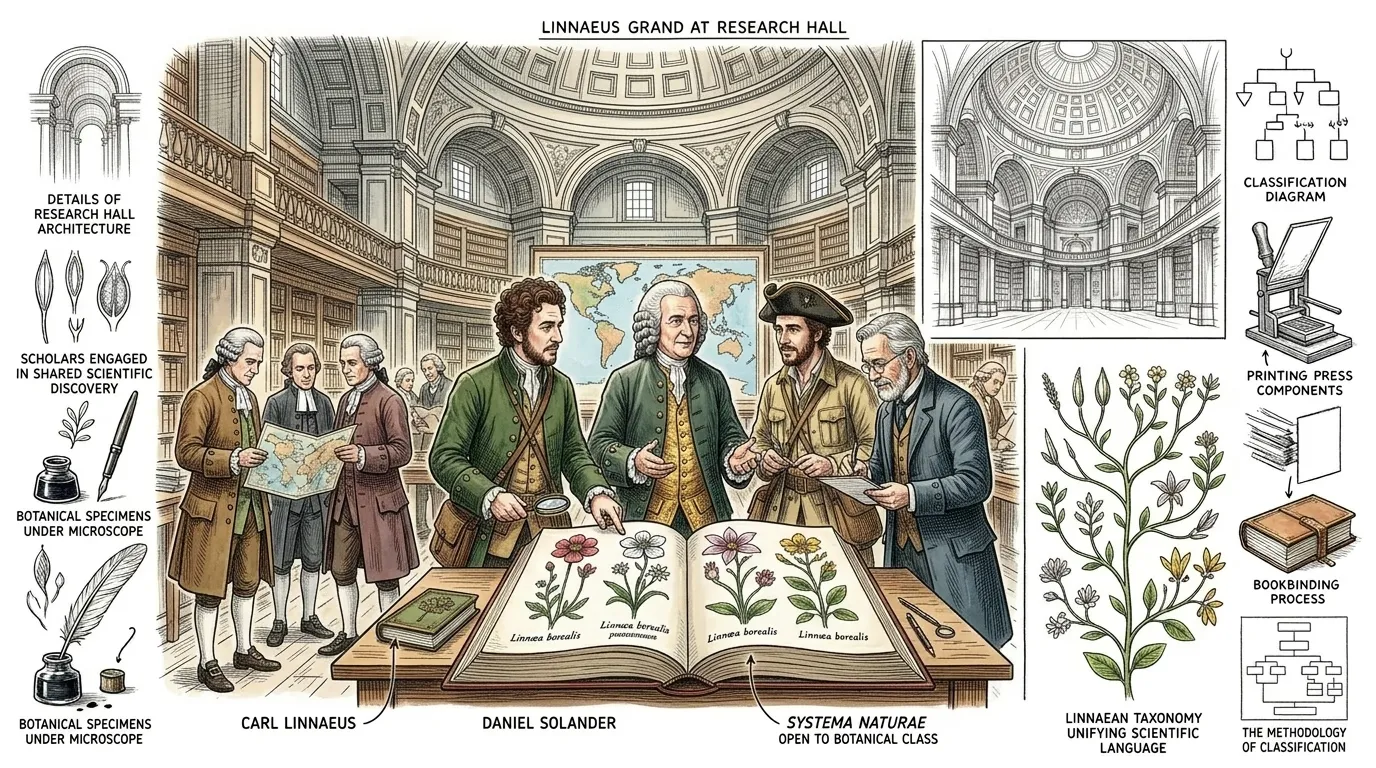
The Linnaean system, once a radical proposition, rapidly became the indispensable tool for naturalists worldwide. Its elegant simplicity—assigning every species a unique two-part Latin name, a genus and a specific epithet—resolved centuries of taxonomic confusion. From the bustling academic centers of London and Paris to the nascent scientific institutions of the Americas, scientists adopted binomial nomenclature as the standard language of biology. This universal framework allowed for unambiguous communication, facilitating the cataloging of millions of species and accelerating the pace of scientific discovery. Linnaeus had not merely proposed a system; he had engineered a fundamental shift in scientific methodology, creating a shared grammar that continues to govern biological classification even today.
Page 9
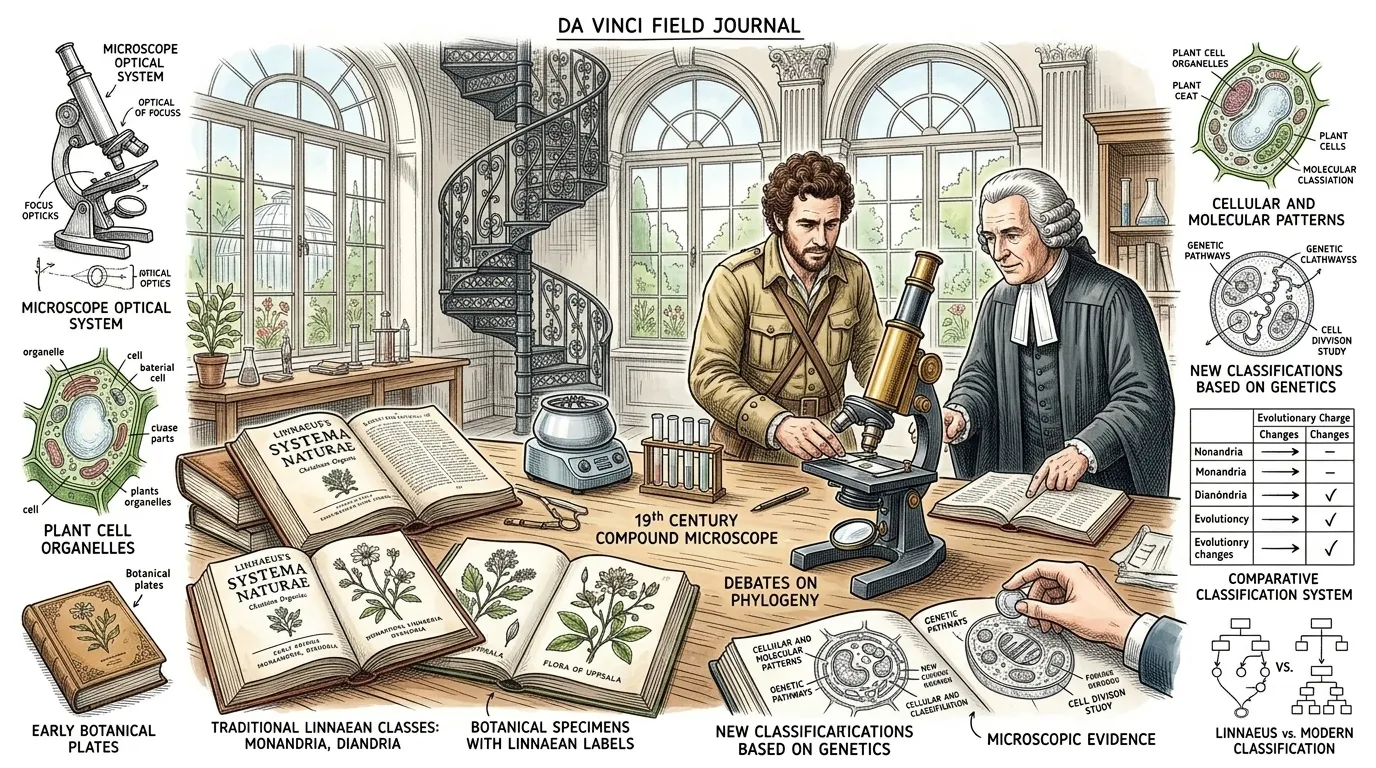
While revolutionary, the Linnaean system, based on observable sexual characteristics, faced inevitable challenges as scientific understanding deepened. As microscopy advanced and evolutionary theory emerged in the following century, the artificiality of some Linnaean groupings became apparent. Critics argued for classifications based on deeper genetic relationships rather than superficial traits. Yet, even as scientific understanding evolved, the fundamental structure of binomial nomenclature proved robust. It provided the essential scaffold upon which all subsequent biological classification systems were built. The debates and revisions, far from undermining Linnaeus, cemented his legacy; his system was not a static dogma, but a living framework, capable of adaptation and expansion, demonstrating its enduring utility in the face of new discoveries and paradigms.
Page 10
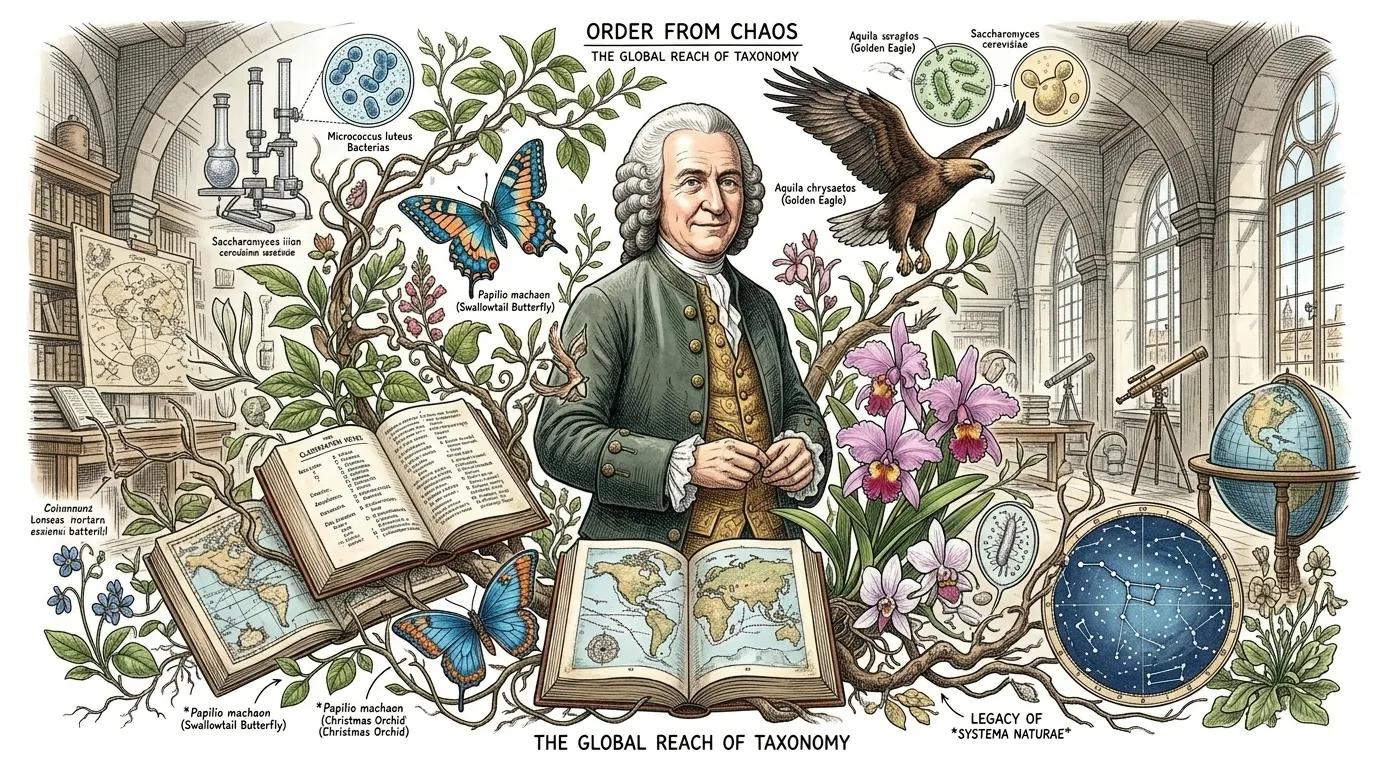
Carl Linnaeus fundamentally transformed how humanity perceives and organizes the natural world. His binomial nomenclature, the elegant 'two-name system,' transcended the chaos of previous centuries to provide a universal, unambiguous language for life. It remains the bedrock of modern biology, enabling scientists across disciplines and continents to communicate about species with precision and clarity. From the naming of microscopic bacteria to the cataloging of newly discovered celestial bodies, the logic of his classification permeates diverse fields. Linnaeus's insistence on empirical observation, systematic documentation, and the pursuit of order within nature established him as the father of modern taxonomy, an intellectual giant whose legacy continues to guide and inspire exploration, classification, and understanding of Earth's immense biodiversity.
About this story
- Location: Global
- Audience: general readers
Questions and answers
Read Wonder People on your phone
Wonder People is available on Android. Get Wonder People on Google Play.