Benjamin Franklin
Benjamin Franklin — an illustrated biography story, set in Global. 10 illustrated pages, free to read on Wonder People.
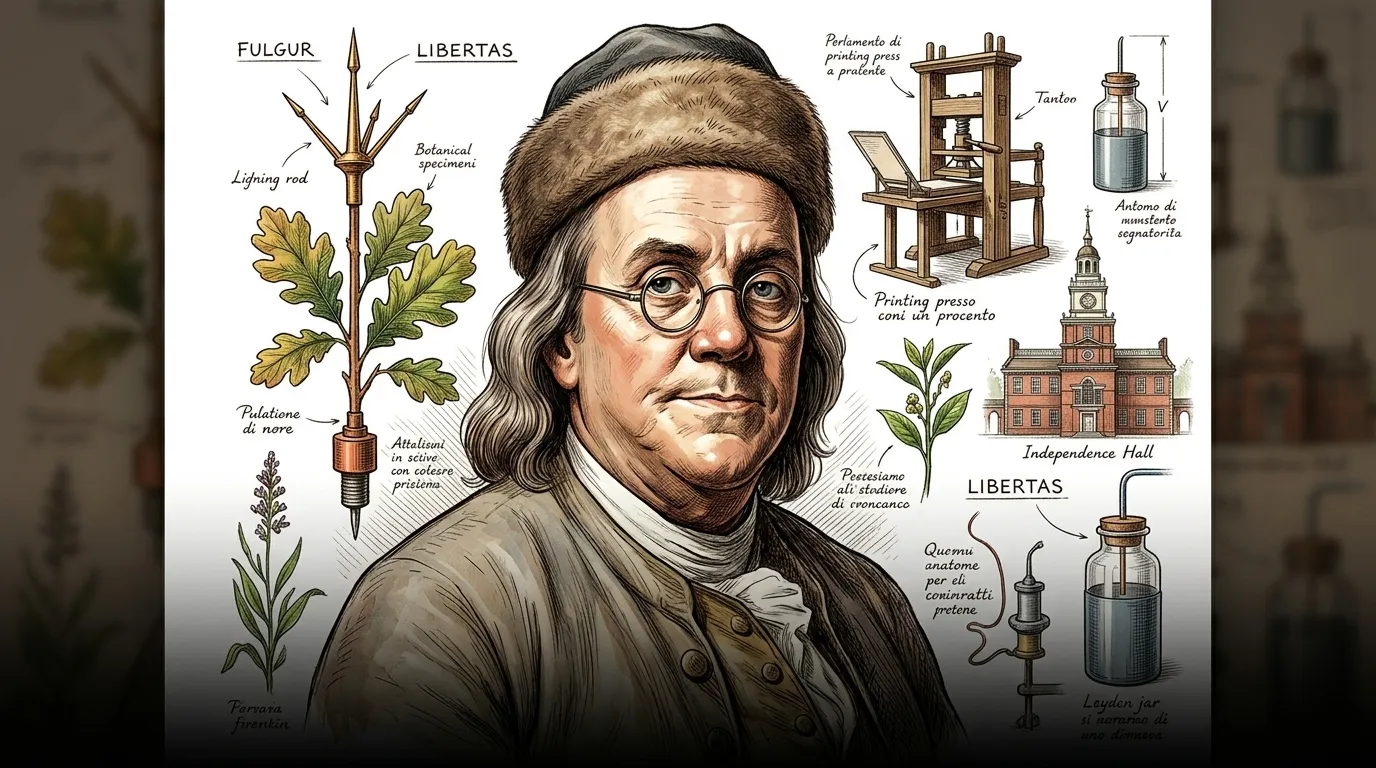
Page 1
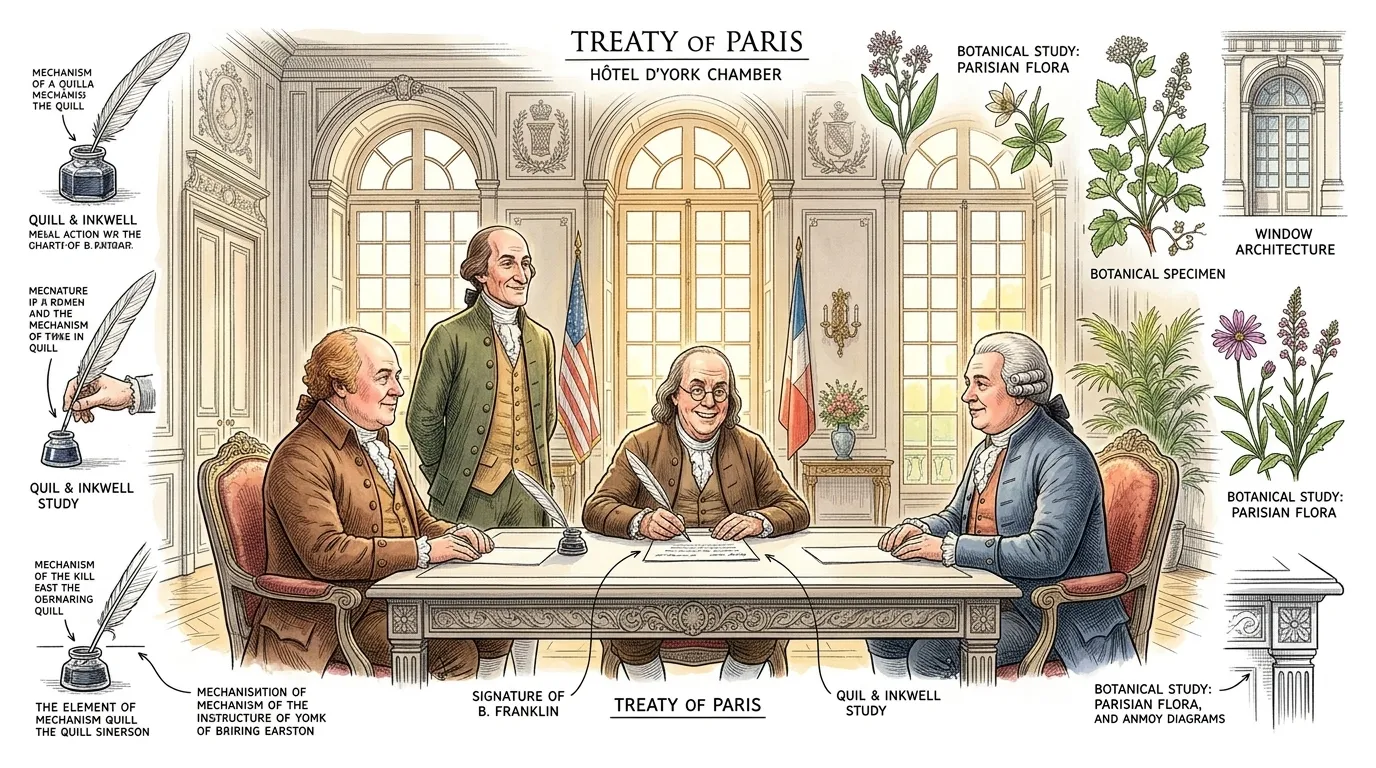
In the grand chambers of the Hôtel d'York, Paris, in September 1783, the fate of a fledgling nation was sealed. Benjamin Franklin, alongside his fellow American plenipotentiaries John Adams and John Jay, sat opposite the British representative David Hartley. The signing of the Treaty of Paris formally recognized the United States of America, securing its independence after eight long years of war. Franklin, the seasoned diplomat and elder statesman, saw his decades of advocacy for American sovereignty culminate in this singular act, validating the struggle of three million distant colonists against a global empire. In that moment, he became the architect of a new world order, his signature affirming the impossible.
Page 2
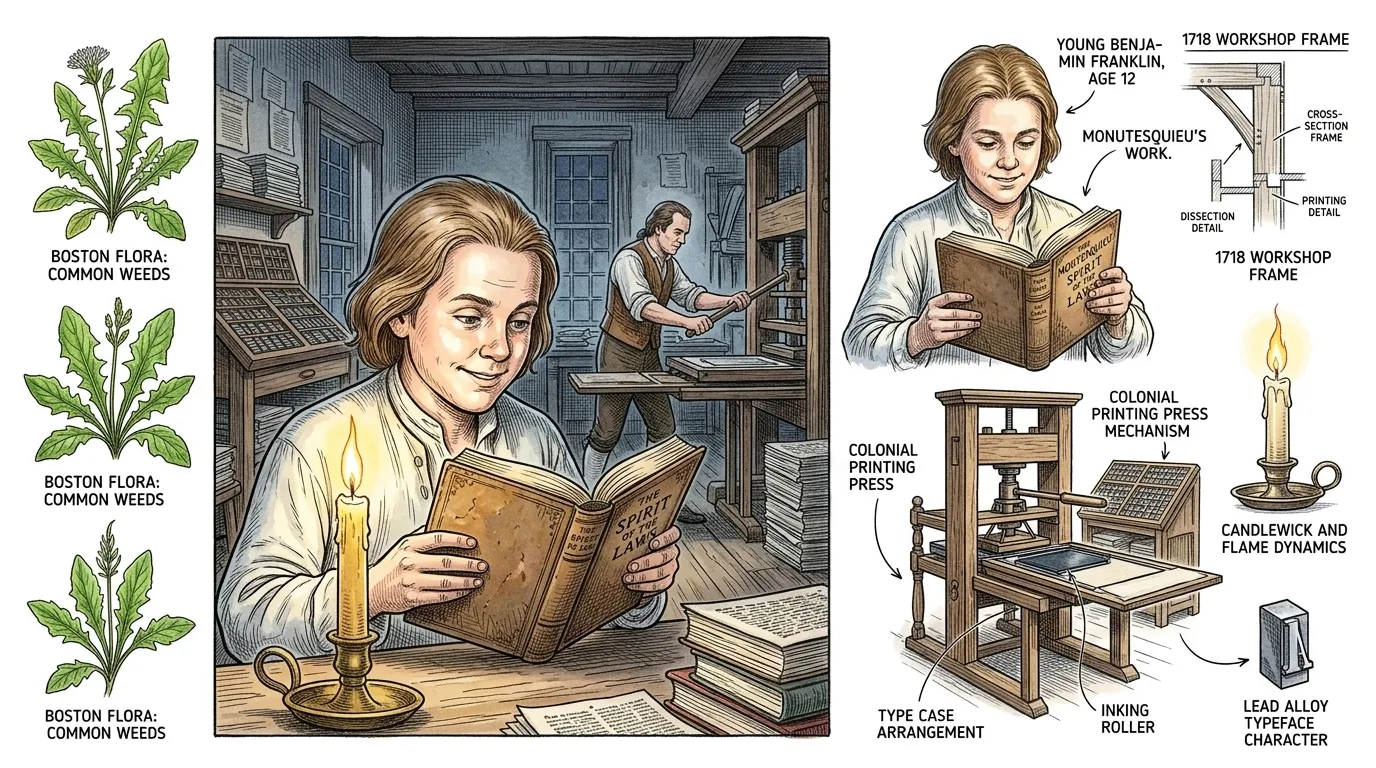
Years earlier, in 1718 Boston, a young 12-year-old, Benjamin, toiled in his older brother James's printing shop. He found solace and purpose not in the mundane tasks, but in the printed word itself. Devouring books late into the night, he absorbed knowledge from every available page, from philosophy to science. One such text, a worn copy of Montesquieu's 'The Spirit of the Laws,' illuminated the intricate balance of power essential for a stable republic. This early, relentless self-education ignited a lifelong quest for understanding, shaping the intellectual foundations of the man he would become.
Page 3
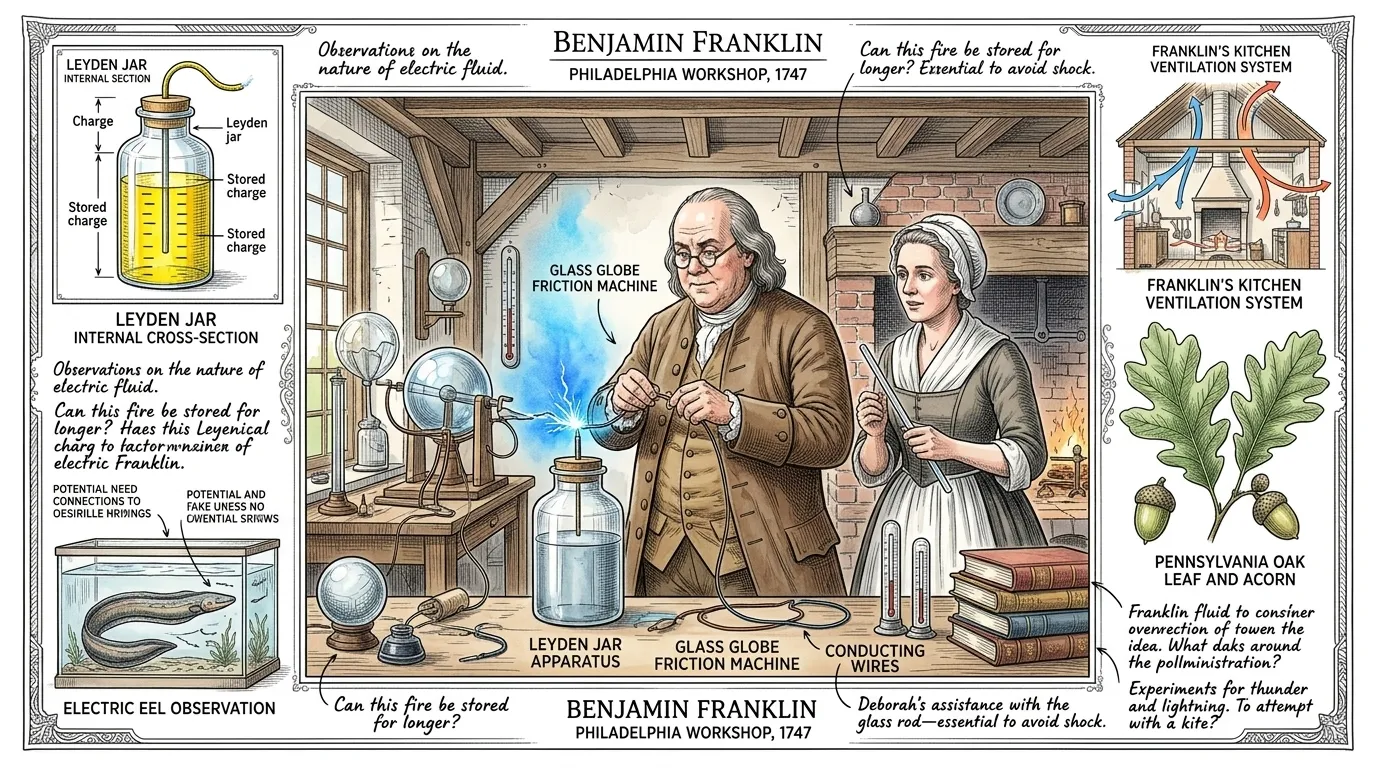
By 1747, in his Philadelphia home, Benjamin Franklin's insatiable curiosity had turned to the mysterious force of electricity. Abandoning his profitable printing business, he dedicated himself to experimental science, often with only his wife Deborah Franklin assisting him. He observed, questioned, and devised ingenious ways to capture and study 'electrical fire.' This marked his decisive shift from a successful entrepreneur to a pioneering natural philosopher, determined to unravel the invisible laws governing the universe. He asserted, 'Tell me and I forget, teach me and I may remember, involve me and I learn,' a principle he applied rigorously to his own scientific pursuits.
Page 4
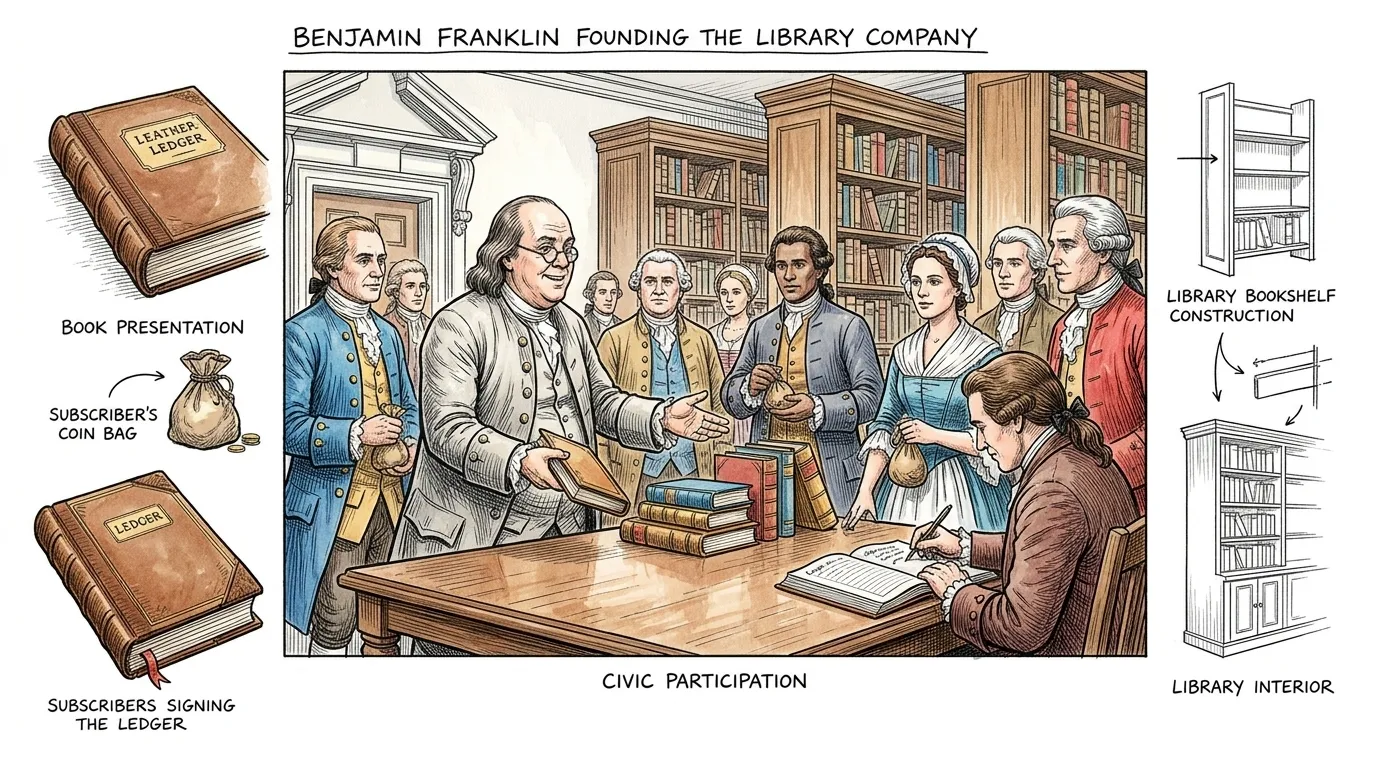
In 1731 Philadelphia, Benjamin Franklin observed the dearth of accessible knowledge among ordinary citizens. Recognizing that intellectual growth fueled civic improvement, he spearheaded the creation of the Library Company of Philadelphia, America's first subscription library. He rallied fifty subscribers, each paying forty shillings to fund a shared collection of books. This action fundamentally democratized access to learning, transforming a private luxury into a public resource. Franklin understood that an informed populace was the bedrock of a healthy society, stating, 'An investment in knowledge always pays the best interest,' a maxim he actively embodied through this transformative initiative.
Page 5
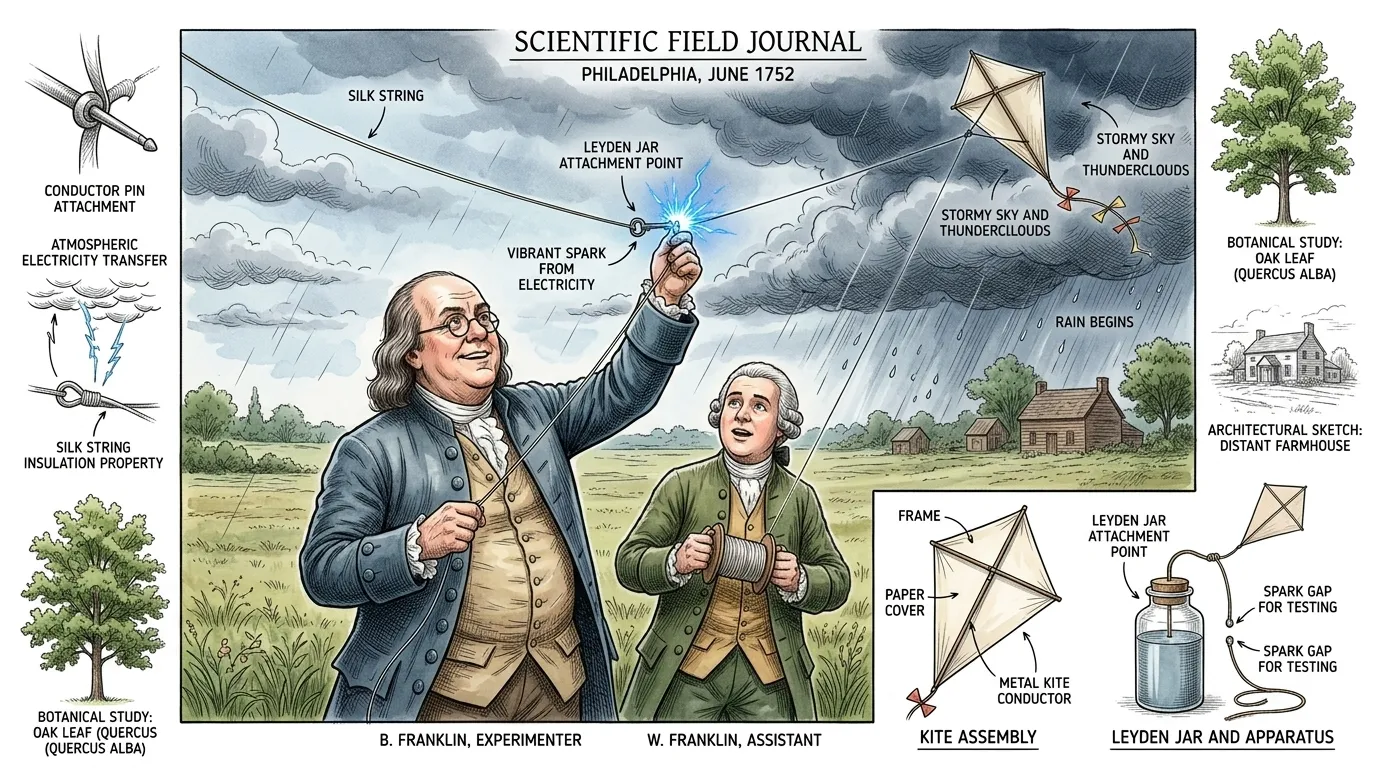
Amidst a brewing storm in June 1752, outside Philadelphia, Benjamin Franklin undertook his most audacious experiment. With his son William Franklin, he flew a kite into thunderclouds, a silk string trailing to a metal key, designed to prove that lightning was indeed electrical. The key sparked, verifying his hypothesis and validating years of theoretical work. This daring act bridged the gap between scientific theory and practical application, firmly establishing him as a preeminent figure in the Enlightenment. He famously observed, 'Who is wise? He that learns from everyone. Who is powerful? He that governs his passions. Who is rich? He that is content. Who is that? Nobody,' even as he pushed the boundaries of human knowledge.
Page 6
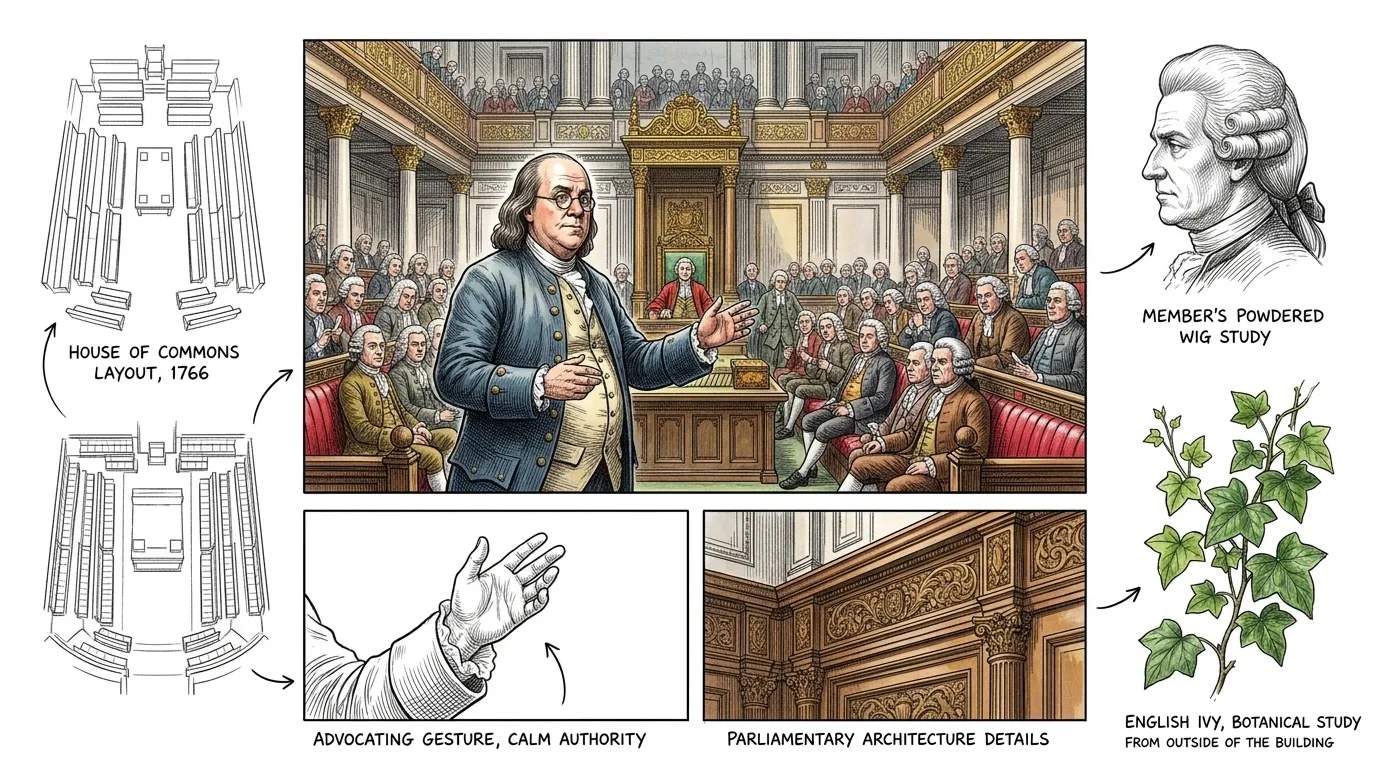
By 1766, Benjamin Franklin stood before the British House of Commons in London, not as a scientist, but as a resolute representative for the American colonies. He faced a hostile Parliament, defending the colonists against the Stamp Act and articulating their grievances with unwavering clarity. His testimony, delivered with calm authority, dismantled the British government's justification for taxation without representation. He warned them, 'Those who would give up essential Liberty, to purchase a little temporary Safety, deserve neither Liberty nor Safety.' This pivotal moment shifted the debate, revealing the deepening chasm between colonial rights and imperial authority, cementing his role as a formidable political advocate.
Page 7
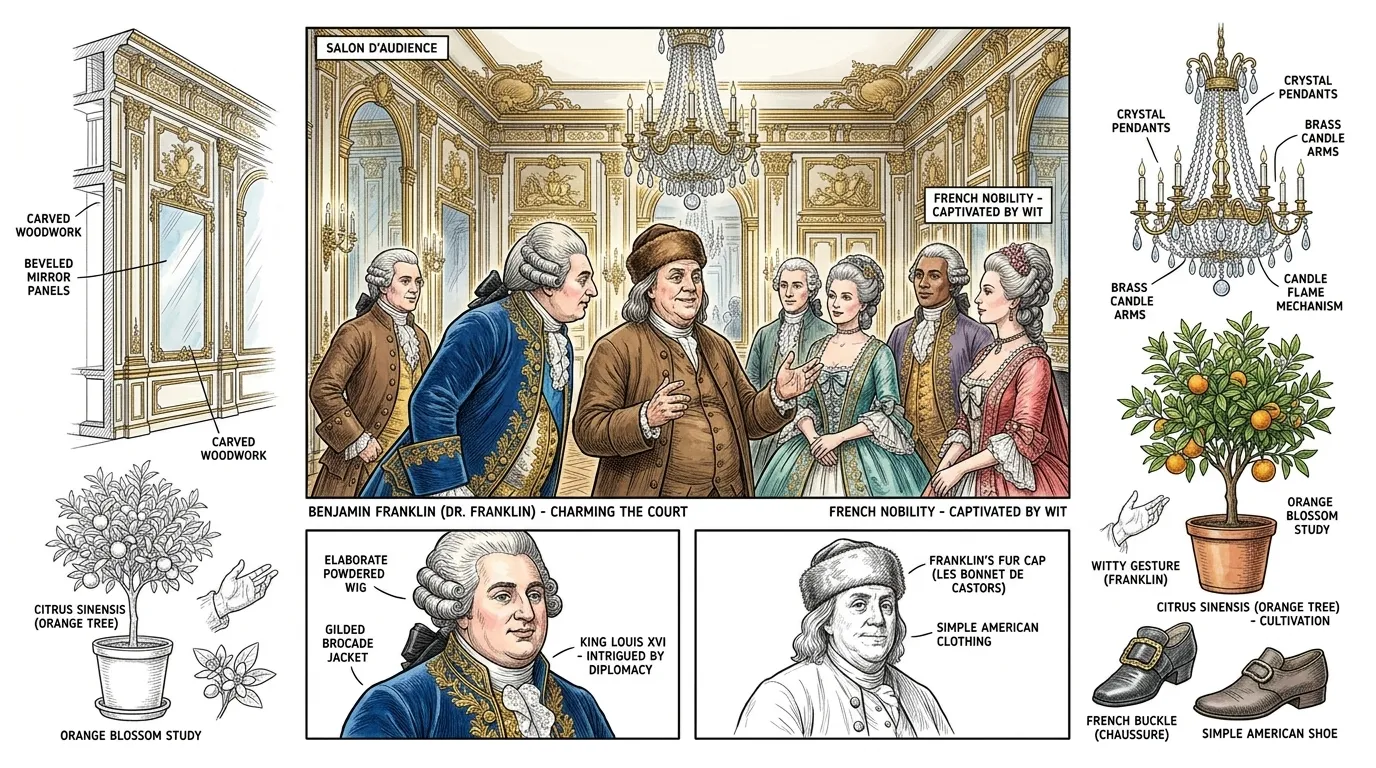
In December 1776, Benjamin Franklin arrived in France as the American Commissioner, tasked with securing a crucial alliance and desperately needed aid for the struggling American Revolution. Abandoning formal wigs for a simple fur cap and plain attire, he embodied the image of an honest, unpretentious republican philosopher. His wit, wisdom, and charm captivated Parisian society and the court of King Louis XVI, quickly making him a sensation. He navigated complex diplomatic intrigues, transforming French skepticism into ardent support, securing the Treaty of Alliance in 1778. His very presence became a weapon, winning hearts and minds where military might had failed.
Page 8
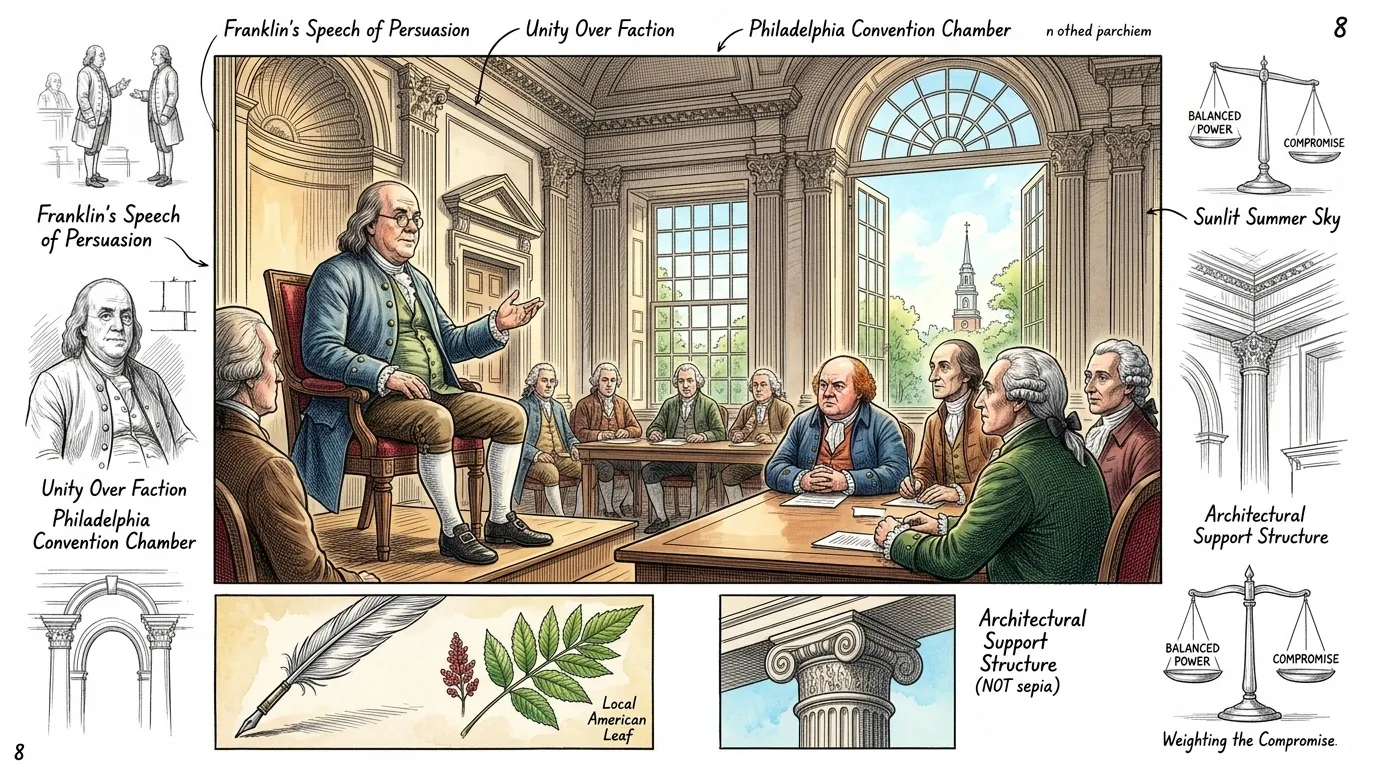
At the Constitutional Convention in Philadelphia during the sweltering summer of 1787, an ailing 81-year-old Benjamin Franklin served as a vital voice of unity. As factions threatened to derail the fragile process, he consistently advocated for compromise, drawing upon his deep understanding of governance, echoing the principles he had read in Montesquieu decades earlier. His wisdom helped bridge bitter divisions, particularly concerning representation. 'We are, Sir, in a political wilderness,' he declared, urging them to 'embrace reason and moderation' for the sake of the Union. His gentle, yet firm, counsel proved indispensable in forging the United States Constitution.
Page 9
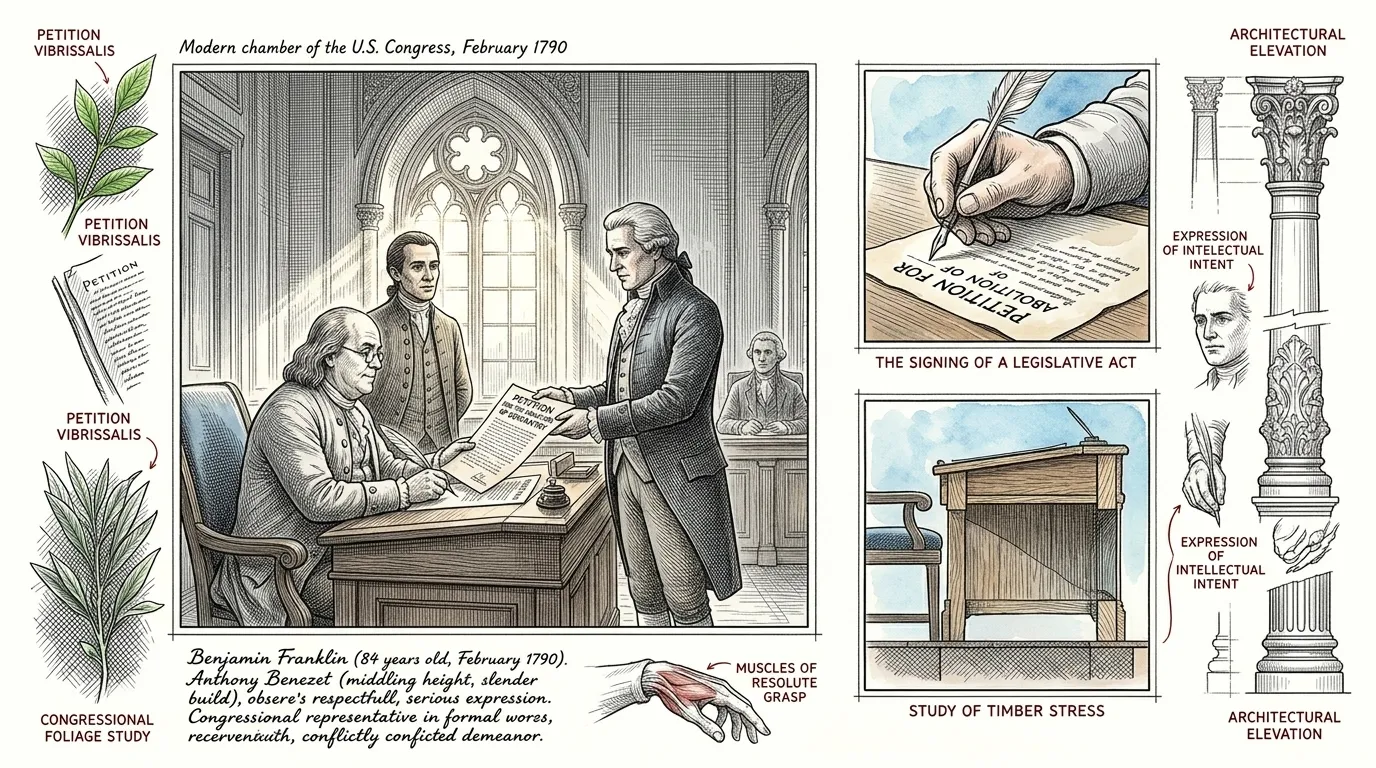
In his final public act, in February 1790, Benjamin Franklin, then 84 years old, signed and presented a petition to the U.S. Congress calling for the abolition of slavery. As President of the Pennsylvania Abolition Society, he challenged the young nation to confront its fundamental hypocrisy, arguing that 'justice and liberty' should extend to all. Though Congress rejected the petition, his action, published just weeks before his death, ignited a national debate. He consciously placed the moral imperative of freedom at the forefront of the American conscience, leaving a profound, unfinished challenge for future generations. His plea echoed the words of abolitionist Anthony Benezet, reminding a nation born of revolution that 'true liberty is too rare and too precious to be denied to any portion of humanity.'
Page 10
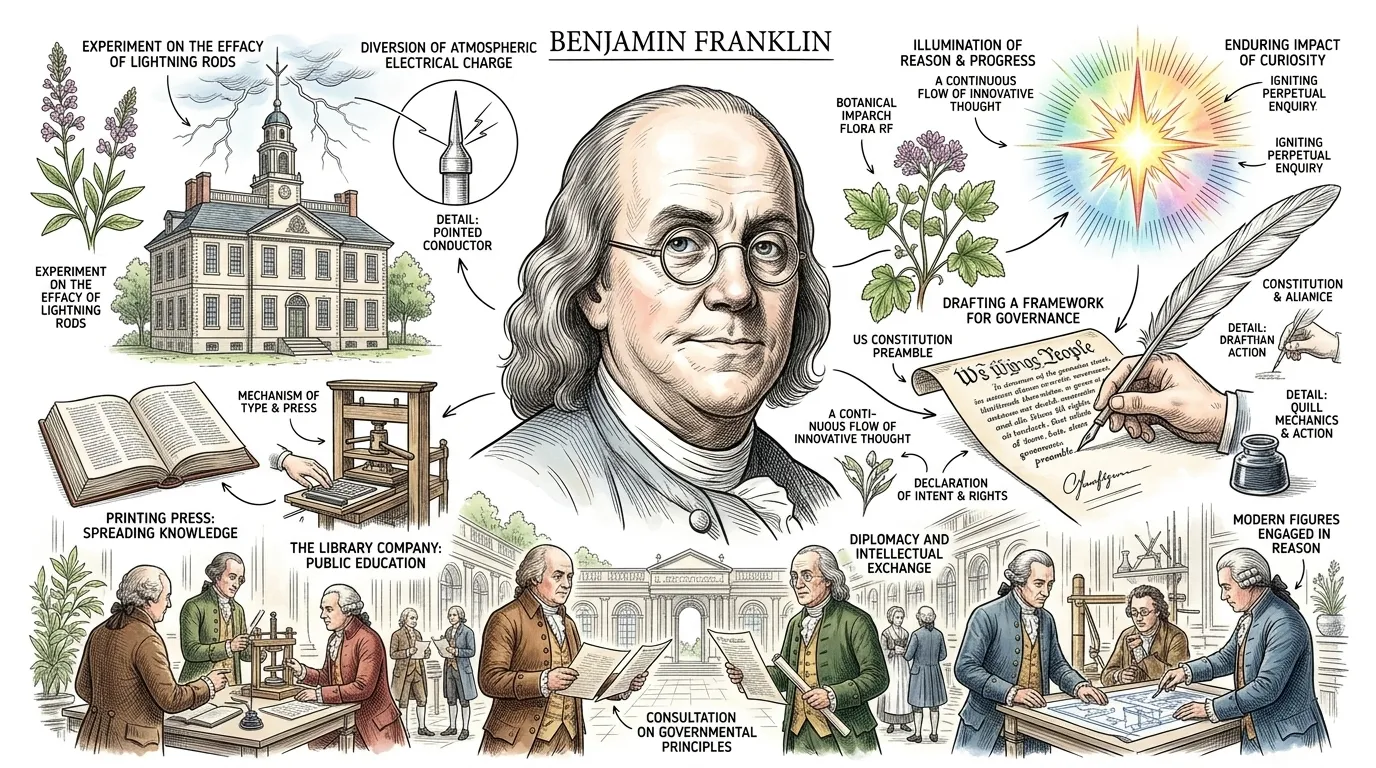
Benjamin Franklin's enduring legacy is woven into the very fabric of American identity and global enlightenment. He was not merely an inventor or a diplomat, but a perpetual force of progress, whose mind connected the seemingly disparate worlds of science, politics, and civic life. His lightning rod still protects structures, his democratic institutions continue to function, and his ideals of self-improvement and public service inspire generations. He defined what it meant to be an American polymath, a pragmatic visionary whose boundless curiosity and unwavering commitment to human betterment ignited a lasting spark across continents. What he built would outlive him, a testament to his declaration that 'by failing to prepare, you are preparing to fail,' a principle he consistently defied.
About this story
- Location: Global
- Audience: general readers
Questions and answers
Read Wonder People on your phone
Wonder People is available on Android. Get Wonder People on Google Play.