Akbar the Great
Akbar the Great — an illustrated biography story, set in Global. 10 illustrated pages, free to read on Wonder People.
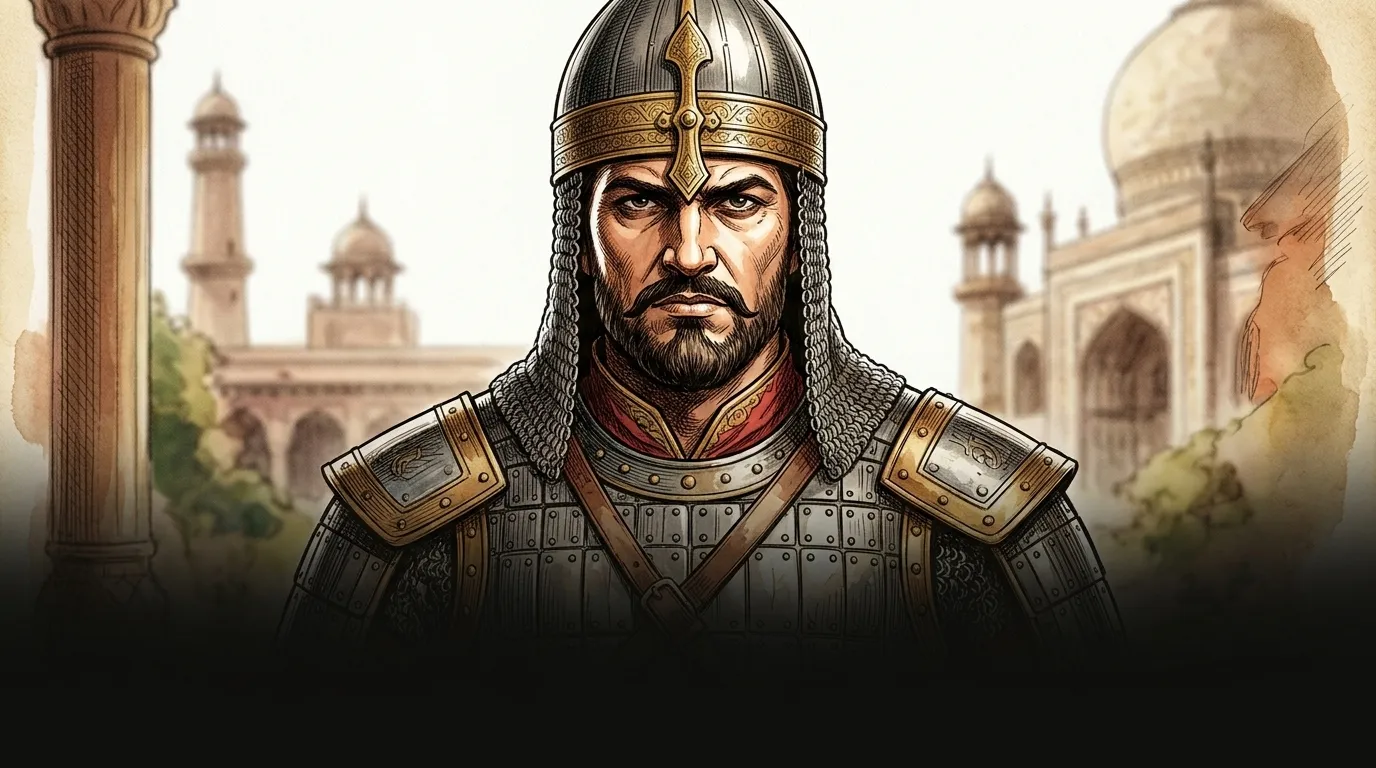
Page 1
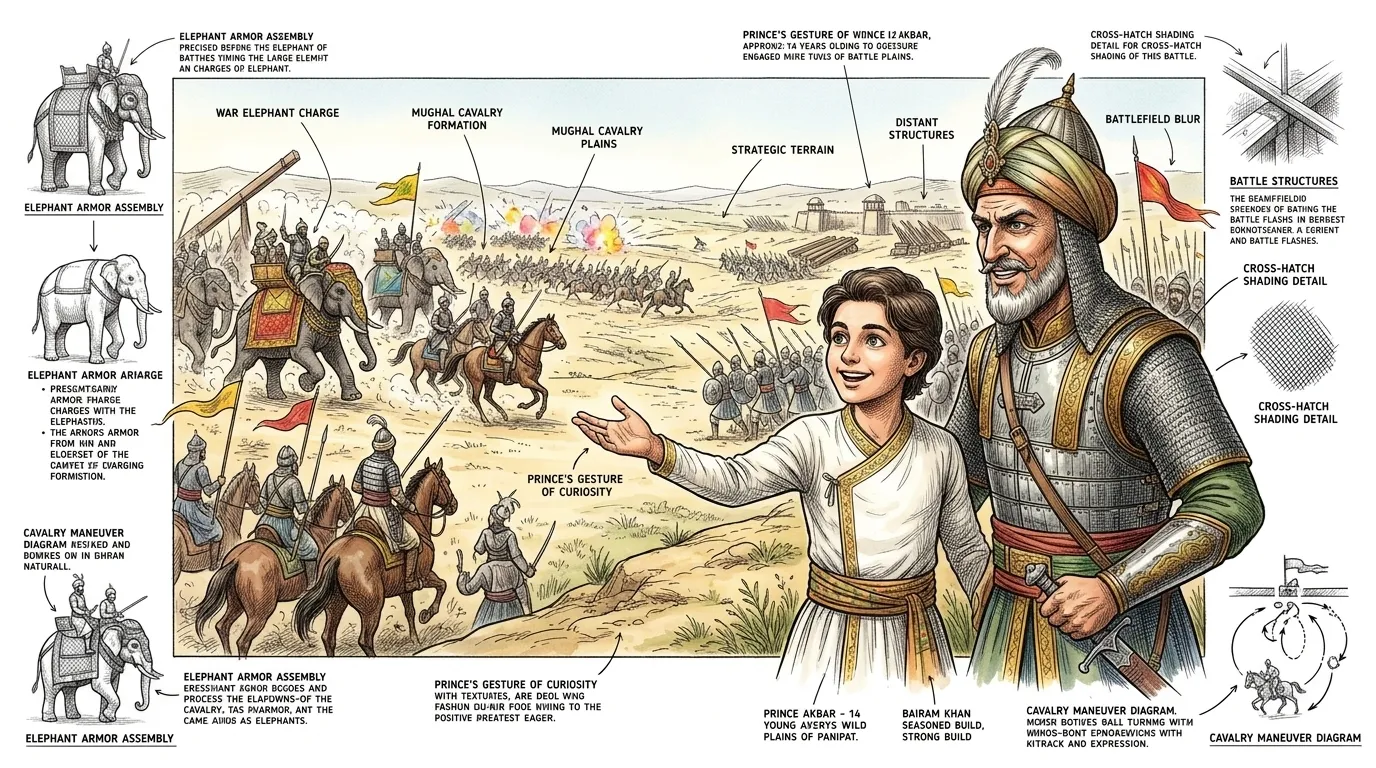
A fierce roar ripped across the plains of Panipat in 1556. Young Prince Akbar, barely fourteen, watched as the battle raged, his regent Bairam Khan guiding the Mughal forces against the formidable Hemu. Arrows flew, elephants charged, and the fate of an empire hung in the balance.
"'Victory belongs to those who believe in it most, and believe in it longest!' Bairam Khan declared, his voice cutting through the din. 'As the Roman general Hannibal Barca once demonstrated, unwavering resolve can break any foe. Our men see your courage, Prince!'"
Biographical Fact: The Second Battle of Panipat was a decisive victory for the Mughal forces, cementing Akbar's claim to the throne and critically weakening the Sūri dynasty and other local powers. The battle's outcome largely shaped the future trajectory of the Mughal Empire.
Page 2
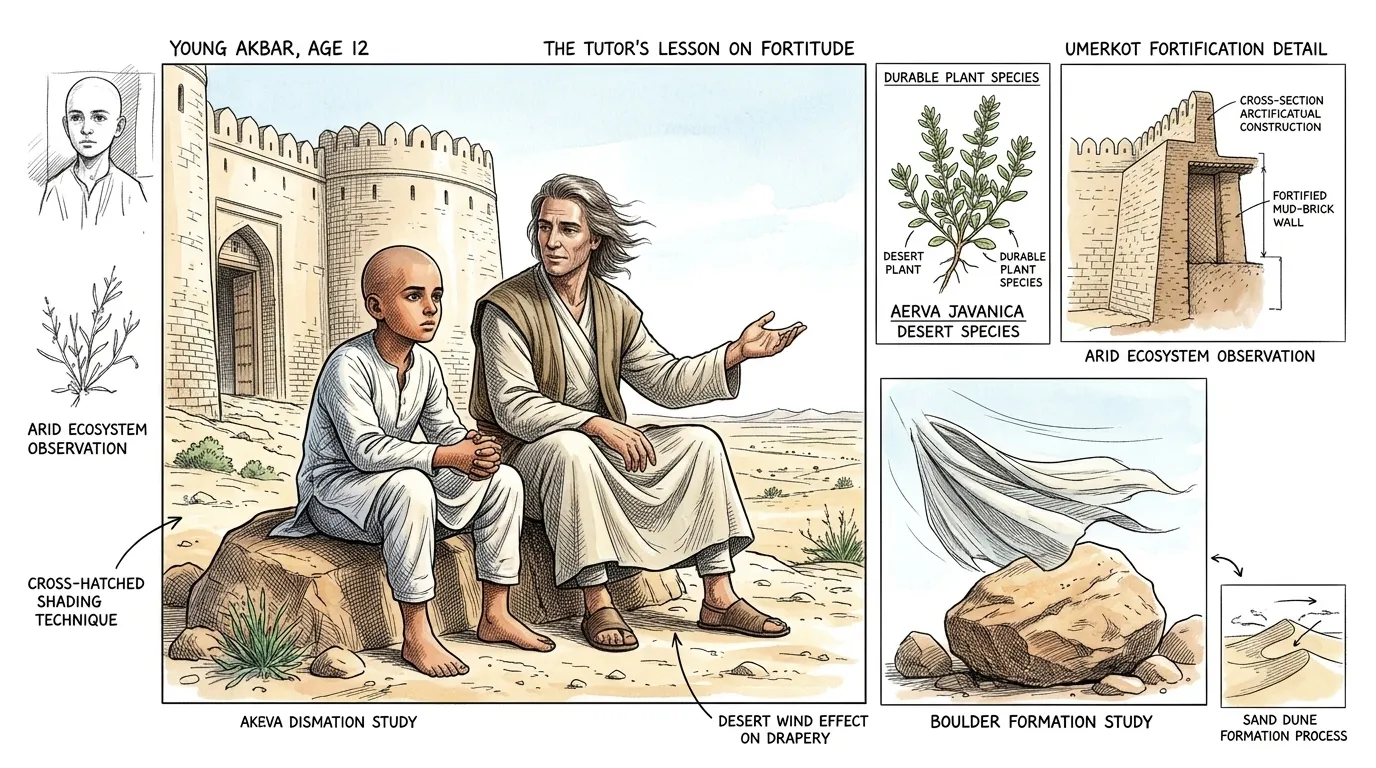
Born in Umerkot Fort during his father Humayun's exile, young Akbar's childhood was a constant journey of uncertainty and survival. His early years instilled in him a resilient spirit, far from the lavish courts of future emperors. He learned quickly how power was gained and lost.
"'The desert teaches patience, Prince,' one of his tutors explained, gesturing to the sparse landscape. 'Your father, Humayun, often reminded us that 'Fortune favors the brave,' a wisdom passed down through our lineage. This arid land demands bravery every day.'"
Biographical Fact: Akbar's birth in 1542, while his father Humayun was fleeing Sher Shah Suri, meant his early life was marked by instability. This period shaped his character and strategic acumen from a young age.
Page 3
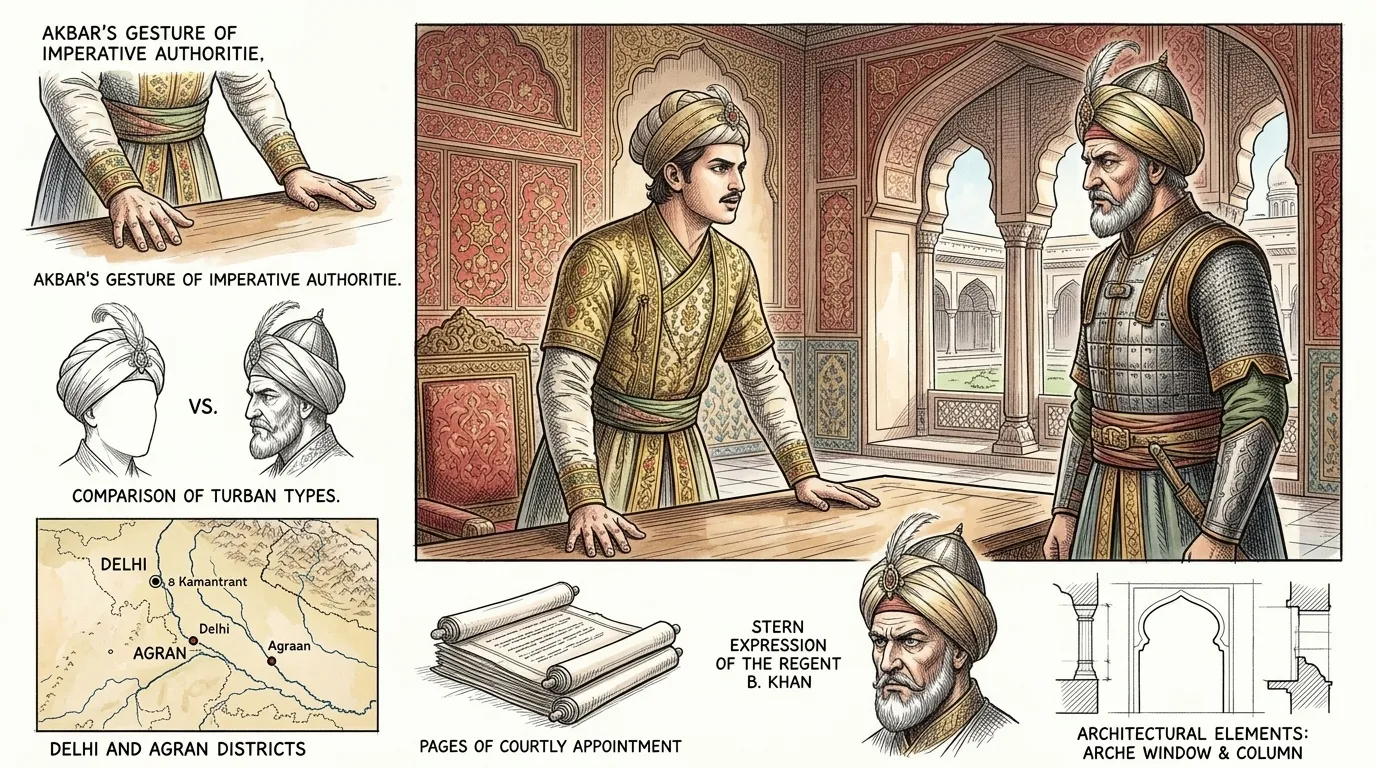
As Akbar matured, the powerful regent Bairam Khan continued to hold significant sway, governing the empire. At eighteen, Akbar made a bold decision to assert his full authority, a critical step towards establishing his independent rule. This move risked alienating a loyal, powerful figure.
"'The reins of state must be held by one hand, Bairam Khan,' Akbar stated, his voice firm despite his youth. 'As the philosopher Confucius taught, 'The superior man is watchful over himself when alone.' I must now govern alone, for the future of the empire demands it.'"
Biographical Fact: In 1560, Akbar dismissed Bairam Khan, his guardian and regent, ending his tutelage and marking the beginning of his direct rule. This was a crucial act of self-assertion for the young emperor.
Page 4
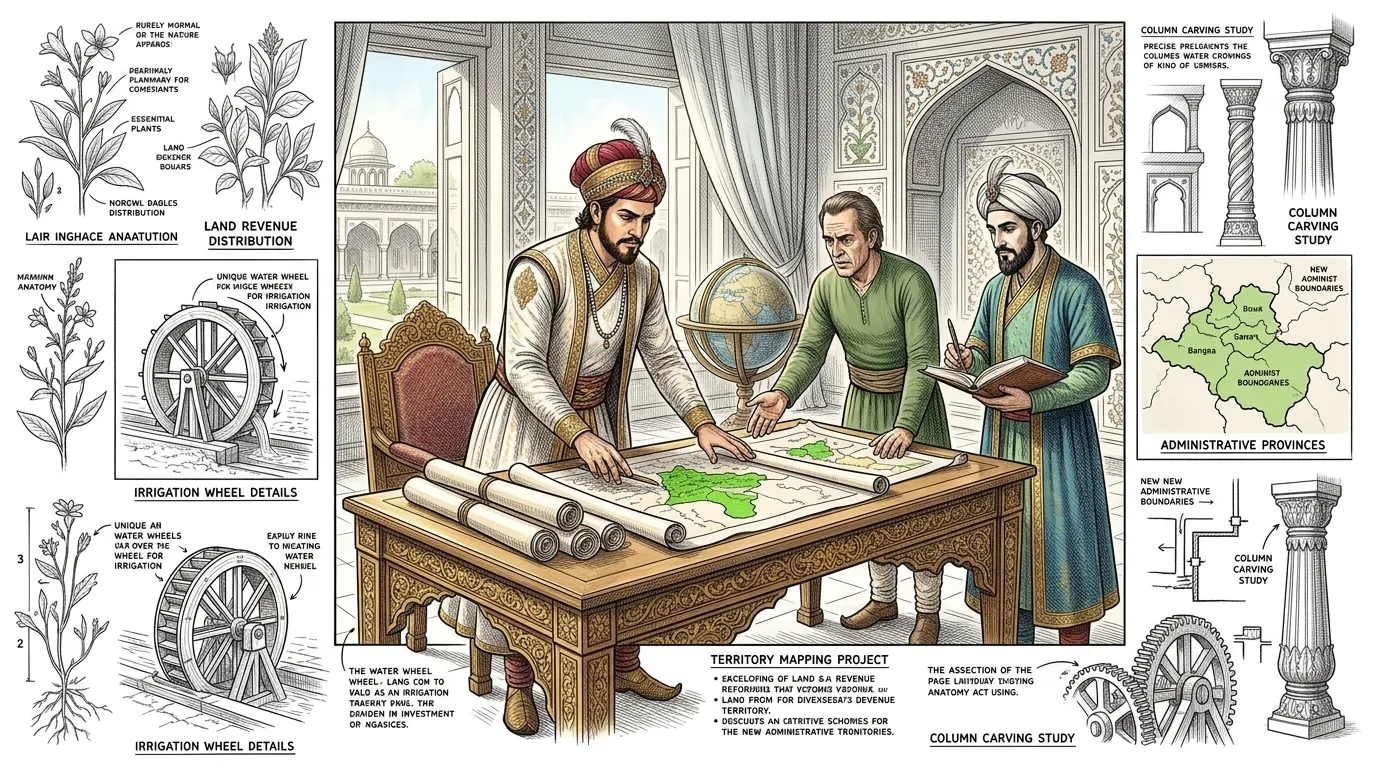
Akbar knew that a vast empire required more than just military might; it needed a stable, just administration. He initiated comprehensive land and revenue reforms, streamlining the system and ensuring greater fairness across his diverse territories. This bold overhaul aimed to prevent exploitation.
"'Justice in taxation strengthens the realm,' Akbar proclaimed to his advisors, his hand sweeping over a collection of scrolls and maps. 'Our revered scholar Kautilya, in the Arthashastra, emphasized that 'The root of wealth is economic activity, and good governance is the root of economic activity.' We will ensure a just system for all.'"
Biographical Fact: Todar Mal, Akbar's finance minister, implemented the 'Dahsala system' (or Zabti system) in 1580, standardizing land revenue assessment based on ten-year average yields and prices. This reform significantly stabilized the empire's economy.
Page 5
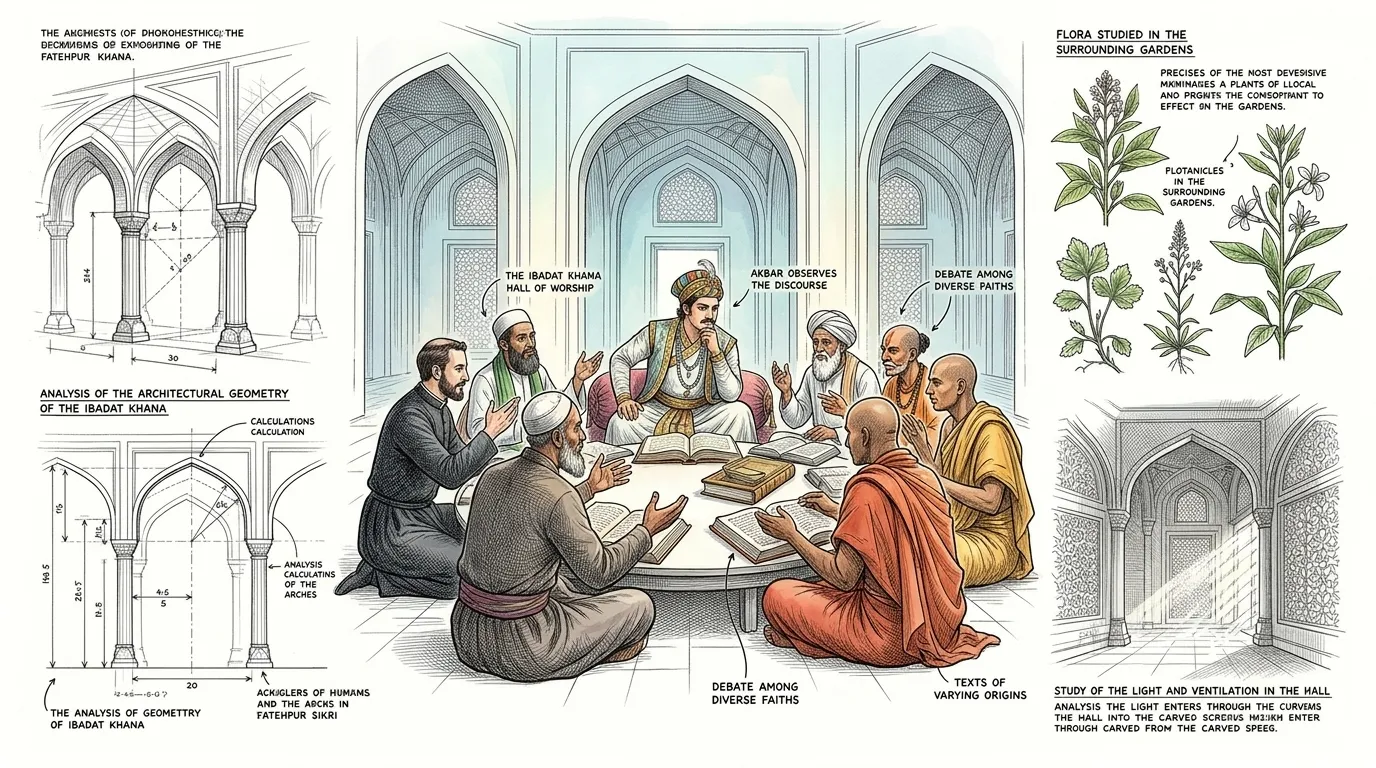
Recognizing the vast religious diversity of his empire, Akbar sought understanding rather than forced uniformity. In Fatehpur Sikri, he established the Ibadat Khana, a 'House of Worship,' where scholars and leaders of all faiths could openly debate theological questions. This was an unprecedented act of intellectual curiosity and tolerance.
"'Truth knows no single path,' Akbar declared to the assembled scholars, his gaze sweeping across the diverse group. 'The Sufi poet Rumi advised, 'There are a hundred ways to kneel and kiss the ground.' We must seek wisdom from every corner, to unite rather than divide our people.'"
Biographical Fact: The Ibadat Khana, established in 1575, hosted regular discussions among leaders of different religions, including Islam, Hinduism, Jainism, Zoroastrianism, and Christianity. These dialogues profoundly influenced Akbar's policy of Sulh-e-Kul (universal peace).
Page 6
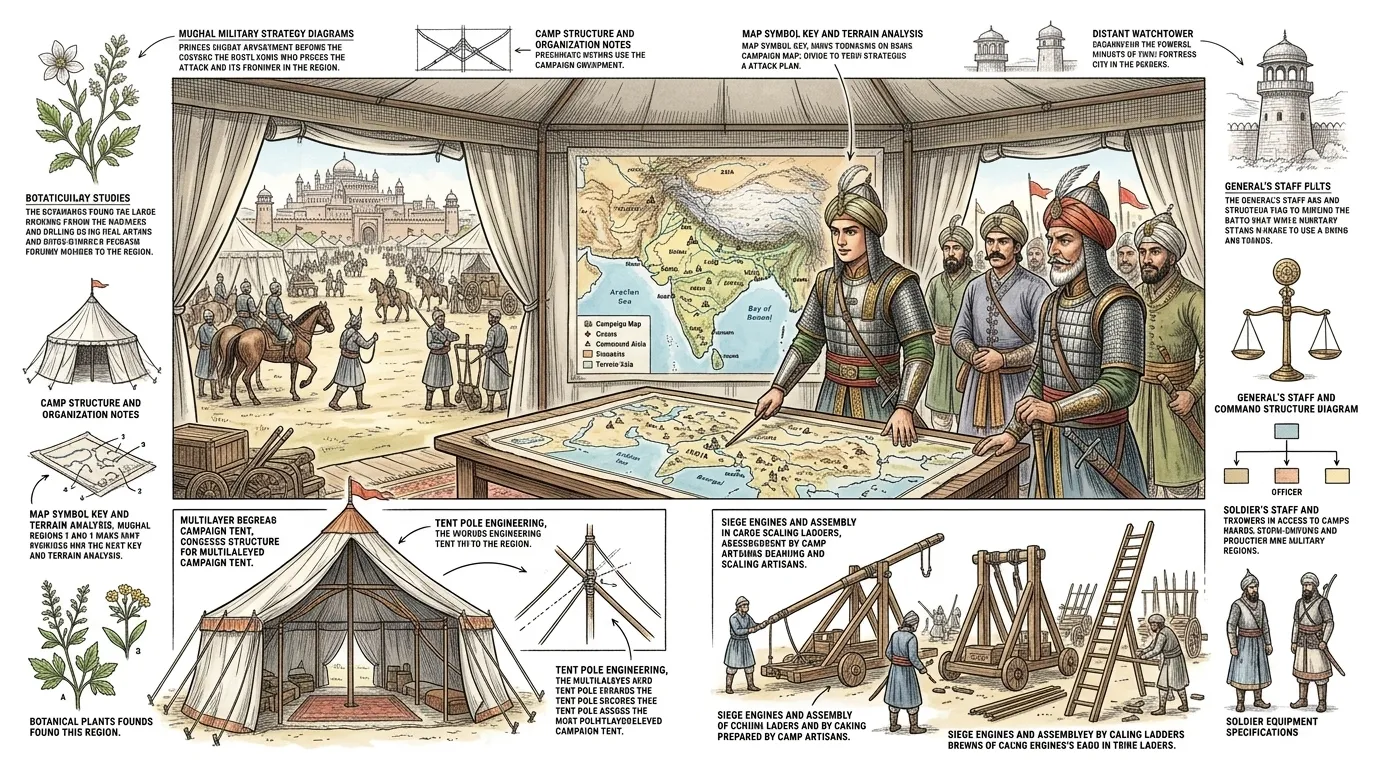
Akbar was not only a reformer but a formidable warrior. From Kandahar to Bengal, he personally led his armies, strategically expanding the Mughal Empire through a series of brilliant military campaigns. Each victory added territory and resources, building towards a unified Hindustan.
"'A ruler must ensure his people's security, for without it, no progress can endure,' Akbar addressed his generals before a campaign. 'As Niccolò Machiavelli observed in 'The Prince,' 'It is better to be feared than loved, if one cannot be both.' Our strength assures peace.'"
Biographical Fact: Akbar's reign saw significant territorial expansion, largely through military campaigns. Notable conquests included Malwa (1561), Gujarat (1572), and Kashmir (1586), consolidating Mughal rule over much of the Indian subcontinent.
Page 7
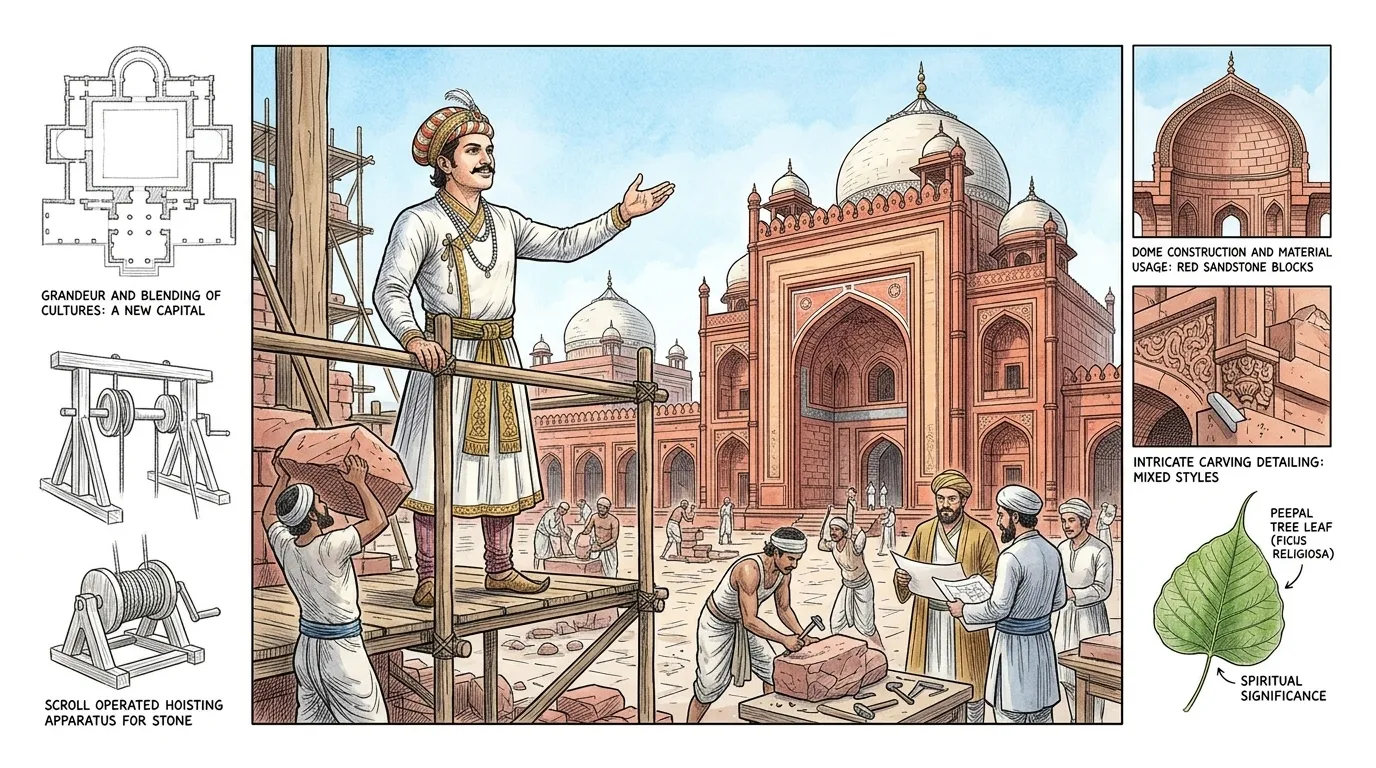
Akbar's vision for a harmonized empire found its physical manifestation in Fatehpur Sikri, his new capital city. Blending Persian, Central Asian, and indigenous Indian architectural styles, the city was a testament to his synthesis of cultures. Its construction marked a high point in Mughal artistic and engineering ambition.
"'Architecture speaks of a civilization's soul,' Akbar remarked as he surveyed the construction. 'The structures we raise today will tell future generations of our unity, for 'Art washes away from the soul the dust of everyday life,' as Pablo Picasso might have put it. Here, we build eternity.'"
Biographical Fact: Fatehpur Sikri, built between 1569 and 1585, served as Akbar's capital for a short period. Its distinctive red sandstone architecture, blending various regional styles, symbolizes Akbar's cultural syncretism and imperial grandeur.
Page 8
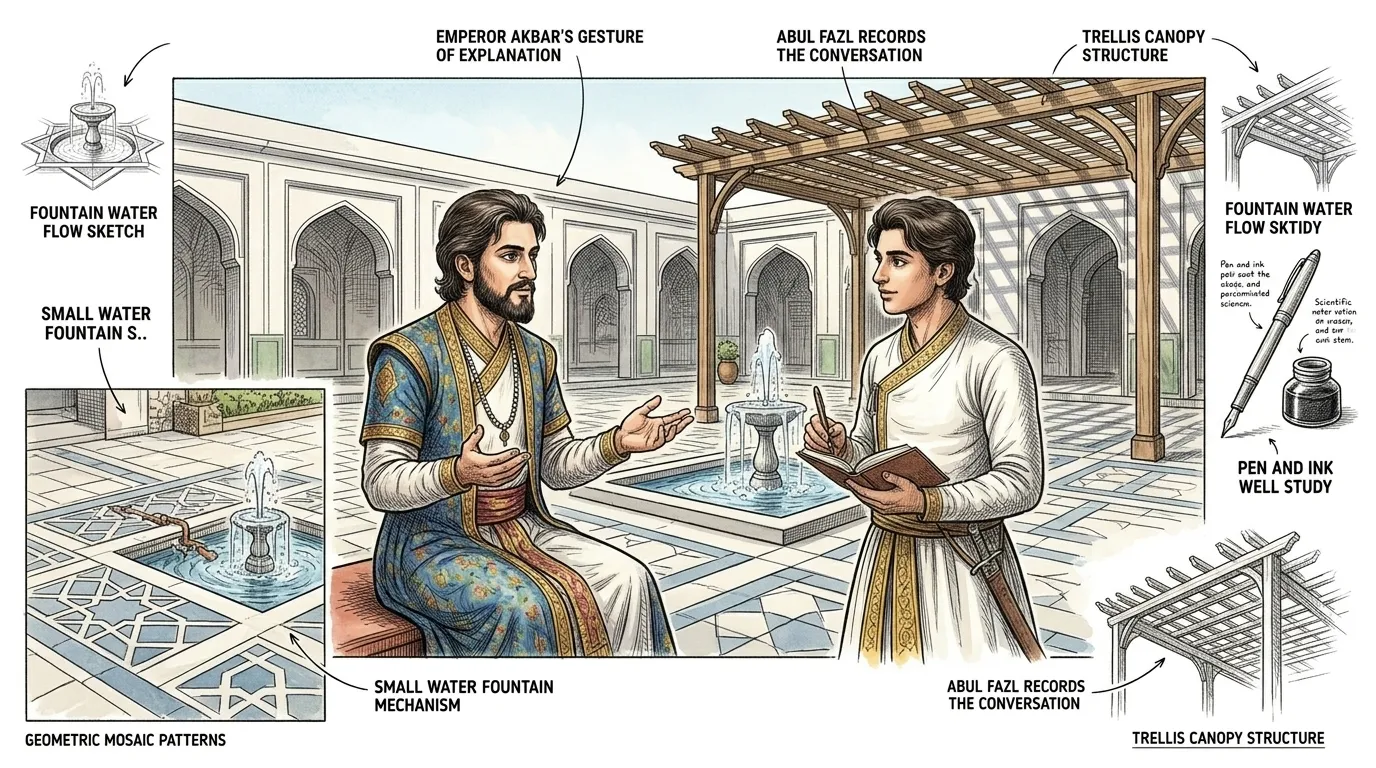
Driven by his belief in universal peace and his deep intellectual curiosity, Akbar introduced the Din-i Ilahi, a syncretic belief system synthesizing elements from various religions. While it did not become a mass religion, it formalized his philosophical approach to governance, aiming to transcend sectarian divisions. This act drew both admiration and fervent opposition.
"'We seek not to impose, but to inspire,' Akbar articulated to his chronicler Abul Fazl. 'As the ancient Roman philosopher Seneca wrote, 'Every new beginning comes from some other beginning's end.' This path is an evolution, not a decree, for those who seek universal truth.'"
Biographical Fact: Din-i Ilahi, meaning 'Divine Faith,' was promulgated by Akbar in 1582. It was not a proselytizing religion but a spiritual order for a select few loyal nobles, designed to foster imperial unity under Akbar's personal moral leadership, emphasizing virtues like piety and generosity.
Page 9
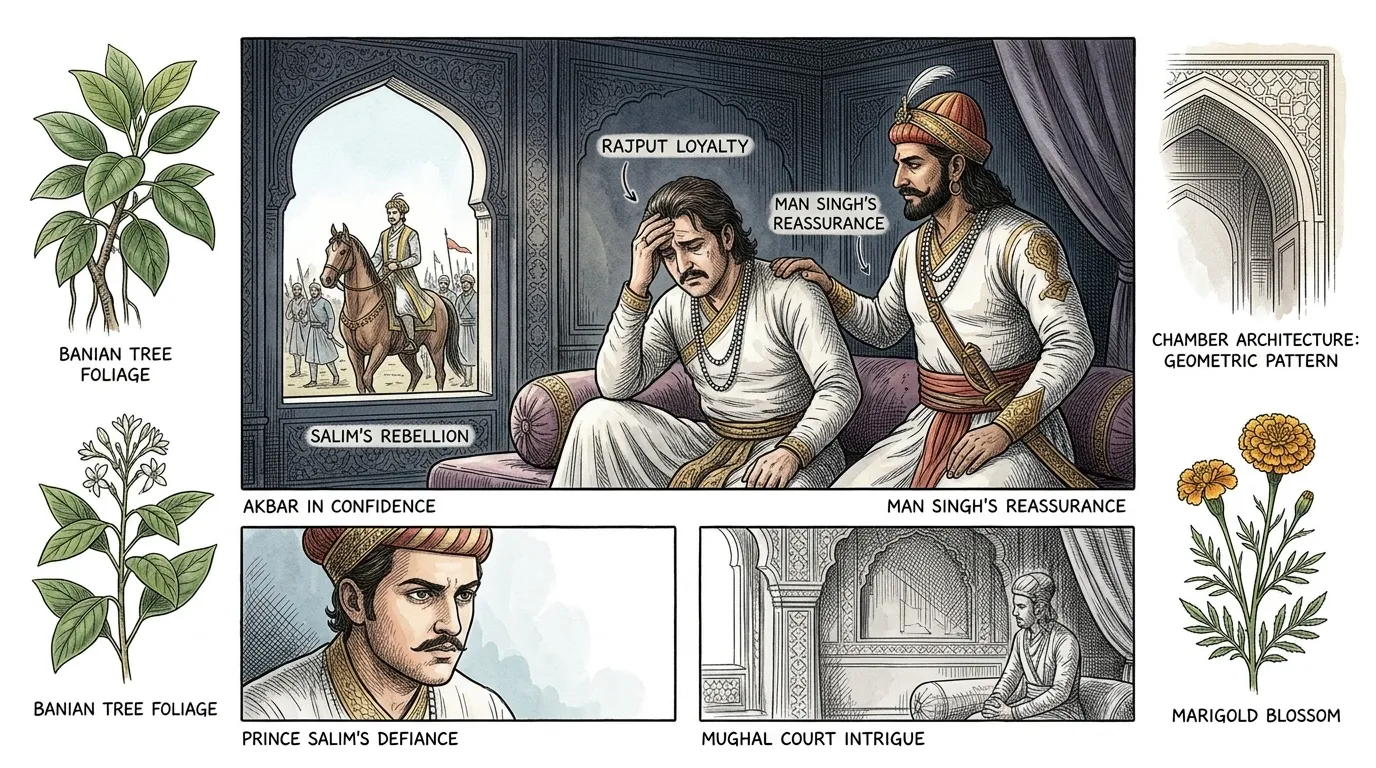
Even a powerful emperor like Akbar faced profound challenges within his own family. His eldest son, Prince Salim (the future Jahangir), grew restless and rebelled, asserting his independence through military action. This period of internal strife tested Akbar's resolve and threatened the stability of his meticulously built empire.
"'A father's heart aches, but an emperor's duty remains paramount,' Akbar confided to his trusted general, Raja Man Singh, his face etched with sorrow. 'As the Greek playwright Euripides wisely noted, 'Those whom the gods wish to destroy, they first make mad.' Salim's ambition risks all we have built.'"
Biographical Fact: Prince Salim's rebellion, from 1599 to 1604, deeply troubled Akbar's final years. Salim's actions, including declaring himself emperor and orchestrating the assassination of Abul Fazl, highlighted the constant struggle for power even within the imperial family.
Page 10
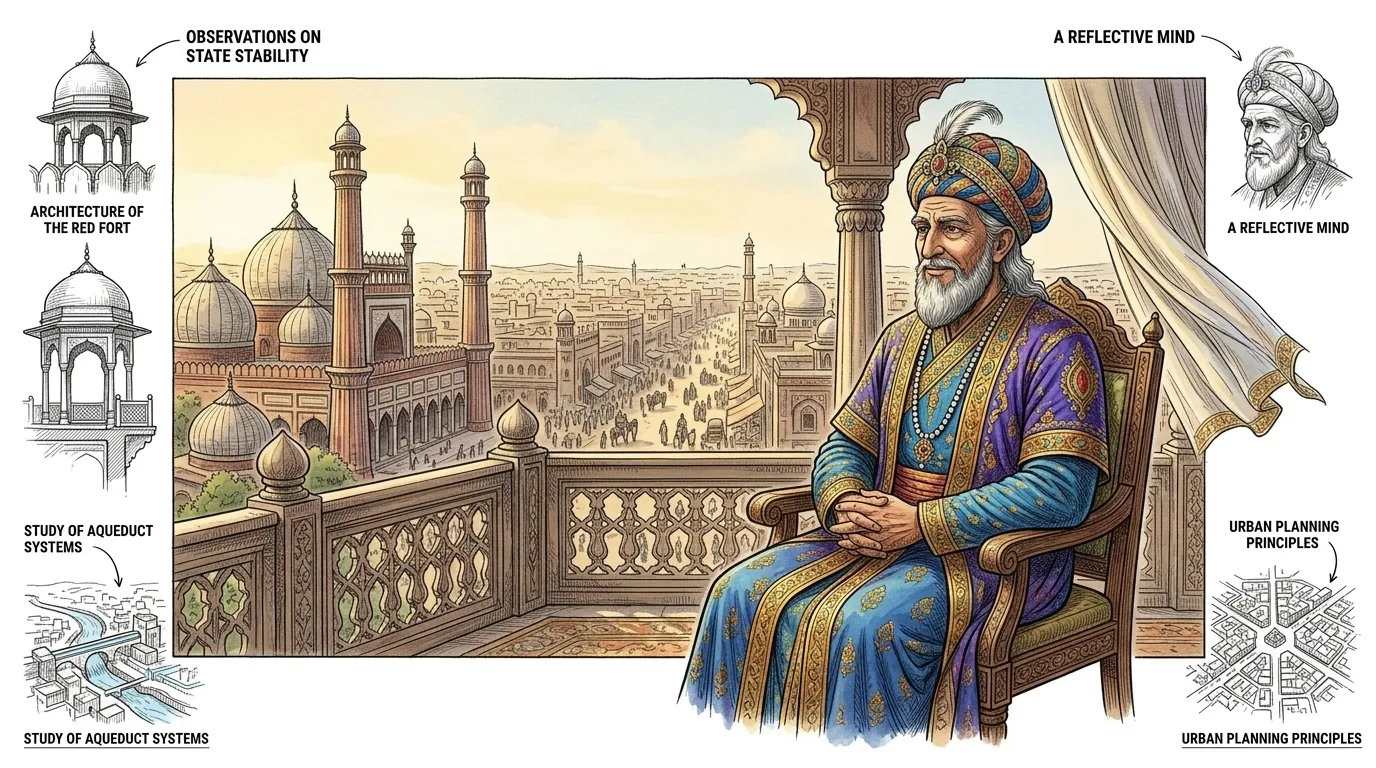
Akbar the Great died in 1605, leaving behind an empire vastly expanded, financially stable, and culturally rich. His policies of religious tolerance, administrative efficiency, and cultural synthesis laid foundations that endured for centuries, profoundly shaping the Indian subcontinent. His vision of a unified Hindustan, embracing its diversity, became his lasting mark.
"'The truest measure of a life is the foundation it leaves for the future,' the elderly Akbar mused, reflecting on his reign. 'As the ancient Chinese philosopher Laozi taught, 'A journey of a thousand miles begins with a single step.' I took many steps, and I hope they guide those who follow.'"
Biographical Fact: Akbar's reign (1556-1605) is considered a golden age of the Mughal Empire. His administrative innovations, religious tolerance, and patronage of arts and architecture created a powerful, stable, and culturally vibrant state, leaving an indelible impact on Indian history.
About this story
- Location: Global
- Audience: general readers
Questions and answers
Read Wonder People on your phone
Wonder People is available on Android. Get Wonder People on Google Play.