William Shakespeare
William Shakespeare — an illustrated biography story, set in Global. 10 illustrated pages, free to read on Wonder People.
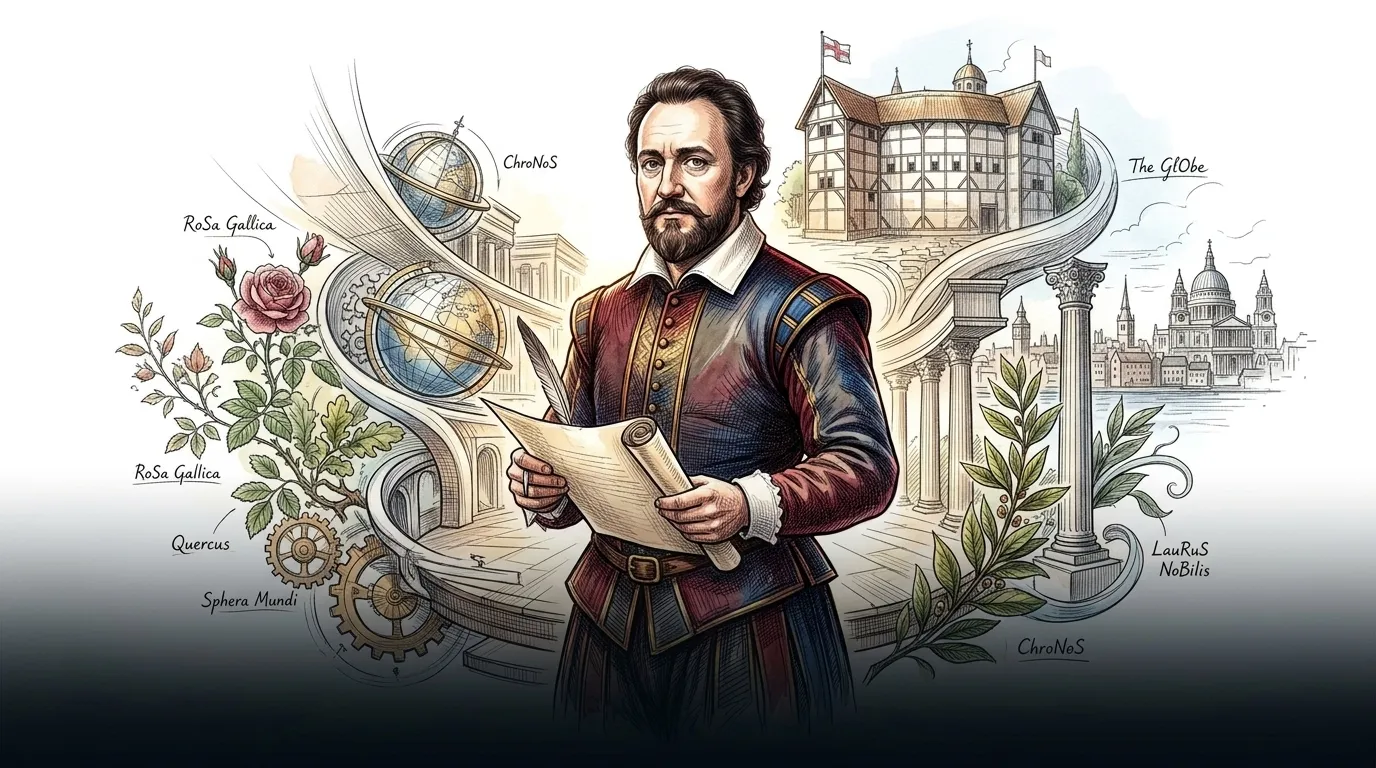
Page 1
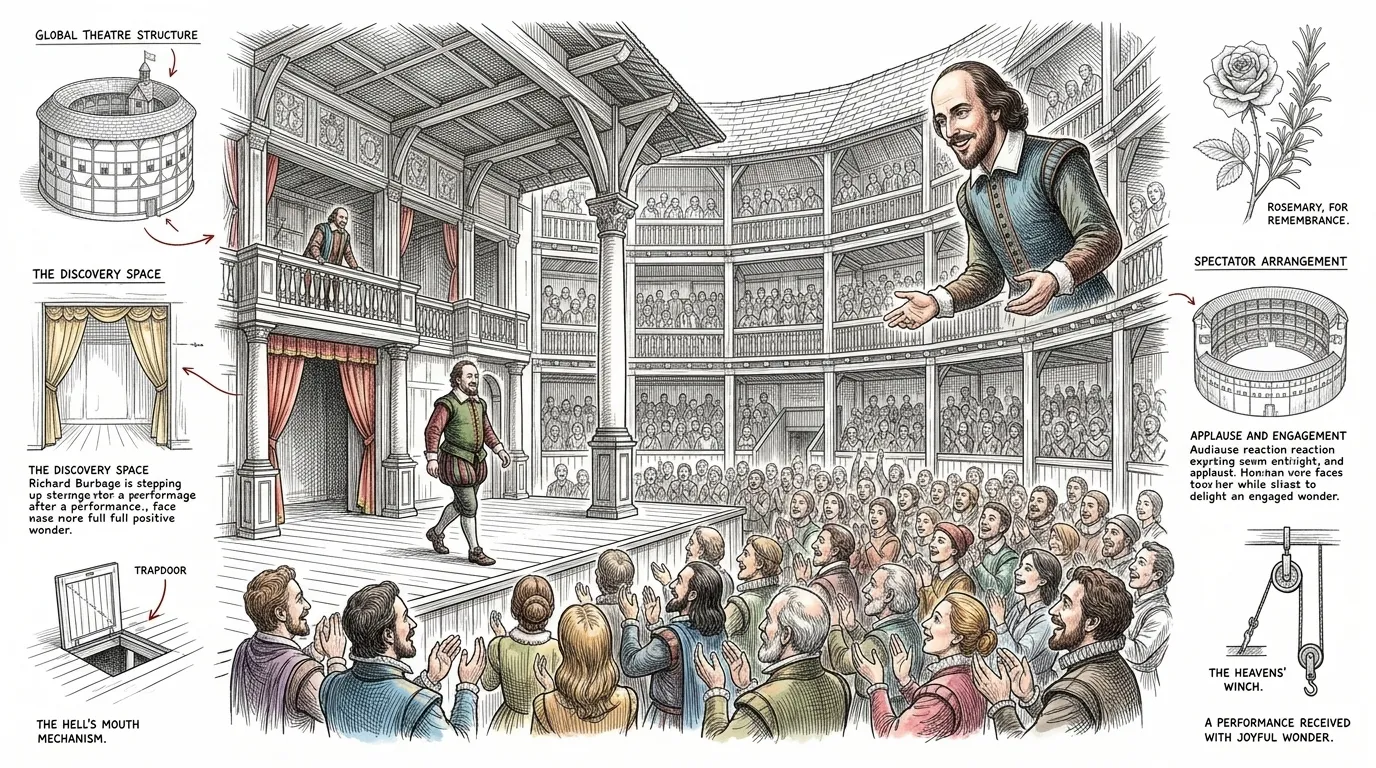
William Shakespeare stands on the balcony of the newly built Globe Theatre in 1601, overlooking a packed house. Below, a principal actor delivers Hamlet's soliloquy, commanding the attention of 3,000 rapt spectators. "They hang on every word, Richard," Shakespeare whispers to the principal actor, who briefly steps backstage. "'To be, or not to be, that is the question' – it echoes in every soul, doesn't it? As the Roman playwright Seneca the Younger once wrote, 'Every new beginning comes from some other beginning's end.' This play, this theatre, is just such a beginning for us all, a profound cultural event." The audience erupts in applause, a wave of human emotion crashing against the open stage.
Page 2
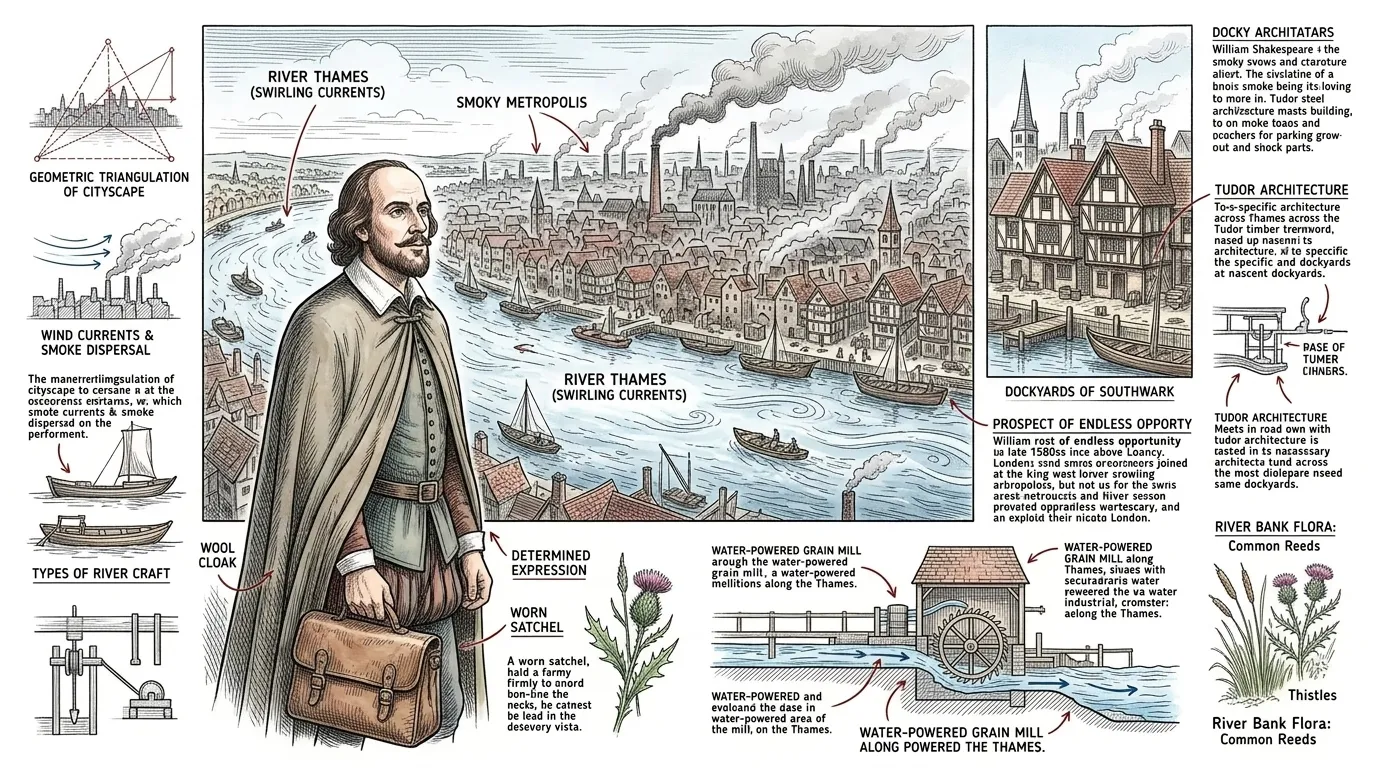
William Shakespeare, a man from Stratford, gazed at the swirling Thames and the dense, smoky expanse of London in the late 1580s. He clutched a worn satchel, its contents a few precious manuscripts and a fierce ambition. "This city holds the promise," he mused aloud, adjusting his simple wool cloak, a tangible sign of his provincial origins. "The old ways in Stratford, they offered comfort, but not this kind of fire. 'The world is a stage,' my father often said, quoting an old proverb, 'and all the men and women merely players.' Here, I intend to write the greatest parts and find my place." The sprawling metropolis, a labyrinth of opportunity and fierce competition, beckoned before him.
Page 3
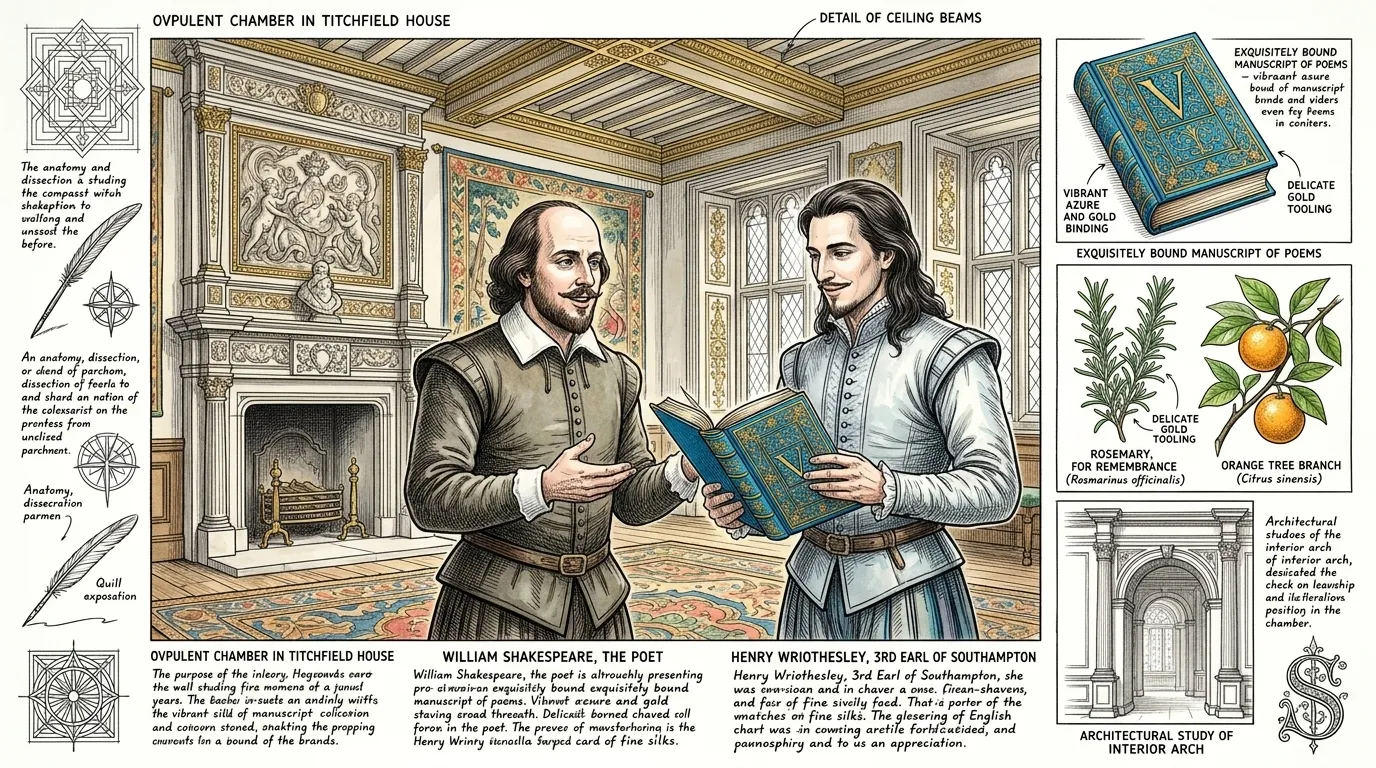
In the opulent chamber of Henry Wriothesley, 3rd Earl of Southampton, in 1593, William Shakespeare presented his narrative poem, Venus and Adonis. The young Earl, barely twenty, took the exquisitely bound manuscript. "Sir, I have penned this 'first heir of my invention' for your noble eye," Shakespeare declared, his voice steady. "May it find favor and, as the philosopher Plato suggested, 'Music gives a soul to the universe, wings to the mind, flight to the imagination, and life to everything.' I believe words, especially poetry, can do the same, even for matters of classical love and beauty." The Earl, a youthful nobleman in fine silks, nodded, a subtle gesture that promised crucial financial support and entry into higher societal circles, acknowledging the profound power of such artistic endeavor.
Page 4
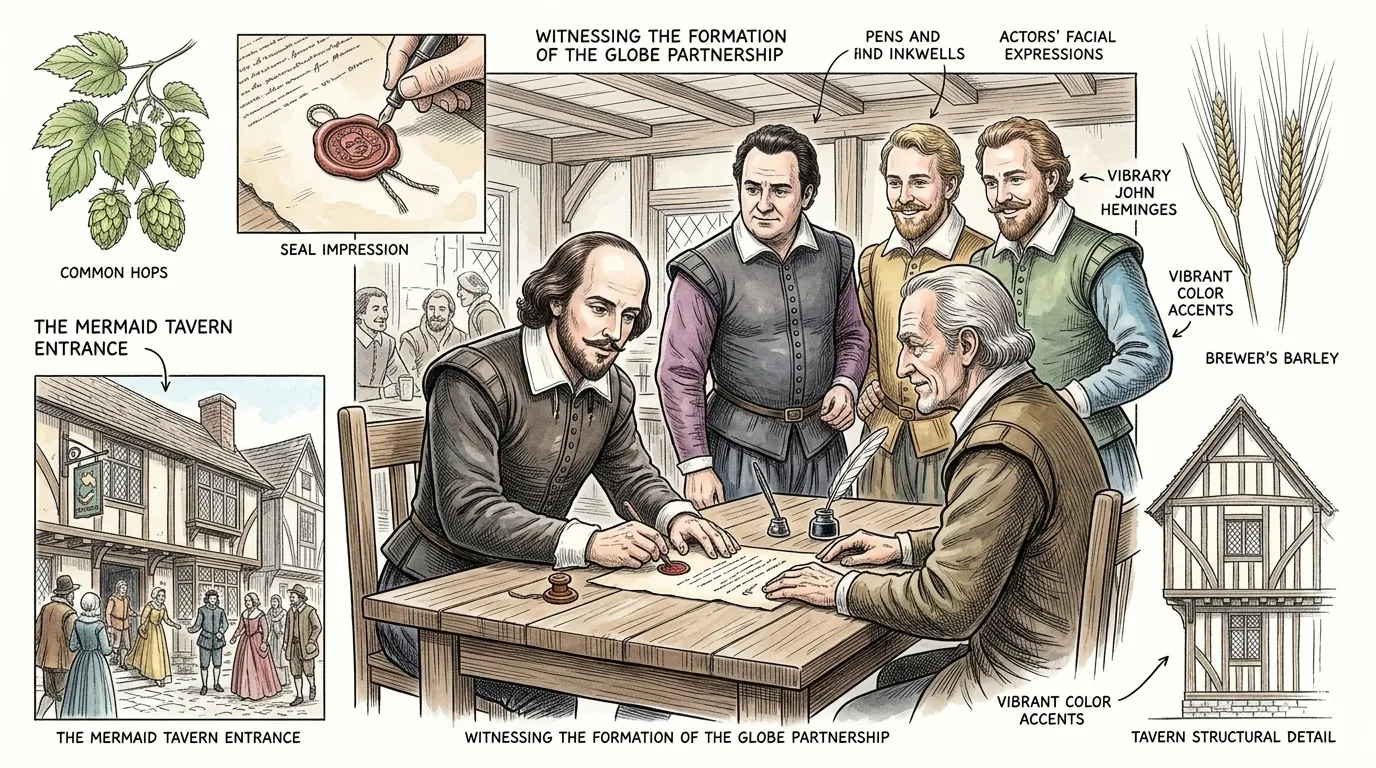
At a bustling London tavern in 1594, William Shakespeare sat across from an elder theatre proprietor, the owner of The Theatre, and affixed his seal to a crucial agreement. This was not merely an employment contract; it made him a shareholder in the Lord Chamberlain's Men, a collective enterprise. "This grants us shared purpose, Master Proprietor," Shakespeare stated, his gaze firm over the parchment. "A true partnership, where the fortunes of the company are our own. As the Roman poet Horace taught, 'Adversity has the effect of eliciting talents which in prosperous circumstances would have lain dormant.' We face great competition, but together, we shall rise." Other company members, keen-faced actors, gathered around, witnessing the formation of what would become a theatrical powerhouse, their futures intertwined.
Page 5
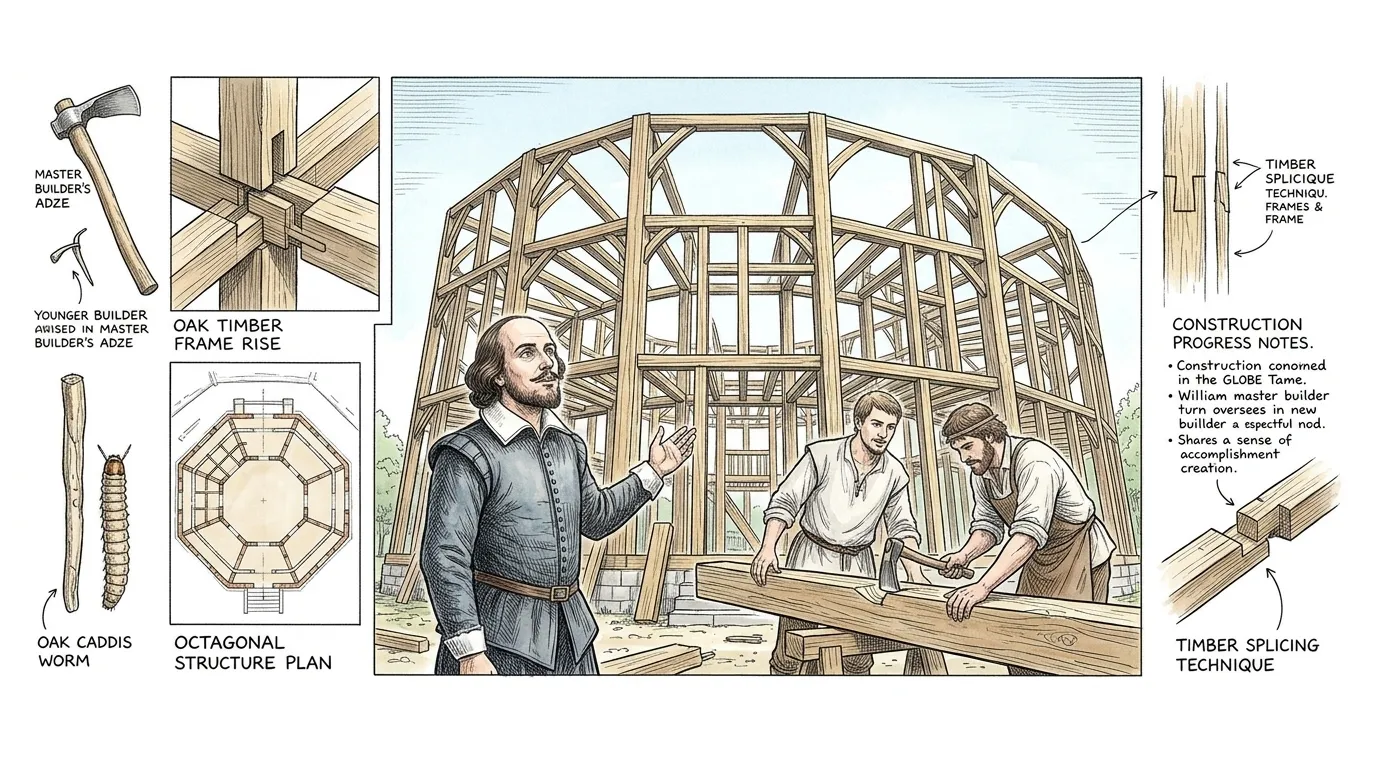
On the south bank of the Thames, in 1599, William Shakespeare stood amidst the rising timber frame of the new Globe Theatre. Their old theatre's lease had expired, and he, along with his fellow actors, had physically moved the wood across the river. "See how it grows, Master Builder?" Shakespeare called to a younger man, the proprietor's son, overseeing a carpenter. "A phoenix rising from the ashes of old troubles! As the proverb says, 'Necessity is the mother of invention.' We were forced to build anew, and in doing so, we build something greater, a stage of unprecedented scale." The massive timbers of the octagonal structure promised a new era for English drama, a stage built by its own artists and entrepreneurs.
Page 6
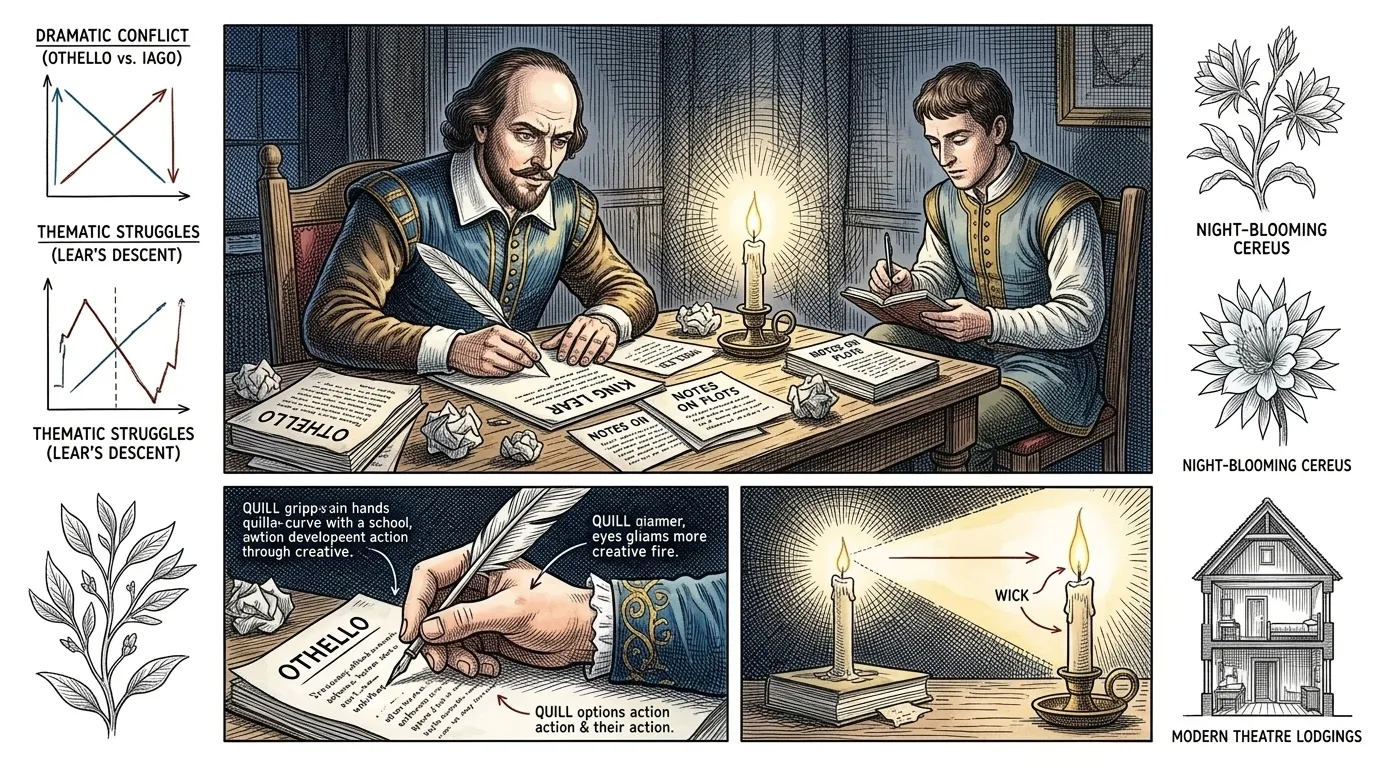
Late at night in his London lodgings, circa 1600, William Shakespeare wrestled with multiple plots for Othello and King Lear. The candlelight flickered across scattered manuscripts, his quill scratching furiously. "The stories demand their telling, Scholar," he muttered to a visiting foreign scholar who recorded his observations. "These human passions, these depths of the soul... The ancient Greek philosopher Heraclitus declared, 'The very essence of the soul is found in movement,' and what is drama, but movement of the soul?" He paused, rubbing his temples, knowing the weight of creation rested heavily upon him, yet driven by an insatiable urge to capture the complexities of the human spirit on paper.
Page 7
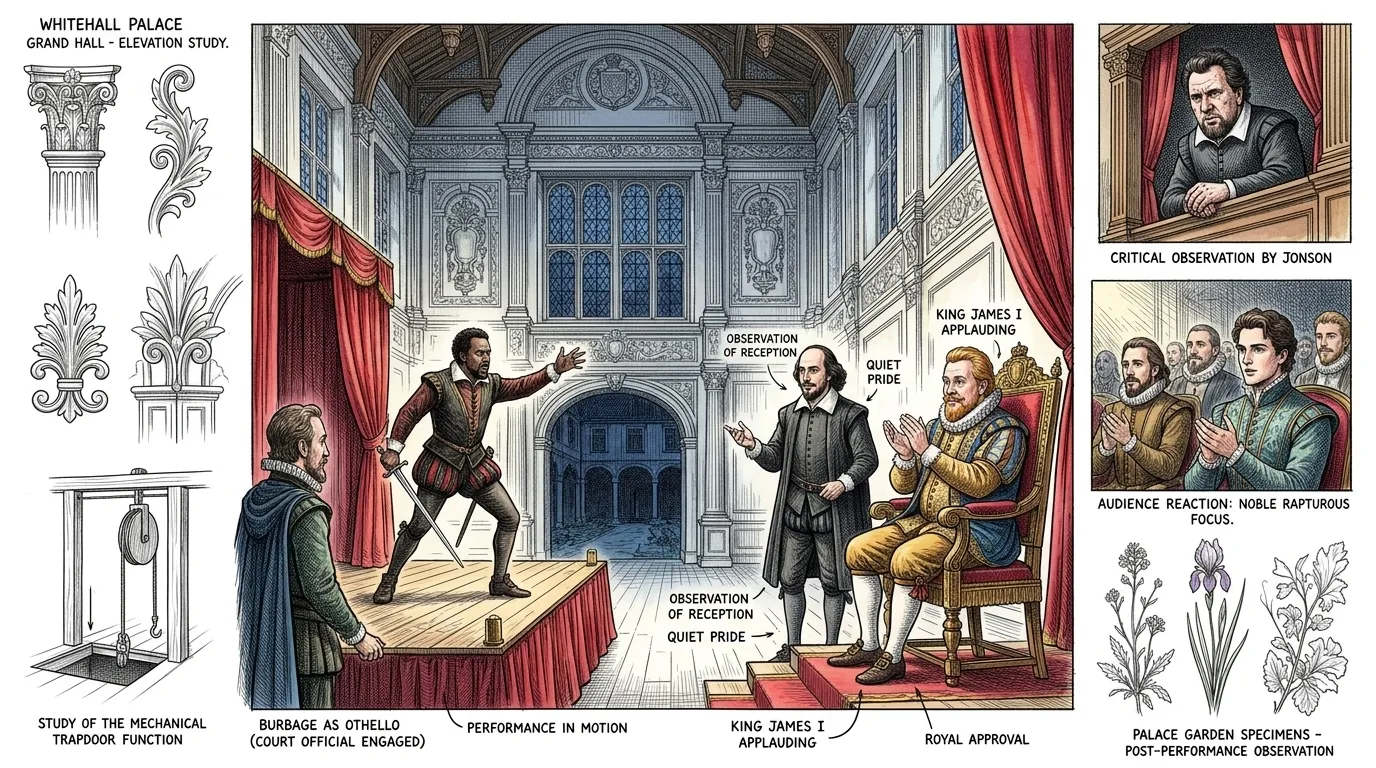
In the grand hall of Whitehall Palace in 1605, William Shakespeare observed his company, now the King's Men, perform Othello before King James I and his court. The actors, including the principal actor, commanded the stately room. "They understand the power now, Master of Revels," Shakespeare mused to a court official, his eyes fixed on the monarch's reaction. "This performance is not merely entertainment; it is a communion. As the poet Virgil once noted, 'The greatest wealth is health.' For a kingdom, I believe the greatest wealth is a shared story, a common understanding of humanity's follies and triumphs, binding us all." The King applauded, cementing the company's status and Shakespeare's renown as a cultural pillar.
Page 8
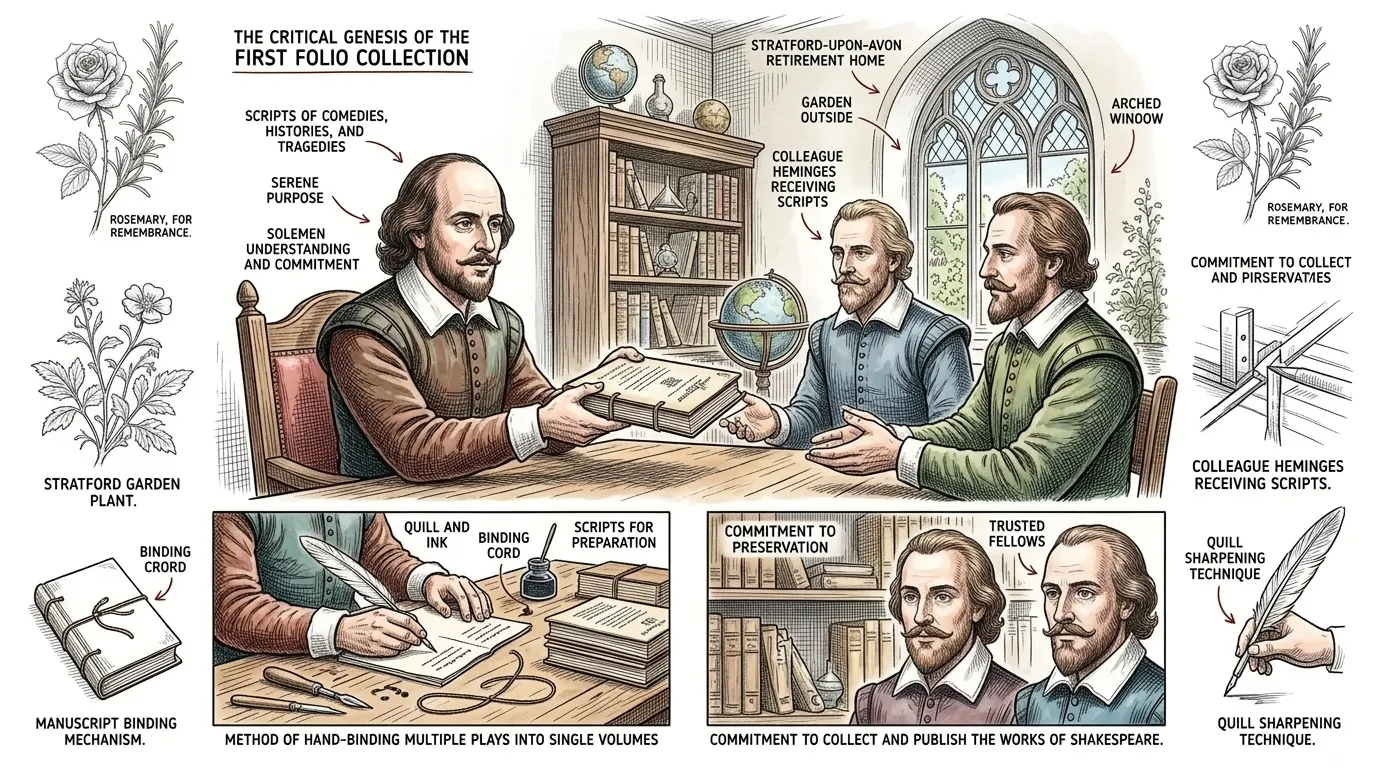
Years after his retirement to Stratford, in 1610, William Shakespeare sat with his trusted colleagues, actors John Heminges and Henry Condell. He handed them carefully bound play scripts. "These words, these stories, they are not merely for the stage of today," Shakespeare insisted, his voice filled with a quiet authority. "They hold something enduring. As the Roman philosopher Cicero declared, 'The life of the dead is placed in the memory of the living.' You two, my friends, must be the memory keepers. Ensure these plays, our shared endeavor, live beyond the fleeting performance, for generations untold." This moment planted the seed for the First Folio, published seven years after his death, a monumental act ensuring his works would persist.
Page 9
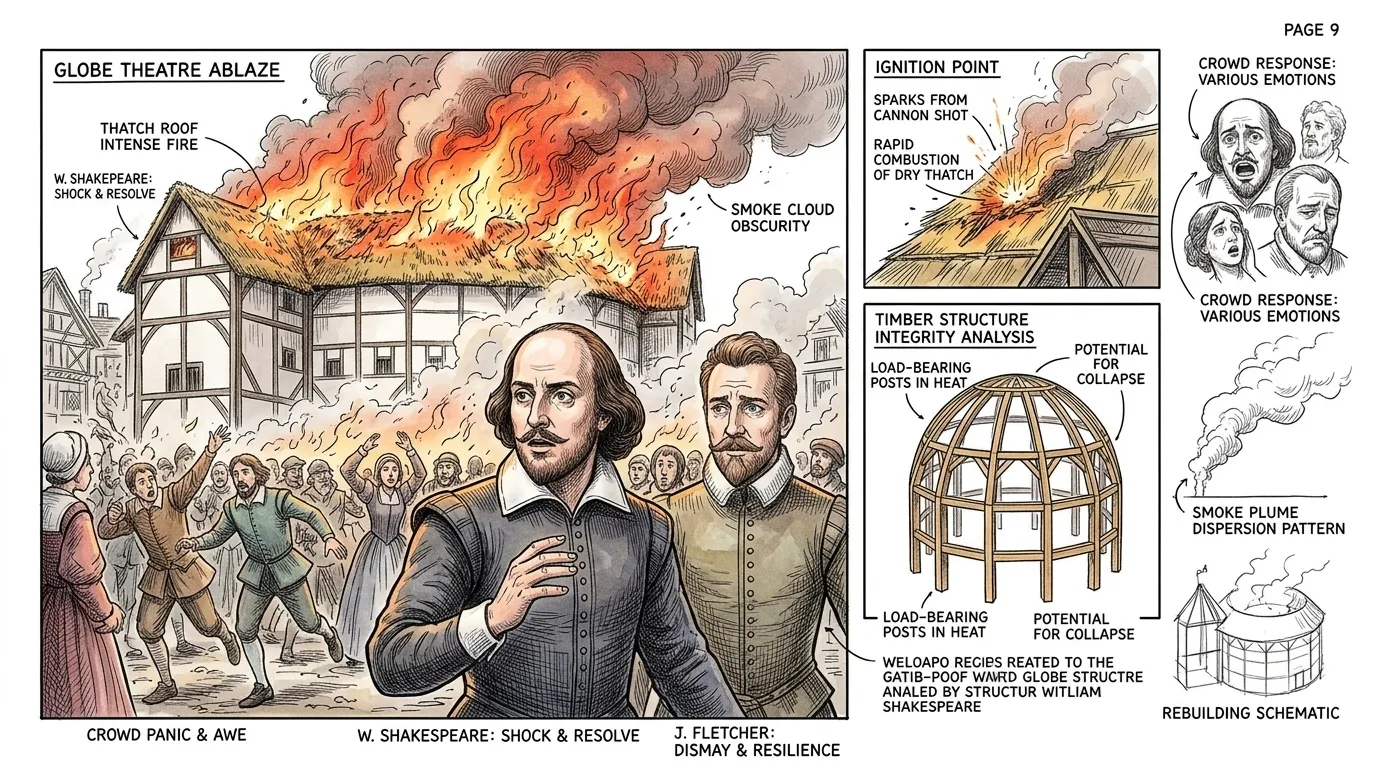
On June 29, 1613, William Shakespeare stood among a bewildered crowd, watching in horror as the Globe Theatre was consumed by fire during a performance of Henry VIII. A cannon misfire had ignited the thatched roof, turning the iconic structure into a raging inferno. "All gone, in a puff of smoke," he murmured to fellow playwright John Fletcher, who was collaborating on the play. "Yet, as the Roman poet Ovid observed, 'Fire tests gold, adversity tests strong men.' This theatre may burn, but the spirit, the stories... they cannot be truly extinguished. They live in the hearts we've touched, for the work endures." The loss was immense, but the company rebuilt, a testament to the enduring power of their enterprise and his vision.
Page 10
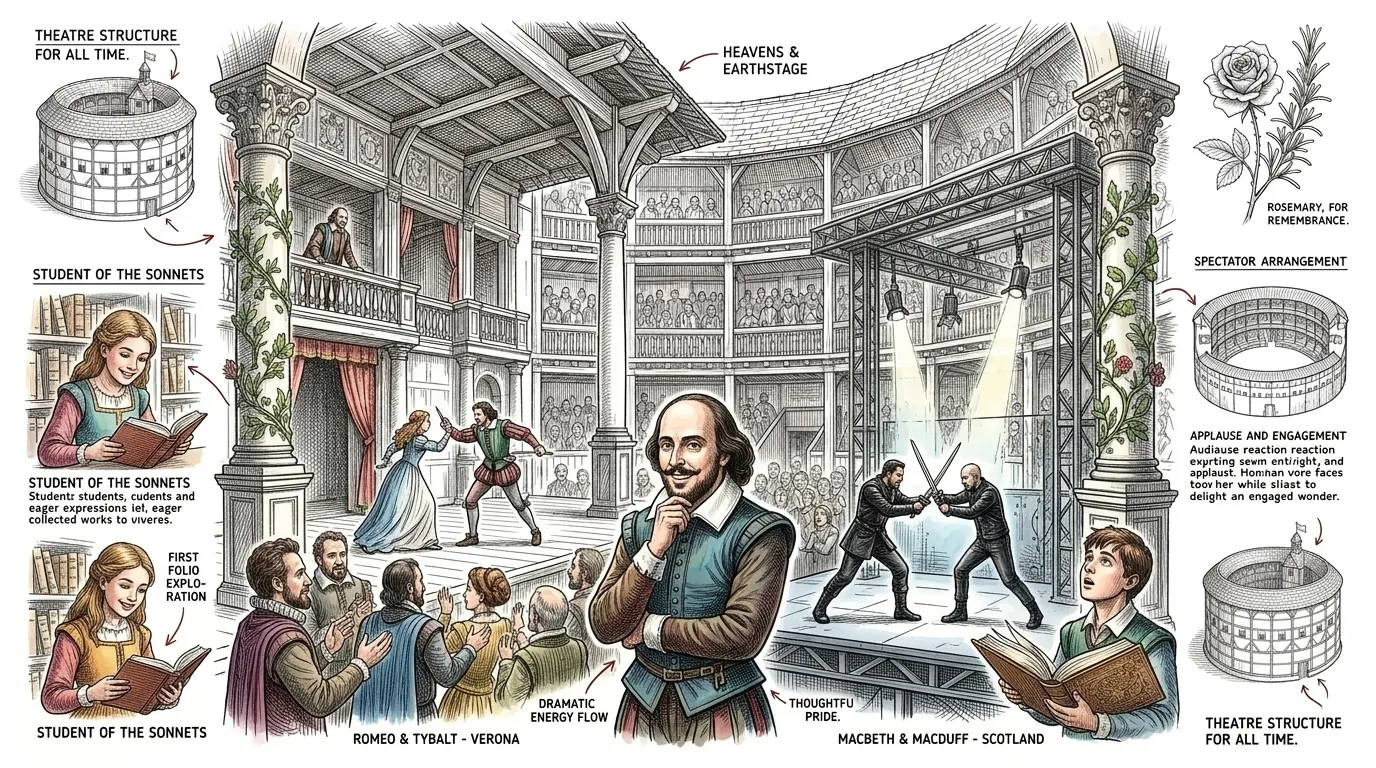
Centuries later, in an imagined tableau spanning time, William Shakespeare stands overlooking a tapestry of his enduring impact. Actors across generations perform Romeo and Juliet and Macbeth in diverse settings. Students pore over his collected works in libraries. "They still speak my words," he says, a timeless figure observing his own legacy, a quiet pride on his face. "The playwright Ben Jonson once declared, 'He was not of an age, but for all time!' Perhaps he understood that human experience, in all its joys and sorrows, remains constant. My plays are merely mirrors, reflecting eternal truths back to every new generation, an endless dialogue across history." His influence, woven into the fabric of global culture, proved truly immortal.
About this story
- Location: Global
- Audience: general readers
Questions and answers
Read Wonder People on your phone
Wonder People is available on Android. Get Wonder People on Google Play.