Wangari Maathai
Wangari Maathai — an illustrated biography story, set in Global. 10 illustrated pages, free to read on Wonder People.
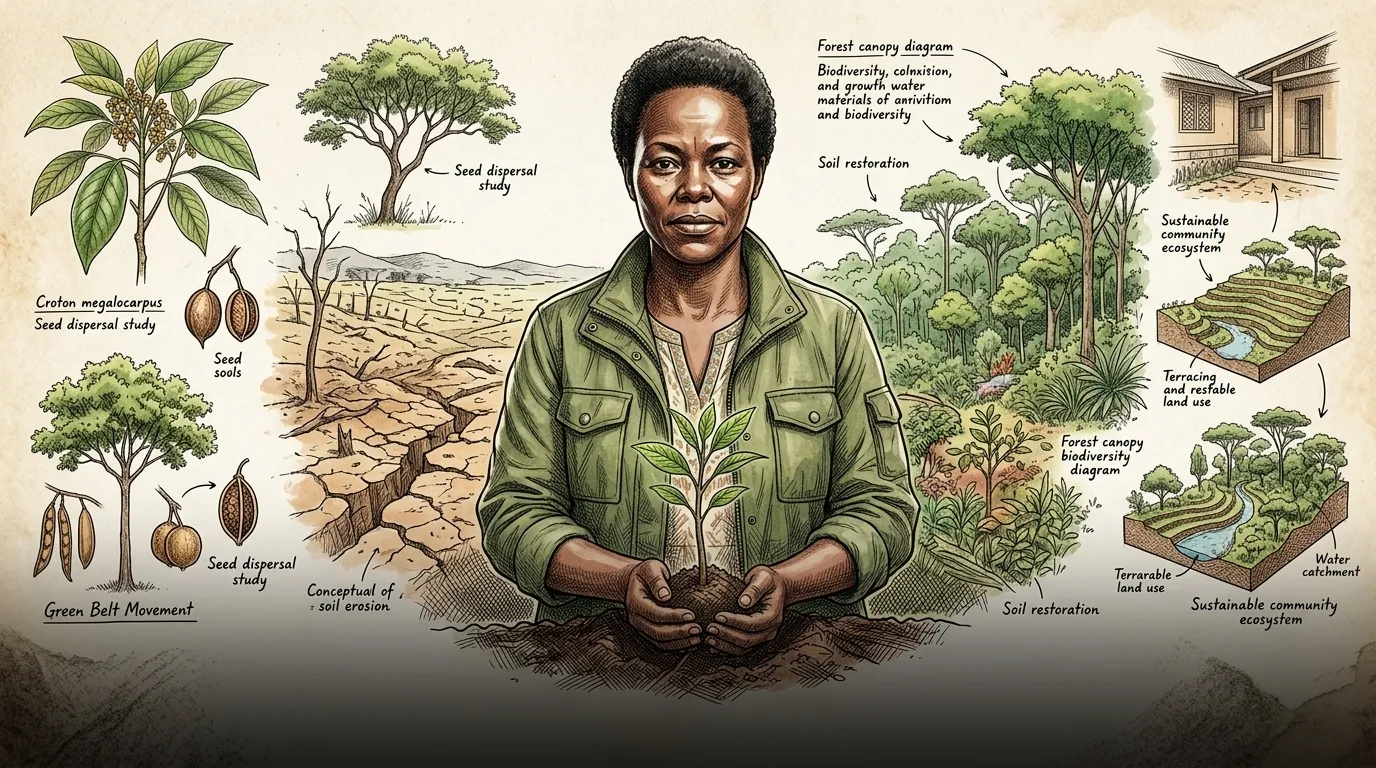
Page 1
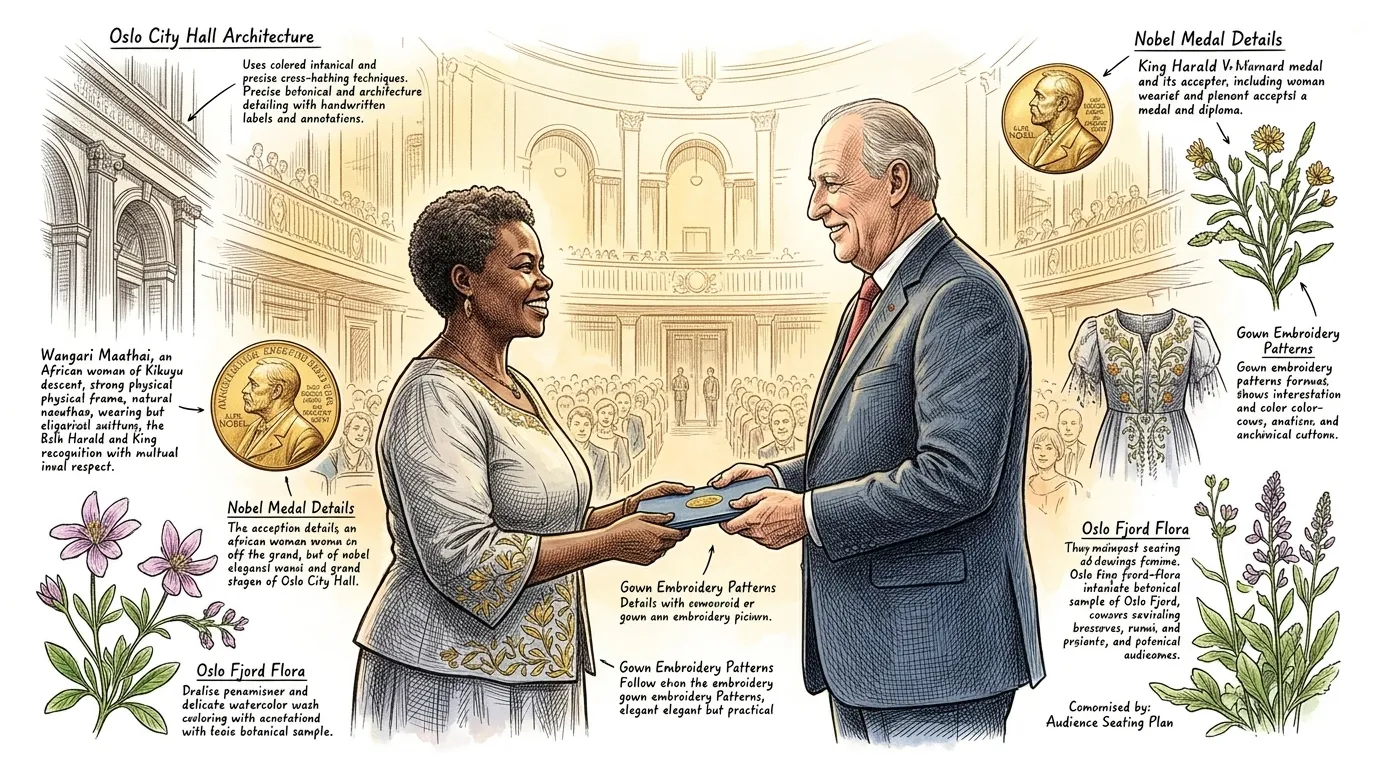
In Oslo City Hall, Norway, on December 10, 2004, a moment of profound recognition unfolded for an environmentalist who had defied authoritarian regimes and championed the dignity of African women. Wangari Maathai stepped onto the grand stage, the first African woman and the first environmentalist to receive the Nobel Peace Prize. Before King Harald V of Norway and a global audience, she accepted the medal and diploma, a testament to decades of relentless work. Her Green Belt Movement had, by then, facilitated the planting of over 30 million trees across Africa, intertwining environmental restoration with human rights and democratic struggle. This award was not merely for her efforts, but for establishing an undeniable link between ecological health, peace, and good governance, demonstrating how planting a tree could be an act of profound political courage.
Page 2
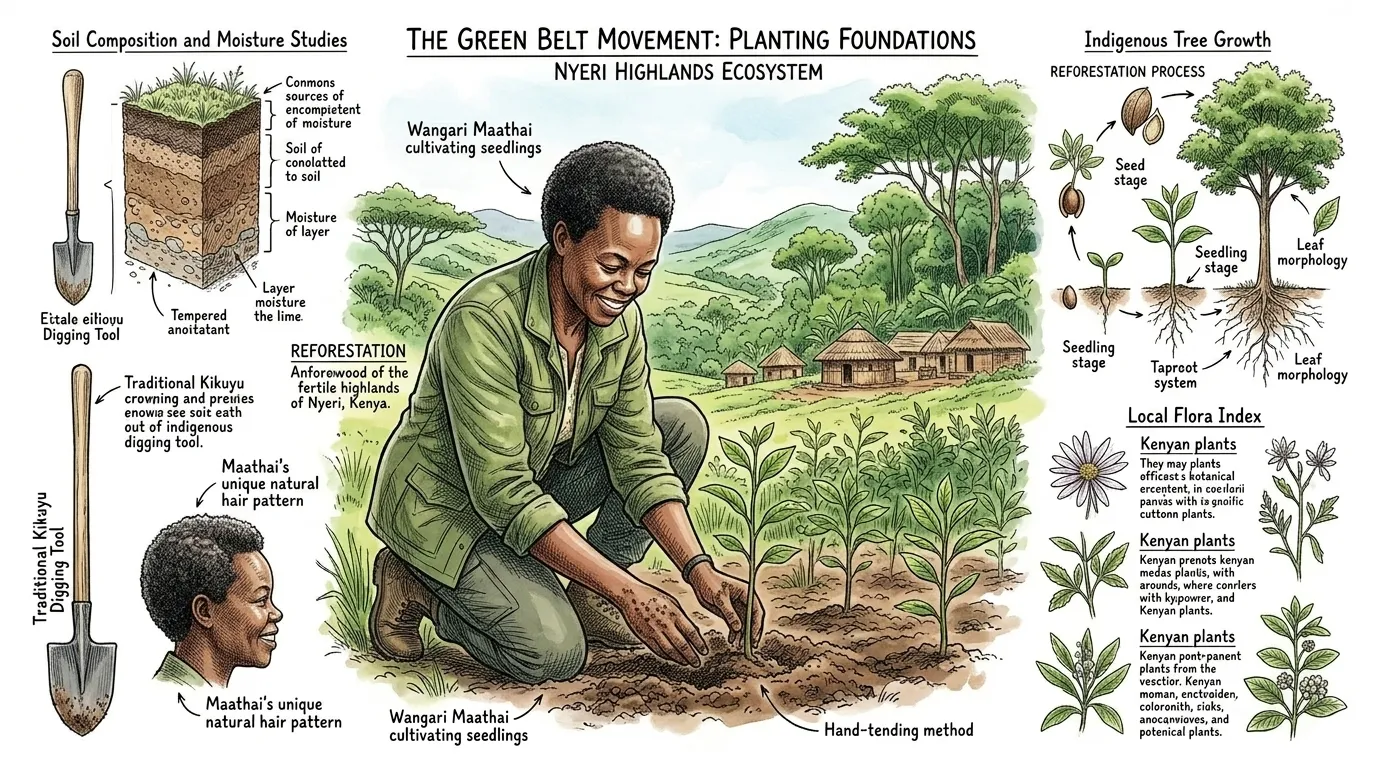
Before the global stage, Wangari Maathai's life was rooted in the fertile highlands of Nyeri, Kenya. Born in 1940, she grew up in a traditional Kikuyu village, where the land provided sustenance and identity. Her early education, amidst the rolling hills and indigenous forests, instilled a deep reverence for nature. She learned to cultivate the soil, to understand the intricate balance of the ecosystem, and to witness the sacred connection between humanity and the earth. This profound early experience, far from the halls of power, would become the foundation of her life's purpose, shaping her understanding of ecological stewardship as fundamental to human well-being and justice.
Page 3
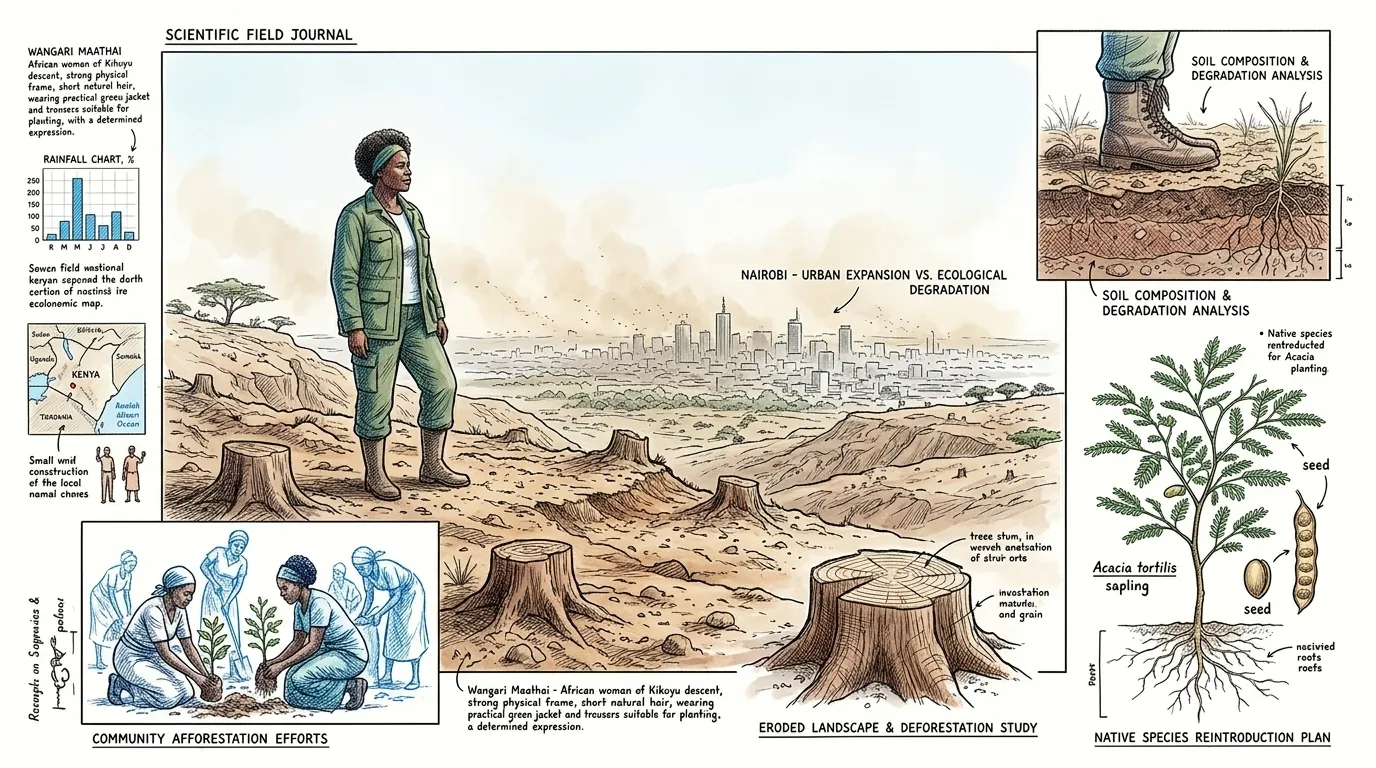
Returning to Kenya in the late 1960s, after extensive higher education in America and Germany, Wangari Maathai found her beloved homeland dramatically transformed. The lush green landscapes of her childhood were giving way to barrenness, denuded forests, and widespread soil erosion. Decades of colonial exploitation and post-independence development schemes had devastated the environment, leading to a scarcity of clean water, cooking fuel, and nutritious food. This stark ecological degradation, visible from the burgeoning city of Nairobi, ignited a fierce resolve within her. She understood that this environmental crisis was inextricably linked to poverty, conflict, and the disempowerment of women, compelling her to act.
Page 4
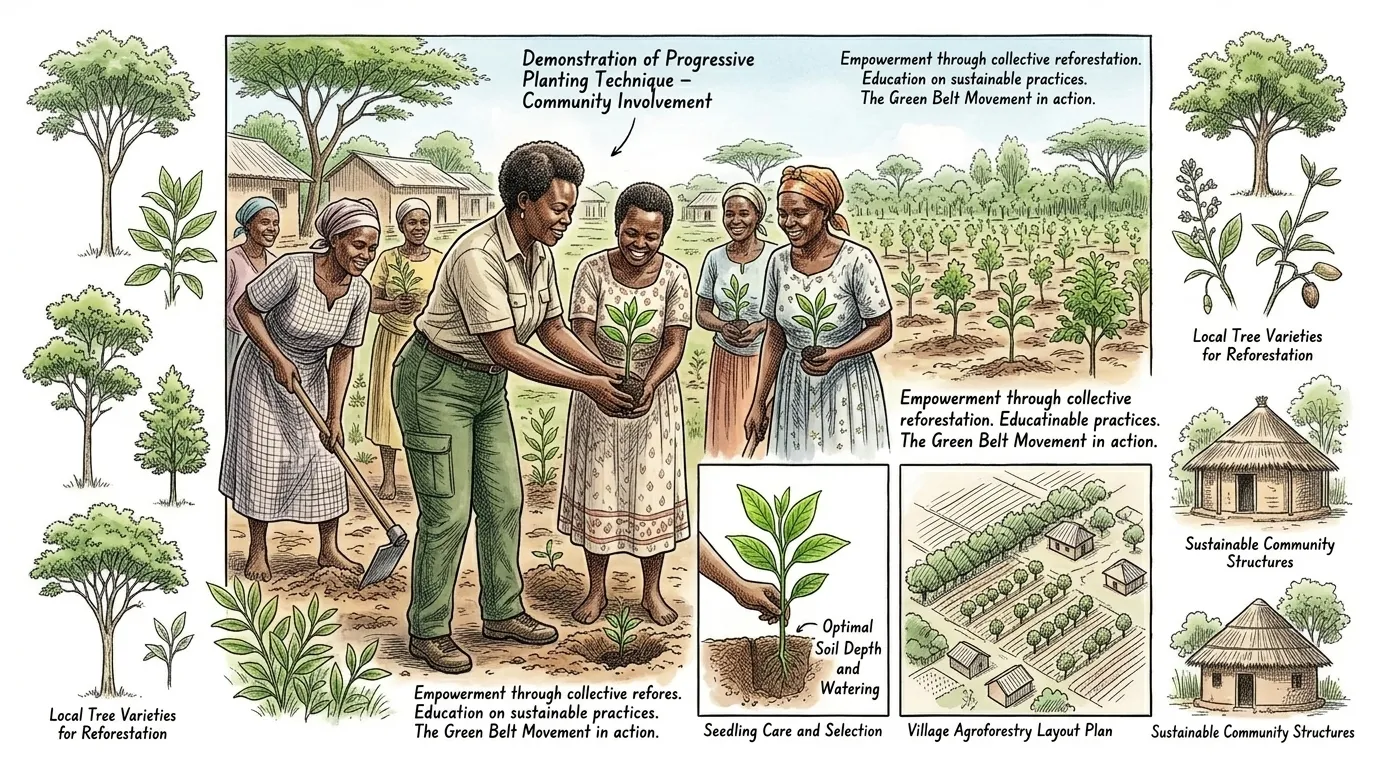
In 1977, Wangari Maathai initiated a profound experiment in self-reliance and environmental restoration: The Green Belt Movement. Recognizing that rural women bore the brunt of environmental degradation—walking further for water and firewood, struggling with diminishing harvests—she empowered them directly. In local villages, she distributed tree seedlings and taught women the vital techniques of planting, nurturing, and protecting trees. This was more than just reforestation; it was a movement for ecological education, women's economic independence, and community mobilization against the pervasive forces of environmental destruction. The simple act of planting a tree became a powerful symbol of hope and agency.
Page 5
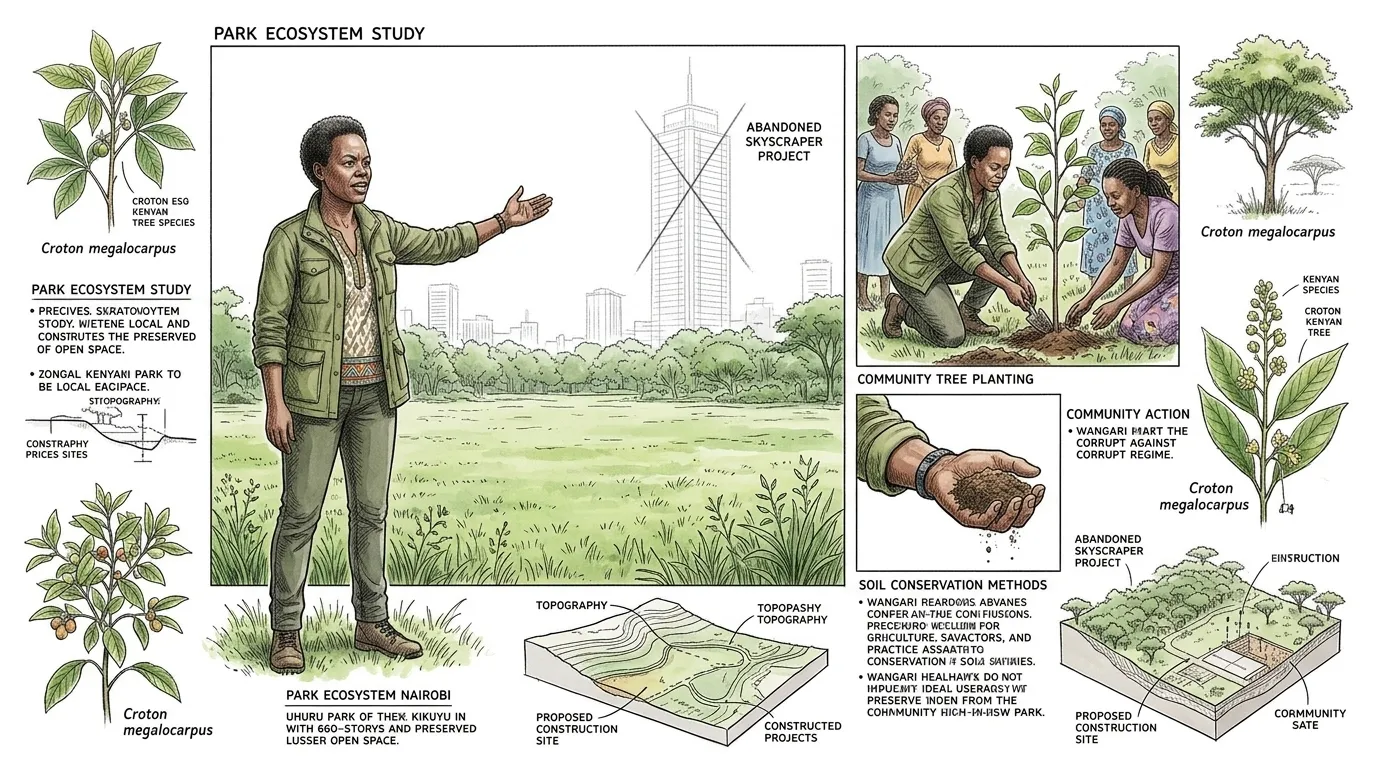
By the late 1980s, Wangari Maathai's activism extended beyond planting trees; it became a direct challenge to the corrupt authoritarian regime of Daniel Arap Moi. In 1989, when the government announced plans to construct a 60-story skyscraper for the Kenya Times Media Trust in Uhuru Park, Nairobi's last significant green space, Maathai sprang into action. She led a fierce public campaign, facing down death threats, police harassment, and public vilification. Her unwavering stance to protect the park, a symbol of national heritage and democratic space, drew international attention, forcing the government to abandon the project. This singular act of defiance solidified her reputation as an unyielding defender of environmental and democratic rights.
Page 6
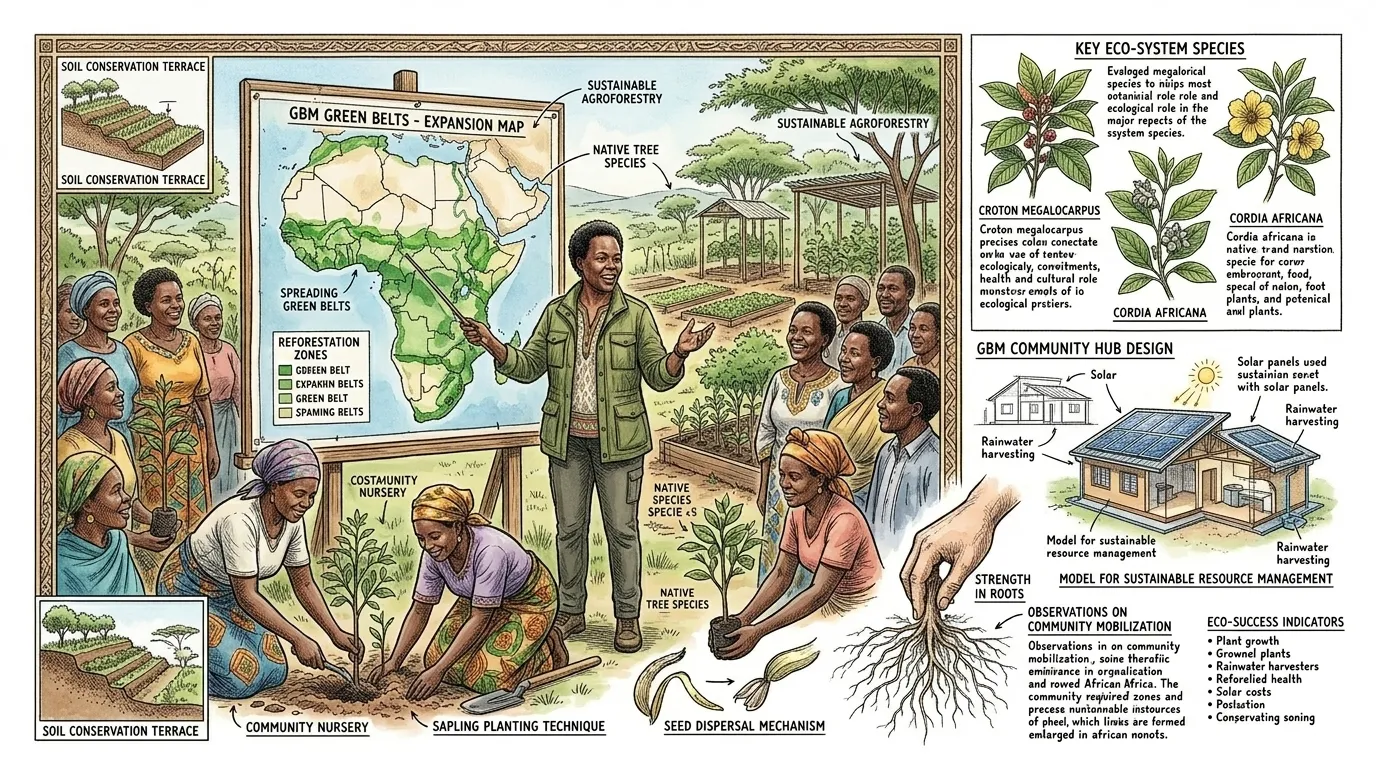
Through the 1990s, the Green Belt Movement transcended Kenya's borders, inspiring similar initiatives across Africa. Wangari Maathai became a beacon for community-led environmental action, traveling extensively to share her methodology and philosophy. She convened leaders from diverse nations, demonstrating how the simple act of planting trees could address complex issues like desertification, food insecurity, and social conflict. Her movement fostered self-sufficiency and empowered women as custodians of the environment, establishing tree nurseries and promoting sustainable agricultural practices. Maathai's vision expanded, demonstrating that local actions, when multiplied, could catalyze continental-scale transformation.
Page 7
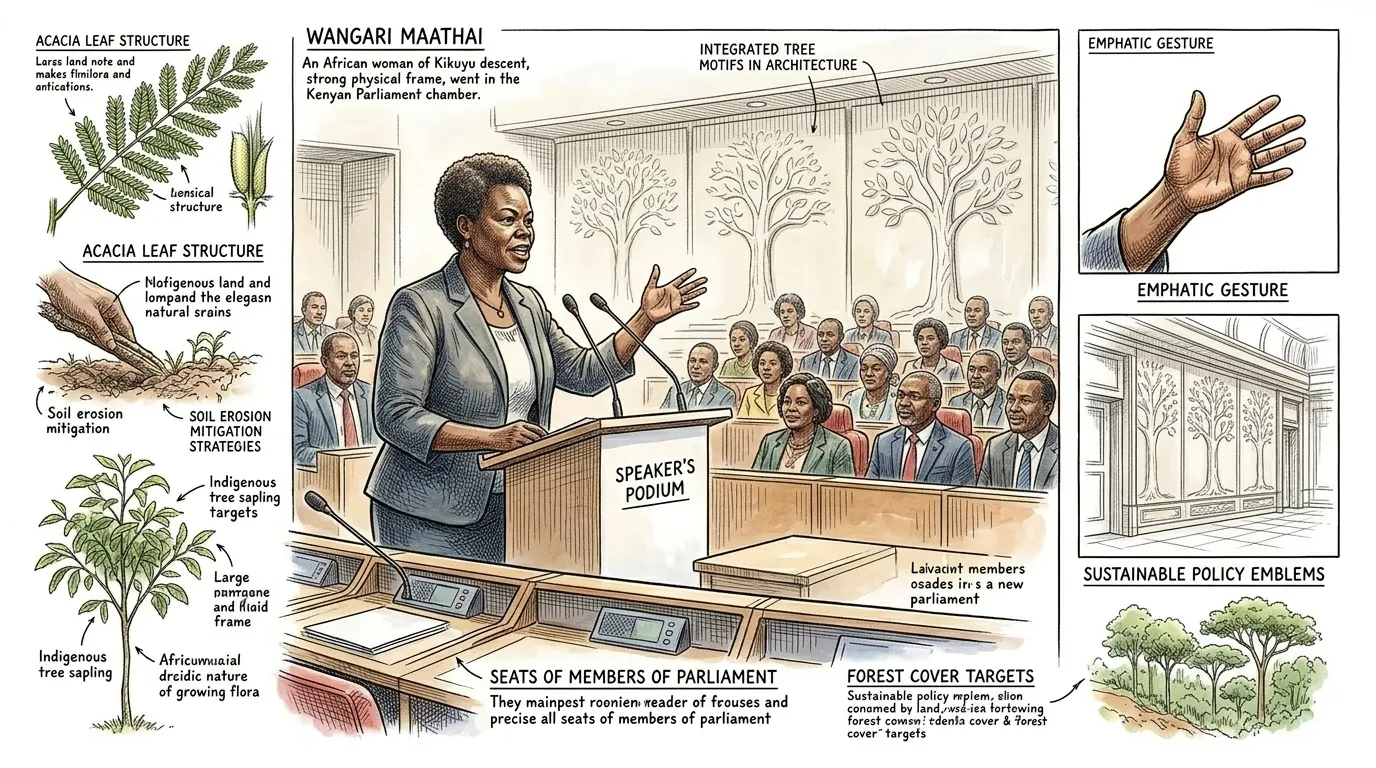
In 2002, Wangari Maathai entered Kenya's political arena directly, winning a seat in Parliament with an overwhelming majority under the National Rainbow Coalition. This victory propelled her from activist to legislator, where she was appointed Assistant Minister for Environment and Natural Resources in 2003. From this powerful new platform, she advocated tirelessly for policies that supported sustainable land use, reforestation, and transparent governance. Her presence in Parliament legitimized environmental concerns at the highest levels of government, providing a powerful voice for the communities she had mobilized for decades and ensuring that ecological justice became an integral part of national discourse.
Page 8
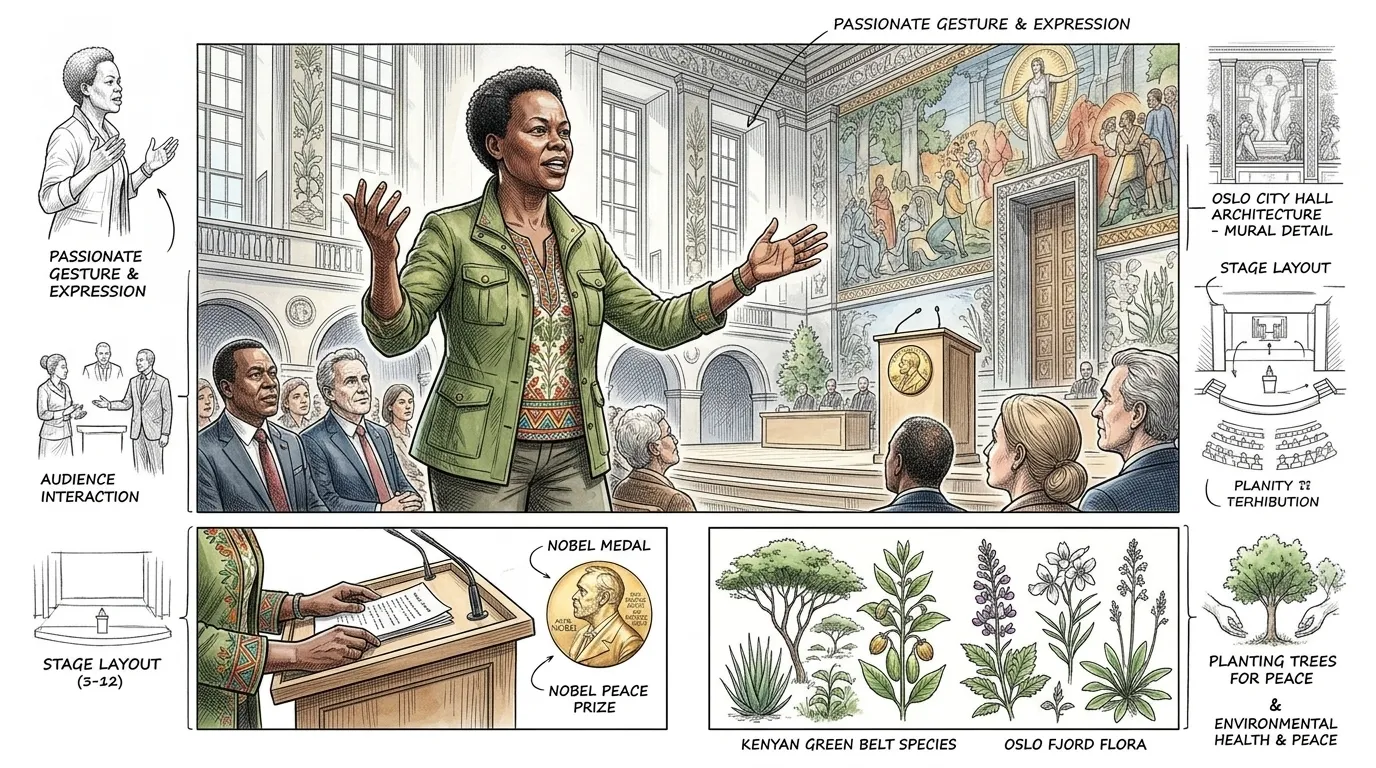
Returning to Oslo City Hall in 2004, Wangari Maathai transcended the mere acceptance of an award. During her Nobel Lecture, she articulated a profound vision for global peace, emphasizing the inseparable links between environmental degradation, poverty, and conflict. She argued passionately that peace could not exist without sustainable management of natural resources, equitable distribution of wealth, and democratic governance. Her words resonated deeply, challenging the conventional wisdom that peace was solely a political or military endeavor. She reframed the global discourse, demonstrating how environmentalism was not a peripheral concern, but central to human dignity and future stability.
Page 9
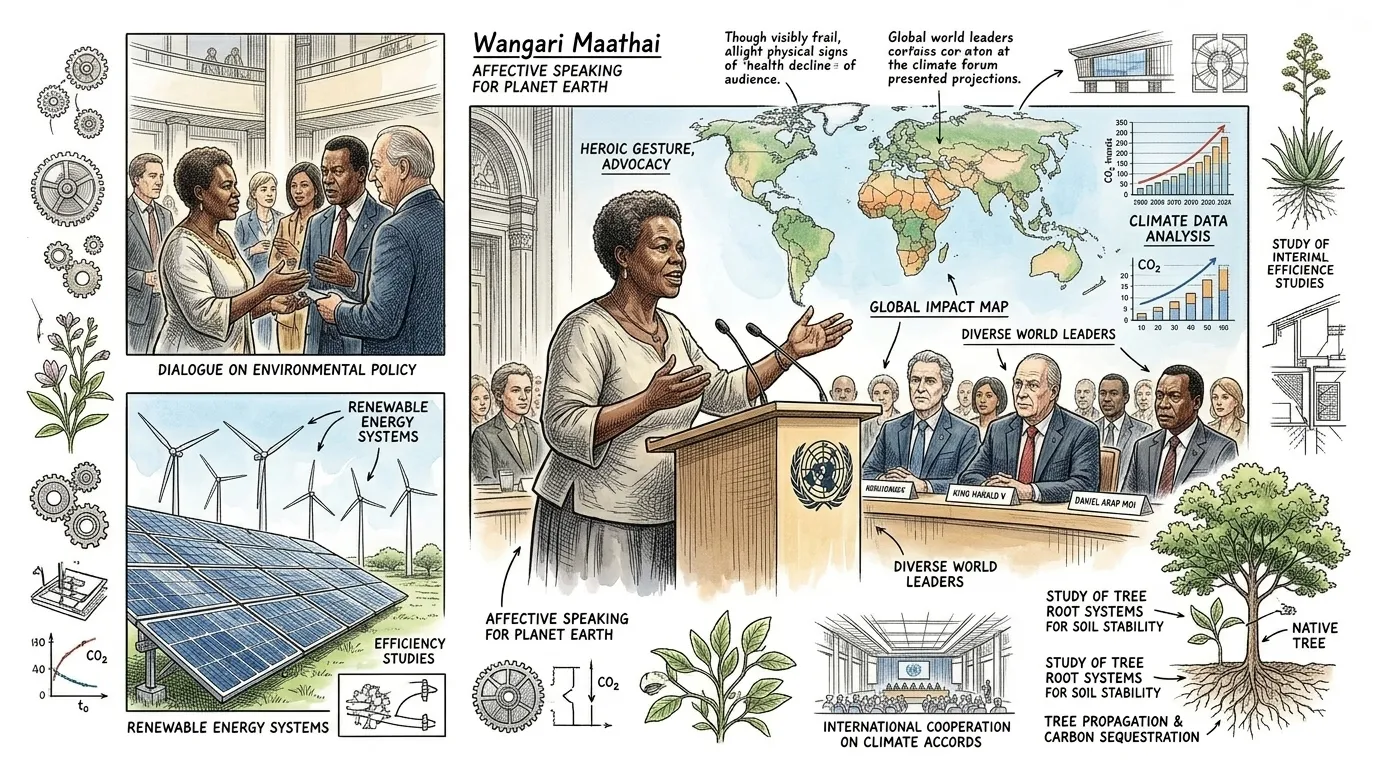
Even after her Nobel Prize, Wangari Maathai continued her unwavering advocacy, despite facing new health challenges. She traveled globally, speaking at countless international forums, urging world leaders to prioritize environmental justice, democratic space, and gender equality. Her message remained consistent: empower communities, especially women, to restore their environment and reclaim their dignity. She actively participated in climate change negotiations, linking the plight of marginalized communities to global ecological crises. Though her physical strength waned, her intellectual and moral authority grew, inspiring a new generation of activists to confront the interconnected challenges of the 21st century.
Page 10
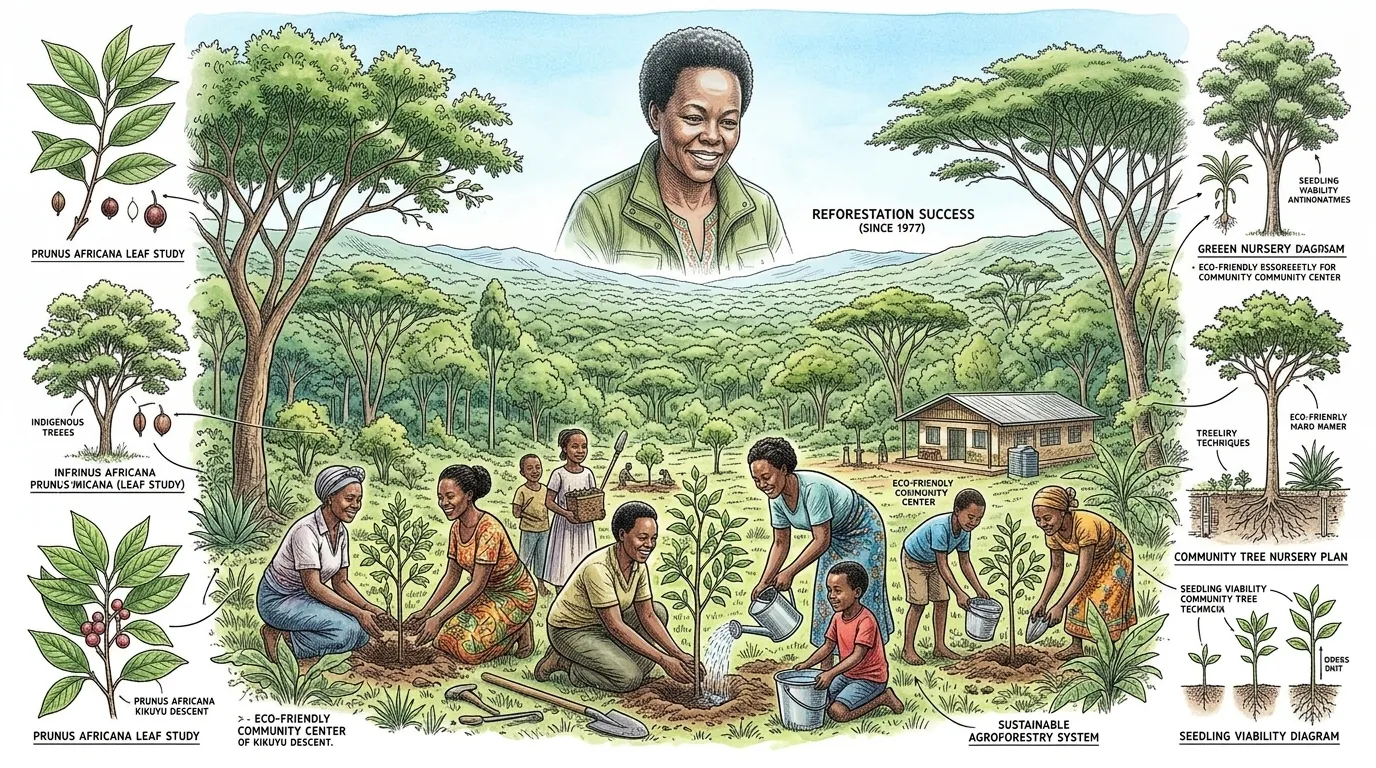
Wangari Maathai's legacy is not confined to awards or speeches; it thrives in the living landscapes she helped restore and in the millions of lives she empowered. By the time of her passing in 2011, the Green Belt Movement had facilitated the planting of over 50 million trees, transforming degraded land into vibrant forests across Africa. Her vision proved that environmental stewardship is not merely about ecology, but about human rights, peace, and democratic participation. Her work continues through the Green Belt Movement, inspiring countless individuals and organizations worldwide, proving that even a single seed of action can grow into an enduring forest of change, forever linking trees to justice, and environmental health to human dignity.
About this story
- Location: Global
- Audience: general readers
Questions and answers
Read Wonder People on your phone
Wonder People is available on Android. Get Wonder People on Google Play.