Victor Hugo
Victor Hugo — an illustrated biography story, set in Global. 10 illustrated pages, free to read on Wonder People.
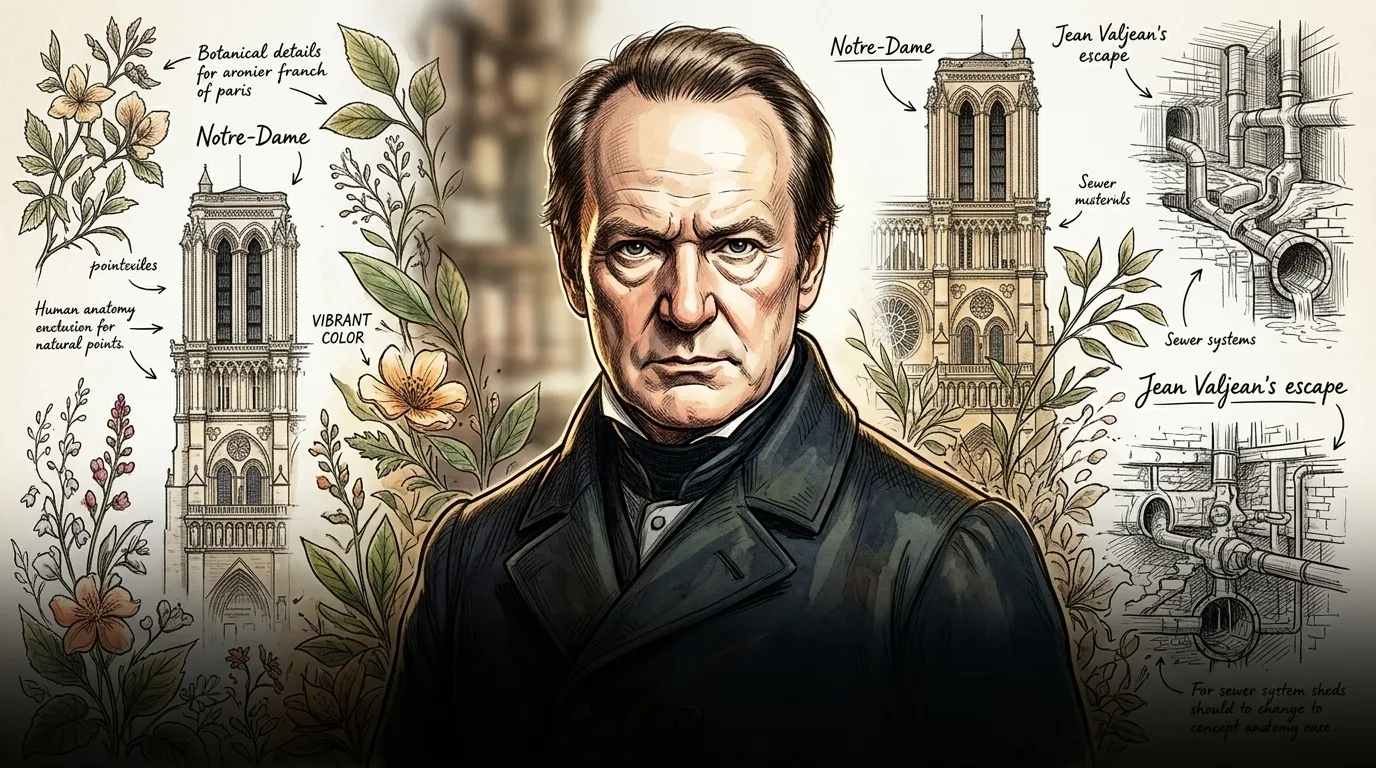
Page 1
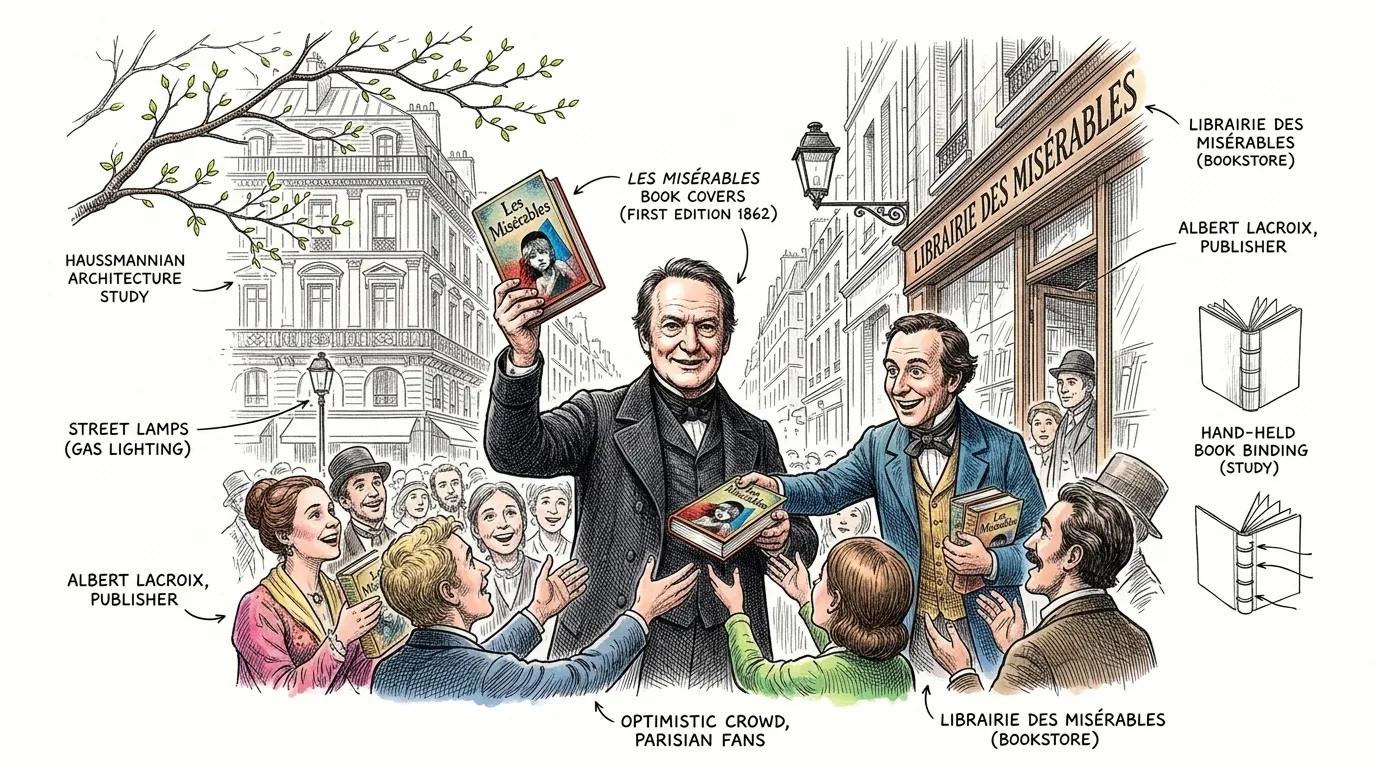
In Paris, France, in the spring of 1862, a publishing phenomenon seized the globe. Victor Hugo's monumental novel, Les Misérables, released in ten volumes, instantly transcended literature, becoming a worldwide sensation. Its stark portrayal of poverty, justice, and human resilience resonated with millions, selling out in mere hours across Europe and America. In that moment, Victor Hugo became impossible to ignore; his voice, once confined, now roared across continents.
Biographical Fact: Victor Hugo (1802-1885). Publisher: Albert Lacroix. Location: Paris, France. Year: 1862. Key Fact: Les Misérables sold out its first print run in Paris within a day, leading to rapid international translation.
Page 2
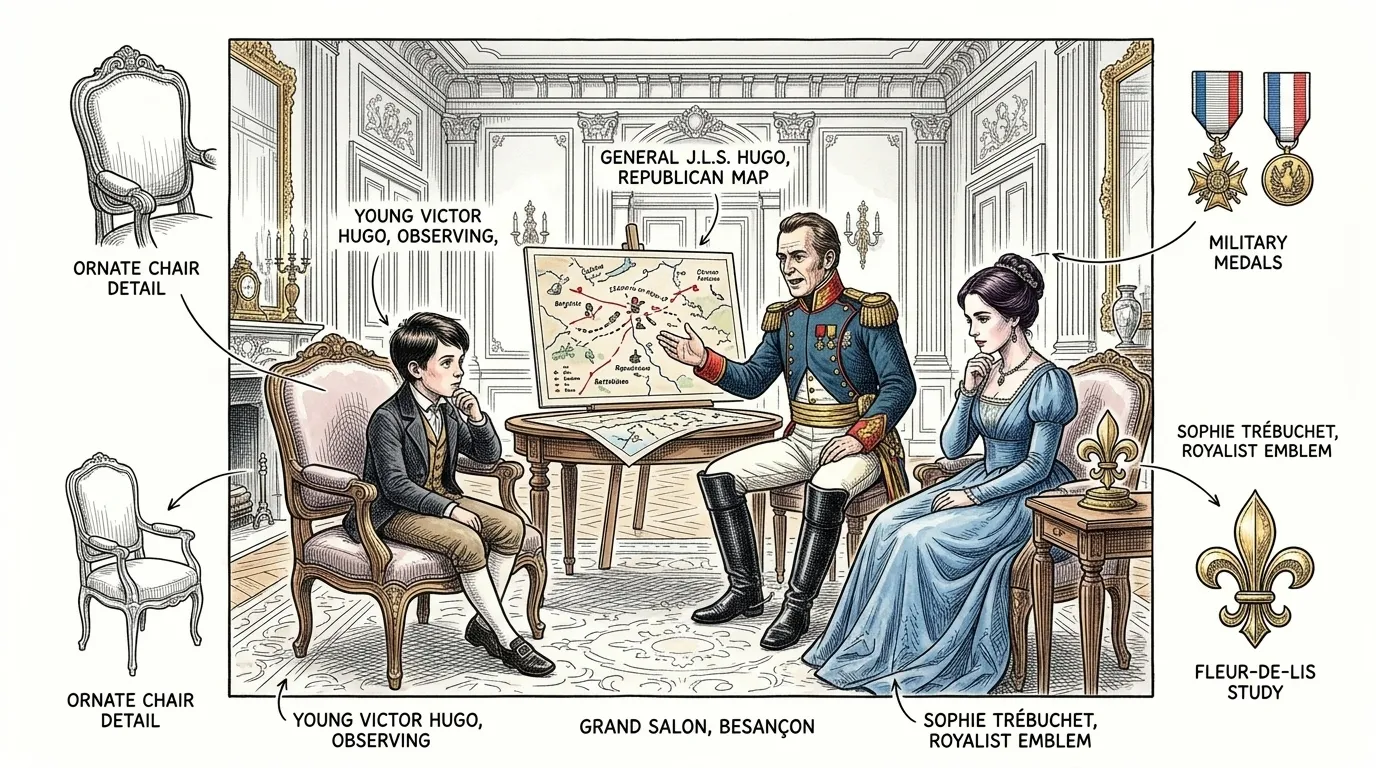
Born in Besançon in 1802, Victor Hugo's identity was forged in the crucible of post-Revolutionary France. His father, a general in Napoleon's army, embraced Republican ideals, while his mother was a fervent Royalist. This fundamental ideological split defined his youth, shaping a keen awareness of political and social dichotomies. From an early age, Hugo processed this inherited conflict, translating it into a unique literary and moral sensibility that would mark his extraordinary career.
Biographical Fact: Victor Hugo's early life. Born: Besançon, 1802. Father: Joseph Léopold Sigisbert Hugo (Napoleonic General). Mother: Sophie Trébuchet (Royalist). This familial divide instilled a profound awareness of societal schisms.
Page 3
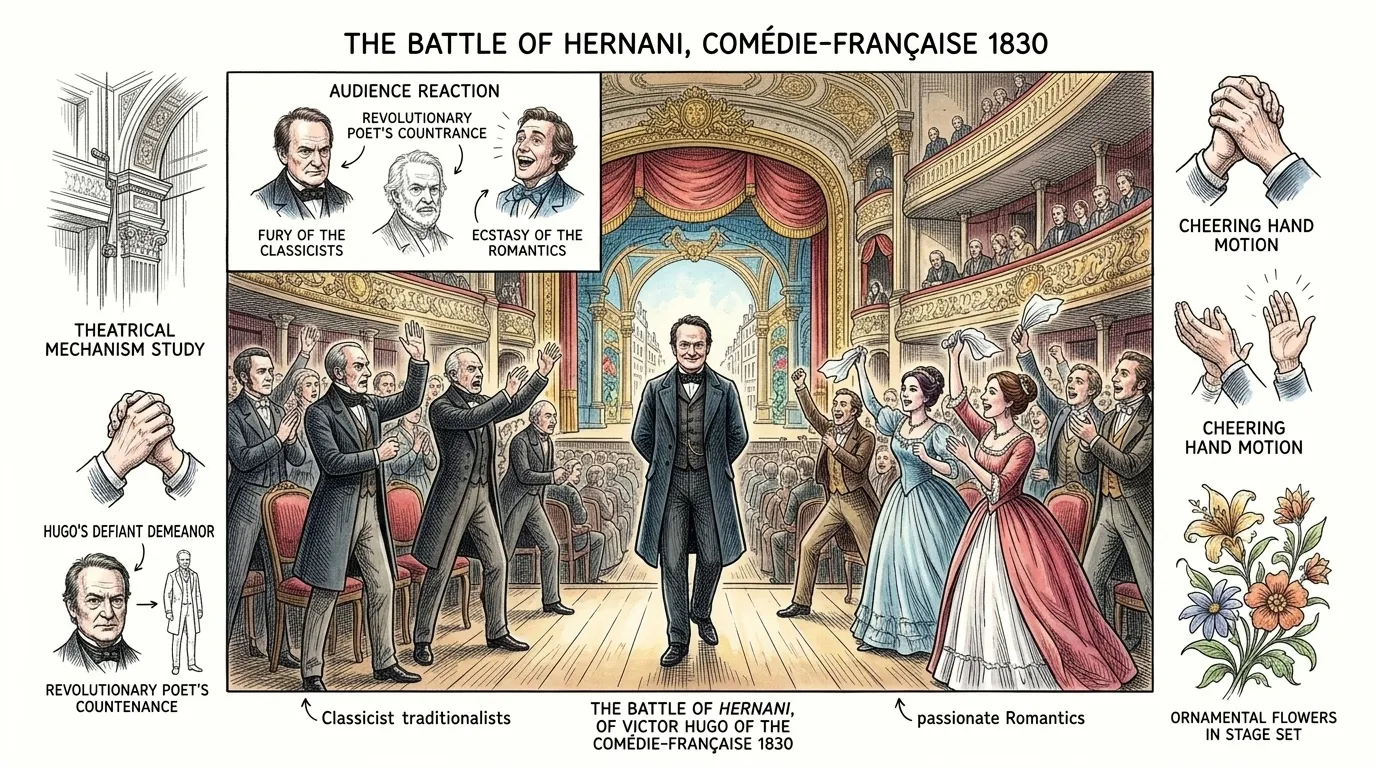
By 1830, Victor Hugo had become the undisputed leader of the emerging Romantic movement in France. His play Hernani, premiering at the Comédie-Française, ignited a violent literary clash known as the 'Bataille d'Hernani.' Classicist traditionalists railed against its defiance of established theatrical rules, while passionate Romantics hailed it as a revolution. This tumultuous premiere solidified Hugo's position as a cultural provocateur, forcing Paris to reckon with a new artistic vision.
Biographical Fact: The 'Bataille d'Hernani' at the Comédie-Française. Year: 1830. Event: Premiere of Victor Hugo's play 'Hernani,' marking a decisive victory for the Romantic movement against Classicist traditions in French theatre.
Page 4
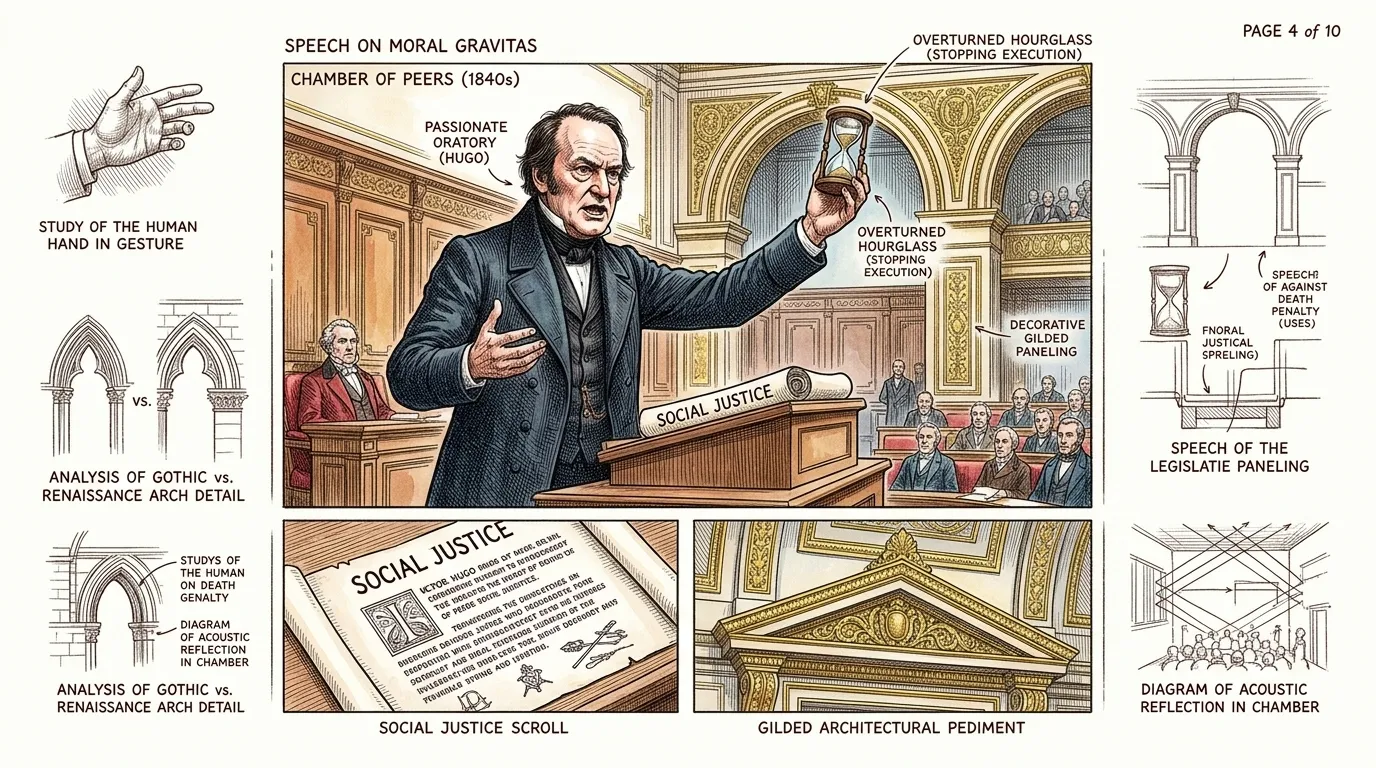
Victor Hugo's influence extended beyond the stage and page; he actively engaged with the political landscape of his era. In 1841, he was elected to the prestigious Académie française, and by 1845, he ascended to the Chamber of Peers, the upper house of the French Parliament. From these platforms, he championed social causes, speaking passionately against poverty and for the abolition of the death penalty. His presence transformed him from a literary star into a potent force for moral change.
Biographical Fact: Victor Hugo's political ascension. Elected to the Académie française (1841), appointed to the Chamber of Peers (1845). He used these platforms to advocate for social justice, notably against the death penalty.
Page 5

In 1831, Victor Hugo published Notre-Dame de Paris, known in English as The Hunchback of Notre-Dame. Far more than a gothic romance, it was a profound plea for the preservation of Paris's medieval heritage and a searing critique of social injustice. The novel's immense popularity ignited a public debate, directly inspiring widespread interest in medieval architecture and spurring restoration efforts across France. Hugo demonstrated literature's power to awaken collective conscience and compel societal action.
Biographical Fact: Publication of Notre-Dame de Paris. Year: 1831. Impact: The novel significantly raised public awareness for the preservation of historical monuments in France, leading to major restoration projects, including Notre-Dame Cathedral itself.
Page 6
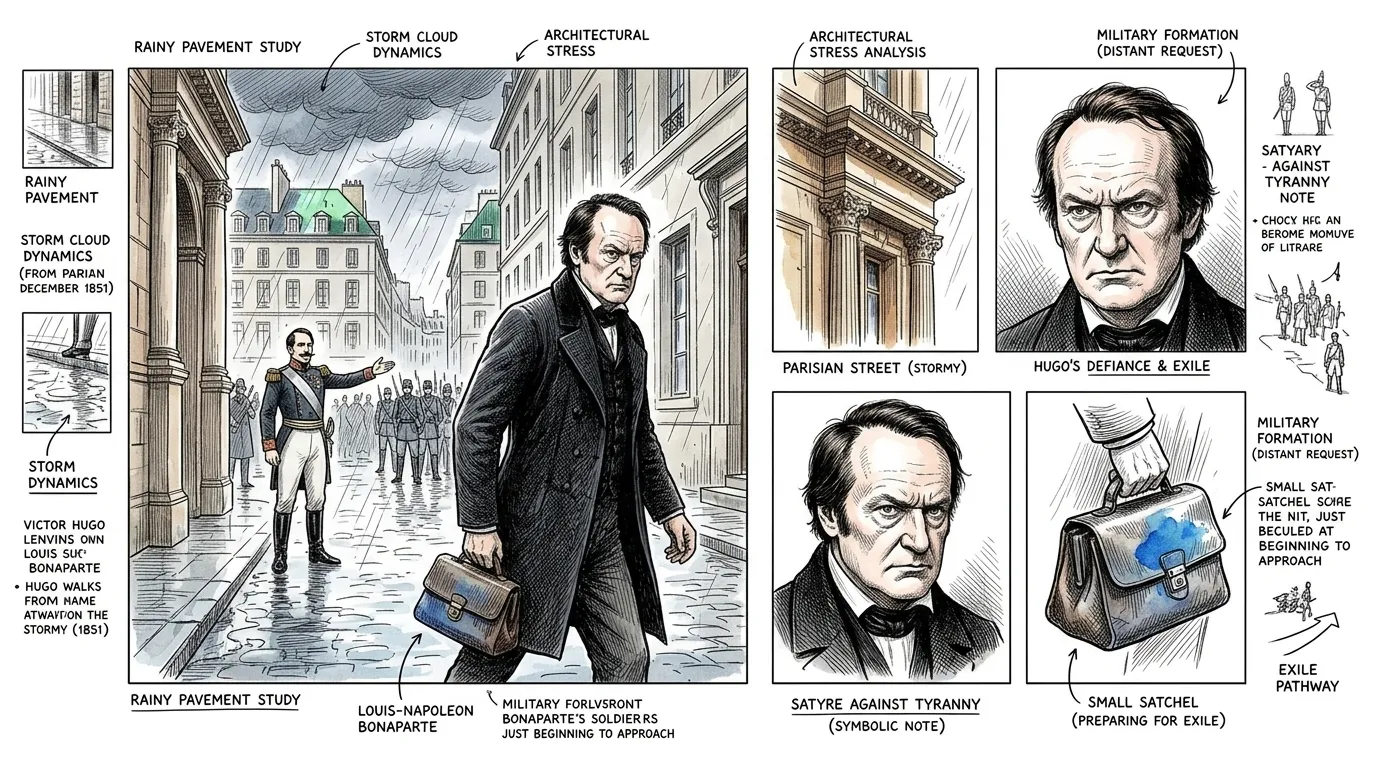
When Louis-Napoleon Bonaparte staged a coup d'état in December 1851, Victor Hugo, a fervent defender of republican democracy, refused to compromise. He openly denounced the usurpation of power, famously declaring, 'My place is wherever the fatherland suffers.' His defiance forced him into exile, first to Brussels, then to the Channel Islands of Jersey and Guernsey. This act cemented his status as a principled opponent of tyranny, a moral beacon for a generation.
Biographical Fact: Victor Hugo's self-imposed exile. Year: December 1851. Cause: Refusal to support Louis-Napoleon Bonaparte's coup d'état, becoming a vocal critic of the Second French Empire.
Page 7
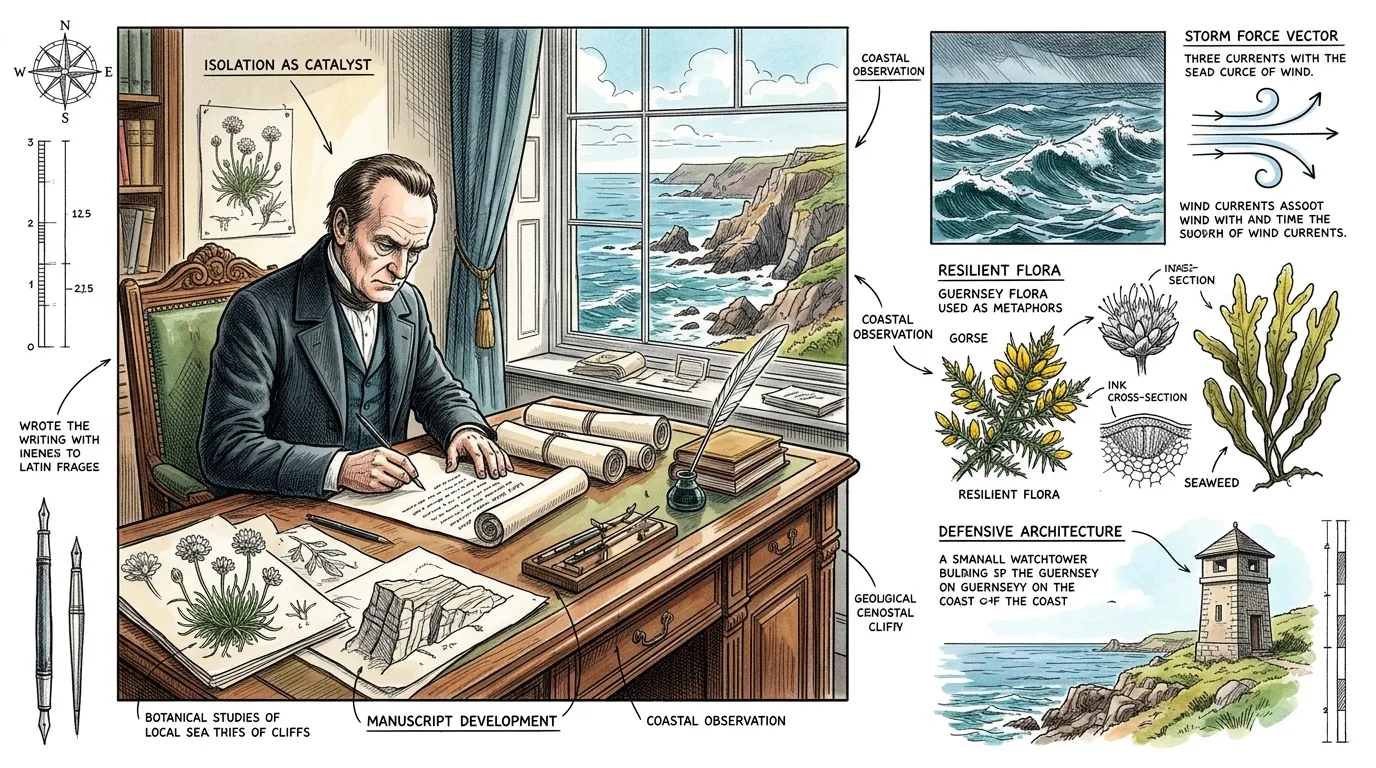
His years in exile, particularly on the remote island of Guernsey, were not a period of silence but of profound creative resurgence. Here, isolated from political turmoil, Hugo poured his energies into monumental literary projects. It was in this crucible of defiant solitude that he conceived, meticulously researched, and wrote Les Misérables, alongside other significant works. Exile, intended to silence him, instead sharpened his focus and deepened his understanding of human struggle, preparing him for his greatest literary triumph.
Biographical Fact: Victor Hugo's exile on Guernsey (1855-1870). During this period, he completed Les Misérables (published 1862) and other major works like Toilers of the Sea (1866), transforming his personal hardship into literary legacy.
Page 8
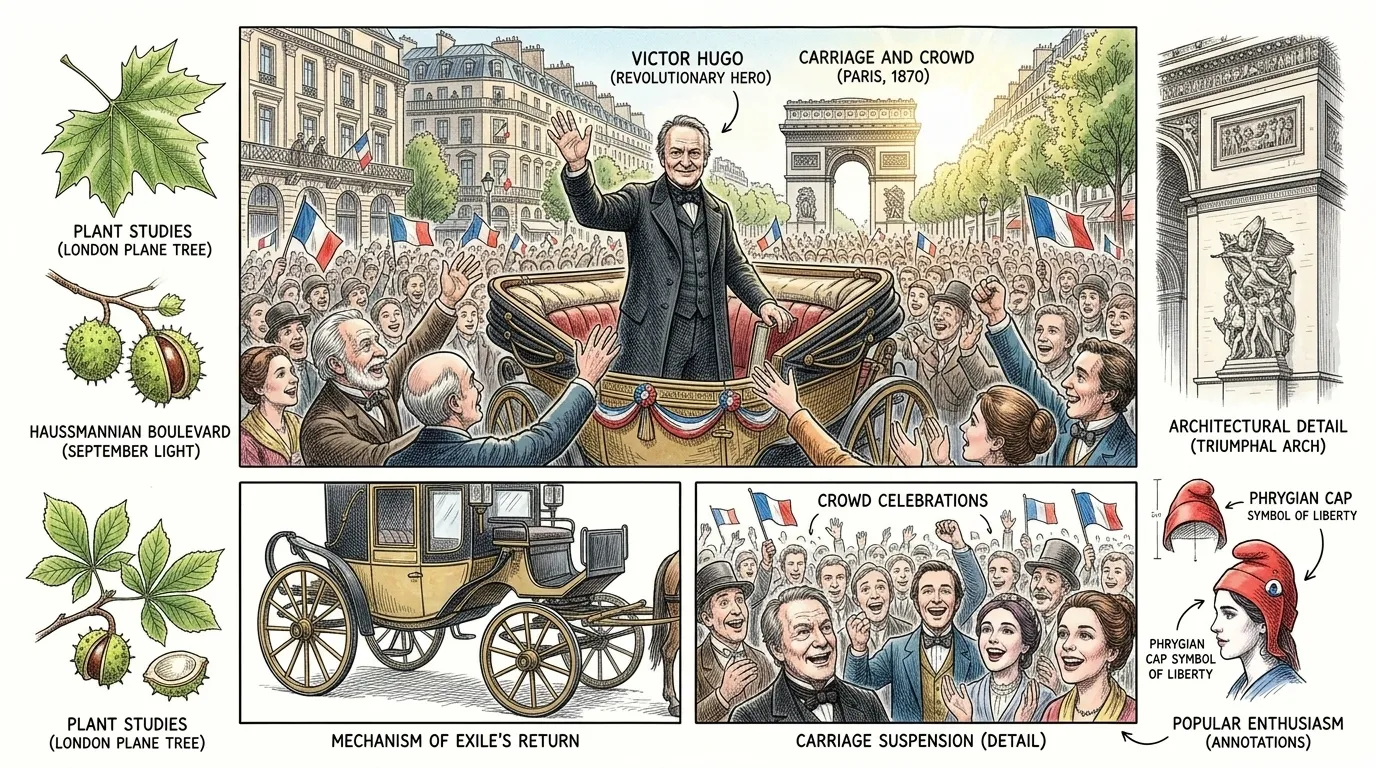
After nearly two decades in exile, Victor Hugo returned to France in September 1870, following the collapse of the Second Empire. His homecoming was not merely a return but a national apotheosis. The Parisian populace, having revered him as a symbol of resistance, poured into the streets to greet him. Thousands gathered, cheering his name, recognizing him not just as a literary giant, but as the moral conscience of the nation. The world was now reacting to him, not the other way around.
Biographical Fact: Victor Hugo's return from exile to Paris. Year: September 1870. Event: A massive, spontaneous public celebration, cementing his status as a national hero and moral authority after the fall of Napoleon III's Second Empire.
Page 9
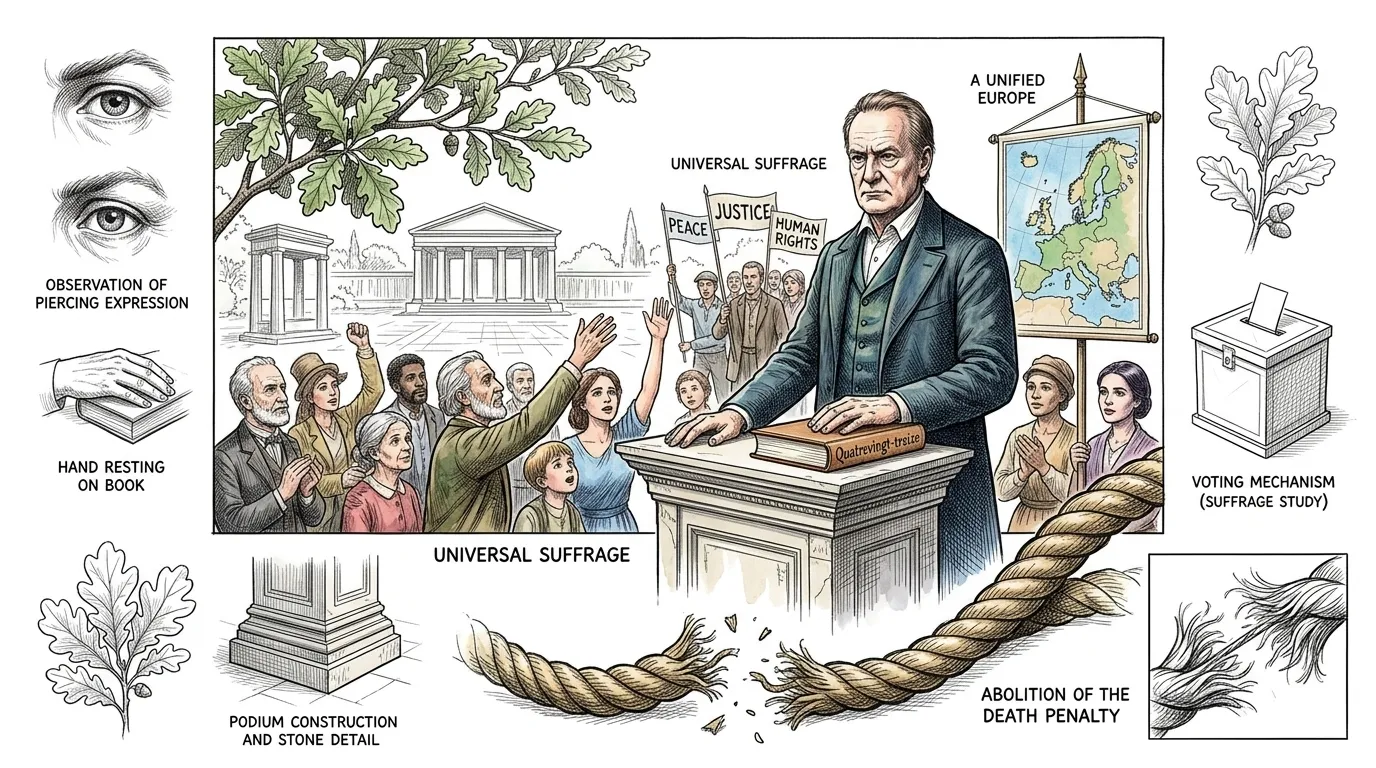
Even in his later years, Victor Hugo remained an indomitable advocate for justice. He championed universal suffrage, argued for the creation of a 'United States of Europe,' and steadfastly opposed the death penalty. His final major novel, Quatrevingt-treize (Ninety-Three), published in 1874, explored the complexities of the French Revolution, reaffirming his lifelong commitment to humanism amidst political turmoil. His moral authority continued to shape public discourse and influence policy until his very last days.
Biographical Fact: Victor Hugo's continued advocacy. Later works: Quatrevingt-treize (1874). Causes: Universal suffrage, abolition of the death penalty, European unity. He remained a powerful voice for social justice throughout his life.
Page 10
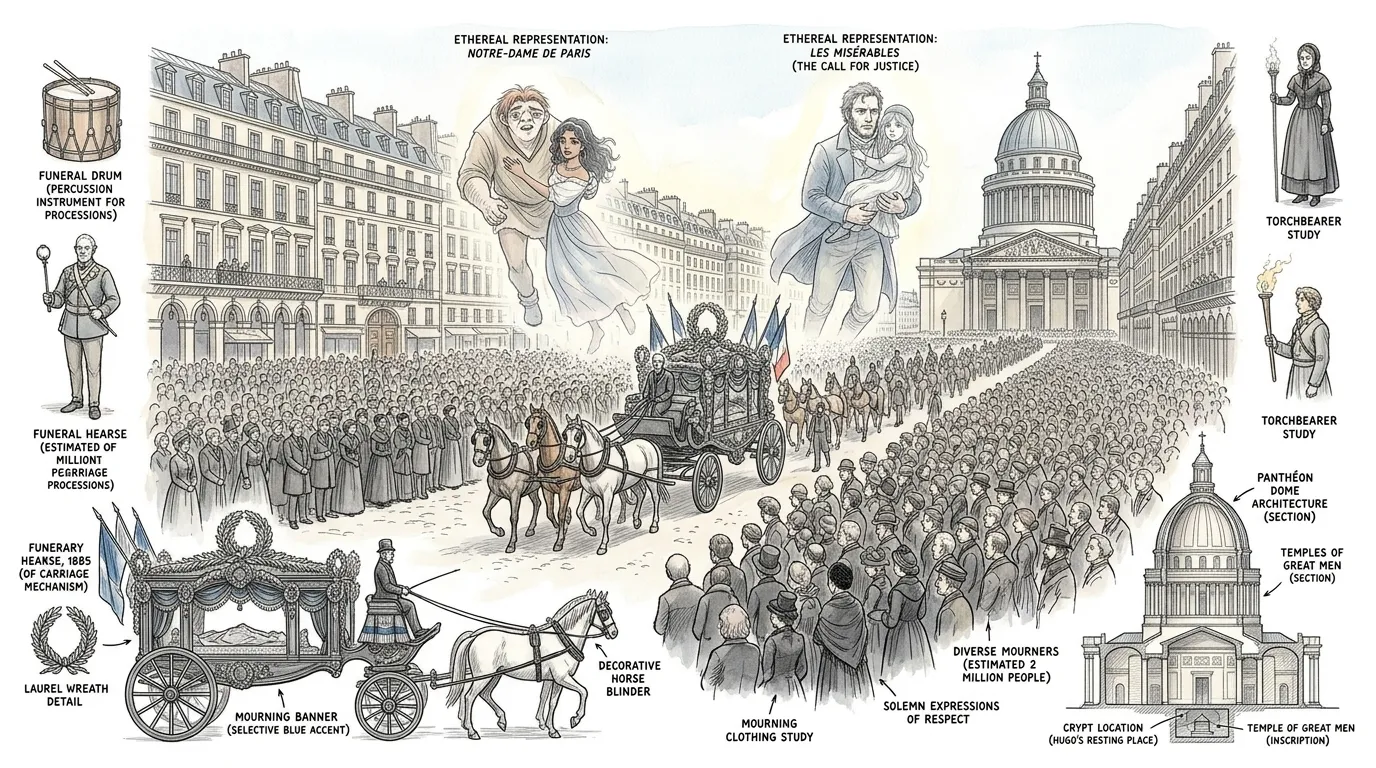
Victor Hugo passed away in Paris in 1885, but his impact on the world was far from over. His state funeral was a monumental event, witnessed by an estimated two million people—a testament to his unparalleled stature as a national poet, moral guide, and champion of humanity. His works, from Notre-Dame de Paris to Les Misérables, endure as cornerstones of literature, translated into every language, continuously adapted, and perpetually inspiring new generations. Victor Hugo's legacy transcends time, his voice a timeless call for justice, compassion, and the triumph of the human spirit.
Biographical Fact: Victor Hugo's funeral and lasting impact. Died: May 22, 1885. Burial: Panthéon, Paris. Attendance: Estimated 2 million people. His literary works and humanist ideals continue to resonate globally, ensuring his immortal legacy.
About this story
- Location: Global
- Audience: general readers
Questions and answers
Read Wonder People on your phone
Wonder People is available on Android. Get Wonder People on Google Play.