Toussaint Louverture
Toussaint Louverture — an illustrated biography story, set in Global. 10 illustrated pages, free to read on Wonder People.
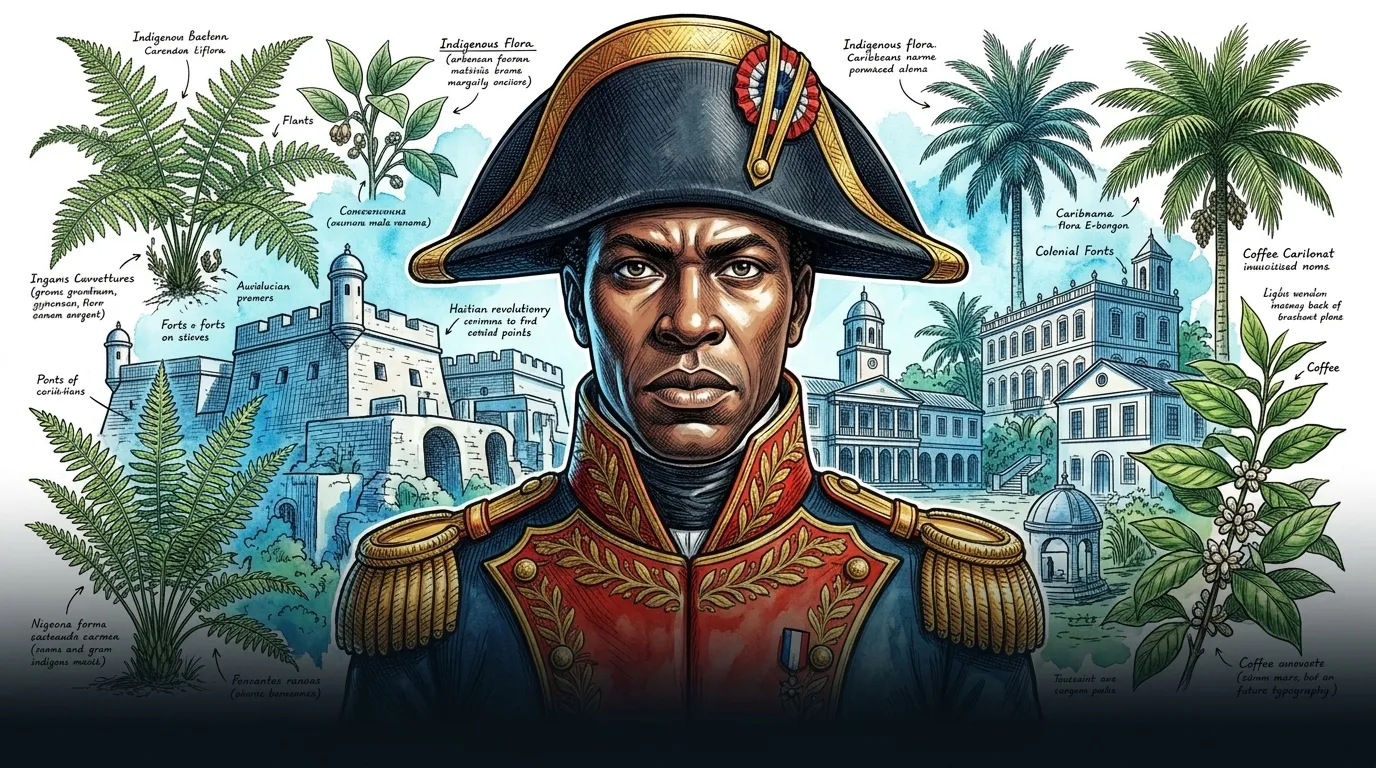
Page 1
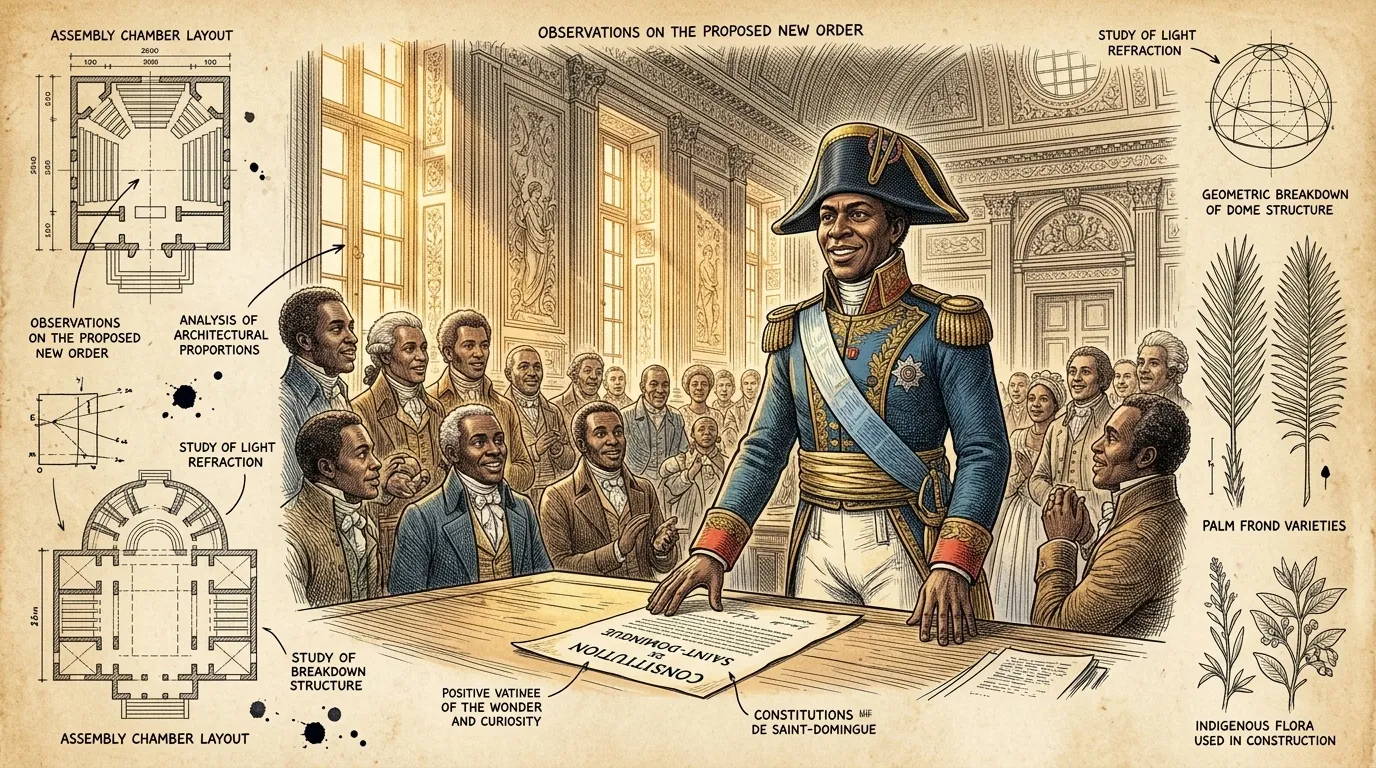
In Port-au-Prince, Saint-Domingue, 1801, Governor-General Toussaint Louverture stood before the newly constituted Central Assembly. He presented the new Constitution, a document affirming autonomy and abolishing slavery permanently, defying the will of First Consul Napoleon Bonaparte of France. "As the Roman philosopher Cicero once wrote, 'Freedom is not given, it is won,'" Toussaint declared, his voice resonating through the chamber. "This day, we affirm the freedom we have earned for ourselves and for generations yet to come."
"Toussaint Louverture: "As the Roman philosopher Cicero once wrote, 'Freedom is not given, it is won.' This day, we affirm the freedom we have earned for ourselves and for generations yet to come.""
Page 2
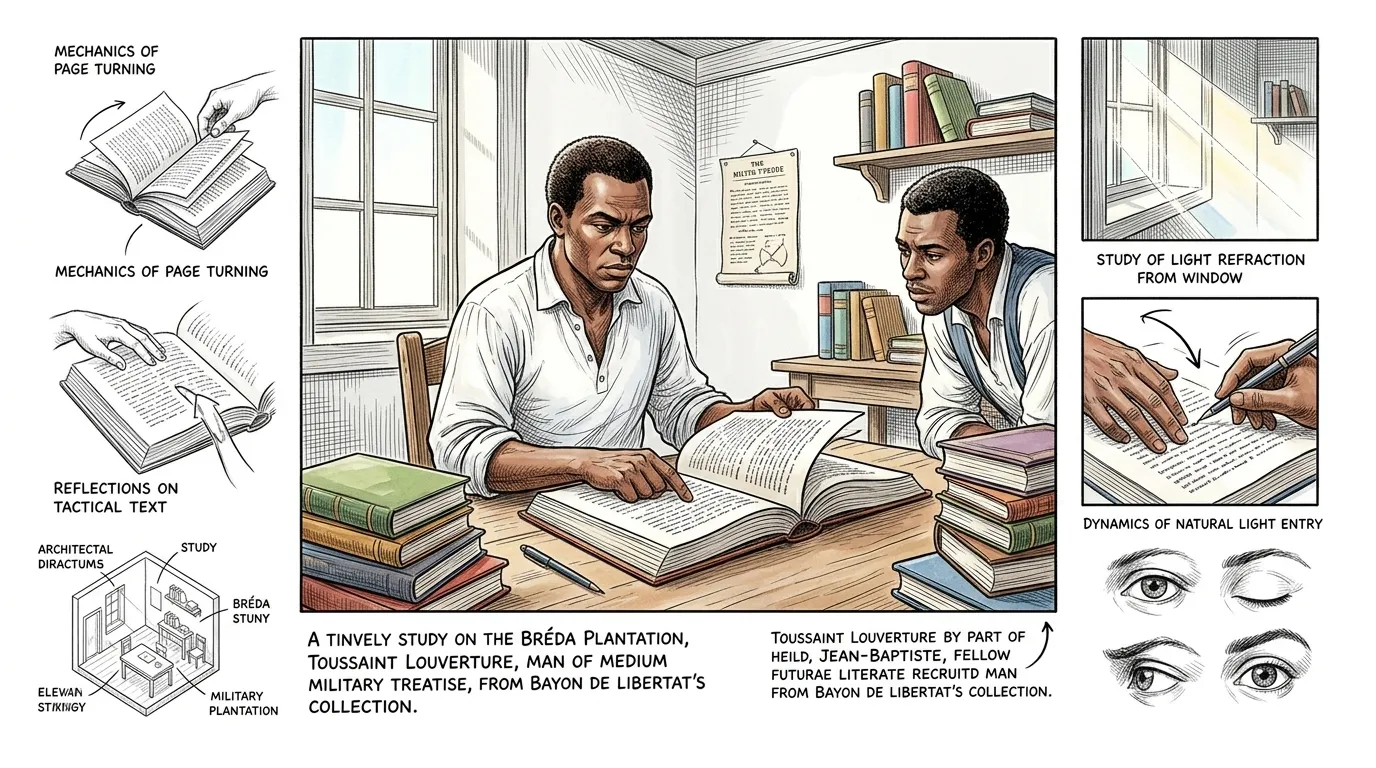
Before the revolution, on the Bréda Plantation near Cap-Français, a younger Toussaint, born enslaved, dedicated himself to education. He poured over his master Bayon de Libertat's books, learning not only to read and write, but also about the world's great leaders and military strategies. "My friend, the Roman general Vegetius advised that 'he who desires peace, should prepare for war,'" Toussaint stated to a fellow literate enslaved man, reading from an old military treatise. "These tactics, these histories, they hold knowledge for our own struggle, a wisdom for the fight to come."
"Toussaint Louverture: "My friend, the Roman general Vegetius advised that 'he who desires peace, should prepare for war.' These tactics, these histories, they hold knowledge for our own struggle, a wisdom for the fight to come."
Fellow literate enslaved man (Jean-Baptiste): "Indeed, Toussaint. The strategies of the ancients could guide us against such overwhelming forces.""
Page 3
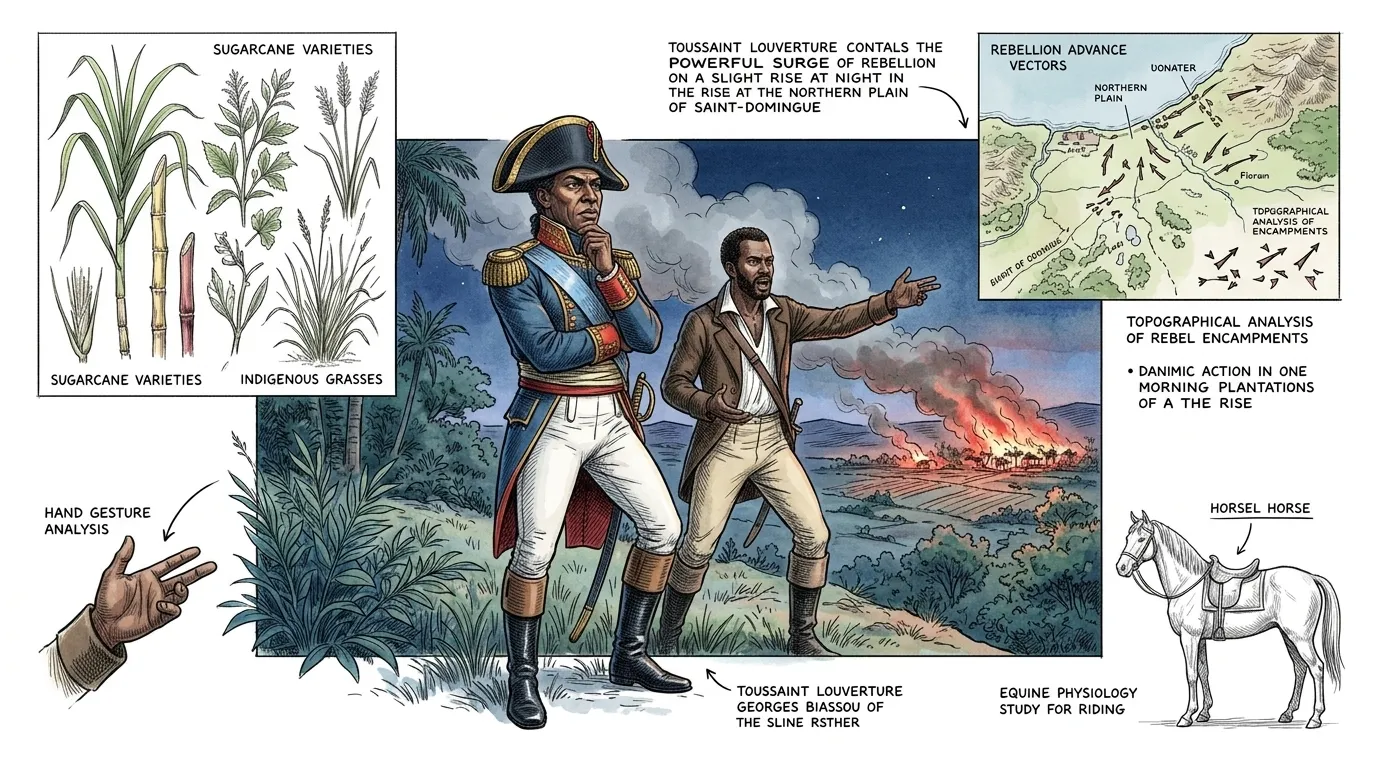
The year 1791 ignited the Northern Plain of Saint-Domingue in rebellion. After the Vodou ceremony of Bois Caïman, enslaved people rose up, burning plantations. Toussaint, a skilled horseman and healer, observed the chaotic but powerful surge, making a pivotal decision. "We must organize this fury, General," he urged the early rebel leader Georges Biassou, standing beside him in the smoke-filled night. "Passion can break chains, but discipline will forge a nation. We must harness this energy, or it will consume us."
"Toussaint Louverture: "We must organize this fury, General. Passion can break chains, but discipline will forge a nation. We must harness this energy, or it will consume us."
Georges Biassou: "The spirit is willing, Toussaint, but the means are scattered. We need more than spirit.""
Page 4
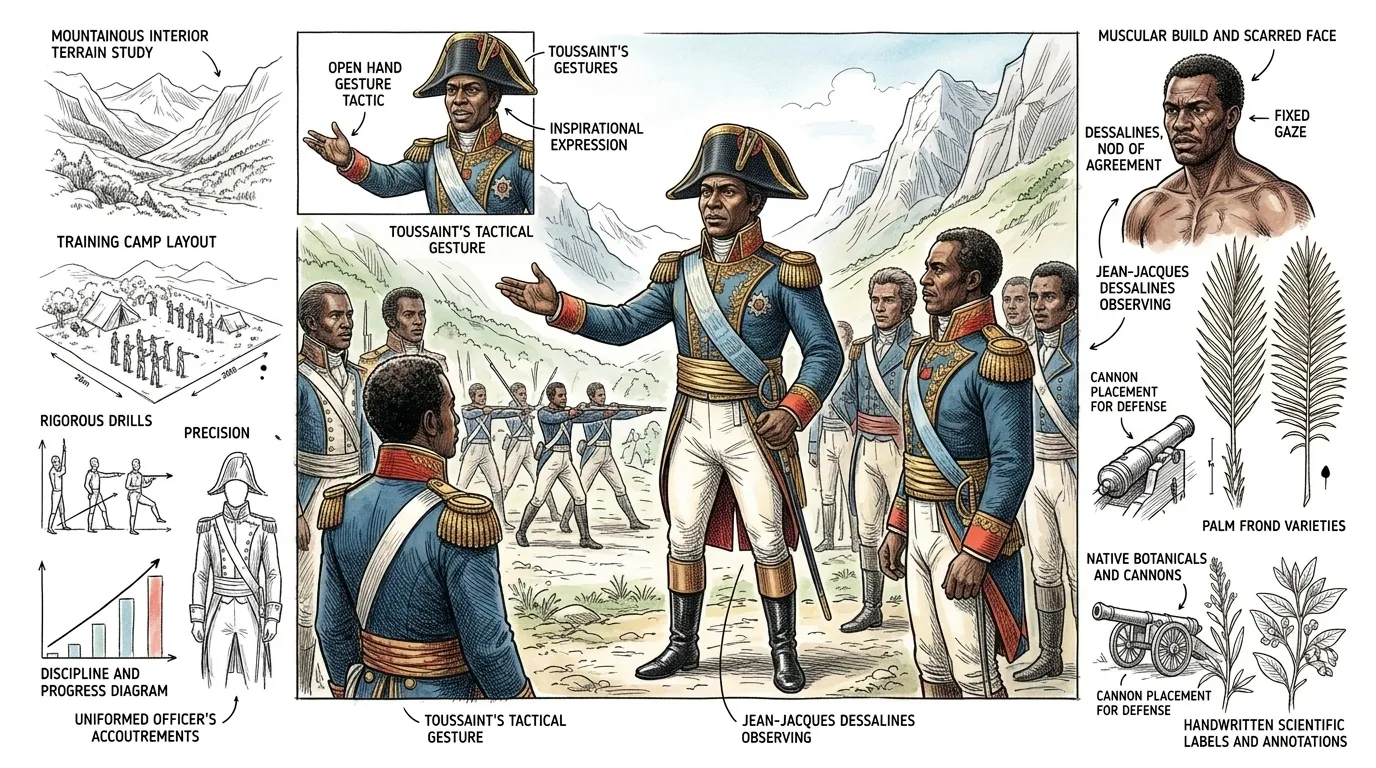
In the chaotic early years, Toussaint transformed raw recruits into a disciplined fighting force. He established rigorous training camps in the mountainous interior, instilling tactics he'd studied and a sense of unity among his troops. "Discipline is the soul of an army; it makes small numbers formidable, procures success to the weak, and esteem to all," Toussaint quoted to his nascent officer corps, attributing the maxim to George Washington. "Without it, we are merely a mob. With it, we become invincible."
"Toussaint Louverture: "Discipline is the soul of an army; it makes small numbers formidable, procures success to the weak, and esteem to all,' as George Washington declared. Without it, we are merely a mob. With it, we become invincible."
Jean-Jacques Dessalines: "Your methods are harsh, General, but they yield results. Our men now stand firm where before they wavered.""
Page 5
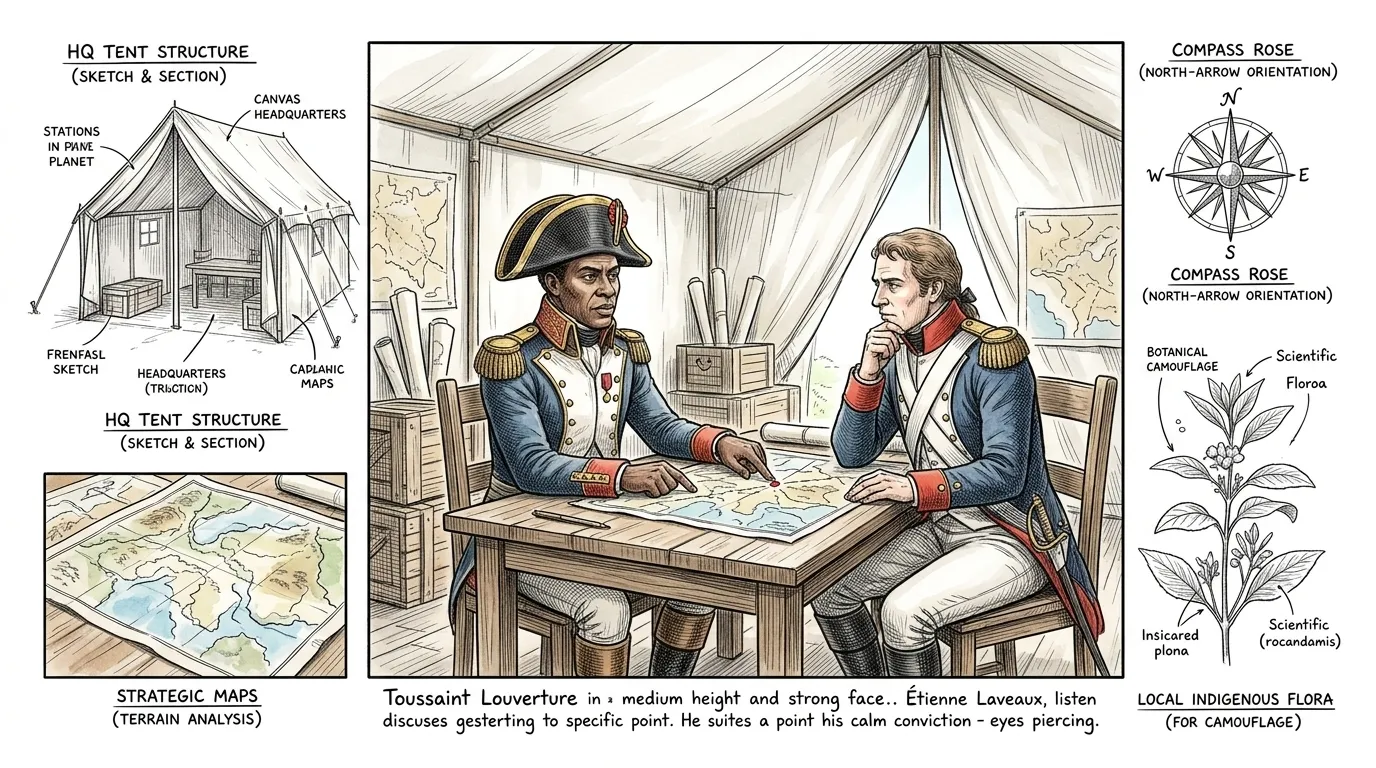
By 1794, Toussaint made a pivotal strategic decision, switching allegiance from Spain to Republican France. This calculated move allowed him to leverage French support against the British and Spanish forces occupying parts of Saint-Domingue. "As Sun Tzu taught, 'The supreme art of war is to subdue the enemy without fighting,'" Toussaint explained to French General Étienne Laveaux. "By joining forces, we compel a greater victory and secure this land from all external threats, rather than dividing our strength."
"Toussaint Louverture: "As Sun Tzu taught, 'The supreme art of war is to subdue the enemy without fighting.' By joining forces, we compel a greater victory and secure this land from all external threats, rather than dividing our strength."
Étienne Laveaux: "Your insights are profound, General. This alliance will prove decisive in expelling the British and Spanish from the colony.""
Page 6
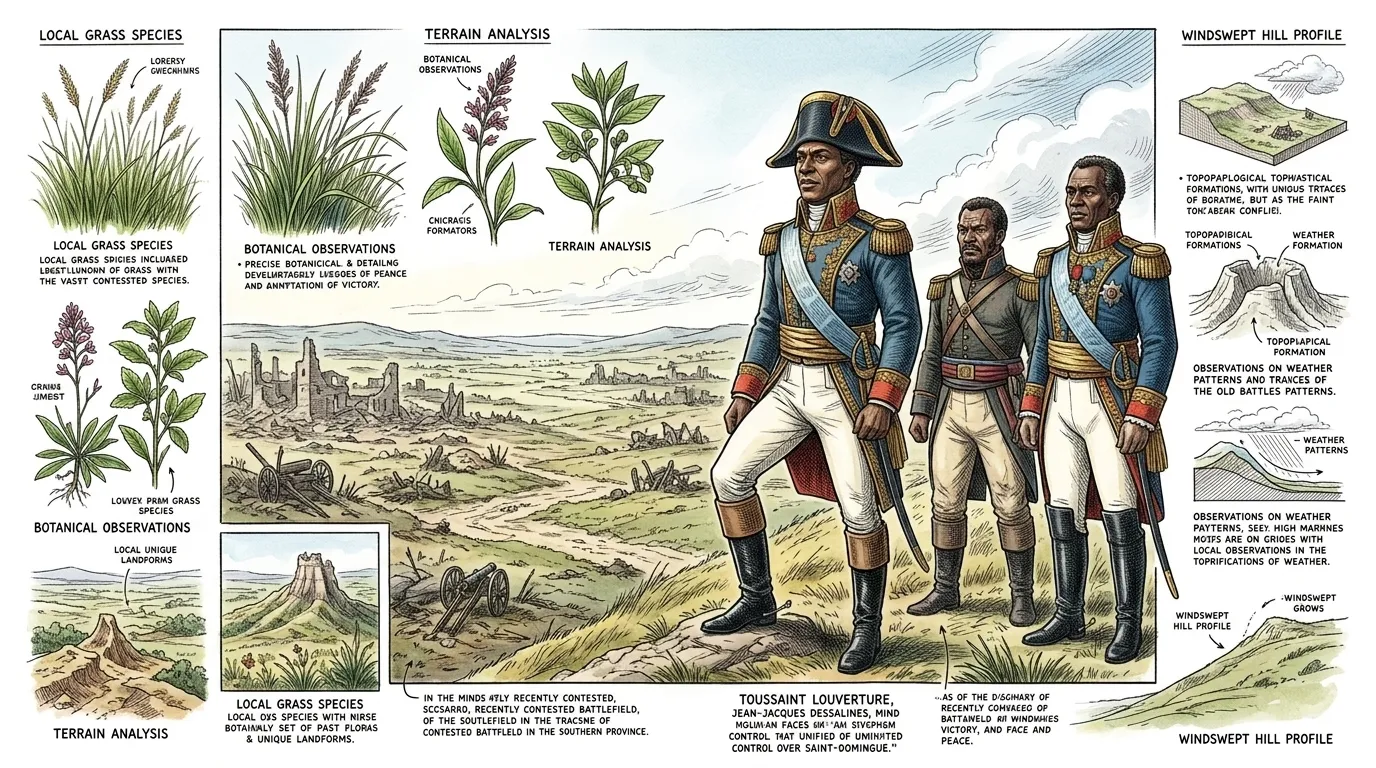
Toussaint's ambition extended to unifying the entire colony. Between 1799 and 1800, he engaged in the brutal 'War of Knives' against his rival, André Rigaud, a free man of color who controlled the Southern Province. Toussaint's forces prevailed, granting him undisputed control over Saint-Domingue. "History teaches us that a house divided cannot stand," Toussaint reflected, standing over a battlefield after Rigaud's defeat, addressing his generals Jean-Jacques Dessalines and Henri Christophe. "Now, the entire colony is ours to govern, not just parts of it."
"Toussaint Louverture: "History teaches us that a house divided cannot stand. Now, the entire colony is ours to govern, not just parts of it."
Jean-Jacques Dessalines: "Rigaud's resistance was fierce, General, but your strategy proved superior. The south is secured."
Henri Christophe: "Indeed, now we face no internal challenge to the order you have built.""
Page 7
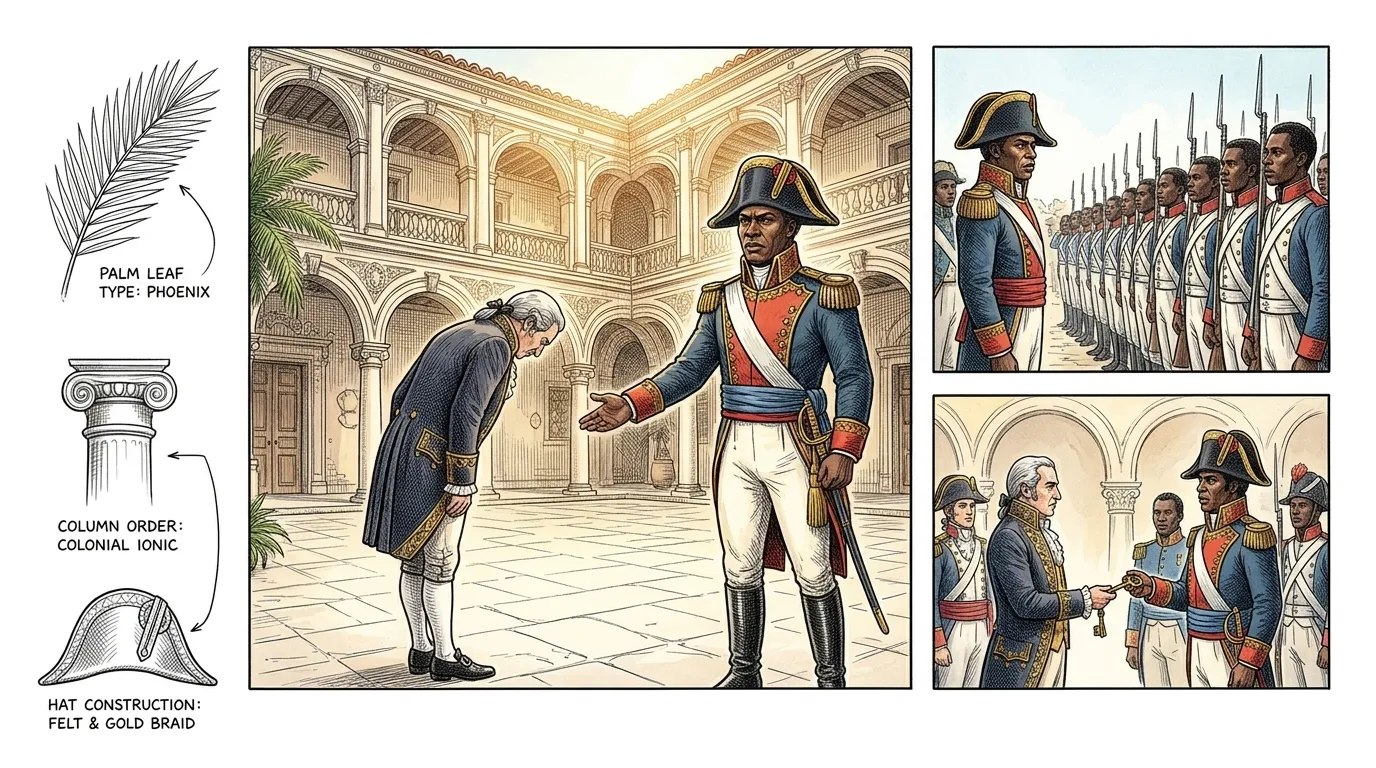
Driven by a vision of a unified, free island, Toussaint launched an invasion of Spanish Santo Domingo in 1801, completing the conquest within weeks. This bold move solidified his power across the entire island of Hispaniola, further cementing his defiance of European colonial powers. "A true leader must act with boldness when destiny calls," Toussaint declared to the Spanish Governor Joaquín García y Moreno, who stood before him in surrender. "The entire island, east and west, shall now stand united and free, under a single banner."
"Toussaint Louverture: "A true leader must act with boldness when destiny calls. The entire island, east and west, shall now stand united and free, under a single banner."
Joaquín García y Moreno: "Your forces are overwhelming, General. We have no choice but to cede control. The Spanish rule here is at an end.""
Page 8
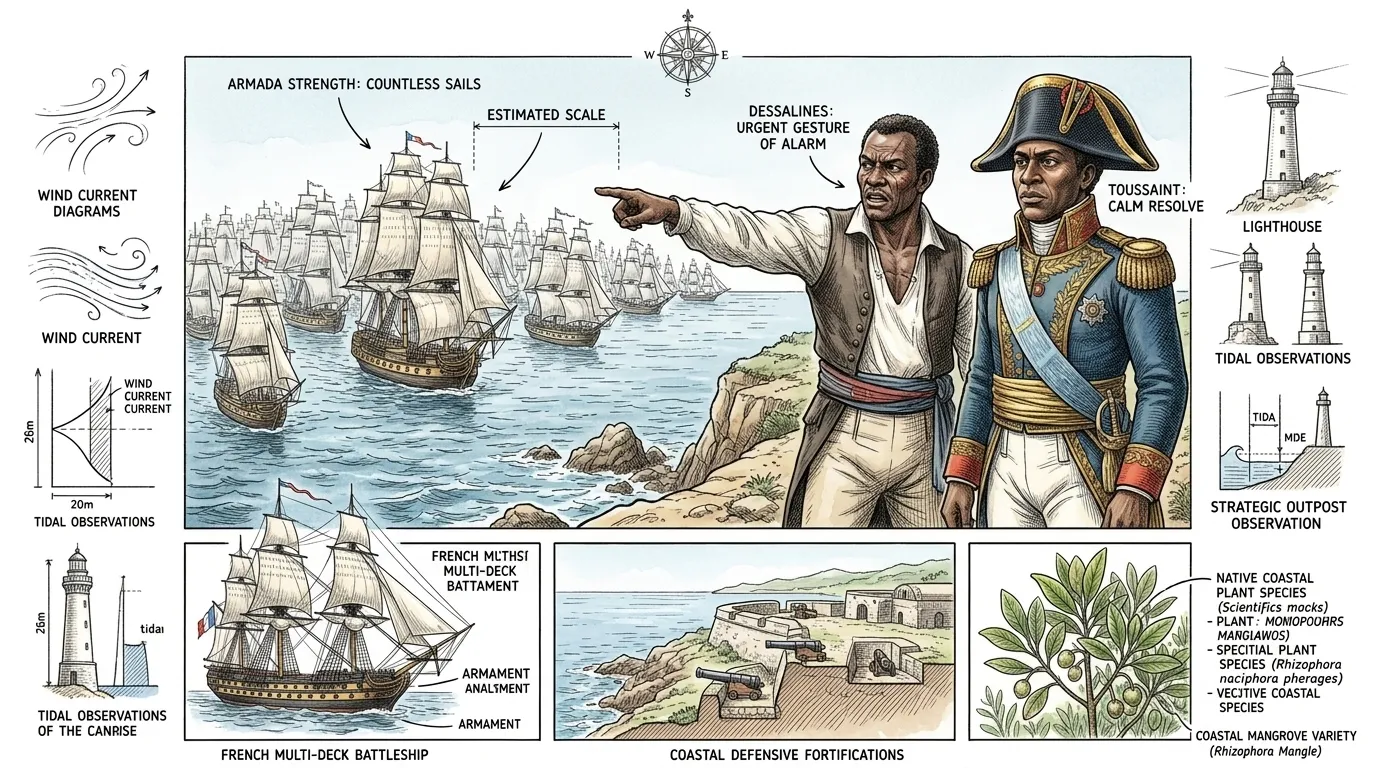
Toussaint's constitution and de facto independence infuriated Napoleon Bonaparte, who dispatched a massive French expedition under his brother-in-law, Charles Leclerc, in 1802, aiming to restore French authority and slavery. "General, their numbers are immense; the sea teems with their sails!" Jean-Jacques Dessalines exclaimed to Toussaint as the armada appeared. Toussaint, recalling his studies, responded, "Remember what Vegetius taught us: 'Numbers alone do not make victory.' We shall fight a war of attrition, turn this land itself into our greatest weapon, and starve them of their strength."
"Jean-Jacques Dessalines: "General, their numbers are immense; the sea teems with their sails!"
Toussaint Louverture: "Remember what Vegetius taught us: 'Numbers alone do not make victory.' We shall fight a war of attrition, turn this land itself into our greatest weapon, and starve them of their strength.""
Page 9
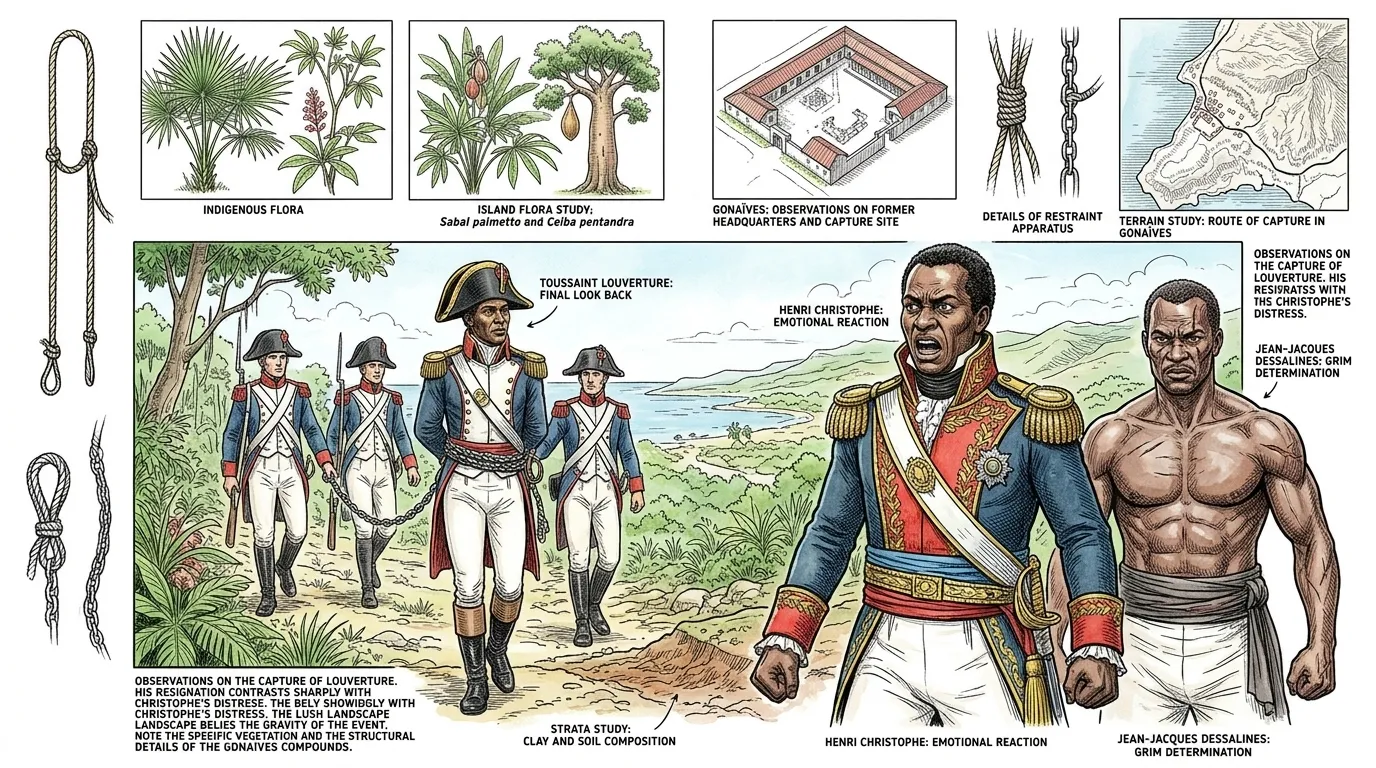
Despite Toussaint's determined resistance, the French forces, under Leclerc, resorted to deceit. Lured to a meeting under a flag of truce in Gonaïves, Toussaint was captured. "They took him by treachery, General!" Henri Christophe cried, enraged, to Dessalines later. "The French have broken their word!" Toussaint, as he was led away, looked back at the island, understanding the gravity of his loss but knowing his vision would endure. His final words to his captors hinted at the future: "In overthrowing me, you have cut down in Saint-Domingue only the trunk of the tree of liberty; it will spring up again from the roots, for they are numerous and they are deep."
"Henri Christophe: "They took him by treachery, General! The French have broken their word!"
Toussaint Louverture (to his captors, but audible): "In overthrowing me, you have cut down in Saint-Domingue only the trunk of the tree of liberty; it will spring up again from the roots, for they are numerous and they are deep.""
Page 10
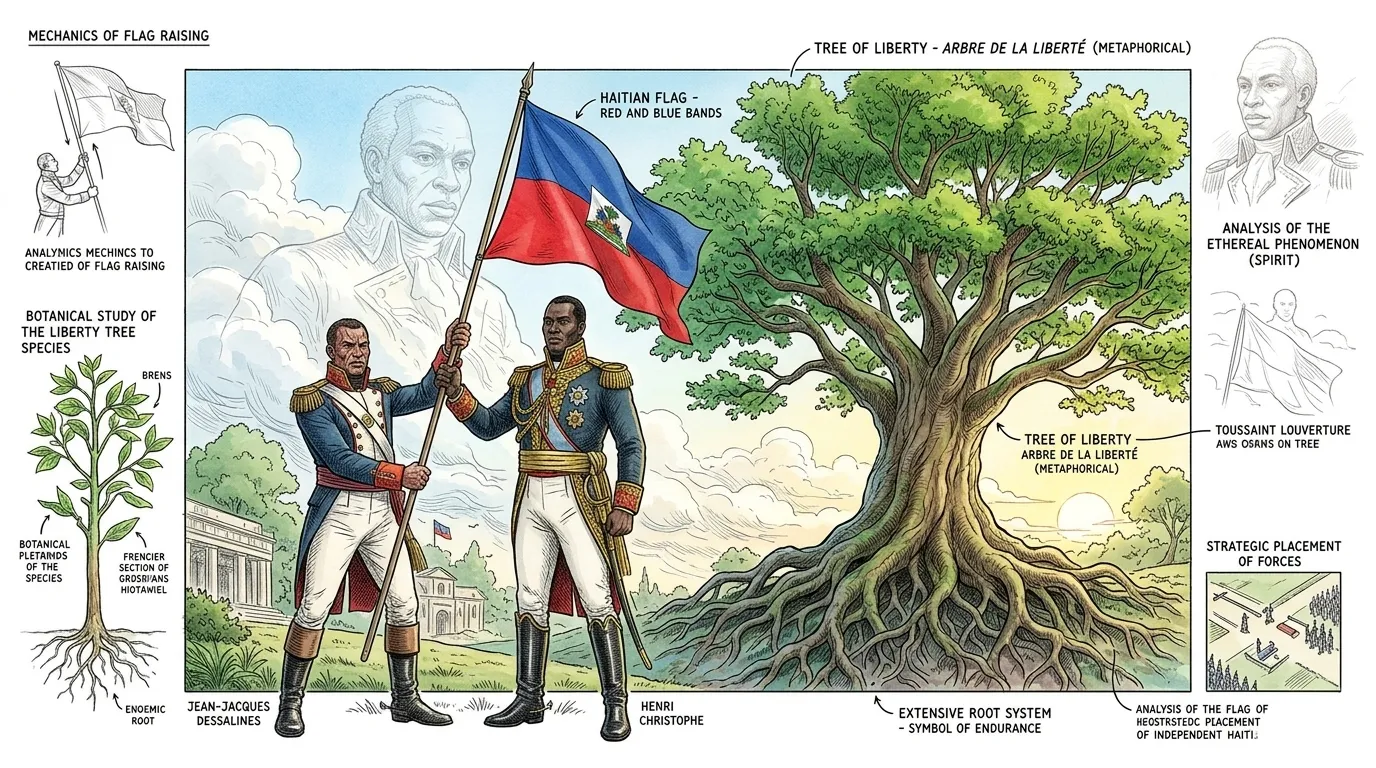
Toussaint Louverture died in a French prison in 1803, but his vision and struggle did not. His lieutenants, Jean-Jacques Dessalines and Henri Christophe, carried on the fight, driving out the French and declaring Haiti's independence in 1804. His legacy became a beacon of freedom, inspiring slave rebellions and anti-colonial movements across the globe. The tree of liberty he spoke of had indeed sprung from deep roots, making Haiti the first free black republic and a powerful symbol of self-determination against insurmountable odds.
"No direct dialogue on this page as it's a legacy montage."
About this story
- Location: Global
- Audience: general readers
Questions and answers
Read Wonder People on your phone
Wonder People is available on Android. Get Wonder People on Google Play.