Thomas Edison
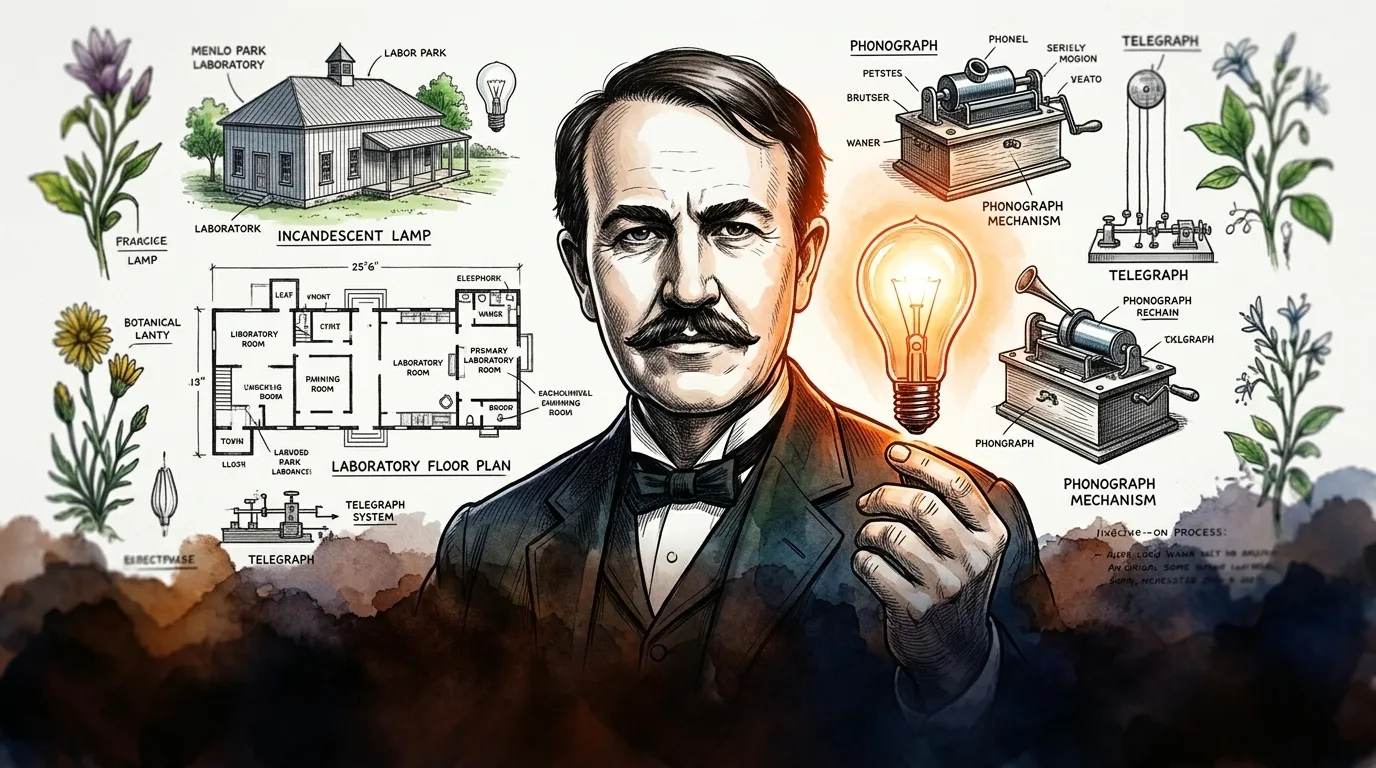
Thomas Edison — an illustrated biography story, set in Global. 10 illustrated pages, free to read on Wonder People.
Page 1
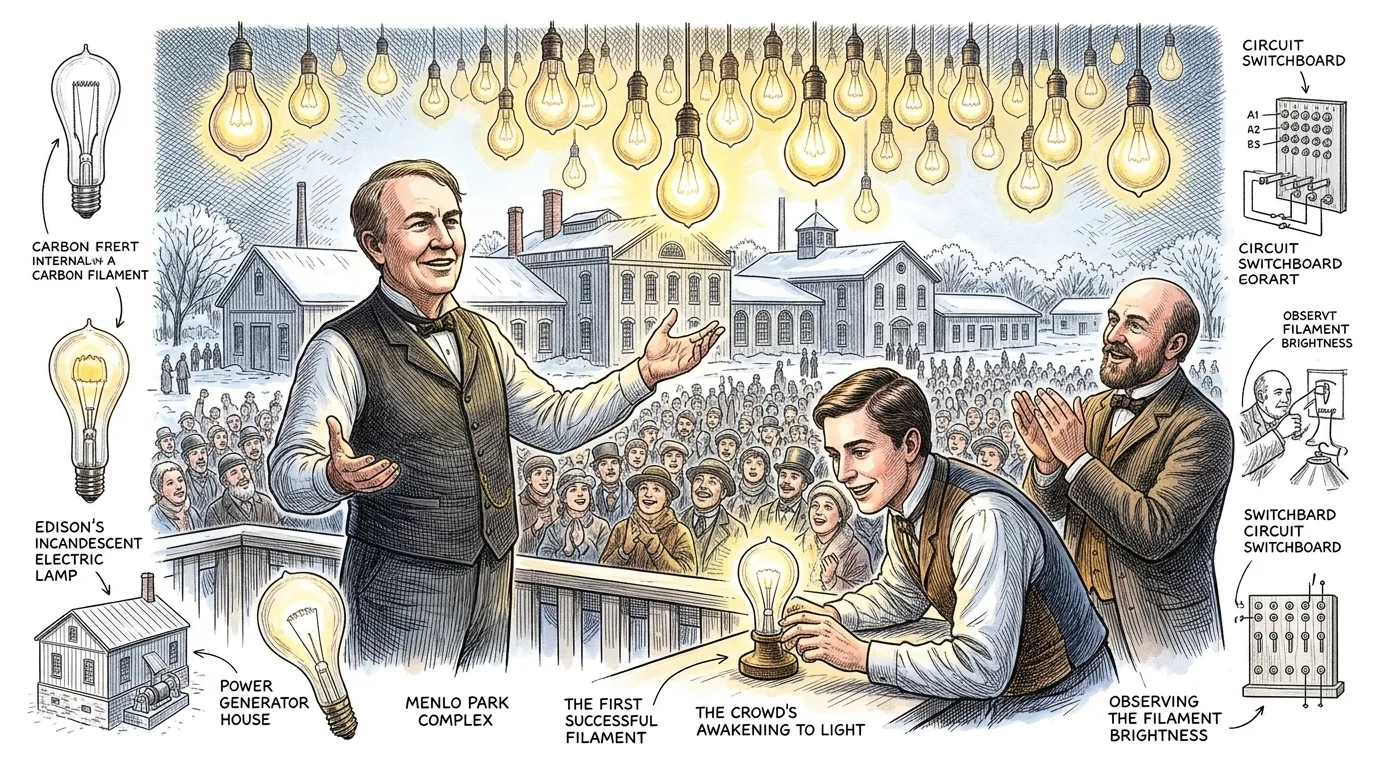
On December 31, 1879, at his laboratory in Menlo Park, New Jersey, Thomas Edison unveiled the world's first practical, long-lasting incandescent light bulb. Thousands gathered, their faces etched with anticipation in the biting winter air, as Edison and his team, including trusted assistants Francis Jehl and Edward H. Johnson, prepared for the historic demonstration. As the switches were thrown, a cascade of glowing filaments ignited, banishing the gaslight shadows across the complex with a revolutionary brilliance. In that moment, Edison did not just light a bulb; he illuminated the future of an entire world.
Page 2
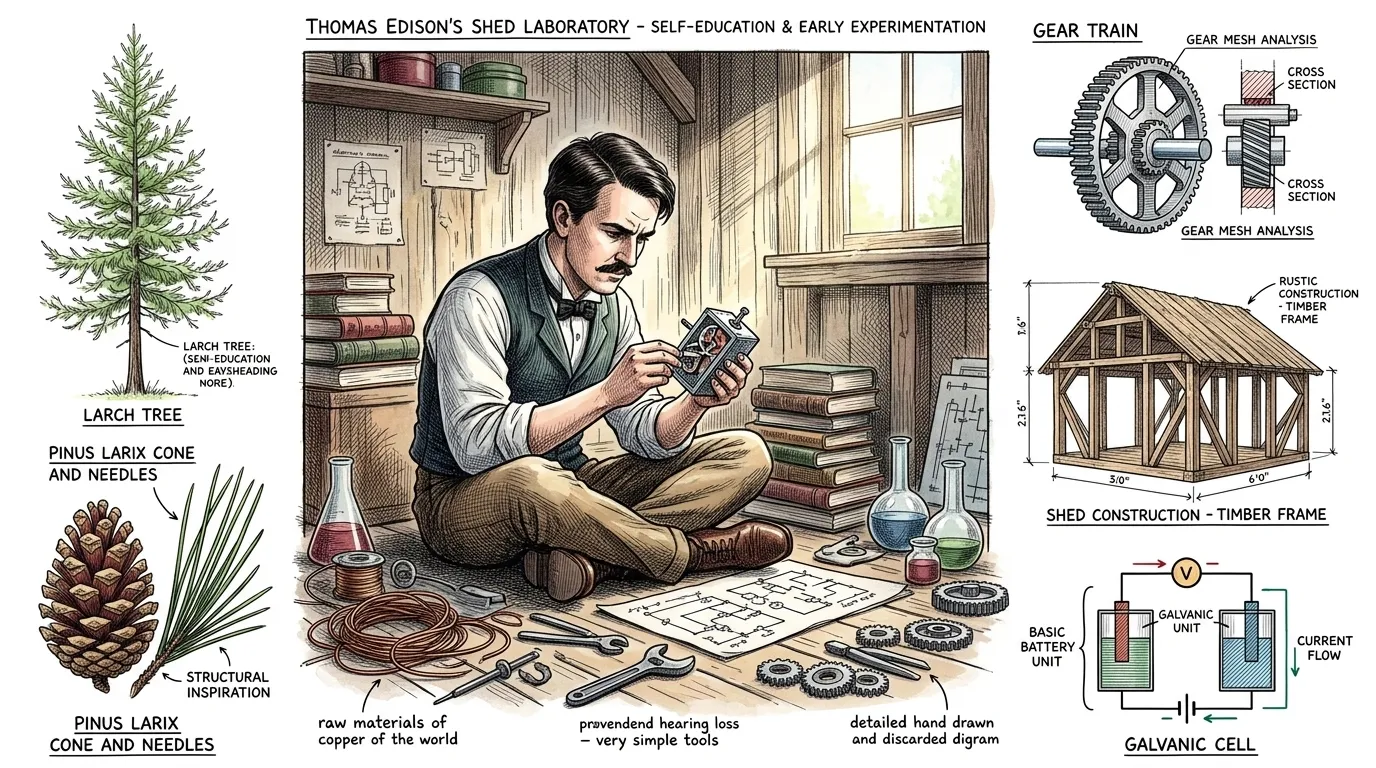
Born in Milan, Ohio, and later moving to Port Huron, Michigan, young Thomas Edison displayed an insatiable curiosity that often clashed with formal schooling. He immersed himself in scientific texts and spent hours experimenting, particularly after profound hearing loss in his early teens intensified his focus inward. This early independence, coupled with a drive for self-education and practical application, forged the foundation of his relentless inventive spirit. The raw materials of the world became his primary classroom, demanding his full attention.
Page 3
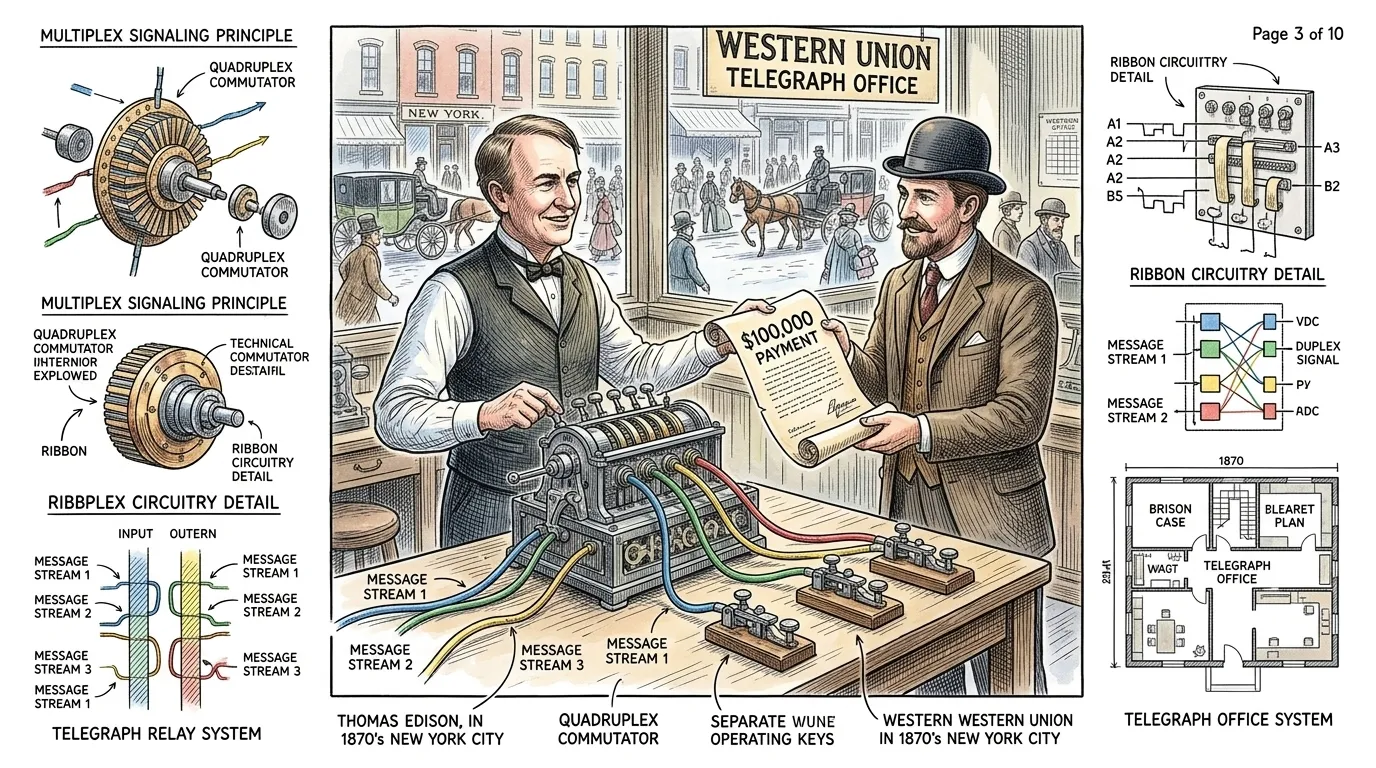
In his early twenties, Thomas Edison's acumen in telegraphy became undeniable. He moved to New York City and quickly developed the Quadruplex telegraph, a revolutionary device that allowed four messages to be sent simultaneously over a single wire. Western Union recognized the immense potential and, in 1874, acquired his invention for a staggering sum of 100,000. This financial independence provided Edison the capital and confidence to establish his own research and development facility, accelerating his trajectory as a commercial inventor.
Page 4
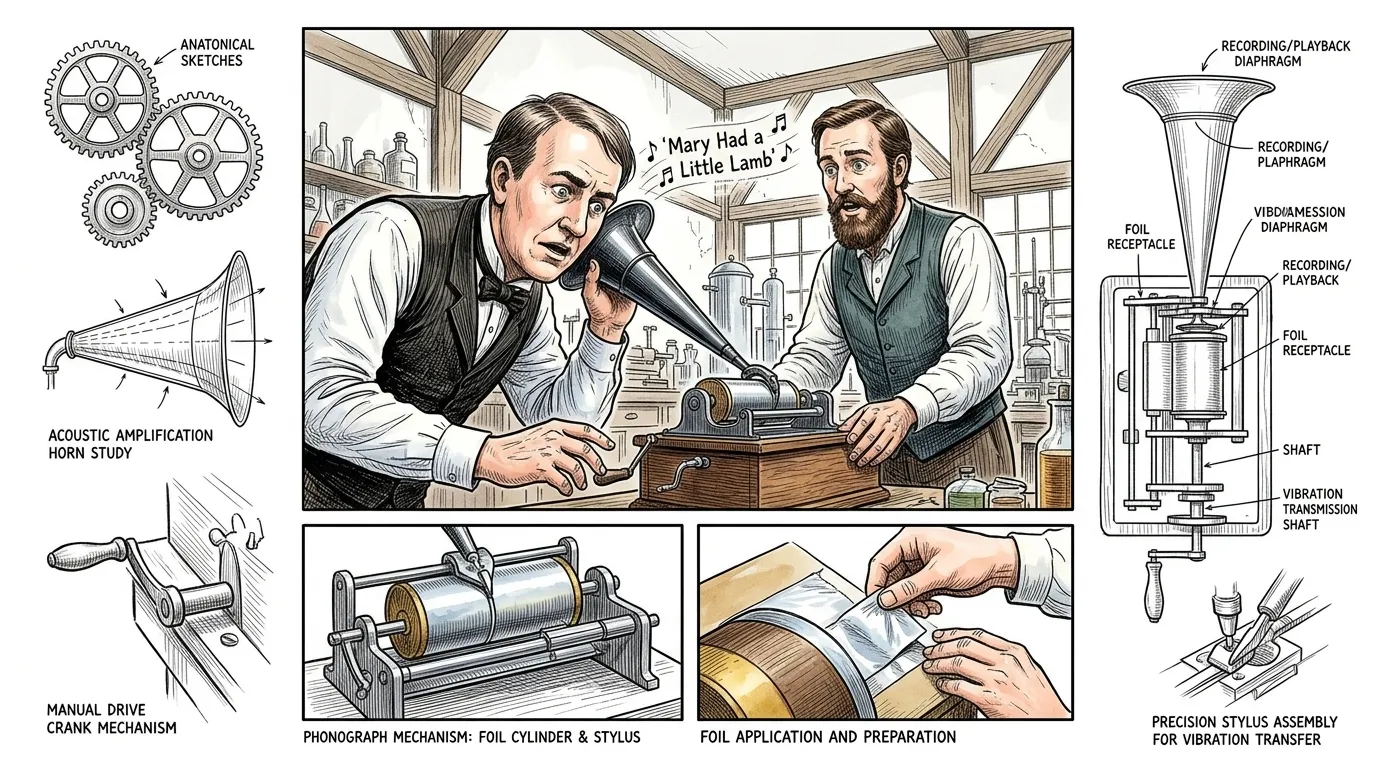
Amidst his telegraphic pursuits, Edison accidentally stumbled upon the principle of recording sound in 1877. With his mechanic, John Kruesi, he swiftly constructed a device: the phonograph. In their Menlo Park laboratory, Edison spoke 'Mary Had a Little Lamb' into the machine, and to their astonishment, the device played it back. This entirely unexpected invention captured the world's imagination, proving that sound, once fleeting, could now be stored and reproduced, marking an unprecedented moment in human communication.
Page 5
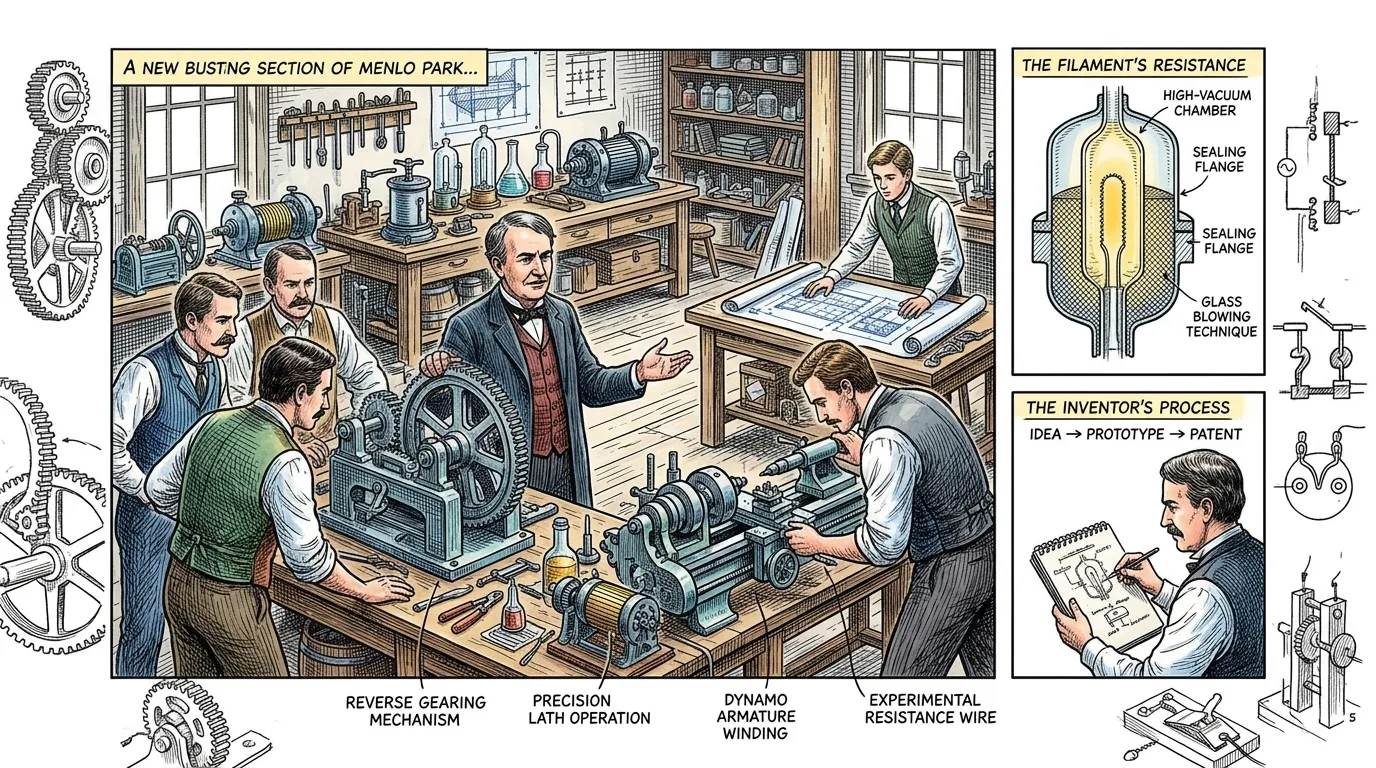
With the success of the Quadruplex and the phonograph, Thomas Edison formalized his unique approach to innovation, establishing the Menlo Park laboratory as the world's first industrial research facility. He assembled a diverse team of skilled mechanics, engineers, and scientists, fostering an environment of intense, collaborative experimentation. This 'invention factory' revolutionized the process of discovery, transforming isolated genius into systematic, goal-oriented development. It was a factory not of goods, but of ideas, designed to churn out patents and progress.
Page 6
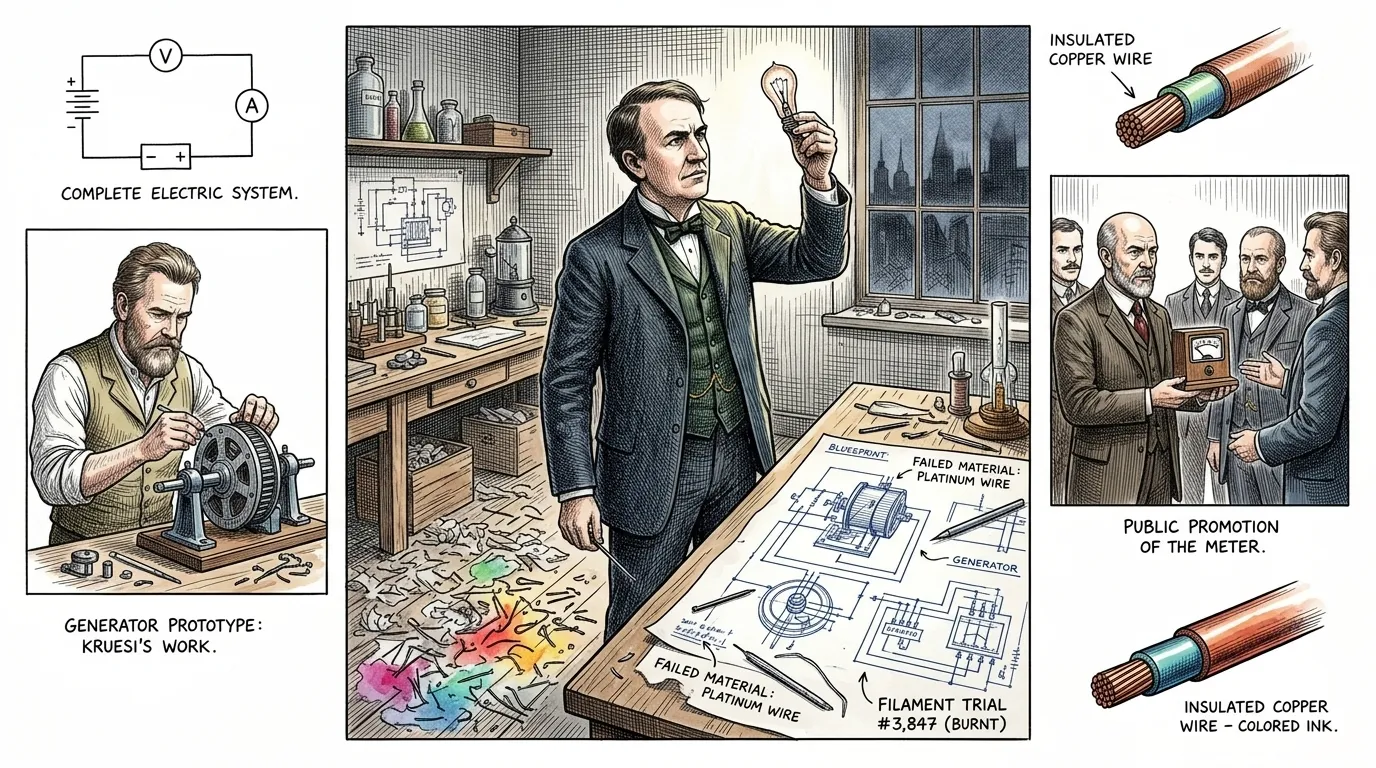
The world desperately sought a viable electric light, and numerous inventors pursued the challenge. Edison, seeing the profound commercial implications, dedicated his Menlo Park resources to developing a complete, practical system, not merely a better bulb. This involved overcoming thousands of material failures for the filament, designing generators, meters, and wiring systems—a monumental task demanding relentless experimentation. The pressure was immense, with competitors closing in and the promise of endless night looming over urban centers.
Page 7
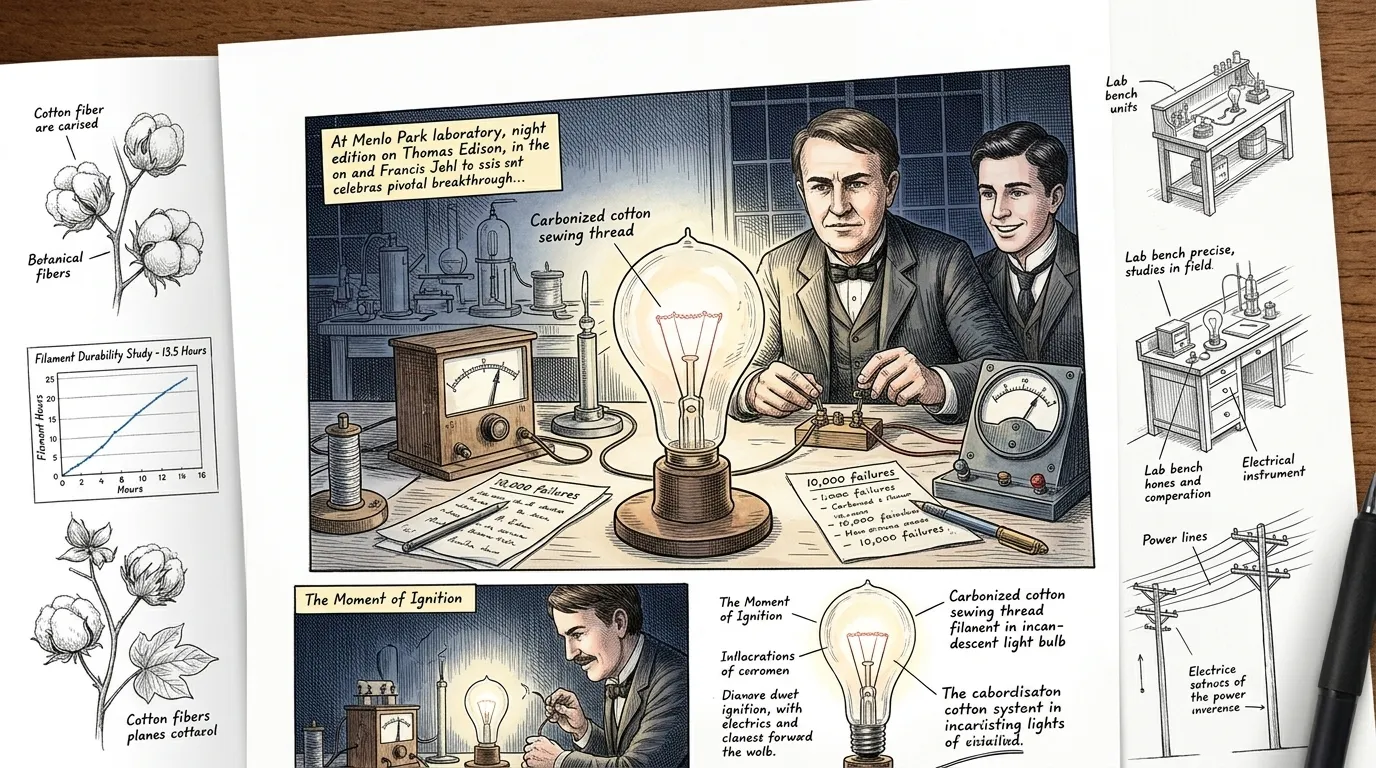
After countless trials, exploring everything from platinum to human hair, Edison's team, driven by his unwavering vision, made their critical discovery. In October 1879, a carbonized cotton sewing thread, baked at high temperatures, yielded a filament that glowed for over 13 hours. This marked the pivotal breakthrough: a durable, economical light source. The sheer persistence, overcoming 10,000 failures as he famously stated, transformed an elusive scientific concept into a viable, world-changing technology, setting the stage for the public debut.
Page 8
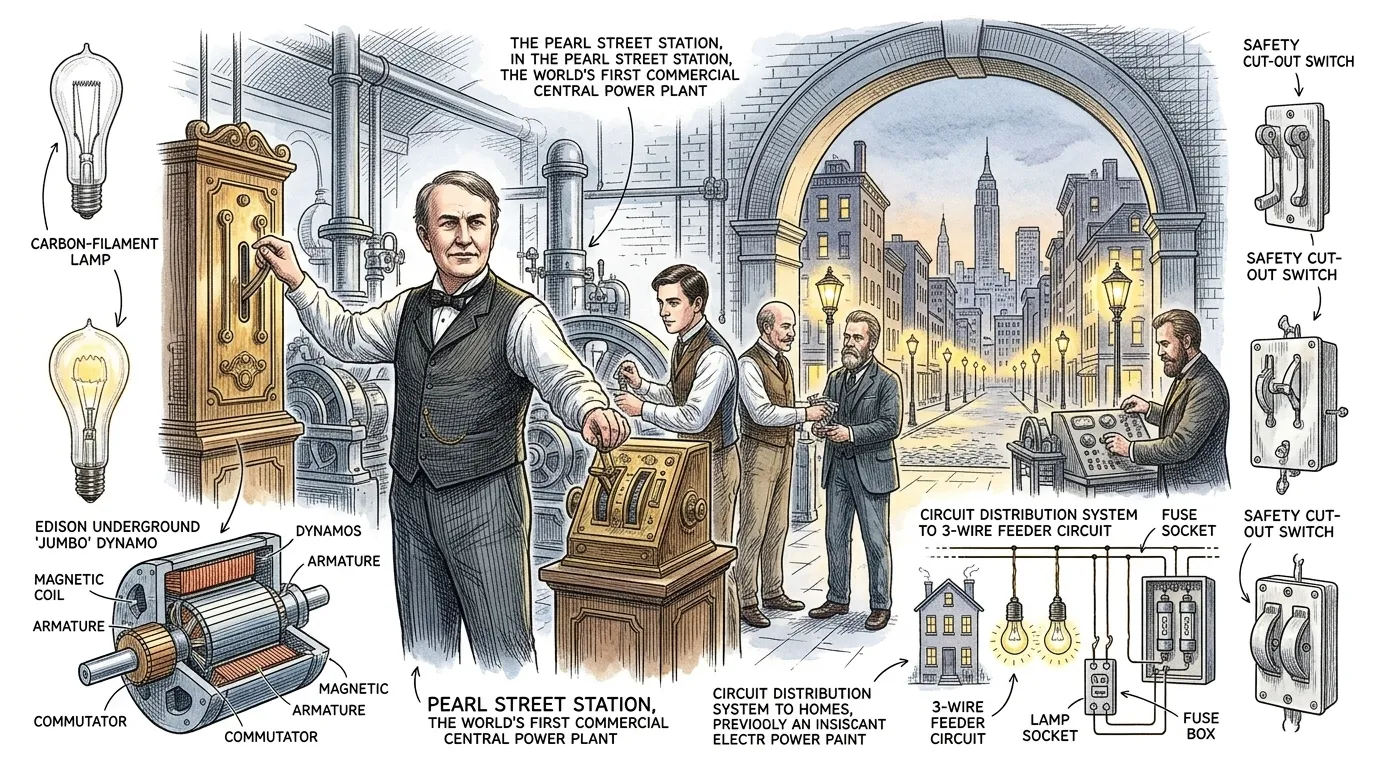
The success of the incandescent bulb demanded a complete system, and in 1882, Thomas Edison delivered. The Pearl Street Station in lower Manhattan began operation, the world's first commercial central power plant. With a flick of a switch, it brought electricity to 400 lamps in 85 homes and businesses, fundamentally transforming urban life. Streets, offices, and homes were suddenly brighter, safer, and more productive. This act solidified Edison's vision, moving electricity from a laboratory curiosity to an indispensable utility for the modern age.
Page 9
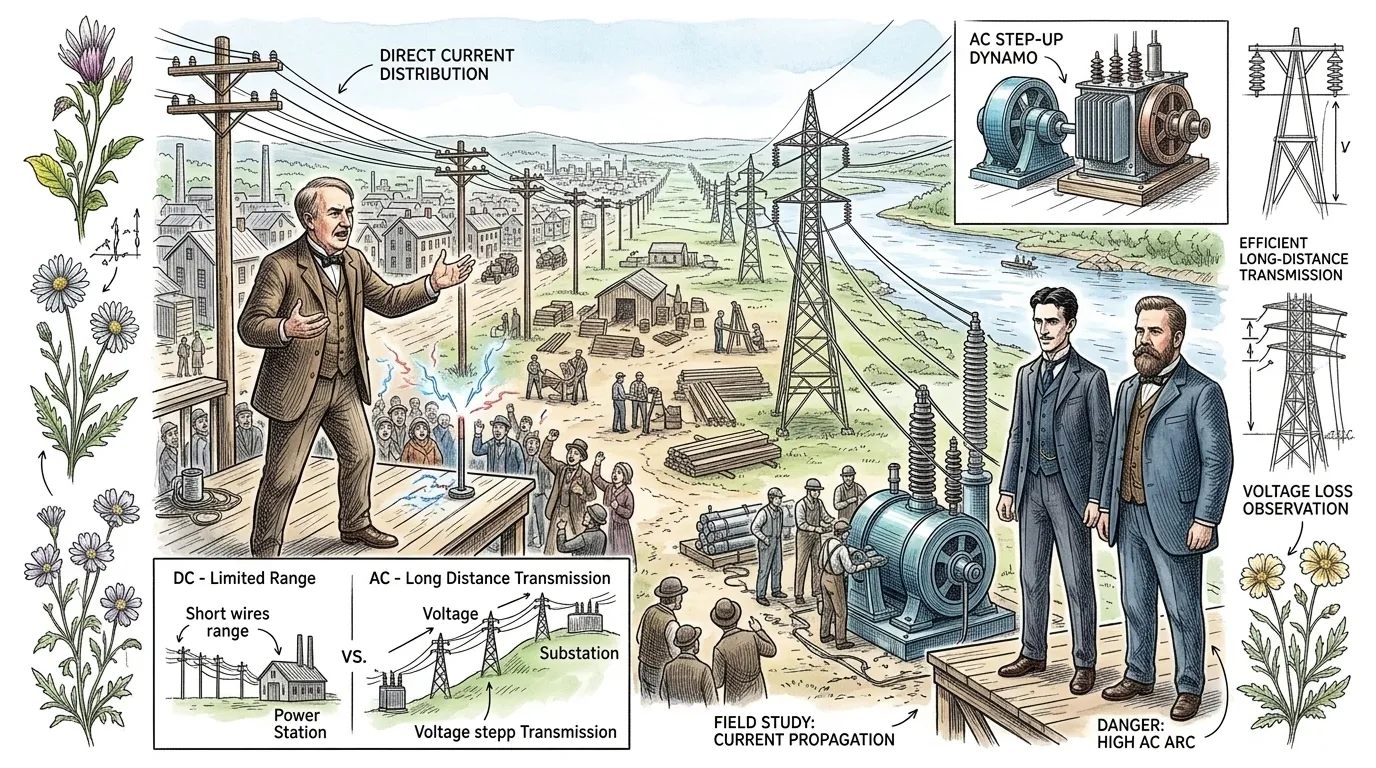
As electric power expanded, a fierce rivalry emerged: Thomas Edison's direct current (DC) system versus Nikola Tesla and George Westinghouse's alternating current (AC). Edison fiercely defended DC, highlighting its safety and simplicity, even employing controversial public demonstrations of AC's dangers. Despite his efforts, AC, with its ability to transmit power efficiently over long distances, ultimately prevailed, becoming the standard for modern power grids. This 'War of the Currents' marked a significant industrial battle, where Edison's influence, though immense, ultimately bowed to the inherent advantages of a competing technology.
Page 10
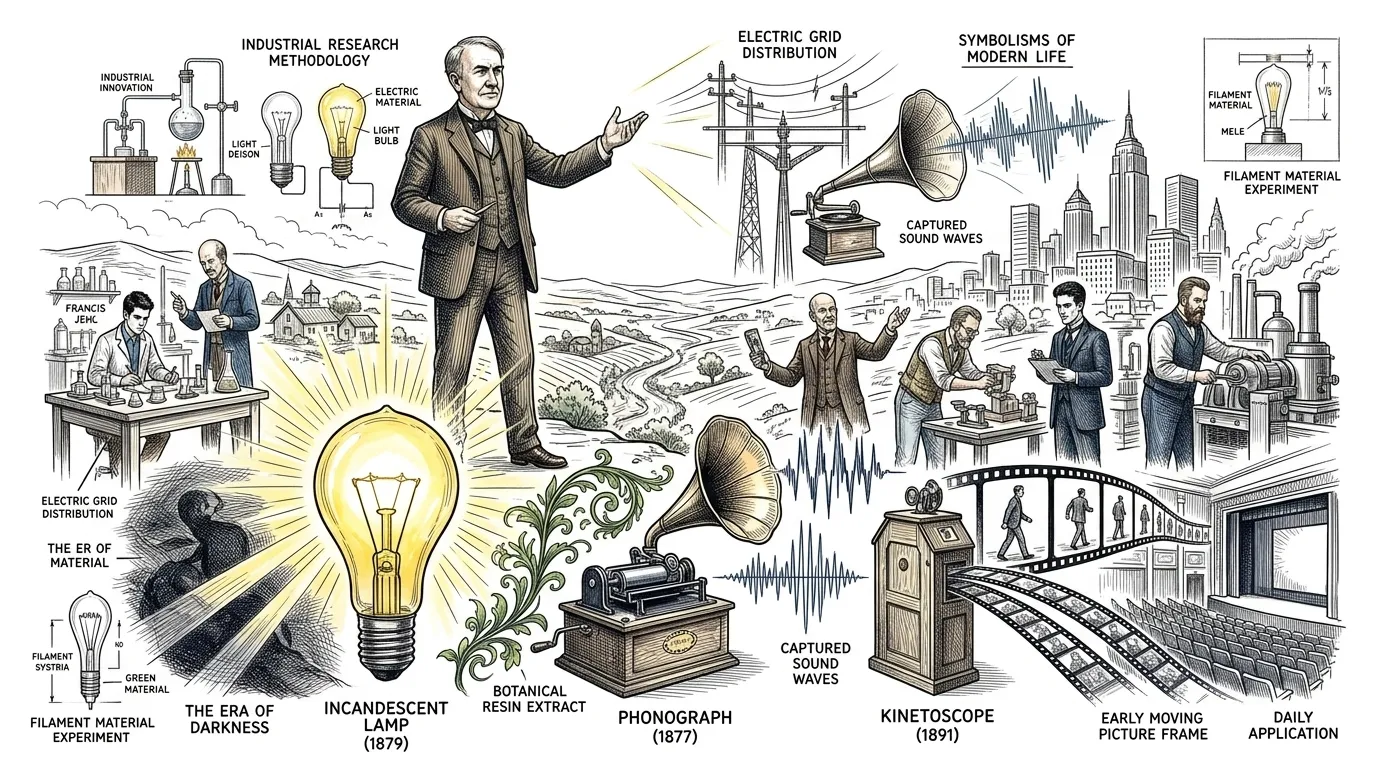
Thomas Edison's impact transcended his numerous inventions; he revolutionized the very process of innovation itself. His creation of the industrial research laboratory laid the groundwork for modern R&D, systematizing invention and fostering collaborative discovery. From the light that banished night to the phonograph that captured sound and the kinetoscope that birthed moving pictures, his work fundamentally reshaped daily life, industry, and culture. Edison's relentless pursuit of practical application forged a world forever changed by his ingenuity, making him an enduring symbol of American inventiveness.
About this story
- Location: Global
- Audience: general readers
Questions and answers
Read Wonder People on your phone
Wonder People is available on Android. Get Wonder People on Google Play.