The Wright Brothers
The Wright Brothers — an illustrated biography story, set in Global. 10 illustrated pages, free to read on Wonder People.
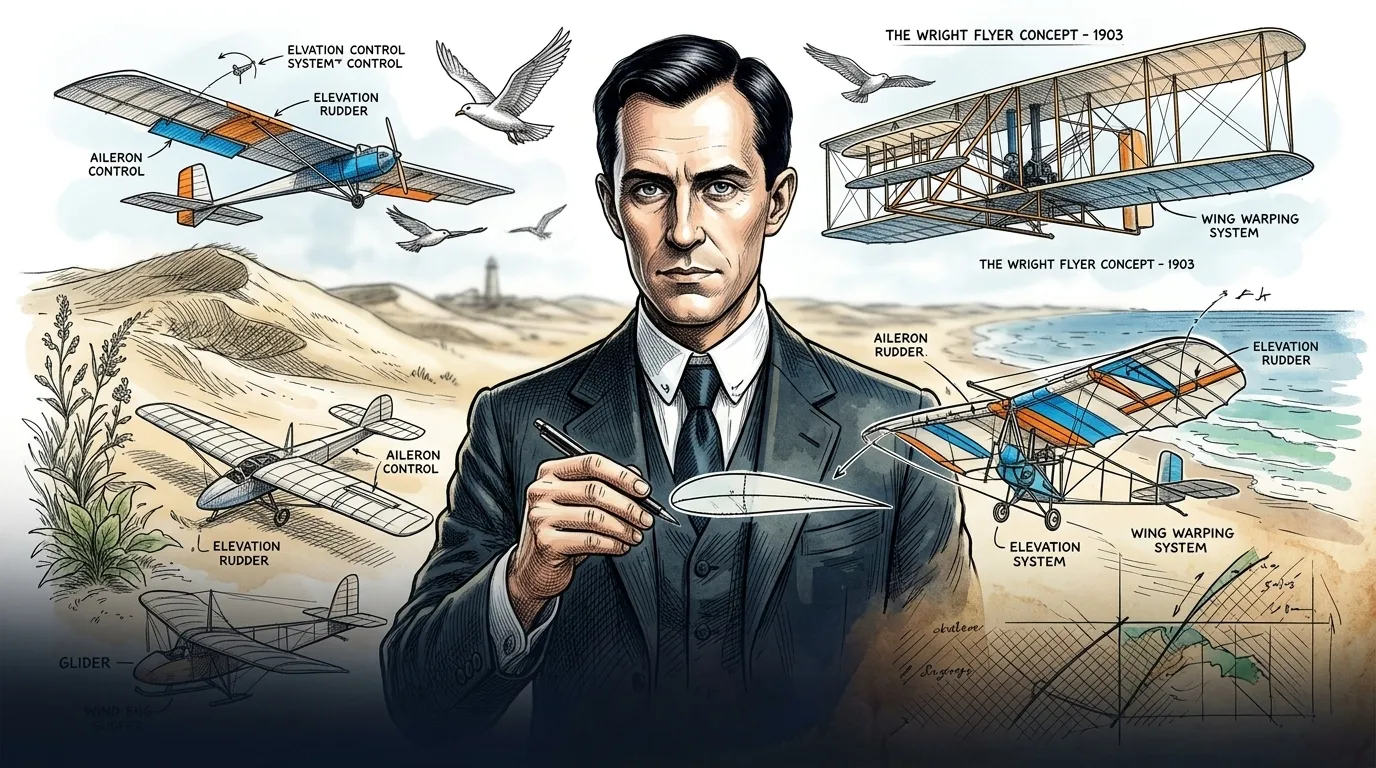
Page 1
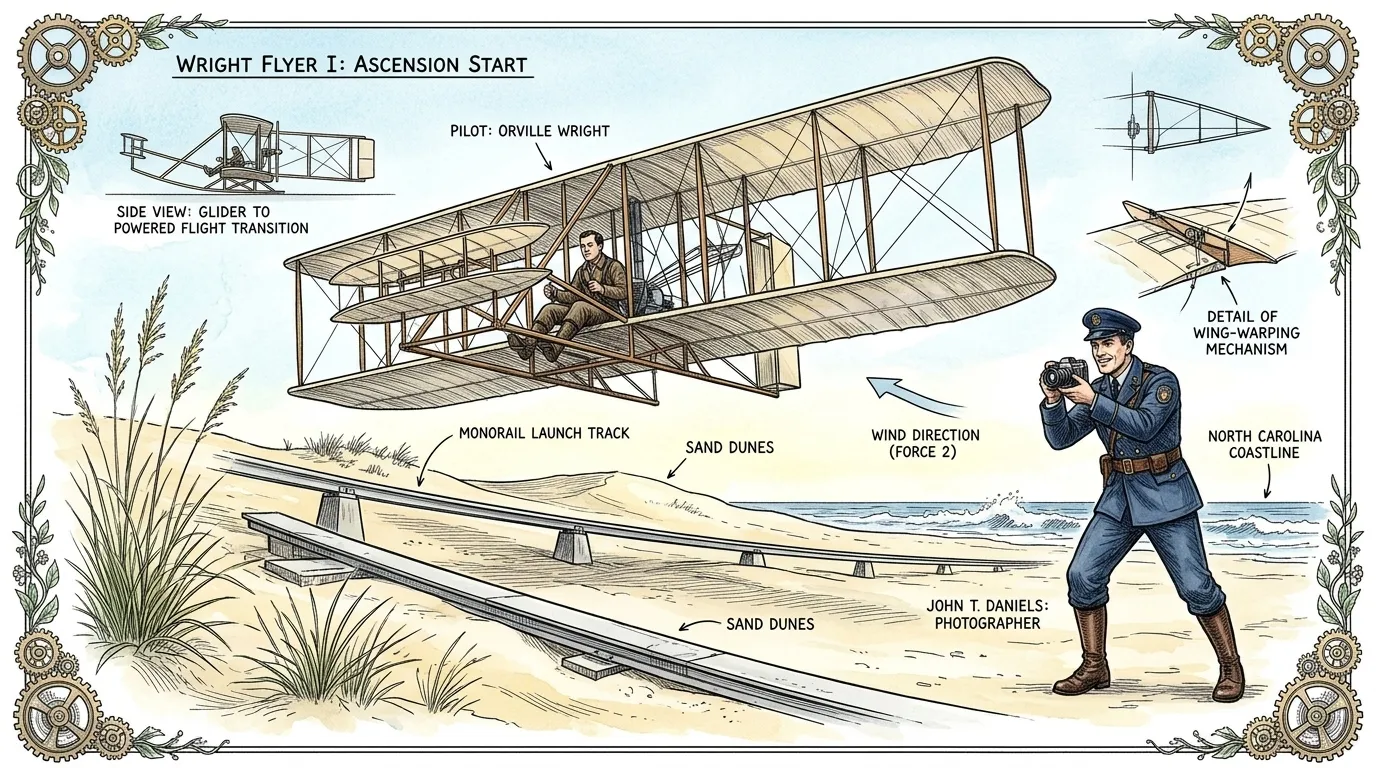
At Kill Devil Hills, North Carolina, on a cold winter morning, the brothers Wilbur and Orville Wright executed the defining event of modern aviation. Orville Wright, strapped into their Flyer I, initiated its ascent from the monorail launch track. For twelve momentous seconds, it traversed 120 feet, achieving the first sustained, controlled flight of a powered, heavier-than-air aircraft. On the ground, John T. Daniels, a member of the local Lifesaving Station, captured the impossible with his camera. This single action irrevocably altered the trajectory of human history, propelling the world into a new era of possibility.
Page 2
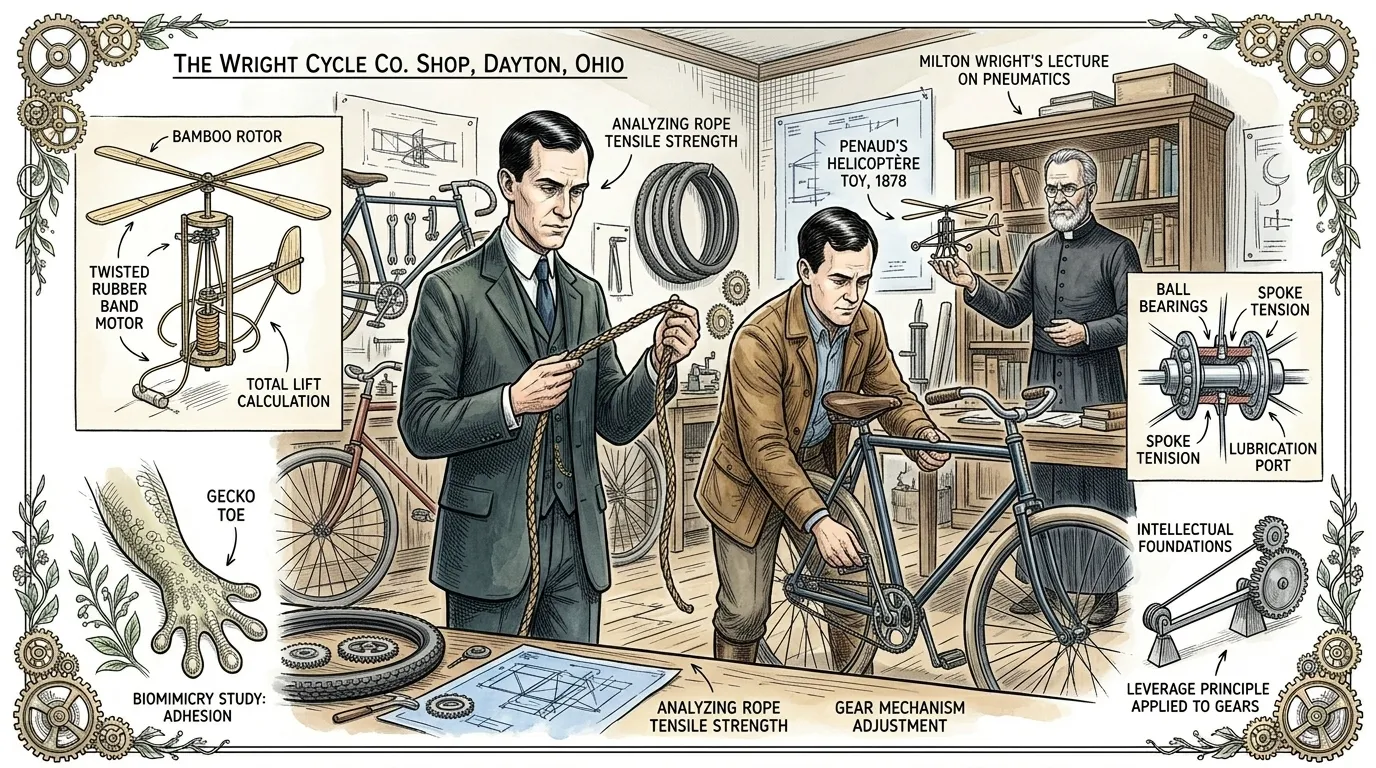
Long before the sands of Kill Devil Hills, the Wright brothers cultivated their mechanical curiosity within the bustling environment of their Dayton, Ohio, bicycle shop. Wilbur, the elder, possessed a keen analytical mind, while Orville, the younger, excelled in practical application. Their father, Bishop Milton Wright, provided an intellectual home filled with books and encouraged inquiry, once bringing them a toy helicopter that sparked a lifelong fascination with flight. It was within this pragmatic space, surrounded by gears, chains, and rubber, that their foundational understanding of mechanics, problem-solving, and precise construction solidified.
Page 3
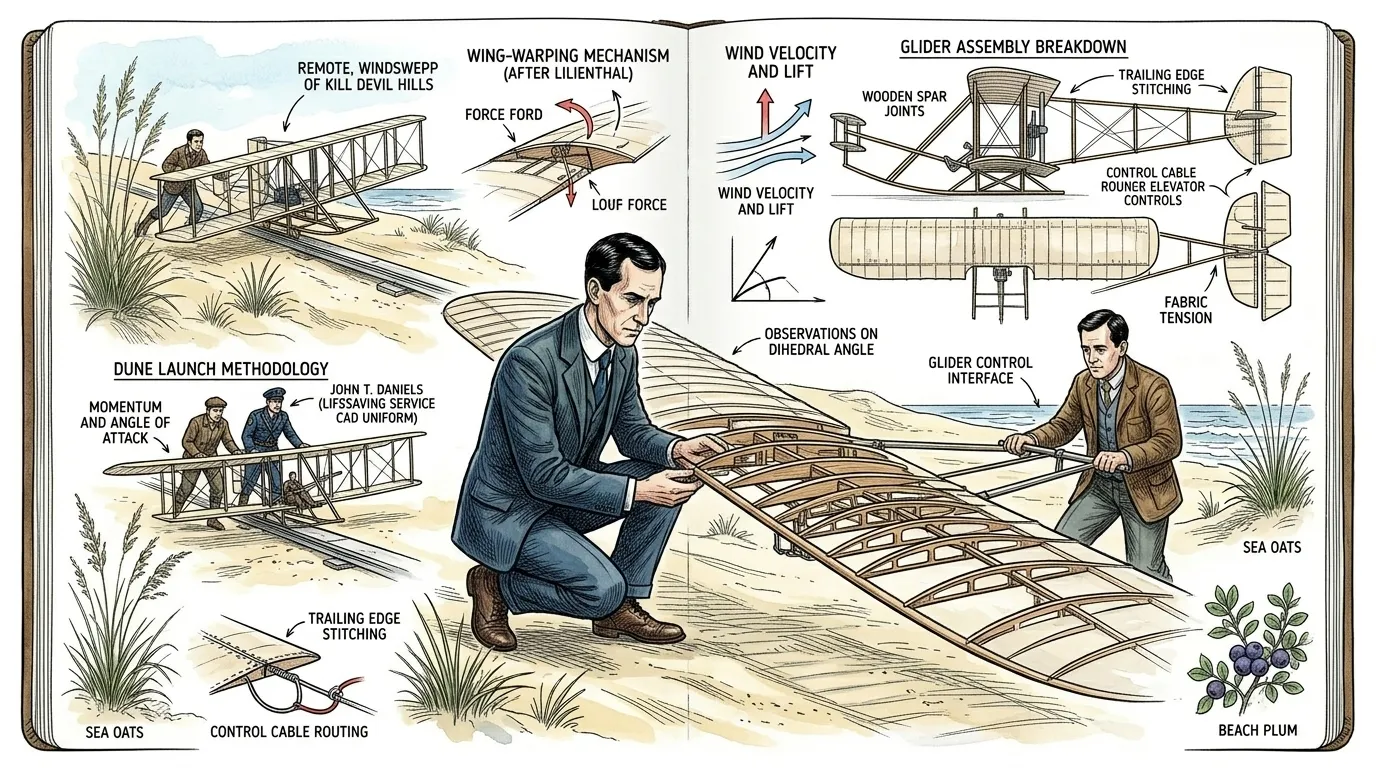
Determined to master the unstable art of flight, the brothers left the familiar comforts of Dayton for the remote, windswept dunes of Kill Devil Hills. They sought not merely to fly, but to control flight, understanding that sustained aviation required precise directional command. Their early gliders, inspired by the work of Otto Lilienthal, became their proving ground. Repeated launches and landings in the strong coastal winds allowed them to meticulously collect data, refining their understanding of aerodynamics and stability through direct, often arduous, experimentation.
Page 4
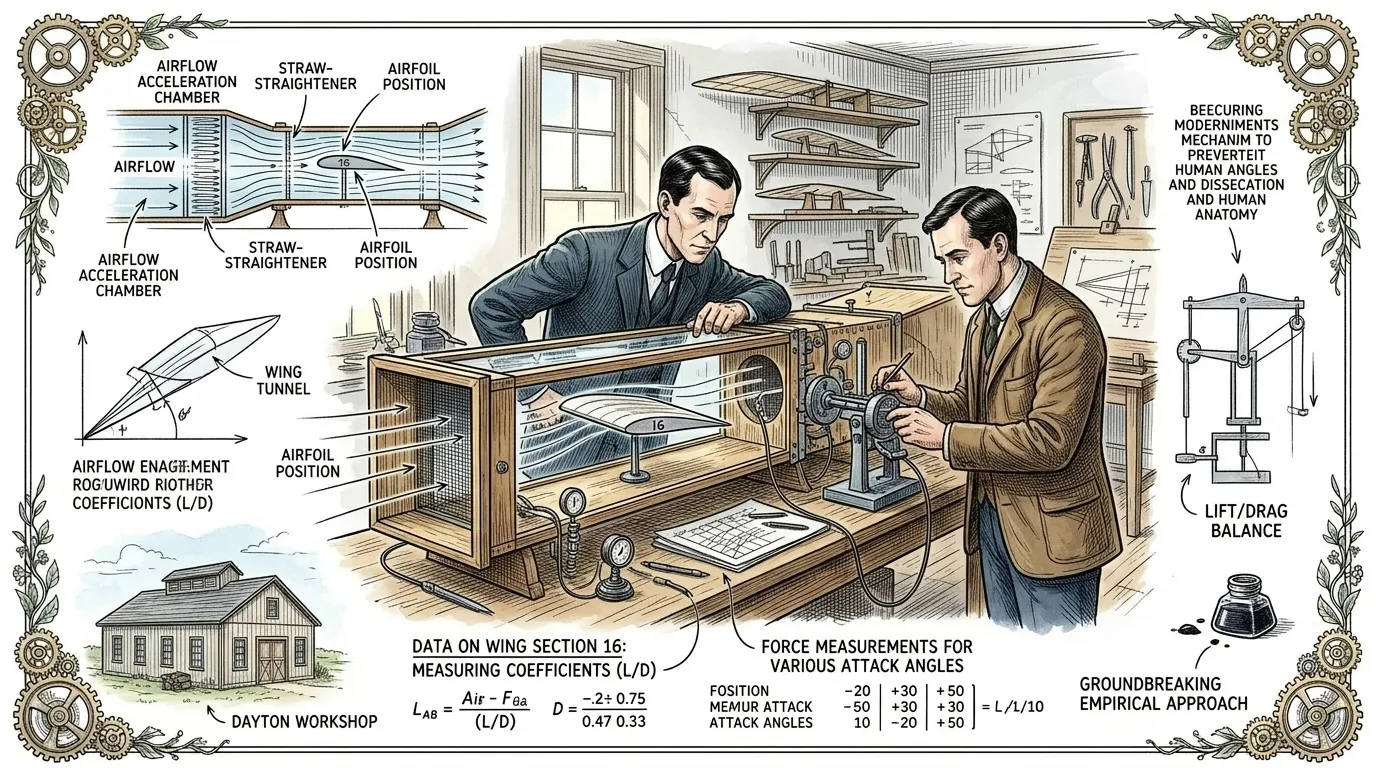
Frustrated by the inaccuracies of existing aerodynamic data and the limitations of full-scale glider tests, the Wrights returned to Dayton to devise a revolutionary solution. They constructed their own wind tunnel, a simple yet groundbreaking device, to test miniature wing sections. This allowed them to systematically measure lift and drag, generating their own reliable tables of coefficients. This methodical, scientific approach to engineering, unprecedented in aviation at the time, was a decisive pivot, transforming their quest from trial-and-error into a calculated, data-driven endeavor.
Page 5
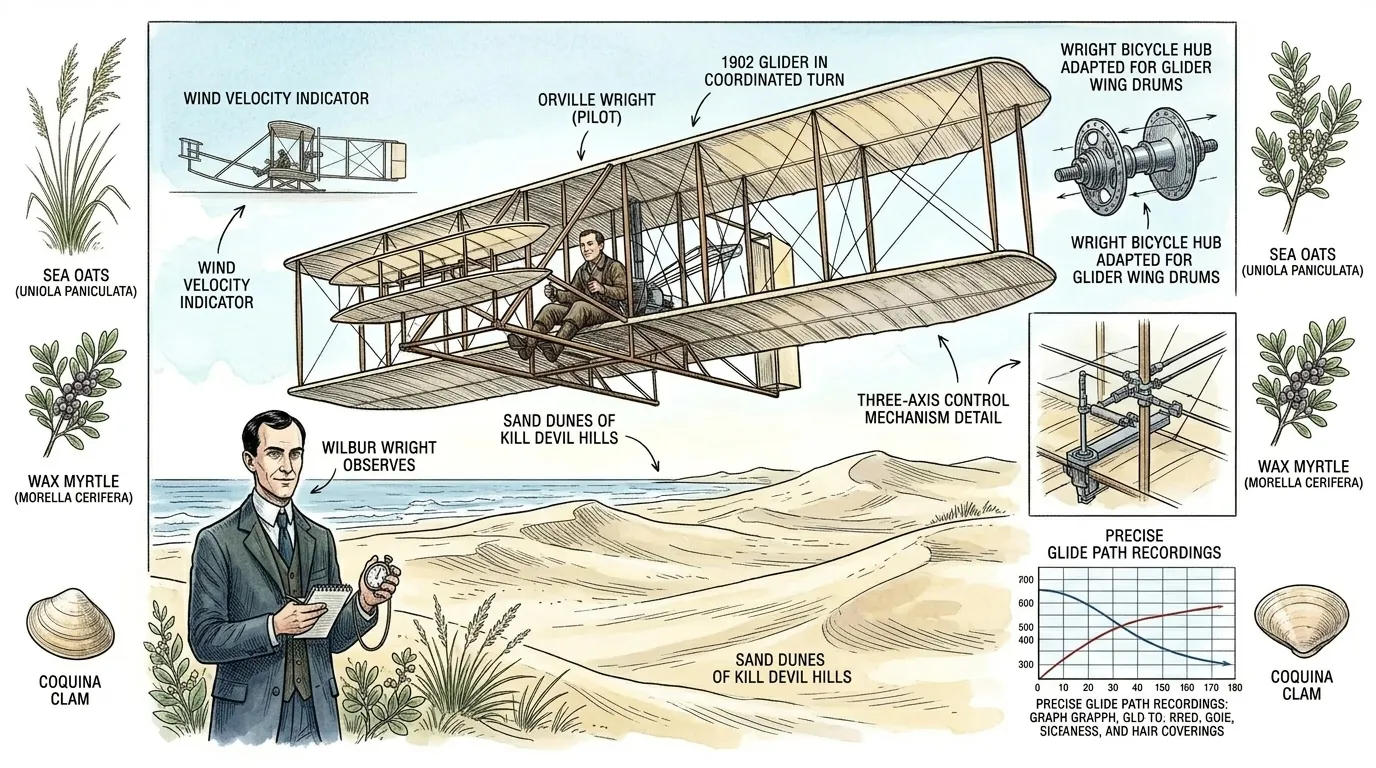
Armed with their new aerodynamic data, the brothers designed the 1902 Glider, a machine vastly superior to its predecessors. This glider incorporated their refined understanding of wing design and, crucially, their groundbreaking three-axis control system, enabling roll (wing warping), pitch (elevator), and yaw (movable rudder). Through over a thousand flights at Kill Devil Hills, they transformed theory into practice, mastering the intricate ballet of coordinated flight. The 1902 Glider became the world's first truly controllable aircraft, an essential precursor to powered flight.
Page 6
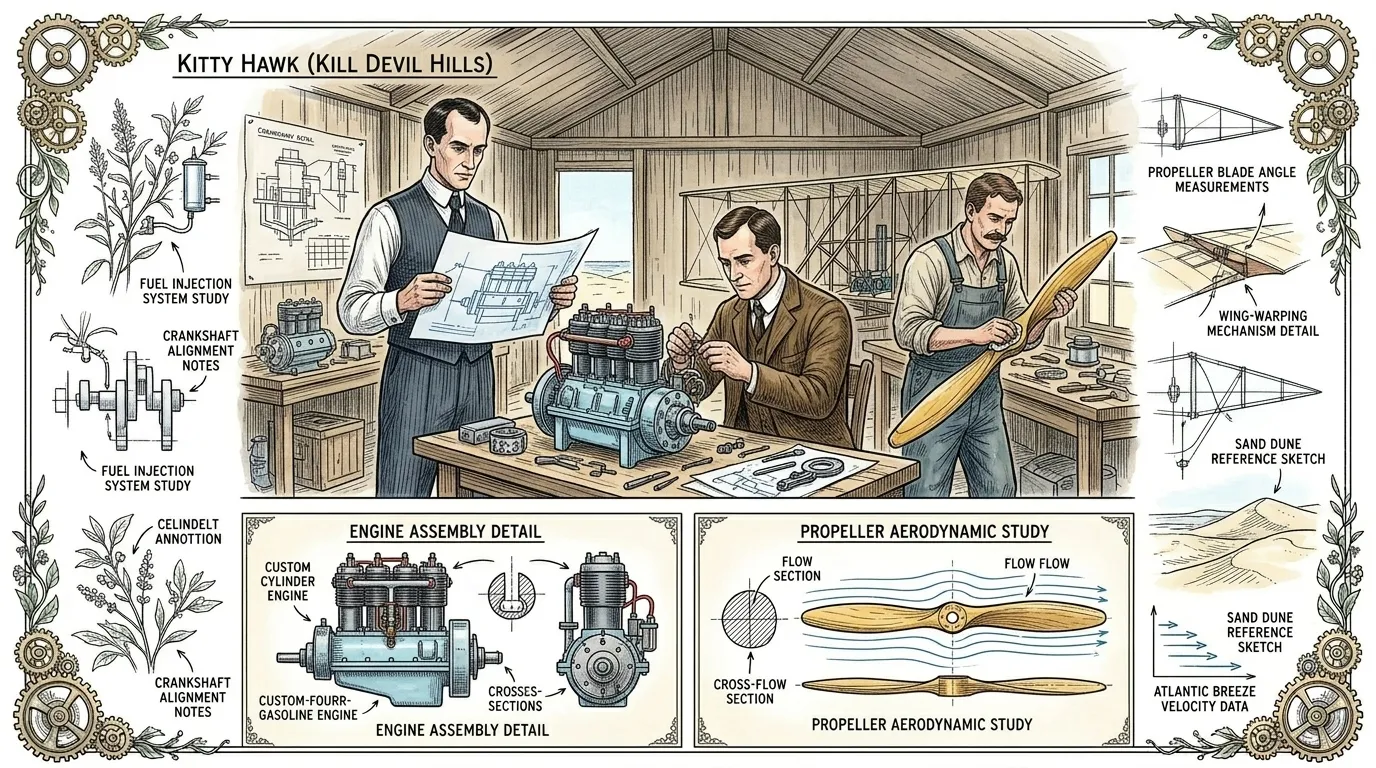
With control mastered, the final hurdle was propulsion. No suitable lightweight engine existed, nor did efficient propellers. Unfazed, the Wrights designed and built their own four-cylinder, 12-horsepower gasoline engine with the help of their mechanic, Charlie Taylor. They then engineered highly efficient propellers, treating them as rotating wings, a novel concept. Inside their rudimentary shed at Kill Devil Hills, a place of intense focus and ingenuity, the Flyer I began to take its final form, a testament to their self-reliance and exhaustive scientific method.
Page 7
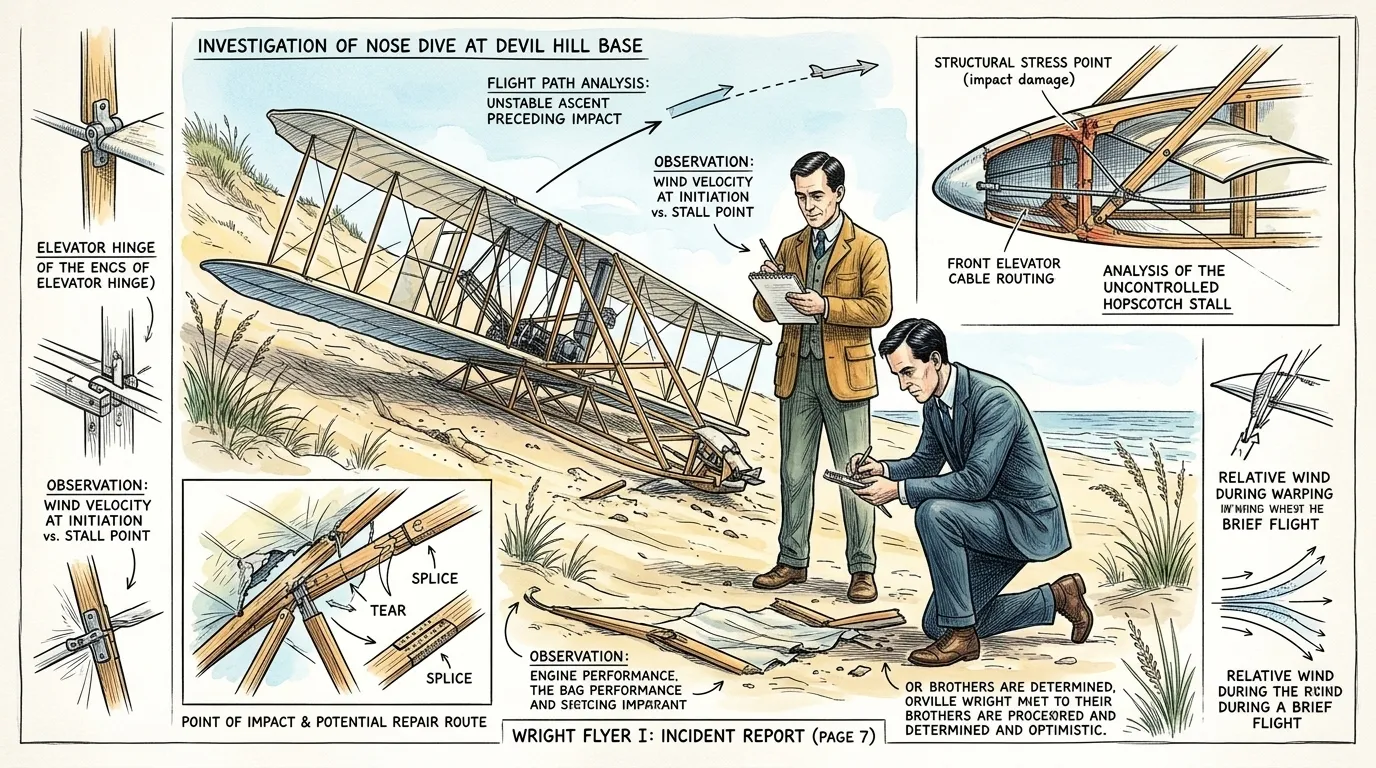
On December 14, 1903, with the Flyer ready, Wilbur won the coin toss for the first attempt. Launching from the side of Kill Devil Hill, he over-steered, climbing too steeply and stalling the aircraft. It crashed nose-down into the sand after just 3.5 seconds. Though a failure in sustained flight, the attempt yielded critical data. The Flyer suffered minor damage, but the brothers were undeterred. They immediately began repairs, analyzing every detail of the brief, uncontrolled hop, knowing that triumph was now only days, perhaps hours, away.
Page 8
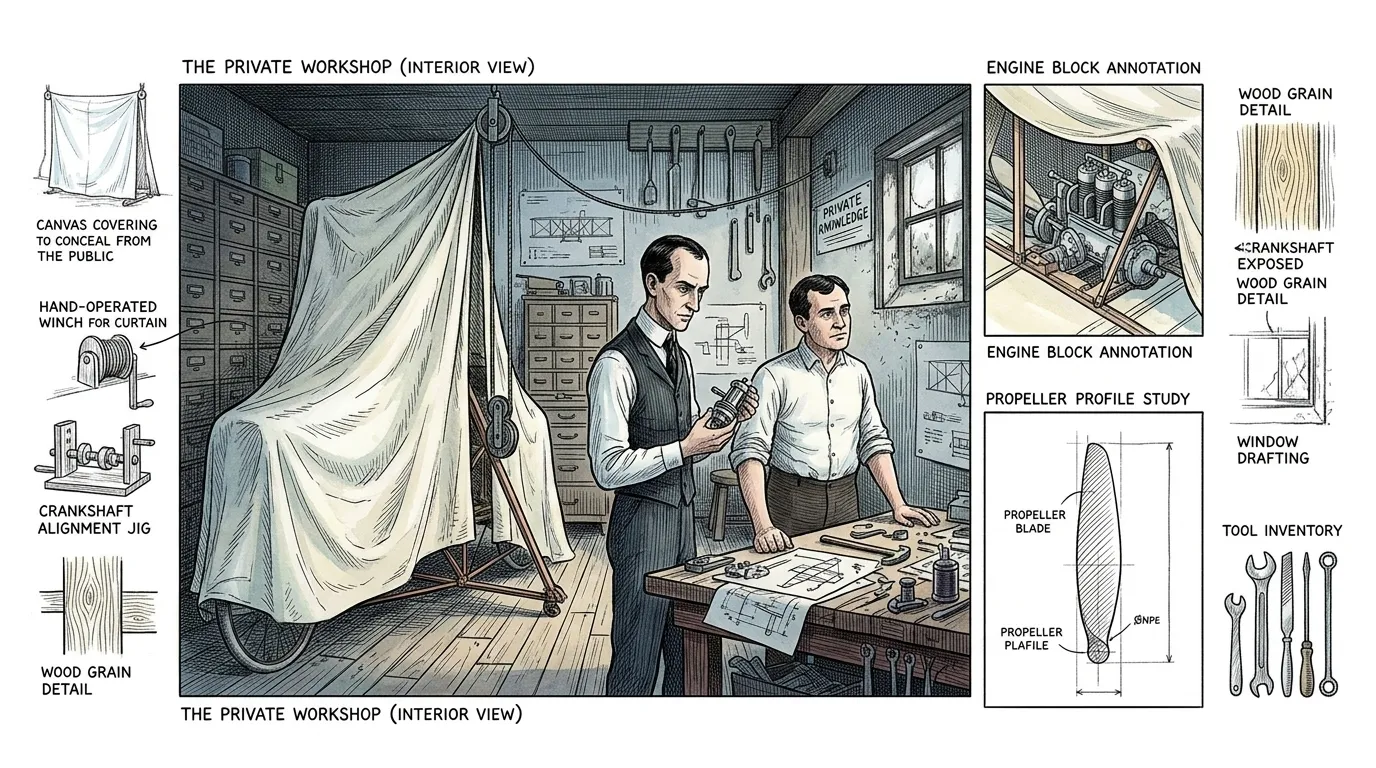
Despite their monumental achievement on December 17th, 1903, the Wright brothers faced a curious initial reaction: skepticism and disinterest. The U.S. government, focused on its own failed aerial experiments, was dismissive. Journalists, having been burned by earlier false claims of flight, remained largely unconvinced without a formal public demonstration. The brothers, wary of industrial espionage, chose a deliberate path of secrecy, refusing to fly for crowds until their patents were secure. Their world-changing invention remained largely unseen and uncelebrated in their own country for years.
Page 9
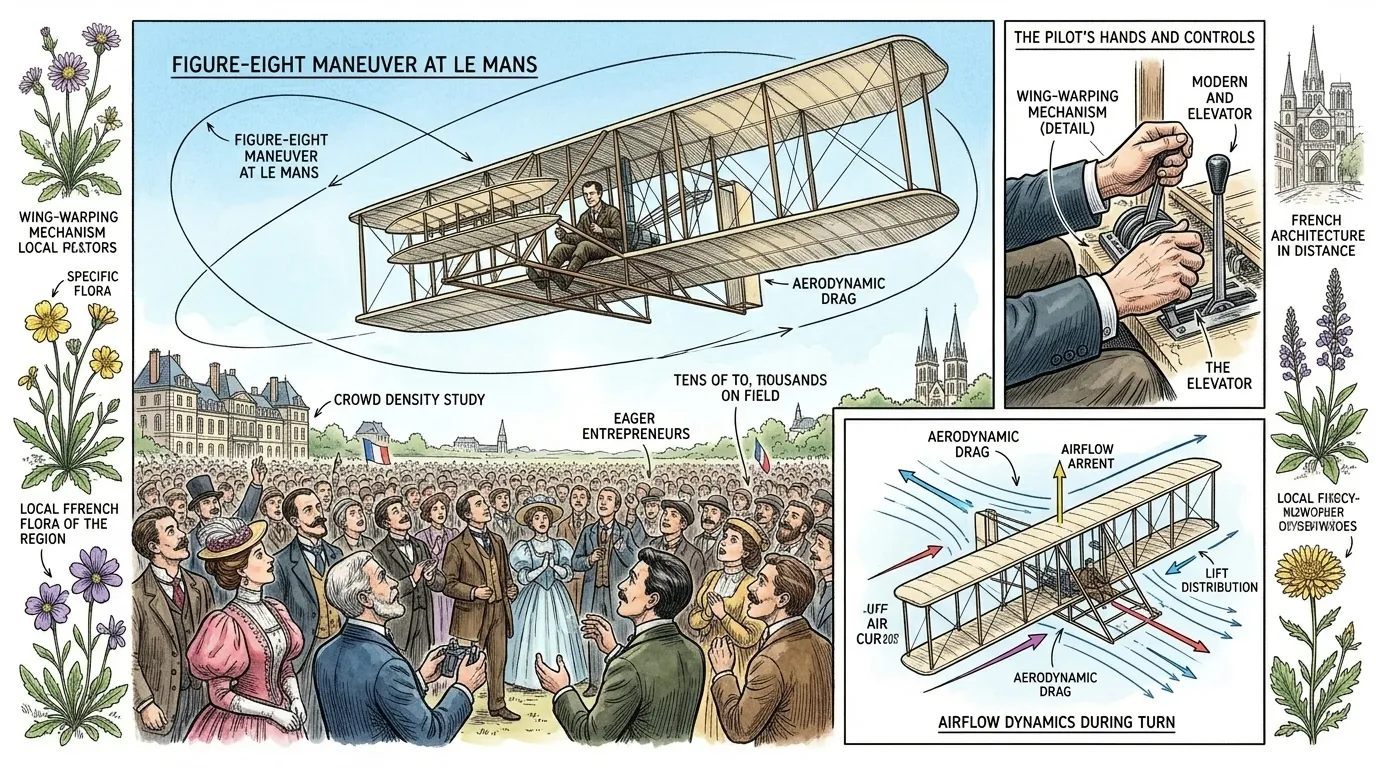
Five years after their first flight, exasperated by American indifference, Wilbur Wright traveled to France in 1908. At Le Mans, he commenced public demonstrations that electrified the world. Performing daring maneuvers—figure eights, tight turns, and extended flights—he shattered all existing flight records and dispelled every last shred of doubt. Tens of thousands flocked to witness the spectacle, including royalty, scientists, and eager entrepreneurs. The demonstrations were a global sensation, transforming the brothers from obscure inventors into international celebrities, securing their reputation and the commercial future of their invention.
Page 10
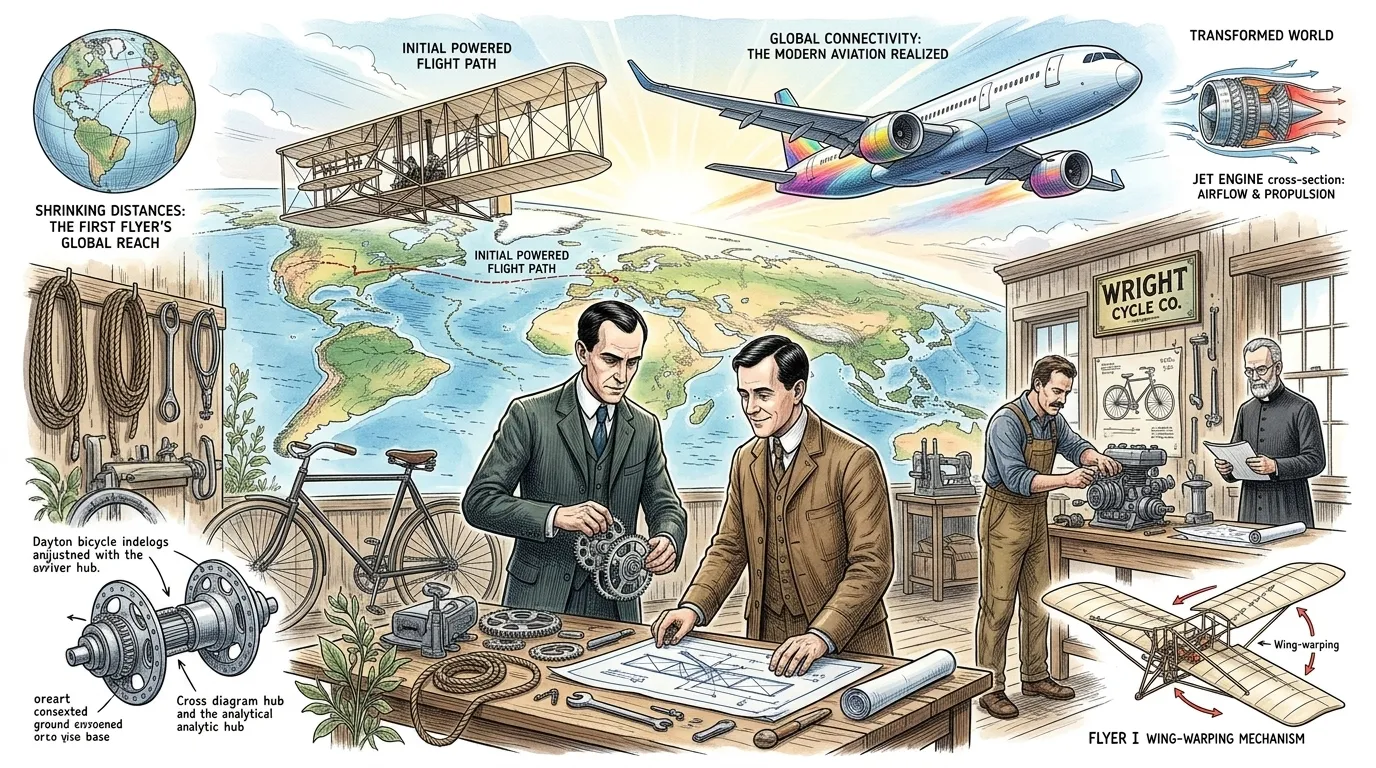
The Wright Brothers' work forged not merely a machine, but an entirely new dimension of human endeavor. Their relentless pursuit of scientific principle, practical application, and effective control laid the groundwork for all subsequent aviation. They ushered in an era where distance shrank, global connectivity became a reality, and the very nature of warfare and commerce was irrevocably transformed. From their humble bicycle shop to the vast expanse of the sky, their legacy endures as the definitive moment humanity took flight, reshaping the modern world in profound and lasting ways.
About this story
- Location: Global
- Audience: general readers
Questions and answers
Read Wonder People on your phone
Wonder People is available on Android. Get Wonder People on Google Play.