Susan B Anthony
Susan B Anthony — an illustrated biography story, set in United States. 10 illustrated pages, free to read on Wonder People.
Page 1
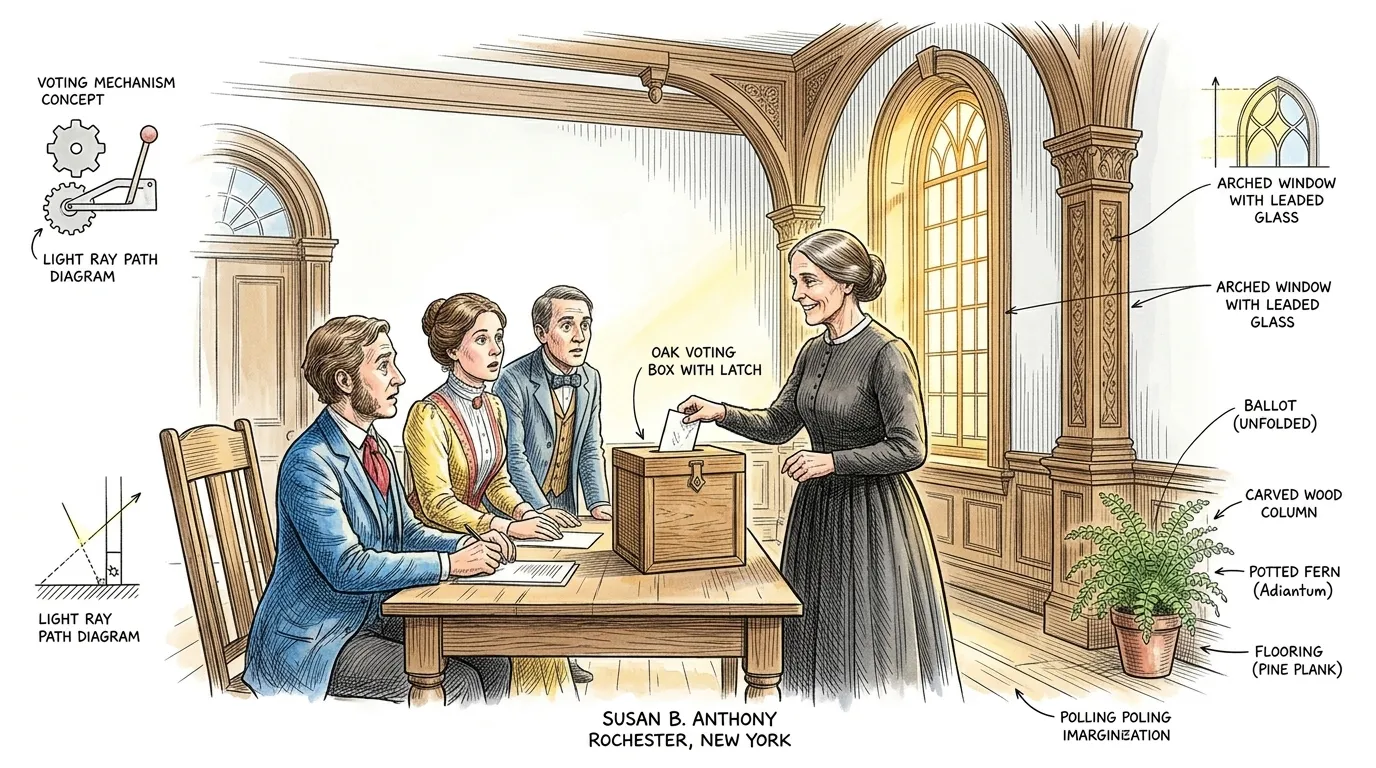
In Rochester, New York, on November 5, 1872, Susan B. Anthony walked into a polling place to cast a vote. This single, deliberate act of defiance against unjust laws transformed a deeply held conviction into an undeniable challenge.
"'I demand to vote, as a citizen guaranteed rights by the Fourteenth Amendment,' Susan B. Anthony declared to the election inspectors, Silas J. Lapham, Beverly W. Jones, and Edwin T. Marsh. She knew her ballot, cast for presidential candidate Ulysses S. Grant, would ignite a national firestorm."
Biographical Fact: Susan B. Anthony's act of casting a ballot in the 1872 presidential election was a strategic civil disobedience, directly challenging the male-only voting laws. This led to her arrest and trial, becoming a landmark event in the women's suffrage movement.
Page 2
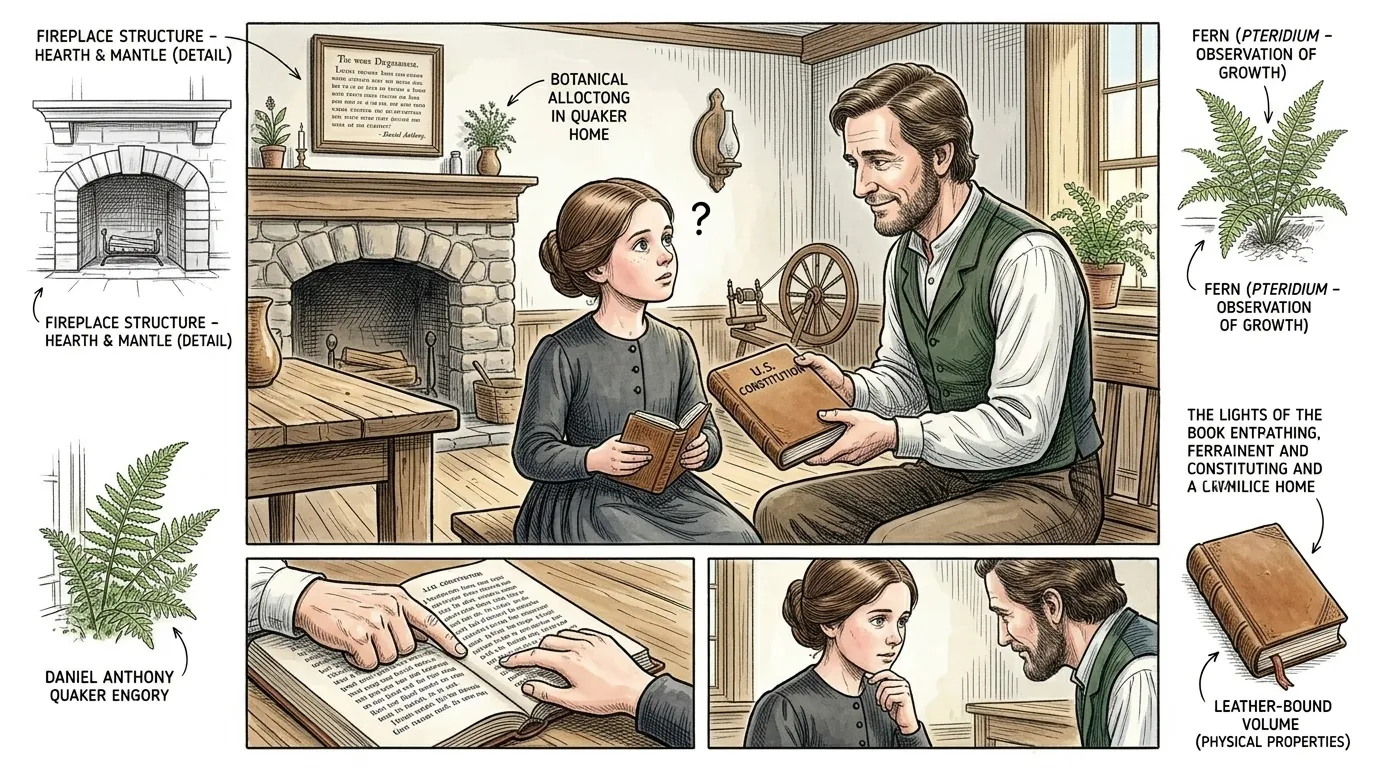
Susan's Quaker upbringing ingrained in her the profound belief in equality for all people, a principle that became the bedrock of her tireless advocacy. From a young age, she observed the world with an acute sense of fairness, fueling a quiet determination.
"'Father, why can't women speak in public, or own property?' asked young Susan, holding a small, worn book. Her father, Daniel Anthony, handed her a plain, leather-bound volume. 'This is the U.S. Constitution, Susan,' he explained. 'Study it. Within these pages, you will find the seeds of the arguments we must make for true equality.'"
Biographical Fact: Born into a Quaker family in 1820, Susan B. Anthony's early life was marked by her family's commitment to social justice, including abolition and temperance. Her father, a farmer and businessman, also encouraged intellectual pursuits for his daughters.
Page 3

The year 1851 marked a pivotal turning point when Susan B. Anthony met Elizabeth Cady Stanton, an encounter that forged a partnership destined to redefine the struggle for women's rights. Their combined intellect and strategic vision ignited a potent force for change.
"'Elizabeth, with your words and my actions, we can move mountains,' Susan declared, gesturing towards the worn U.S. Constitution she held. Elizabeth Cady Stanton, her eyes bright with conviction, replied, 'Indeed, Susan. As Margaret Fuller once powerfully wrote, 'We would have every arbitrary barrier thrown down.' Our work together must make that truth undeniable for all women.'"
Biographical Fact: Susan B. Anthony and Elizabeth Cady Stanton's collaboration, beginning in 1851, was instrumental to the women's suffrage movement. Stanton provided the philosophical and oratorical power, while Anthony was the meticulous organizer and strategist.
Page 4
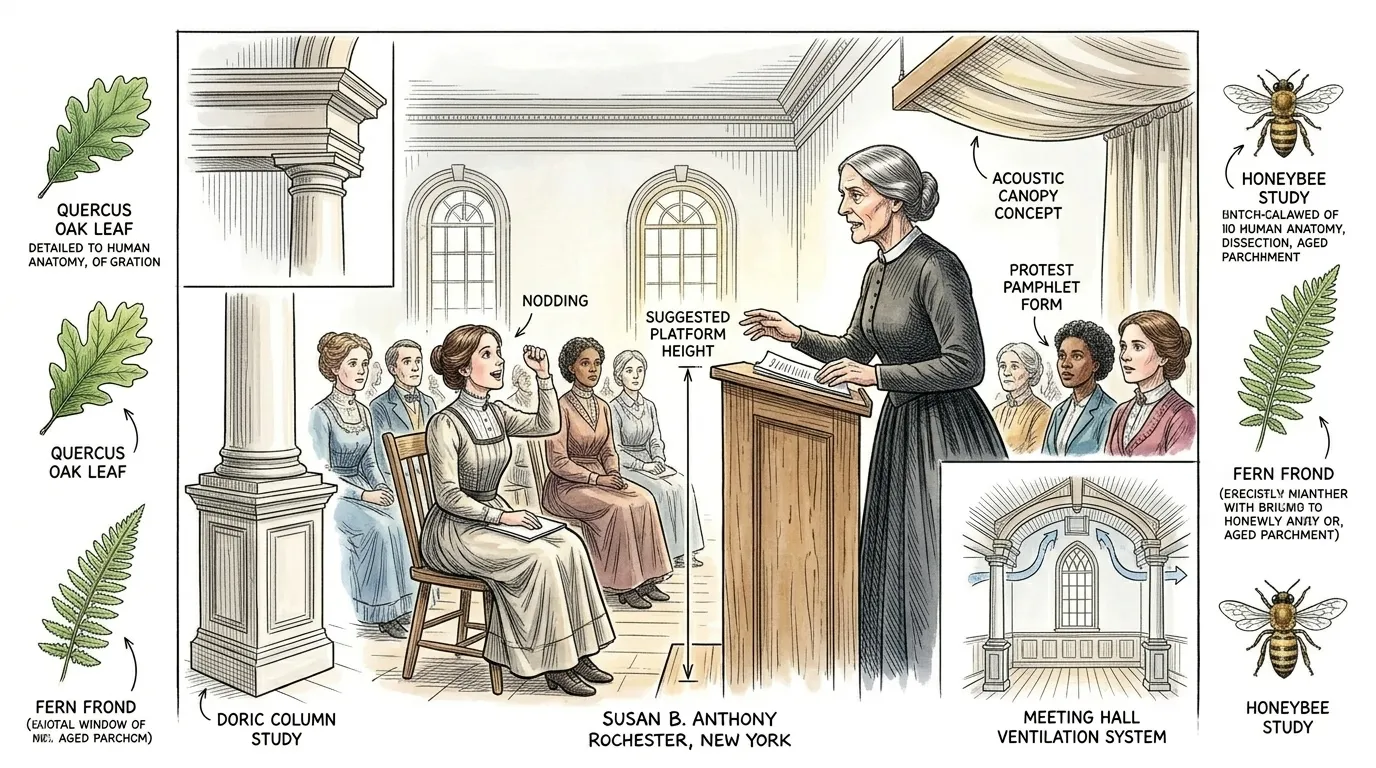
Denied the right to speak at temperance rallies simply for being a woman, Susan B. Anthony recognized the deeper injustice. This blatant exclusion spurred her to found the first Women's State Temperance Society in 1852, asserting women's right to public voice and influence.
"'We must have our own platform, where our voices cannot be silenced!' Susan proclaimed to a gathering of women. A younger woman in the audience nodded fervently, 'We are capable of leading, Susan, and our moral compass is strong. How can men deny us the power to enact change?'"
Biographical Fact: After being prevented from speaking at a temperance convention because she was a woman, Anthony co-founded the Women's State Temperance Society in 1852, directly challenging gender norms that barred women from public platforms.
Page 5
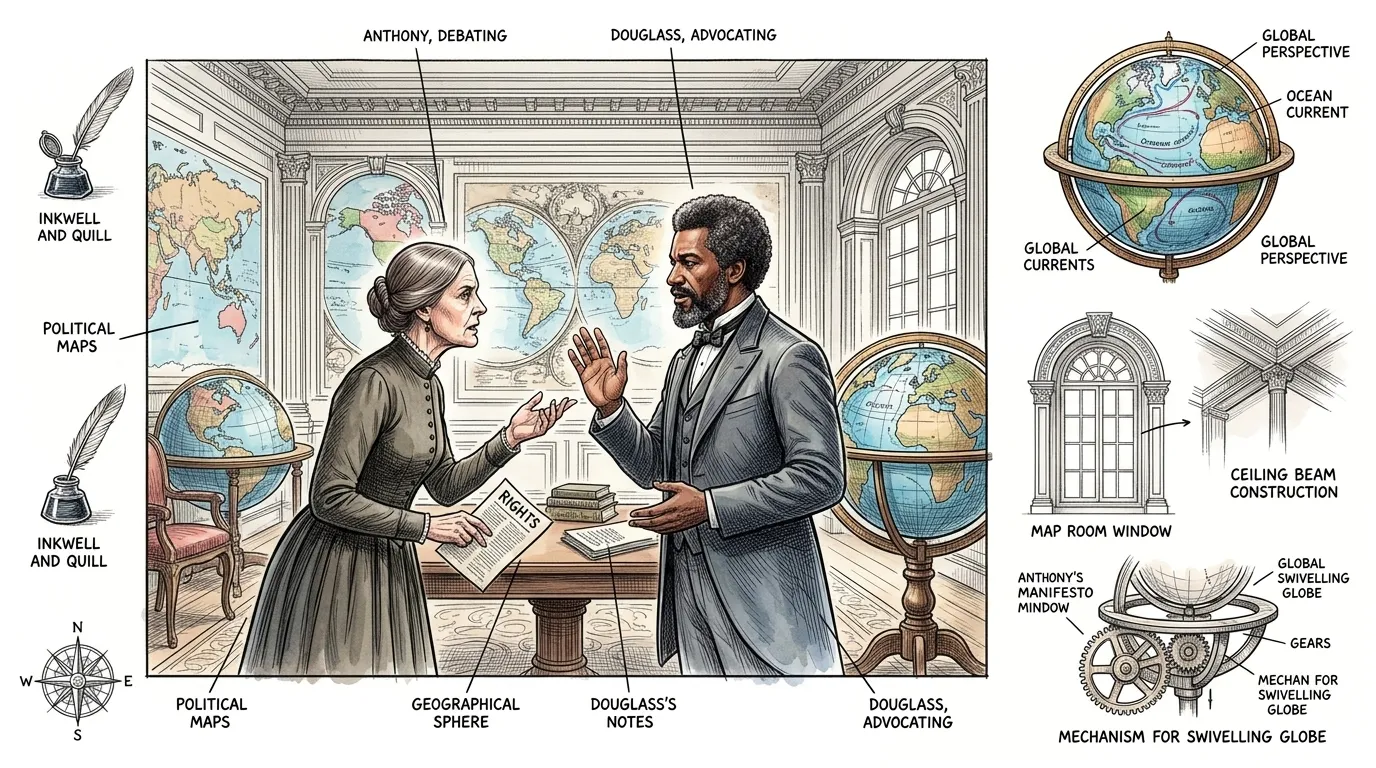
The Civil War brought a temporary unity in the fight against slavery, yet the post-war pursuit of universal suffrage revealed deep fissures. Susan B. Anthony championed equal rights for all, but faced a painful division when allies prioritized Black men's suffrage over that of women.
"'Frederick, how can you ask us to wait?' Susan questioned Frederick Douglass, her voice strained. 'The 14th Amendment specifies 'male citizens.' If the word 'male' is inserted, it will take another century for us to remove it!' Frederick Douglass, a dignified man, responded, 'This is the Negro's hour, Susan. We cannot risk both.'"
Biographical Fact: The post-Civil War era saw a painful split in the suffrage movement. While Anthony and Stanton advocated for universal suffrage, the 14th and 15th Amendments prioritized voting rights for Black men, leading to a profound rift with former allies like Frederick Douglass.
Page 6
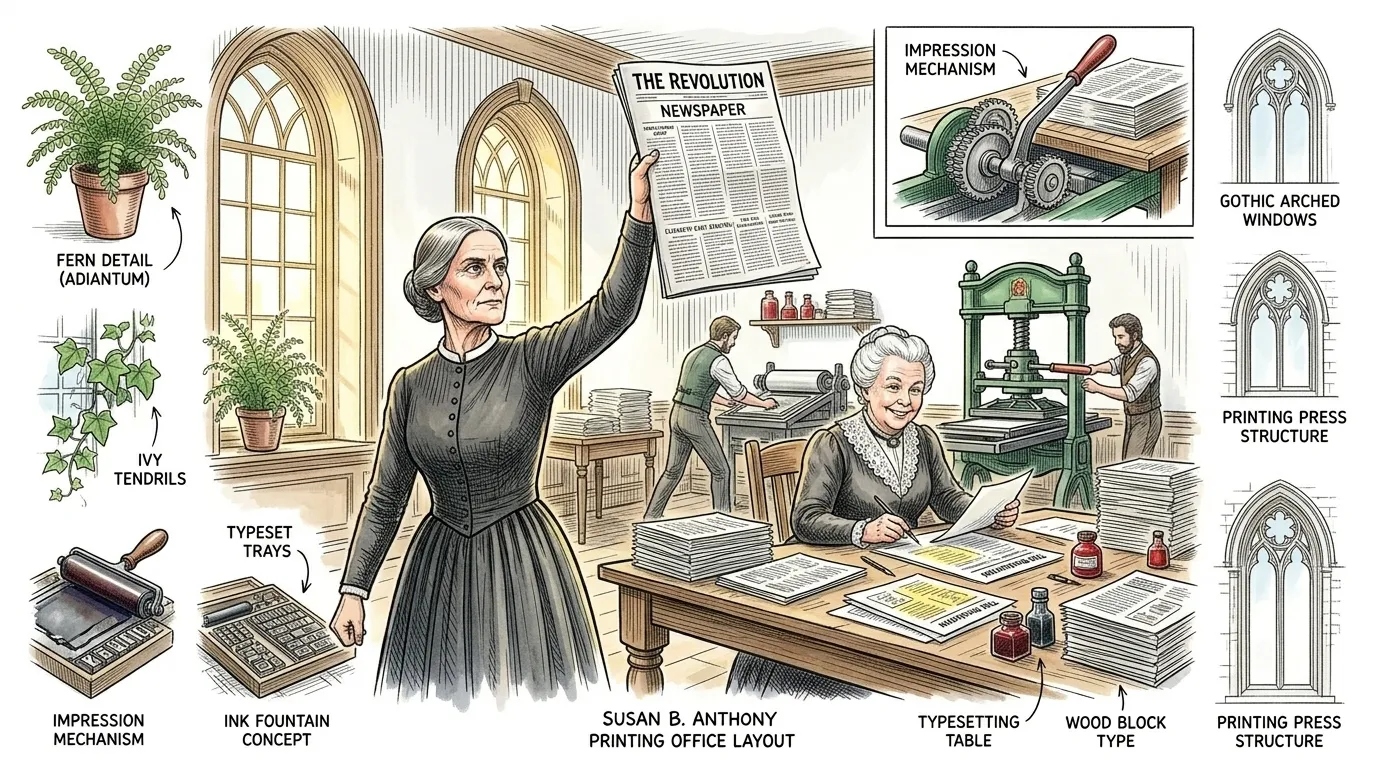
Unwilling to compromise on universal suffrage, Susan B. Anthony and Elizabeth Cady Stanton launched The Revolution newspaper in 1868. This weekly publication became a defiant voice, boldly advocating for women's rights, equal pay, and an eight-hour workday, reaching thousands across the nation.
"'Our motto, Elizabeth, must be 'Men, their rights, and nothing more; women, their rights, and nothing less!'' Susan declared, holding a fresh copy of The Revolution. Elizabeth Cady Stanton, reviewing proofs, smiled. 'Let the world hear it then, Susan. Let our words echo throughout this nation!'"
Biographical Fact: In 1868, Anthony and Stanton launched The Revolution, a weekly newspaper that served as the official voice of the National Woman Suffrage Association. It boldly articulated radical demands for gender equality, including equal pay and suffrage.
Page 7
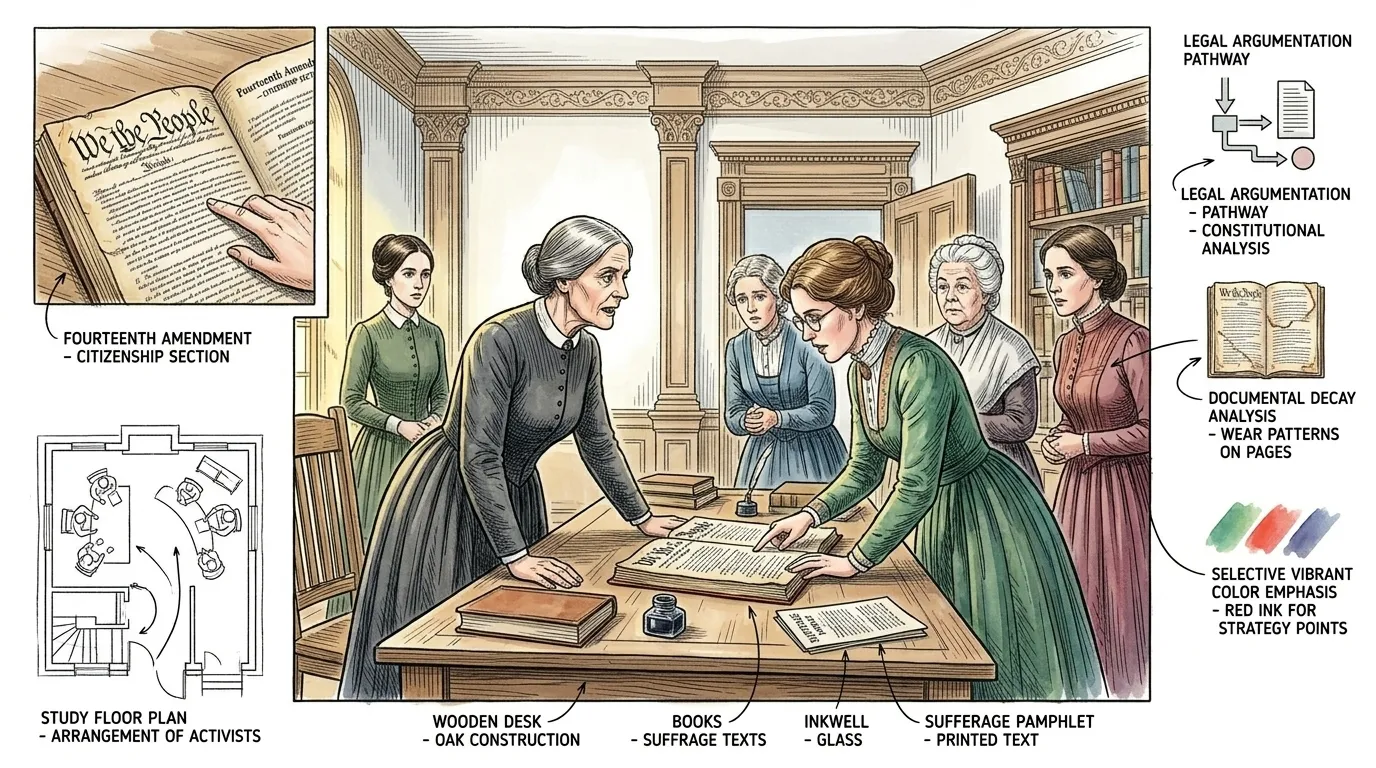
As the centennial of American independence approached, Anthony and her allies devised the 'New Departure' strategy. They argued that the recently ratified 14th Amendment, which declared all persons born or naturalized in the U.S. to be citizens, implicitly granted women the right to vote.
"'The Constitution, as it stands, grants us citizenship; and with citizenship, the ballot!' Susan explained, laying the worn copy of the U.S. Constitution open on a large desk. A group of women, including Matilda Joslyn Gage, leaned in, intently studying the document. 'We need no new amendment, only the enforcement of the existing law,' Matilda added, her finger tracing the text."
Biographical Fact: The 'New Departure' was a legal strategy asserting that women, as citizens, already possessed the right to vote under the 14th Amendment. This interpretation justified acts of civil disobedience, such as Anthony's vote in 1872.
Page 8
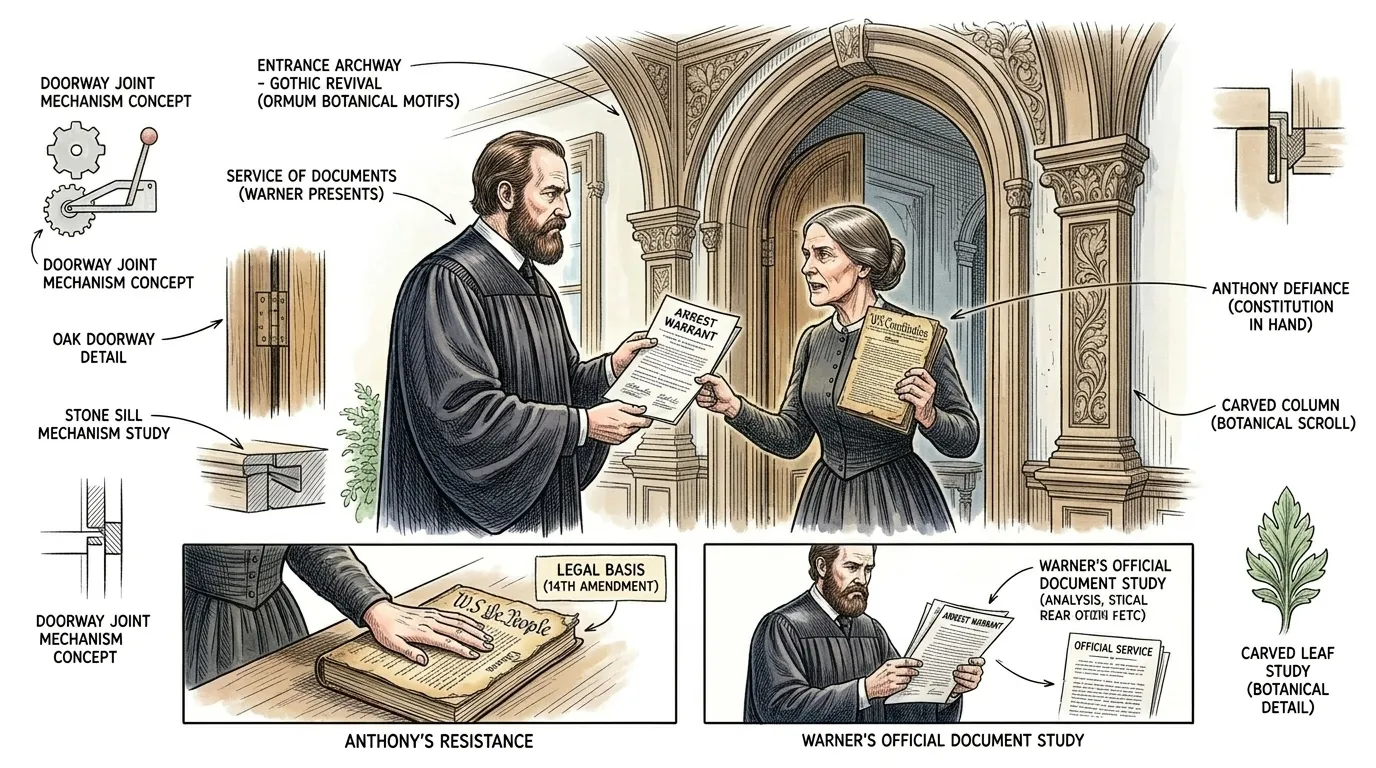
Three weeks after her historic vote, federal marshals arrived at Susan B. Anthony's home. The arrest galvanized public attention, transforming her individual act into a national symbol of the burgeoning women's rights movement.
"'You are hereby charged with having voted at the late election, without having a lawful right to vote,' the U.S. Deputy Marshal, Daniel R. Warner, stated. Susan B. Anthony, standing firm, responded, 'I violated no law. I exercised my citizen's right under the Constitution!' She held up the very worn copy of the U.S. Constitution she had studied."
Biographical Fact: Susan B. Anthony was arrested on November 18, 1872, for voting illegally. Her arrest brought national attention to the suffrage movement and set the stage for a highly publicized trial.
Page 9
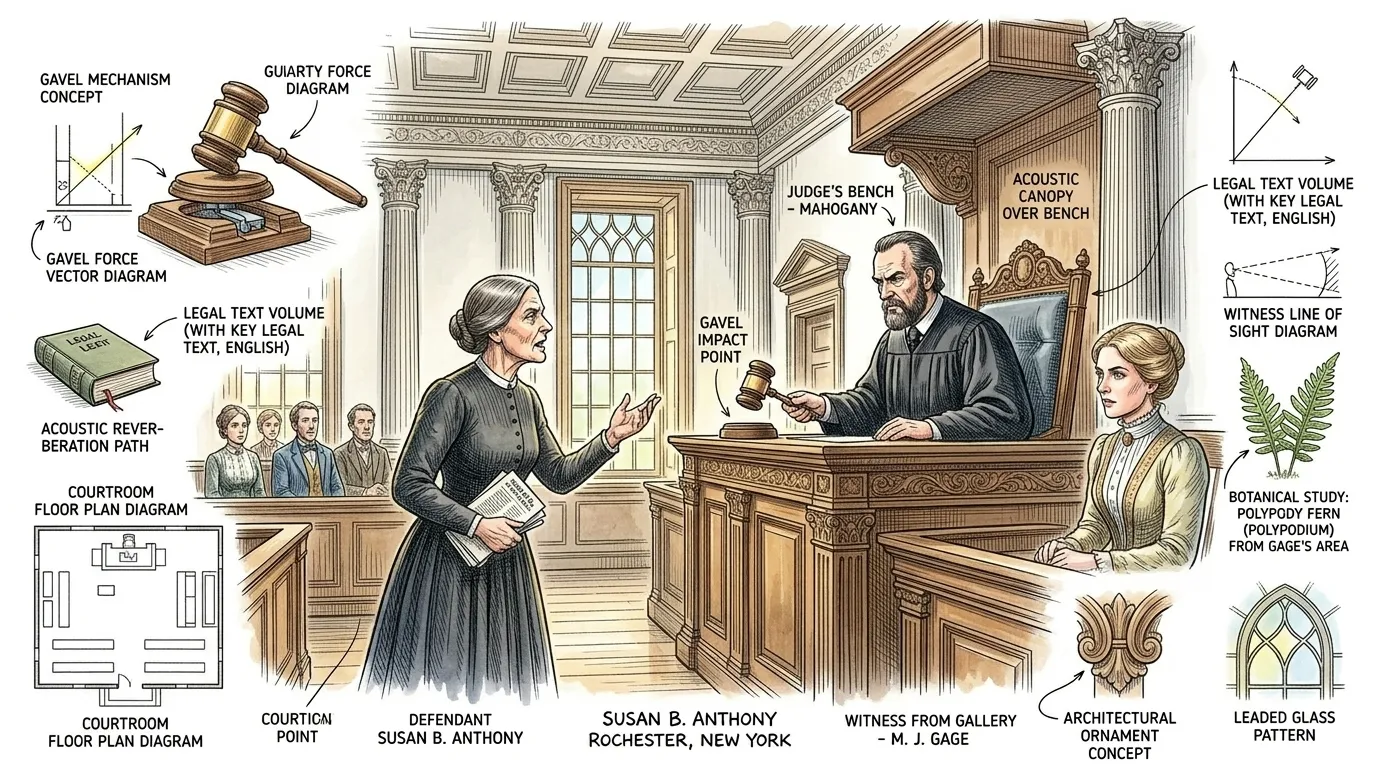
At her 1873 trial in Canandaigua, New York, Judge Ward Hunt explicitly directed the jury to find Susan B. Anthony guilty, denying her the right to testify and effectively ensuring her conviction. This blatant disregard for due process only amplified her resolve.
"'I shall never pay a dollar of your unjust penalty!' Susan B. Anthony declared to Judge Ward Hunt, her voice ringing through the courtroom. 'Taxation without representation is tyranny!' A murmur went through the assembled public, while the judge, stern-faced, merely pounded his gavel. Matilda Joslyn Gage, seated in the gallery, watched with fury."
Biographical Fact: During her 1873 trial, Judge Ward Hunt controversially directed the jury to find Anthony guilty, denying her a fair trial. She was fined 100, which she famously refused to pay, turning her conviction into another platform for protest.
Page 10
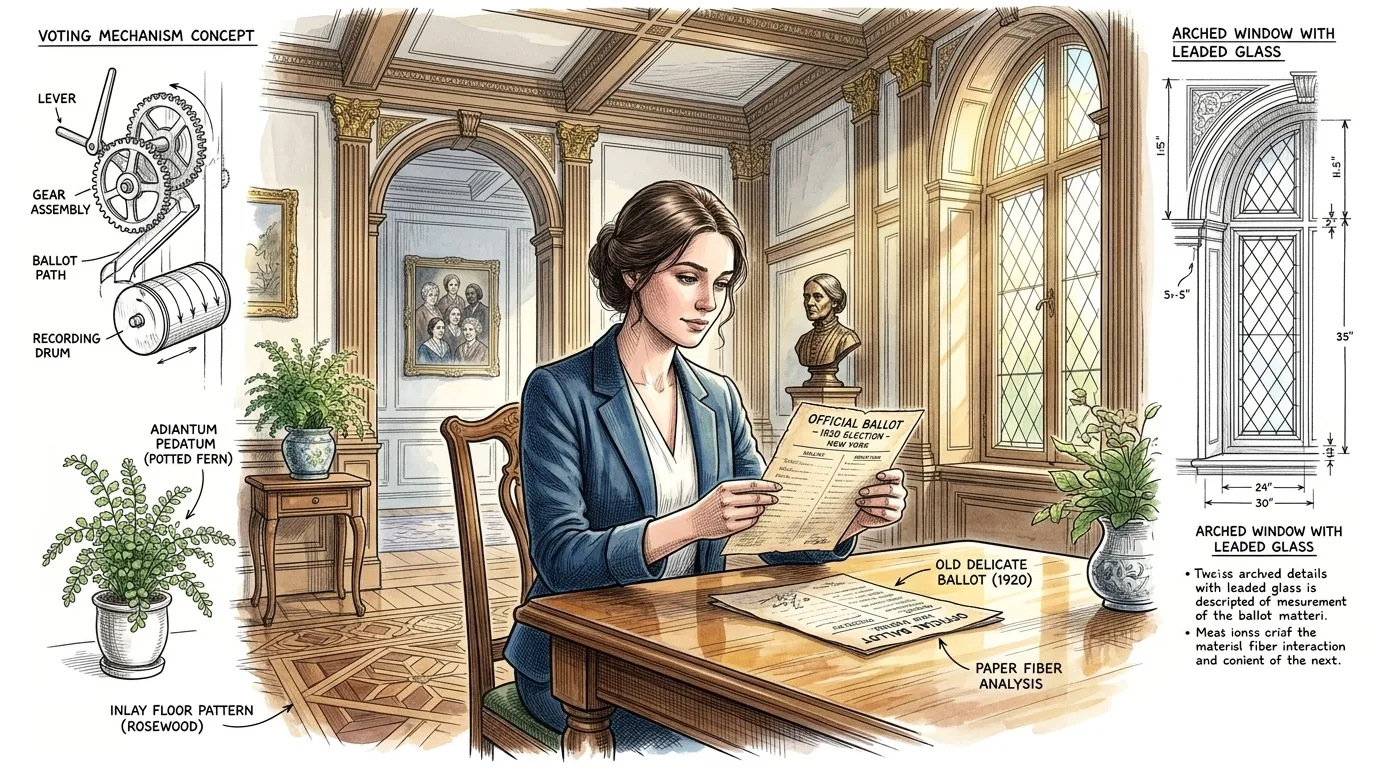
Susan B. Anthony's life became synonymous with the fight for women's suffrage. Though she did not live to see its triumph, her unwavering persistence and strategic brilliance laid the groundwork for the 19th Amendment, ratified 14 years after her death.
"Years later, a young woman, holding her grandmother's ballot from the 1920 election, reflected, 'Because of her courage, we hold this power today. The fight for true equality, as Susan B. Anthony taught us, is never truly over, it simply evolves.'"
Biographical Fact: Susan B. Anthony died in 1906, 14 years before the 19th Amendment, granting women the right to vote, was ratified in 1920. Her image and dedication became enduring symbols of the women's suffrage movement, inspiring generations.
About this story
- Location: United States
- Audience: general readers
Questions and answers
Read Wonder People on your phone
Wonder People is available on Android. Get Wonder People on Google Play.