Suleiman the Magnificent
Suleiman the Magnificent — an illustrated biography story, set in Global. 10 illustrated pages, free to read on Wonder People.
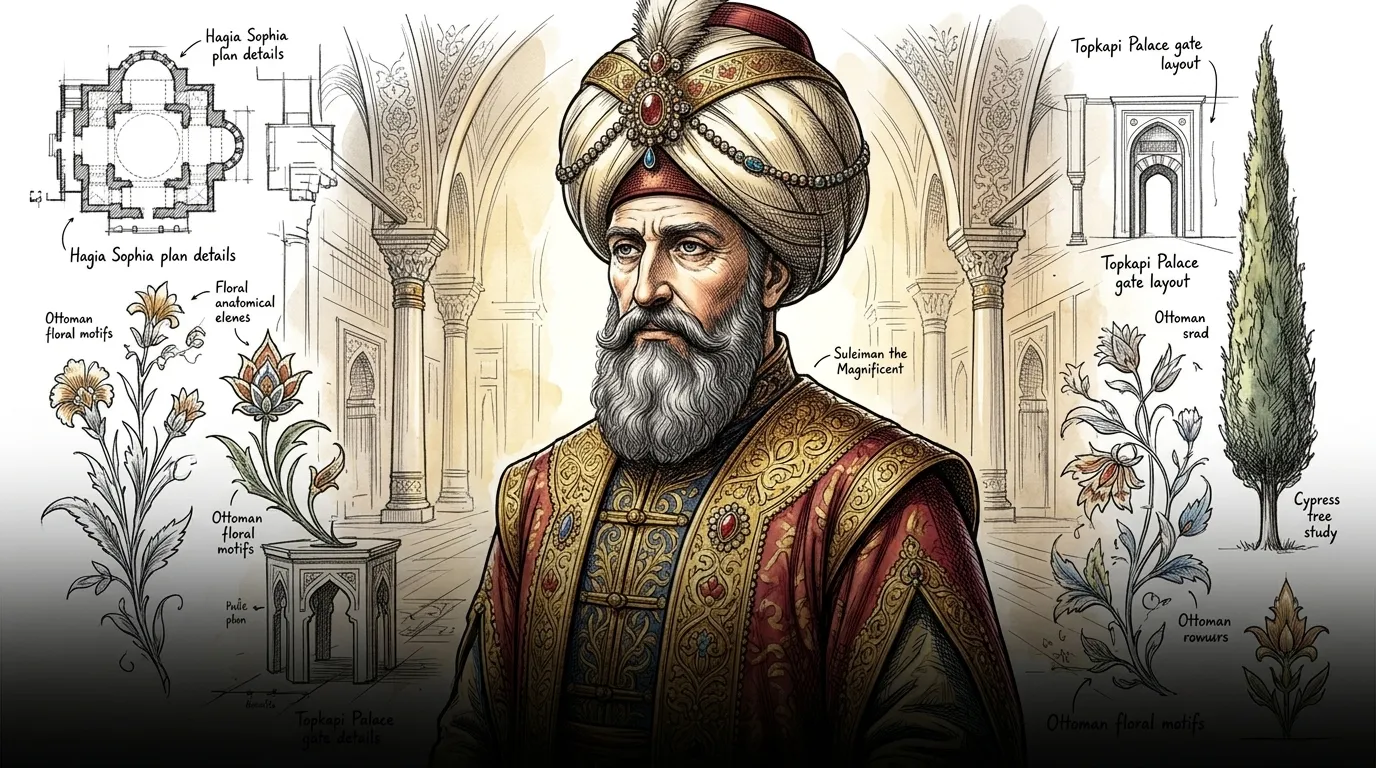
Page 1
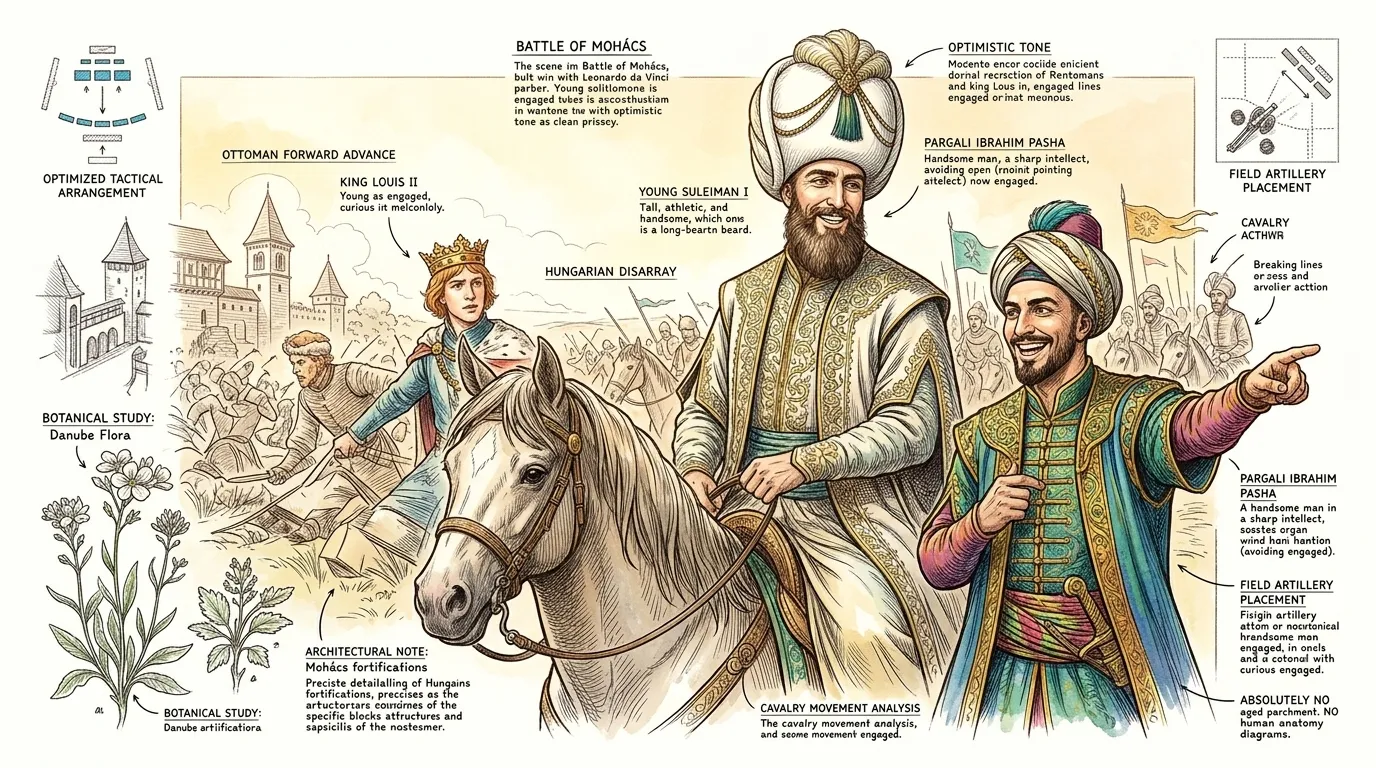
At Mohács, Hungary, in August 1526, a maelstrom of steel and gunpowder raged. Suleiman the Magnificent, at the age of 32, rode at the forefront, his presence radiating an unyielding will. His Ottoman forces, numbering over 100,000, clashed with the smaller Hungarian army of King Louis II.
"'Their lines are breaking, my Sultan!' Grand Vizier Pargalı Ibrahim Pasha shouted above the din, his voice sharp with triumph. 'The cavalry is in disarray! Today, Europe witnesses the power of the Ottoman advance!' Suleiman surveyed the collapsing battlefield, a silent testament to his tactical brilliance."
Biographical Fact: The Battle of Mohács marked the end of the independent Kingdom of Hungary and a pivotal moment in Ottoman expansion into Central Europe.
Page 2
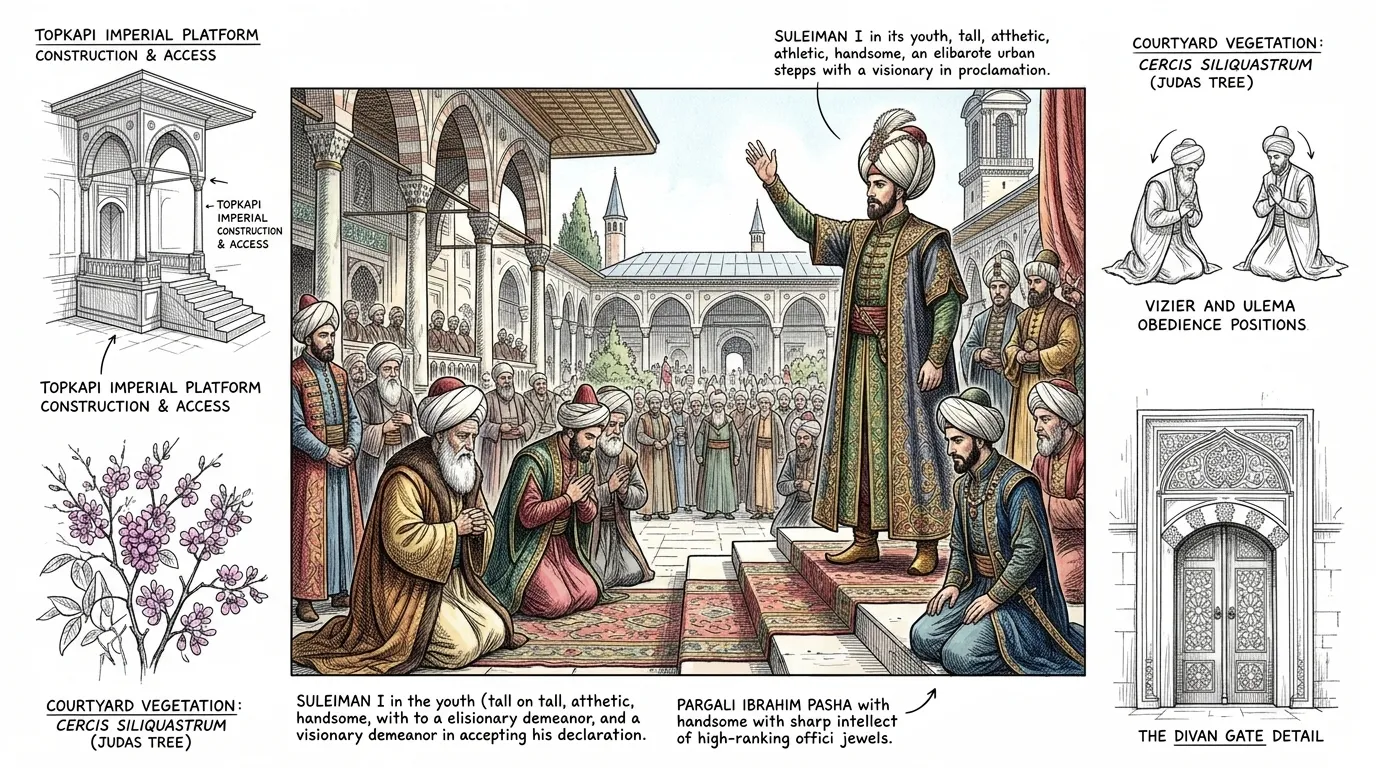
Six years prior, in Istanbul, 1520, the young Suleiman assumed the mantle of Sultan after his father, Selim I, passed. He stepped onto the imperial platform within the Topkapi Palace, not merely to inherit a throne, but to declare a new era of governance. His demeanor spoke of both inherited power and a profound personal vision for justice.
"'My predecessors built this Empire through strength,' Suleiman proclaimed, his voice resonating through the Divan. 'I pledge to fortify it through justice and wisdom. Each of you, from vizier to common citizen, shall find fairness under my rule.' The senior viziers and ulema knelt, accepting his declaration of principles."
Biographical Fact: Suleiman's early reign was immediately characterized by a focus on legal reform and administrative efficiency, setting a tone of stability.
Page 3
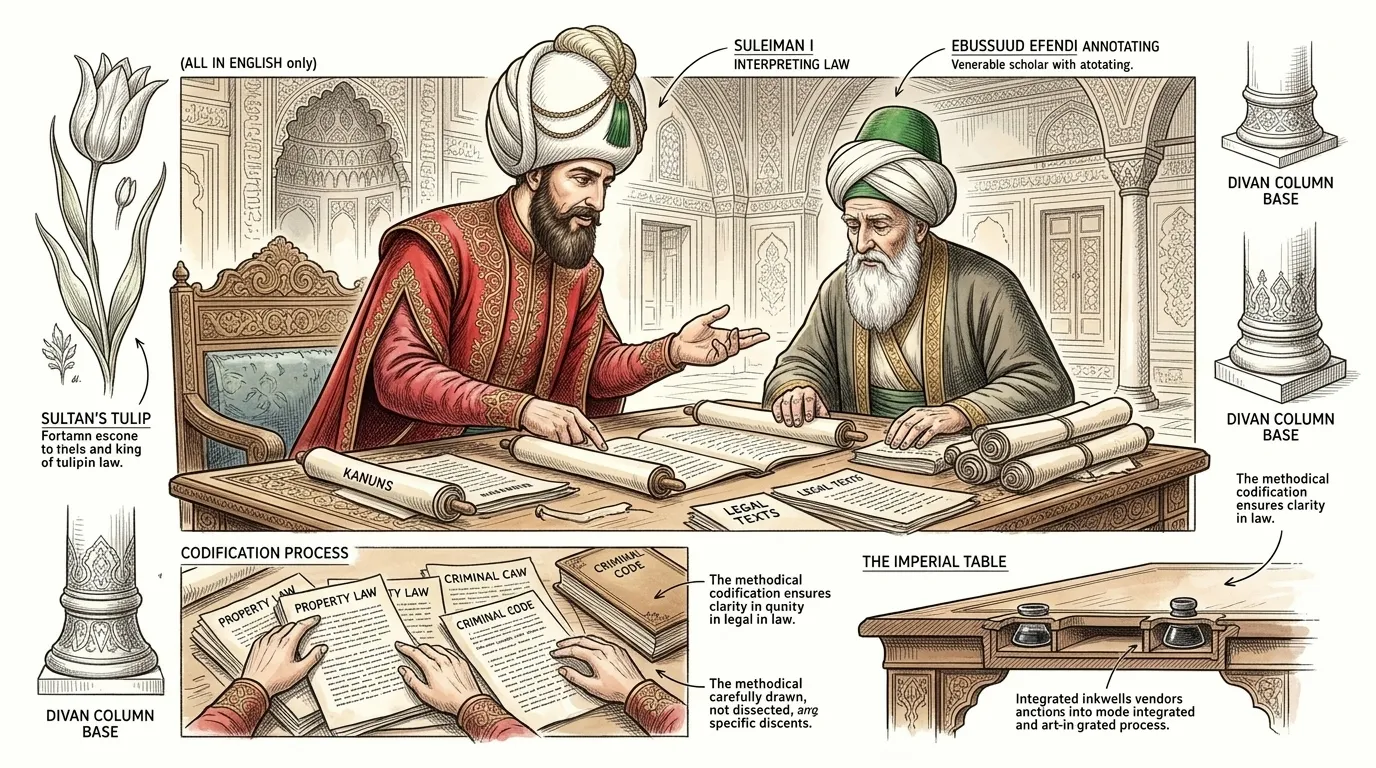
Within the hallowed chambers of the Imperial Divan in the early 1520s, Suleiman convened his most esteemed legal minds. He understood that a vast empire required a unified legal framework, not just military might. He pressed for the codification of Ottoman law, known as the Kanunname.
"'Shaykh al-Islam Ebussuud Efendi,' Suleiman stated, leaning forward, 'a realm without clear law is a ship without a rudder. History teaches us that empires built on arbitrary rule inevitably crumble.' Ebussuud Efendi, a venerable scholar, nodded. 'True power, my Sultan, lies not in temporary conquest, but in the lasting order your Kanun can bring. It protects the weak and guides the strong.' Suleiman examined the scrolls, convinced that a just legal system was the bedrock of enduring prosperity."
Biographical Fact: Suleiman's legal reforms earned him the title 'Kanuni' (the Lawgiver), establishing a legal code that harmonized Sharia law with secular imperial decrees.
Page 4
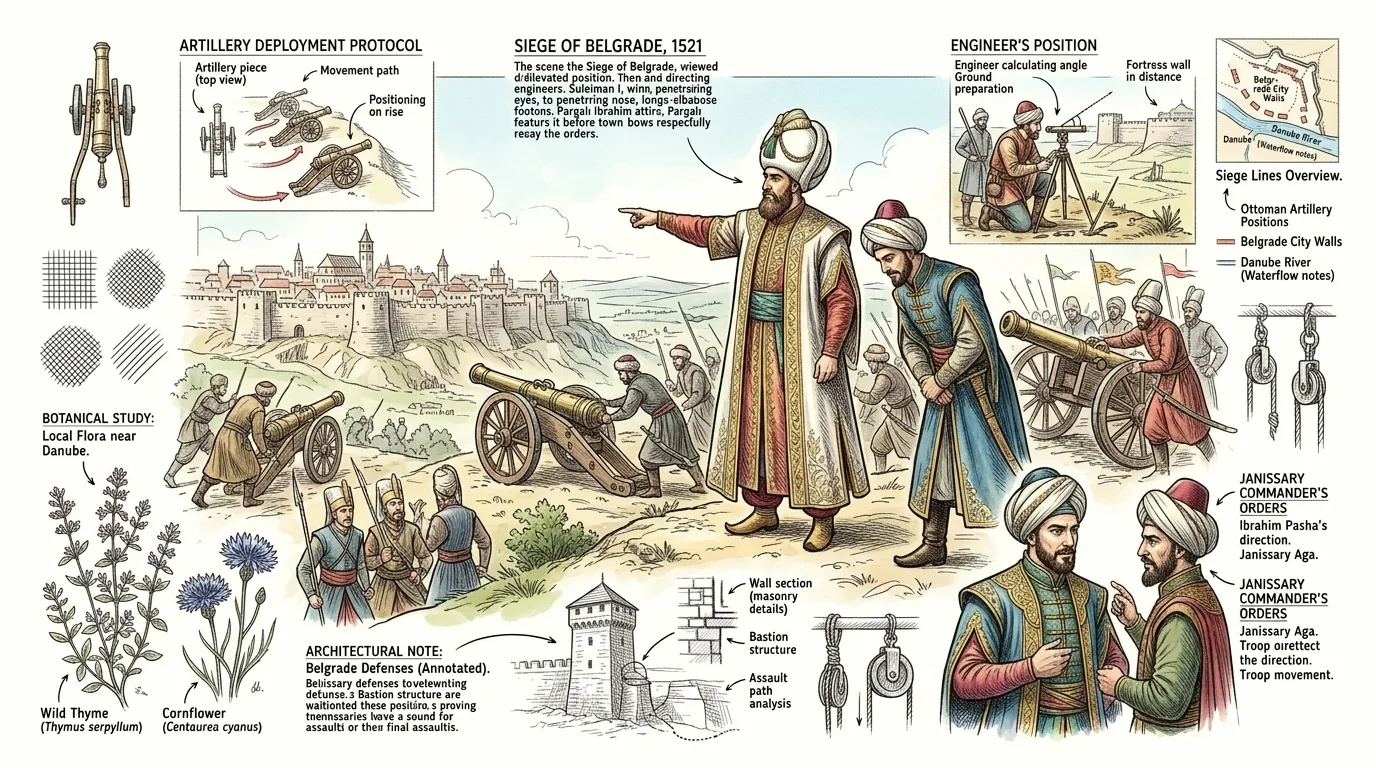
Belgrade, a vital gateway to Central Europe, had long defied Ottoman conquest. In 1521, Suleiman personally led a massive siege, directing his engineers and Janissaries. His strategic insight and relentless pressure proved overwhelming, turning the tide after decades of Ottoman frustration.
"'The breaches are deep enough,' Suleiman declared, his voice firm as he pointed towards the fortified walls. 'Grand Vizier, move the heavy artillery into position. Let the Janissaries prepare for the final assault!' Pargalı Ibrahim Pasha bowed, then relayed the orders to the waiting commanders. The fate of Belgrade was sealed by Suleiman's resolve."
Biographical Fact: The fall of Belgrade in 1521 secured a crucial strategic position for the Ottoman Empire, paving the way for further European campaigns.
Page 5
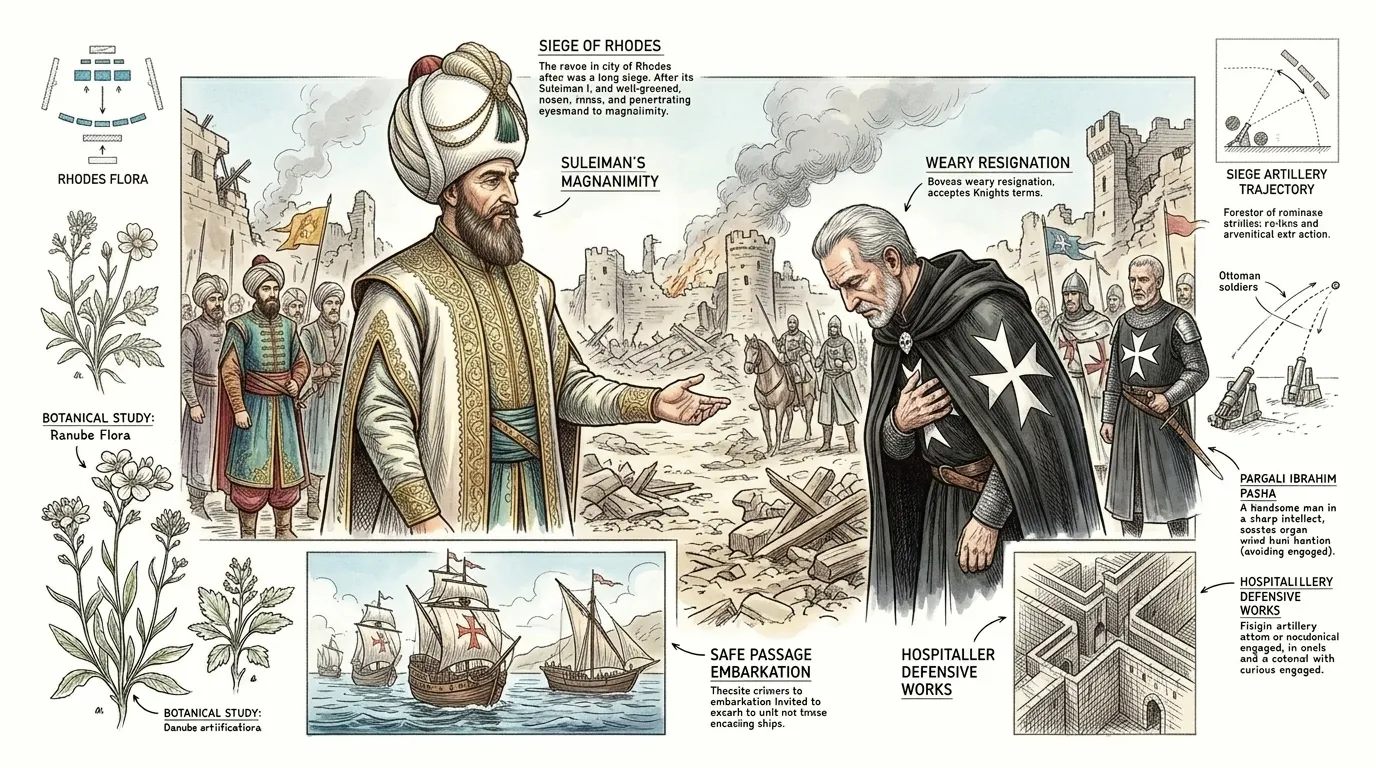
After a grueling six-month siege in 1522, the island fortress of Rhodes, stronghold of the Knights Hospitaller, finally capitulated. Suleiman entered the ravaged city, not with vengeance, but with a calculated magnanimity that underscored his vision of imperial power. He offered safe passage to his defeated foes.
"'Grand Master Philippe Villiers de l'Isle-Adam,' Suleiman addressed the defeated Knight, his voice solemn, 'your courage is acknowledged. Though we are adversaries, I extend safe passage for your Knights and people to depart with honor. The strength of our empire is not only in victory, but in the justice we show.' Villiers de l'Isle-Adam, an old and weary Knight, bowed, accepting the terms with a weary resignation."
Biographical Fact: The capture of Rhodes eliminated a persistent threat to Ottoman shipping in the Eastern Mediterranean, consolidating control over vital trade routes.
Page 6
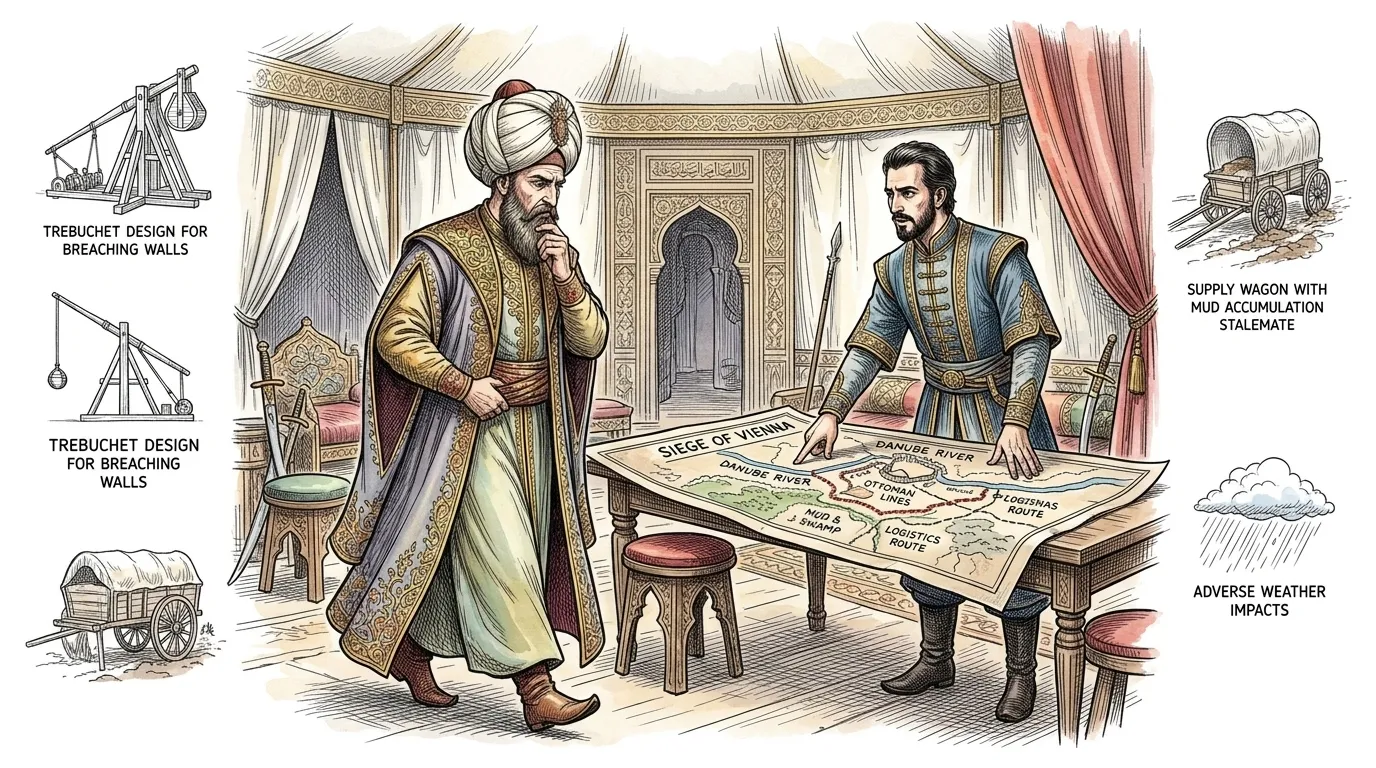
In 1529, Suleiman led his vast army to the gates of Vienna, the capital of Habsburg Austria. This was the farthest westward reach of Ottoman power, a direct challenge to the heart of Christian Europe. The siege was intense, but logistical challenges and an early winter tested the limits of even his formidable forces.
"'The rains turn our siege lines into mud,' Pargalı Ibrahim Pasha reported, his voice tinged with concern as he consulted a map. 'Our cannon are sinking, and supplies dwindle.' Suleiman paced within his imperial tent, his jaw set. 'We came to strike a decisive blow, not to be broken by the elements. We will intensify our efforts, but logistical realities cannot be ignored.' He understood the immense risk of pressing further."
Biographical Fact: The First Siege of Vienna, though ultimately unsuccessful due to logistical and weather constraints, demonstrated the immense reach of Suleiman's military machine.
Page 7
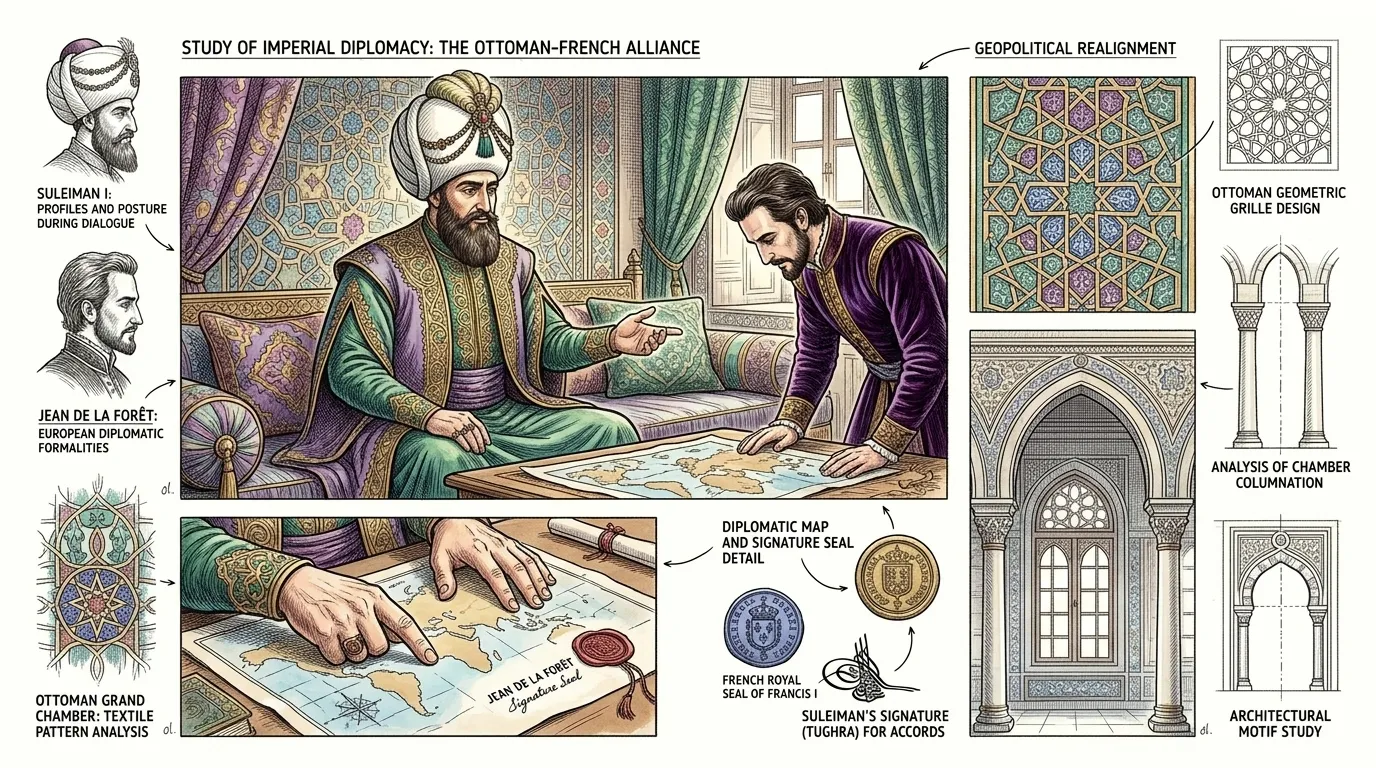
Back in Istanbul, Suleiman orchestrated a diplomatic masterstroke in the 1530s, receiving an envoy from King Francis I of France. This alliance, born of mutual opposition to the Habsburgs, shifted the geopolitical balance of power in Europe and solidified the Ottoman Empire's role as a major global player.
"'Your King's proposal for an alliance against the Habsburgs is shrewd, Monsieur de La Forêt,' Suleiman remarked to the French ambassador, his tone measured. 'As the ancient Chinese philosopher Confucius observed, 'The superior man is modest in his speech, but exceeds in his actions.' We value those who prove their intentions through deeds, not just words.' Jean de La Forêt, a slim European diplomat in rich velvet, bowed deeply. 'My King, Sire, seeks a powerful partner. Your actions speak volumes across Europe.' Suleiman's influence now resonated from East to West."
Biographical Fact: The Franco-Ottoman alliance was a groundbreaking diplomatic move, demonstrating Suleiman's ability to exert influence through complex political maneuvering, not solely military might.
Page 8
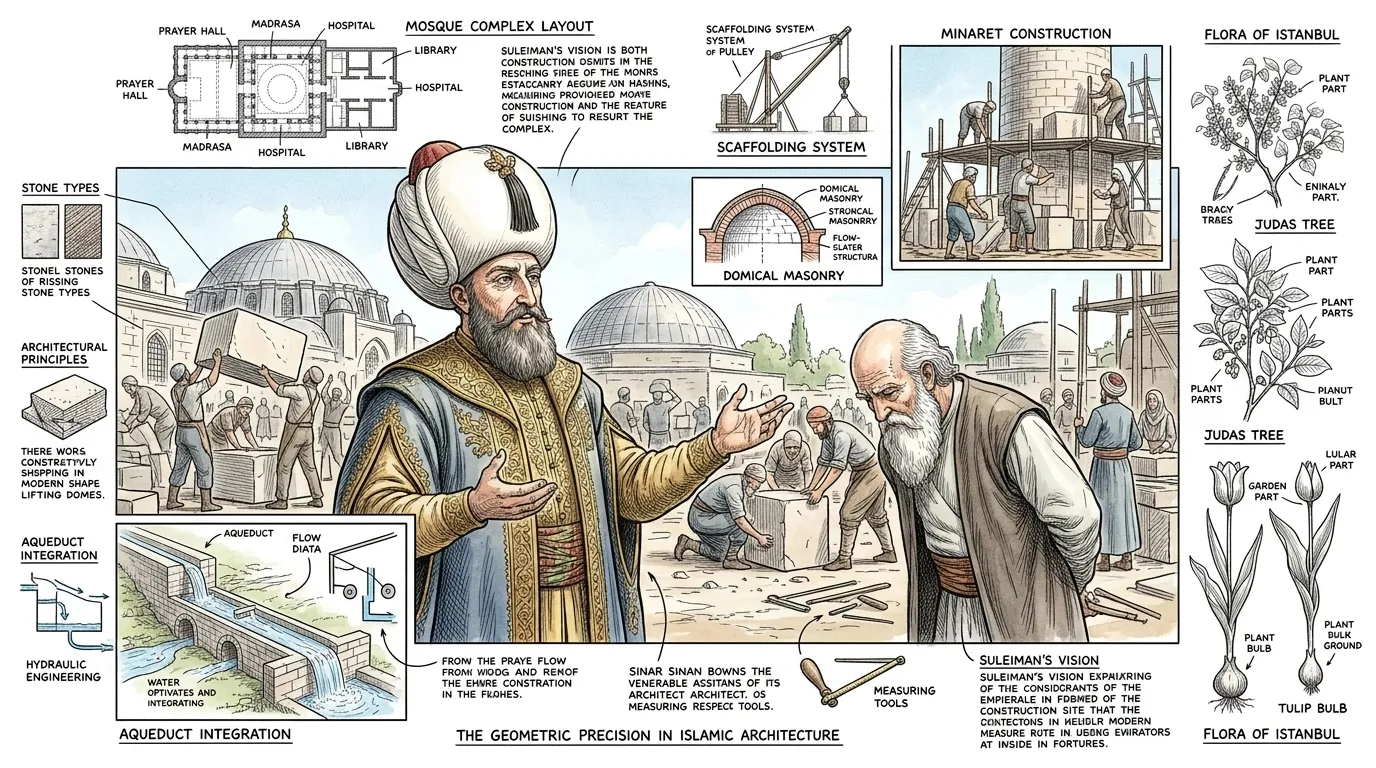
Under Suleiman's patronage, Istanbul blossomed. In the 1550s, he commissioned the Süleymaniye Mosque complex, a breathtaking architectural masterpiece designed by his chief architect, Mimar Sinan. This monumental project was a direct manifestation of the stability and prosperity fostered by his reign, a testament to the enduring legal framework he had established.
"'Mimar Sinan,' Suleiman observed, gesturing towards the rising domes, 'these structures stand firm because the foundations of our law, the Kanun, are firm. Just as Shaykh al-Islam Ebussuud Efendi once impressed upon me, true power lies in lasting order.' Sinan, a venerable architect with a long white beard, bowed respectfully. 'Indeed, my Sultan. The peace and justice you have established allow for such grand and lasting endeavors. These stones will speak of your wisdom for centuries.' Suleiman walked among the workers, envisioning his empire's future etched in stone."
Biographical Fact: The Süleymaniye Mosque complex, a masterpiece of Ottoman architecture, stands as a lasting symbol of Suleiman's golden age, enabled by the internal stability of his legal and administrative reforms.
Page 9
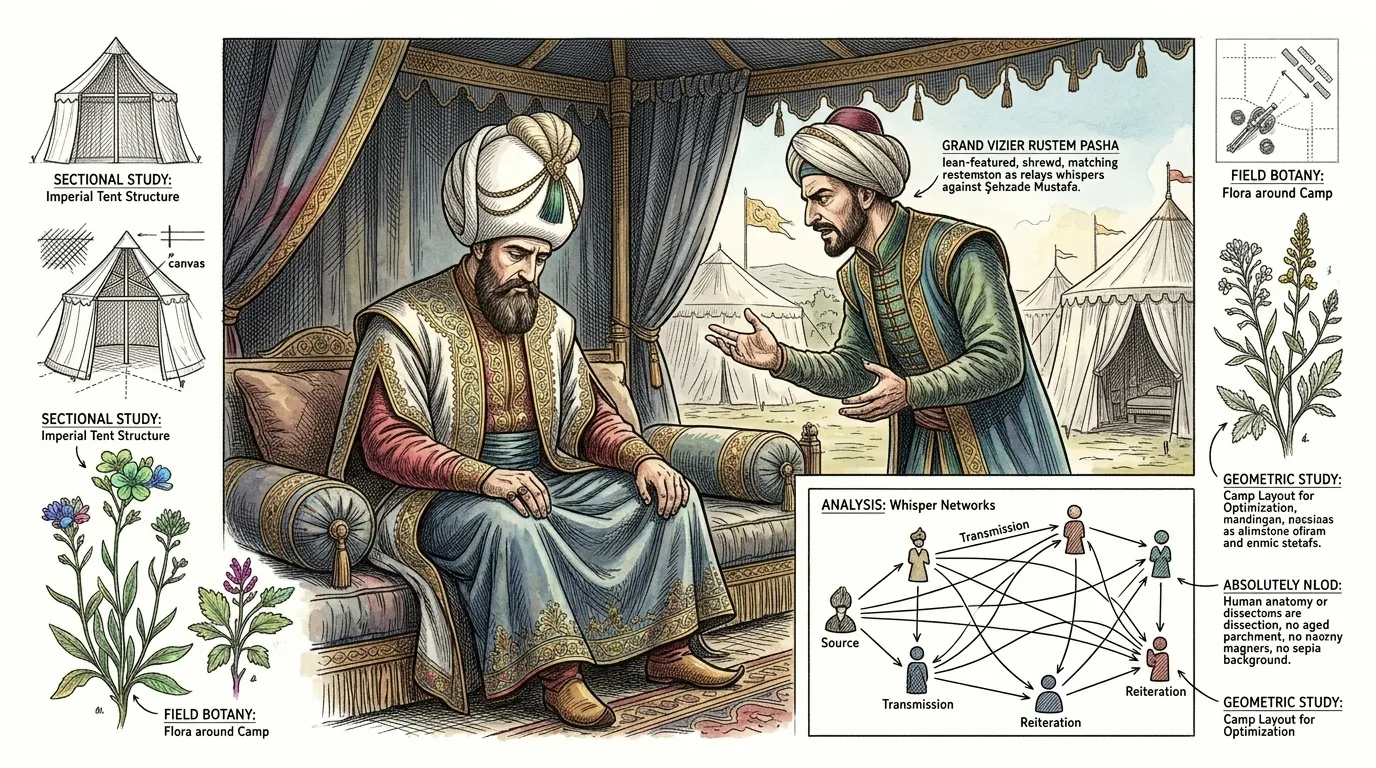
The preservation of the empire often demanded brutal choices, even from Suleiman. Succession anxieties led to devastating personal tragedies, none more agonizing than the execution of his talented son, Şehzade Mustafa, in 1553. This act, influenced by political machinations, underscored the heavy, often cruel, burden of absolute rule.
"'The whispers against Mustafa grew too loud, my Sultan,' Grand Vizier Rustem Pasha declared, his face grim. 'His popularity with the army, the foreign envoys... it threatened the stability you have built.' Suleiman sat in his imperial tent, his eyes heavy with sorrow and an unyielding resolve. 'The Empire must endure, Rustem Pasha, no matter the personal cost. The burden of this decision is mine alone.' He accepted the terrible necessity, the solitude of his ultimate authority."
Biographical Fact: The execution of Şehzade Mustafa, perceived as a charismatic and popular heir, sent shockwaves through the empire and became a subject of lasting lament in Ottoman history and folklore.
Page 10
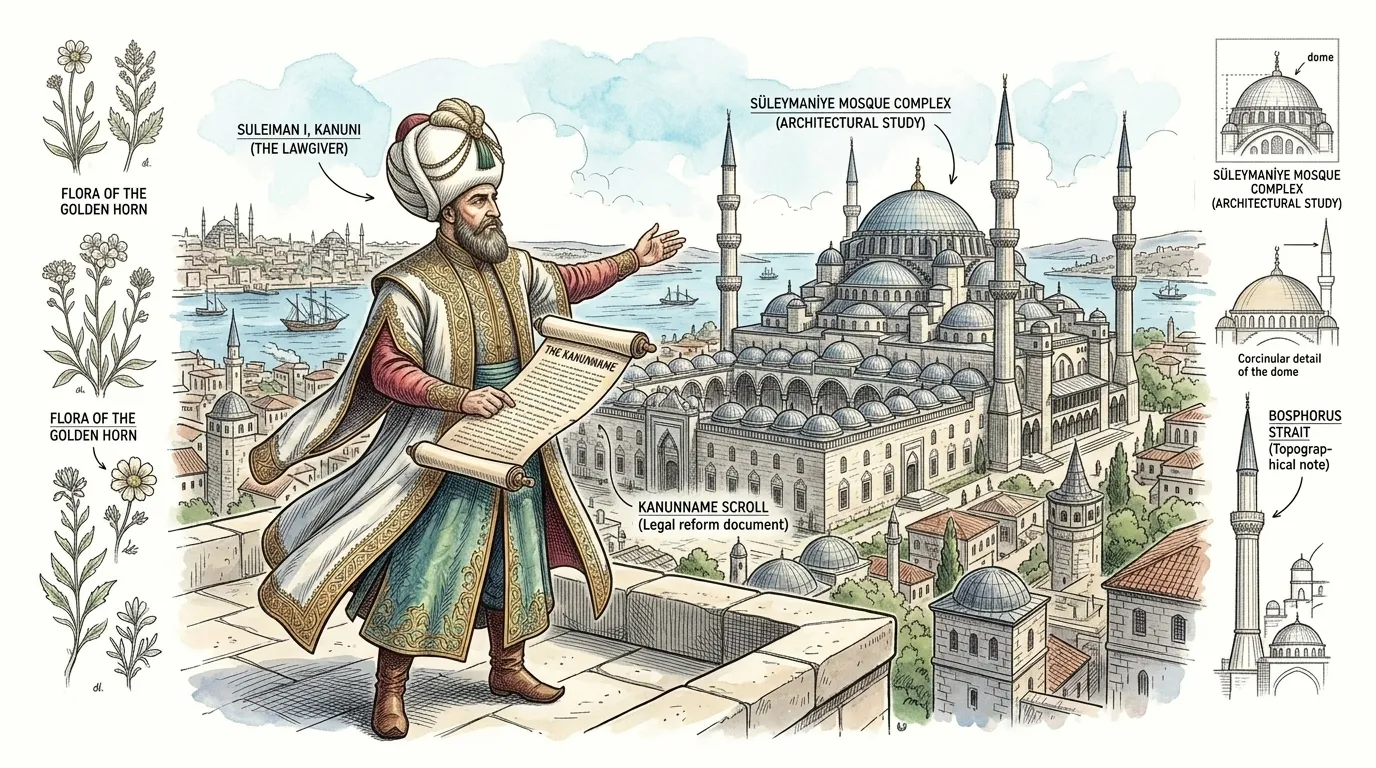
Suleiman the Magnificent left behind an empire fundamentally reshaped. His reign, spanning 46 years until his death in 1566, defined the Ottoman Golden Age. His meticulous legal reforms provided a framework for governance that endured for centuries, earning him the title 'Kanuni' – the Lawgiver. Simultaneously, the architectural wonders he commissioned, like the Süleymaniye Mosque, remain indelible features of Istanbul's skyline, symbols of an empire at its zenith. His impact was felt from the battlefields of Europe to the halls of justice, forging a cultural and political legacy that resonated far beyond his lifetime.
Biographical Fact: Suleiman's reign solidified the Ottoman Empire as a world power, his legal system endured for centuries, and his cultural patronage left an unparalleled architectural and artistic heritage.
About this story
- Location: Global
- Audience: general readers
Questions and answers
Read Wonder People on your phone
Wonder People is available on Android. Get Wonder People on Google Play.