Simon Bolivar
Simon Bolivar — an illustrated biography story, set in Global. 10 illustrated pages, free to read on Wonder People.
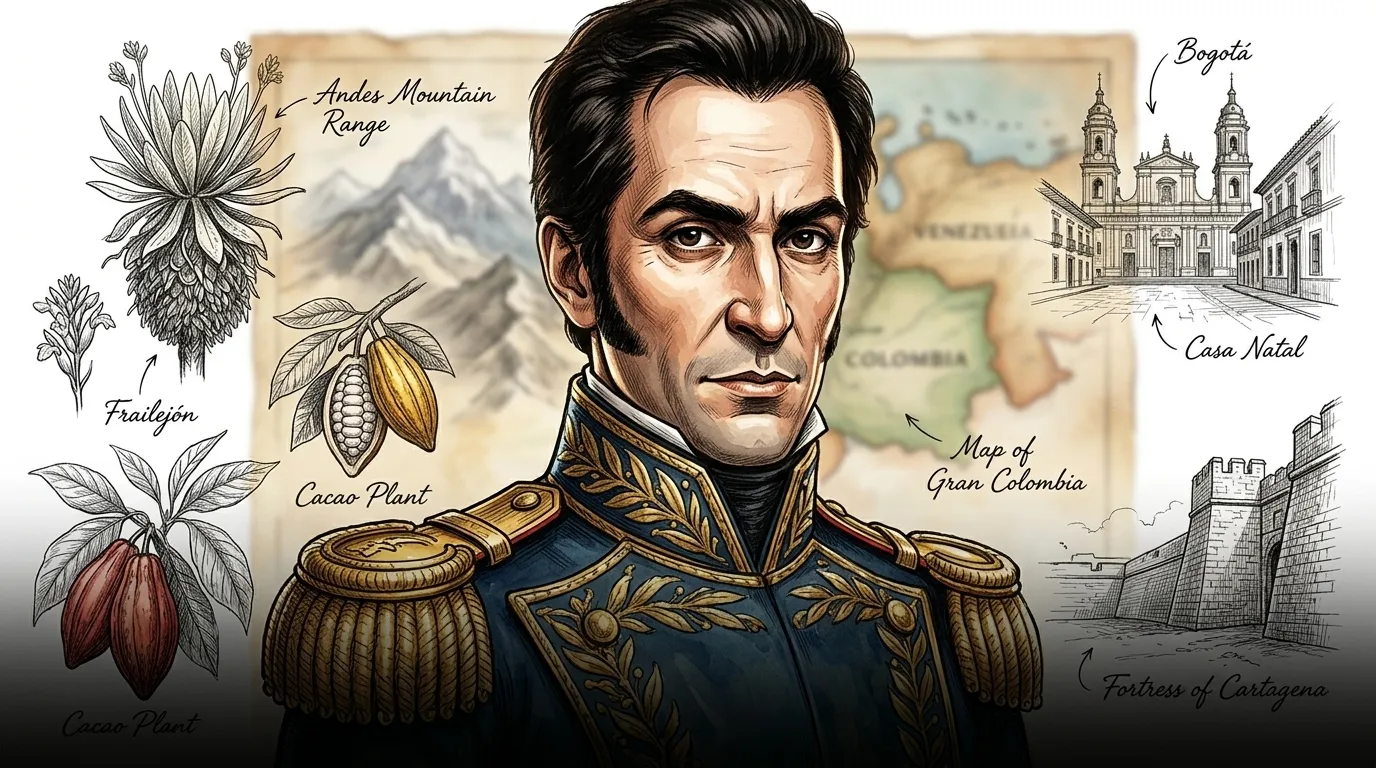
Page 1
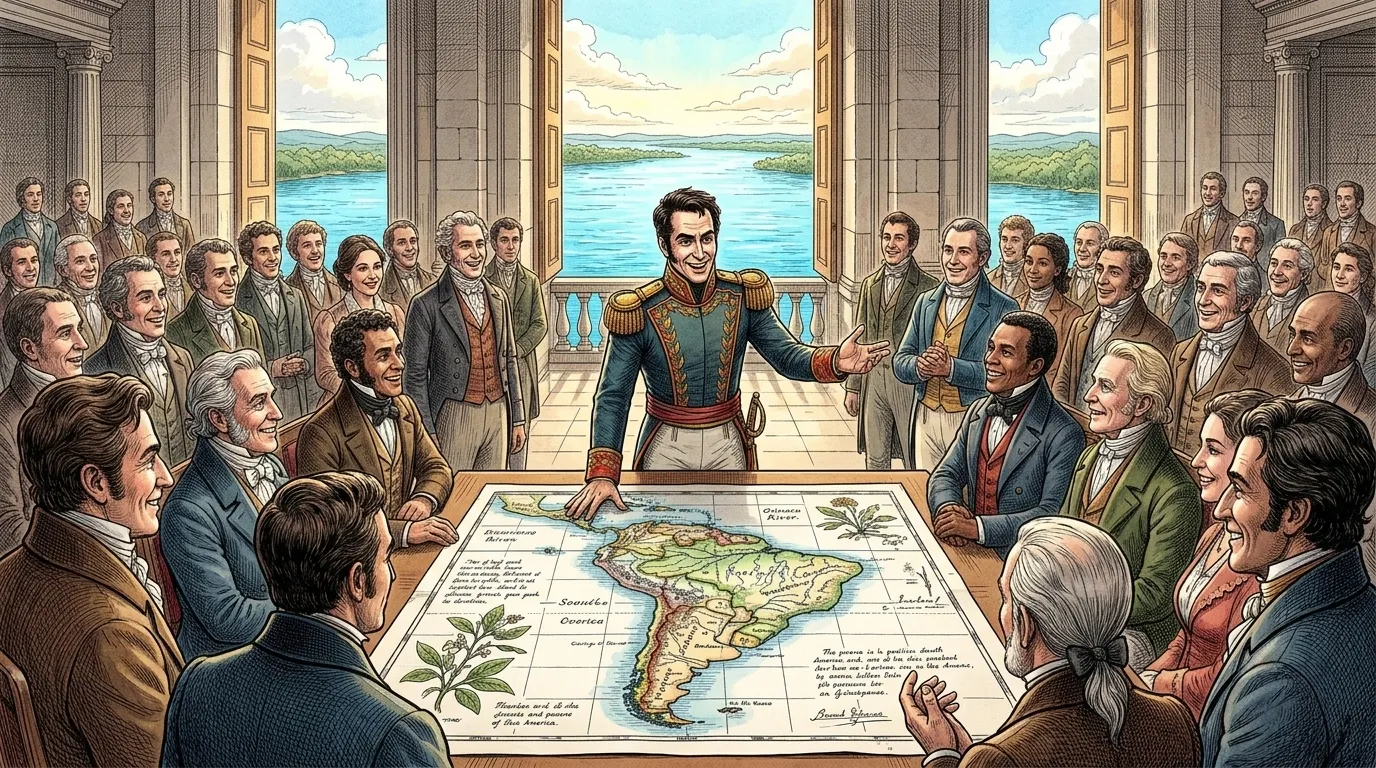
In February 1819, within the sweltering hall of the Congress of Angostura, Simón Bolívar stood before an assembly of delegates. His decree for the fundamental law of the Republic of Colombia articulated a vision far grander than mere liberation: a unified, powerful South American nation. With the vast Orinoco River flowing outside, Bolívar, then Supreme Chief of the Republic, championed a centralized government and a powerful executive, meticulously laying the groundwork for Gran Colombia—a colossal state destined to encompass Venezuela, New Granada, and Quito. This audacious political act cemented his authority, transforming a disparate revolutionary movement into a cohesive, continental force.
Biographical Fact: The Congress of Angostura (1819) was a pivotal moment where Bolívar articulated his political philosophy and laid the legislative foundation for Gran Colombia. His address proposed a strong, centralized republic, reflecting his belief that a powerful executive was essential to govern the newly independent territories.
Page 2
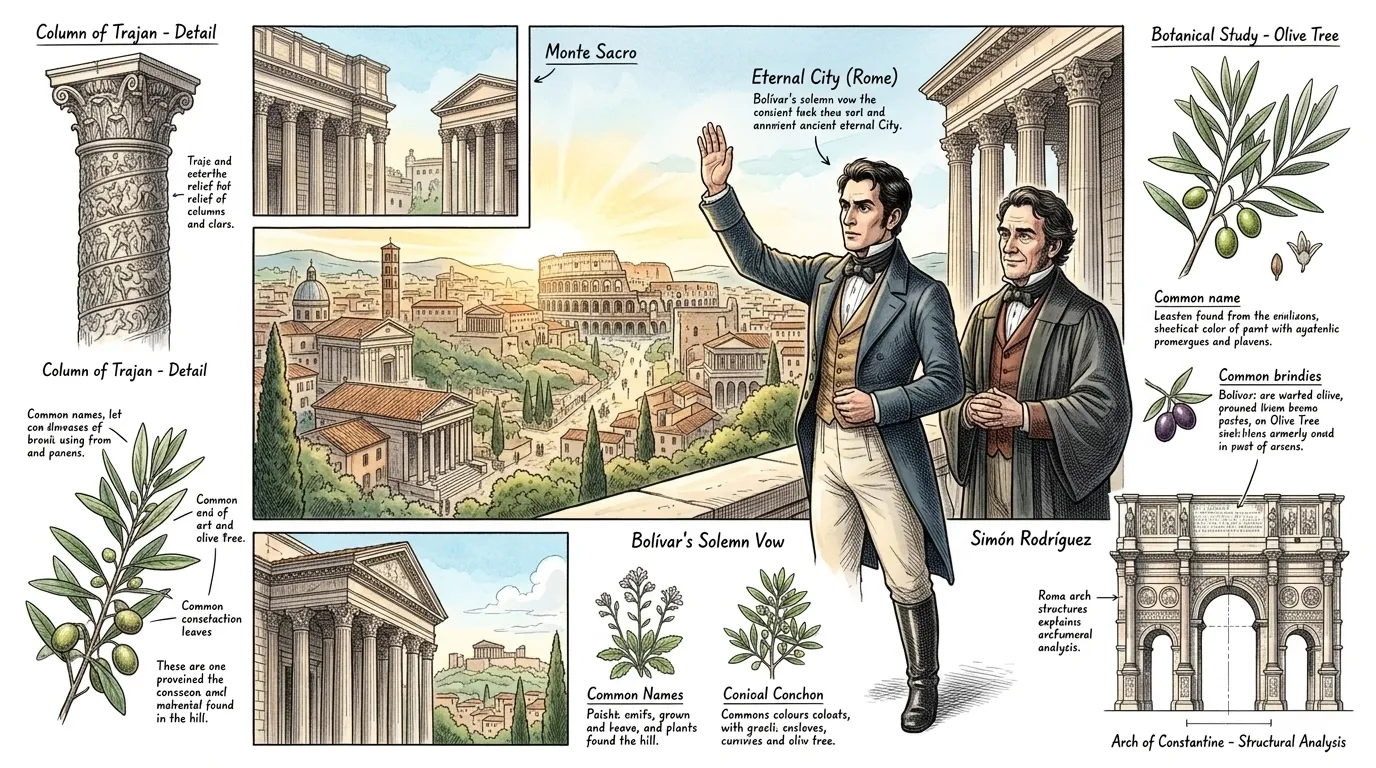
Years earlier, in 1805, atop Rome's Monte Sacro, a young Simón Bolívar stood beside his former tutor, Simón Rodríguez. Overlooking the Eternal City, Bolívar, deeply affected by the ideals of the Enlightenment and the fall of the Bastille, made a solemn vow. He declared he would not rest until he had broken the chains of Spanish rule in South America, dedicating his life to the liberation of his homeland. This audacious commitment, spoken as a 22-year-old, crystallized his future path, transforming a privileged Creole upbringing into a destiny of continental upheaval.
Biographical Fact: The Monte Sacro Oath in 1805, witnessed by his mentor Simón Rodríguez, is considered Bolívar's spiritual awakening to the cause of South American independence. It solidified his commitment to revolutionary ideals years before the actual wars of independence began.
Page 3
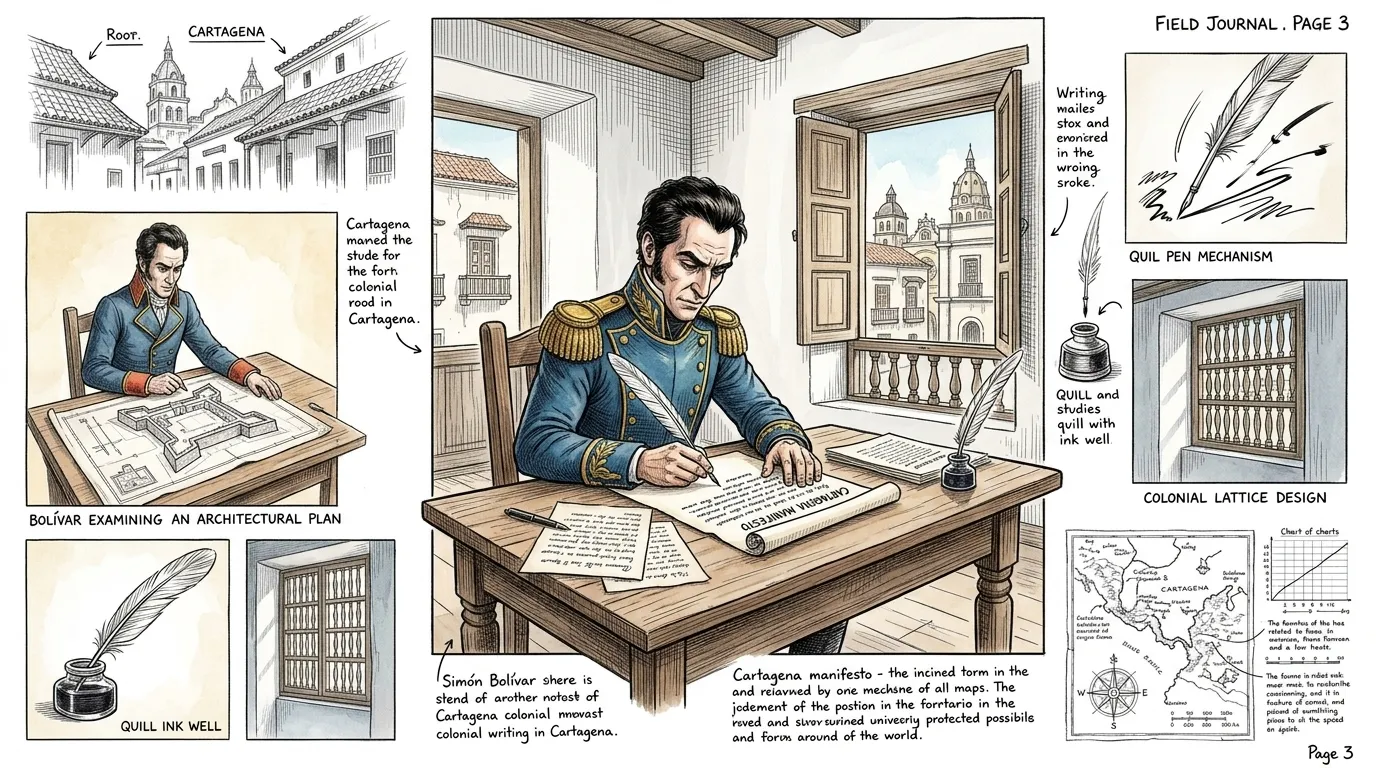
After the collapse of Venezuela's First Republic, Simón Bolívar, then a colonel, found refuge in Cartagena, New Granada, in 1812. From this sanctuary, he penned the 'Cartagena Manifesto,' a scathing analysis of the republic's failures and a powerful appeal for unity and action against Spanish rule. He warned that only through decisive, combined military force could true independence be secured, articulating a clear strategy for the future. This document marked his emergence as a visionary strategist, transforming his earlier defeats into a blueprint for renewed revolutionary effort.
Biographical Fact: The Cartagena Manifesto (1812) was Bolívar's first major political treatise. In it, he analyzed the reasons for the First Republic's downfall, criticized federalism, and advocated for a strong, centralized government, foreseeing the need for united military action across New Granada and Venezuela.
Page 4
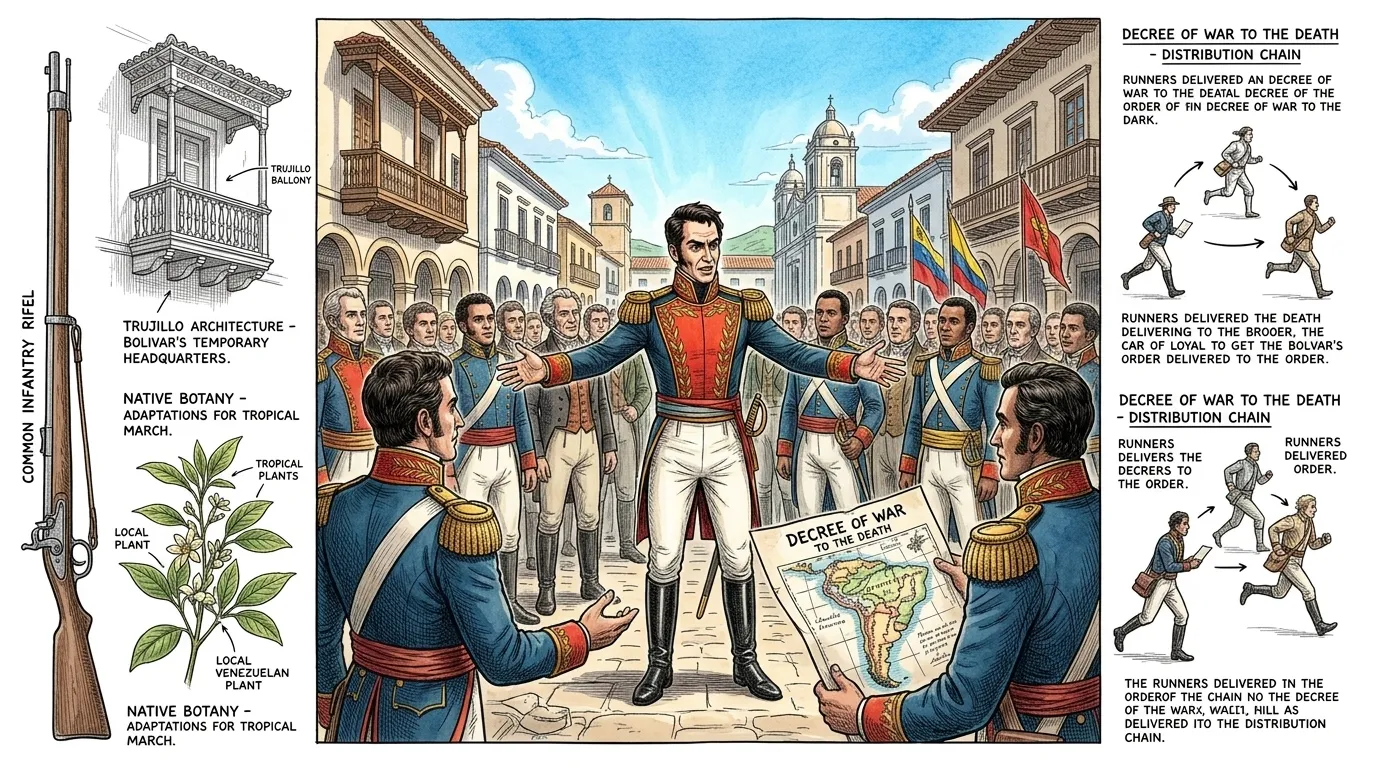
In 1813, facing brutal Spanish counterinsurgency, Simón Bolívar issued the 'Decree of War to the Death' from Trujillo, Venezuela. He declared that any Spaniard or Canary Islander who did not actively support independence would be executed, while Americans, even those who initially supported the Spanish, would be spared if they joined the patriot cause. This uncompromising proclamation, delivered with fierce determination to his assembled officers and soldiers, galvanized the revolutionary forces, polarizing the conflict and leaving no middle ground. It was a calculated, brutal strategy to intensify the fight and forge a clear distinction between loyalists and patriots.
Biographical Fact: The 'Decree of War to the Death' (1813) was a controversial but militarily effective measure. It was designed to polarize the population, compelling neutral parties to choose a side and strengthening the resolve of his troops, transforming the conflict into a total war for survival.
Page 5
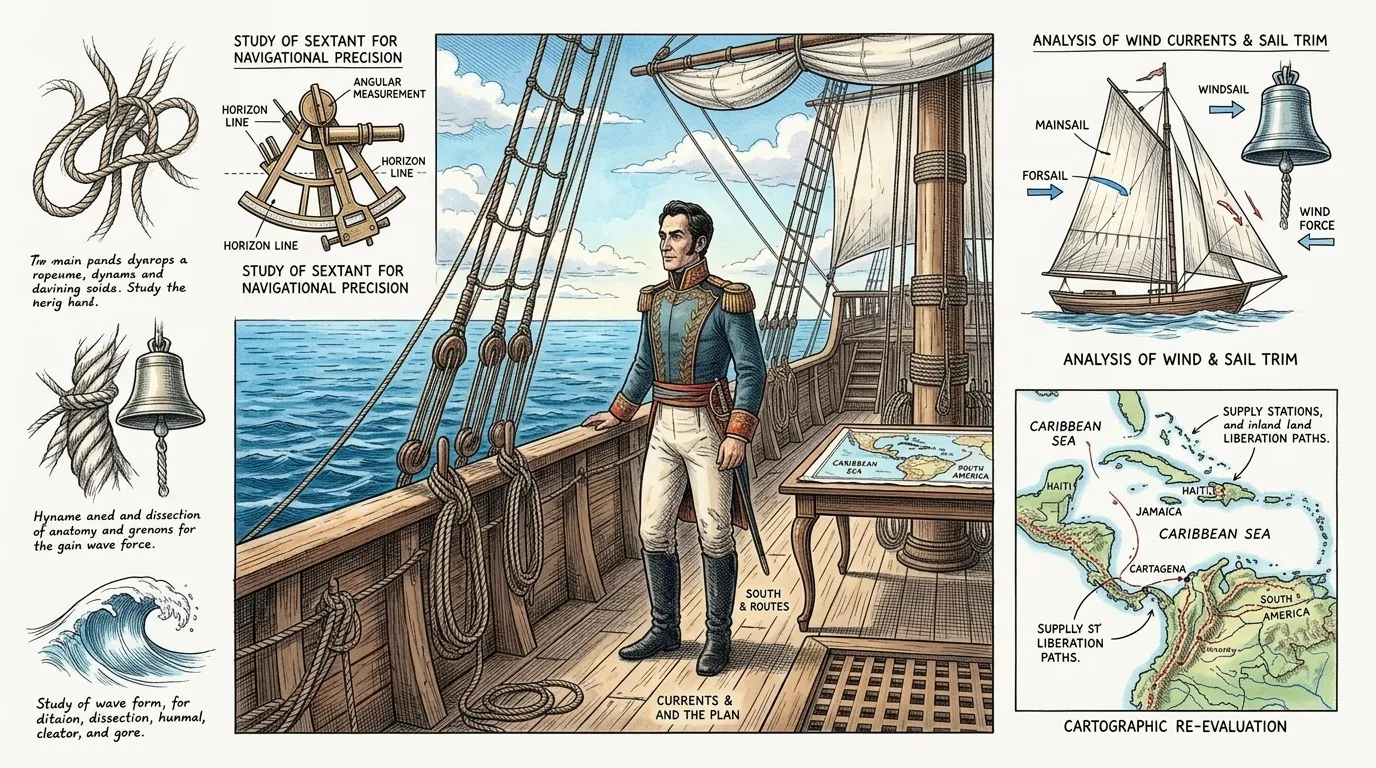
Following his triumphant entry into Caracas in August 1813, greeted as 'The Liberator,' Simón Bolívar briefly presided over Venezuela's Second Republic. Yet, the brutal 'War to the Death' fueled loyalist resistance, particularly from José Tomás Boves' llanero forces. By 1814, Caracas fell, forcing Bolívar into a harrowing retreat and ultimately, exile. From the shores of Cartagena, then Jamaica, and eventually Haiti, he confronted bitter defeat and political infighting among the revolutionaries. This period of intense hardship solidified his resilience, compelling him to meticulously plan his return and adapt his strategies for a renewed, decisive campaign.
Biographical Fact: After significant military setbacks, including the loss of the Second Republic of Venezuela, Bolívar was forced into exile in 1814-1815. This period, marked by reflection and strategic re-evaluation, proved crucial for his eventual resurgence and success, as he sought new allies and refined his military tactics.
Page 6
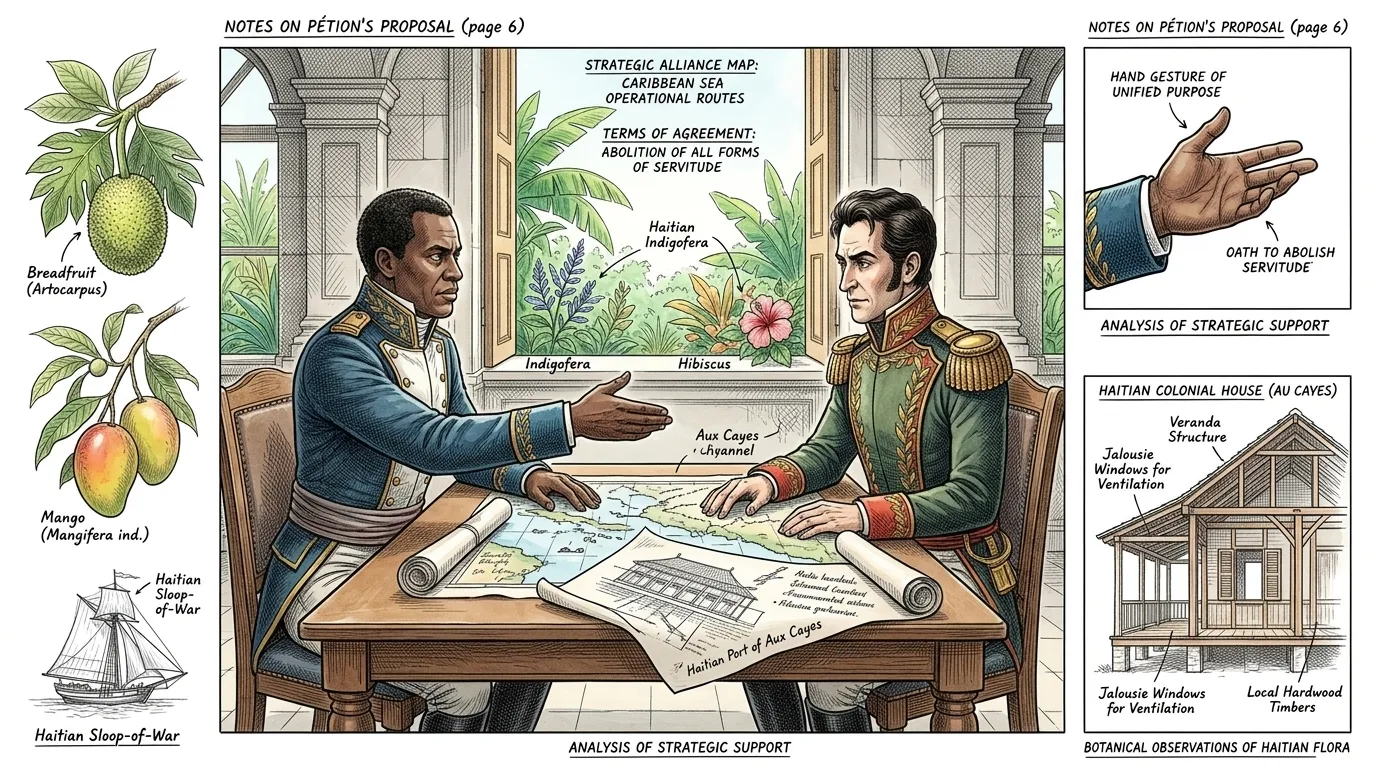
In 1816, in a pivotal moment of the revolution, Simón Bolívar sailed to Haiti seeking refuge and support. He found it in President Alexandre Pétion, leader of the world's first independent Black republic. Pétion, understanding the shared struggle against colonial oppression, provided Bolívar with crucial arms, money, and men, on one condition: that Bolívar abolish slavery in all territories he liberated. This alliance not only re-equipped Bolívar's decimated forces but also fundamentally shaped the moral and social dimensions of his liberation campaign, granting him the means for a decisive return to the mainland.
Biographical Fact: Alexandre Pétion's assistance to Bolívar in 1816 was a turning point. Haiti, having achieved its own independence from colonial rule, offered vital resources under the condition that Bolívar commit to abolishing slavery, a promise he subsequently fulfilled.
Page 7
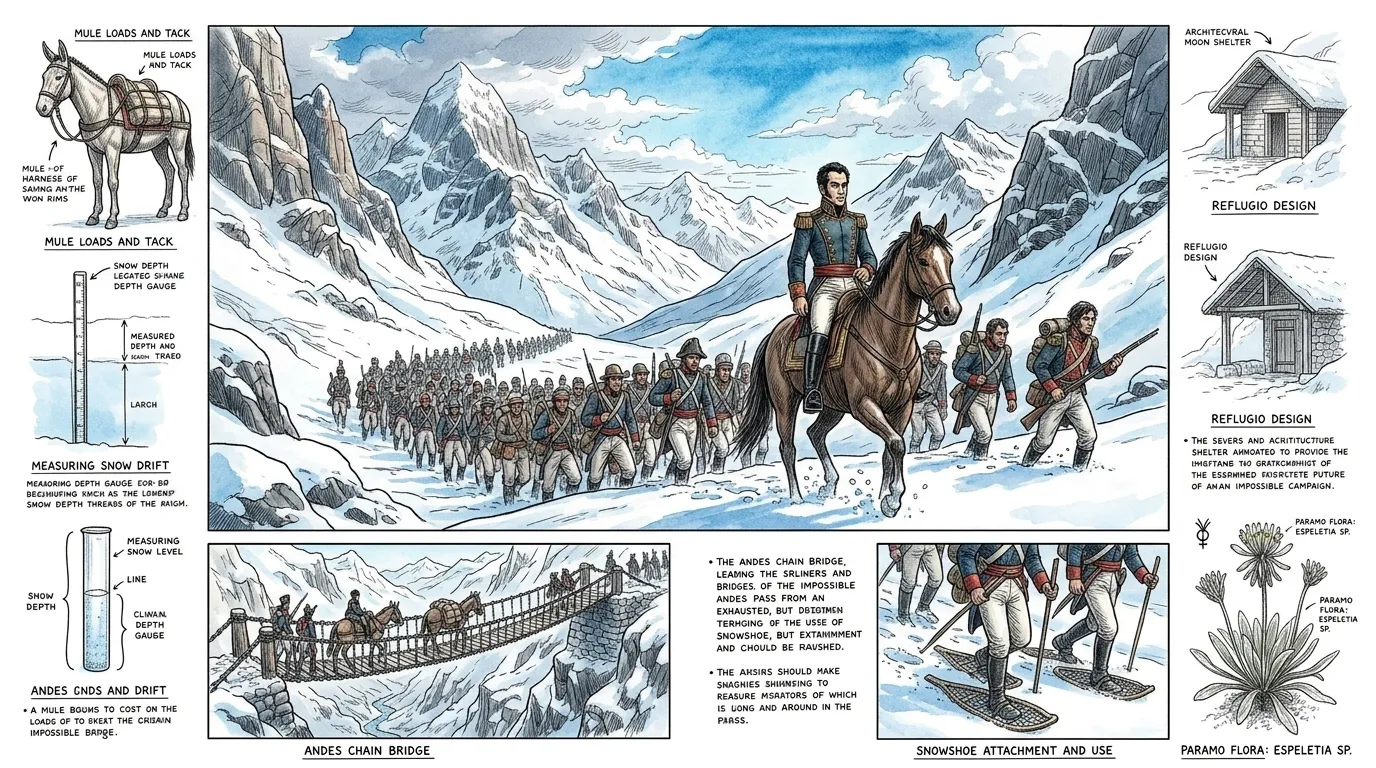
In 1819, Simón Bolívar embarked on one of military history's most audacious campaigns: crossing the formidable, snow-capped Andes mountains with his army to surprise the Spanish forces in New Granada. Leading thousands of exhausted but determined soldiers, he navigated treacherous passes, freezing temperatures, and relentless terrain, enduring immense losses. This 'Impossible Campaign' demonstrated his unparalleled resolve and strategic genius, arriving unexpectedly in the heart of Spanish territory and setting the stage for the decisive Battle of Boyacá. The fate of an entire continent hung on this perilous crossing.
Biographical Fact: Bolívar's crossing of the Andes in 1819, culminating in the Battle of Boyacá, is considered one of his greatest military feats. This daring maneuver caught the Spanish completely off guard, leading to the liberation of New Granada and paving the way for the creation of Gran Colombia.
Page 8
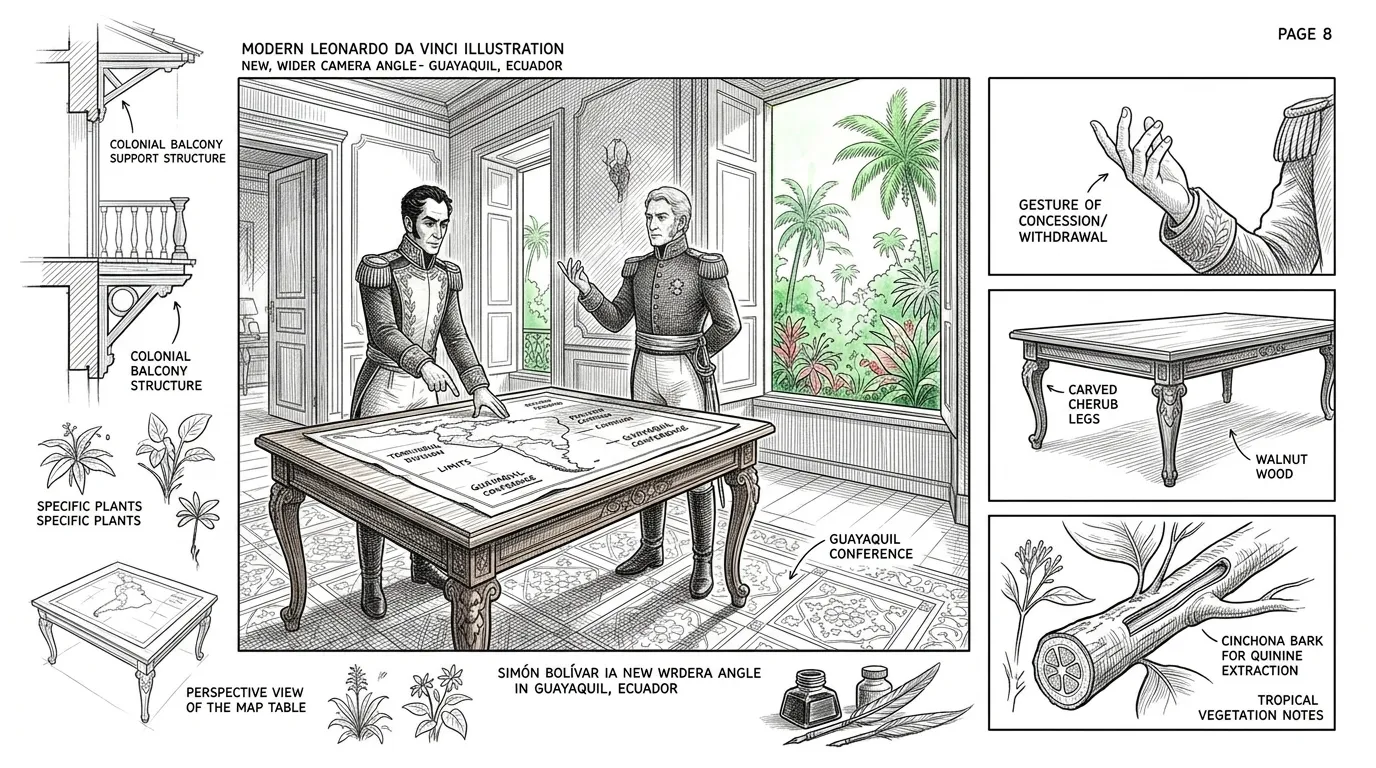
In July 1822, in Guayaquil, Ecuador, Simón Bolívar met with José de San Martín, the Liberator of Southern South America. These two giants of independence held private discussions about the future of the continent, particularly the fate of Peru and the overall political structure of the newly freed nations. Following their enigmatic meeting, San Martín, realizing their differing visions for governance, ceded control of his forces and withdrew from the revolutionary struggle, leaving Bolívar as the undisputed leader of the fight against the remaining Spanish strongholds. This historic encounter decisively shifted the momentum of liberation, consolidating Bolívar's power across the continent.
Biographical Fact: The Guayaquil Interview (1822) between Bolívar and San Martín marked a critical juncture. While the exact details remain debated, the outcome was clear: San Martín retired, leaving Bolívar to complete the liberation of Peru and solidify his role as the sole unifying figure of South American independence.
Page 9

As Gran Colombia began to fracture under regionalism and political unrest, Simón Bolívar faced increasing opposition, leading to the infamous Conspiracy of September in 1828. A group of conspirators attempted to assassinate him in Bogotá. His quick-thinking companion, Manuela Sáenz, courageously saved his life by helping him escape through a window as assassins stormed his chambers. This violent act highlighted the deep divisions plaguing his grand project of unity and marked a bitter turning point, revealing the fragility of his continental dream and the escalating threats to his authority.
Biographical Fact: The Conspiracy of September (1828) was a failed assassination attempt against Bolívar, which further deepened political instability in Gran Colombia. His life was saved by Manuela Sáenz, a prominent patriot and his lover, underscoring the fierce opposition and internal strife that plagued his later years.
Page 10
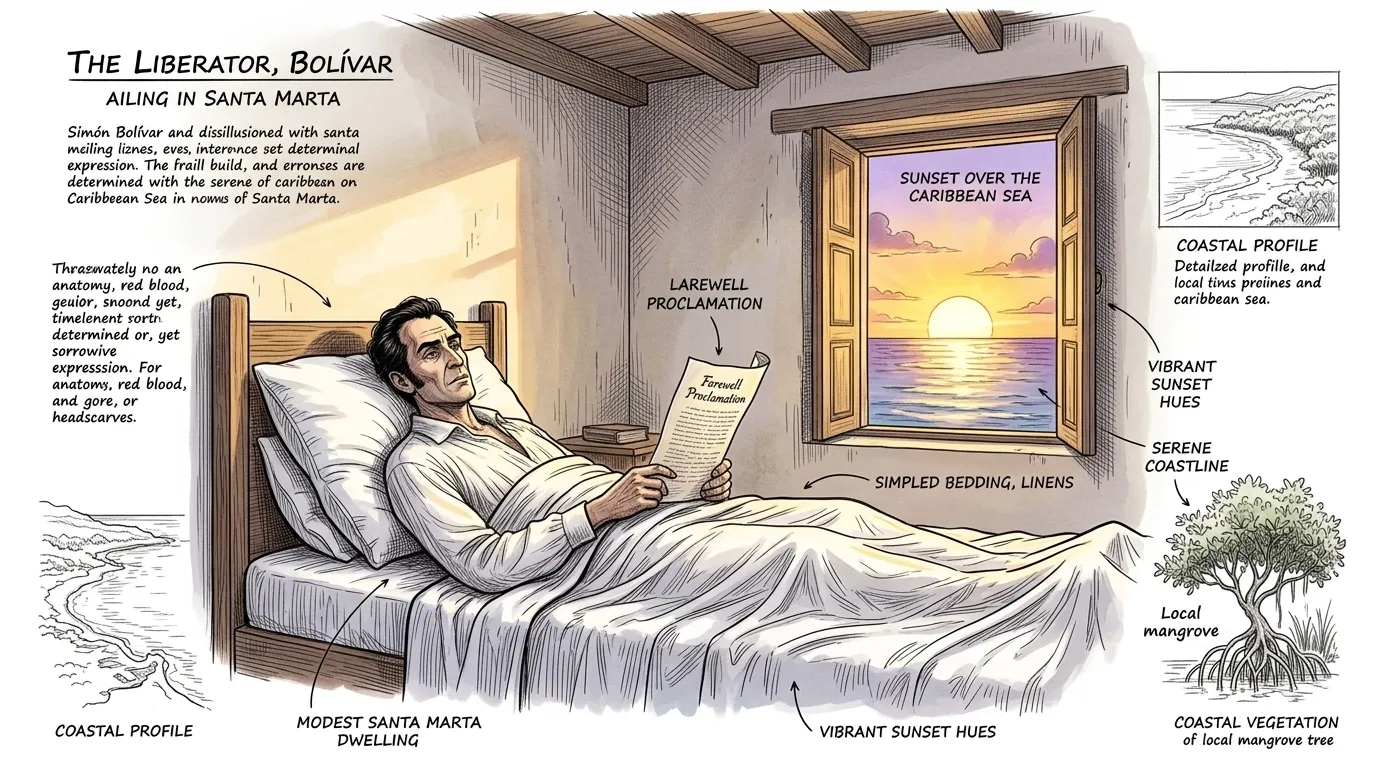
In December 1830, a frail and disillusioned Simón Bolívar, having resigned from the presidency of Gran Colombia, died in Santa Marta. His farewell proclamation expressed profound sadness for his failures to unite South America. Despite the collapse of his envisioned confederation, his military triumphs had shattered three centuries of Spanish rule, liberating six nations. His ideals of liberty, republicanism, and a pan-American identity resonated for generations, enduring as the foundational principles of modern Latin American states. Bolívar's dream of Gran Colombia fractured, but his spirit of independence became an inextinguishable flame.
Biographical Fact: Simón Bolívar died in 1830, a broken man by many accounts, as his vision for a unified Gran Colombia disintegrated. Yet, his legacy as 'The Liberator' of Venezuela, Colombia, Ecuador, Peru, Panama, and Bolivia remains monumental, establishing him as one of the most significant figures in Latin American history.
About this story
- Location: Global
- Audience: general readers
Questions and answers
Read Wonder People on your phone
Wonder People is available on Android. Get Wonder People on Google Play.