Samuel Colt
Samuel Colt — an illustrated biography story, set in Global. 10 illustrated pages, free to read on Wonder People.
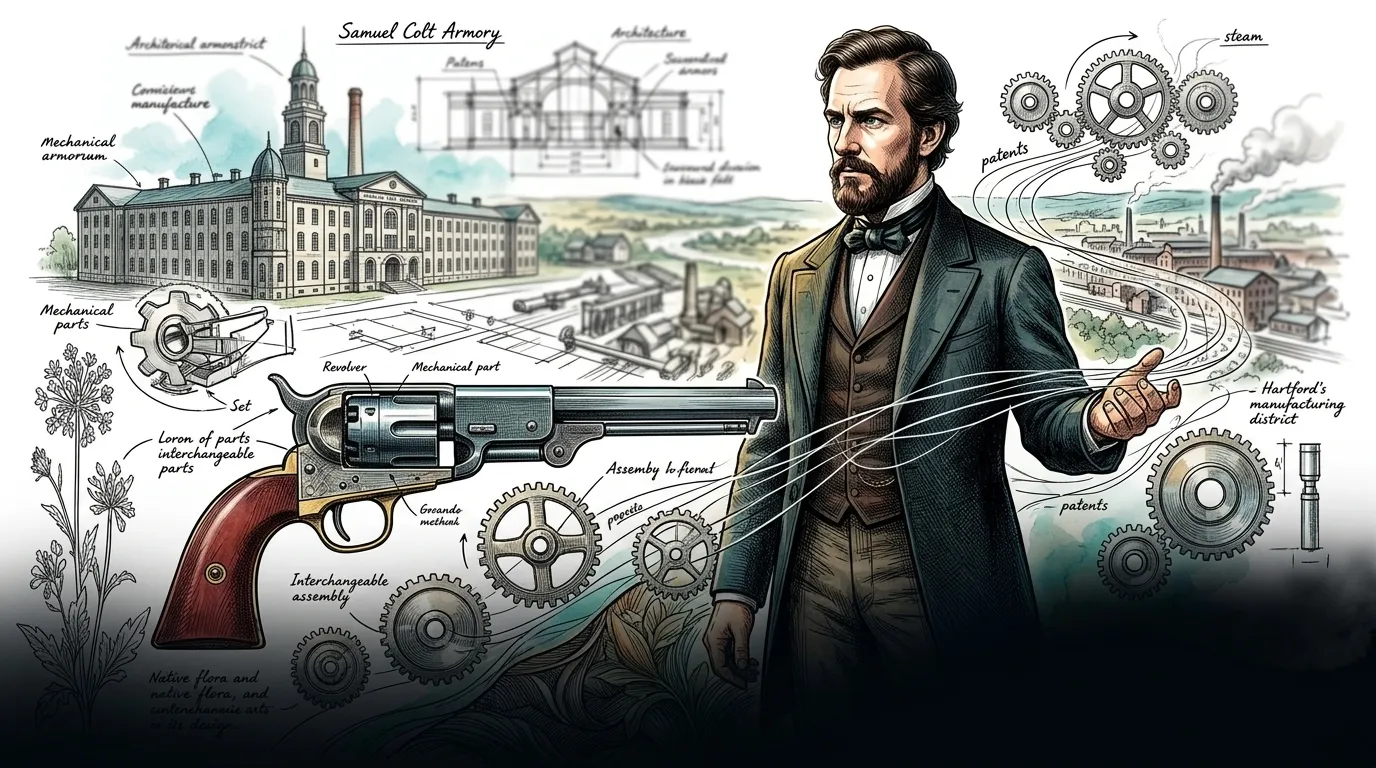
Page 1
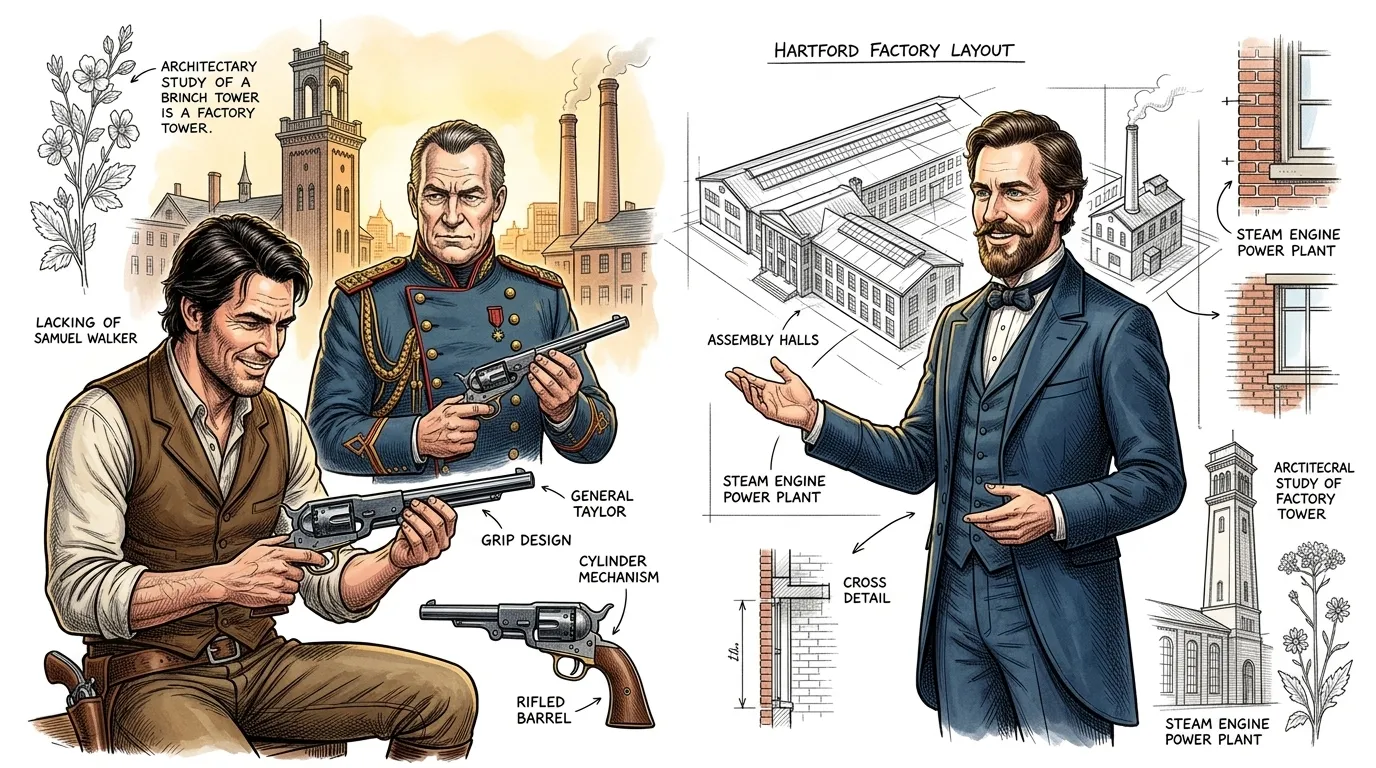
In 1847, Samuel Colt stood on the precipice of industrial reinvention. His Paterson venture had failed, yet from its ashes, the U.S. government placed an order for 1,000 powerful revolvers designed with Captain Samuel Walker for the Mexican-American War. This massive contract demanded a new paradigm of production, a challenge Colt met by establishing his enterprise in Hartford, Connecticut, forging the blueprint for modern manufacturing. His vision transcended simple weapon-making; it was a testament to the power of interchangeable parts and assembly line efficiency, transforming industry and warfare alike.
Biographical Fact: Hartford, Connecticut, 1847-1848. Samuel Colt, General Zachary Taylor, Captain Samuel Walker. Colt's new factory fulfills a U.S. government order for 1,000 Walker-Colt revolvers, establishing mass production principles.
Page 2
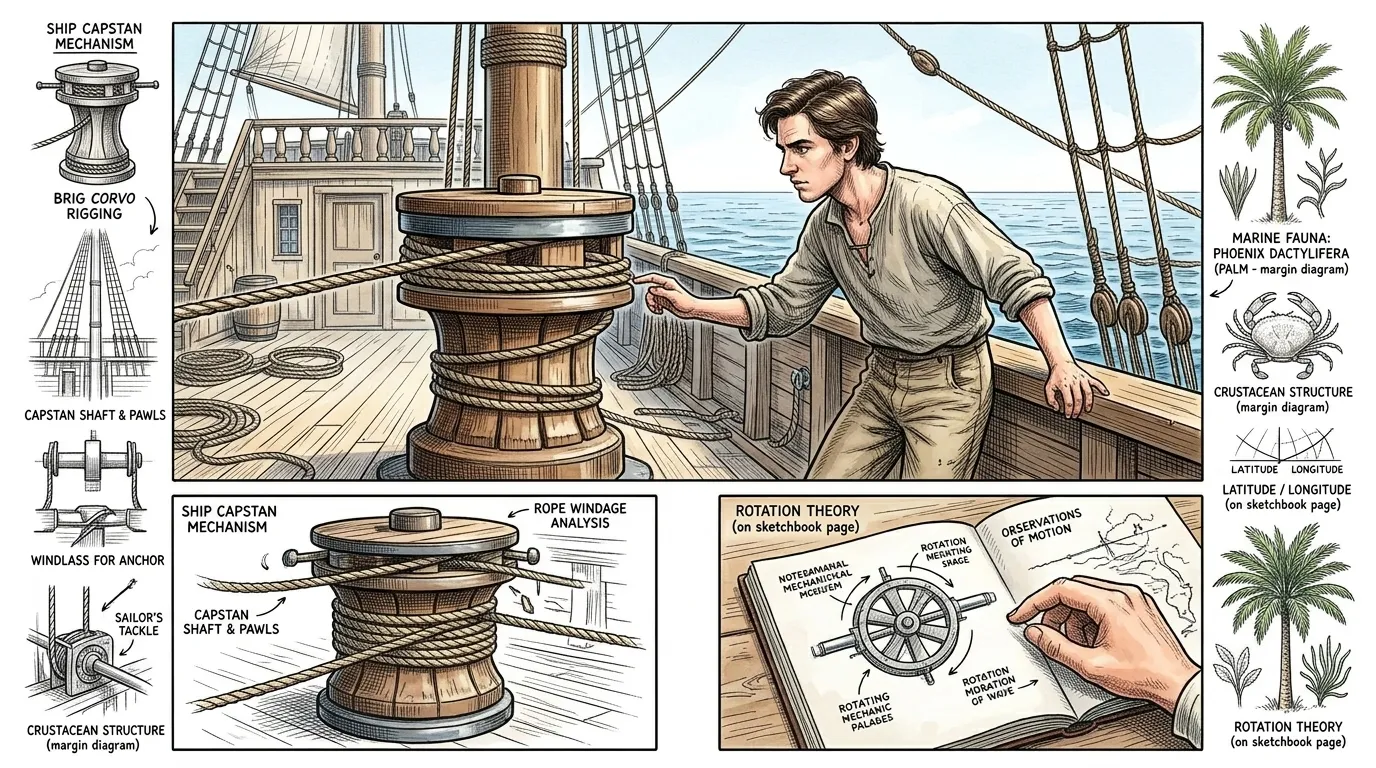
Born in 1814, Samuel Colt displayed an early, relentless fascination with mechanical objects. At merely 15, while serving as a sailor aboard the brig Corvo, bound for Calcutta, he observed the ship's capstan, a device that employed a rotating mechanism to haul anchors. This simple, repetitive action sparked a profound idea: a firearm that could rotate multiple loaded chambers into firing position with a single action. Far from the rigid confines of formal education, his mind was forged in the practical, often dangerous, environment of early 19th-century seafaring and self-taught mechanical inquiry.
Biographical Fact: Aboard the brig Corvo, 1829. A young Samuel Colt finds inspiration for a revolving mechanism in a ship's capstan.
Page 3
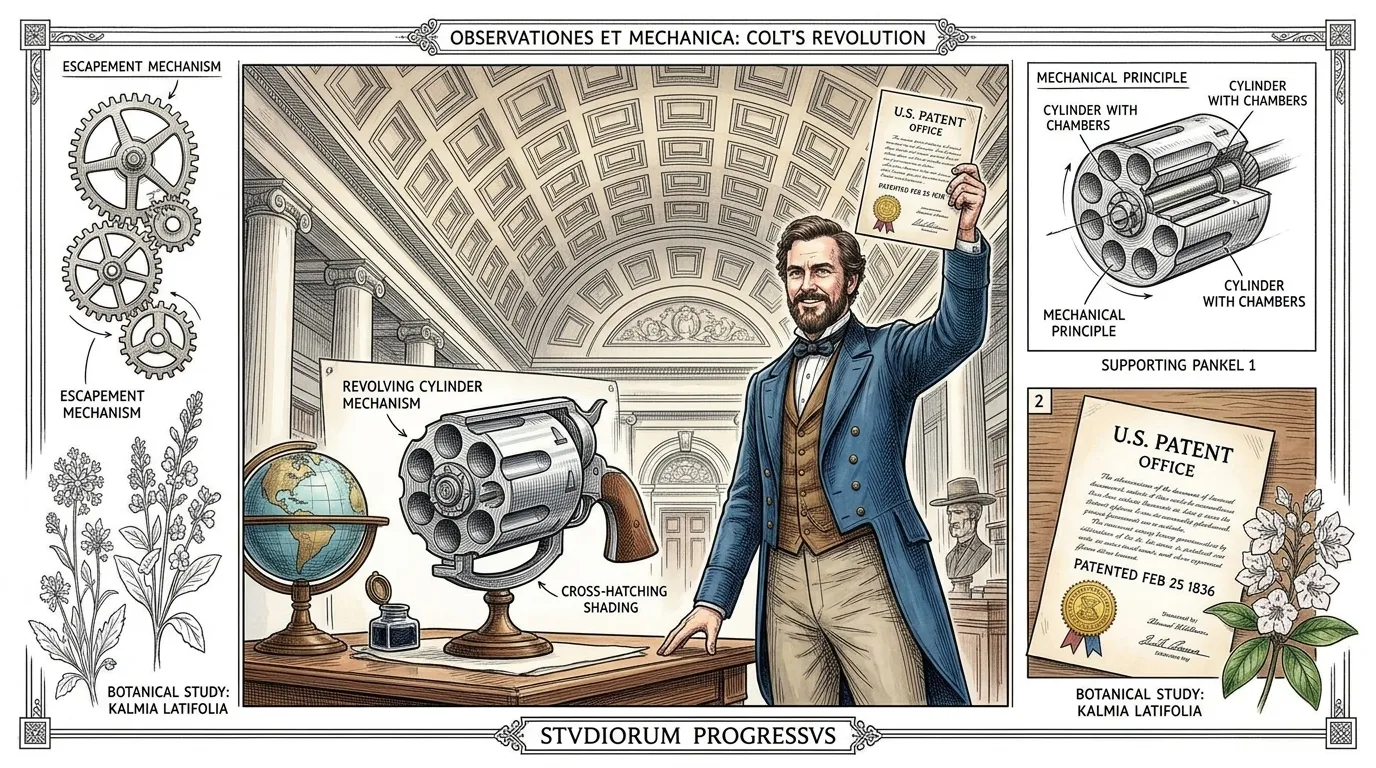
After years of self-funded experimentation and lecturing as 'Dr. Coult' about laughing gas to earn money, Colt secured a crucial British patent in 1835 for his 'revolving gun,' followed by a U.S. patent in February 1836. These documents did not simply protect a product; they enshrined a revolutionary principle: a single, rotating cylinder that brought multiple charges into alignment with the barrel. This fundamental innovation defined the modern revolver, promising unprecedented rates of fire in a handgun and setting the stage for an industrial transformation Colt foresaw, but struggled to manifest.
Biographical Fact: U.S. Patent Office, Washington D.C., 1836. Samuel Colt obtains his patent for the revolving firearm, solidifying the legal foundation for his invention.
Page 4
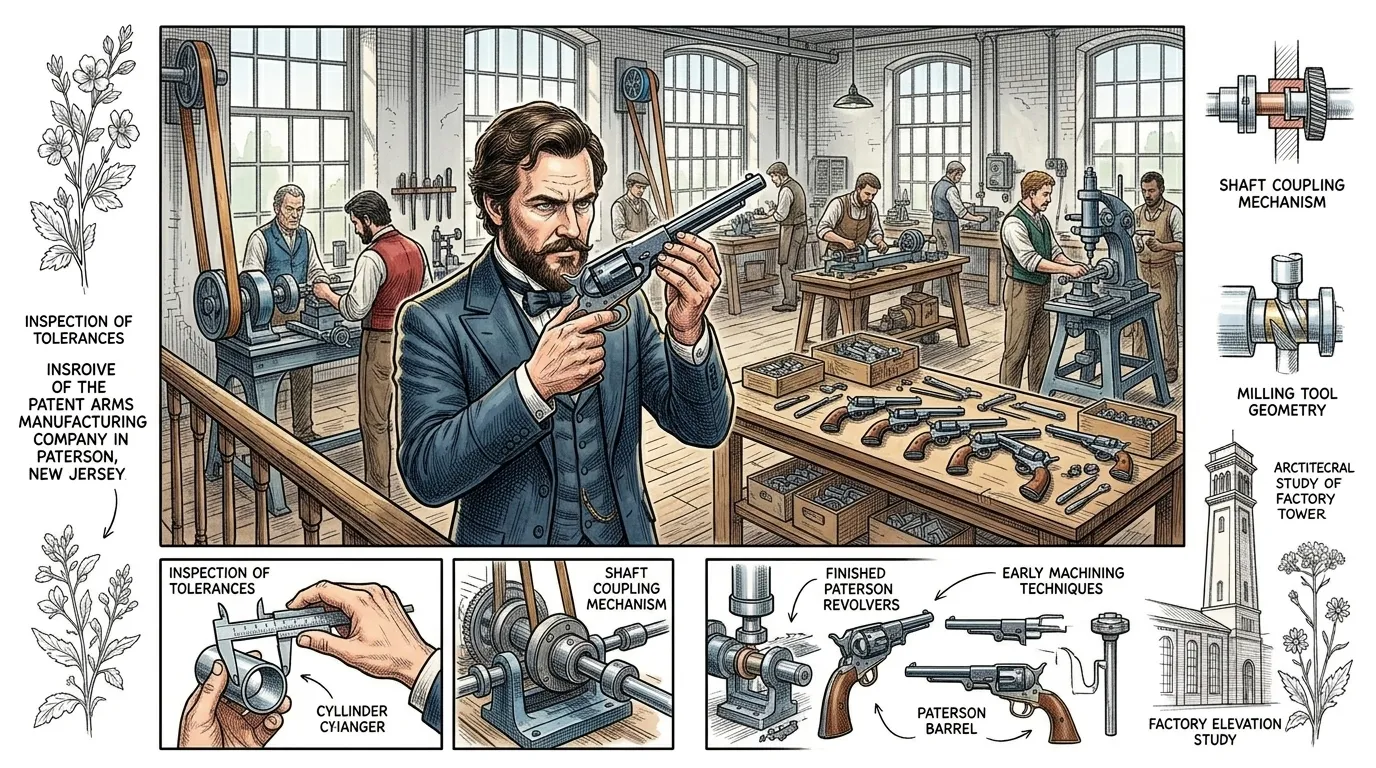
With patent in hand and investment secured, Samuel Colt established the Patent Arms Manufacturing Company in Paterson, New Jersey, in 1836. This marked his first attempt to transition from inventor to industrialist. Here, the early Colt Paterson revolver, a five-shot.36 caliber percussion weapon, began production. The endeavor was pioneering but fraught with challenges: the intricacies of early interchangeable parts were not yet mastered, and the market for such advanced firearms was limited, primarily appealing to Texas Rangers and early pioneers. It was a crucible of learning, where Colt first grappled with the realities of large-scale manufacturing.
Biographical Fact: Paterson, New Jersey, 1836-1837. Samuel Colt establishes the Patent Arms Manufacturing Company, commencing production of the Colt Paterson revolver.
Page 5
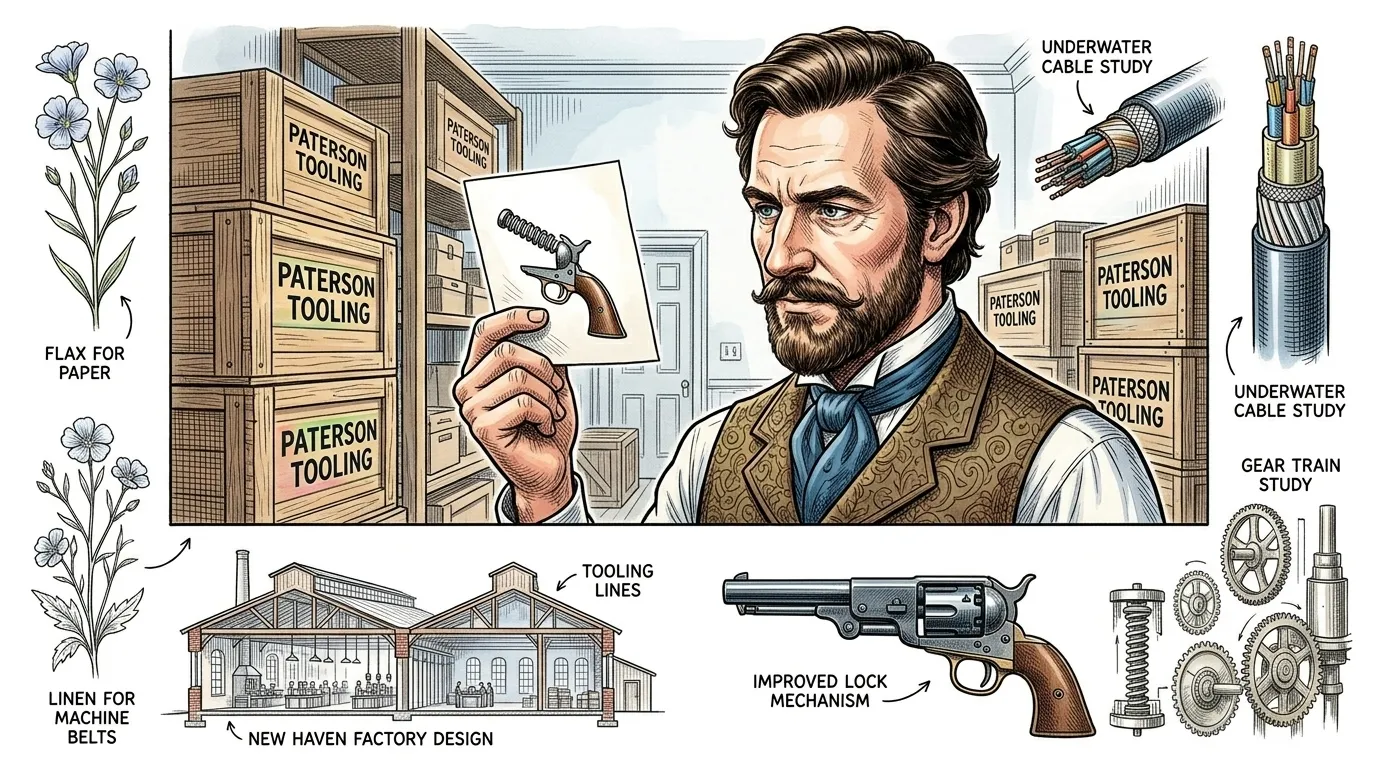
Despite initial promise, the Patent Arms Manufacturing Company in Paterson failed, declaring bankruptcy in 1842. Poor sales, manufacturing inefficiencies, and a lack of military contracts crippled the venture. This period of financial hardship forced Colt into various other endeavors, including underwater telegraph cables and explosive mines, to survive. Yet, even in defeat, Colt continued to refine his revolver designs, learning from the Paterson experience. He stored his tooling and knowledge, understanding that the foundational idea remained sound, awaiting the right catalyst and a more perfect iteration.
Biographical Fact: New York City/Paterson, 1842. The Patent Arms Manufacturing Company fails, forcing Colt into other ventures while he continues to refine his firearm designs.
Page 6
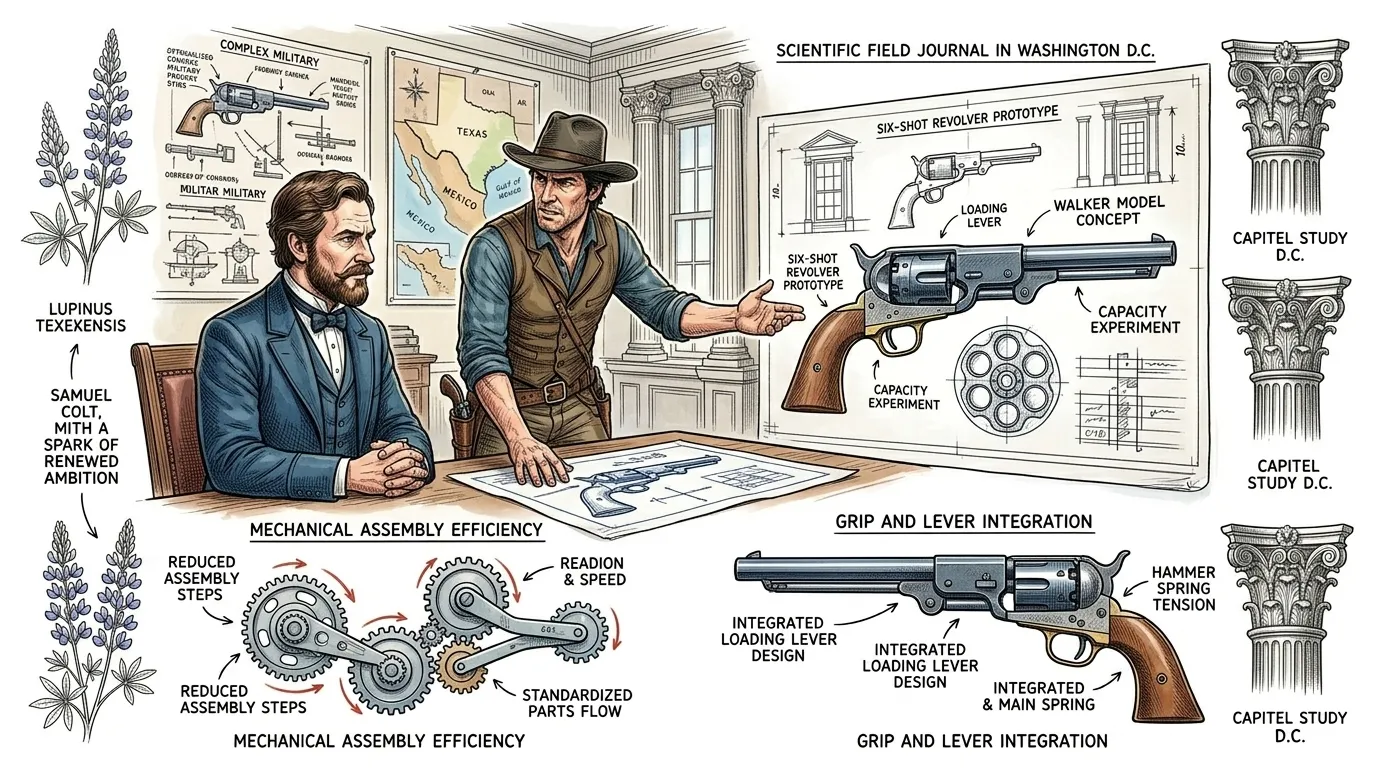
The Mexican-American War provided Samuel Colt with the ultimate crucible for his ideas. In 1846, Captain Samuel Walker of the Texas Rangers, a veteran of frontier warfare and an admirer of Colt's early Paterson revolvers, approached him with a critical demand. Walker required a more powerful, robust handgun capable of stopping a charging enemy, one that could be loaded more easily and held six shots. This direct military specification from a seasoned combatant, coupled with a guaranteed order from the U.S. government, became the decisive moment that resurrected Colt's career and propelled him toward unparalleled success.
Biographical Fact: Washington D.C., 1846. Captain Samuel Walker of the Texas Rangers collaborates with Colt to design a more powerful military revolver, the Walker-Colt.
Page 7
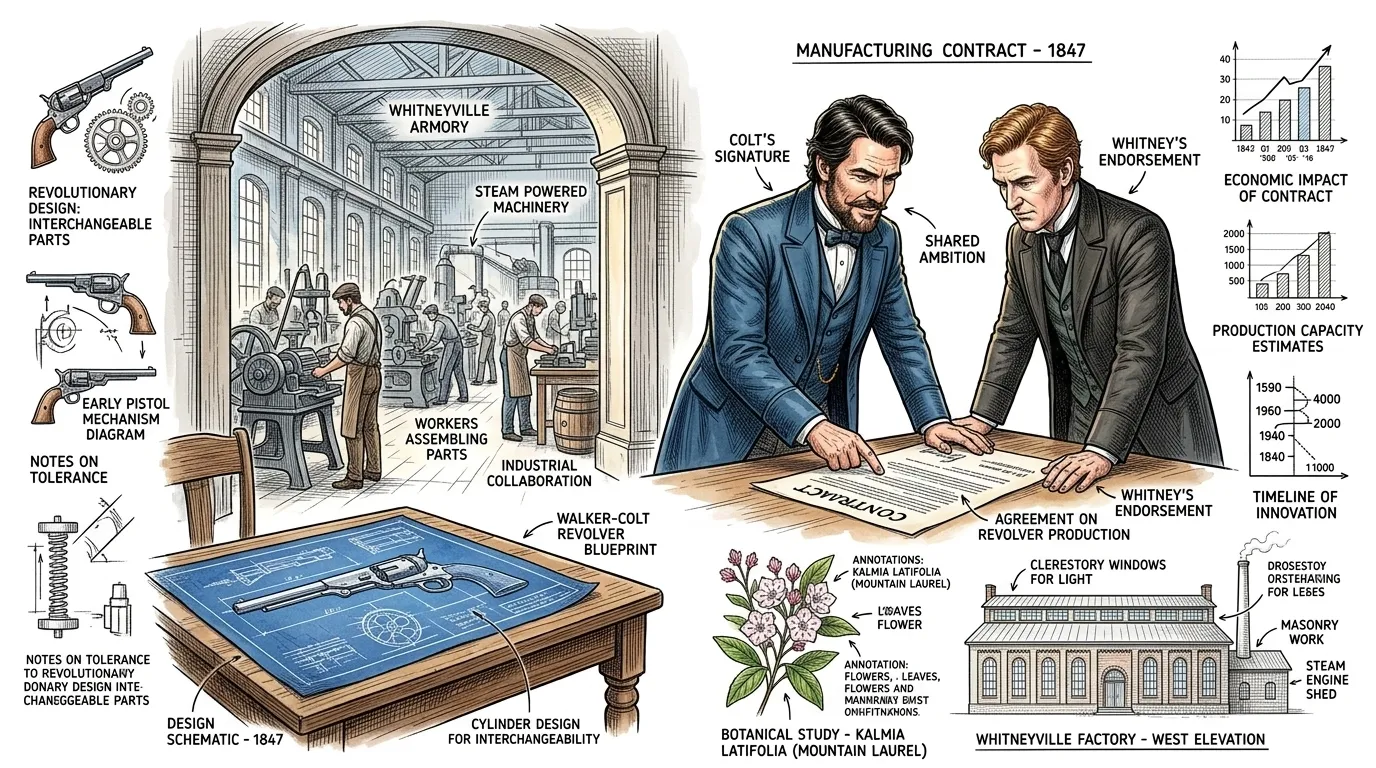
With Captain Walker's design specifications in hand, Samuel Colt secured a pivotal contract from the U.S. government for 1,000 Walker-Colt revolvers in 1847. This was no ordinary order; it represented a second chance, a validation of his persistent vision. Lacking a factory, Colt partnered with Eli Whitney Jr., a manufacturing pioneer, using Whitney's facilities in Whitneyville, Connecticut, to fulfill the order. This moment, born from military necessity and personal ingenuity, transformed Colt from a struggling inventor into a burgeoning industrialist, setting the stage for his own massive, modern factory in Hartford.
Biographical Fact: Washington D.C., 1847. The U.S. government places a crucial order for 1,000 Walker-Colt revolvers, resurrecting Colt's manufacturing ambitions.
Page 8
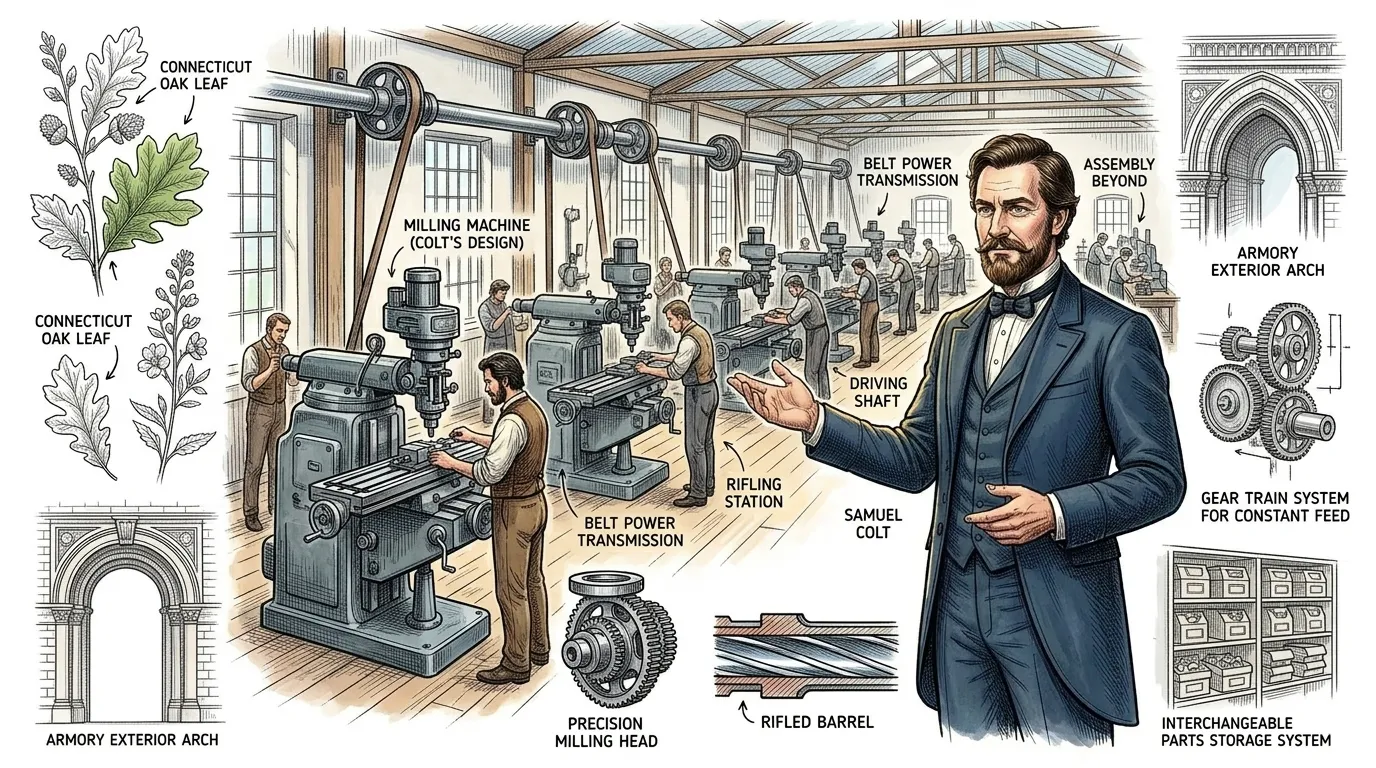
By 1855, Samuel Colt established Colt's Armory in Hartford, Connecticut, a marvel of industrial engineering. This facility was not merely a factory; it was a testament to his 'American System of Manufactures,' integrating advanced machine tools, precision gauges, and a relentless pursuit of interchangeable parts. Colt demonstrated how a complex product could be produced efficiently on a vast scale, transforming traditional craft into industrialized mass production. His armory became a global showcase for manufacturing prowess, attracting visitors from around the world eager to witness the future of industry.
Biographical Fact: Hartford, Connecticut, 1855. Samuel Colt's Armory revolutionizes manufacturing with the 'American System' of interchangeable parts and mass production.
Page 9
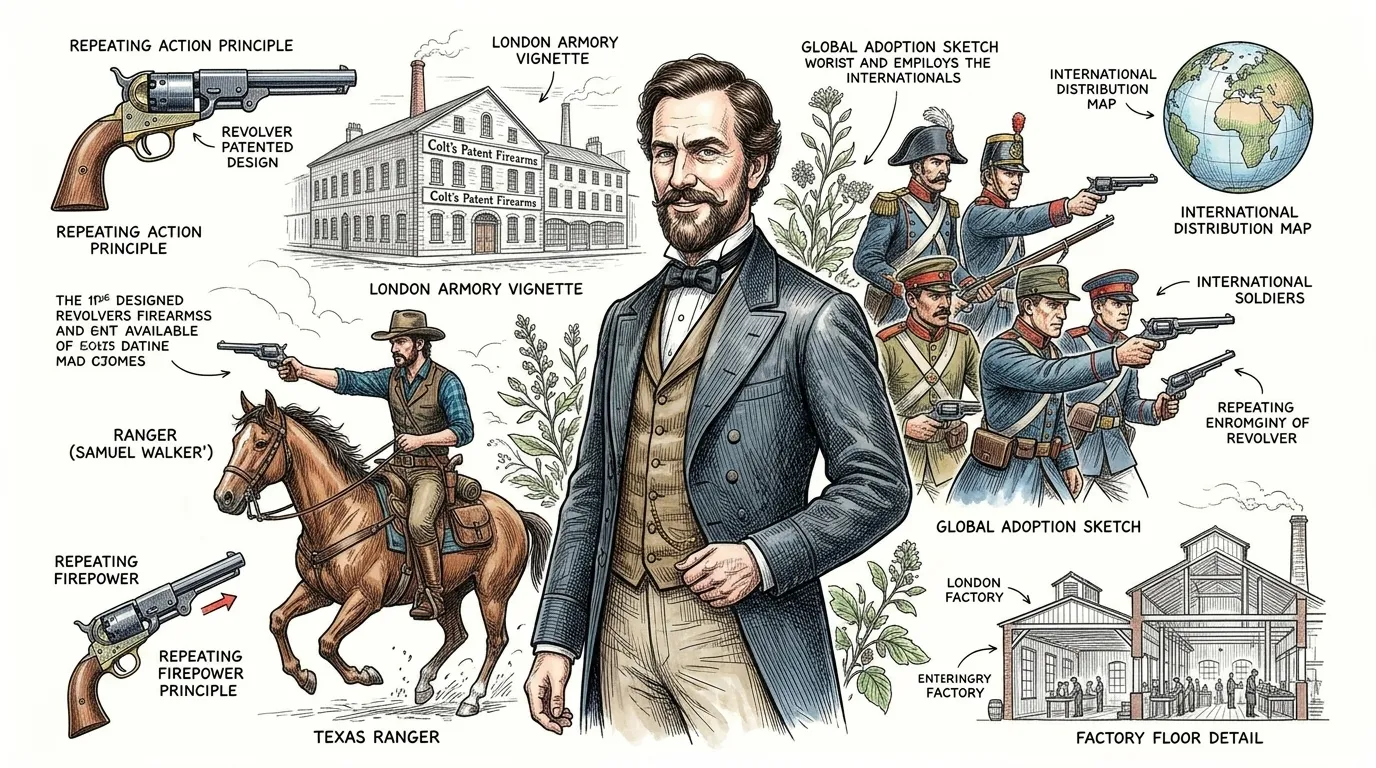
Samuel Colt's revolvers swiftly became synonymous with firepower and reliability, adopted by armies, law enforcement, and civilians across the globe. From the American frontier to the Crimean War, his innovations changed the face of personal defense and military strategy. He exported his manufacturing techniques and established a factory in London, demonstrating global ambition. While bringing unprecedented security to some, the widespread proliferation of easily wielded, multi-shot firearms also ushered in an era of intensified conflict, solidifying the complex and often contradictory legacy of his world-changing invention.
Biographical Fact: Global, 1850s-1860s. Colt revolvers are adopted worldwide, influencing warfare, law enforcement, and civilian life, and establishing Colt's international presence.
Page 10
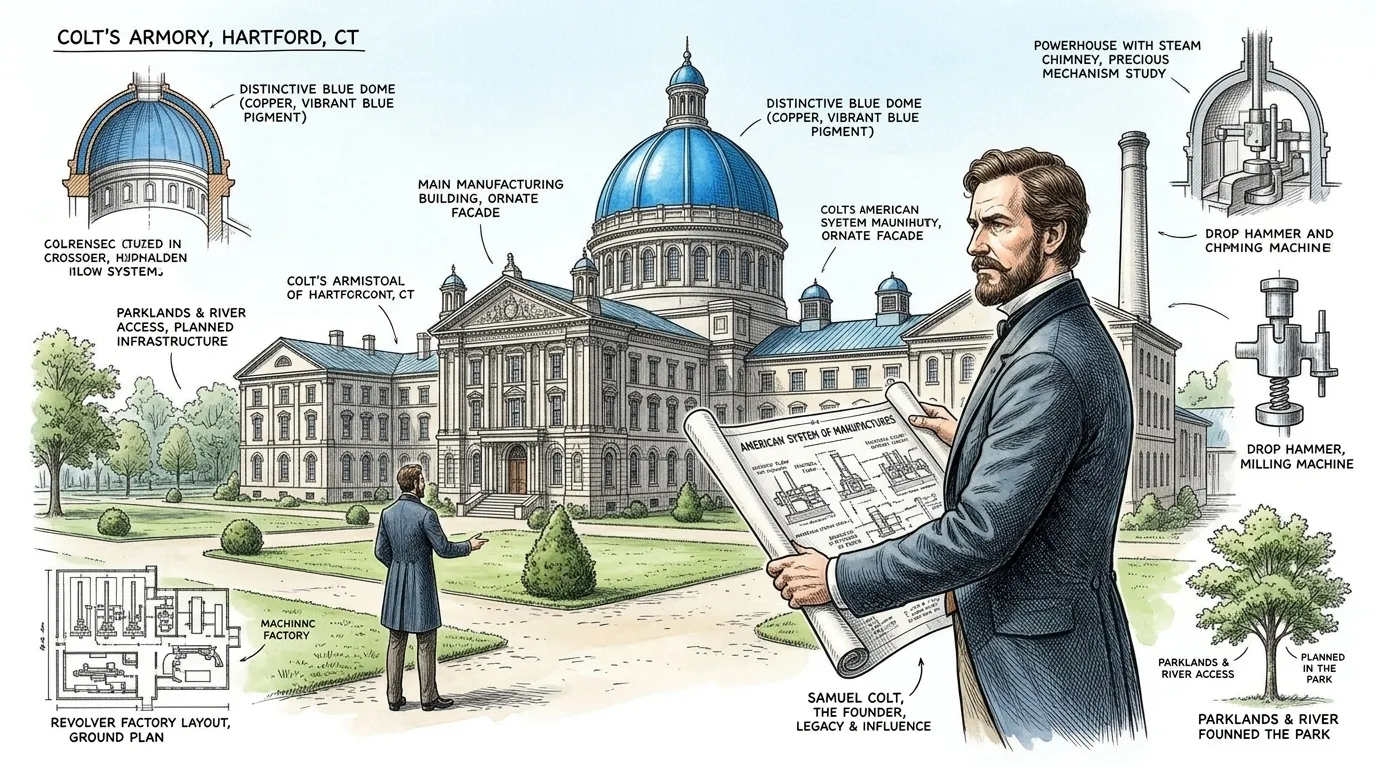
Samuel Colt died in 1862, leaving behind one of the largest industrial fortunes of his era. Yet his true legacy extended far beyond wealth. He did not merely invent a new weapon; he invented a new way of manufacturing, pioneering the interchangeable parts system that became the bedrock of the Industrial Revolution. His factory, Colt's Armory, became an enduring symbol of American ingenuity and industrial might, its distinctive blue dome a landmark for generations. Colt's influence redefined production, armed the world, and cast a long shadow over the subsequent century of innovation and conflict.
Biographical Fact: Hartford, Connecticut, Post-1862. Samuel Colt's lasting legacy: the modernization of manufacturing and the enduring impact of his firearms on global history.
About this story
- Location: Global
- Audience: general readers
Questions and answers
Read Wonder People on your phone
Wonder People is available on Android. Get Wonder People on Google Play.