Rembrandt
Rembrandt — an illustrated biography story, set in Global. 10 illustrated pages, free to read on Wonder People.
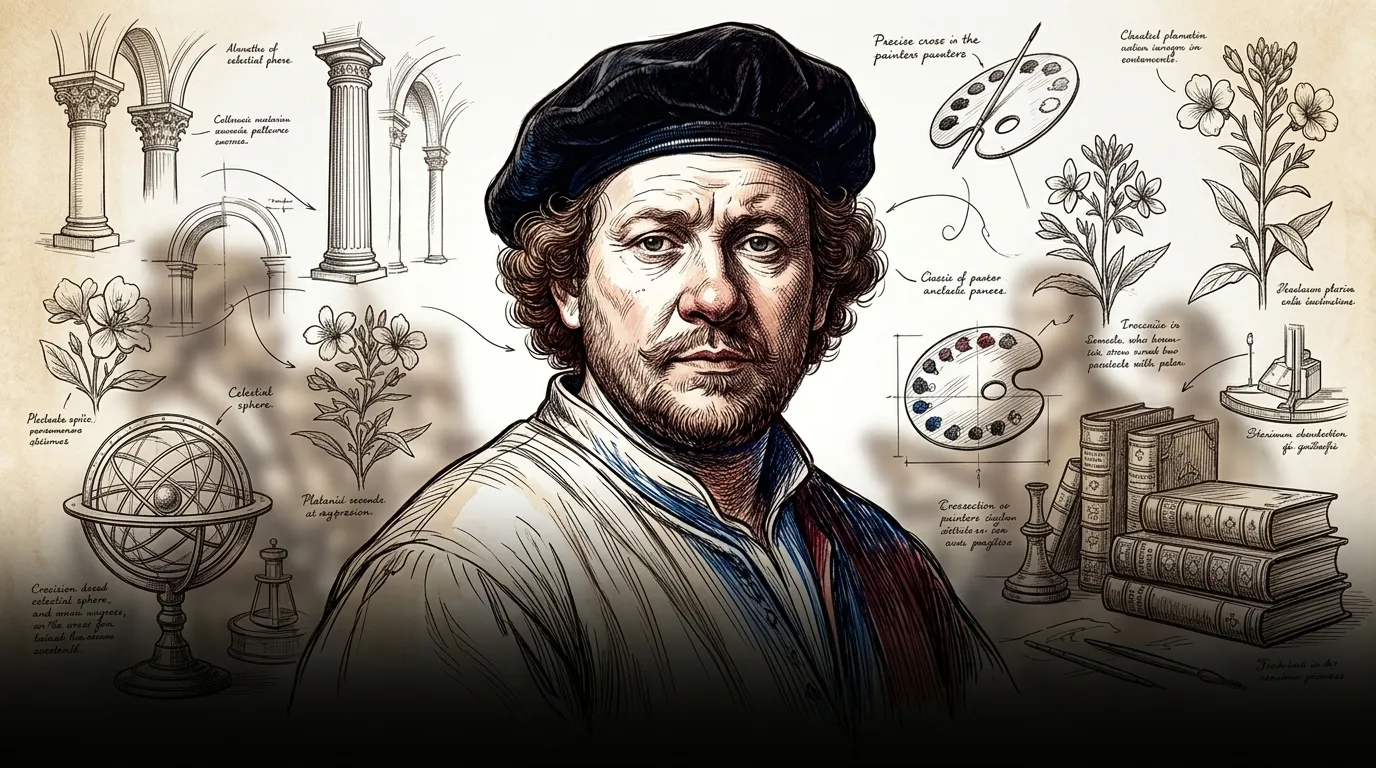
Page 1
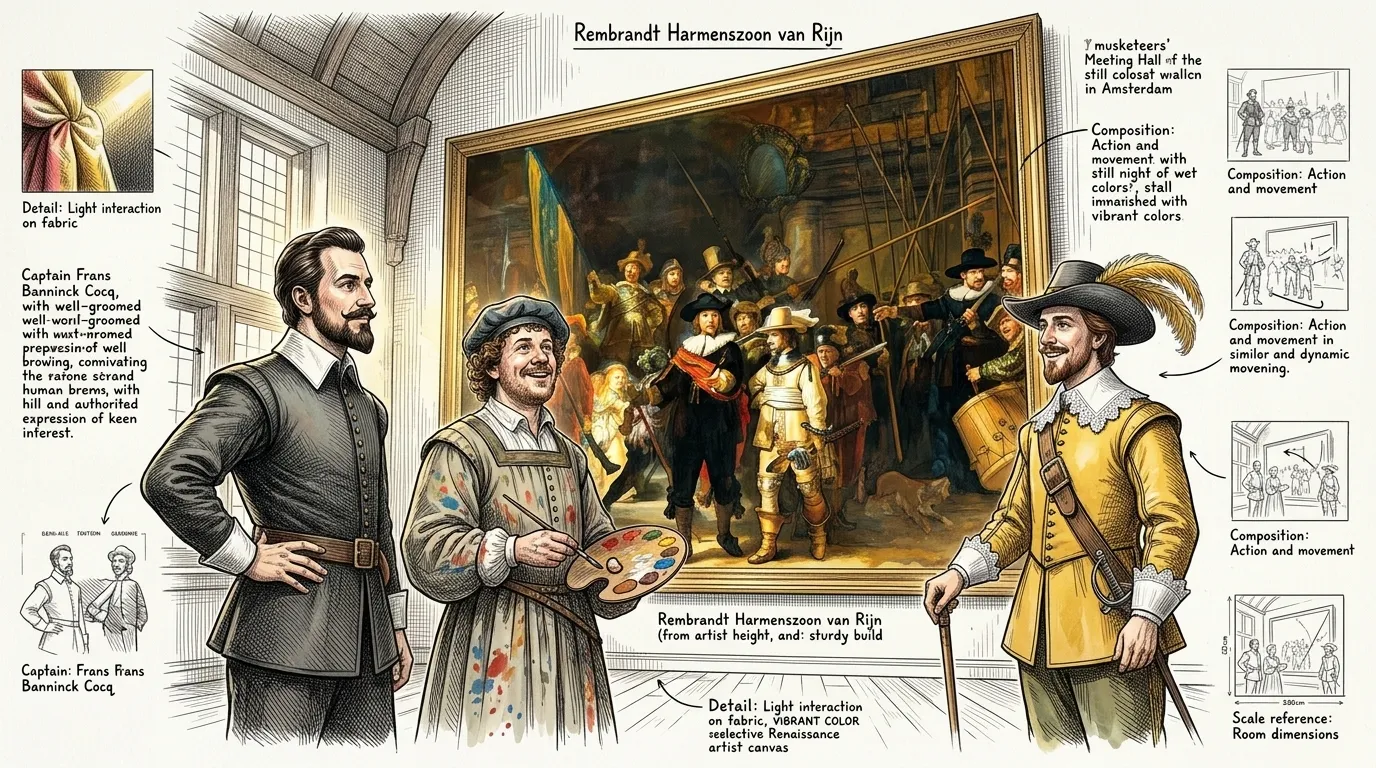
In 1642, a monumental canvas dominated the Musketeers' Meeting Hall in Amsterdam. Before it stood Rembrandt Harmenszoon van Rijn, then 36, having delivered a work of unprecedented scale and audacity. This was 'The Militia Company of Captain Frans Banninck Cocq and Lieutenant Willem van Ruytenburch,' now famously known as 'The Night Watch,' a masterpiece stretching over 12 feet in height and 14 feet in width. Against traditional static group portraiture, Rembrandt had unleashed a dynamic, theatrical scene of motion and light, irrevocably altering the course of art history.
Biographical Fact: Amsterdam, Netherlands, 1642: Rembrandt delivers 'The Night Watch,' a revolutionary group portrait that defies convention, captivating and challenging the art world.
Page 2

Born in 1606 in Leiden, the son of a miller and a baker's daughter, Rembrandt's path diverged early from the family trade. His parents, Harmen Gerritszoon van Rijn and Neeltgen Willemsdochter van Zuytbrouck, recognized his intellect and enrolled him in Latin school, intending for a university education. Yet, a deeper inclination pulled him toward the brush. By 1621, he had abandoned his studies at Leiden University, choosing instead the disciplined rigor of an artist's apprenticeship, a decision that would define his life's pursuit.
Biographical Fact: Leiden, Netherlands, early 17th Century: Young Rembrandt forsakes academic studies, choosing the path of an artist's apprentice, beginning his journey into the world of painting.
Page 3
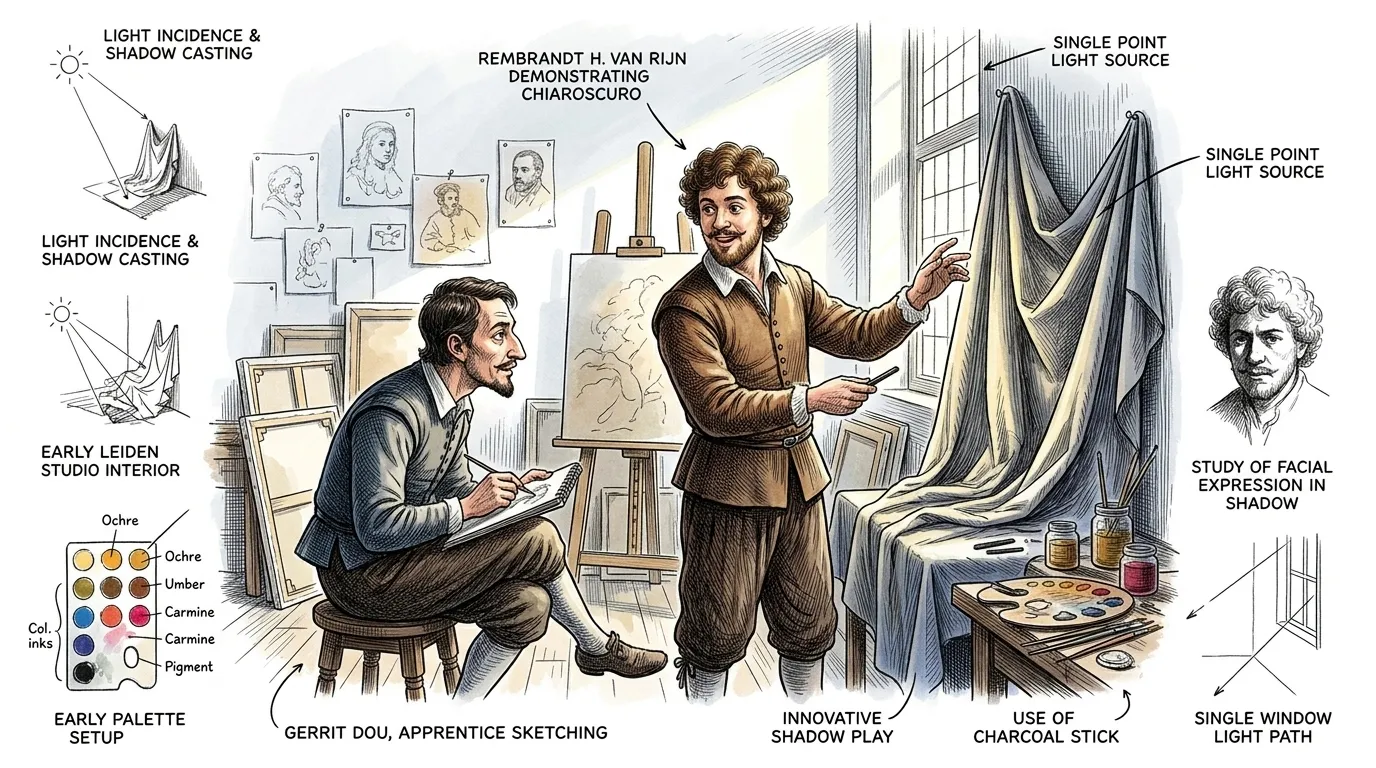
By 1625, Rembrandt established his independent studio in Leiden, quickly attracting his first students, a testament to his burgeoning talent and innovative techniques. Among them was Gerrit Dou, who would himself become a master of the Leiden 'fijnschilder' (fine painter) tradition. Rembrandt's early period was marked by intense experimentation with chiaroscuro, a dramatic use of light and shadow, and a profound interest in capturing human emotion, setting him apart from his contemporaries. His command over these elements drew aspiring artists to his unconventional methods.
Biographical Fact: Leiden, Netherlands, 1625: Rembrandt opens his first independent studio, immediately attracting talented students like Gerrit Dou, marking his rise as an influential teacher and innovator.
Page 4
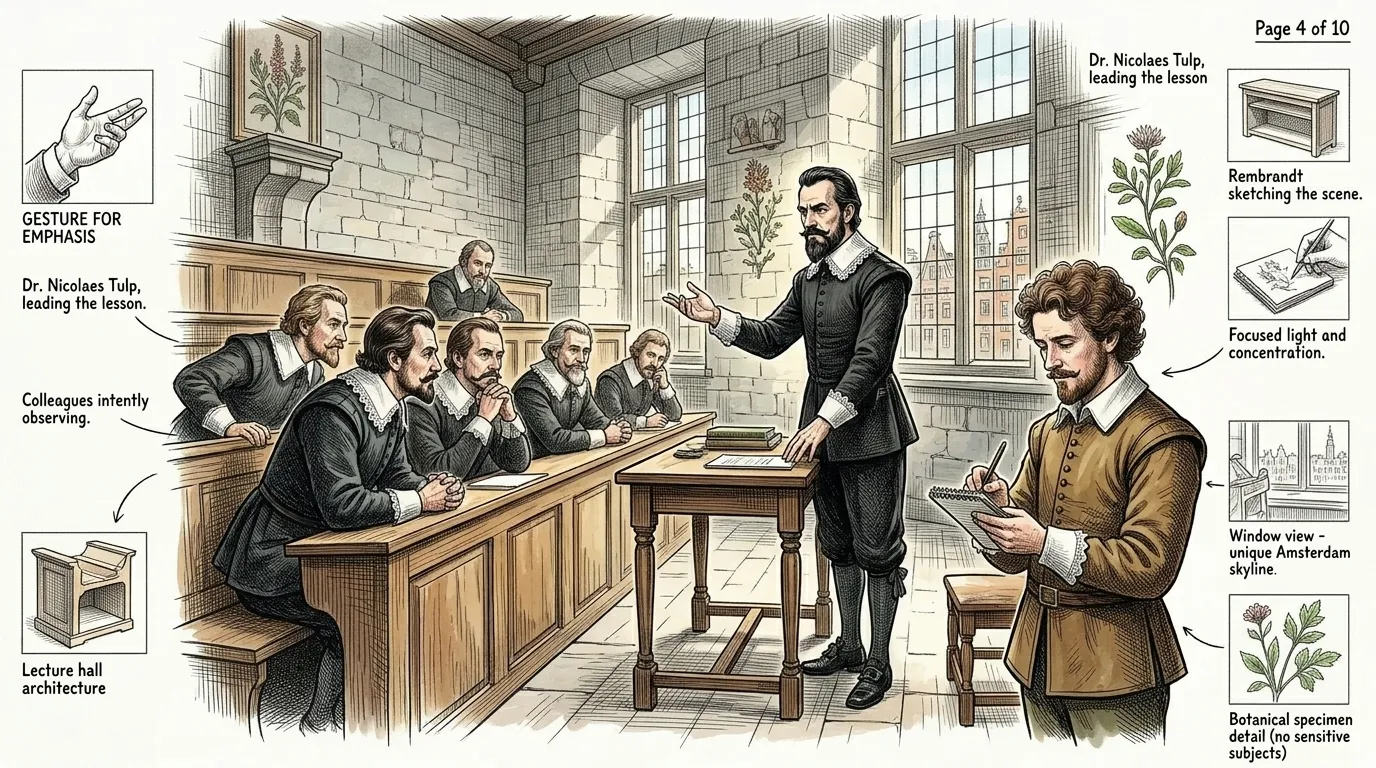
Rembrandt's reputation grew beyond Leiden, leading him to Amsterdam in 1631, a city ripe with wealthy patrons. His breakthrough came swiftly with 'The Anatomy Lesson of Dr. Nicolaes Tulp' in 1632. This commission, depicting an actual public dissection, transformed the conventional group portrait by injecting drama and psychological depth. Dr. Tulp, a prominent surgeon, and his colleagues are shown as active participants, not merely static figures, captivated by the lesson unfolding before them, a testament to Rembrandt's ability to imbue scientific observation with profound human narrative.
Biographical Fact: Amsterdam, 1632: Rembrandt's 'The Anatomy Lesson of Dr. Nicolaes Tulp' establishes him as a leading portraitist, revolutionizing group dynamics and psychological intensity.
Page 5
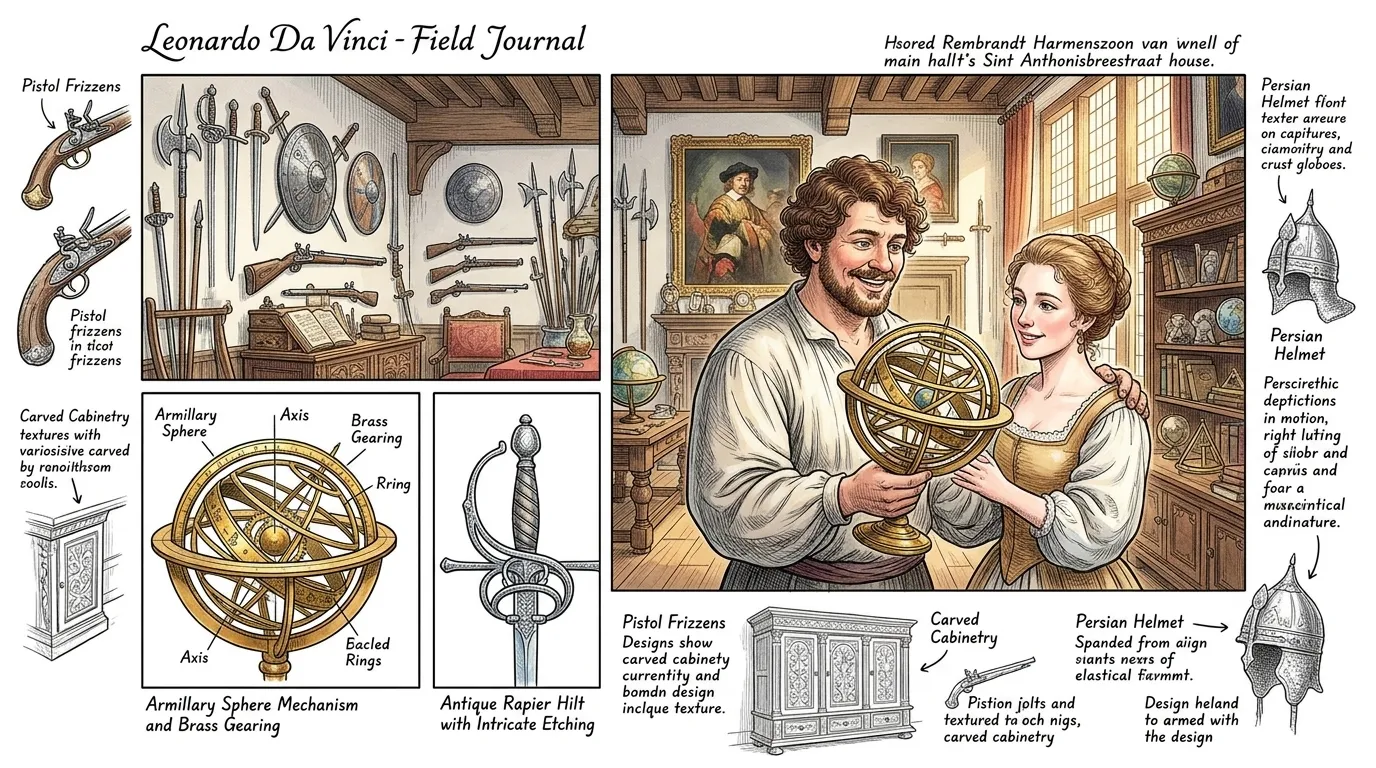
The 1630s marked Rembrandt's period of greatest prosperity and personal joy. In 1634, he married Saskia van Uylenburgh, the daughter of a wealthy art dealer. Their union brought him not only happiness but also increased connections within Amsterdam's elite art circles. He purchased a grand house in the fashionable Sint Anthonisbreestraat, filling it with a vast collection of art, curiosities, and antique arms, reflecting his growing wealth and cultured tastes. This was a period of prolific output, with numerous portraits and historical scenes, radiating confidence and success.
Biographical Fact: Amsterdam, 1634: Rembrandt marries Saskia van Uylenburgh, entering a period of immense personal and financial success, filling his grand house with art and antiquities.
Page 6
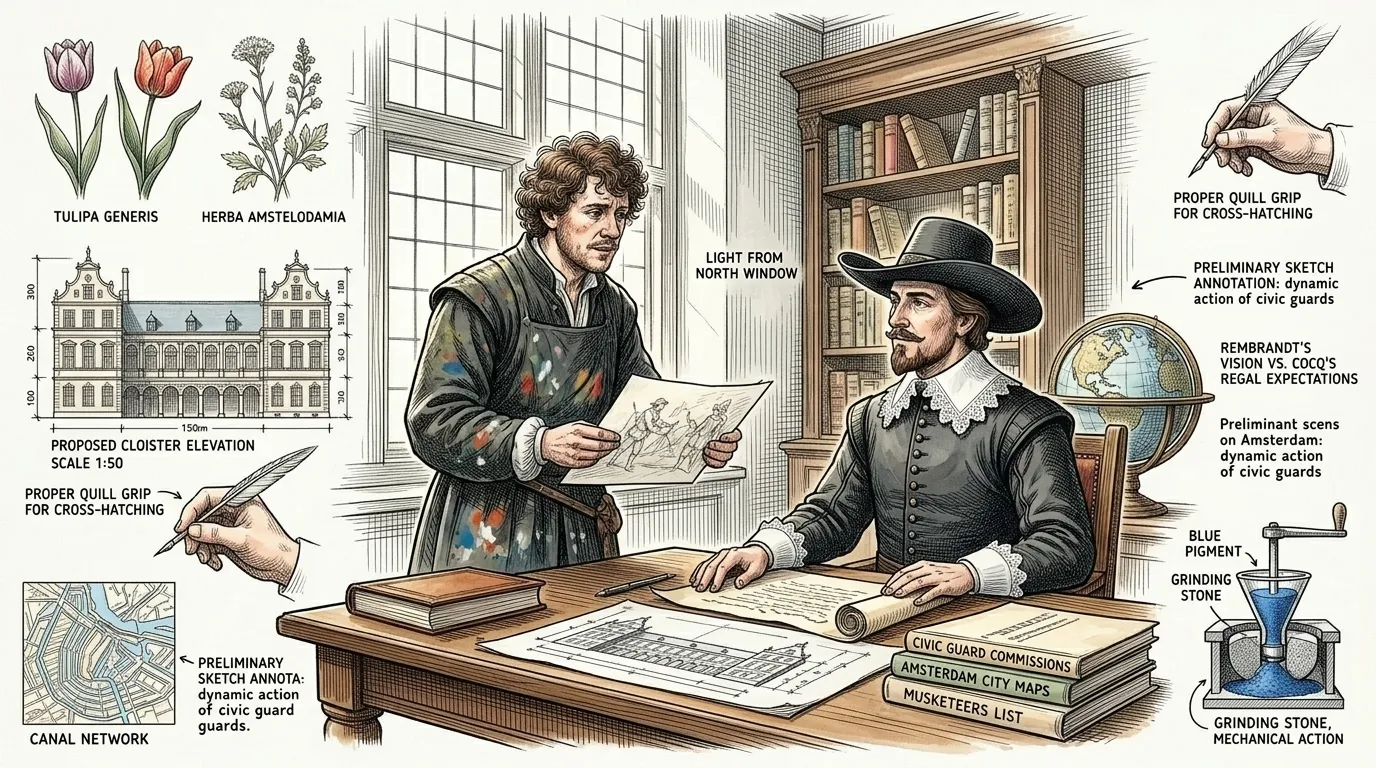
As the 1630s drew to a close, Rembrandt accepted the most ambitious commission of his career: a large group portrait for the civic guard company of Captain Frans Banninck Cocq. This was not merely a painting; it was a civic statement, a display of wealth and power, and the expectations were immense. The twelve guardsmen, prominent figures of Amsterdam society, anticipated a conventional, dignified depiction. Rembrandt, however, envisioned something entirely different, a decision that would test his patrons' patience and his own artistic courage.
Biographical Fact: Amsterdam, c. 1640: Rembrandt accepts the challenging 'Night Watch' commission, facing immense expectations from his patrons who desire a conventional group portrait, unaware of his revolutionary vision.
Page 7
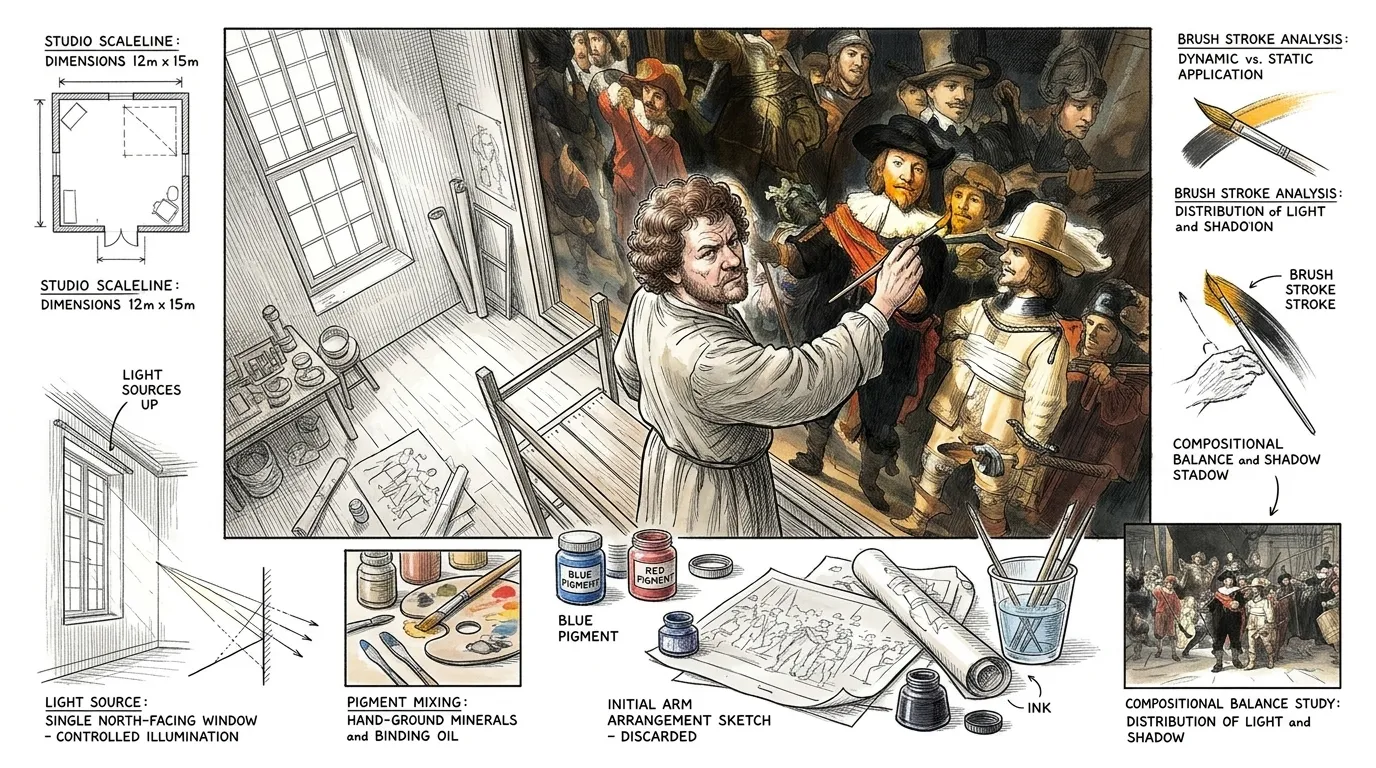
Rembrandt embarked on the monumental task of 'The Night Watch,' a project spanning years. Refusing to adhere to the stiff, formal poses of traditional group portraits, he instead crafted a dynamic narrative. He deployed dramatic contrasts of light and shadow, capturing the company in motion, seemingly caught mid-assembly. Figures emerged from deep shadow into brilliant light, creating a sense of unfolding drama that was both revolutionary and, for some patrons, disquieting. This was his uncompromising artistic vision, painted on an epic scale.
Biographical Fact: Amsterdam, c. 1640-1642: Rembrandt works on 'The Night Watch,' rejecting conventional portraiture to create a dynamic, narrative scene of figures in motion, an uncompromising artistic undertaking.
Page 8
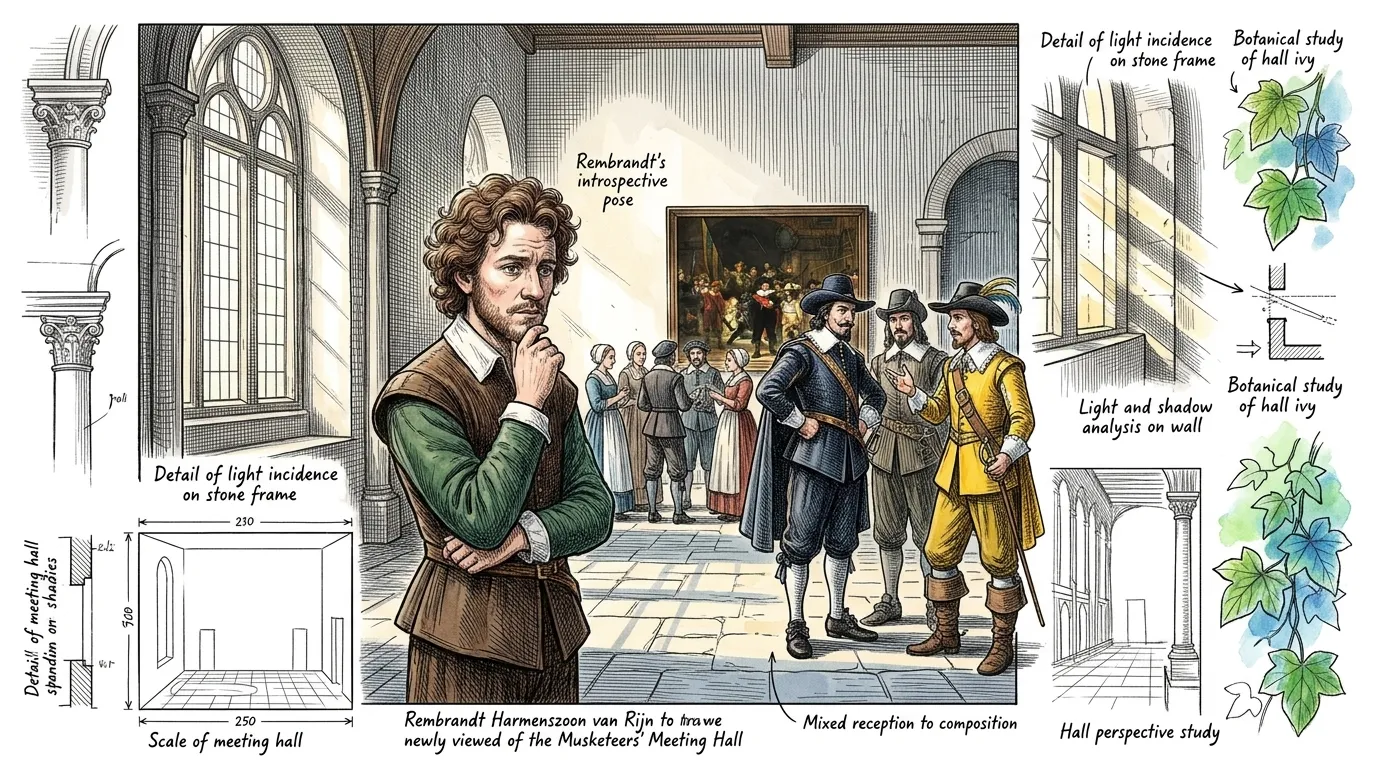
The unveiling of 'The Night Watch' did not bring universal acclaim. Its unconventional composition, with some figures obscured in shadow and others brightly lit, displeased certain patrons who had paid for prominence and felt marginalized. The controversy, combined with changing artistic tastes and mounting personal debt, began to erode Rembrandt's once-unassailable position. While admired by some, the painting sparked a professional downturn that would ultimately force him to adapt and re-evaluate his relationship with his art and patrons. As the Dutch proverb goes, 'The eye sees what the heart feels,' and not every heart was ready for Rembrandt's bold new vision.
Biographical Fact: Amsterdam, post-1642: 'The Night Watch' provokes controversy among patrons and contributes to a professional downturn for Rembrandt, who faces public criticism and financial strain for his artistic originality.
Page 9
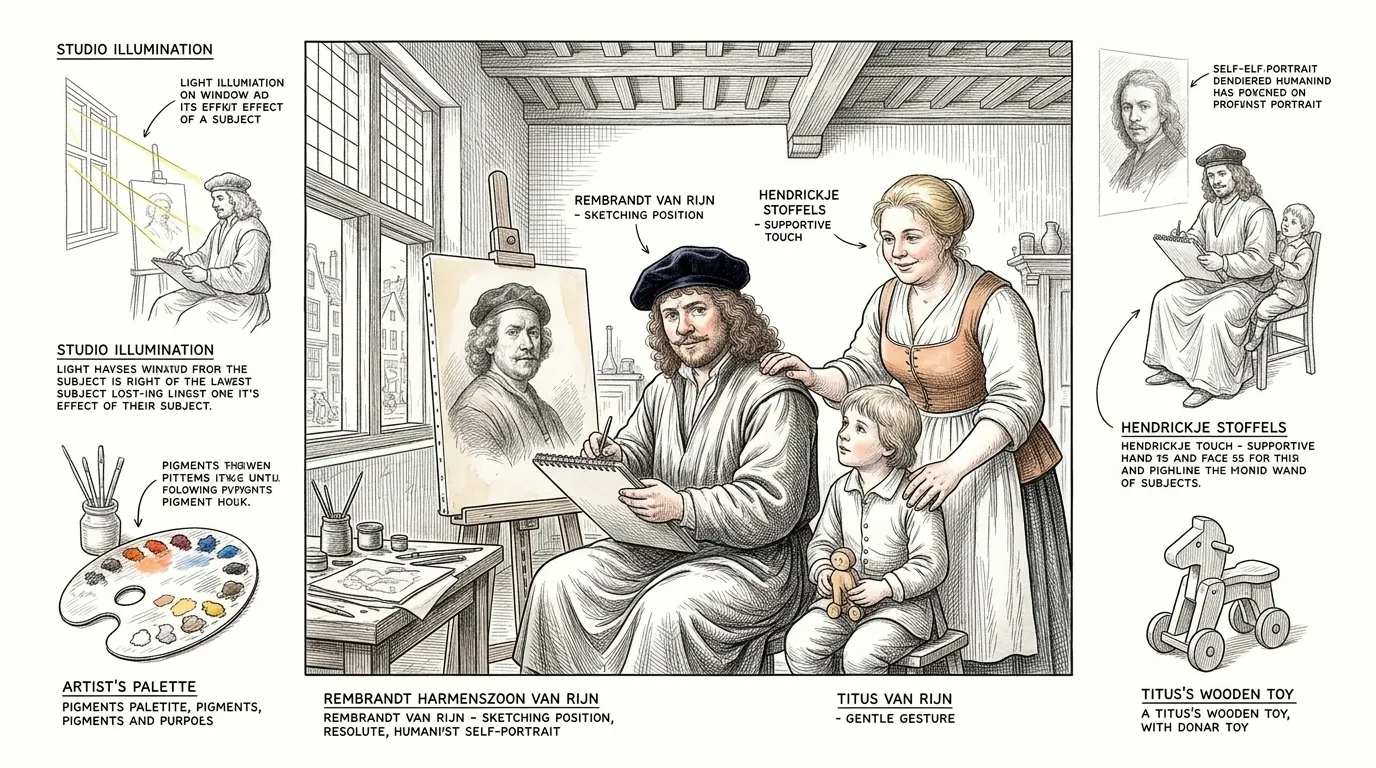
Rembrandt's later life was marked by profound personal losses and escalating financial difficulties. The death of Saskia in 1642, soon after 'The Night Watch' was completed, left him a widower with a young son, Titus. He declared bankruptcy in 1656, forcing the sale of his vast art collection and home. Despite these crushing blows, his artistic output remained extraordinarily powerful and introspective, marked by a profound humanism. He found new companionship with Hendrickje Stoffels and continued to produce masterpieces, particularly his celebrated self-portraits, which stand as raw, honest testaments to resilience and the passage of time.
Biographical Fact: Amsterdam, 1650s: Amid personal tragedies and bankruptcy, Rembrandt produces some of his most profound and introspective works, including his self-portraits, showcasing remarkable resilience.
Page 10
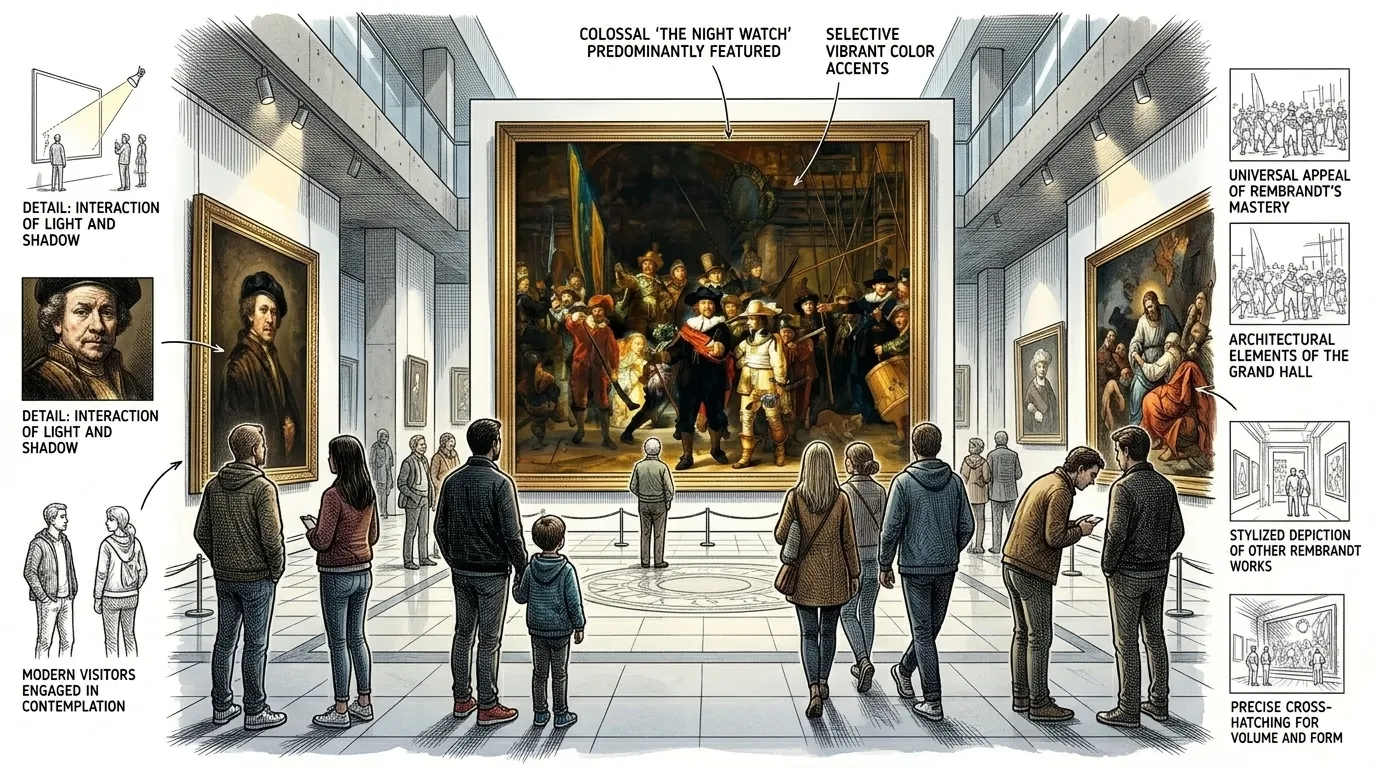
Rembrandt Harmenszoon van Rijn died in 1669, his finances in disarray, his fame somewhat diminished in his final years. Yet, the true measure of his genius transcended contemporary opinion. Over centuries, his works—from the psychological depth of his portraits to the dramatic narratives of his biblical scenes and the raw honesty of his self-portraits—have come to define the Golden Age of Dutch painting. His mastery of light, shadow, and human emotion continues to resonate, inspiring countless artists and forever shaping our understanding of the human condition captured on canvas. He remains a timeless testament to the power of artistic vision.
Biographical Fact: Global, Present Day: Rembrandt's legacy endures, his mastery of light, emotion, and humanism continues to inspire and define the pinnacle of artistic achievement, celebrated across centuries.
About this story
- Location: Global
- Audience: general readers
Questions and answers
Read Wonder People on your phone
Wonder People is available on Android. Get Wonder People on Google Play.