Rudolf Diesel
Rudolf Diesel — an illustrated biography story, set in Global. 10 illustrated pages, free to read on Wonder People.
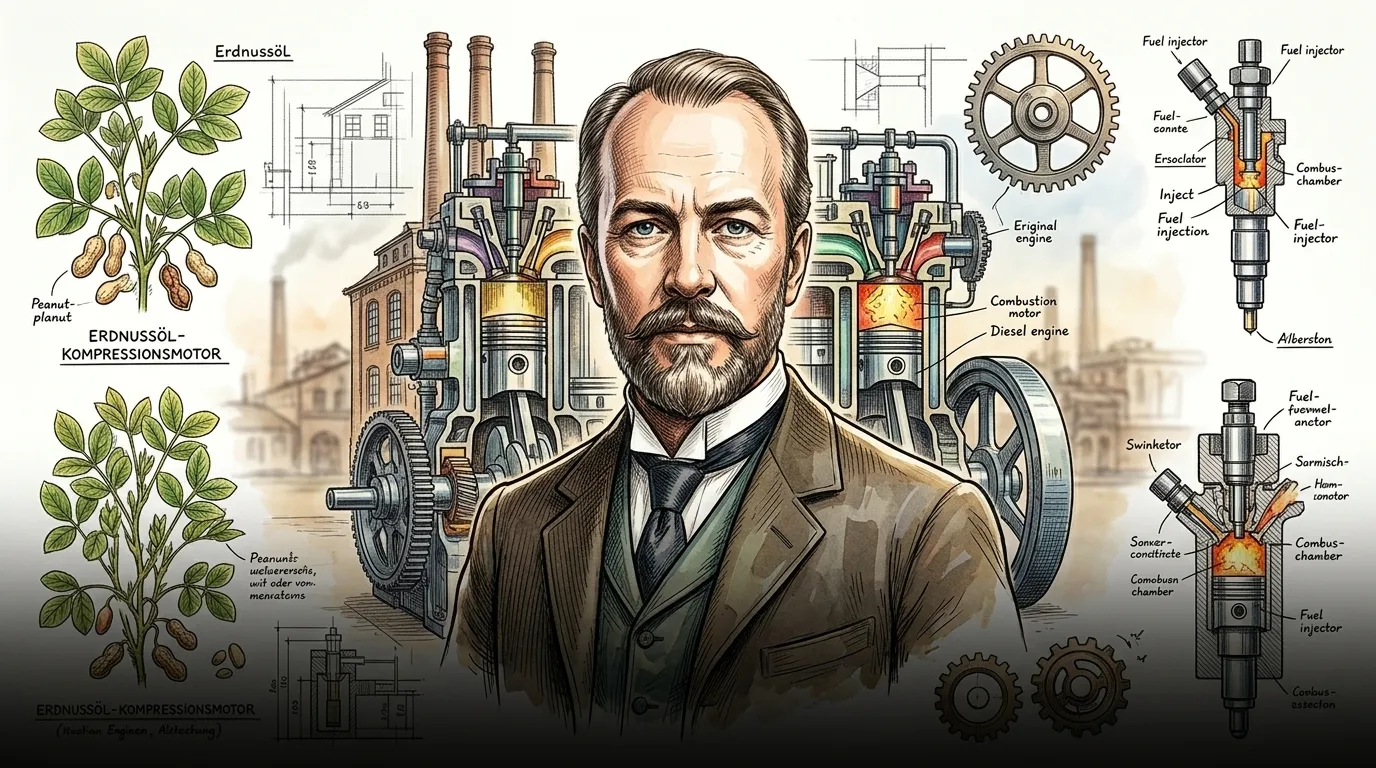
Page 1
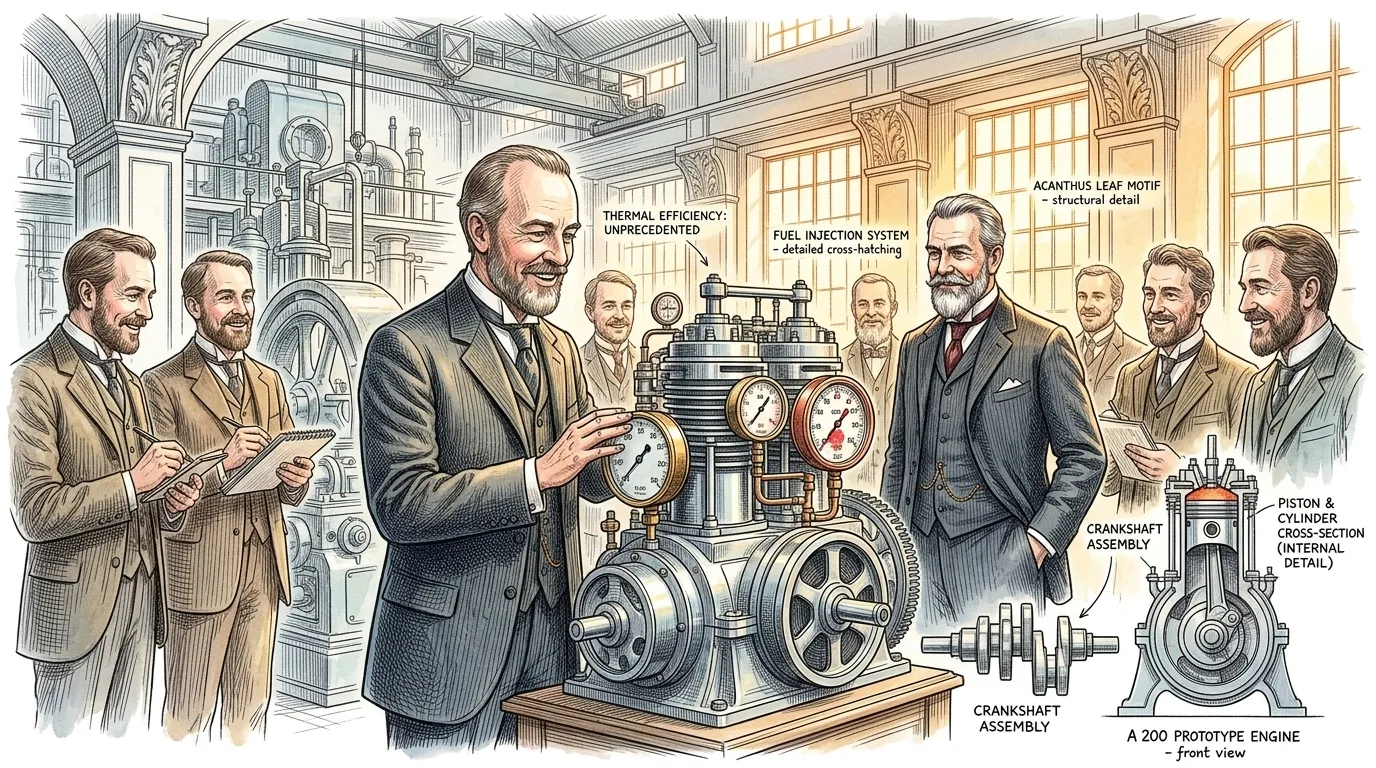
In Augsburg, Germany, on February 17, 1897, Rudolf Diesel stood before his creation. After years of relentless work, his revolutionary thermal engine, the A 200, successfully completed its official acceptance test. It achieved an unprecedented 26.2% fuel efficiency, a stark contrast to the 10% average of existing steam engines. This single, decisive moment transformed the landscape of industrial power and announced a new era for engineers worldwide, with Maschinenfabrik Augsburg's director, Heinrich von Buz, and numerous technical experts witnessing the undeniable triumph.
Biographical Fact: Rudolf Diesel, Maschinenfabrik Augsburg, 1897. The A 200 engine achieved 26.2% efficiency, a global record.
Page 2
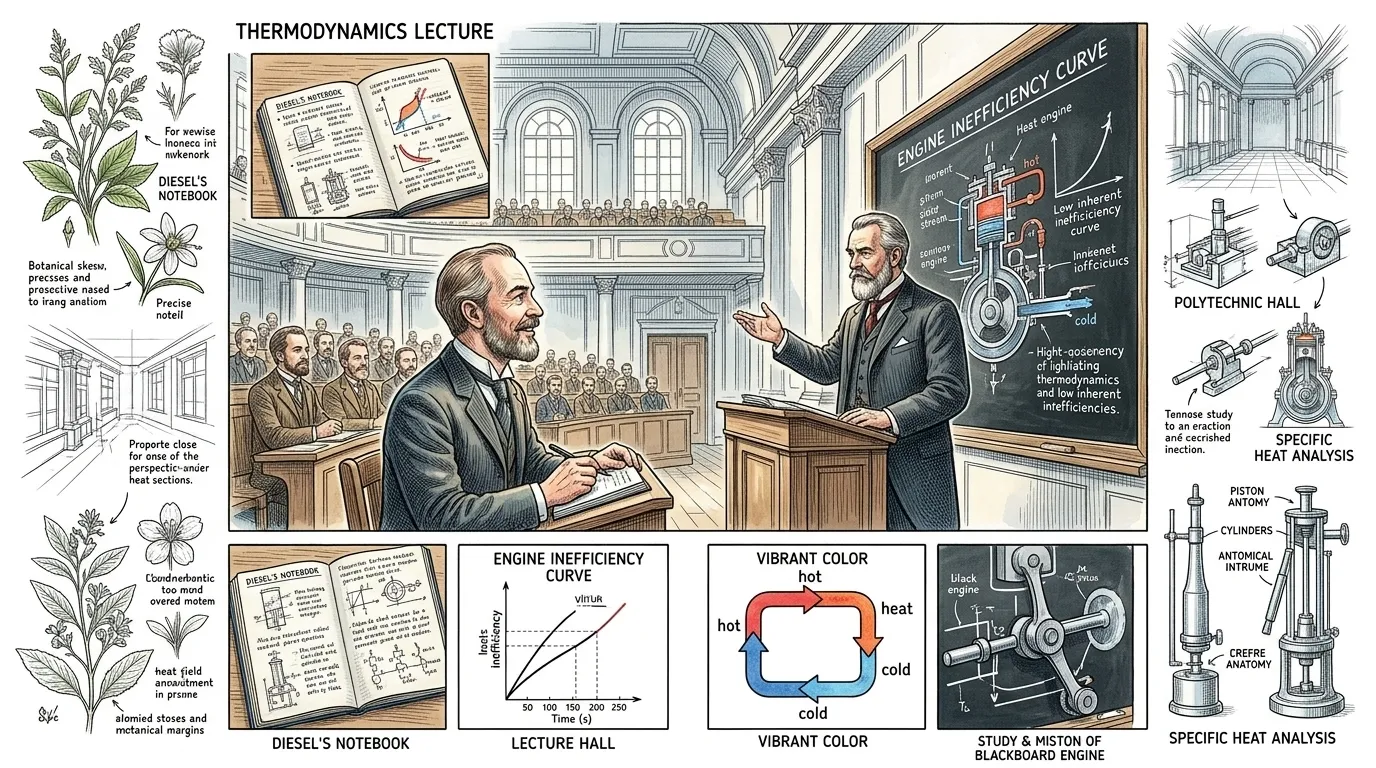
Rudolf Diesel's intellectual journey began in earnest at the Royal Bavarian Polytechnic of Munich during the 1870s. There, under the formidable guidance of Professor Carl von Linde, a pioneer in refrigeration and thermodynamics, Diesel absorbed the principles of heat engines and the critical problem of their inherent inefficiencies. Linde's teachings ignited in Diesel a profound dissatisfaction with the wasteful steam technology of his time, fostering a conviction that a more perfect, more efficient thermal machine was not only possible but urgently necessary.
Biographical Fact: Royal Bavarian Polytechnic of Munich, 1870s. Professor Carl von Linde's lectures on thermodynamics influenced Diesel's early thinking.
Page 3
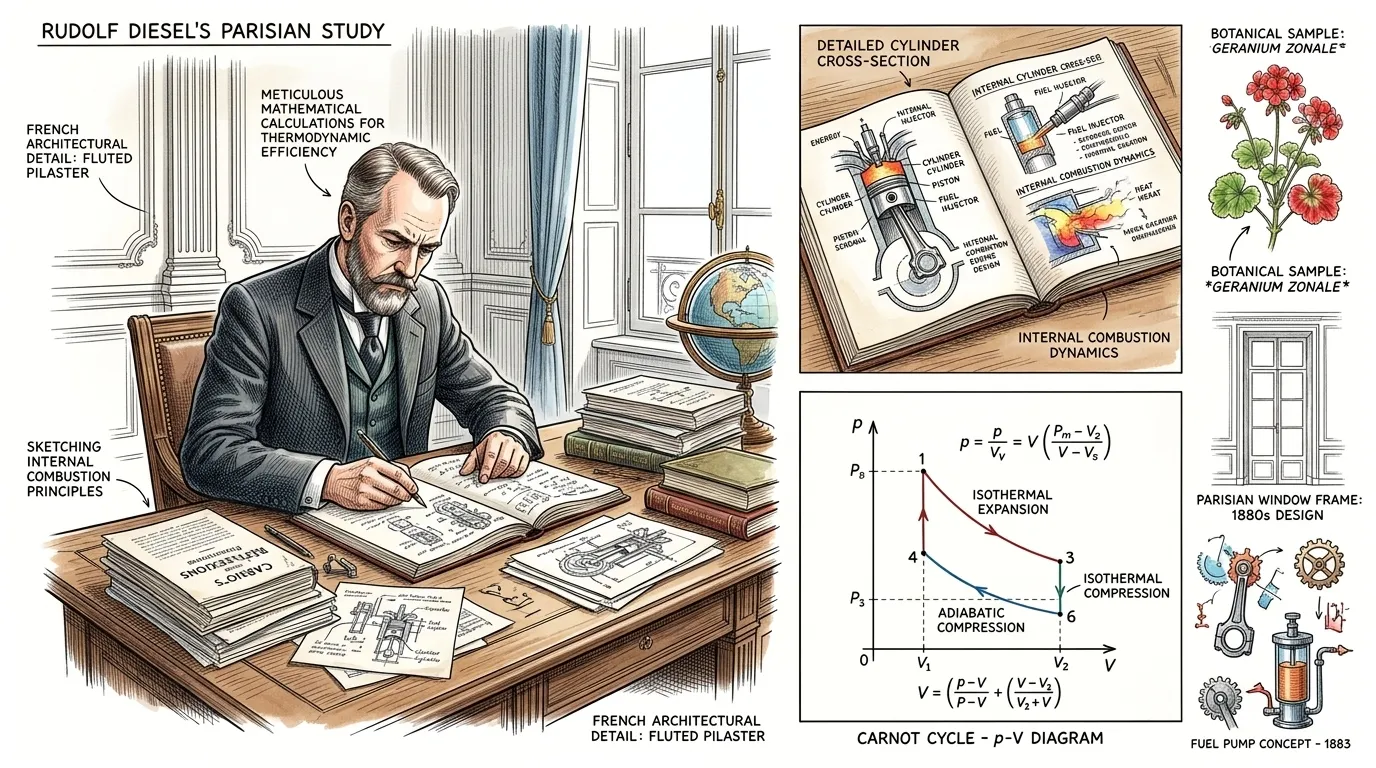
Driven by an unrelenting theoretical pursuit, Diesel began to conceive an internal combustion engine radically different from any before it. His initial designs focused on adiabatic compression, an idea that promised unprecedented thermal efficiency. In Paris, through the early 1880s, his work progressed from abstract thermodynamic principles to concrete mechanical concepts, meticulously filling notebooks with calculations and intricate sketches. This obsessive dedication laid the groundwork for an engine that would redefine power generation.
Biographical Fact: Paris, early 1880s. Diesel's notebooks filled with theoretical designs for an engine based on adiabatic compression.
Page 4
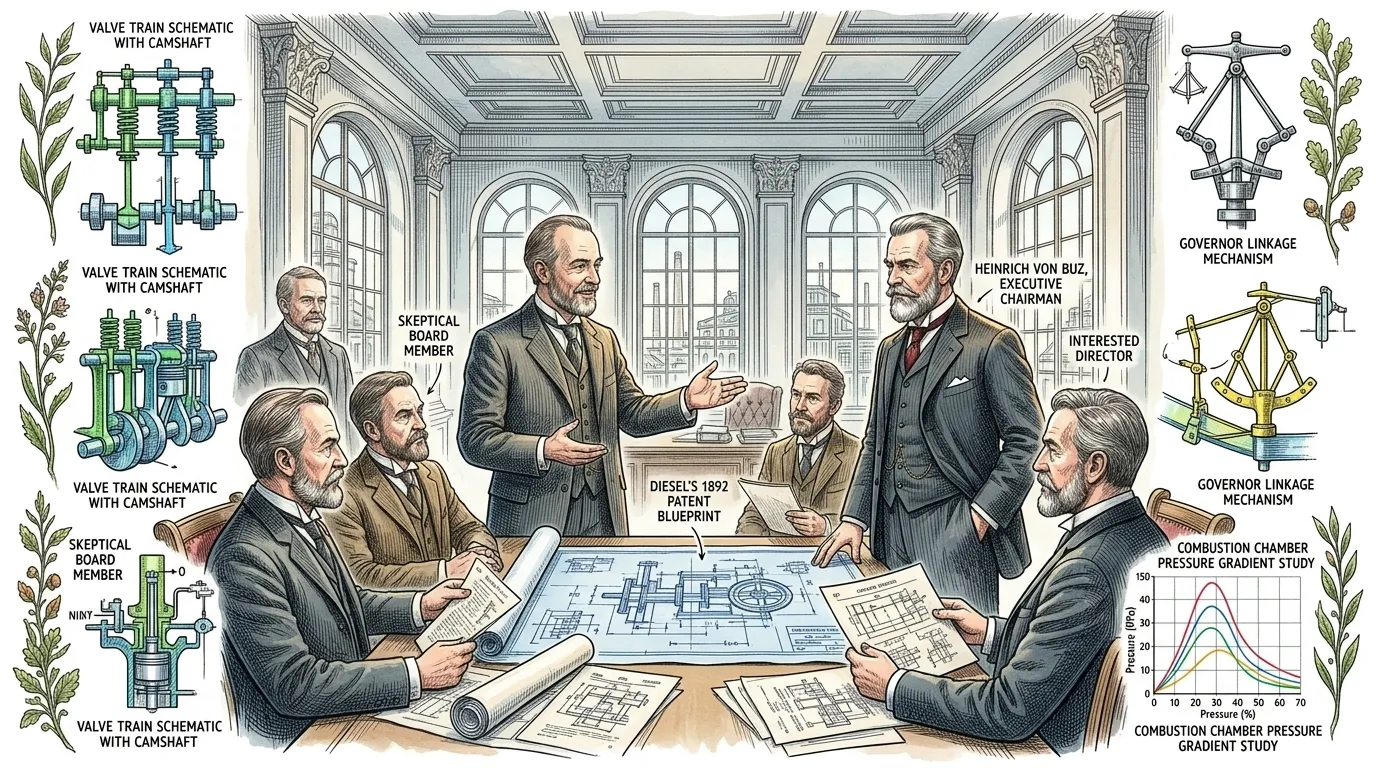
By 1892, Diesel had secured a patent for his 'Method and Apparatus for Converting Heat into Work.' He then approached Heinrich von Buz, director of Maschinenfabrik Augsburg, presenting his audacious plans for a functional prototype. This was no small feat; Diesel required significant financial backing and engineering expertise. His persuasive arguments, coupled with the potential for revolutionary efficiency, convinced von Buz and his board to commit resources, marking the crucial transition from theoretical concept to industrial development.
Biographical Fact: Maschinenfabrik Augsburg, 1892. Rudolf Diesel presents his patented engine concept to Heinrich von Buz and his board, securing development funding.
Page 5
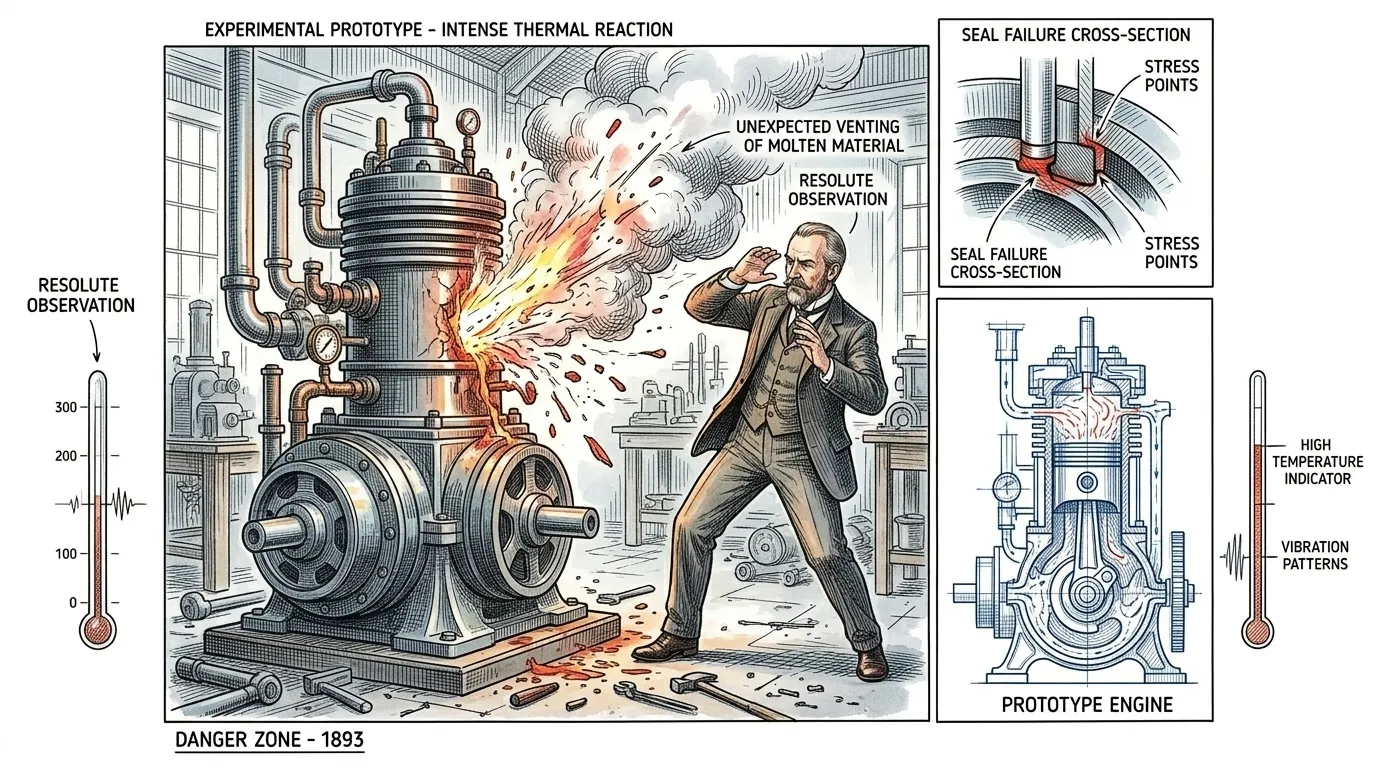
The path to a working engine was fraught with danger. In 1893, Diesel's first experimental prototype, a massive iron cylinder, was finally ready for testing. During an early run, a powerful explosion nearly claimed Diesel's life. Molten metal and debris flew, narrowly missing him. This near-fatal incident underscored the immense challenges and inherent risks of pioneering such a radical technology. Yet, rather than deterring him, the close call only hardened his resolve, pushing him to meticulously refine the design for safety and reliability.
Biographical Fact: Maschinenfabrik Augsburg, 1893. An early prototype engine nearly explodes during testing, almost killing Diesel, but fueling his determination.
Page 6
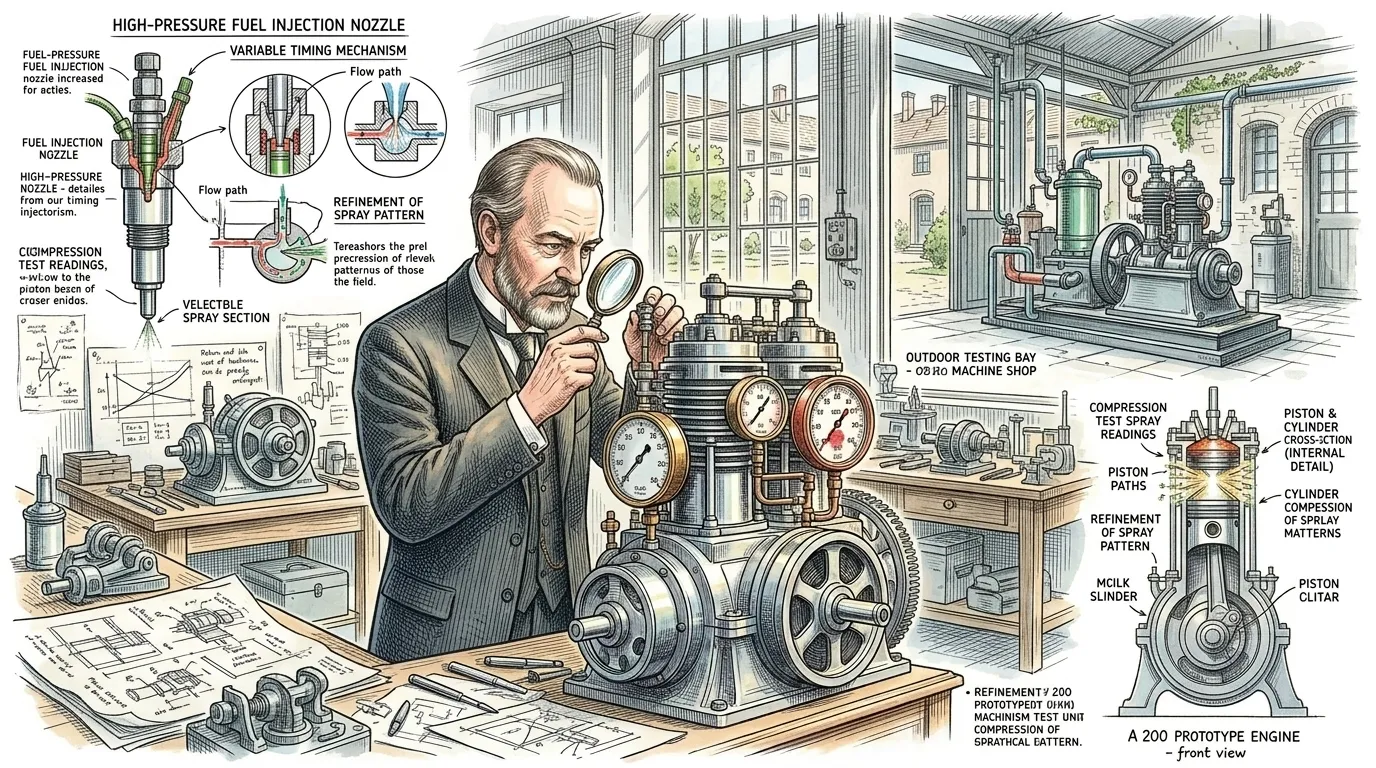
The journey from a dangerous prototype to a reliable machine demanded years of relentless iteration. From 1893 to 1897, Diesel worked tirelessly, often seven days a week, making painstaking adjustments to ignition, fuel injection, and cooling systems. Every component was scrutinized, every measurement precise. He confronted numerous mechanical failures, material stresses, and engineering puzzles. This period of intense, focused problem-solving transformed his theoretical design into a practical, robust, and commercially viable engine, demonstrating a profound commitment to his vision.
Biographical Fact: Maschinenfabrik Augsburg, 1893-1897. Diesel's meticulous, multi-year refinement process transformed his engine from concept to reliable machine.
Page 7
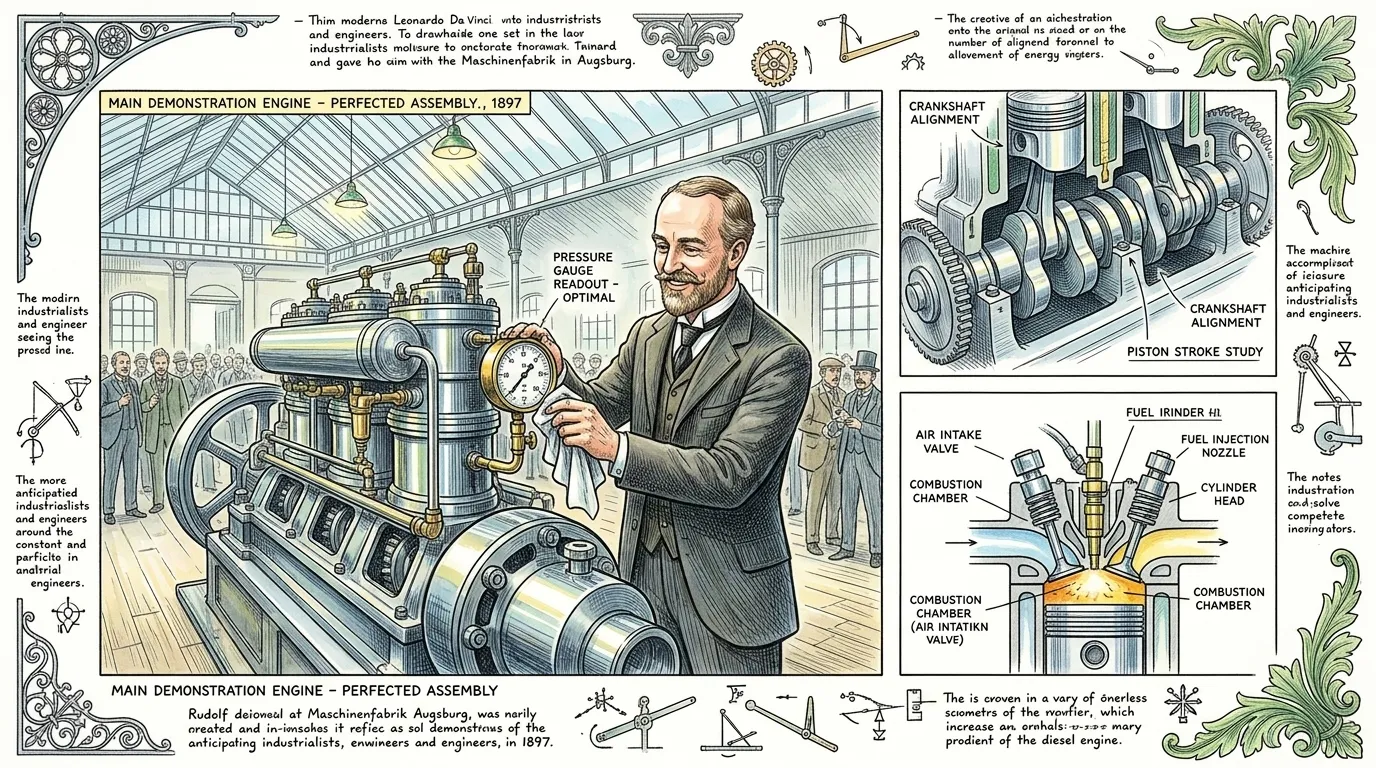
As 1897 dawned, the industrial world eagerly anticipated the public demonstration of Rudolf Diesel's perfected engine. Invitations were dispatched to leading industrialists, engineers, and scientists across Europe. Diesel meticulously oversaw the final preparations, ensuring every bolt, every gauge, every moving part was in perfect order. This was not merely a test; it was a grand unveiling, the culmination of two decades of theoretical pursuit and practical experimentation, poised to redefine the future of power. The air in Augsburg crackled with anticipation for this pivotal event.
Biographical Fact: Maschinenfabrik Augsburg, 1897. Rudolf Diesel meticulously prepares his engine for its public demonstration, drawing anticipation from across Europe.
Page 8
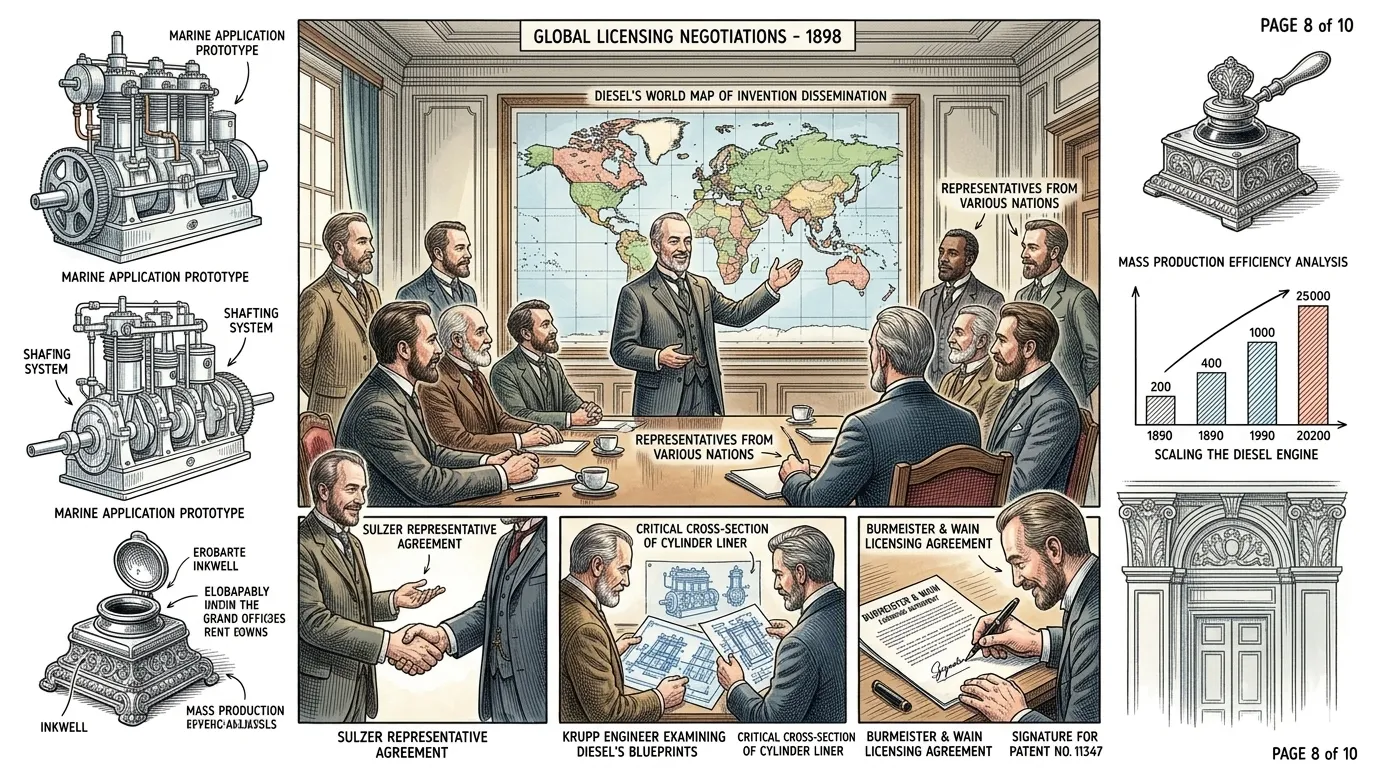
The impact of the Augsburg demonstration was immediate and overwhelming. Manufacturers from across the globe clamored for licensing rights to Diesel's engine. Firms like Sulzer in Switzerland, Krupp and Deutz in Germany, and Burmeister & Wain in Denmark quickly acquired patents, recognizing the technology's transformative potential. Rudolf Diesel found himself at the center of a global industrial revolution, negotiating agreements that would swiftly disseminate his invention across continents. His engine became the blueprint for modern power generation, initiating a worldwide shift.
Biographical Fact: Worldwide, 1898. Global manufacturers, including Sulzer, Krupp, and Burmeister & Wain, rapidly acquire licenses for the Diesel engine, initiating its international dissemination.
Page 9
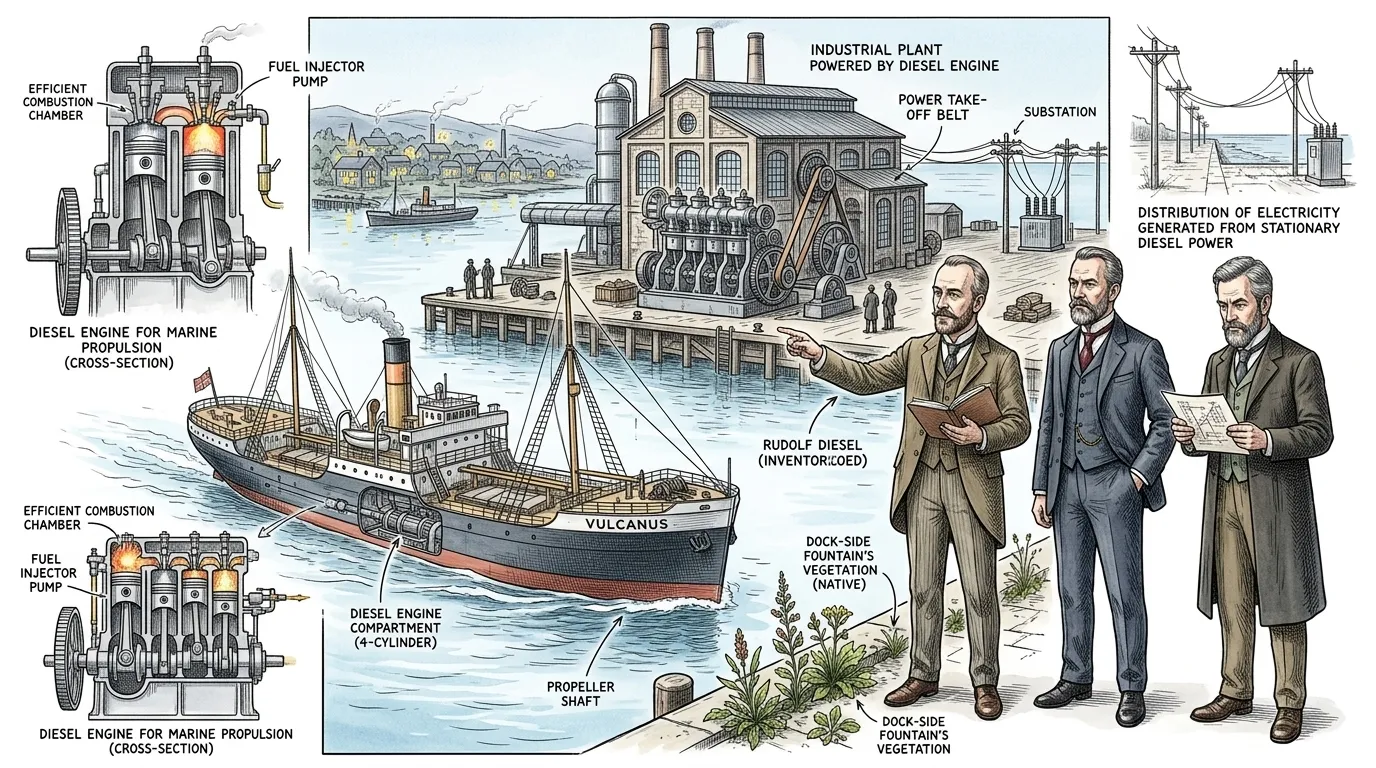
The Diesel engine rapidly began to reshape industrial landscapes and transportation. Its unparalleled efficiency made it ideal for powering factories, municipal utilities, and generating electricity, particularly in remote areas. Crucially, it revolutionized marine propulsion. The first Diesel-powered ships, like the tank ship Vulcanus in 1910, demonstrated extended ranges and reduced fuel costs, forever changing maritime commerce and naval strategy. Diesel's invention moved the world, literally and figuratively, creating new possibilities for industry and exploration.
Biographical Fact: Global, 1900s-1910s. The Diesel engine revolutionizes marine propulsion (e.g., Vulcanus, 1910) and stationary power generation, driving a new industrial age.
Page 10
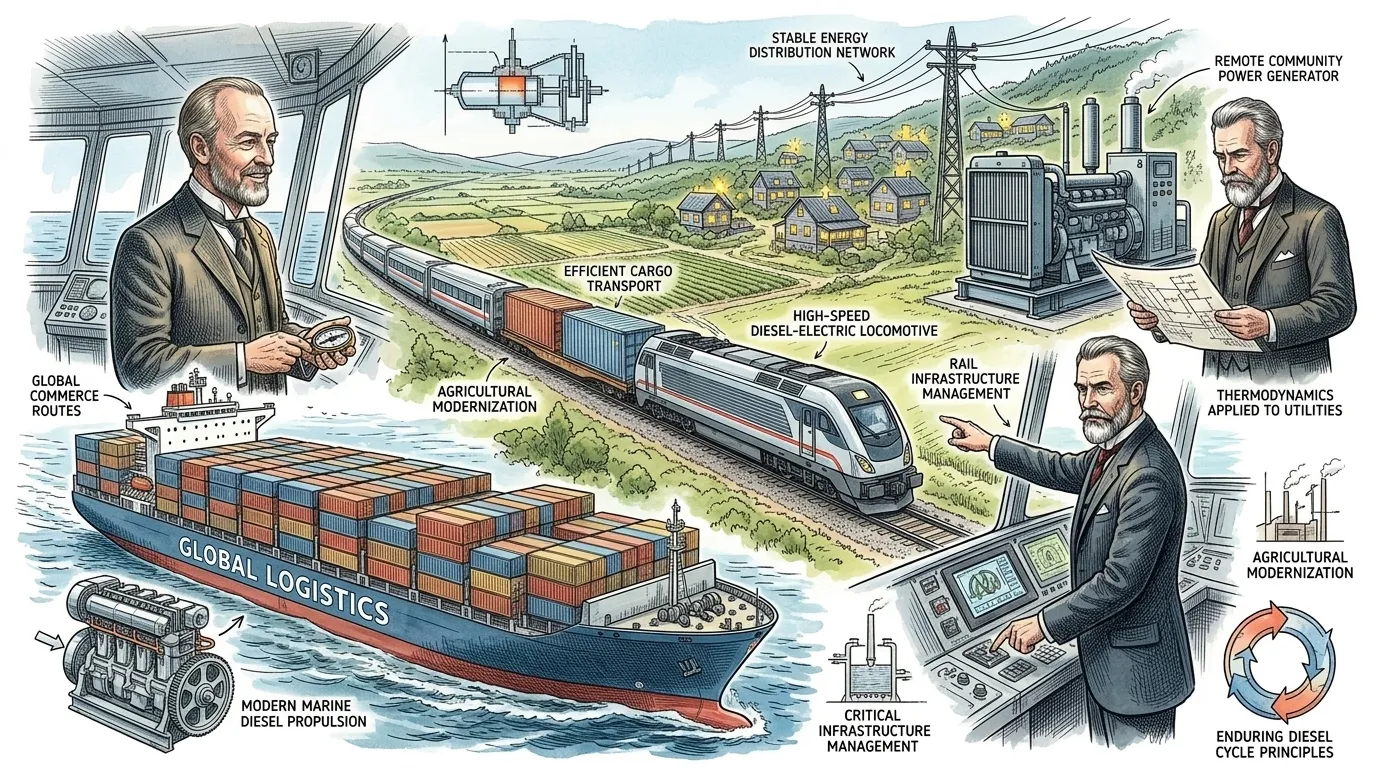
Rudolf Diesel's life ended mysteriously in 1913, but his invention outlived him and continues to power vast segments of modern civilization. From the colossal engines of container ships and locomotives to the reliable generators in remote communities, the Diesel engine's principles remain fundamental. It enabled global trade on an unprecedented scale, fueled agricultural modernization, and became the backbone of heavy industry. His relentless pursuit of efficiency permanently altered the trajectory of engineering, leaving an indelible mark on how the world moves and works, a testament to his profound vision.
Biographical Fact: Rudolf Diesel's legacy, spanning from his death in 1913 to the present day, continues to power global transportation, industry, and infrastructure.
About this story
- Location: Global
- Audience: general readers
Questions and answers
Read Wonder People on your phone
Wonder People is available on Android. Get Wonder People on Google Play.