Philo Farnsworth
Philo Farnsworth — an illustrated biography story, set in Global. 10 illustrated pages, free to read on Wonder People.
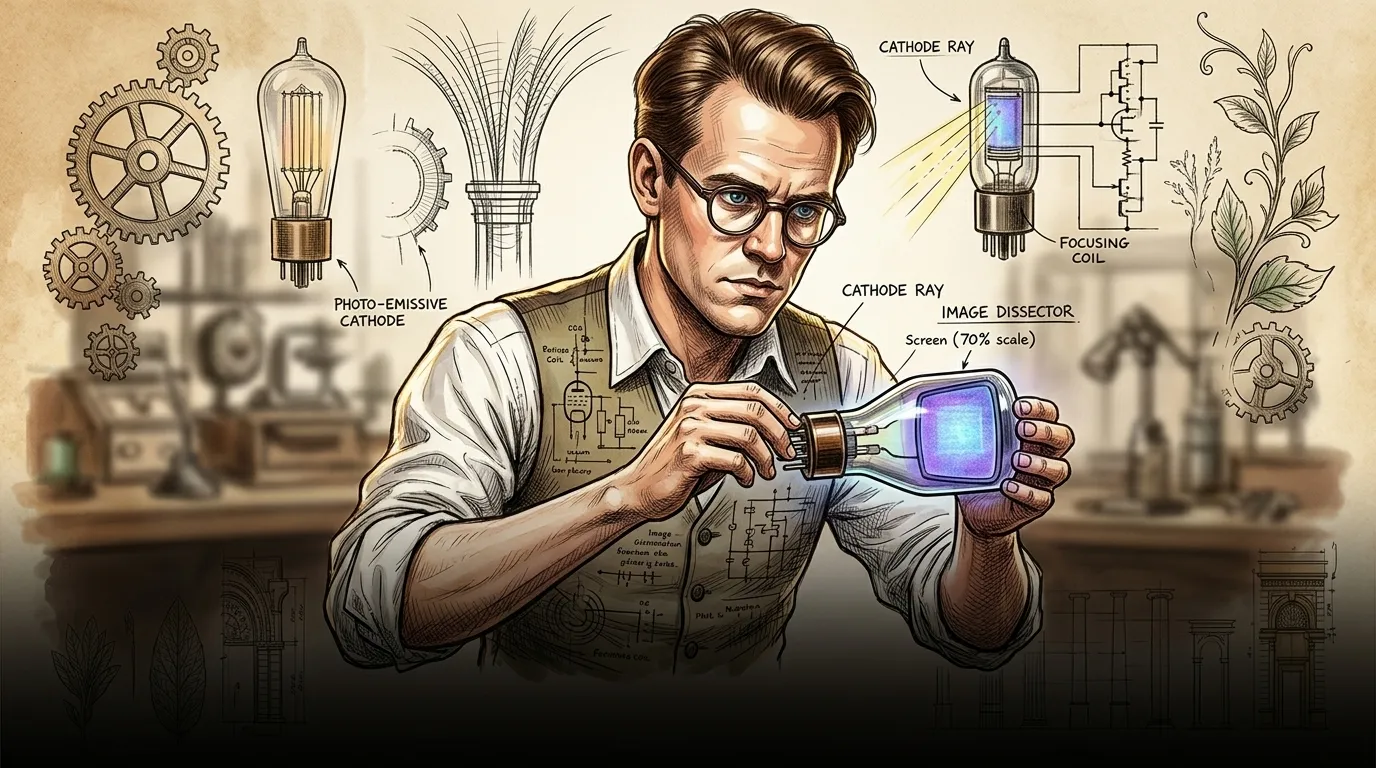
Page 1
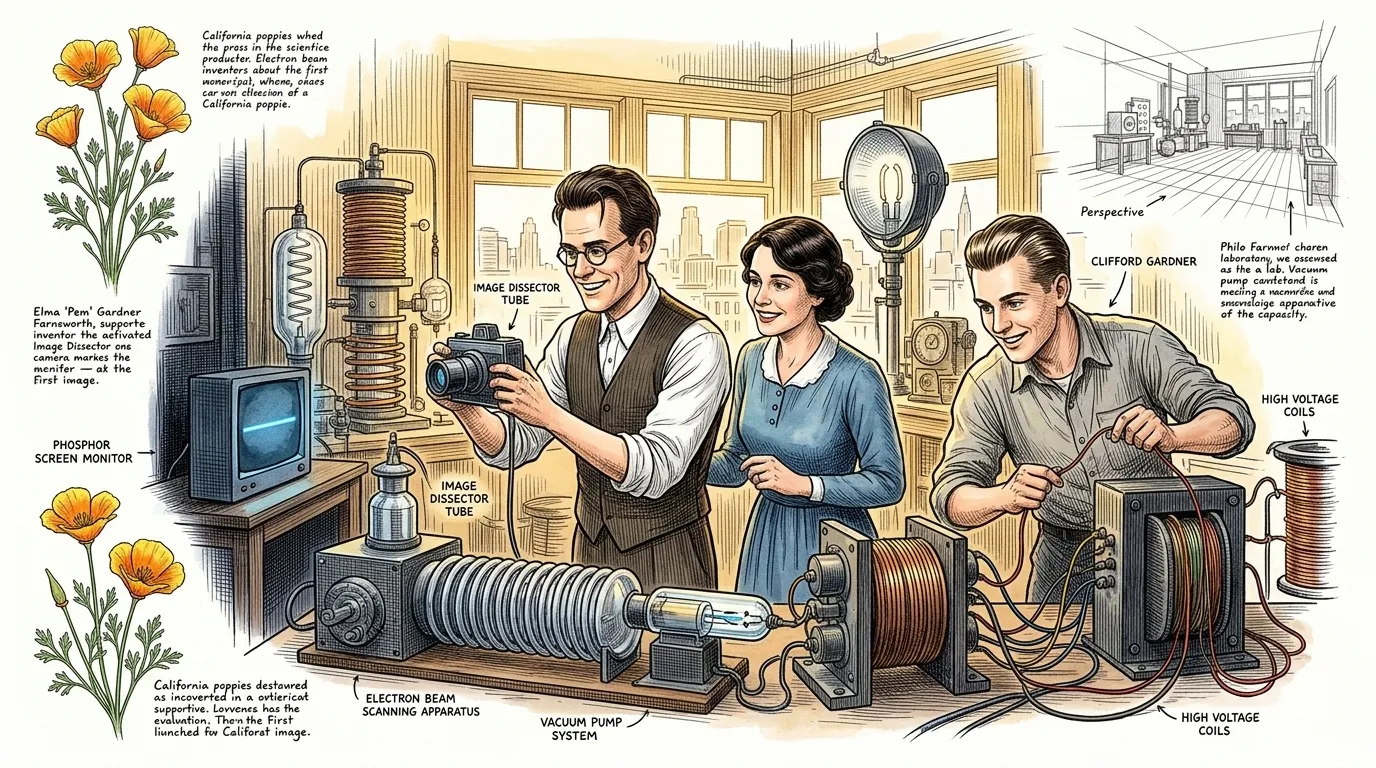
In a cluttered San Francisco laboratory in 1927, Philo Farnsworth, a focused 21-year-old inventor, made history. With his wife Pem by his side and assistant Clifford Gardner overseeing the connections, Farnsworth activated his "Image Dissector" camera. The faint but undeniable transmission of a single straight line across the monitor screen marked the world's first fully electronic television image, a seismic shift from mechanical systems. This foundational achievement, demonstrating the complete electronic scanning and recreation of an image, irrevocably changed the trajectory of global communication and entertainment.
Biographical Fact: San Francisco, California, September 7, 1927. The first electronic image transmission. Philo Farnsworth, his wife Pem Farnsworth, and assistant Clifford Gardner were present. This marked the creation of what he called 'television.'
Page 2

Before the city lab, the vision emerged on a remote Idaho farm. A young Philo Farnsworth, just 14, operated a horse-drawn harrow, turning parallel furrows in the earth. The systematic lines in the dirt sparked a revelation: an image could be broken down, transmitted line by line, and reassembled electronically. This rustic environment, devoid of modern technology, paradoxically became the crucible for the future of sight.
Biographical Fact: Rigby, Idaho, 1920. While plowing, a young Philo Farnsworth first conceived the idea of electronic image scanning, an insight that would define his life's work.
Page 3
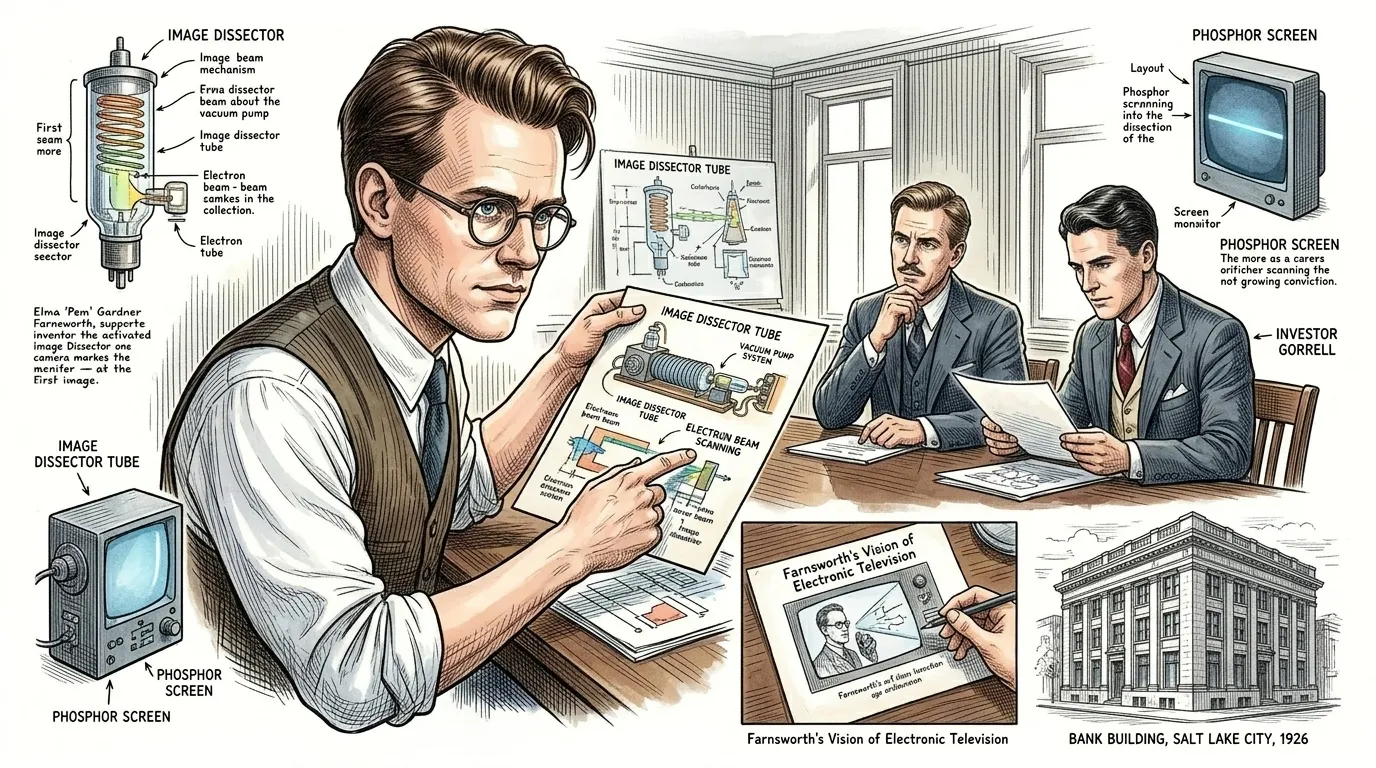
Driven by his electronic vision, Farnsworth traveled from Idaho to Salt Lake City in 1926, seeking critical funding. He presented his audacious concept—a fully electronic television system—to investors George Everson and Leslie Gorrell. With only drawings and fervent conviction, he convinced them to provide an initial 6,000, gambling on a future that no one else could yet perceive. This belief transformed a youthful dream into a tangible pursuit.
Biographical Fact: Salt Lake City, Utah, 1926. Businessman George Everson and banker Leslie Gorrell provided Farnsworth with 6,000 in start-up capital, recognizing his potential despite the speculative nature of his invention.
Page 4
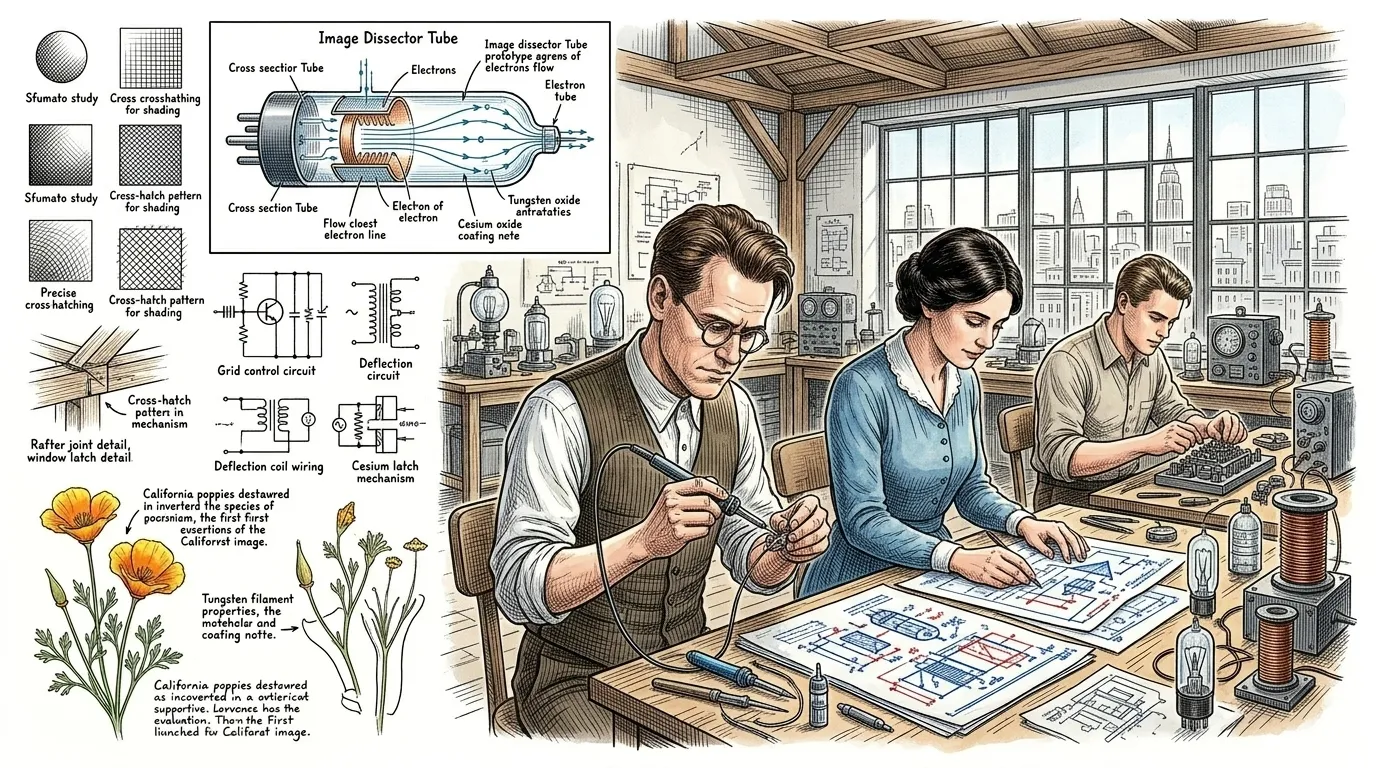
With the initial investment secured, Farnsworth swiftly established his first dedicated laboratory in a rented loft in San Francisco. This was no longer just a concept on paper; it was a physical space for relentless experimentation. Alongside his small team, including his wife Pem and brother-in-law Clifford Gardner, he began the painstaking work of transforming theoretical diagrams into functional electronic components, building the very foundation of his electronic vision.
Biographical Fact: San Francisco, California, 1926. Farnsworth established his first full-scale laboratory, transitioning from theoretical design to practical construction of electronic television components.
Page 5
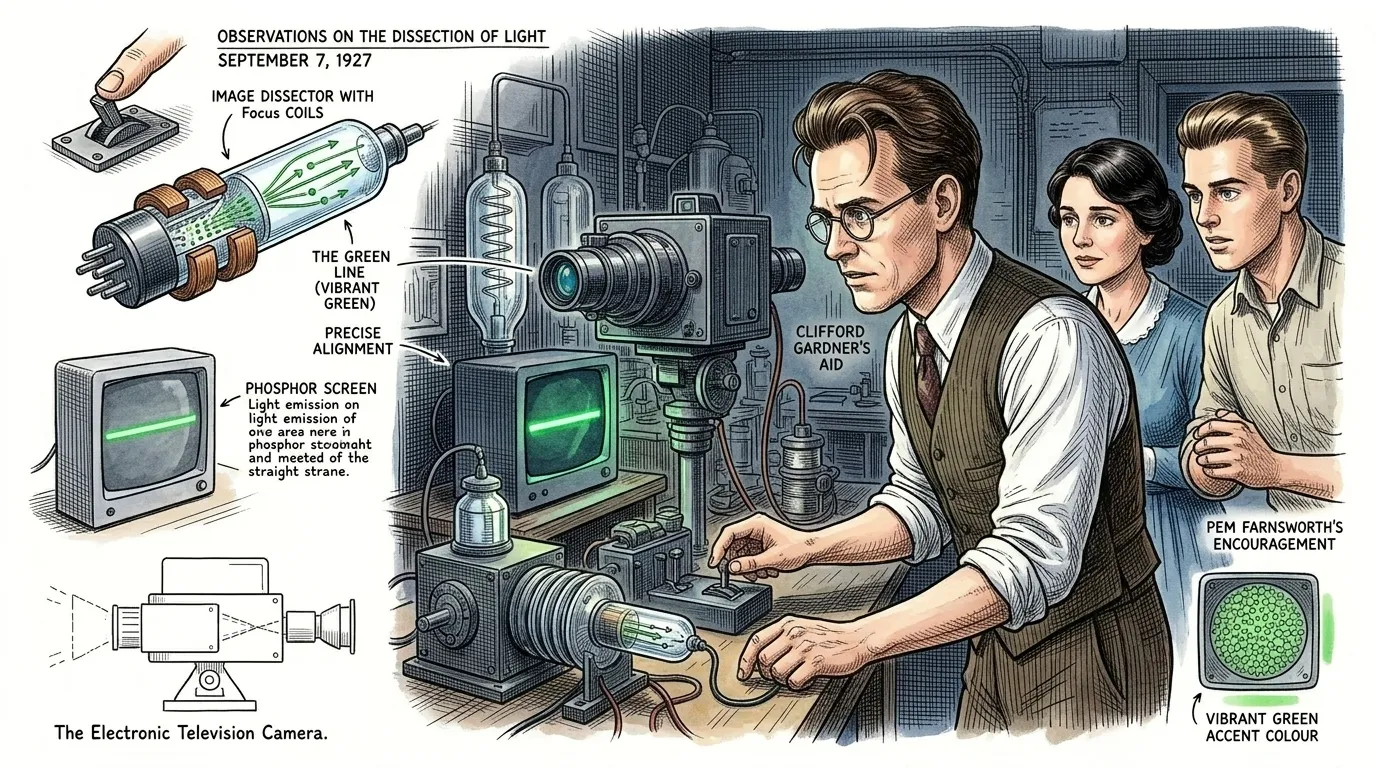
The months of tireless effort culminated on September 7, 1927. In the dimly lit San Francisco lab, a hushed anticipation filled the air. Farnsworth stood before his Image Dissector camera, sending a single straight line through the system. On the receiving end, the line flickered into existence on the screen. It was crude, imperfect, but undeniably present—the first fully electronic image. In that moment, the entire world of visual communication shifted on its axis.
Biographical Fact: San Francisco, California, September 7, 1927. Farnsworth successfully transmitted the first electronic image: a horizontal line. This proved the viability of his all-electronic television system.
Page 6
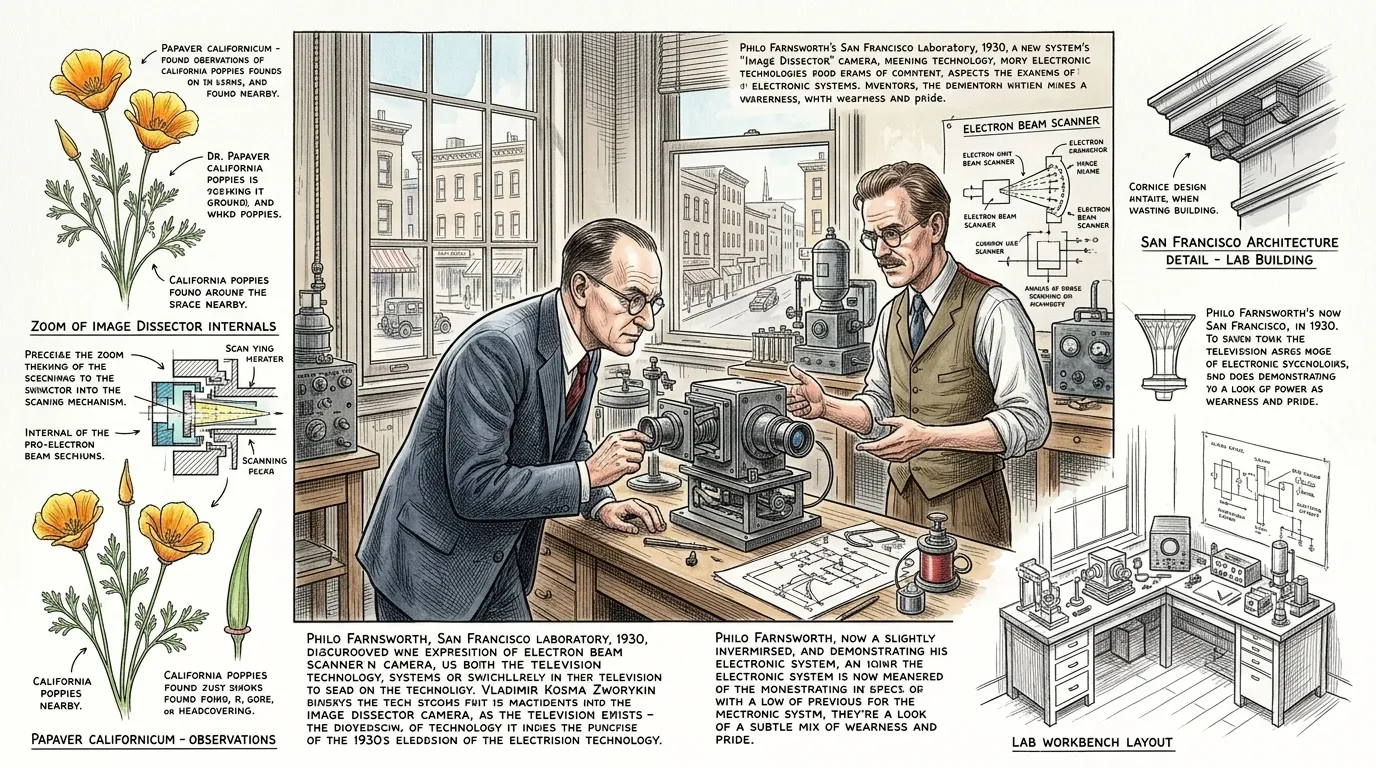
Farnsworth's groundbreaking work quickly attracted the attention of powerful industry players. In 1930, Radio Corporation of America (RCA), a titan in broadcasting, dispatched its chief television engineer, Vladimir Zworykin, to Farnsworth's laboratory in San Francisco. Zworykin, himself working on a competing electronic system, spent three days meticulously observing Farnsworth's Image Dissector, a clear signal that the stakes for electronic television were rising dramatically.
Biographical Fact: San Francisco, California, 1930. Vladimir Zworykin, RCA's lead television engineer, visited Farnsworth's lab, observing the Image Dissector in detail. This visit foreshadowed the looming patent battles.
Page 7
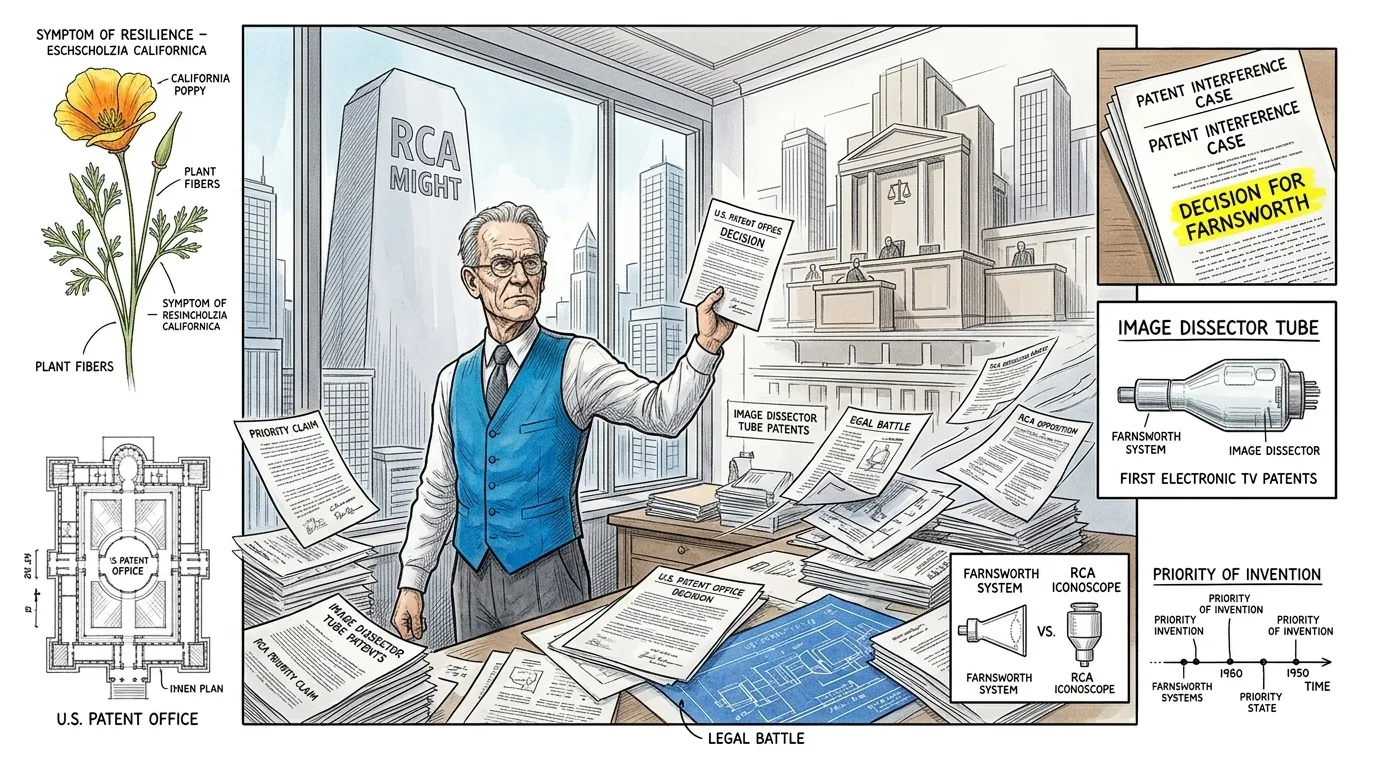
The quiet pursuit of invention escalated into a fierce legal battle. RCA, recognizing the immense commercial potential of electronic television and holding a patent by Zworykin, challenged Farnsworth's priority for the invention. Farnsworth found himself defending his fundamental claim to electronic scanning. This monumental patent interference case, initiated in 1930, pitted his small, independent lab against the overwhelming legal and financial might of an industrial giant.
Biographical Fact: San Francisco, California, 1930-1934. Farnsworth's independent company faced a protracted patent interference lawsuit from RCA over the invention of electronic television, forcing him to defend his foundational work.
Page 8
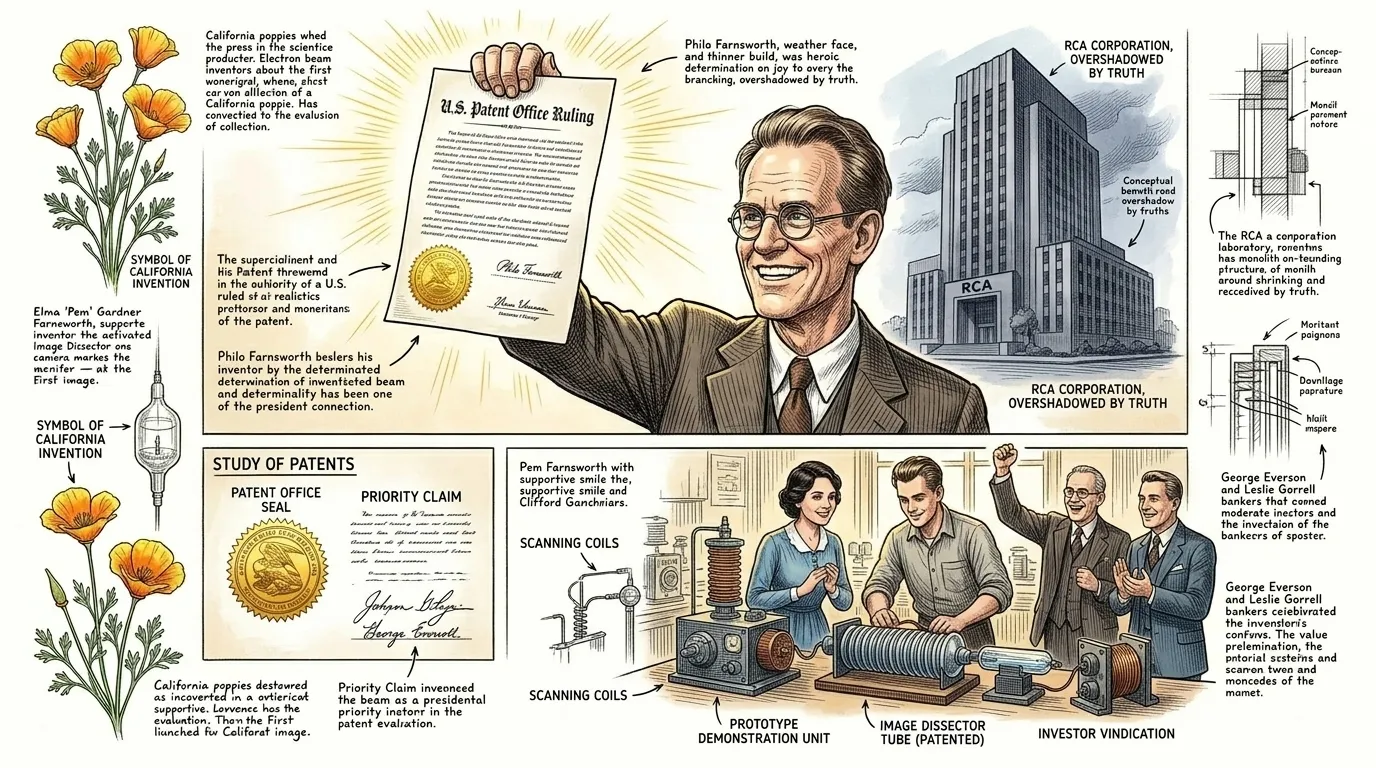
After years of intense legal skirmishes, the United States Patent Office delivered its verdict in 1934: Philo Farnsworth was declared the prior inventor of the electronic television system. This pivotal decision affirmed his claim and forced RCA to license his patents, a resounding victory for the independent inventor against a corporate Goliath. The ruling secured his place in history and momentarily shifted the balance of power in the nascent television industry.
Biographical Fact: Washington D.C., 1934. The U.S. Patent Office ruled in favor of Philo Farnsworth over RCA, recognizing him as the inventor of electronic television and forcing RCA to pay licensing fees for his foundational patents.
Page 9
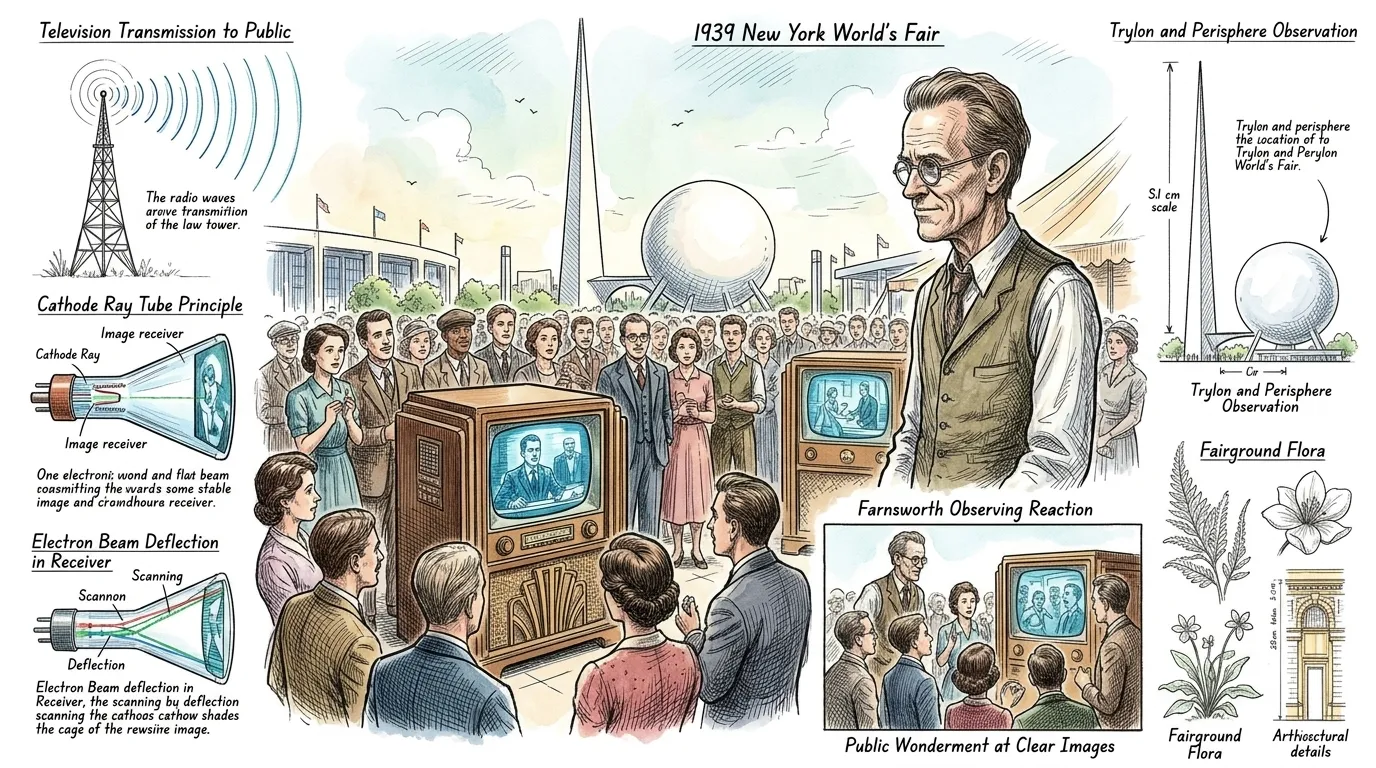
With patent disputes settled, Farnsworth's innovations began to reach the public. At the 1939 New York World's Fair, his system provided clear, stable electronic television broadcasts, captivating millions. Audiences gathered to witness the future unfold, watching live images transmitted across distances, a spectacle of modern marvel. Though RCA eventually dominated the market, it was Farnsworth's technology that made widespread adoption possible.
Biographical Fact: New York City, 1939. Farnsworth's electronic television system was showcased at the New York World's Fair, demonstrating the commercial viability and public appeal of the technology to a wide audience.
Page 10
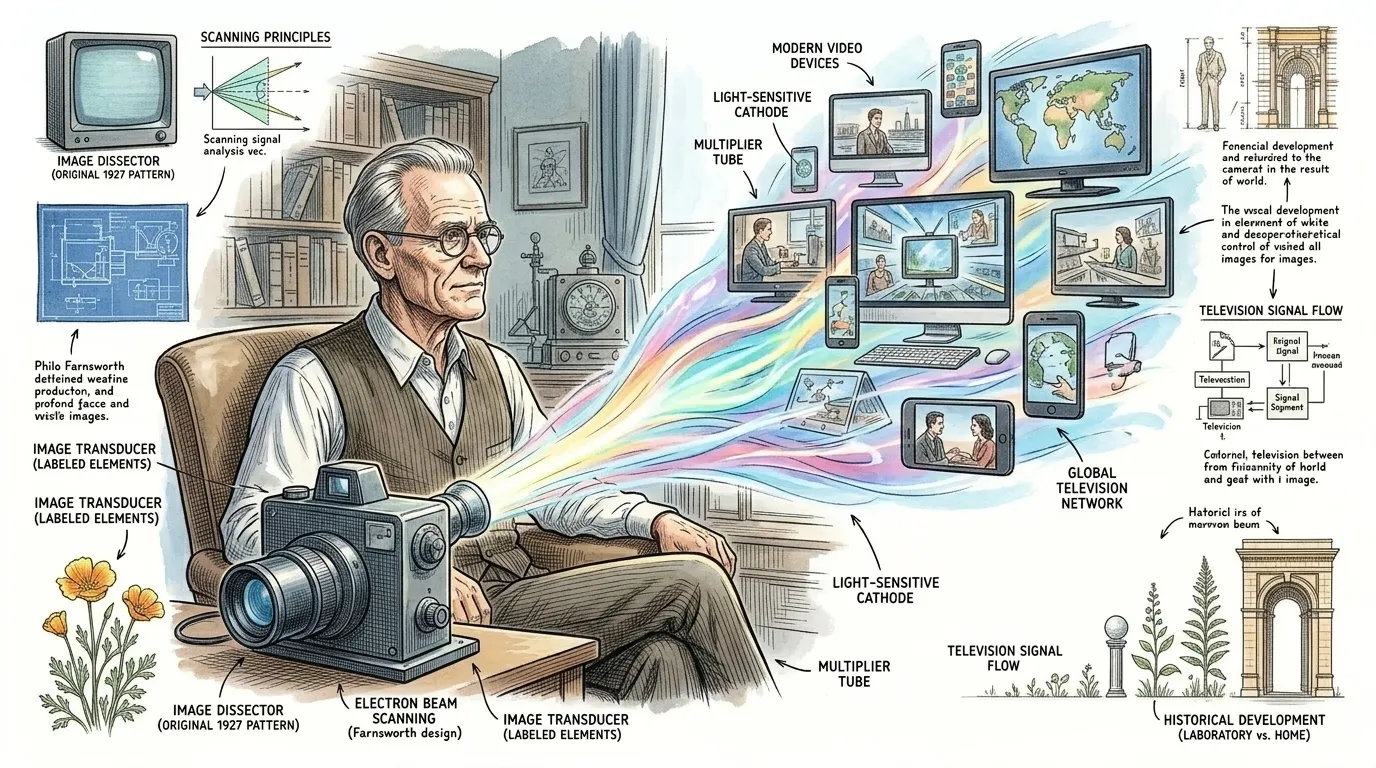
Philo Farnsworth's relentless pursuit of electronic vision transformed the world, yet his own later years were marked by financial struggle and health issues. Despite personal costs, his foundational patents and the core principles of his Image Dissector remain the bedrock of modern television. He envisioned a world connected by images, and though the credit was often fragmented, it was his singular insight that first made that electronic dream a reality. His impact echoes in every screen, every broadcast, a silent, ubiquitous testament to his genius.
Biographical Fact: Salt Lake City, Utah, 1971. Philo Farnsworth died, recognized by many as the 'Father of Electronic Television,' yet his personal life often reflected the intense strain of his revolutionary work. His innovations underpinned a global industry.
About this story
- Location: Global
- Audience: general readers
Questions and answers
Read Wonder People on your phone
Wonder People is available on Android. Get Wonder People on Google Play.