Otto von Bismarck
Otto von Bismarck — an illustrated biography story, set in Global. 10 illustrated pages, free to read on Wonder People.
Page 1
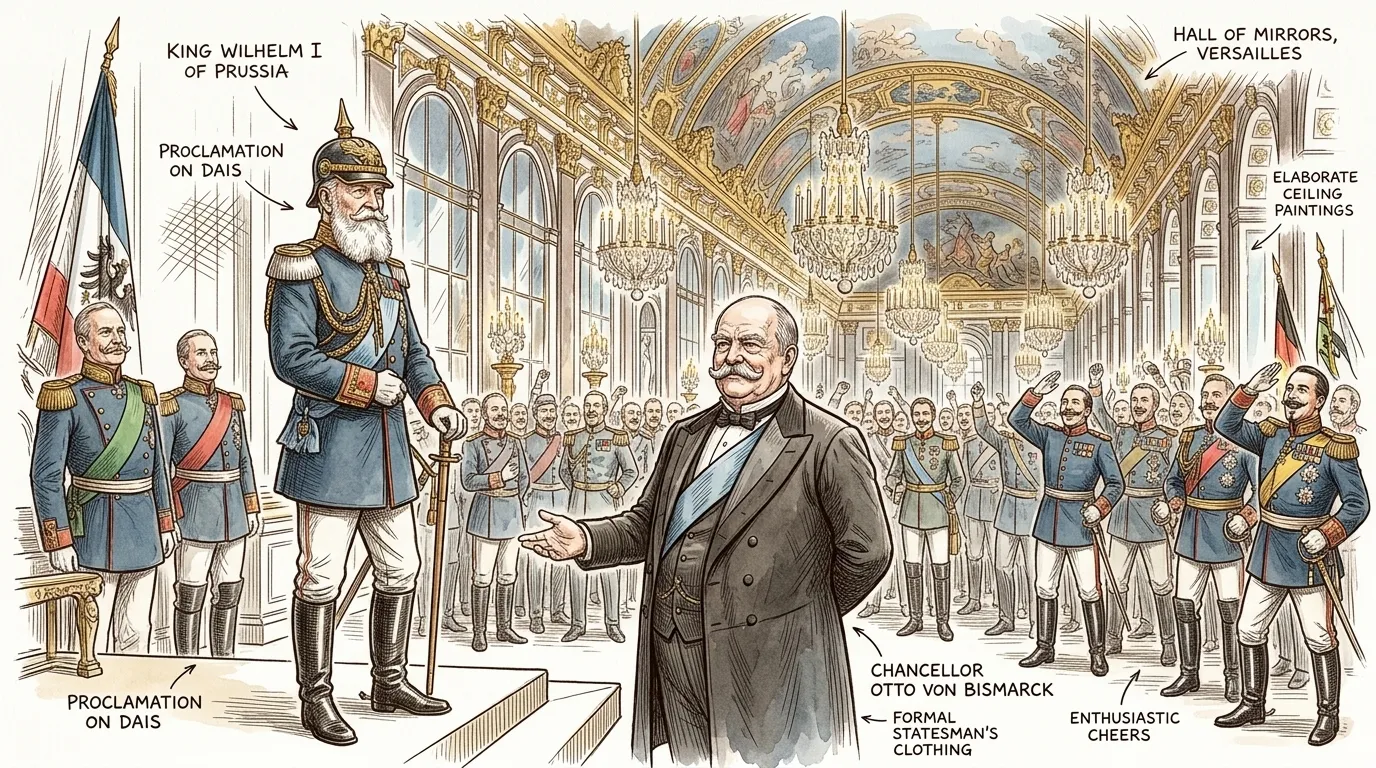
In the opulent Hall of Mirrors at Versailles, Otto von Bismarck stood at the forefront, witnessing the pinnacle of his political machinations. On January 18, 1871, amidst a gathering of German princes and military commanders, King Wilhelm I of Prussia was proclaimed Emperor of a unified German Empire. Bismarck, the architect of this unprecedented consolidation, stood central as the cheers of 500 officers echoed, the culmination of three wars and a decade of relentless statecraft. His vision had reshaped the map of Europe.
Page 2
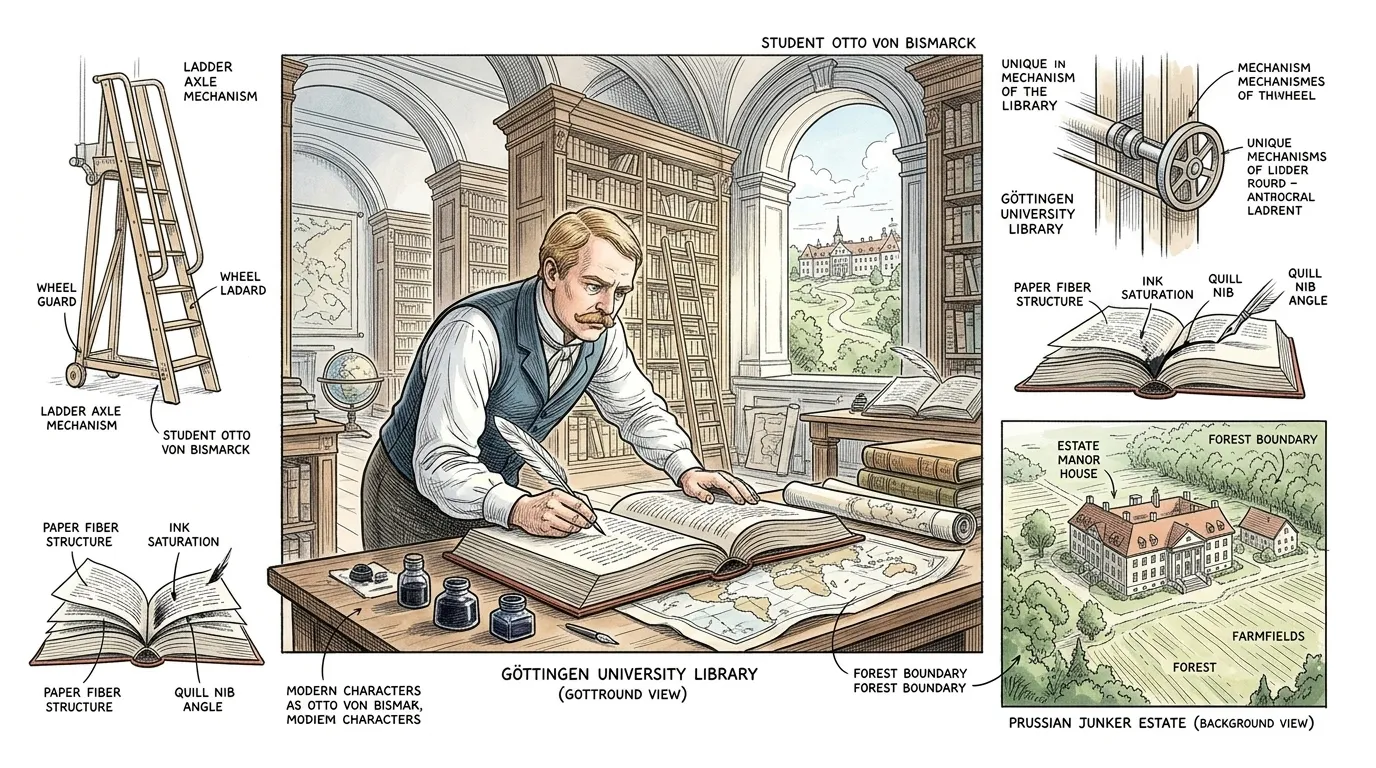
Born into the Prussian Junker aristocracy in 1815, Otto von Bismarck inherited a tradition of landownership and service. His youth was marked by intense studies at Göttingen and Berlin, where he cultivated a formidable intellect alongside a reputation for rebellious spirit. This early immersion in both intellectual thought and the rigid structures of the Prussian elite would forge a deep-seated conviction: Prussia's destiny lay in asserting its power, not accommodating liberal ideals. He saw the state as a vessel for strength, not compromise.
Page 3
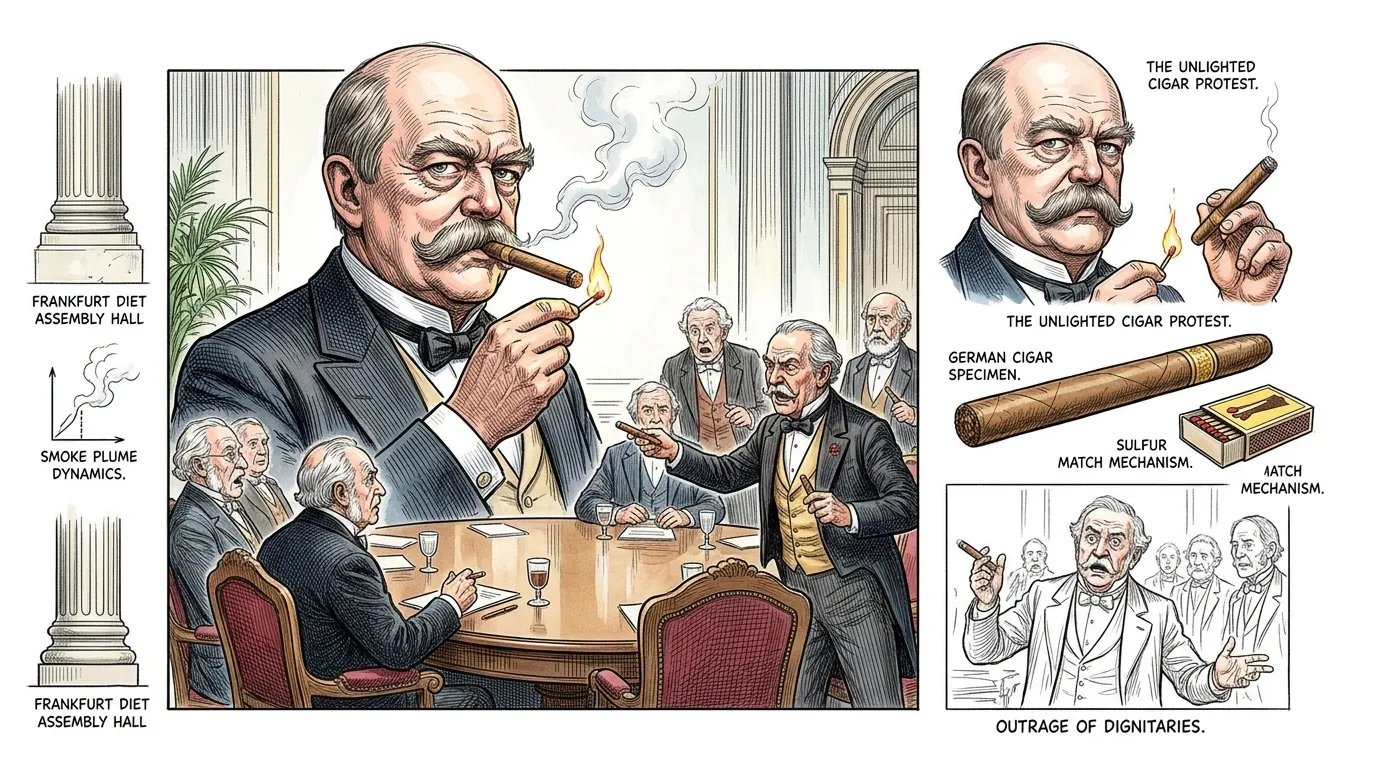
As Prussia's envoy to the Frankfurt Diet in the 1850s, Bismarck encountered the inertia of the German Confederation, dominated by Austrian influence. He refused to merely observe. In a defiant gesture, he once lit a cigar in the Diet, a privilege reserved for the Austrian president, signaling his intent to challenge Vienna's primacy. This action, seemingly minor, underscored his belief that Prussian strength required direct confrontation, not polite diplomacy, to assert its will and leadership over the German states.
Page 4
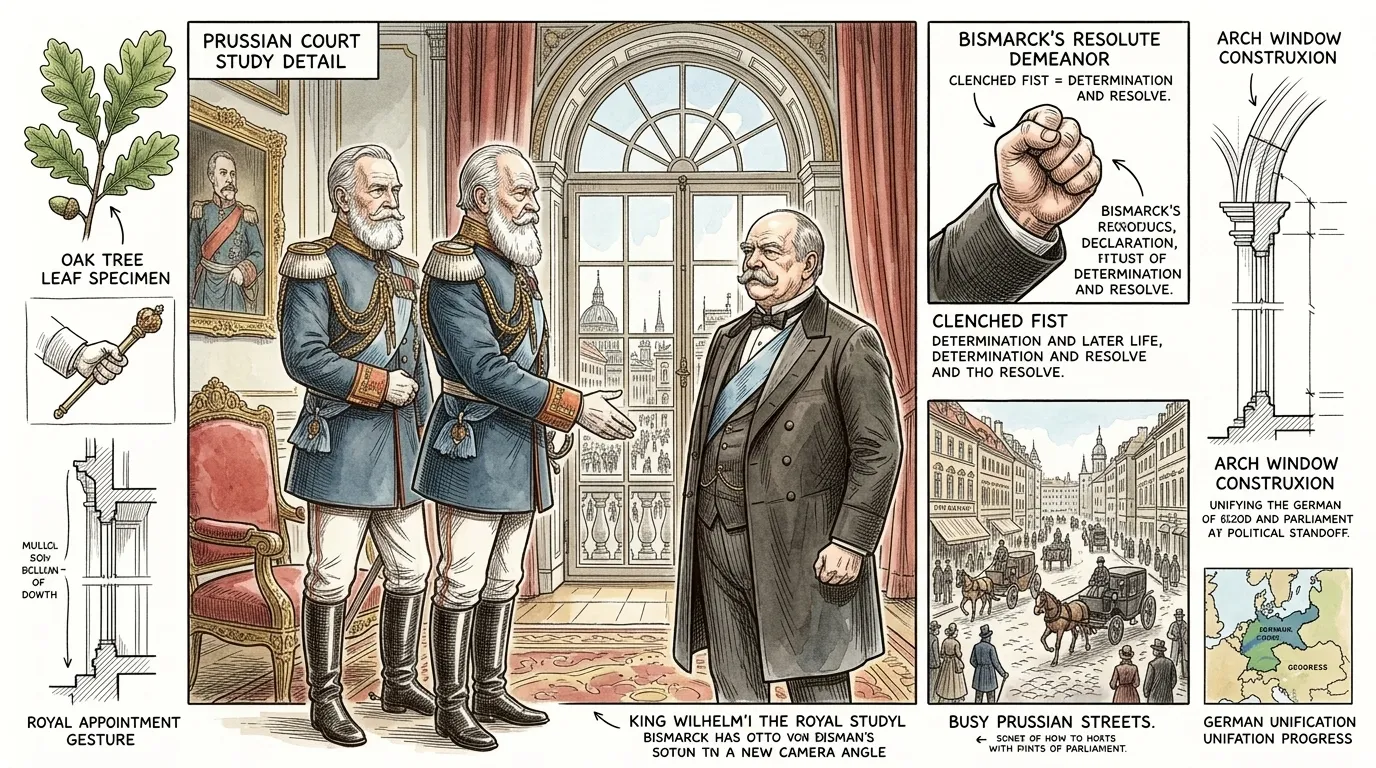
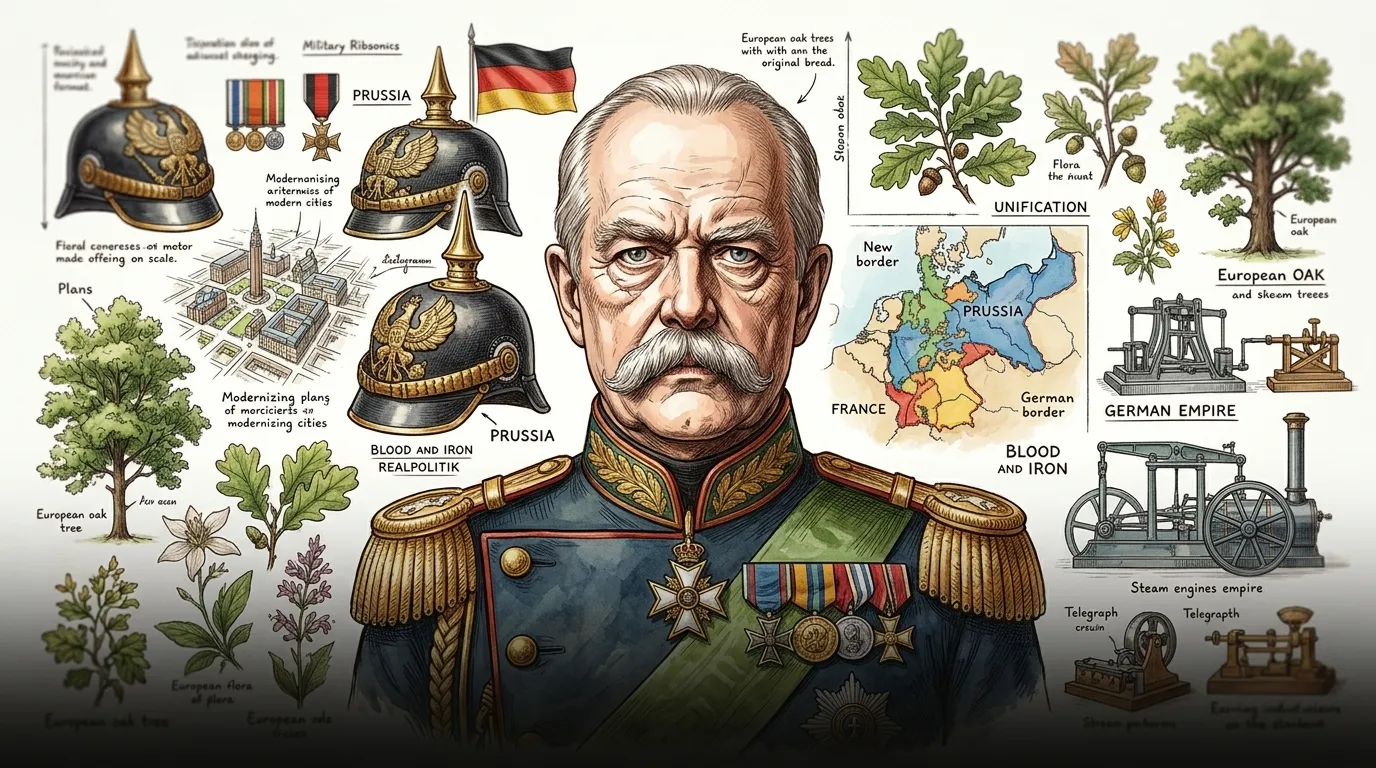
In 1862, King Wilhelm I, facing a standoff with the liberal parliament over military reforms, appointed Bismarck as Minister-President of Prussia. Bismarck immediately asserted royal authority, declaring that the great questions of the day would not be decided by speeches or majority resolutions, but by 'blood and iron.' This declaration signaled an unyielding commitment to military power and state-driven policy, bypassing parliamentary consent to strengthen Prussia for its inevitable conflicts.
Page 5
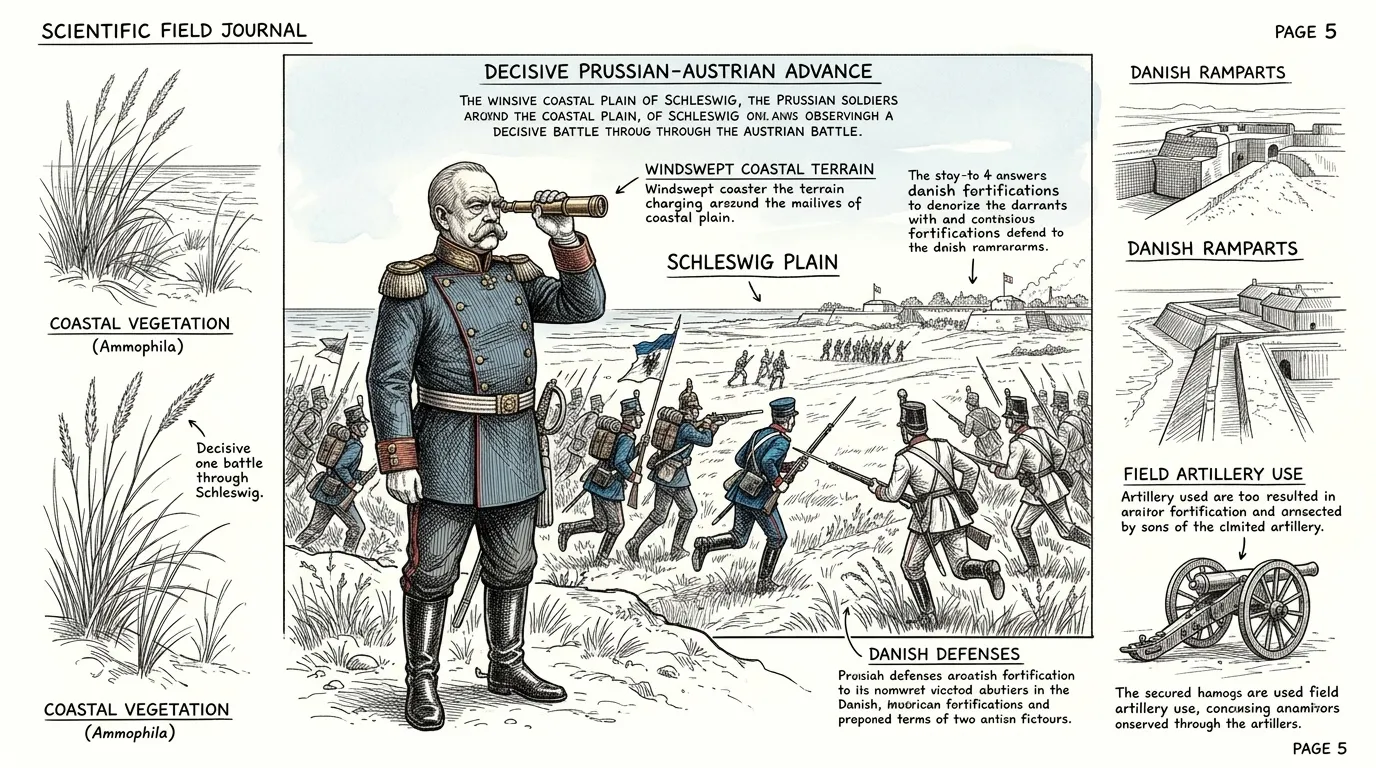
Bismarck put his 'blood and iron' policy into immediate action. In 1864, he orchestrated a joint Austro-Prussian invasion of Denmark to claim the disputed territories of Schleswig and Holstein. This calculated move was not just about land; it was a deliberate test of Prussia's renewed military strength and a subtle trap to establish a future conflict with Austria. The swift victory solidified Prussian military prestige and isolated Austria, paving the way for Bismarck's larger ambitions for German unification.
Page 6
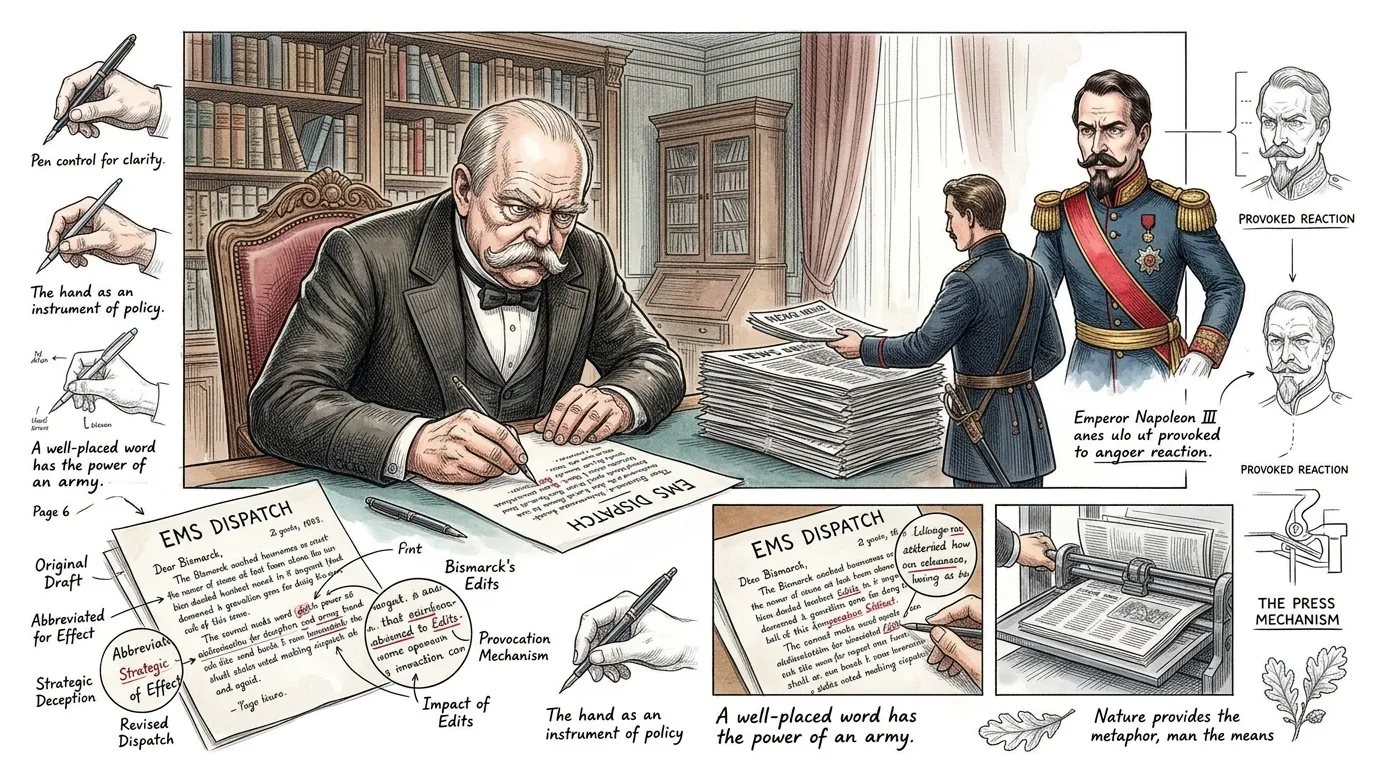
With Austria neutralized, Bismarck turned his attention to France. The Spanish succession crisis provided the pretext, leading to intense diplomatic exchanges in 1870. When King Wilhelm I sent a telegram from Ems regarding French demands, Bismarck meticulously edited the message. He deliberately sharpened the tone, making a polite refusal sound like an insult, releasing it to the press. This masterstroke, the 'Ems Dispatch,' provoked France into declaring war, precisely as Bismarck intended, consolidating German states behind Prussia.
Page 7
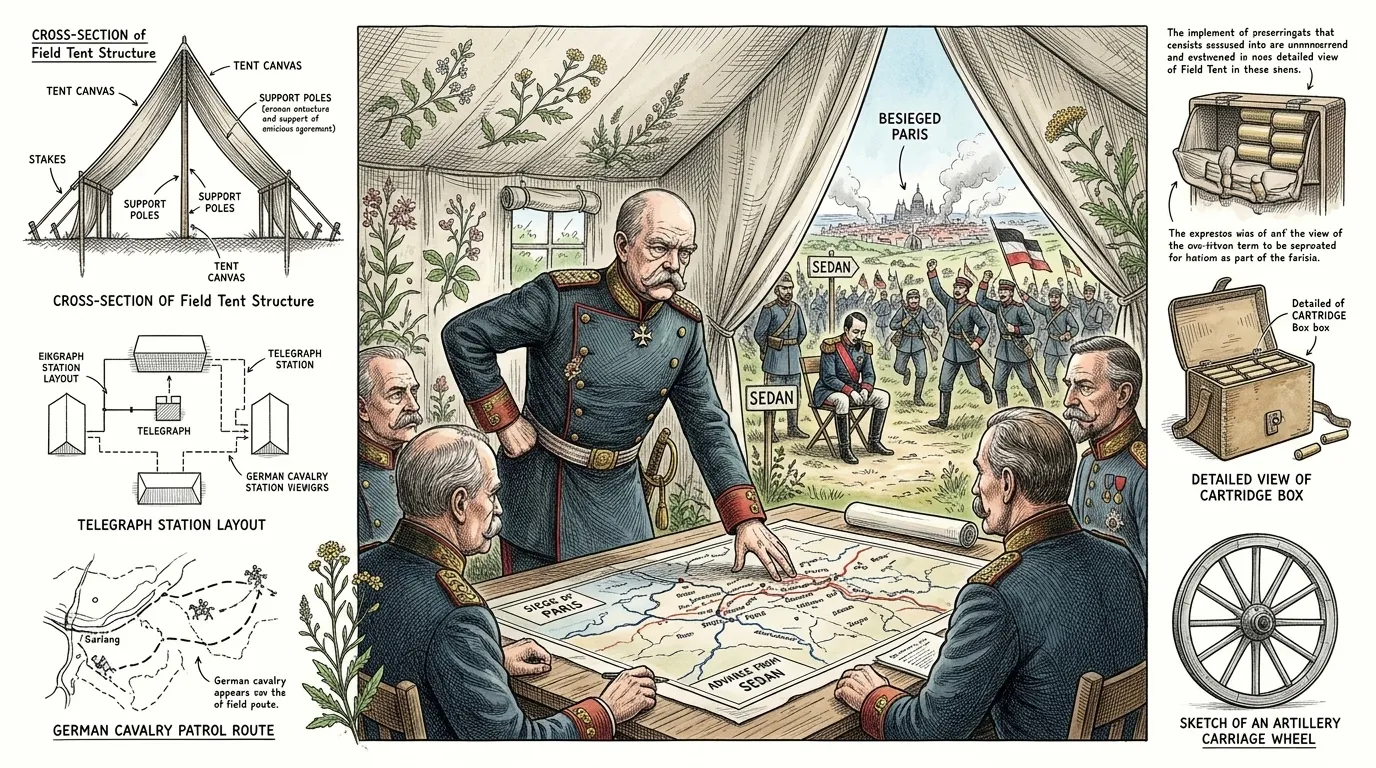
The Franco-Prussian War, instigated by Bismarck, proved a decisive victory for Prussia and its German allies. Bismarck himself often observed the military campaigns firsthand, conferring with generals on battlefields and in makeshift headquarters. The overwhelming German success, culminating in the siege of Paris and the capture of Emperor Napoleon III at Sedan, not only secured additional territories but critically ignited a powerful sense of shared German identity. Bismarck's strategic foresight had proven brutal yet effective.
Page 8
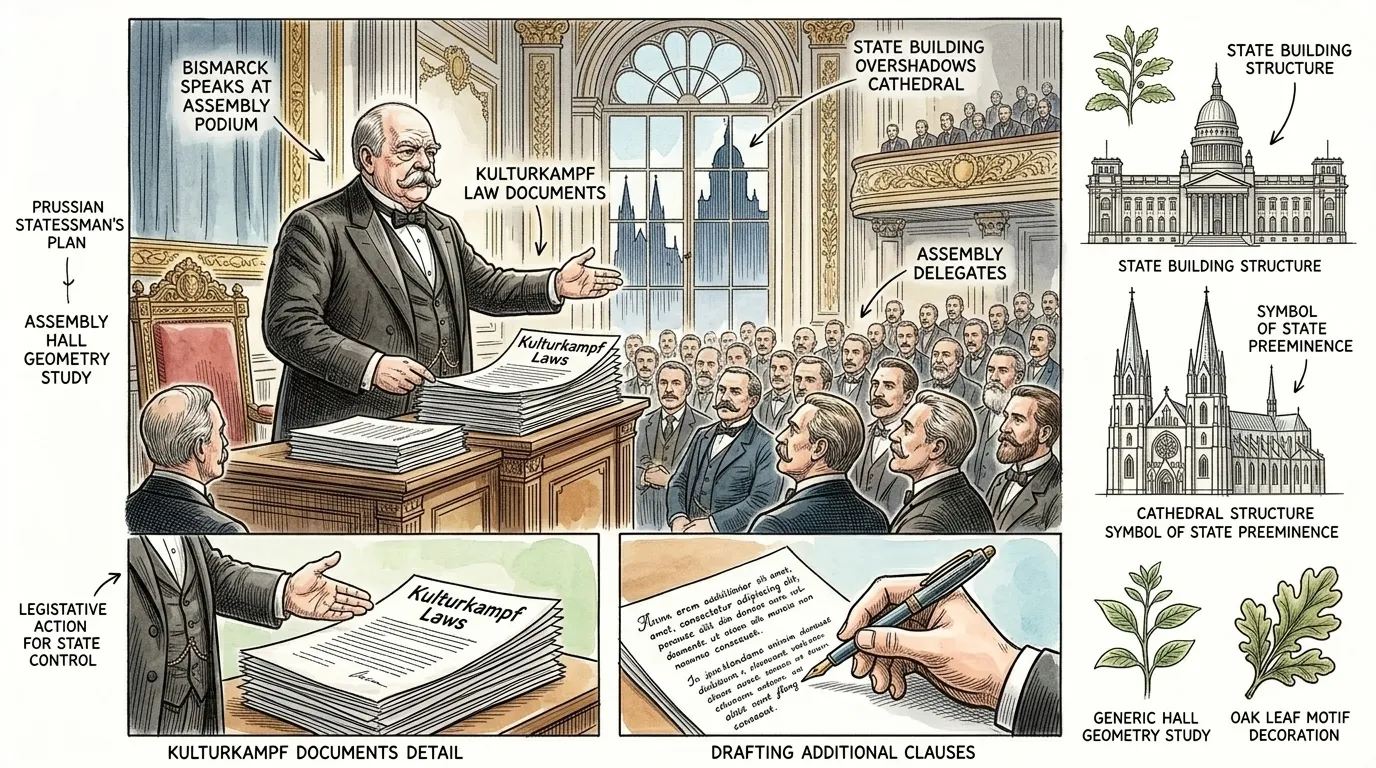
After unification, Bismarck moved to consolidate the new German state domestically. Perceiving the Catholic Church's influence as a threat to state authority, he launched the 'Kulturkampf' – a 'culture struggle' – against its political power between 1871 and 1878. He passed laws regulating education and civil marriage, even expelling Jesuits and imprisoning bishops. This decisive action, though ultimately moderated, cemented the state's supremacy over religious institutions, solidifying the new empire's secular foundations.
Page 9
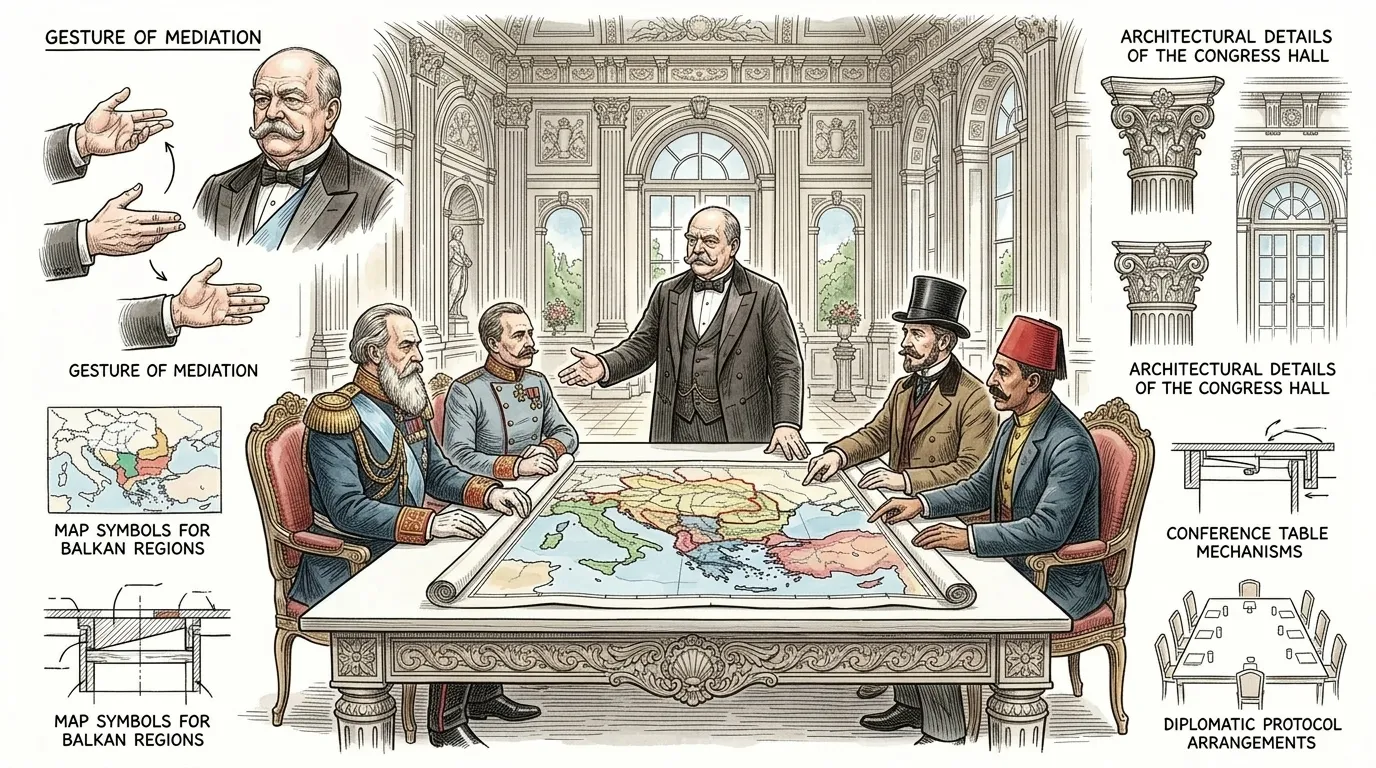
Bismarck, having unified Germany through war, understood the need for European stability to preserve his creation. In 1878, he convened the Congress of Berlin to resolve the 'Great Eastern Crisis' in the Balkans, preventing a wider war between the great powers. He skillfully mediated between Russia, Austria-Hungary, Britain, and the Ottoman Empire, earning him the title of the 'Honest Broker.' This diplomatic masterclass demonstrated his commitment to a delicate balance of power, ensuring Germany's security through peace, not conquest.
Page 10
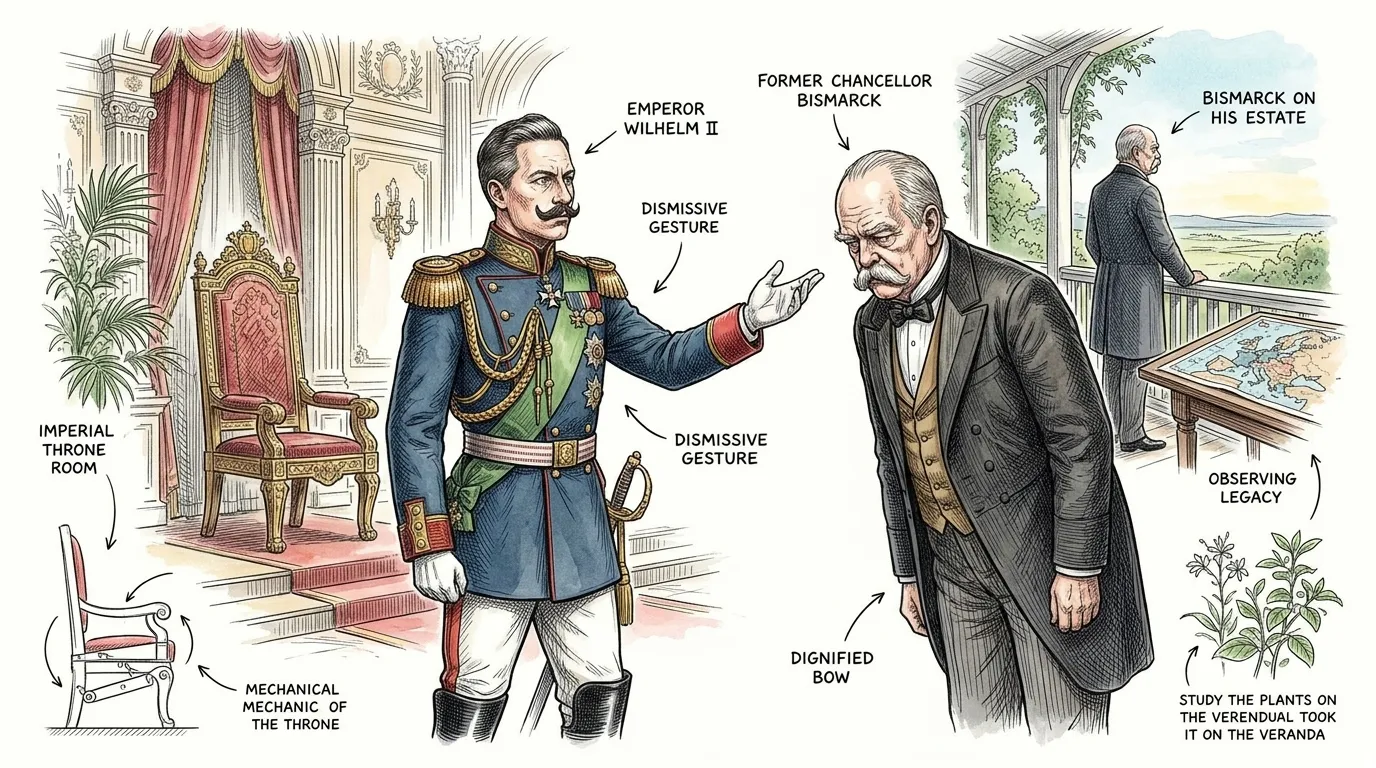
In 1890, the young Emperor Wilhelm II, eager to assert his own authority, dismissed Bismarck, the 'Iron Chancellor.' Bismarck retired to his estates, observing the unraveling of his complex alliance system. Yet, his legacy endured: a unified, powerful German Empire, a state built on realpolitik and social welfare, fundamentally altering European politics for generations. Though removed from power, the architecture of the German state bore his indelible mark, a testament to his transformative will and strategic genius.
About this story
- Location: Global
- Audience: general readers
Questions and answers
Read Wonder People on your phone
Wonder People is available on Android. Get Wonder People on Google Play.