Mary Anderson
Mary Anderson — an illustrated biography story, set in Global. 10 illustrated pages, free to read on Wonder People.
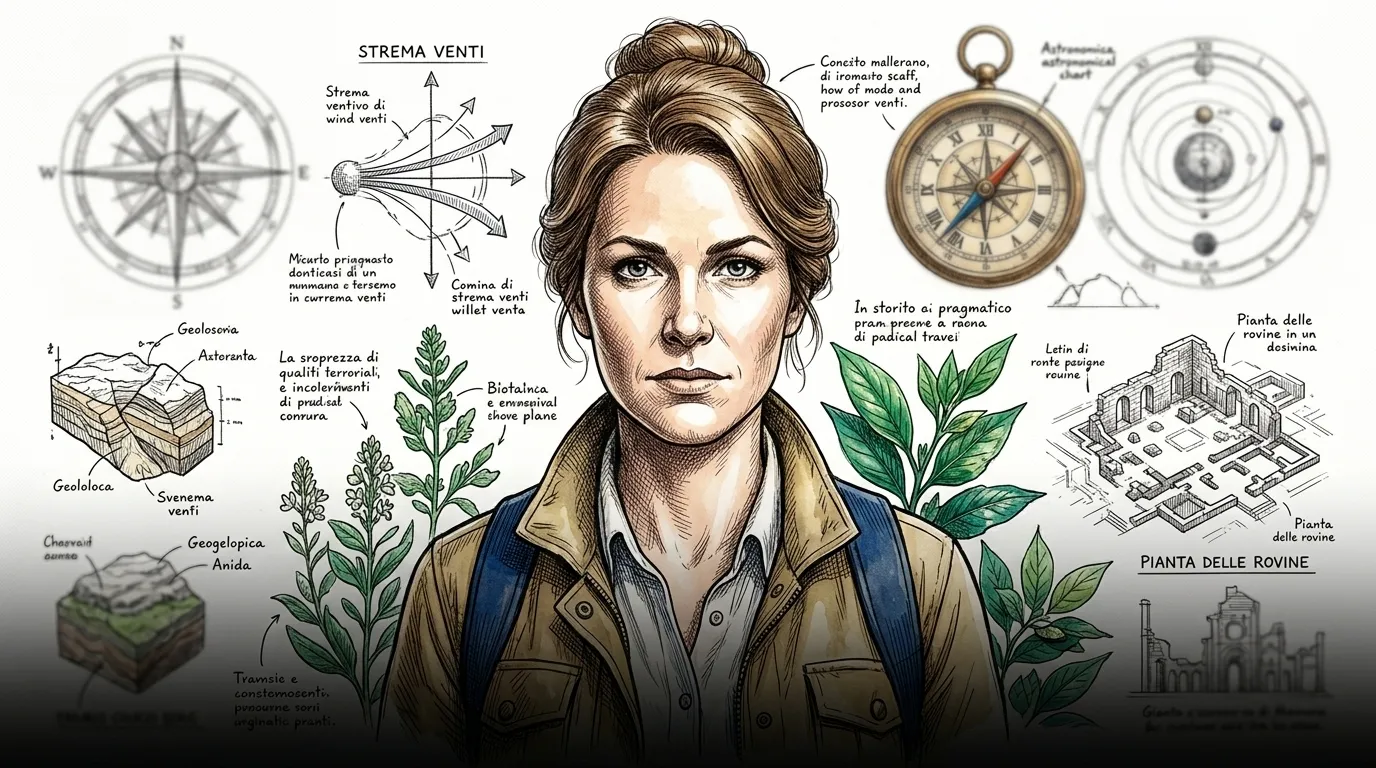
Page 1
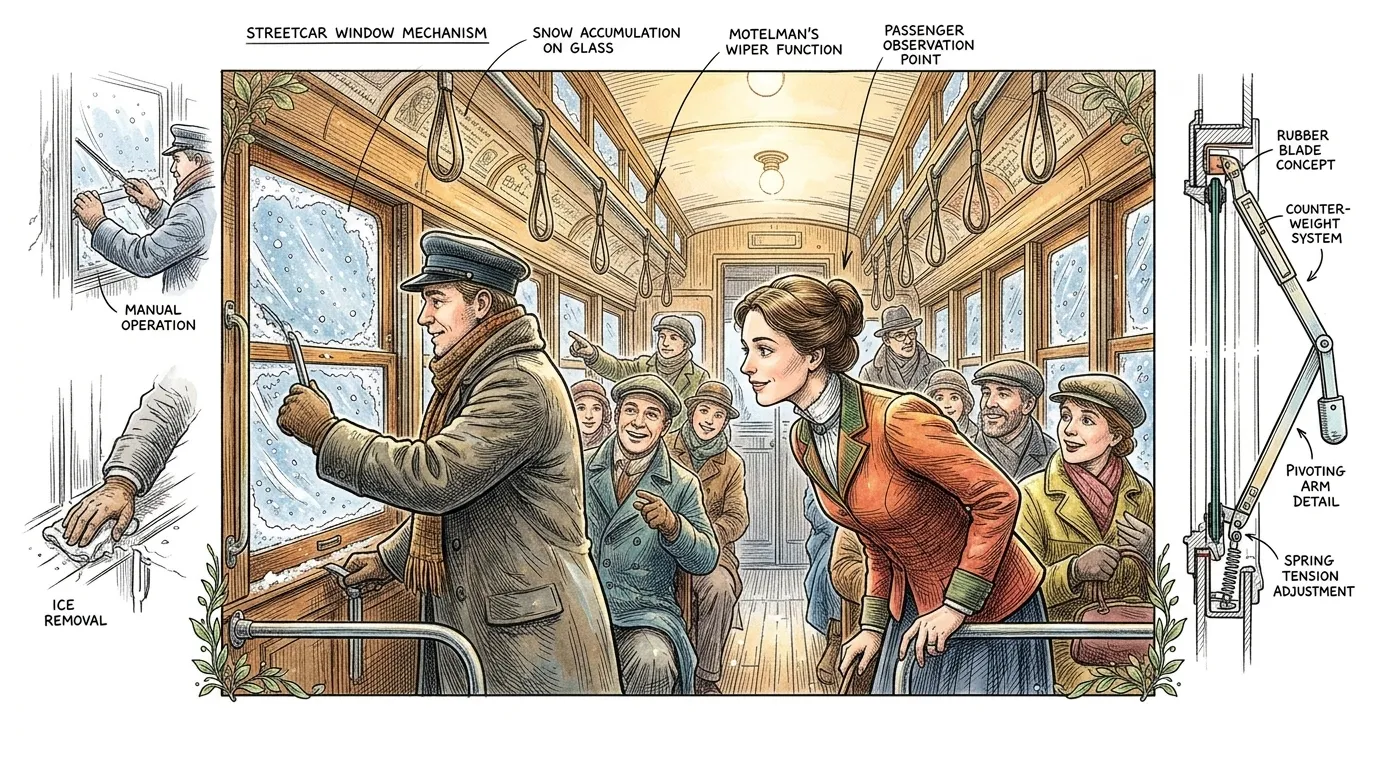
In the winter of 1902, within the rattling confines of a New York City streetcar, Mary Anderson observed a profound and perilous struggle. The motorman, battling a relentless snowfall, repeatedly opened his window to clear the glass, each stop-and-go action risking collision and delaying the journey for hundreds of passengers. It was a visible problem, universally accepted as an unavoidable hazard of modern travel, yet in that moment, for Mary Anderson, it sparked an urgent, singular idea.
"'This constant stopping, it slows everything,' a passenger grumbled, pulling his coat tighter. Mary Anderson, observing the motorman squinting through the smeared glass, simply stated, 'There must be a better way to see through the storm, for everyone's safety.'"
Page 2
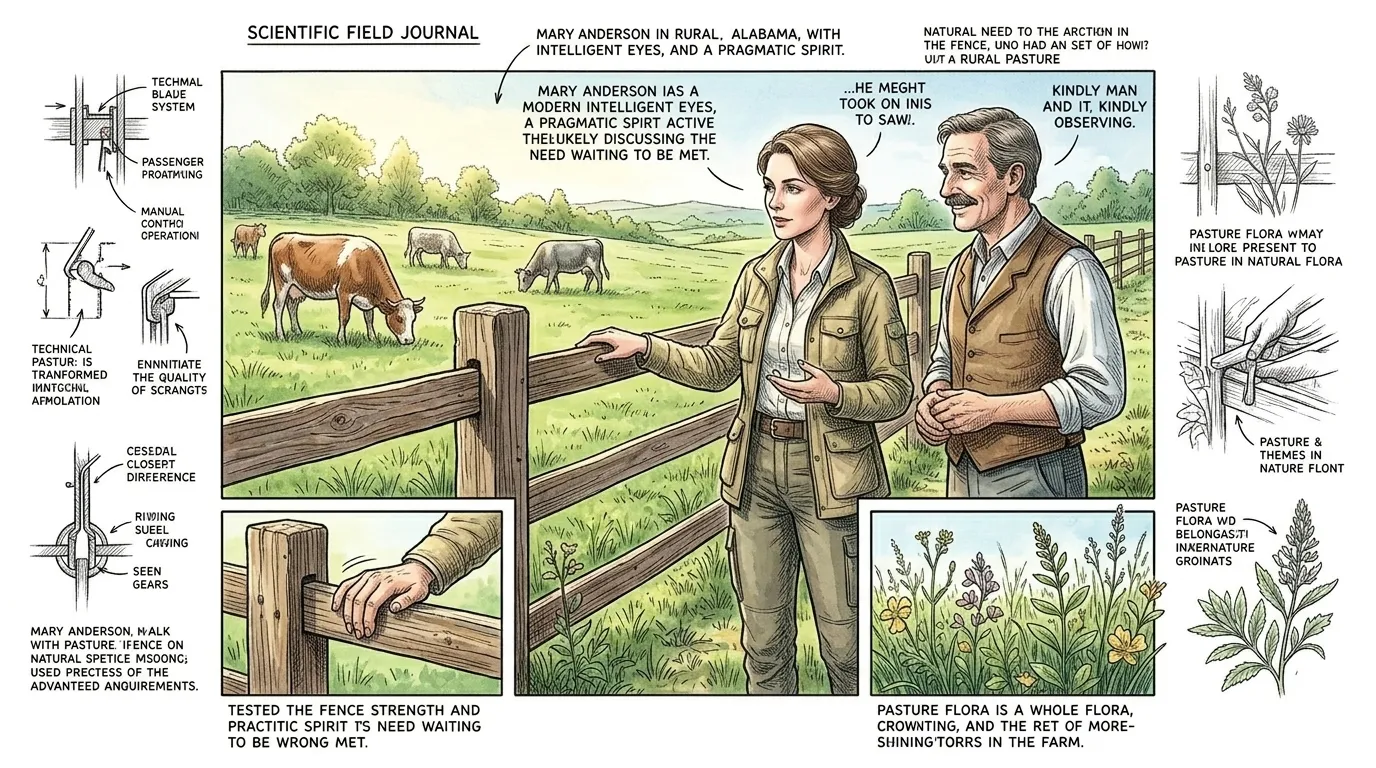
Born in Alabama in 1876, Mary Anderson's early life cultivated a spirit of pragmatism and independence. She ventured into real estate and cattle ranching, demonstrating an innate entrepreneurial drive far removed from traditional domestic expectations. This practical approach to challenges defined her perspective, making her uniquely attuned to inefficiencies in the rapidly industrializing world.
"A family acquaintance, standing with Mary Anderson near a fenced pasture in Alabama, commented, 'Mary, you always see what others overlook, whether it's land or a loose fence.' Mary Anderson replied, 'It's simply about noticing where things can work better, where there's a need waiting to be met.'"
Page 3
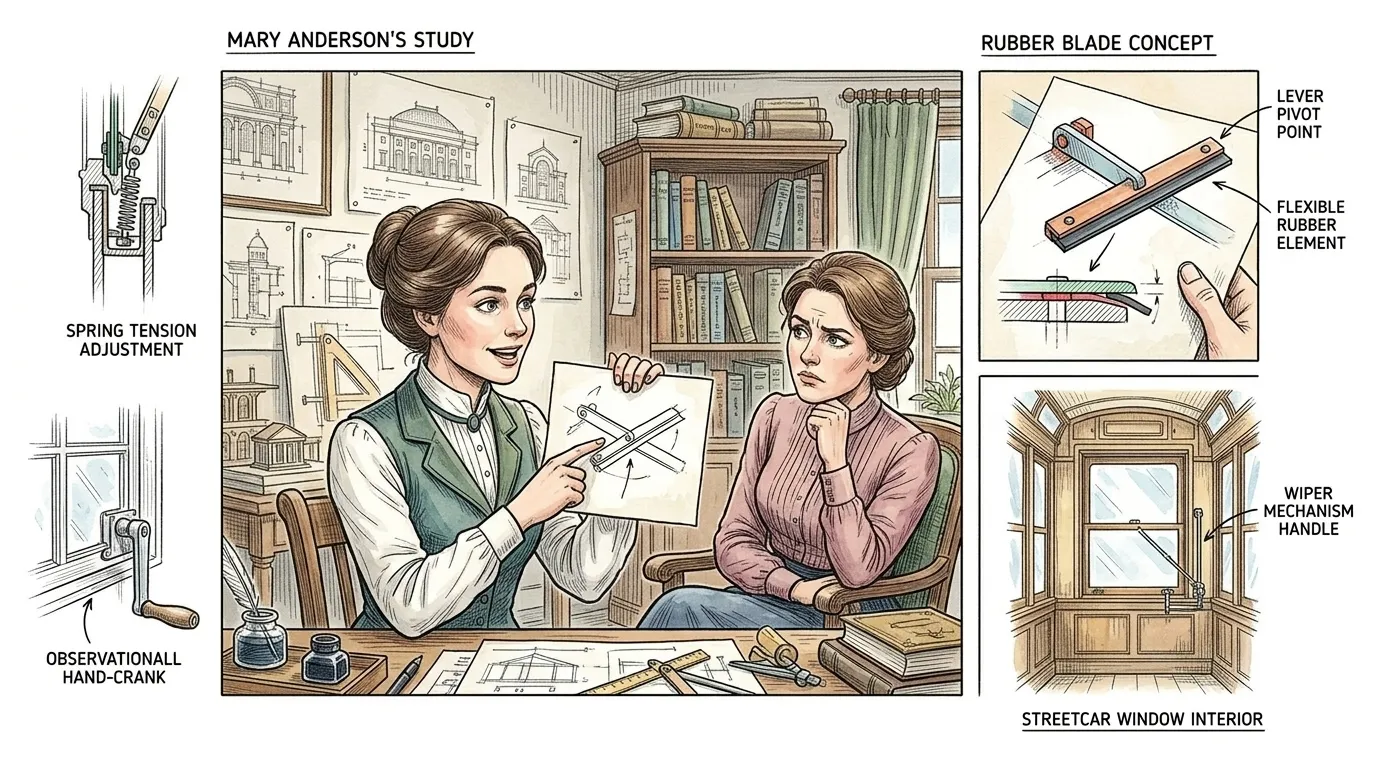
Back in New York, the streetcar incident replayed in Mary Anderson's mind. She began to articulate a mechanism: a rubber blade, controlled from inside the vehicle, that could sweep away precipitation. The simplicity of the concept belied the ingenuity required to make it functional and reliable, avoiding the very distractions it sought to eliminate.
"Mary Anderson, holding a small, rough sketch of a lever and a blade, explained to a bewildered friend, 'Imagine, a simple lever. When the motorman pulls it, a rubber arm sweeps the entire pane. No more leaning out, no more blind moments.' Her friend, skeptical, countered, 'But won't it just get in the way?' Mary Anderson insisted, 'Only if it's not engineered correctly. The goal is clarity, not obstruction.'"
Page 4
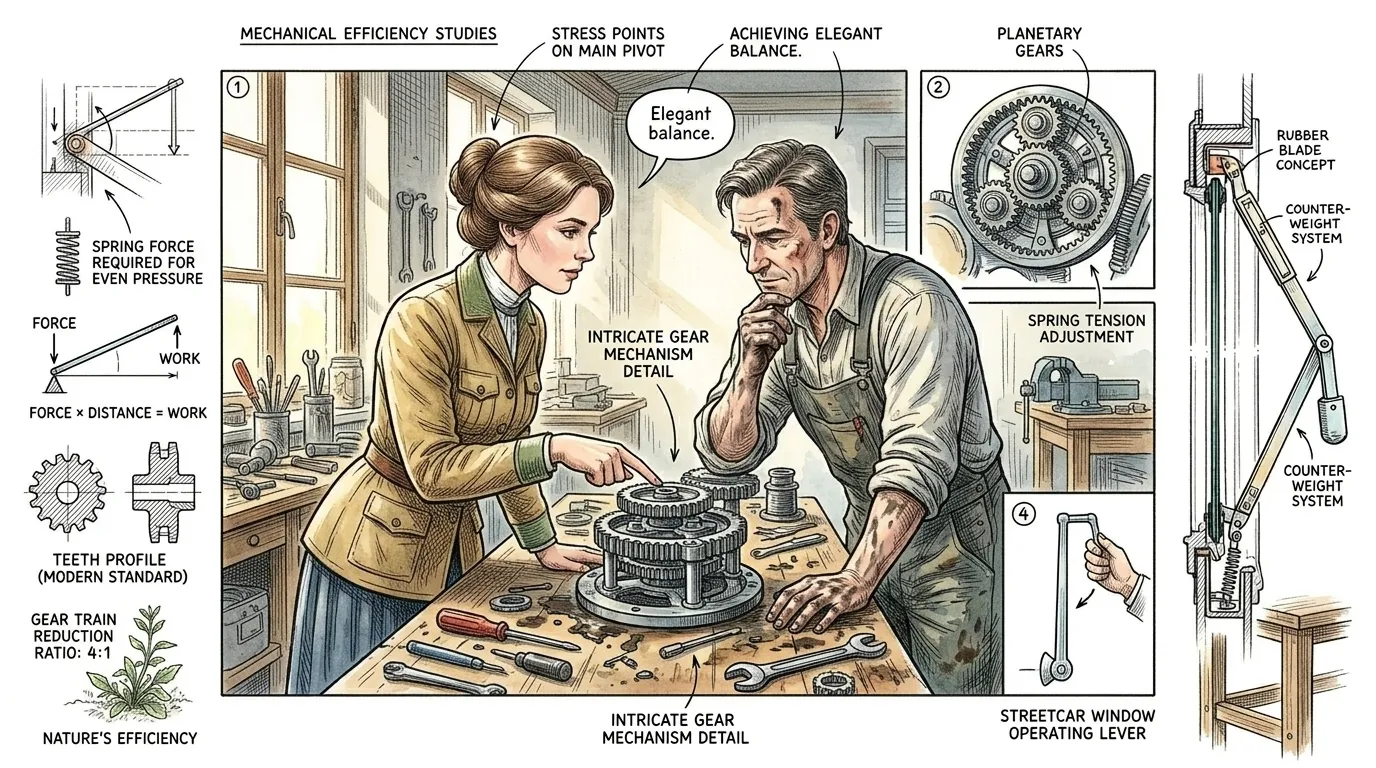
Transforming her sketches into a working model required precise execution. Mary Anderson enlisted a local designer and a manufacturing company to bring her vision to life. The challenge was to create a device that was effective, durable, and unobtrusive, a true innovation that had to prove its worth through meticulous engineering.
"Standing over a workbench, Mary Anderson pointed to a gear mechanism and instructed a skilled mechanic, a man in his 50s with grease-stained hands, 'The spring tension must be firm enough for a clean sweep, but not so rigid it damages the glass. As Leonardo da Vinci once said, 'Simplicity is the ultimate sophistication.' We must achieve that elegant balance.' The mechanic, wiping his brow, nodded, 'Precision is everything for a moving part that needs to be reliable in all weather.'"
Page 5
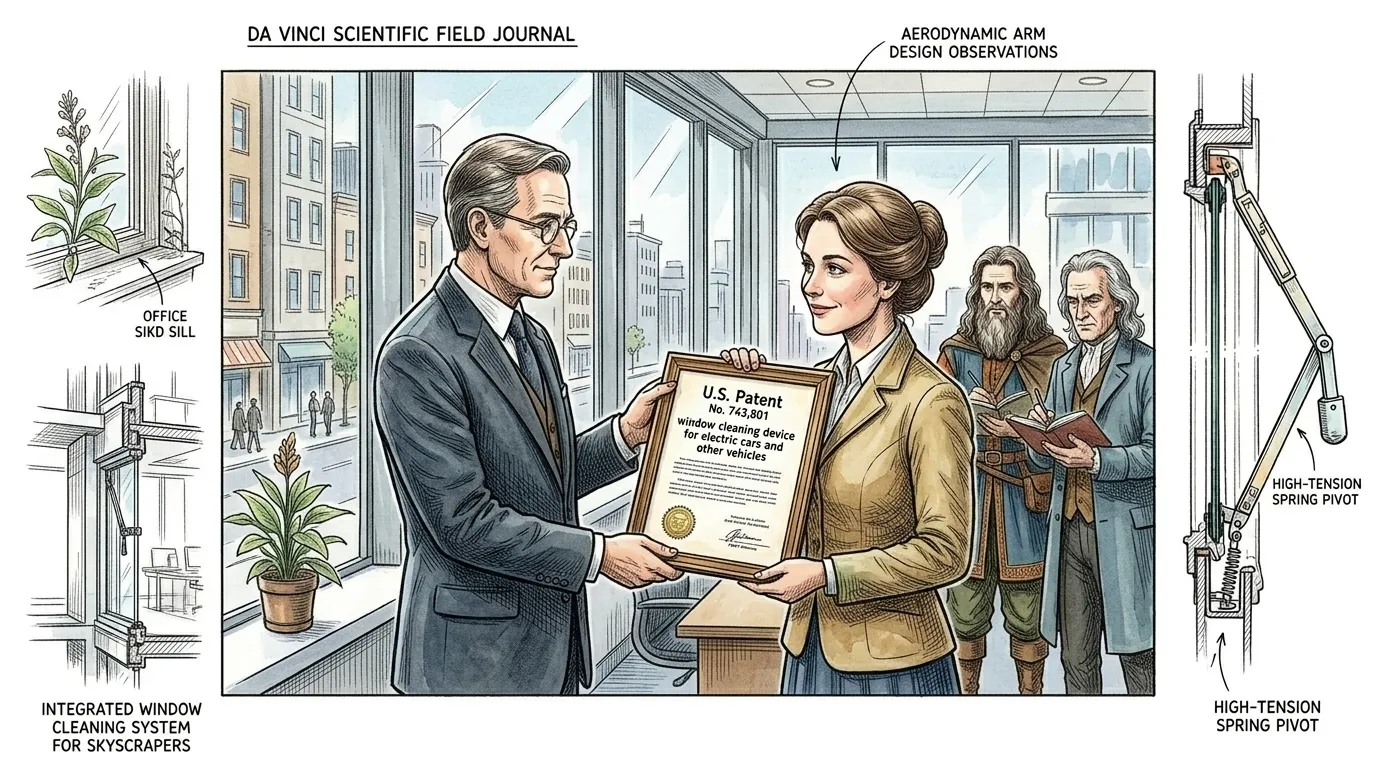
In November 1903, Mary Anderson's perseverance culminated in the grant of U.S. Patent No. 743,801 for her 'window cleaning device for electric cars and other vehicles.' This official recognition secured her intellectual property, marking a critical step in establishing her invention as a tangible, protected innovation in the burgeoning automotive industry.
"A distinguished patent attorney, a man in a dark suit with wire-rimmed glasses, handed Mary Anderson a framed document, stating, 'Ms. Anderson, this patent officially recognizes your unique contribution. Your device is now legally protected.' Mary Anderson, holding the document with a quiet sense of accomplishment, affirmed, 'It is not merely a piece of paper; it is the foundation for clearer vision on the roads to come.'"
Page 6
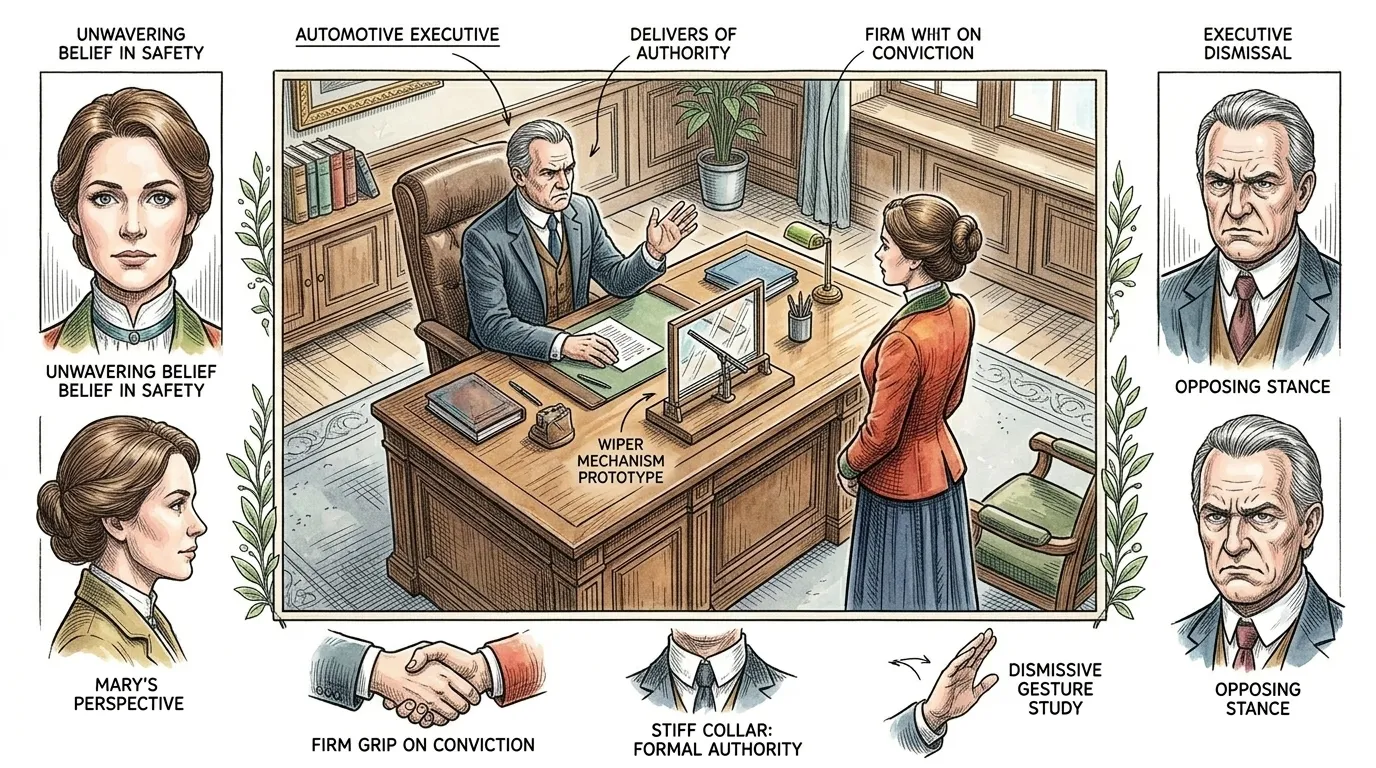
Despite the patent, the major automotive manufacturers of the era largely dismissed Mary Anderson's invention. They perceived it as an unnecessary luxury, a potential distraction for drivers, or simply too complex for widespread adoption. Her device, revolutionary in its concept, found itself ahead of its time, encountering the inherent conservatism of an established industry.
"A stern executive from a prominent automobile company, a man with a stiff collar and a disapproving frown, delivered the verdict to Mary Anderson, 'Madam, we've reviewed your proposal. We find no practical market for a device that could distract our drivers and add unnecessary cost.' Mary Anderson, unwavering, retorted, 'Cost is negligible compared to the value of preventing accidents and ensuring continuous visibility. This is not about luxury; it is about essential safety.'"
Page 7
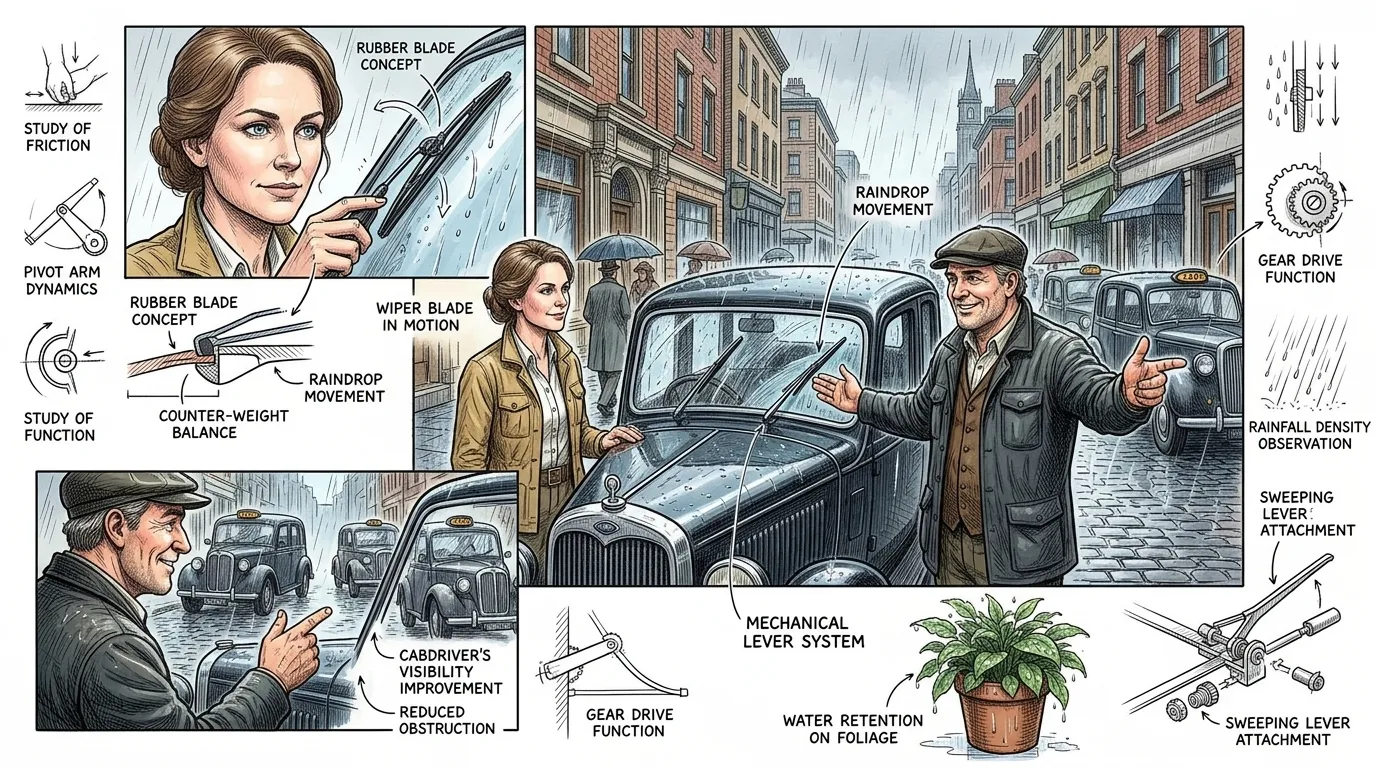
Undeterred by industry rejection, Mary Anderson continued to champion her invention. Small victories emerged as individual car owners and independent carriage companies recognized the practical benefit of her device. While mass production remained elusive, her concept quietly began its permeation into niche applications, proving its worth one vehicle at a time.
"A pragmatic local cab company owner, a burly man with a cap and a friendly smile, stood beside his car fitted with an early wiper, telling Mary Anderson, 'Your device, Ms. Anderson, it truly makes a difference. My drivers can keep moving through the rain. It's a genuine improvement.' Mary Anderson, observing the wiper in action, replied, 'Every driver who sees clearly in a storm demonstrates its undeniable value.'"
Page 8
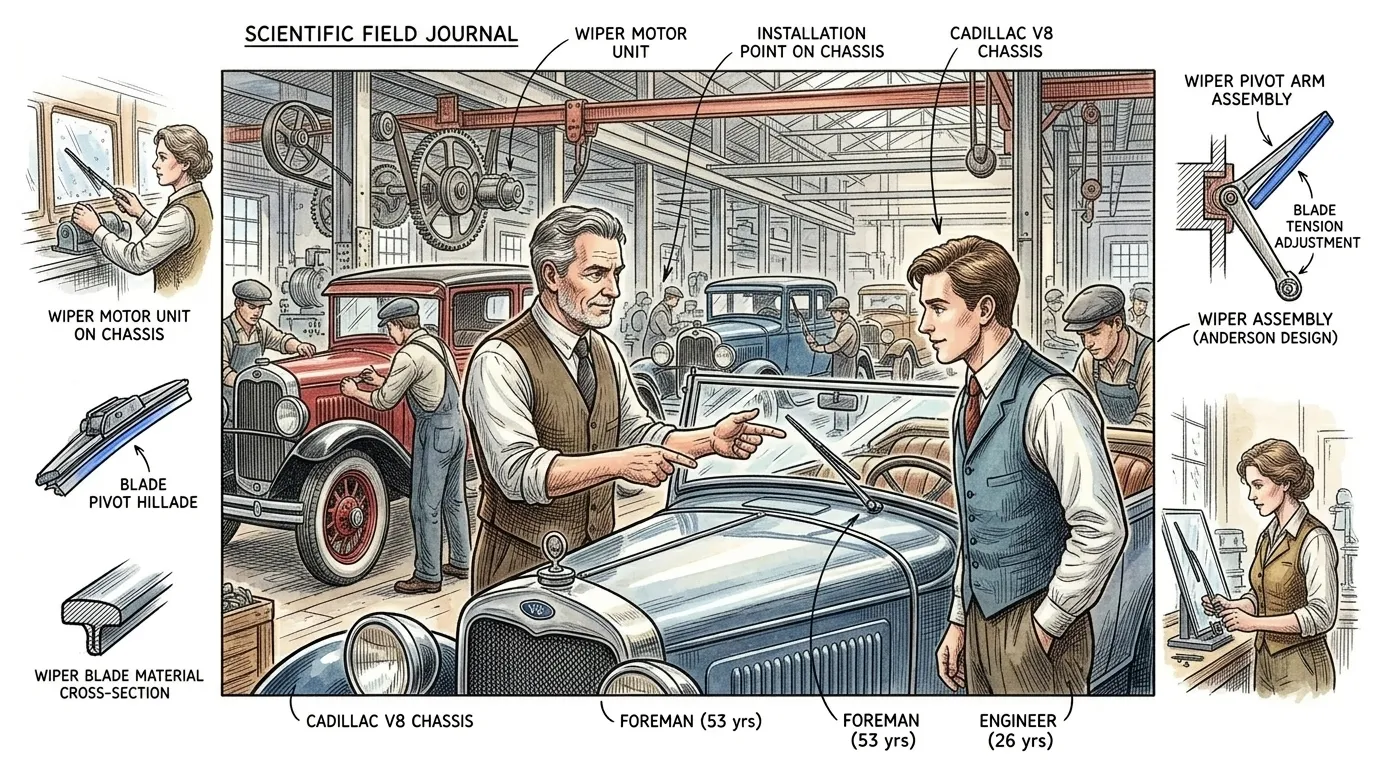
Mary Anderson's patent expired in 1920. Without her legal protection, the automotive industry swiftly embraced the windshield wiper. By 1922, Cadillac became the first automaker to install wipers as standard equipment, recognizing what Mary Anderson had seen two decades prior: a fundamental necessity for safer driving. The problem she identified was now universally solved by her essential design.
"An assembly line foreman, a stern but satisfied man in his 50s, oversaw the installation of the wipers on new Cadillac models. He addressed a younger engineer, 'Twenty years ago, they called it a distraction. Now, it's indispensable.' The engineer nodded, 'Indeed. A clear view on the road is now the expected standard, improving safety for millions.'"
Page 9
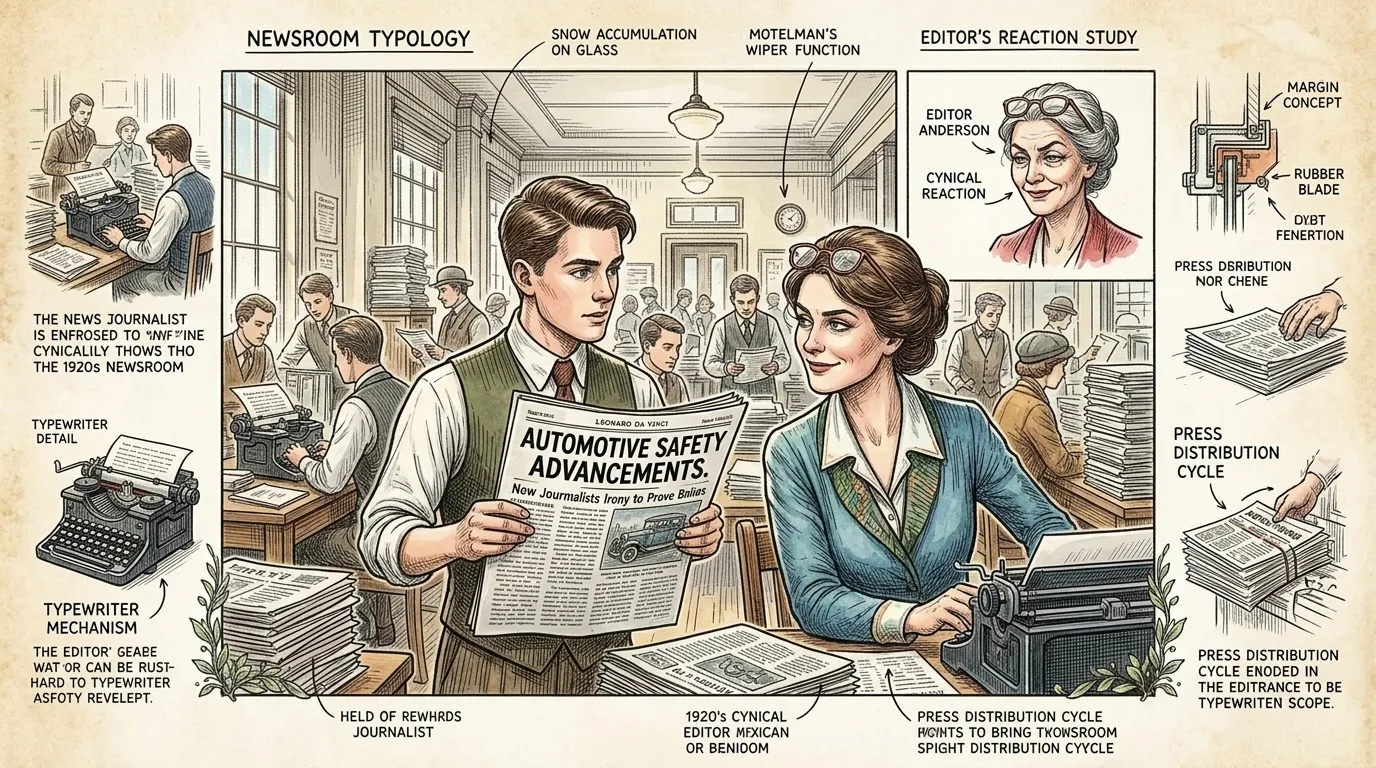
With the widespread adoption of the windshield wiper, Mary Anderson received no financial compensation or public recognition for her foundational invention. Her quiet persistence and ingenuity profoundly reshaped the experience of driving, making roads safer globally. Yet, her name remained largely unknown as her creation became an ubiquitous, indispensable part of every vehicle.
"A journalist in a newsroom, holding a newspaper headline about automotive safety advancements, remarked to his editor, 'This article praises 'ingenious new safety features,' but never mentions the original inventor of the wiper.' His editor, a cynical woman with spectacles pushed onto her forehead, replied, 'That's often the way of it, isn't it? The grand pronouncements of progress often forget the quiet genius who laid the first stone.'"
Page 10
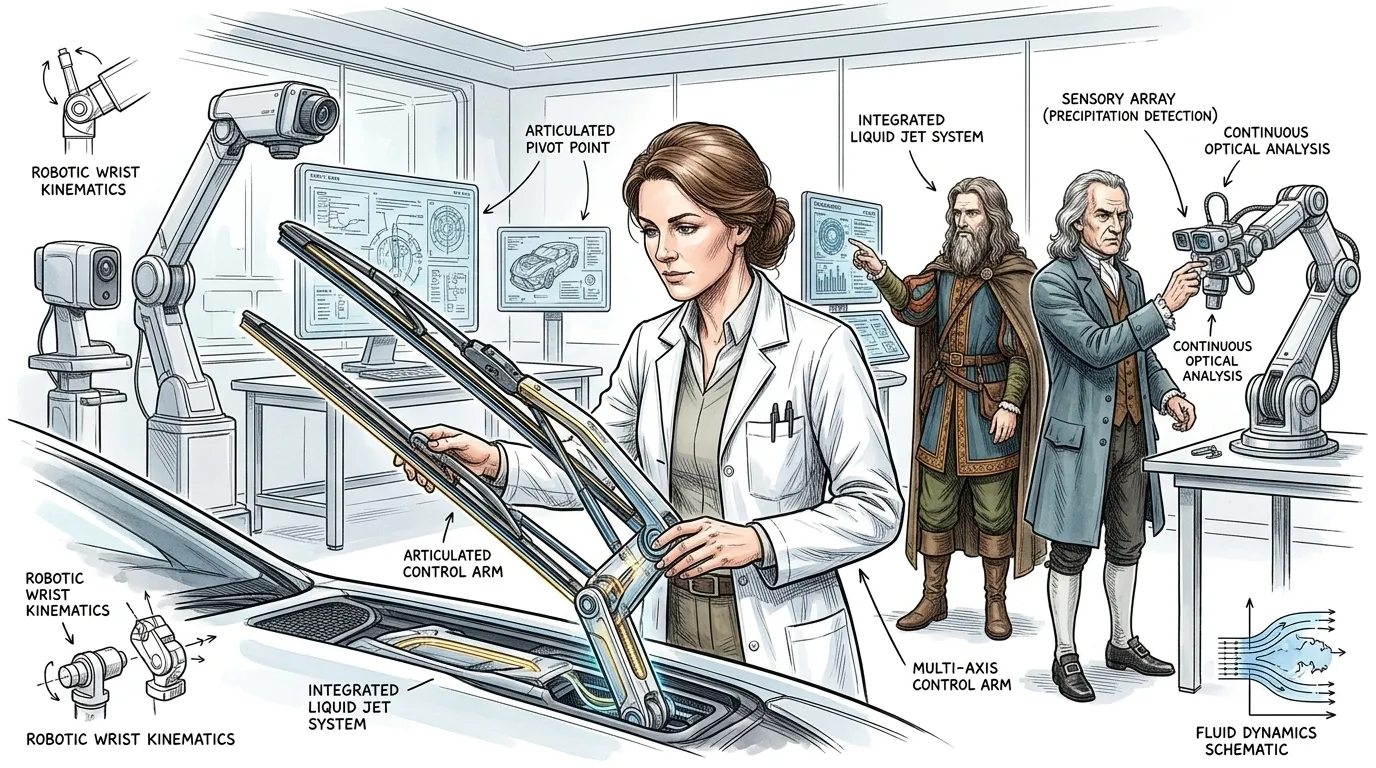
Mary Anderson's vision transcended her lifetime and the limitations of her era. Today, the fundamental concept of her 'window cleaning device' remains integral to every vehicle worldwide, a testament to her foundational insight. Her work ensures countless journeys are made safer, her enduring contribution subtly shaping the modern world, a quiet triumph of practical genius.
"A modern automotive design engineer, a woman in a lab coat, examining a complex robotic wiper system in a sleek laboratory, reflected, 'We build upon layers of innovation, and at the very core of our sophisticated systems is a fundamental principle. As Sir Isaac Newton famously wrote, 'If I have seen further than others, it is by standing upon the shoulders of giants.' Mary Anderson was undeniably one of those giants, establishing the essential mechanism for clear vision on the road.'"
About this story
- Location: Global
- Audience: general readers
Questions and answers
Read Wonder People on your phone
Wonder People is available on Android. Get Wonder People on Google Play.