Maya Angelou
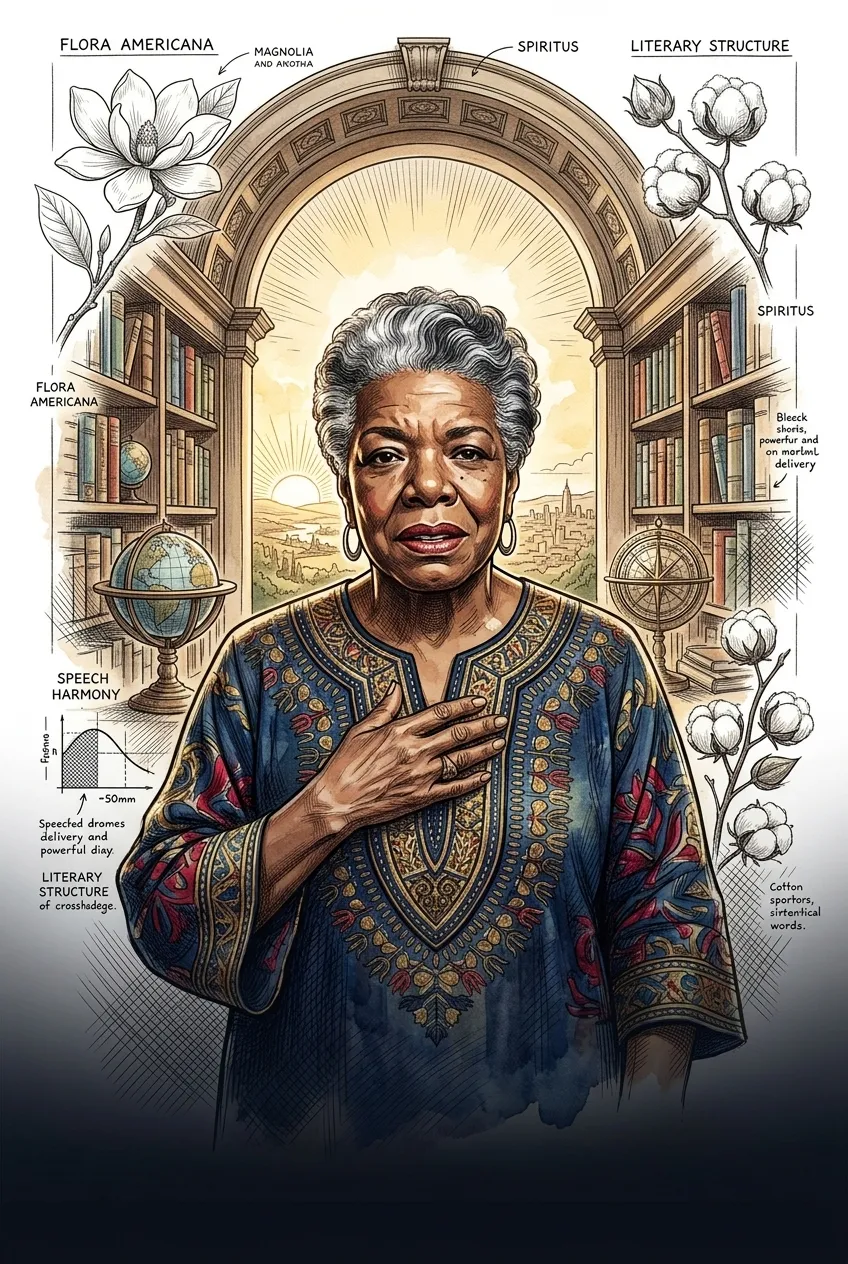
Maya Angelou — an illustrated biography story, set in Global. 10 illustrated pages, free to read on Wonder People.
Page 1
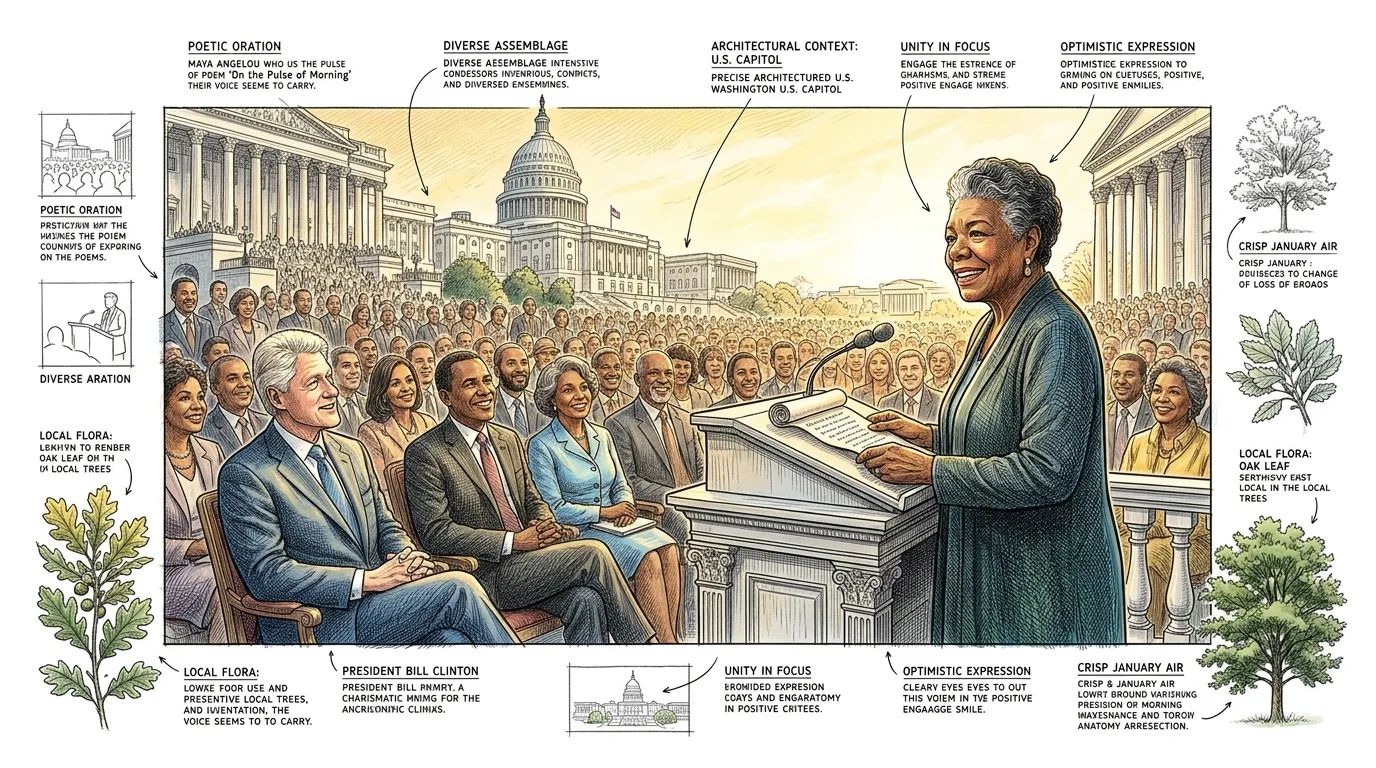
A hush fell across the vast crowd as a woman of profound presence walked to the podium. With clear eyes and a steady voice, Maya Angelou began to speak her poem, 'On the Pulse of Morning.' Her words, delivered to President Bill Clinton and the world, echoed across the freezing Washington D.C. air in January 1993. In that powerful moment, her poem reached over 50 million viewers, declaring a profound message of unity and hope to a watching nation.
Biographical Fact: Maya Angelou delivered her iconic poem 'On the Pulse of Morning' at the first inauguration of President Bill Clinton on January 20, 1993, making her the first poet to do so since Robert Frost at John F. Kennedy's inauguration in 1961.
Page 2
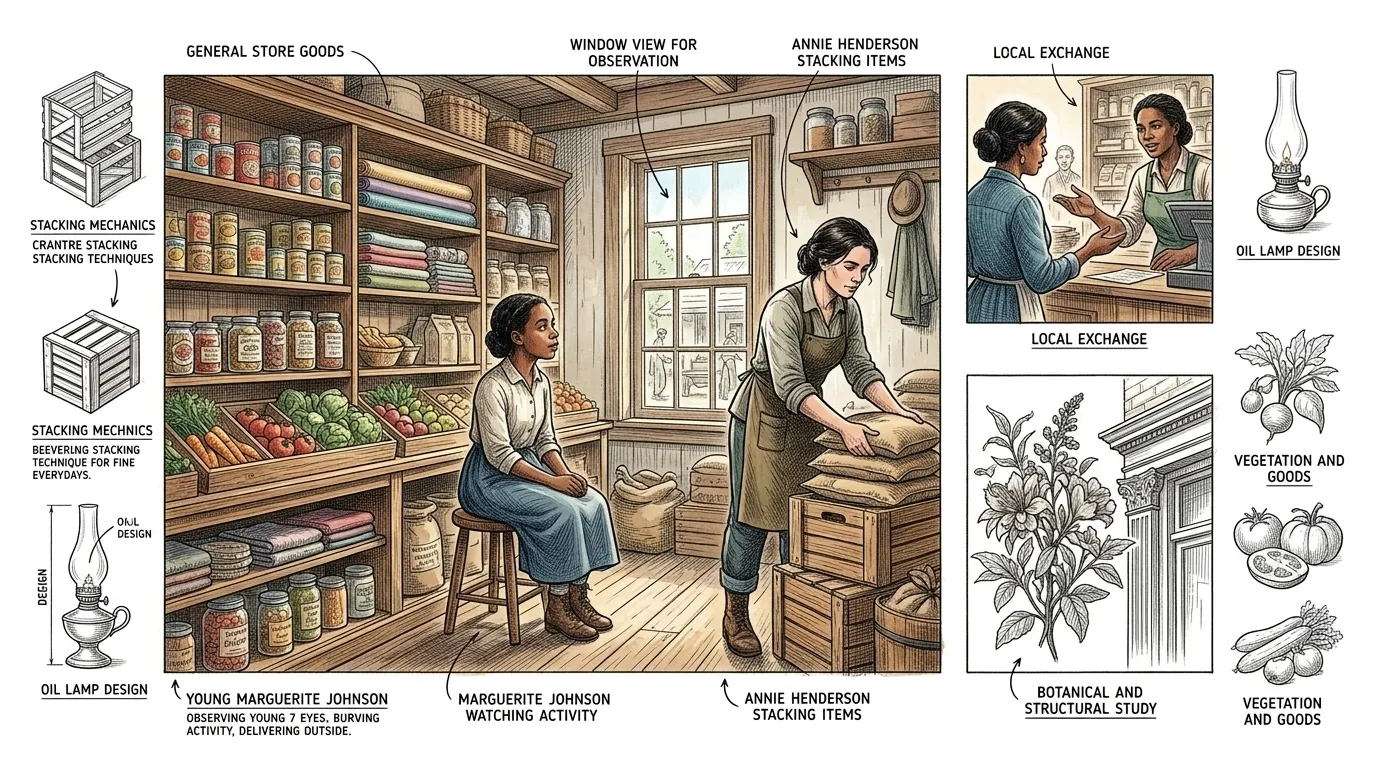
Young Marguerite Johnson, who would later become Maya Angelou, often found herself silent, holding many thoughts inside. Living with her grandmother, Annie Henderson, in the segregated town of Stamps, Arkansas, she learned the quiet strength of observation. 'Grandma Annie always said, 'We must be silent for a while, child, so we can truly hear what needs to be said,' Marguerite often remembered, reflecting on her early years.
"'We must be silent for a while, child, so we can truly hear what needs to be said,' Marguerite often remembered, reflecting on her early years."
Biographical Fact: Marguerite Ann Johnson, later Maya Angelou, spent much of her childhood in Stamps, Arkansas, with her paternal grandmother, Annie Henderson, who owned a general store. This period profoundly shaped her understanding of resilience and community.
Page 3
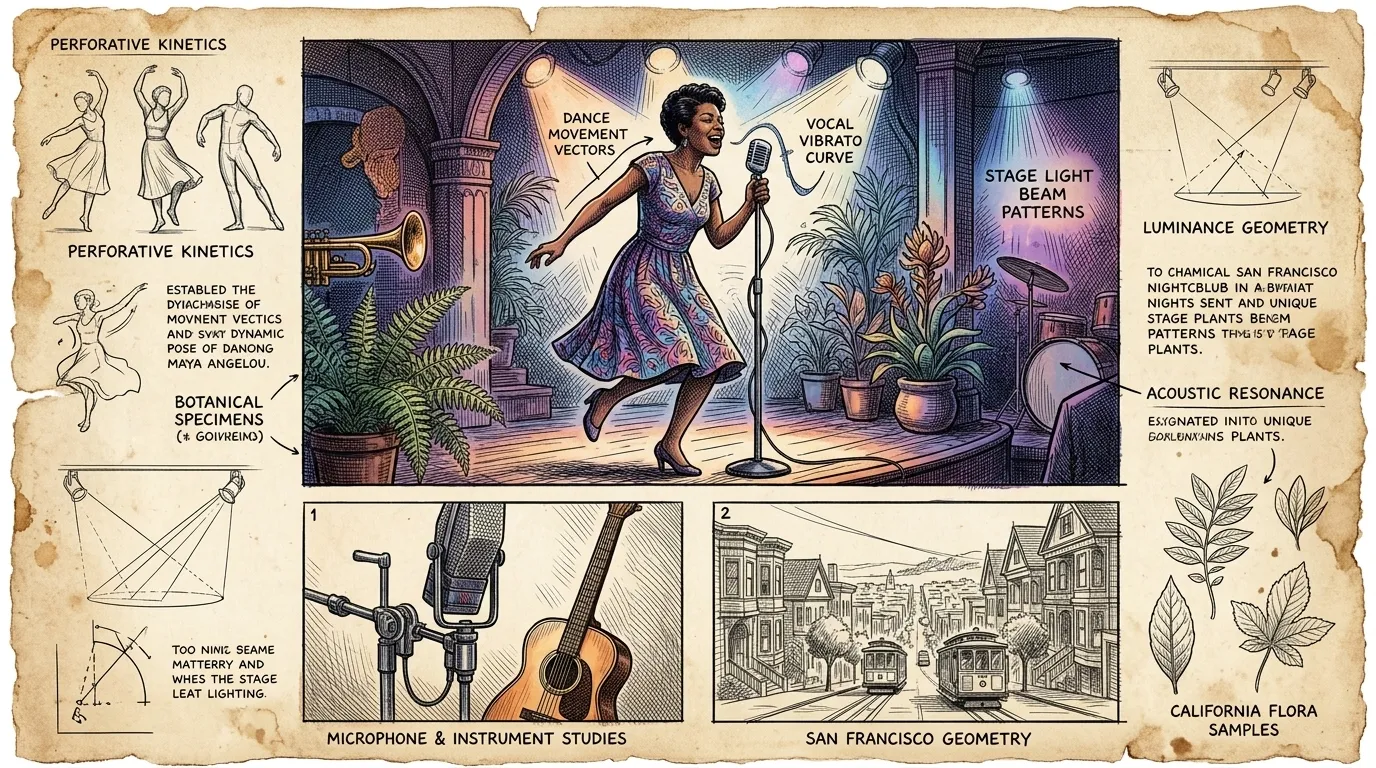
Leaving the quiet of Stamps, Maya Angelou began to explore a vibrant world of art and performance. In San Francisco, she stepped onto stages, changing her name to 'Maya Angelou' and embracing singing and dancing. She discovered that words could be set to music, and stories could be told with movement, transforming herself into an artist.
"'This stage, this song, it's how I can tell my story to everyone!' a young performer, Maya, exclaimed with bright eyes."
Biographical Fact: In the 1950s, Maya Angelou worked as a calypso singer and dancer, adopting the professional name 'Maya Angelou.' She toured with 'Porgy and Bess' and performed in San Francisco nightclubs, honing her stage presence and public voice.
Page 4
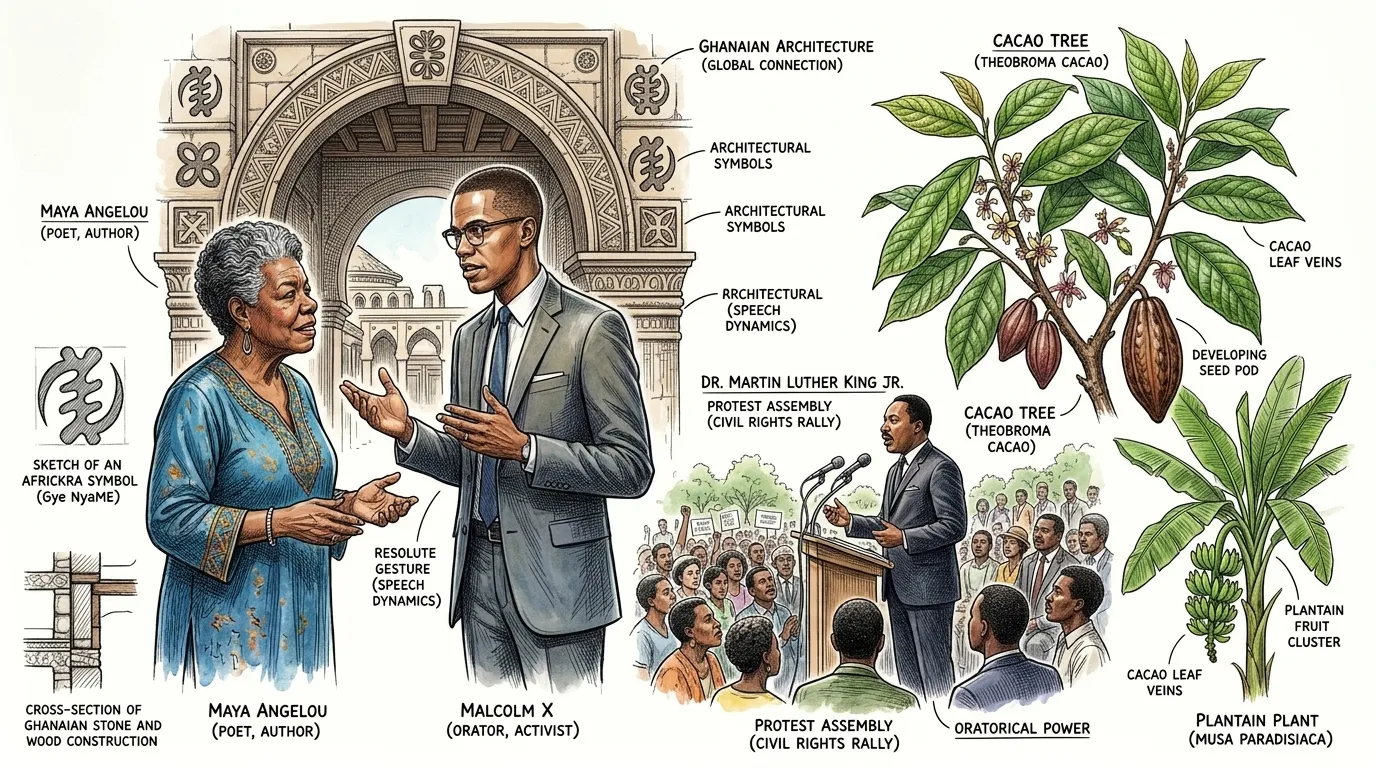
Maya Angelou's artistic journey soon led her to the heart of the Civil Rights Movement, where she engaged directly with leaders like Malcolm X and Martin Luther King Jr. She organized and spoke, seeing the urgency of their cause. Later, she lived in Ghana, connecting with African cultures and expanding her understanding of global struggles for freedom.
"'We must contribute all we have to this movement, Maya,' a resolute Malcolm X stated to her. 'Our voices, our art, our very lives, must speak for justice.'"
Biographical Fact: Maya Angelou actively participated in the Civil Rights Movement, working as the Northern Coordinator for the Southern Christian Leadership Conference (SCLC) at the request of Martin Luther King Jr. She also lived in Ghana in the early 1960s, continuing her work as a journalist and activist.
Page 5
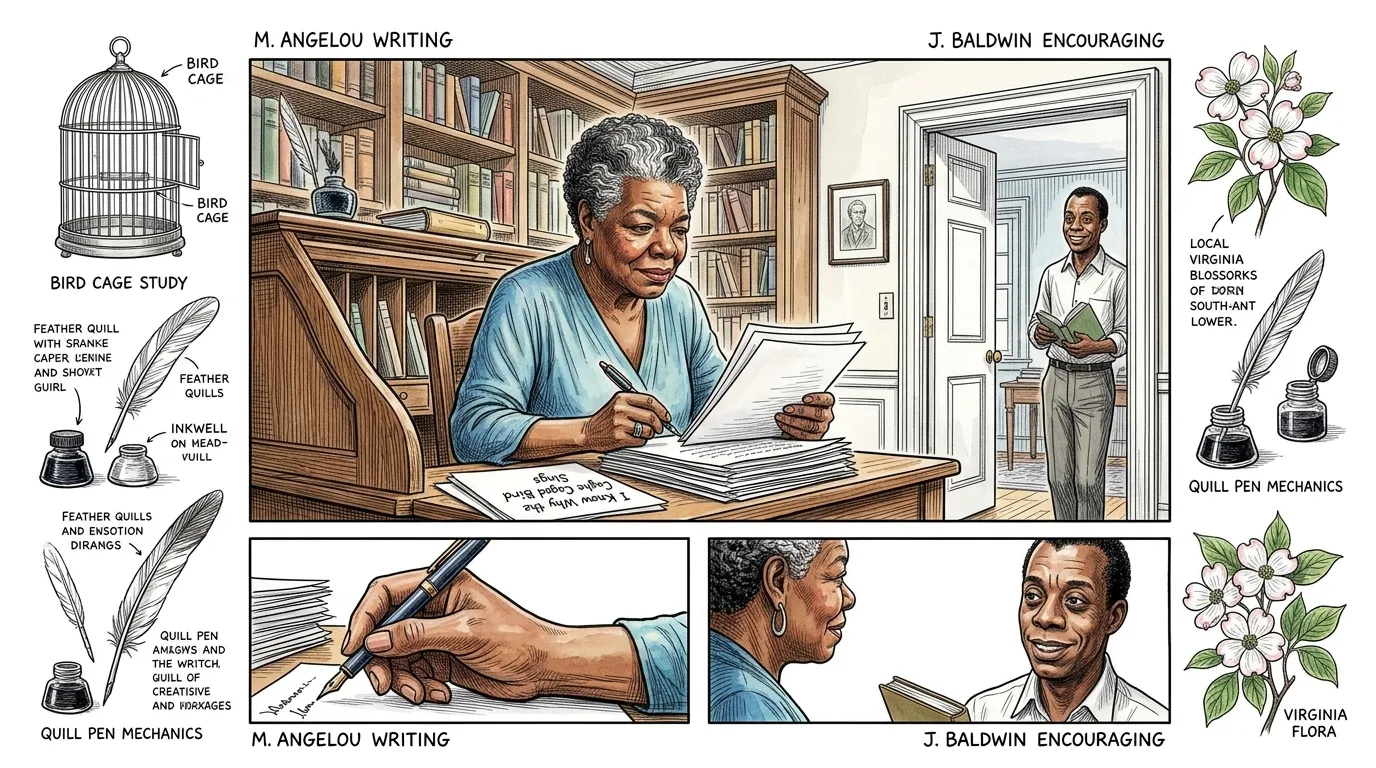
When challenged by writer James Baldwin to put her life story on paper, Maya Angelou initially hesitated, but soon embraced the task with fierce determination. She poured her experiences into her memoir, I Know Why the Caged Bird Sings, giving voice to her childhood, her struggles, and her triumphs. In the calm of her home, she believed deeply that 'there is no agony like bearing an untold story inside you,' as she later often reflected, understanding the profound need to share her truth.
"'There is no agony like bearing an untold story inside you,' Maya Angelou later often reflected, understanding the profound need to share her truth."
Biographical Fact: Maya Angelou's groundbreaking memoir, I Know Why the Caged Bird Sings, published in 1969, detailed her early life and established her as a major literary voice. The book earned her international acclaim and became a classic of American literature.
Page 6
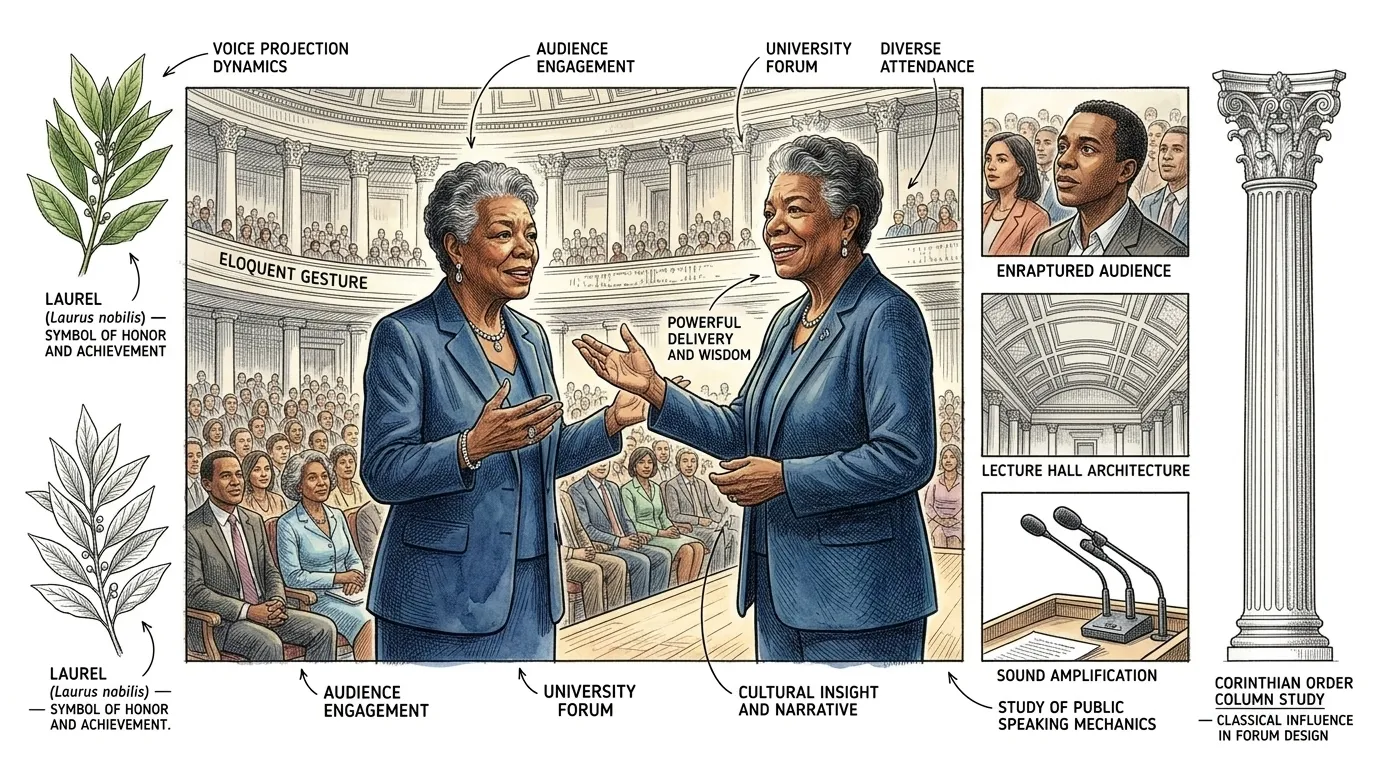
After the success of her memoir, Maya Angelou began to command stages not just as a singer, but as a celebrated poet and lecturer. She toured universities and forums, her powerful voice weaving stories and wisdom, making her impossible to ignore. Her ability to connect with diverse audiences, sharing profound truths, became her trademark.
"'Each of us has a voice that matters,' Maya Angelou declared to an enraptured audience. 'When we speak our truth, we invite others to find theirs.'"
Biographical Fact: Throughout the 1970s and 1980s, Maya Angelou solidified her reputation as a public intellectual and orator. She became a sought-after speaker, sharing her poetry and insights across the country, influencing countless individuals.
Page 7
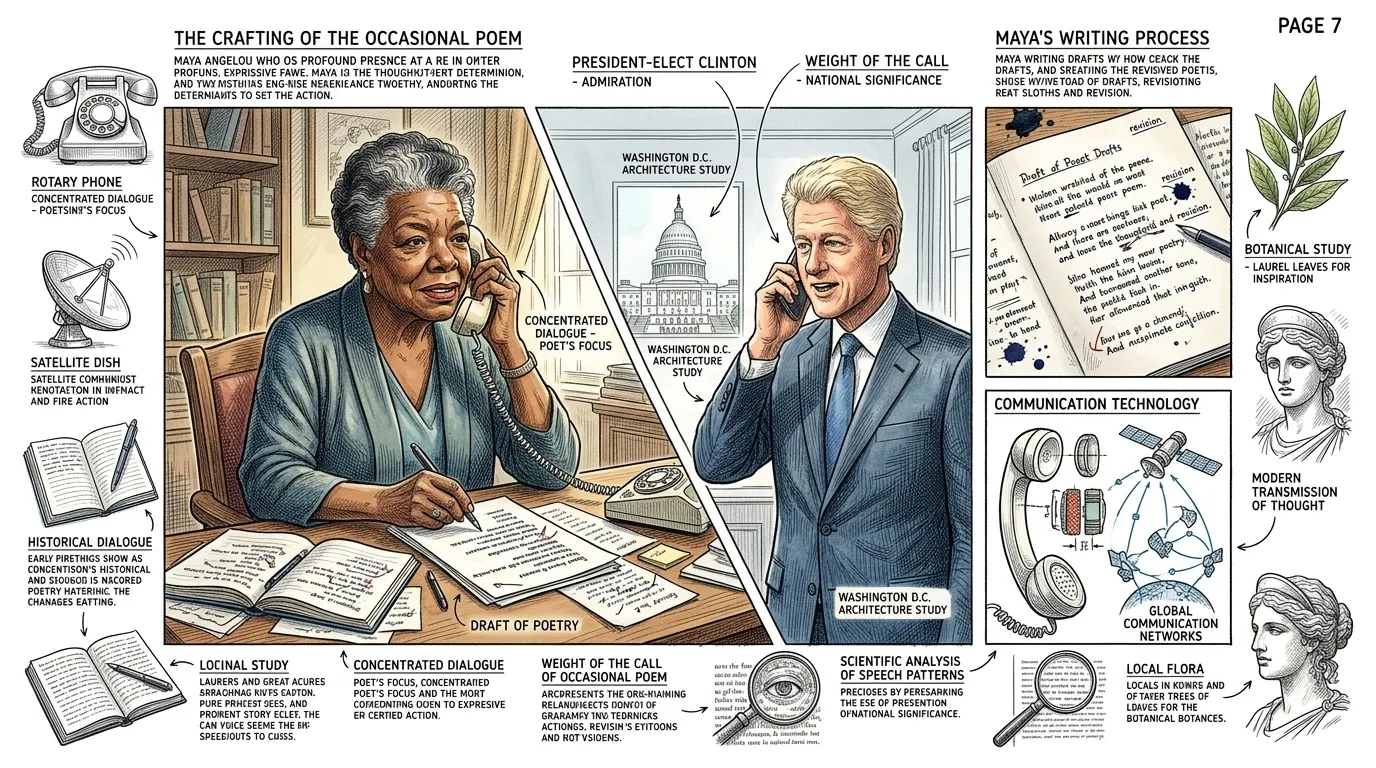
In 1992, a pivotal call came: President-elect Bill Clinton personally invited Maya Angelou to compose and recite a poem for his inauguration. This was a profound honor, yet also a monumental challenge. She knew her words needed to bridge divides and inspire a collective spirit. She meticulously crafted each line, understanding the immense weight of the moment.
"'President Clinton, to be asked to speak for the nation is a sacred trust,' Maya Angelou confirmed over the phone. 'I will do my utmost to weave words of healing and hope.'"
Biographical Fact: The invitation from President-elect Bill Clinton for Maya Angelou to compose and recite a poem at his inauguration was a significant moment. It reflected his admiration for her work and her unique ability to articulate the American spirit.
Page 8
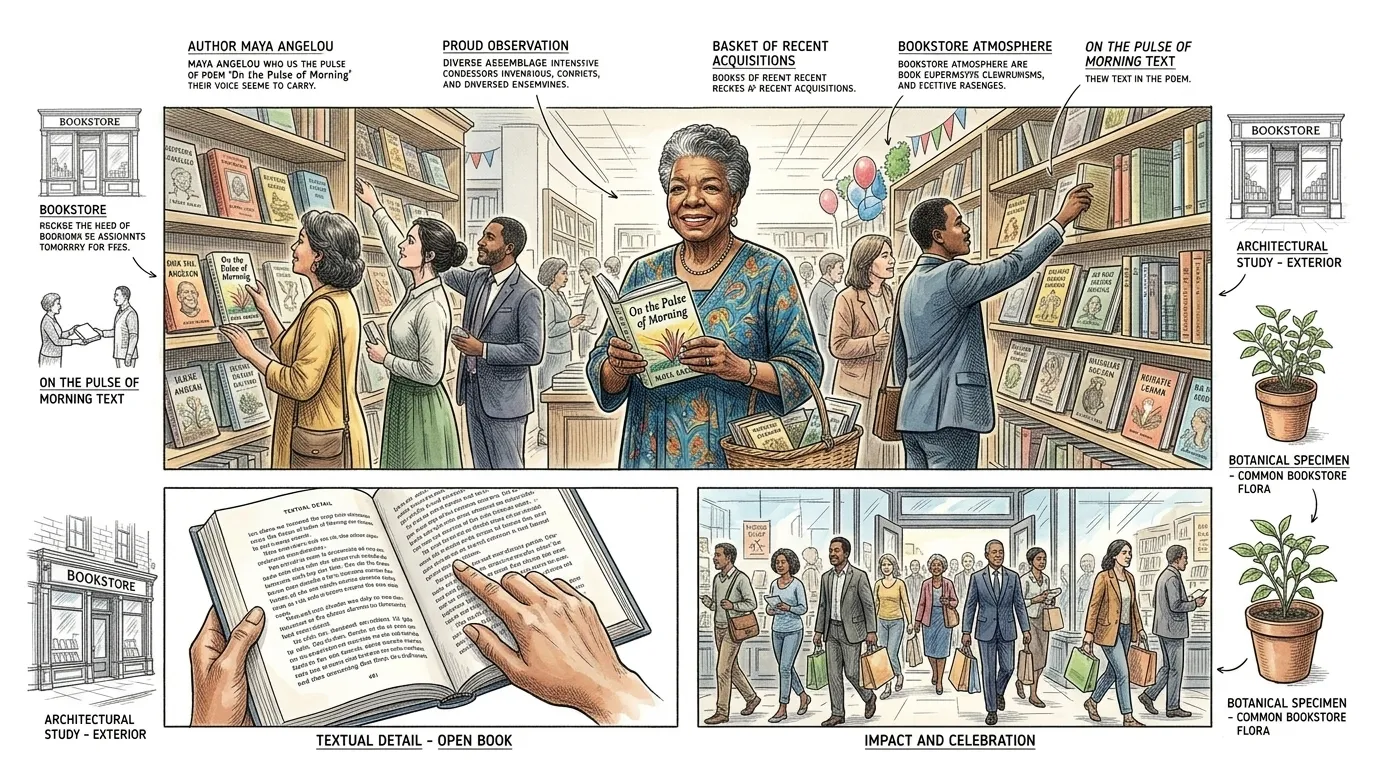
After her powerful inaugural recitation, 'On the Pulse of Morning' resonated deeply, becoming a national phenomenon. Bookstores quickly sold out of her works, and her message of unity and resilience spread widely. She often reflected that the true power of words, like 'language is our most potent weapon for change,' as she had learned decades ago, was to shape understanding and build bridges where walls once stood.
"'Language is our most potent weapon for change,' Maya Angelou often reflected after the inauguration. 'It shapes understanding and builds bridges where walls once stood.'"
Biographical Fact: The recitation of 'On the Pulse of Morning' launched Maya Angelou into an unprecedented level of public recognition. The poem became a bestseller, and her existing works saw a significant surge in sales, solidifying her place as a literary icon and a voice for the nation.
Page 9

Even after the inauguration, Maya Angelou's commitment to writing, teaching, and speaking never wavered. She received numerous awards, including the Presidential Medal of Freedom from President George W. Bush, recognizing her profound impact on American culture and civil rights. She continued to inspire new generations, emphasizing the power of education and empathy in every lecture.
"'I accept this honor not for myself alone,' Maya Angelou stated, holding the medal, 'but for all who strive to use their voices for truth and dignity.'"
Biographical Fact: In 2011, President Barack Obama awarded Maya Angelou the Presidential Medal of Freedom, the highest civilian honor in the United States, acknowledging her extraordinary contributions to literature, civil rights, and public life.
Page 10
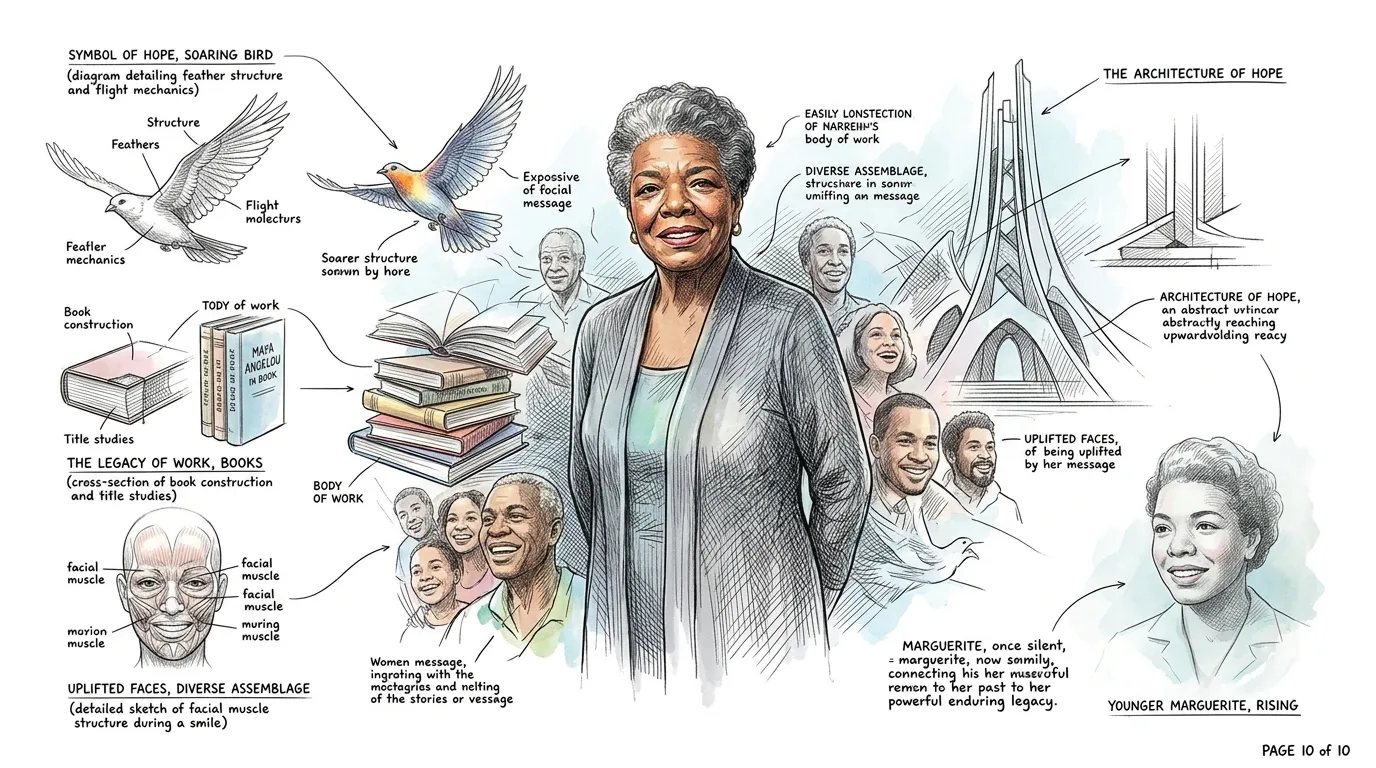
Maya Angelou's legacy endures as a beacon of resilience, a testament to the transformative power of words. She taught that hope and courage could emerge from the deepest pain, leaving behind a body of work that continues to empower. Her voice, once hushed in childhood, became an unforgettable song for humanity, echoing across time, reminding everyone to rise.
Biographical Fact: Maya Angelou passed away in 2014, leaving behind a profound legacy as a poet, memoirist, and civil rights activist. Her work continues to inspire millions, advocating for self-acceptance, education, and the power of the human spirit.
About this story
- Location: Global
- Audience: general readers
Questions and answers
Read Wonder People on your phone
Wonder People is available on Android. Get Wonder People on Google Play.