Mark Twain
Mark Twain — an illustrated biography story, set in Global. 10 illustrated pages, free to read on Wonder People.
Page 1
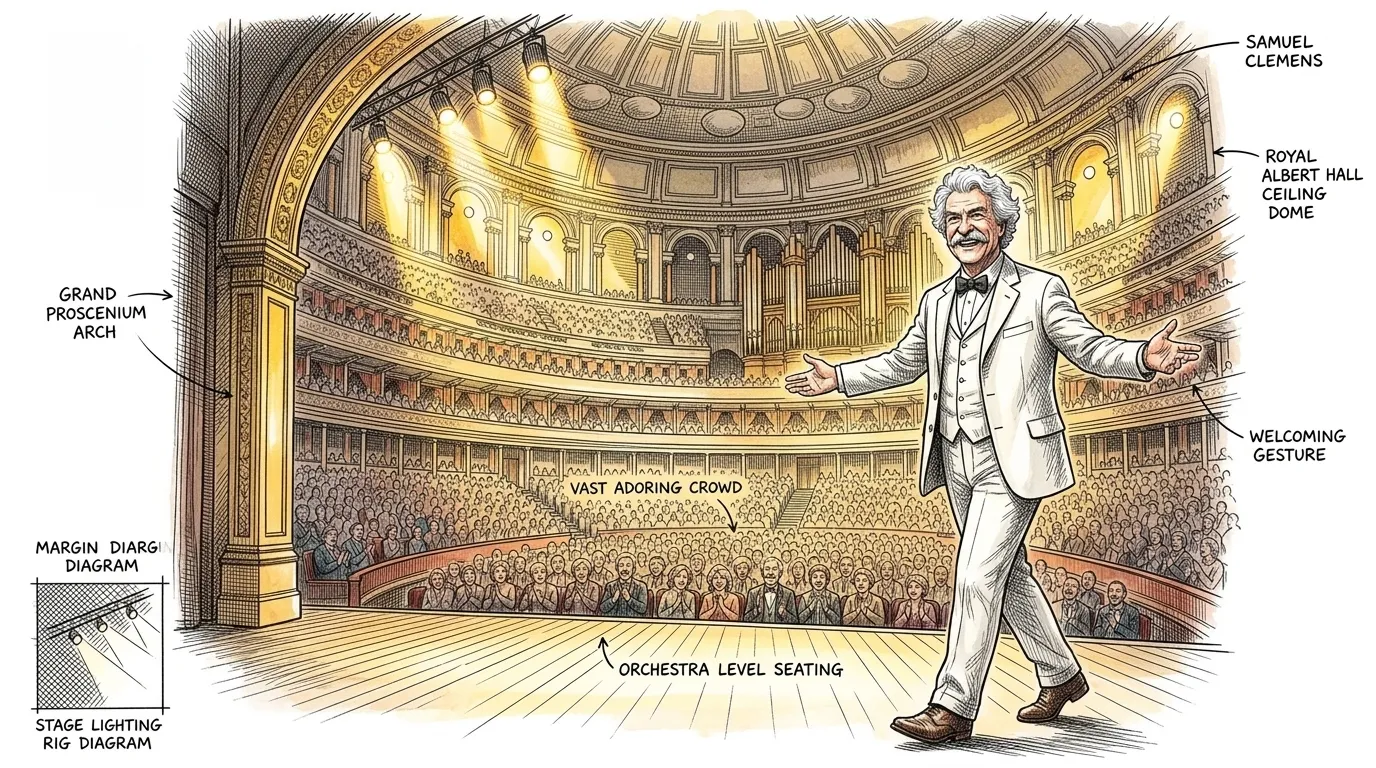
London, England, 1895. Samuel Clemens, known globally as Mark Twain, strode onto the grand stage of the Royal Albert Hall. His presence commanded the vast auditorium, filled with thousands who had come to witness the celebrated American humorist and satirist. This was no mere performance; it was a defiant act of restitution, a global lecture tour undertaken to repay every penny of his massive personal debt, a monumental journey that would cover over 40,000 miles.
Page 2
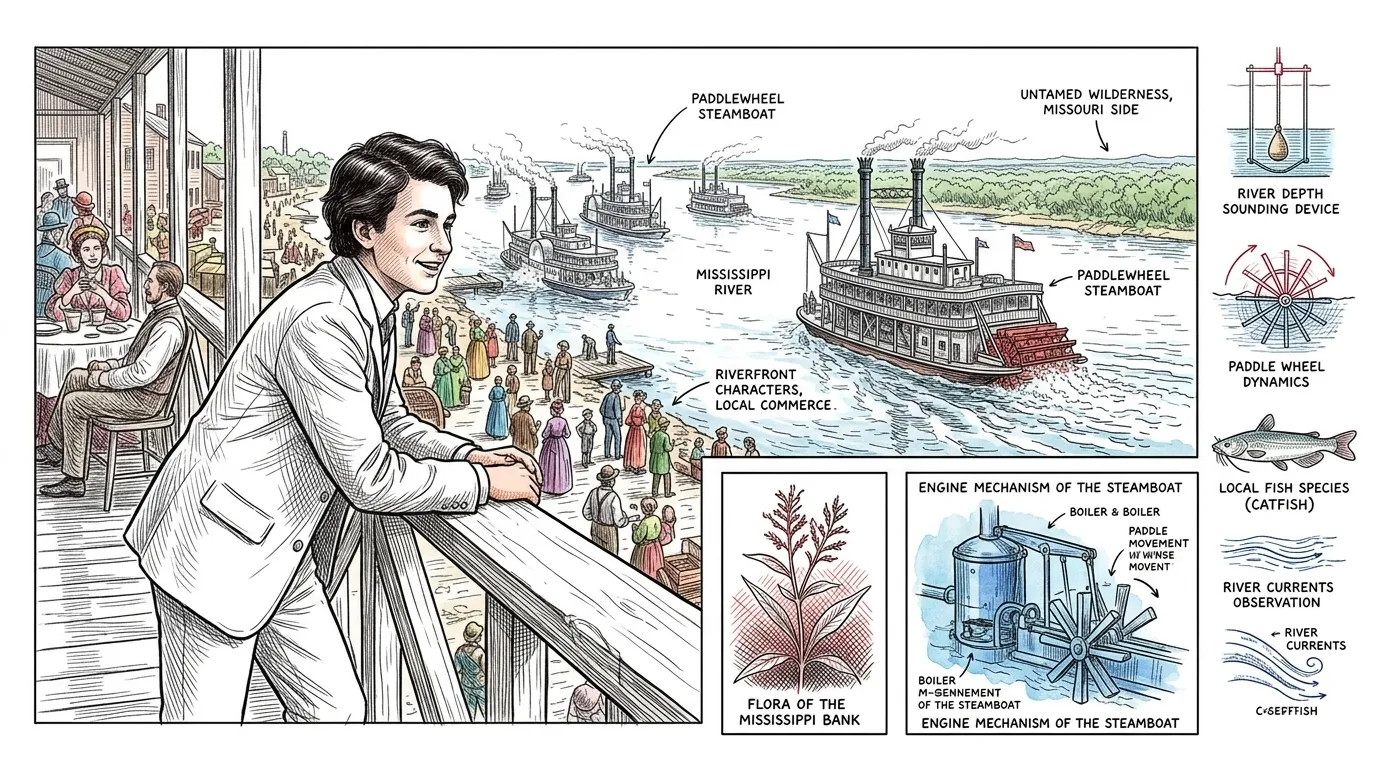
Before Mark Twain, there was Samuel Langhorne Clemens, a boy growing up in Hannibal, Missouri, a bustling port town on the Mississippi River. The ceaseless churn of paddlewheel steamboats, the colorful characters of the riverfront, and the vast, untamed American wilderness beyond its banks imprinted themselves deeply upon young Samuel. These early observations fueled a nascent understanding of human nature and the complexities of a nation in flux, forging the bedrock of his literary consciousness.
Page 3
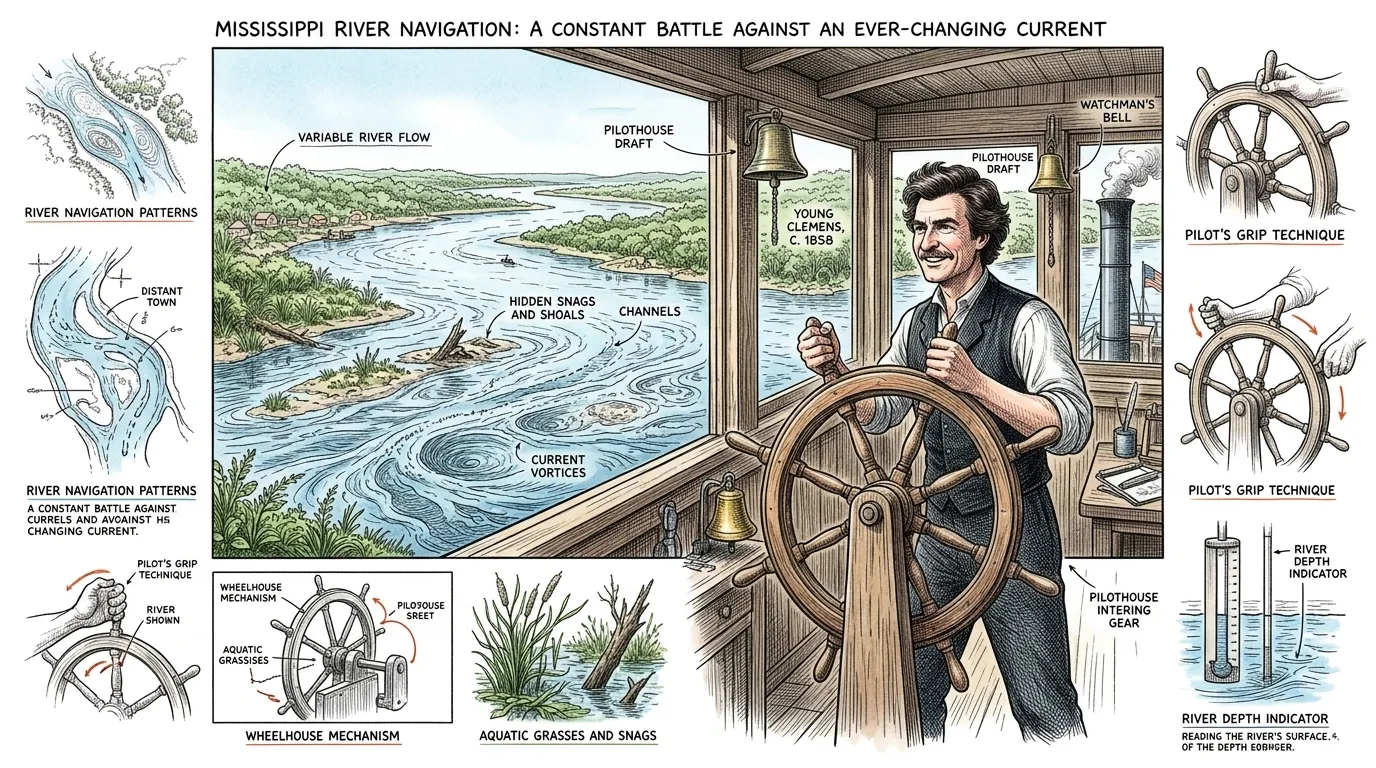
In 1857, Samuel Clemens embraced the river as a profession, becoming a steamboat pilot, a highly skilled and revered occupation. For four years, he navigated the treacherous, ever-shifting currents of the Mississippi, learning every shoal, bend, and marker between St. Louis and New Orleans. This intimate mastery of the river, an endless source of both beauty and danger, taught him discipline, observation, and an unparalleled understanding of the human condition, experiences that would later define his iconic pen name and narrative voice.
Page 4

The Civil War halted river traffic, forcing Clemens westward in 1861. He tried his hand at silver mining in Nevada, enduring hardship but finding little fortune. It was in Virginia City, amidst the rough-and-tumble world of prospectors and journalists, that he fully embraced writing. In 1863, while working for the Territorial Enterprise newspaper, he first signed his articles with the pseudonym 'Mark Twain,' a riverboat term for safe water, signifying a deliberate embrace of his past and a clear path forward as a writer.
Page 5
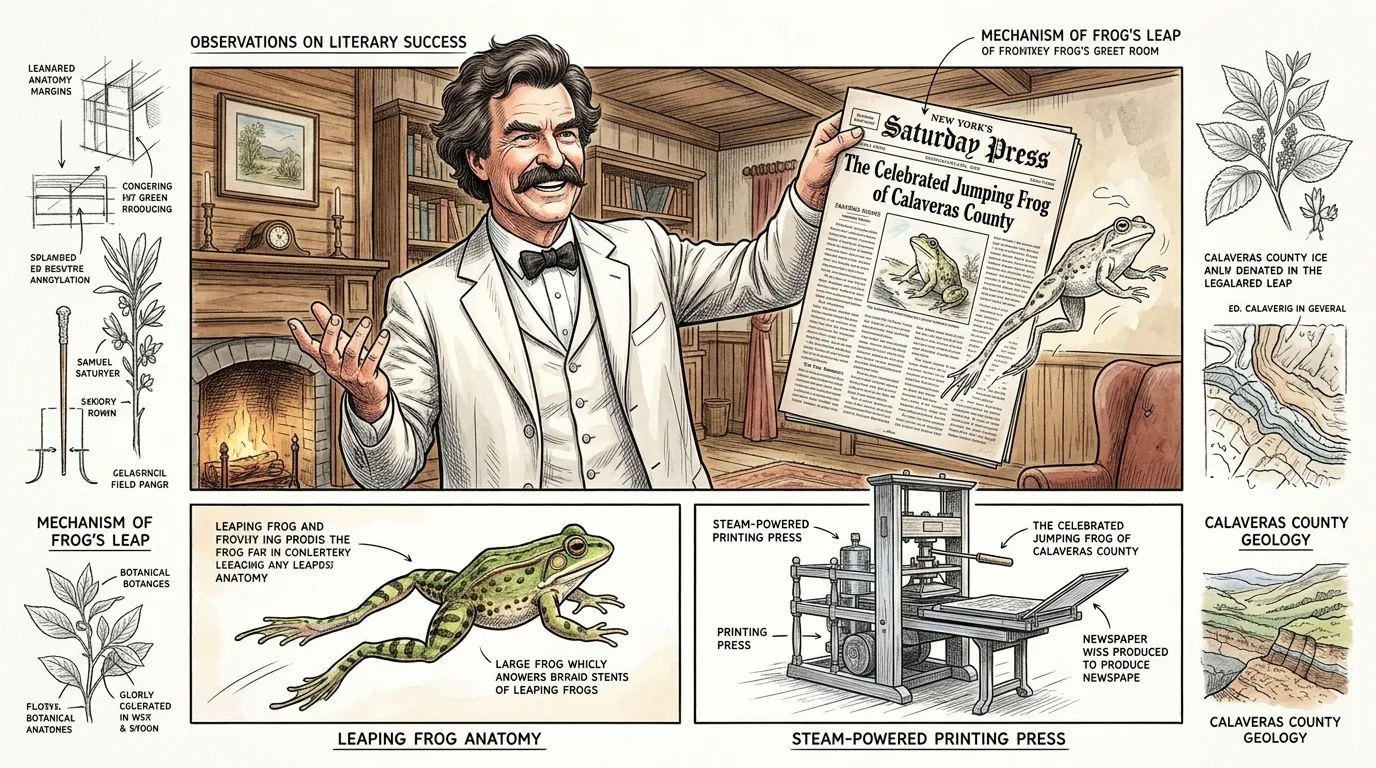
In 1865, Mark Twain achieved his first national literary success with the short story, 'The Celebrated Jumping Frog of Calaveras County.' Originally published in New York's Saturday Press, the story's unique blend of frontier humor, tall tales, and vernacular language resonated deeply with American readers, establishing Twain as a fresh, distinctive voice. This single publication marked a critical turning point, propelling him from a regional journalist to a nationally recognized literary figure.
Page 6
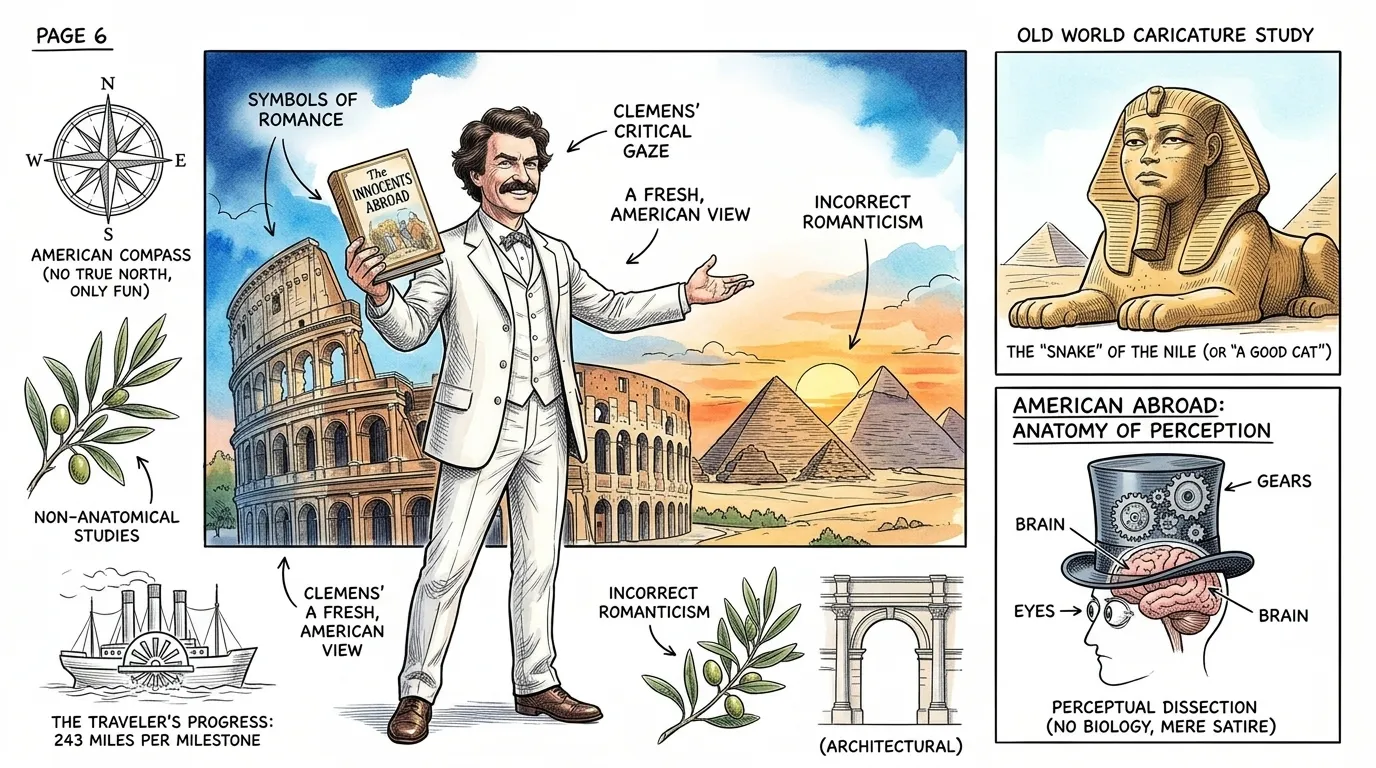
The year 1869 saw the publication of The Innocents Abroad, a humorous travelogue based on Twain's journey through Europe and the Holy Land. This book was an unprecedented success, becoming the best-selling American book of its time. Twain's irreverent humor, coupled with his distinctly American perspective, challenged conventional European romanticism, allowing readers to experience the world through fresh, democratic eyes. The book cemented his reputation as a master satirist and a global literary sensation, demonstrating his ability to connect with a vast readership.
Page 7
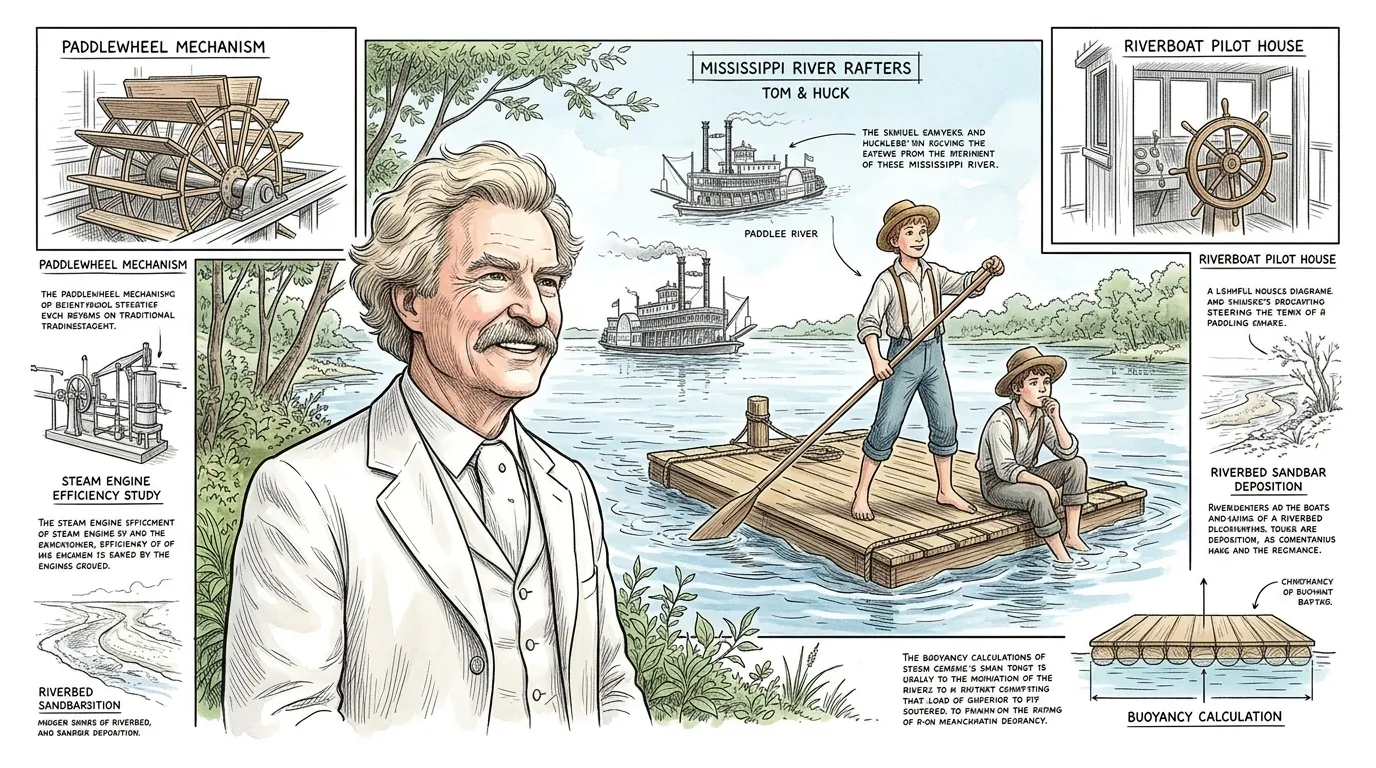
In the 1870s and 1880s, Mark Twain produced his most enduring literary works, including The Adventures of Tom Sawyer (1876) and Adventures of Huckleberry Finn (1884). These novels captured the essence of 19th-century American life, exploring themes of freedom, race, and morality through the eyes of unforgettable characters. Twain's groundbreaking use of vernacular language and realistic portrayal of regional dialects revolutionized American literature, elevating a distinct national voice to global prominence and establishing his permanent place in the literary canon.
Page 8
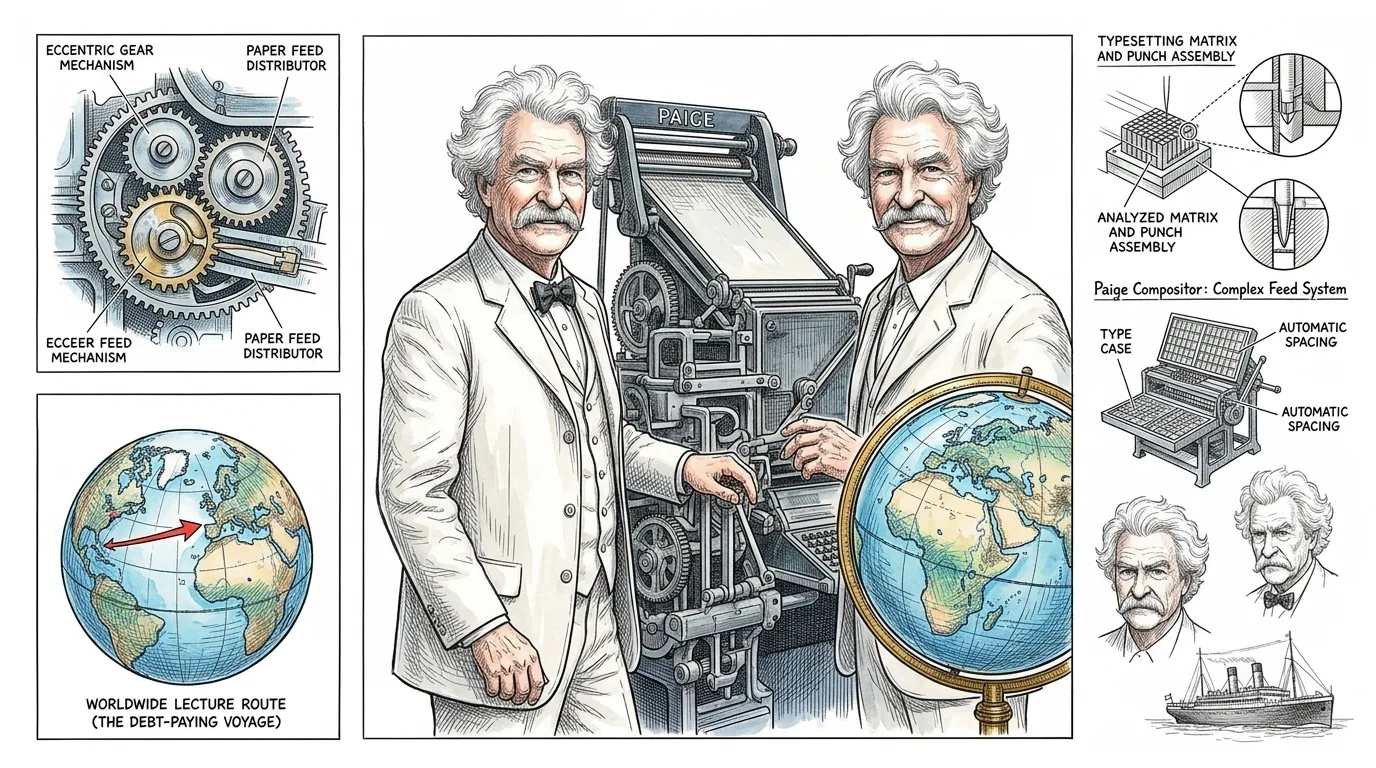
Despite his literary triumphs, Twain possessed a fervent, often ruinous, interest in invention and business ventures. His most disastrous investment was the Paige Compositor, an intricate typesetting machine that consumed hundreds of thousands of dollars over a decade. By 1894, financial ruin struck, forcing him into bankruptcy. Rather than declare personal insolvency, Twain embarked on a worldwide lecture tour, tirelessly working to personally repay every creditor, demonstrating an extraordinary commitment to his moral obligations.
Page 9
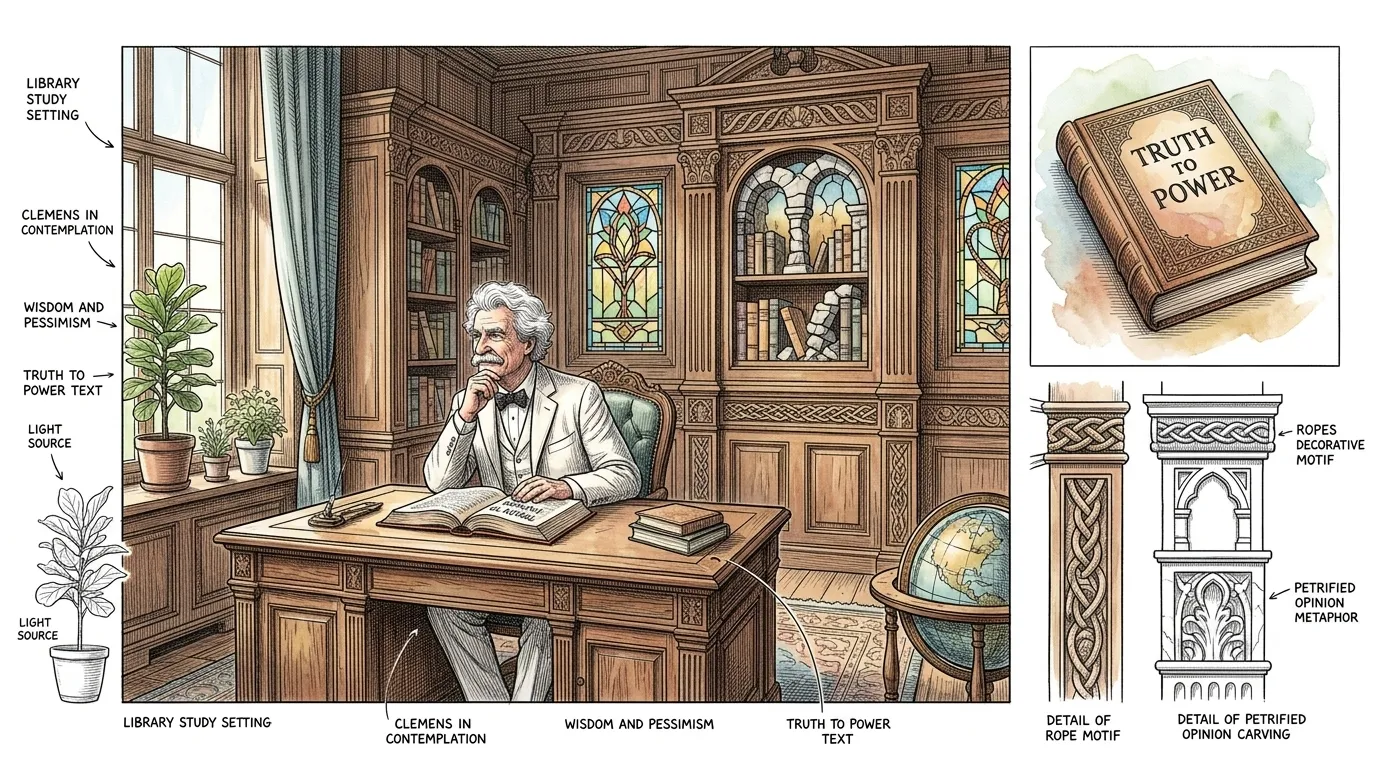
The turn of the century brought Mark Twain personal tragedies and a deepening pessimism, reflected in his later writings and public statements. He became an outspoken anti-imperialist, a fierce critic of social injustice, and increasingly cynical about human nature. He did not shy from controversy, often speaking truth to power even when his views were unpopular. During this period, he famously wrote: 'Loyalty to petrified opinion never yet broke a chain or freed a human soul.' This reflected his profound disillusionment but also his unwavering commitment to intellectual honesty.
""Loyalty to petrified opinion never yet broke a chain or freed a human soul.""
Page 10
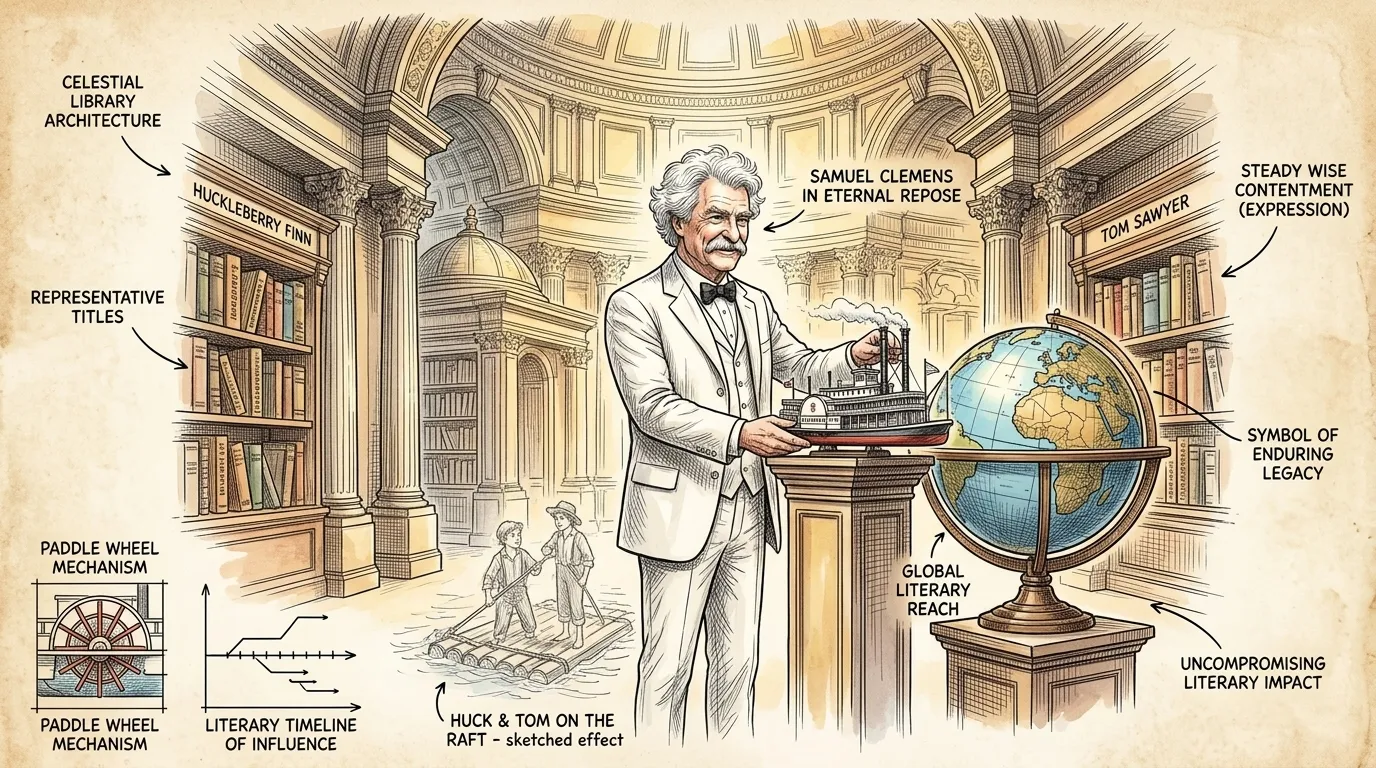
Mark Twain died in 1910, but his impact on American literature and culture proved indelible. He was more than a humorist; he was a profound social critic, a master of realism, and the progenitor of the 'Great American Novel.' His voice, rooted in the American vernacular, resonated globally, exposing hypocrisy and celebrating the resilience of the human spirit. Twain's legacy endures as the quintessential American writer, his words continuing to shape perceptions of identity, freedom, and the complex journey of a nation.
About this story
- Location: Global
- Audience: general readers
Questions and answers
Read Wonder People on your phone
Wonder People is available on Android. Get Wonder People on Google Play.