Laszlo Biro
Laszlo Biro — an illustrated biography story, set in Global. 10 illustrated pages, free to read on Wonder People.
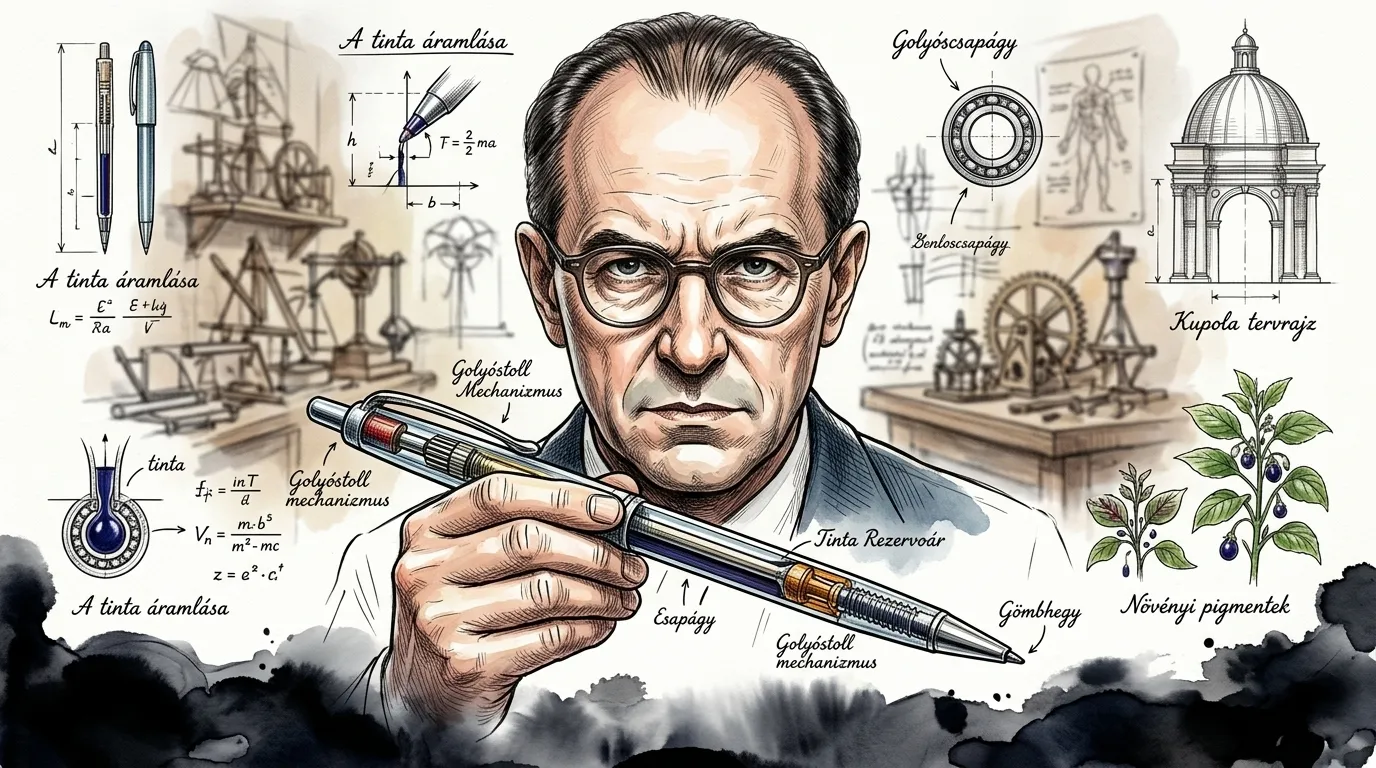
Page 1
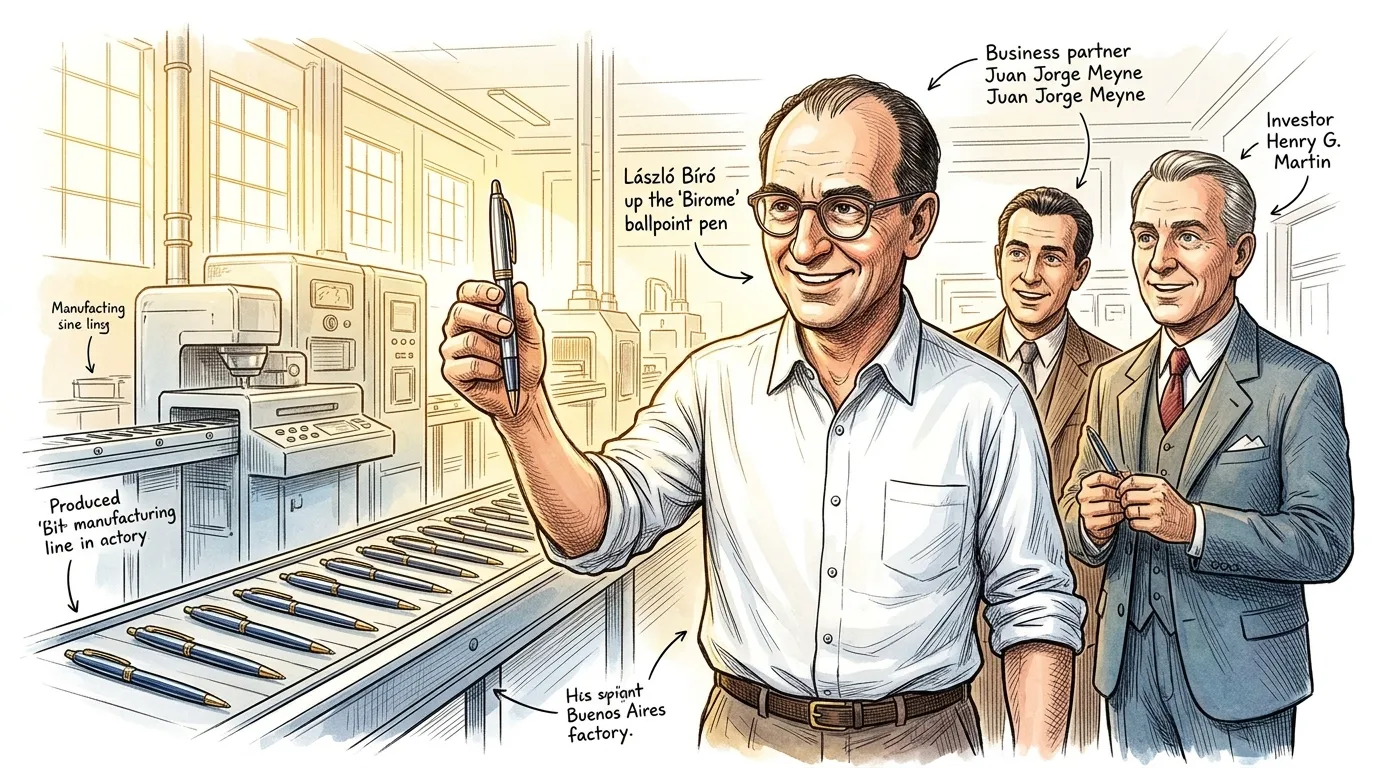
In Buenos Aires, Argentina, 1943, László Bíró stood before a new manufacturing line, the culmination of years of relentless invention. Alongside his business partner, Juan Jorge Meyne, and investor Henry G. Martin, Bíró presented the first commercially viable ballpoint pen, christened the 'Birome.' This revolutionary writing instrument, designed for endurance and efficiency, promised to transform how the world recorded its thoughts, offering a clean, reliable alternative to the cumbersome fountain pen. The initial units, swiftly produced, began their journey into a world desperate for modern solutions.
Biographical Fact: László Bíró's ballpoint pen, 'Birome,' was first patented in Argentina in 1943. The name 'Birome' is still used for ballpoint pens in Argentina.
Page 2
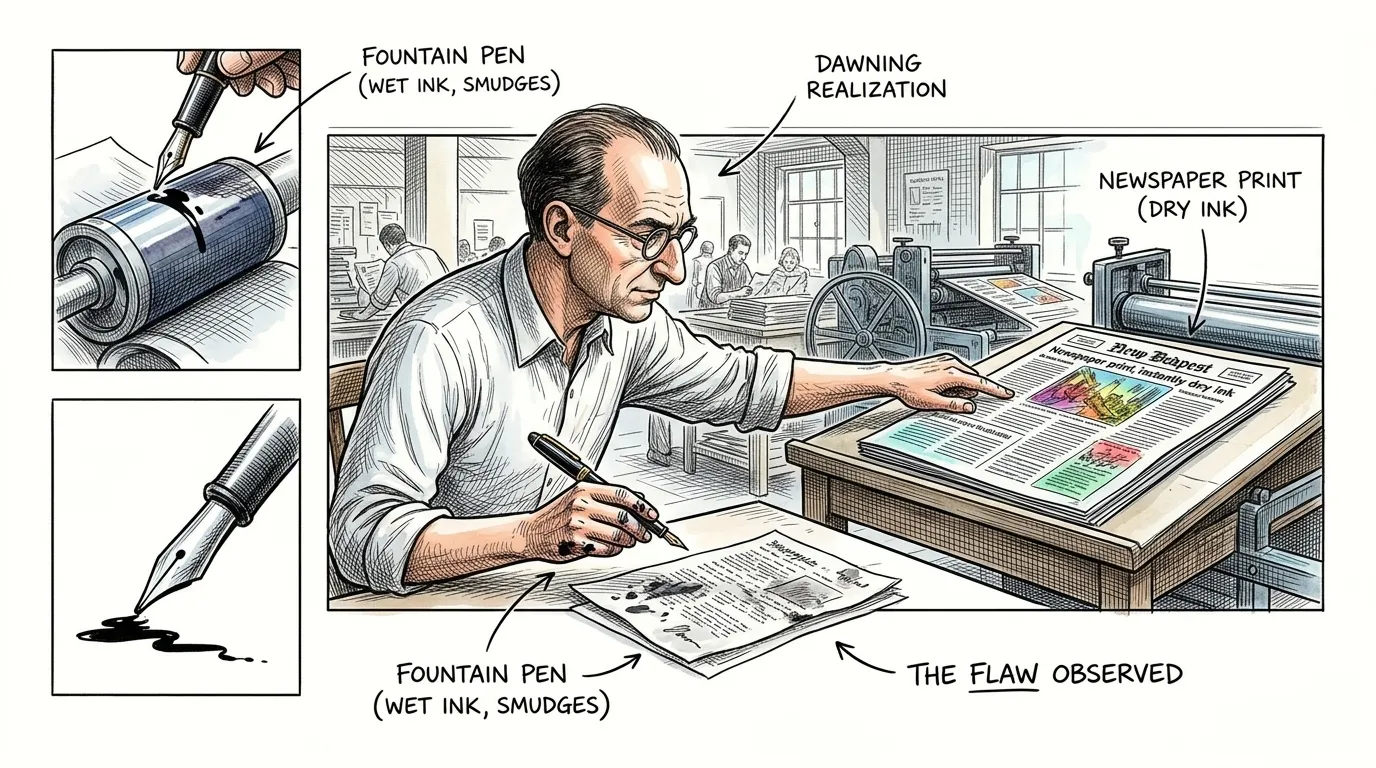
Decades earlier in Budapest, Hungary, László Bíró worked as a newspaper editor, observing a fundamental flaw in daily life: the fountain pen. Its ink smudged, dried slowly, and stained fingers, creating constant frustration for anyone working with fast-paced documentation. He noticed the contrast with the quick-drying ink used in newspaper presses, which set almost instantly and remained clean on the page. This recurring inconvenience sparked an idea that would eventually consume his inventive mind and redefine writing tools globally.
Biographical Fact: Before inventing the ballpoint pen, László Bíró worked as a journalist and editor in Hungary, encountering the limitations of existing writing instruments firsthand.
Page 3

Bíró discussed his observations with his brother, György Bíró, a chemist who immediately grasped the scientific challenge. Together, they theorized about developing a new ink, one that possessed the quick-drying properties of newsprint ink but could flow smoothly through a novel delivery system. This partnership, born of shared curiosity and a desire to solve a tangible problem, marked the true beginning of their groundbreaking journey into ink chemistry and mechanical engineering. Their initial conversations laid the scientific groundwork for a revolution.
Biographical Fact: László Bíró collaborated with his brother György, a chemist, to formulate the fast-drying, viscous ink necessary for the ballpoint pen to function effectively.
Page 4
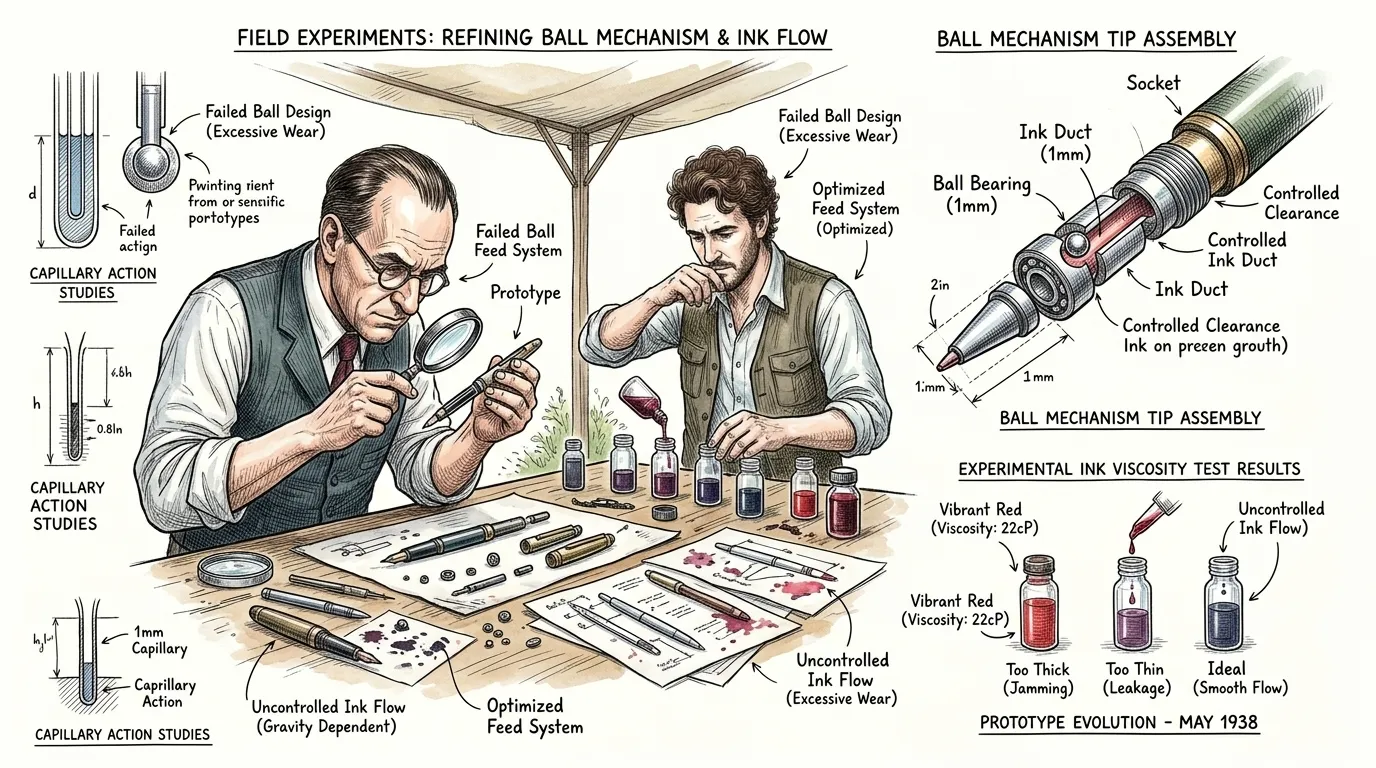
The brothers spent years experimenting, facing countless failures as they attempted to pair the viscous, quick-drying ink with a functional dispenser. László, guided by mechanical intuition, focused on designing a tiny ball bearing at the pen's tip that would rotate freely, picking up ink from an inner reservoir and distributing it onto paper. Each prototype brought new challenges: the ball jammed, the ink dried in the tube, or it flowed too freely. Yet, through this iterative process, the core principles of the ballpoint mechanism slowly began to solidify, moving from abstract theory to tangible, if imperfect, reality.
Biographical Fact: The development of the ballpoint pen required both a suitable ink and a precise mechanism, with László Bíró focusing on the mechanical design of the tiny rollerball.
Page 5
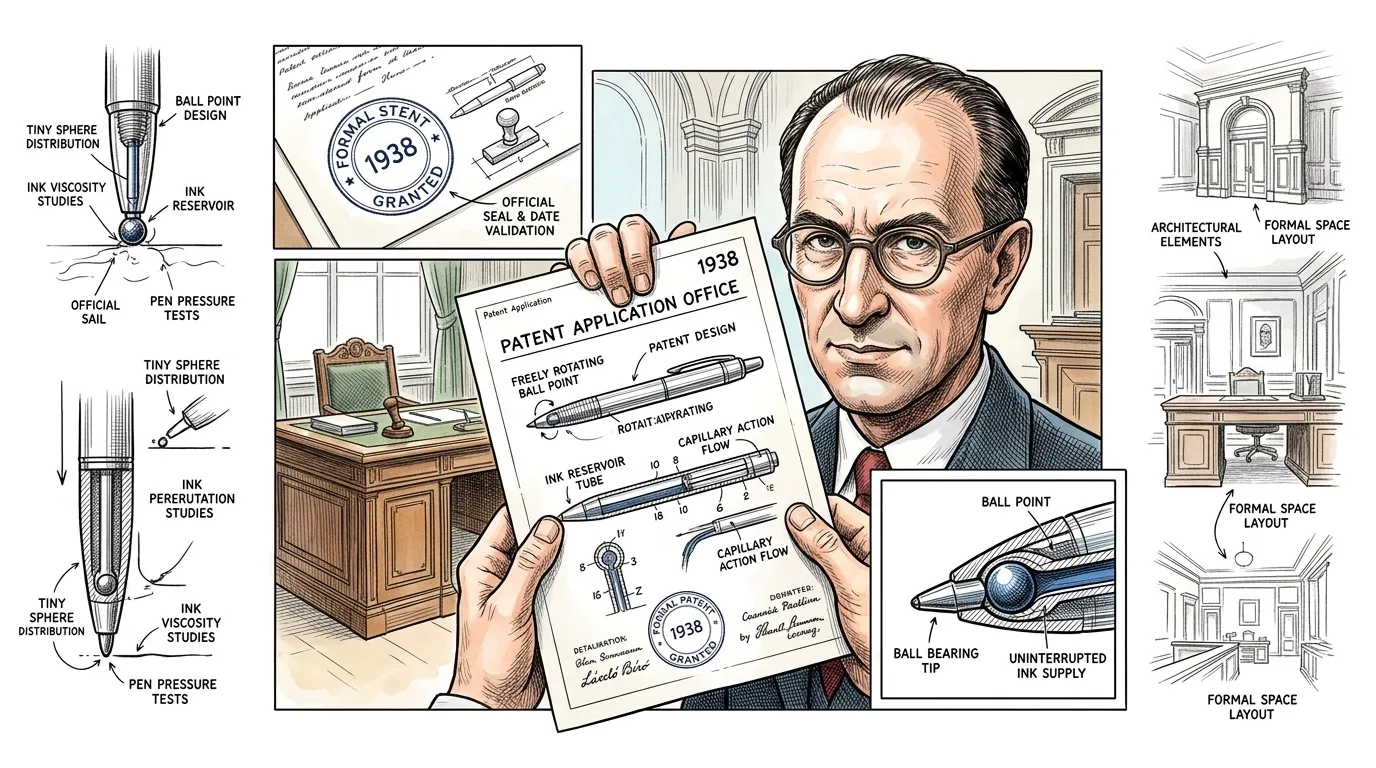
In 1938, after relentless experimentation, László Bíró formally lodged his first patent application for the ballpoint pen in Hungary. This critical step solidified his claim to the invention, protecting the fundamental design of a pen that used a freely rotating ball to dispense a quick-drying, high-viscosity ink. It was a declaration to the world that a new era of writing was on the horizon, even if the pen itself was still years from mass production and widespread acceptance. The patent marked the transition from a private obsession to a legally recognized innovation.
Biographical Fact: László Bíró secured his first patent for the ballpoint pen in Hungary in 1938, protecting his inventive concept before its full commercial development.
Page 6
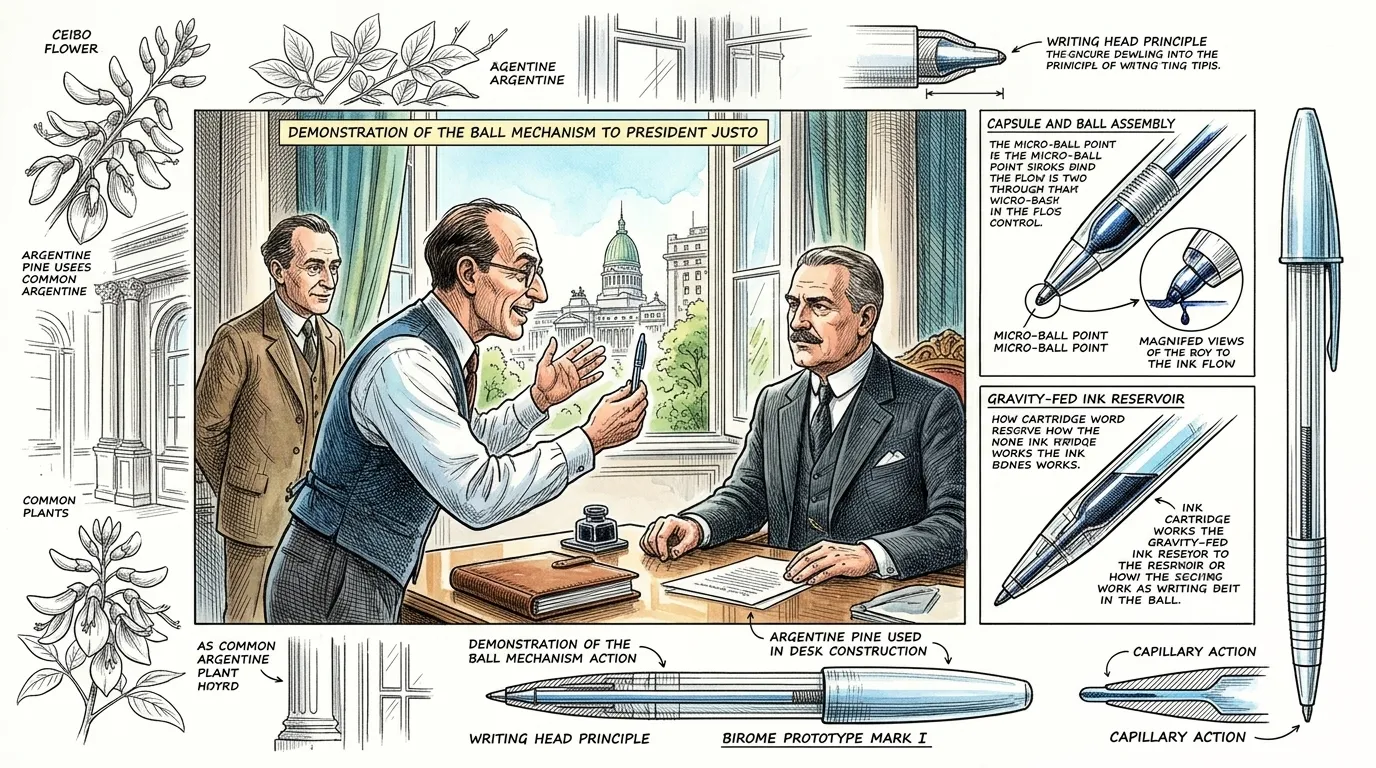
The escalating political turmoil in Europe forced László Bíró and his brother to flee Hungary, eventually settling in Argentina in 1940. It was there, during a chance encounter with Agustín Pedro Justo, the former President of Argentina, that Bíró's invention found its crucial turning point. Justo, recognizing the genius of the ballpoint pen, particularly for its potential military applications, offered his support and facilitated the necessary connections for Bíró to establish manufacturing operations in his new homeland. This pivotal meeting transformed a personal project into a national endeavor.
Biographical Fact: Fleeing European political unrest, Bíró moved to Argentina, where former President Agustín Pedro Justo's support was instrumental in bringing the ballpoint pen to production.
Page 7
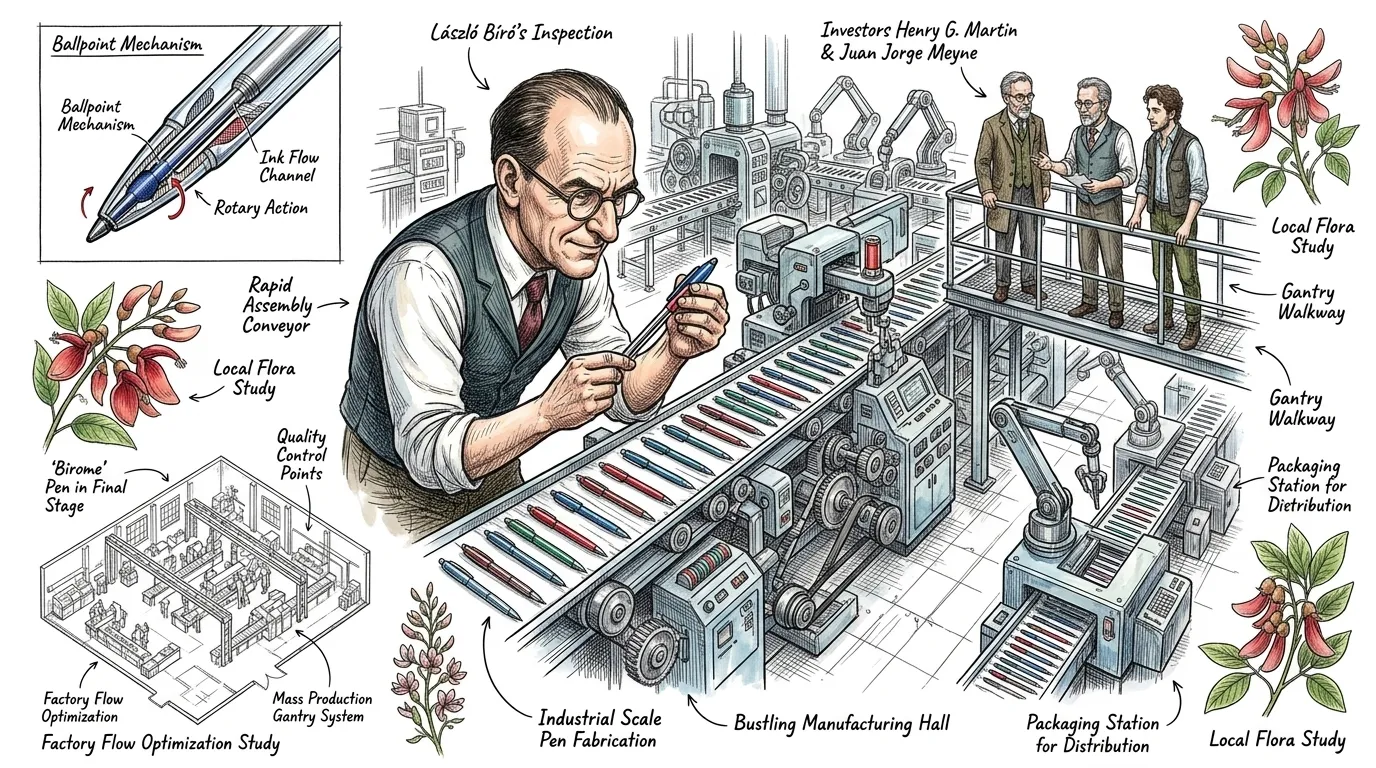
With the critical support of investors like Henry G. Martin and the organizational skills of Juan Jorge Meyne, László Bíró finally saw his ballpoint pen enter industrial production in 1943. Factories in Argentina began mass-producing the 'Birome' pen, transforming years of prototypes and tireless refinement into tangible products. Bíró oversaw every detail, ensuring quality and consistency, as the initial batches of pens prepared for distribution. This marked the true birth of the commercial ballpoint pen, a practical tool now ready to leave its indelible mark on the world.
Biographical Fact: In 1943, with key investors and partners, Bíró successfully launched industrial production of the 'Birome' pen in Argentina, making his invention a commercial reality.
Page 8
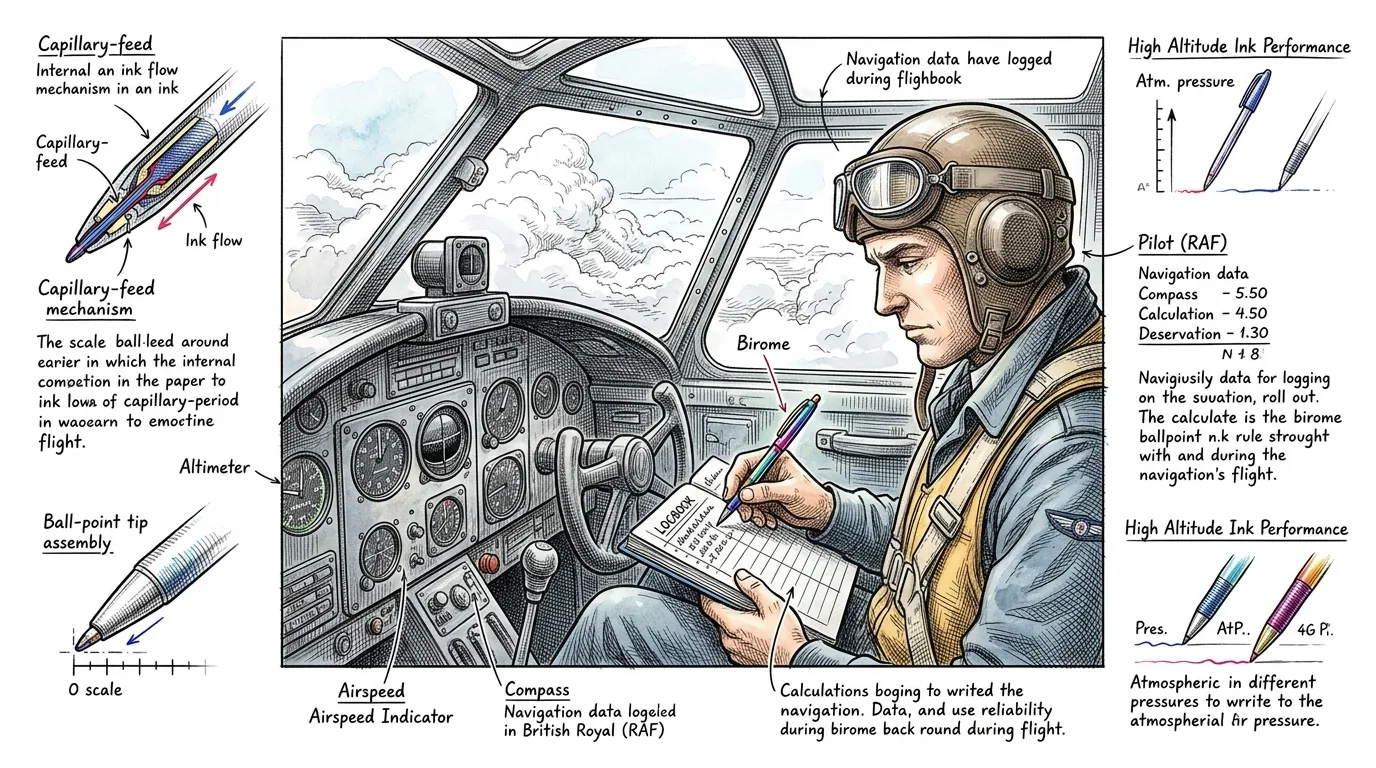
The ballpoint pen's inherent advantages soon captured the attention of the British Royal Air Force during World War II. Unlike fountain pens, Bíró's 'Birome' did not leak at high altitudes or in varying air pressures, making it invaluable for pilots who needed reliable writing instruments for navigation and logging crucial data in their cockpits. The RAF ordered 30,000 units, recognizing the pen not just as a convenience, but as a strategic asset. This military adoption cemented the pen's reputation for robustness and functionality under extreme conditions, showcasing its impact beyond civilian use.
Biographical Fact: The British Royal Air Force adopted the ballpoint pen for its pilots during WWII due to its reliable performance at high altitudes, proving its practical superiority.
Page 9
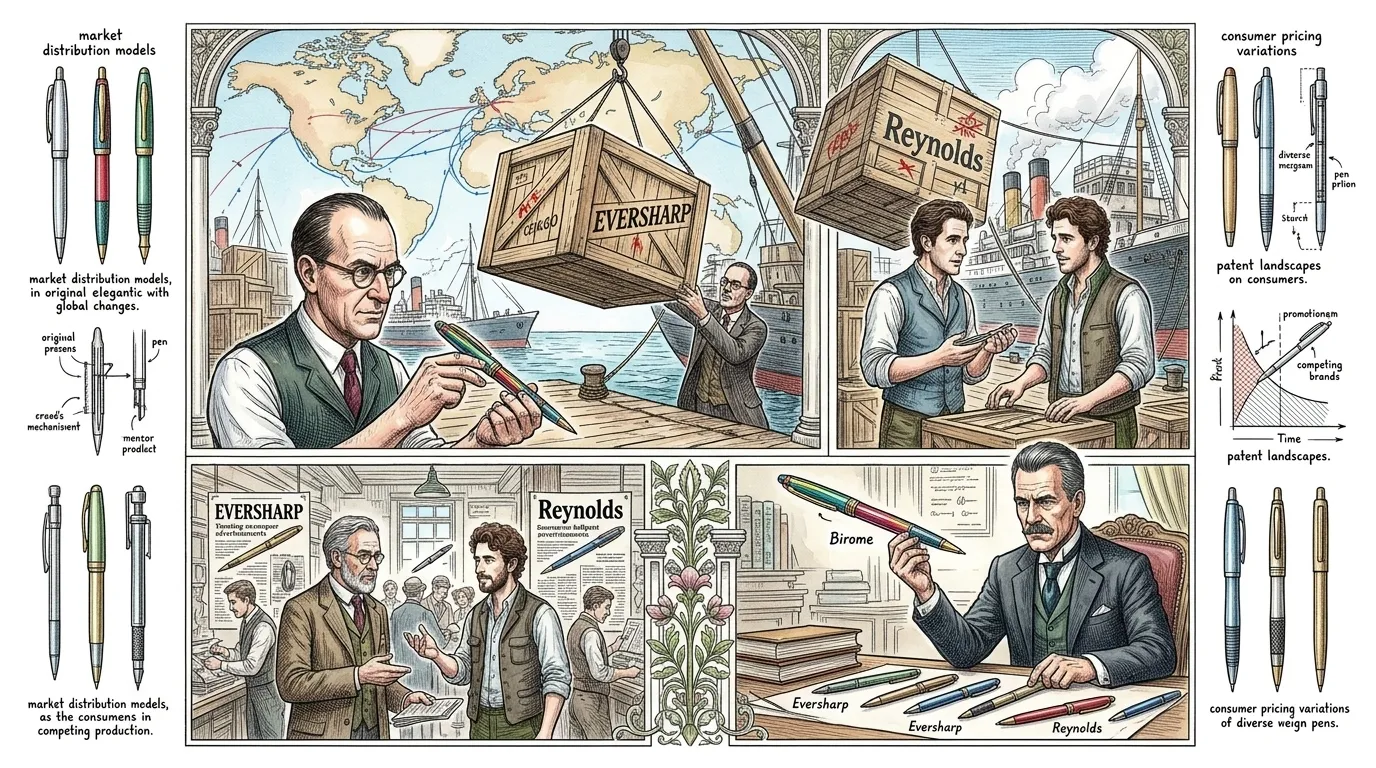
Despite Bíró's initial success, the global commercialization of his invention proved complex and often contentious. American companies like Eversharp and Reynolds purchased licensing rights, with Reynolds launching its version of the ballpoint pen in the US in 1945. Aggressive marketing and rapid distribution by these powerful entities quickly flooded the market, often overshadowing Bíró's original 'Birome.' The inventor found himself in a paradox: his invention was a worldwide sensation, yet controlling its widespread adoption and reaping its full financial reward remained a challenging endeavor, highlighting the chasm between invention and market dominance.
Biographical Fact: While Bíró's invention gained global traction, his control over its commercialization was challenged by aggressive licensing and marketing by companies like Reynolds in the US.
Page 10

László Bíró's invention transcended its origins, becoming an indispensable tool woven into the fabric of modern life. From classrooms to boardrooms, in the hands of artists, scientists, and students, the ballpoint pen became synonymous with immediate, accessible communication. Its simple, effective design liberated billions from the smudges and spills of previous eras, forever changing daily routines and empowering effortless expression. What began as a journalist's irritation transformed into one of the most widely used and enduring instruments of human progress, a testament to Bíró's visionary insight.
Biographical Fact: The ballpoint pen, driven by Bíró's innovation, became a ubiquitous writing instrument, profoundly impacting education, business, and everyday communication worldwide.
About this story
- Location: Global
- Audience: general readers
Questions and answers
Read Wonder People on your phone
Wonder People is available on Android. Get Wonder People on Google Play.