Louis Daguerre

Louis Daguerre — an illustrated biography story, set in Global. 10 illustrated pages, free to read on Wonder People.
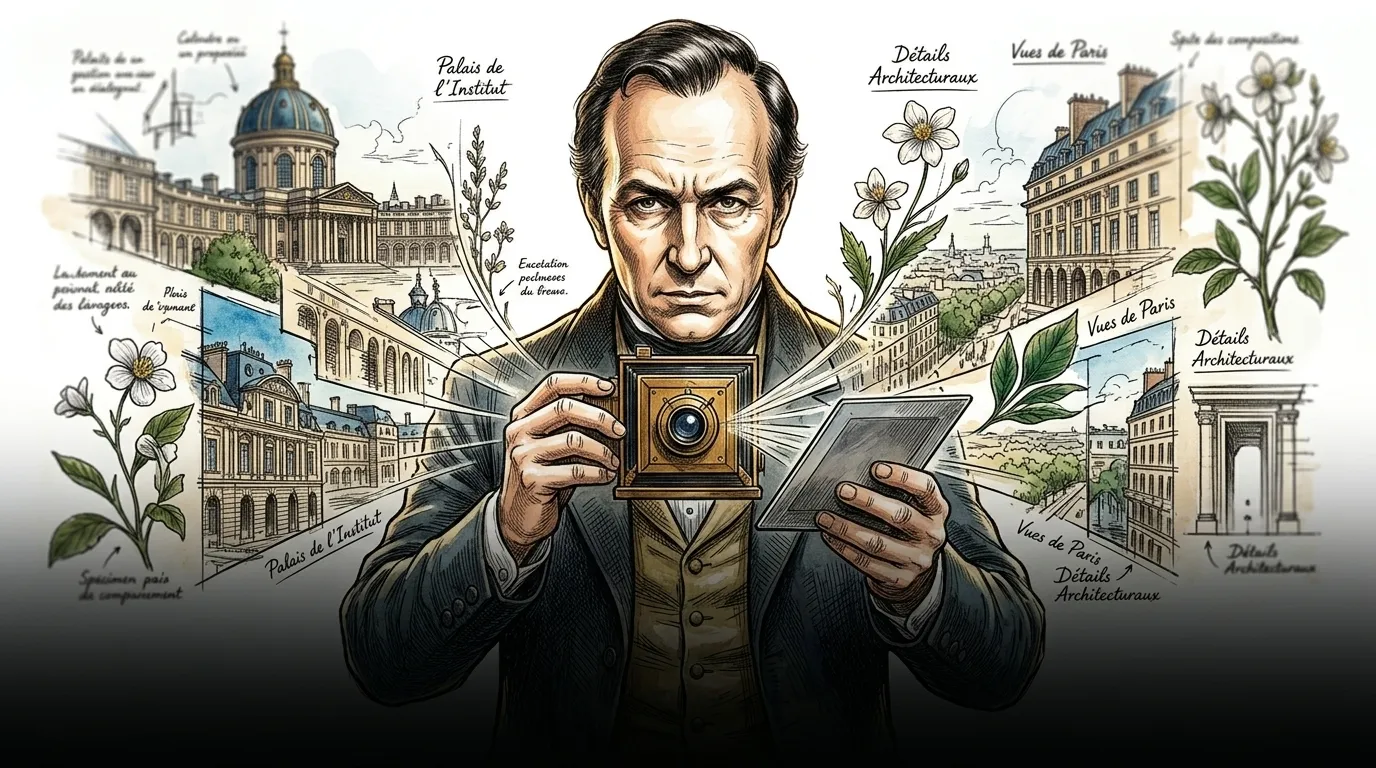
Louis Daguerre — book cover — Wonder People
Louis Daguerre — an illustrated biography story, set in Global. 10 illustrated pages, free to read on Wonder People.

Page 1
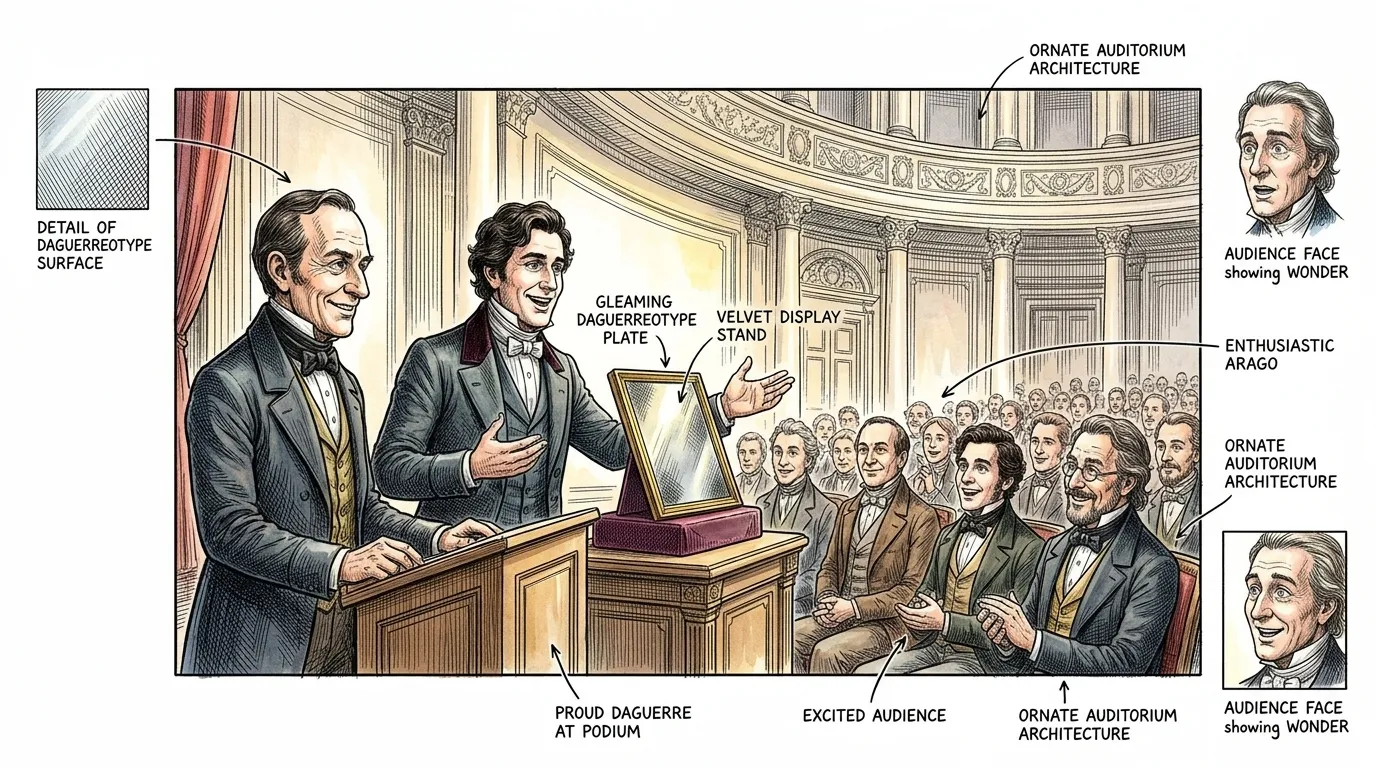
On August 19, 1839, at the Palais du Quai Conti in Paris, Louis Daguerre stood before a joint session of the French Academies of Sciences and Fine Arts.
On August 19, 1839, at the Palais du Quai Conti in Paris, Louis Daguerre stood before a joint session of the French Academies of Sciences and Fine Arts. An assembly of eminent scholars, artists, and citizens strained forward as François Arago, a prominent physicist and politician, announced the details of the 'daguerreotype' process.

On August 19, 1839, at the Palais du Quai Conti in Paris, Louis Daguerre stood before a joint session of the French Academies of Sciences and Fine Arts. An assembly of eminent scholars, artists, and citizens strained forward as François Arago, a prominent physicist and politician, announced the details of the 'daguerreotype' process. The invention promised an unprecedented capture of reality, a radical departure from millennia of human artistic endeavor, sparking immediate global fascination.

Page 2
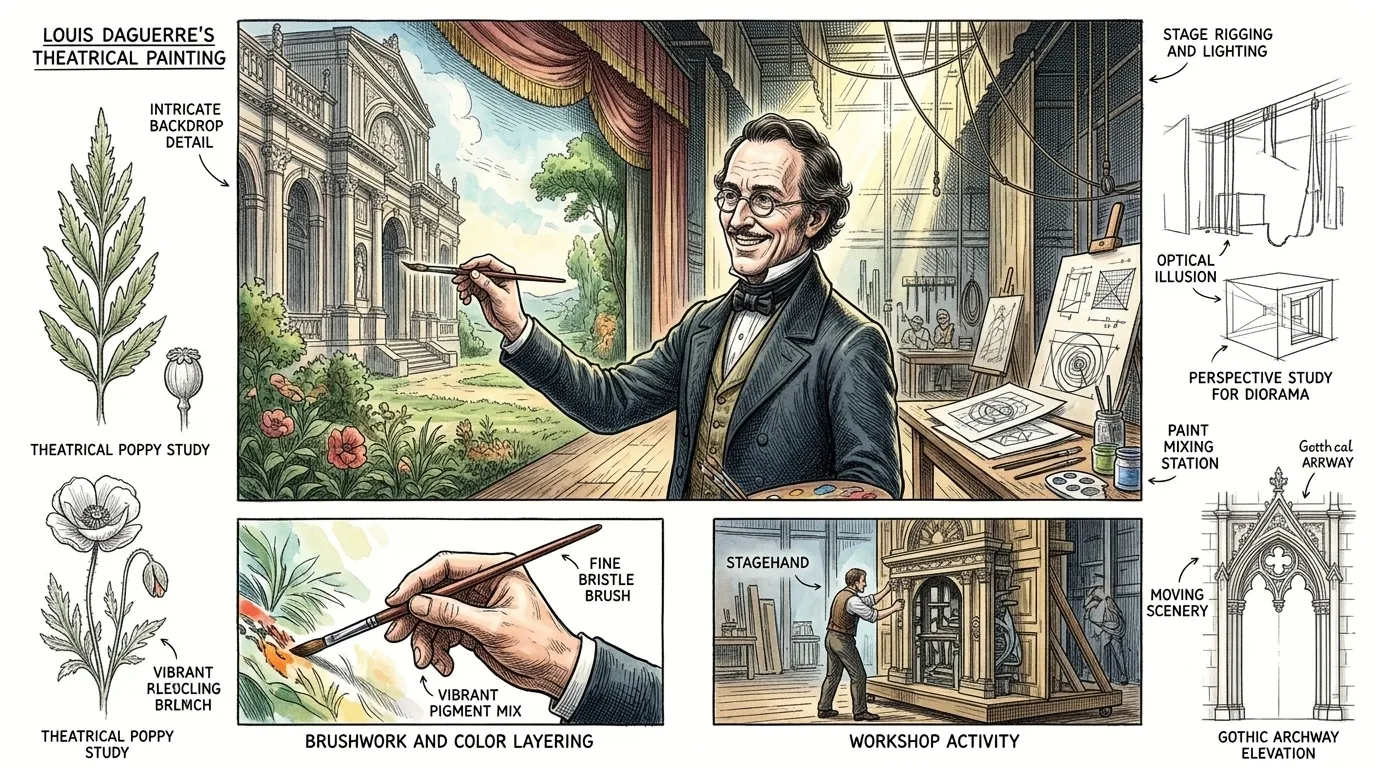
Before the daguerreotype, Louis Daguerre carved his name through the ephemeral arts of theatrical set design and the diorama.
Before the daguerreotype, Louis Daguerre carved his name through the ephemeral arts of theatrical set design and the diorama. Born in Cormeilles-en-Parisis in 1787, his early life as an apprentice architect quickly gave way to a world of illusion. He mastered perspective and light, painting vast, intricate scenes that transformed under shifting illumination, captivating Parisian audiences with hyper-realistic spectacles.

Before the daguerreotype, Louis Daguerre carved his name through the ephemeral arts of theatrical set design and the diorama. Born in Cormeilles-en-Parisis in 1787, his early life as an apprentice architect quickly gave way to a world of illusion. He mastered perspective and light, painting vast, intricate scenes that transformed under shifting illumination, captivating Parisian audiences with hyper-realistic spectacles. This lifelong pursuit of visual deception and reality laid the foundational curiosity for his later, more permanent achievements.

Page 3
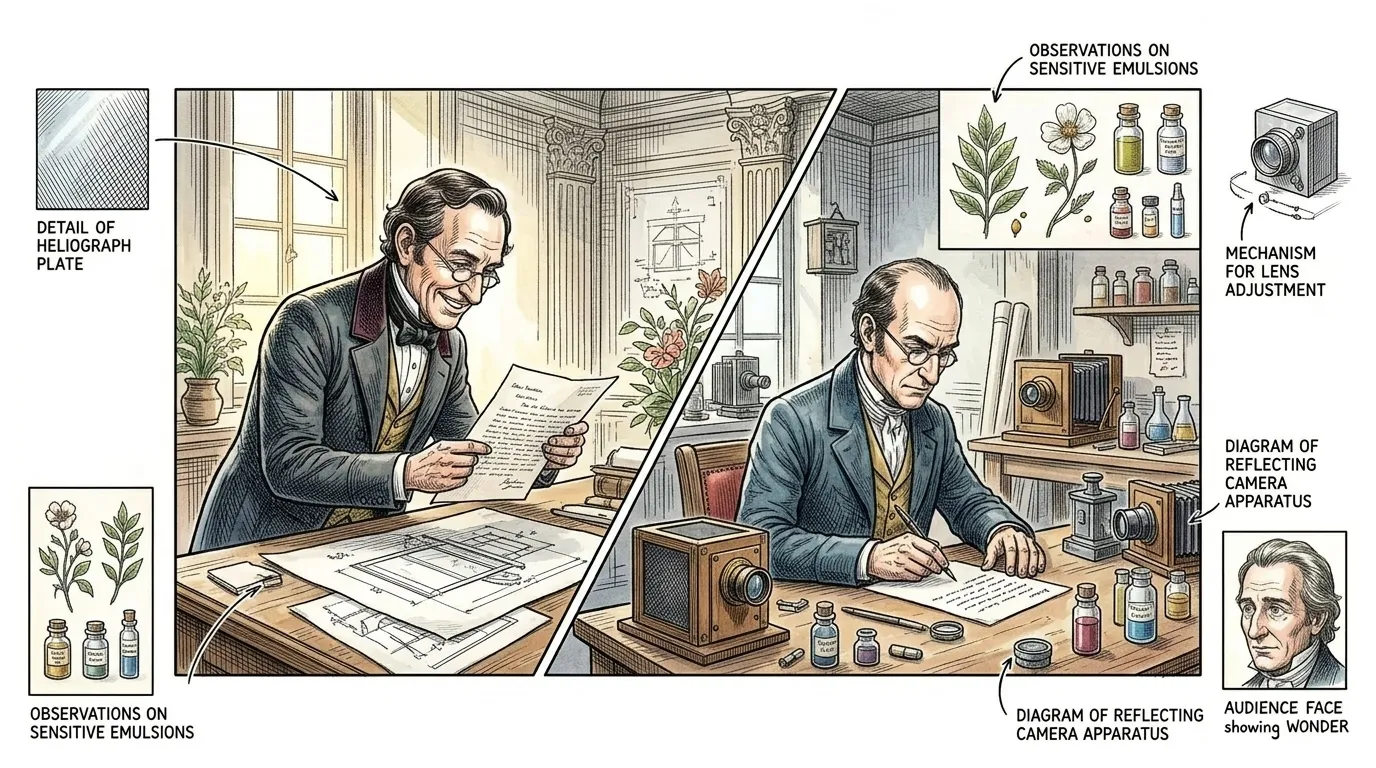
Daguerre's relentless fascination with light and imagery led him to Nicéphore Niépce, a reclusive inventor who, by 1826, had captured the world's first…
Daguerre's relentless fascination with light and imagery led him to Nicéphore Niépce, a reclusive inventor who, by 1826, had captured the world's first permanent photograph, a faint 'heliograph' from his window. In 1829, Niépce and Daguerre formalized a partnership, driven by their shared ambition to perfect this elusive process.

Daguerre's relentless fascination with light and imagery led him to Nicéphore Niépce, a reclusive inventor who, by 1826, had captured the world's first permanent photograph, a faint 'heliograph' from his window. In 1829, Niépce and Daguerre formalized a partnership, driven by their shared ambition to perfect this elusive process. Their correspondence, exchanged across hundreds of miles, documented the painstaking, often frustrating, progress toward fixing an image from nature.

Page 4
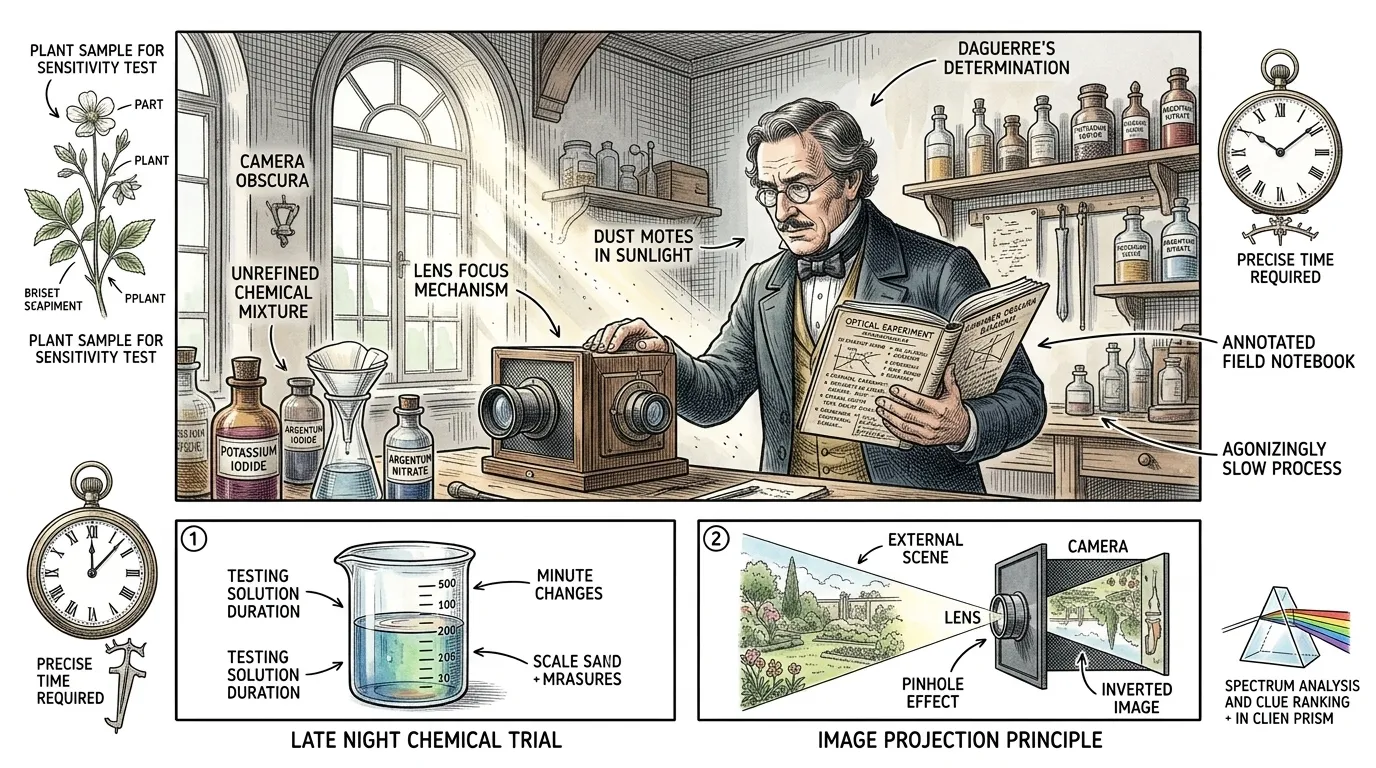
The partnership with Niépce was short-lived. In 1833, Niépce died, leaving Daguerre to continue the complex work alone. Daguerre now faced the immense challenge…
The partnership with Niépce was short-lived. In 1833, Niépce died, leaving Daguerre to continue the complex work alone. Daguerre now faced the immense challenge of refining a process that was still agonizingly slow, requiring exposures of several hours. He inherited Niépce's crude chemical formulations and his camera obscura, but the path forward, towards a truly practical photographic method, remained entirely his own to forge.

The partnership with Niépce was short-lived. In 1833, Niépce died, leaving Daguerre to continue the complex work alone. Daguerre now faced the immense challenge of refining a process that was still agonizingly slow, requiring exposures of several hours. He inherited Niépce's crude chemical formulations and his camera obscura, but the path forward, towards a truly practical photographic method, remained entirely his own to forge.

Page 5
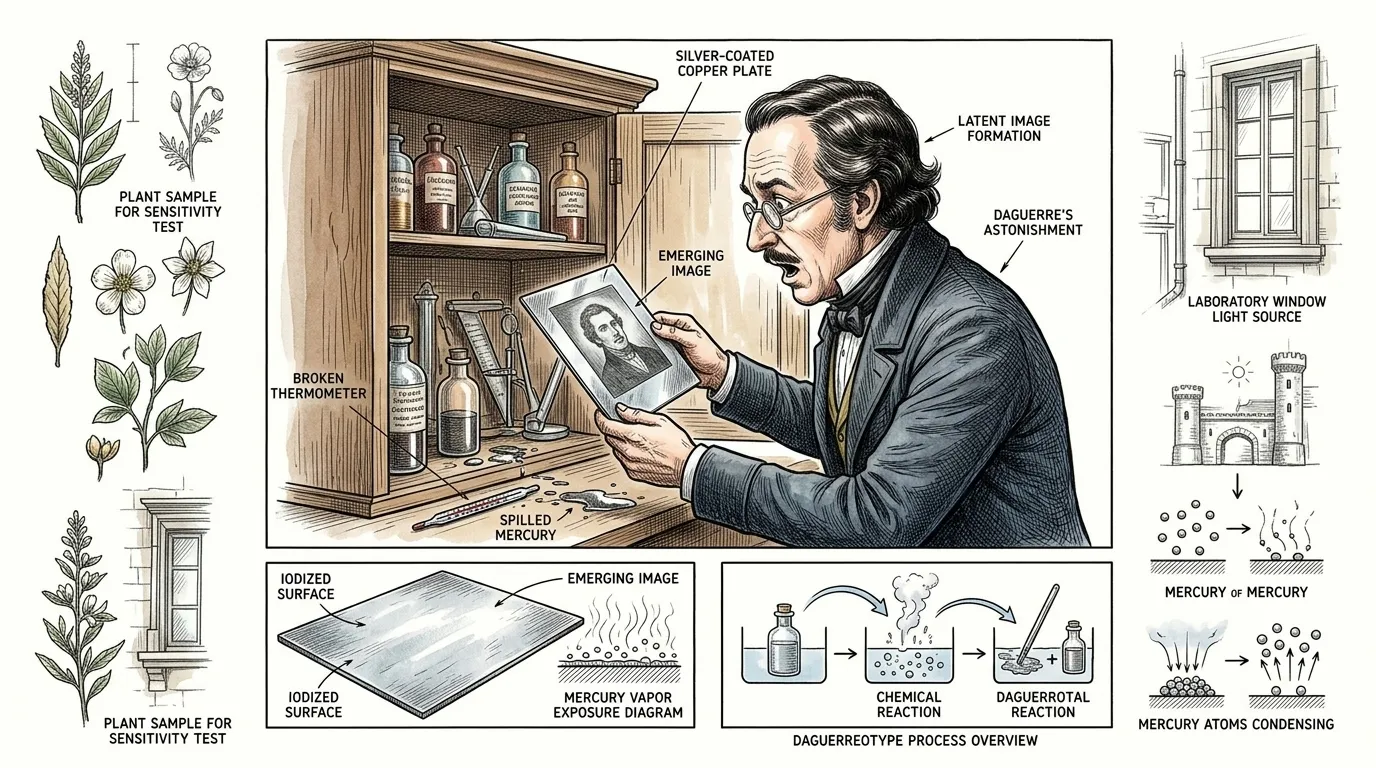
Years of solitary experimentation followed. Legend holds that in 1835, Daguerre placed an exposed, seemingly blank, silver-coated copper plate into a chemical…
Years of solitary experimentation followed. Legend holds that in 1835, Daguerre placed an exposed, seemingly blank, silver-coated copper plate into a chemical cupboard. The next morning, he discovered a perfectly formed, distinct image. He eventually traced this miraculous development to mercury vapor released from a broken thermometer.

Years of solitary experimentation followed. Legend holds that in 1835, Daguerre placed an exposed, seemingly blank, silver-coated copper plate into a chemical cupboard. The next morning, he discovered a perfectly formed, distinct image. He eventually traced this miraculous development to mercury vapor released from a broken thermometer. This accidental breakthrough revealed the latent image, dramatically reducing exposure times from hours to mere minutes, transforming photography from an academic curiosity into a viable technology.

Page 6
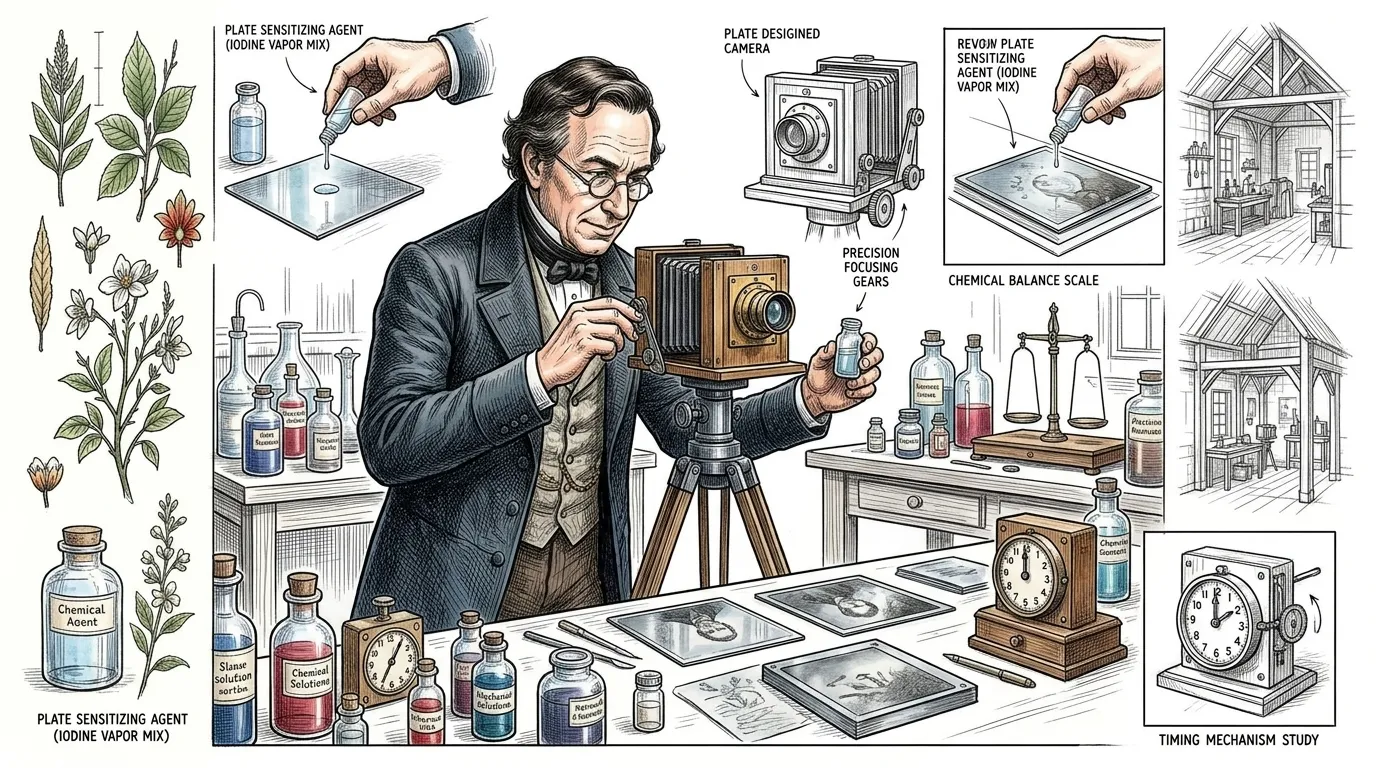
With the latent image principle understood, Daguerre devoted himself to perfecting the process. He meticulously experimented with different sensitizing agents…
With the latent image principle understood, Daguerre devoted himself to perfecting the process. He meticulously experimented with different sensitizing agents, exposure times, and fixing solutions. He designed and built a specialized camera to optimize light capture and plate handling, transforming his workshop into a crucible of photographic innovation. The daguerreotype process, as the world would soon know it, was slowly, painstakingly, being forged.

With the latent image principle understood, Daguerre devoted himself to perfecting the process. He meticulously experimented with different sensitizing agents, exposure times, and fixing solutions. He designed and built a specialized camera to optimize light capture and plate handling, transforming his workshop into a crucible of photographic innovation. The daguerreotype process, as the world would soon know it, was slowly, painstakingly, being forged.

Page 7
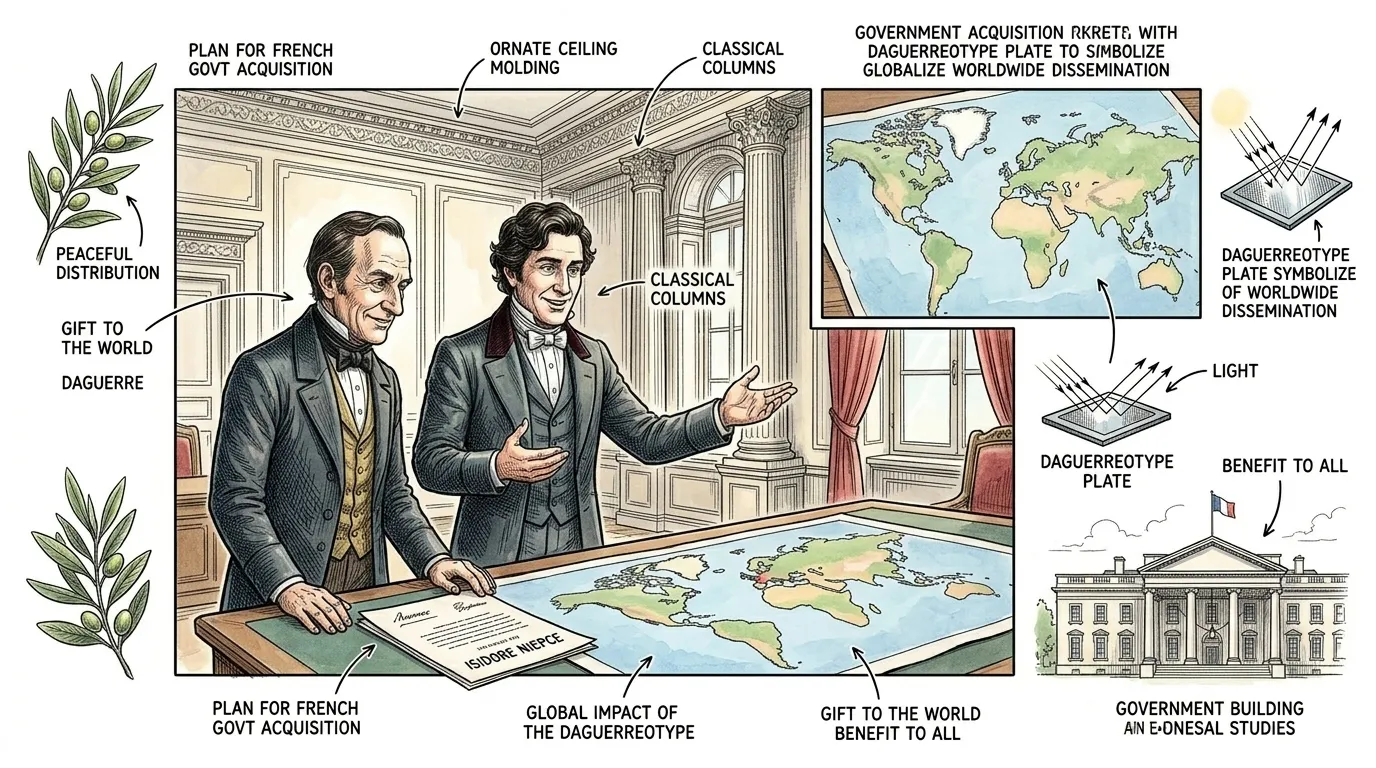
By early 1839, Daguerre understood the immense power of his invention but lacked the means to protect it. He turned to François Arago, a member of the Chamber…
By early 1839, Daguerre understood the immense power of his invention but lacked the means to protect it. He turned to François Arago, a member of the Chamber of Deputies, to advocate for his cause. Arago, recognizing the revolutionary potential, proposed a daring plan: the French government would purchase the rights to the daguerreotype in exchange for lifelong pensions for Daguerre and Niépce's heir, Isidore.

By early 1839, Daguerre understood the immense power of his invention but lacked the means to protect it. He turned to François Arago, a member of the Chamber of Deputies, to advocate for his cause. Arago, recognizing the revolutionary potential, proposed a daring plan: the French government would purchase the rights to the daguerreotype in exchange for lifelong pensions for Daguerre and Niépce's heir, Isidore. This decision would make the process a gift to the world, rather than a guarded commercial secret.

Page 8
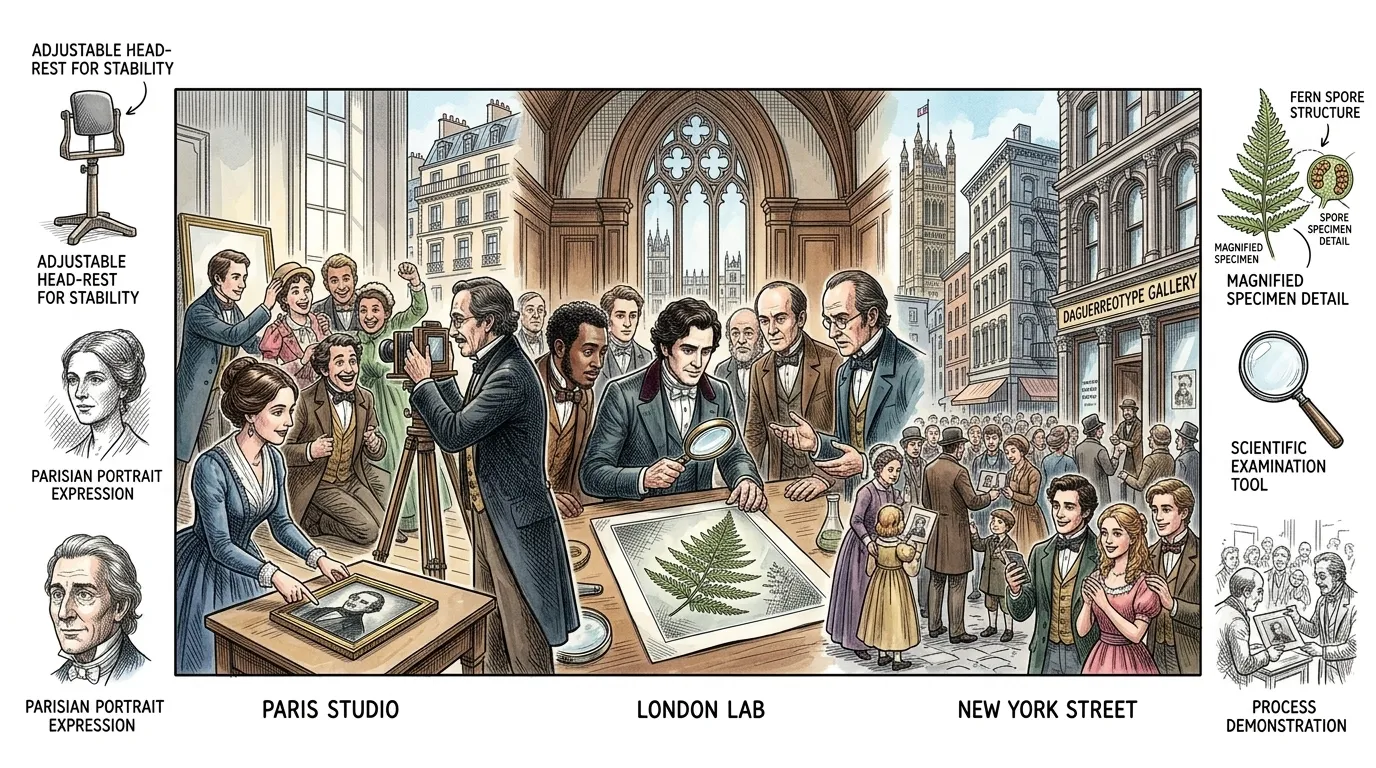
Following the public announcement, the daguerreotype exploded across the globe. Within months, studios opened in London, New York, and Berlin.
Following the public announcement, the daguerreotype exploded across the globe. Within months, studios opened in London, New York, and Berlin. Scientists, artists, and the public clamored for instruction, eager to capture images with unprecedented clarity. The demand was insatiable; for the first time, ordinary people could own their likenesses, transforming portraiture and fundamentally altering society's relationship with visual representation.

Following the public announcement, the daguerreotype exploded across the globe. Within months, studios opened in London, New York, and Berlin. Scientists, artists, and the public clamored for instruction, eager to capture images with unprecedented clarity. The demand was insatiable; for the first time, ordinary people could own their likenesses, transforming portraiture and fundamentally altering society's relationship with visual representation. Daguerre's invention initiated a new era of visual documentation.

Page 9
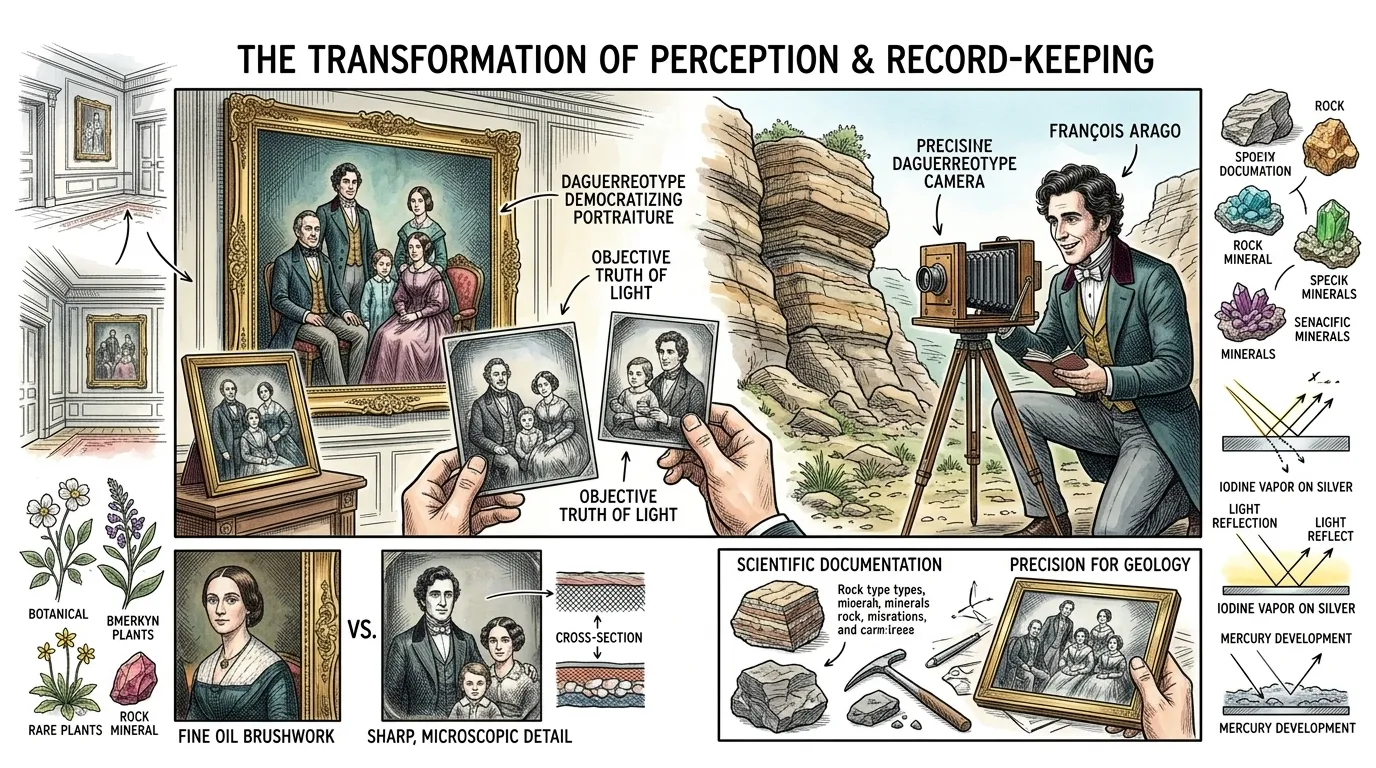
The daguerreotype delivered a 'mirror with a memory,' offering an exacting, objective portrayal of reality. It challenged the traditional role of painting…
The daguerreotype delivered a 'mirror with a memory,' offering an exacting, objective portrayal of reality. It challenged the traditional role of painting, democratized portraiture, and offered scientists an invaluable tool for documentation. Daguerre's innovation did not just create a new art form; it fundamentally changed how humanity perceived and recorded its existence, creating a permanent visual record of the world for the first time, impacting everything from family…

The daguerreotype delivered a 'mirror with a memory,' offering an exacting, objective portrayal of reality. It challenged the traditional role of painting, democratized portraiture, and offered scientists an invaluable tool for documentation. Daguerre's innovation did not just create a new art form; it fundamentally changed how humanity perceived and recorded its existence, creating a permanent visual record of the world for the first time, impacting everything from family history to scientific exploration.

Page 10
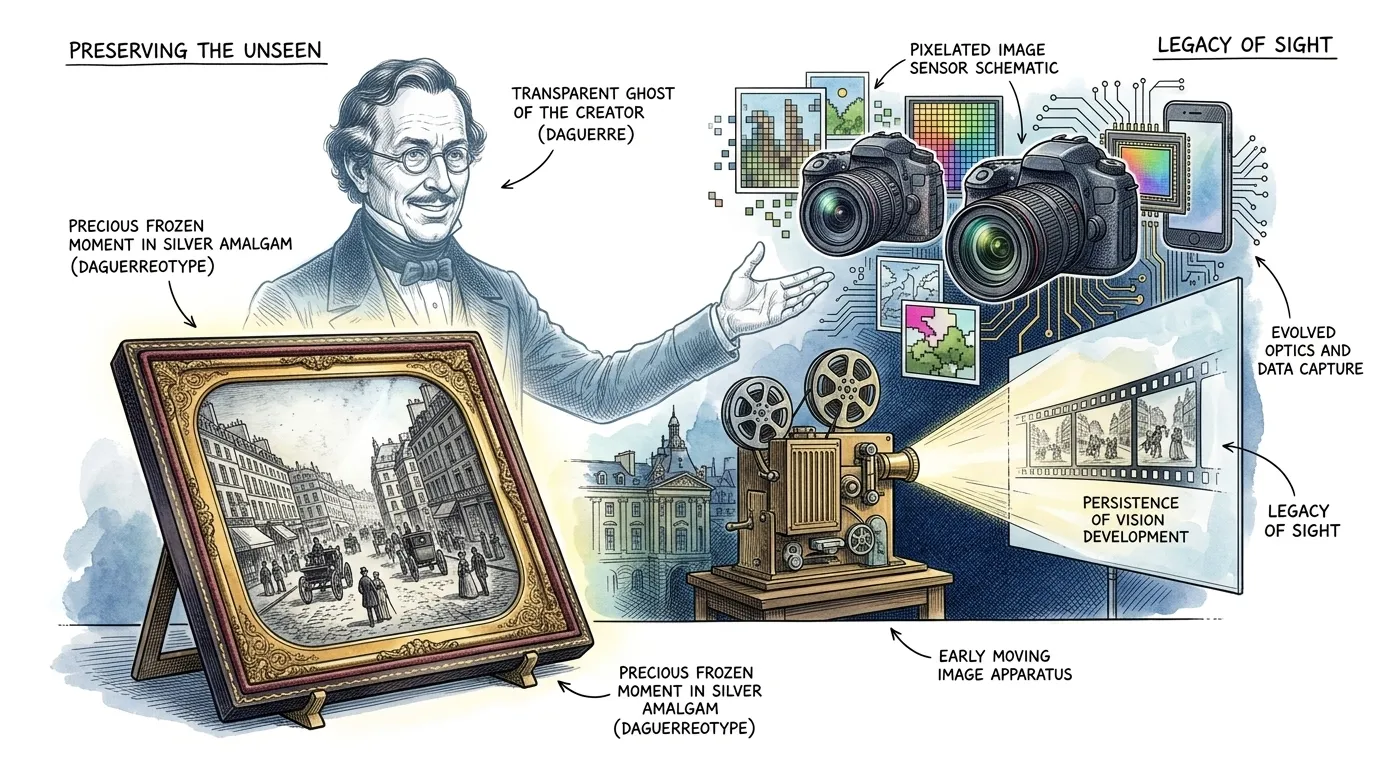
Louis Daguerre died in 1851, but the legacy of his daguerreotype was profound and permanent. It was the crucial first step in a technological revolution that…
Louis Daguerre died in 1851, but the legacy of his daguerreotype was profound and permanent. It was the crucial first step in a technological revolution that would lead to modern photography, motion pictures, and digital imaging. His accidental discovery and meticulous refinement provided the core principles that continue to underpin image capture.

Louis Daguerre died in 1851, but the legacy of his daguerreotype was profound and permanent. It was the crucial first step in a technological revolution that would lead to modern photography, motion pictures, and digital imaging. His accidental discovery and meticulous refinement provided the core principles that continue to underpin image capture. He gifted the world a new way of seeing, a means to freeze time and preserve moments, transforming human memory and knowledge forever.

About this story

  • Location: Global
  • Audience: general readers

More Wonder People stories

All Wonder People stories · Open the library