Ludwig van Beethoven
Ludwig van Beethoven — an illustrated biography story, set in Global. 10 illustrated pages, free to read on Wonder People.
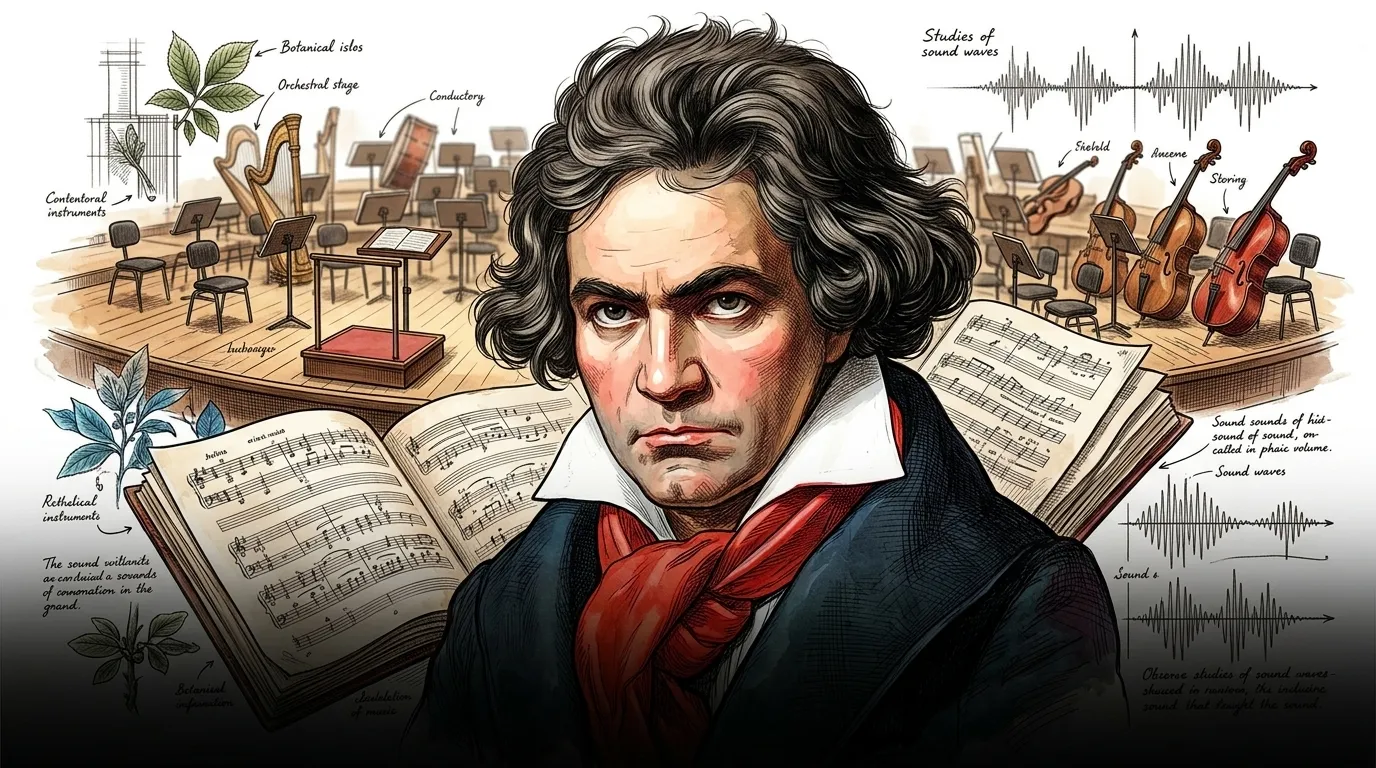
Page 1
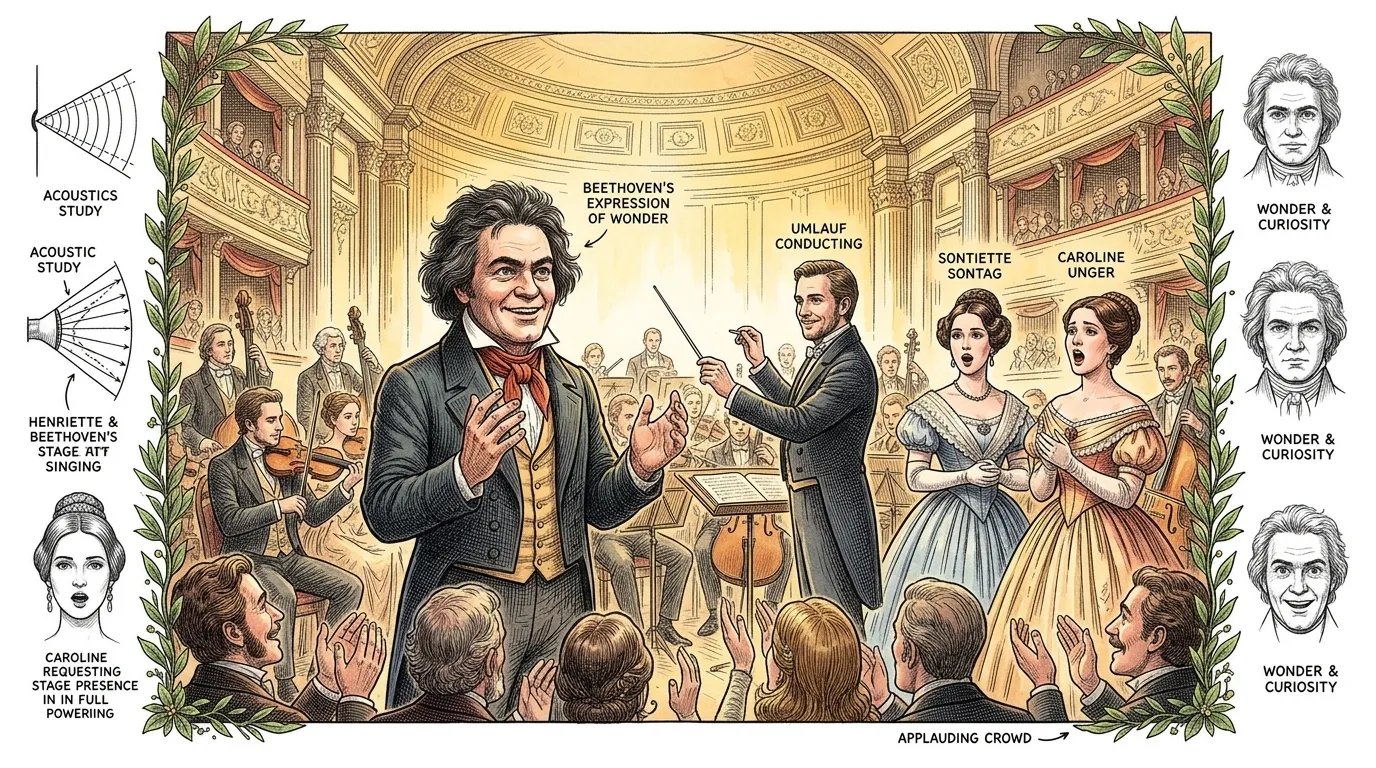
On May 7, 1824, within the grand Kärntnertortheater in Vienna, Ludwig van Beethoven presented his Ninth Symphony to a packed house. Despite his profound deafness, he stood on stage, attempting to conduct, his movements often out of sync with the orchestra, his ears unable to perceive the magnificent sound he had created. It was Michael Umlauf, the official conductor, who truly led the musicians, while soprano Henriette Sontag and alto Caroline Unger delivered the monumental choral work, uniting human voices with unprecedented orchestral power. The audience erupted in a thunderous ovation, but Beethoven, lost in his silent world, could not hear it until Caroline Unger gently turned him to face the adoring crowd, revealing the overwhelming triumph of his vision.
Biographical Fact: The premiere of the Ninth Symphony was a pivotal moment, cementing Beethoven's status as a revolutionary composer even as his deafness isolated him from the sounds of his own triumph.
Page 2
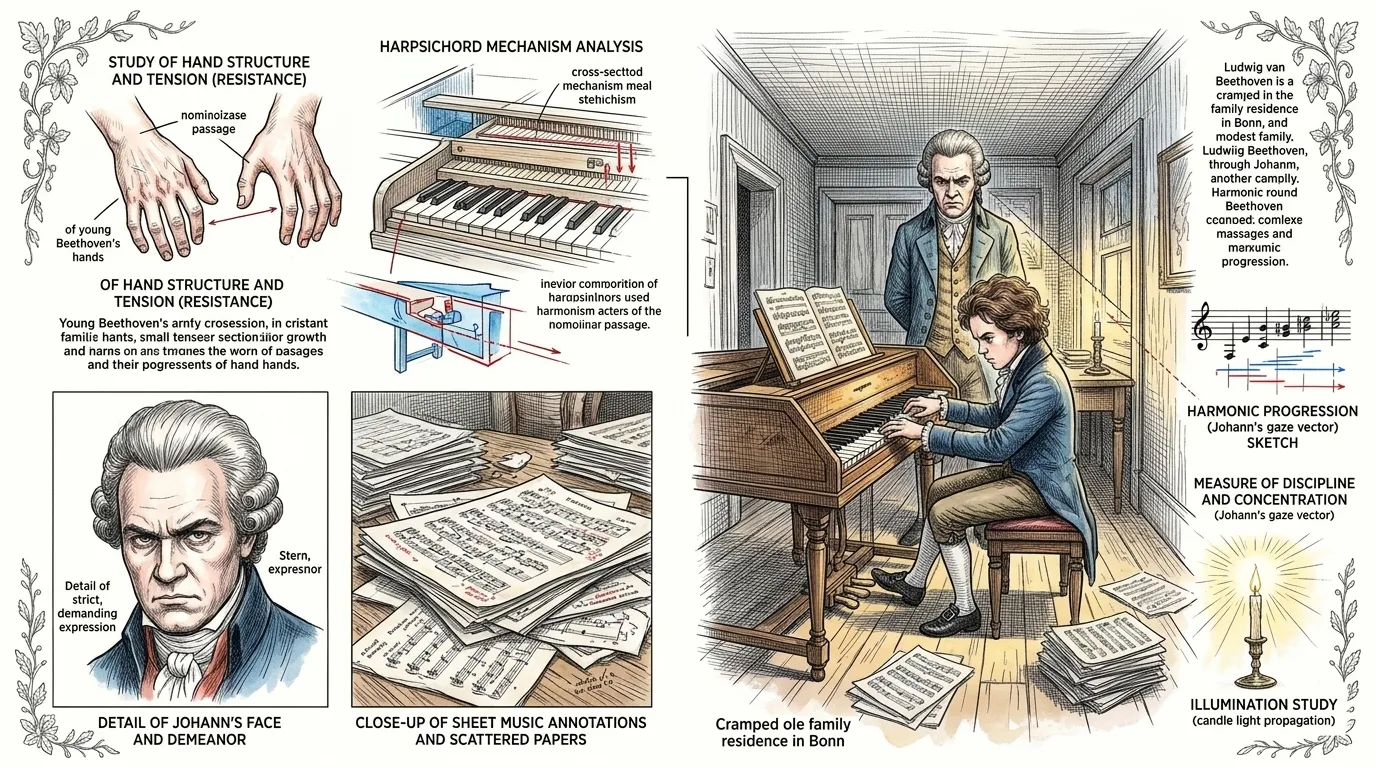
Ludwig van Beethoven's musical journey began not in triumph, but in the rigid discipline of his childhood home in Bonn, Germany. His father, Johann van Beethoven, an ambitious and often harsh court musician, recognized young Ludwig's prodigious talent and relentlessly pushed him, hoping to cultivate a new child prodigy like Mozart. In the cramped, modest family residence, surrounded by a worn harpsichord and piles of sheet music, young Ludwig spent countless hours practicing, his small hands struggling with complex passages under his father's watchful and demanding eye. This early, intense training, though fraught with tension, instilled in him an unparalleled technical mastery and a profound understanding of composition that would become the bedrock of his future innovations.
Biographical Fact: Beethoven's formidable musical education began under his father's strict tutelage, shaping his early technical prowess and work ethic.
Page 3
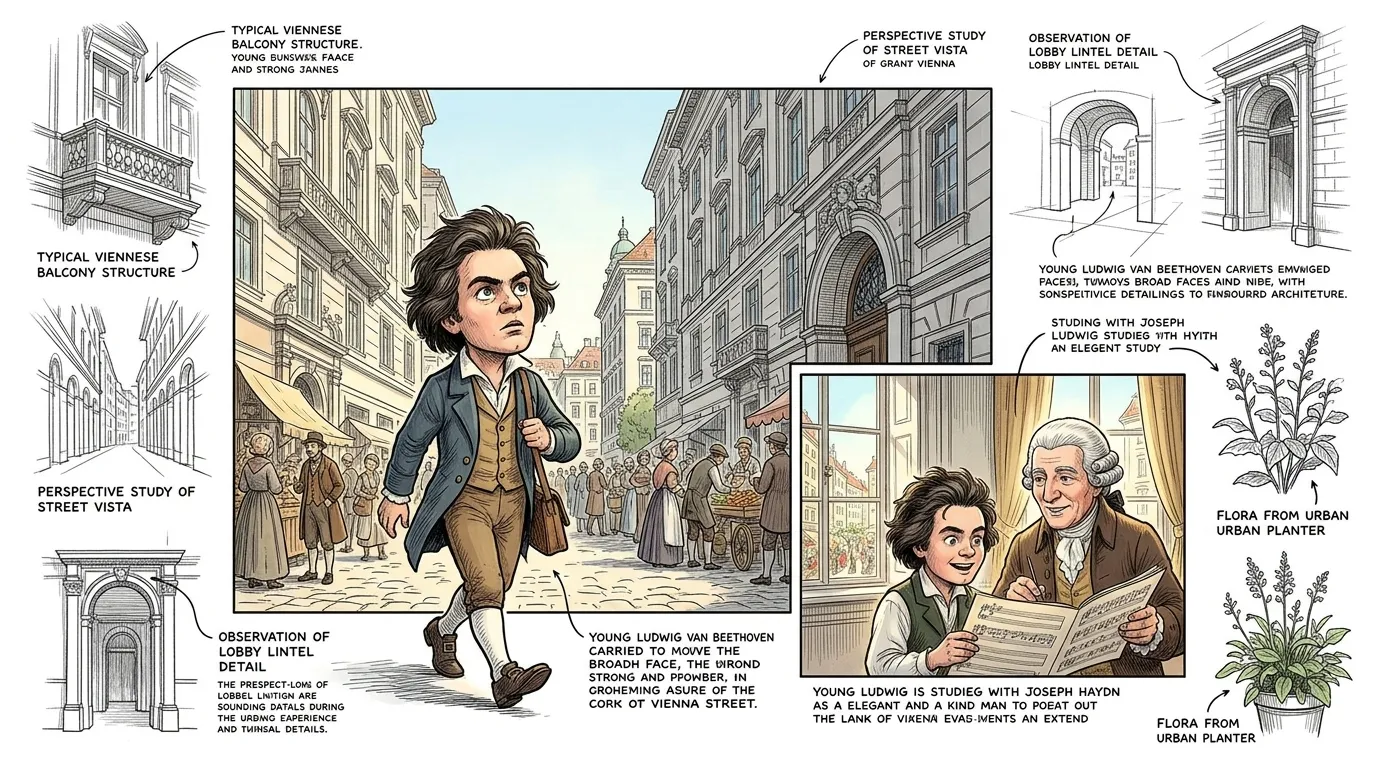
In 1792, a young Ludwig van Beethoven departed Bonn permanently, drawn by the irresistible pull of Vienna, the undisputed musical capital of Europe. He arrived with a few belongings, boundless ambition, and a letter of introduction, seeking to learn from the city's masters and carve out his own destiny. Entering the bustling, sophisticated city, he immersed himself in its vibrant artistic circles, initially studying with the esteemed Joseph Haydn. This strategic move placed him at the heart of classical music, a critical decision that transformed him from a provincial talent into a serious contender on the grandest stage. He was no longer just a musician; he was an artist claiming his place.
Biographical Fact: Beethoven's strategic move to Vienna in 1792, the musical epicenter of Europe, was a crucial step in his artistic development and rise to prominence.
Page 4
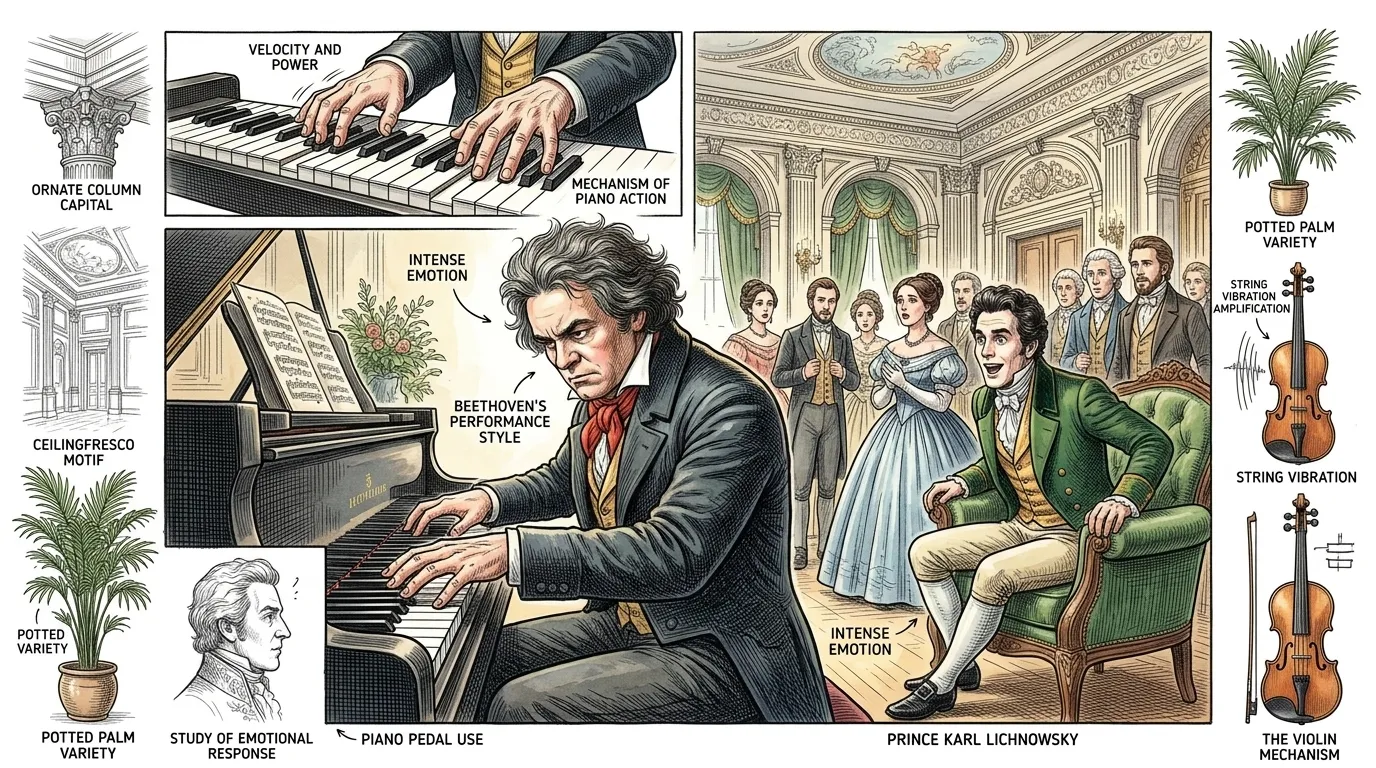
Beethoven rapidly established himself in Vienna not merely as a composer, but as a formidable piano virtuoso whose improvisational prowess stunned audiences. At private salons hosted by influential patrons like Prince Karl Lichnowsky, he would captivate listeners, his performances often pushing the boundaries of convention. He took the stage, not to mimic his predecessors, but to assert a new, more expressive musical language. His fingers flew across the keyboard with unprecedented power and emotion, forcing his contemporaries to acknowledge a rising force, a performer whose interpretations were as revolutionary as his compositions. This raw talent quickly garnered him powerful aristocratic patrons, securing his position within Viennese society.
Biographical Fact: Beethoven's electrifying performances as a piano virtuoso, characterized by his powerful improvisation, shattered traditional expectations and captivated Vienna's elite.
Page 5

By 1802, the encroaching reality of Beethoven's deafness became an agonizing truth. Retreating to the quiet village of Heiligenstadt outside Vienna, he grappled with despair, penning a profound, heart-wrenching document known as the Heiligenstadt Testament. In this letter to his brothers, he confessed his suicidal thoughts, his agony over losing the very sense essential to his art, and his struggle with social isolation. Yet, in a decisive act of defiance against his cruel fate, he chose life and art over surrender, declaring his resolve to continue creating for the world. This moment marked a radical turning point, transforming his personal tragedy into a source of unparalleled artistic determination.
Biographical Fact: The Heiligenstadt Testament reveals Beethoven's deep personal crisis over his advancing deafness, but also his unwavering resolve to continue his artistic mission.
Page 6
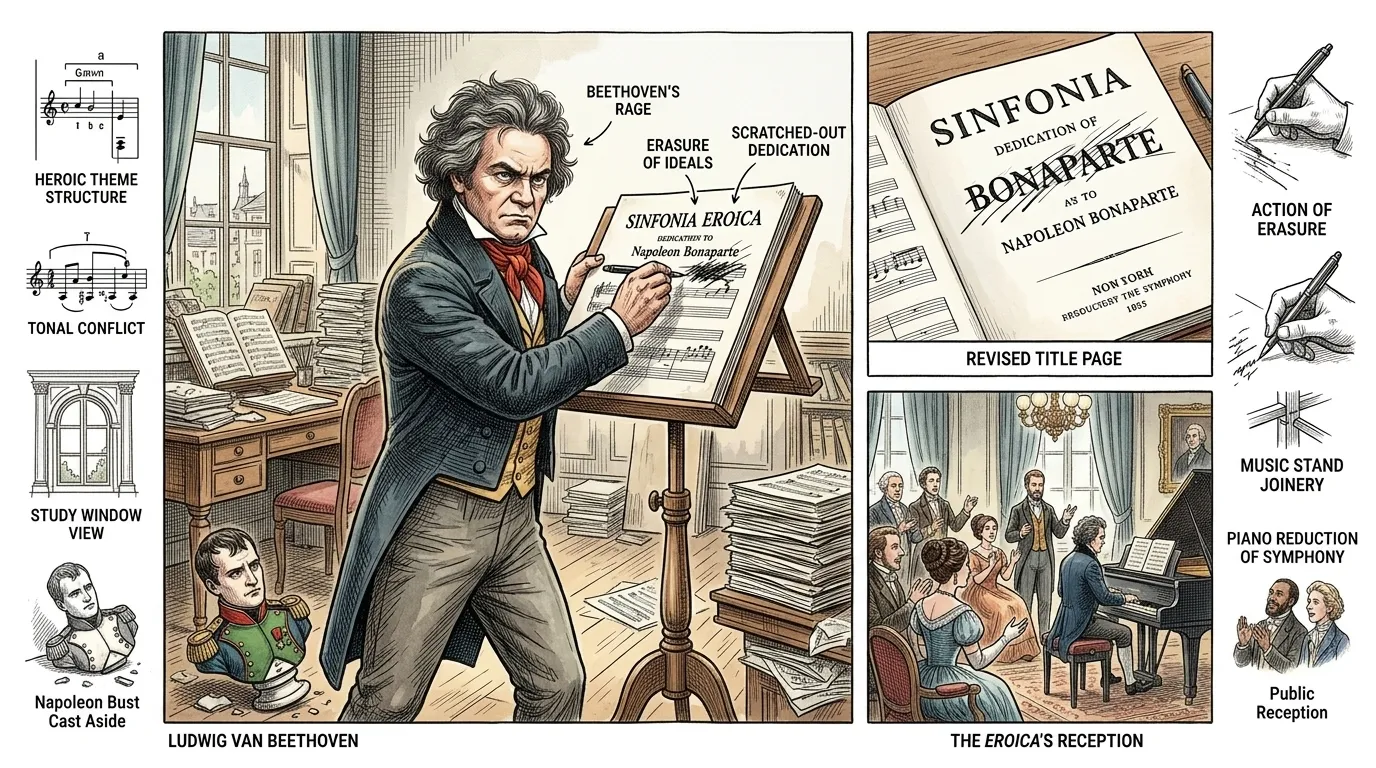
The years following Heiligenstadt saw Beethoven enter his 'Heroic Period,' an explosion of groundbreaking compositions. Among them, the Symphony No. 3, 'Eroica,' stood as a monumental testament to his renewed purpose. Initially dedicated to Napoleon Bonaparte, whom Beethoven admired as a champion of republican ideals, the dedication was famously scrawled out in fury when Napoleon declared himself Emperor. This act of rejection revealed Beethoven's fierce independent spirit and his unwavering commitment to his ideals of liberty and heroism, even if political figures betrayed them. He was not merely composing music; he was making powerful political and philosophical statements that challenged the era's conventions.
Biographical Fact: The 'Eroica' Symphony, originally dedicated to Napoleon, marked a significant shift in musical form and expressed Beethoven's evolving political ideals and profound disappointment.
Page 7
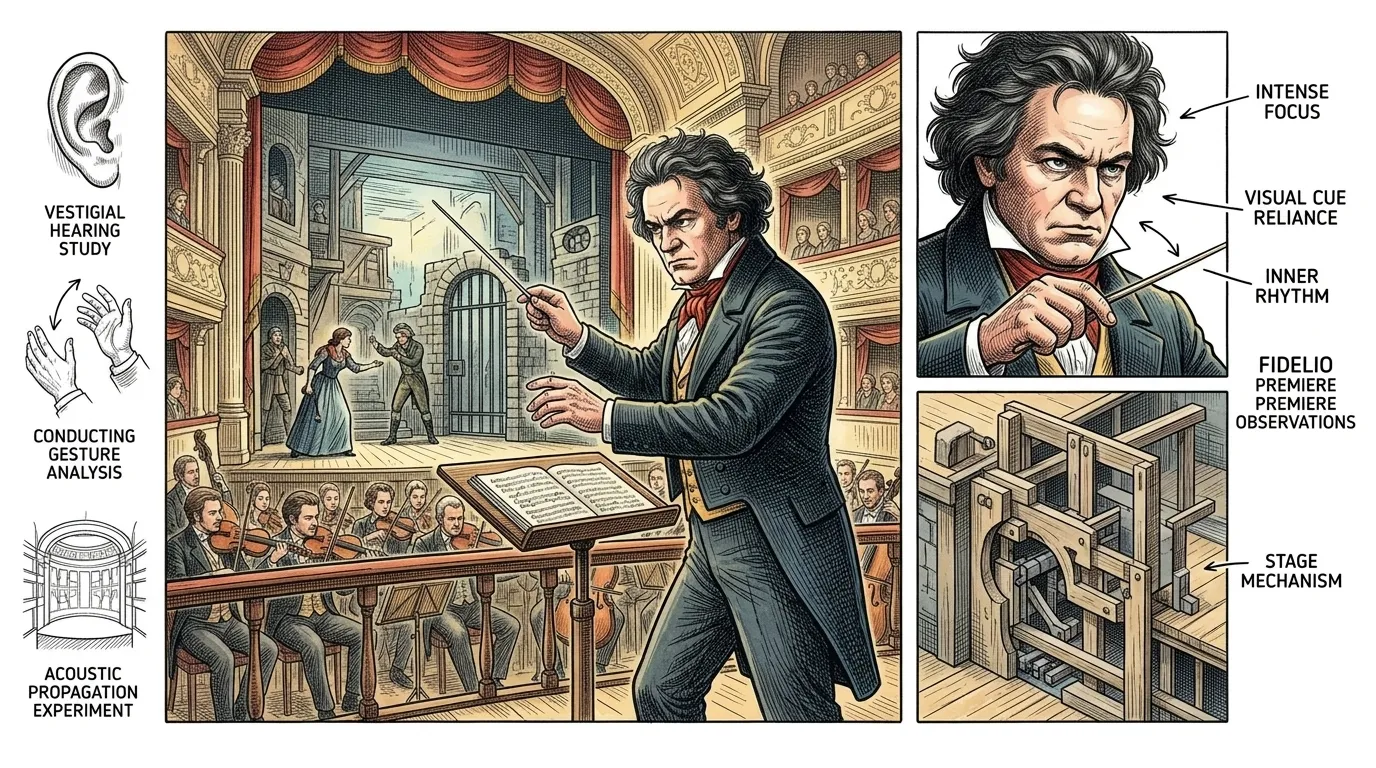
Even as his deafness became nearly complete, Beethoven's commitment to his art intensified. In 1814, he conducted the final, revised version of his only opera, 'Fidelio,' a powerful tale of political tyranny and marital devotion. On the podium at the Theater an der Wien, he could no longer hear the orchestra he was leading, relying on visual cues and his profound inner sense of rhythm and timing. The performance, while a challenge for all involved, was a critical triumph, affirming his ability to communicate profound human drama through music, even in the face of his personal silence. This moment demonstrated his sheer force of will, an artist refusing to be silenced by fate.
Biographical Fact: 'Fidelio' represented Beethoven's enduring struggle and triumph as a deaf composer, proving his ability to craft powerful narratives through music despite his profound disability.
Page 8
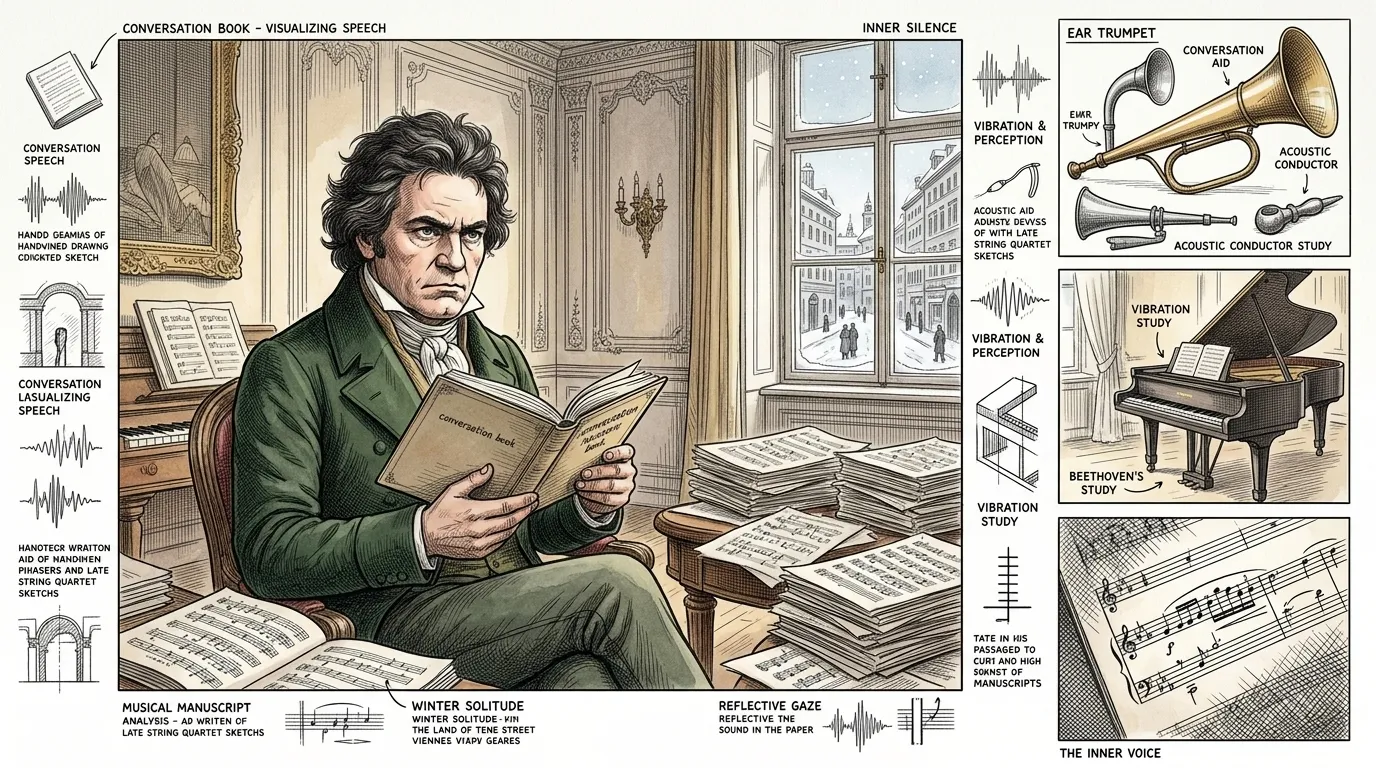
Following the monumental success of the Ninth Symphony, Beethoven's public life largely ceased. His profound deafness, coupled with ongoing health issues and personal struggles, forced him into an increasingly solitary existence within his Vienna apartments. While his music echoed across Europe, he lived in a world of silence, communicating through 'conversation books' with the few visitors who remained. He continued to compose, producing his late string quartets and other introspective works that pushed the boundaries of musical expression. This period saw him wrestling with the aftermath of his peak achievement, navigating a world that celebrated his genius but could not alleviate his personal isolation.
Biographical Fact: In the years after the Ninth Symphony, Beethoven's severe deafness and ill health led to a retreat from public life, marked by intense solitude and continued profound composition.
Page 9
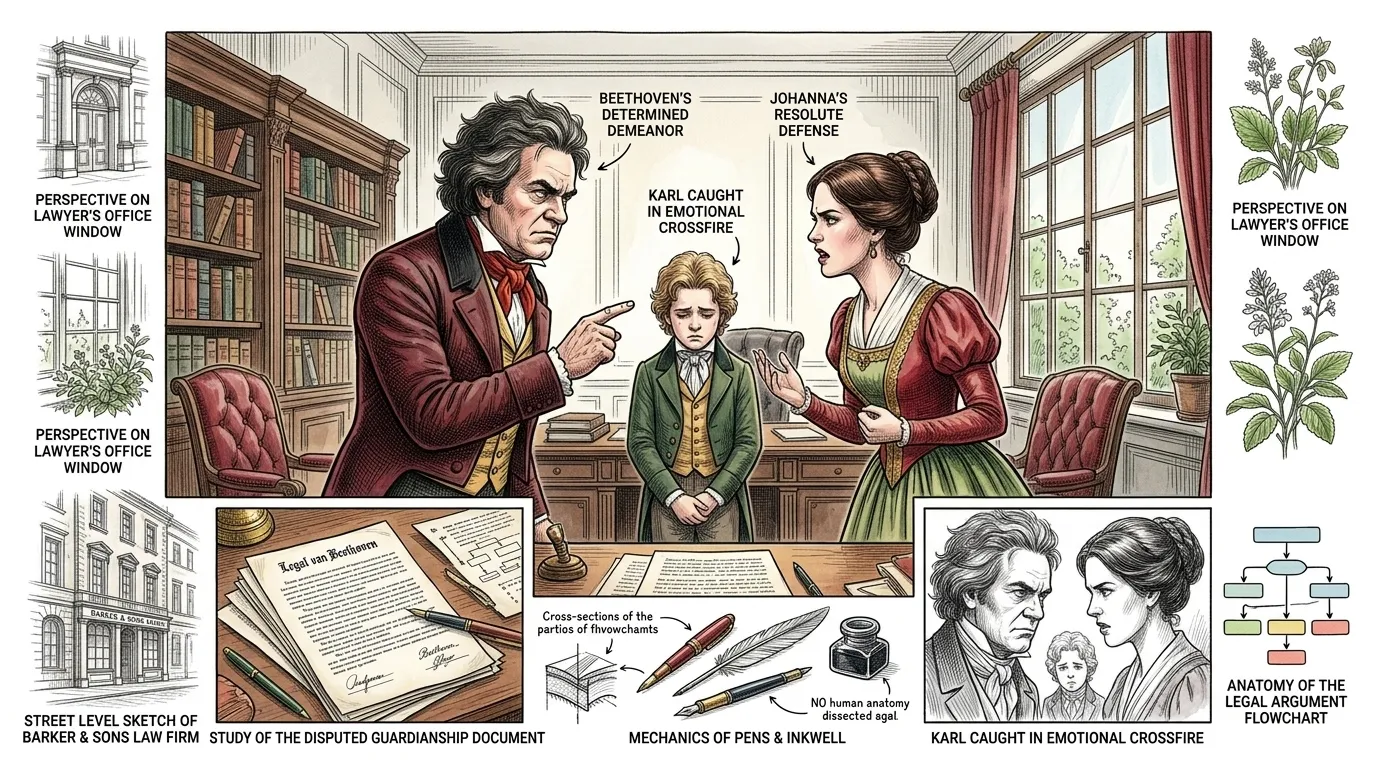
Beyond his musical triumphs, Beethoven faced immense personal turmoil, most notably the bitter and protracted legal battle for the custody of his nephew, Karl. Following his brother Kaspar Karl's death in 1815, Beethoven became embroiled in a relentless five-year court struggle against Karl's mother, Johanna van Beethoven. He saw himself as Karl's moral guardian, believing he could provide a superior upbringing, while Johanna fought fiercely for her son. This deeply emotional and public conflict drained Beethoven emotionally and financially, revealing a man capable of immense love and stubborn conviction, even when it led to profound distress and alienated those around him.
Biographical Fact: Beethoven's five-year legal struggle for the custody of his nephew, Karl, was a deeply draining personal battle that exposed his complex, often fraught, familial relationships.
Page 10
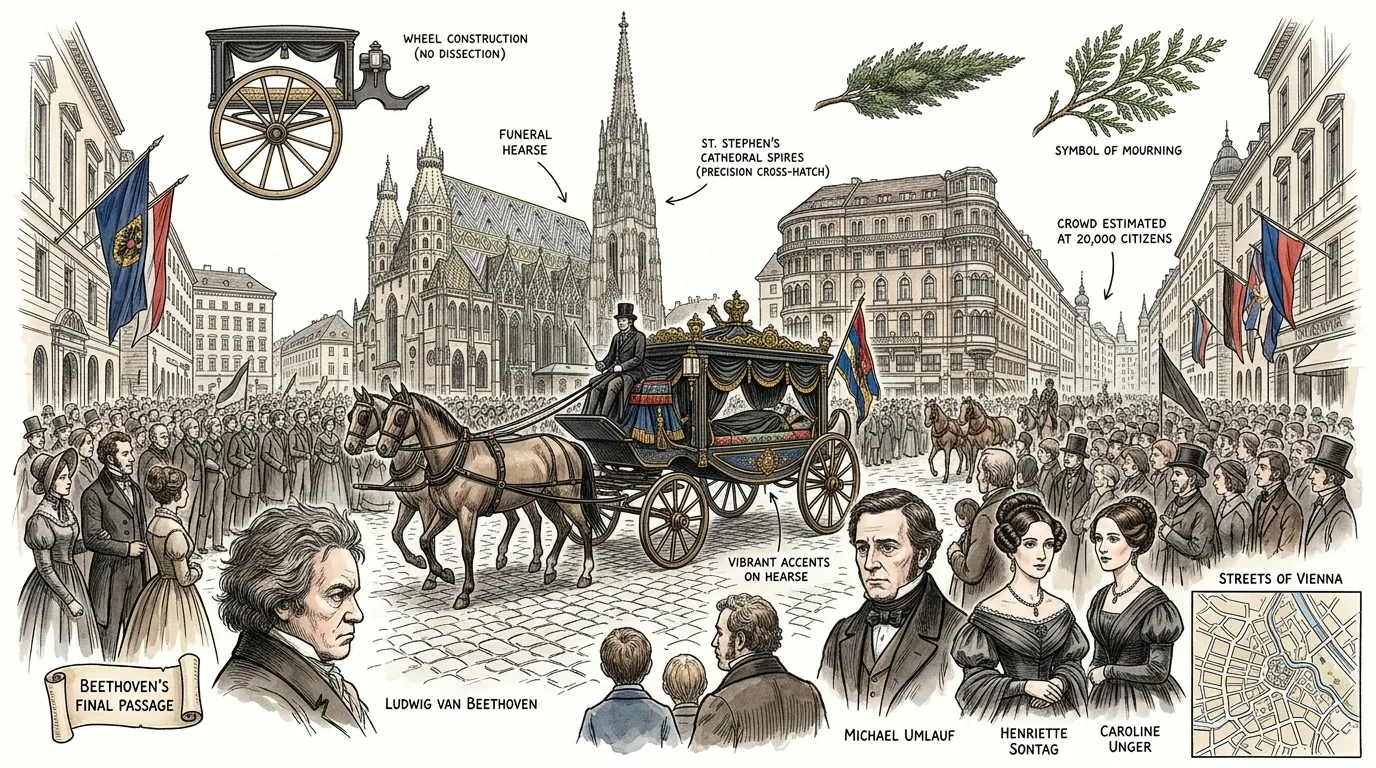
When Ludwig van Beethoven died in Vienna on March 26, 1827, an estimated 20,000 citizens lined the streets for his funeral procession, a testament to his immense public reverence. His passing marked not merely the end of a life, but the culmination of a revolutionary force in music. He shattered the classical forms inherited from Mozart and Haydn, infusing them with unprecedented emotional depth, dramatic power, and a sense of individual struggle and triumph. His music became a bridge to the Romantic era, shaping generations of composers and resonating across centuries, forever altering the landscape of classical music. Beethoven did not just compose; he redefined the very purpose and expression of art.
Biographical Fact: Beethoven's funeral drew an immense crowd, signaling his monumental impact. His music, a revolutionary bridge to the Romantic era, continues to shape and inspire, cementing his timeless legacy.
About this story
- Location: Global
- Audience: general readers
Questions and answers
Read Wonder People on your phone
Wonder People is available on Android. Get Wonder People on Google Play.