Josephine Cochrane
Josephine Cochrane — an illustrated biography story, set in Global. 10 illustrated pages, free to read on Wonder People.
Page 1
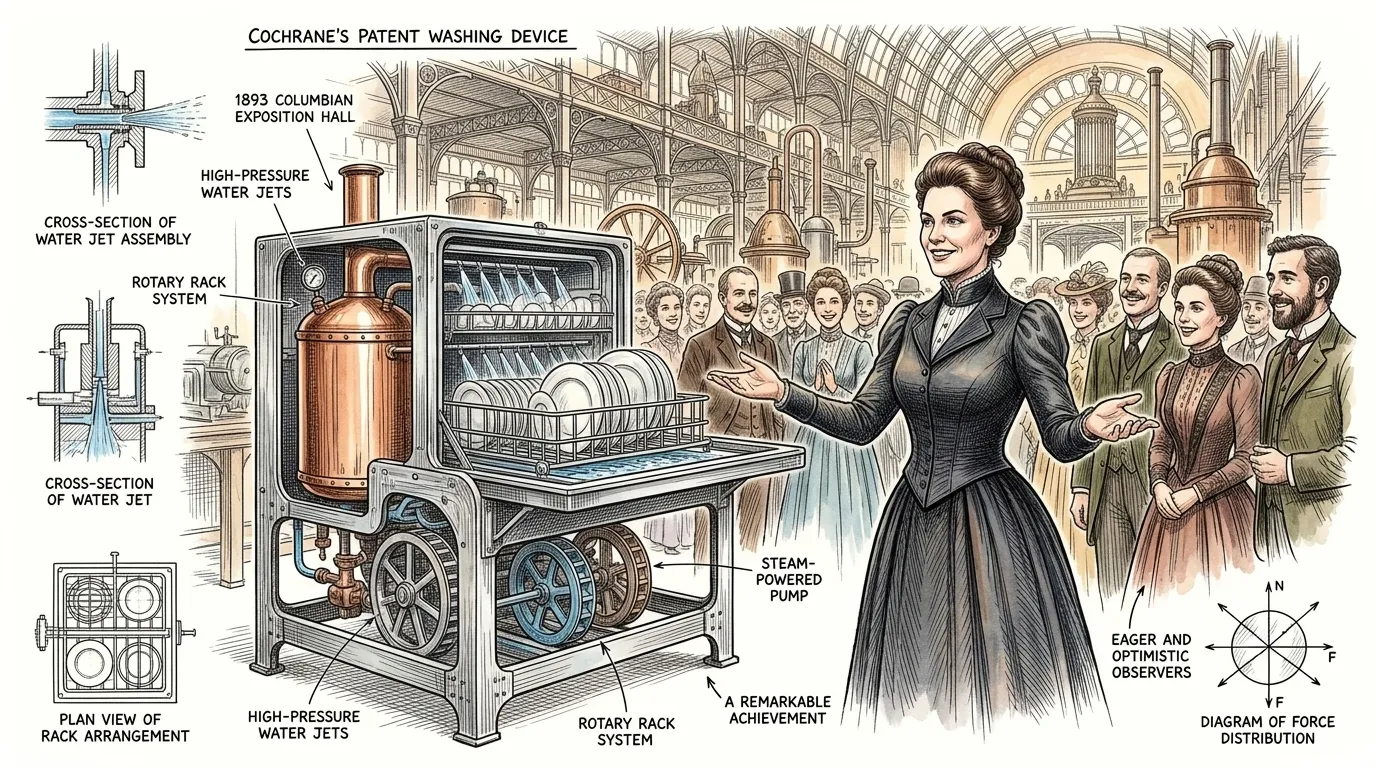
At the 1893 World's Columbian Exposition in Chicago, Illinois, Josephine Cochrane stood at the pinnacle of her achievement. Her revolutionary dishwashing machine, a testament to relentless innovation, was unveiled before thousands. It was here, amidst the marvels of global industry, that her invention garnered the highest award for mechanical construction and originality, permanently etching her name into the annals of innovation.
"'This machine,' Josephine declared, her voice resonating with conviction to the gathered onlookers, 'will forever change the drudgery of the kitchen, proving, as the great inventor Thomas Edison once stated, that 'genius is one percent inspiration and ninety-nine percent perspiration.' You see the perspiration in every detail of this new era!'"
Biographical Fact: The World's Columbian Exposition was a global stage, allowing Cochrane to demonstrate her invention's superiority and gain critical recognition.
Page 2
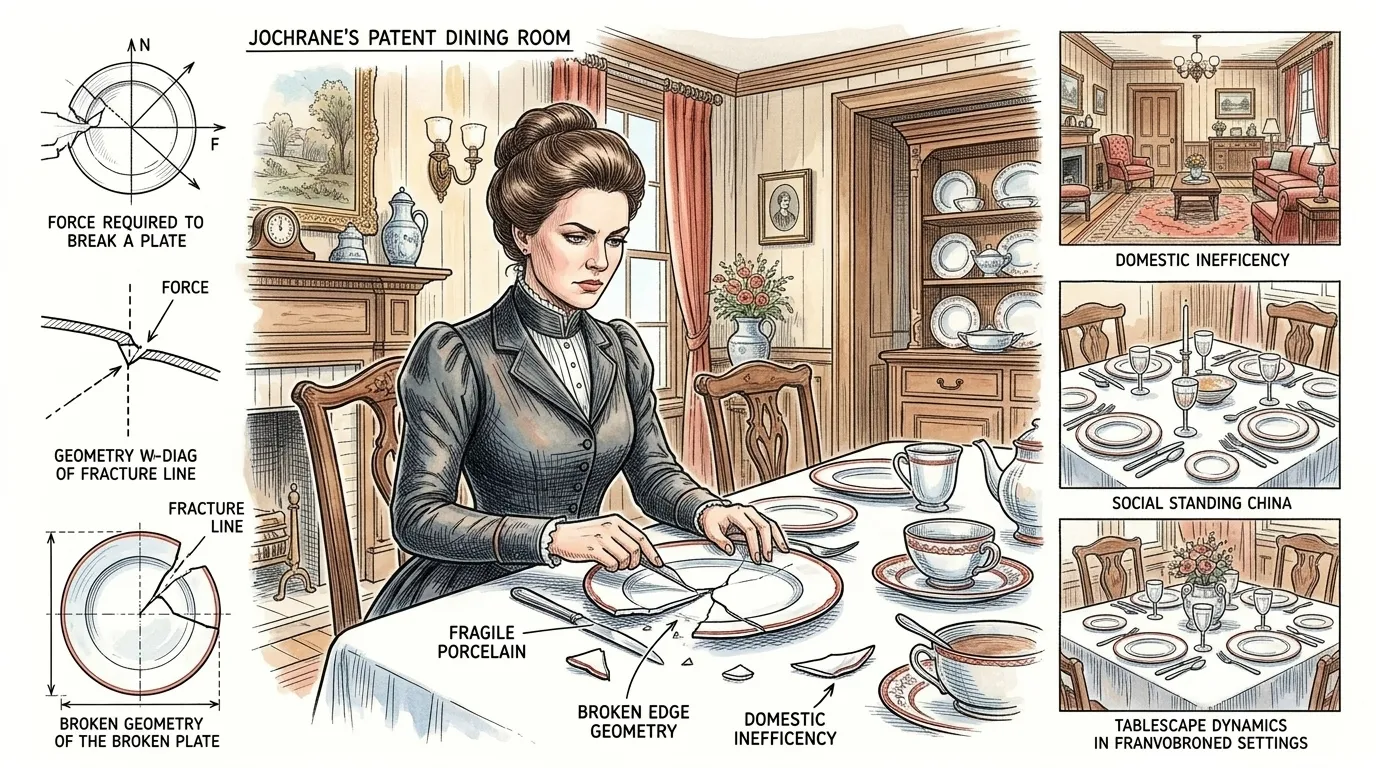
Born Josephine Garis in Ashtabula County, Ohio, her lineage was steeped in mechanical ingenuity; her grandfather, John Fitch, had patented the steamboat. Though she married William Cochrane and lived a life of social standing in Shelbyville, Illinois, a nagging domestic frustration persisted. Expensive heirloom china was frequently chipped or broken by hurried household staff, leading to a profound dissatisfaction that would ignite her inventive spirit.
"'It's simply unacceptable,' Josephine muttered to herself, her fingers tracing the jagged edge of a newly broken porcelain plate. 'There must be a better way to ensure the safety of our treasures than trusting them to careless hands.'"
Biographical Fact: Cochrane's initial motivation was deeply personal: preserving her cherished family heirlooms from breakage during manual washing.
Page 3
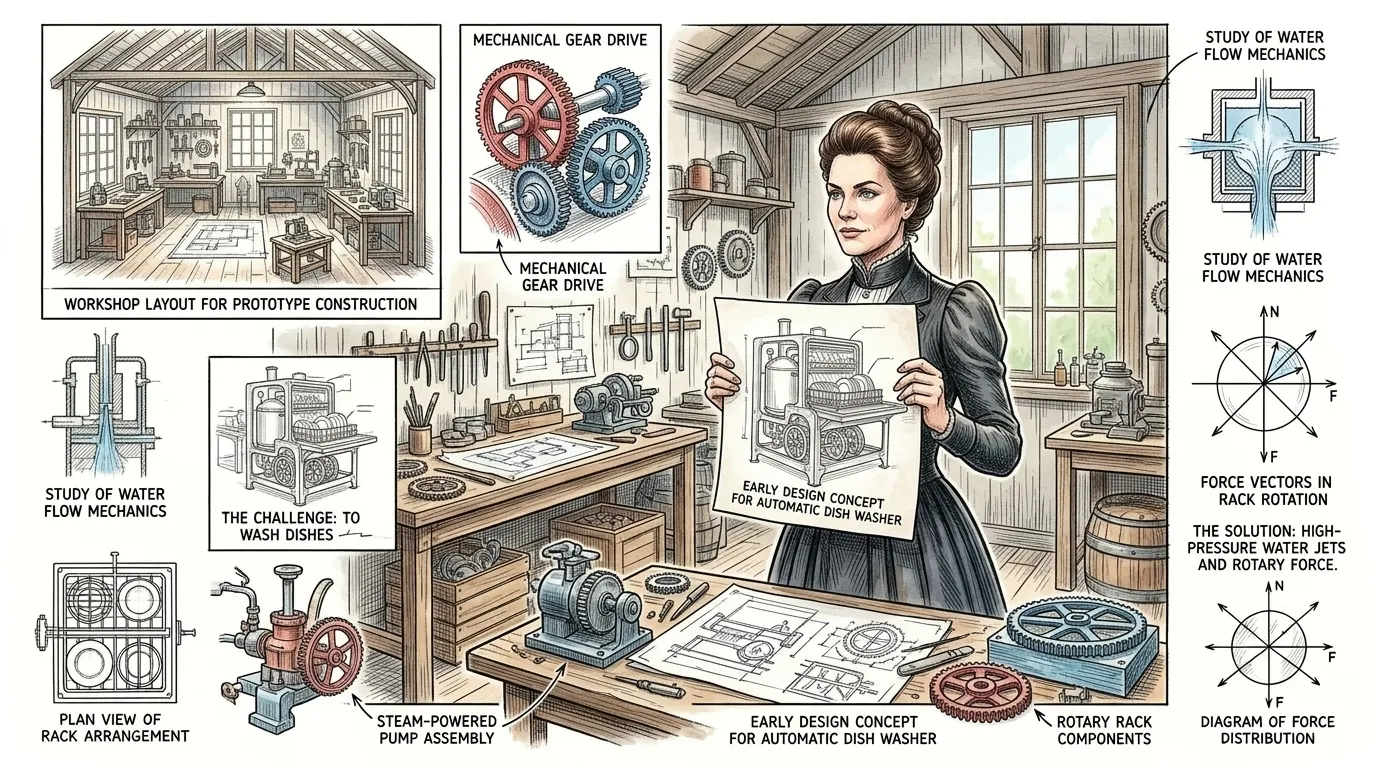
The frustration escalated, solidifying into a fierce determination to solve the problem herself. She observed existing dishwashing devices, finding them ineffective and cumbersome. It became clear no suitable machine existed, prompting Josephine to declare she would build one that 'would do the work for me.' This resolute decision marked her transition from frustrated homemaker to dedicated inventor, sketching her initial designs with focused intensity.
"'If no one else can invent a machine that truly works,' Josephine proclaimed to the empty space of her nascent workshop, holding up a preliminary sketch, 'then I will design it myself. This is where the solution begins.'"
Biographical Fact: Cochrane's initial research revealed a gap in the market for an efficient, effective dishwashing solution, driving her to take on the challenge personally.
Page 4
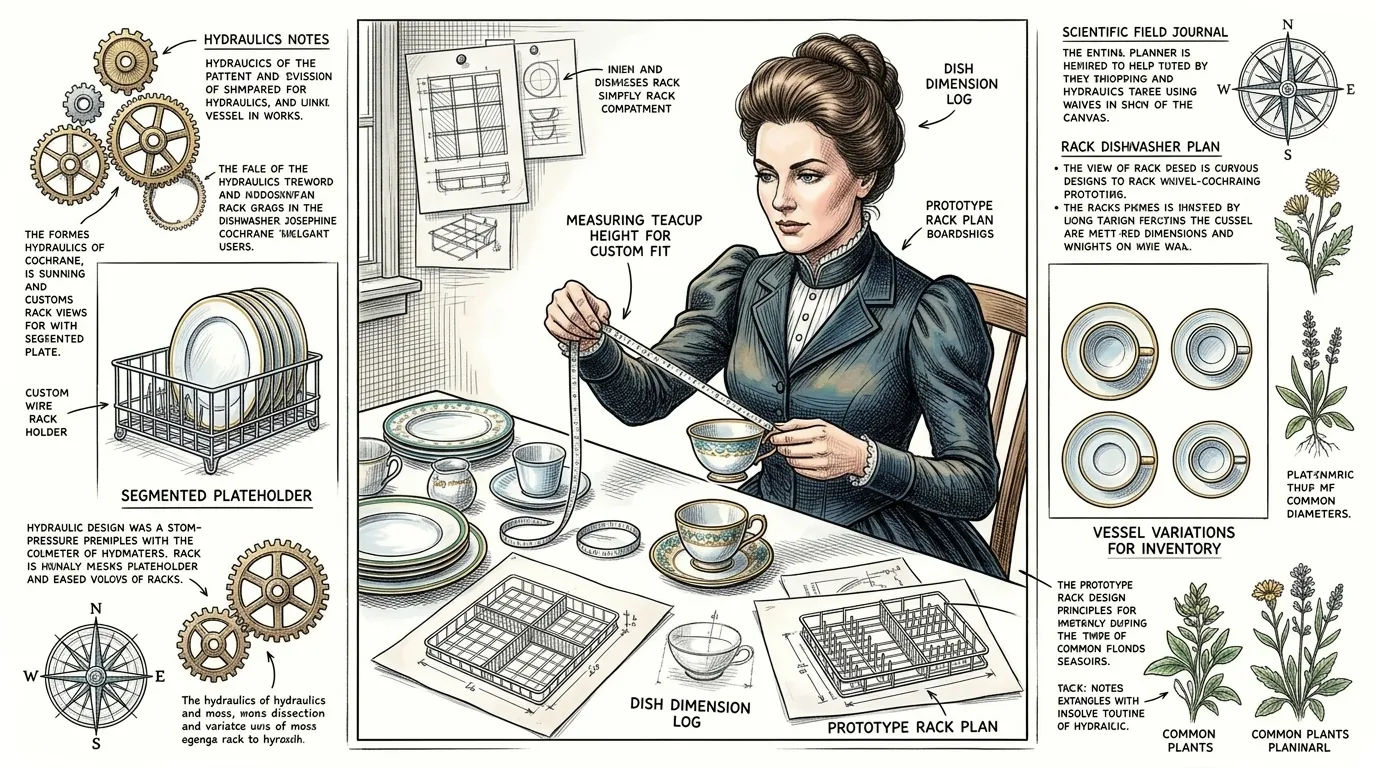
Josephine's unique insight was not merely to wash dishes, but to protect them. She understood that each piece of china required its own secure space. In a pivotal act of precision engineering, she meticulously measured every plate, cup, and saucer, designing wire compartments that would cradle each item, preventing movement and breakage. This hands-on, item-specific approach became the foundational principle of her machine.
"'Every curve, every dimension,' Josephine explained aloud to herself, holding a measuring tape against a teacup, 'must be accounted for. The strength of this design lies in its custom fit, ensuring no dish will ever touch another.'"
Biographical Fact: Her meticulous measurement of individual dishes led to a patented design where wire racks securely held each item, a novel and crucial aspect of her invention.
Page 5
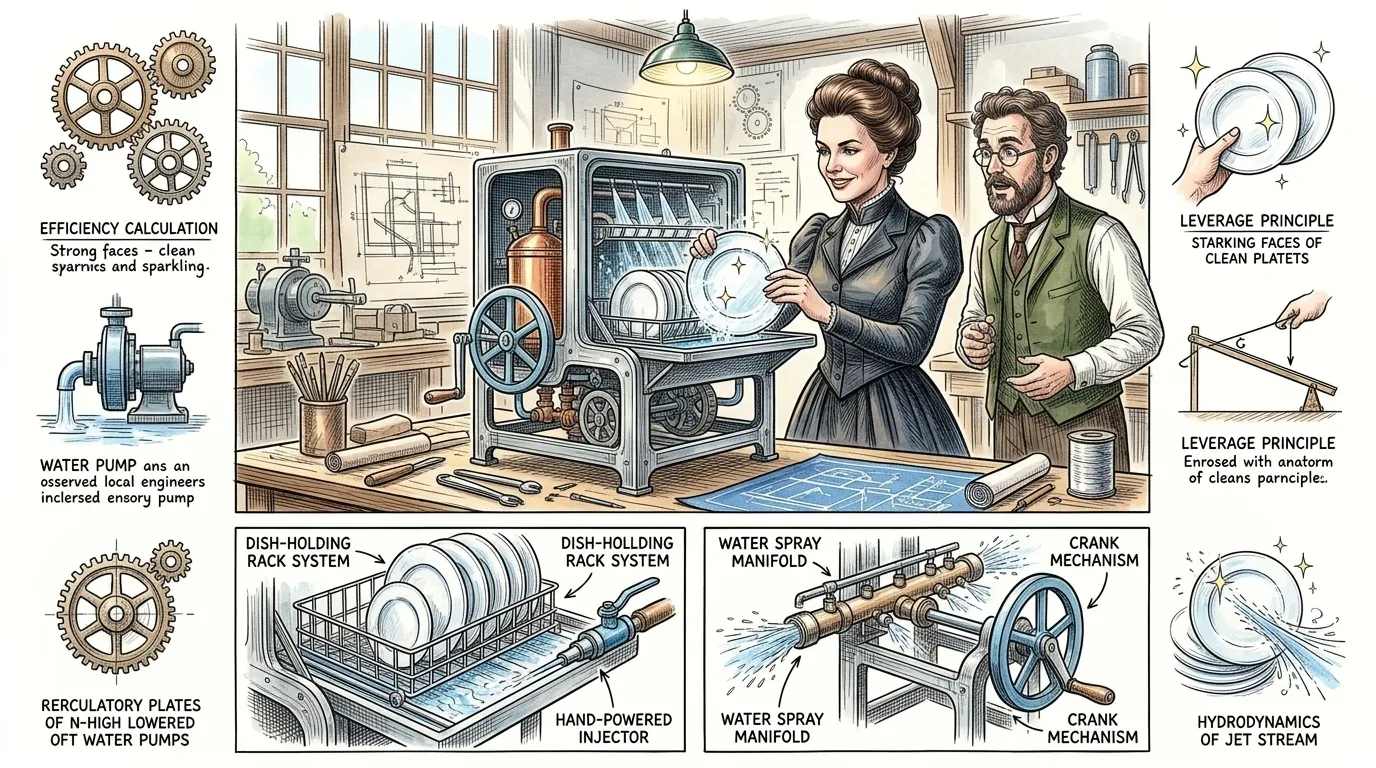
After countless hours of labor, Josephine completed her first working prototype. It featured a hand-cranked wheel to rotate the dishes through spraying water. With anticipation, she invited neighbor George Grant, a local engineer, to witness its inaugural operation. As the machine whirred, the dishes emerged spotlessly clean. Though still requiring manual water heating and pumping, the successful wash proved her concept's undeniable potential.
"'Look, George!' Josephine exclaimed, her face alight with triumph as she pulled a sparkling plate from the machine. 'Not a single chip, and perfectly clean! The principle works!'"
Biographical Fact: The initial prototype's success, despite its manual operation, confirmed the viability of Cochrane's design and mechanism for effective dish cleaning without damage.
Page 6
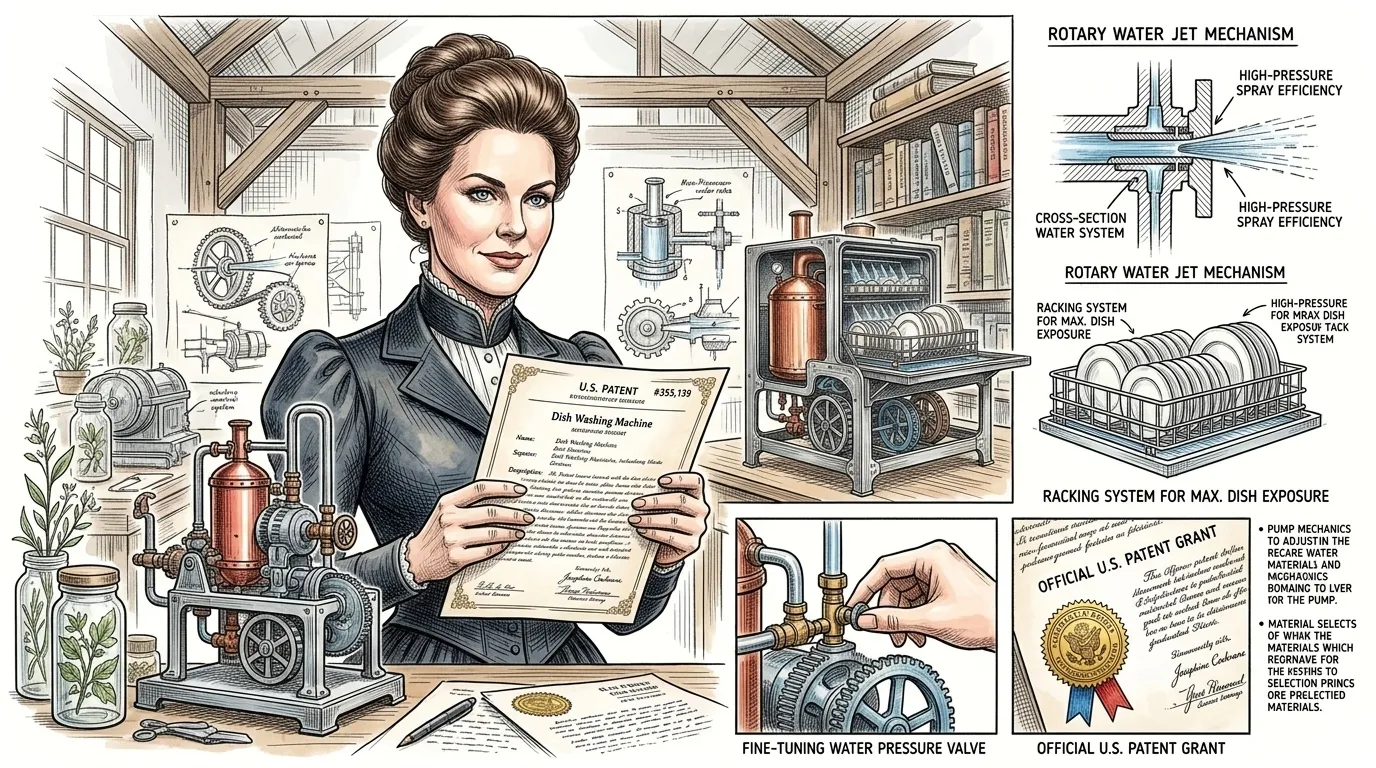
With a proven concept, Josephine moved to protect her invention. She meticulously documented her design, detailing the wire compartments, the rotating mechanism, and the water spray system. On December 28, 1886, she secured U.S. Patent #355,139 for her 'Dish Washing Machine.' This legal protection was a critical step, transforming her personal solution into a commercial property and solidifying her status as an inventor.
"'This patent,' Josephine announced, holding the official document with a firm grip, 'is more than just paper. It is the formal recognition of ingenuity, a shield for what I have built from the ground up.'"
Biographical Fact: U.S. Patent #355,139 protected Cochrane's innovative design, particularly the wire racks, establishing her ownership and commercial rights.
Page 7
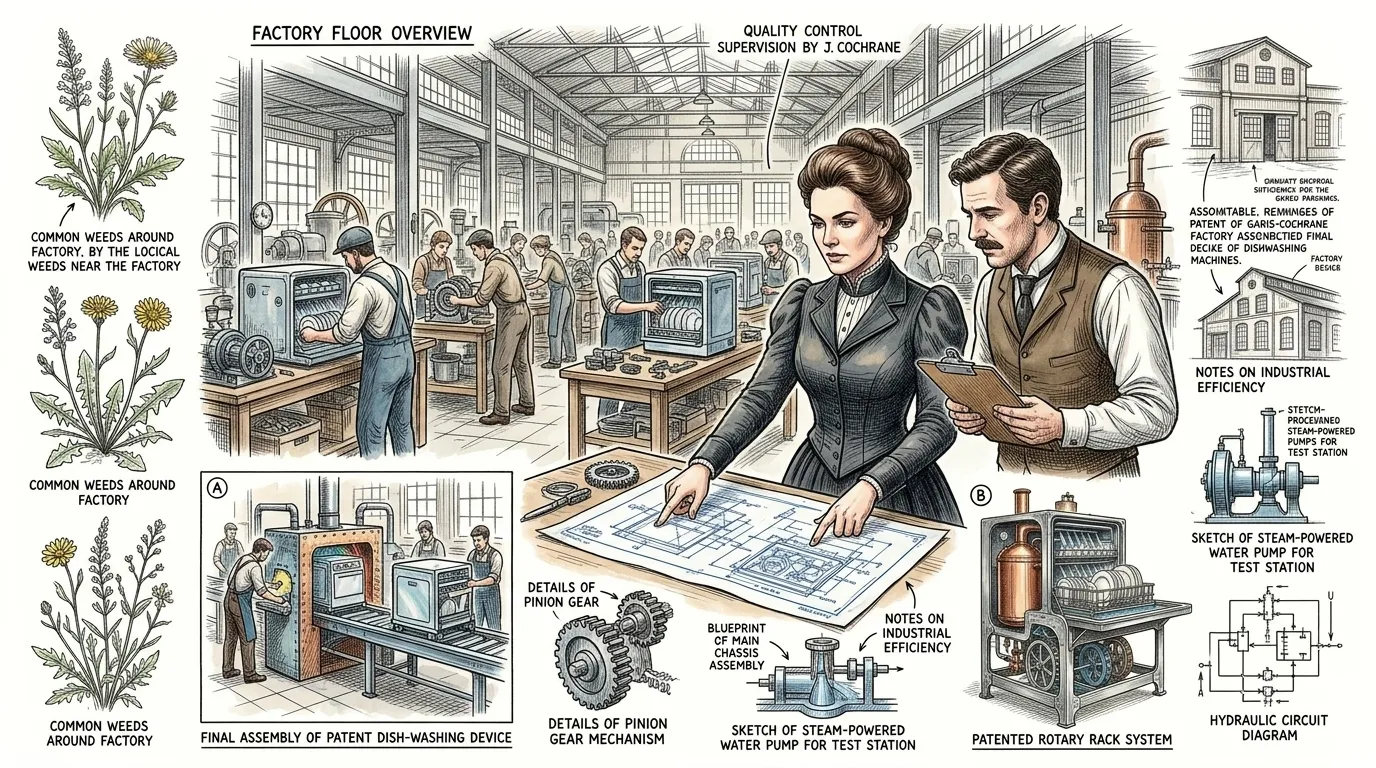
Recognizing the immense potential, Josephine moved beyond her workshop. She established the Garis-Cochrane Manufacturing Company in 1897, later renamed the Crescent Washing Machine Company. Her vision was clear: to move from individual prototypes to industrial production. She oversaw the factory floor, directing workers in assembling the machines, ensuring quality and scale for her burgeoning enterprise.
"'Every screw, every weld,' Josephine instructed a foreman, pointing to an assembly blueprint, 'must meet our standards. We are not just building machines; we are building a reputation for efficiency and reliability.'"
Biographical Fact: Cochrane's hands-on management of her manufacturing company ensured the quality and scalability of her dishwashers, driving commercial adoption.
Page 8
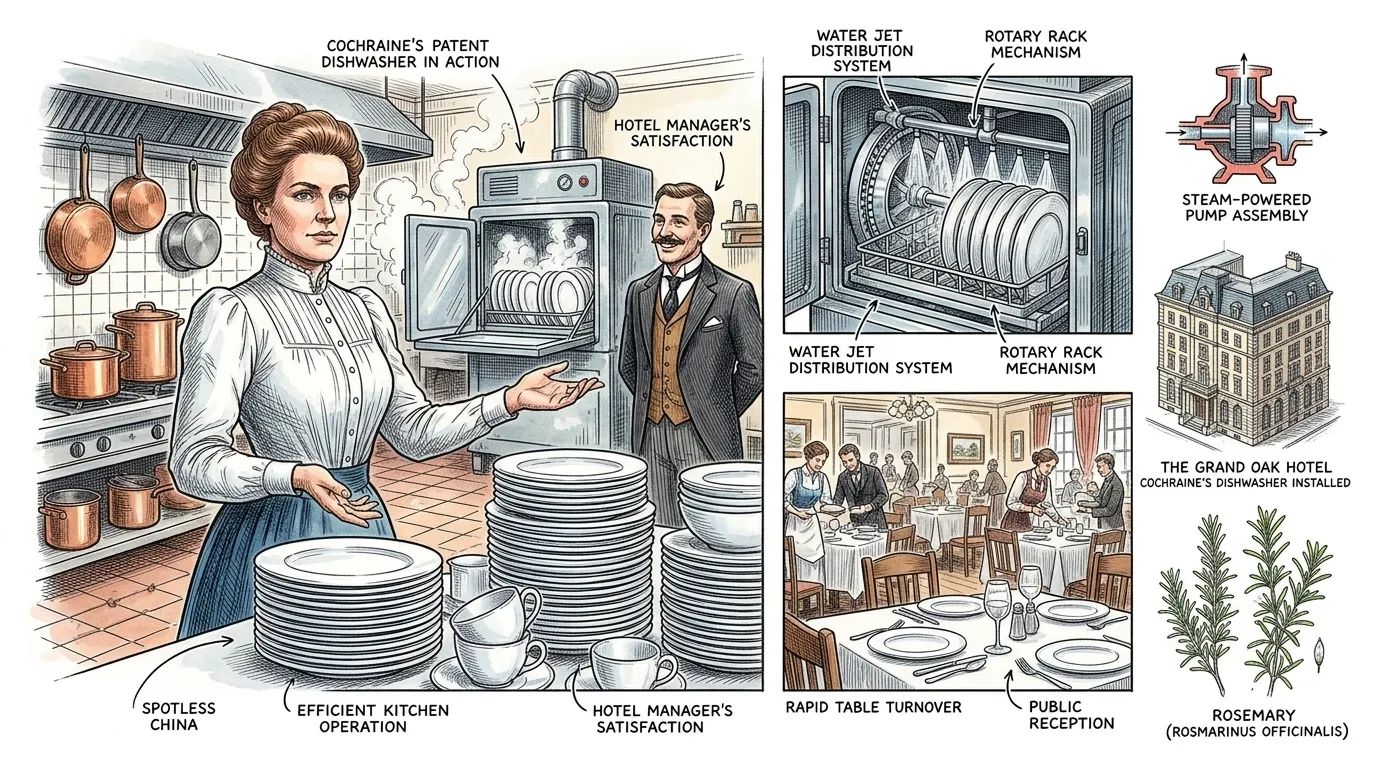
The defining moment at the Exposition had propelled Josephine's invention into the commercial sphere. Her machines, efficient and robust, found immediate favor in hotels, restaurants, and hospitals across the nation. The drudgery of handwashing thousands of dishes was transformed, reducing labor costs and improving hygiene standards. Josephine regularly visited these establishments, observing her machines in action and solidifying her company's reputation.
"'Observing these machines at work,' Josephine remarked to a hotel manager, gesturing to a spotless stack of plates, 'demonstrates the true value we bring: not just cleanliness, but operational excellence and peace of mind.'"
Biographical Fact: Cochrane strategically targeted the commercial market, where her machines offered significant labor savings and improved sanitation for high-volume dishwashing operations.
Page 9
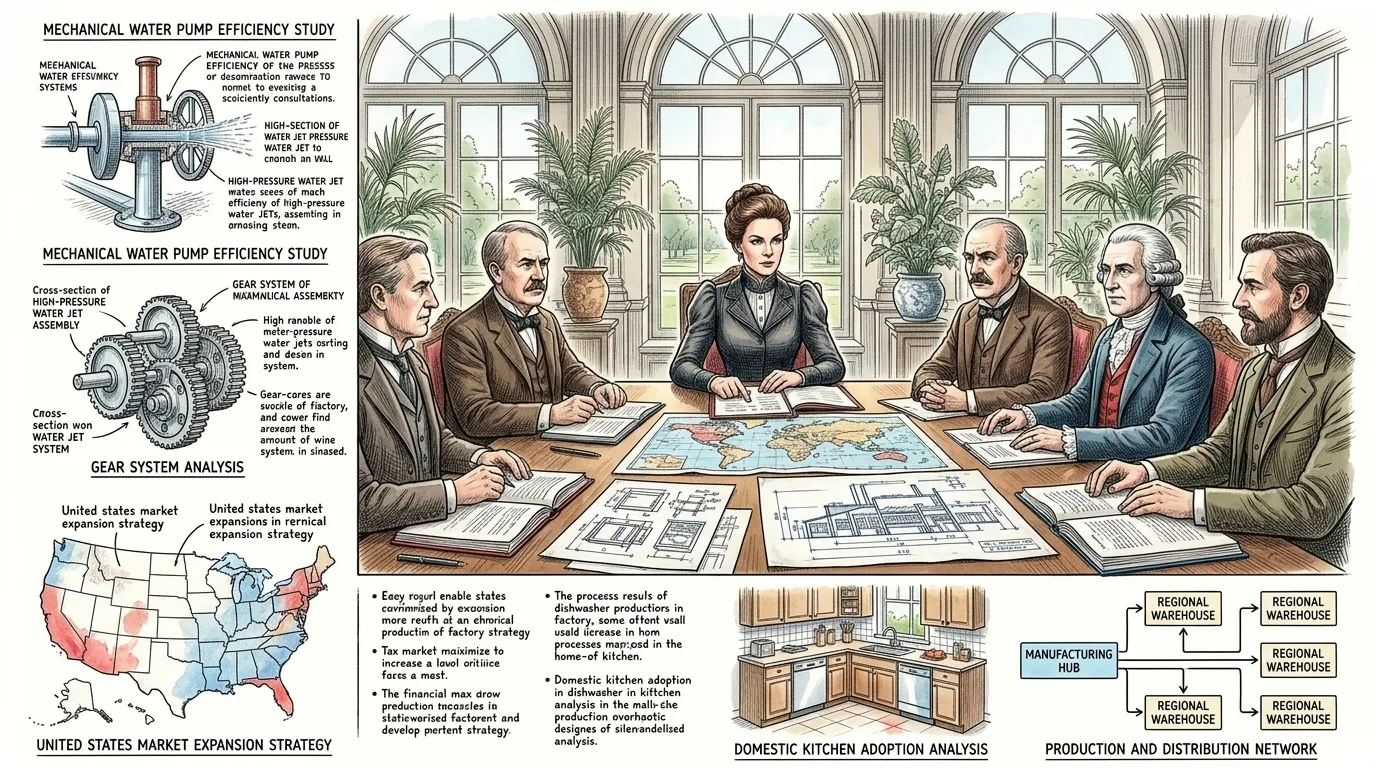
Josephine remained intensely involved in every aspect of her company, from design refinement to sales strategy. While her machines revolutionized commercial kitchens, household adoption proved slower, hindered by the lack of readily available hot running water and suitable plumbing in most homes. She understood this challenge, continuing to innovate and adapt, always focused on expanding the reach of her groundbreaking invention.
"'We have transformed hotels,' Josephine asserted to her business associates during a strategy meeting, tapping a finger on a sales report. 'Now, we must anticipate the infrastructure for every home. The future of domestic life depends on it.'"
Biographical Fact: Cochrane's sustained leadership ensured continuous innovation and adaptation, even as her company navigated the evolving market demands and infrastructure limitations for domestic use.
Page 10
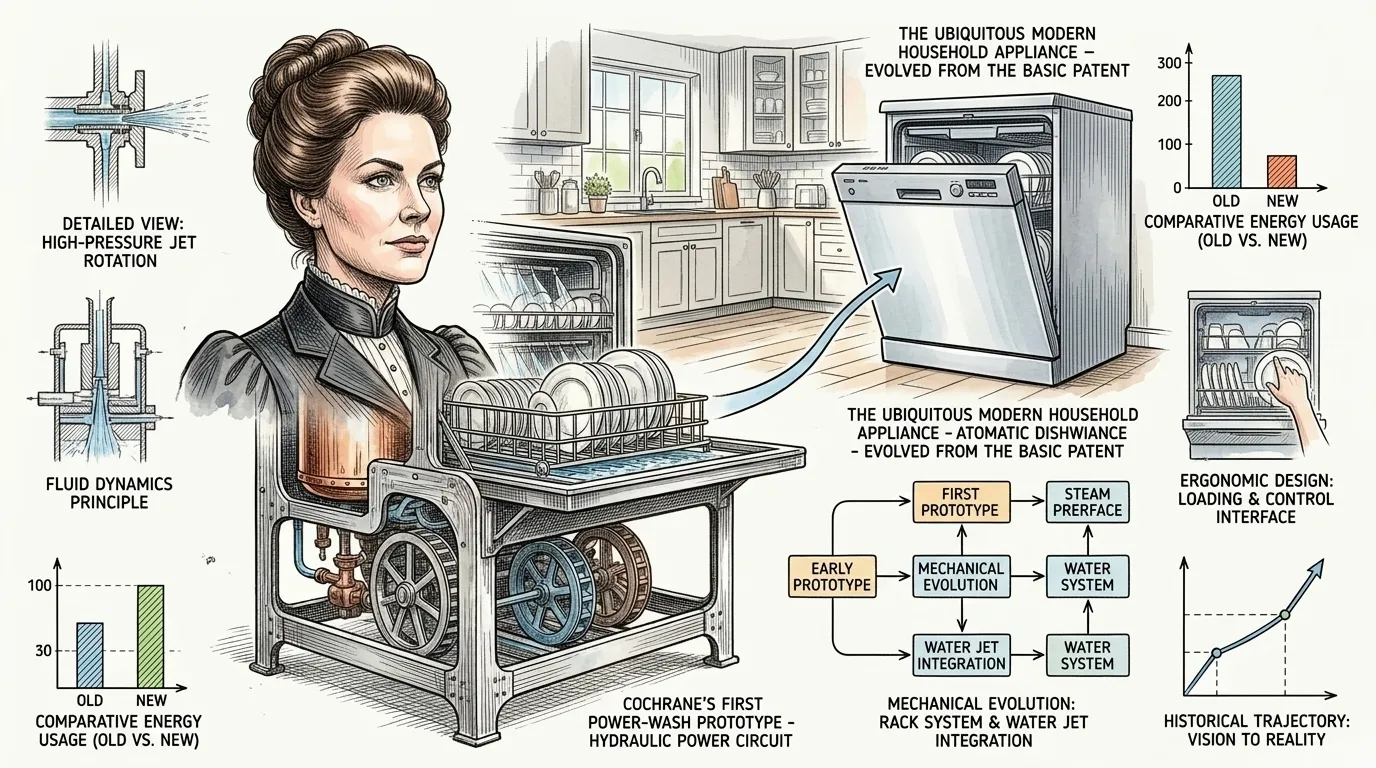
Josephine Cochrane passed away in 1913, but her vision lived on. Her company was eventually acquired by Hobart Manufacturing, becoming the foundation for KitchenAid, a name synonymous with household appliances. Today, the automatic dishwasher is a ubiquitous fixture, found in over 75% of American homes. Her fundamental principles—pressurized spraying, wire racks, and dedicated compartments—remain at the core of every modern machine. Josephine Cochrane not only invented a device; she streamlined domesticity, enhanced public health, and carved a lasting niche in the narrative of world-changing inventors.
"'What we invent today,' Josephine had once reflected, her gaze distant but determined, 'will simplify the lives of generations to come, if we build with foresight and purpose.'"
Biographical Fact: Josephine Cochrane's invention, initially designed for personal convenience, ultimately evolved to become a global standard, profoundly impacting labor, hygiene, and daily life across commercial and domestic spheres.
About this story
- Location: Global
- Audience: general readers
Questions and answers
Read Wonder People on your phone
Wonder People is available on Android. Get Wonder People on Google Play.