Khalil Gibran

Khalil Gibran — an illustrated biography story, set in Global. 10 illustrated pages, free to read on Wonder People.
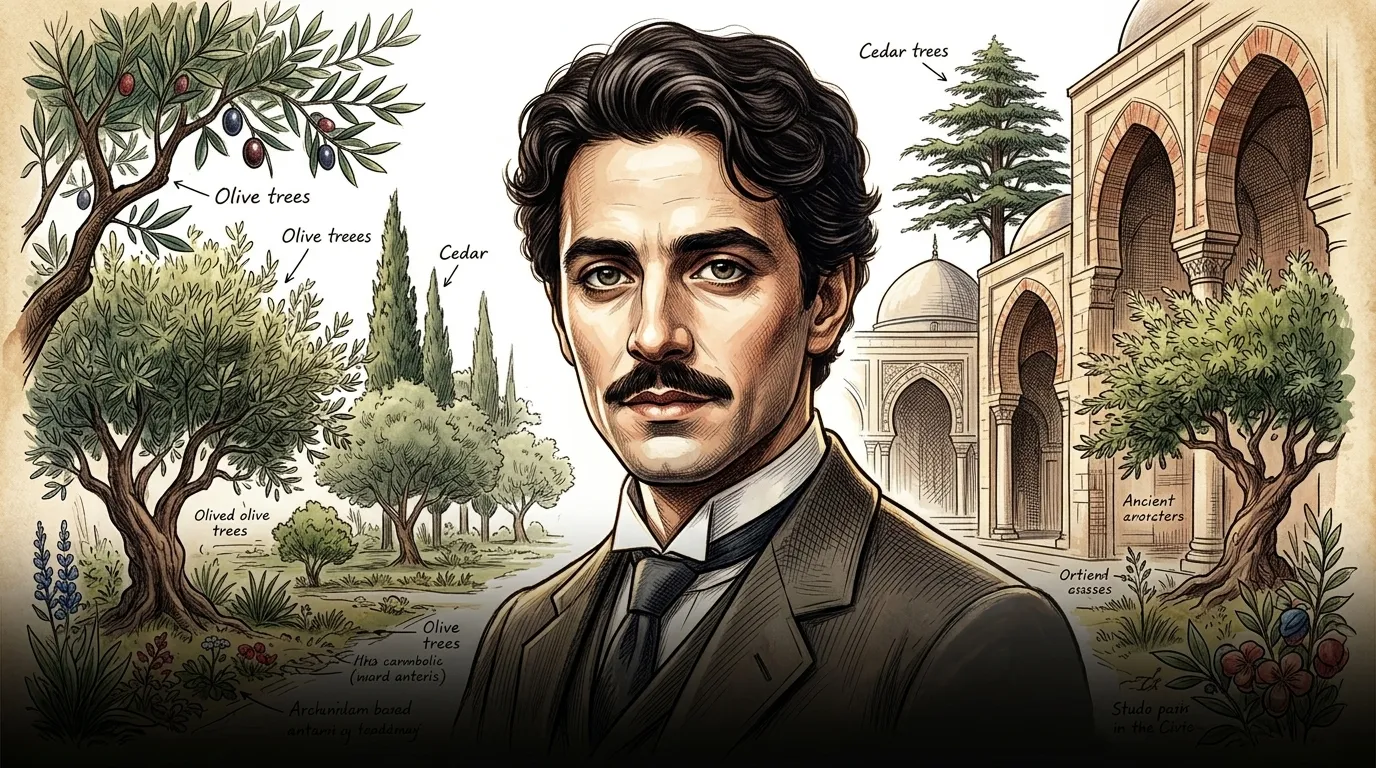
Khalil Gibran — book cover — Wonder People
Khalil Gibran — an illustrated biography story, set in Global. 10 illustrated pages, free to read on Wonder People.

Page 1
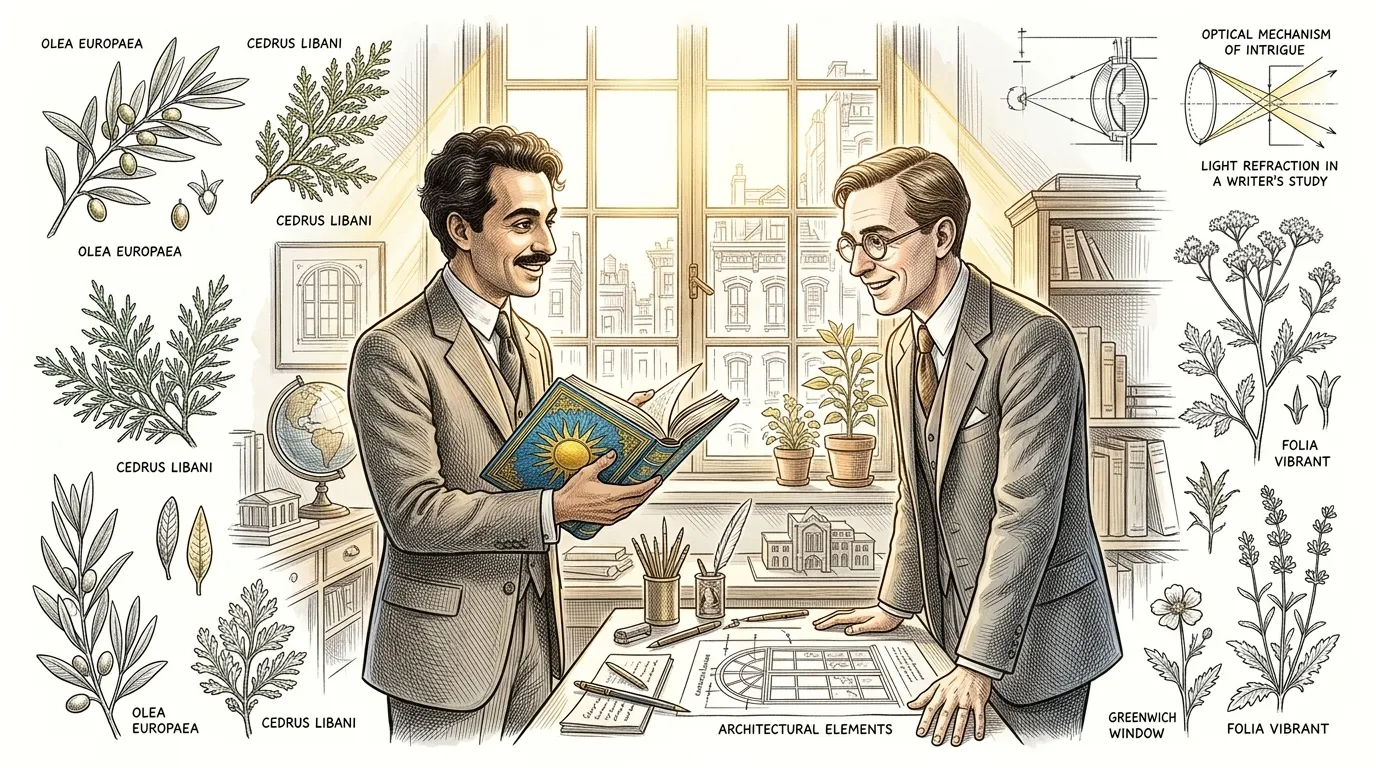
In 1923, within the bustling heart of Greenwich Village, New York City, a quiet revolution took hold. Khalil Gibran, a Lebanese-American writer and artist…
In 1923, within the bustling heart of Greenwich Village, New York City, a quiet revolution took hold. Khalil Gibran, a Lebanese-American writer and artist, presented his magnum opus, 'The Prophet', to the world through his publisher, Alfred A. Knopf. This moment marked the birth of a phenomenon: a book that would transcend cultural divides and ultimately sell millions of copies, translated into over one hundred languages, securing its place as one of the best-selling books of…

In 1923, within the bustling heart of Greenwich Village, New York City, a quiet revolution took hold. Khalil Gibran, a Lebanese-American writer and artist, presented his magnum opus, 'The Prophet', to the world through his publisher, Alfred A. Knopf. This moment marked the birth of a phenomenon: a book that would transcend cultural divides and ultimately sell millions of copies, translated into over one hundred languages, securing its place as one of the best-selling books of all time.

Page 2
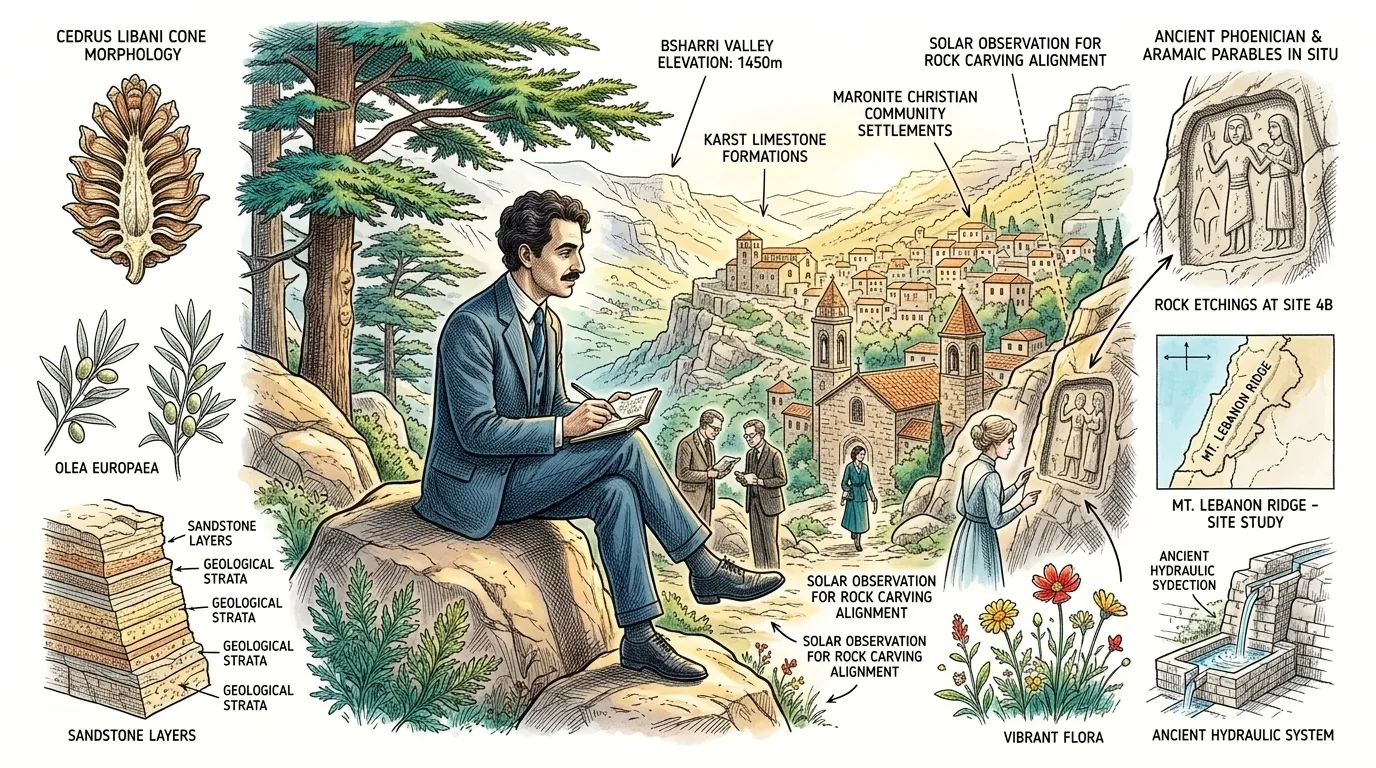
Khalil Gibran's origins were rooted in the rugged, spiritual landscape of Bsharri, a mountain village in Ottoman Syria, in 1883.
Khalil Gibran's origins were rooted in the rugged, spiritual landscape of Bsharri, a mountain village in Ottoman Syria, in 1883. His early life was marked by the austere beauty of Mount Lebanon and the deep-seated spiritual traditions of the Maronite Christian community. This environment, steeped in ancient parables and the raw power of nature, forged his nascent artistic and poetic sensibilities, instilling a profound connection to the universal themes of existence.

Khalil Gibran's origins were rooted in the rugged, spiritual landscape of Bsharri, a mountain village in Ottoman Syria, in 1883. His early life was marked by the austere beauty of Mount Lebanon and the deep-seated spiritual traditions of the Maronite Christian community. This environment, steeped in ancient parables and the raw power of nature, forged his nascent artistic and poetic sensibilities, instilling a profound connection to the universal themes of existence.

Page 3
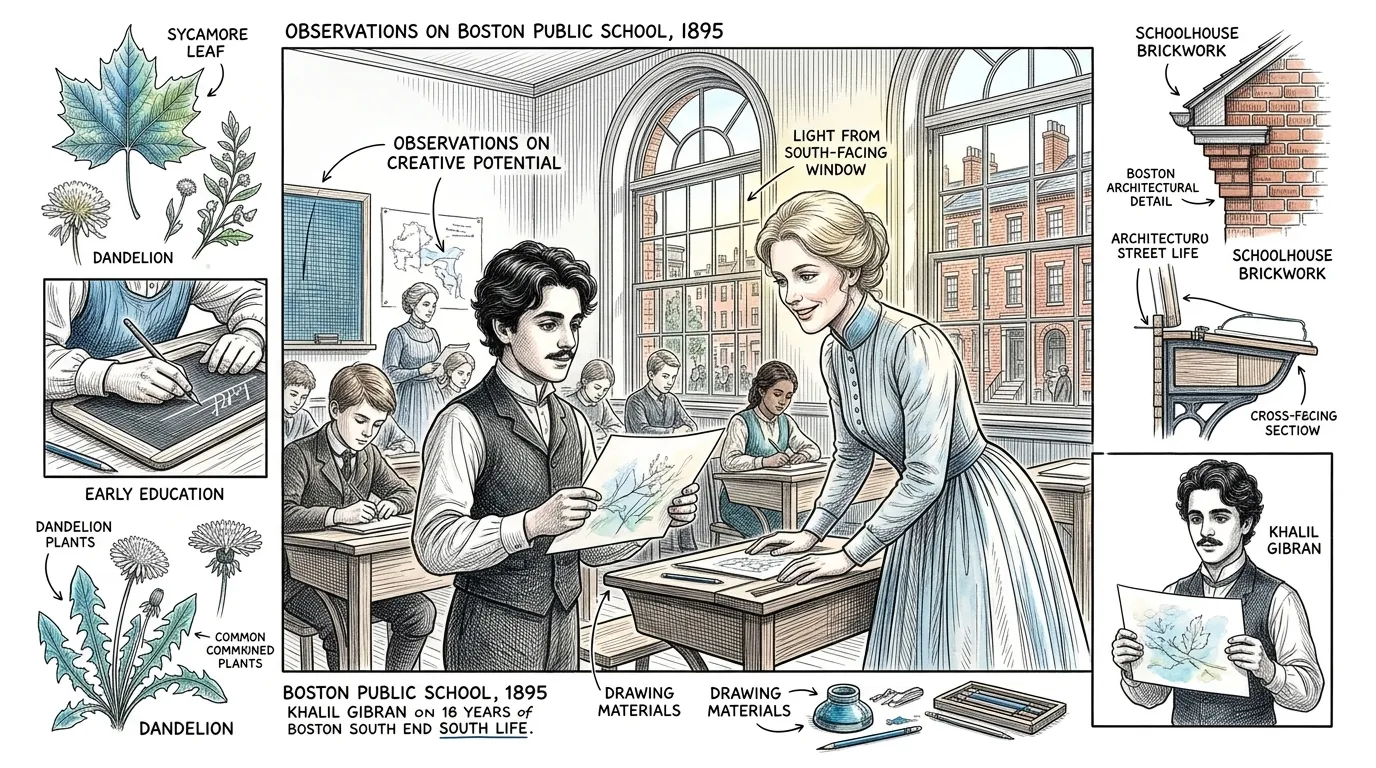
In 1895, the Gibran family immigrated to Boston's South End, thrusting young Khalil into a vibrant, yet challenging, new world.
In 1895, the Gibran family immigrated to Boston's South End, thrusting young Khalil into a vibrant, yet challenging, new world. Amidst the clamor of the city, his artistic inclinations deepened, finding fertile ground in public schools and local art circles. It was here that Josephine Peabody, an American poet and teacher, recognized his extraordinary talent, becoming one of his earliest and most crucial mentors.

In 1895, the Gibran family immigrated to Boston's South End, thrusting young Khalil into a vibrant, yet challenging, new world. Amidst the clamor of the city, his artistic inclinations deepened, finding fertile ground in public schools and local art circles. It was here that Josephine Peabody, an American poet and teacher, recognized his extraordinary talent, becoming one of his earliest and most crucial mentors.

Page 4
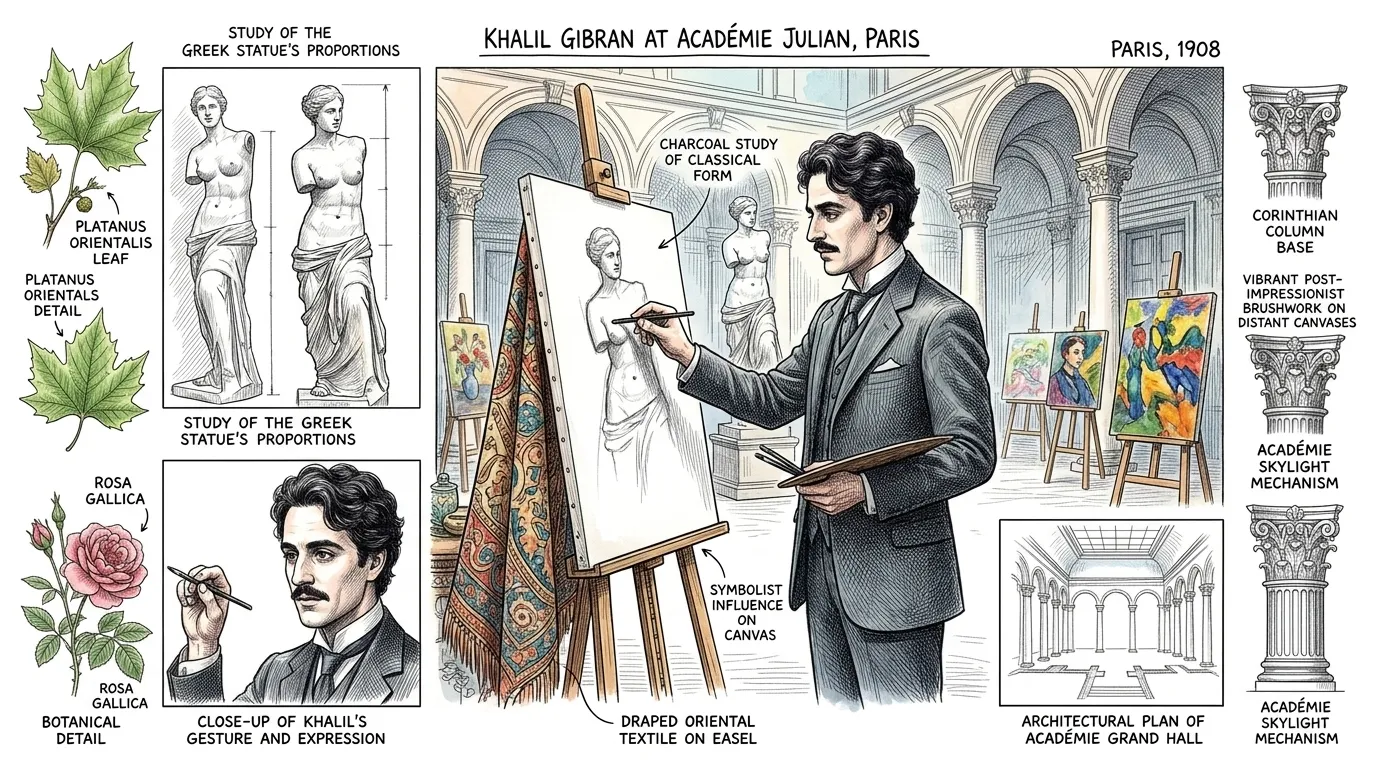
The year 1908 saw Khalil Gibran, now an ambitious artist, journey to Paris, France, to study at the Académie Julian. This period exposed him to the avant-garde…
The year 1908 saw Khalil Gibran, now an ambitious artist, journey to Paris, France, to study at the Académie Julian. This period exposed him to the avant-garde movements of European art and deepened his understanding of classical techniques. Here, he consciously forged a unique artistic language, merging the spiritual mysticism of the East with the symbolic and romantic aesthetics of the West, shaping the visual vocabulary that would define his future works.

The year 1908 saw Khalil Gibran, now an ambitious artist, journey to Paris, France, to study at the Académie Julian. This period exposed him to the avant-garde movements of European art and deepened his understanding of classical techniques. Here, he consciously forged a unique artistic language, merging the spiritual mysticism of the East with the symbolic and romantic aesthetics of the West, shaping the visual vocabulary that would define his future works.

Page 5
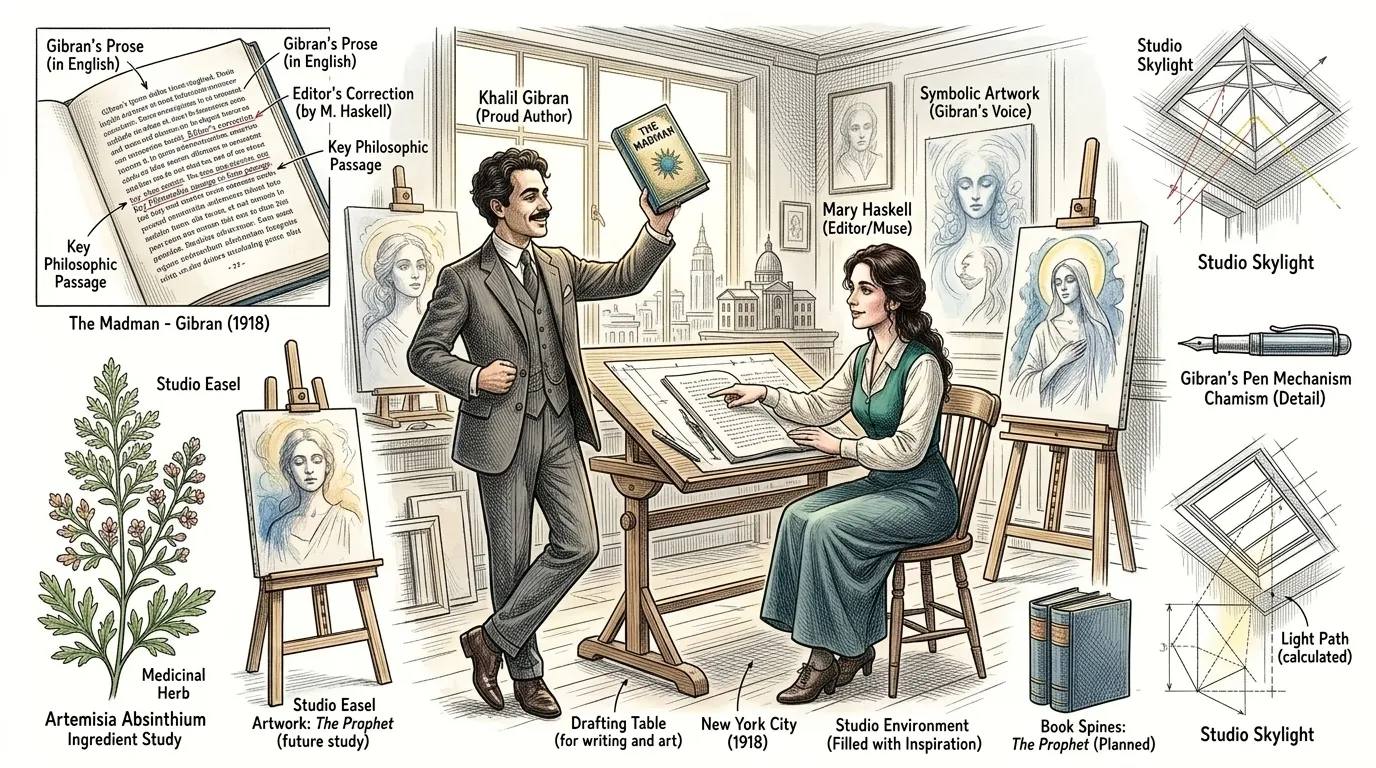
Returning to New York, Gibran established his studio and deepened his ties with Mary Haskell, a remarkable educator and patron who became an indispensable…
Returning to New York, Gibran established his studio and deepened his ties with Mary Haskell, a remarkable educator and patron who became an indispensable editor and muse. In 1918, he published 'The Madman', his first book in English. This collection of parables, poems, and aphorisms challenged conventional thought, announcing a distinctive new voice to the American literary scene and laying philosophical groundwork for his greatest achievement.

Returning to New York, Gibran established his studio and deepened his ties with Mary Haskell, a remarkable educator and patron who became an indispensable editor and muse. In 1918, he published 'The Madman', his first book in English. This collection of parables, poems, and aphorisms challenged conventional thought, announcing a distinctive new voice to the American literary scene and laying philosophical groundwork for his greatest achievement.

Page 6
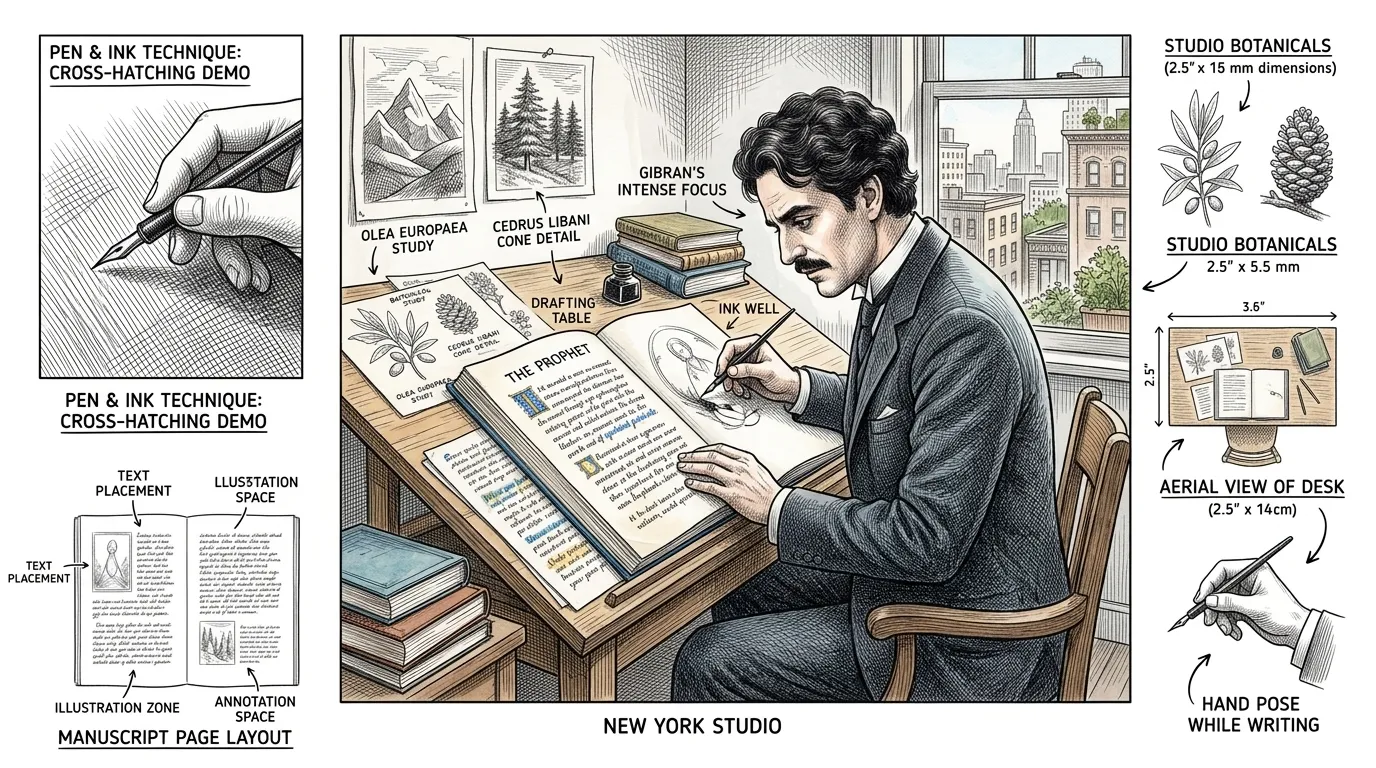
In the years leading up to 1923, Gibran dedicated himself to the arduous creation of 'The Prophet'. From his New York studio, he labored meticulously over every…
In the years leading up to 1923, Gibran dedicated himself to the arduous creation of 'The Prophet'. From his New York studio, he labored meticulously over every word, every illustration, driven by a singular vision to articulate universal truths. He sought to create a timeless spiritual guide, a work that would speak across cultures and creeds, distilling years of philosophical inquiry and artistic expression into a singular, profound narrative.

In the years leading up to 1923, Gibran dedicated himself to the arduous creation of 'The Prophet'. From his New York studio, he labored meticulously over every word, every illustration, driven by a singular vision to articulate universal truths. He sought to create a timeless spiritual guide, a work that would speak across cultures and creeds, distilling years of philosophical inquiry and artistic expression into a singular, profound narrative. This was a period of intense solitude and relentless refinement.

Page 7
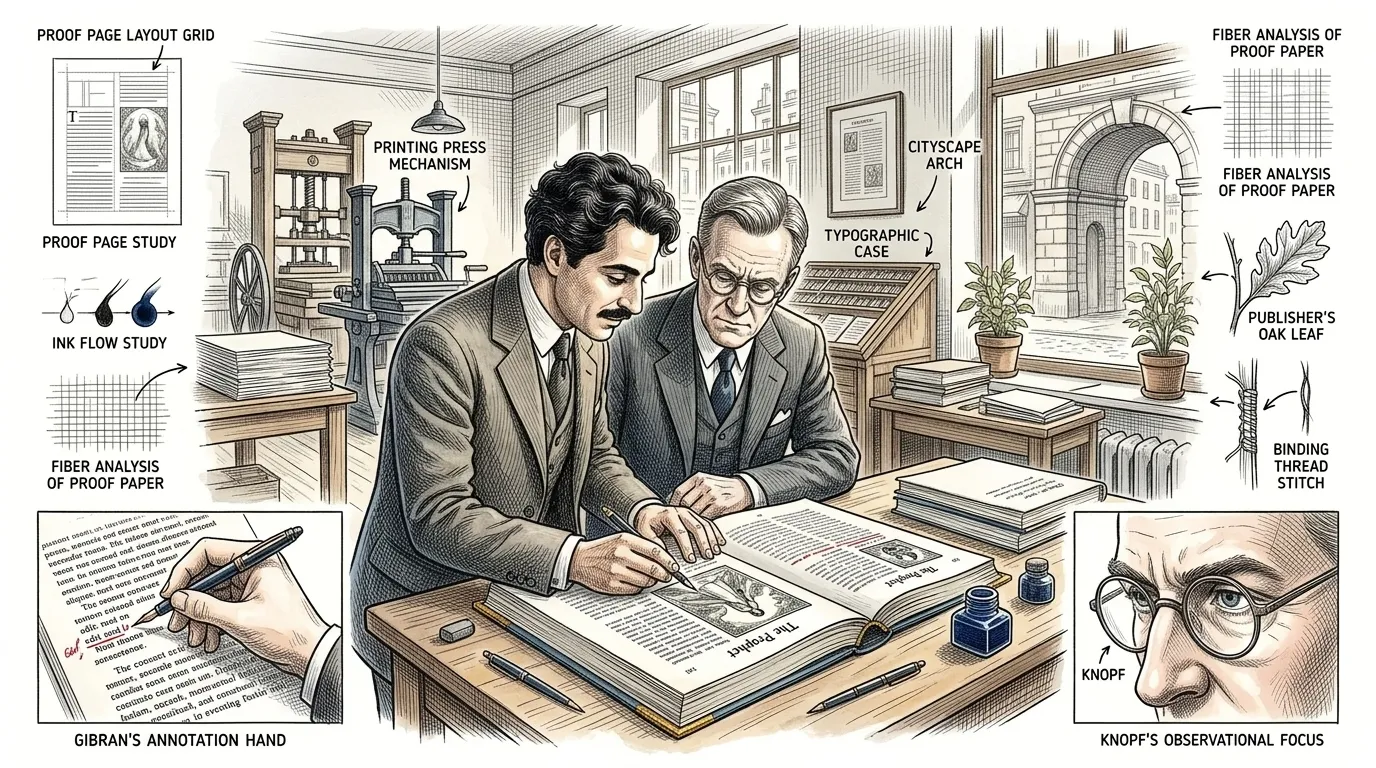
The final stages of 'The Prophet' required careful collaboration. Khalil Gibran meticulously reviewed proofs with Alfred A.
The final stages of 'The Prophet' required careful collaboration. Khalil Gibran meticulously reviewed proofs with Alfred A. Knopf, ensuring the integrity of his vision. Every page, every phrase, every line of his accompanying illustrations was scrutinized to achieve the perfect balance between text and art.

The final stages of 'The Prophet' required careful collaboration. Khalil Gibran meticulously reviewed proofs with Alfred A. Knopf, ensuring the integrity of his vision. Every page, every phrase, every line of his accompanying illustrations was scrutinized to achieve the perfect balance between text and art. This collaborative effort transformed the manuscript into a polished artifact, ready to embark on its journey into the global consciousness, a message refined for universal appeal.

Page 8
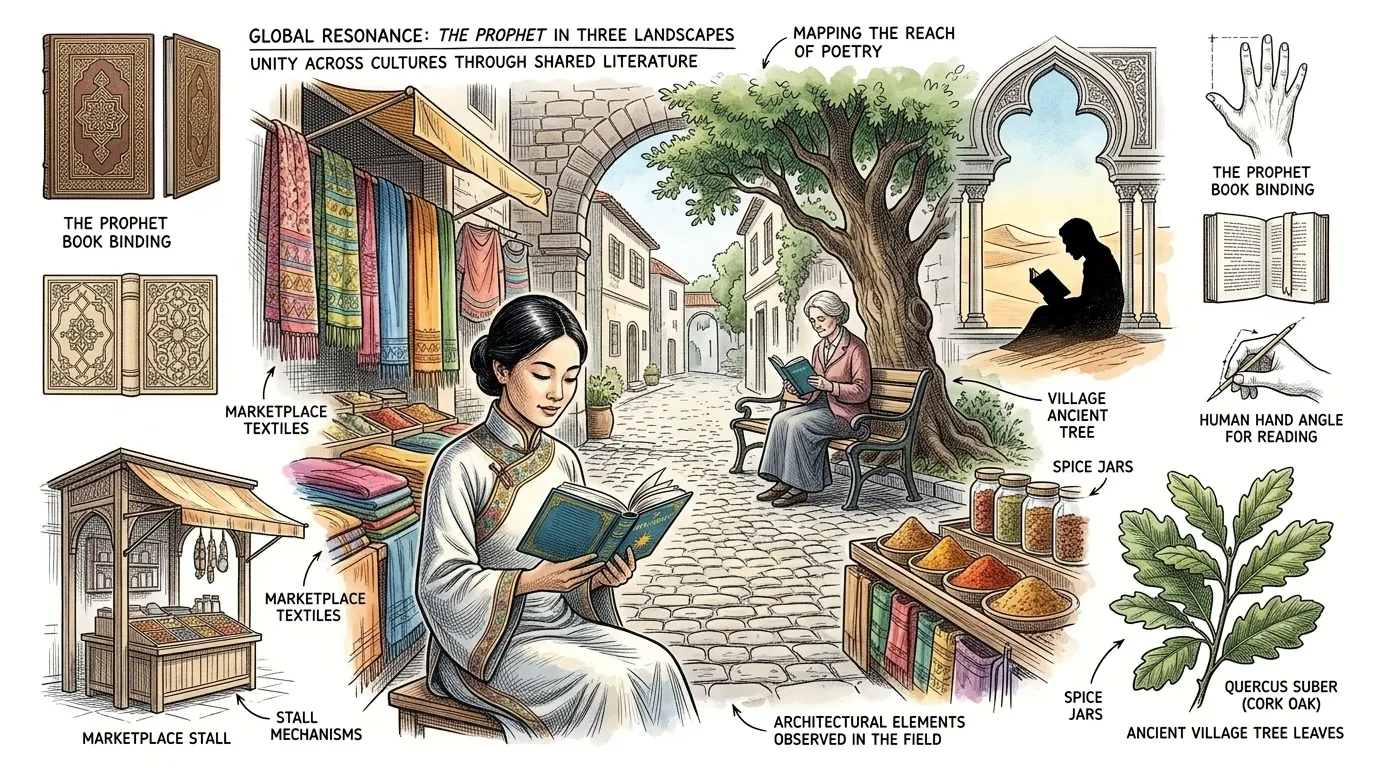
Following its publication, 'The Prophet' swiftly transcended its initial American audience, resonating with readers across diverse cultures and continents.
Following its publication, 'The Prophet' swiftly transcended its initial American audience, resonating with readers across diverse cultures and continents. From bustling Asian cities to quiet European villages, Gibran's words became a source of solace, inspiration, and philosophical guidance.

Following its publication, 'The Prophet' swiftly transcended its initial American audience, resonating with readers across diverse cultures and continents. From bustling Asian cities to quiet European villages, Gibran's words became a source of solace, inspiration, and philosophical guidance. People embraced its timeless wisdom, recognizing universal truths within Almustafa's teachings on love, joy, sorrow, and freedom, affirming Gibran's profound ability to speak to the human condition.

Page 9
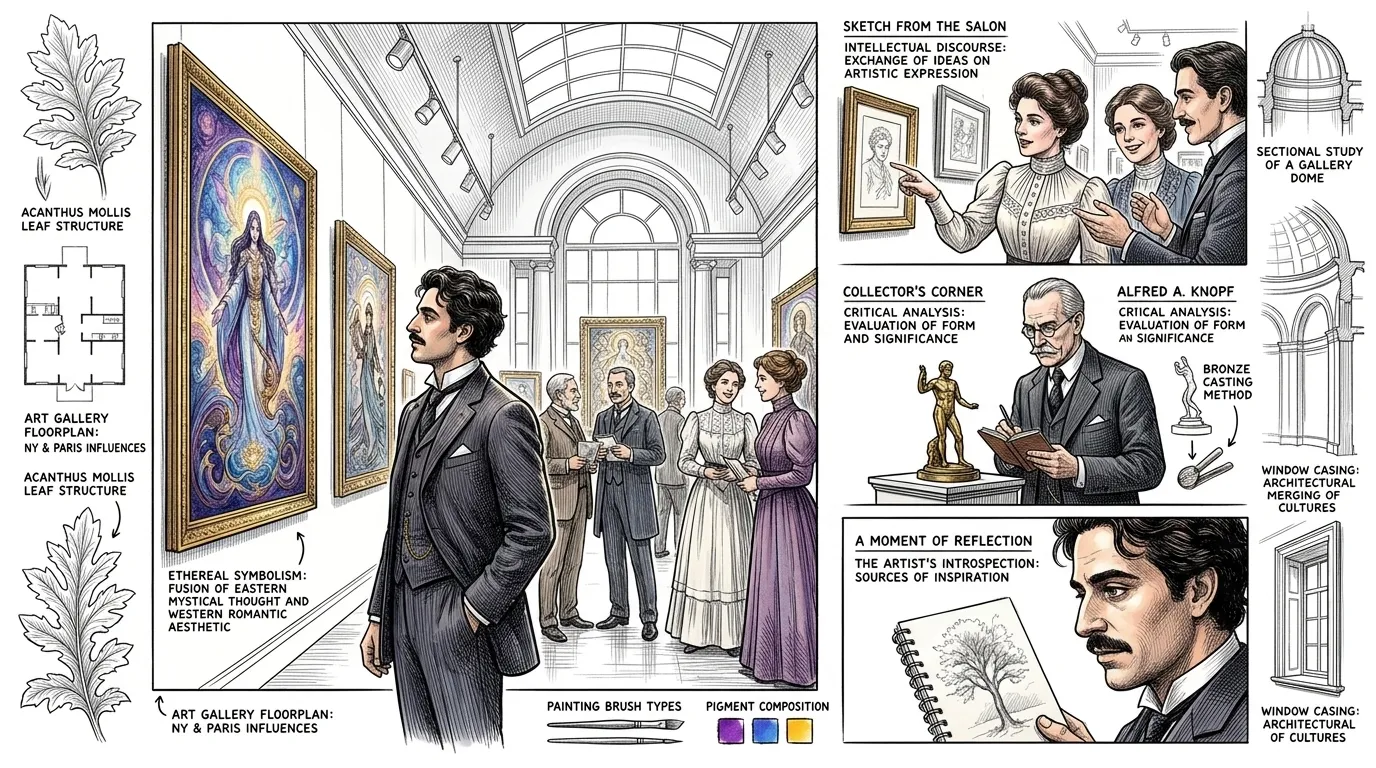
Beyond his literary triumph, Khalil Gibran's profound artistic output gained its own recognition, inseparable from his written philosophy.
Beyond his literary triumph, Khalil Gibran's profound artistic output gained its own recognition, inseparable from his written philosophy. His symbolic paintings and drawings, often ethereal and deeply spiritual, were exhibited in New York and Paris, influencing contemporary artists and inspiring new perspectives on the intersection of mysticism and visual expression. His art became a visual echo of his prose, completing a singular artistic vision.

Beyond his literary triumph, Khalil Gibran's profound artistic output gained its own recognition, inseparable from his written philosophy. His symbolic paintings and drawings, often ethereal and deeply spiritual, were exhibited in New York and Paris, influencing contemporary artists and inspiring new perspectives on the intersection of mysticism and visual expression. His art became a visual echo of his prose, completing a singular artistic vision.

Page 10
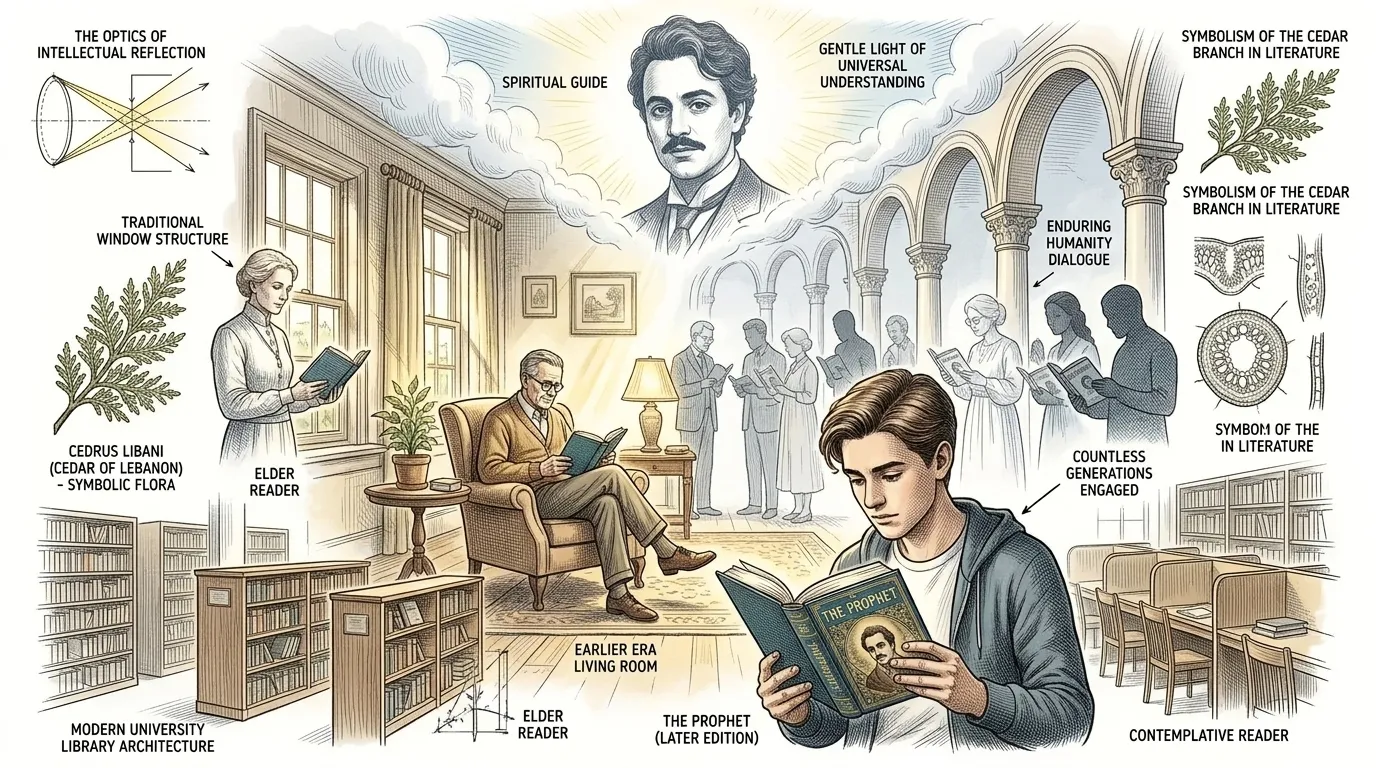
Khalil Gibran passed away in 1931, but his voice, channeled through 'The Prophet' and his other works, continued to resonate for generations.
Khalil Gibran passed away in 1931, but his voice, channeled through 'The Prophet' and his other works, continued to resonate for generations. His writings endure as a beacon of spiritual wisdom, inspiring countless individuals in their quest for self-discovery and universal understanding.

Khalil Gibran passed away in 1931, but his voice, channeled through 'The Prophet' and his other works, continued to resonate for generations. His writings endure as a beacon of spiritual wisdom, inspiring countless individuals in their quest for self-discovery and universal understanding. His legacy is not merely in the words he wrote or the art he painted, but in the timeless dialogue he initiated about humanity's deepest questions, solidifying his status as a permanent fixture in global literature and thought.

About this story

  • Location: Global
  • Audience: general readers

More Wonder People stories

All Wonder People stories · Open the library