Jawaharlal Nehru
Jawaharlal Nehru — an illustrated biography story, set in Global. 10 illustrated pages, free to read on Wonder People.
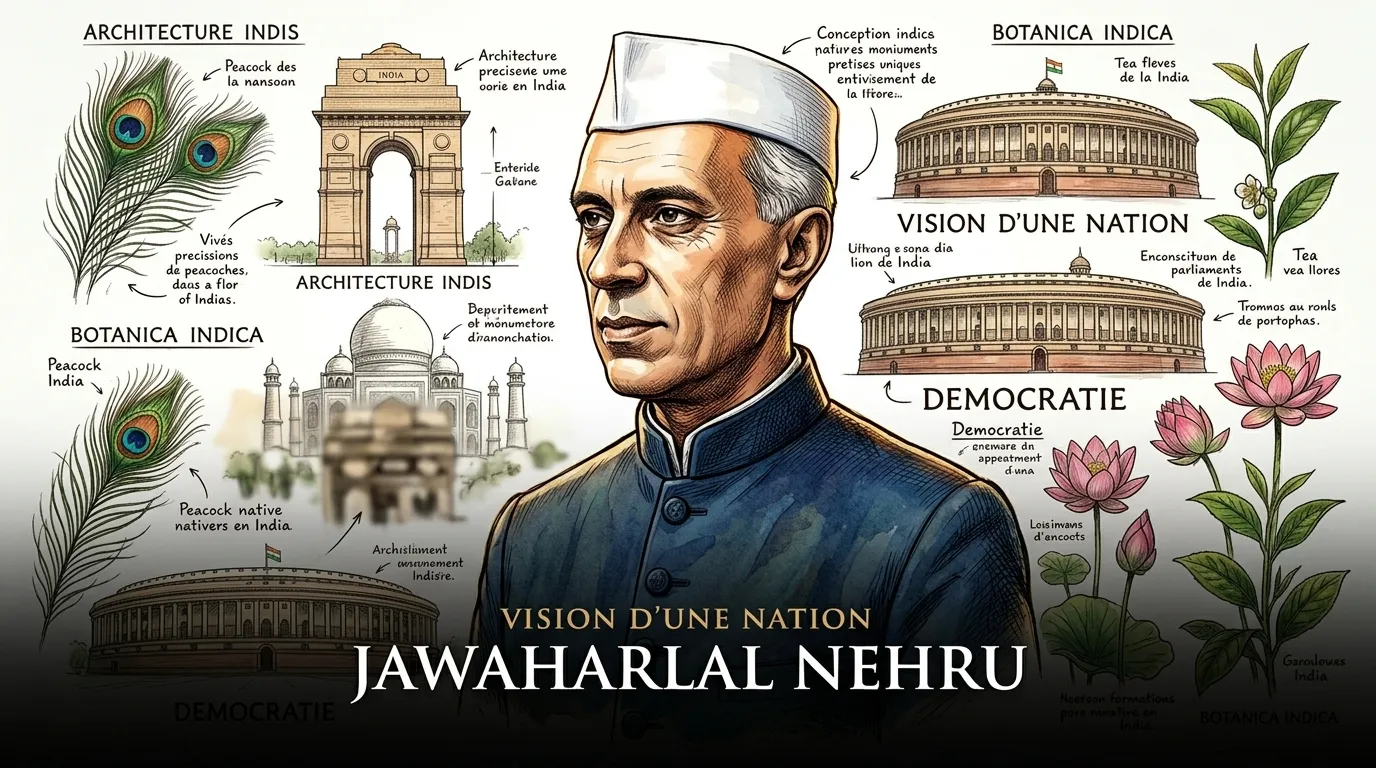
Page 1
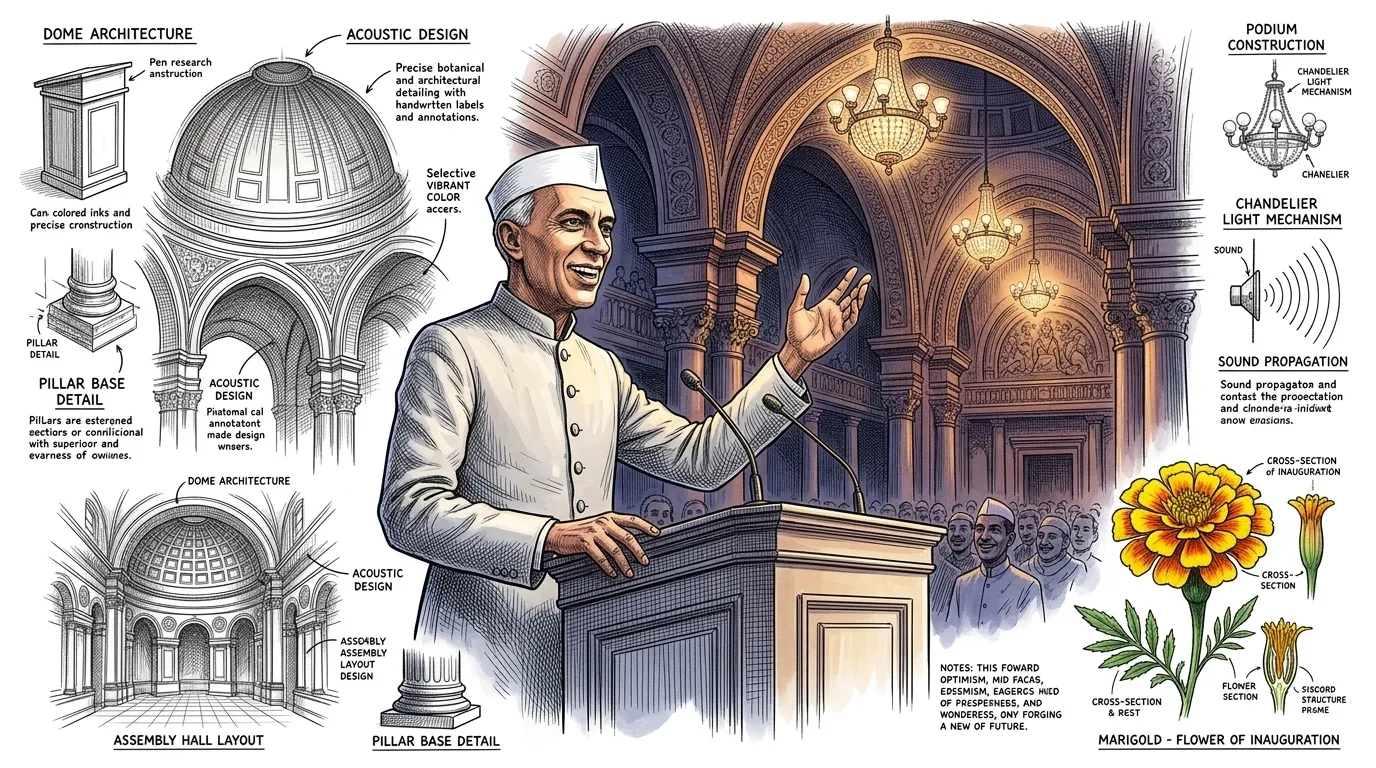
At the stroke of the midnight hour, as the world slept, Jawaharlal Nehru stood before the Constituent Assembly in New Delhi. On August 14, 1947, he declared India's independence, speaking to over 300 million people across a fragmented subcontinent. His iconic 'Tryst with Destiny' speech marked the birth of a sovereign nation and solidified his role as its first Prime Minister, navigating the fraught transition from colonial rule to self-governance. The weight of centuries of struggle culminated in this singular moment, a pledge to a future forged in freedom.
Biographical Fact: Jawaharlal Nehru delivers his 'Tryst with Destiny' speech, marking India's independence at midnight, August 14, 1947. This event establishes his leadership and the founding principles of the new nation.
Page 2
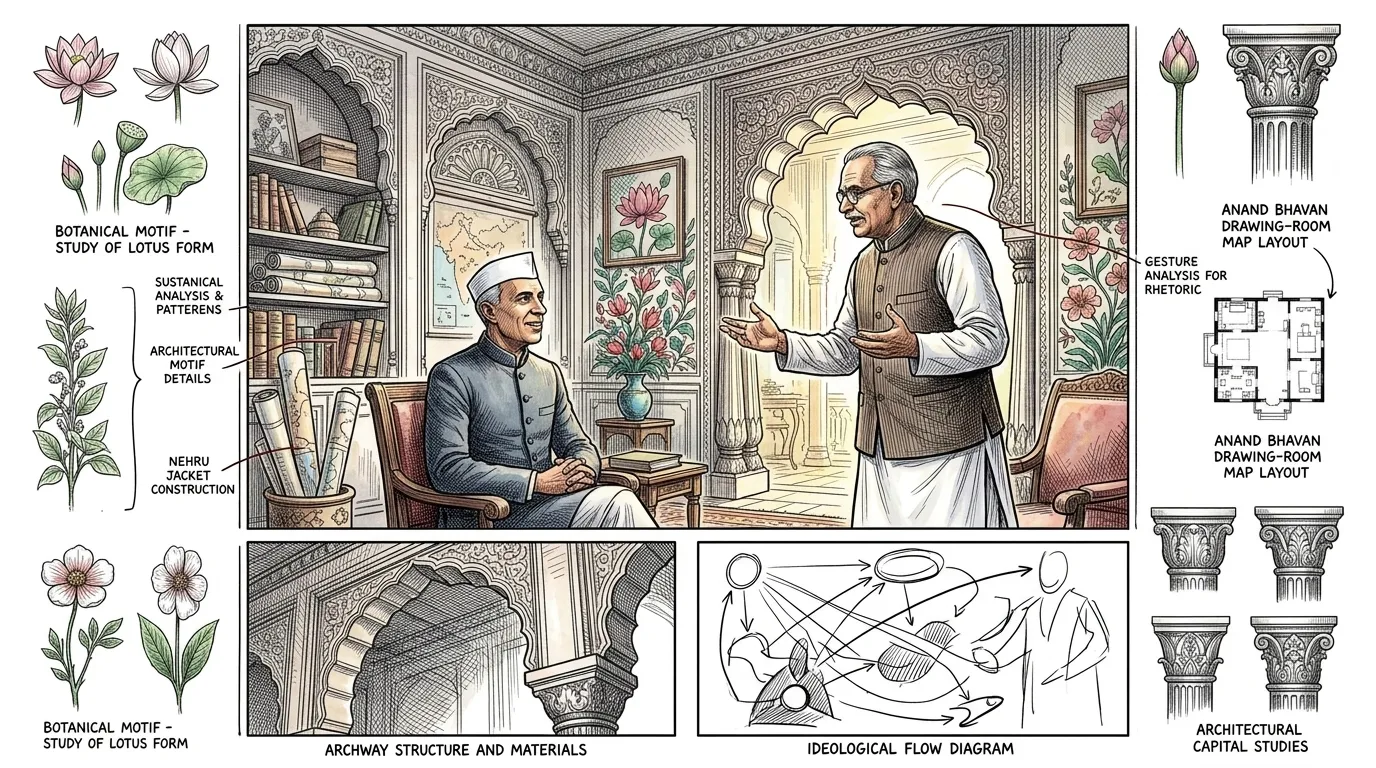
Jawaharlal Nehru's early life in Allahabad, India, was shaped by privilege and intellectual ferment. Born into the affluent Kashmiri Brahmin family of Motilal Nehru, a prominent lawyer and nationalist, he experienced colonial India from a unique vantage. His childhood home, Anand Bhavan, was a hub of political discourse and burgeoning nationalism, imbuing him with a deep understanding of both Indian society and the aspirations for self-rule. This environment fostered a sharp intellect and a nascent commitment to social justice, setting the stage for his future revolutionary path.
Biographical Fact: Nehru's privileged upbringing at Anand Bhavan, with his father Motilal Nehru, provided a unique vantage into colonial India and ignited his early nationalist sentiments.
Page 3
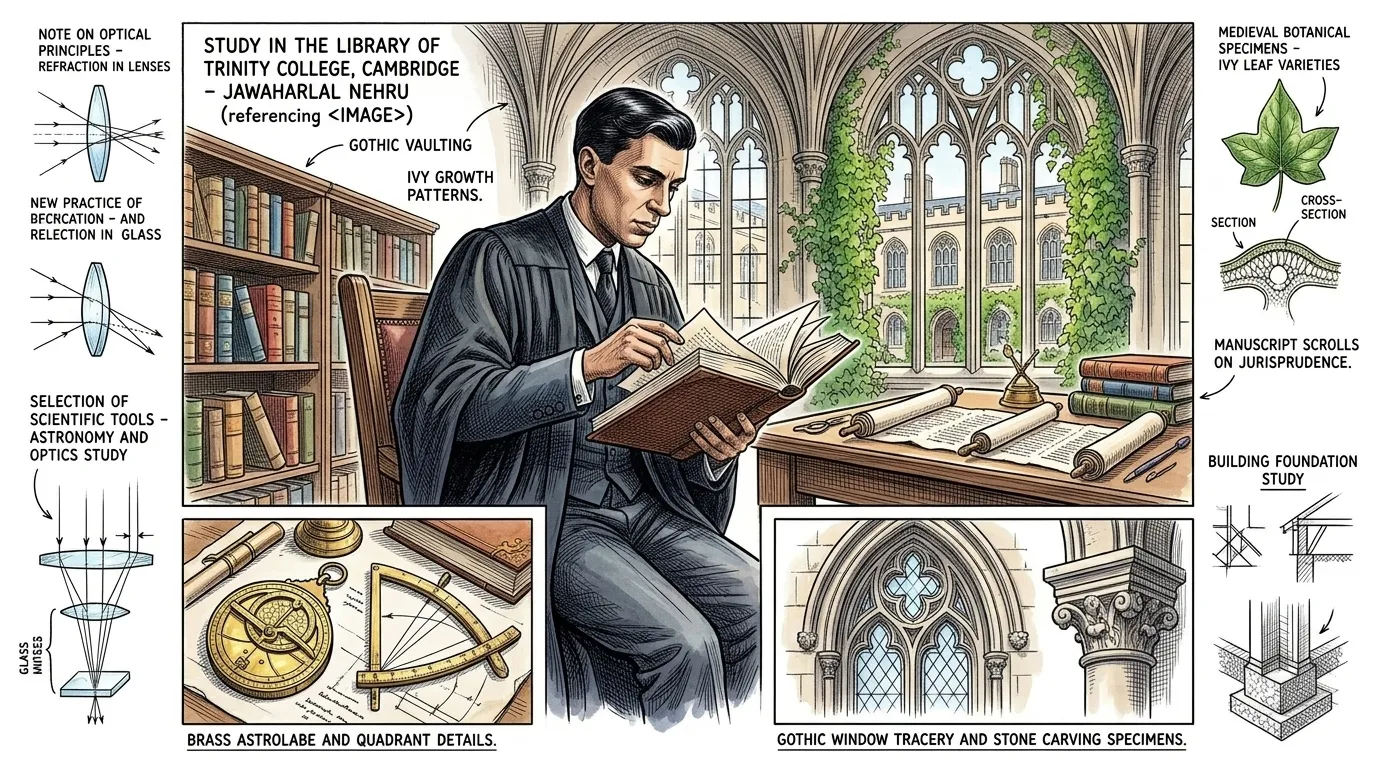
Sent to England at 15, Nehru immersed himself in Western education at Harrow School and Trinity College, Cambridge. This period exposed him to liberal democracy, Fabian socialism, and scientific thought, profoundly influencing his worldview. He returned to India in 1912, armed with a barrister's degree and a sophisticated understanding of international politics. This intellectual formation was a decisive shift, transforming him from a privileged son into a politically aware individual ready to challenge the colonial status quo, blending Eastern roots with Western progressive ideals.
Biographical Fact: Nehru's education at Harrow and Cambridge (1905-1912) exposed him to Western political and social philosophies, shaping his approach to Indian nationalism.
Page 4
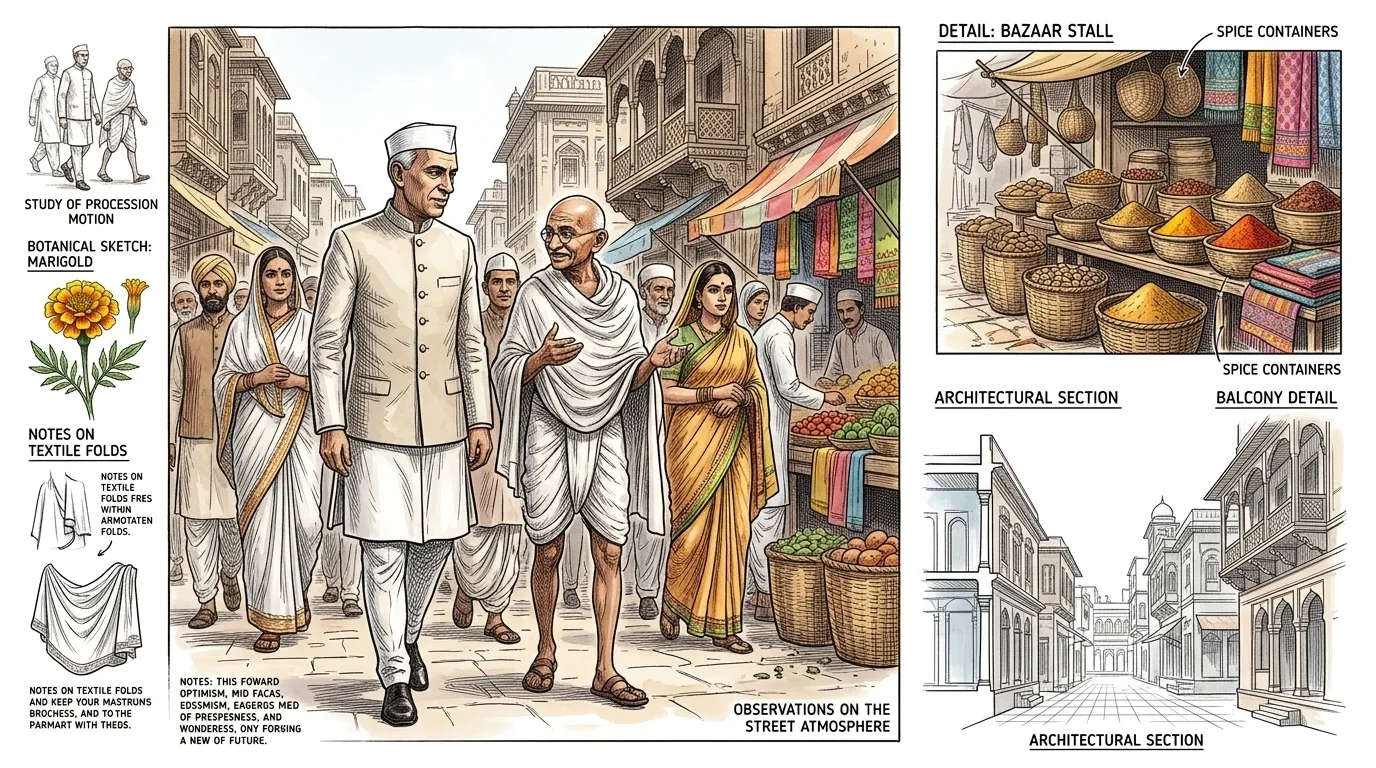
Upon his return to India, Nehru was drawn to the nascent independence movement, finding a profound mentor in Mahatma Gandhi. He formally joined the Indian National Congress and soon became a key figure in Gandhi's non-cooperation movement, embracing civil disobedience as a powerful tool for political change. This alignment with Gandhi was not merely tactical; it was a deep ideological connection that cemented Nehru's commitment to non-violent resistance and elevated his stature within the independence struggle. It marked his true entry into active mass politics.
Biographical Fact: Nehru joined Mahatma Gandhi's non-cooperation movement in the early 1920s, adopting non-violent resistance and solidifying his position as a prominent leader within the Indian National Congress.
Page 5
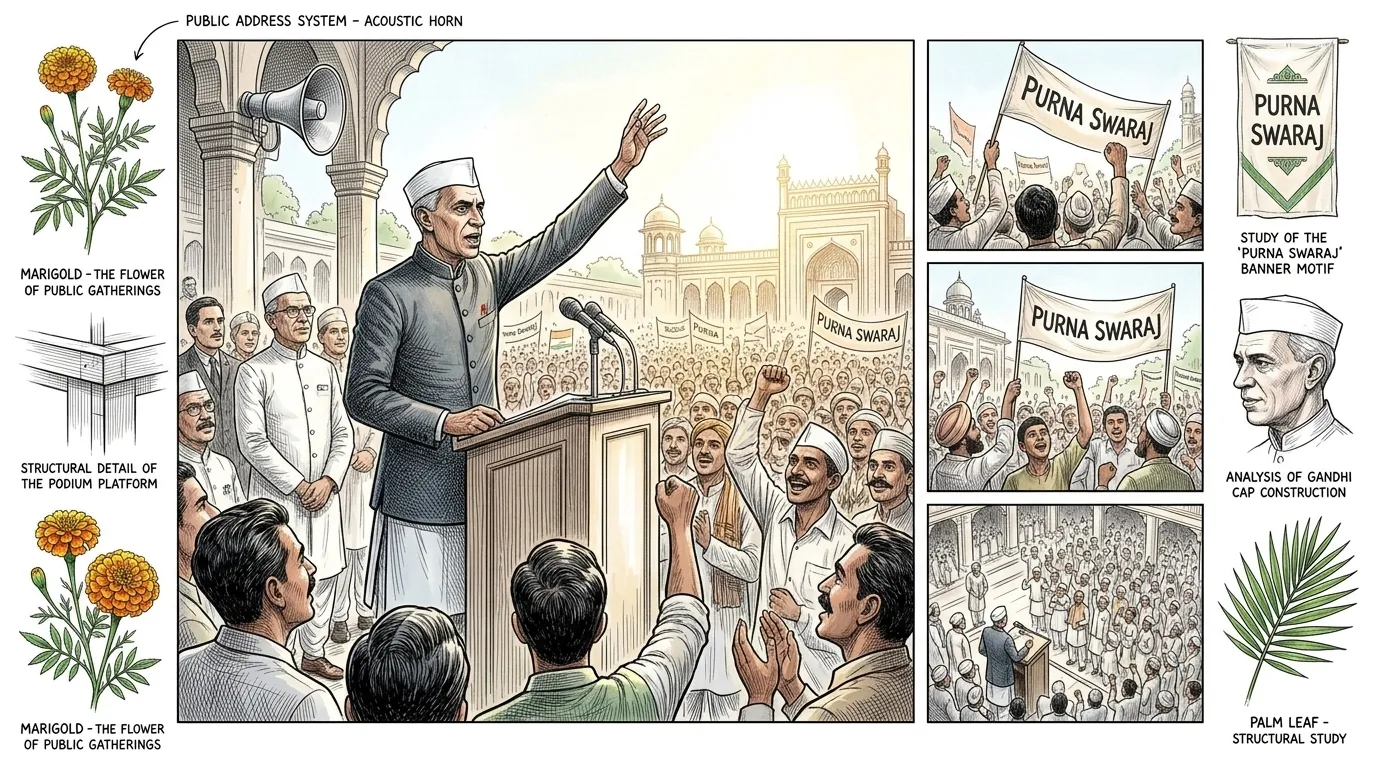
In December 1929, at the Lahore Session of the Indian National Congress, Jawaharlal Nehru, now a burgeoning leader, presided over a pivotal moment. He moved the historic resolution declaring 'Purna Swaraj'—complete independence from British rule—as the Congress's unequivocal goal. This marked a profound shift from demands for mere dominion status, setting India's course towards total sovereignty. Nehru's forceful articulation galvanized the nationalist movement, signaling an unyielding resolve and establishing him as a leader capable of setting a bold, uncompromising agenda for India's future.
Biographical Fact: At the Lahore Session in December 1929, Nehru presided over the Indian National Congress and declared 'Purna Swaraj' (complete independence) as the definitive goal, a pivotal moment in the freedom struggle.
Page 6
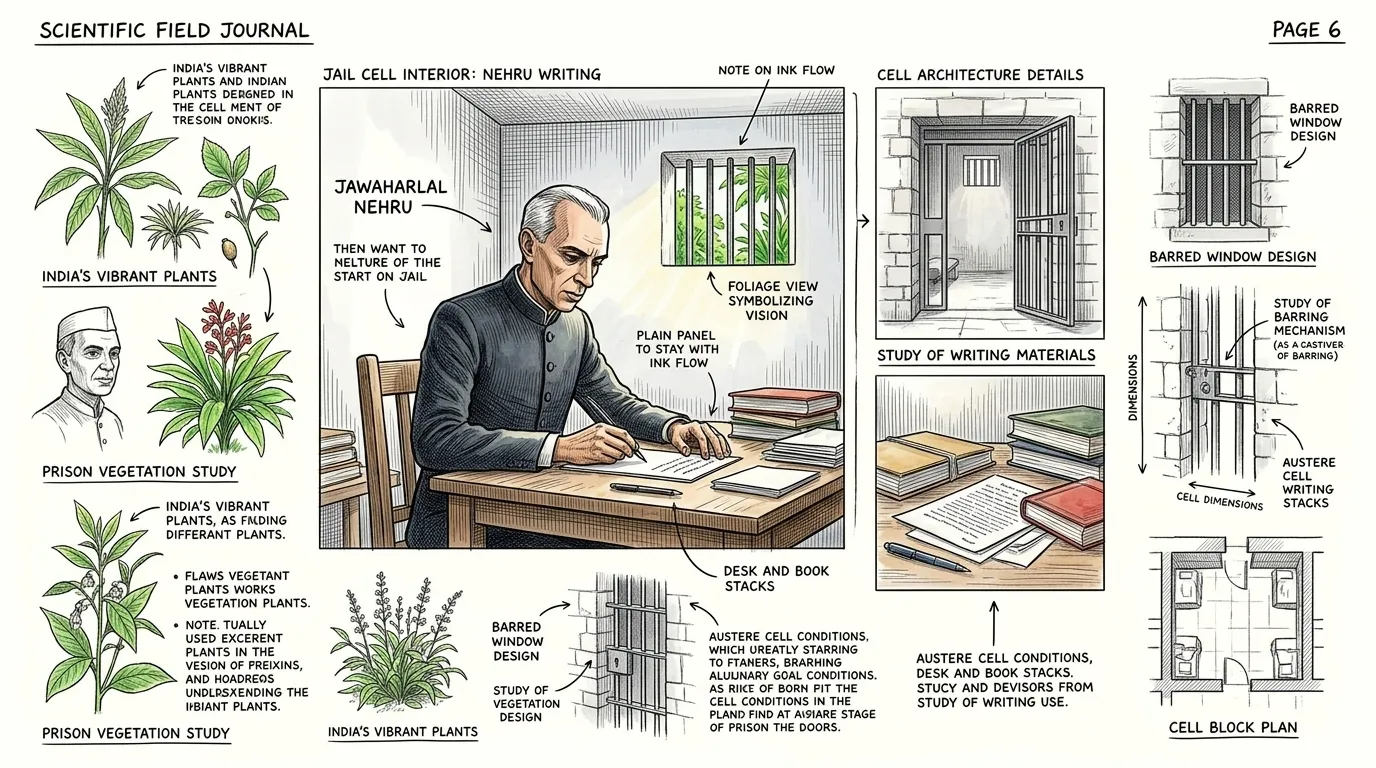
Throughout the 1930s and early 1940s, Nehru endured multiple periods of imprisonment under British rule, accumulating over nine years in various jails. Far from breaking his spirit, these incarcerations became periods of profound intellectual activity. From the confines of Dehradun Jail and Ahmednagar Fort, he penned seminal works like 'An Autobiography' and 'The Discovery of India,' articulating his vision for a modern, secular, and democratic India. These writings solidified his philosophical framework, transforming enforced isolation into a crucible for national ideology.
Biographical Fact: During his numerous imprisonments in the 1930s-1940s, Nehru utilized the time to write influential works like 'The Discovery of India,' shaping his vision for a modern India.
Page 7
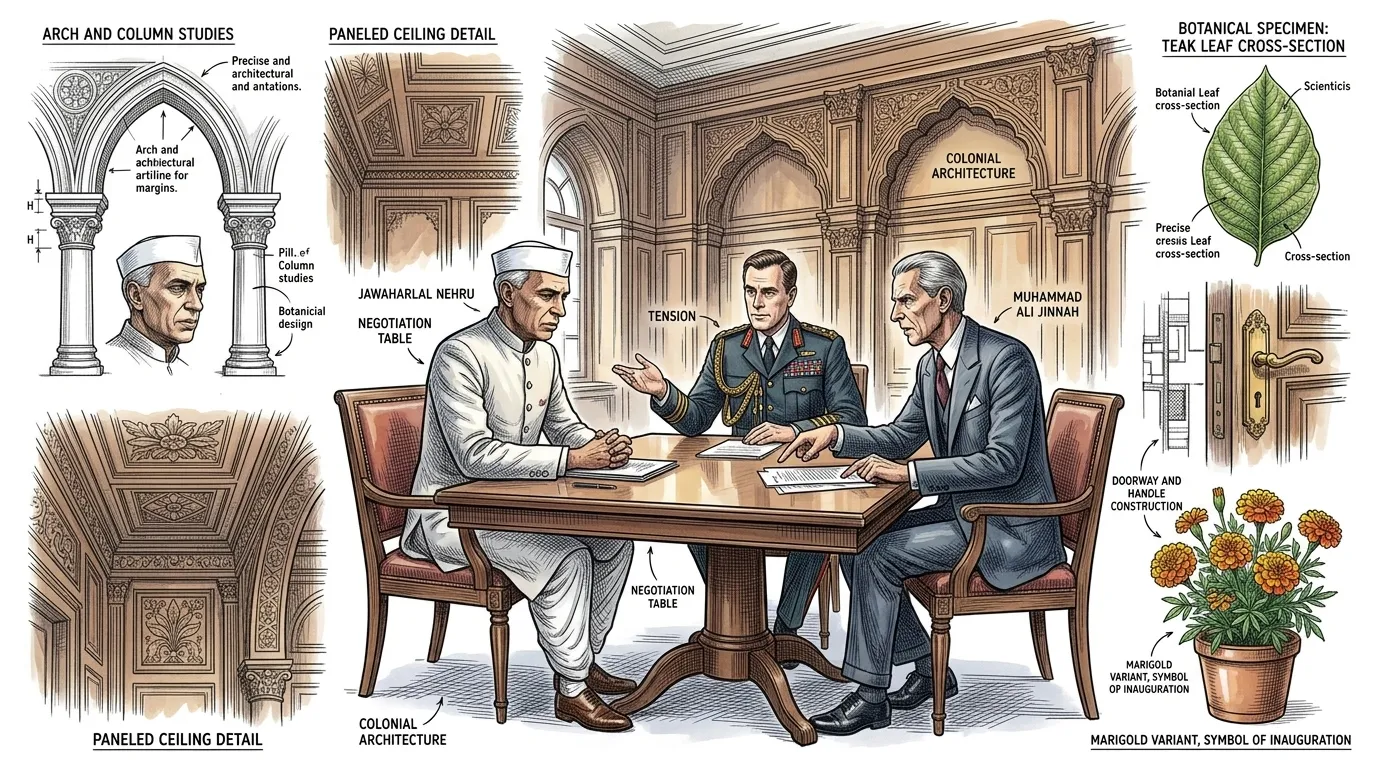
In the critical years of 1946-1947, as the transfer of power became inevitable, Nehru was at the epicenter of agonizing negotiations. As head of the Interim Government, he engaged in intense, often fractious, discussions with Lord Mountbatten, the last Viceroy, and Muhammad Ali Jinnah, leader of the Muslim League. Faced with intractable communal violence and Jinnah's unwavering demand for Pakistan, Nehru reluctantly accepted partition. This decision, though painful, was a pragmatic attempt to avert further bloodshed and bring independence to a fractured nation, showcasing his capacity for tough leadership under extreme pressure.
Biographical Fact: Nehru's leadership in the Interim Government (1946-1947) involved difficult negotiations with Lord Mountbatten and Muhammad Ali Jinnah, leading to the reluctant acceptance of India's partition.
Page 8
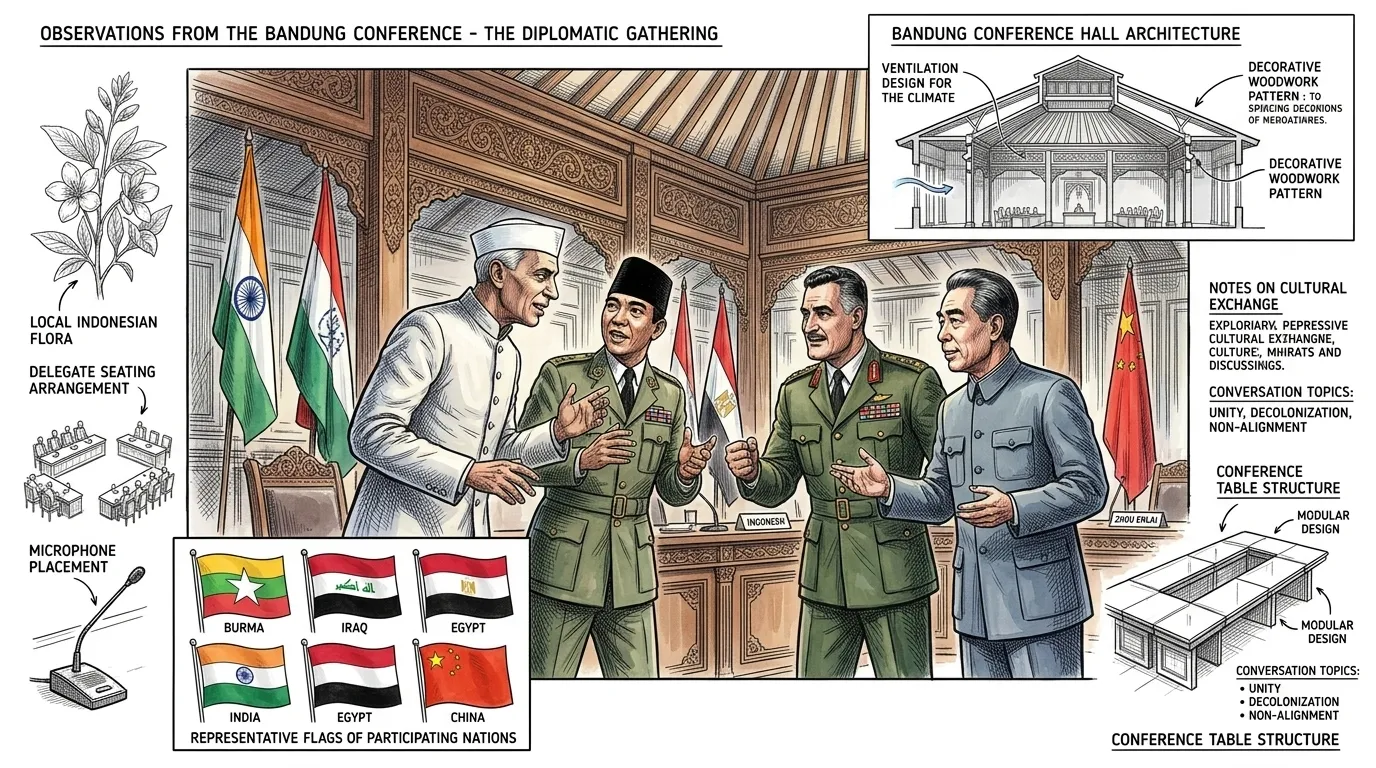
In 1955, at the Bandung Conference in Indonesia, Jawaharlal Nehru cemented India's role on the global stage, articulating a 'third path' for newly independent nations. Alongside leaders like Sukarno of Indonesia, Gamal Abdel Nasser of Egypt, and Zhou Enlai of China, he laid the philosophical groundwork for the Non-Aligned Movement. This audacious stance rejected allegiance to either the American or Soviet Cold War blocs, championing self-determination, peace, and mutual respect among developing countries. India, under Nehru, emerged as a moral voice for a vast portion of humanity, impacting global geopolitics profoundly.
Biographical Fact: In 1955, Nehru co-founded the Non-Aligned Movement at the Bandung Conference, asserting India's independent stance in Cold War geopolitics and advocating for developing nations.
Page 9
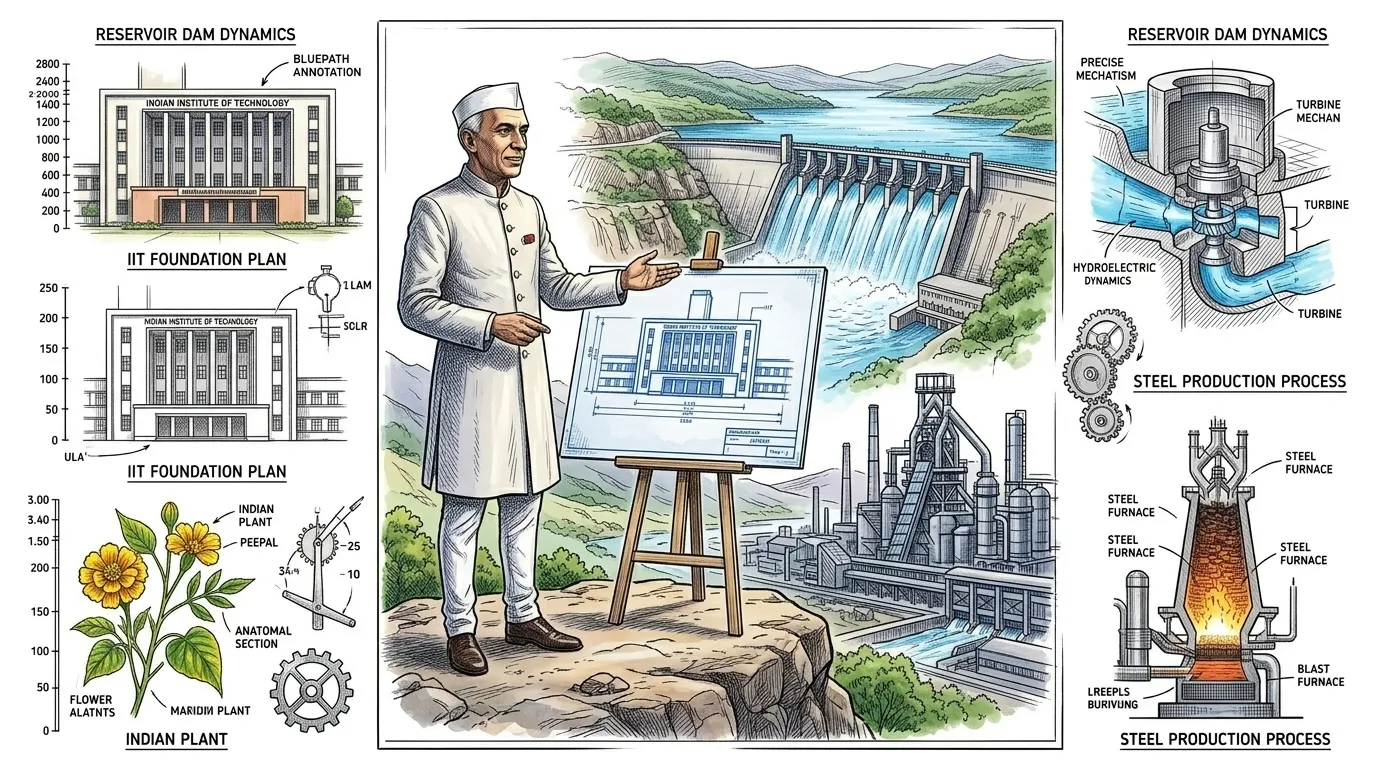
As Prime Minister, Nehru embarked on a monumental task: building a modern India. He initiated a series of ambitious Five-Year Plans, focusing on industrialization, scientific research, and agricultural development. The establishment of institutions like the Indian Institutes of Technology (IITs) underscored his commitment to scientific temper and self-reliance. He championed large-scale infrastructure projects, from dams to steel plants, that were vital for a newly independent nation. This relentless drive for progress profoundly reshaped India's economic and social landscape, laying the essential groundwork for its future growth.
Biographical Fact: Nehru spearheaded India's first Five-Year Plans in the 1950s, focusing on industrialization, scientific development (e.g., IITs), and large-scale infrastructure projects.
Page 10
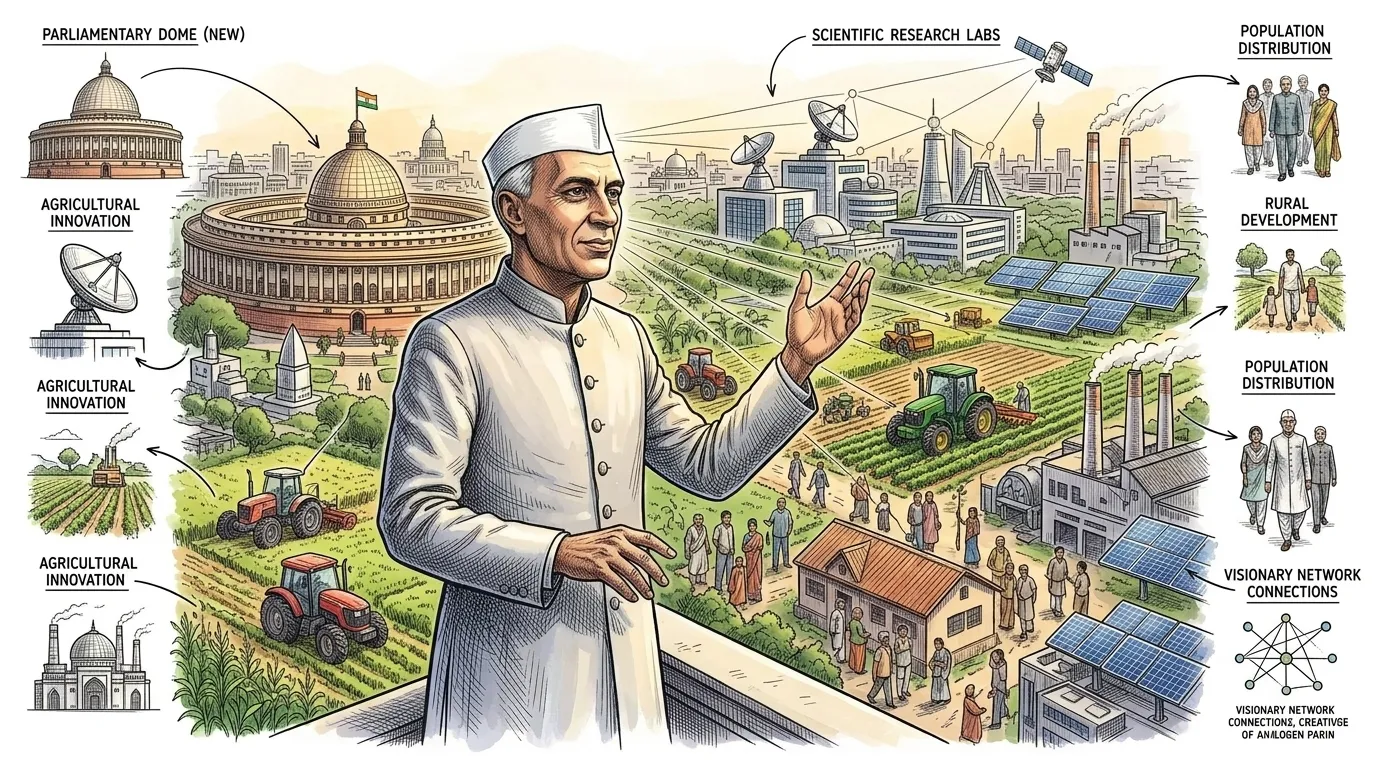
Jawaharlal Nehru's legacy endures as the architect of modern India. He established a parliamentary democracy, enshrined secularism in the constitution, and championed a non-aligned foreign policy that gave India a voice on the global stage. His vision for a scientifically advanced, industrially strong, and socially just nation continues to resonate. Though his policies faced critiques and challenges, the foundational principles he laid down, from democratic institutions to a commitment to pluralism, have shaped the very identity and trajectory of the world's largest democracy. His impact remains indelible.
Biographical Fact: Jawaharlal Nehru's enduring legacy includes establishing India's democratic and secular framework, its non-aligned foreign policy, and foundational institutions for scientific and industrial progress.
About this story
- Location: Global
- Audience: general readers
Questions and answers
Read Wonder People on your phone
Wonder People is available on Android. Get Wonder People on Google Play.