Isaac Singer
Isaac Singer — an illustrated biography story, set in Global. 10 illustrated pages, free to read on Wonder People.
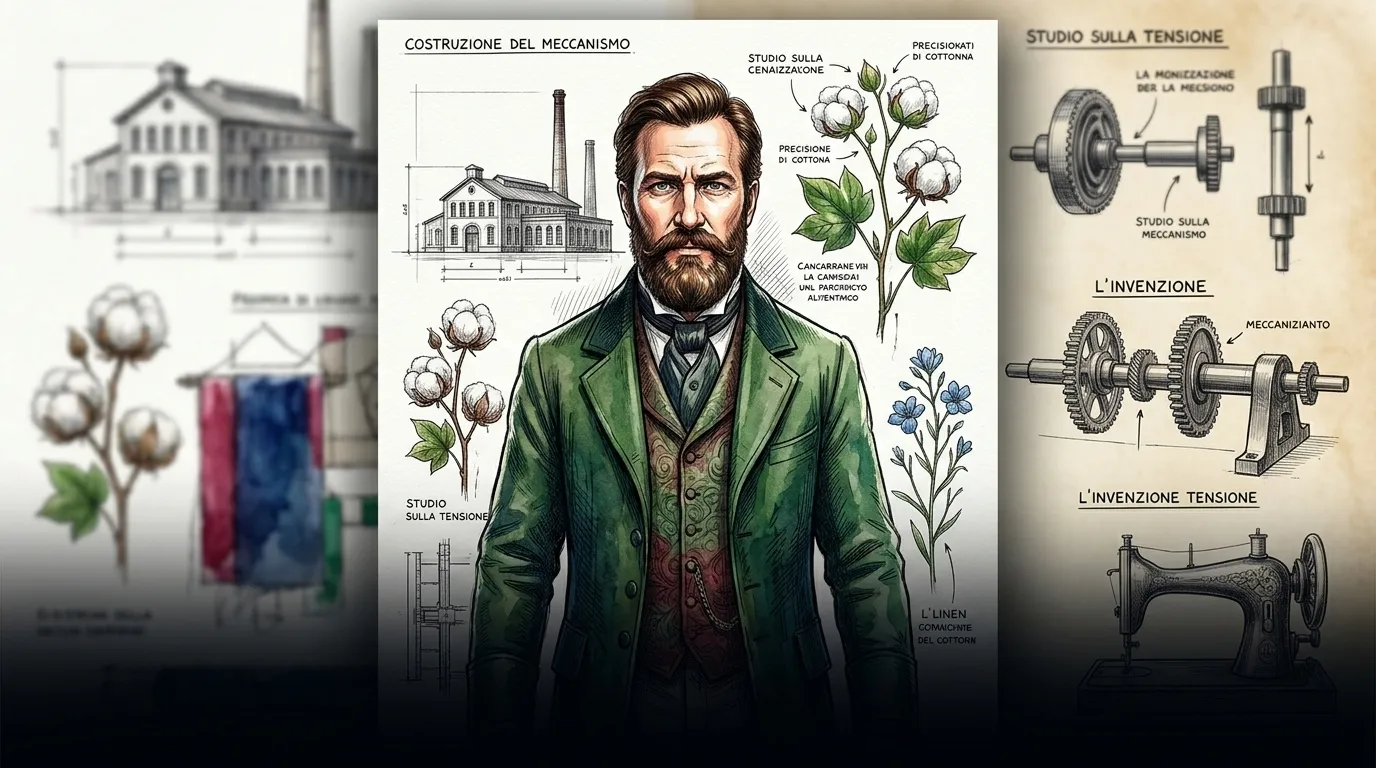
Page 1
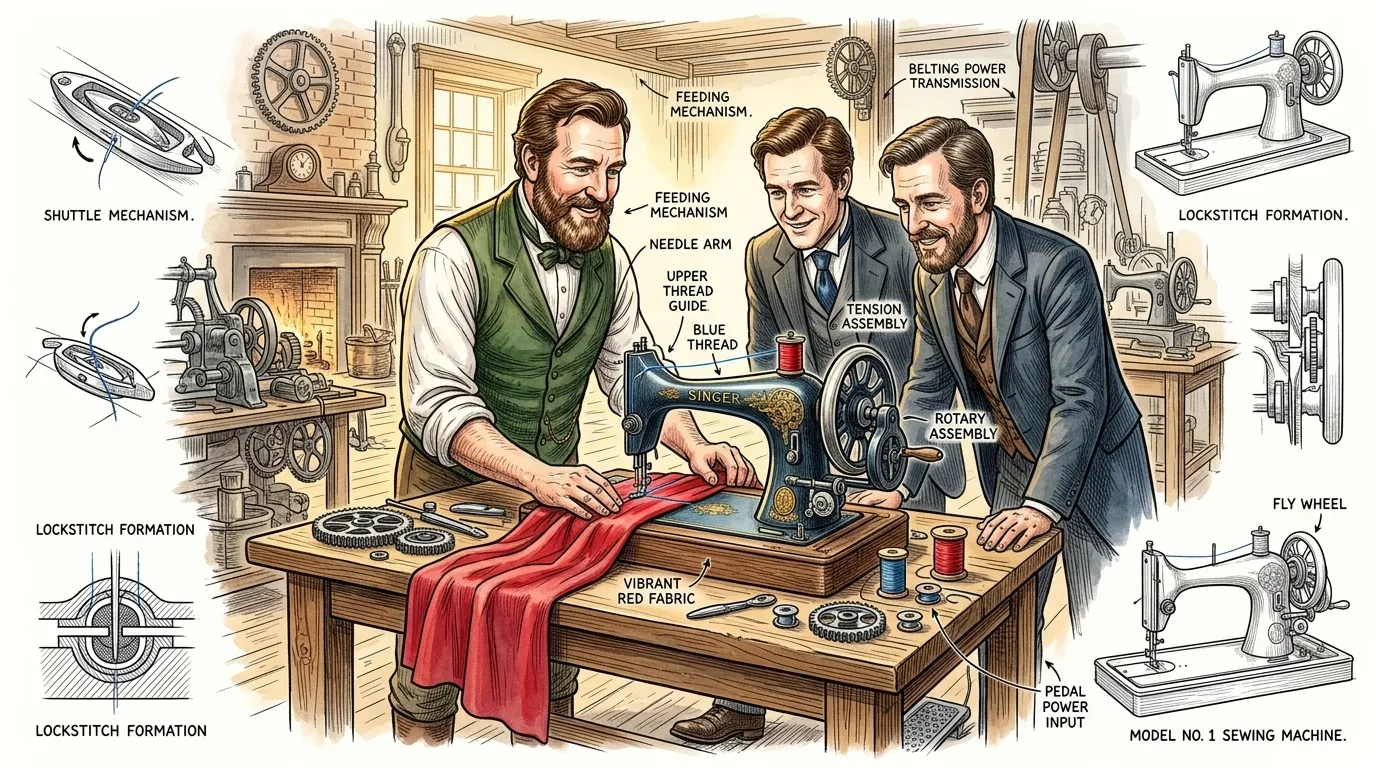
In a bustling Boston machine shop in 1851, Isaac Singer unveiled a device that defied prior engineering limitations. His newly patented sewing machine, featuring a vertical needle and a continuous feed, could execute 900 stitches per minute, dwarfing the performance of existing models. This public demonstration drew the critical gaze of financiers like George B. Zieber and legal mind Edward Clark, who recognized the seismic potential of Singer's innovation. What had been a slow, cumbersome task now promised precision and speed previously unimaginable, laying the foundation for a global enterprise.
Biographical Fact: Isaac Singer secured his patent for the improved sewing machine on August 12, 1851. His design addressed fundamental flaws in earlier machines, making it both faster and more reliable.
Page 2
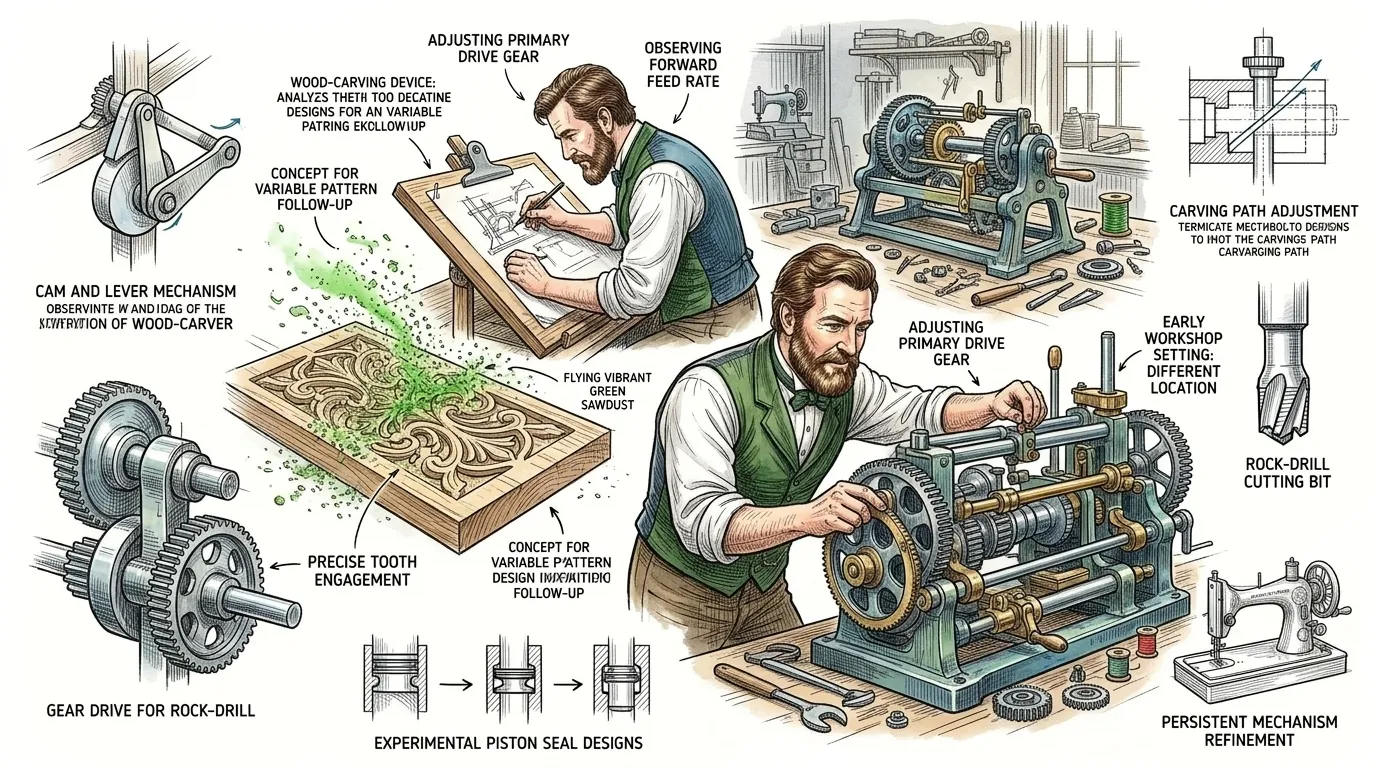
Before his defining success, Isaac Singer was a man of restless ambition and varied pursuits, often frustrated by mechanical imperfections. Born into a working-class family in Pittstown, New York, in 1811, his formal education was limited, yet his mind instinctively sought solutions to engineering challenges. He spent years dabbling in mechanics, from designing a rock-drilling machine for excavation to a wood-carving device for intricate patterns, none of which achieved widespread commercial viability. This period of invention, marked by relentless experimentation and frequent financial setbacks, forged his pragmatic approach to design.
Biographical Fact: Singer's inventive career began well before the sewing machine, showcasing his persistent mechanical aptitude despite early failures in fields like drilling and woodworking machinery.
Page 3
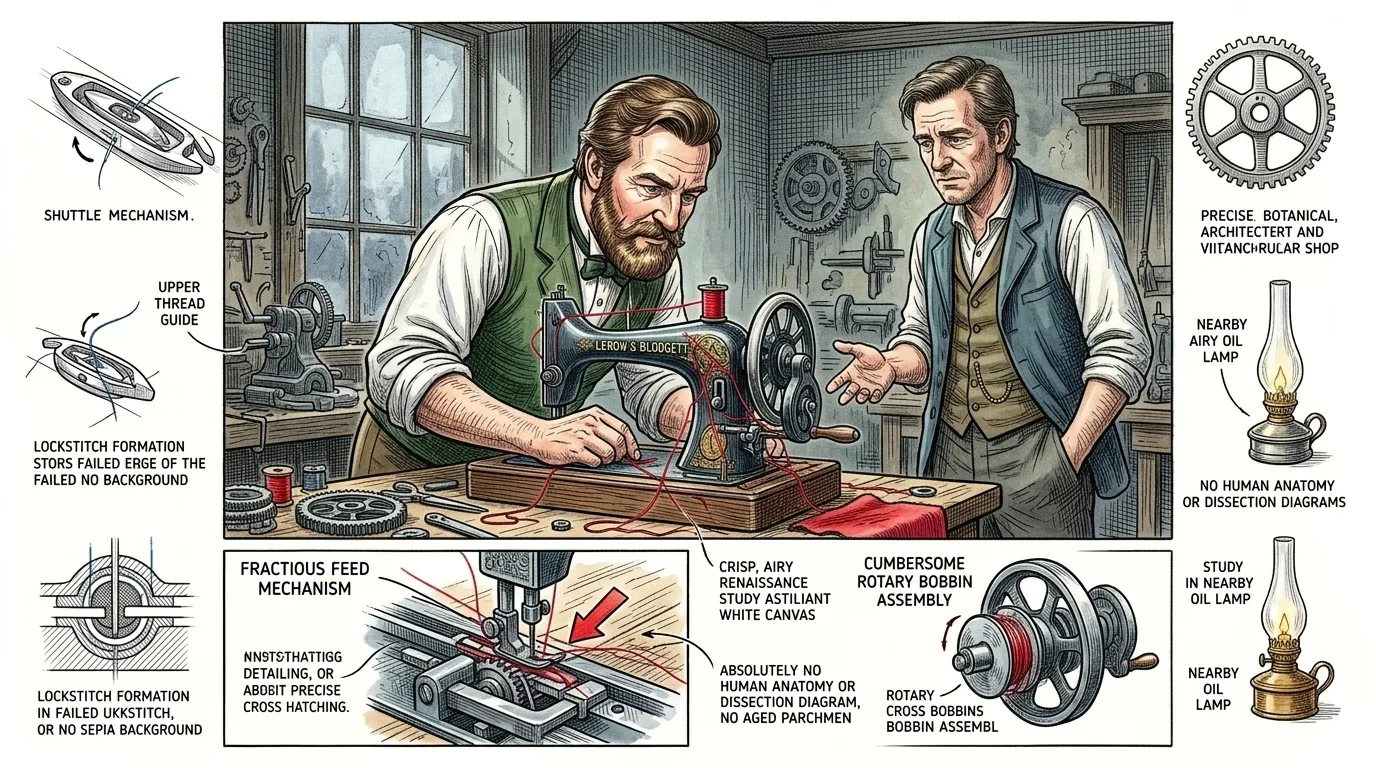
In 1850, in Orson C. Phelps's struggling machine shop in Boston, Isaac Singer encountered the prevailing Lerow & Blodgett sewing machine. It was cumbersome, prone to tangles, and required constant re-threading, failing often during demonstrations. Singer, observing its limitations, immediately saw beyond its operation to its inherent design weaknesses. This moment of critical assessment revealed to him not just a broken machine, but a profound opportunity for fundamental redesign. His mind raced, visualizing a mechanism that would operate smoothly, continuously, and reliably.
Biographical Fact: The Lerow & Blodgett machine, while an early attempt at commercial sewing, suffered from design flaws that made it unreliable and difficult to use, problems Singer immediately identified.
Page 4
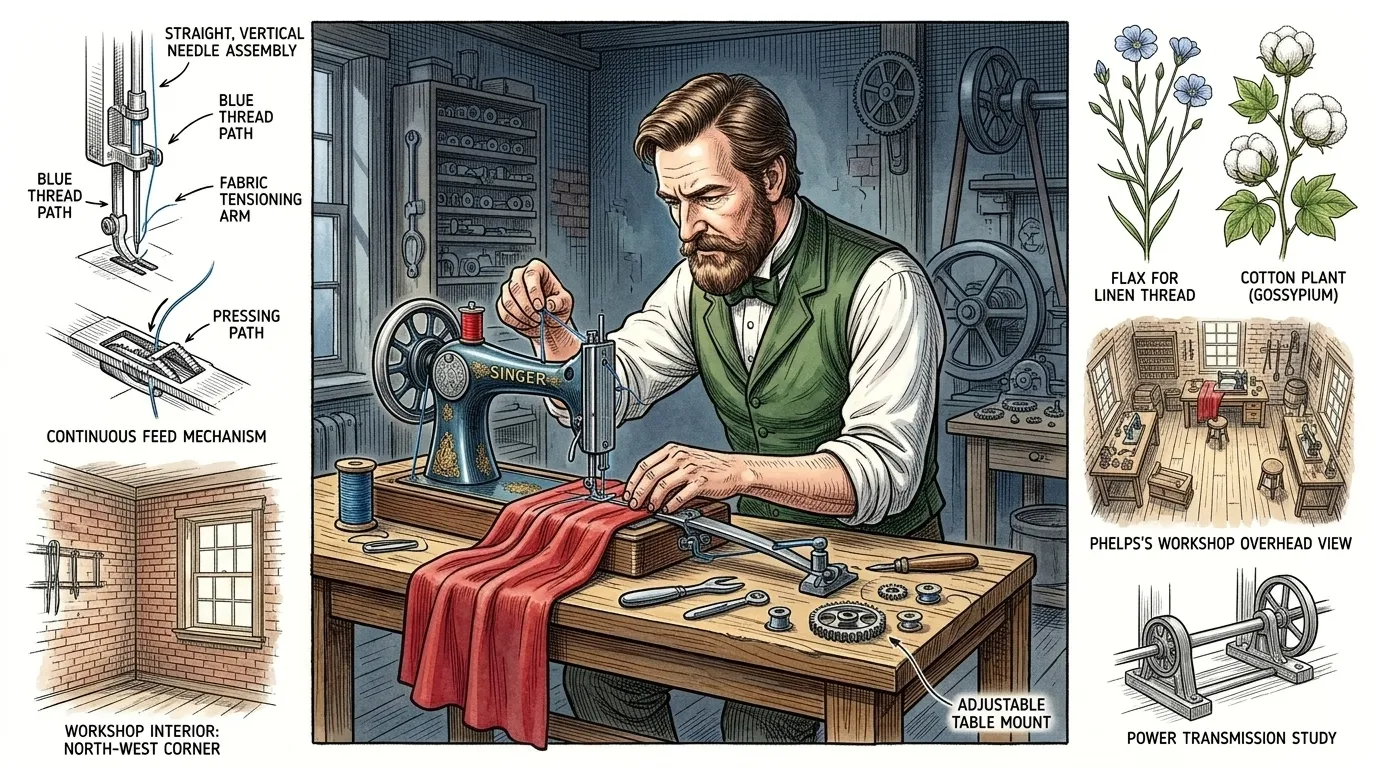
Driven by his incisive observations, Isaac Singer embarked on an intense, focused period of invention within Phelps's workshop. For eleven days, he worked almost without pause, driven by the certainty of a better design. He envisioned and then constructed a machine with a straight, vertical needle, distinct from the curved needles of competitors, and crucially, a continuous feed mechanism that moved the fabric smoothly. This combination, along with a pressing arm to hold the fabric, resolved the persistent issues of tangling and intermittent stitching. It was a rapid, transformative leap in mechanical engineering.
Biographical Fact: Singer's rapid development of his first prototype, completing it in just eleven days, was fueled by his singular focus on practical improvements: the vertical needle and continuous feed.
Page 5

With a working prototype that demonstrably outperformed any rival, Isaac Singer needed capital. He quickly found it in George B. Zieber, who invested fifty dollars, and later, the astute lawyer Edward Clark, who saw the immense commercial opportunity. In September 1851, I. M. Singer & Co. was formally established, marking Singer's shift from solitary inventor to industrialist. This partnership solidified the financial and legal framework necessary to protect his patents and scale production, transforming his invention from a workshop curiosity into a viable commercial product.
Biographical Fact: The formation of I. M. Singer & Co. in 1851, with initial investments from George B. Zieber and crucial legal guidance from Edward Clark, marked the beginning of Singer's industrial empire.
Page 6
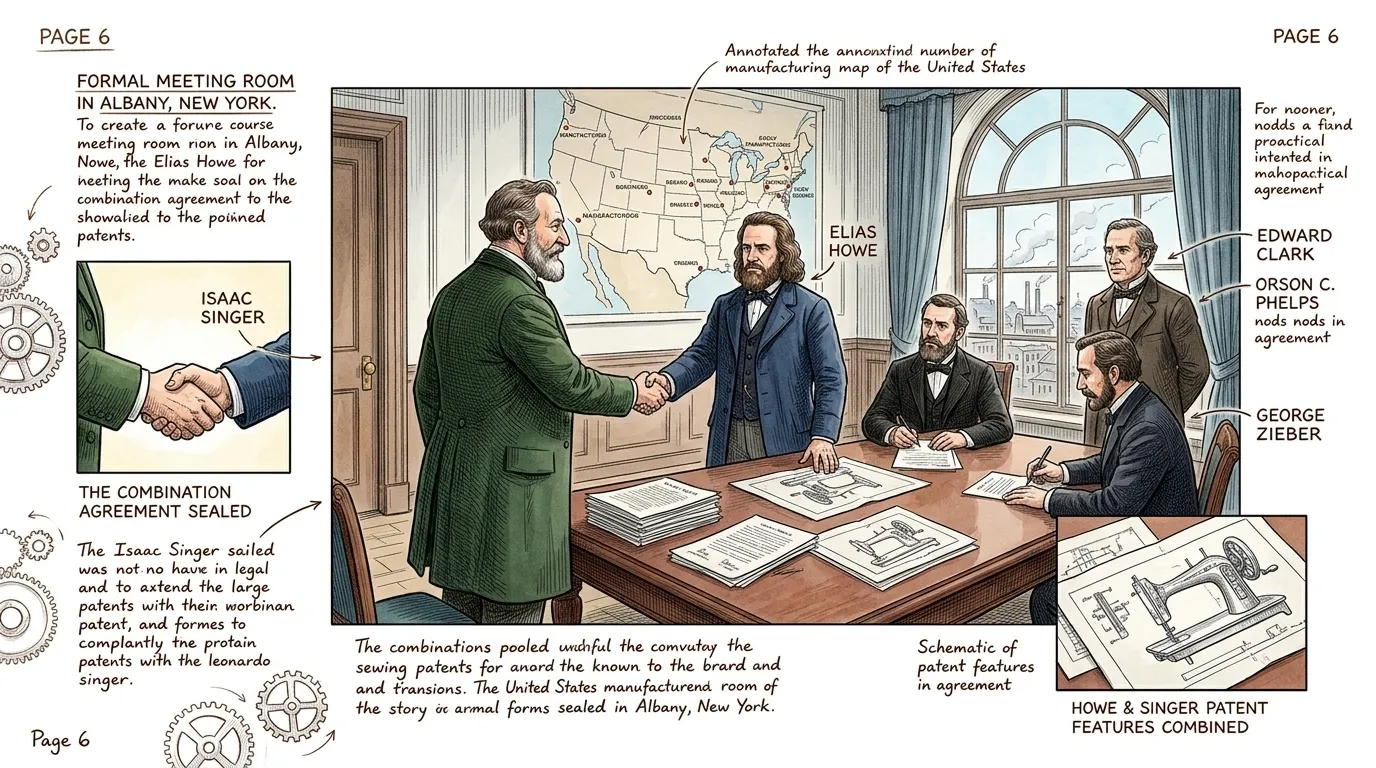
By 1856, the burgeoning sewing machine industry was mired in relentless patent litigation, threatening to stifle innovation and commerce. Isaac Singer, facing a lawsuit from Elias Howe, the original patent holder, understood that cooperation, not competition, was essential for progress. At a pivotal meeting in Albany, New York, Singer, Howe, Wheeler & Wilson, and Grover & Baker formed the 'Sewing Machine Combination.' This landmark agreement pooled their patents, allowing each manufacturer to use the others' inventions for a royalty fee. Singer's strategic foresight enabled the industry to flourish, clearing a path for mass production and distribution.
Biographical Fact: The 'Sewing Machine Combination' of 1856, orchestrated in part by Singer, was a crucial agreement that resolved patent disputes and allowed for the widespread commercialization of sewing machines.
Page 7
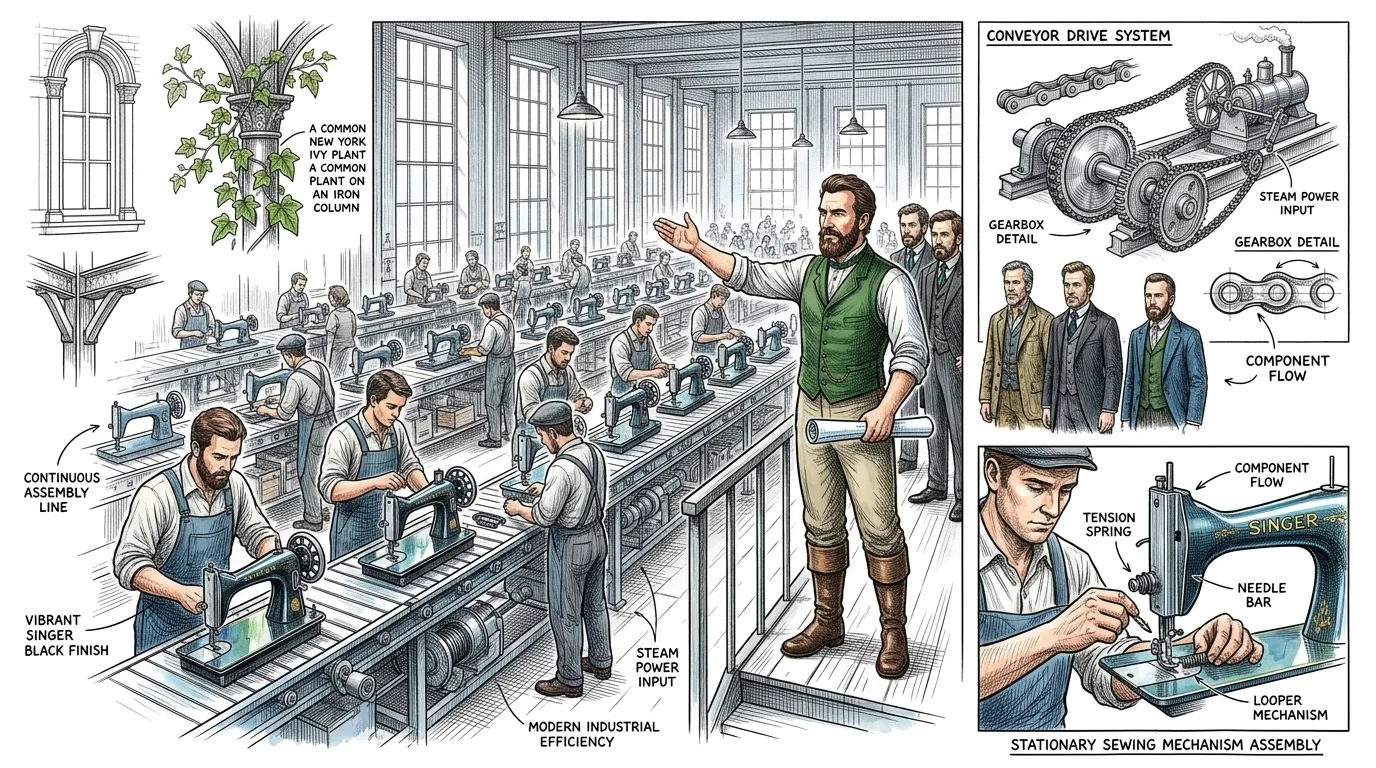
With patent disputes settled, I. M. Singer & Co. rapidly scaled its manufacturing operations. The company established a massive factory on Mott Street in New York City, becoming one of the most advanced production facilities of its time. Here, assembly lines and specialized labor transformed raw materials into thousands of sewing machines weekly. Isaac Singer oversaw this industrial expansion, focusing on efficiency and quality. This commitment to mass production ensured his machines became accessible, cementing his company's position as the world leader.
Biographical Fact: Singer's Mott Street factory exemplified industrial efficiency, utilizing advanced production methods to meet the soaring demand for sewing machines and establish a global manufacturing base.
Page 8
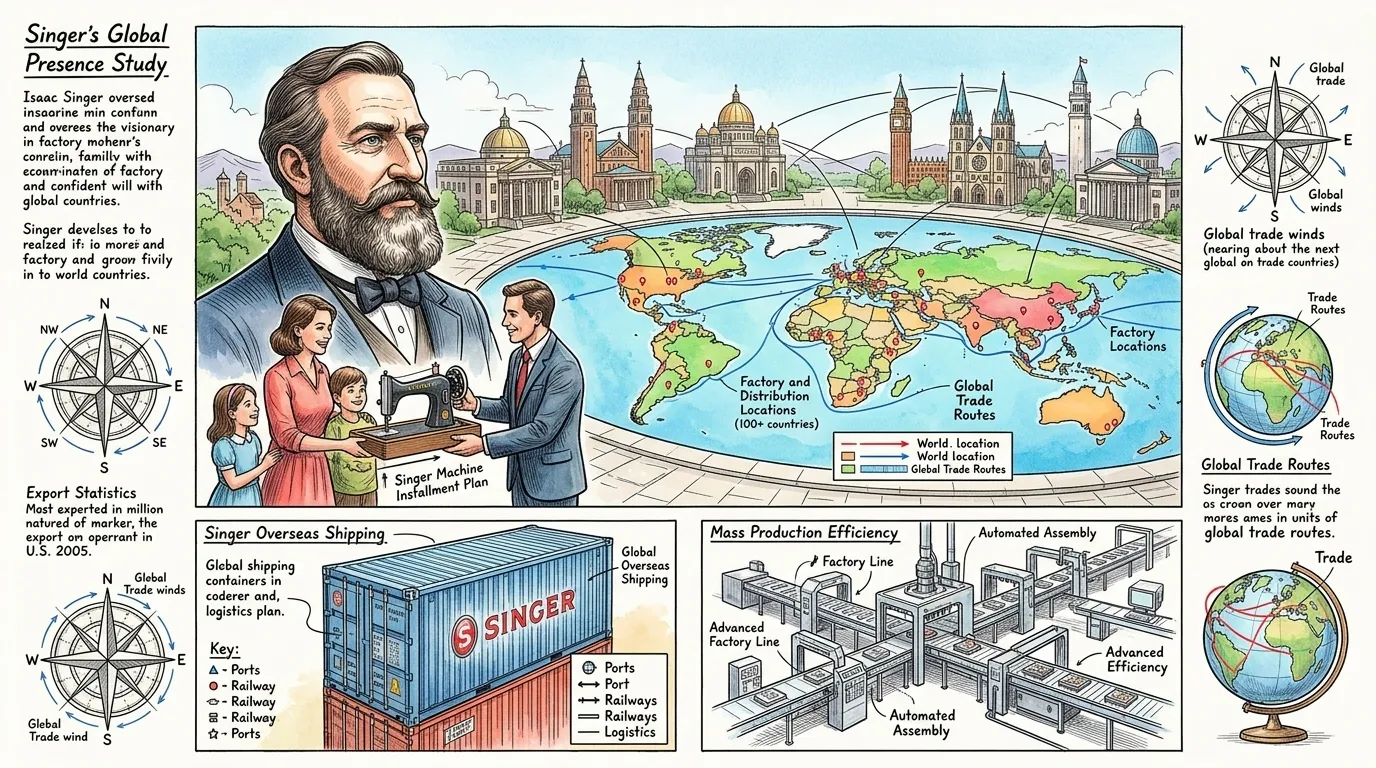
Isaac Singer understood that true impact required more than invention; it demanded accessibility. He pioneered innovative marketing and sales strategies, including the widespread introduction of installment payment plans, which made his machines affordable for ordinary households. This vision propelled his company beyond national borders. By the 1870s, Singer sewing machines were sold in over 100 countries, with factories established across Europe, transforming the global landscape of manufacturing and domestic life. His brand became synonymous with the very act of sewing.
Biographical Fact: Singer's innovative sales strategies, particularly installment payments, democratized access to his machines, enabling their rapid global spread and penetration into diverse economic strata.
Page 9
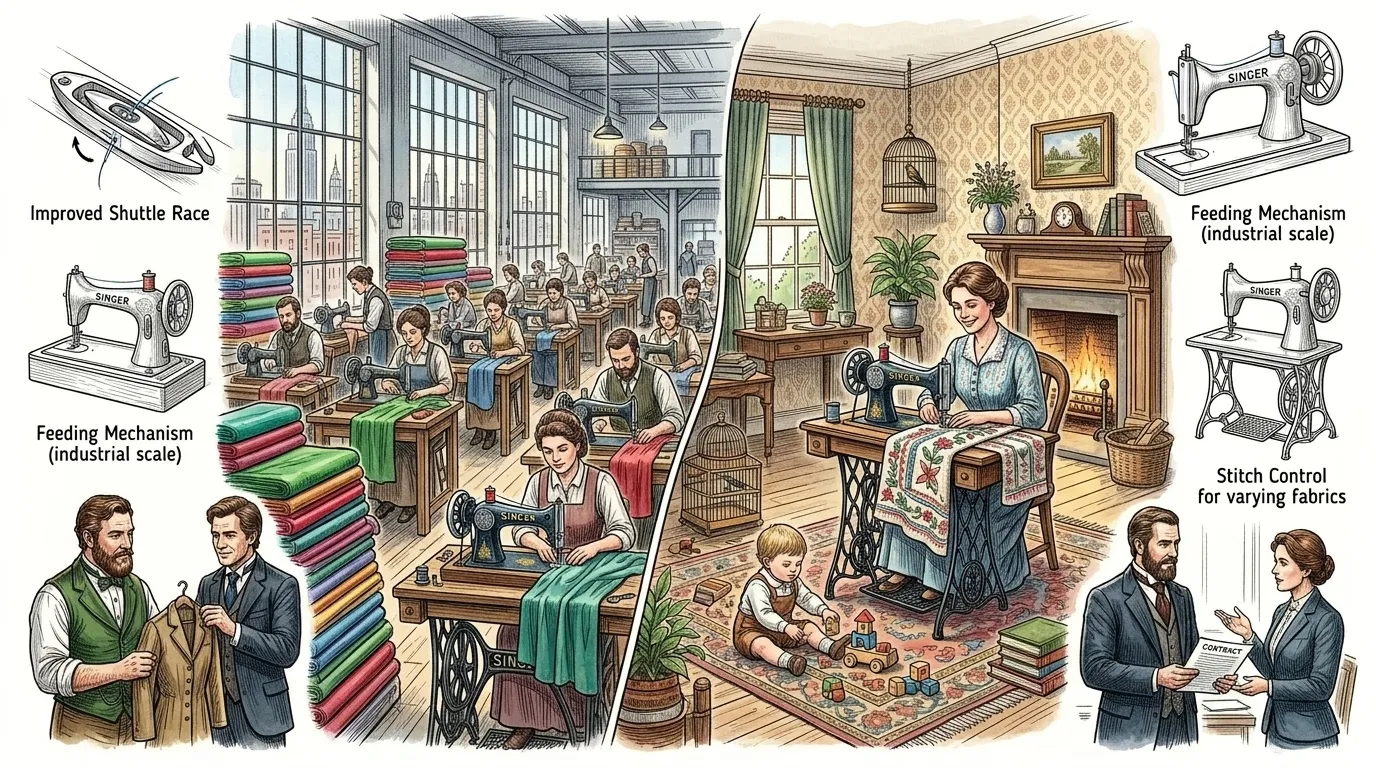
The Singer sewing machine irrevocably altered both industrial and domestic spheres. In burgeoning garment factories, its speed and reliability revolutionized clothing production, creating new jobs and accelerating textile industries worldwide. Concurrently, within the home, the machine empowered women, enabling them to produce clothing and textiles with unprecedented efficiency. It shifted the dynamics of household labor, facilitated entrepreneurial endeavors from their residences, and brought a new level of autonomy to countless individuals, changing daily life across continents.
Biographical Fact: The Singer sewing machine had a dual impact: it industrialized garment manufacturing, creating mass employment, and empowered women in the domestic sphere, facilitating economic independence and household efficiency.
Page 10
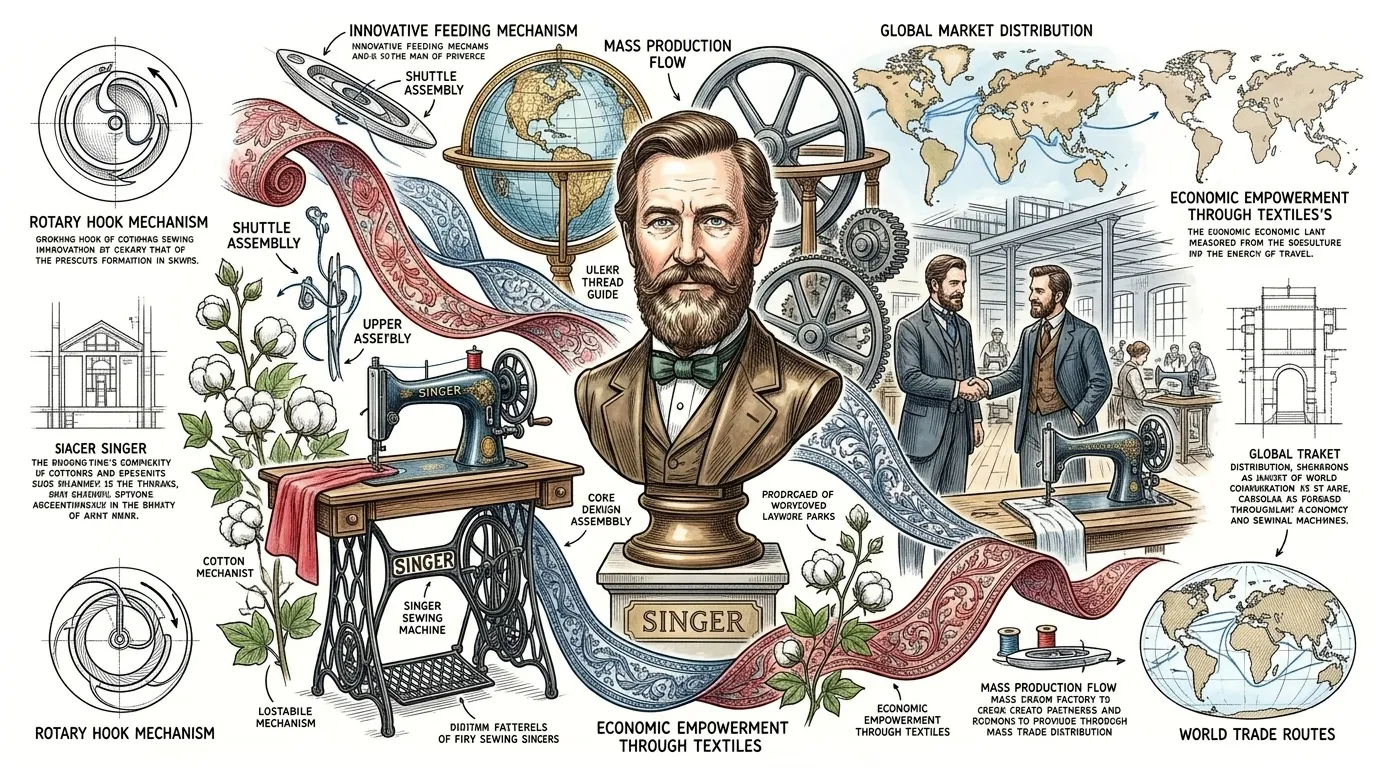
Isaac Singer died in 1875, but his impact extended far beyond his lifetime. He did not invent the sewing machine, but he perfected its functionality and, more critically, its accessibility and mass production. His innovations in design and marketing reshaped industrial practices and consumer culture, setting precedents for modern manufacturing and global branding. The enduring image of the Singer sewing machine, a symbol of domestic industry and mechanical ingenuity, continues to represent a pivotal moment in the history of labor, technology, and economic empowerment.
Biographical Fact: Singer's ultimate legacy lies not just in his technical improvements, but in his visionary approach to mass production, global distribution, and consumer financing, which made the sewing machine an indispensable tool worldwide.
About this story
- Location: Global
- Audience: general readers
Questions and answers
Read Wonder People on your phone
Wonder People is available on Android. Get Wonder People on Google Play.