Indira Gandhi
Indira Gandhi — an illustrated biography story, set in Global. 10 illustrated pages, free to read on Wonder People.
Page 1
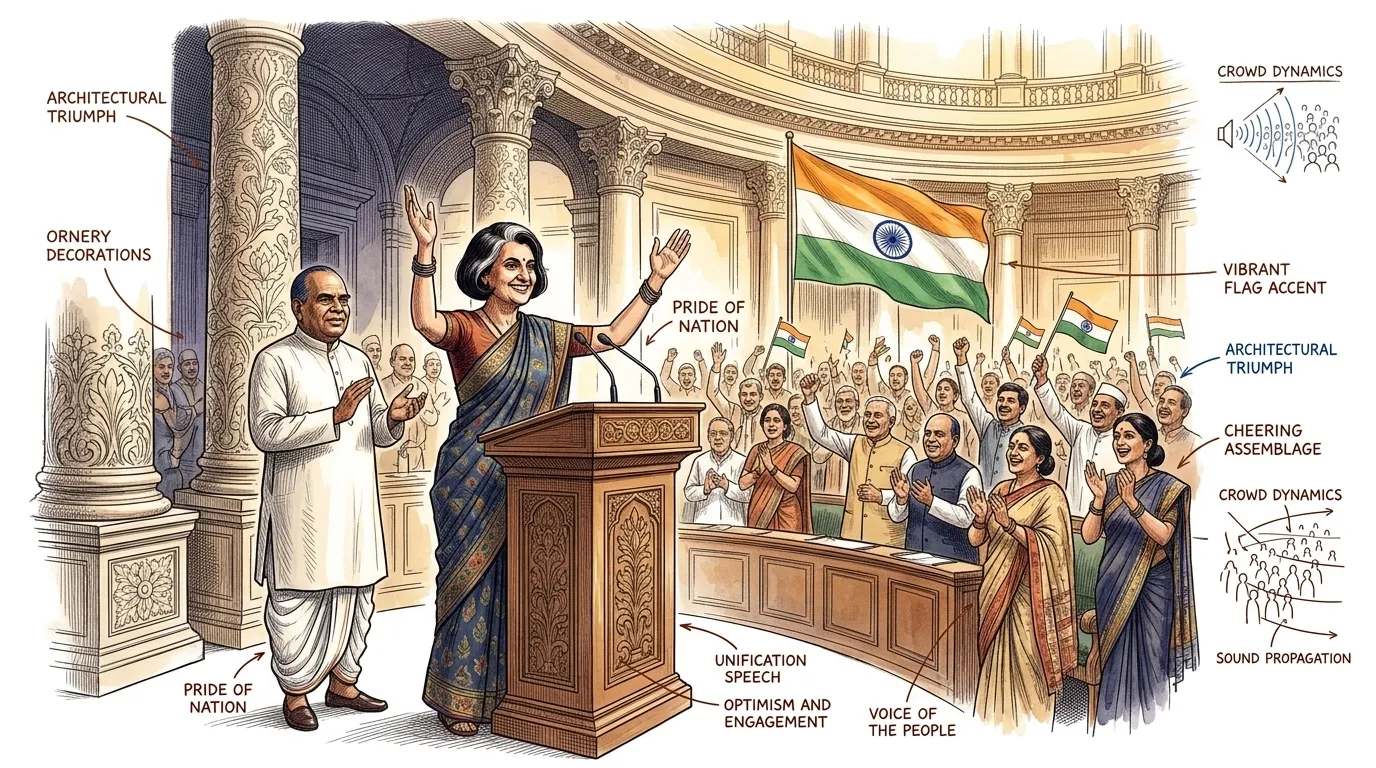
On December 16, 1971, the world watched as India, under the leadership of Prime Minister Indira Gandhi, achieved a decisive victory. Pakistani forces in East Pakistan surrendered in Dhaka, marking the birth of Bangladesh. This strategic triumph, secured in just thirteen days of intense conflict, saw over 90,000 Pakistani troops become prisoners of war, fundamentally reshaping the geopolitical landscape of South Asia.
"Gathered in the Parliament House, her defense minister, Jagjivan Ram, declared, 'The nation's spirit, united under her decisive will, has prevailed.' Later, she addressed the cheering Members of Parliament, stating, 'We have delivered on our commitment to freedom, ensuring a people's right to self-determination.'"
Page 2
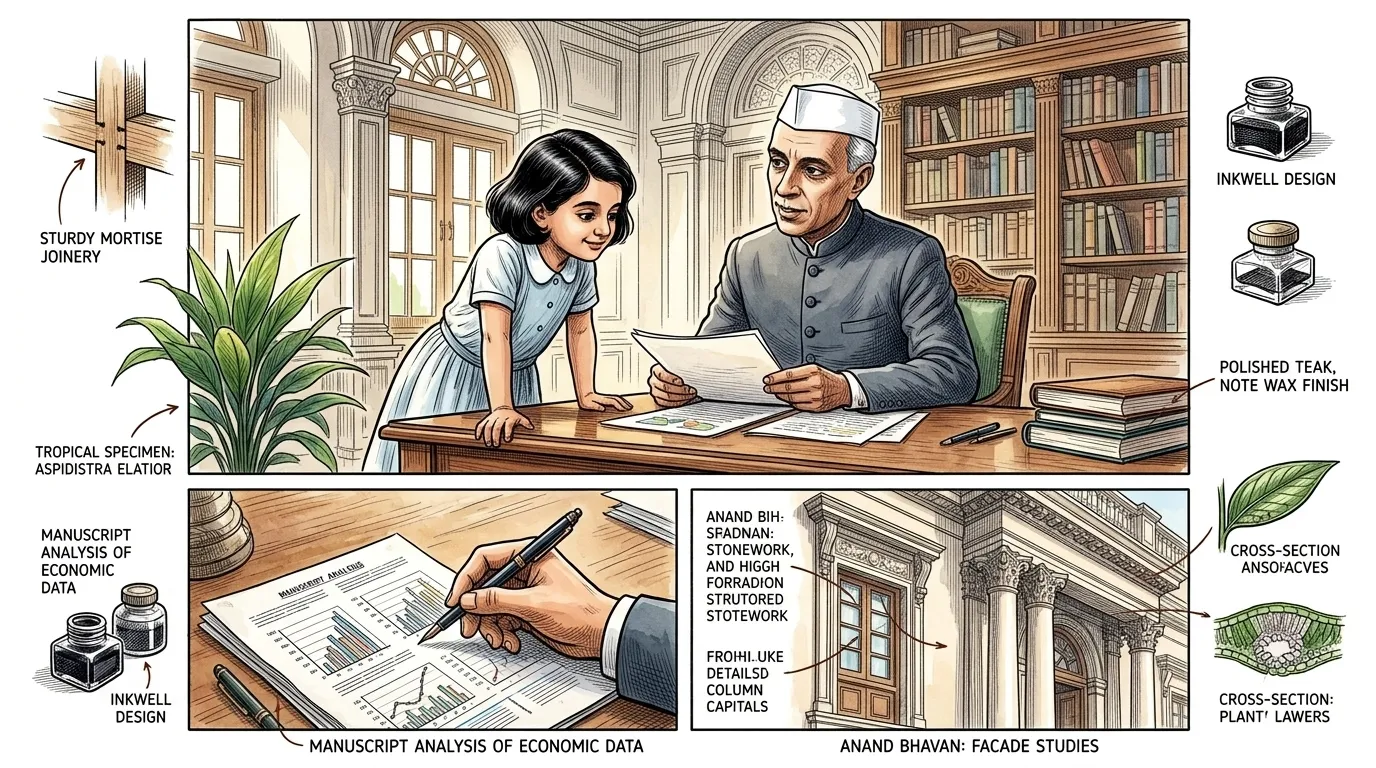
Born into the political epicenter of India, Indira Gandhi's childhood at Anand Bhavan in Allahabad was a direct immersion into the struggle for independence. Her grandfather, Motilal Nehru, and father, Jawaharlal Nehru, were architects of India's future. These early years forged a deep-seated conviction for national sovereignty and political engagement, laying the groundwork for her future resolve.
"One afternoon, observing her father, a distinguished elderly statesman, poring over documents, the young girl remarked, 'It seems the world outside is always trying to influence what happens within our borders.' He looked up, a thoughtful expression on his face, and explained, 'Indeed, my dear. As Confucius once taught, 'Our greatest glory is not in never falling, but in rising every time we fall.' India must always rise, independently.'"
Page 3
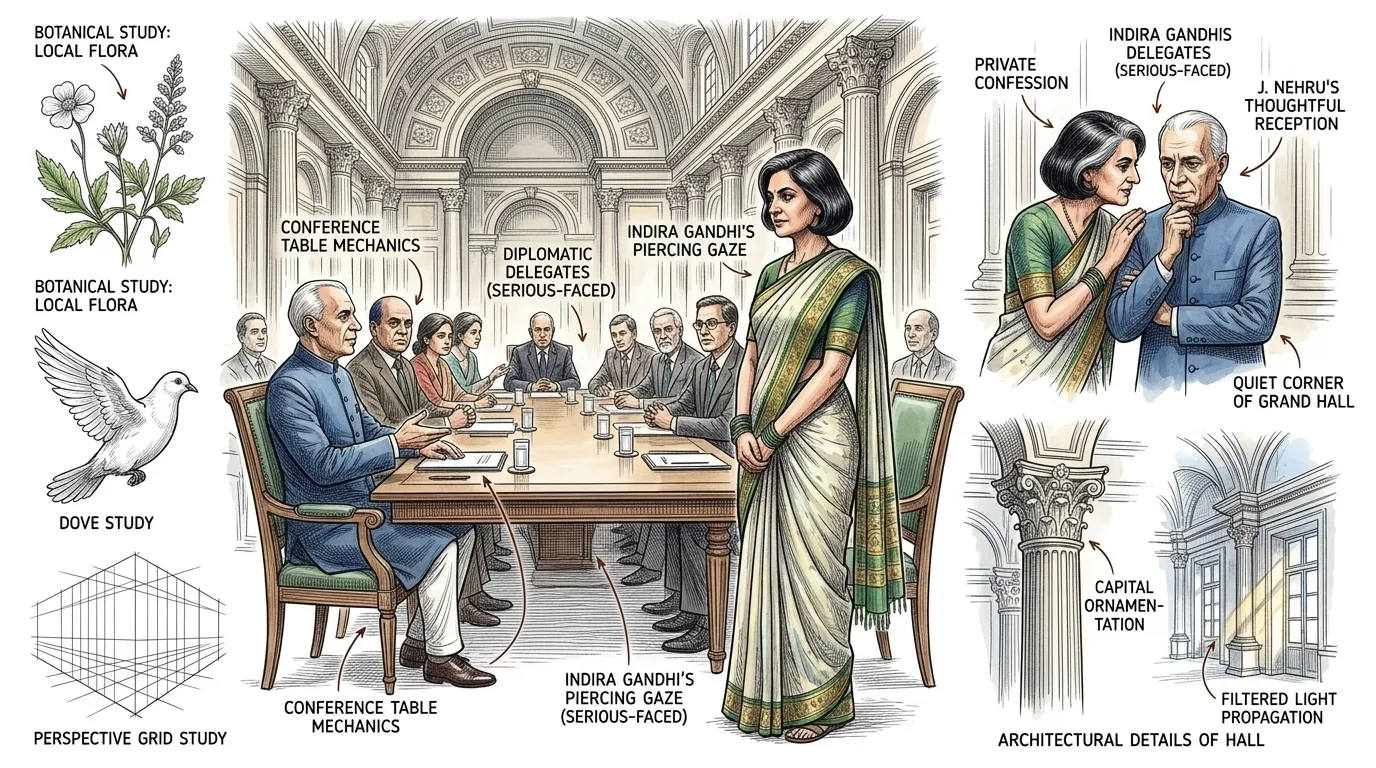
Following India's independence, Indira Gandhi served as a constant companion and de facto chief of staff to her father, Prime Minister Jawaharlal Nehru. This period was an intensive, unparalleled apprenticeship in statecraft. She absorbed the nuances of governance, diplomatic relations, and the intricate machinery of the nascent Indian democracy, preparing her for the inevitable weight of leadership.
"During a tense diplomatic meeting, as her father navigated complex international demands, she observed the intricate dance of power. Later, she confided in him, 'The decisions you make here echo across the entire nation, not just in these halls.' He paused, 'That is the very essence of it. Every leader carries the burden of a nation's fate, and sometimes, a leader must stand unyielding, remembering that 'The only real prison is fear, and the only real freedom is freedom from fear,' as Mahatma Gandhi often imparted.'"
Page 4
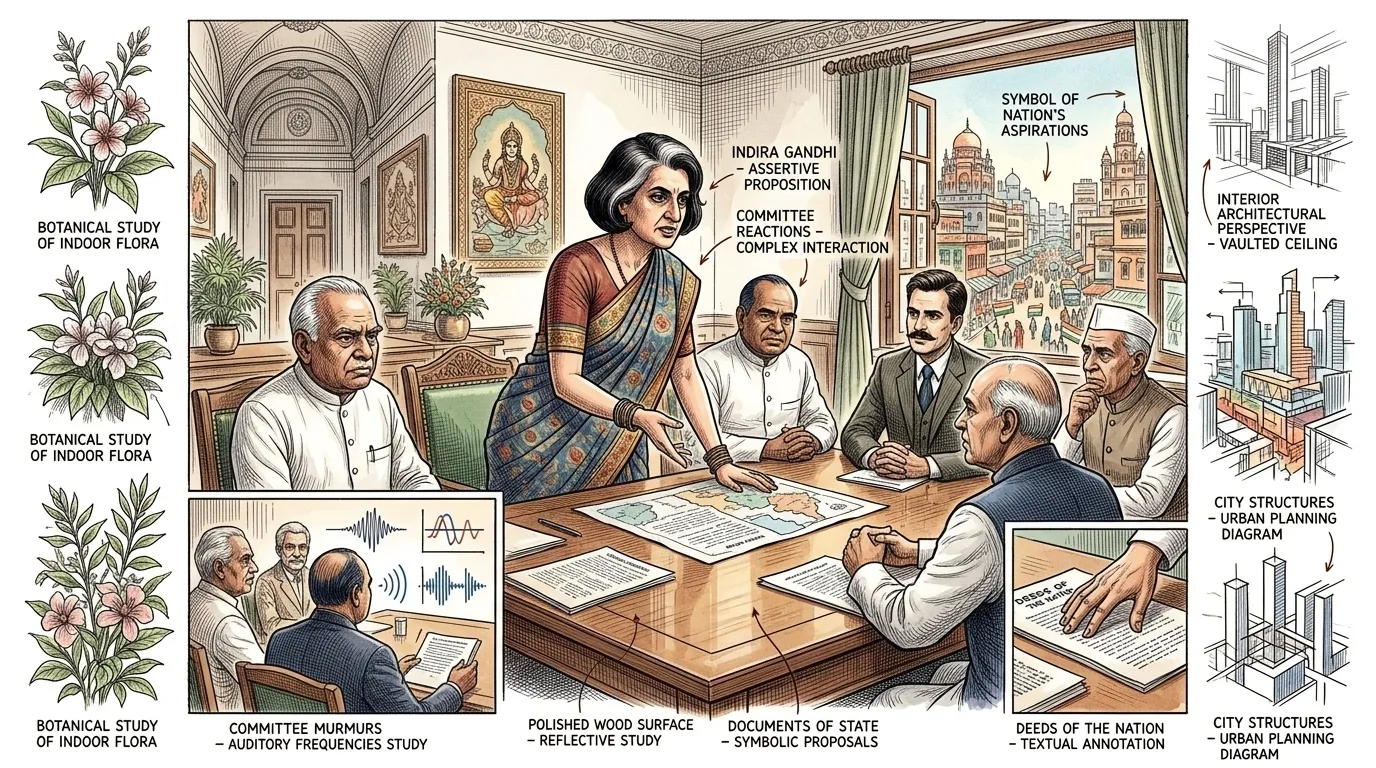
In 1959, against a backdrop of established political veterans, Indira Gandhi was elected President of the Indian National Congress. This pivotal moment marked her emergence from her father's shadow, demonstrating her own political acumen and capacity to command the party. It was a clear signal of her independent ambition and growing influence within India's dominant political force.
"Addressing the Congress Working Committee after her election, she asserted, 'This is not merely an elevation of office; it is a call to accelerate the work of our nation. We must address the aspirations of every citizen, for 'The future belongs to those who believe in the beauty of their dreams,' as Eleanor Roosevelt once articulated, and I believe in India's dream.' Her statement was met with a murmur of approval."
Page 5
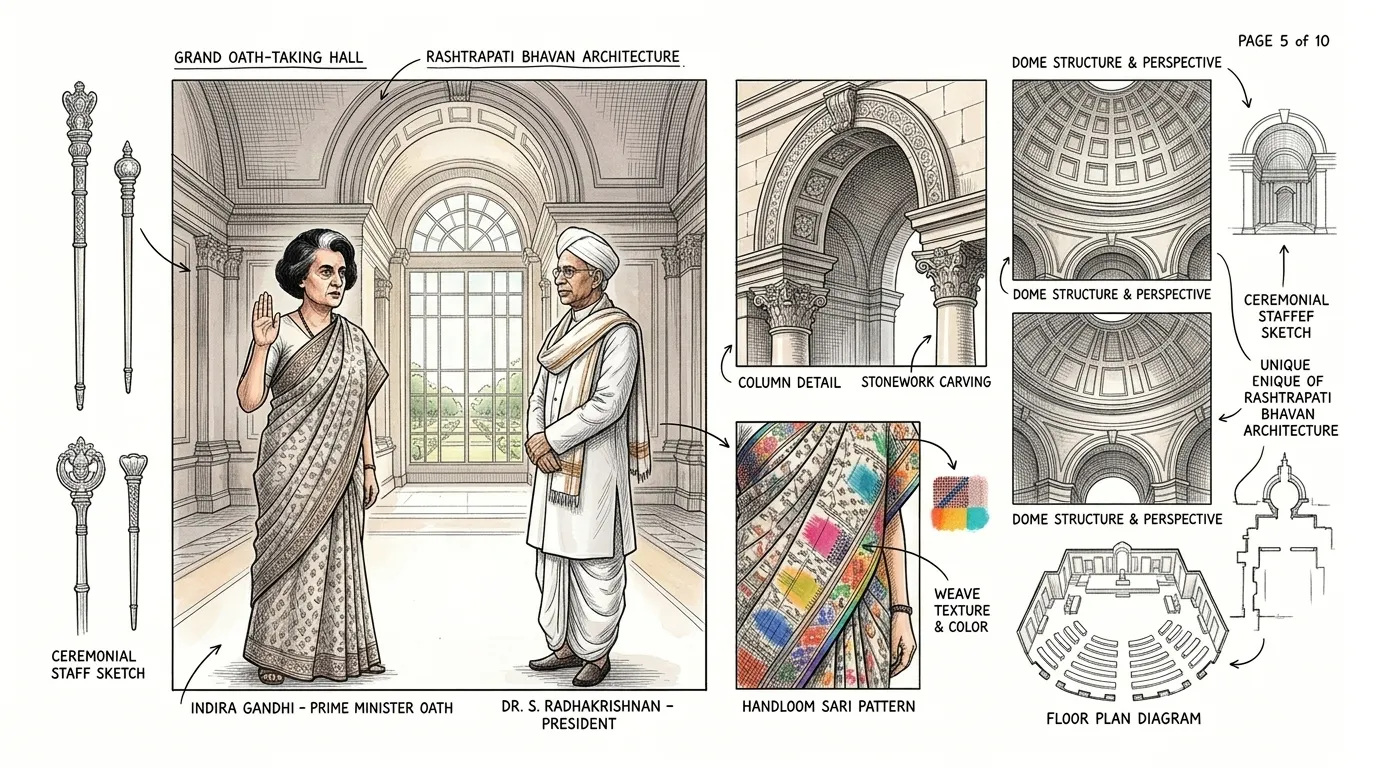
After the sudden demise of Prime Minister Lal Bahadur Shastri in 1966, the Indian National Congress faced a leadership vacuum. Despite challenges from seasoned politicians like Morarji Desai, Indira Gandhi was chosen. In a ceremony at Rashtrapati Bhavan, she took the oath as India's third Prime Minister, becoming the first woman to hold the office, a moment of profound historical significance.
"With her right hand raised, facing President Sarvepalli Radhakrishnan, a distinguished elderly statesman, she swore the oath. Later, reflecting on the immense responsibility, she quietly stated, 'The weight of this office is immense, but the commitment to the people is greater. As Winston Churchill famously said, 'Success is not final, failure is not fatal: it is the courage to continue that counts,' and I shall continue with all my strength.'"
Page 6
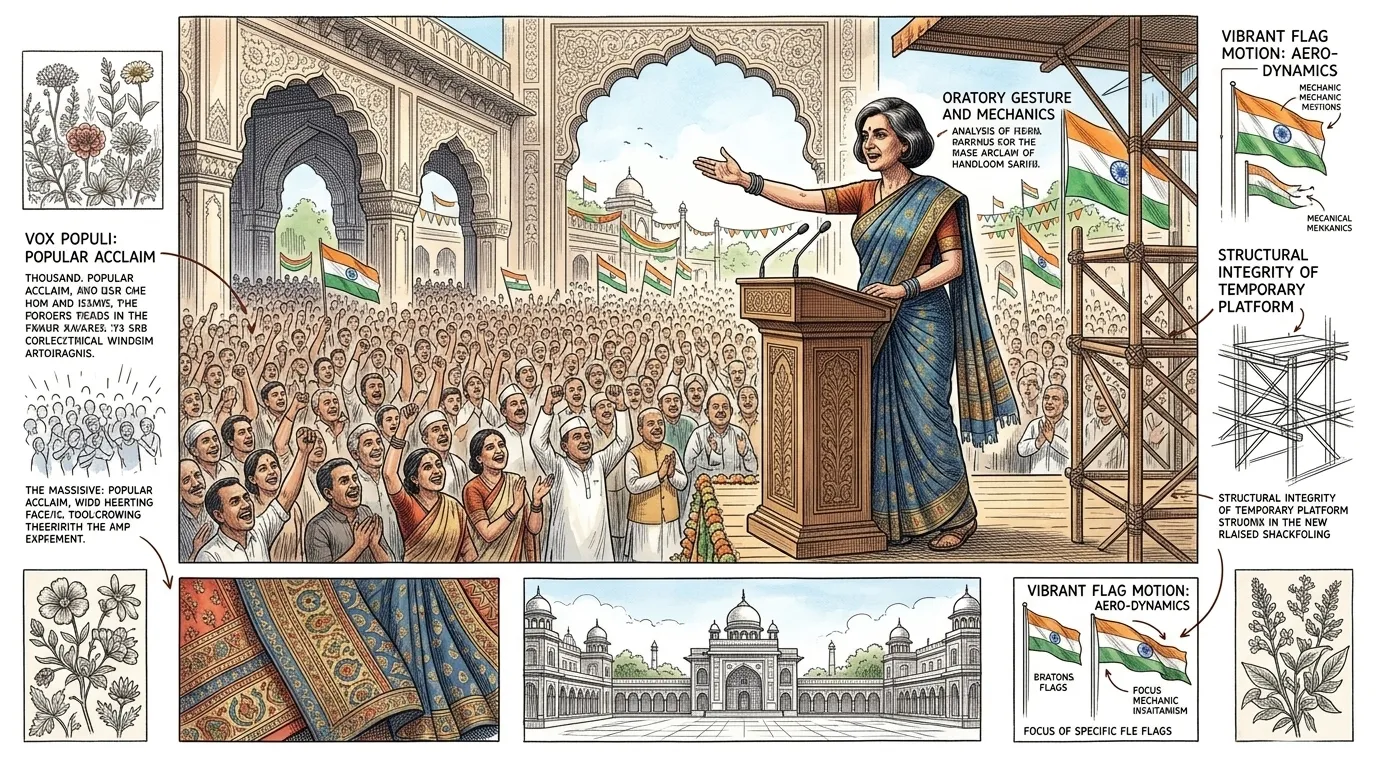
Seeking to connect directly with the masses and solidify her mandate, Indira Gandhi launched the 'Garibi Hatao' (Abolish Poverty) campaign in 1971. This populist slogan resonated deeply across India, promising radical economic and social reforms to uplift the poorest segments of society. It was a bold move that not only redefined the Congress party's agenda but also significantly bolstered her personal appeal and electoral power.
"Addressing a massive rally, her voice clear and unwavering, she declared, 'The time has come to eradicate poverty, not just manage it. The voices of the poor must be heard and answered. As Abraham Lincoln once said, 'The strongest bond of sympathy, outside of the family relation, should be one uniting all working people.' We are united in this great endeavor!' The crowd erupted in cheers."
Page 7
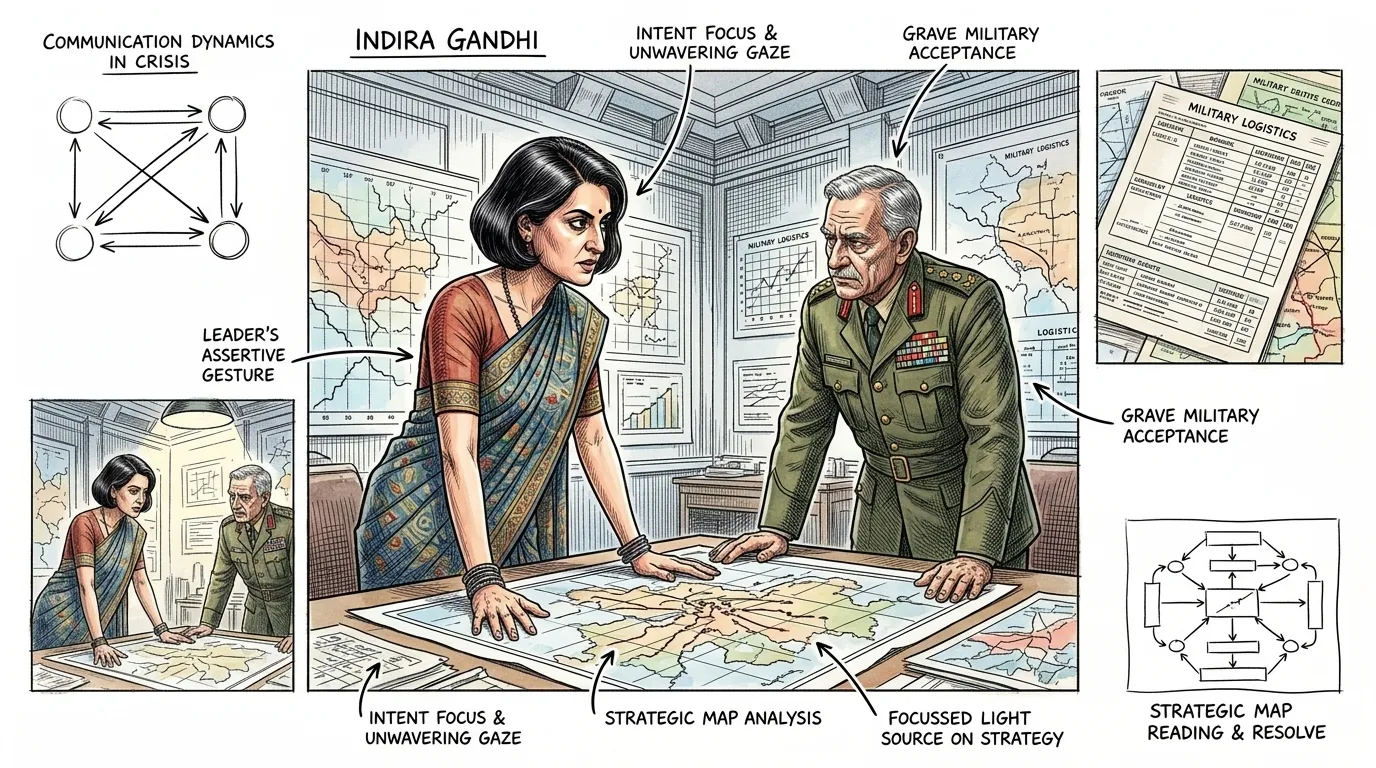
As tensions escalated with Pakistan in 1971 over the crisis in East Pakistan, Indira Gandhi demonstrated unwavering resolve. She convened crucial strategy meetings with her military commanders, meticulously planning India's response. Her leadership during these consultations was instrumental, guiding the military towards a decisive confrontation that would ultimately lead to the liberation of Bangladesh.
"In a tense meeting, she turned to a decorated military general and asserted, 'General, our forces must act with speed and precision. The international community watches, but our conscience compels us to protect those who suffer.' The General, a stern, experienced man, nodded gravely. 'Madam Prime Minister, 'Fortune favors the bold,' as Virgil wrote. Our troops are prepared to be bold.'"
Page 8
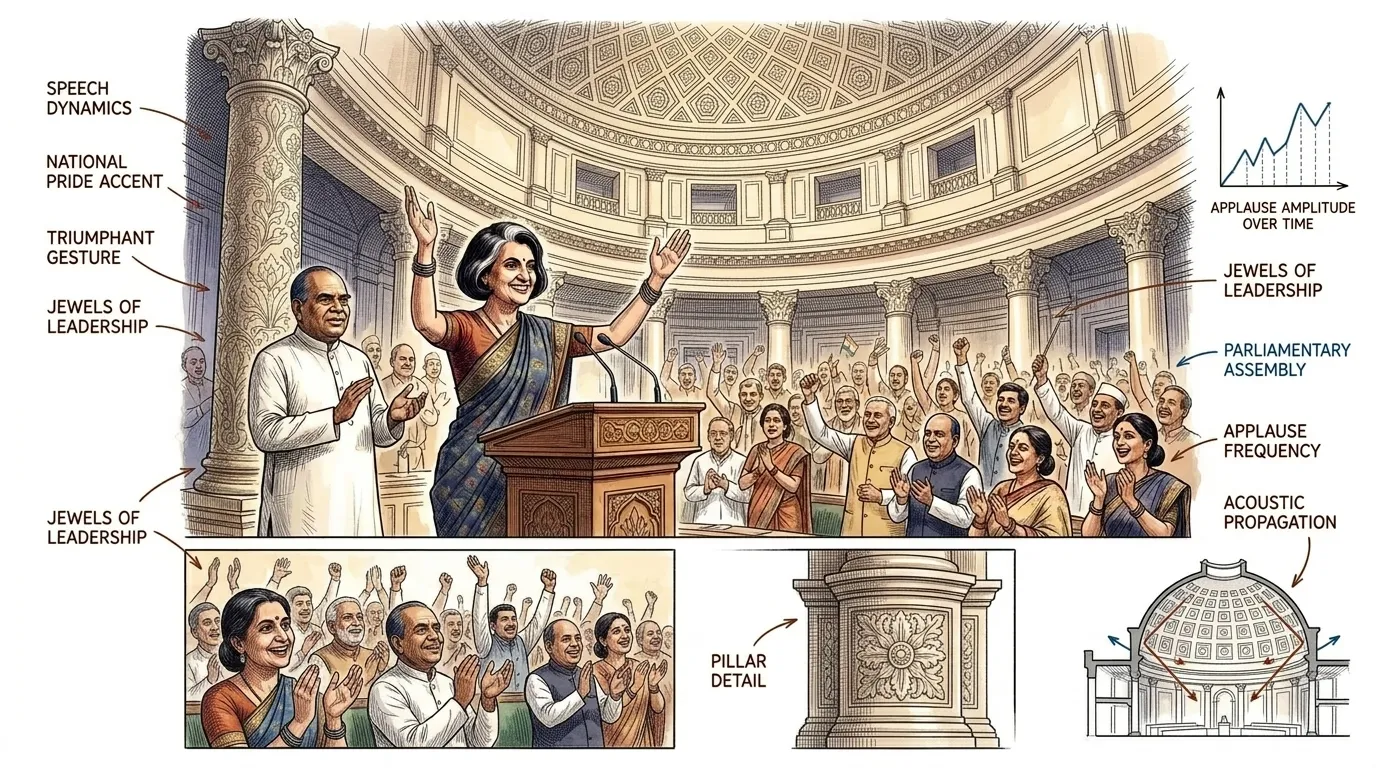
Following the victorious 1971 war, Indira Gandhi's popularity surged to unprecedented heights. She returned to Parliament a national hero, lauded for her strong leadership. This period cemented her image as 'Durga,' a goddess of strength, though the economic and political challenges of post-war India still loomed large. Her authority, however, was unquestioned.
"Addressing the jubilant Parliament, a sea of faces beaming with pride, she declared, 'This victory was not merely of arms, but of the Indian spirit. We stood firm because we understood the fundamental truth my father often repeated, echoing Mahatma Gandhi: 'A nation's strength ultimately resides in its own resolve, not in the fluctuating alliances of others.' India chose its own path to justice.'"
Page 9
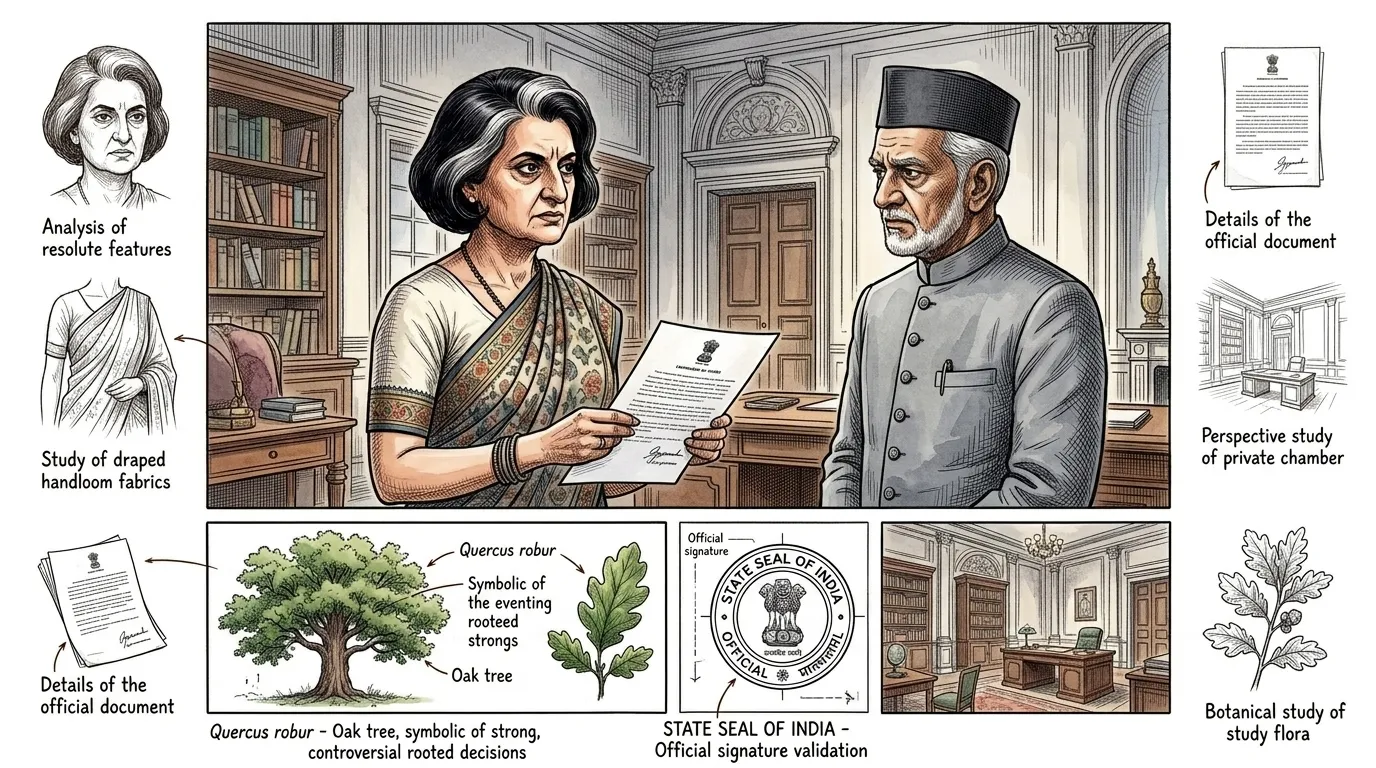
Facing mounting political opposition, social unrest, and a challenging court judgment, Indira Gandhi made a controversial and unilateral decision in June 1975. At her residence, she signed the declaration of a State of Emergency. This act suspended civil liberties, stifled dissent, and dramatically reshaped India's democratic fabric, marking a dark chapter in its political history.
"With a grim resolve, she informed President Fakhruddin Ali Ahmed, a dignified elderly statesman, of her decision. 'The nation faces an internal threat; stability must be restored. As Niccolò Machiavelli observed in 'The Prince,' 'The end justifies the means,' a harsh truth sometimes necessary for a state's survival.' Her voice was firm, leaving no room for argument."
Page 10
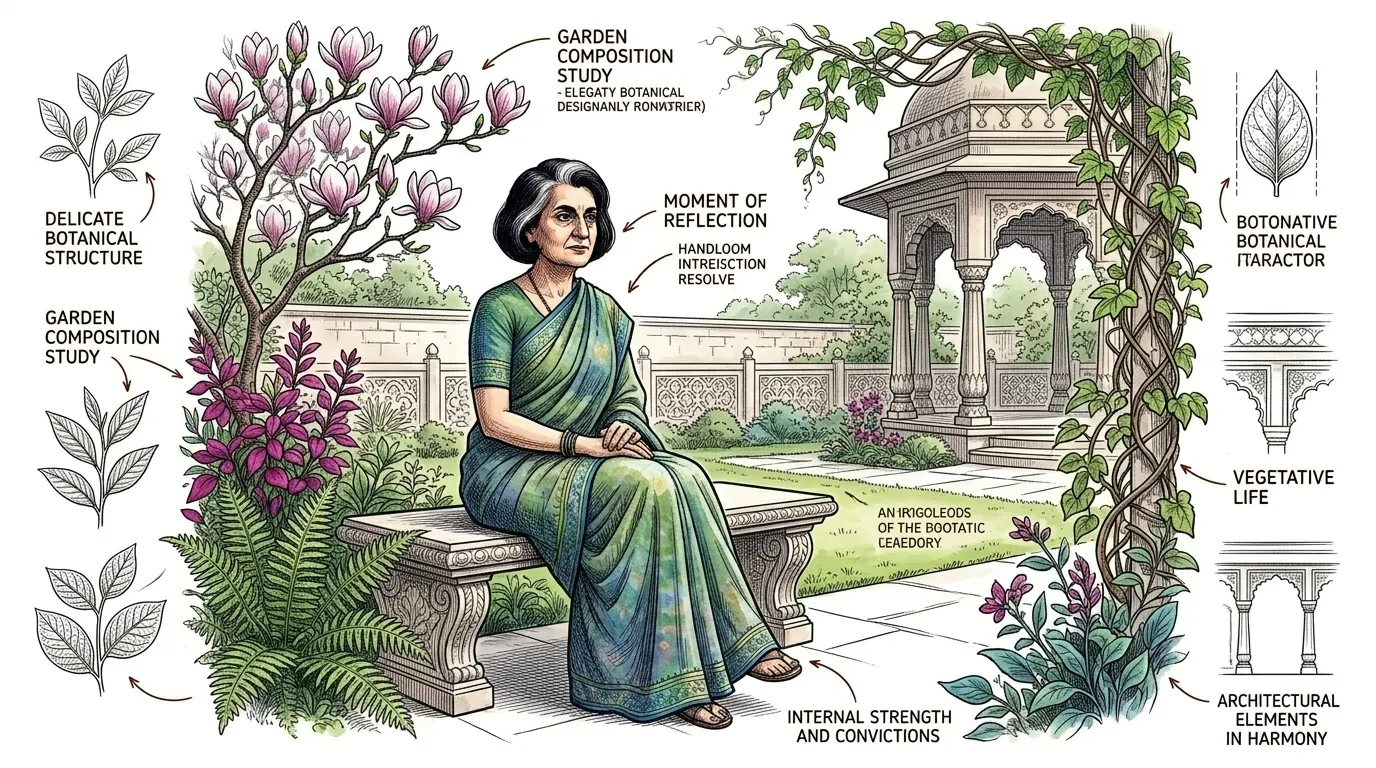
Indira Gandhi's legacy remains profoundly complex. She was a transformative leader who championed self-reliance, led India to military triumph, and initiated significant social programs. Yet, her period in power was also marked by authoritarian tendencies during the Emergency, forever shaping the discourse around democracy and governance in India. Her impact on India's trajectory is undeniable, a powerful figure who steered a young nation through turbulent decades, leaving an indelible mark on its soul.
"Reflecting on her life's tumultuous journey and the criticisms she faced, she once remarked in a rare moment of introspection, 'My detractors always confuse my convictions for inflexibility. But a leader must possess a certain steel. As Rabindranath Tagore, the great poet, wrote, 'The weak can never forgive. Forgiveness is the attribute of the strong.' I strove for strength, not weakness.'"
About this story
- Location: Global
- Audience: general readers
Questions and answers
Read Wonder People on your phone
Wonder People is available on Android. Get Wonder People on Google Play.