Grace Hopper
Grace Hopper — an illustrated biography story, set in Global. 10 illustrated pages, free to read on Wonder People.
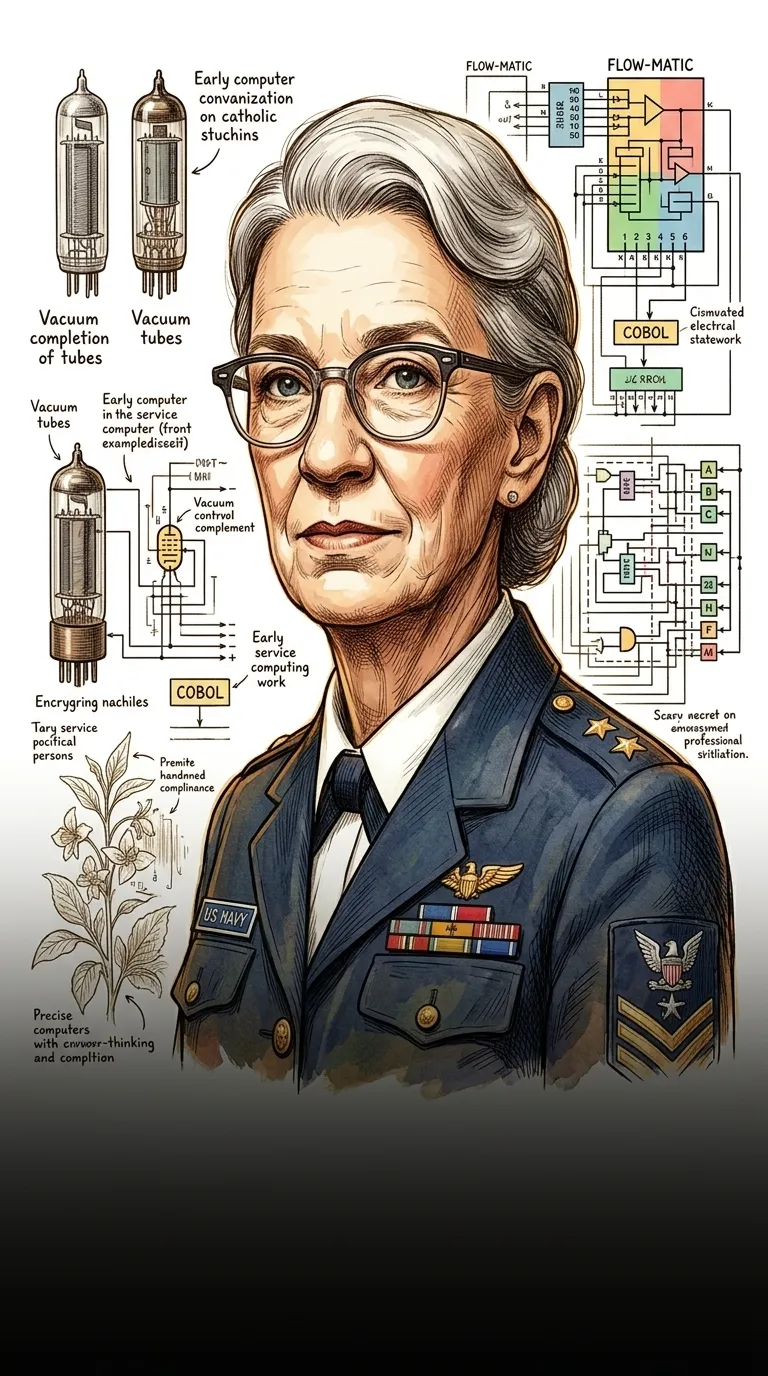
Page 1
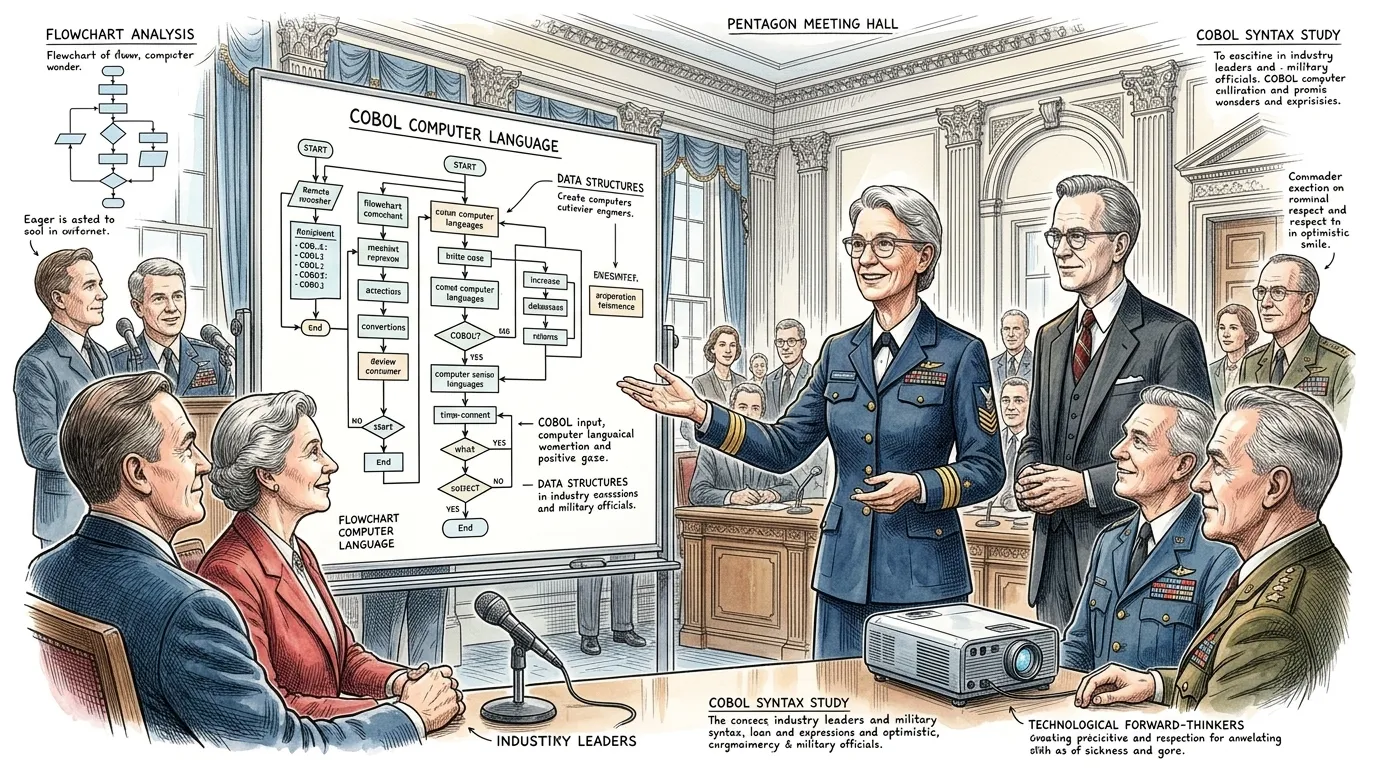
In 1959, at the Pentagon in Washington D.C., a pivotal meeting of industry leaders and military officials converged. Leading the charge, Commander Grace Hopper, alongside her former mentor Howard Aiken who now recognized her vision, presented the specifications for COBOL. This groundbreaking Common Business-Oriented Language would soon process more than 90% of the world's business data, cementing her profound impact on global commerce and information flow. Her work irrevocably shifted the landscape of computing, proving that machines could speak a language accessible to all.
Page 2
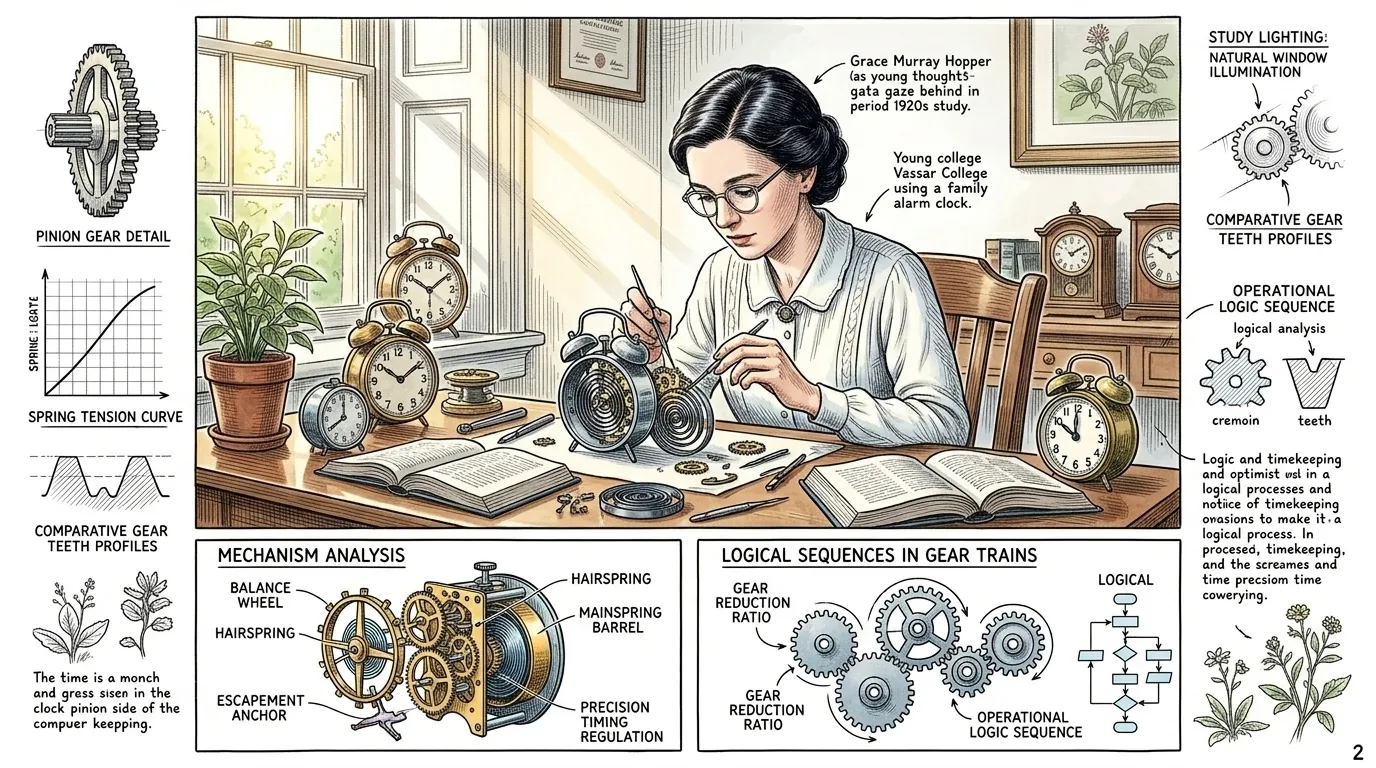
Before the advent of computers, Grace Murray Hopper found her earliest fascination in intricate clockwork. As a young woman at Vassar College in the late 1920s, she approached complex mechanisms not with trepidation, but with an insatiable drive to understand their inner workings. Disassembling and reassembling the family alarm clocks, her meticulous hands probed springs and gears, revealing the logical sequences that drove their operation. This early, hands-on inquiry into mechanical logic foreshadowed her later groundbreaking contributions to computing.
Page 3
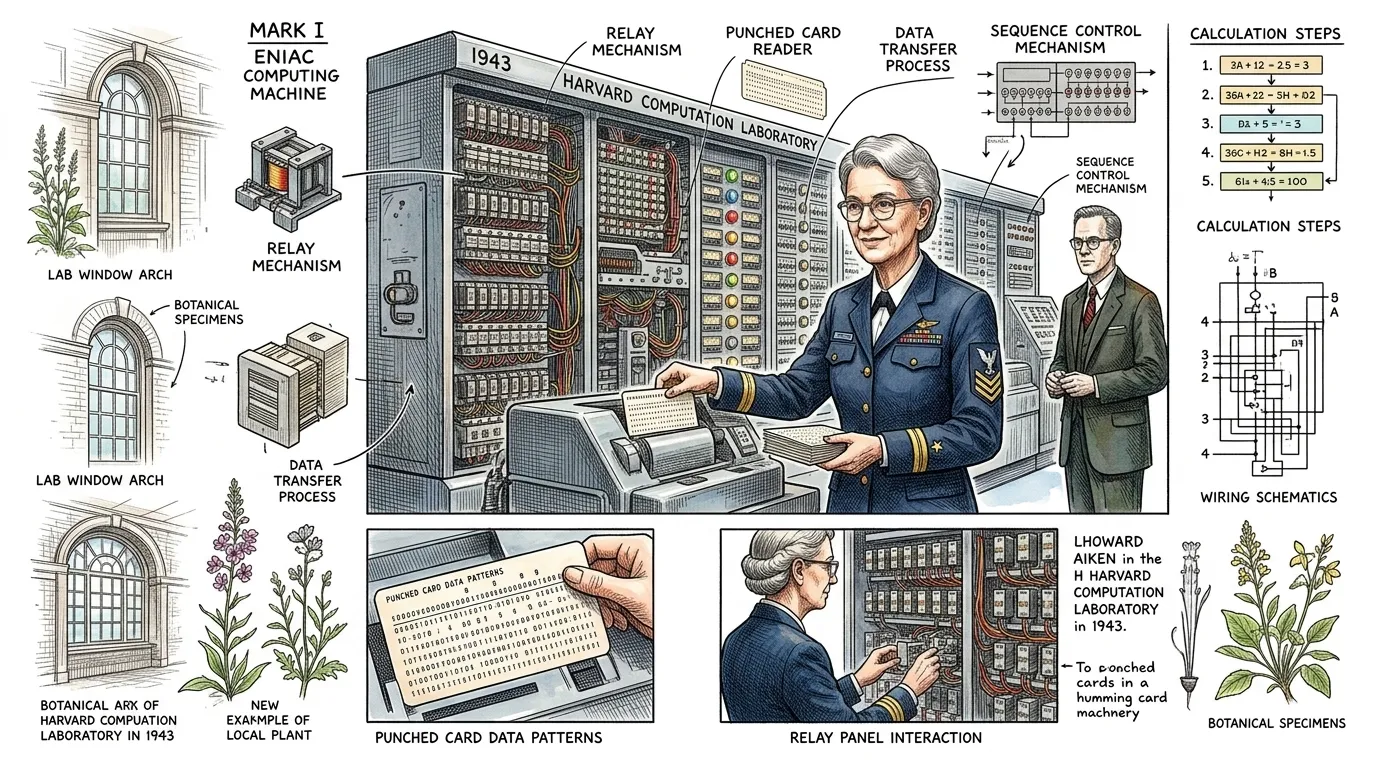
When World War II demanded intellect, Lieutenant Grace Hopper answered the call, joining the WAVES in 1943. She was swiftly assigned to the Harvard Computation Laboratory, where she confronted the gargantuan Mark I, America's first large-scale automatic digital computer. Her task: to program the machine for ballistic calculations, directly contributing to the war effort. This was her crucible, where abstract mathematical principles met the stark reality of immense, humming machinery and the urgent demands of conflict.
Page 4
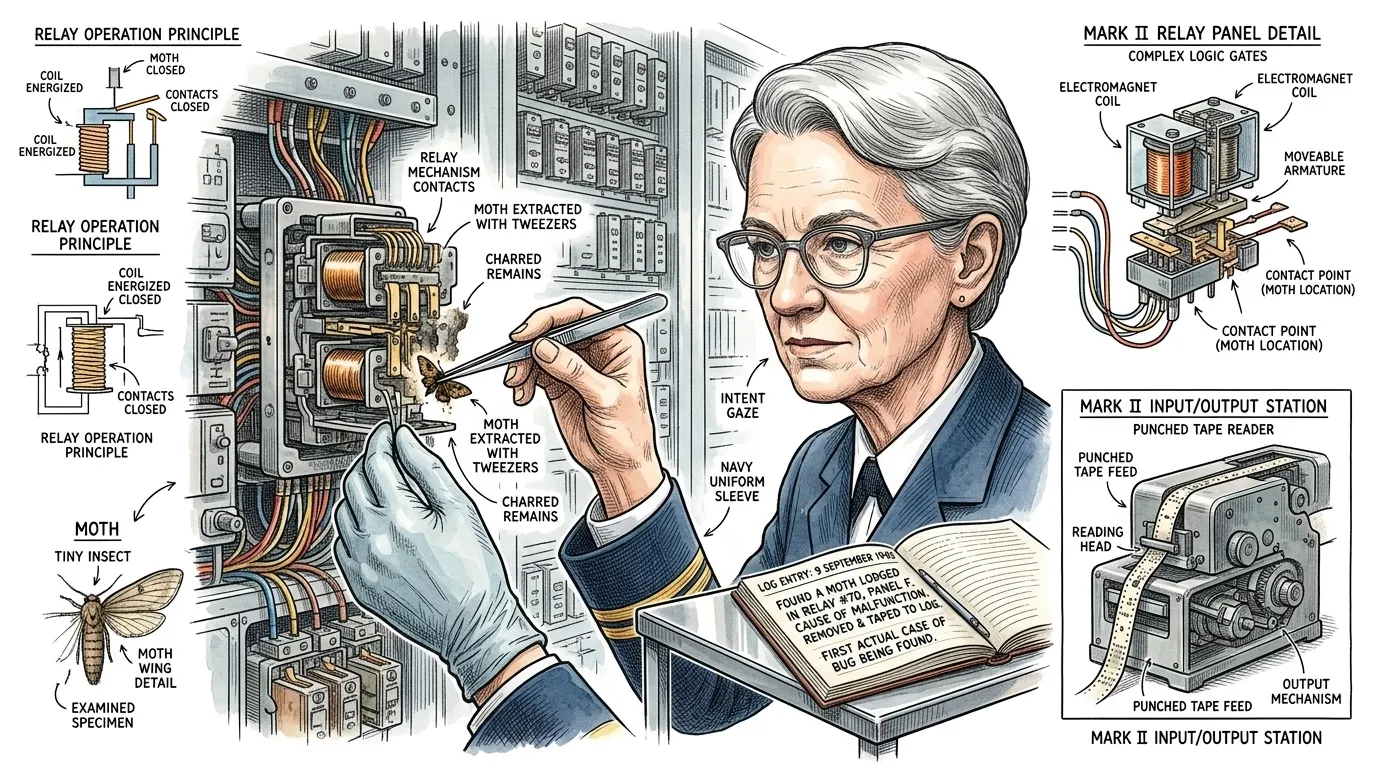
In 1947, a persistent error halted calculations on the Mark II. Grace Hopper, then a research fellow, meticulously investigated the behemoth machine. Her detailed scrutiny led her to a relay where a trapped moth, charred by the heat, was causing the malfunction. She carefully extracted the insect, taping it into her logbook with the now legendary notation: 'First actual case of bug being found.' This hands-on problem-solving not only fixed an immediate issue but coined a term that would define an entire industry's quest for perfection.
Page 5
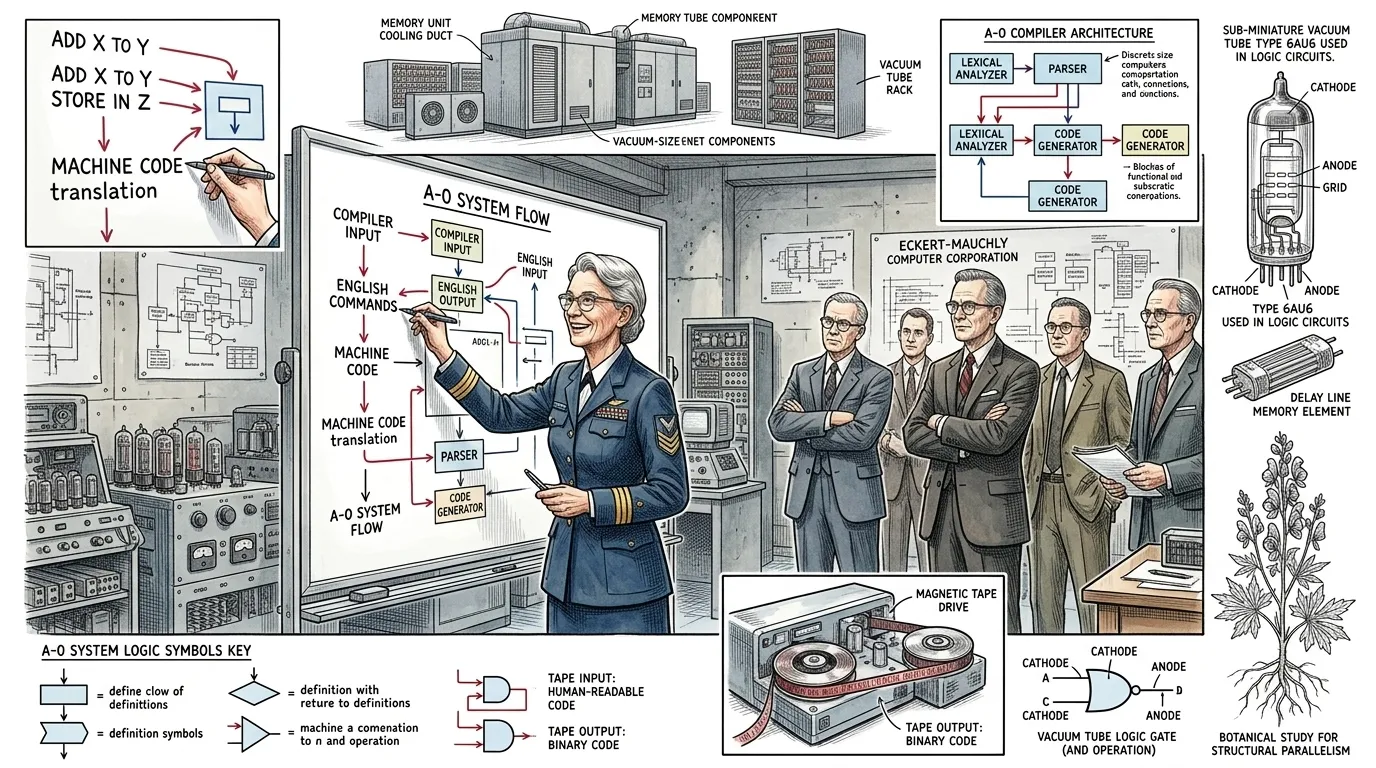
After the war, at the Eckert-Mauchly Computer Corporation, Grace Hopper envisioned a radical concept: a program that could translate human-readable instructions into machine code. Her colleagues were skeptical; they saw no need for such an intermediary. But Hopper pressed on, developing the A-0 System, the world's first compiler. This innovation eliminated the arduous, error-prone process of writing code in raw machine language, opening the door for broader accessibility and laying the groundwork for all future programming languages.
Page 6
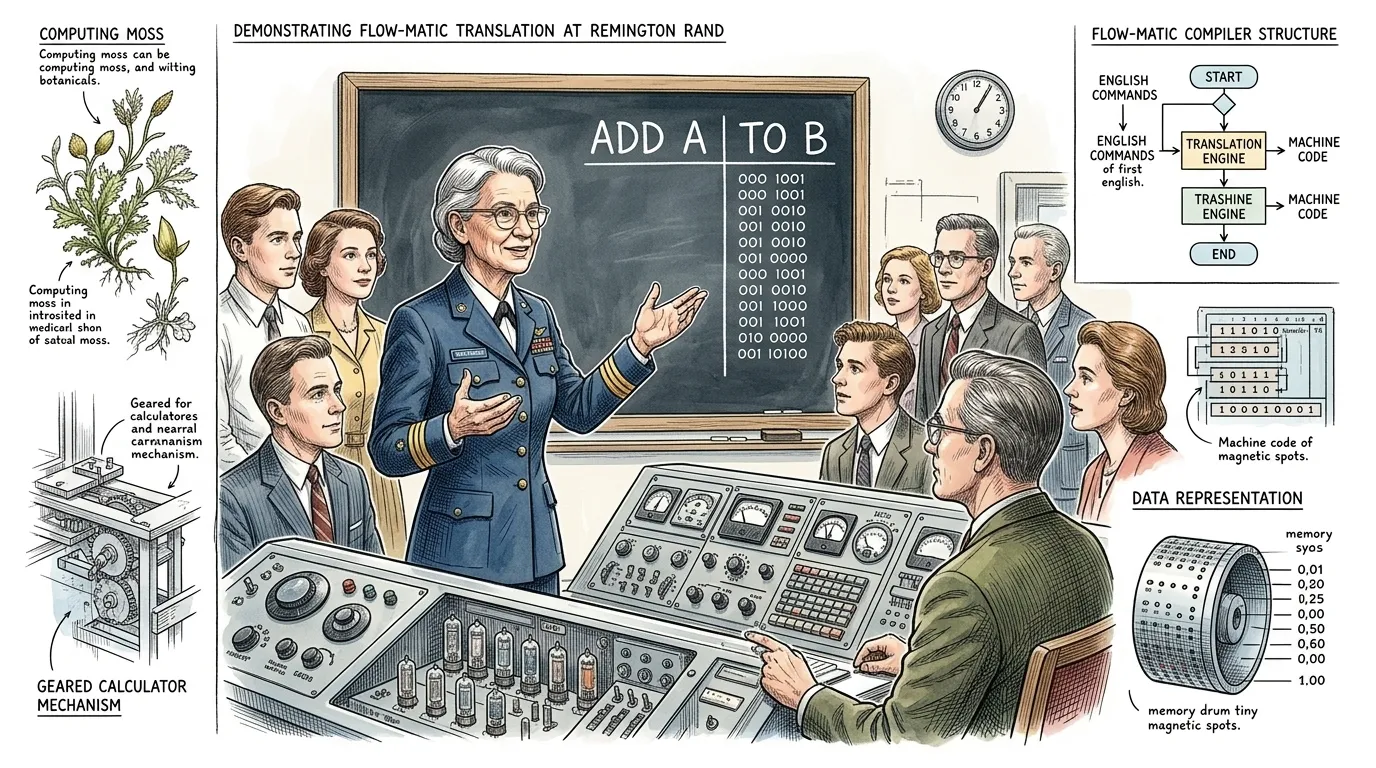
Hopper's vision culminated in FLOW-MATIC, the first English-language data processing compiler, developed at Remington Rand in 1957. She meticulously guided her team, demonstrating how commands like 'ADD A TO B' could be translated into machine instructions. This seemingly simple innovation was revolutionary, allowing ordinary business professionals to program computers without specialized machine language expertise. It was a direct precursor to the widely adopted COBOL, proving that computers could finally understand instructions in a language closer to human thought.
Page 7
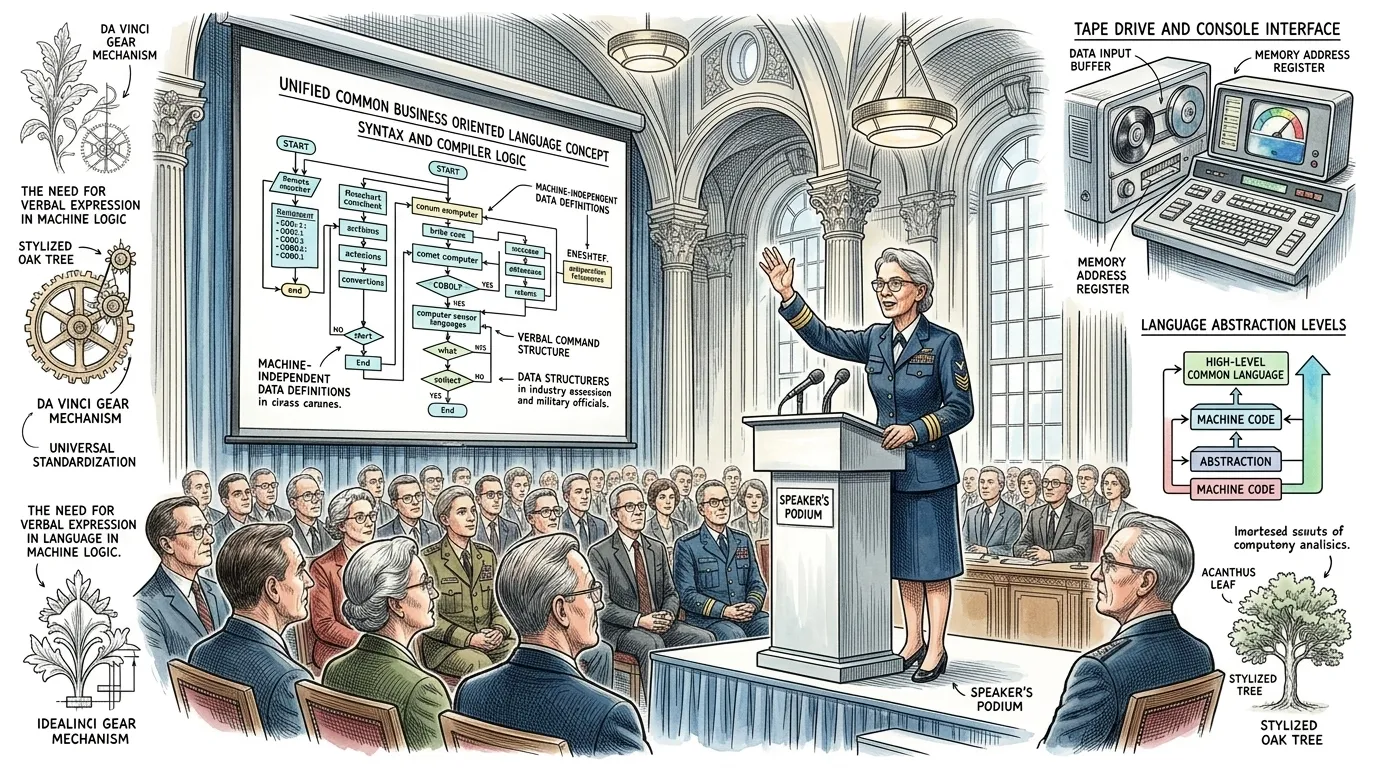
With FLOW-MATIC's success, Grace Hopper campaigned fiercely for a universal, standardized programming language for business. She tirelessly argued that proprietary, machine-specific languages were inefficient and hindered progress. Her advocacy led to a landmark conference in 1959, where she passionately presented the economic and practical necessity of a common language. This moment of forceful persuasion ultimately laid the direct foundation for the creation and widespread adoption of COBOL, uniting disparate factions behind a shared computing future.
Page 8
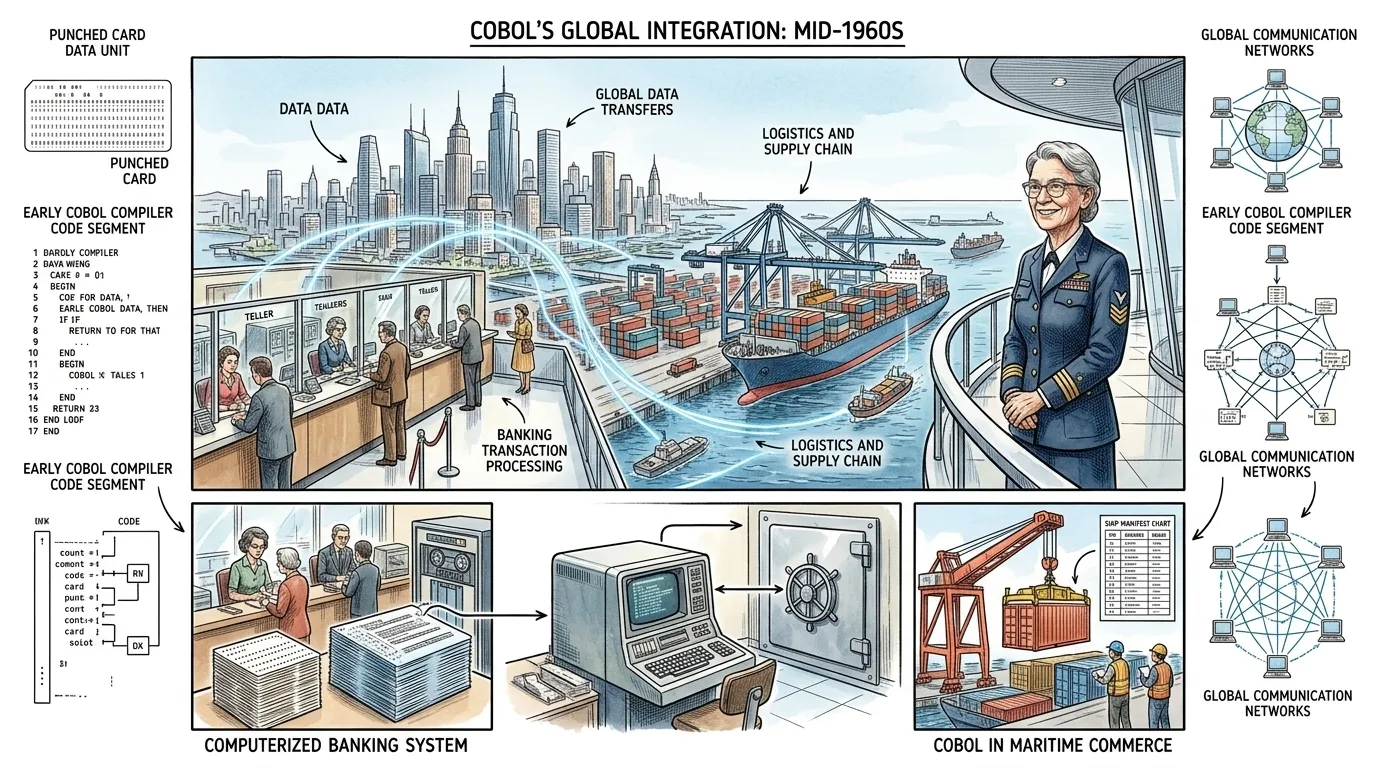
By the mid-1960s, COBOL had become the undisputed global standard for business, government, and military computing. Grace Hopper's vision had materialized into a foundational pillar of the digital age. From banking systems managing vast financial transactions to logistics operations coordinating global supply chains, COBOL streamlined processes and enhanced efficiency worldwide. Her compiler not only simplified programming but facilitated an unseen revolution, enabling the complex automated systems that now underpin modern society.
Page 9
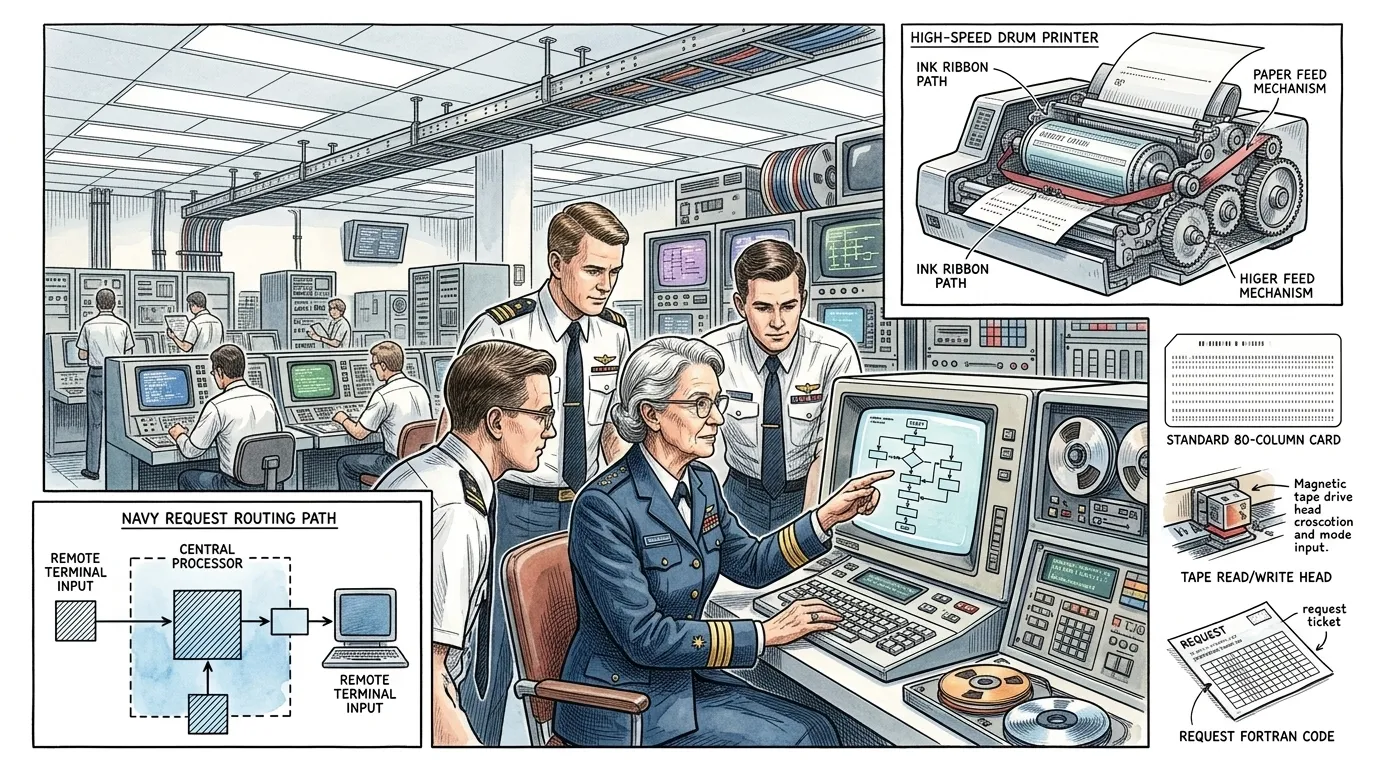
Grace Hopper formally retired from the Navy in 1966, but her expertise remained indispensable. Within a year, she was recalled to active duty to help standardize high-level languages across the Navy, a task she pursued for two decades. Her subsequent 'retirements' were repeatedly followed by re-activations, illustrating her irreplaceable value in an era of rapid technological advancement. Even into her late 70s, she continued to serve, shaping the future of computing with unyielding dedication and foresight.
Page 10
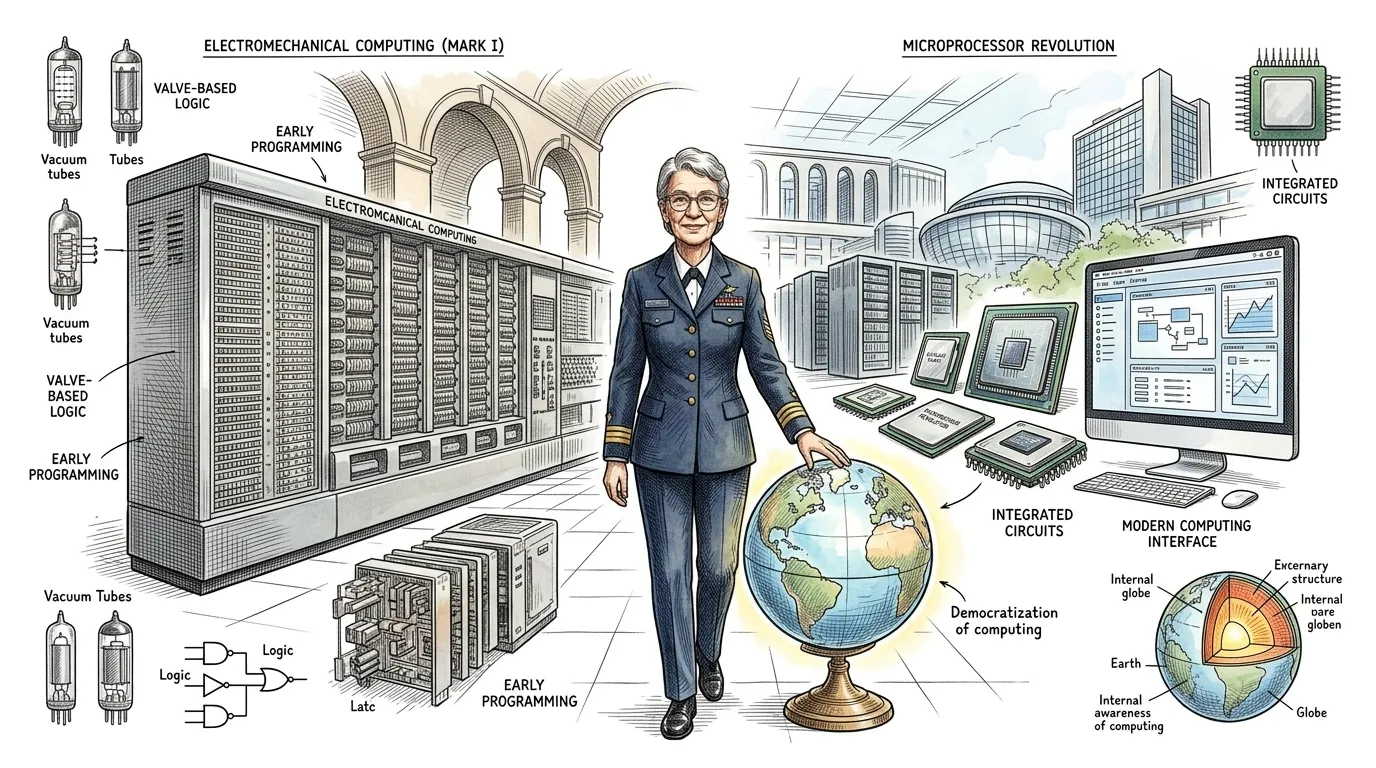
Grace Hopper's career spanned a technological epoch, from the earliest electromechanical computers to the proliferation of microprocessors. She didn't just adapt to change; she instigated it, championing innovation against entrenched resistance. Her steadfast belief in user-friendly programming languages made computing accessible to millions, democratizing a field once reserved for specialists. Her relentless pursuit of efficiency and standardization left an indelible mark, making her a towering figure whose principles continue to guide the digital world.
About this story
- Location: Global
- Audience: general readers
Questions and answers
Read Wonder People on your phone
Wonder People is available on Android. Get Wonder People on Google Play.