Lech Walesa
Lech Walesa — an illustrated biography story, set in Global. 10 illustrated pages, free to read on Wonder People.
Page 1

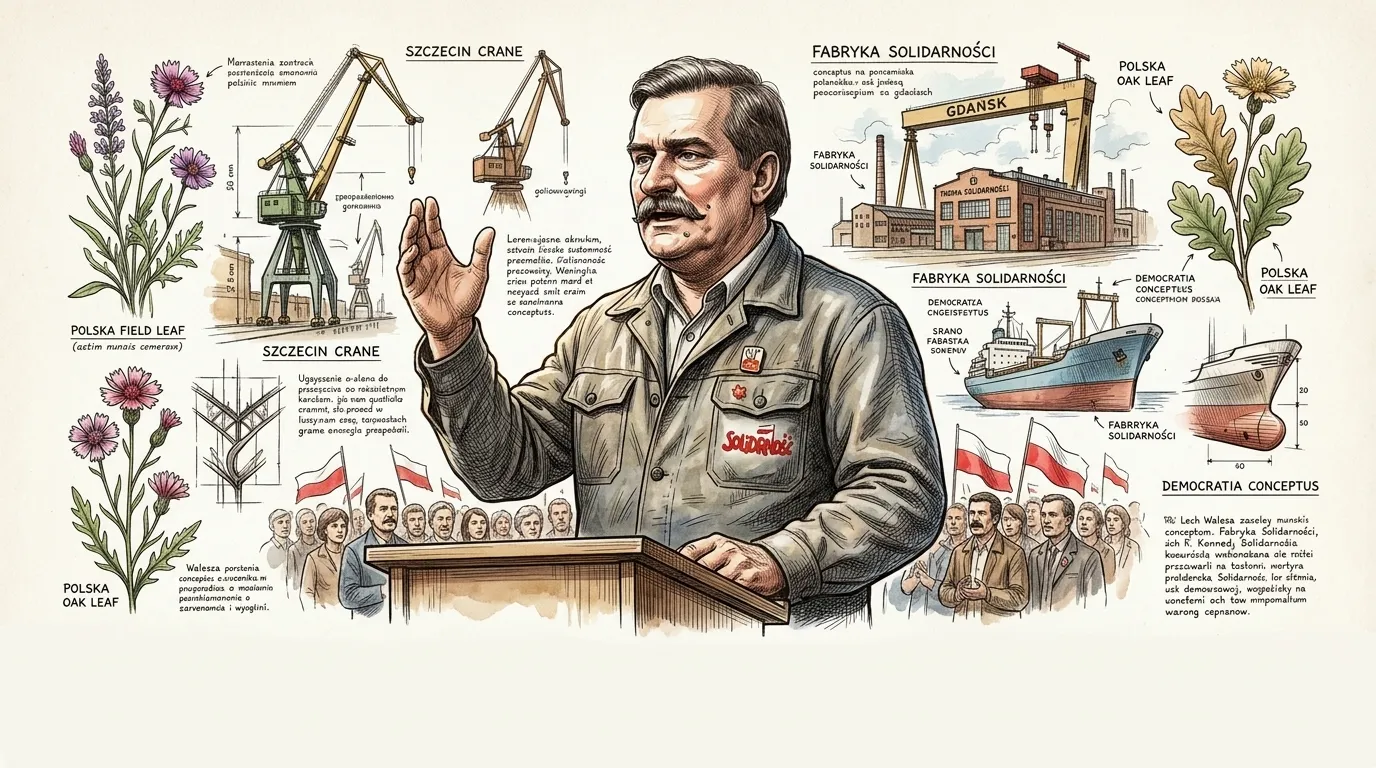
At the Gdańsk Shipyard in August 1980, a momentous roar erupted as Lech Walesa, a determined electrician, climbed atop the shipyard gate. Below him, tens of thousands of striking workers, spurred by figures like Anna Walentynowicz and Bogdan Borusewicz, gazed up with fervent hope.
"'We stand together, united!' Lech Walesa declared, his voice cutting through the clamor. 'As the great Edmund Burke once said, 'The only thing necessary for the triumph of evil is for good men to do nothing.' We are those good men, and we will do something for our freedom!'"
Biographical Fact: Gdańsk, Poland, August 1980. Over 17,000 workers joined the strike, eventually spreading to over 700 enterprises.
Page 2

Before the towering gates of Gdańsk, Lech Walesa's life began humbly in Popowo, where the foundations of his tenacious spirit were forged. He was an electrician, a man of wires and currents, but his true current ran through the spirit of his fellow workers.
"'I remember thinking about the words of Jean-Jacques Rousseau,' Lech Walesa reflected while examining a complex wiring diagram. 'He wrote, 'Man is born free, and everywhere he is in chains.' I saw those chains in our daily struggles, in the system that stifled our voices.'"
Biographical Fact: Lech Walesa, born 1943, began working at the Gdańsk Shipyard in 1967 as an electrician, witnessing firsthand the hardships of the working class.
Page 3
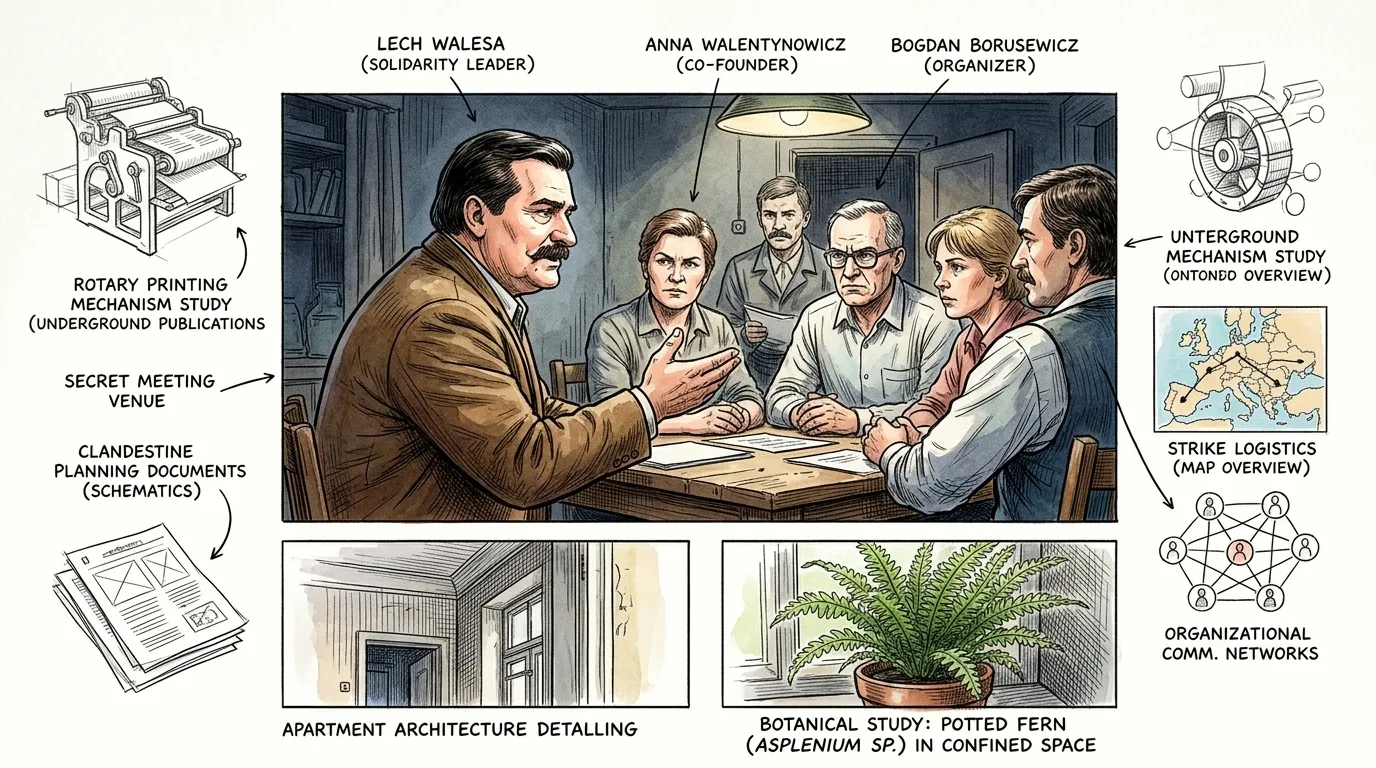
The year 1970 saw massive protests against rising food prices, tragically suppressed, but for Lech Walesa, it became a crucible. He actively participated in the strikes, a defiant spark in the face of brutal state power, igniting a resolve that would not be extinguished.
"'After those terrible events, I knew we needed more than just anger,' Lech Walesa explained to a small group of colleagues in a dimly lit apartment. 'As Frederick Douglass taught, 'Power concedes nothing without a demand. It never did and it never will.' We had to organize, to demand with a united voice.'"
Biographical Fact: December 1970, Polish protests against price increases led to clashes with authorities, resulting in dozens of deaths and thousands injured.
Page 4

By 1978, dismissed from the shipyard for his activism, Lech Walesa intensified his underground work. He co-founded the Free Trade Unions of the Coast, a network of defiance against the state-controlled labor system, building connections across a fractured society.
"'We are forging something new, something unbreakable,' Lech Walesa stated, his voice a low rumble over the static of a hidden radio. 'Like Seneca the Younger said, 'Every new beginning comes from some other beginning's end.' This is the end of their control and the start of our true union.'"
Biographical Fact: The Free Trade Unions of the Coast (WZZ) began publishing illegal newspapers and organizing workers, a critical precursor to Solidarity.
Page 5
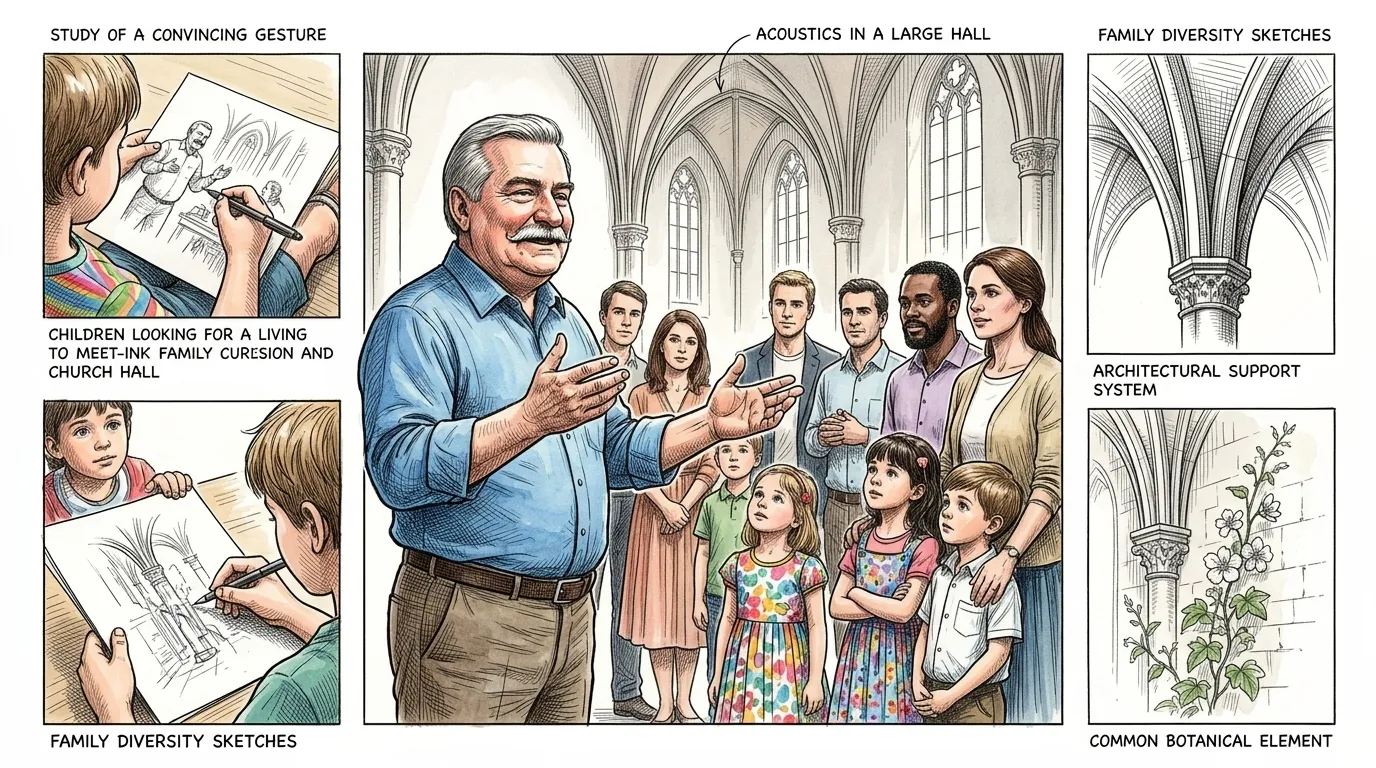
Lech Walesa's organizing reached beyond secret meetings, reaching ordinary citizens hungry for change. His vision of independent trade unions resonated, spreading like wildfire from Gdańsk's industrial heart to towns and cities across Poland, a silent revolution taking root.
"'We must hold onto the truth, even when it is dangerous,' Lech Walesa urged a gathering of families in a quiet church hall. 'As Martin Luther King Jr. taught, 'The arc of the moral universe is long, but it bends toward justice.' Our actions today bend that arc.'"
Biographical Fact: Before 1980, the Catholic Church often served as a safe haven for opposition activities in communist Poland, enabling gatherings like this.
Page 6
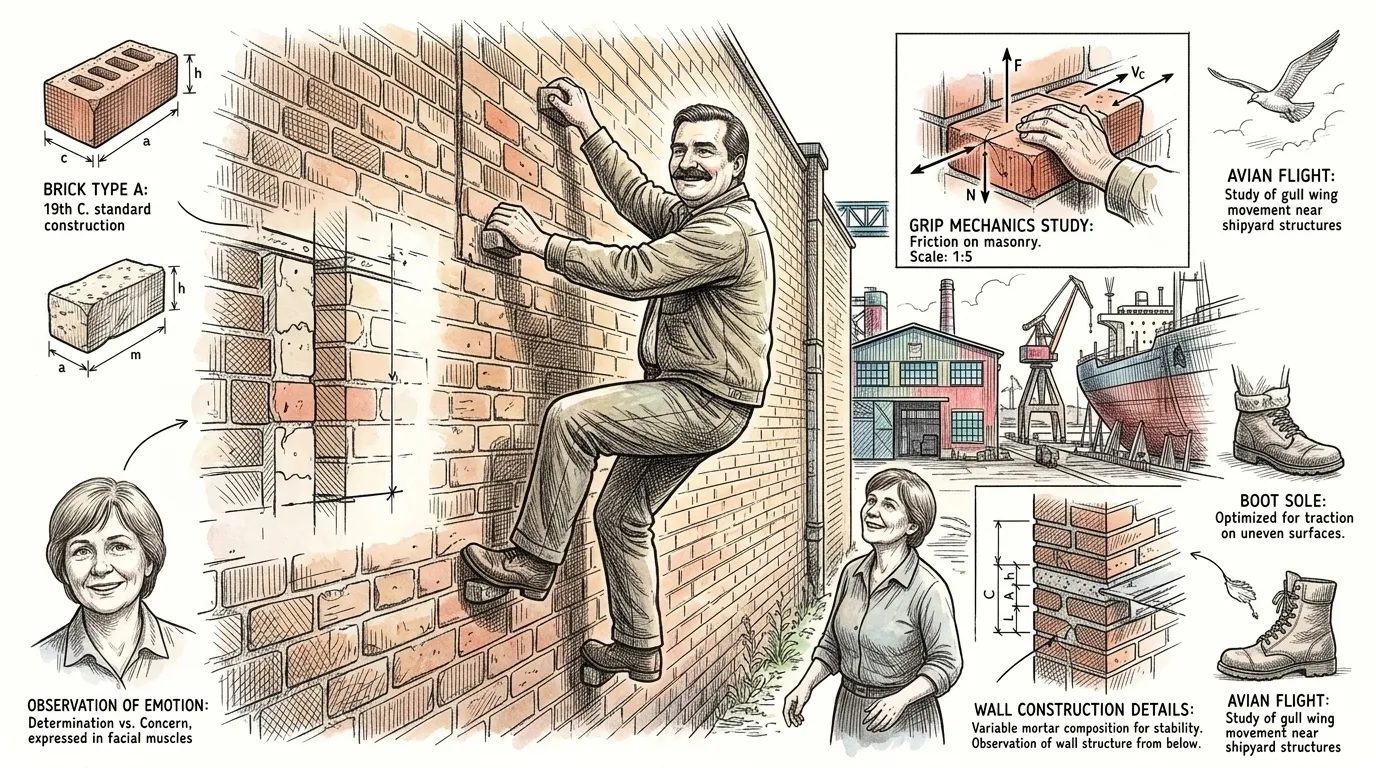
In August 1980, economic desperation and the dismissal of activist Anna Walentynowicz lit the fuse. The Gdańsk Shipyard exploded in strikes. Lech Walesa, initially held outside the gates, knew his place was inside, leading the people he had spent years uniting.
"'This is our moment, our 'Crossing the Rubicon',' Lech Walesa declared to his family before scaling the shipyard wall. 'I am reminded of Julius Caesar's determination — there is no turning back now. We must seize this opportunity for our nation.'"
Biographical Fact: On August 14, 1980, Lech Walesa climbed the Gdańsk Shipyard wall to join the striking workers, becoming their immediate leader.
Page 7
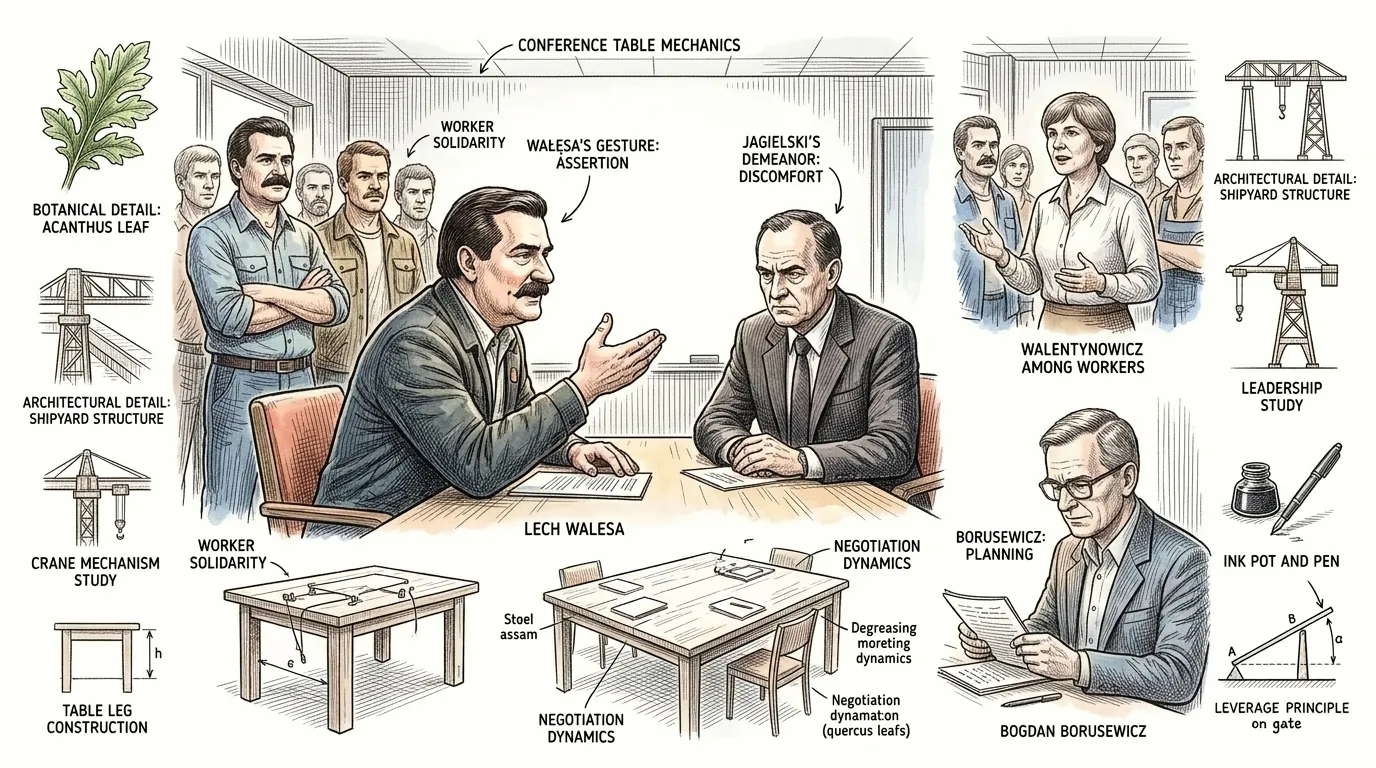
Inside the shipyard, weeks of intense, unwavering negotiations unfolded between the striking workers, led by Lech Walesa, and the communist government, represented by Deputy Prime Minister Mieczysław Jagielski. The fate of a nation hung in the balance, fueled by the workers' resolve.
"'We stand for the rights of all working people,' Lech Walesa asserted, facing Jagielski across a tense conference table. 'As John F. Kennedy once said, 'Those who make peaceful revolution impossible will make violent revolution inevitable.' We seek peaceful change, but it demands recognition of our independent unions.'"
Biographical Fact: On August 31, 1980, the Gdańsk Agreement was signed, recognizing independent trade unions and granting other worker rights.
Page 8

Barely a year after the triumph, the communist regime, under General Wojciech Jaruzelski, declared martial law in December 1981. Lech Walesa and thousands of Solidarity activists were swiftly arrested and interned, plunging Poland into a brutal winter of repression.
"'They believe they can break our spirit with prisons,' Lech Walesa murmured to himself in his isolated cell, remembering the pamphlet he'd carried. 'But the Universal Declaration of Human Rights reminds us that fundamental freedoms cannot be extinguished by decrees. Our idea of freedom and association lives on in every heart, even here.'"
Biographical Fact: Martial law was imposed on December 13, 1981, suspending Solidarity and leading to the arrest of its leaders, including Walesa.
Page 9

Even in confinement, the world recognized Lech Walesa's unwavering commitment to peaceful change. In 1983, he was awarded the Nobel Peace Prize, a powerful international affirmation that shamed the regime and emboldened the Polish people. His wife, Danuta Walesa, accepted it on his behalf, a brave gesture of defiance.
"'This prize is for all of Poland, for all who seek freedom,' Danuta Walesa stated, accepting the Nobel medal in Oslo. 'As Albert Schweitzer beautifully put it, 'The tragedy of life is what dies inside a man while he lives.' Lech and our people refuse to let that inner spirit of freedom die.'"
Biographical Fact: Lech Walesa was awarded the Nobel Peace Prize in 1983. Fearing the regime would not let him return, he sent his wife, Danuta, to accept it.
Page 10

Lech Walesa's perseverance ultimately shattered the communist monolith. He negotiated the historic Round Table Talks in 1989, leading to semi-free elections, then truly free elections. Poland, the first domino, finally emerged from behind the Iron Curtain, choosing him as its first democratically elected president.
"'The future is built on the choices we make today,' Lech Walesa declared to a jubilant crowd gathered outside the presidential palace, a broad smile on his mustached face. 'As the ancient Chinese philosopher Confucius taught, 'The will to win, the desire to succeed, the urge to reach your full potential... these are the keys that will unlock the door to personal excellence.' We unlocked that door for Poland.'"
Biographical Fact: The Round Table Talks (1989) led to Poland's first semi-free elections, and in December 1990, Lech Walesa became the first democratically elected President of Poland.
About this story
- Location: Global
- Audience: general readers