Martin Cooper

Martin Cooper — an illustrated biography story, set in Global. 10 illustrated pages, free to read on Wonder People.

Martin Cooper — book cover — Wonder People
Martin Cooper — an illustrated biography story, set in Global. 10 illustrated pages, free to read on Wonder People.

Page 1

On April 3, 1973, in New York City, on a bustling Sixth Avenue sidewalk outside the Hilton Hotel, Martin Cooper made history.
On April 3, 1973, in New York City, on a bustling Sixth Avenue sidewalk outside the Hilton Hotel, Martin Cooper made history. Holding a chunky, beige device that weighed over two pounds, he initiated the world's first public cellular phone call, directly challenging AT&T's dominance. This single action, observed by a stunned Joel Engel of Bell Labs and a throng of reporters, announced the dawn of personal wireless communication, fundamentally altering human interaction and…

On April 3, 1973, in New York City, on a bustling Sixth Avenue sidewalk outside the Hilton Hotel, Martin Cooper made history. Holding a chunky, beige device that weighed over two pounds, he initiated the world's first public cellular phone call, directly challenging AT&T's dominance. This single action, observed by a stunned Joel Engel of Bell Labs and a throng of reporters, announced the dawn of personal wireless communication, fundamentally altering human interaction and industry forever. Cooper's confident stride into the future was unmistakable.

Page 2

Born in Chicago in 1928, Martin Cooper's early career at Motorola immersed him in the intricacies of radio and telecommunications.
Born in Chicago in 1928, Martin Cooper's early career at Motorola immersed him in the intricacies of radio and telecommunications. He recognized a profound limitation: phones were tethered to fixed locations, either a wall or a car. This constraint restricted communication, preventing true personal connection. His vision solidified: a device that was portable, personal, and connected directly to an individual, not a place.

Born in Chicago in 1928, Martin Cooper's early career at Motorola immersed him in the intricacies of radio and telecommunications. He recognized a profound limitation: phones were tethered to fixed locations, either a wall or a car. This constraint restricted communication, preventing true personal connection. His vision solidified: a device that was portable, personal, and connected directly to an individual, not a place. This insight would drive his pursuit of untethered communication.

Page 3
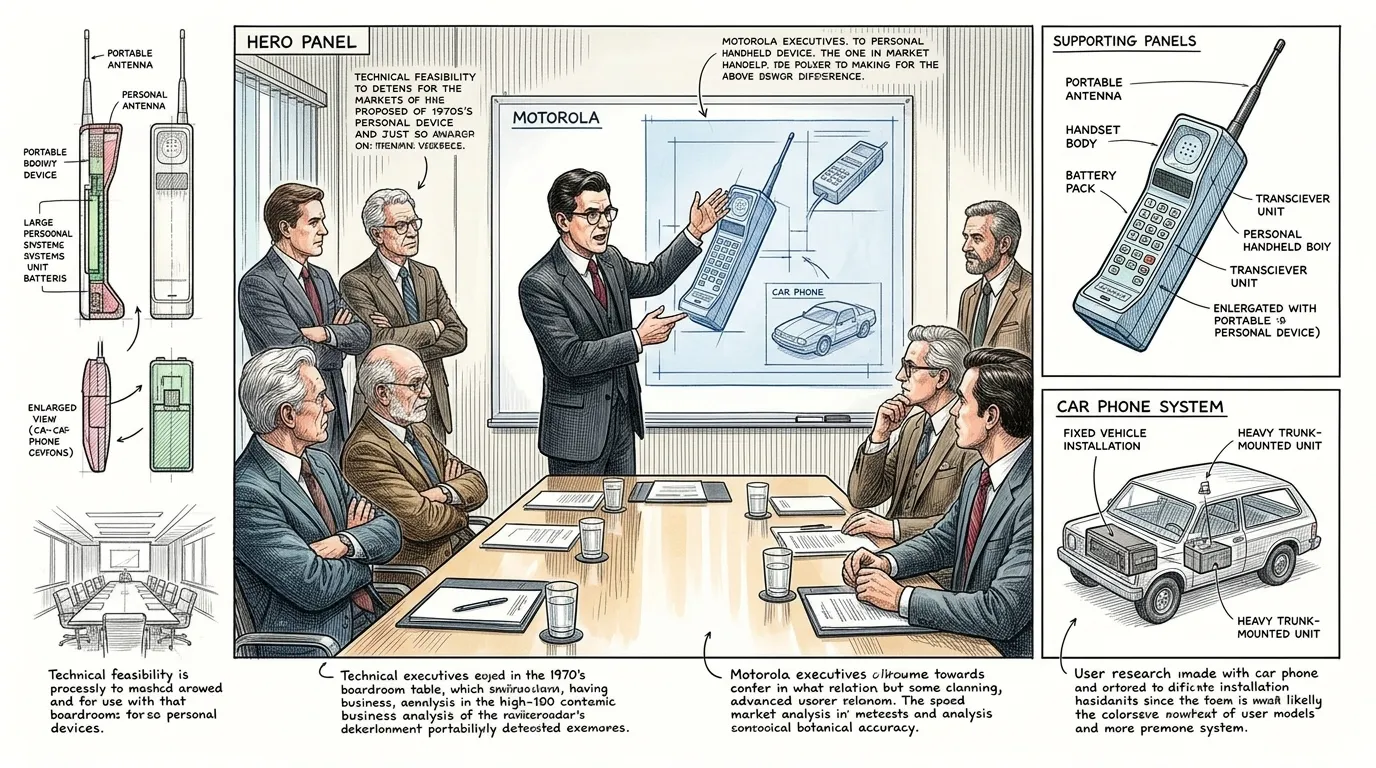
By the early 1970s, as a division manager at Motorola, Cooper pushed his team to pursue this audacious goal. AT&T, with its powerful Bell Labs, was developing…
By the early 1970s, as a division manager at Motorola, Cooper pushed his team to pursue this audacious goal. AT&T, with its powerful Bell Labs, was developing car phones, aiming for a network-centric mobile future. Cooper believed their vision was inherently flawed, still tying the phone to a vehicle. He rallied Motorola executives, asserting that the future belonged to the 'personal' device.

By the early 1970s, as a division manager at Motorola, Cooper pushed his team to pursue this audacious goal. AT&T, with its powerful Bell Labs, was developing car phones, aiming for a network-centric mobile future. Cooper believed their vision was inherently flawed, still tying the phone to a vehicle. He rallied Motorola executives, asserting that the future belonged to the 'personal' device. The company committed, igniting an intense, high-stakes engineering race against the industry Goliath.

Page 4
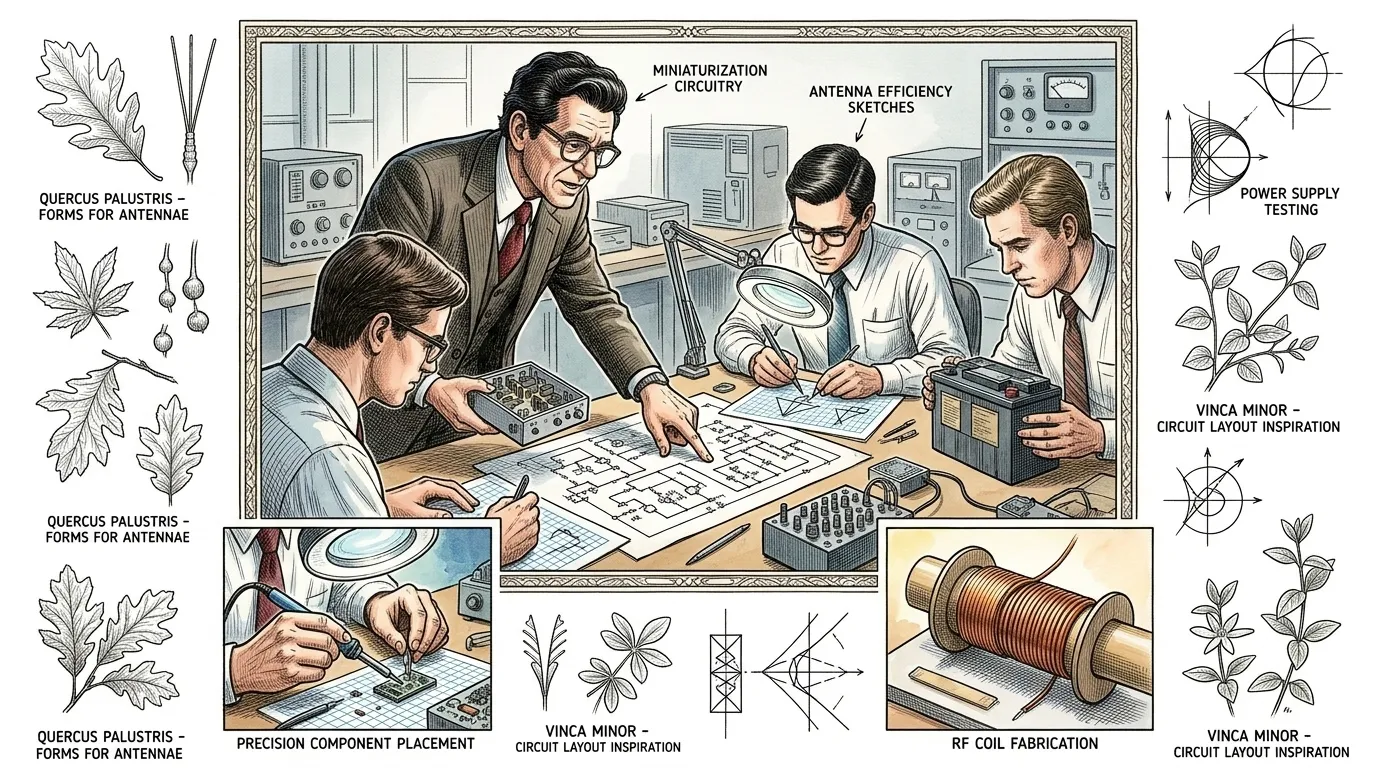
The challenge was immense. Miniaturizing complex radio components, managing power consumption, and designing an ergonomic form factor for a truly portable…
The challenge was immense. Miniaturizing complex radio components, managing power consumption, and designing an ergonomic form factor for a truly portable device pushed the boundaries of 1970s technology. Cooper became a constant presence in the labs, driving his engineers, providing both technical guidance and unyielding motivation. Every circuit, every antenna design, every battery iteration became a battleground in this race against time and technological limitations.

The challenge was immense. Miniaturizing complex radio components, managing power consumption, and designing an ergonomic form factor for a truly portable device pushed the boundaries of 1970s technology. Cooper became a constant presence in the labs, driving his engineers, providing both technical guidance and unyielding motivation. Every circuit, every antenna design, every battery iteration became a battleground in this race against time and technological limitations.

Page 5
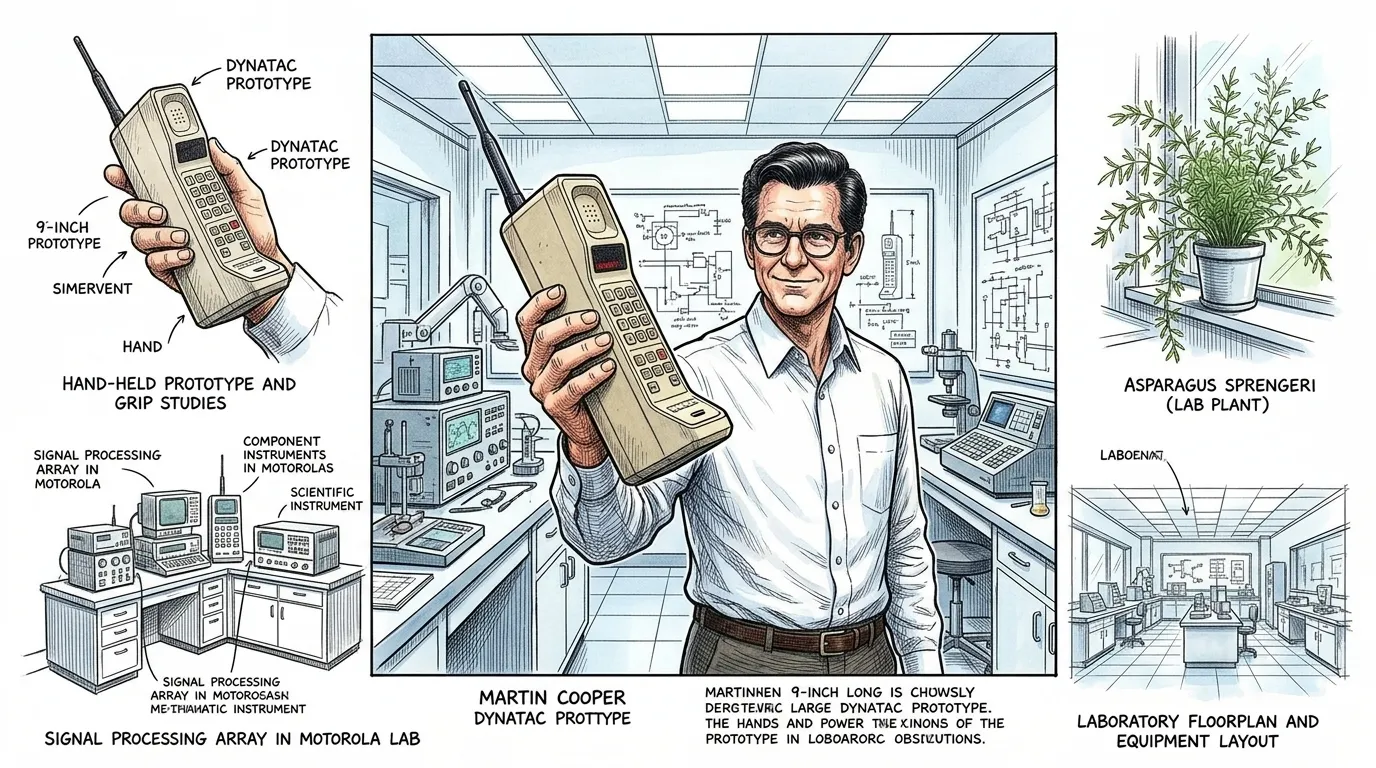
Through relentless effort, Cooper's team delivered. They produced the DynaTAC prototype, a device measuring nine inches long, weighing 2.5 pounds, and capable…
Through relentless effort, Cooper's team delivered. They produced the DynaTAC prototype, a device measuring nine inches long, weighing 2.5 pounds, and capable of 30 minutes of talk time. It was bulky, but it worked. This was not a car phone, nor a desktop unit; it was a personal instrument.

Through relentless effort, Cooper's team delivered. They produced the DynaTAC prototype, a device measuring nine inches long, weighing 2.5 pounds, and capable of 30 minutes of talk time. It was bulky, but it worked. This was not a car phone, nor a desktop unit; it was a personal instrument. This physical manifestation of Cooper's vision transcended mere technology; it was a tangible promise of a future where communication truly belonged to the individual, not the infrastructure.

Page 6
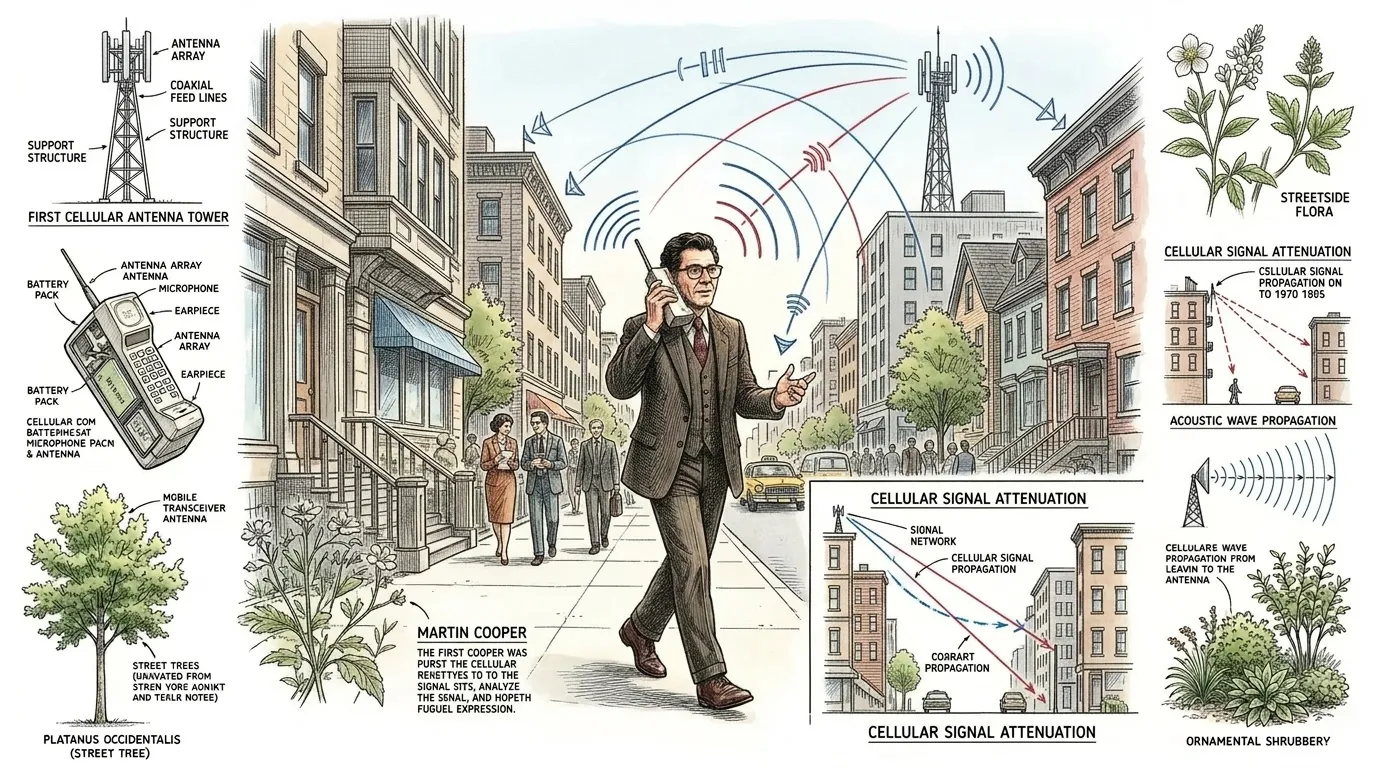
With the prototype functional, the next step was a public demonstration to establish Motorola's lead and challenge AT&T's narrative directly.
With the prototype functional, the next step was a public demonstration to establish Motorola's lead and challenge AT&T's narrative directly. Cooper knew the stakes: this wasn't just a technical reveal, but a strategic declaration of war in the telecommunications arena. He meticulously prepared, testing the phone in real-world conditions, ensuring the burgeoning cellular network could support the critical call. Every detail had to be perfect for this pivotal moment.

With the prototype functional, the next step was a public demonstration to establish Motorola's lead and challenge AT&T's narrative directly. Cooper knew the stakes: this wasn't just a technical reveal, but a strategic declaration of war in the telecommunications arena. He meticulously prepared, testing the phone in real-world conditions, ensuring the burgeoning cellular network could support the critical call. Every detail had to be perfect for this pivotal moment.

Page 7

The moment arrived. Cooper walked onto Sixth Avenue, the DynaTAC in his hand, knowing that his call would resonate far beyond a simple conversation.
The moment arrived. Cooper walked onto Sixth Avenue, the DynaTAC in his hand, knowing that his call would resonate far beyond a simple conversation. He dialed the number of Joel Engel, his rival at Bell Labs. This was a deliberate act of strategic communication, designed to announce Motorola's victory in the race for true personal mobile telephony. The flashbulbs popped, the journalists leaned in, and the world watched as a new era of connectivity began.

The moment arrived. Cooper walked onto Sixth Avenue, the DynaTAC in his hand, knowing that his call would resonate far beyond a simple conversation. He dialed the number of Joel Engel, his rival at Bell Labs. This was a deliberate act of strategic communication, designed to announce Motorola's victory in the race for true personal mobile telephony. The flashbulbs popped, the journalists leaned in, and the world watched as a new era of connectivity began.

Page 8
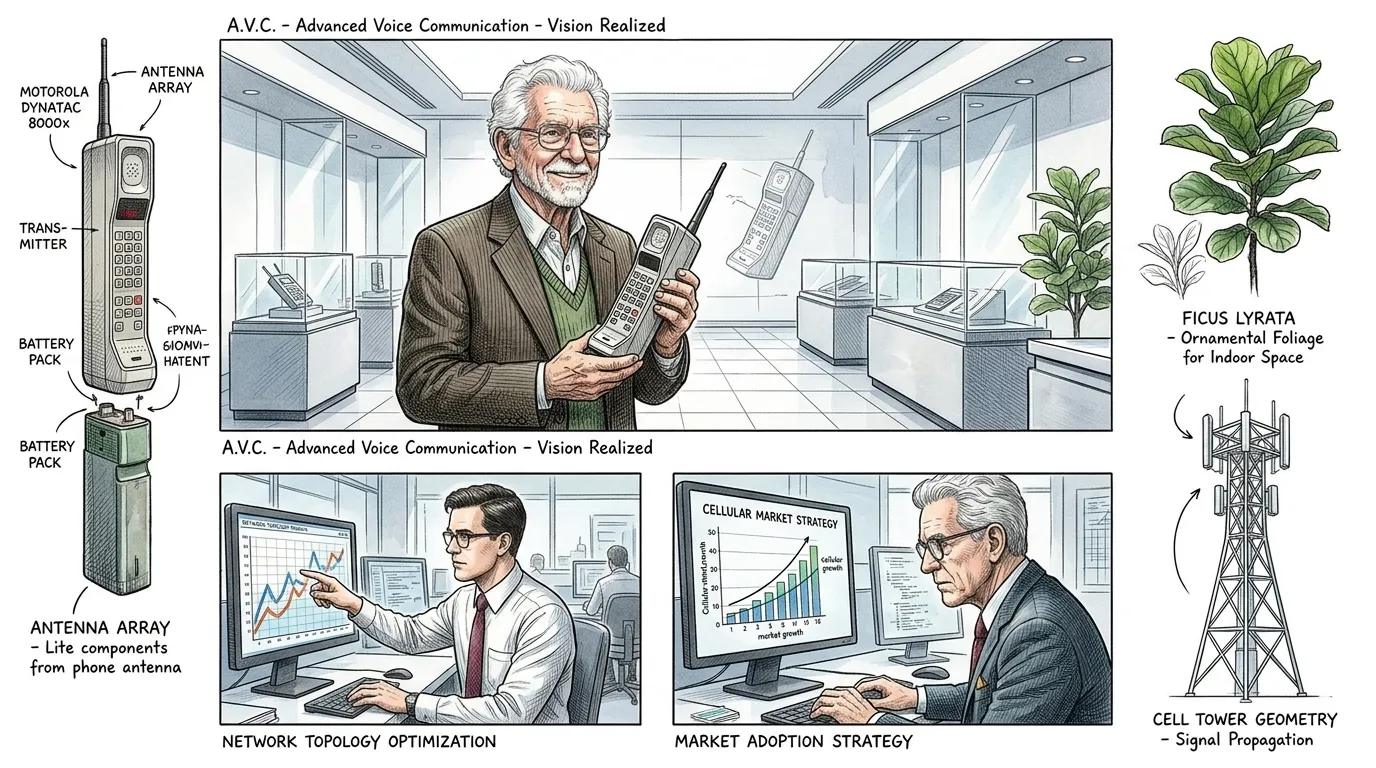
The 1973 call was a triumph, but the path to commercialization was long. It took another decade of engineering refinement, regulatory battles, and…
The 1973 call was a triumph, but the path to commercialization was long. It took another decade of engineering refinement, regulatory battles, and infrastructure development before the Motorola DynaTAC 8000x, a sleeker but still substantial version, launched commercially in 1983. Priced at nearly 4,000, it was a luxury item, yet it symbolized the realization of Cooper's initial vision: a fully portable, personal telephone that truly belonged to the individual.

The 1973 call was a triumph, but the path to commercialization was long. It took another decade of engineering refinement, regulatory battles, and infrastructure development before the Motorola DynaTAC 8000x, a sleeker but still substantial version, launched commercially in 1983. Priced at nearly 4,000, it was a luxury item, yet it symbolized the realization of Cooper's initial vision: a fully portable, personal telephone that truly belonged to the individual. This breakthrough became the physical embodiment of freedom from the wire.

Page 9
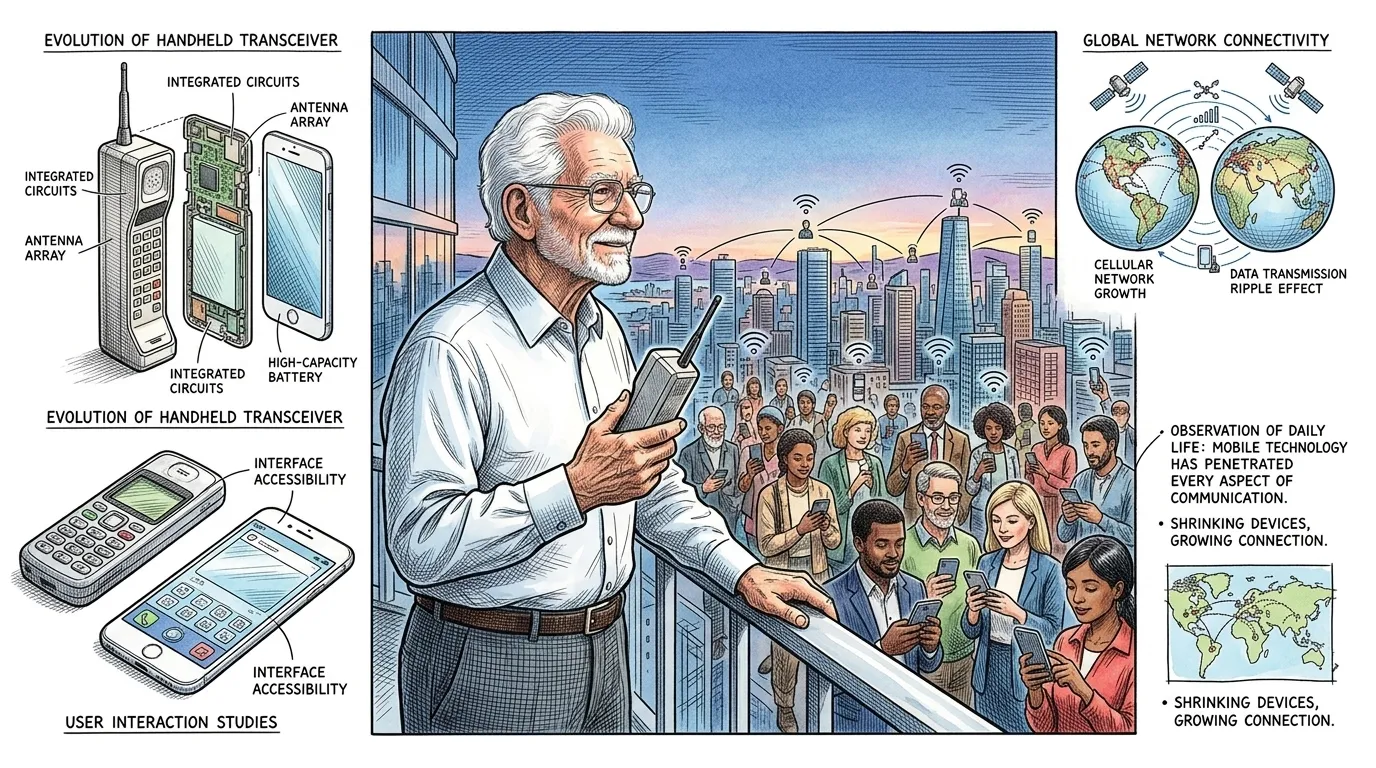
The DynaTAC 8000x's launch sparked a revolution. Over the subsequent decades, mobile phones rapidly evolved, shrinking in size and increasing in capability…
The DynaTAC 8000x's launch sparked a revolution. Over the subsequent decades, mobile phones rapidly evolved, shrinking in size and increasing in capability, becoming an indispensable part of global society. Cooper's invention, once a bulky novelty, blossomed into a ubiquitous tool that redefined communication, commerce, and culture.

The DynaTAC 8000x's launch sparked a revolution. Over the subsequent decades, mobile phones rapidly evolved, shrinking in size and increasing in capability, becoming an indispensable part of global society. Cooper's invention, once a bulky novelty, blossomed into a ubiquitous tool that redefined communication, commerce, and culture. His initial call on Sixth Avenue became the foundational ripple that transformed the very fabric of daily life for billions, connecting people across vast distances with unprecedented ease.

Page 10

Martin Cooper's singular vision and relentless pursuit fundamentally reshaped the human experience. He did not merely invent a device; he catalyzed a cultural…
Martin Cooper's singular vision and relentless pursuit fundamentally reshaped the human experience. He did not merely invent a device; he catalyzed a cultural shift, giving individuals unparalleled freedom to connect. His legacy is not just the physical phone, but the omnipresent network that now defines modern life, enabling instant communication across continents.

Martin Cooper's singular vision and relentless pursuit fundamentally reshaped the human experience. He did not merely invent a device; he catalyzed a cultural shift, giving individuals unparalleled freedom to connect. His legacy is not just the physical phone, but the omnipresent network that now defines modern life, enabling instant communication across continents. As Peter Drucker once observed, 'The best way to predict the future is to create it.' Cooper, with a phone in hand, truly created that future.

About this story

  • Location: Global
  • Audience: general readers

More Wonder People stories

All Wonder People stories · Open the library