Martin Luther King Jr
Martin Luther King Jr — an illustrated biography story, set in Global. 10 illustrated pages, free to read on Wonder People.

Page 1
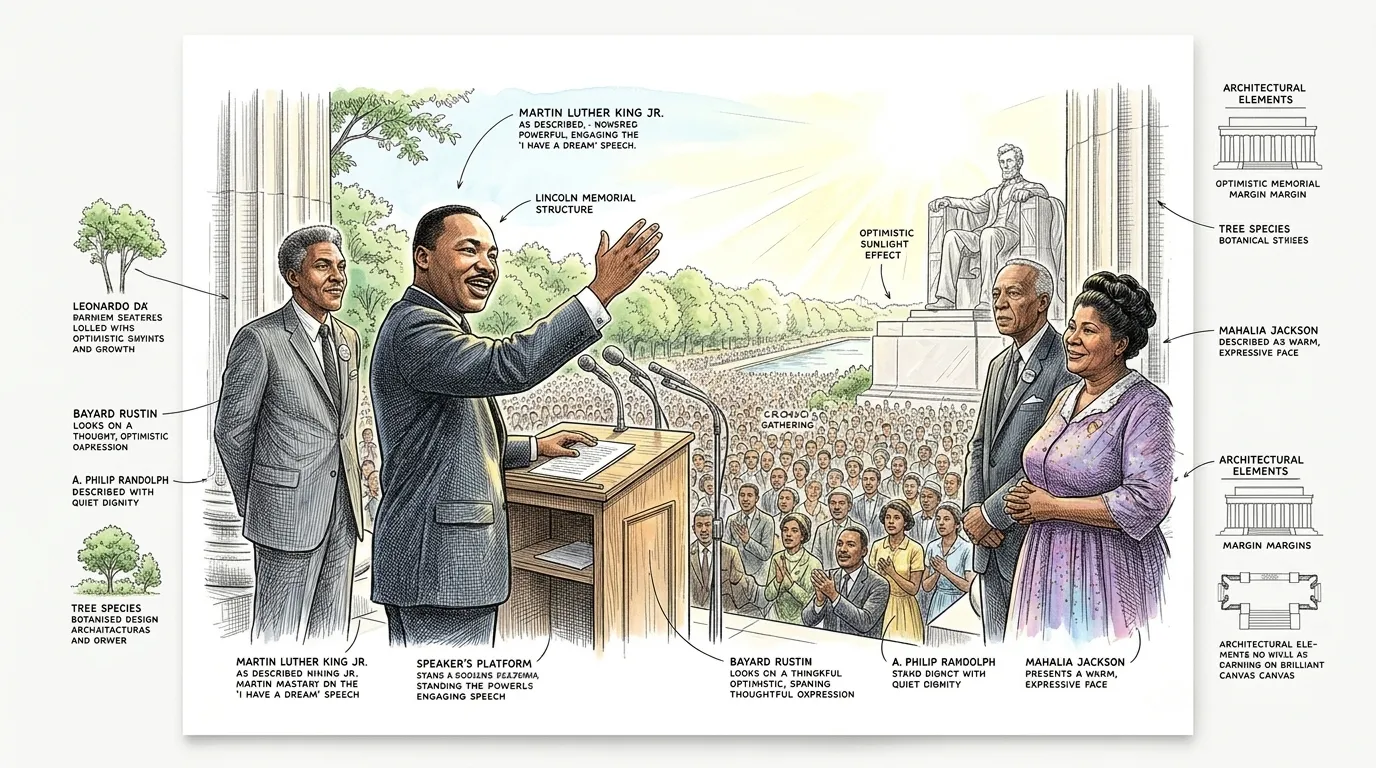
At the precipice of the Lincoln Memorial, a singular voice ascended above the quarter-million gathered. Martin Luther King Jr., positioned against the enduring symbol of emancipation, articulated a future that reverberated with moral urgency. His words, delivered on August 28, 1963, transformed a protest into a transcendent declaration, defining an era and challenging the conscience of a nation. In that pivotal moment, his vision for racial equality crystallized into an American imperative, making him impossible to ignore.
Biographical Fact: The March on Washington for Jobs and Freedom was a pivotal moment in the Civil Rights Movement, drawing an estimated 250,000 participants. King's 'I Have a Dream' speech became an iconic address, deeply influencing public opinion and legislative efforts for civil rights. Key organizers included A. Philip Randolph and Bayard Rustin, with Mahalia Jackson performing before King spoke.
Page 2

Born Michael King Jr. in Atlanta, Georgia, his destiny was rooted in a lineage of Baptist ministers. His father, Martin Luther King Sr., instilled a profound sense of social justice. Young King pursued higher education with intellectual rigor, delving into philosophy and theology at Crozer Theological Seminary and later Boston University. It was during these formative years, surrounded by texts on moral philosophy and nonviolent resistance, that he forged the intellectual framework for his future activism, meticulously preparing for a leadership he could not yet foresee.
Biographical Fact: Martin Luther King Jr. earned his Bachelor of Divinity from Crozer Theological Seminary in 1951 and his Ph.D. in systematic theology from Boston University in 1955. His studies exposed him to the writings of Mahatma Gandhi, Henry David Thoreau, and Walter Rauschenbusch, shaping his commitment to nonviolent civil disobedience and social gospel.
Page 3
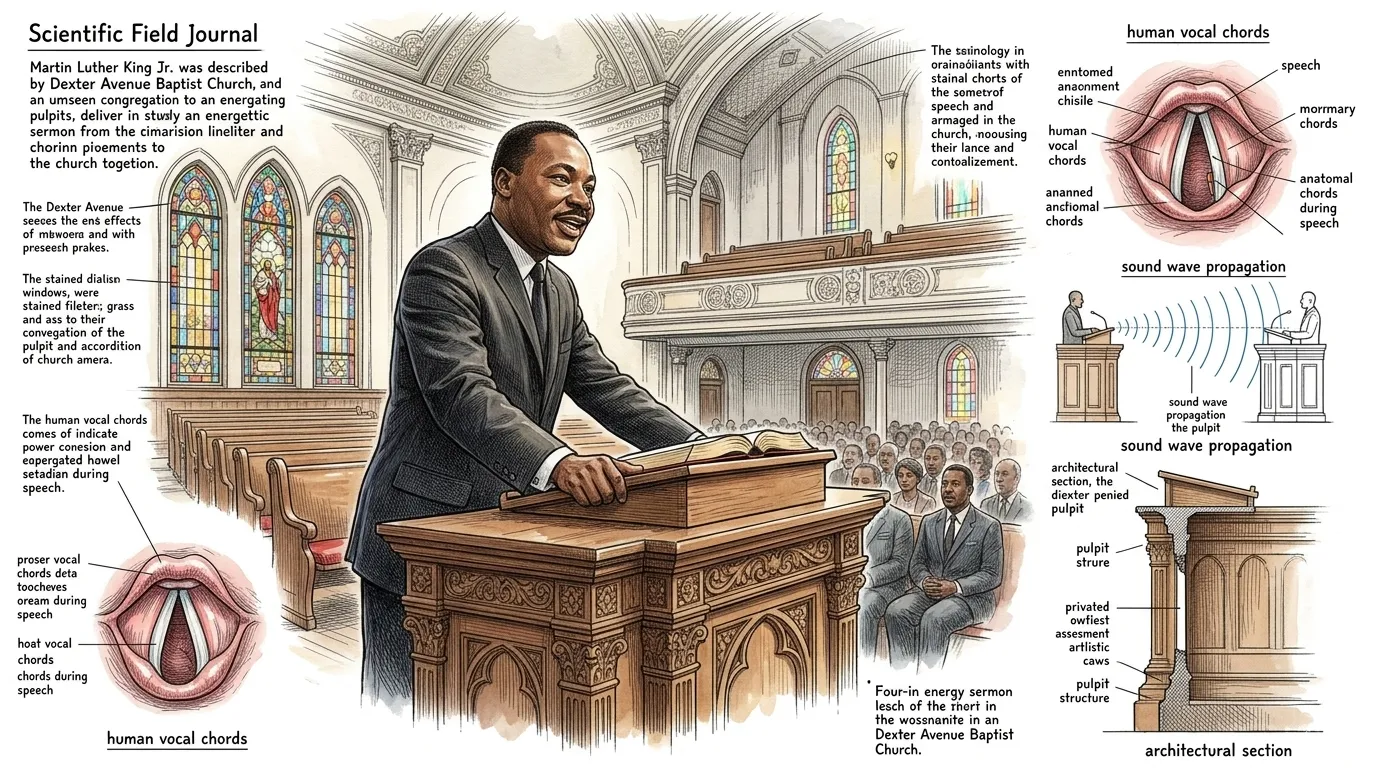
In 1954, Martin Luther King Jr. accepted the pastorate of Dexter Avenue Baptist Church in Montgomery, Alabama. This decision placed him in the heart of the racially segregated South, a crucible of injustice. It was a modest beginning for a man whose name would soon define a movement, yet the gravity of the call was clear. He quickly became known for his powerful sermons and his commitment to community engagement, laying the groundwork for the monumental struggles that would soon erupt from the city's streets.
Biographical Fact: King's acceptance of the Dexter Avenue Baptist Church pastorate was a crucial step, bringing him to a city where racial tensions were nearing a breaking point. His leadership style, combining spiritual authority with intellectual depth, quickly earned him respect within the local African American community.
Page 4

On December 5, 1955, following Rosa Parks' arrest, Martin Luther King Jr. found himself thrust onto a national stage. Addressing a packed Holt Street Baptist Church in Montgomery, he articulated the moral imperative behind the burgeoning bus boycott. His impassioned words galvanized thousands, unifying the African American community in a collective act of nonviolent defiance. This event marked his definitive emergence as a commanding leader, capable of mobilizing widespread action against systemic injustice.
Biographical Fact: The Montgomery Bus Boycott lasted 381 days. King, along with E.D. Nixon and Jo Ann Robinson, played crucial roles. King's leadership, though initially unexpected, became synonymous with the boycott's success, transforming him from a local pastor into a national figure.
Page 5
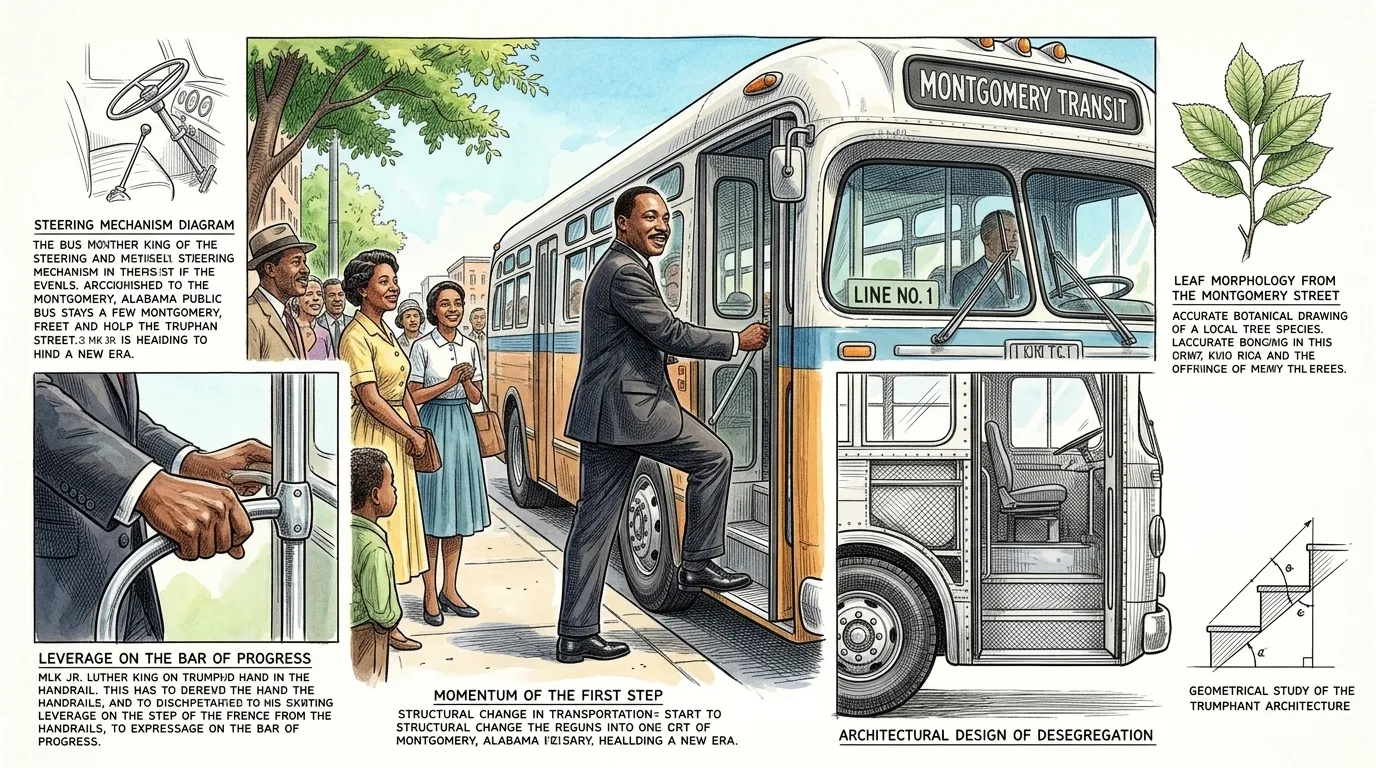
After 381 days of unwavering resolve, the Montgomery Bus Boycott concluded with a landmark victory. On December 20, 1956, the U.S. Supreme Court's ruling, Browder v. Gayle, mandated the desegregation of Montgomery's public transit. The following morning, Martin Luther King Jr. stood poised to board an integrated bus. This action, witnessed by the nation, symbolized not only the triumph of nonviolent protest but also the tangible shift in the power dynamics of the Jim Crow South. The boycott became a blueprint for future movements.
Biographical Fact: The success of the Montgomery Bus Boycott solidified King's philosophy of nonviolent direct action. The boycott not only ended segregation on city buses but also demonstrated the power of collective resistance, inspiring similar protests across the South.
Page 6
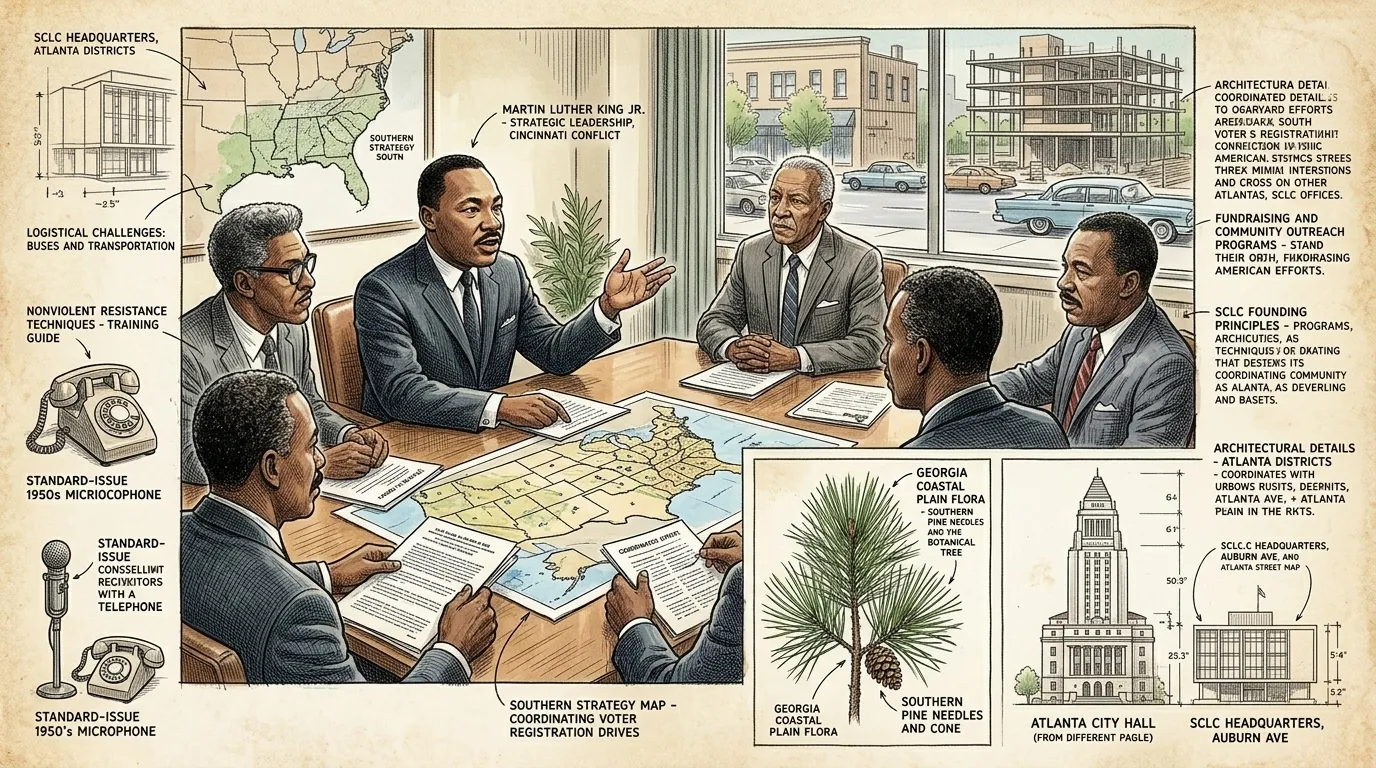
Recognizing the need for a sustained, coordinated effort beyond local campaigns, Martin Luther King Jr. co-founded the Southern Christian Leadership Conference (SCLC) in 1957. From its base in Atlanta, Georgia, the SCLC aimed to harness the moral authority and organizing power of Black churches to advance civil rights. King's leadership transformed a fragmented struggle into a cohesive national movement, establishing a strategic framework that would challenge segregation across the South. What began in Montgomery now possessed a broader institutional voice.
Biographical Fact: The SCLC was formed to coordinate nonviolent direct action by local civil rights groups. Under King's presidency, it became one of the most influential organizations, advocating for civil rights through boycotts, marches, and voter registration drives, often facing immense opposition.
Page 7

By 1963, the Birmingham Campaign became a critical test for the nonviolent movement. Facing brutal police tactics under Commissioner Eugene 'Bull' Connor, including attack dogs and fire hoses against child protestors, Martin Luther King Jr. was arrested. From his jail cell, he penned the 'Letter from a Birmingham Jail,' a profound defense of civil disobedience that galvanized national support. The city's violent resistance exposed the raw brutality of segregation, forcing America to confront its moral failings and propelling the civil rights agenda onto the national stage.
Biographical Fact: The Birmingham Campaign, despite its violence, was a strategic victory. The vivid images of police brutality broadcast nationally created widespread outrage, pressuring the Kennedy administration to act and paving the way for the Civil Rights Act of 1964. King's 'Letter' remains a foundational text on justice.
Page 8
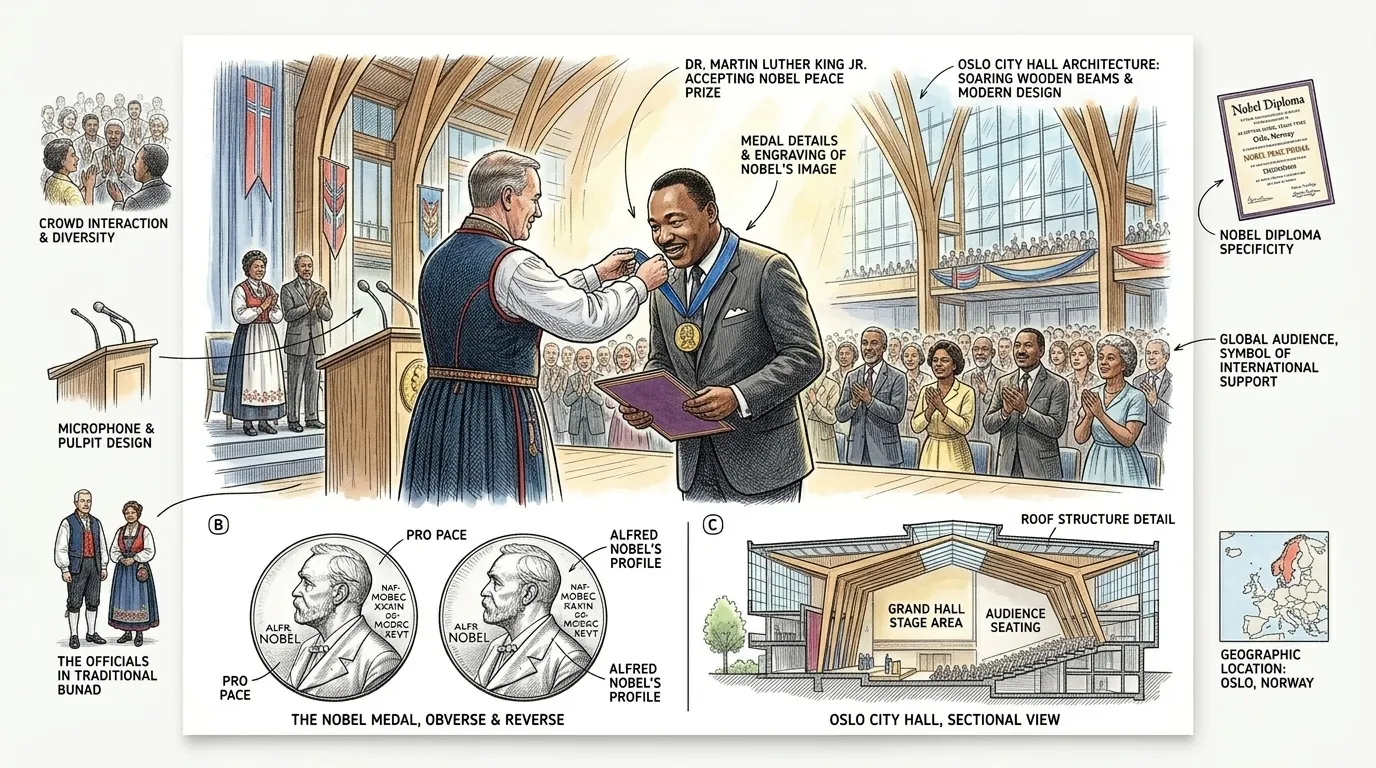
In 1964, the world acknowledged the unparalleled impact of Martin Luther King Jr.'s nonviolent struggle. Awarded the Nobel Peace Prize at age 35, he became the youngest laureate at the time. In Oslo, Norway, he accepted the honor not for himself, but for the global movement for justice. This recognition amplified his voice on the international stage, confirming that the fight for civil rights in America was a universal human rights struggle, inspiring movements for freedom and equality far beyond the nation's borders. The world now listened, captivated by his moral authority.
Biographical Fact: King donated his Nobel Prize money, approximately 54,000, to the civil rights movement. This international award validated his nonviolent philosophy and brought unprecedented global attention to the struggle for racial equality in the United States.
Page 9
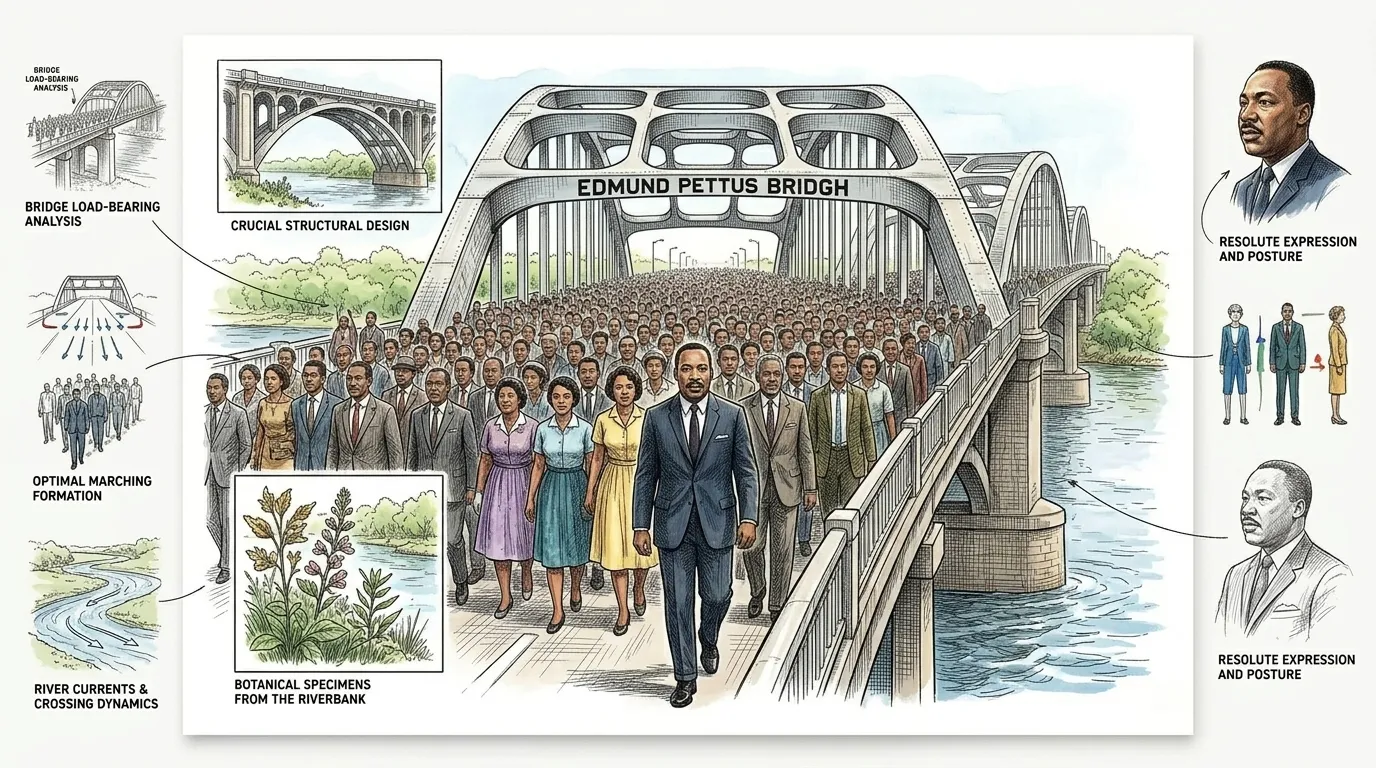
The year 1965 brought the Selma to Montgomery voting rights marches, a direct confrontation against voter suppression in Alabama. After the brutal 'Bloody Sunday' attack on peaceful marchers, Martin Luther King Jr. led thousands on a defiant, federally protected march. Crossing the Edmund Pettus Bridge, he embodied the unwavering commitment to justice. This epic demonstration, broadcast worldwide, directly pressured Congress, culminating in the passage of the landmark Voting Rights Act of 1965, forever altering the landscape of American democracy.
Biographical Fact: The Selma marches were crucial in the passage of the Voting Rights Act of 1965, which outlawed discriminatory voting practices. This legislation, a direct consequence of the movement's persistence and King's leadership, transformed political participation for African Americans in the South.
Page 10
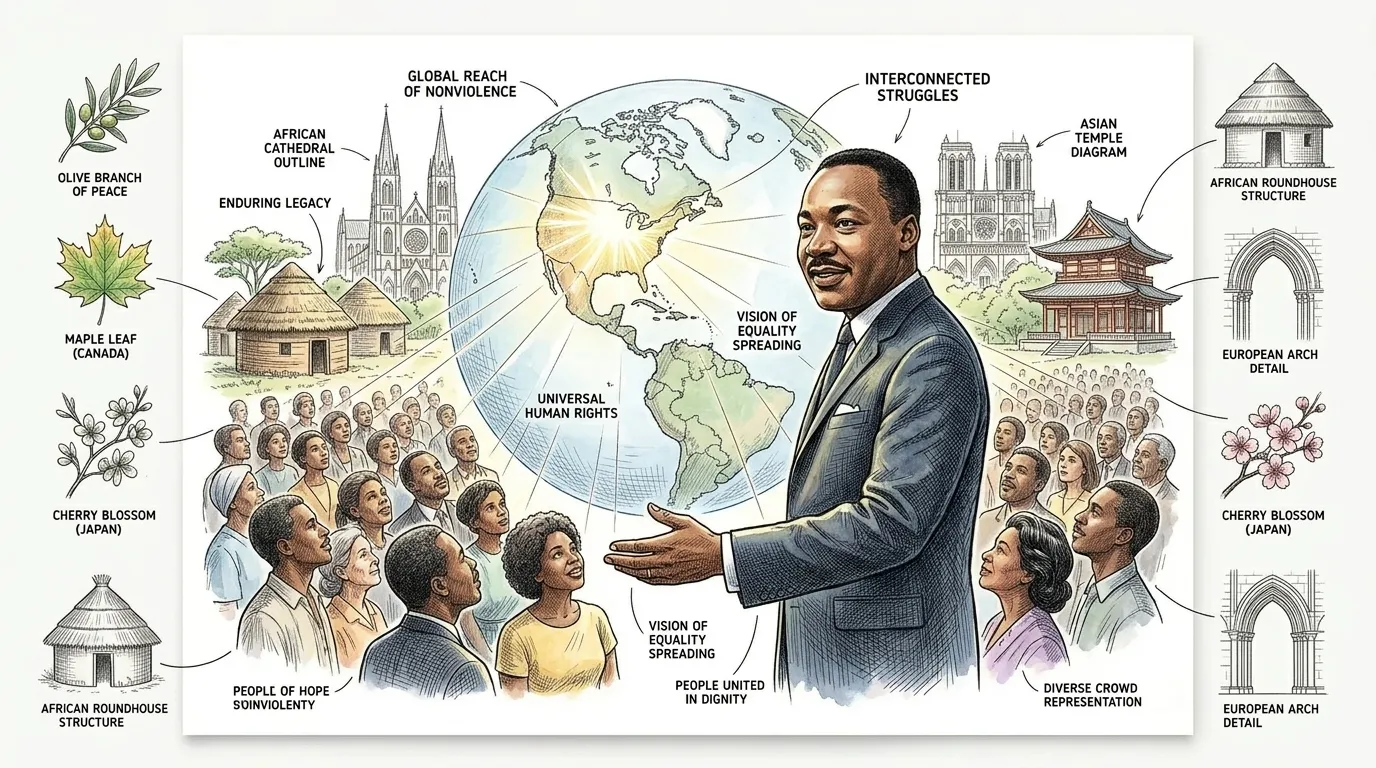
Though his life was tragically cut short in 1968, Martin Luther King Jr.'s impact reverberated globally, inspiring generations. His philosophy of nonviolent resistance shaped movements for human rights across continents, from South Africa to Eastern Europe. The dream he articulated became a guiding star, urging nations to confront injustice and champion equality. His enduring legacy is not merely a memory of past struggles, but a perpetual call to action, demanding that the pursuit of a more just and equitable world continues, a timeless testament to the power of courage and conviction.
Biographical Fact: Martin Luther King Jr. was assassinated on April 4, 1968, in Memphis, Tennessee. His birthday is now a federal holiday in the United States, and he remains one of the most revered figures in history, symbolizing the ongoing struggle for civil rights, equality, and peace globally. His work laid the groundwork for future social justice advocacy.
About this story
- Location: Global
- Audience: general readers