Nelson Mandela
Nelson Mandela — an illustrated biography story, set in Global. 10 illustrated pages, free to read on Wonder People.
Page 1
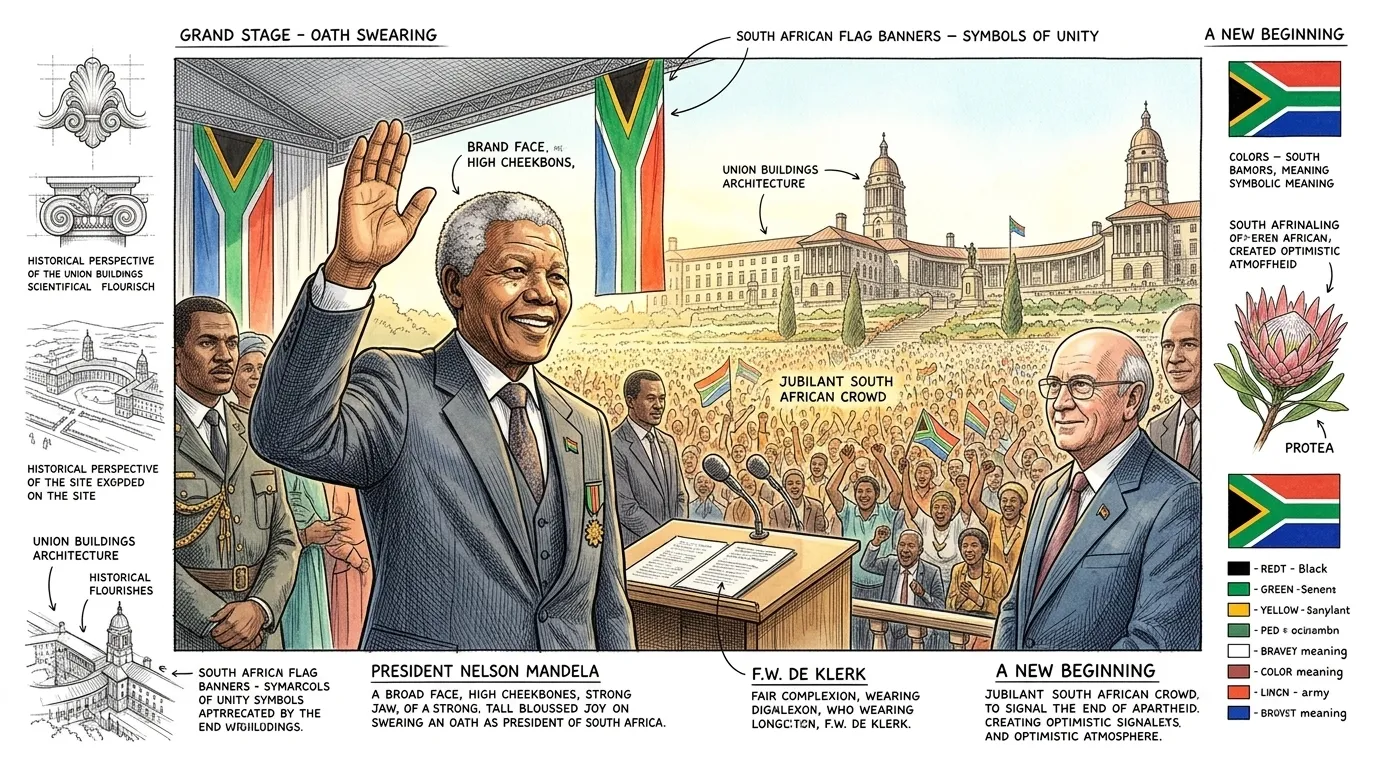
On May 10, 1994, Nelson Mandela ascended to the presidency of South Africa, marking the definitive end of apartheid. Before a jubilant crowd of world leaders and millions across the nation, he swore an oath of office in Pretoria. His election, with the African National Congress securing 62% of the vote and a nearly 95% voter turnout, was a seismic shift. In that moment, he embodied the triumph of human dignity over decades of brutal oppression, an undeniable force reshaping the continent and the world.
Biographical Fact: Nelson Mandela's inauguration as President of South Africa, Union Buildings, Pretoria, 1994. Witnessed by millions, this event signified the peaceful transition from apartheid to a multiracial democracy.
Page 2
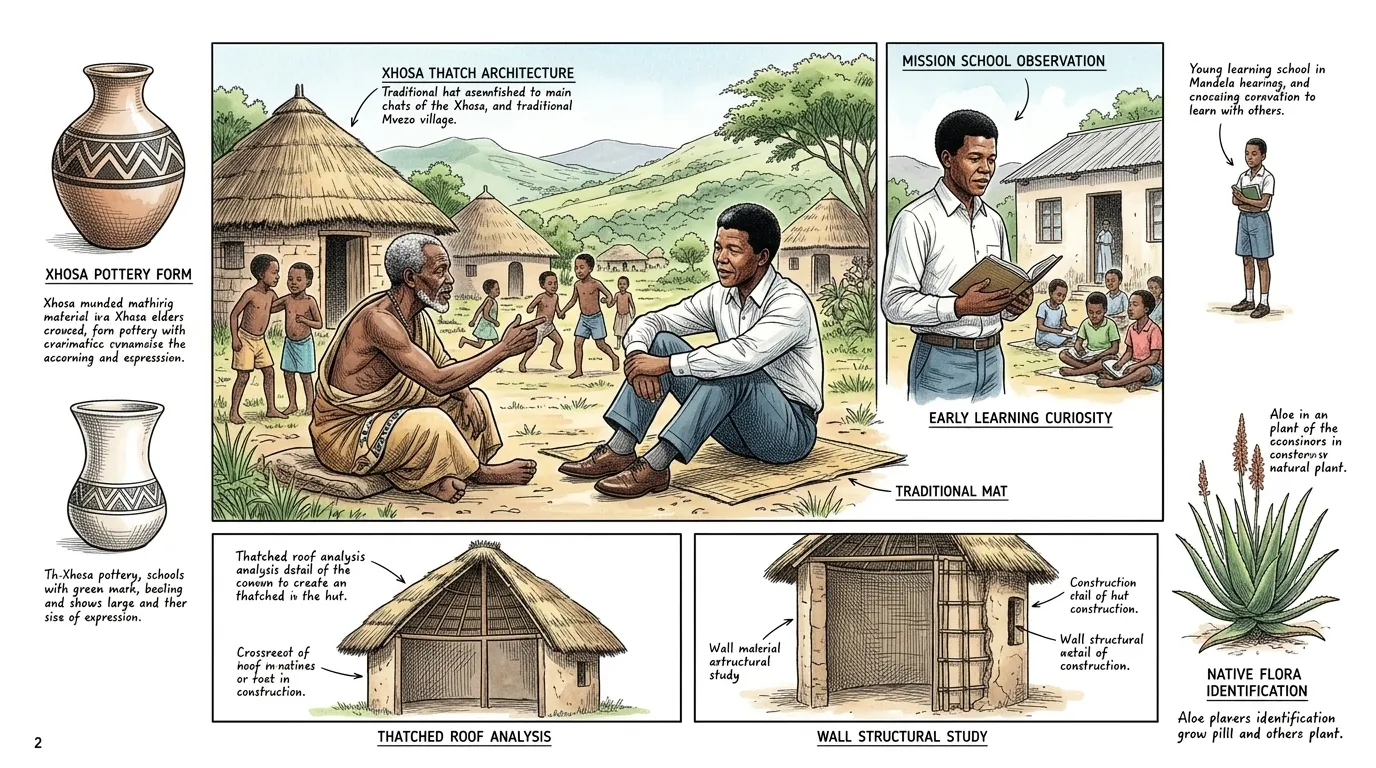
Born Rolihlahla Mandela in Mvezo, a small village in the Eastern Cape, South Africa, in 1918, Nelson Mandela's early life was rooted in Xhosa traditions. The son of a local chief, his family background provided a profound understanding of community and justice, albeit within a colonial system that increasingly eroded indigenous authority. His education, beginning in a local missionary school, exposed him to a broader world, but also to the stark realities of racial segregation. These foundational years instilled a deep-seated commitment to fairness and the collective good, shaping the man who would eventually challenge an entire oppressive regime.
Biographical Fact: Mvezo, Eastern Cape, South Africa, early 20th century. Nelson Mandela's early life in a traditional Xhosa village provided a deep connection to community and a nascent awareness of racial inequality under colonial rule.
Page 3

Moving to Johannesburg, Nelson Mandela pursued a legal career, witnessing firsthand the systematic injustices of apartheid. In 1952, alongside Oliver Tambo, he established Mandela & Tambo, the first black-run legal firm in South Africa. This was more than a business; it was a defiant act, offering legal recourse to those brutalized by discriminatory laws. Through this firm, he directly confronted the state, defending countless individuals against forced removals, pass laws, and police brutality. He became a beacon of legal resistance, channeling his early experiences into concrete action.
Biographical Fact: Johannesburg, 1952. Nelson Mandela and Oliver Tambo opened the first black law firm in South Africa, directly challenging apartheid through legal defense and advocacy.
Page 4

As a key figure in the African National Congress (ANC) Youth League, Nelson Mandela tirelessly campaigned against apartheid. In 1952, he spearheaded the Defiance Campaign, urging non-violent civil disobedience against unjust laws. Thousands responded, burning pass books and risking arrest, transforming abstract injustice into direct confrontation. Mandela traveled the country, organizing, speaking, and galvanizing support, demonstrating an unparalleled ability to unite diverse communities under a common cause. His actions ignited a nationwide resistance, making him a primary target of the apartheid regime.
Biographical Fact: South African townships, 1952. Nelson Mandela led the Defiance Campaign, a mass civil disobedience movement against apartheid laws, mobilizing thousands across the nation.
Page 5
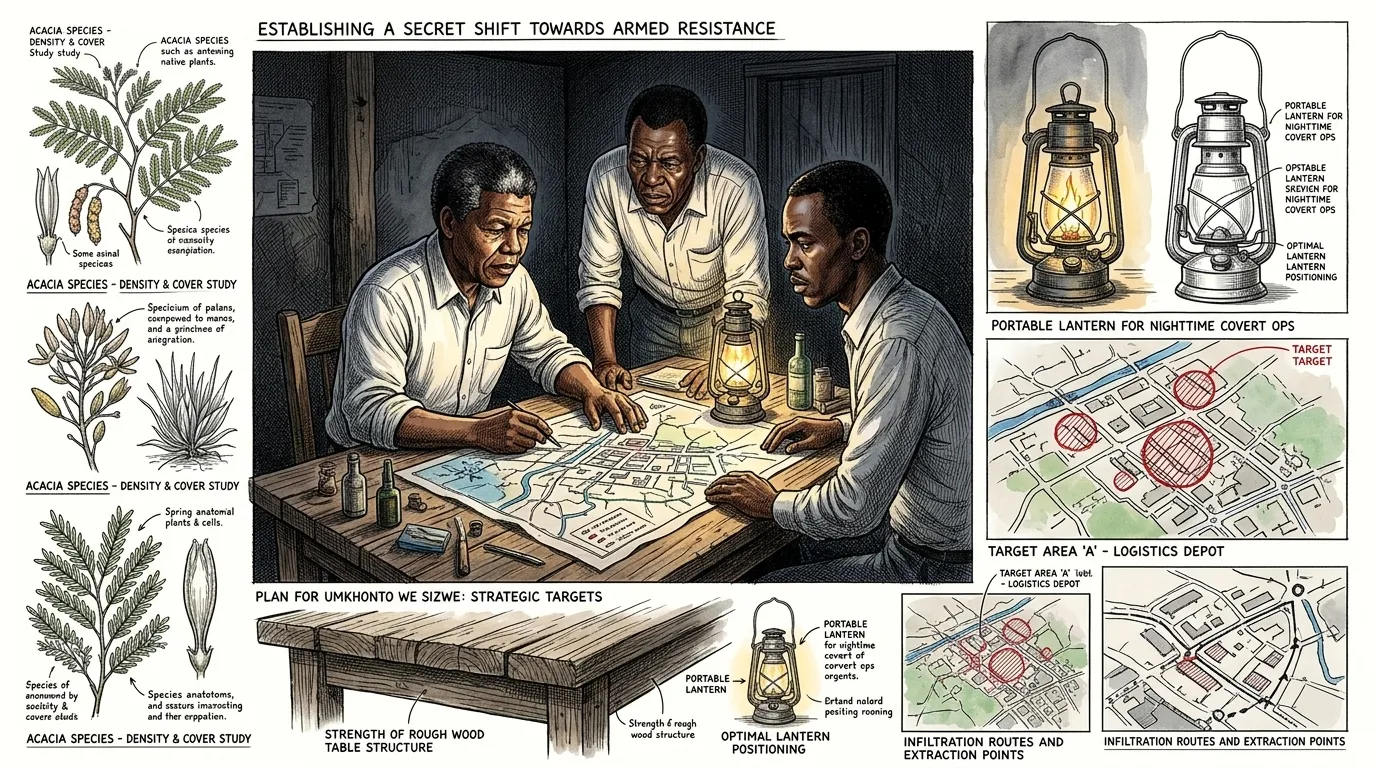
After the Sharpeville Massacre in 1960, where police killed 69 unarmed black protestors, Nelson Mandela concluded that non-violent resistance alone could not dismantle apartheid. In 1961, he co-founded Umkhonto we Sizwe ('Spear of the Nation'), the armed wing of the ANC, transitioning from civil disobedience to sabotage against government installations. This marked a profound and agonizing shift in strategy, reflecting the brutal reality of a state unwilling to negotiate. Mandela, now operating underground, sanctioned carefully chosen acts of sabotage, aiming to cripple the system without loss of life, a desperate measure against an unyielding oppressor.
Biographical Fact: Somewhere in South Africa, 1961. Following the Sharpeville Massacre, Nelson Mandela, Walter Sisulu, and Govan Mbeki co-founded Umkhonto we Sizwe, shifting the anti-apartheid strategy to armed resistance against state infrastructure.
Page 6

In 1964, Nelson Mandela, along with other leaders, faced charges of sabotage and conspiracy in the Rivonia Trial. From the dock, he delivered a powerful, four-hour speech, stating, 'I have fought against white domination, and I have fought against black domination. I have cherished the ideal of a democratic and free society in which all persons live together in harmony and with equal opportunities. It is an ideal for which I hope to live for and to achieve. But if needs be, it is an ideal for which I am prepared to die.' This declaration transformed him from a political prisoner into a global symbol of resistance. He and his co-accused were sentenced to life imprisonment, effectively disappearing behind bars, yet his words echoed across the world.
Biographical Fact: Palace of Justice, Pretoria, 1964. Nelson Mandela's 'I Am Prepared to Die' speech at the Rivonia Trial solidified his status as an international icon of the anti-apartheid struggle, leading to his life imprisonment.
Page 7
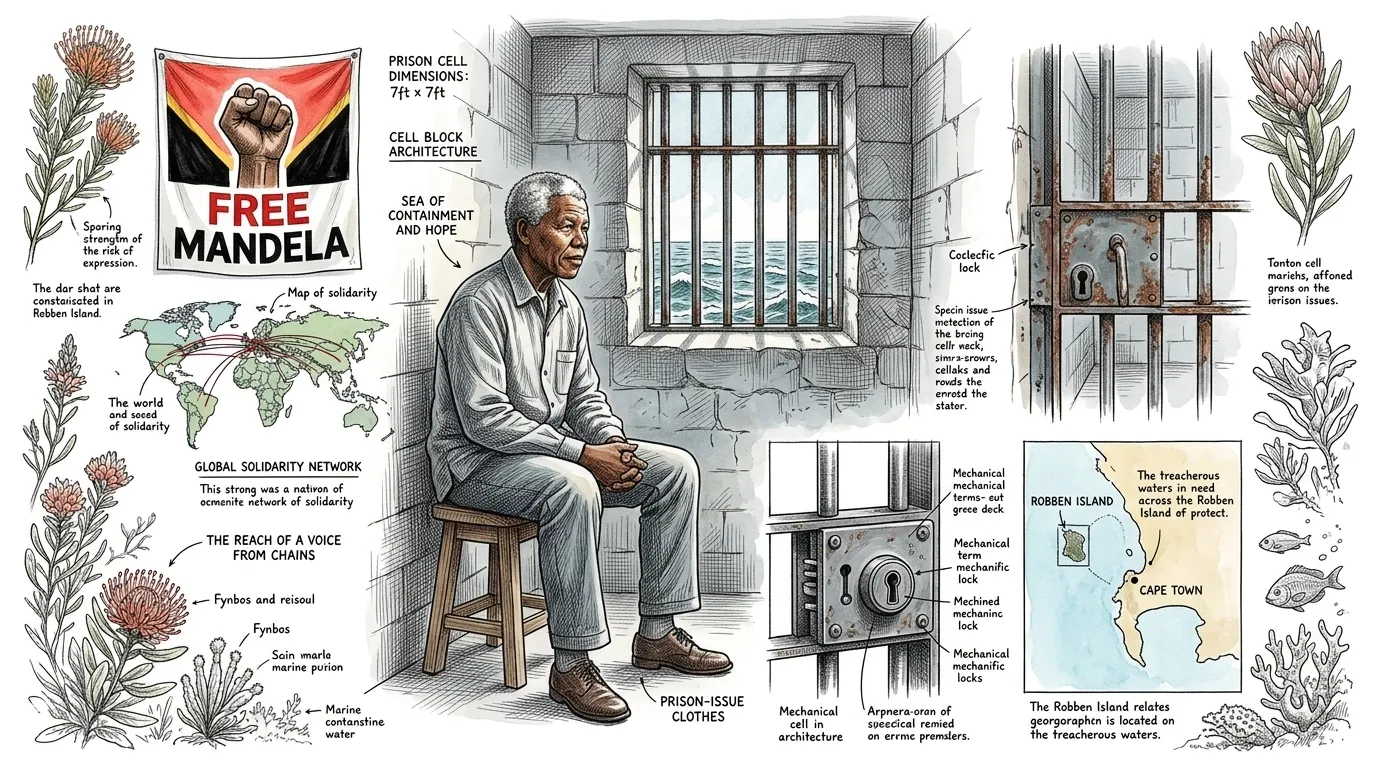
For 27 years, Nelson Mandela remained imprisoned, primarily on Robben Island, then Pollsmoor, and finally Victor Verster prison. His incarceration, intended to silence him, instead amplified his message. A global anti-apartheid movement gained unprecedented momentum, fueled by student protests, economic boycotts, and impassioned calls from world leaders. Organizations like the United Nations condemned apartheid, and artists created anthems of protest. Mandela, unseen but omnipresent, became the embodiment of the struggle, his freedom synonymous with the liberation of South Africa itself. The world was now reacting to him, not the other way around.
Biographical Fact: Robben Island, South Africa, mid-1980s. While Nelson Mandela endured 27 years of imprisonment, a powerful global anti-apartheid movement, driven by his symbolic importance, campaigned tirelessly for his release.
Page 8

On February 11, 1990, after 27 years, 6 months, and 6 days, Nelson Mandela walked free from Victor Verster Prison. The moment, broadcast globally, electrified the world. He emerged not with bitterness, but with a message of peace and reconciliation, stepping onto the world stage to address a rapturous crowd of over 100,000 people in Cape Town. His immediate task: to guide South Africa through its perilous transition from apartheid to democracy. The global jubilation was immense, but the true work of building a new nation had just begun, a task he embraced with unwavering resolve.
Biographical Fact: Victor Verster Prison, Paarl, South Africa, February 11, 1990. Nelson Mandela's release from prison, a moment of global jubilation, marked the beginning of South Africa's journey to democracy.
Page 9
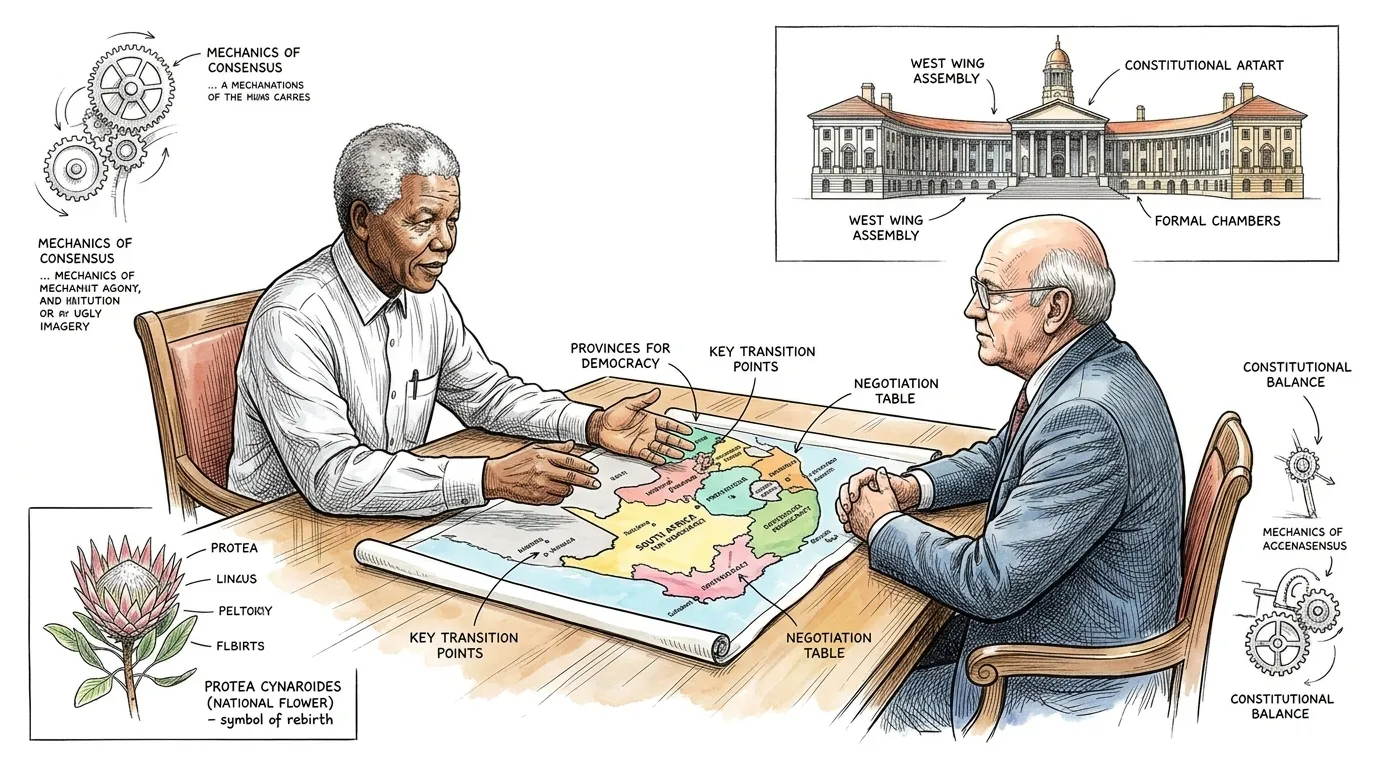
Upon his release, Nelson Mandela entered direct, high-stakes negotiations with President F.W. de Klerk, the last head of the apartheid state. Their partnership, fraught with deep historical divisions and ongoing political violence, was crucial in dismantling apartheid's legal framework and establishing a new constitution. Together, they navigated immense challenges, including the threat of civil war, toward the first democratic, multiracial elections. This extraordinary collaboration, born of necessity and courageous leadership, culminated in a shared Nobel Peace Prize in 1993, acknowledging their pivotal role in achieving a peaceful transition.
Biographical Fact: Kempton Park, South Africa, early 1990s. Nelson Mandela and President F.W. de Klerk engaged in critical negotiations, dismantling apartheid and charting the course for a democratic South Africa, a partnership recognized with the Nobel Peace Prize.
Page 10

Nelson Mandela's legacy transcends his pivotal role in ending apartheid. As president, he championed reconciliation, established the Truth and Reconciliation Commission, and worked to build a united, non-racial South Africa. His unwavering commitment to justice, forgiveness, and human rights inspired movements globally, demonstrating that profound social change is possible even in the face of insurmountable odds. He became a universal symbol of hope, a statesman whose moral authority and unwavering vision continue to resonate, reminding the world that courage and compassion can bridge the deepest divides. His impact remains, a timeless beacon for humanity.
Biographical Fact: Nelson Mandela's enduring legacy: a global symbol of reconciliation, democracy, and human rights, whose moral authority continues to inspire movements for justice and peace worldwide.
About this story
- Location: Global
- Audience: general readers