Nina Simone
Nina Simone — an illustrated biography story, set in Global. 10 illustrated pages, free to read on Wonder People.
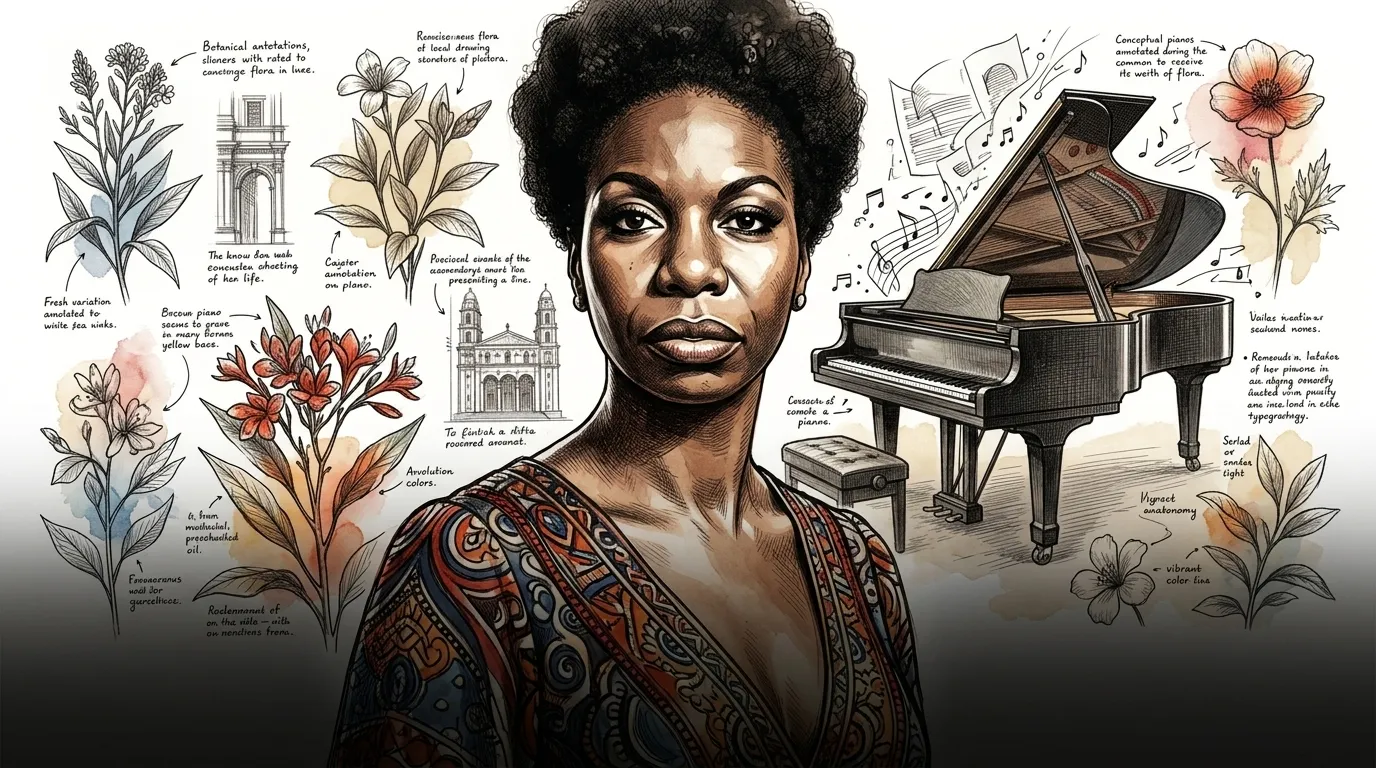
Page 1
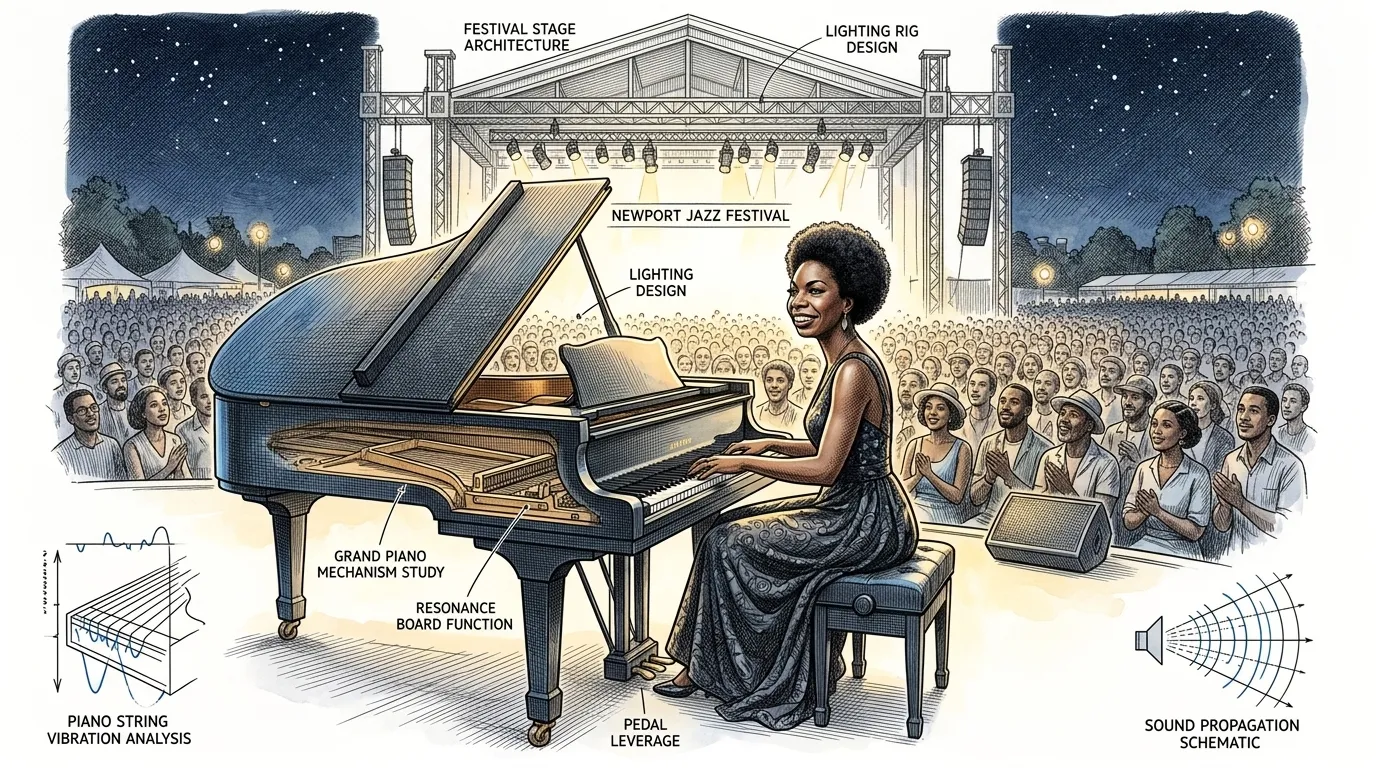
At the Newport Jazz Festival in Rhode Island, July 1964, the world witnessed an artist transform rage into prophecy. Before an audience of thousands, Nina Simone, cloaked in fierce conviction, introduced 'Mississippi Goddam.' This searing protest anthem, a direct response to the Birmingham church bombing and the murder of Medgar Evers, shattered the festival's traditional expectations. Each note from her piano, each word she sang, was a declaration of artistic war against racial injustice. It was not entertainment; it was a demand, resonating with every member of the restless crowd, cementing her status as a high priestess of not just soul, but of the burgeoning Civil Rights movement itself. Her presence filled the night, undeniable and unyielding, shifting the very ground beneath the stage.
Biographical Fact: Newport Jazz Festival, Rhode Island, 1964. Nina Simone's 'Mississippi Goddam' speech and performance became a landmark moment in combining artistic expression with civil rights activism.
Page 2

Born Eunice Waymon in Tryon, North Carolina, 1933, Nina Simone's earliest canvas was the piano at her local church. Her exceptional talent for classical music emerged precociously, drawing notice from the community, including her mother, Mary Kate Waymon, a Methodist minister, and her father, John Divine Waymon. The keys were an extension of her spirit, a path laid out by extraordinary aptitude. Yet, even in these formative years, the shadow of segregation loomed. During her debut recital at the age of twelve, her parents were forced to move from the front row to the back to accommodate white attendees, an early, stark lesson in the systemic injustices she would later challenge. This moment ignited a nascent fury, shaping the artist she was destined to become.
Biographical Fact: Eunice Waymon (Nina Simone) displayed prodigious piano talent from a young age. Her first public performance involved a discriminatory seating incident, foreshadowing her lifelong fight against racial injustice.
Page 3
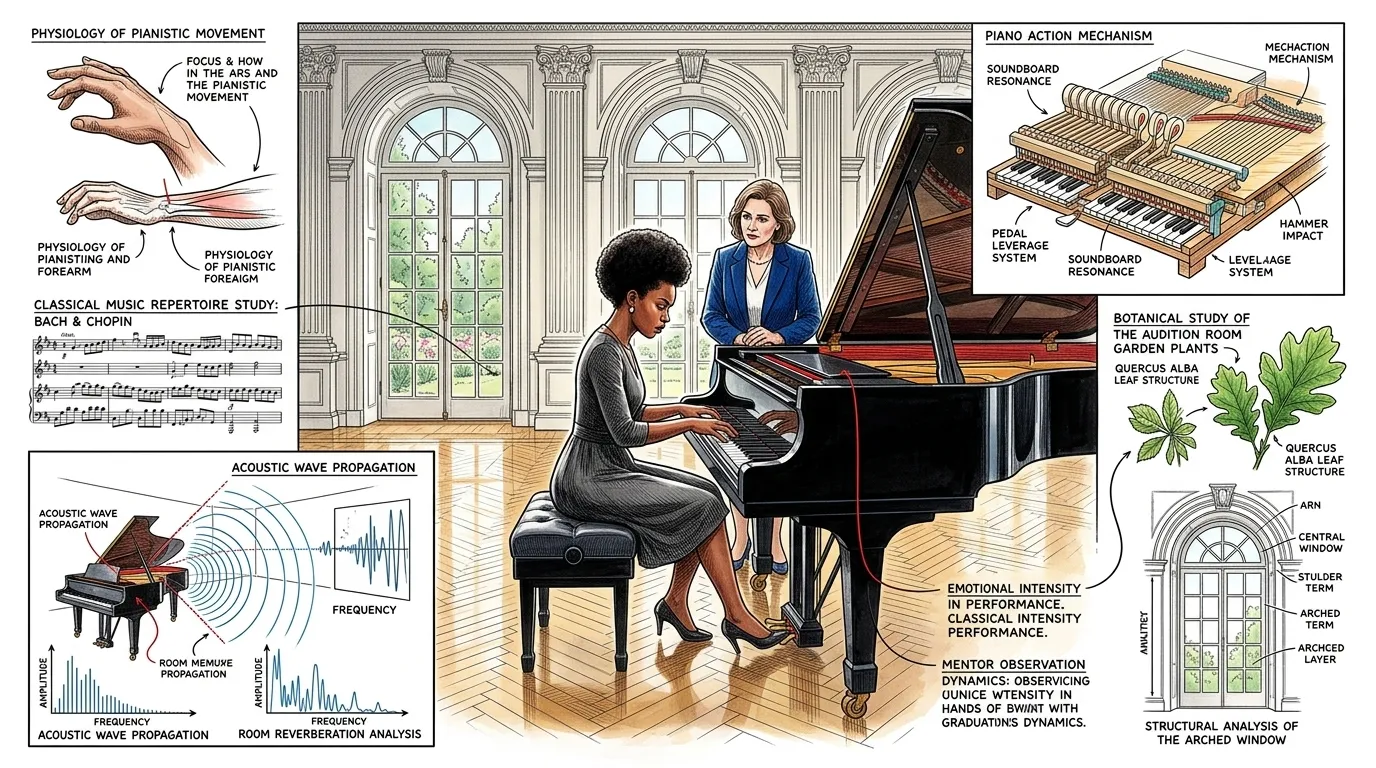
In 1951, driven by her classical aspirations, Eunice Waymon applied to the prestigious Curtis Institute of Music in Philadelphia. She performed a rigorous audition, showcasing years of dedicated practice under her mentor, Muriel Mazzanovich. Despite her undeniable skill, she was denied admission, a rejection she attributed, with enduring bitterness, to racial prejudice. This institutional barrier brutally rerouted her classical trajectory, forcing a pivot. The world would not see a Black female classical concert pianist of her caliber through this hallowed gate; instead, it inadvertently forged the genesis of an iconoclast, pushing her towards a different stage where her genius could not be contained by academic or racial strictures.
Biographical Fact: Nina Simone's rejection from the Curtis Institute of Music was a defining moment, solidifying her belief that racial discrimination thwarted her classical music career and pushing her towards new genres.
Page 4
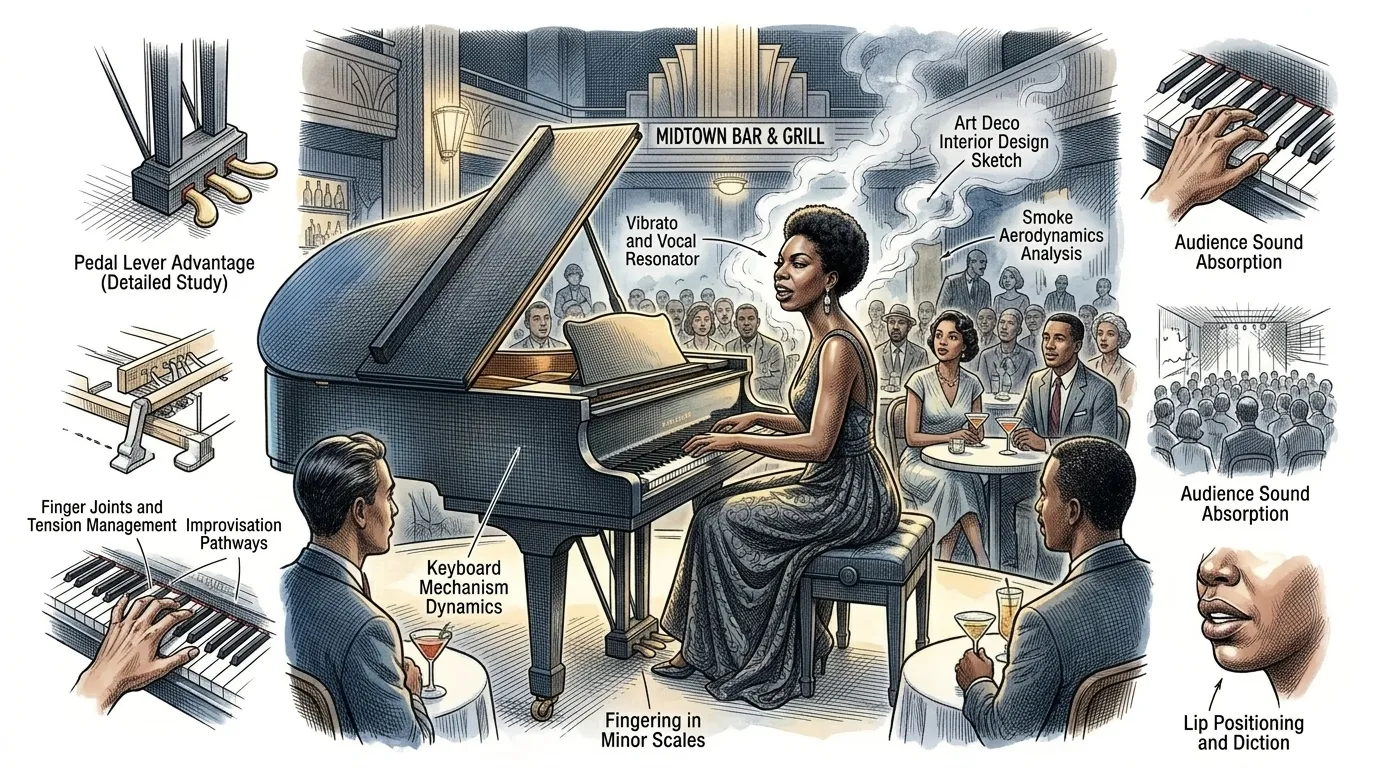
Denial from Curtis forced Eunice Waymon to make a living. In 1954, she secured a piano gig at the Midtown Bar & Grill in Atlantic City. To conceal her newfound foray into 'the devil's music' from her devout mother, she adopted a stage name: 'Nina Simone.' Here, in the smoky confines of a nightclub, her unique artistry truly began to coalesce. She wove together classical fugues, gospel fervor, and blues improvisation, not merely playing but interpreting, giving voice to raw emotion. It was a baptism by fire, shaping her distinctive style, attracting a loyal following, and marking the true birth of the artist who would defy categorization.
Biographical Fact: The adoption of the stage name 'Nina Simone' in 1954 marked her transition from aspiring classical pianist to a jazz and blues performer, forging her unique musical identity in Atlantic City nightclubs.
Page 5
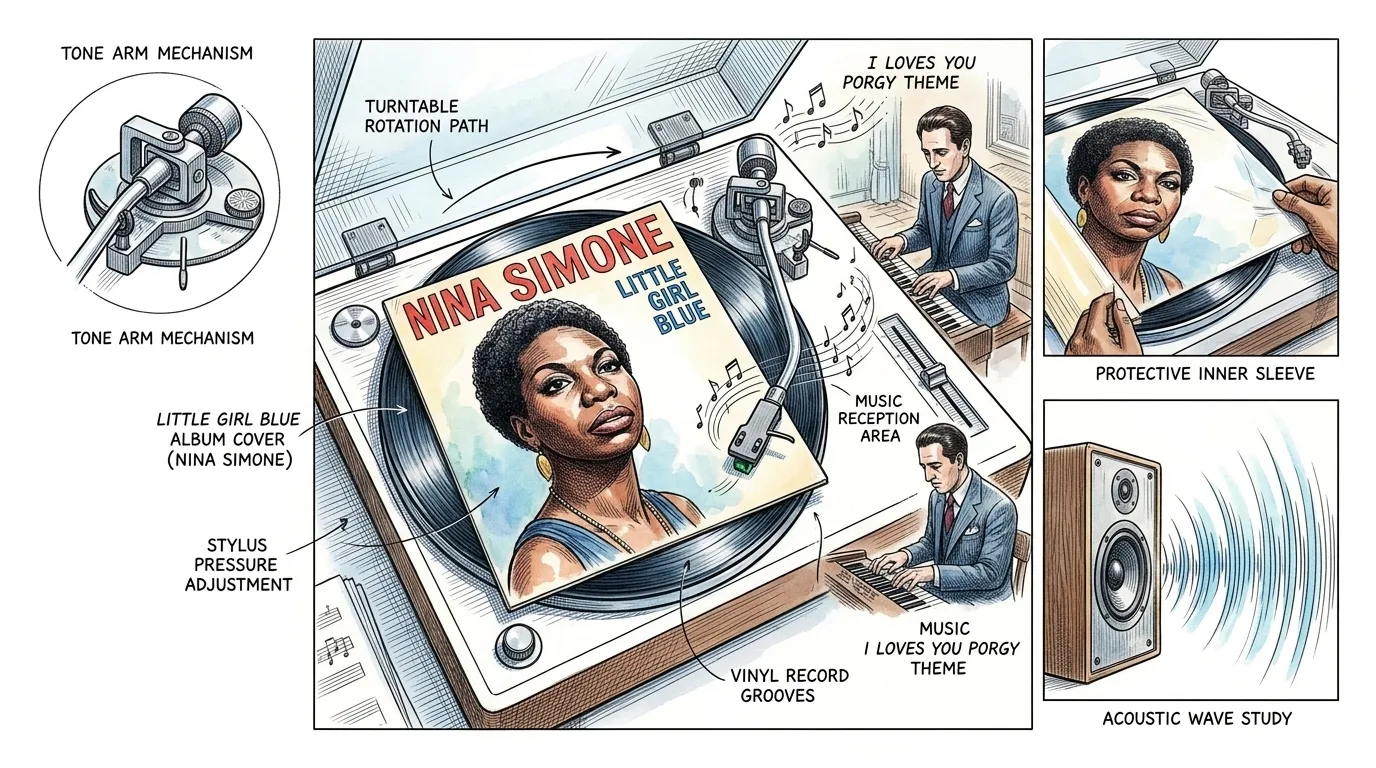
By 1958, Nina Simone's unique sound had caught the attention of Bethlehem Records. Her debut album, 'Little Girl Blue,' released in 1959, propelled her onto the national stage. The album's centerpiece, her rendition of 'I Loves You Porgy,' from George Gershwin's Porgy and Bess, became a Top 20 hit, solidifying her breakthrough. This moment was more than a commercial success; it was a vindication of her unconventional path, proving that her fusion of classical precision, jazz improvisation, and raw emotional power could captivate a mass audience. She was no longer just a nightclub act; she was a recorded artist whose voice now reached across the nation, an undeniable force in music.
Biographical Fact: Nina Simone's debut album 'Little Girl Blue' (1959), featuring her hit 'I Loves You Porgy,' established her as a formidable and unique voice in American music.
Page 6
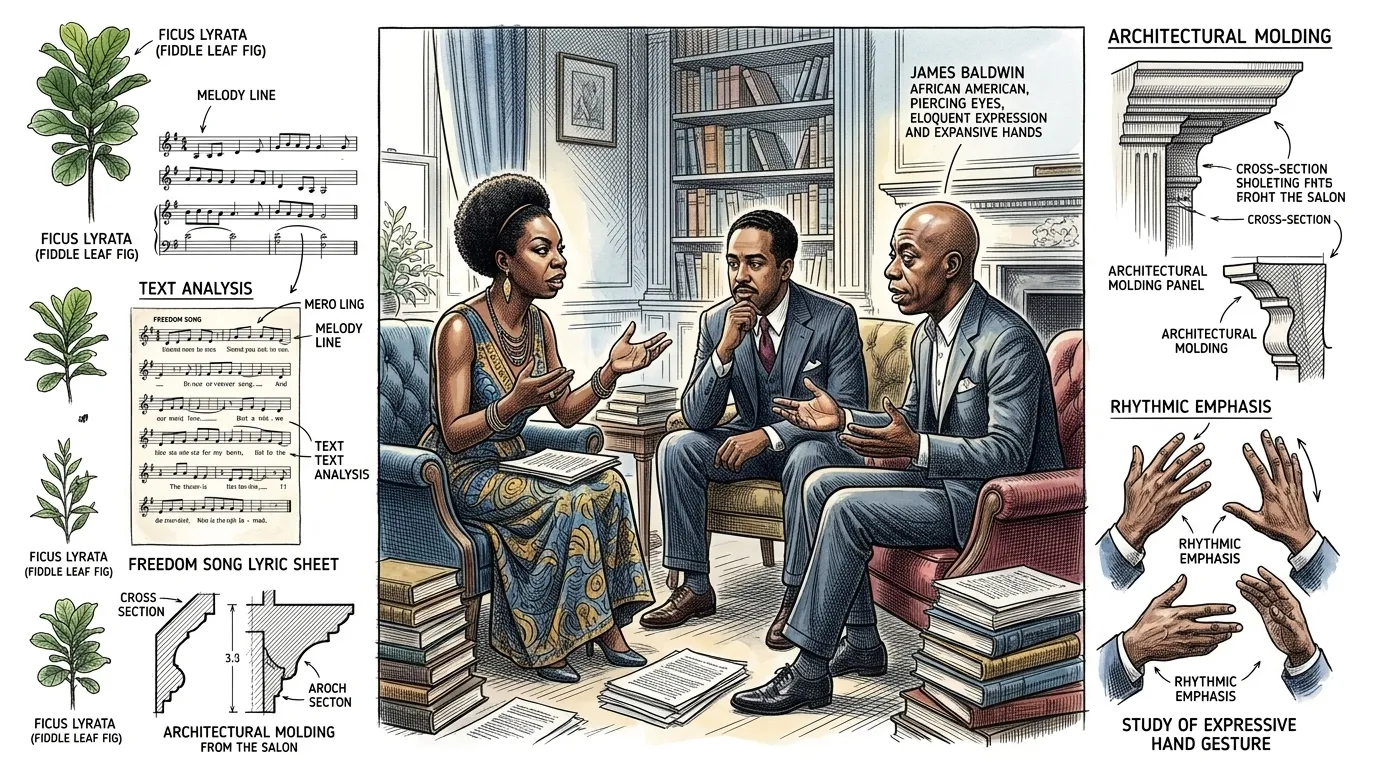
As the 1960s unfolded, Nina Simone's artistry became inextricably linked with the burgeoning Civil Rights Movement. She moved beyond implicit protest to explicit advocacy, performing at rallies and befriending key figures like Langston Hughes and James Baldwin. Her music became a direct instrument of social change, echoing the struggles and aspirations of African Americans across the nation. At gatherings, she would share stages and ideas, absorbing the urgency of the times and channeling it into her performances. Her commitment signaled a profound shift, transforming her from a mere entertainer into a cultural vanguard, unafraid to confront the brutal realities of her era head-on.
Biographical Fact: Nina Simone's immersion in the Civil Rights Movement during the early 1960s saw her collaborate with literary figures like James Baldwin and Langston Hughes, cementing her role as an artistic activist.
Page 7
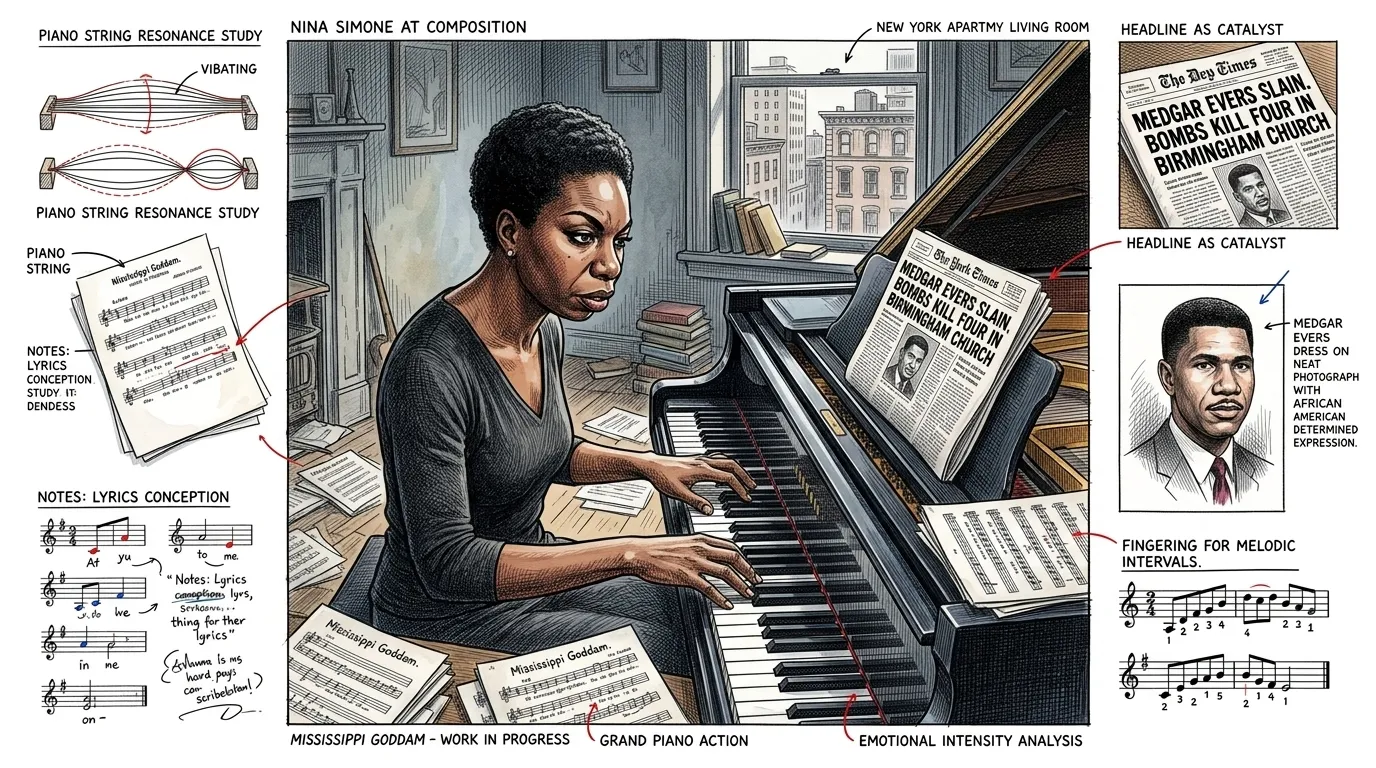
The escalating violence against African Americans in the Deep South reached a breaking point in 1963 and early 1964 with the murder of Medgar Evers and the bombing of the 16th Street Baptist Church in Birmingham. These atrocities ignited a profound rage within Nina Simone. Confined to her home in New York, she channeled her fury into composition, writing 'Mississippi Goddam.' The song was an immediate, visceral response, a radical departure from her previous repertoire's subtlety. It marked a conscious decision to shed artistic ambiguity for direct, confrontational political statement, solidifying her commitment to activism over commercial appeal. This intense creative act set the stage for its dramatic debut, preparing the audience for an uncompromising truth.
Biographical Fact: The murder of Medgar Evers and the Birmingham church bombing profoundly affected Nina Simone, leading her to compose the explicitly political 'Mississippi Goddam' in 1963-1964.
Page 8
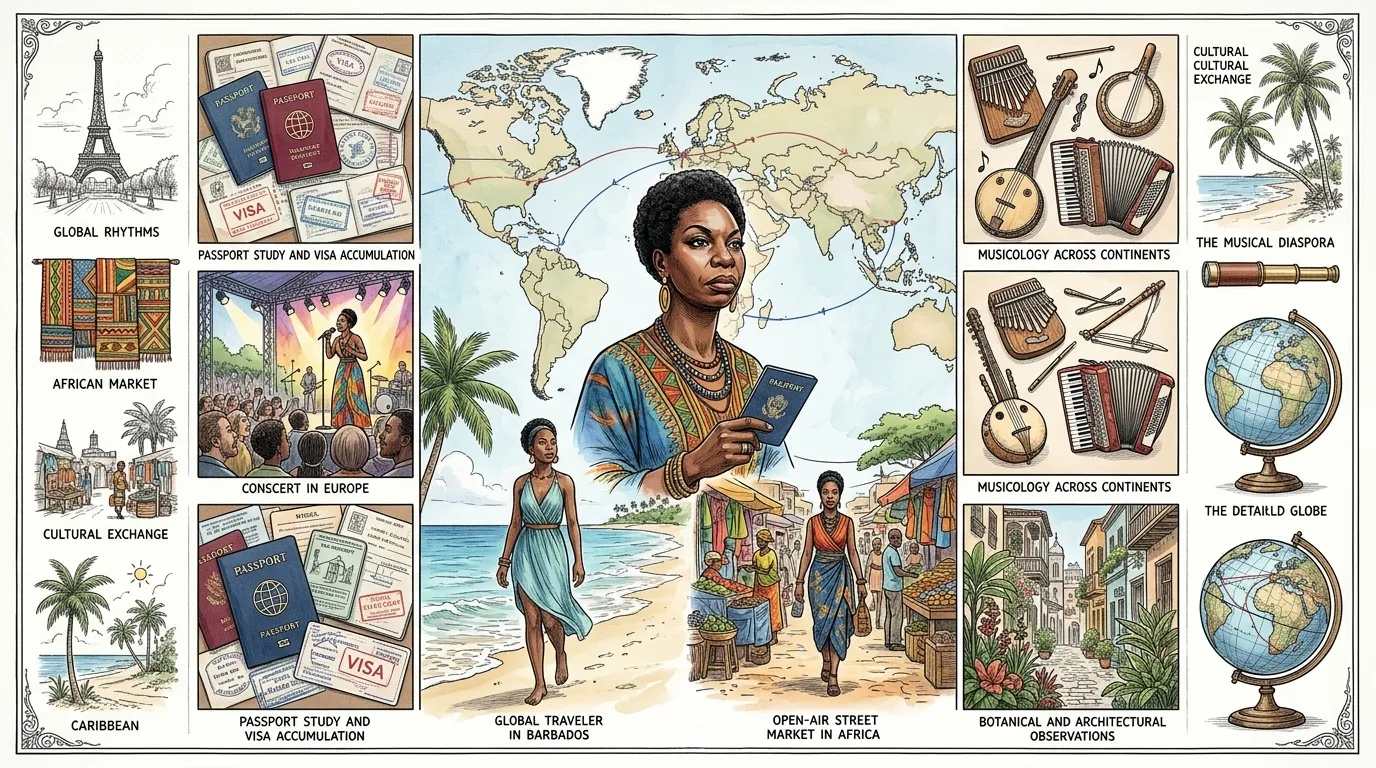
The uncompromising nature of Nina Simone's activism came with a heavy cost. By the early 1970s, facing tax issues, disillusionment with American racial politics, and a strained personal life, she chose to leave the United States. She lived in Barbados, Liberia, Switzerland, and France, becoming an expatriate. Though physically removed, her musical legacy continued to expand. She toured extensively, performing to sold-out crowds across Europe and Africa, carrying her message of freedom and empowerment to a global audience. Her exile transformed her into an international symbol of artistic integrity and defiance, a woman who sacrificed personal comfort for unyielding principle, her voice echoing far beyond American shores.
Biographical Fact: Disillusioned by American racial politics, Nina Simone left the United States in the early 1970s, living in various countries and expanding her global reach as an icon of artistic integrity.
Page 9
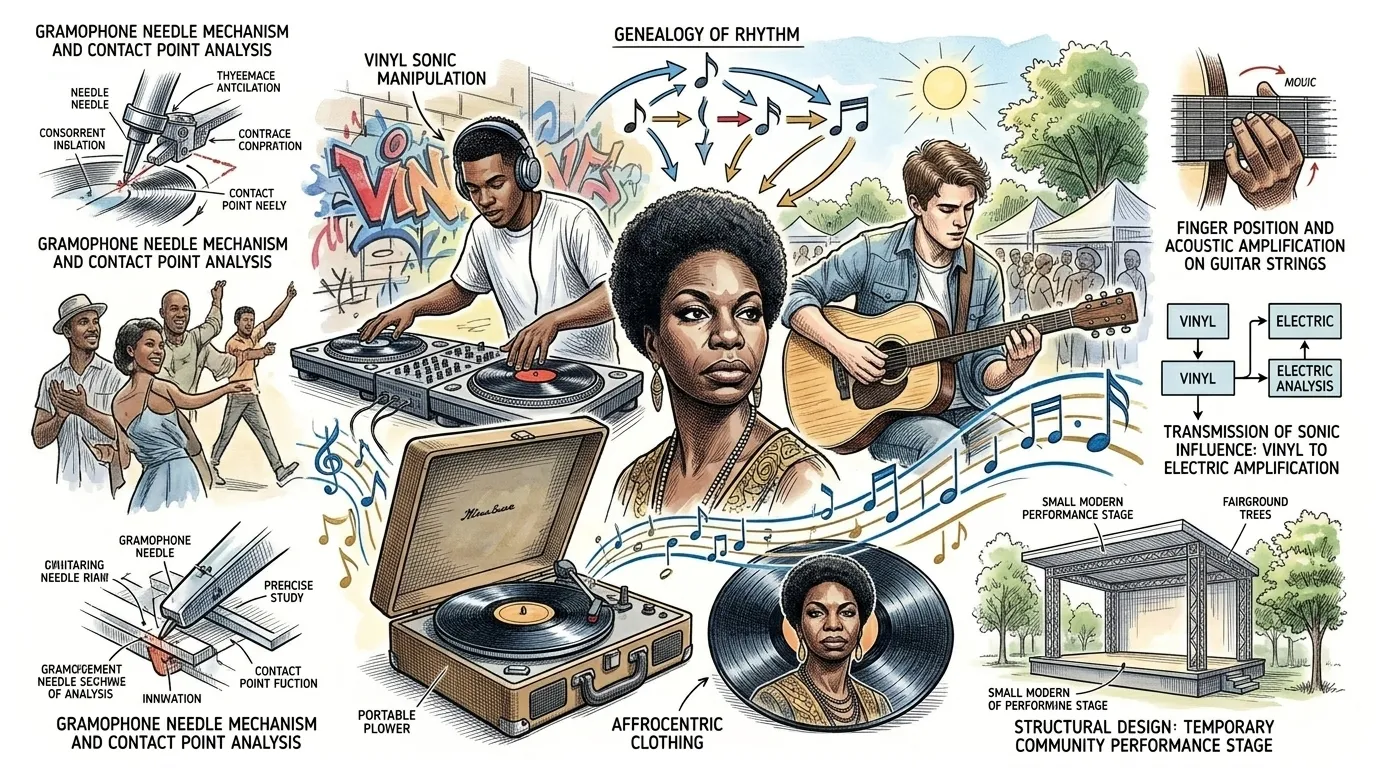
Despite periods of personal struggle and relative public silence in the late 20th century, Nina Simone's musical influence never waned; it deepened. Her work became fertile ground for a new generation. Hip-hop artists, seeking raw emotion and historical depth, extensively sampled her recordings, bringing her voice to millions unfamiliar with her original context. Artists across genres continued to cover her songs, drawing inspiration from her profound interpretations and fearless lyrical honesty. Her music, once deemed too radical, was now recognized as foundational, a testament to her prophetic vision and timeless artistry. She became a muse, an elder stateswoman whose past struggles fueled contemporary expressions, proving that true art transcends time and format.
Biographical Fact: In the late 20th and early 21st centuries, Nina Simone's music found renewed relevance, heavily sampled by hip-hop artists and celebrated by new generations, solidifying her enduring cultural impact.
Page 10
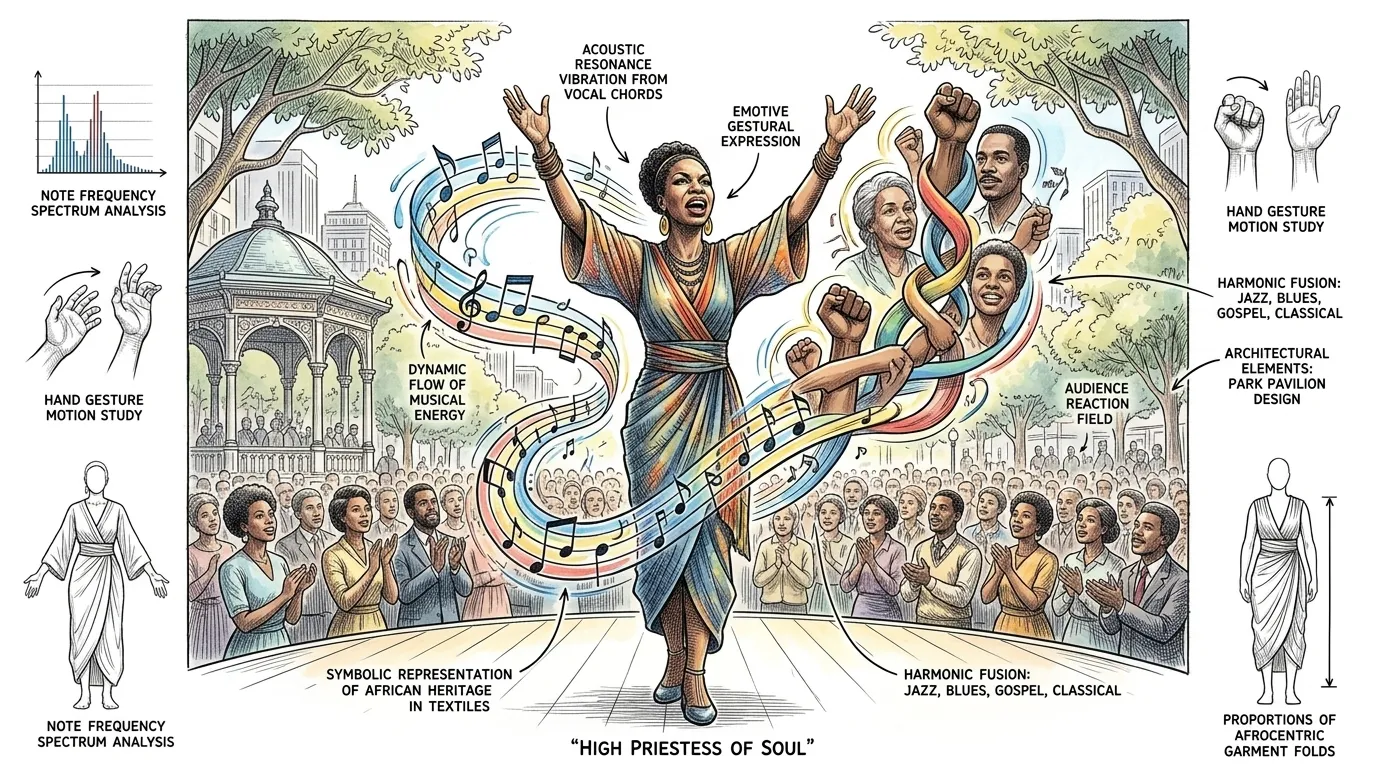
Nina Simone's legacy transcends mere musical genre; it is a testament to the power of unyielding self-expression in the face of injustice. She was a classical prodigy who became the 'High Priestess of Soul,' fusing jazz, blues, gospel, and classical forms into a singular, uncompromising voice. Her courage to speak truth to power, to use her art as a weapon for civil rights, forged an enduring template for artists globally. Her work remains a vibrant, essential part of the cultural tapestry, inspiring activism, introspection, and profound emotional connection. Nina Simone stands as an eternal symbol of artistic integrity and a powerful reminder that true liberation is often sung into existence, note by defiant note.
Biographical Fact: Nina Simone's legacy as the 'High Priestess of Soul' encompasses her genre-defying music, her unwavering civil rights activism, and her enduring influence as a symbol of artistic courage and self-expression.
About this story
- Location: Global
- Audience: general readers
Questions and answers
Read Wonder People on your phone
Wonder People is available on Android. Get Wonder People on Google Play.