Donna Strickland
Donna Strickland — an illustrated science story, set in Global. 10 illustrated pages, free to read on Wonder Science.
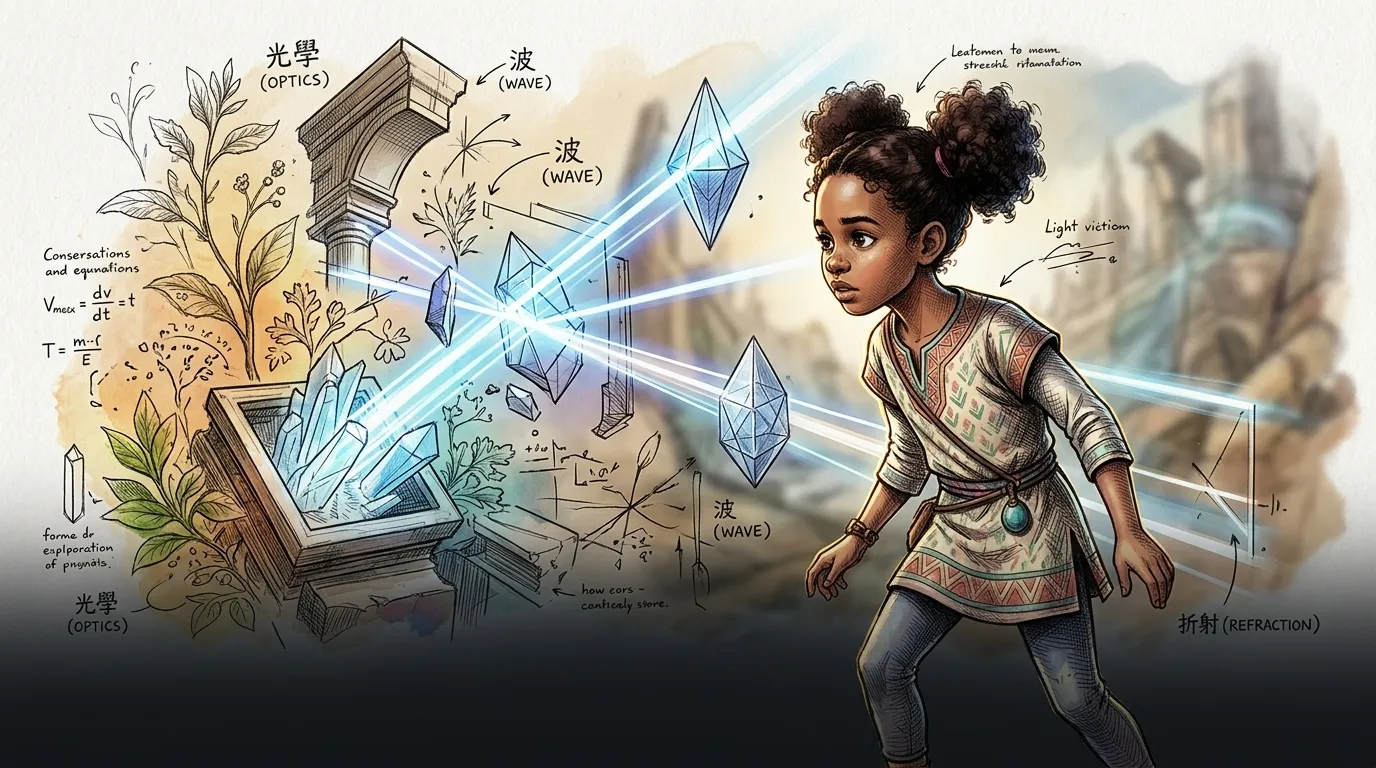
Page 1
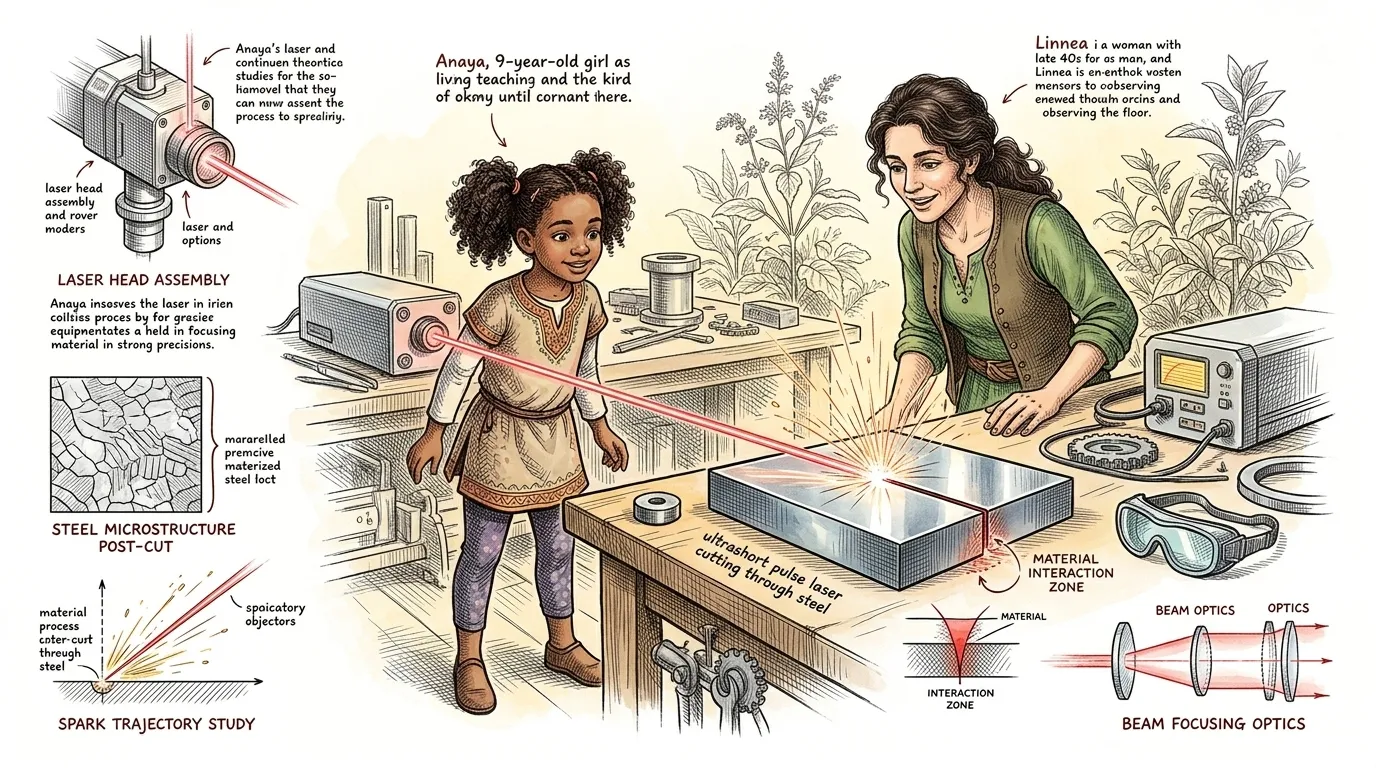
Imagine a laser so powerful, it can cut through steel in the blink of an eye. This is the realm of ultrashort pulse lasers, a field revolutionized by Donna Strickland. But what makes these lasers so special?\n\n Fact: ultrashort pulse laser cutting through steel
Page 2
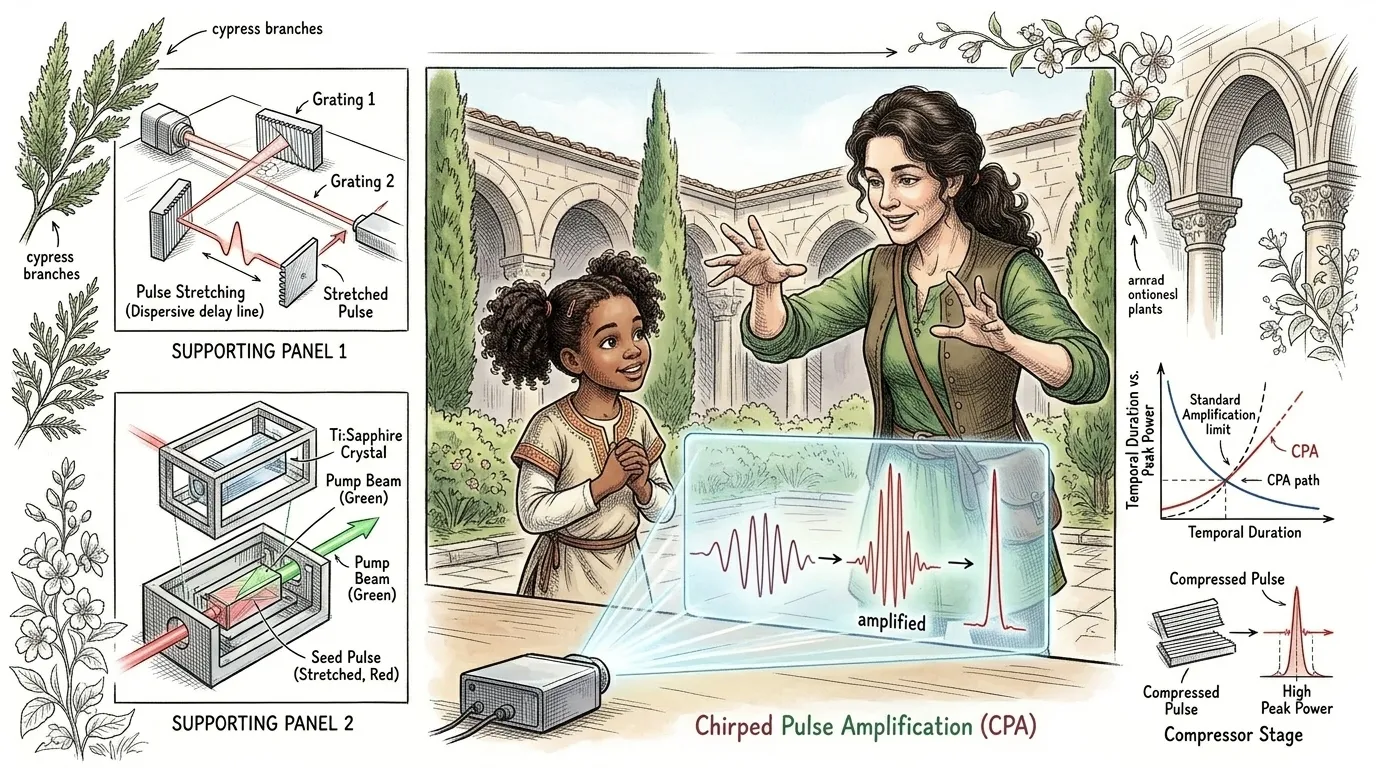
Donna Strickland, along with Gérard Mourou, found a clever way to amplify laser pulses without damaging the equipment. It's called Chirped Pulse Amplification, or CPA. First, they stretched the laser pulse in time, then amplified it, and finally compressed it back to its original duration.\n\n""Think of it like stretching taffy," Linnea explained. "If you pull it slowly, it won't break. Then, you make it bigger, and finally, you squeeze it back.""\n\n Fact: holographic display of CPA process
Page 3
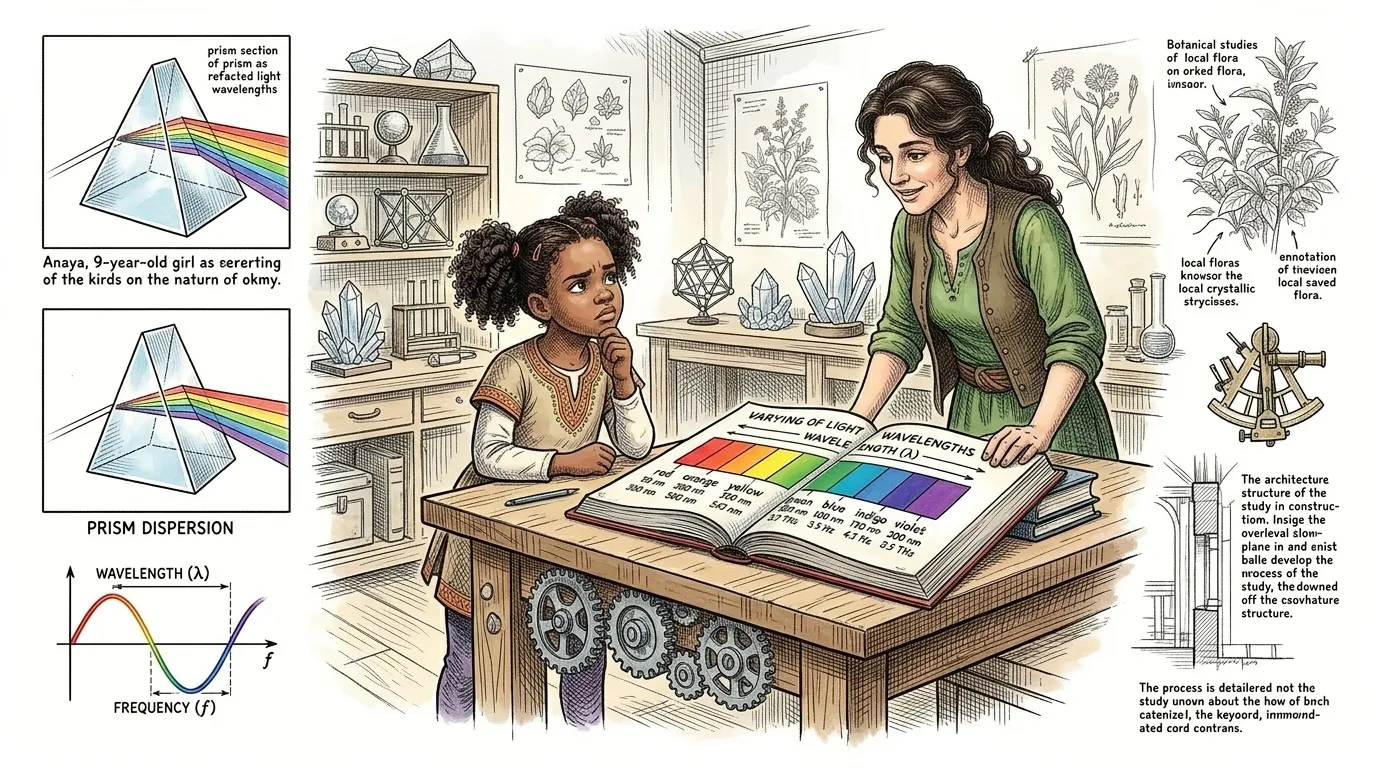
Before CPA, amplifying laser pulses was like trying to turn up the volume on a microphone too high – it would damage the amplifier. The trick was to reduce the peak power during amplification and then restore it.\n\n"Anaya furrowed her brow. "But how do you stretch and compress light?" she asked."\n\n Fact: illustration of light wavelengths in a book
Page 4
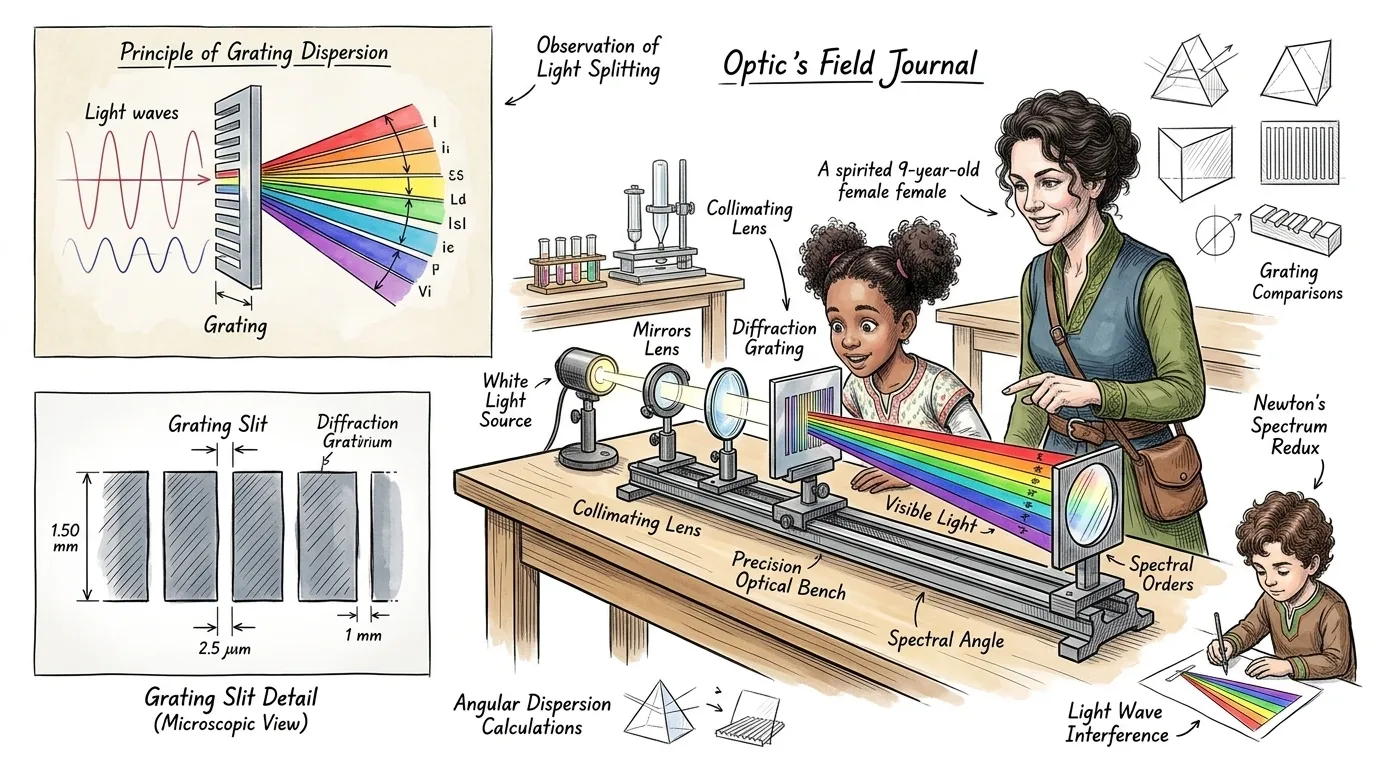
The key to stretching and compressing light pulses lies in diffraction gratings. These finely grooved surfaces can separate light into its different colors, or wavelengths, and then recombine them.\n\n""It's like a rainbow maker," Linnea said, "but instead of just making a pretty picture, we're controlling the pulse of light.""\n\n Fact: diffraction grating splitting light into a spectrum
Page 5
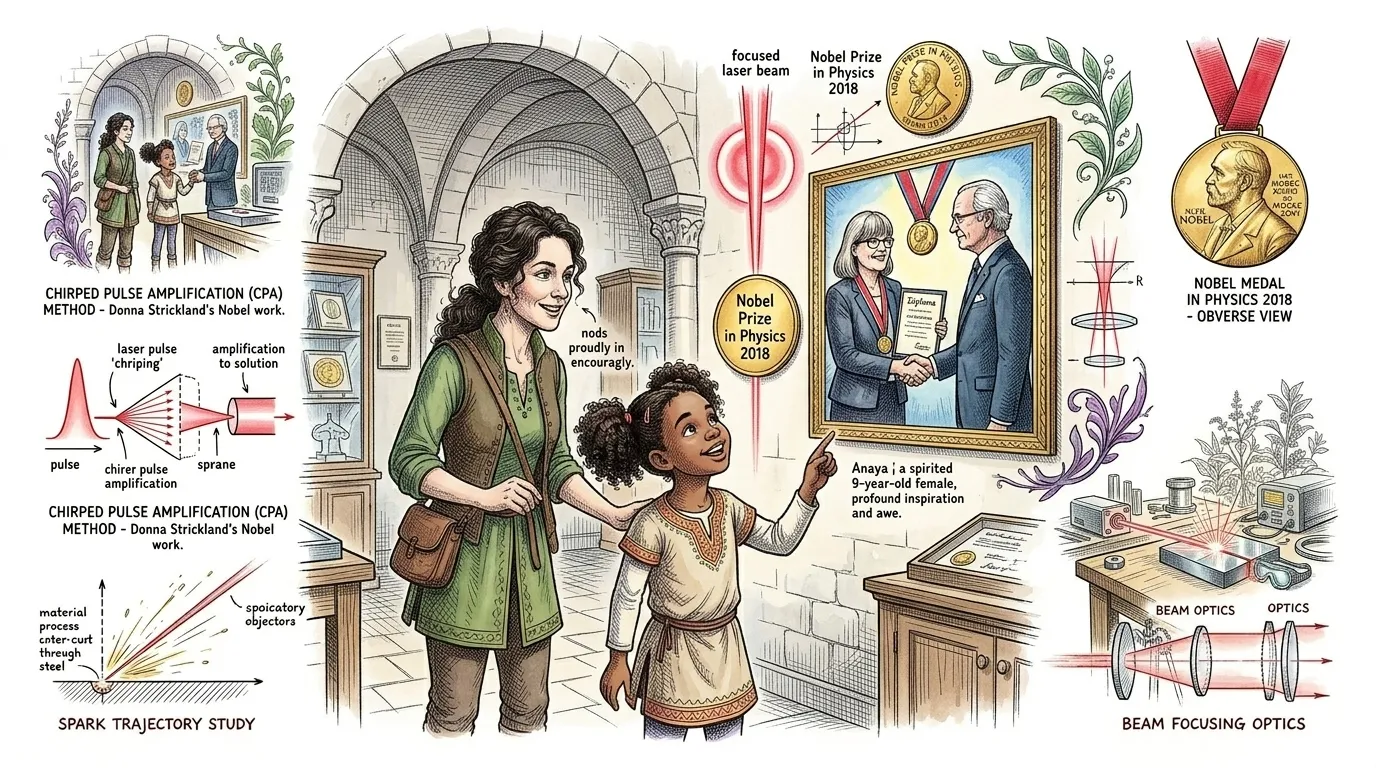
In 2018, Donna Strickland and Gérard Mourou were awarded the Nobel Prize in Physics for their groundbreaking work on CPA. Strickland was only the third woman ever to receive the Nobel Prize in Physics.\n\n""It's amazing," Anaya said, "that one idea could lead to so many applications and a Nobel Prize!""\n\n Fact: Donna Strickland at the Nobel Prize ceremony
Page 6
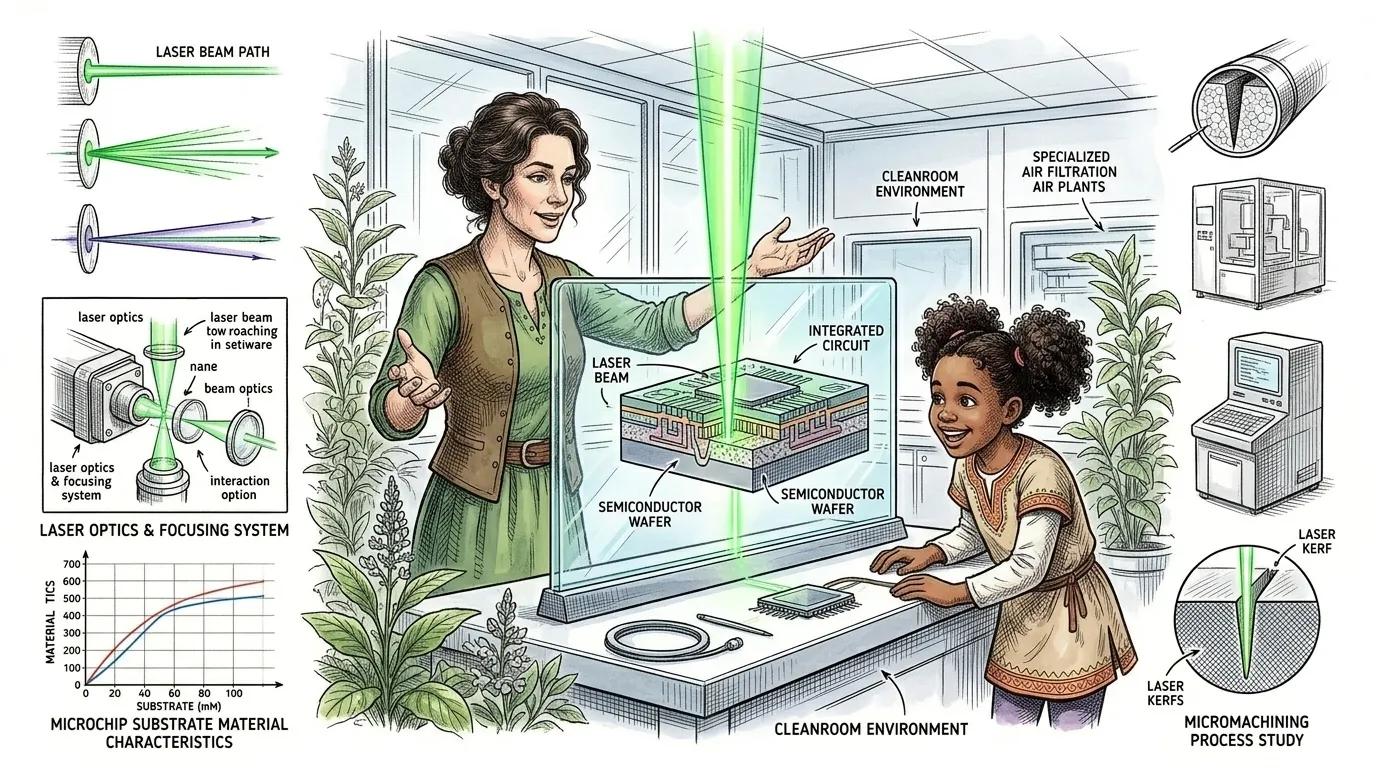
One major application of ultrashort pulse lasers is micromachining – the precise cutting and drilling of tiny structures. This is crucial for manufacturing everything from smartphones to medical devices.\n\n"Linnea turned to Anaya, "'The best way to predict the future is to invent it,' as Alan Kay said. And that's exactly what Donna Strickland and Gérard Mourou did. They invented a future of precision.""\n\n Fact: laser micromachining a microchip
Page 7
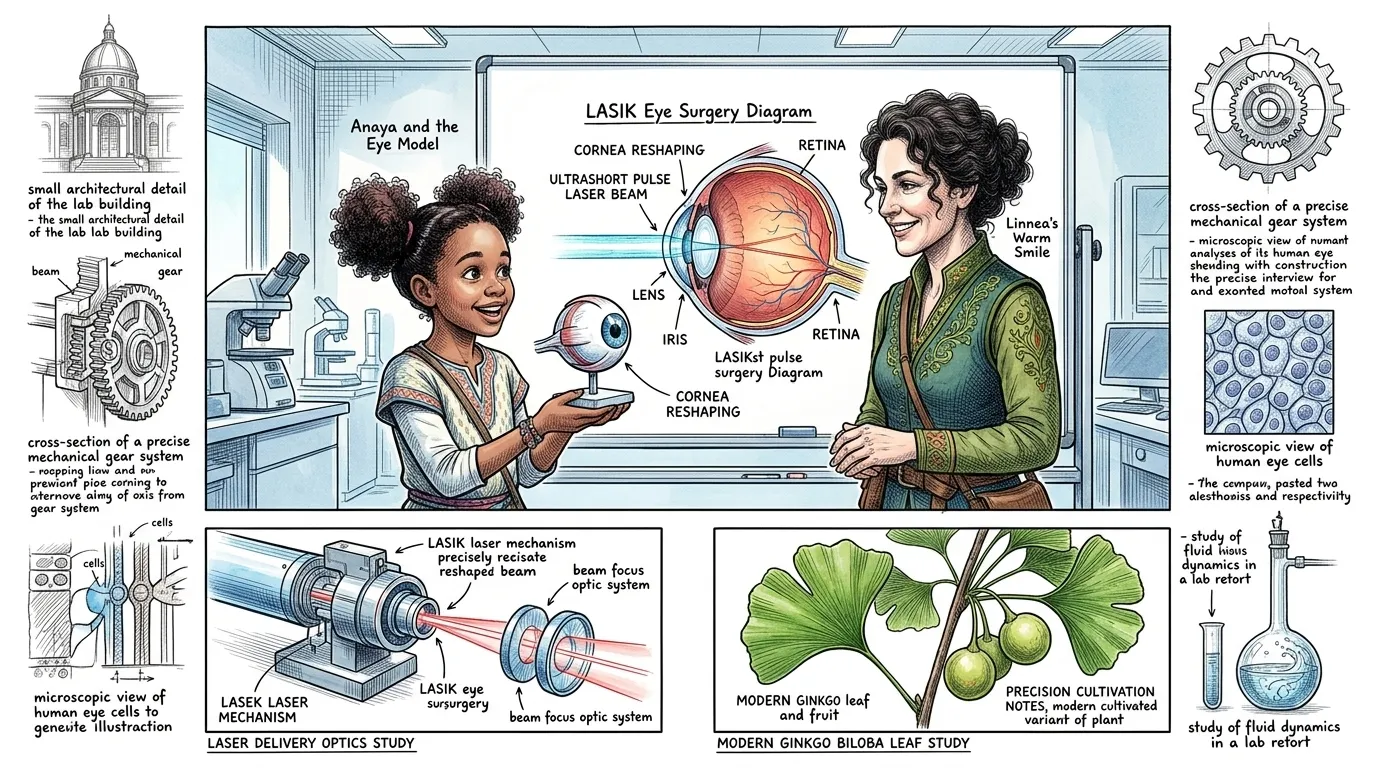
Ultrashort pulse lasers are also used in LASIK eye surgery, where they can precisely reshape the cornea to correct vision. This technique is safer and more accurate than traditional methods.\n\n""So, these lasers can actually help people see better?" Anaya asked, amazed."\n\n Fact: LASIK eye surgery using ultrashort pulse laser
Page 8
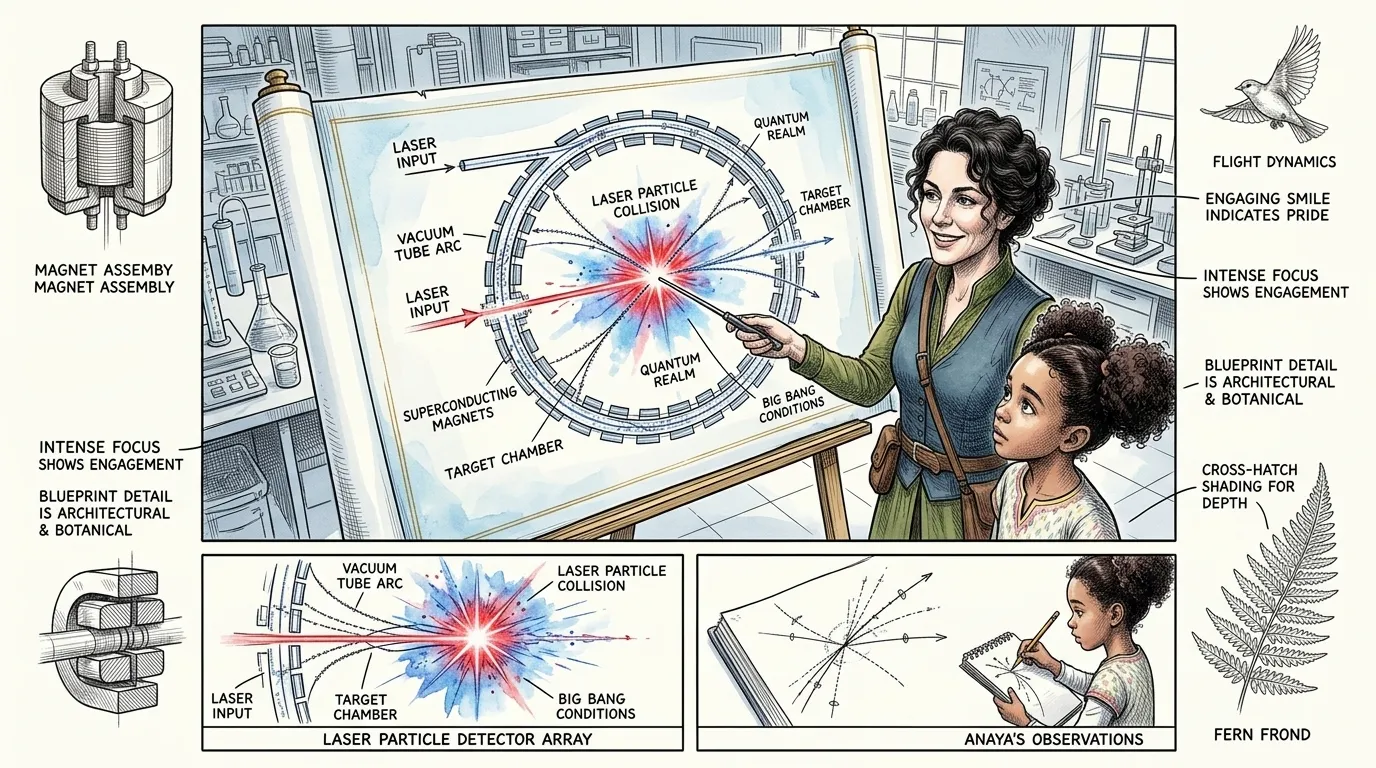
CPA has opened up new frontiers in high-intensity physics, allowing scientists to explore extreme conditions and test fundamental theories of the universe.\n\n"Linnea explained: "High-intensity physics probes the quantum realm, the ultra-fast, and the ultra-small. Scientists are using lasers to accelerate particles and create conditions similar to those shortly after the Big Bang.""\n\n Fact: laser particle collision in an accelerator
Page 9
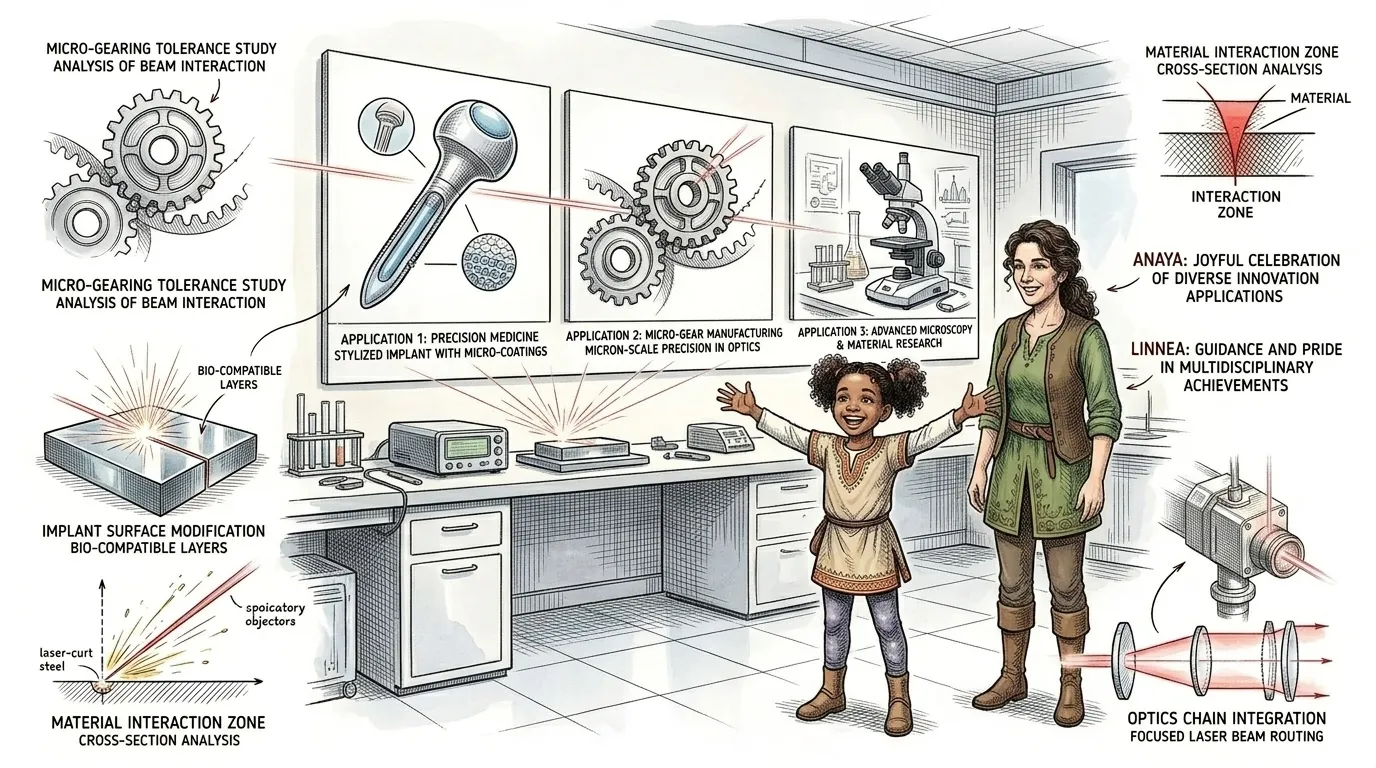
Donna Strickland's work isn't just theoretical. It has real-world impact, improving lives through medicine, manufacturing, and scientific discovery.\n\n"Anaya beamed, "It shows that even the most complex science can have practical benefits for everyone!""\n\n Fact: montage of CPA applications in medicine, manufacturing, and research
Page 10
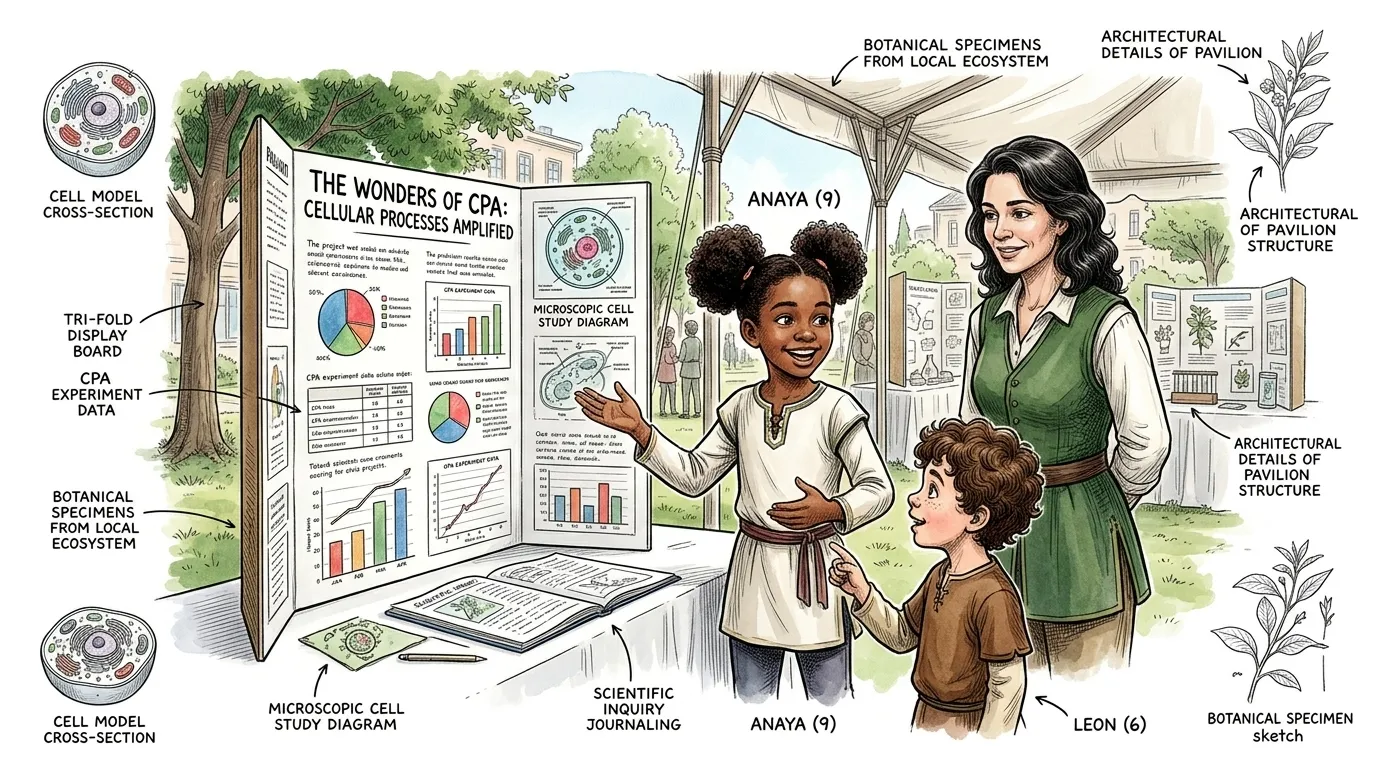
Donna Strickland's legacy extends beyond her scientific achievements. She inspires future generations of scientists, especially women, to pursue their passion and make a difference.\n\n Fact: science fair with Anaya's CPA project
About this story
- Location: Global
- Audience: kids (ages 6–12)
Questions and answers
Read Wonder Science on your phone
Wonder Science is available on Android. Get Wonder Science on Google Play.