Elizabeth Blackburn

Elizabeth Blackburn — an illustrated science story, set in Global. 10 illustrated pages, free to read on Wonder Science.
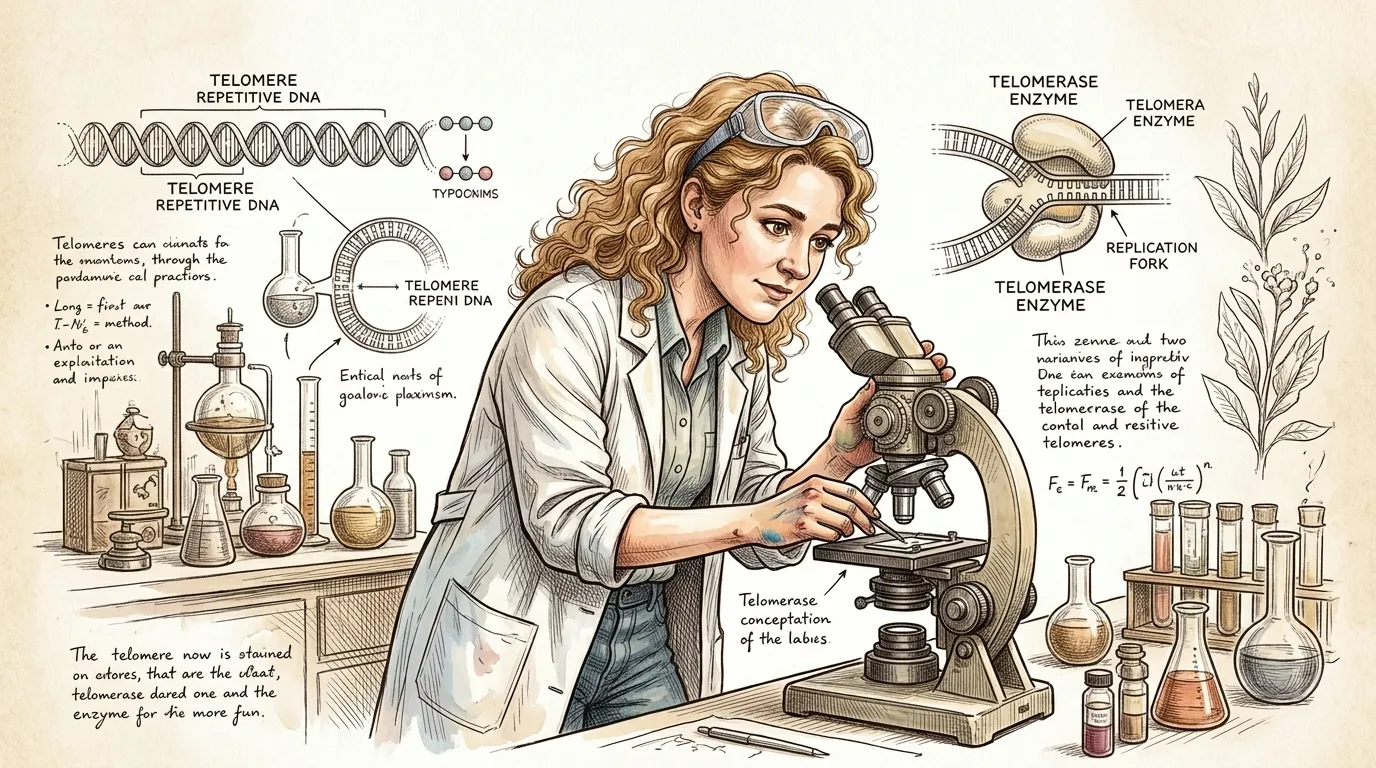
Elizabeth Blackburn — book cover — Wonder Science
Elizabeth Blackburn — an illustrated science story, set in Global. 10 illustrated pages, free to read on Wonder Science.

Page 1
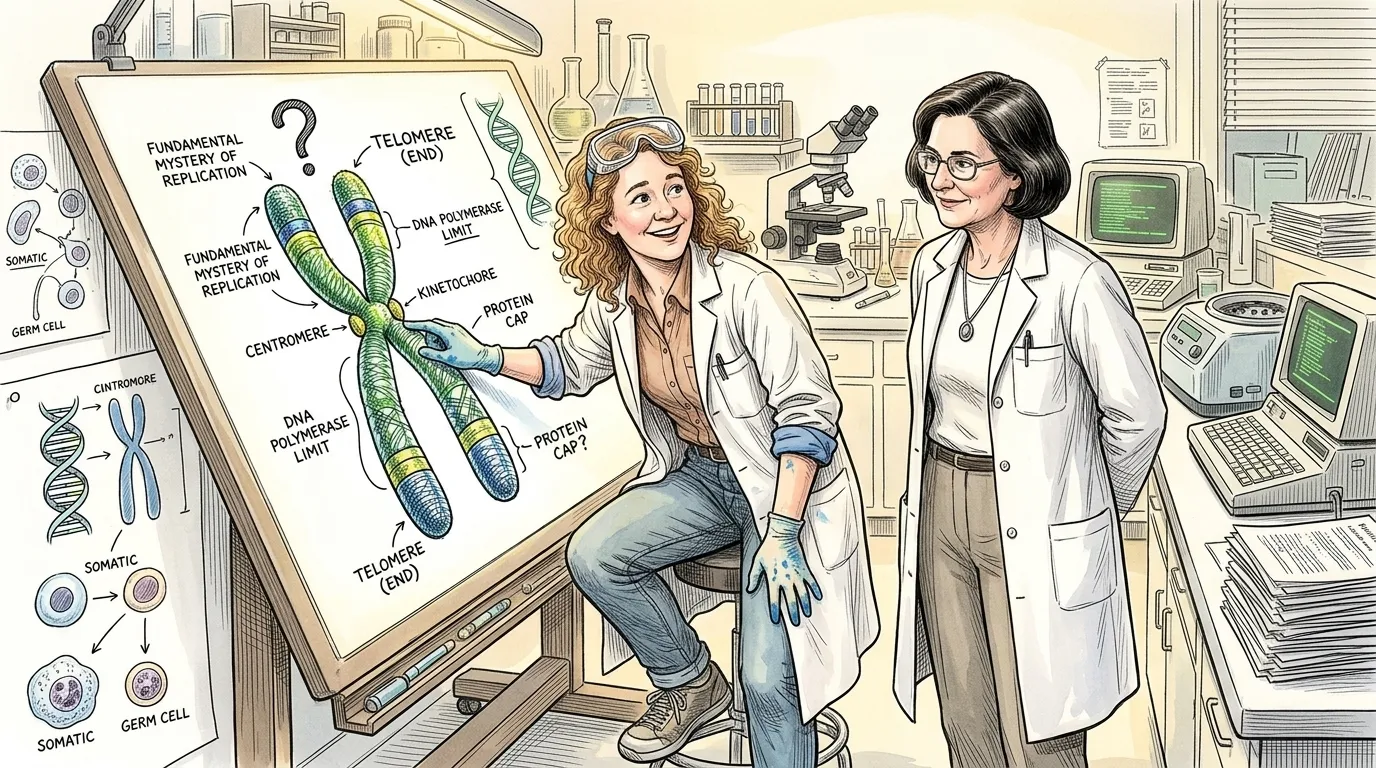
In the vibrant scientific landscape of the late 20th century, a fundamental mystery plagued molecular biology: how do chromosomes, the intricate blueprints of…
In the vibrant scientific landscape of the late 20th century, a fundamental mystery plagued molecular biology: how do chromosomes, the intricate blueprints of life, protect their ends during replication? This question lay at the heart of cellular stability and the very processes of aging and disease. It was a challenge that demanded not just insight, but a radical re-evaluation of genetic mechanisms.

In the vibrant scientific landscape of the late 20th century, a fundamental mystery plagued molecular biology: how do chromosomes, the intricate blueprints of life, protect their ends during replication? This question lay at the heart of cellular stability and the very processes of aging and disease. It was a challenge that demanded not just insight, but a radical re-evaluation of genetic mechanisms.

Page 2
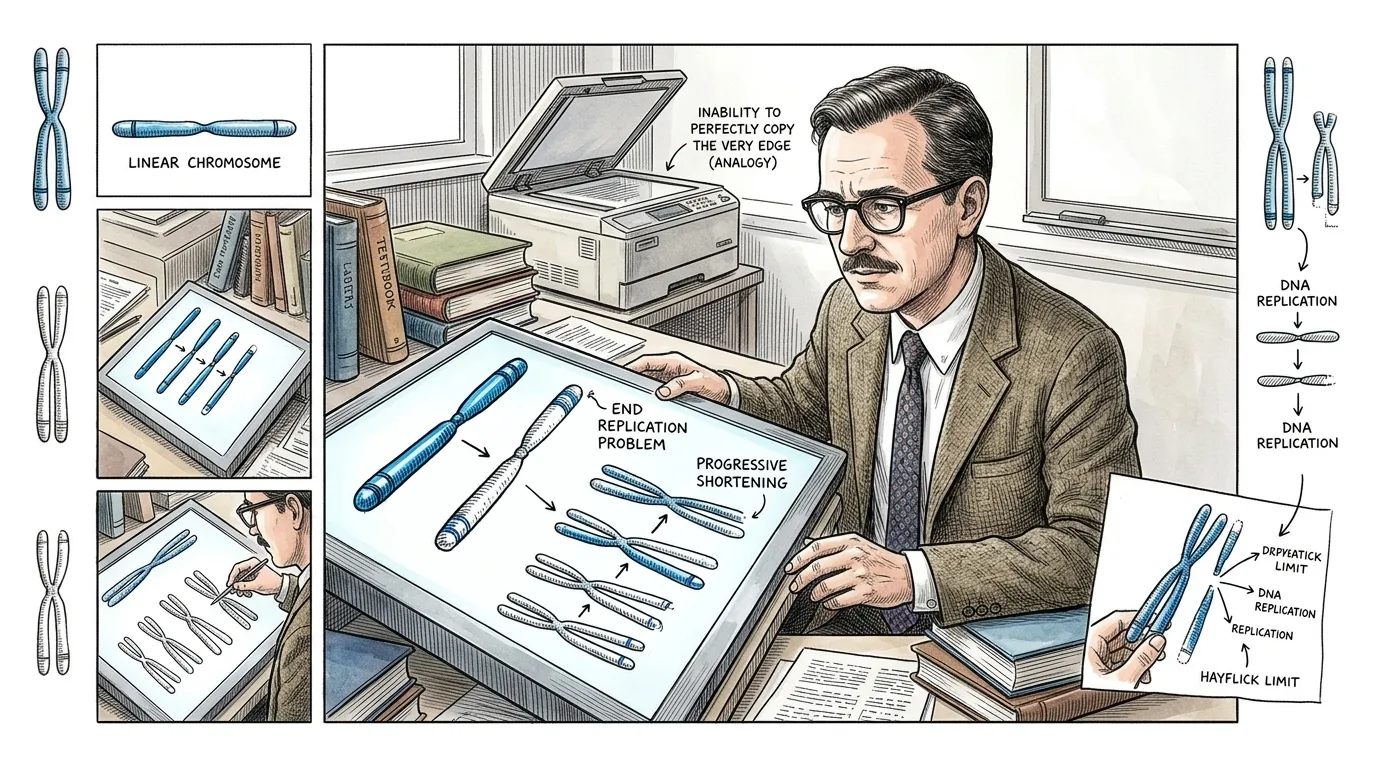
Life itself hinges on the accurate duplication of DNA during cell division. Yet, for years, scientists grappled with a perplexing paradox known as the 'end…
Life itself hinges on the accurate duplication of DNA during cell division. Yet, for years, scientists grappled with a perplexing paradox known as the 'end replication problem.' Every time a cell's linear chromosomes copied themselves, a tiny segment from each end was lost, much like a photocopier unable to perfectly copy the very edge of a document. This progressive shortening represented a fundamental threat to genomic integrity.

Life itself hinges on the accurate duplication of DNA during cell division. Yet, for years, scientists grappled with a perplexing paradox known as the 'end replication problem.' Every time a cell's linear chromosomes copied themselves, a tiny segment from each end was lost, much like a photocopier unable to perfectly copy the very edge of a document. This progressive shortening represented a fundamental threat to genomic integrity.

Page 3
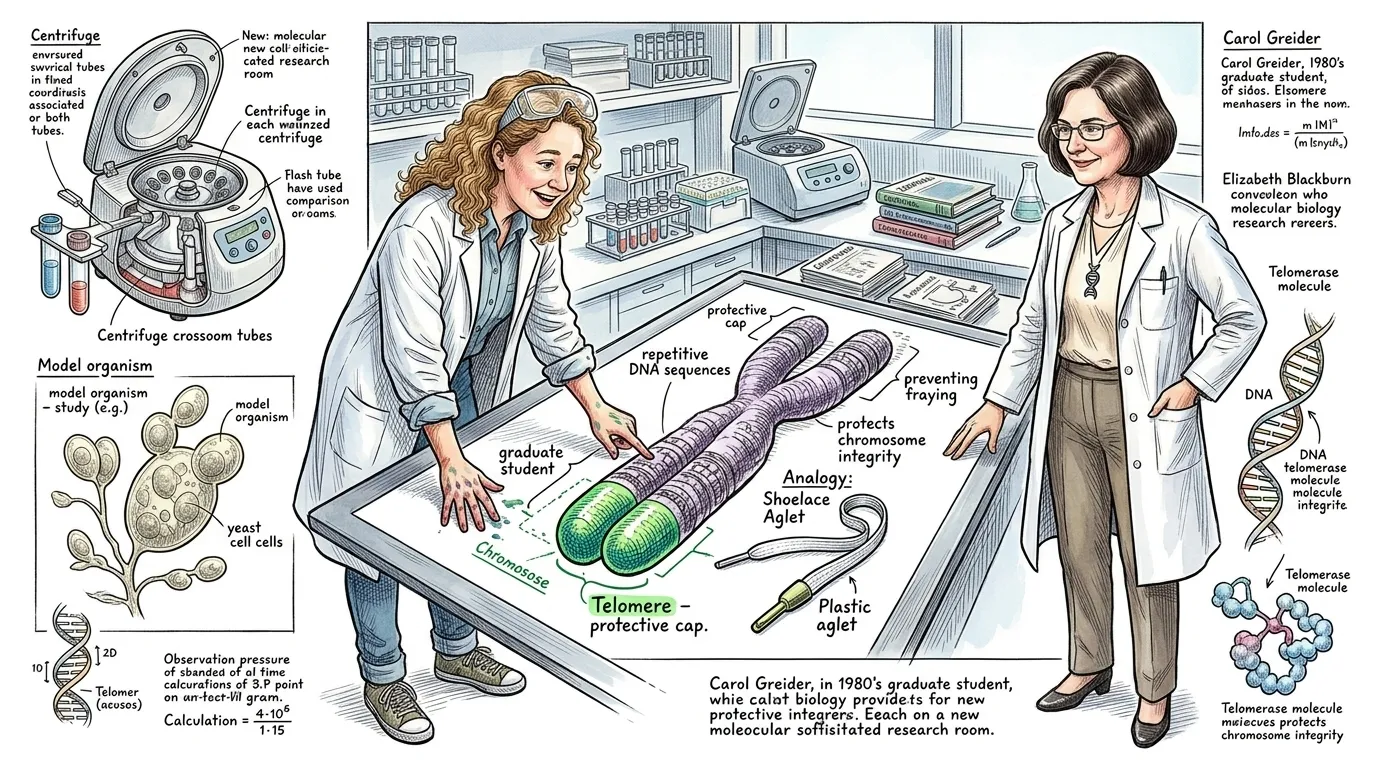
Nature, however, had devised an elegant solution: telomeres. These specialized stretches of repetitive DNA sequences, found at the very tips of chromosomes, act…
Nature, however, had devised an elegant solution: telomeres. These specialized stretches of repetitive DNA sequences, found at the very tips of chromosomes, act like the plastic caps on shoelaces, preventing the fraying and degradation of essential genetic material. Without these protective structures, vital genes would be lost with each cell division, leading rapidly to cellular dysfunction and death.

Nature, however, had devised an elegant solution: telomeres. These specialized stretches of repetitive DNA sequences, found at the very tips of chromosomes, act like the plastic caps on shoelaces, preventing the fraying and degradation of essential genetic material. Without these protective structures, vital genes would be lost with each cell division, leading rapidly to cellular dysfunction and death.

Page 4
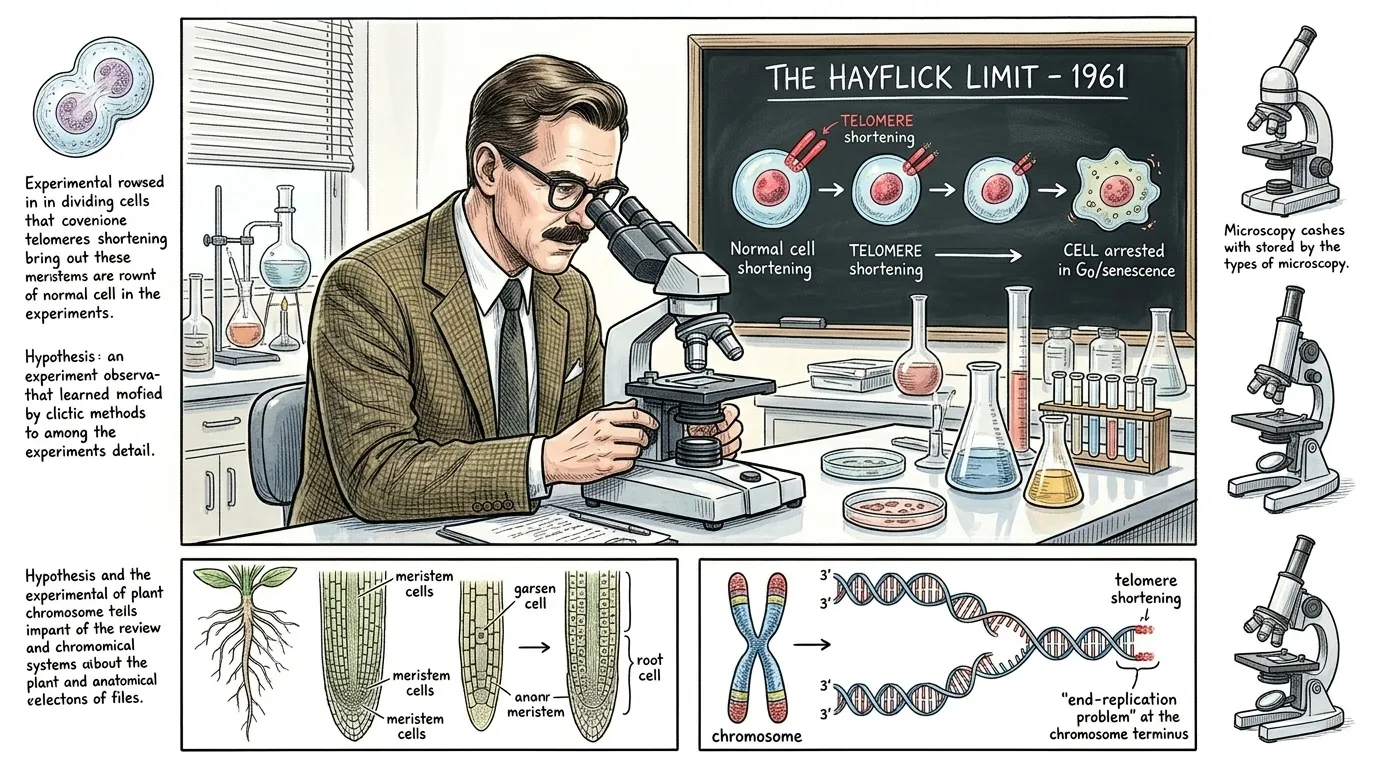
As cells divide, their telomeres naturally shorten. Eventually, after a finite number of divisions, these protective caps become critically short, triggering a…
As cells divide, their telomeres naturally shorten. Eventually, after a finite number of divisions, these protective caps become critically short, triggering a cellular alarm system. This phenomenon, famously described as the 'Hayflick Limit' by Leonard Hayflick in 1961, typically forces the cell into a state of irreversible growth arrest, called senescence, or programmed cell death, apoptosis.

As cells divide, their telomeres naturally shorten. Eventually, after a finite number of divisions, these protective caps become critically short, triggering a cellular alarm system. This phenomenon, famously described as the 'Hayflick Limit' by Leonard Hayflick in 1961, typically forces the cell into a state of irreversible growth arrest, called senescence, or programmed cell death, apoptosis. This intrinsic timer limits the lifespan of most somatic cells, directly linking telomere length to biological aging.

Page 5
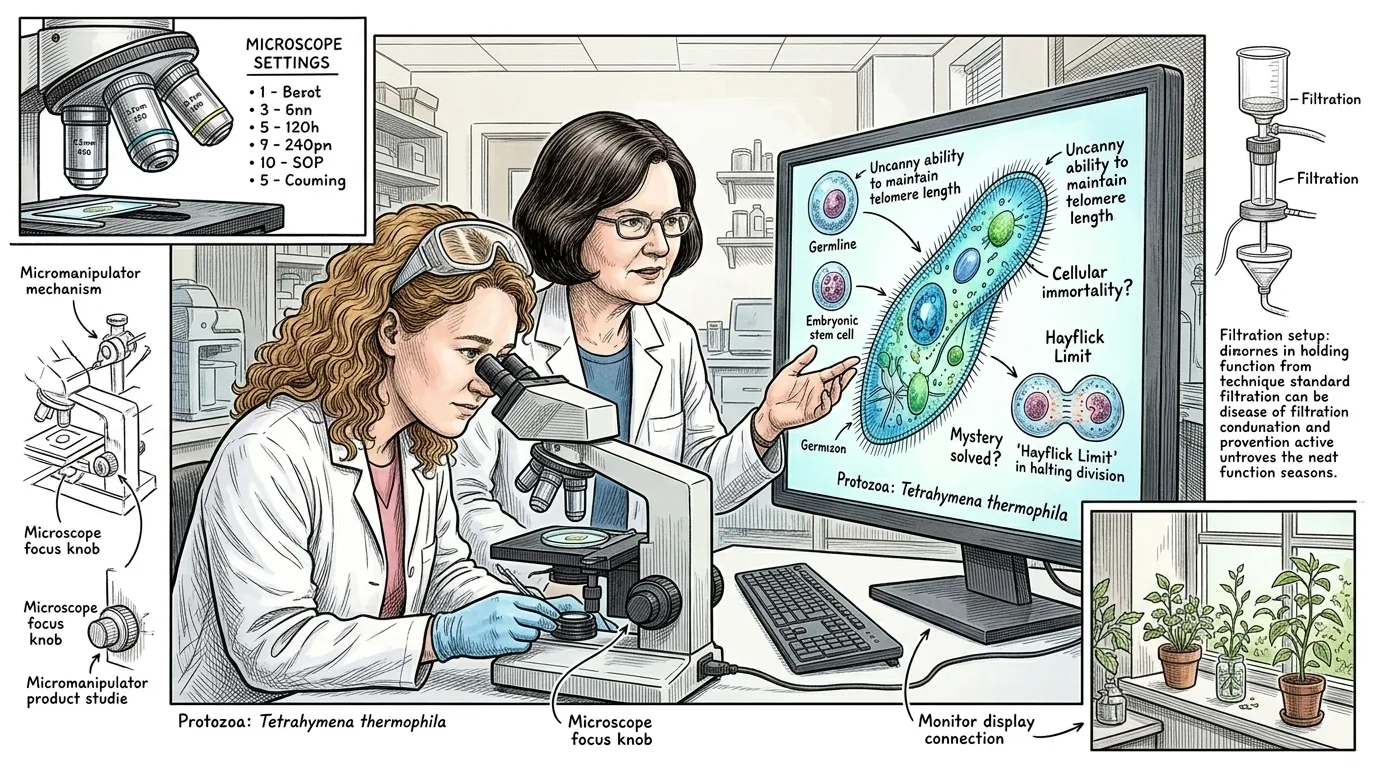
While most somatic cells adhere to the Hayflick Limit, certain cell types — and indeed, many single-celled organisms — seemed to defy this rule.
While most somatic cells adhere to the Hayflick Limit, certain cell types — and indeed, many single-celled organisms — seemed to defy this rule. For years, scientists observed that germline cells, embryonic stem cells, and crucially, certain protozoa like Tetrahymena thermophila, possessed an uncanny ability to maintain their telomere length, seemingly immortal.

While most somatic cells adhere to the Hayflick Limit, certain cell types — and indeed, many single-celled organisms — seemed to defy this rule. For years, scientists observed that germline cells, embryonic stem cells, and crucially, certain protozoa like Tetrahymena thermophila, possessed an uncanny ability to maintain their telomere length, seemingly immortal. This anomaly suggested the existence of an unknown mechanism capable of extending telomeres, a vital clue in the puzzle of cellular immortality.

Page 6
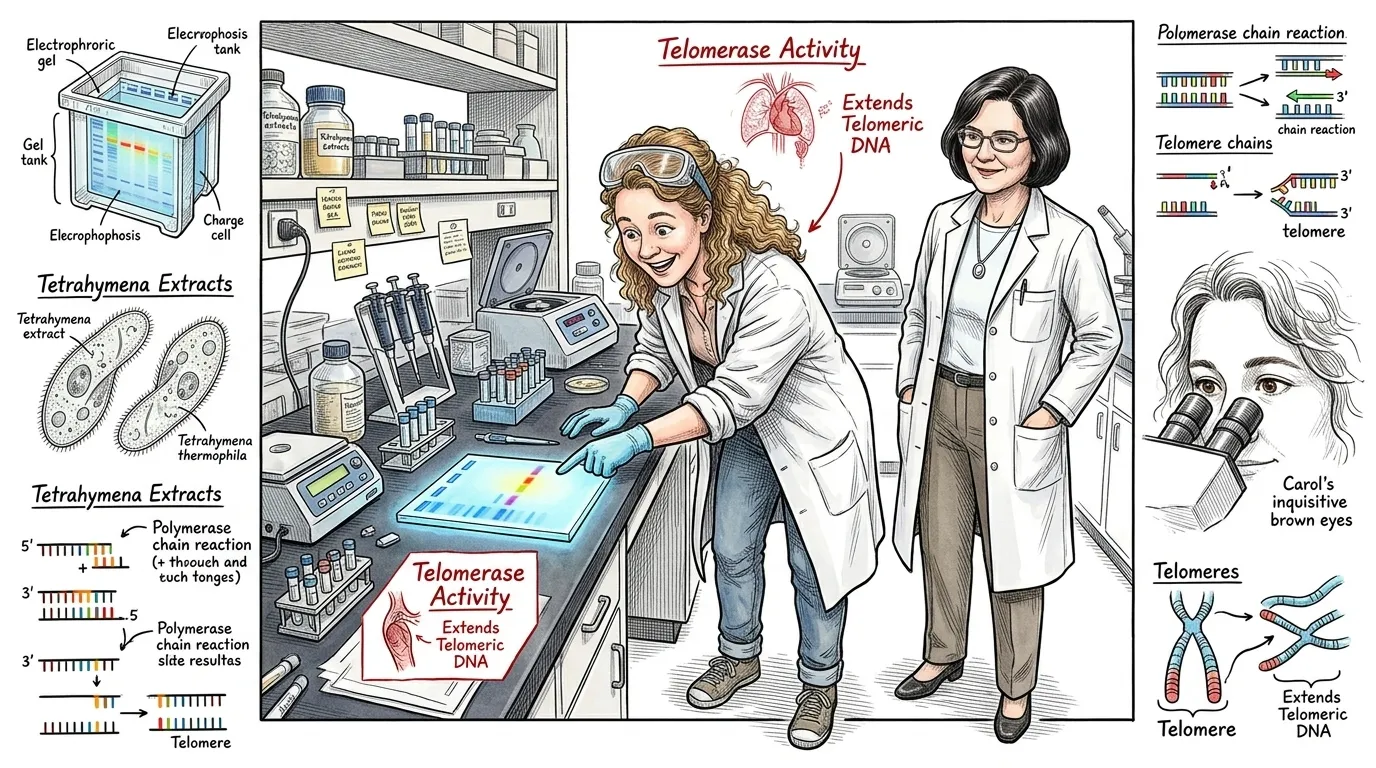
In 1984, working under Elizabeth Blackburn's guidance, graduate student Carol Greider embarked on a meticulous series of experiments using Tetrahymena extracts.
In 1984, working under Elizabeth Blackburn's guidance, graduate student Carol Greider embarked on a meticulous series of experiments using Tetrahymena extracts. Their goal: to isolate the elusive enzyme responsible for telomere maintenance. After countless hours of painstaking work, Greider observed a distinct enzymatic activity that could extend telomeric DNA.

In 1984, working under Elizabeth Blackburn's guidance, graduate student Carol Greider embarked on a meticulous series of experiments using Tetrahymena extracts. Their goal: to isolate the elusive enzyme responsible for telomere maintenance. After countless hours of painstaking work, Greider observed a distinct enzymatic activity that could extend telomeric DNA. This groundbreaking discovery, published in 1985, marked the identification of telomerase, the enzyme that directly synthesizes telomere repeats.

Page 7
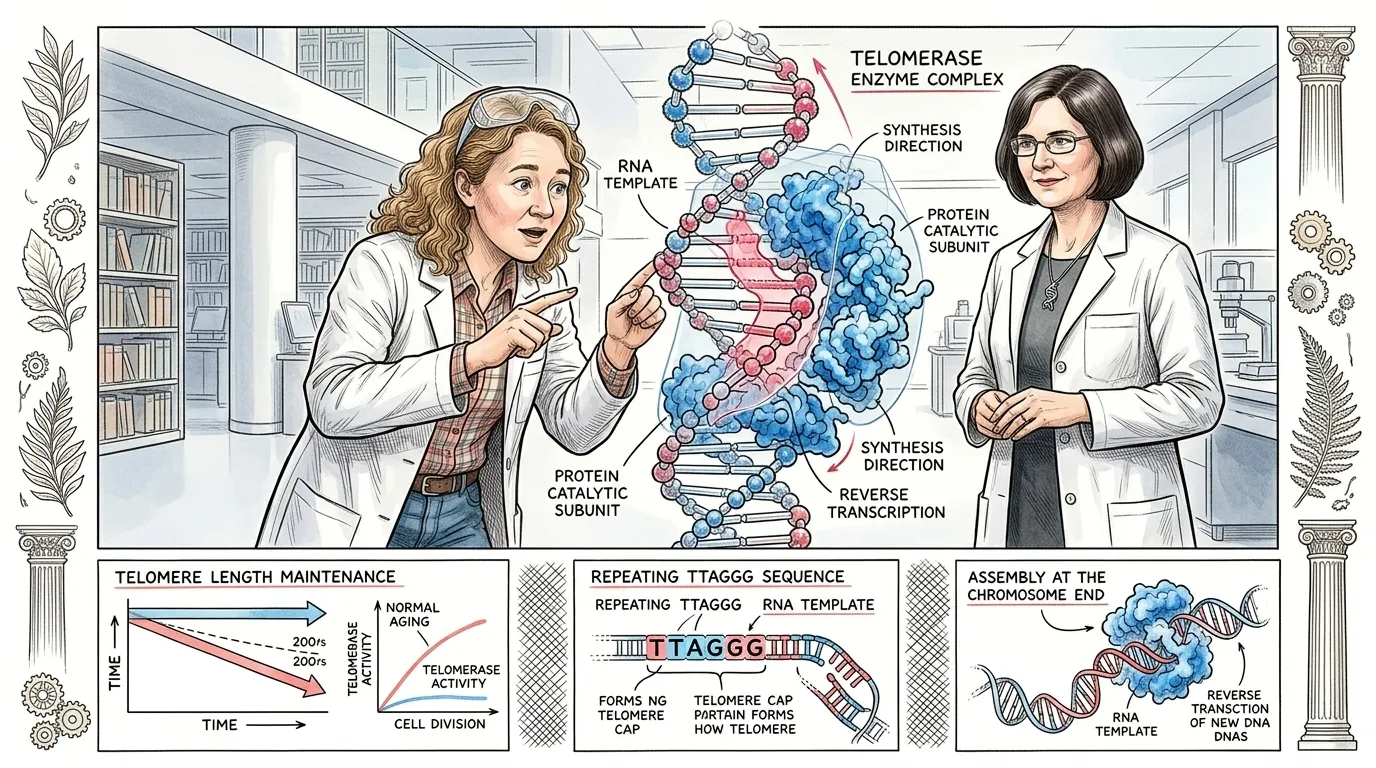
Further research unveiled the elegant mechanism of telomerase. It proved to be a remarkable ribonucleoprotein enzyme, meaning it consists of both protein and…
Further research unveiled the elegant mechanism of telomerase. It proved to be a remarkable ribonucleoprotein enzyme, meaning it consists of both protein and RNA. Crucially, its RNA component acts as a template, guiding the synthesis of new telomeric DNA repeats. This process, a form of reverse transcription, allows telomerase to effectively 'reset' the cellular clock by restoring the lost telomere segments, a sophisticated ballet of molecular machinery ensuring the integrity…

Further research unveiled the elegant mechanism of telomerase. It proved to be a remarkable ribonucleoprotein enzyme, meaning it consists of both protein and RNA. Crucially, its RNA component acts as a template, guiding the synthesis of new telomeric DNA repeats. This process, a form of reverse transcription, allows telomerase to effectively 'reset' the cellular clock by restoring the lost telomere segments, a sophisticated ballet of molecular machinery ensuring the integrity of the genome.

Page 8
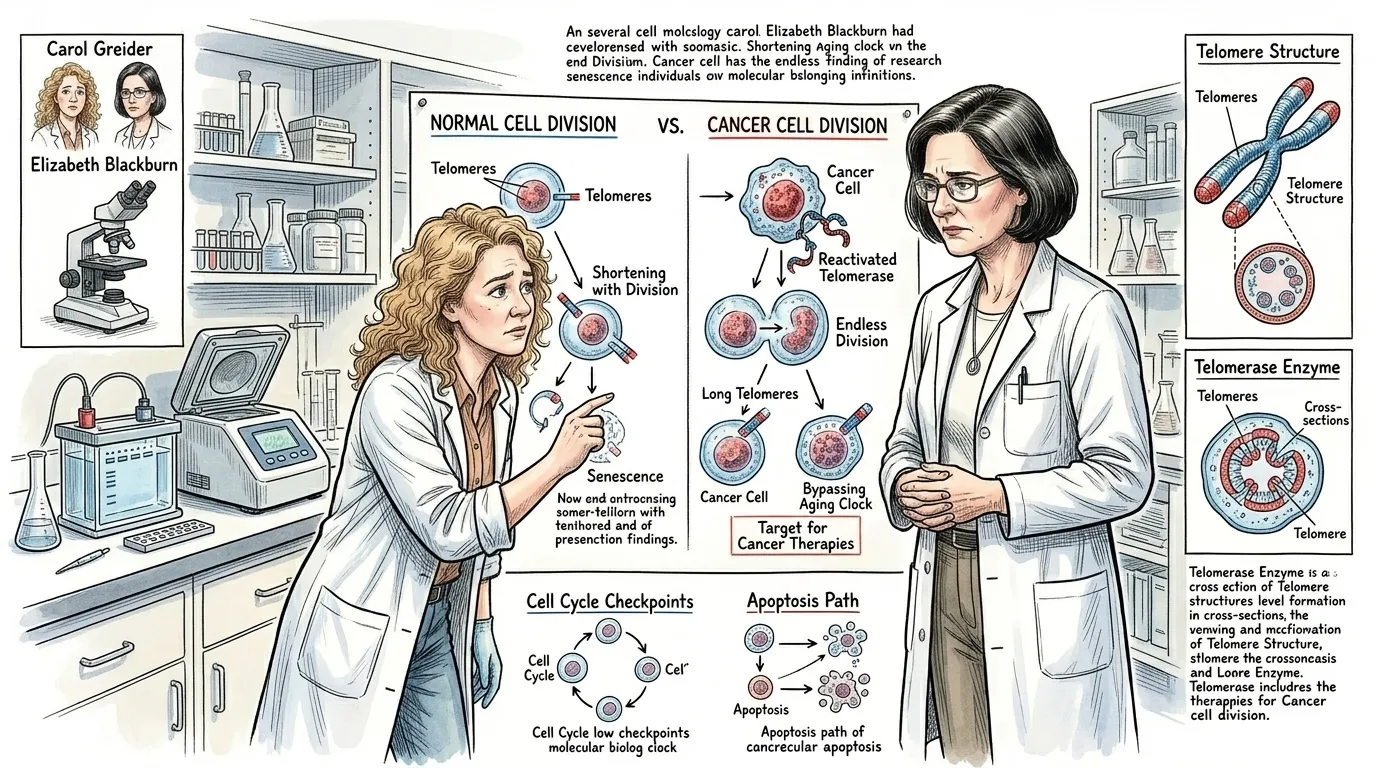
The discovery of telomerase opened a Pandora's Box of biological implications, particularly in the realm of disease. While telomere shortening acts as a tumor…
The discovery of telomerase opened a Pandora's Box of biological implications, particularly in the realm of disease. While telomere shortening acts as a tumor suppressor mechanism, preventing uncontrolled cell division, cancer cells often find a way to reactivate telomerase. By doing so, they bypass the natural cellular aging clock, achieving a state of 'immortality' that fuels their rampant growth and metastatic potential.

The discovery of telomerase opened a Pandora's Box of biological implications, particularly in the realm of disease. While telomere shortening acts as a tumor suppressor mechanism, preventing uncontrolled cell division, cancer cells often find a way to reactivate telomerase. By doing so, they bypass the natural cellular aging clock, achieving a state of 'immortality' that fuels their rampant growth and metastatic potential. This makes telomerase a prime target for novel cancer therapies.

Page 9
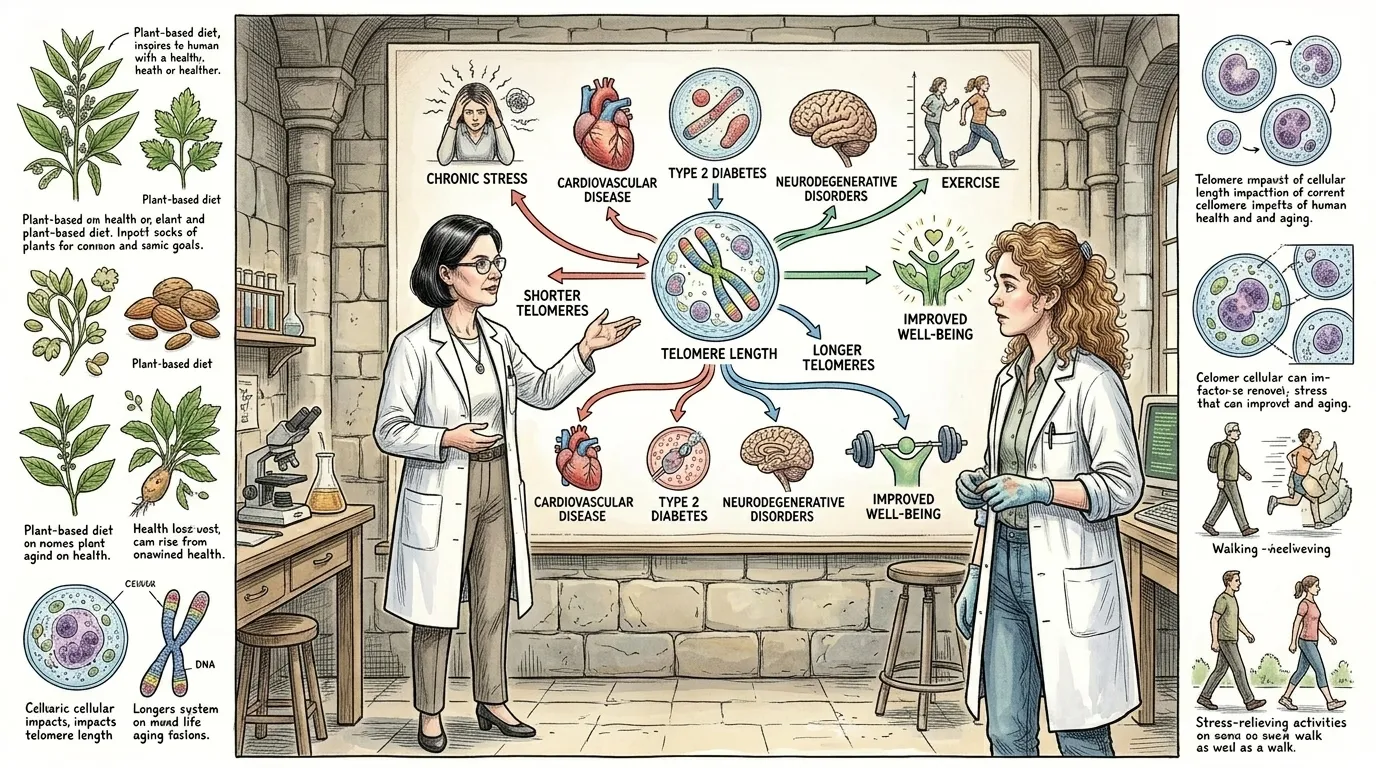
Beyond cancer, telomere biology profoundly influences the broader landscape of human health and aging. Shorter telomeres are associated with an increased risk…
Beyond cancer, telomere biology profoundly influences the broader landscape of human health and aging. Shorter telomeres are associated with an increased risk of numerous age-related diseases, including cardiovascular disease, type 2 diabetes, and neurodegenerative disorders. Lifestyle factors like chronic stress, poor diet, and lack of exercise can accelerate telomere shortening, while healthier habits appear to help maintain telomere length, underscoring the deep connection…

Beyond cancer, telomere biology profoundly influences the broader landscape of human health and aging. Shorter telomeres are associated with an increased risk of numerous age-related diseases, including cardiovascular disease, type 2 diabetes, and neurodegenerative disorders. Lifestyle factors like chronic stress, poor diet, and lack of exercise can accelerate telomere shortening, while healthier habits appear to help maintain telomere length, underscoring the deep connection between cellular health and organismal well-being.

Page 10
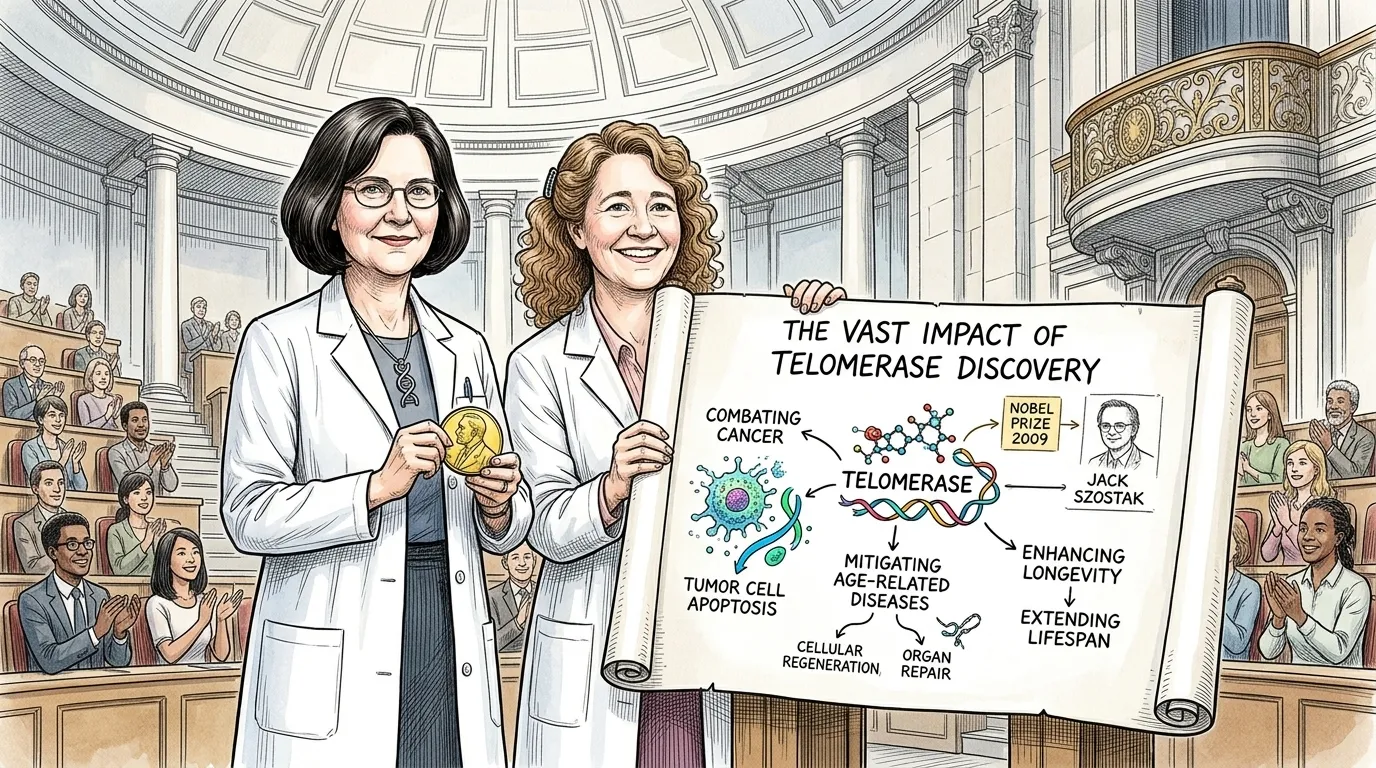
Elizabeth Blackburn's pioneering work, alongside Carol Greider and Jack Szostak, fundamentally reshaped our understanding of chromosome biology, earning them…
Elizabeth Blackburn's pioneering work, alongside Carol Greider and Jack Szostak, fundamentally reshaped our understanding of chromosome biology, earning them the Nobel Prize in Physiology or Medicine in 2009. Their discovery of telomerase did not merely solve an academic puzzle; it unveiled a master regulator of cellular fate.

Elizabeth Blackburn's pioneering work, alongside Carol Greider and Jack Szostak, fundamentally reshaped our understanding of chromosome biology, earning them the Nobel Prize in Physiology or Medicine in 2009. Their discovery of telomerase did not merely solve an academic puzzle; it unveiled a master regulator of cellular fate. Today, research continues to explore the intricate balance of telomere length, its potential as a diagnostic marker, and its therapeutic manipulation to combat cancer, mitigate age-related diseases, and ultimately, enhance human health and longevity.

About this story

  • Location: Global
  • Audience: general readers

Read Wonder Science on your phone

Wonder Science is available on Android. Get Wonder Science on Google Play.

More Wonder Science stories

All Wonder Science stories · Open the library