Enrico Fermi
Enrico Fermi — an illustrated science story, set in Global. 10 illustrated pages, free to read on Wonder Science.
Page 1
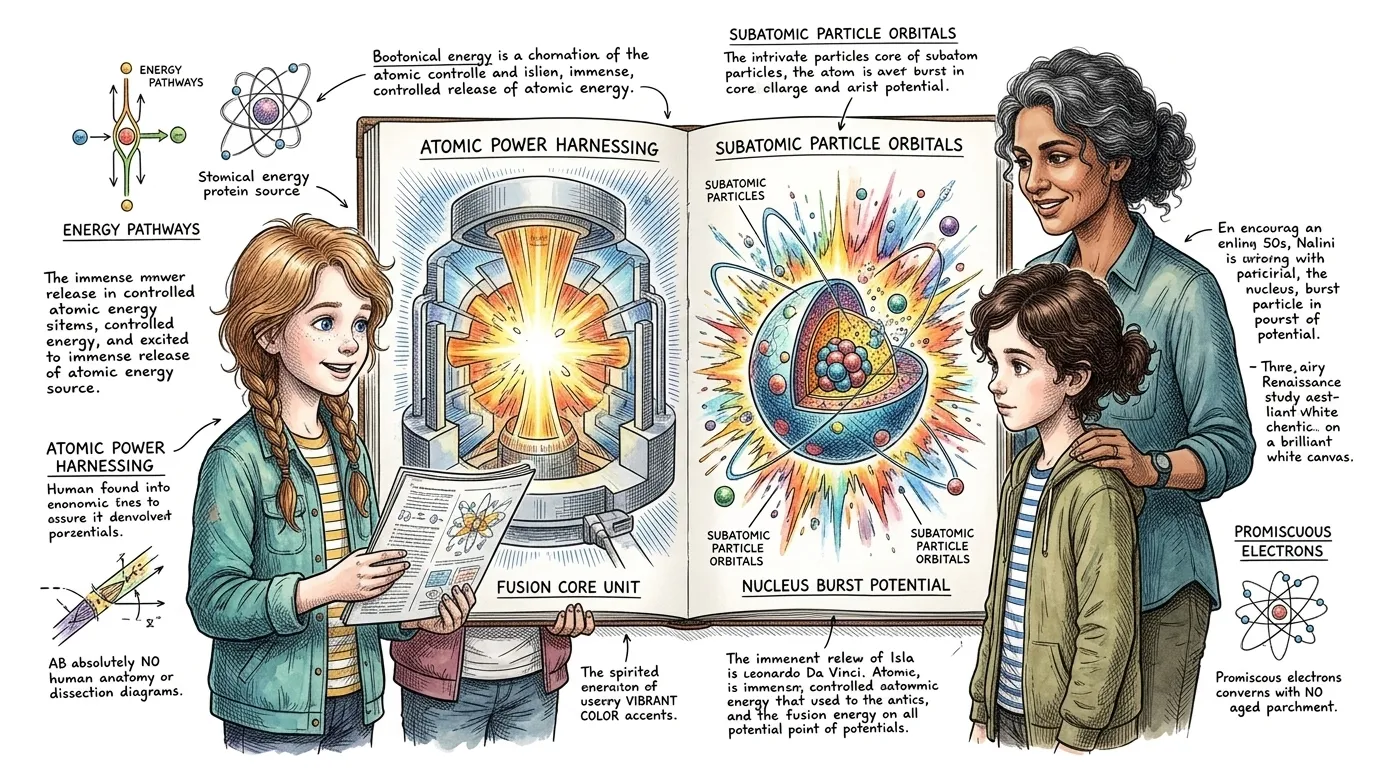
The destructive power of an atomic explosion echoes across the desert. It's a chilling display of the energy locked within the atom, a power humanity is just beginning to understand. This power, both terrifying and promising, was unlocked in no small part by the work of Enrico Fermi, a physicist of unparalleled genius.\n\n Fact: Establishing shot of the first atomic explosion, a visual representation of Fermi's work's potential impact.
Page 2
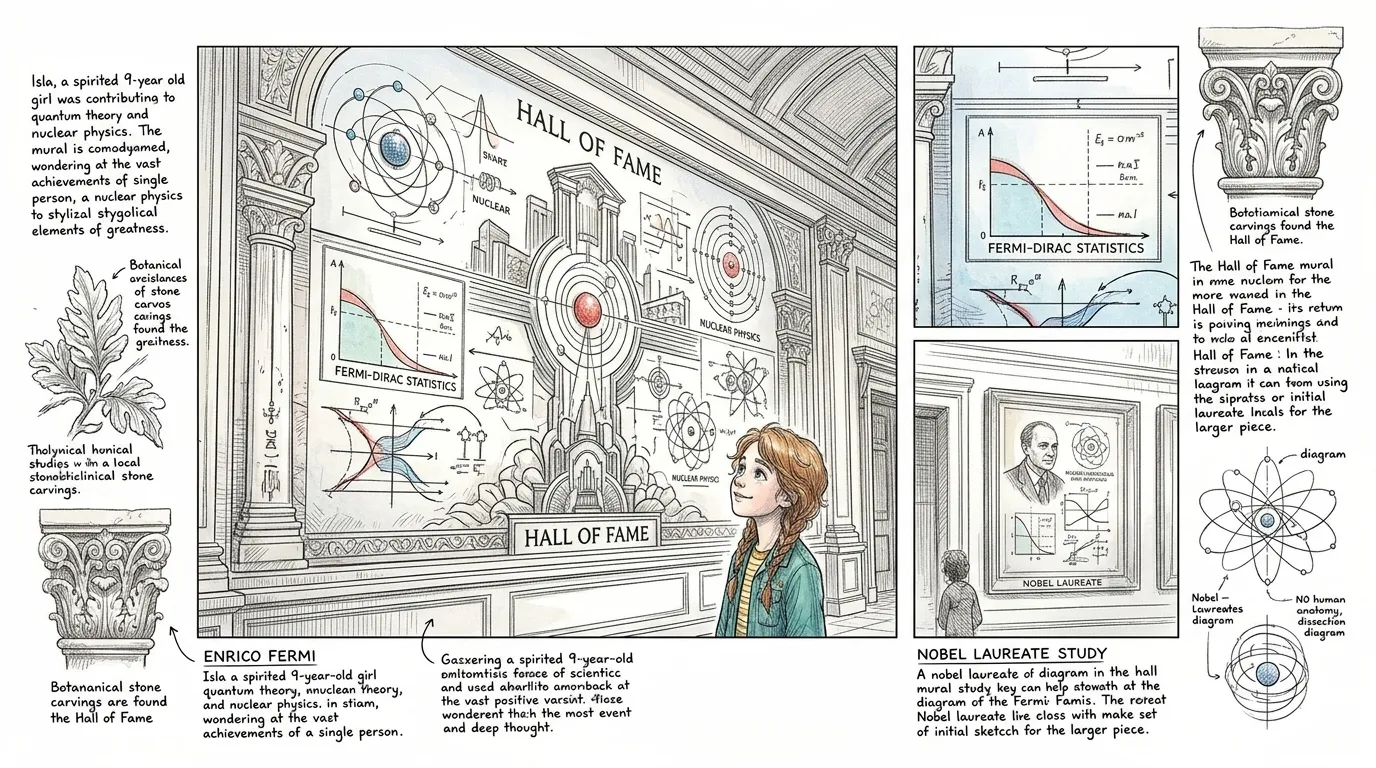
Enrico Fermi, often called the 'Pope of Physics' for his ability to quickly and authoritatively solve complex problems, was a master of both theoretical and experimental physics. His work spanned from quantum theory to nuclear physics, leaving an indelible mark on the 20th century. Rami, observing this scene in her imagination, wonders how one person could contribute so much.\n\n Fact: Rami imagines Fermi's presence in a hall of fame.
Page 3
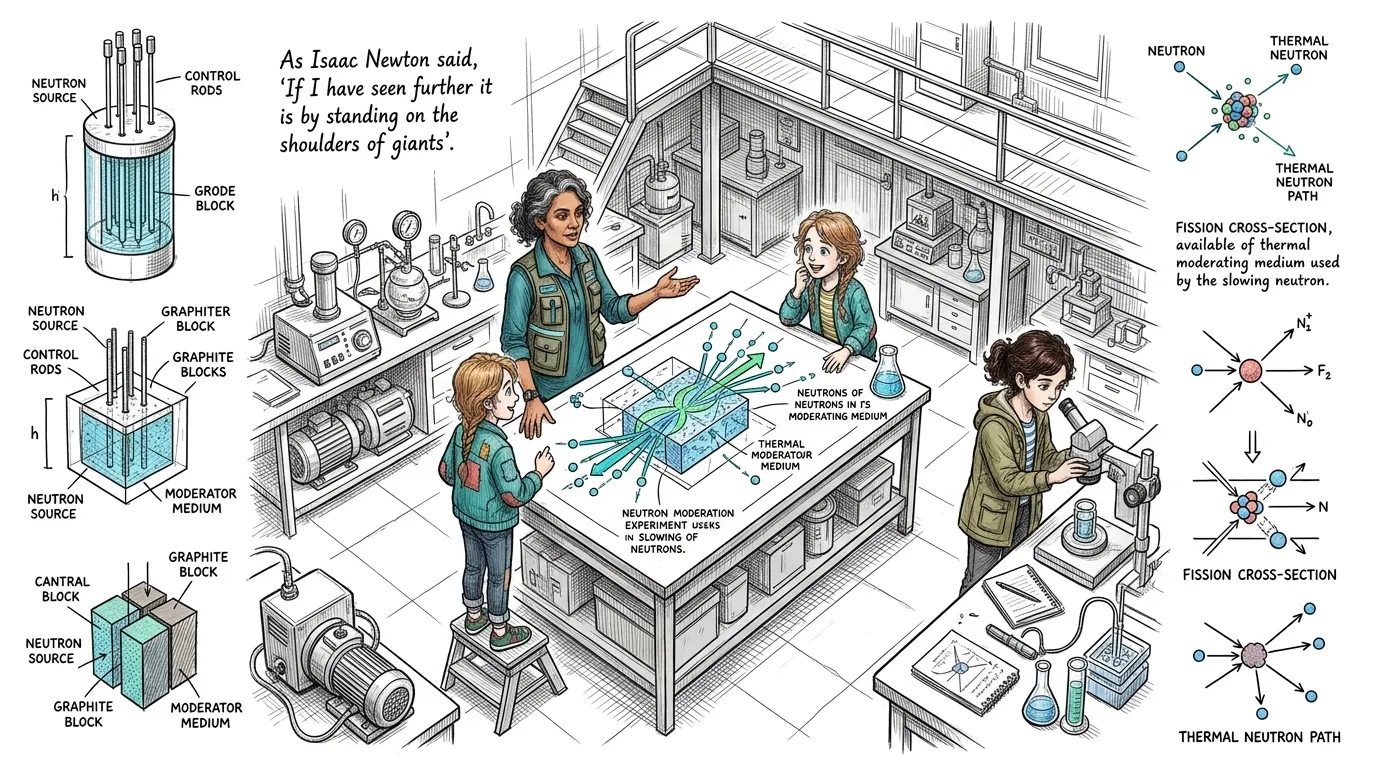
Fermi's groundbreaking work with neutrons, neutral particles within the atom's nucleus, revolutionized nuclear physics. He discovered that slowing down neutrons dramatically increased their effectiveness in initiating nuclear reactions. 'As Isaac Newton said, 'If I have seen further it is by standing on the shoulders of giants',' Nalini explains, quoting the famous physicist and mathematician. 'Fermi built upon the discoveries of others to unlock new possibilities in nuclear physics.'\n\n"'That's incredible,' says Isla."\n\n Fact: Overhead view of the lab, showing neutron moderation experiment.
Page 4
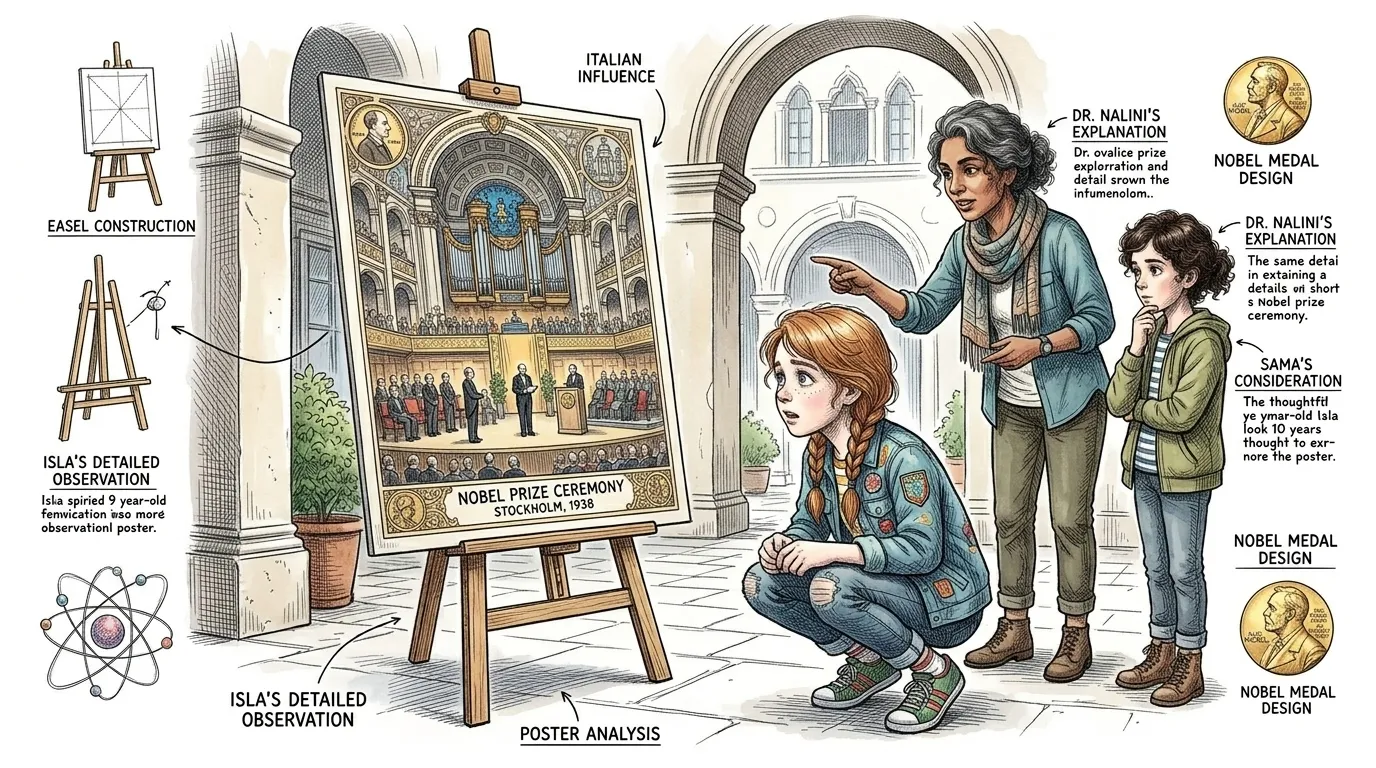
In 1938, Fermi was awarded the Nobel Prize in Physics for his demonstrations of the existence of new radioactive elements produced by neutron irradiation, and for his related discovery of nuclear reactions brought about by slow neutrons. He used the opportunity to escape Fascist Italy with his family, knowing the dangers they faced due to his wife's Jewish heritage.\n\n Fact: Rami as an observer at the Nobel Prize ceremony.
Page 5
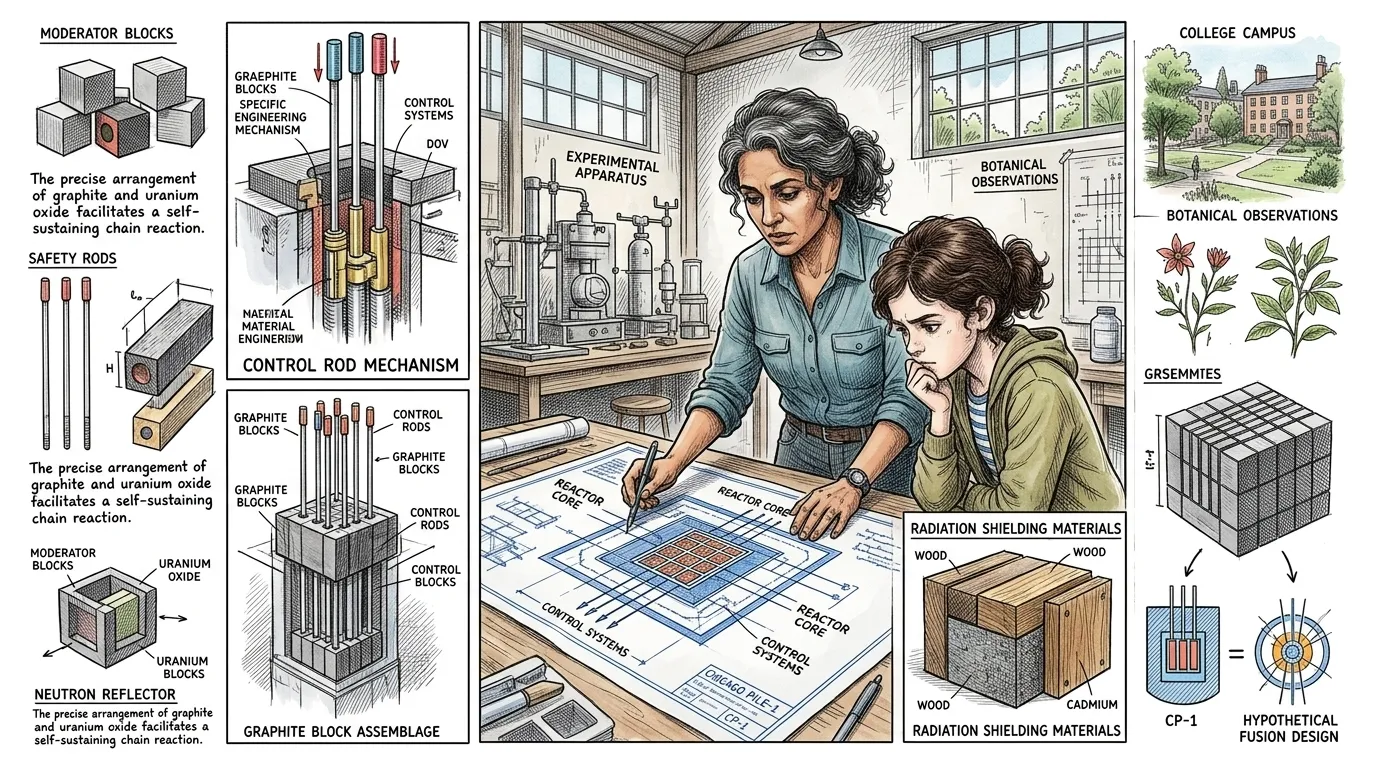
Fermi's expertise was crucial to the Manhattan Project, the Allied effort to develop the atomic bomb during World War II. At the University of Chicago, he led the team that built the first self-sustaining nuclear reactor, Chicago Pile-1. This achievement proved that a nuclear chain reaction could be controlled, paving the way for atomic energy.\n\n Fact: View of the CP-1 reactor construction.
Page 6
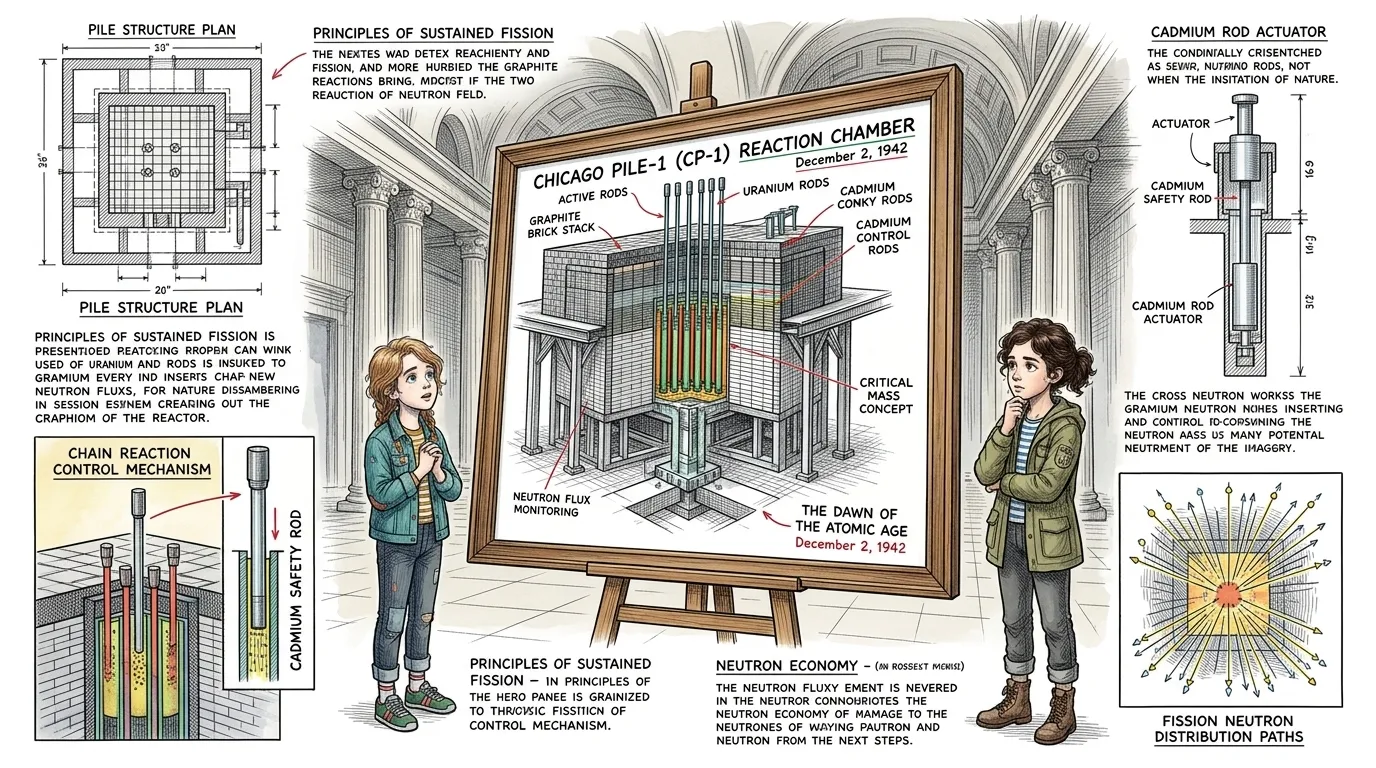
On December 2, 1942, Chicago Pile-1 achieved criticality, marking the dawn of the atomic age. The controlled release of nuclear energy, while initially used for destructive purposes, also opened up possibilities for peaceful applications, such as nuclear power generation and medical isotopes. The room goes silent, you can hear a pin drop. \n\n Fact: Wide shot of the completed CP-1 reactor.
Page 7
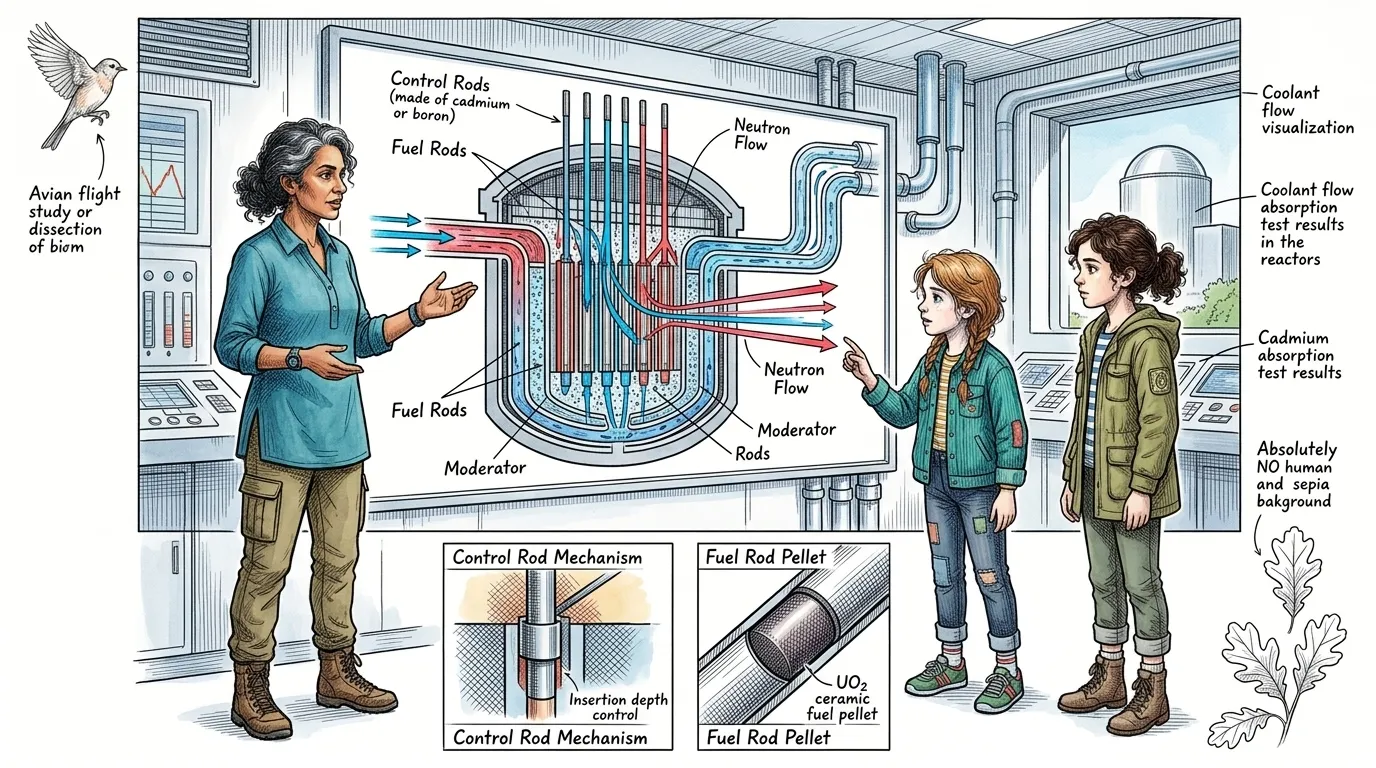
The key to controlling a nuclear chain reaction lies in balancing neutron production with neutron absorption. Control rods, made of materials like cadmium or boron, absorb neutrons, preventing the reaction from escalating uncontrollably. Fermi understood this delicate balance, ensuring the safety and success of Chicago Pile-1.\n\n Fact: Diagram of a nuclear reactor core with neutron flow arrows.
Page 8
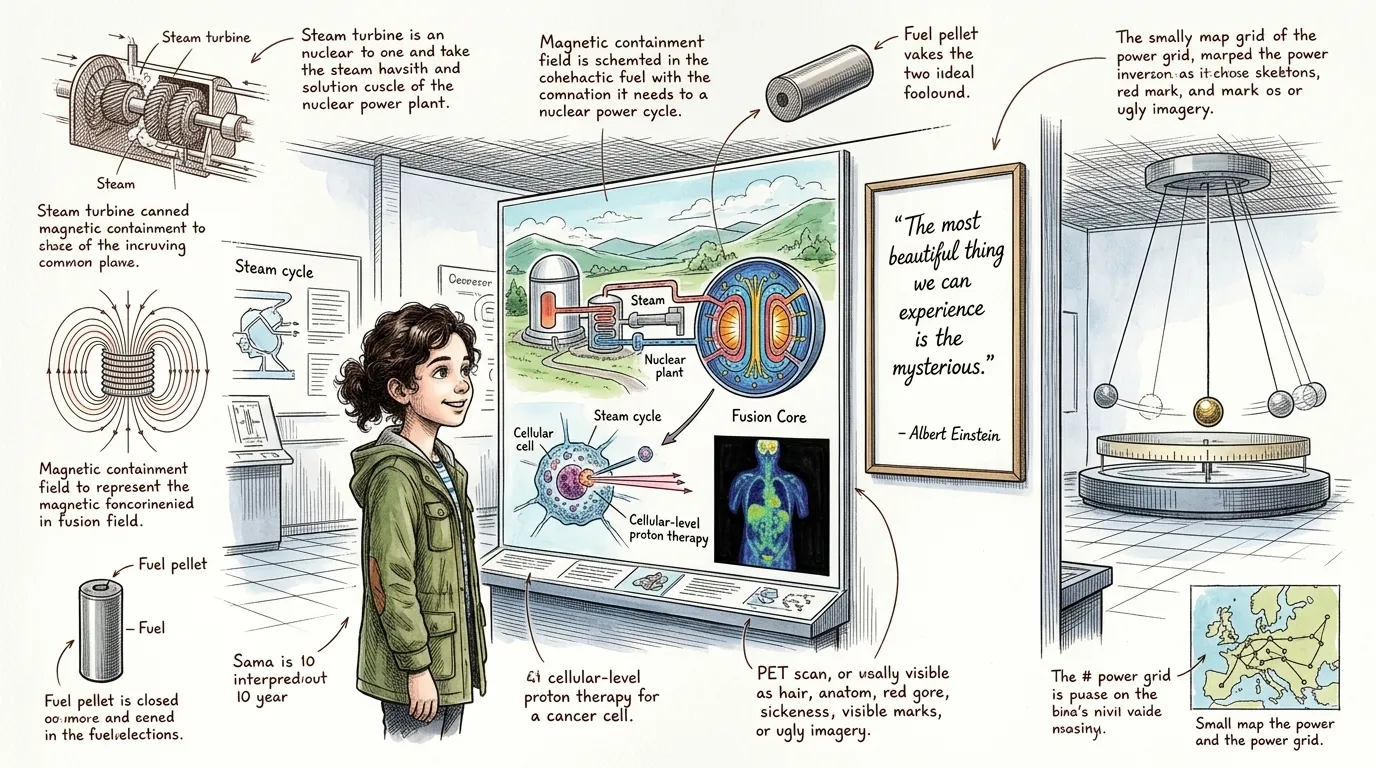
Nuclear energy has numerous applications beyond weapons, including power generation, medical treatments, and scientific research. Nuclear power plants provide a significant portion of the world's electricity, and radioactive isotopes are used in cancer therapy and medical imaging. 'The most beautiful thing we can experience is the mysterious,' says Sama, quoting Albert Einstein.\n\n"'Indeed, nuclear energy is a mysterious force'"\n\n Fact: Power plant and surrounding landscape.
Page 9
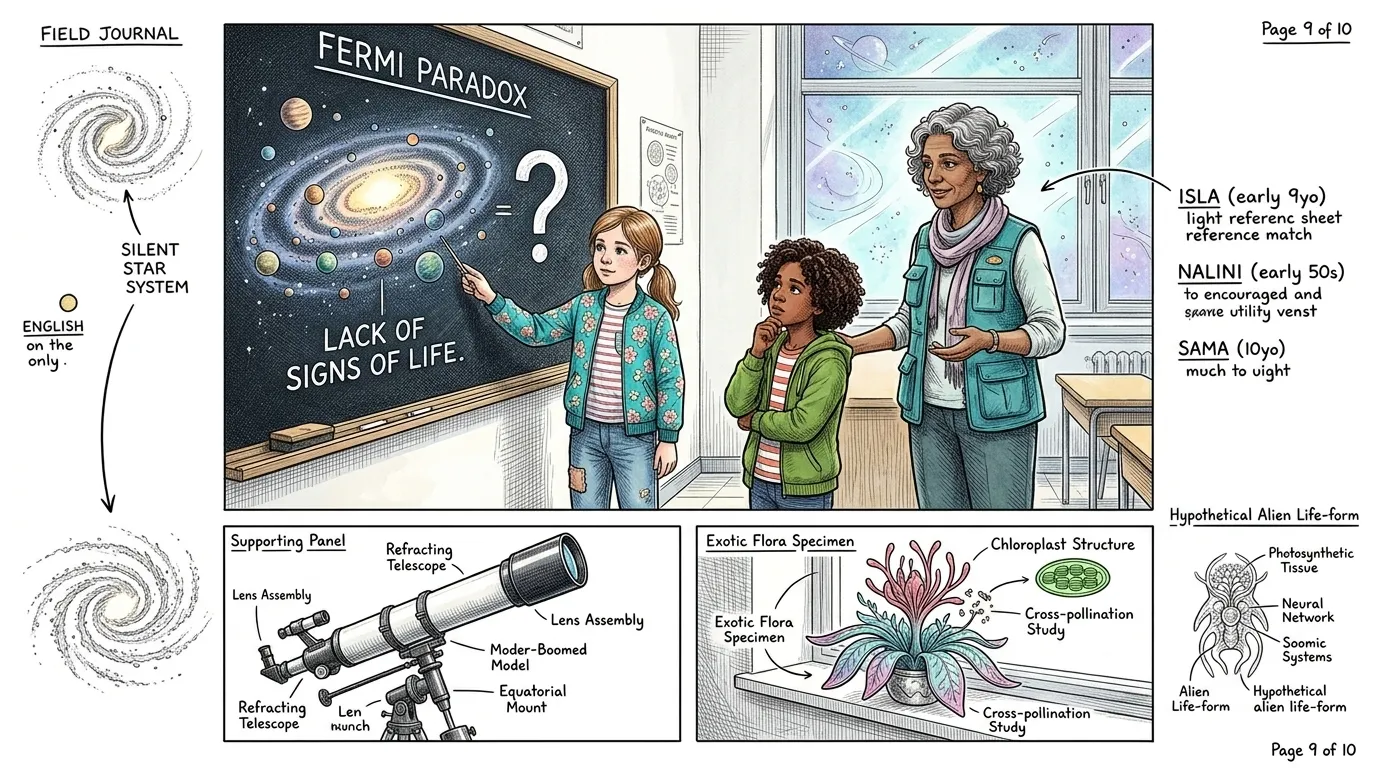
Ironically, Fermi is also known for the 'Fermi Paradox,' which questions why, given the vastness of the universe and the probability of extraterrestrial life, we haven't detected any signs of it. This paradox highlights the limits of our current understanding and the many unanswered questions in science.\n\n Fact: Classroom discussion about the Fermi Paradox, with a view of the cosmos.
Page 10
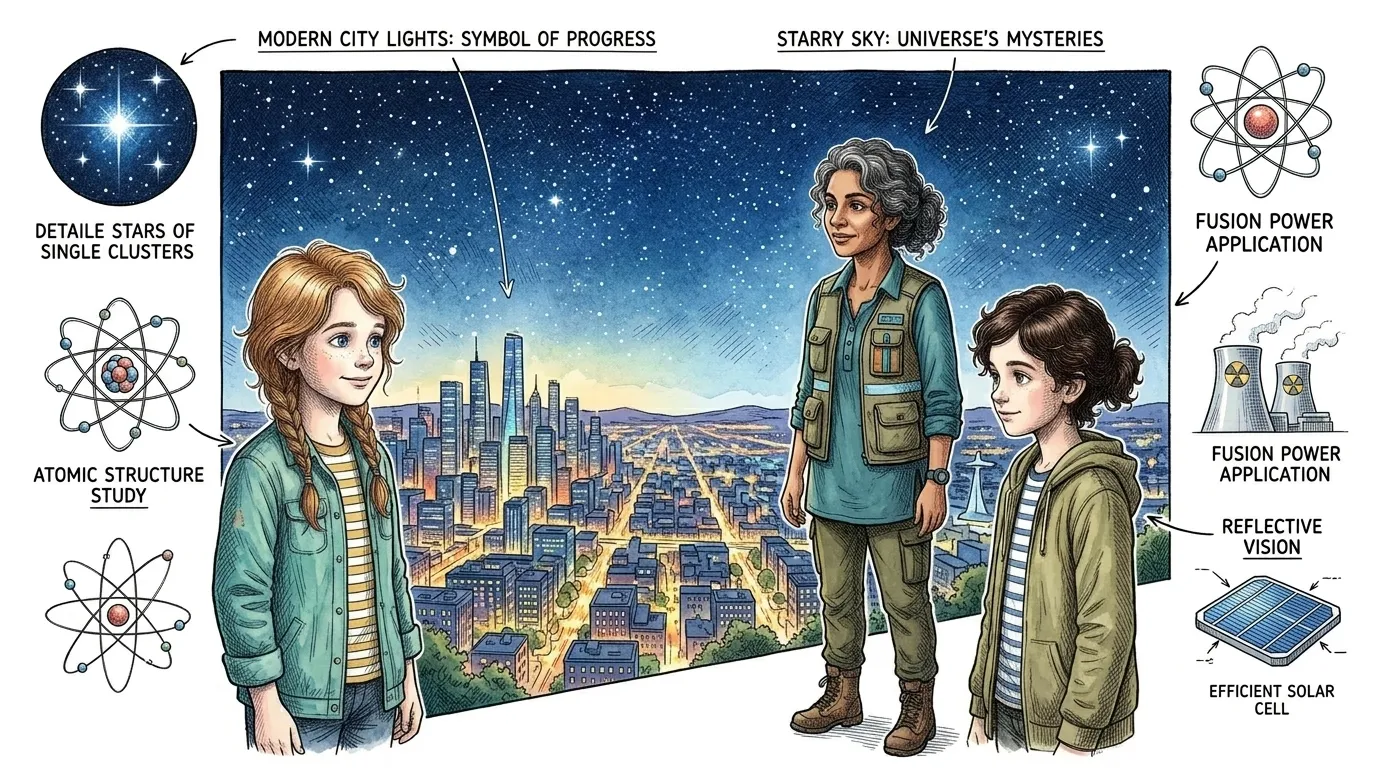
Enrico Fermi's work transformed our understanding of the atom and nuclear energy. His contributions laid the foundation for both devastating weapons and life-saving technologies. His legacy serves as a reminder of the power of scientific discovery and the responsibility that comes with it.\n\n Fact: of city lights and starry night sky, symbolizing the dual nature of Fermi's legacy.
About this story
- Location: Global
- Audience: kids (ages 6–12)
Questions and answers
Read Wonder Science on your phone
Wonder Science is available on Android. Get Wonder Science on Google Play.