Food Science: What Happens When You Cook
Food Science: What Happens When You Cook — an illustrated science story, set in Egypt. 10 illustrated pages, free to read on Wonder Science.

Page 1
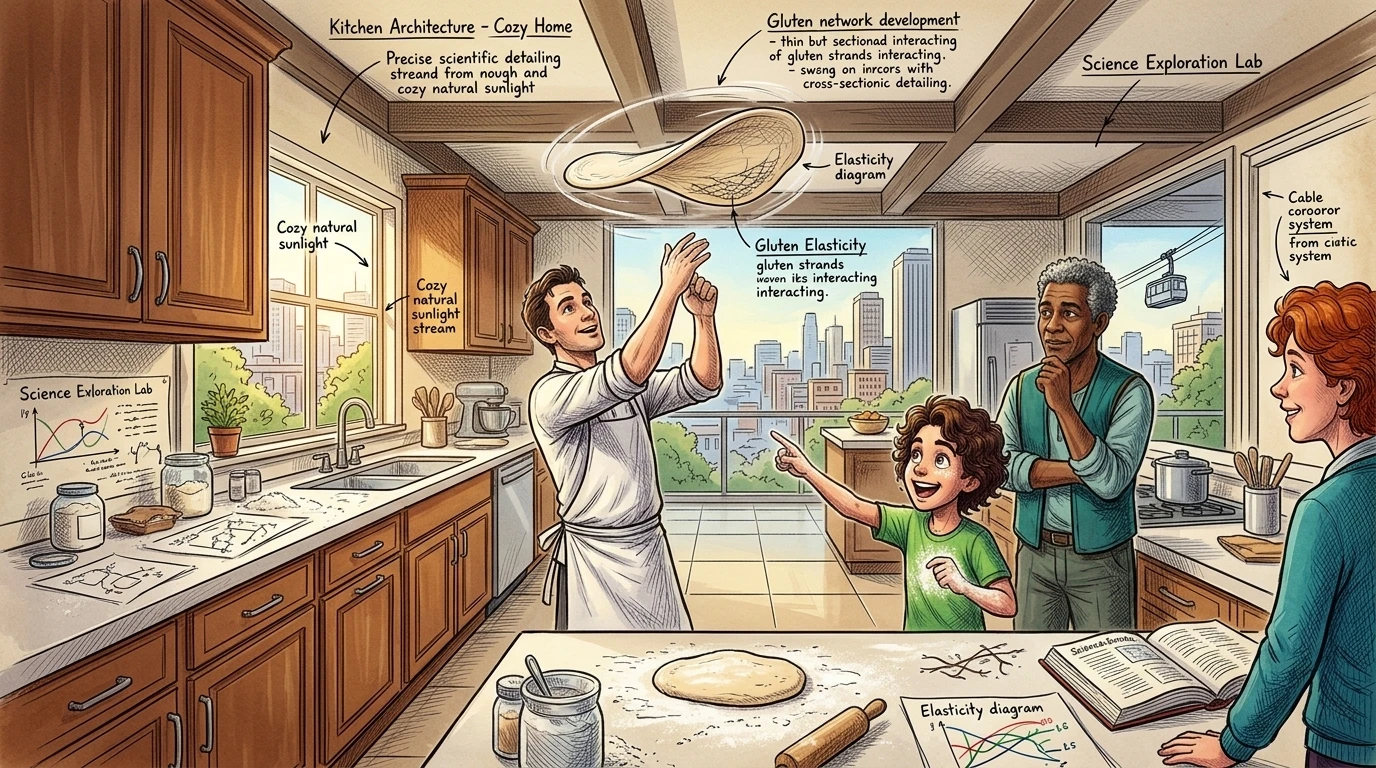
Inside the bustling pizza parlor, Idris leaned over the counter, mesmerized by the chef tossing a spinning circle of dough high into the air. "Dad, look! How does it get so stretchy and not break?" she asked, pointing with a flour-dusted finger. Her father, David, watched the dough slap back down onto the counter with a soft thud. "That's a great question, Izzy," he mused, "It's all about how the ingredients work together."
Page 2
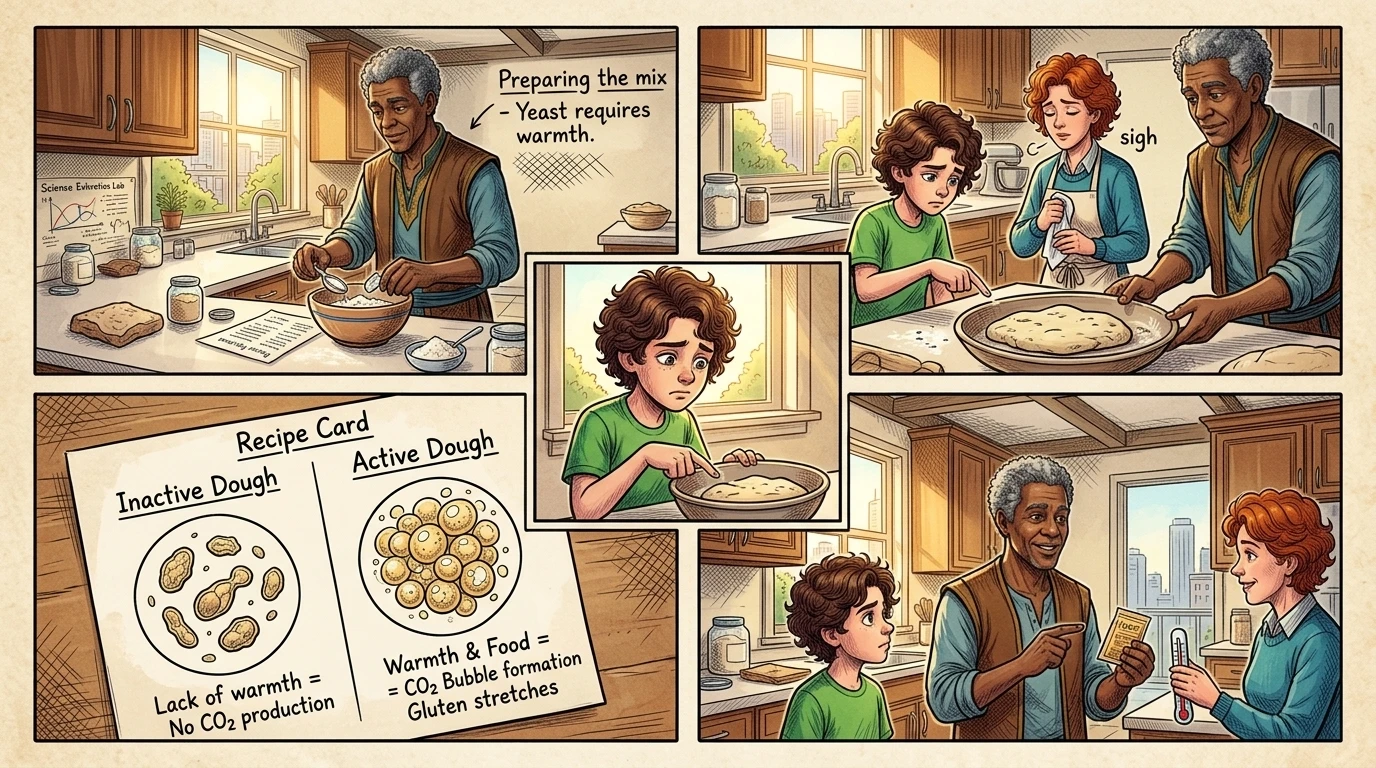
Back in their bright kitchen, a flat, dense lump of dough sat sadly in a bowl on the counter. "Uh oh, our bread didn't rise at all!" Idris said, poking the lifeless dough. Her mother, Claire, sighed, wiping her hands on her apron. "It seems our key ingredient went missing in action—the yeast must not have worked." Her father tapped the bowl thoughtfully, "It's a failed experiment, but every failure is a chance to learn about the chemistry of our kitchen."
Page 3
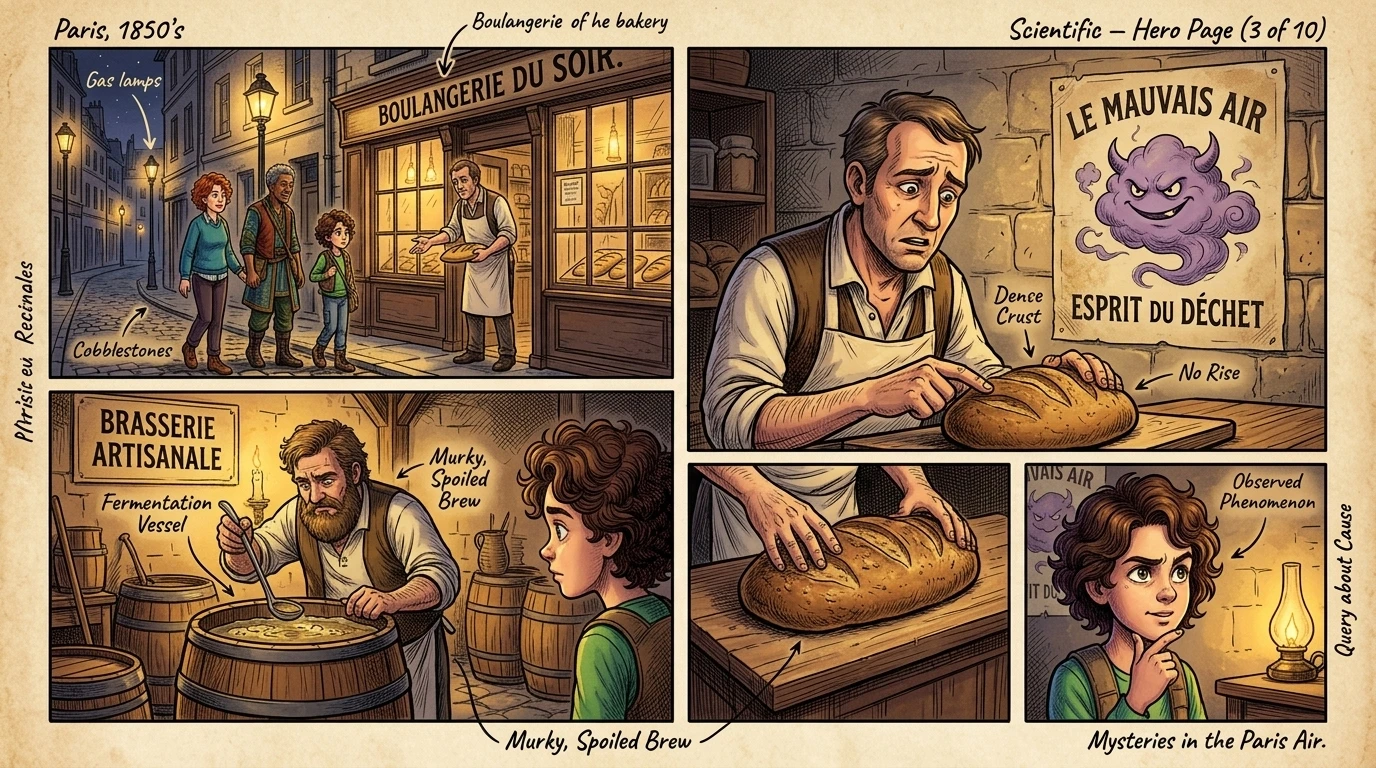
Idris closed her eyes, imagining a time before anyone understood these kitchen mysteries. The scene shifted to the bustling streets of Paris in the 1850s, filled with the scents of baking bread and fermenting wine. Here, bakers and brewers faced the same problem every day, a frustrating game of chance. They would whisper prayers hoping their bread would rise and their beer wouldn't spoil, unaware of the invisible world at work.
Page 4
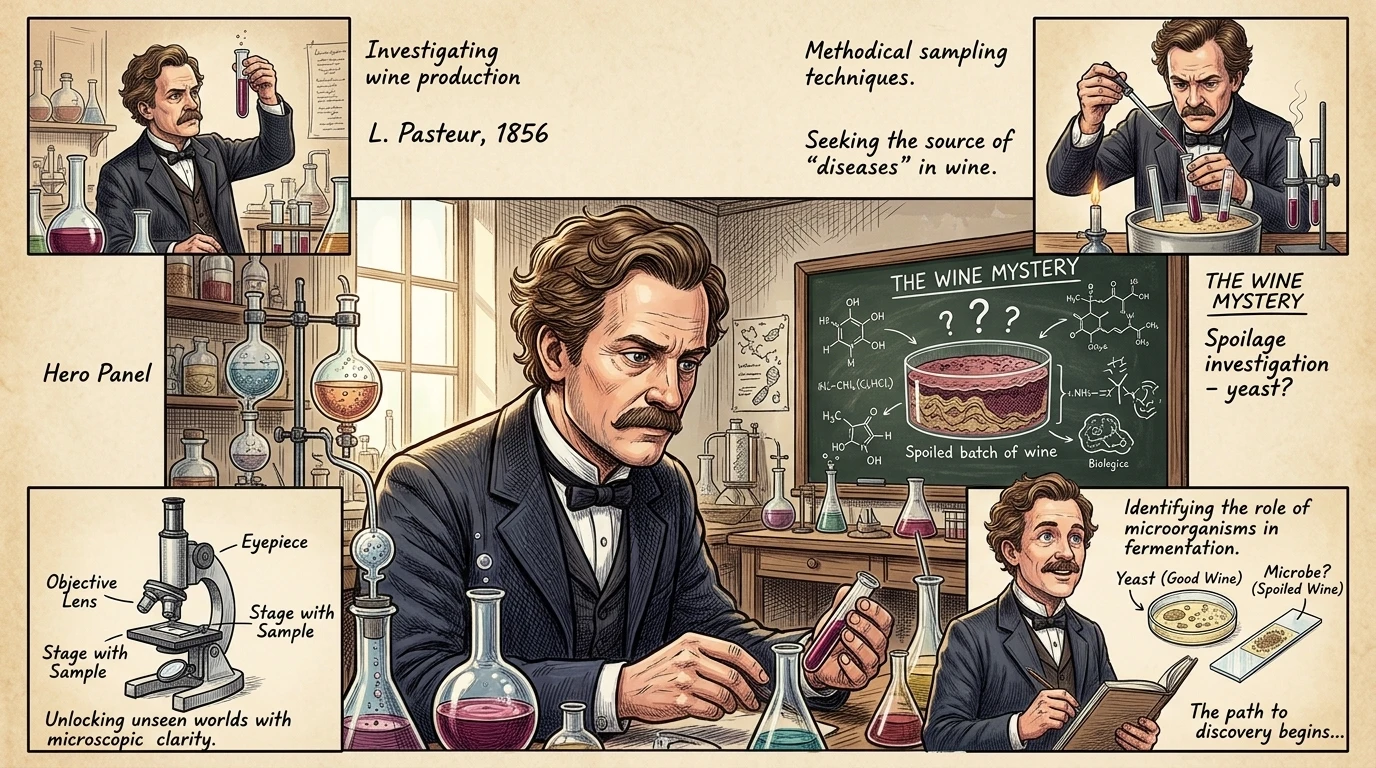
"This is where a French scientist named Louis Pasteur came in," her father's voice explained. "He wasn't trying to bake better bread, he was hired by a winery to figure out why some batches of alcohol were spoiling." Pasteur was a chemist, known for his incredible patience and for looking closer than anyone else. He was determined to find the invisible culprit ruining the drinks.
Page 5
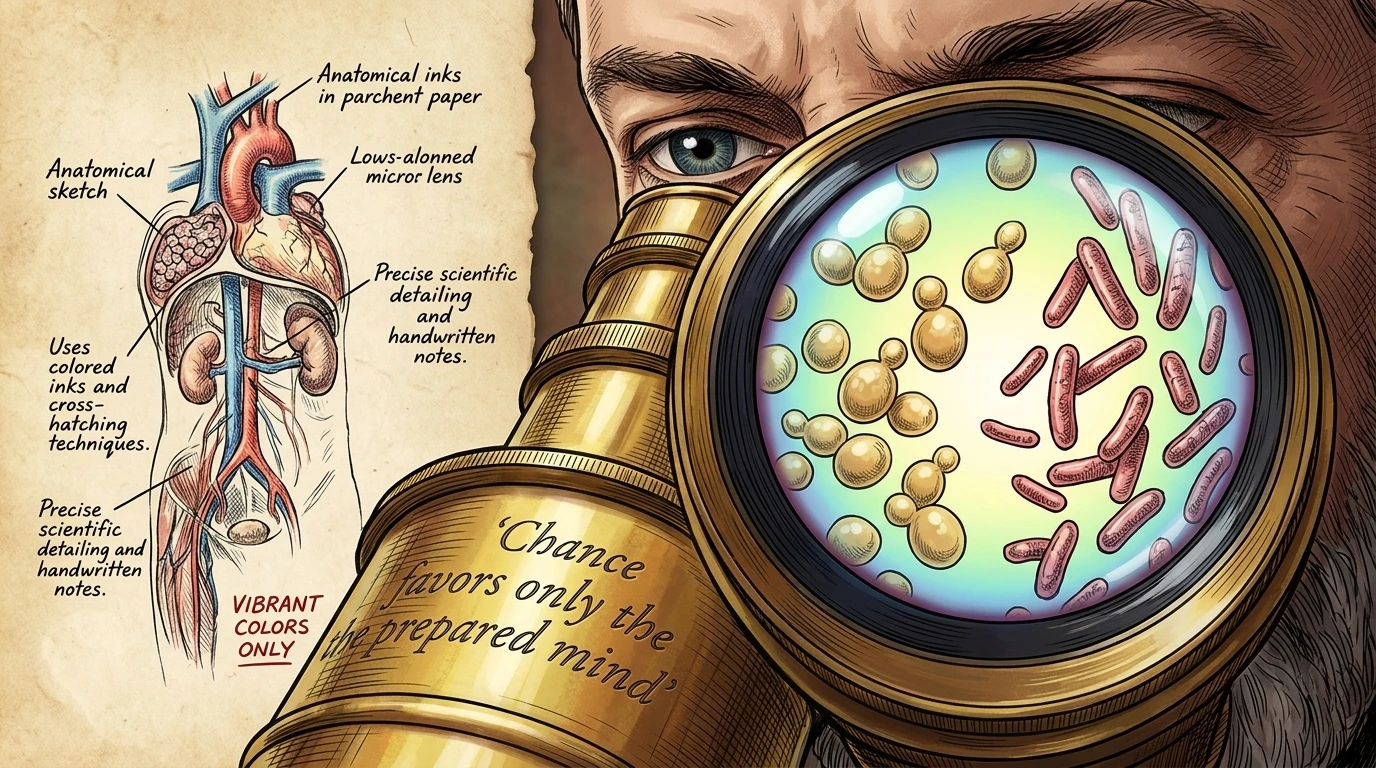
Peering through his microscope, Pasteur saw tiny, round organisms in the good batches, but strange, rod-shaped microbes in the spoiled ones. He realized something profound: tiny living things were causing these huge changes. As Pasteur himself once said, 'Chance favors only the prepared mind,' and he had prepared his mind for years to see what others had missed.
Page 6
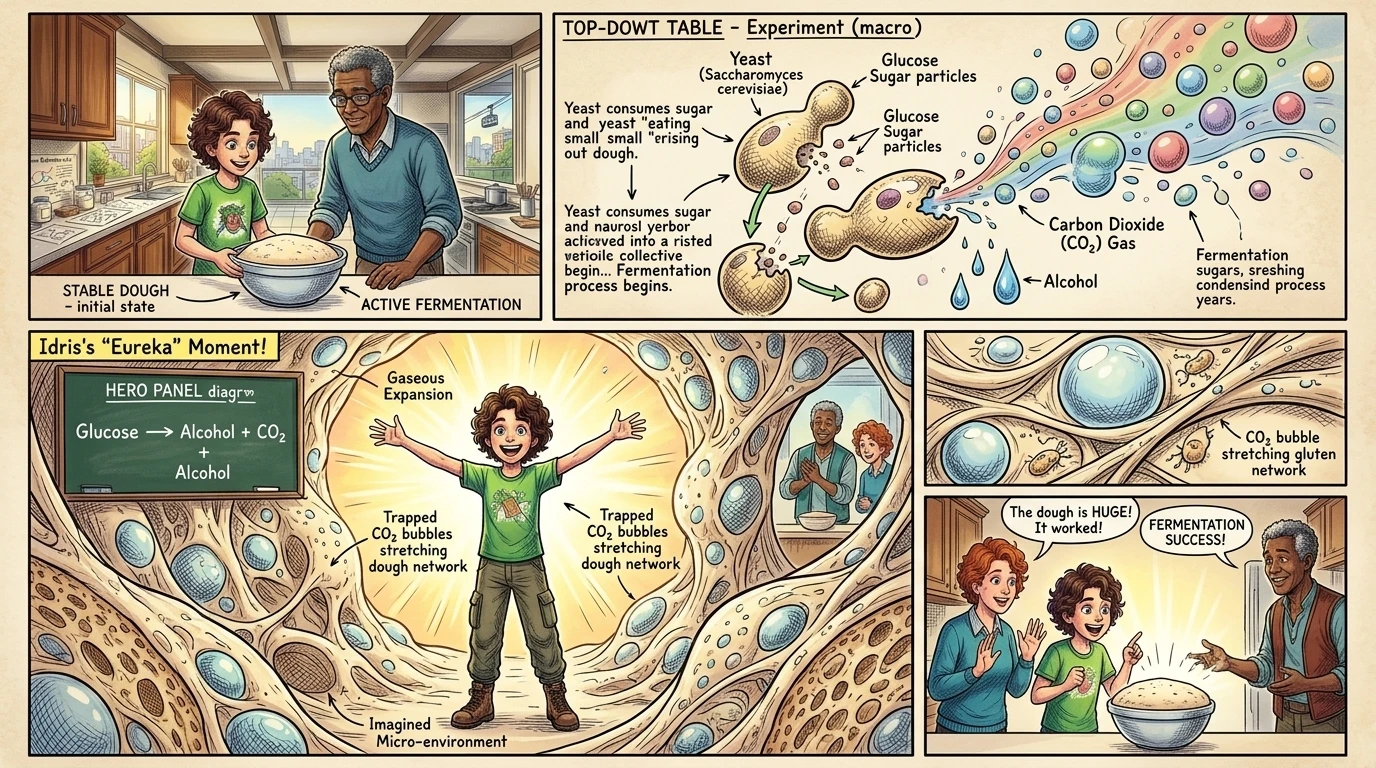
Pasteur discovered that the good organisms, yeast, were alive! He showed that they 'ate' the sugar in grape juice or grain and released two things: alcohol and a gas called carbon dioxide. "That's it!" Idris imagined herself shouting. The carbon dioxide gas gets trapped in the dough, forming tiny bubbles that push it up and make it rise.
Page 7
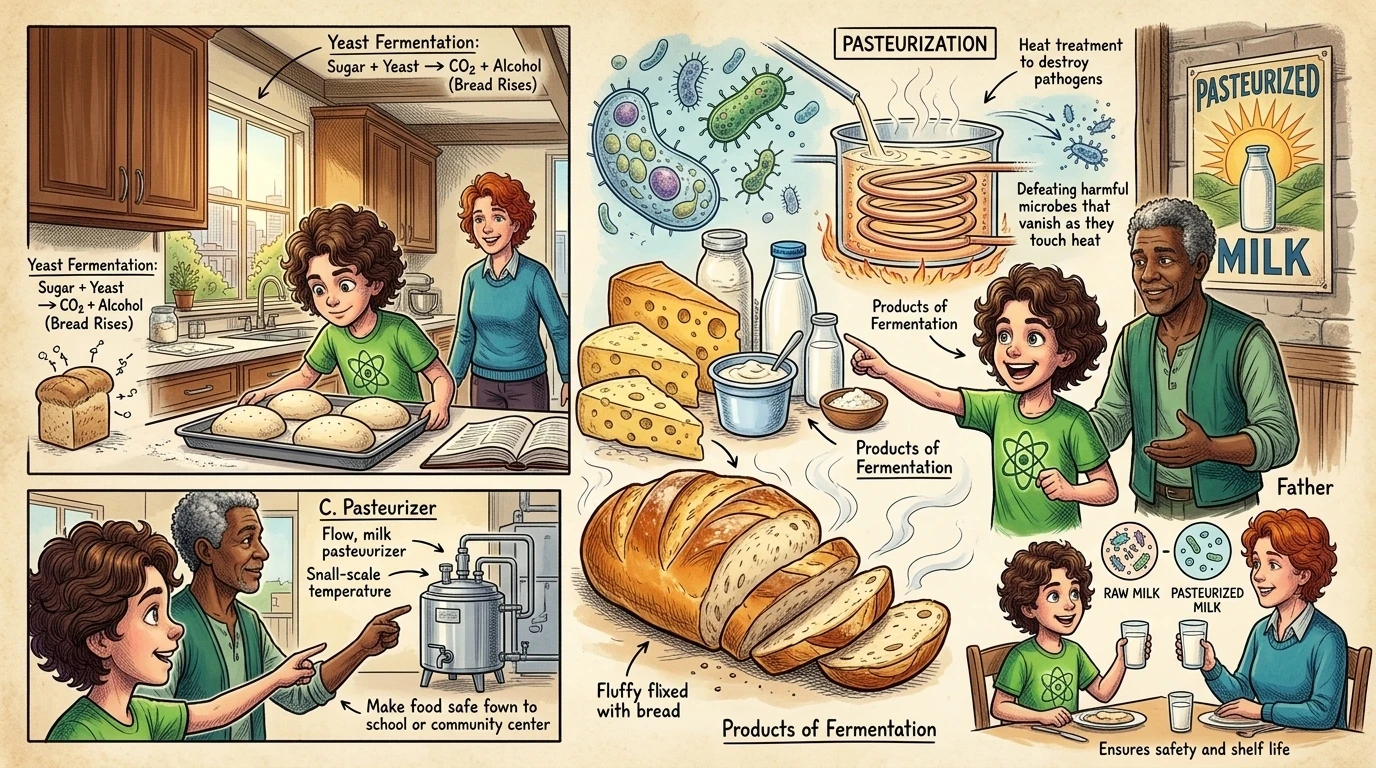
This discovery of fermentation didn't just save the wine industry; it changed the world of food. Understanding yeast gave us fluffy bread, tangy yogurt, and all kinds of cheeses. Pasteur's work also led to 'pasteurization,' the process of heating liquids like milk to kill harmful microbes, which has saved countless lives.
Page 8
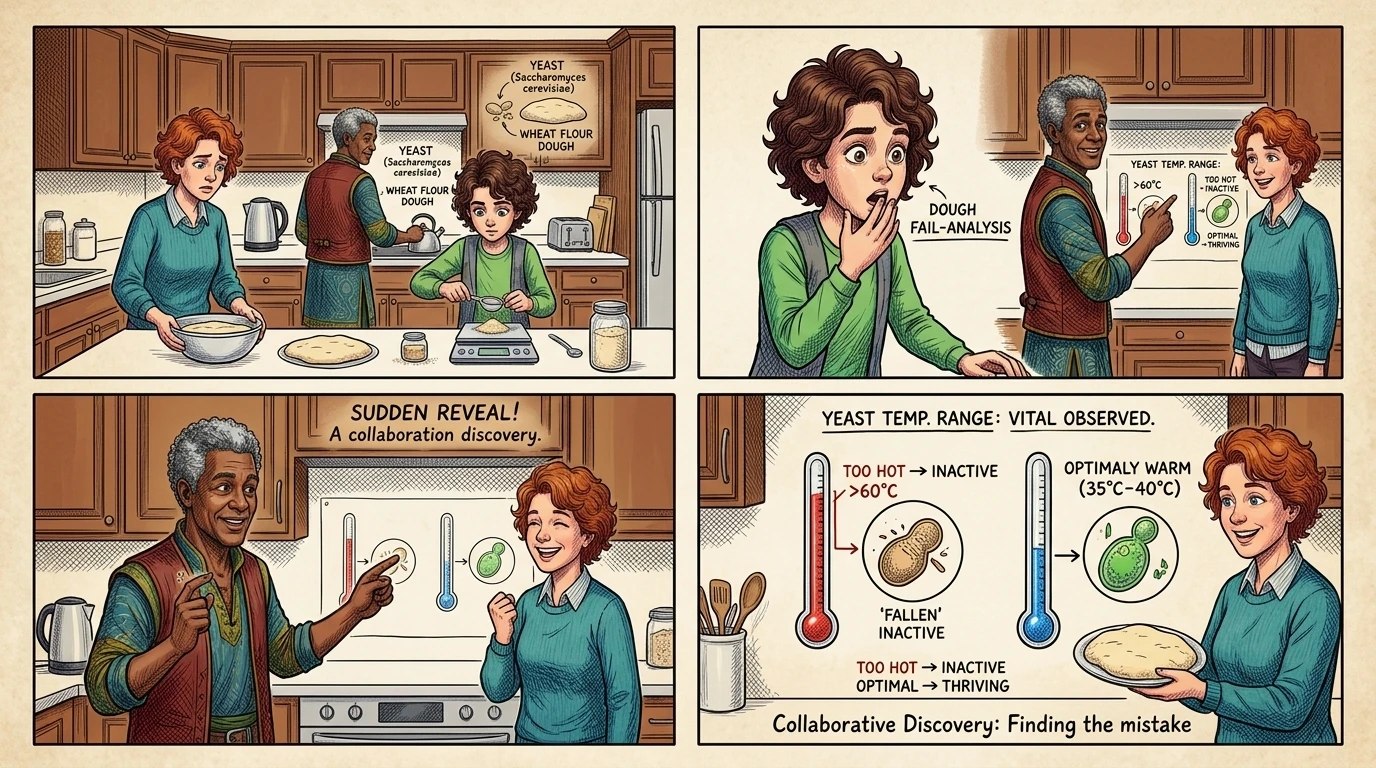
Back in their kitchen, Idris's eyes shot open with a gasp. "The water! Mom, you said the recipe called for warm water, and I think ours was too hot!" Her father snapped his fingers. "Of course! We cooked the yeast before they could even start working!" Claire smiled, scooping up the failed dough, "Teamwork, detectives. We solved the case of the lifeless loaf."
Page 9
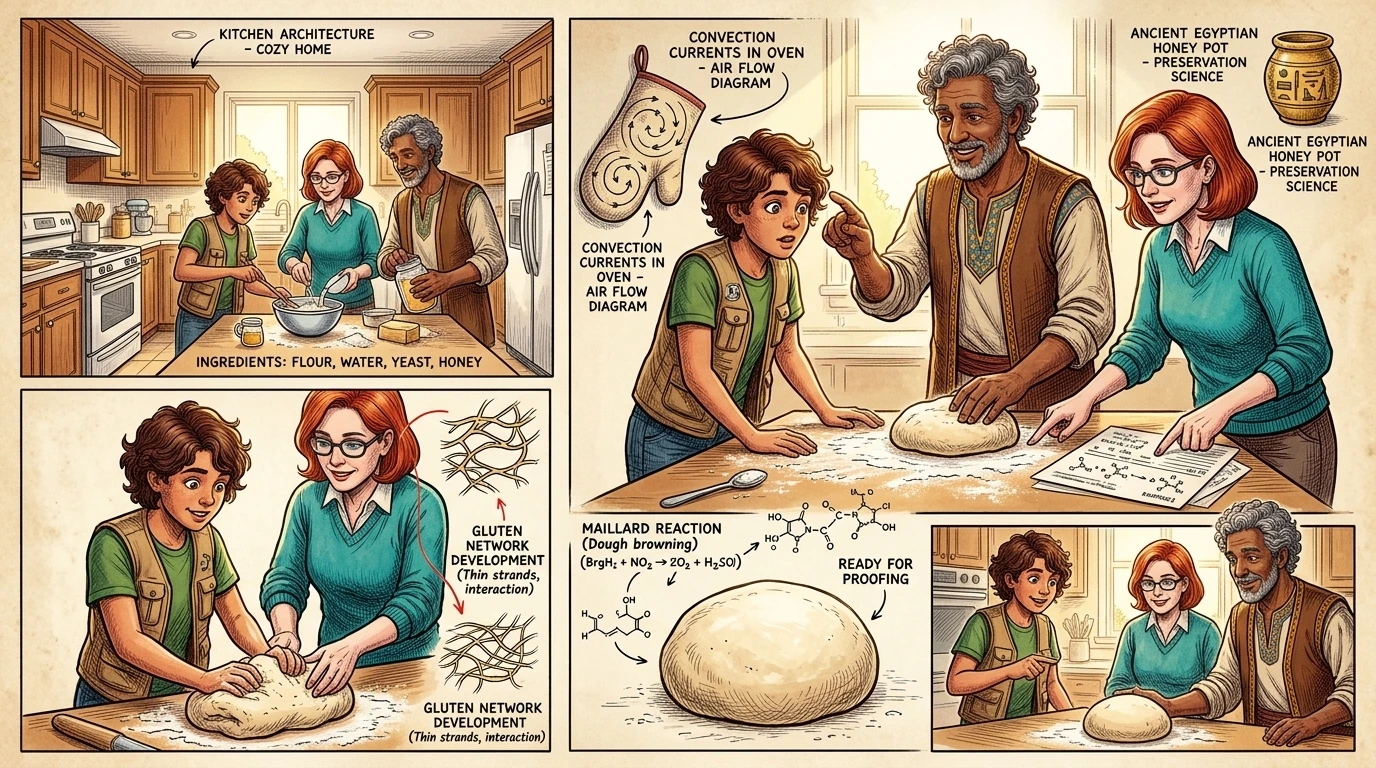
As they prepared a new batch, her father explained how the oven's heat is physics, using convection currents to cook the bread evenly. Her mother added, "And the beautiful brown crust comes from chemistry—the Maillard reaction between sugars and proteins." Idris thought for a moment, "Even honey is science. I read that archaeologists found 3,000-year-old honey in Egyptian tombs, and it was still perfectly edible!"
Page 10
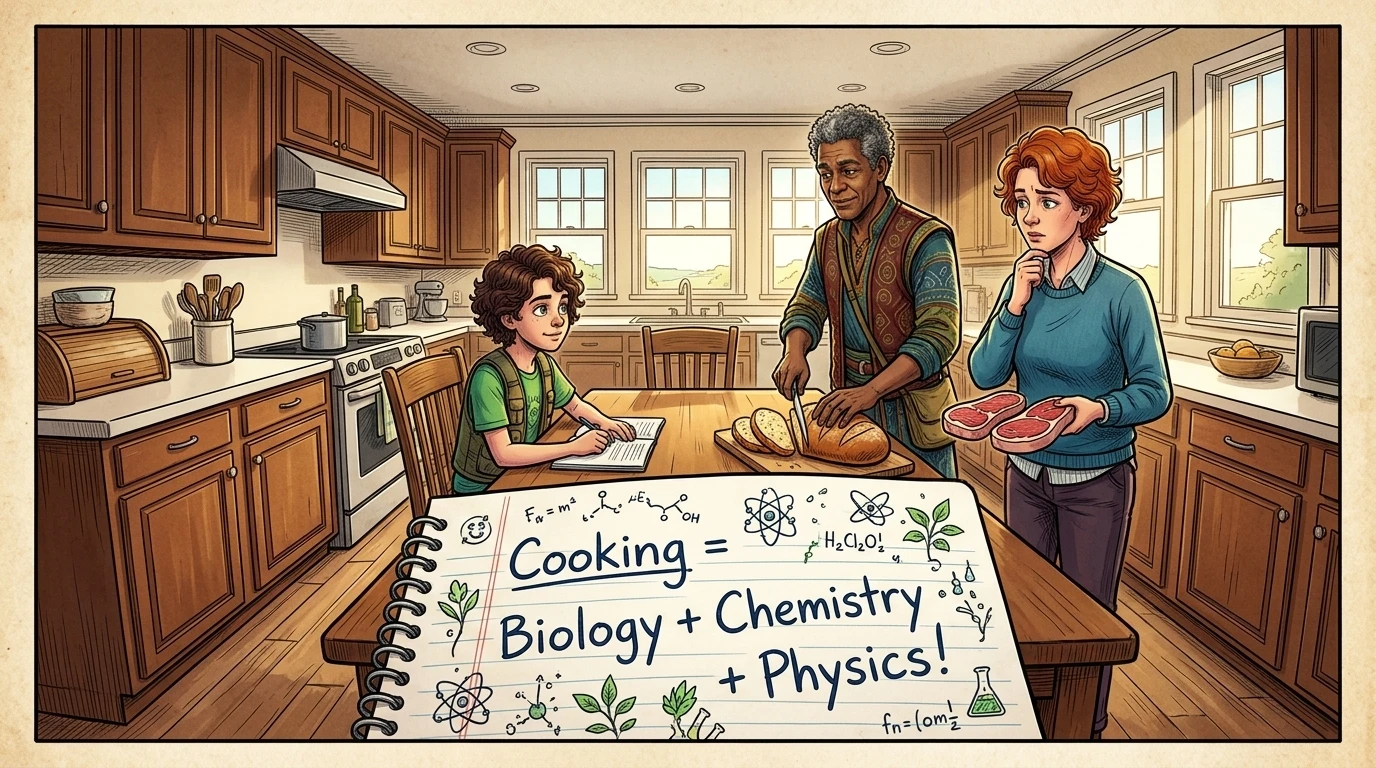
The timer dinged, and a perfectly risen, golden-brown loaf of bread emerged from the oven. "So cooking is just a delicious experiment combining biology, chemistry, and physics!" Idris declared, writing in her notebook. As her father sliced the warm bread, her mother looked at the steaks they planned for dinner and asked, "That's amazing, Izzy. But if heat makes bread brown, what makes red meat turn brown when it cooks?"
About this story
- Location: Egypt
- Audience: kids (ages 6–12)
Questions and answers
Questions and answers about Food Science: What Happens When You Cook
Read Wonder Science on your phone
Wonder Science is available on Android. Get Wonder Science on Google Play.