Françoise Barre-Sinoussi
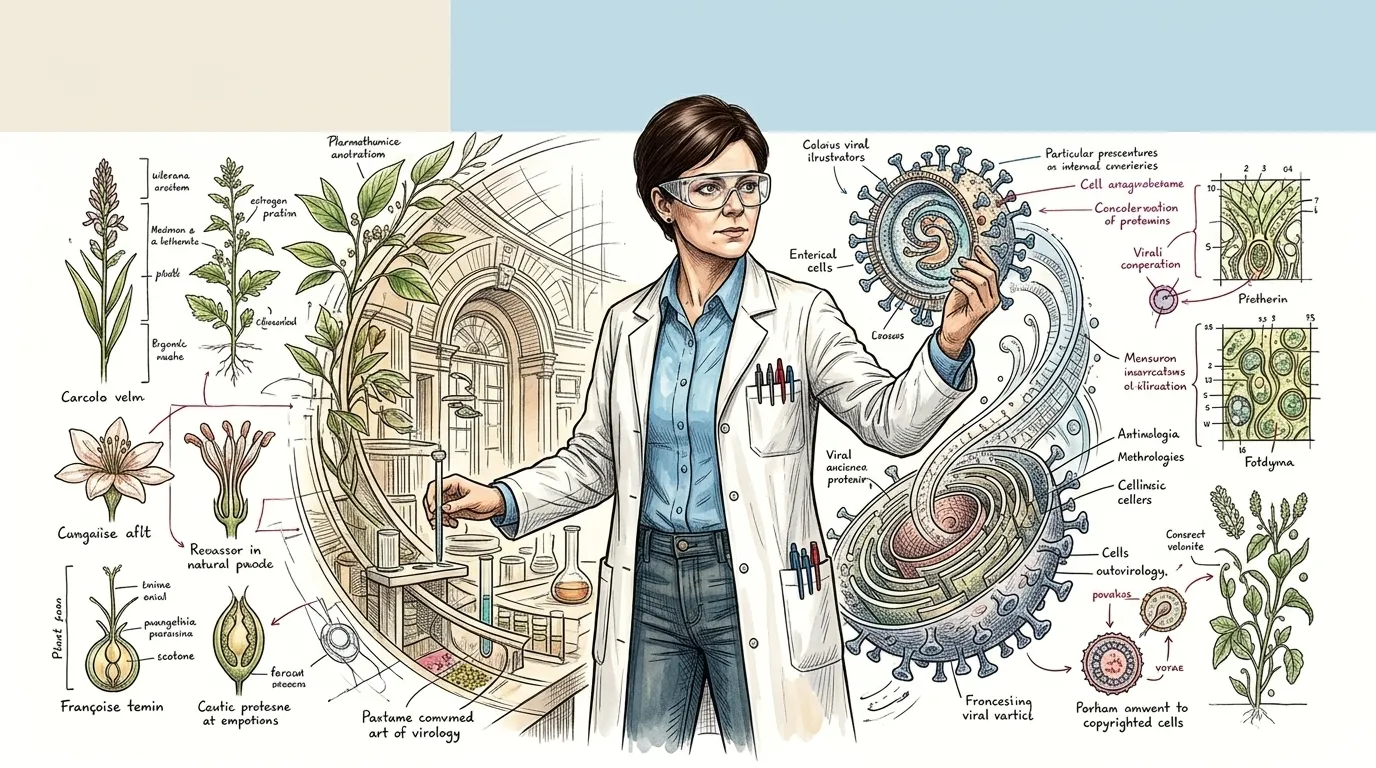
Françoise Barre-Sinoussi — an illustrated science story, set in Global. 10 illustrated pages, free to read on Wonder Science.
Page 1

In the early 1980s, a devastating new immune disorder emerged, baffling medical professionals and igniting global panic. Across continents, patients presented with a mysterious collapse of their immune systems, succumbing to rare infections and cancers. The urgent quest to identify the causative agent led to the hallowed halls of the Pasteur Institute in Paris, where a young virologist, Françoise Barre-Sinoussi, was about to make a discovery that would forever alter the course of public health.\n\n Fact: Françoise Barre-Sinoussi • Pasteur Institute, Paris, France • 1983 • Lymphadenopathy-Associated Virus (LAV) / HIV
Page 2

Before the virus was identified, the medical community grappled with a syndrome initially termed Gay-Related Immune Deficiency (GRID), later generalized to Acquired Immunodeficiency Syndrome, or AIDS. Reports from Los Angeles and New York described rare opportunistic infections like Pneumocystis pneumonia and Kaposi's sarcoma in young, otherwise healthy men. This unprecedented cluster of cases signaled the arrival of a new, highly aggressive pathogen, defying established epidemiological patterns and rapidly spreading across vulnerable populations worldwide.\n\n Fact: Early 1980s • AIDS Crisis • Immunodeficiency
Page 3

Scientists globally pursued diverse hypotheses, from environmental toxins to genetic predispositions, yet evidence increasingly pointed towards an infectious agent. The pattern of transmission, particularly through blood and sexual contact, mirrored known viral diseases. The challenge was immense: isolating a novel virus, especially one that could evade standard detection methods and cause such profound, insidious damage to the immune system. This search was not merely academic; it was a race against time to save countless lives and halt a burgeoning global catastrophe.\n\n Fact: Early Research • Etiology Search • Viral Hypothesis
Page 4

The unique characteristic of AIDS—its attack on the immune system's T-cells—suggested a particular class of viruses: retroviruses. Unlike most viruses, retroviruses carry their genetic information as RNA and use an enzyme called reverse transcriptase to convert it into DNA, which then integrates into the host cell's genome. This insidious mechanism allows them to hijack cellular machinery and persist stealthily within the host. David Baltimore and Howard Temin had jointly received the Nobel Prize in 1975 for their independent discovery of reverse transcriptase, laying crucial groundwork for understanding these complex pathogens.\n\n Fact: Retroviruses • Reverse Transcriptase • CD4 T-cells • David Baltimore • Howard Temin
Page 5

Françoise Barre-Sinoussi's team at the Pasteur Institute, working alongside Luc Montagnier, focused on culturing lymphocytes from AIDS patients. The key was to find a way to make the infected T-cells proliferate in vitro, thereby amplifying any potential viral presence. This involved using specific growth factors, such as interleukin-2 (IL-2), to encourage T-cell division. Success would mean enough viral material for isolation and characterization, a critical step that had eluded many previous attempts by other research groups.\n\n Fact: Lymphocyte Culture • Interleukin-2 (IL-2) • Pasteur Institute • Françoise Barre-Sinoussi
Page 6

In May 1983, Barre-Sinoussi's team achieved a pivotal breakthrough. They detected high levels of reverse transcriptase activity in the cultured lymphocytes from an AIDS patient. This enzyme, unique to retroviruses, was a definitive sign that a retrovirus was replicating within these cells. The presence of reverse transcriptase was the 'smoking gun'—irrefutable biochemical evidence that they had successfully isolated the pathogen responsible for AIDS, a virus they initially named Lymphadenopathy-Associated Virus (LAV). This finding provided the critical link needed for further study.\n\n Fact: May 1983 • Reverse Transcriptase Detection • LAV (HIV) • Françoise Barre-Sinoussi • Luc Montagnier
Page 7

Confirming the biochemical evidence required visual proof. Electron microscopy provided the undeniable image of the viral particles budding from the infected T-cells. These images revealed a distinct retroviral morphology, further solidifying the link between LAV and AIDS. This meticulous, multi-pronged approach—from cell culture to enzymatic assays and finally to direct visualization—was fundamental to conclusively identifying the virus. The scientific rigor employed by Barre-Sinoussi's team left no doubt about their discovery.\n\n Fact: Electron Microscopy • Viral Morphology • HIV Visualization • Scientific Rigor
Page 8

The identification of HIV (as LAV was later renamed) was a monumental turning point. Within a year, diagnostic tests became available, enabling the screening of blood supplies and protecting transfusion recipients. Understanding the viral agent allowed for the development of public health campaigns focused on prevention, slowing the spread of the epidemic. This rapid translation of fundamental research into practical applications saved millions of lives, demonstrating the profound impact of basic scientific discovery on global health.\n\n Fact: HIV Diagnostic Tests • Blood Screening • Public Health Campaigns • Global Impact
Page 9

The isolation of HIV also paved the way for the development of antiretroviral drugs. Early treatments like AZT emerged in the late 1980s, offering the first glimmer of hope. Over subsequent decades, an explosion of research led to highly active antiretroviral therapy (HAART), a combination of drugs that transformed HIV from a death sentence into a manageable chronic condition. Françoise Barre-Sinoussi's initial discovery provided the essential target for these therapies, fundamentally altering the prognosis for millions living with the virus and demonstrating science's capacity for sustained intervention.\n\n Fact: Antiretroviral Therapy (ART) • HIV Life Cycle • Drug Development • Chronic Condition
Page 10

Françoise Barre-Sinoussi's groundbreaking work, recognized with the Nobel Prize in Physiology or Medicine in 2008 alongside Luc Montagnier, transcended pure discovery. She became a tireless advocate for global health, particularly in low-income countries, emphasizing universal access to treatment and fostering research into vaccines and cures. Her legacy underscores not only the profound impact of scientific curiosity but also the moral imperative of translating laboratory breakthroughs into equitable solutions for all of humanity. The fight against HIV/AIDS continues, driven by the foundational insights she provided.\n\n Fact: Nobel Prize 2008 • Global Health Advocacy • HIV Vaccine Research • Universal Access • Legacy
About this story
- Location: Global
- Audience: general readers
Questions and answers
Read Wonder Science on your phone
Wonder Science is available on Android. Get Wonder Science on Google Play.