Galileo's Telescope
Galileo's Telescope — an illustrated science story, set in United States. 10 illustrated pages, free to read on Wonder Science.
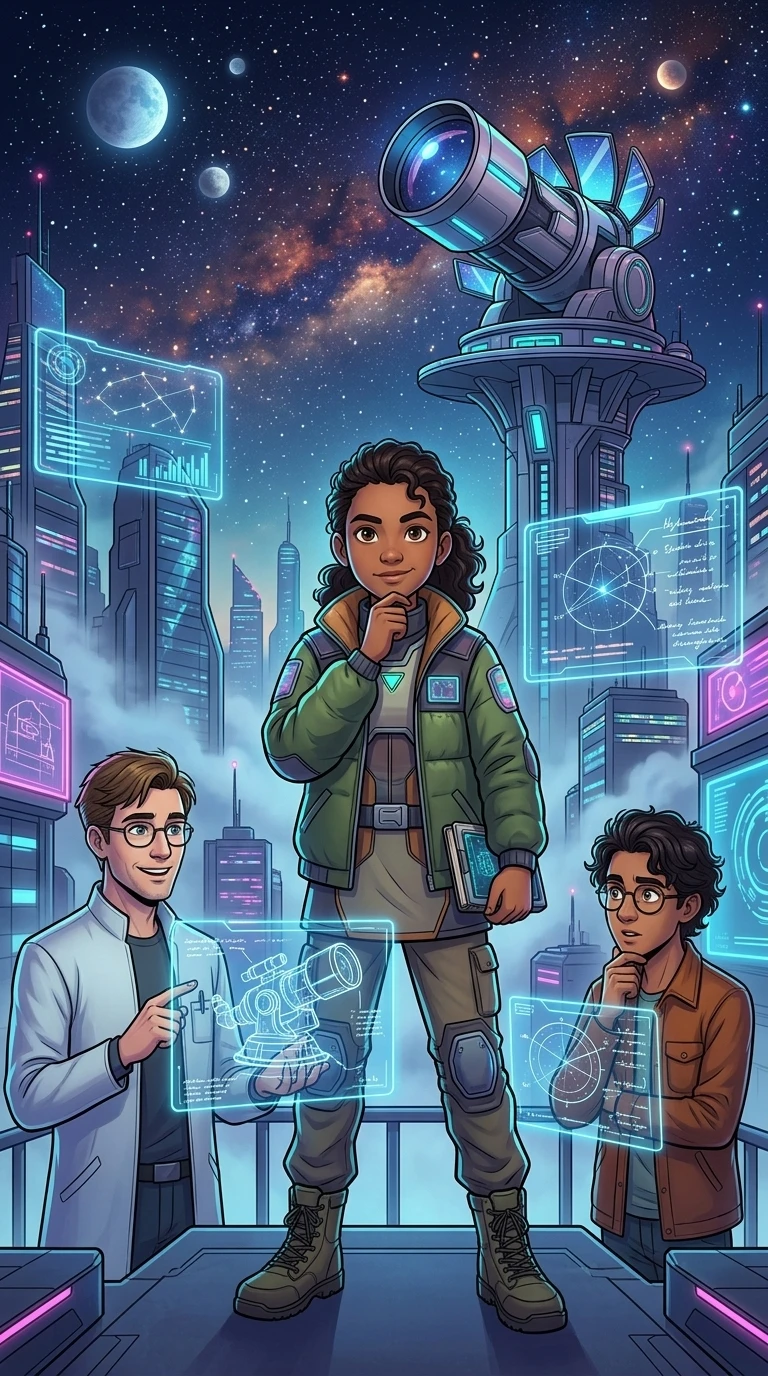
Page 1
On their small balcony overlooking the rolling hills of Noe Valley, Malak's father stirred his tea. "Pass the honey, please?" he asked. "Fun fact, archaeologists found 3,000-year-old honey in Egyptian tombs, and it was still perfectly edible!" Malak grinned, passing the jar as her friend Amir fiddled with a pair of binoculars.
Page 2
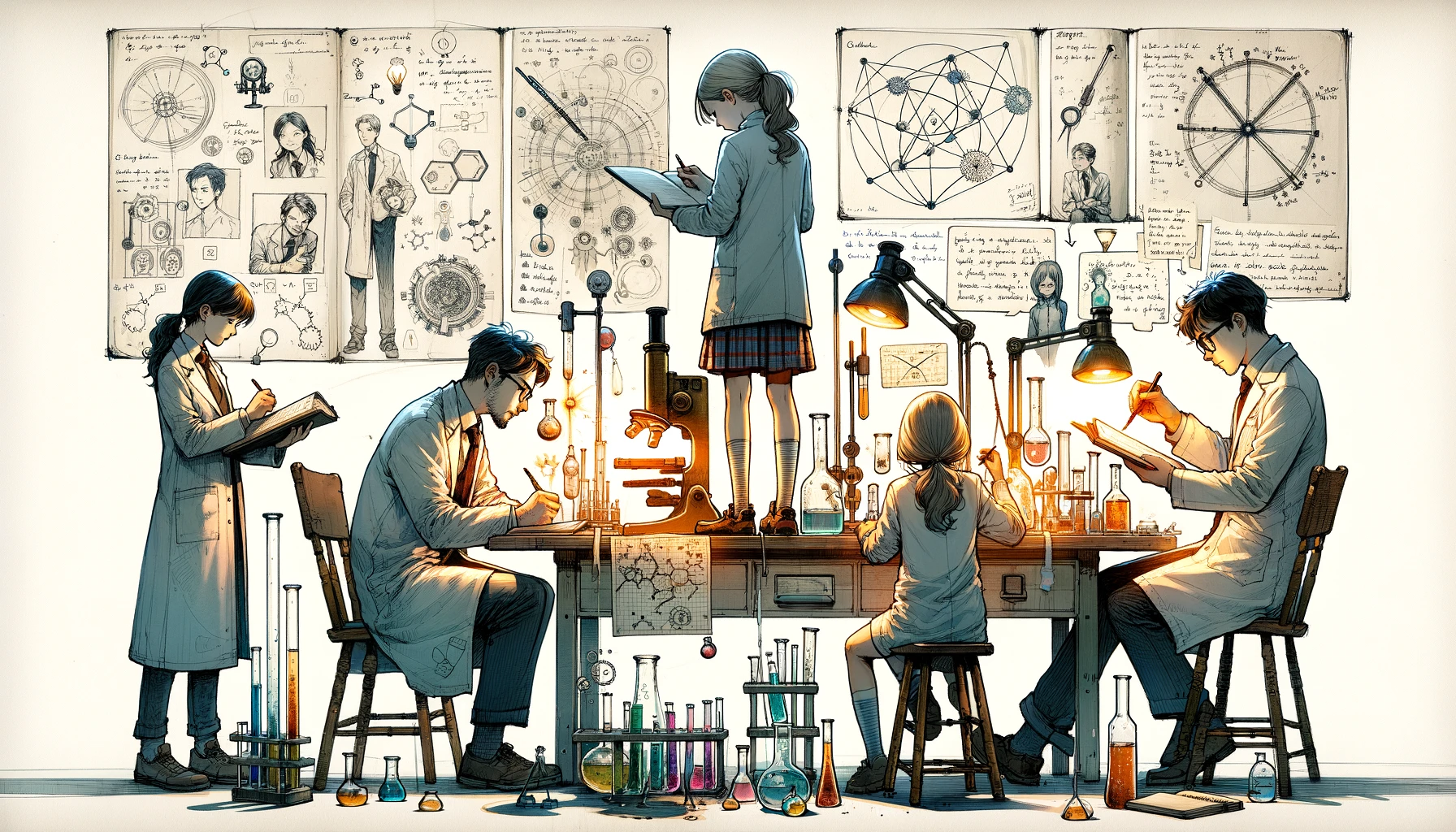
Amir lowered the binoculars, his eyes wide. "Whoa, the moon looks so perfect and smooth, like a polished white marble!" Malak took a turn, squinting into the eyepiece. "Smooth?" she questioned, focusing the dial. "It doesn't look smooth to me, it looks...bumpy."
Page 3
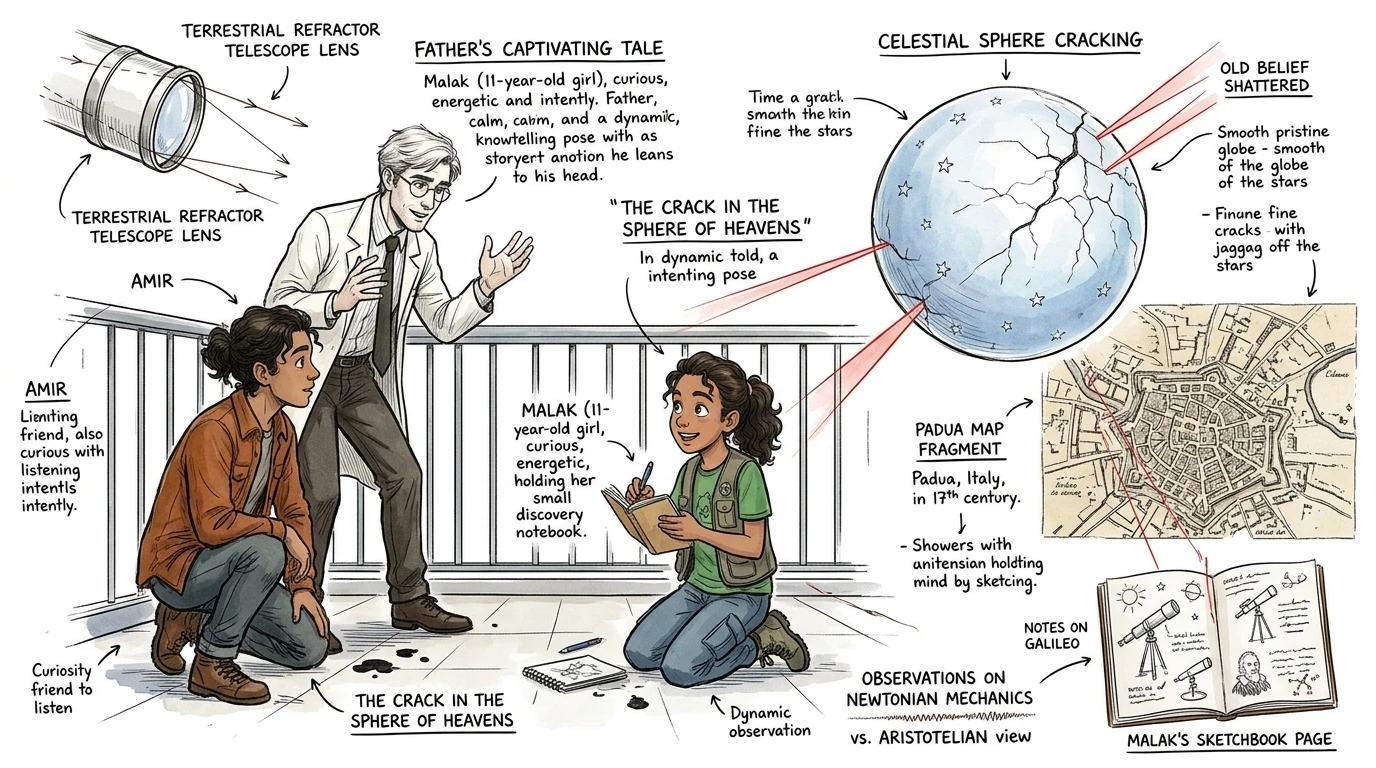
"That exact question puzzled people for thousands of years," her father said, his voice dropping into a storyteller's tone. "Everyone believed the heavens were perfect and unchanging. But that idea was about to be shattered in Padua, Italy, over four hundred years ago."
Page 4
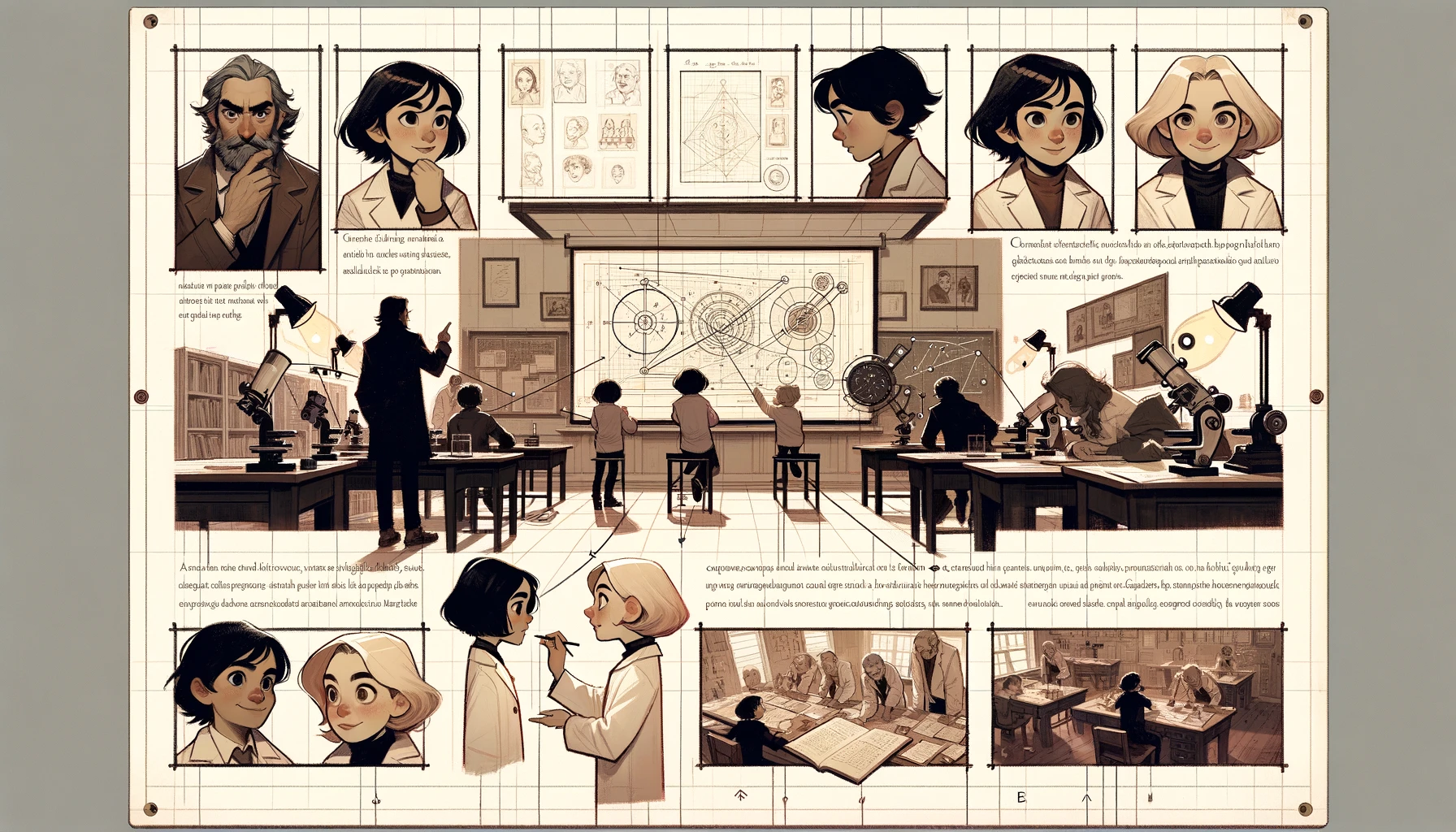
"A professor named Galileo Galilei heard about a new invention, a 'spyglass' that made distant things appear closer," her father explained. "While others saw it as a toy or a tool for sailors, Galileo looked at it and thought of the stars. He immediately started building his own, much more powerful version."
Page 5
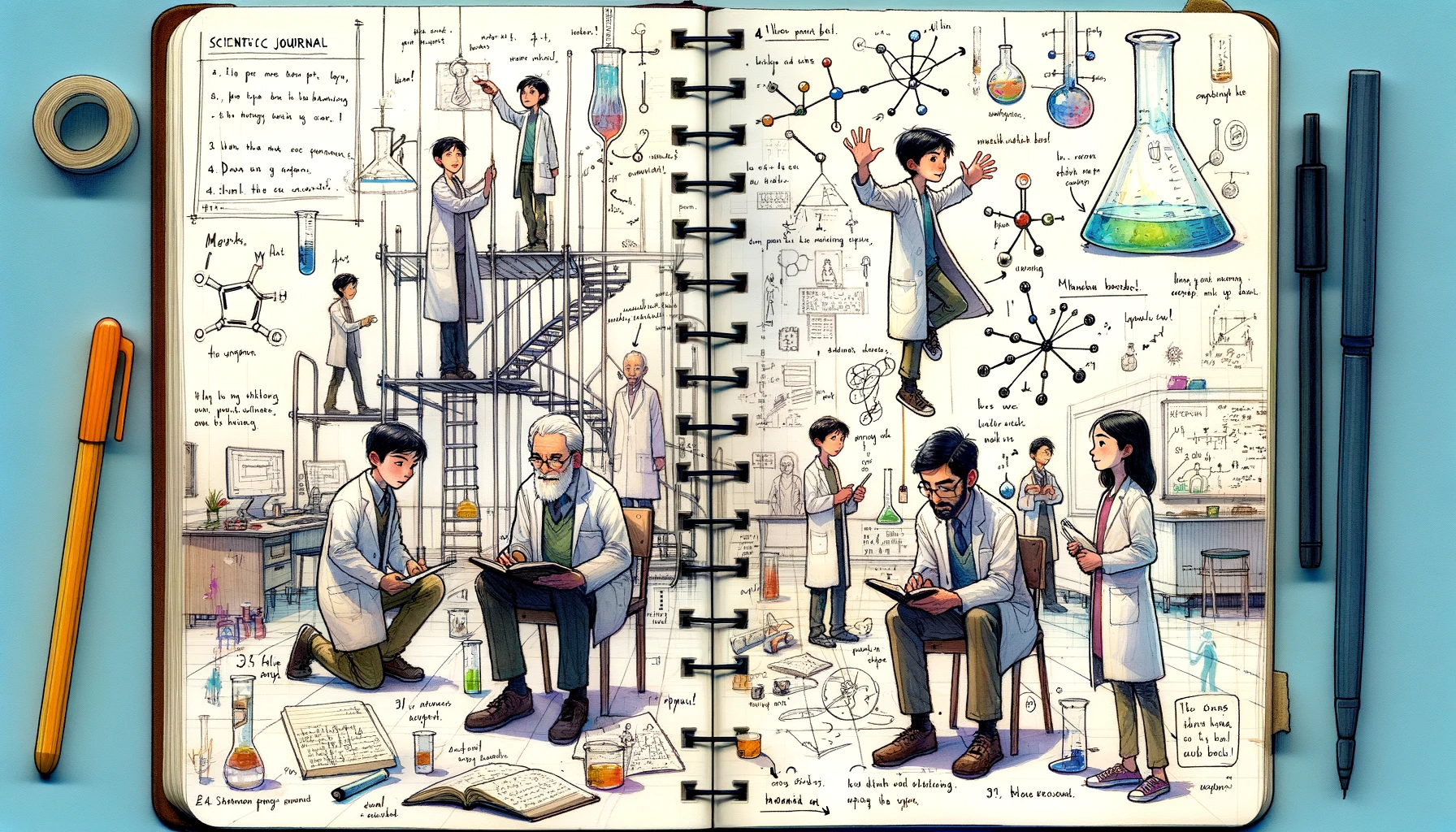
"He worked tirelessly, grinding lens after lens to get them just right," continued the father. "As Galileo himself later wrote, 'All truths are easy to understand once they are discovered; the point is to discover them.' He was on the verge of discovering a universe-changing truth."
Page 6
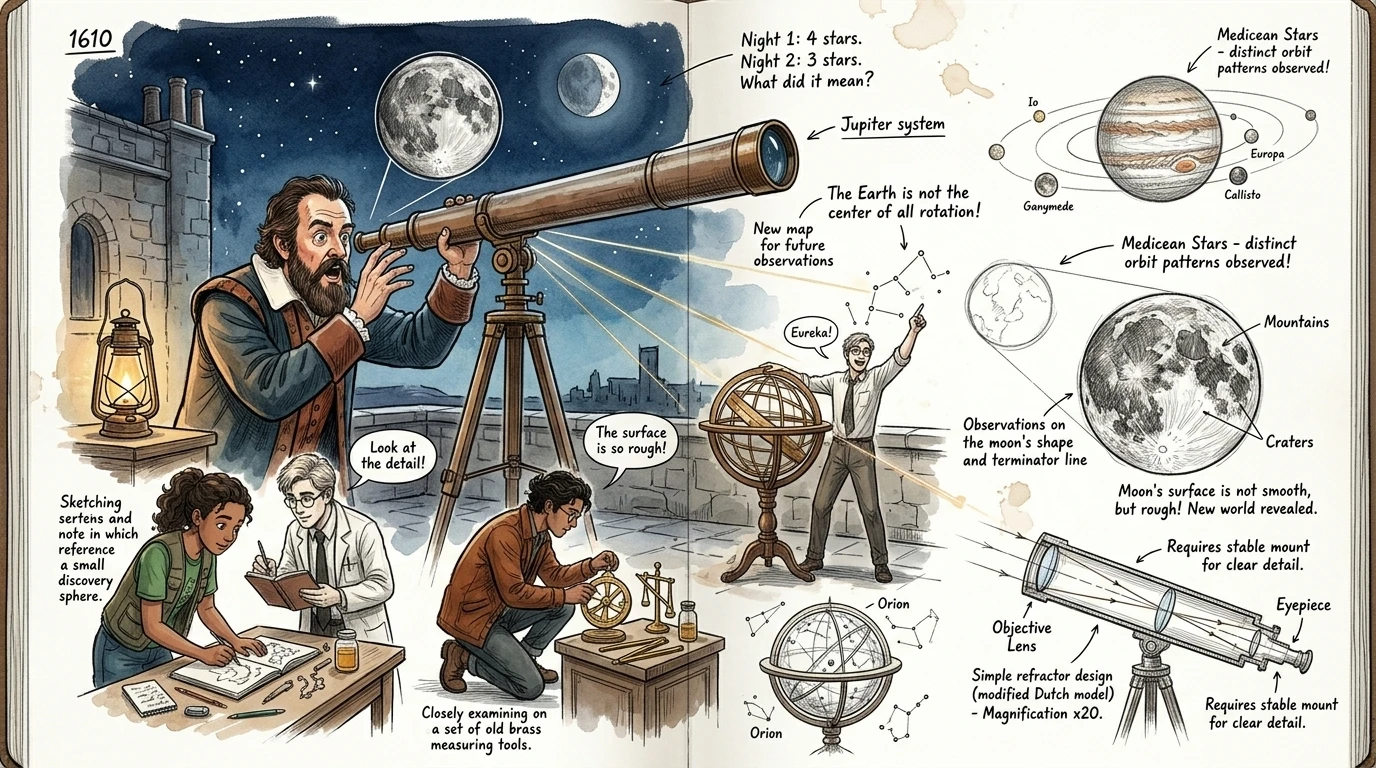
One night in 1610, Galileo pointed his new telescope at the Moon, and he gasped. It wasn't a smooth, perfect orb at all; it was covered in mountains and craters, just like Earth! Then he turned it to Jupiter and saw four tiny points of light orbiting it, proving that not everything revolved around our planet.
Page 7
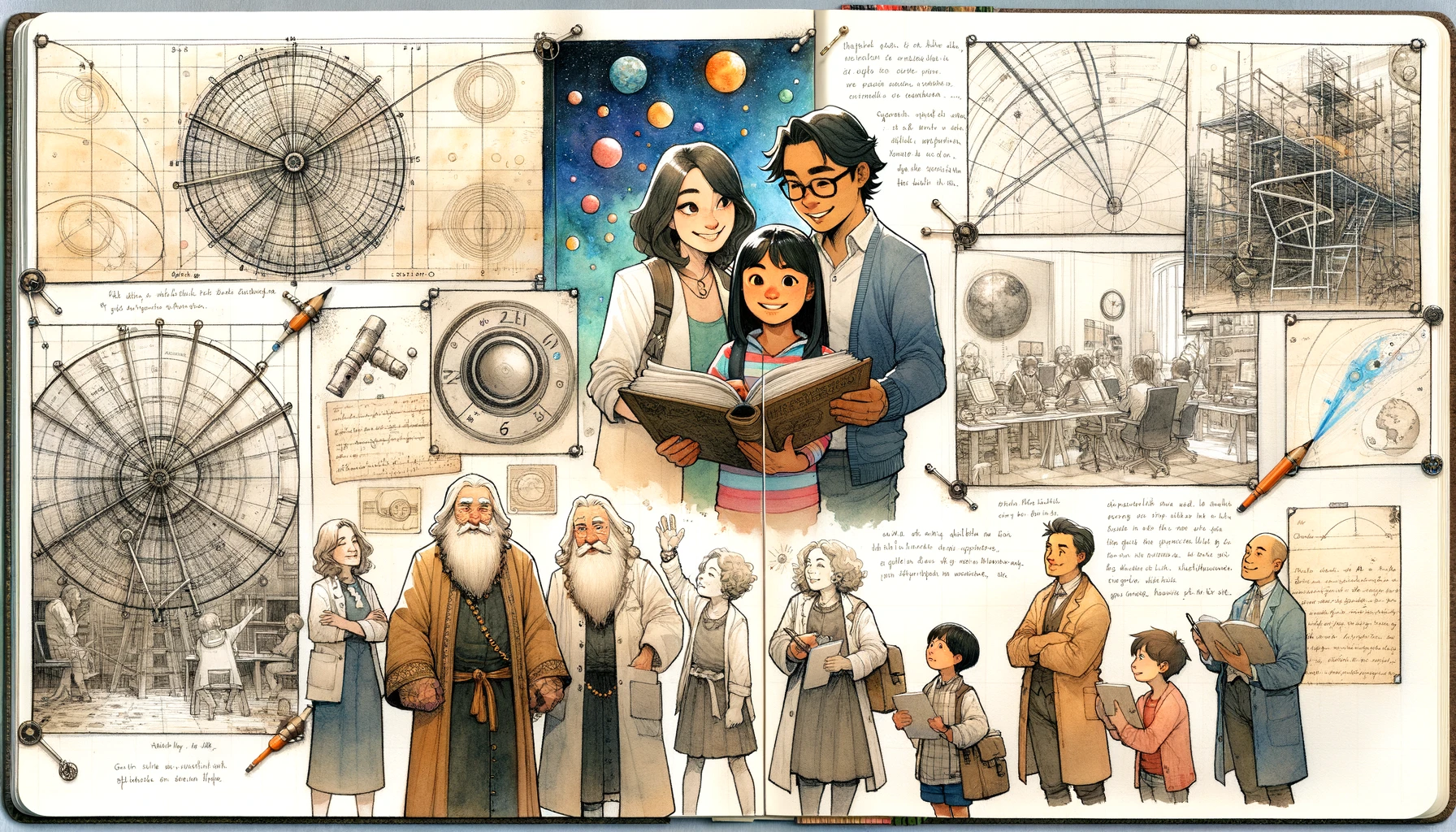
Galileo's discovery that the heavens were not perfect and that other worlds had their own moons changed everything. It kicked off a revolution in science, paving the way for modern astronomy. Today, giant telescopes and space probes that explore our solar system are all descendants of his simple spyglass.
Page 8
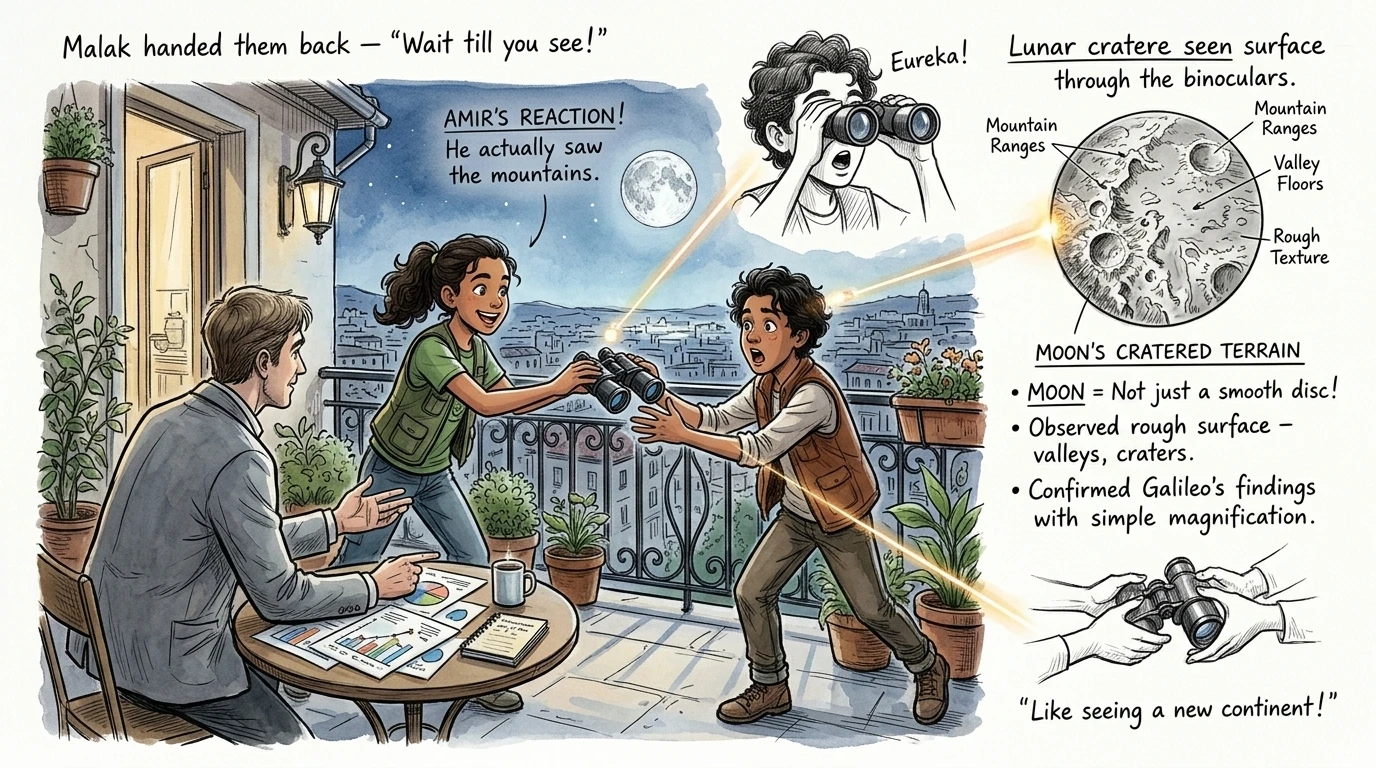
Back on the balcony, Malak handed the binoculars back to Amir. "So, it's not a smooth marble at all!" she said excitedly. "Galileo proved it has mountains and valleys!" Amir lifted the binoculars again, his mouth dropping open. "Oh! Now I see it! It looks like a whole other world!"
Page 9
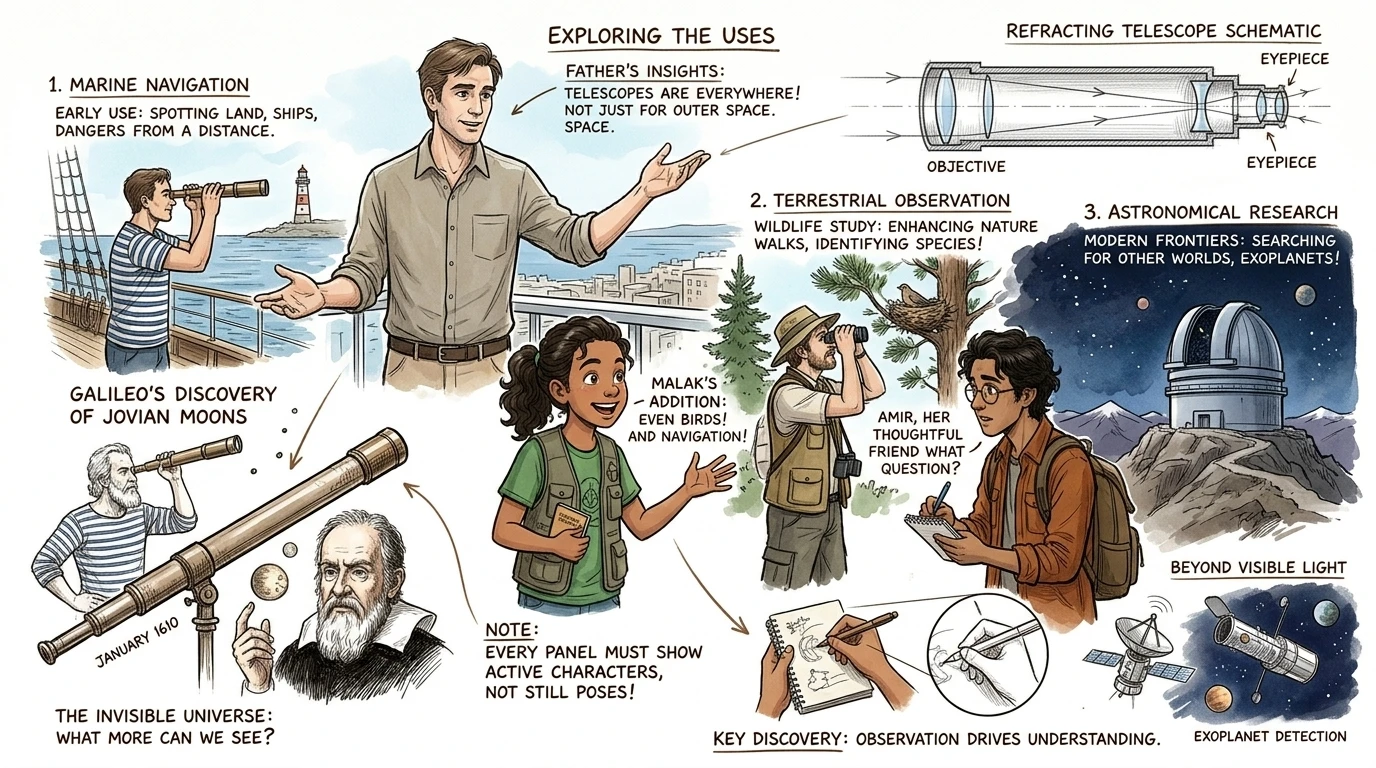
"Telescopes aren't just for space," said Father. "Sailors use them to see land, and birdwatchers use them to see nests high in trees." Malak added, "And they use huge ones on mountains to look for new planets!" Amir chimed in, "So it's like a superpower for your eyes!"
Page 10
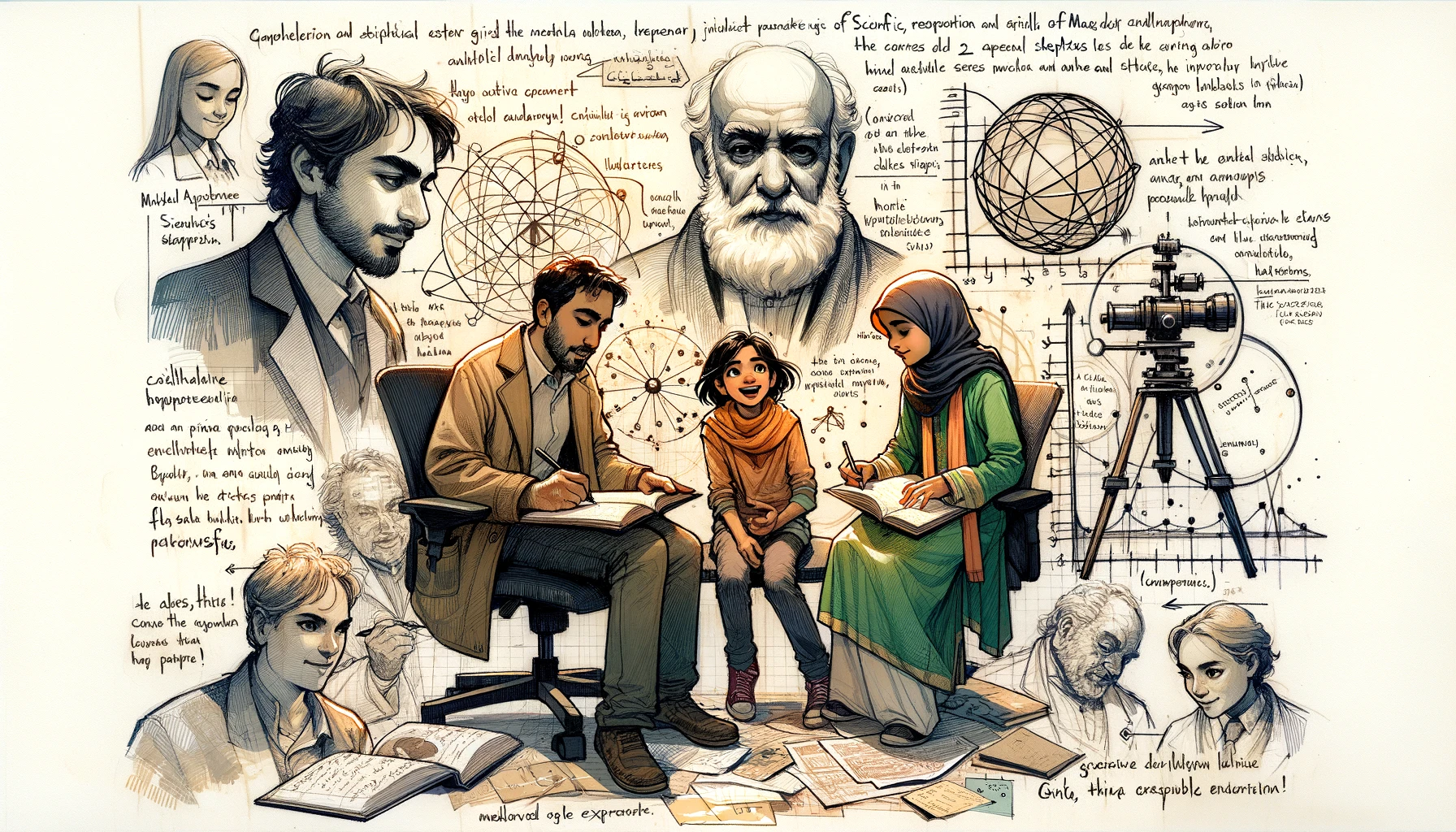
"Exactly," Malak said, writing in her notebook. "Galileo showed us that looking closer can change how we see everything." Amir looked up at the moon again, a thoughtful expression on his face. "If the moon has mountains, why can't we just fly up there and climb them?"
About this story
- Location: United States
- Audience: kids (ages 6–12)
Questions and answers
Read Wonder Science on your phone
Wonder Science is available on Android. Get Wonder Science on Google Play.