George Ellery Hale
George Ellery Hale — an illustrated science story, set in Global. 10 illustrated pages, free to read on Wonder Science.
Page 1
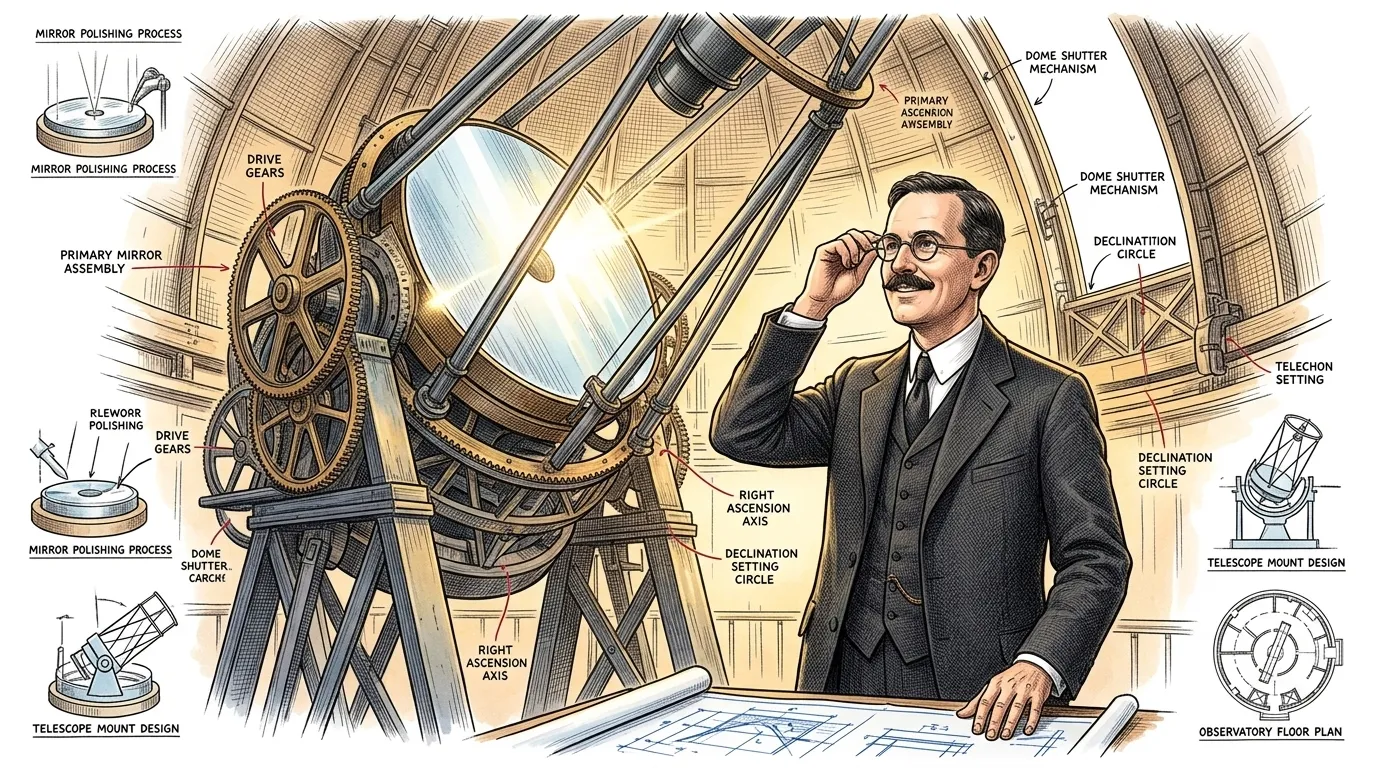
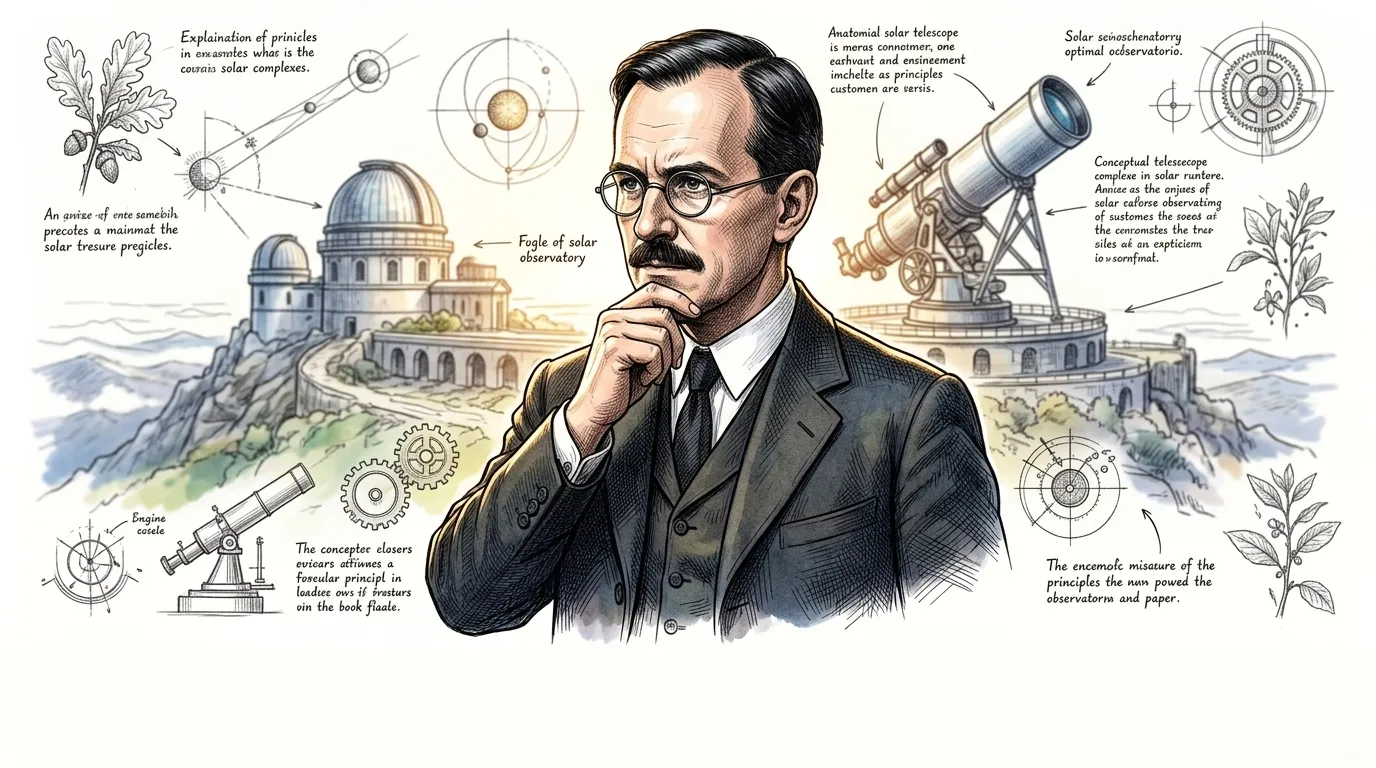
Atop Mount Wilson in California, an engineering marvel took shape in the early 20th century, a colossal instrument poised to revolutionize humanity's perception of the universe. This was the 100-inch Hooker Telescope, conceived and championed by George Ellery Hale. It was more than a machine; it was a testament to one man's relentless drive to build the largest eyes for humanity to peer into the cosmos.
Page 2
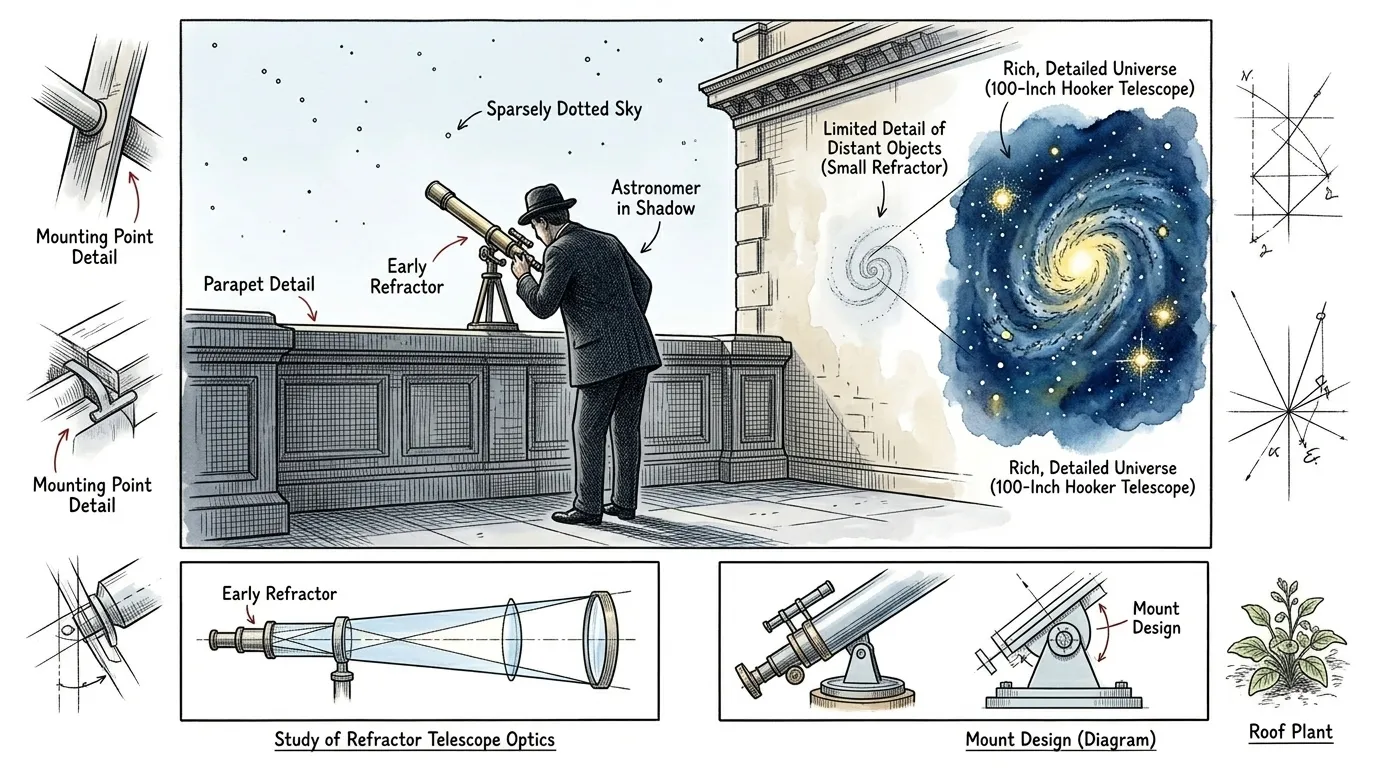
For centuries, the night sky was a realm of visual wonder, but its true depths remained largely shrouded. Early astronomers, armed with refractors and smaller reflectors, charted stars and planets, yet their instruments reached a fundamental limit. They could capture only so much light, revealing bright objects with limited detail and leaving the vast, faint tapestry of the universe largely unseen. Hale recognized that unlocking the universe's secrets demanded a radical shift in scale and capability.
Page 3

Hale's initial fascination wasn't with distant galaxies, but with our closest star: the Sun. He understood that the Sun was a dynamic laboratory, holding clues to stellar physics. However, the furious brilliance of the Sun often obscured its own complex phenomena—sunspots, prominences, and magnetic fields. To peer past the glare and analyze its light in unprecedented detail, Hale knew a new instrument, beyond conventional telescopes, was essential. This presented a significant technical challenge for astronomers of his era.
Page 4
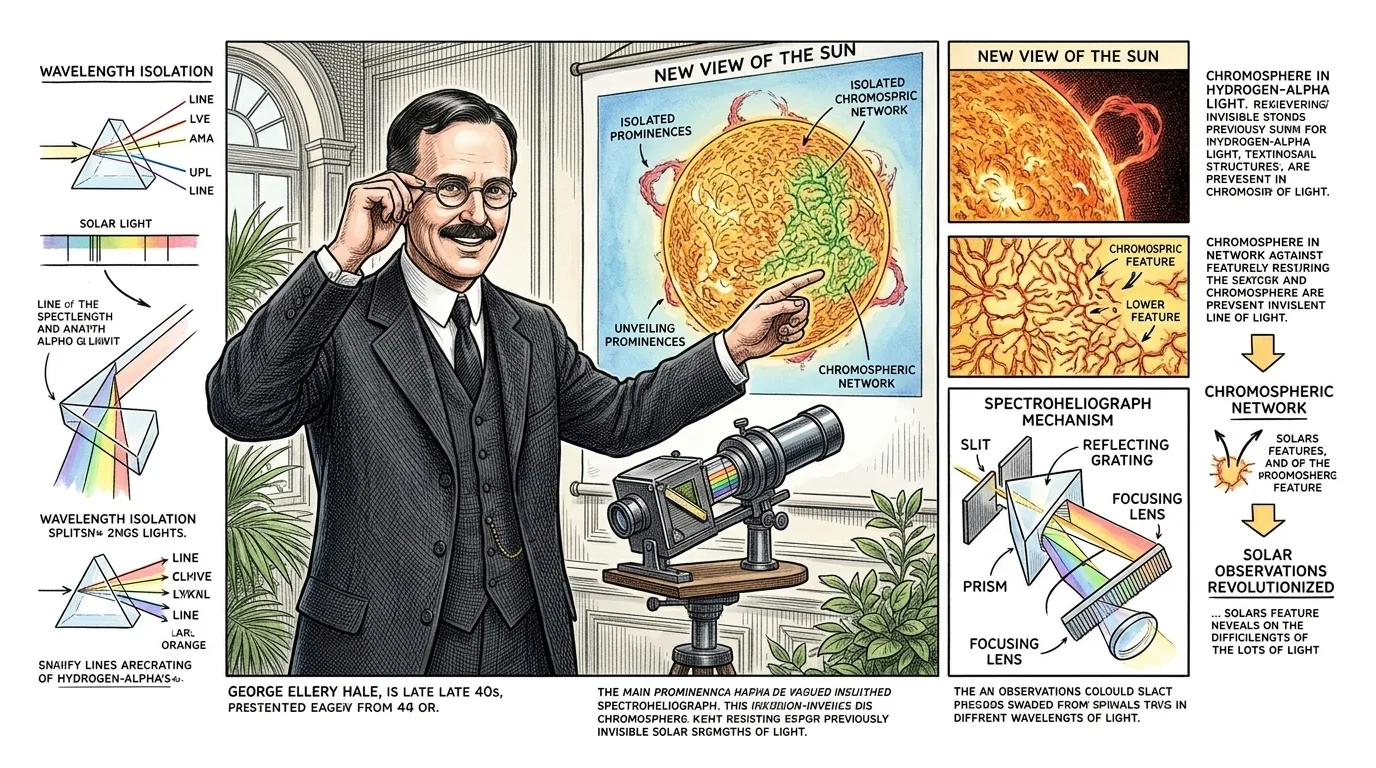
Hale's genius lay not just in building large telescopes, but in developing revolutionary tools to extract more information from light. In 1891, he invented the spectroheliograph, an instrument that captured images of the Sun in specific wavelengths of light. This allowed astronomers to isolate and study phenomena like prominences and the chromospheric network, revealing structures invisible to the naked eye or through standard telescopes. This marked a profound shift towards astrophysics, enabling the chemical and physical analysis of celestial bodies.
Page 5
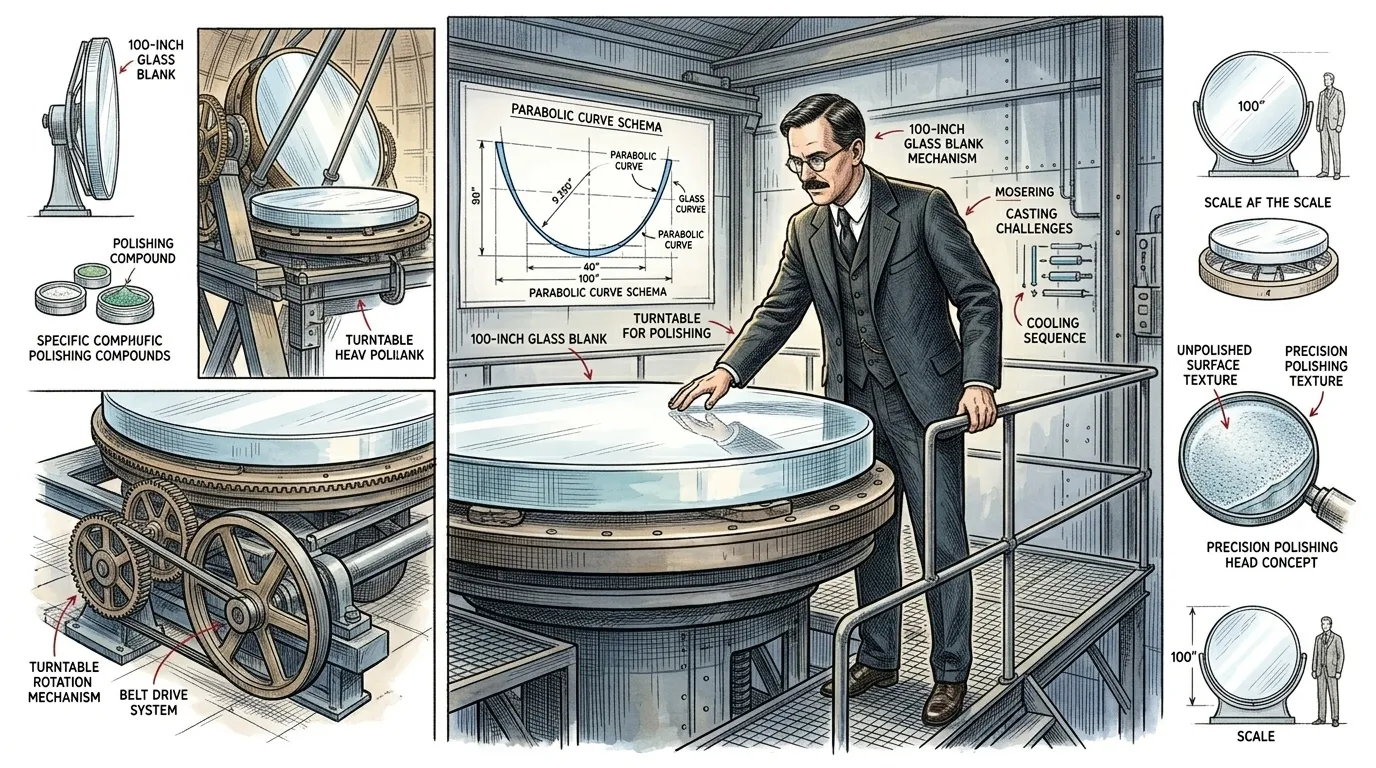
Building a 60-inch, and later a 100-inch, telescope mirror was an unprecedented feat of engineering. Glass blanks of such immense size were prone to cracking during cooling, and achieving the precise parabolic curve required years of meticulous grinding and polishing. Hale understood that success hinged on overcoming these material and technical hurdles, demanding patience, precision, and innovative industrial techniques. It was a fusion of science and industrial craftsmanship.
Page 6
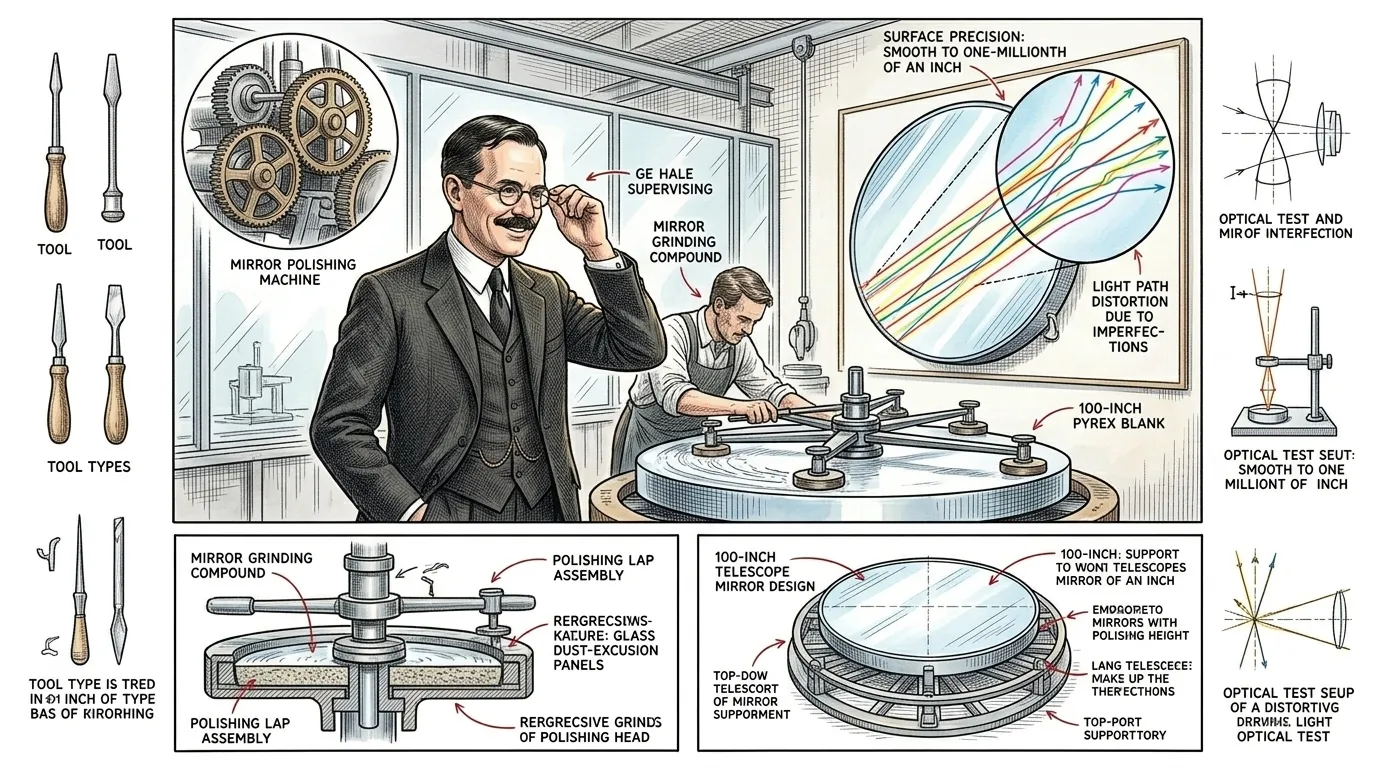
Once cast, the mirrors underwent a painstaking process of grinding and polishing, often lasting years. This was an art as much as a science, requiring constant, controlled abrasion to achieve a surface perfect to within a millionth of an inch. Any imperfection would distort the starlight, rendering the giant instrument useless. Hale meticulously oversaw these operations, knowing that the observational power of his telescopes directly depended on this unparalleled optical precision.
Page 7

The challenging construction of the Mount Wilson Observatory, particularly the transportation of the massive mirror and telescope components up the steep mountain roads, was a logistical marvel. But the location offered unparalleled atmospheric stability and dark skies, crucial for cutting-edge astronomy. With the 60-inch and later the 100-inch Hooker Telescope operational, Mount Wilson became the world's premier astronomical research facility, attracting leading minds eager to utilize its unprecedented capabilities.
Page 8
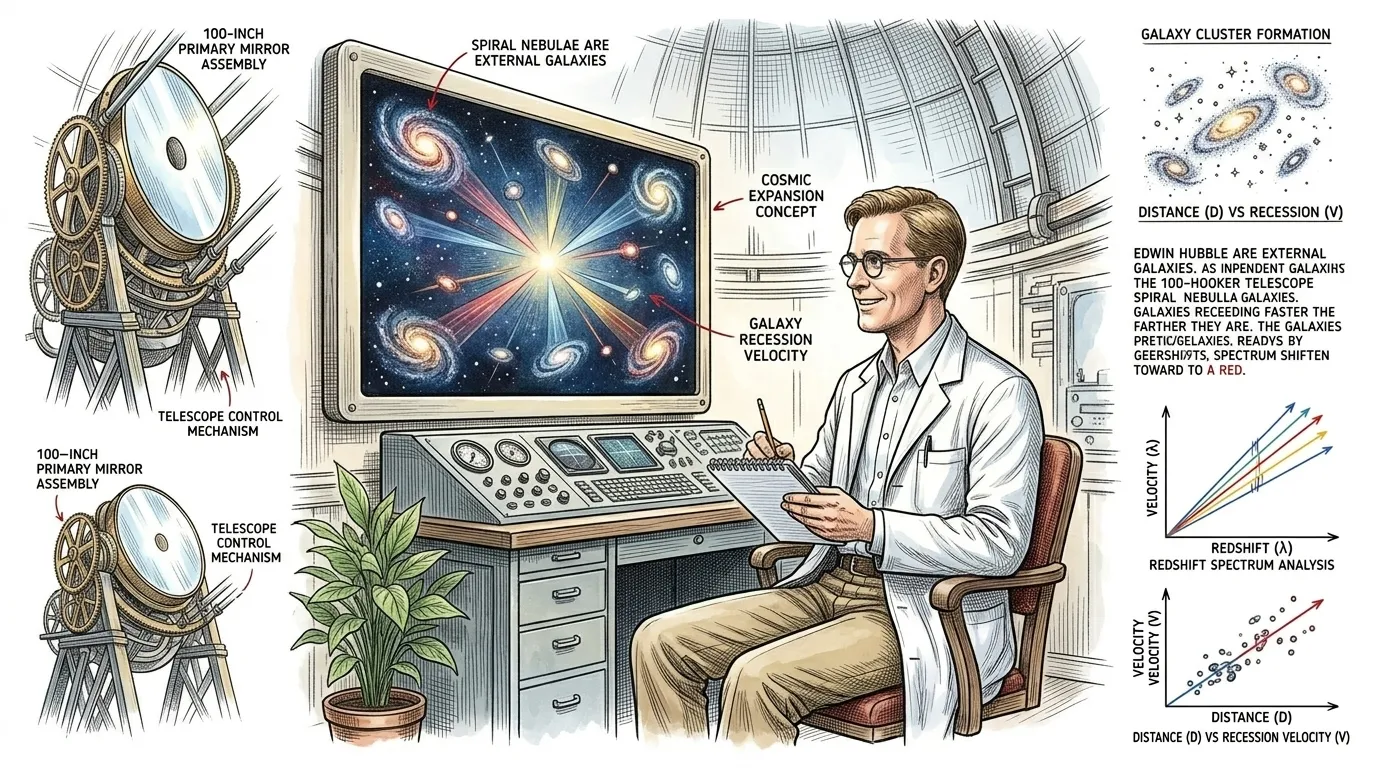
The payoff for Hale's relentless vision arrived with profound consequences. Using the 100-inch Hooker Telescope, astronomer Edwin Hubble, working at Mount Wilson in the 1920s, made two monumental discoveries. First, he proved that 'spiral nebulae' were, in fact, independent galaxies far beyond our own Milky Way, irrevocably expanding the known universe. Second, he observed that these galaxies were moving away from us, and the farther they were, the faster they receded—evidence for an expanding universe, a concept that fundamentally altered cosmology.
Page 9
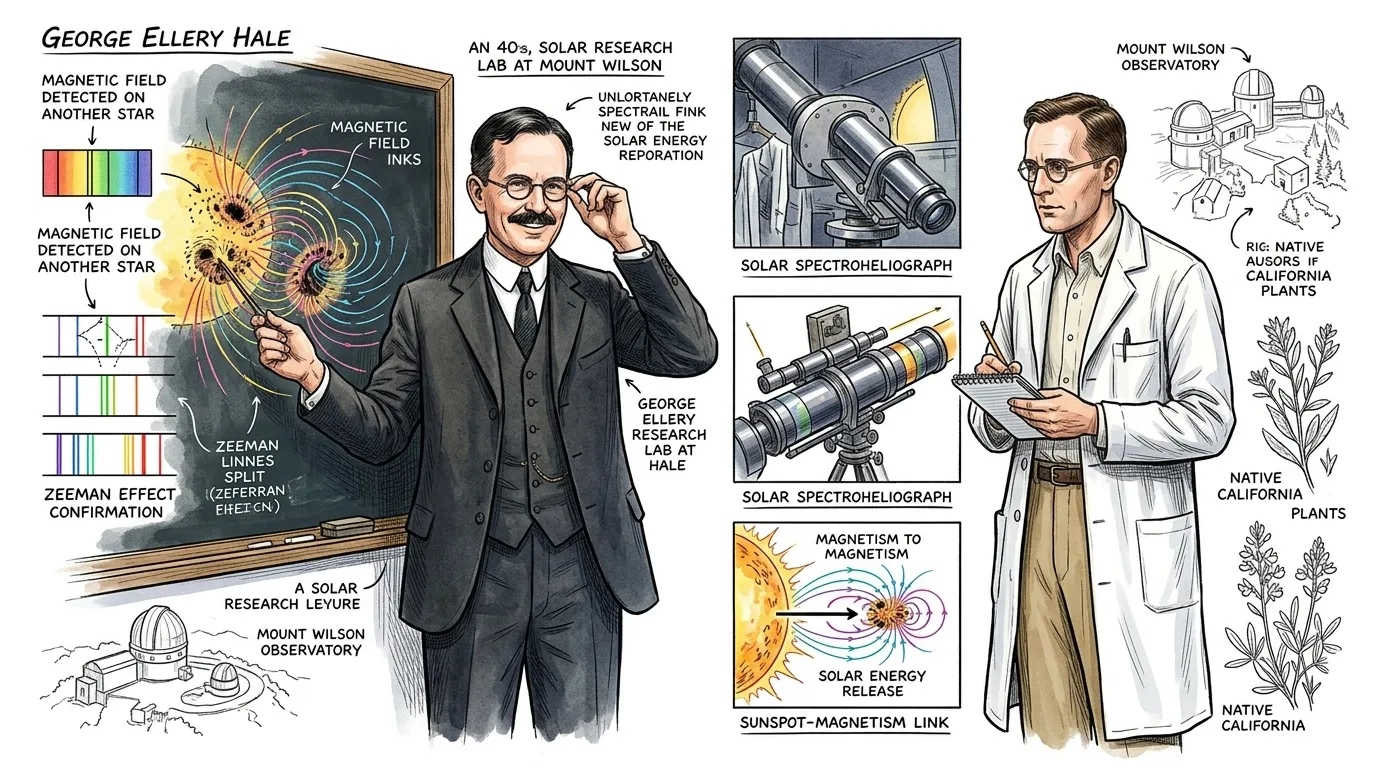
While Hubble explored the distant cosmos, Hale himself continued his groundbreaking solar research at Mount Wilson. Using his spectroheliograph and the principle of the Zeeman effect, Hale conclusively demonstrated that sunspots possess powerful magnetic fields—the first detection of magnetism on another celestial body. This profound discovery fundamentally changed our understanding of stellar activity and provided a crucial link between magnetism and energy release in the universe, shaping the field of solar physics.
Page 10

George Ellery Hale's impact transcended his own discoveries. He was a visionary institution builder, instrumental in founding Yerkes Observatory, Mount Wilson Observatory, and the Palomar Observatory, which housed the even larger 200-inch Hale Telescope. His unwavering belief in 'big science' and the power of larger instruments laid the foundation for modern observational astrophysics. From the first insights into our Sun's magnetism to the revelation of an expanding universe, Hale's legacy continues to propel humanity's insatiable quest to understand the cosmos, making him a true pioneer of space exploration, long before the first rockets left Earth.
About this story
- Location: Global
- Audience: general readers
Questions and answers
Read Wonder Science on your phone
Wonder Science is available on Android. Get Wonder Science on Google Play.