George Paget Thomson

George Paget Thomson — an illustrated science story, set in Global. 10 illustrated pages, free to read on Wonder Science.
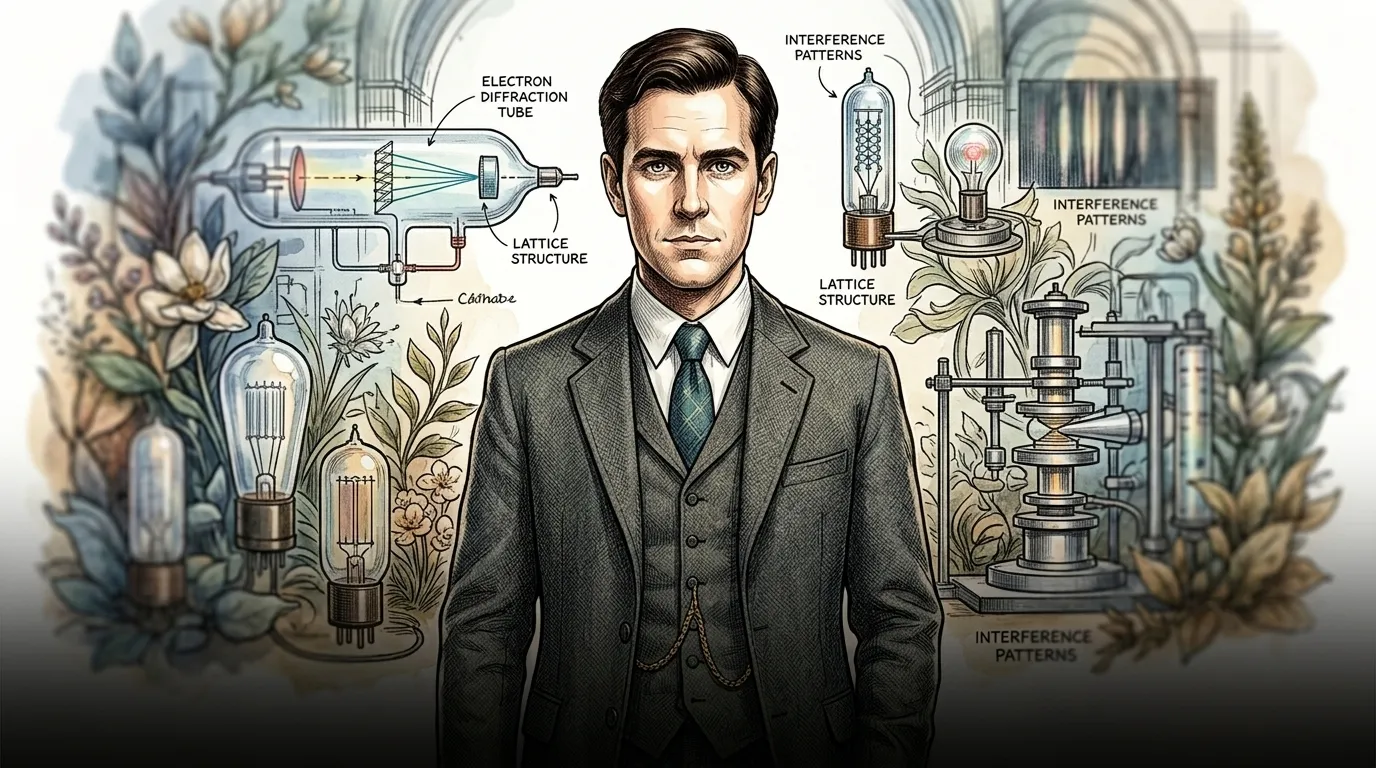
George Paget Thomson — book cover — Wonder Science
George Paget Thomson — an illustrated science story, set in Global. 10 illustrated pages, free to read on Wonder Science.

Page 1
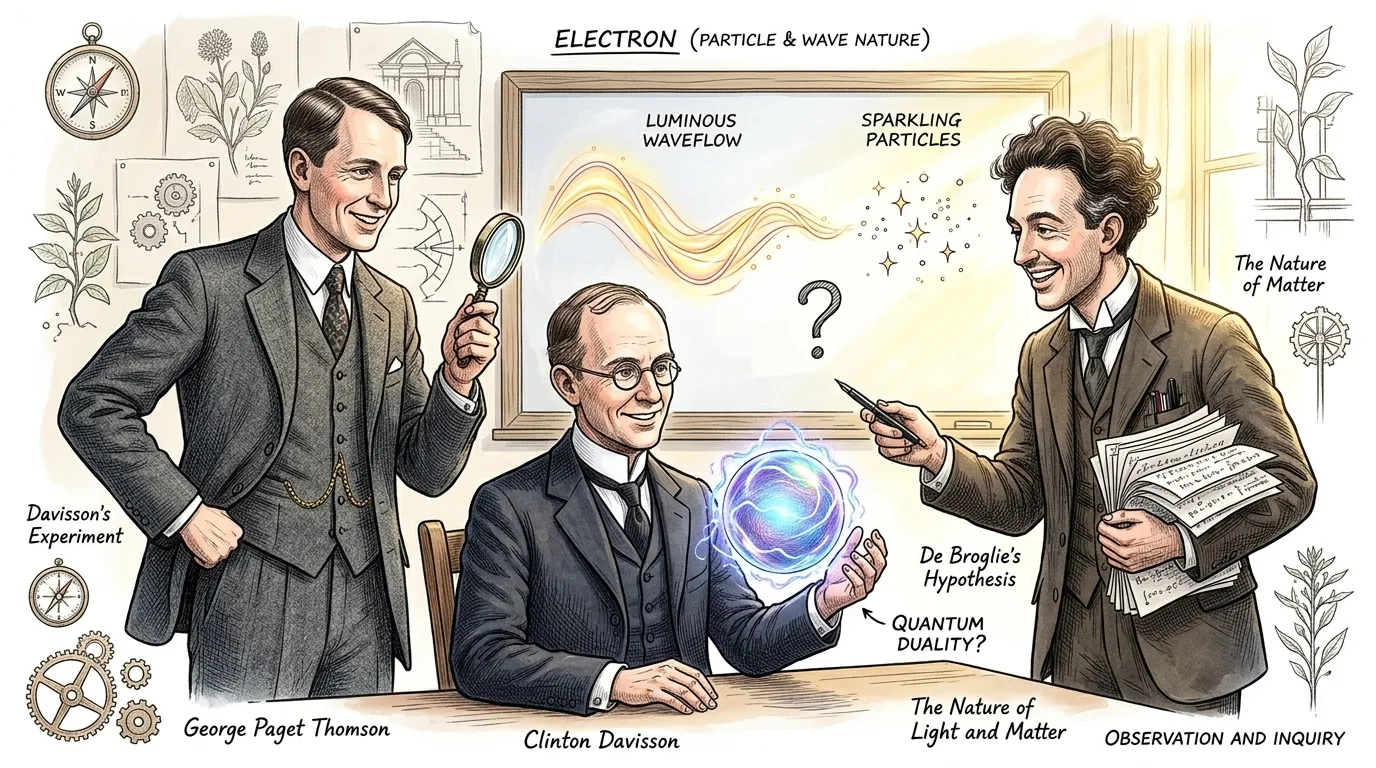
In the early 20th century, physics was grappling with a profound paradox: the nature of reality at its most fundamental level.
In the early 20th century, physics was grappling with a profound paradox: the nature of reality at its most fundamental level. Light, once definitively categorized as a wave, had shown undeniable particle-like properties through phenomena like the photoelectric effect. This led to a radical question: Could matter, conventionally understood as discrete particles—like electrons—also exhibit wave-like behavior?

In the early 20th century, physics was grappling with a profound paradox: the nature of reality at its most fundamental level. Light, once definitively categorized as a wave, had shown undeniable particle-like properties through phenomena like the photoelectric effect. This led to a radical question: Could matter, conventionally understood as discrete particles—like electrons—also exhibit wave-like behavior? The answer, when it emerged from the laboratories of the 1920s, was a stunning confirmation that reshaped our understanding of the universe.

Page 2
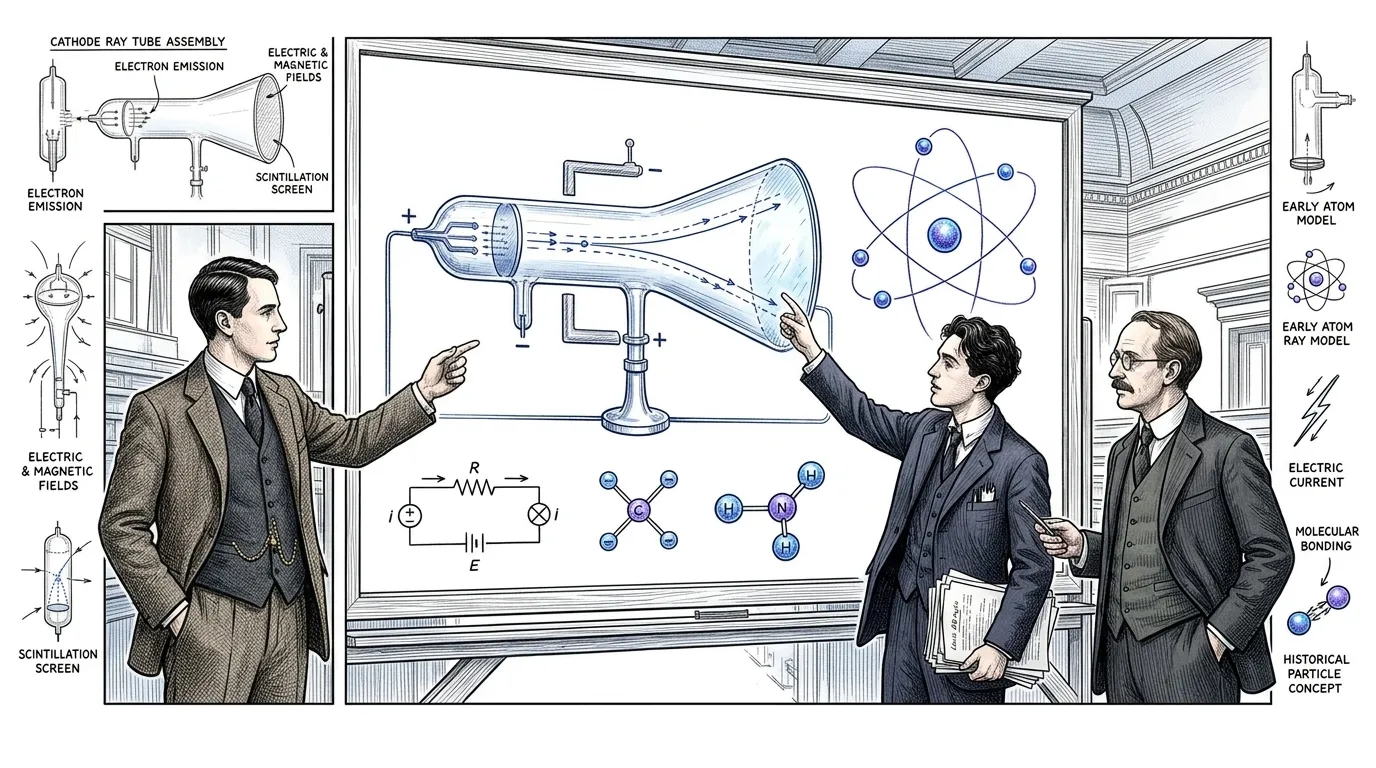
For decades, the electron had been firmly established as a particle. Its very discovery by J.J. Thomson, George Paget Thomson's father, involved demonstrating…
For decades, the electron had been firmly established as a particle. Its very discovery by J.J. Thomson, George Paget Thomson's father, involved demonstrating its discrete charge and mass. Electrons were envisioned as tiny, indivisible spheres, the fundamental building blocks of atoms. This particle model had successfully explained countless phenomena, from electricity to chemical bonding, creating a robust framework for classical physics.

For decades, the electron had been firmly established as a particle. Its very discovery by J.J. Thomson, George Paget Thomson's father, involved demonstrating its discrete charge and mass. Electrons were envisioned as tiny, indivisible spheres, the fundamental building blocks of atoms. This particle model had successfully explained countless phenomena, from electricity to chemical bonding, creating a robust framework for classical physics.

Page 3
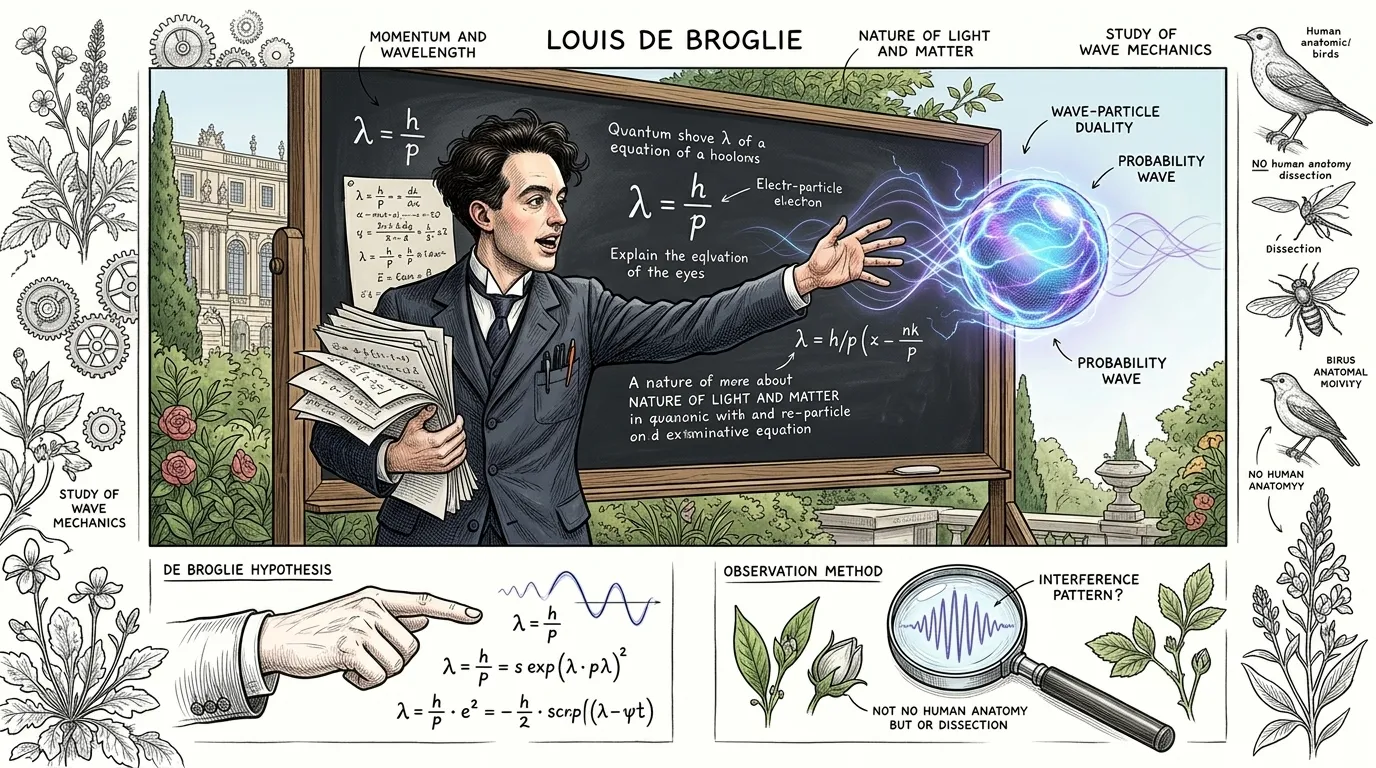
Then, in 1924, a young French physicist named Louis de Broglie proposed a truly revolutionary idea in his doctoral thesis: if light, a wave, could behave like a…
Then, in 1924, a young French physicist named Louis de Broglie proposed a truly revolutionary idea in his doctoral thesis: if light, a wave, could behave like a particle, then perhaps particles, like electrons, could also exhibit wave-like properties. He hypothesized that every particle has an associated wavelength, inversely proportional to its momentum.

Then, in 1924, a young French physicist named Louis de Broglie proposed a truly revolutionary idea in his doctoral thesis: if light, a wave, could behave like a particle, then perhaps particles, like electrons, could also exhibit wave-like properties. He hypothesized that every particle has an associated wavelength, inversely proportional to its momentum. This 'matter wave' concept was so audacious that many dismissed it as pure speculation, yet it offered an elegant symmetry to the perplexing wave-particle duality already observed in light.

Page 4
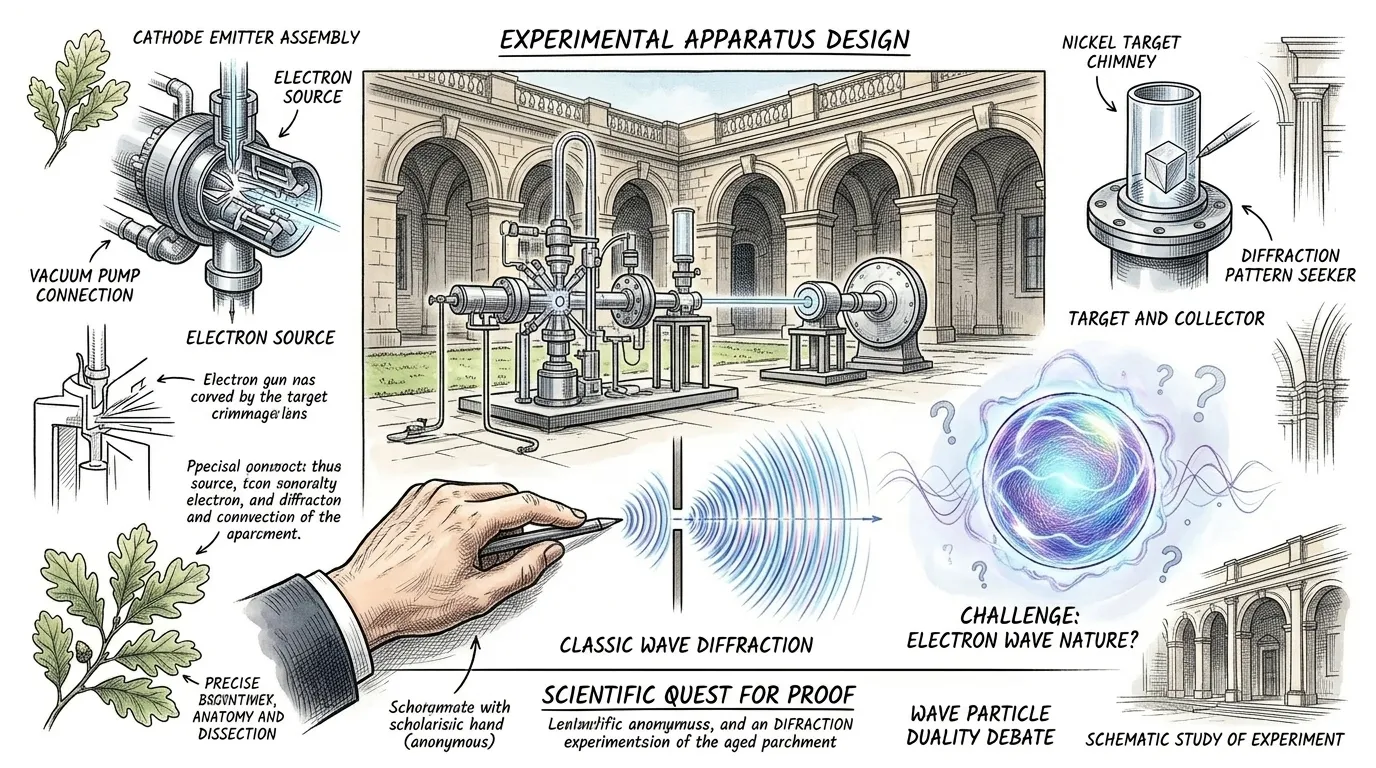
De Broglie's hypothesis, while mathematically compelling, demanded experimental validation. How could one demonstrate the wave nature of something as…
De Broglie's hypothesis, while mathematically compelling, demanded experimental validation. How could one demonstrate the wave nature of something as infinitesimally small as an electron? The challenge was significant: electrons, unlike light, carry charge and mass, making them subject to electromagnetic fields and traditional particle interactions.

De Broglie's hypothesis, while mathematically compelling, demanded experimental validation. How could one demonstrate the wave nature of something as infinitesimally small as an electron? The challenge was significant: electrons, unlike light, carry charge and mass, making them subject to electromagnetic fields and traditional particle interactions. To prove their wave behavior, physicists needed to find a way to make them 'diffract' or 'interfere'—phenomena exclusively associated with waves passing through a grating.

Page 5
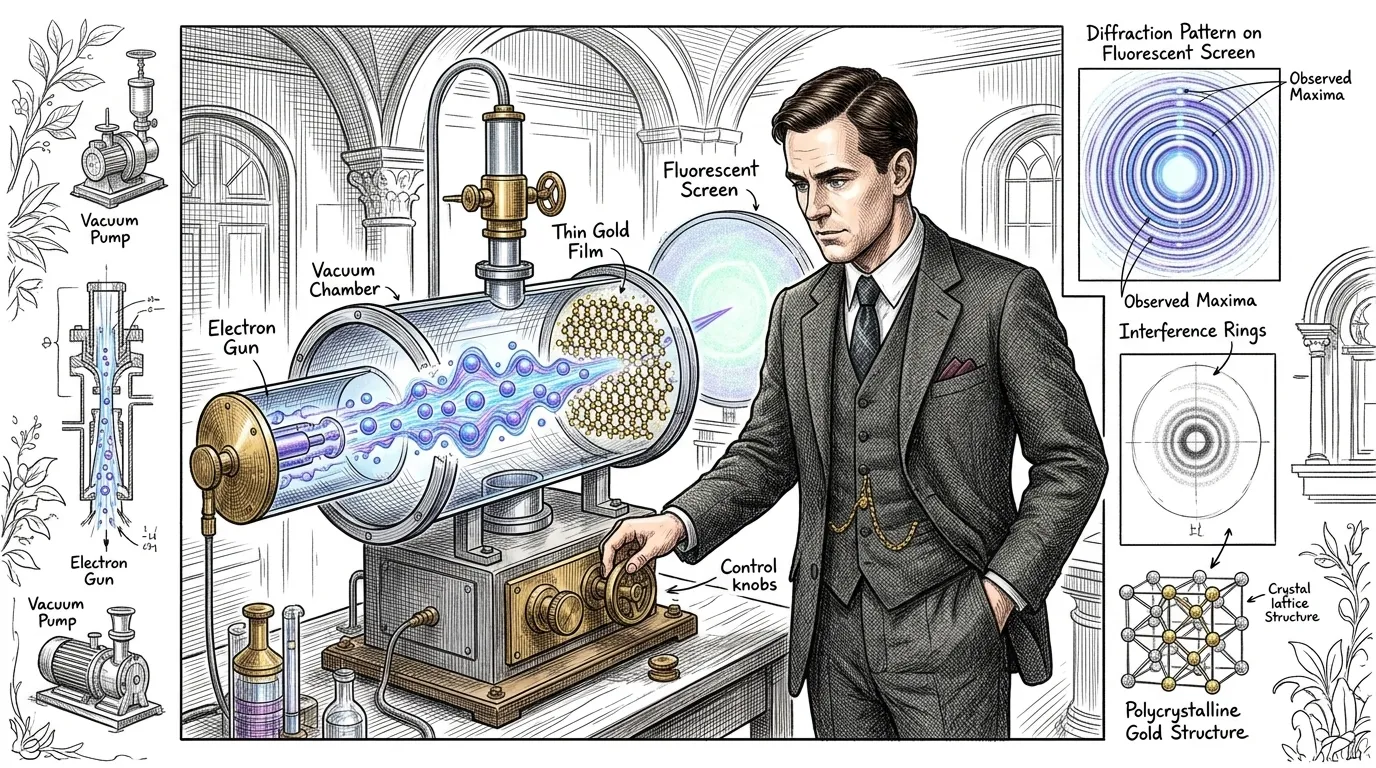
George Paget Thomson, working independently in Aberdeen, Scotland, devised an ingenious experiment to test de Broglie's audacious prediction.
George Paget Thomson, working independently in Aberdeen, Scotland, devised an ingenious experiment to test de Broglie's audacious prediction. His setup involved accelerating a beam of high-energy electrons through a very thin film of polycrystalline material, such as gold or aluminum. The electrons were then directed onto a fluorescent screen.

George Paget Thomson, working independently in Aberdeen, Scotland, devised an ingenious experiment to test de Broglie's audacious prediction. His setup involved accelerating a beam of high-energy electrons through a very thin film of polycrystalline material, such as gold or aluminum. The electrons were then directed onto a fluorescent screen. The crucial insight was that the regularly spaced atoms within the crystal lattice would act as a natural diffraction grating for the electron waves, much like a prism disperses light.

Page 6
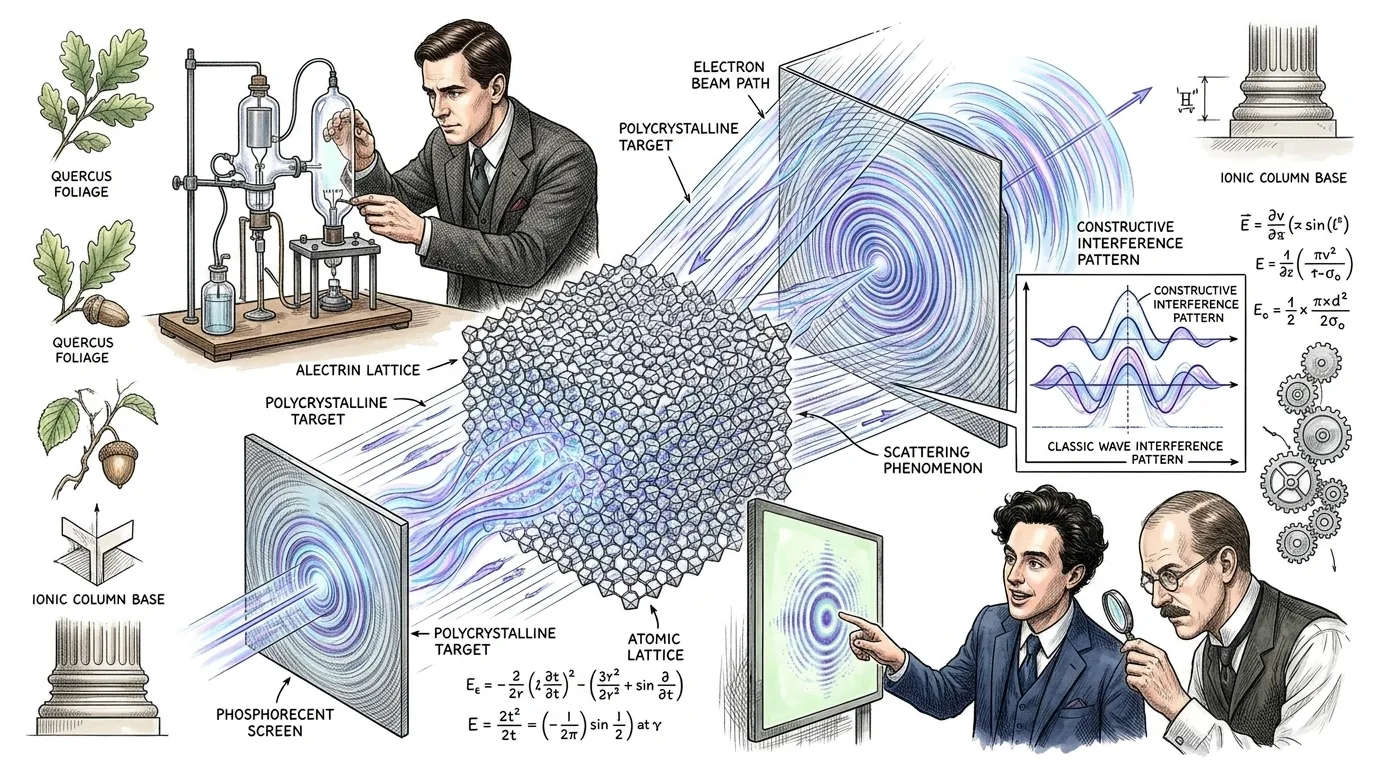
As the accelerated electrons passed through the ultrathin metal foil, their associated waves encountered the highly ordered atomic structure of the crystal.
As the accelerated electrons passed through the ultrathin metal foil, their associated waves encountered the highly ordered atomic structure of the crystal. Instead of simply scattering randomly like particles, the electrons diffracted. The atoms in the crystal lattice scattered the electron waves in specific directions, causing them to interfere constructively and destructively. This interference created distinct patterns, a hallmark of wave behavior.

As the accelerated electrons passed through the ultrathin metal foil, their associated waves encountered the highly ordered atomic structure of the crystal. Instead of simply scattering randomly like particles, the electrons diffracted. The atoms in the crystal lattice scattered the electron waves in specific directions, causing them to interfere constructively and destructively. This interference created distinct patterns, a hallmark of wave behavior. The choice of a polycrystalline material, rather than a single crystal, was key to observing continuous rings.

Page 7
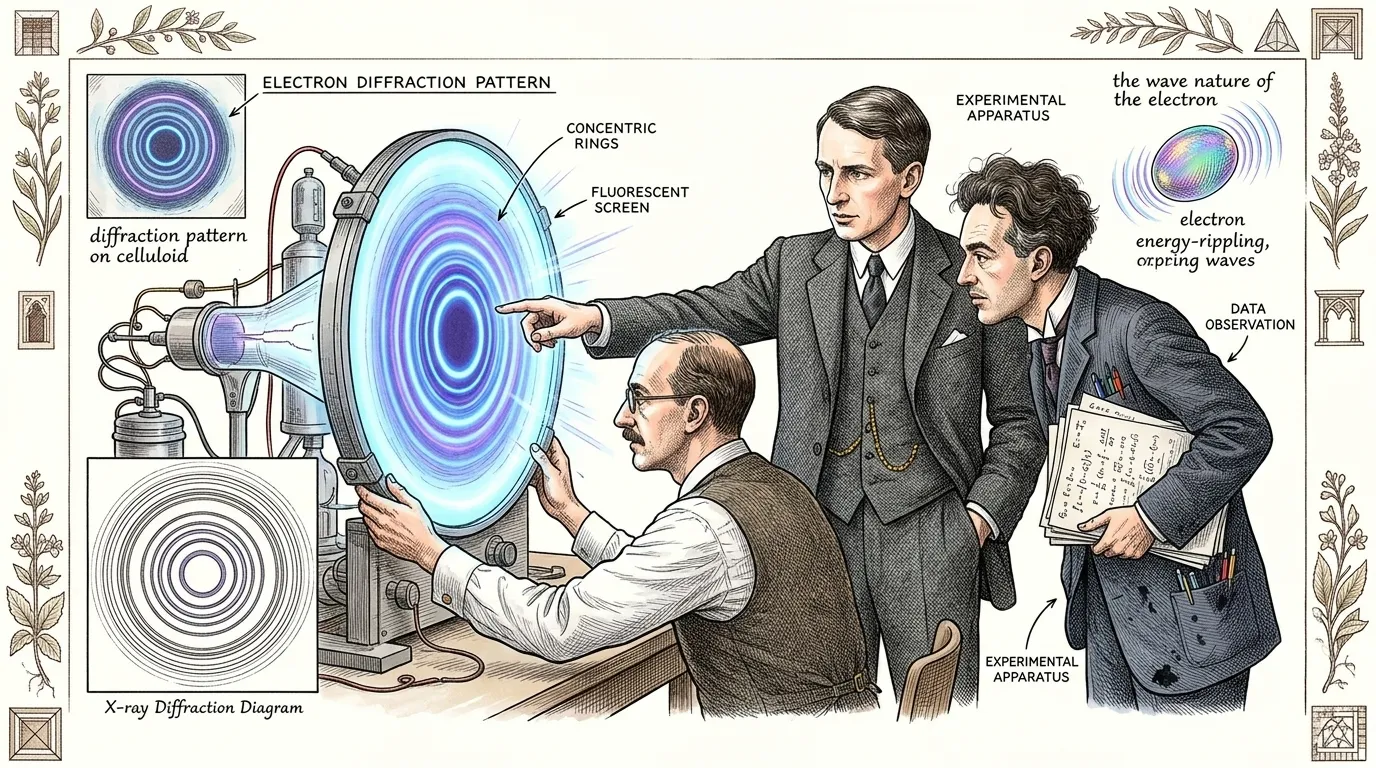
The outcome was undeniable and profoundly significant. When the electron beam hit the fluorescent screen, it didn't create a diffuse glow or a single spot, as…
The outcome was undeniable and profoundly significant. When the electron beam hit the fluorescent screen, it didn't create a diffuse glow or a single spot, as would be expected from a purely particle beam. Instead, a distinct pattern of concentric rings appeared—a classic diffraction pattern. These 'diffraction rings' were identical in form to those produced when X-rays, known waves, were passed through similar crystalline structures.

The outcome was undeniable and profoundly significant. When the electron beam hit the fluorescent screen, it didn't create a diffuse glow or a single spot, as would be expected from a purely particle beam. Instead, a distinct pattern of concentric rings appeared—a classic diffraction pattern. These 'diffraction rings' were identical in form to those produced when X-rays, known waves, were passed through similar crystalline structures. It was direct, compelling evidence: electrons, like light, possessed wave-like properties.

Page 8
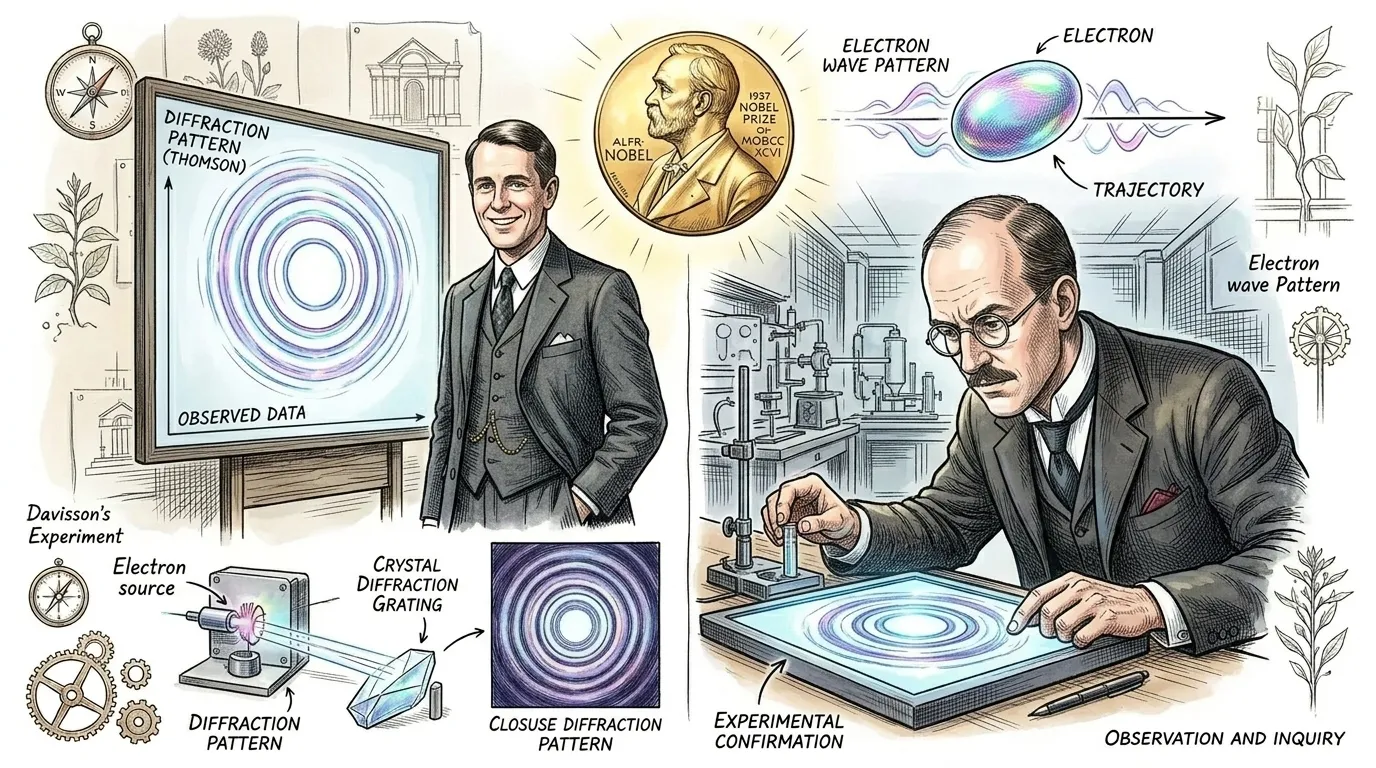
Remarkably, at almost the same time, American physicists Clinton Davisson and Lester Germer independently observed electron diffraction using a different…
Remarkably, at almost the same time, American physicists Clinton Davisson and Lester Germer independently observed electron diffraction using a different method: reflecting electrons off a nickel crystal. Both sets of experiments unequivocally confirmed de Broglie's bold hypothesis. For their groundbreaking experimental discovery of the diffraction of electrons by crystals, George Paget Thomson and Clinton Davisson were jointly awarded the Nobel Prize in Physics in 1937…

Remarkably, at almost the same time, American physicists Clinton Davisson and Lester Germer independently observed electron diffraction using a different method: reflecting electrons off a nickel crystal. Both sets of experiments unequivocally confirmed de Broglie's bold hypothesis. For their groundbreaking experimental discovery of the diffraction of electrons by crystals, George Paget Thomson and Clinton Davisson were jointly awarded the Nobel Prize in Physics in 1937, validating a cornerstone of quantum theory.

Page 9
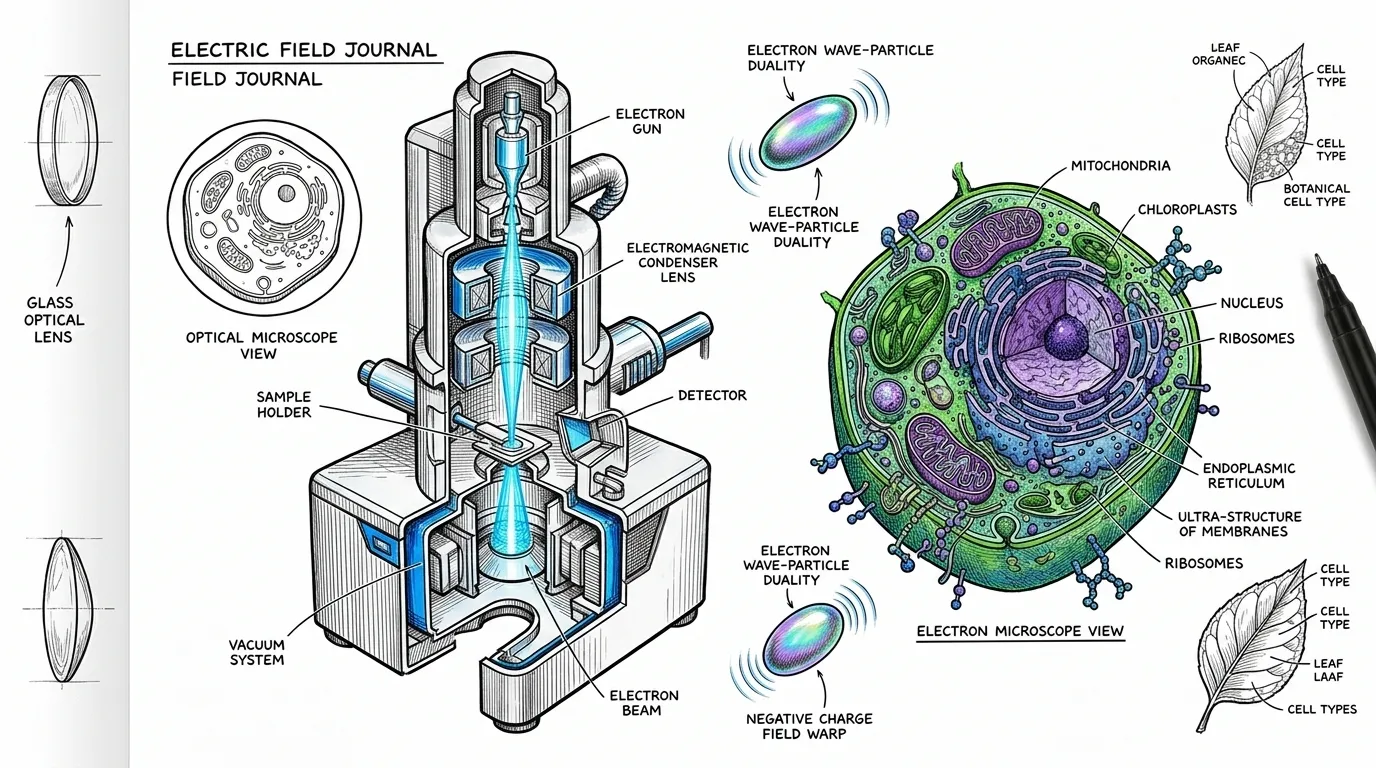
The confirmation of electron diffraction solidified the concept of wave-particle duality, extending it from light to matter.
The confirmation of electron diffraction solidified the concept of wave-particle duality, extending it from light to matter. This wasn't merely a theoretical curiosity; it fundamentally altered physics. It paved the way for technologies like the electron microscope, developed by Max Knoll and Ernst Ruska, which uses the wave properties of electrons to achieve magnifications far beyond what optical microscopes can offer, revealing the intricate structures of cells and…

The confirmation of electron diffraction solidified the concept of wave-particle duality, extending it from light to matter. This wasn't merely a theoretical curiosity; it fundamentally altered physics. It paved the way for technologies like the electron microscope, developed by Max Knoll and Ernst Ruska, which uses the wave properties of electrons to achieve magnifications far beyond what optical microscopes can offer, revealing the intricate structures of cells and materials in unprecedented detail. This principle underpins much of modern scientific instrumentation.

Page 10
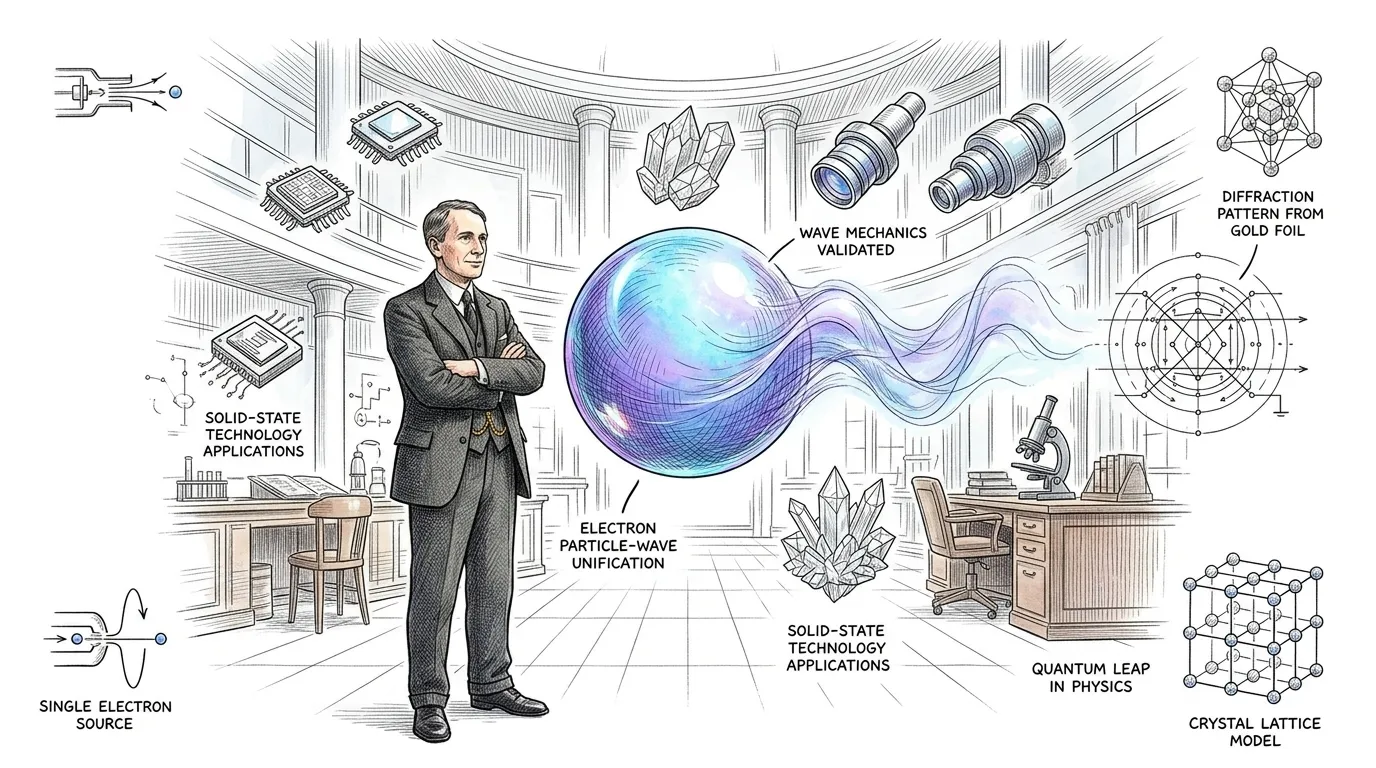
George Paget Thomson's work, following his father's initial discovery, provided empirical proof of matter's dual nature.
George Paget Thomson's work, following his father's initial discovery, provided empirical proof of matter's dual nature. It highlighted the unpredictable and counter-intuitive elegance of the quantum realm, where fundamental particles defy simple categorization. His experiments not only confirmed de Broglie's bold hypothesis but also spurred further exploration into quantum mechanics, laying the groundwork for advancements in solid-state physics, materials science, and our…

George Paget Thomson's work, following his father's initial discovery, provided empirical proof of matter's dual nature. It highlighted the unpredictable and counter-intuitive elegance of the quantum realm, where fundamental particles defy simple categorization. His experiments not only confirmed de Broglie's bold hypothesis but also spurred further exploration into quantum mechanics, laying the groundwork for advancements in solid-state physics, materials science, and our deepest understanding of reality. The electron, once just a particle, forever became a wave too, a testament to scientific curiosity pushing the boundaries of the known.

About this story

  • Location: Global
  • Audience: general readers

Questions and answers

Questions and answers about George Paget Thomson

Read Wonder Science on your phone

Wonder Science is available on Android. Get Wonder Science on Google Play.

More Wonder Science stories

All Wonder Science stories · Open the library