Gregor Mendel
Gregor Mendel — an illustrated science story, set in Global. 10 illustrated pages, free to read on Wonder Science.
Page 1
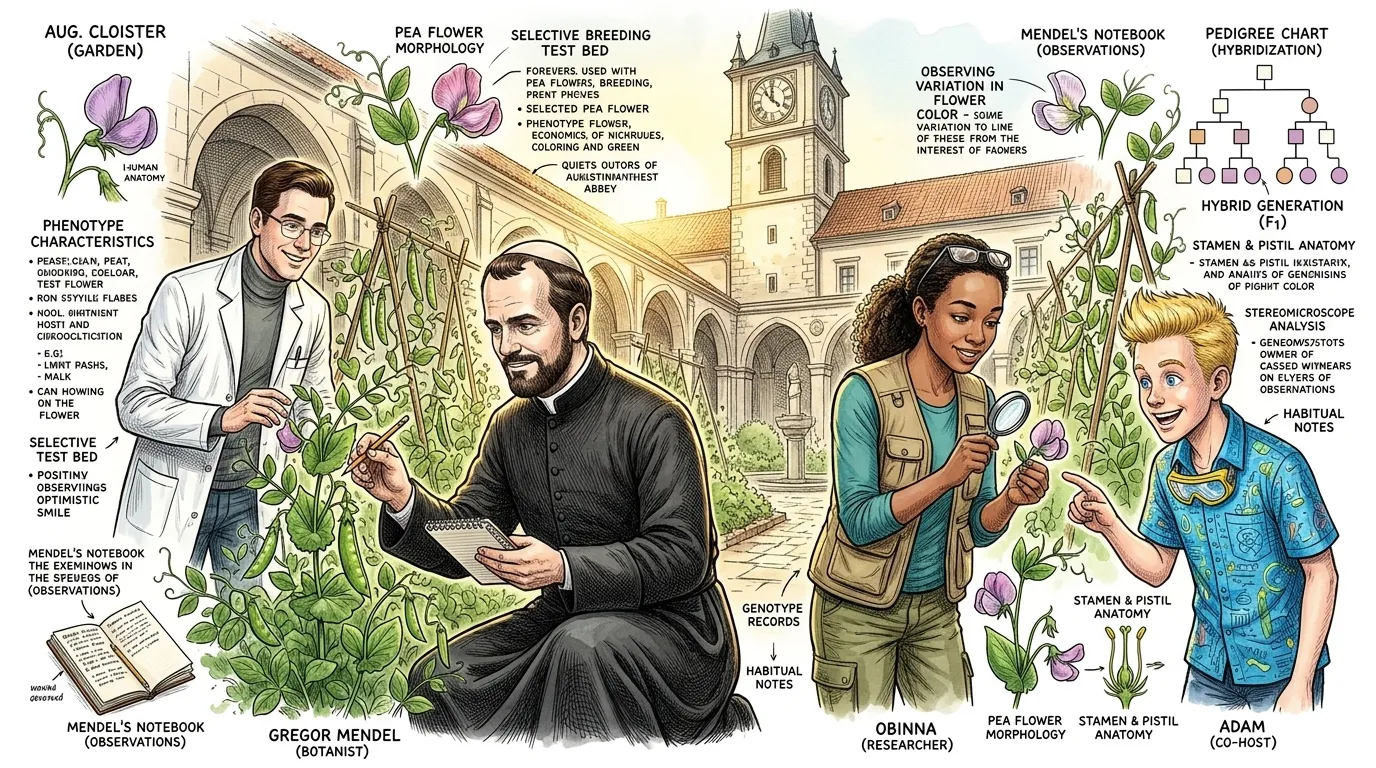
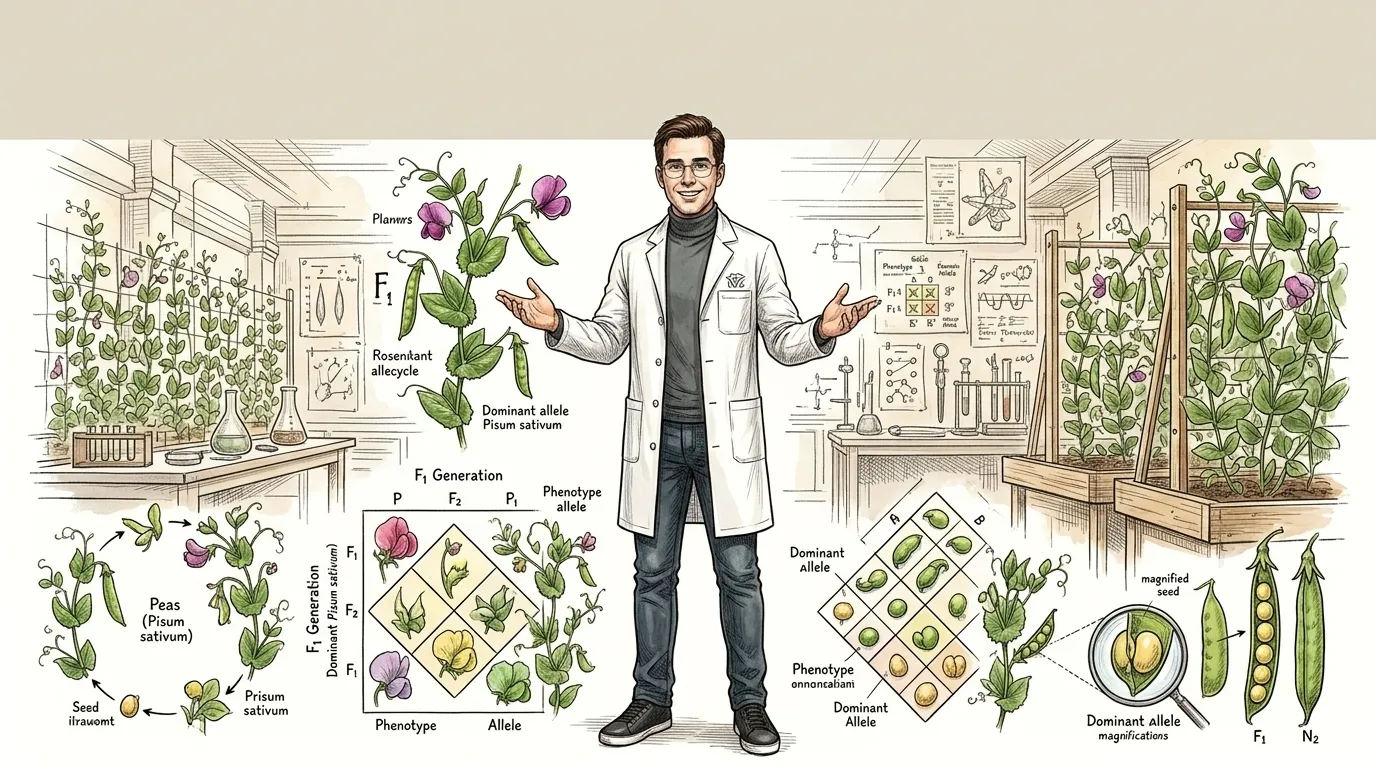
Amidst the quiet cloisters of the Augustinian Abbey in Brno, a revolutionary understanding of life began to germinate. In the mid-19th century, while the scientific world grappled with vague theories of inheritance, one monk embarked on a meticulously documented journey into the heart of heredity. His rigorous experiments with common pea plants would ultimately unravel the fundamental laws governing how traits pass from one generation to the next. This foundational work, initially unappreciated, laid the bedrock for all modern genetics.
Page 2
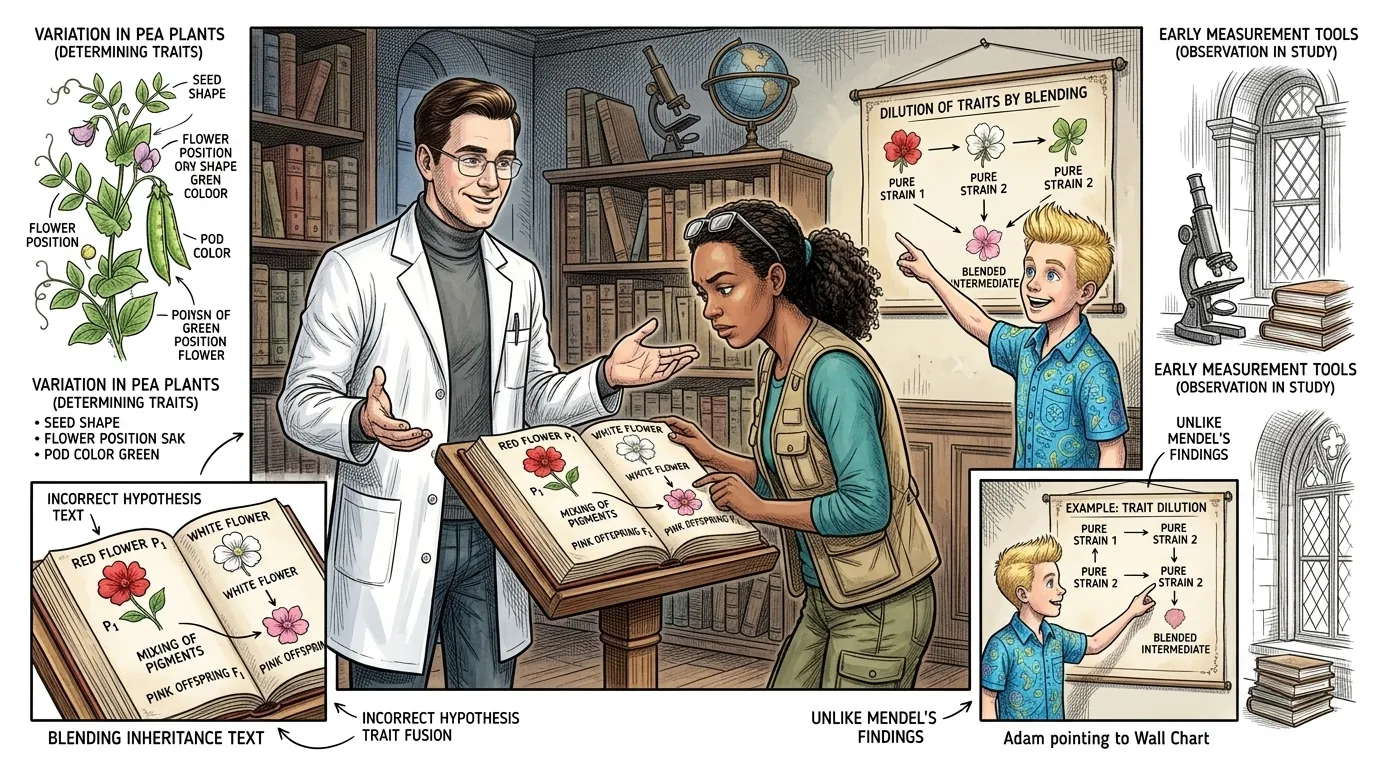
Before Mendel, the prevailing scientific consensus regarding heredity was largely speculative. The most popular idea, 'blending inheritance,' suggested that offspring simply presented an average of their parents' traits, like mixing two colors of paint. This concept, however, failed to explain why certain traits skipped generations or reappeared unchanged, nor could it account for the persistence of distinct characteristics within populations. The true mechanism remained an enigma, obscured by a lack of empirical observation and quantitative analysis.\n\n"'It's fascinating to consider,' Alexei began, gesturing to an old academic text, 'how for centuries, brilliant minds accepted the idea of 'blending inheritance.' Imagine a red flower and a white flower always producing pink offspring.' Obinna, his thoughtful gaze fixed on an illustration, replied, 'But then, where did pure red or white flowers come from again in later generations? That doesn't make sense if everything just blends together.' Adam, pointing to a diagram of various plant traits, added, 'And how could dominant traits like height or seed shape not just get diluted over time?'"
Page 3
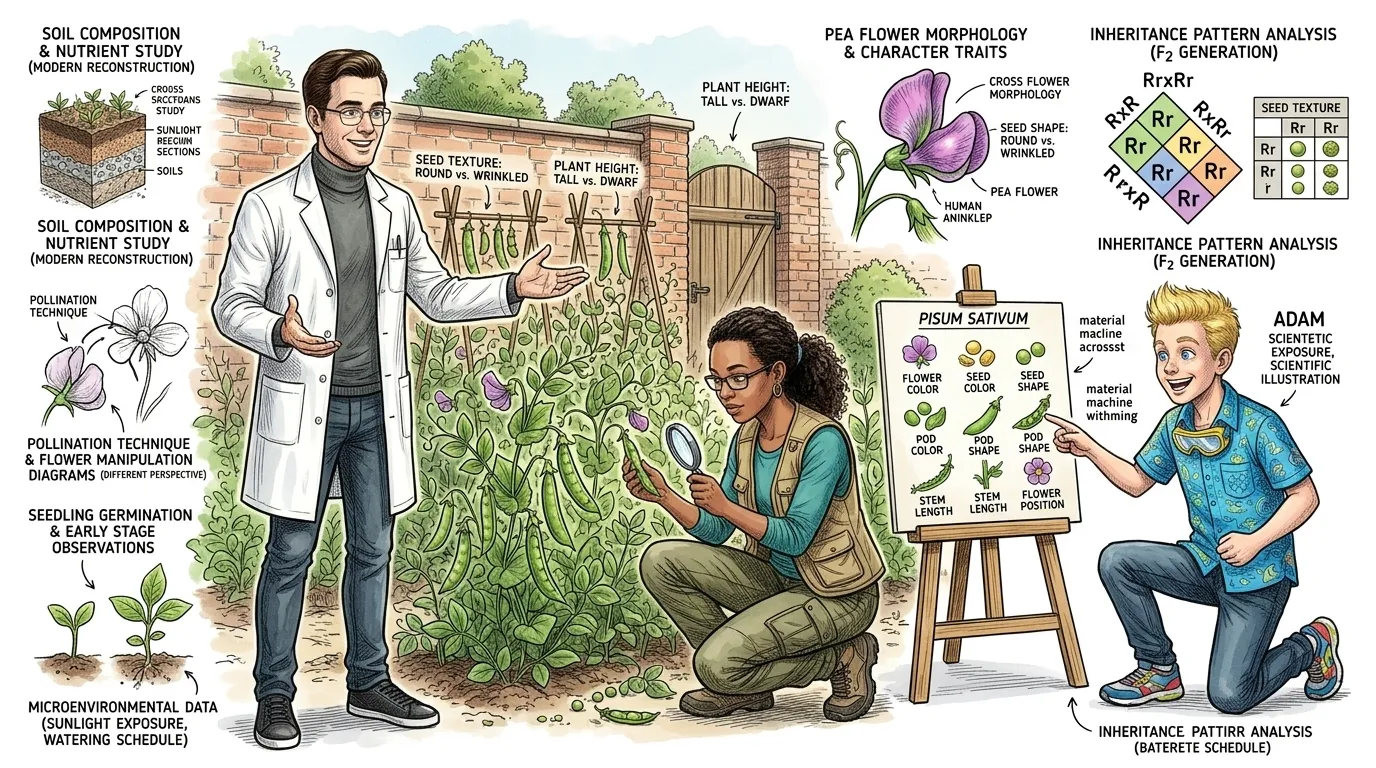
Mendel chose common garden pea plants, Pisum sativum, for their distinct, easily observable traits: seed shape (round or wrinkled), seed color (yellow or green), pod shape (inflated or constricted), pod color (green or yellow), flower color (purple or white), plant height (tall or dwarf), and flower position (axial or terminal). His genius lay not just in selecting the right organism, but in his rigorous, quantitative approach. He carefully controlled pollination, ensuring purebred lines and meticulously tracking the fate of thousands of individual plants across multiple generations. This precise methodology would be the bedrock of his revolutionary discoveries.\n\n"'Mendel's decision to work with pea plants was a stroke of genius,' Alexei explained, as they stood in a carefully reconstructed section of Mendel's garden. 'He didn't just pick any plant; he chose one with clear, either/or traits, not blended ones.' Obinna knelt, examining a pea pod. 'So, he wasn't looking at "medium" height, but strictly tall or dwarf?' Adam added, 'And he made sure his starting plants were 'true-breeding'— meaning they always produced offspring identical to themselves for a specific trait, generation after generation. That level of control is incredible!'"
Page 4
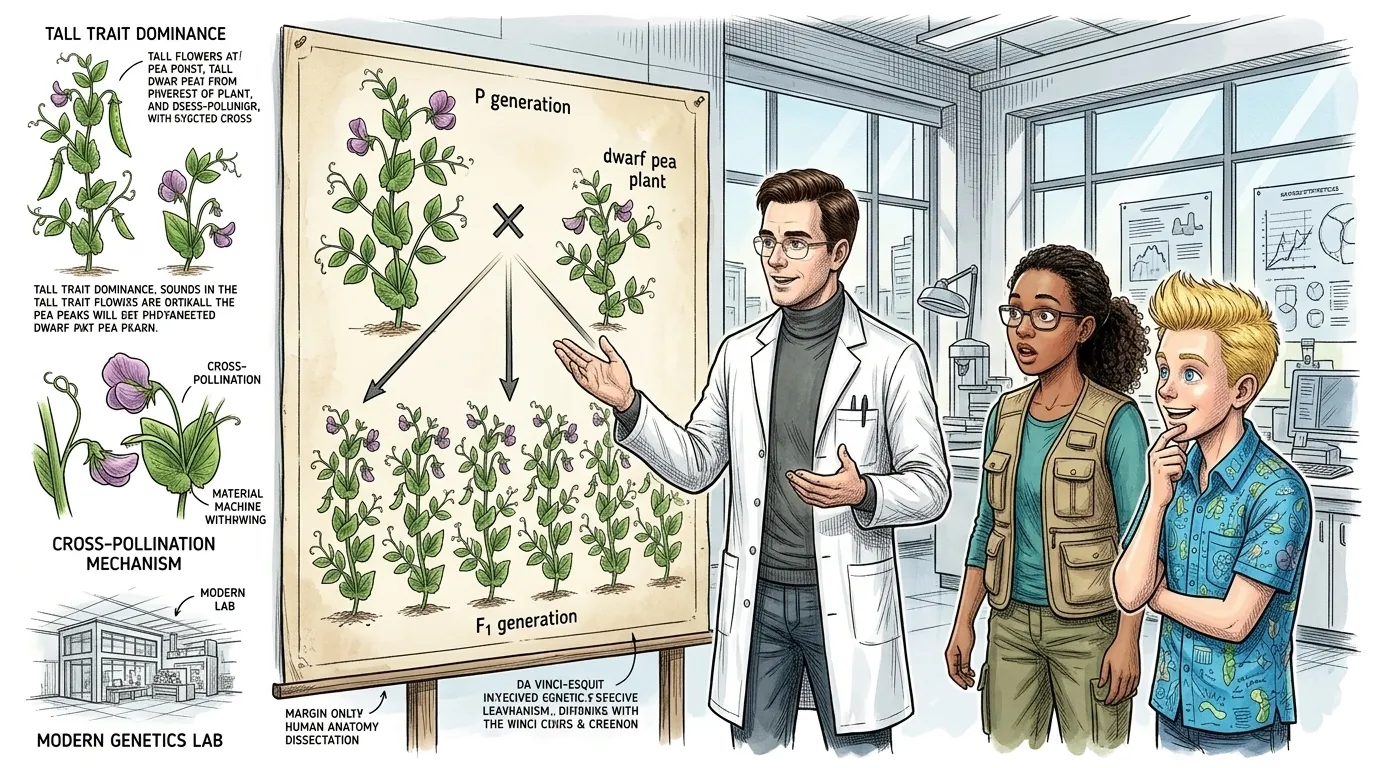
Mendel began his experiments by crossing purebred parents—for instance, a tall pea plant with a dwarf pea plant (the P generation). Surprisingly, all the offspring (the F1 generation) were tall. The dwarf trait seemed to vanish entirely. This wasn't blending; it was a clear dominance. No 'medium-height' plants appeared. This observation challenged the prevailing scientific wisdom and suggested that traits weren't simply mixing, but that one trait could mask the presence of another. This hinted at discrete, hidden units of heredity.\n\n"'This is where it gets truly interesting,' Alexei noted, displaying a visual diagram of P generation plants. 'He crossed a purebred tall plant with a purebred dwarf plant.' Obinna's eyes widened. 'And all the F1 offspring were tall? The dwarf trait completely disappeared!' Adam tapped his chin. 'So, it's not like the 'blending' idea at all. It's like the tall trait completely overpowered the dwarf trait, right from the start.' Alexei nodded, 'Indeed. This phenomenon, where one trait completely masks another in the F1 generation, is what Mendel termed 'dominance'.'"
Page 5
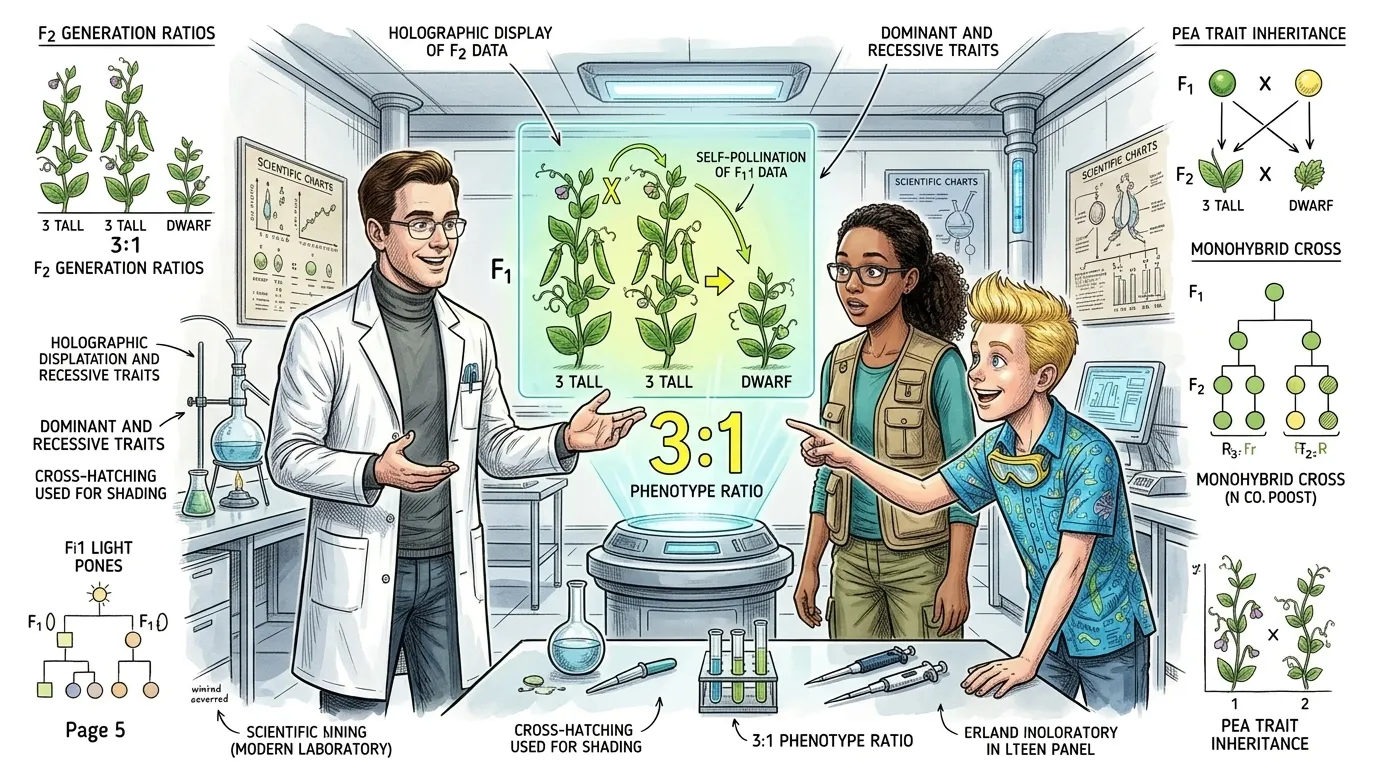
Mendel's next crucial step involved self-pollinating the F1 generation plants. If blending inheritance were true, the dwarf trait should have been permanently lost. But in the F2 generation, the dwarf trait miraculously reappeared! Crucially, it did so in a consistent ratio: approximately three tall plants for every one dwarf plant (3:1). This 3:1 ratio was not random; it was a consistent, quantifiable pattern that hinted at underlying, discrete 'factors'—what we now call genes—that segregated during reproduction.\n\n"'This is the 'wow' moment,' Alexei exclaimed, gesturing to a detailed scientific visualization on a large digital screen that appears as a holographic projection over a laboratory table. 'When Mendel allowed those F1 tall plants to self-pollinate, the dwarf trait, which had vanished, reappeared in the next generation!' Obinna's eyes widened. 'So it wasn't lost at all! It was just hidden.' Adam pointed to the glowing ratio on the screen. 'And always in that exact 3:1 proportion? That's not a coincidence, it must mean something very specific is happening internally.'"
Page 6
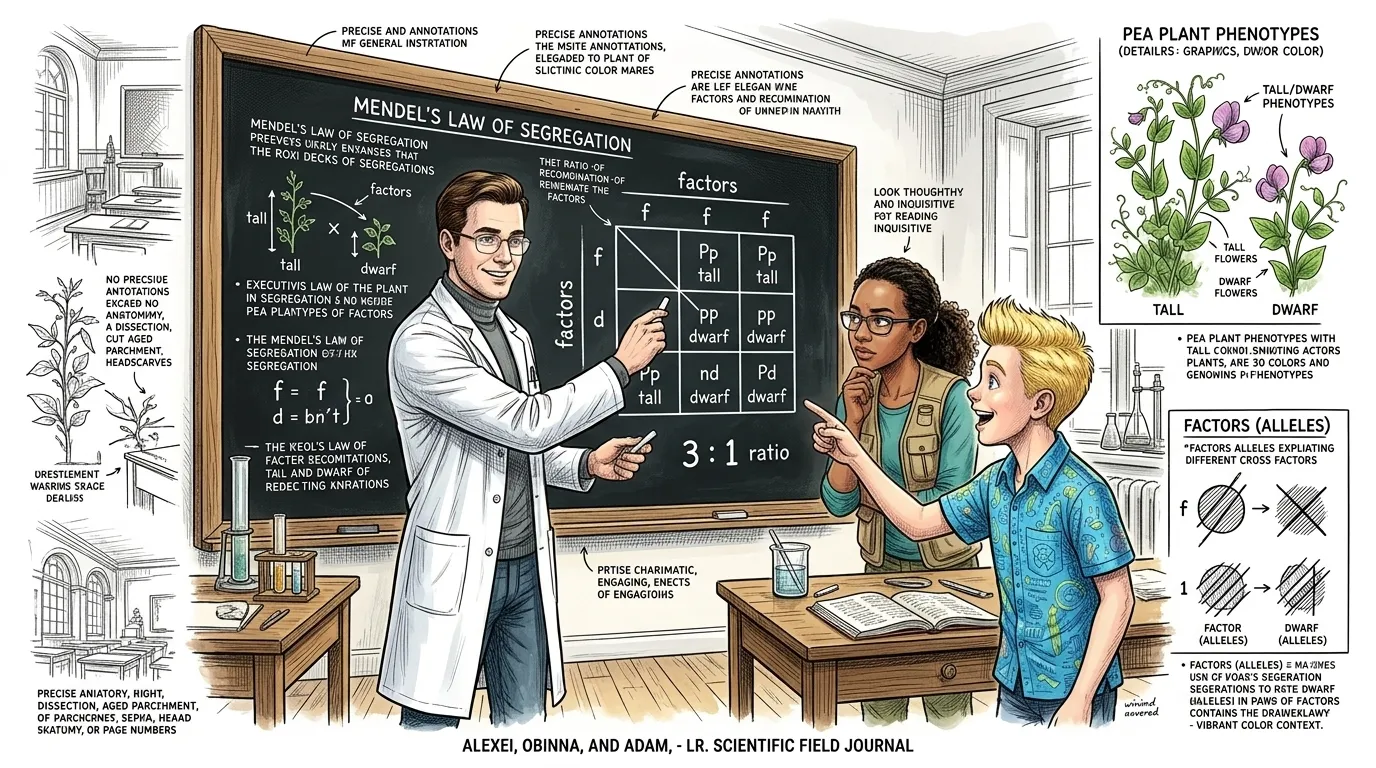
To explain his observations, Mendel proposed that each individual carries two 'factors' for each trait, one inherited from each parent. These factors (alleles) don't blend but remain distinct. During gamete (sex cell) formation, these two factors separate, or 'segregate,' so that each gamete receives only one factor. When fertilization occurs, the factors recombine. If a dominant factor is present, its trait is expressed. This elegant mechanism, known as the Law of Segregation, precisely predicted the 3:1 ratio observed in the F2 generation.\n\n"'This led to his first monumental insight: the Law of Segregation,' Alexei explained, drawing on a large, antique-style chalkboard. 'Each parent contributes one 'factor'—what we now call an allele—for every trait. And these two factors don't disappear; they just separate when making reproductive cells.' Obinna watched him draw a Punnett square. 'So, a tall plant from the F1 generation still secretly carries the 'dwarf' factor, even if it doesn't show it?' Adam gasped, 'That means the 'factors' themselves never blend, they just get passed on individually!'"
Page 7
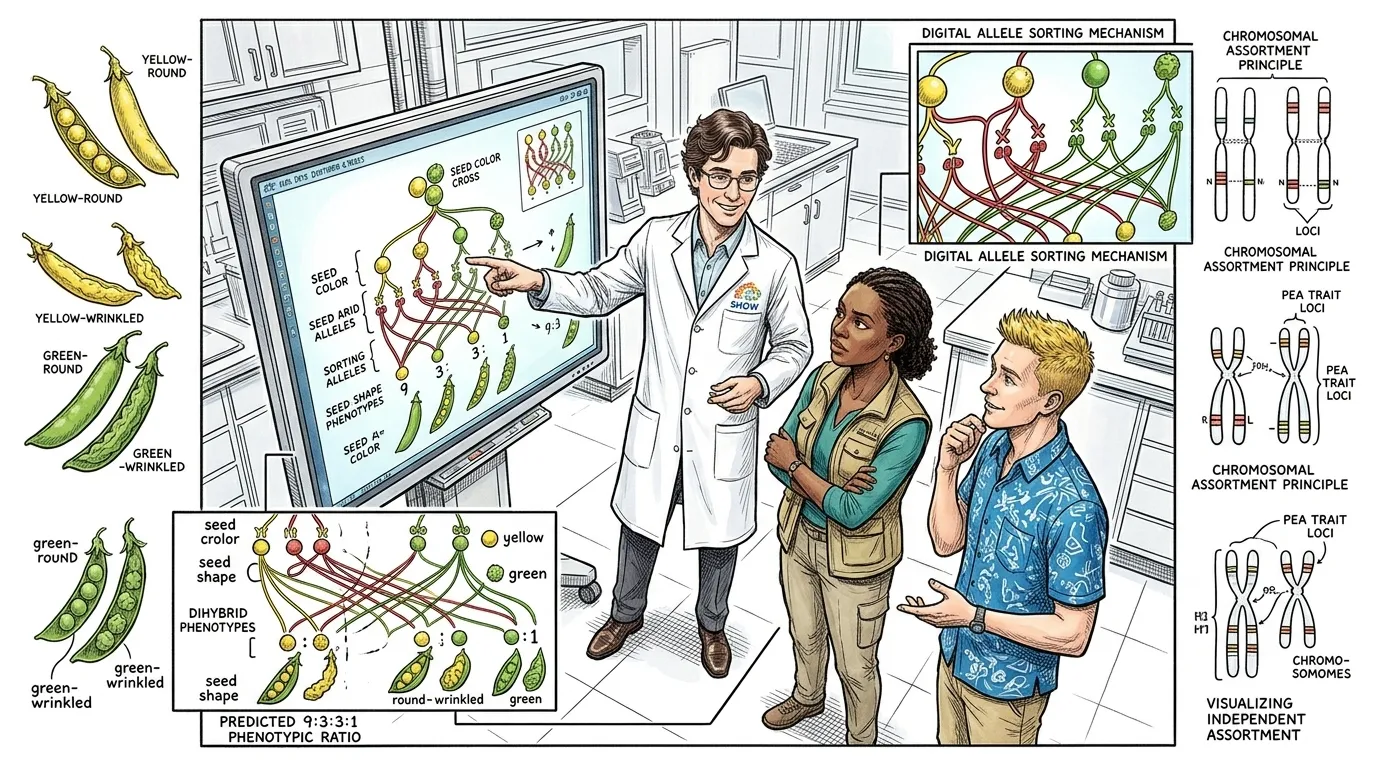
Mendel didn't stop at single traits. He also performed dihybrid crosses, tracking two different traits simultaneously—for example, seed color (yellow/green) and seed shape (round/wrinkled). He found that the inheritance of one trait did not influence the inheritance of the other. Yellow seeds could be round or wrinkled, and green seeds could also be round or wrinkled, appearing in unique combinations and ratios in the F2 generation (9:3:3:1). This discovery, the Law of Independent Assortment, revealed that different genes on different chromosomes sort independently during gamete formation, leading to a vast potential for genetic diversity.\n\n"'Mendel's second major law is even more mind-blowing,' Alexei announced, as they observed a complex digital simulation of a dihybrid cross. 'The Law of Independent Assortment states that the inheritance of one trait, like seed color, doesn't affect the inheritance of another, like seed shape.' Obinna, mesmerized by the animated sorting of alleles, exclaimed, 'So, a pea plant doesn't have to be round and yellow; it can be round and green, or wrinkled and yellow!' Adam nodded thoughtfully. 'This explains why siblings can look so different, even from the same parents – because traits get shuffled independently.'"
Page 8
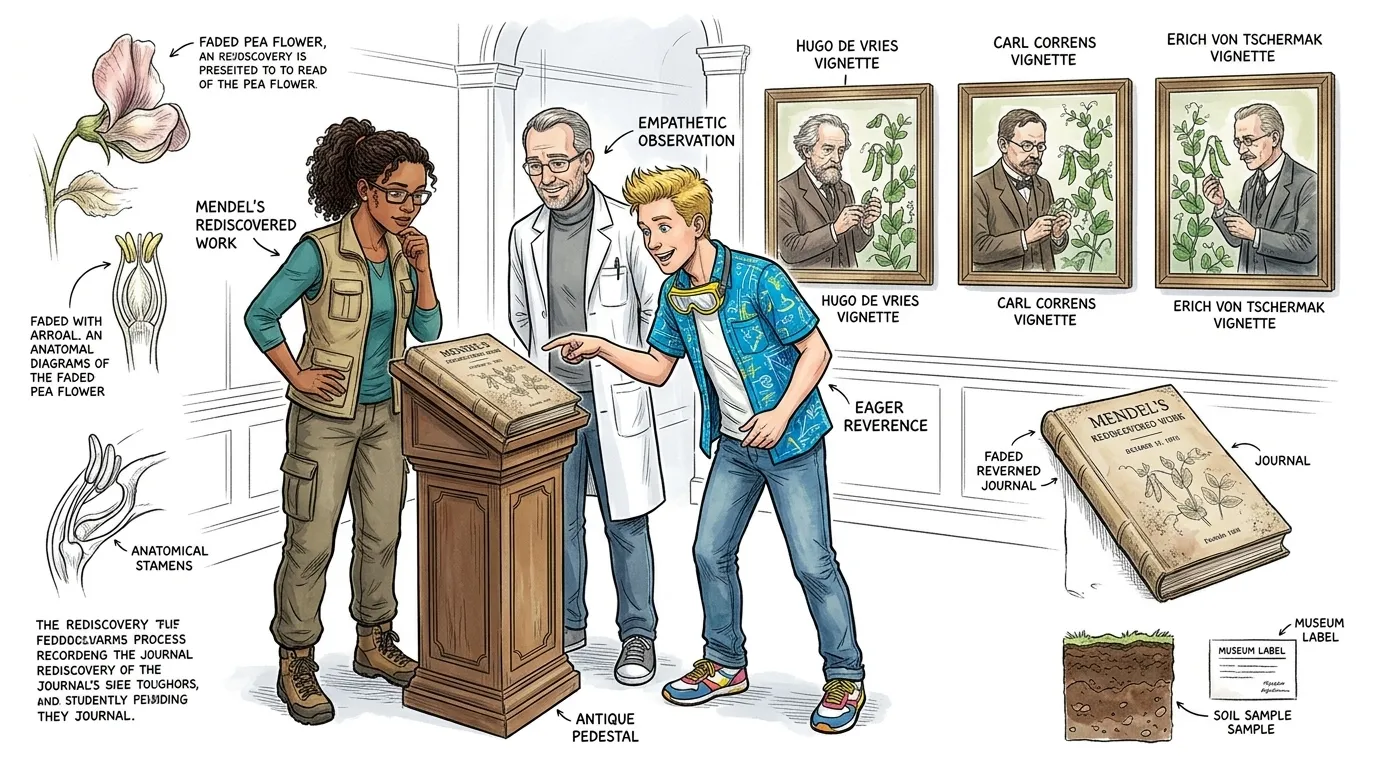
Mendel presented his findings in 1865 and published them in 1866. However, his work was ahead of its time. Scientists struggled to grasp the significance of his mathematical approach to biology, and the concept of discrete, unblending 'factors' challenged the dominant blending theory. His meticulous paper remained largely unread and unappreciated for over 30 years. It wasn't until the turn of the 20th century, independently, three European botanists—Hugo de Vries, Carl Correns, and Erich von Tschermak—conducting similar hybridization experiments, stumbled upon Mendel's forgotten paper, confirming his groundbreaking conclusions.\n\n"'It's incredible that Mendel's work remained virtually unknown for over three decades,' Obinna remarked, looking at an old, dusty scientific journal on a display stand. 'Imagine doing such brilliant work and having no one understand it.' Alexei nodded gravely. 'Indeed, Obinna. As the English essayist Joseph Addison once wrote, "What sculpture is to a block of marble, education is to a human soul." Mendel provided the raw marble, but the world wasn't yet educated enough to see the sculpture he had already carved.' Adam added, 'It took three different scientists, working independently in 1900, to rediscover his paper and finally recognize his genius. That must have been quite a moment!'"
Page 9
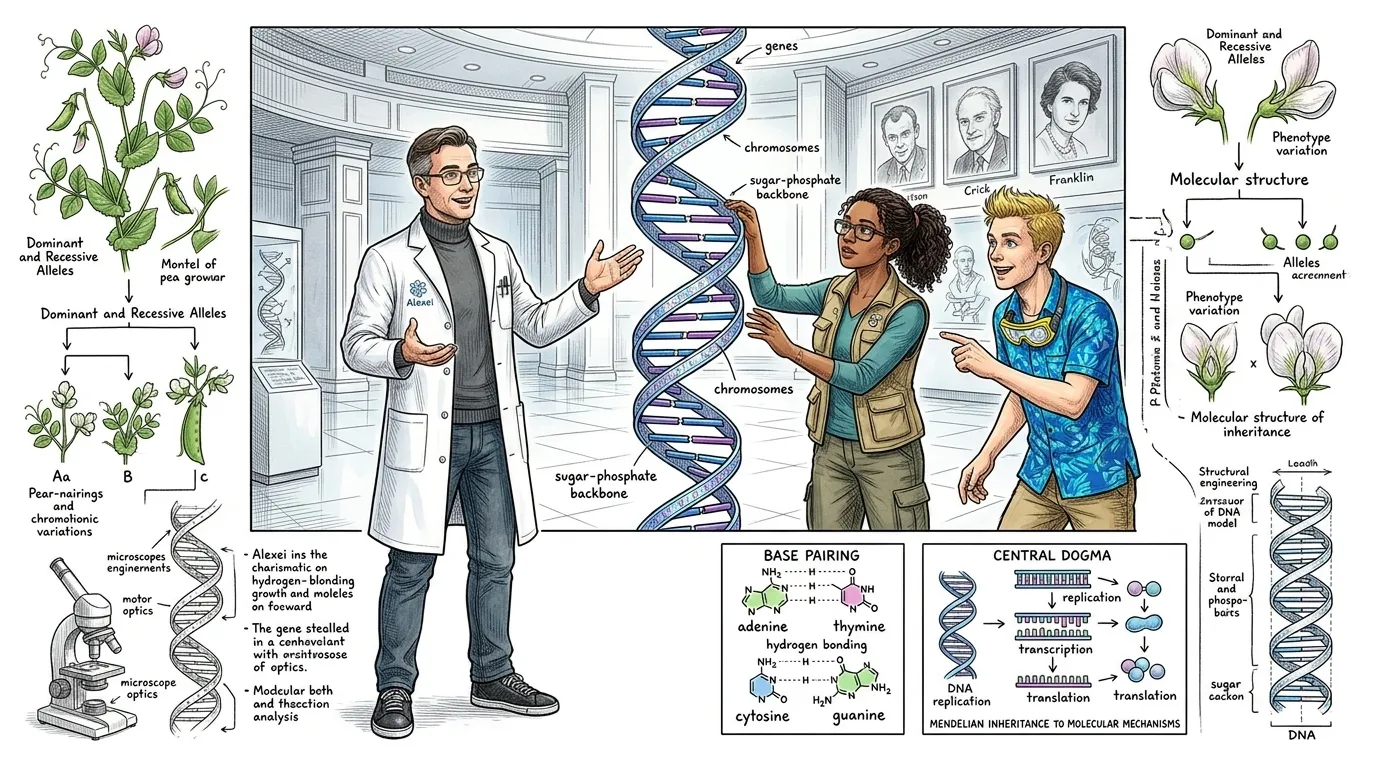
Mendel's 'factors' were eventually identified as genes, located on chromosomes within the nucleus of cells. His abstract laws provided the framework for understanding the physical basis of heredity—the double helix of DNA, discovered by James Watson and Francis Crick in 1953, with critical contributions from Rosalind Franklin and Maurice Wilkins. Without Mendel's foundational work, the complex mechanisms of gene expression, mutation, and inheritance patterns that drive evolution and underpin all biological diversity would have remained impenetrable mysteries. His quiet abbey garden experiments truly ignited the genetic revolution.\n\n"'Once Mendel's work was rediscovered, it completely revolutionized biology,' Alexei explained, standing before a towering, intricately detailed 3D model of a DNA double helix. 'His abstract 'factors' were finally linked to the physical reality of genes on chromosomes, and eventually, to the very structure of DNA itself.' Obinna traced the spirals of the model with his finger. 'So, without understanding how traits are passed on, we could never have understood how DNA really works or even discovered its structure.' Adam added, 'His work literally made the genetic revolution possible, paving the way for understanding everything from human health to agriculture!'"
Page 10
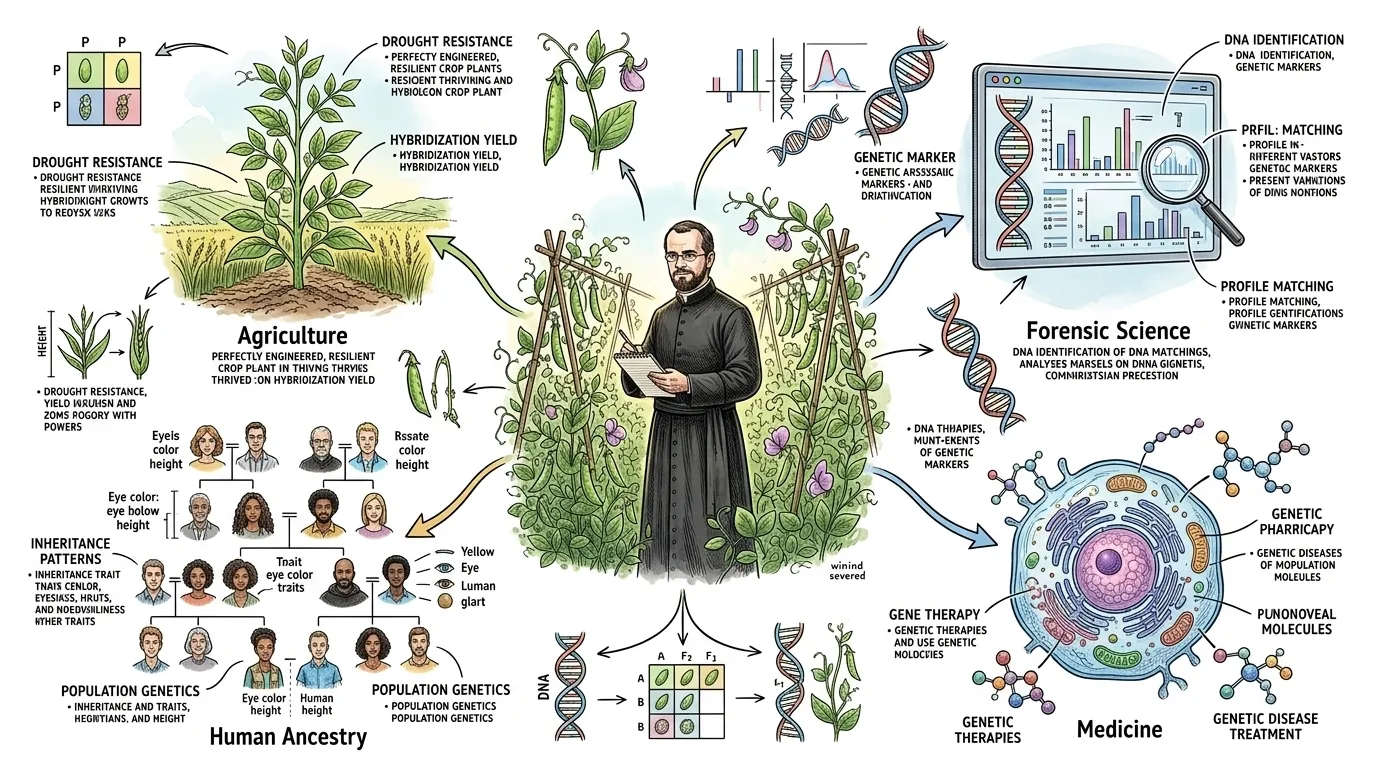
Gregor Mendel's legacy extends far beyond his pea plants. His fundamental laws provided the key to understanding genetic diseases, informing diagnostic tools and paving the way for targeted therapies. In agriculture, Mendelian principles guide selective breeding, optimizing crop yields and livestock resilience. In forensic science, genetic markers unlock identities. From understanding the nuances of human ancestry to engineering new life forms, his work remains the indispensable blueprint. The quiet monk in his Brno garden unwittingly launched an entirely new scientific discipline, whose impact continues to reshape medicine, biology, and our very understanding of life itself.
About this story
- Location: Global
- Audience: general readers
Questions and answers
Read Wonder Science on your phone
Wonder Science is available on Android. Get Wonder Science on Google Play.