Gertrude Elion
Gertrude Elion — an illustrated science story, set in Global. 10 illustrated pages, free to read on Wonder Science.

Page 1
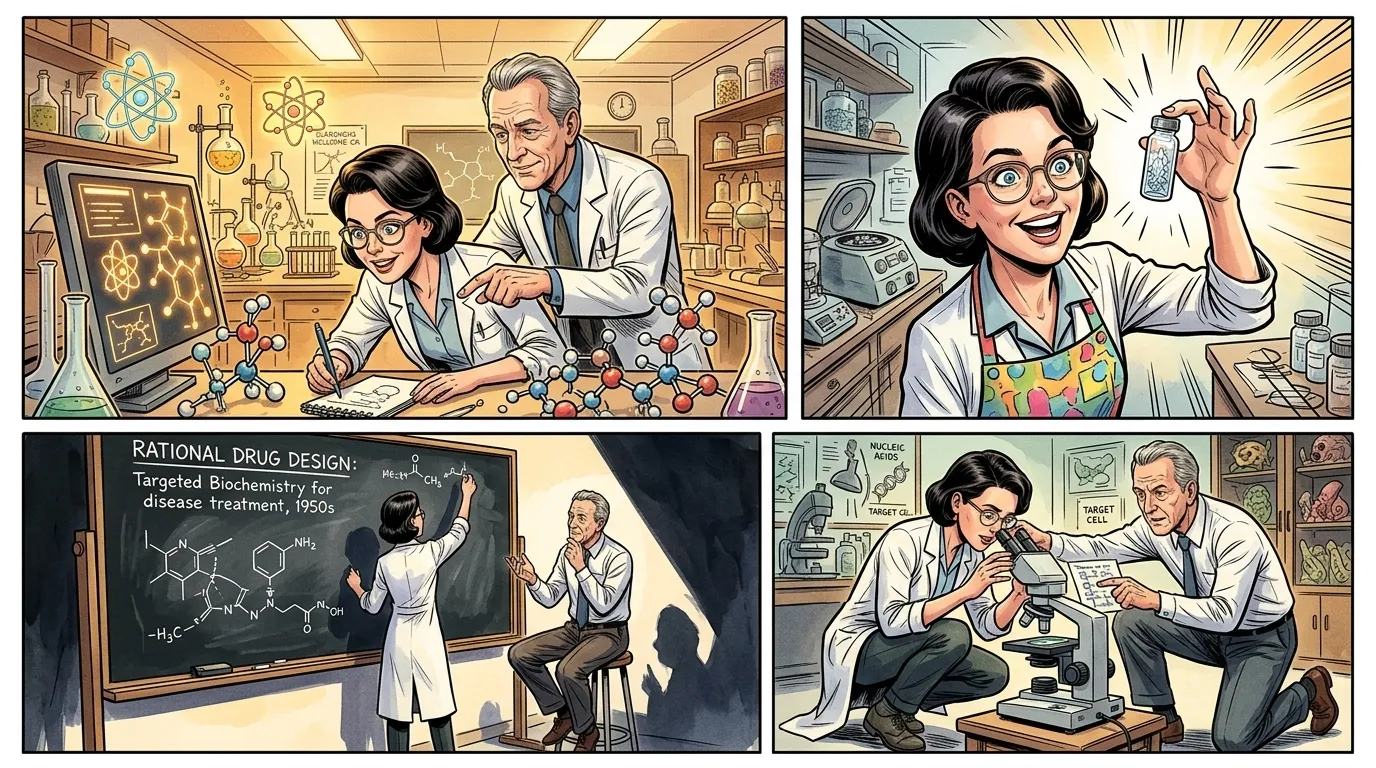
In the mid-20th century, medicine faced a profound challenge: treating diseases like leukemia with therapies often as dangerous as the illness itself. The prevailing method of drug discovery relied heavily on trial-and-error, a process yielding limited success and significant toxicity. Yet, one scientist, Gertrude Elion, dared to envision a different path, one rooted not in chance, but in precise biochemical understanding. Her revolutionary approach would fundamentally transform pharmacology, giving rise to rationally designed drugs that saved countless lives, from battling childhood leukemia to confronting the AIDS epidemic.\n\n Fact: Gertrude Elion: Rational Drug Design. 1950s. Burroughs Wellcome Co. Breakthrough: Targeted biochemistry for disease treatment.
Page 2

For centuries, medical breakthroughs often emerged from serendipity or brute-force screening, lacking a deep understanding of disease mechanisms at a molecular level. Early chemotherapy agents, for instance, were highly toxic because they indiscriminately attacked both cancerous and healthy rapidly dividing cells. The scientific community grappled with how to develop therapies that could specifically target pathogens or abnormal cells while sparing the patient's vital tissues.\n\n Fact: Historical Drug Discovery: Non-Specific, High Toxicity.
Page 3
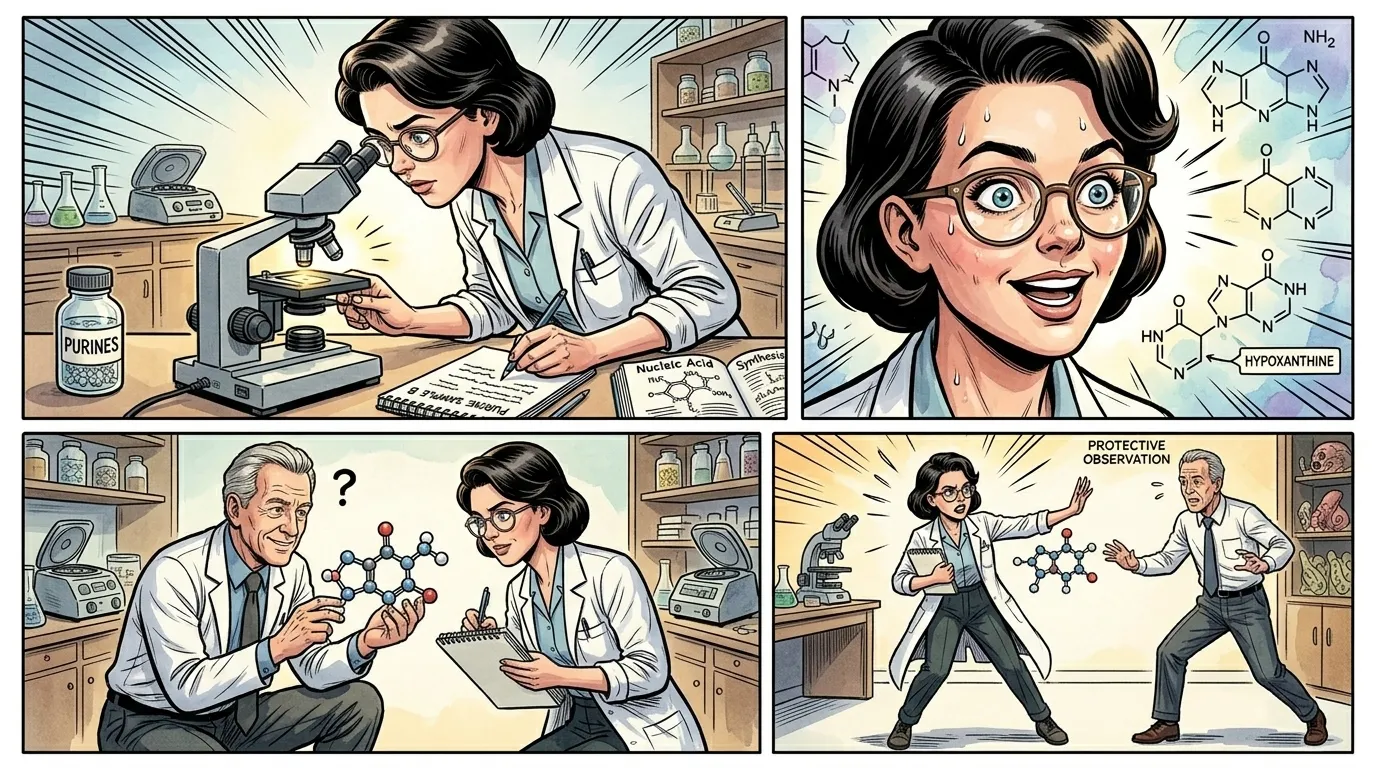
Elion's radical insight stemmed from her profound understanding of biochemistry, particularly the synthesis of nucleic acids—DNA and RNA—the fundamental building blocks of life. She recognized that every living organism, from bacteria to human cells, requires purines and pyrimidines to construct these nucleic acids. Crucially, she hypothesized that subtle differences in metabolic pathways between healthy human cells, cancer cells, and invading pathogens could be exploited to design selective inhibitors.\n\n Fact: Nucleic Acid Synthesis: Purines & Pyrimidines.
Page 4
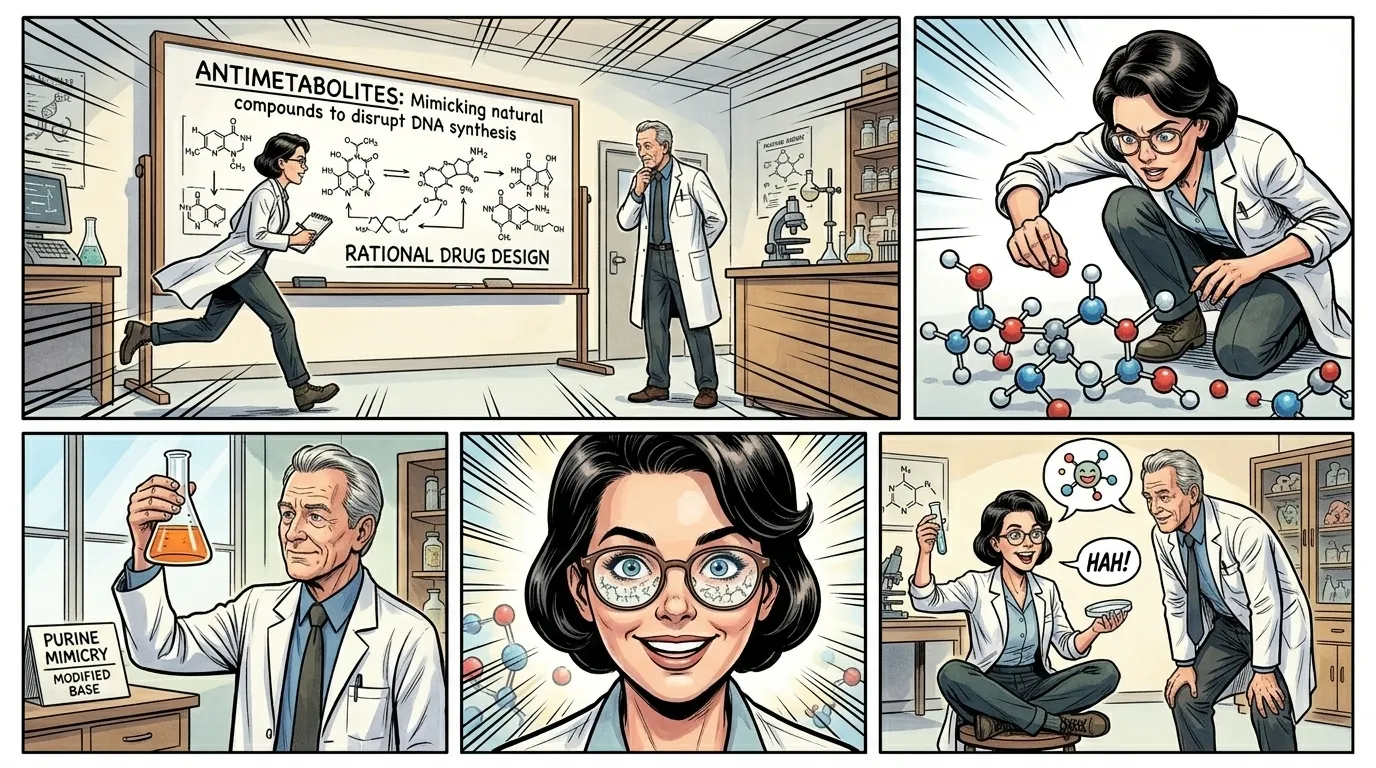
Instead of screening thousands of random compounds, Elion and her colleague George Hitchings decided to synthesize molecules that mimicked natural purines and pyrimidines. These 'antimetabolites' were designed to trick cells into incorporating them into their DNA or RNA synthesis, thereby disrupting the replication process. This 'rational drug design' represented a seismic shift, moving away from chance to deliberate, intelligent targeting based on intricate biological knowledge.\n\n Fact: Antimetabolites: Mimicking natural compounds to disrupt DNA synthesis.
Page 5

Their meticulous research culminated in the synthesis of 6-mercaptopurine (6-MP) in 1951. This compound was designed to interfere with purine synthesis, a process critical for the rapid proliferation of cancer cells. Clinical trials quickly demonstrated its remarkable efficacy in treating acute childhood leukemia, transforming a rapidly fatal disease into one with a chance of remission. This was not a cure, but a profound extension of life, a triumph of targeted biochemical intervention.\n\n Fact: 6-Mercaptopurine (6-MP): Targeting leukemia cells through purine inhibition.
Page 6

The genius of 6-MP and subsequent drugs lay in exploiting 'differential metabolism.' Cancer cells, bacteria, and viruses often have faster metabolic rates and slightly different enzymatic machinery for nucleic acid synthesis compared to healthy human cells. Elion's drugs were inactive themselves, but were metabolized by these specific target cells into compounds that then blocked the necessary biochemical pathways. This was the critical mechanism for their selective toxicity, minimizing harm to the host.\n\n Fact: Differential Metabolism: Selective targeting of diseased cells.
Page 7
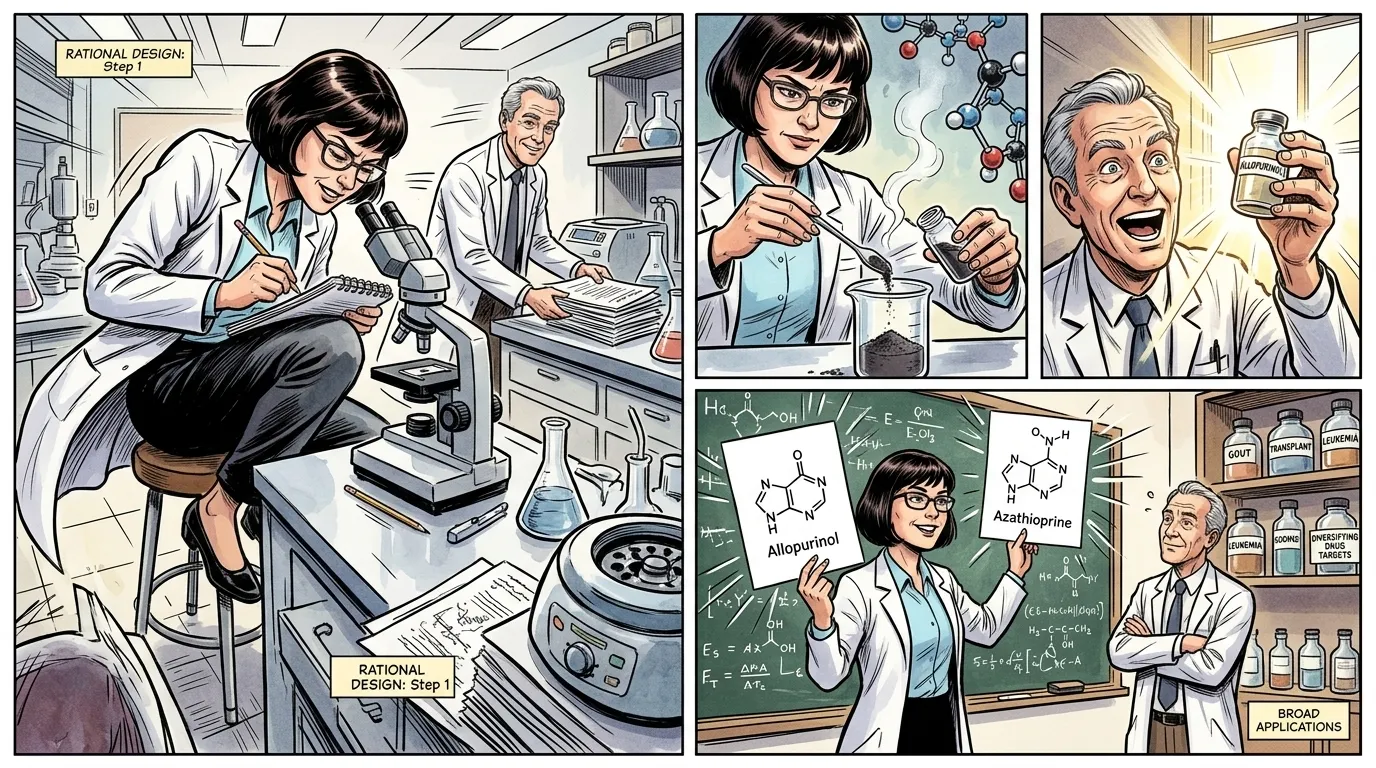
The principles of rational drug design extended far beyond leukemia. Elion and Hitchings developed allopurinol for gout, by inhibiting xanthine oxidase, an enzyme involved in uric acid production. Another derivative, azathioprine, became a cornerstone for preventing organ transplant rejection, by suppressing the immune system's attack on foreign tissues. This systematic approach yielded a pipeline of life-saving medications, each tailored to specific biochemical targets.\n\n Fact: Allopurinol (Gout) & Azathioprine (Transplant): Diversifying drug targets.
Page 8
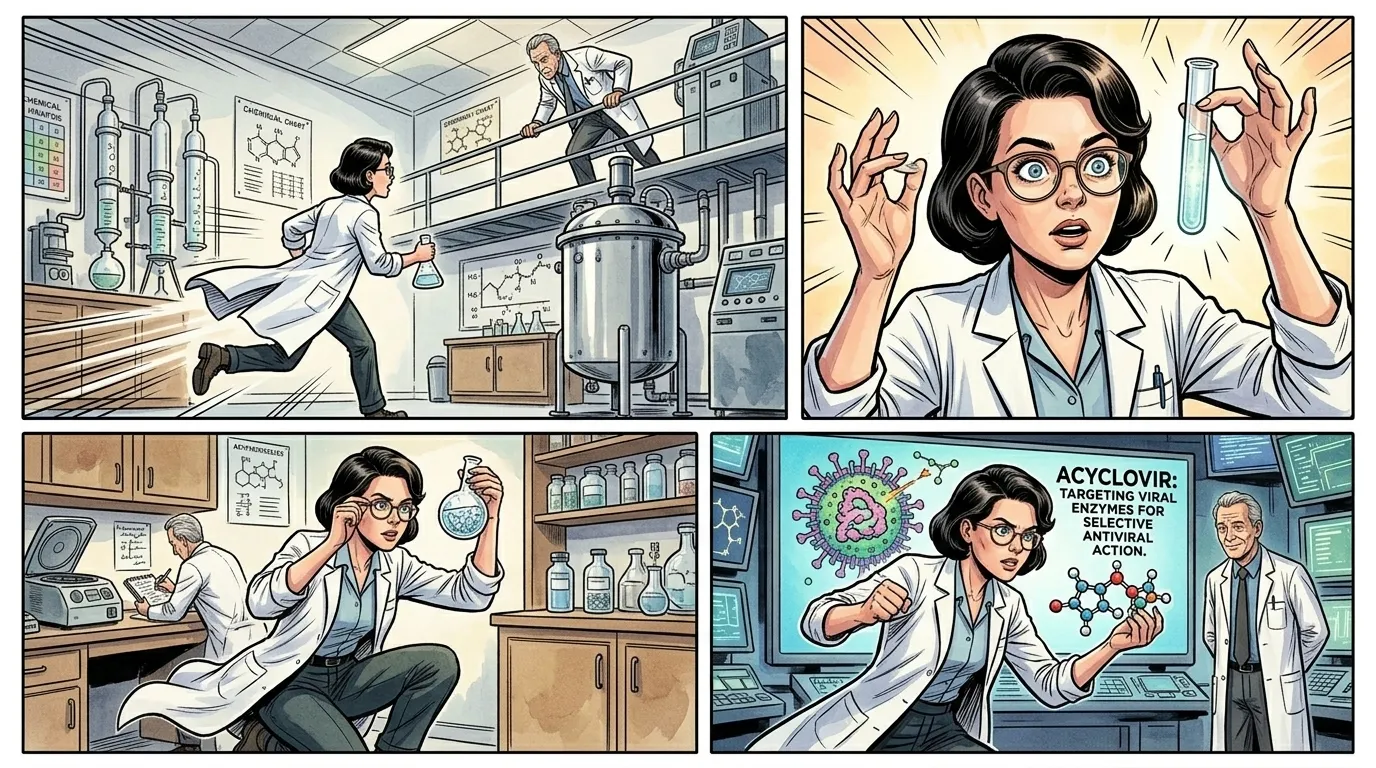
Perhaps one of her most brilliant creations was acyclovir, the first truly selective antiviral drug. Developed in the 1970s, acyclovir specifically targeted the herpes virus by exploiting a viral enzyme (thymidine kinase) not present in healthy human cells. This enzyme activated the drug, allowing it to interfere with viral DNA replication without significantly harming human cells. This represented a paradigm shift in treating viral infections.\n\n Fact: Acyclovir: Targeting viral enzymes for selective antiviral action.
Page 9
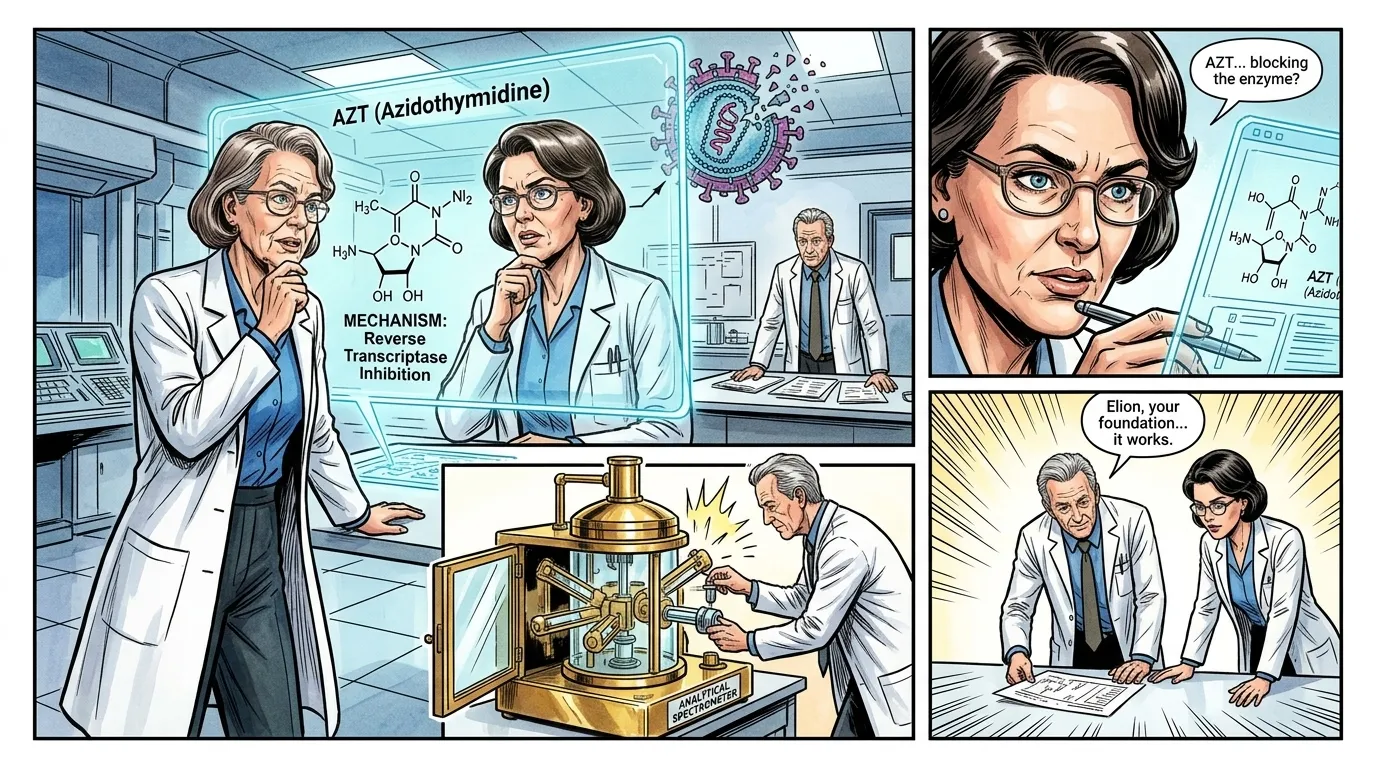
Elion's foundational work also paved the way for effective treatments for HIV/AIDS. Though she retired before its development, the drug azidothymidine (AZT) was synthesized based on the antimetabolite principles she pioneered. AZT, a thymidine analog, targeted HIV's reverse transcriptase enzyme, inhibiting the virus's ability to convert its RNA into DNA and thus replicate. This crucial development offered the first hope against a devastating global pandemic.\n\n Fact: AZT (Azidothymidine): Blocking HIV replication via reverse transcriptase inhibition.
Page 10

Gertrude Elion, a self-taught biochemist who never earned a Ph.D., received the Nobel Prize in Physiology or Medicine in 1988 alongside George Hitchings and Sir James Black. Her unwavering belief in the power of rational, knowledge-driven science over blind empiricism reshaped pharmaceutical research. Her legacy is not merely a list of drugs, but a paradigm shift that continues to guide the development of therapies today, a testament to the profound impact of understanding life at its most fundamental chemical level.\n\n Fact: Gertrude Elion's Legacy: Revolutionizing drug discovery through biochemical principles.
About this story
- Location: Global
- Audience: general readers
Questions and answers
Read Wonder Science on your phone
Wonder Science is available on Android. Get Wonder Science on Google Play.