Erwin Schrodinger
Erwin Schrodinger — an illustrated science story, set in Global. 10 illustrated pages, free to read on Wonder Science.

Page 1
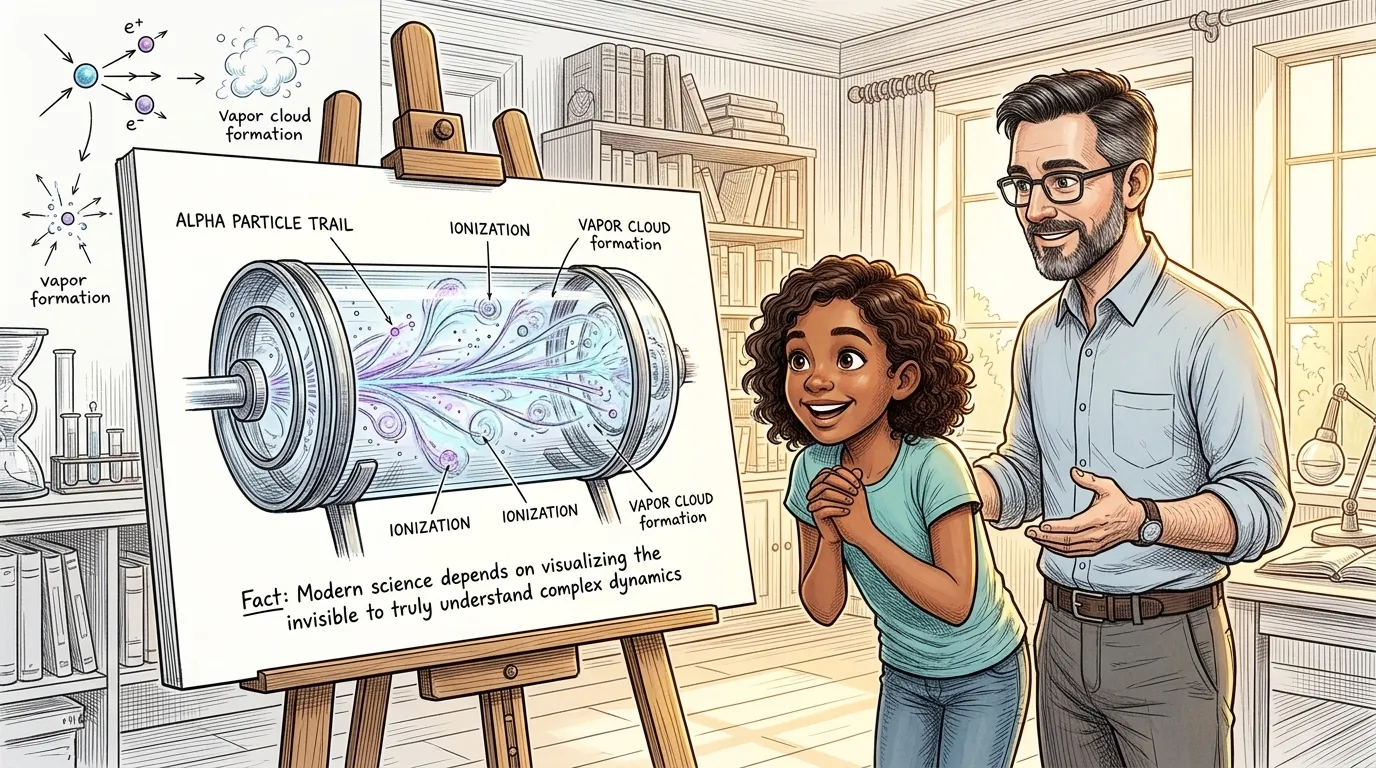
Look at this photograph – a cloud chamber! These wispy trails are not smoke, but the paths of subatomic particles zipping through a gas. Erwin Schrödinger's mind helped us understand the math describing these elusive entities.\n\n"Father, the trails look like ghosts!"\n\n Fact: Modern science depends on visualizing the invisible to truly understand complex dynamics.
Page 2
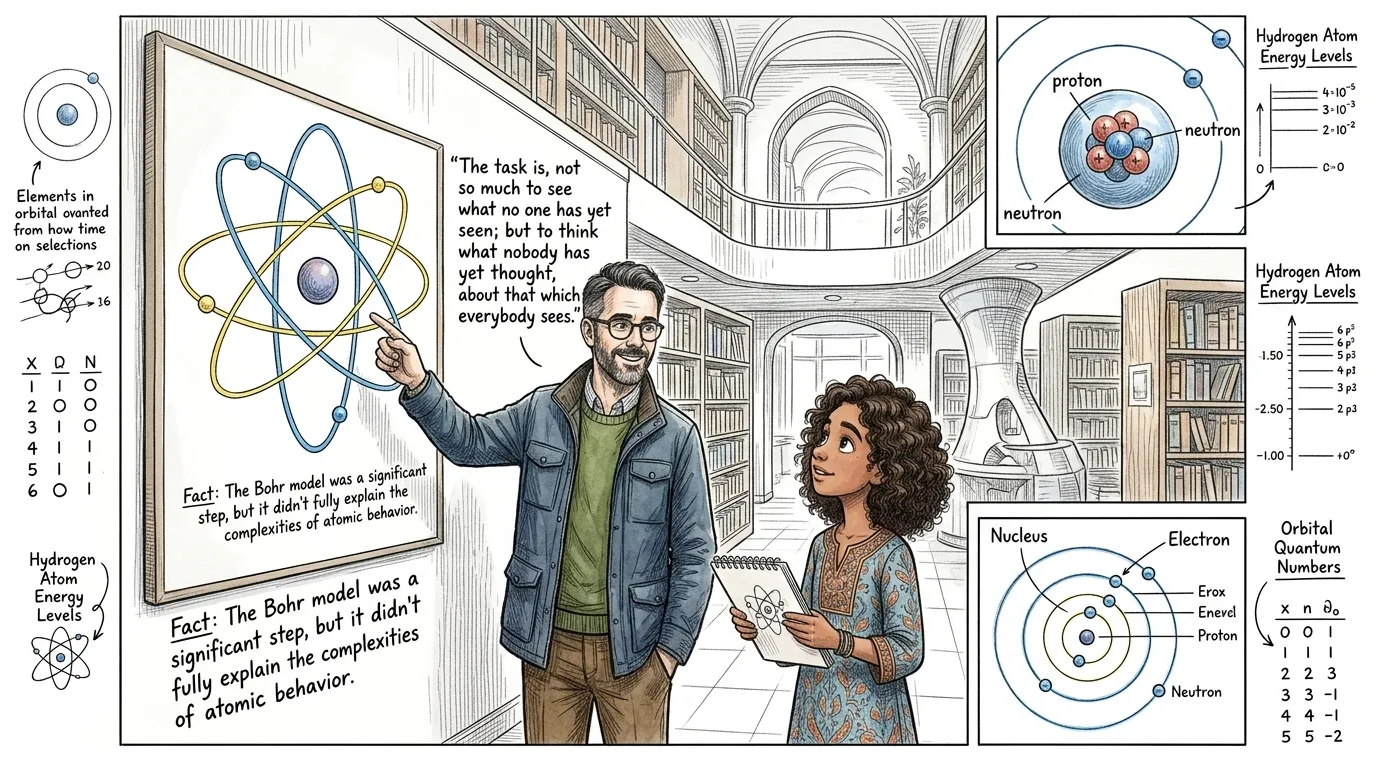
Schrödinger grappled with the fundamental question: how do we describe the behavior of these tiny particles? He wasn't satisfied with existing theories. 'The task is, not so much to see what no one has yet seen; but to think what nobody has yet thought, about that which everybody sees,' he believed, echoing Erwin Schrödinger's approach to new ideas.\n\n"So, what did they think BEFORE Schrödinger?"\n\n Fact: The Bohr model was a significant step, but it didn't fully explain the complexities of atomic behavior.
Page 3
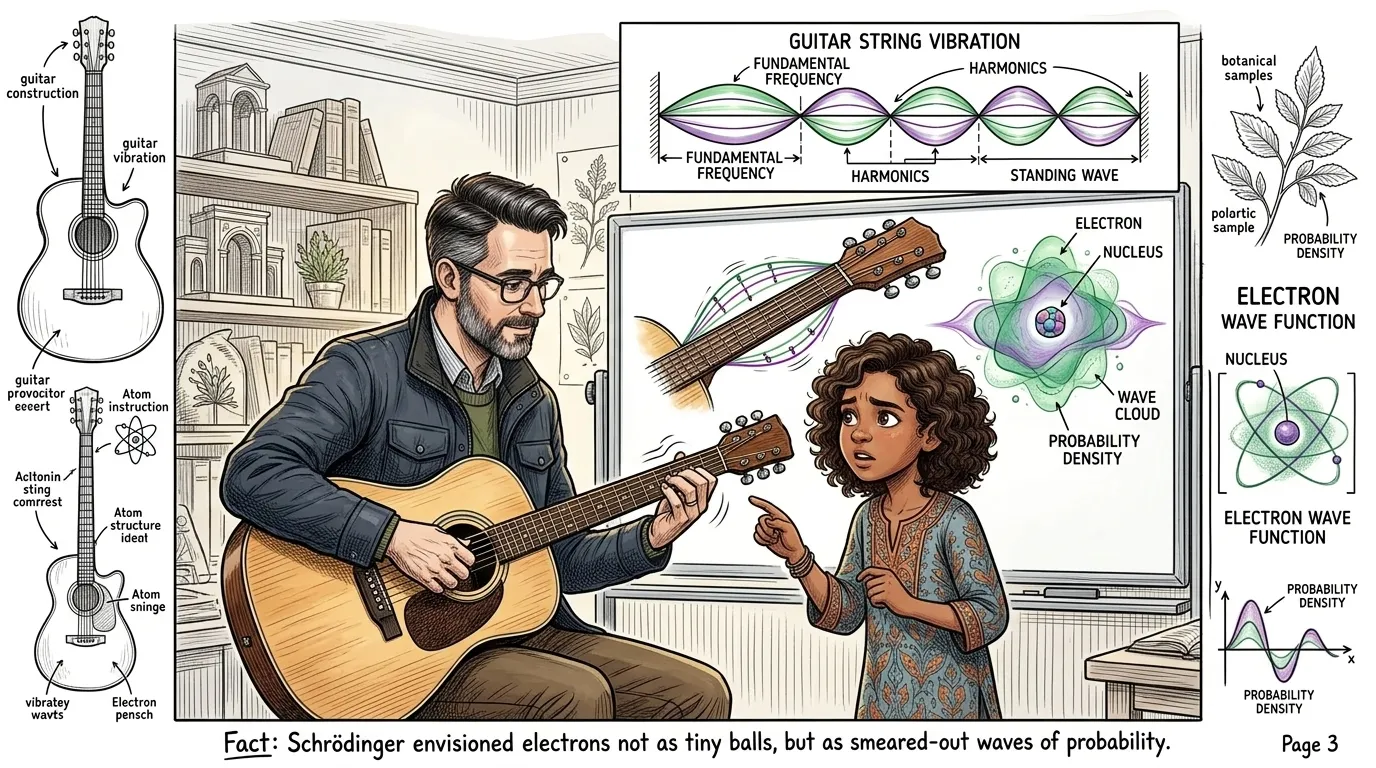
He proposed that instead of fixed orbits, electrons exist as probability waves. Imagine a guitar string vibrating – it can vibrate at different frequencies, creating different notes. Schrödinger treated electrons similarly, using a mathematical equation to describe their wave-like behavior.\n\n"Waves, not particles? How can something BE a wave?"\n\n Fact: Schrödinger envisioned electrons not as tiny balls, but as smeared-out waves of probability.
Page 4
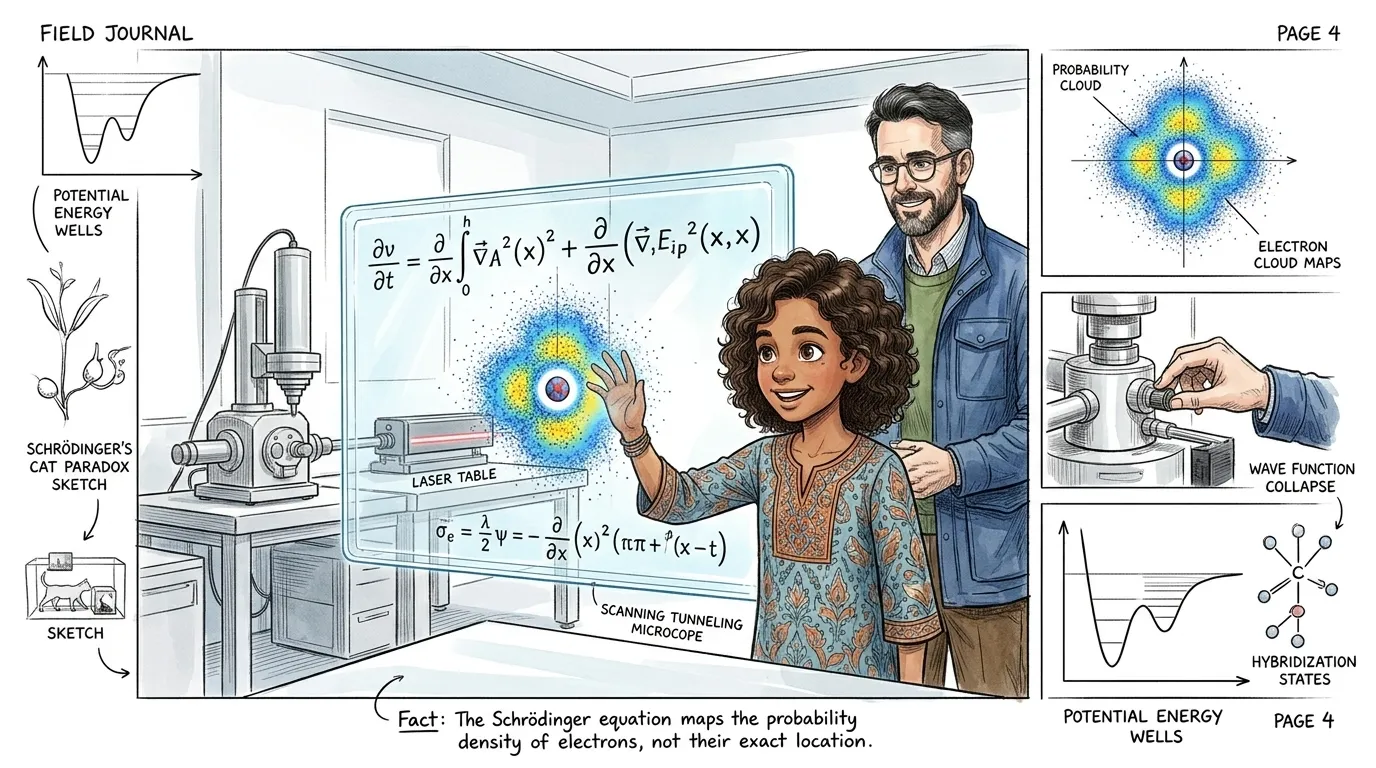
His famous equation, the Schrödinger equation, is a cornerstone of quantum mechanics. It allows physicists to calculate the probability of finding an electron at a particular location around the nucleus of an atom. This doesn't tell us EXACTLY where the electron is, but rather where it's LIKELY to be.\n\n"So, it's like a map of possibilities?"\n\n Fact: The Schrödinger equation maps the probability density of electrons, not their exact location.
Page 5
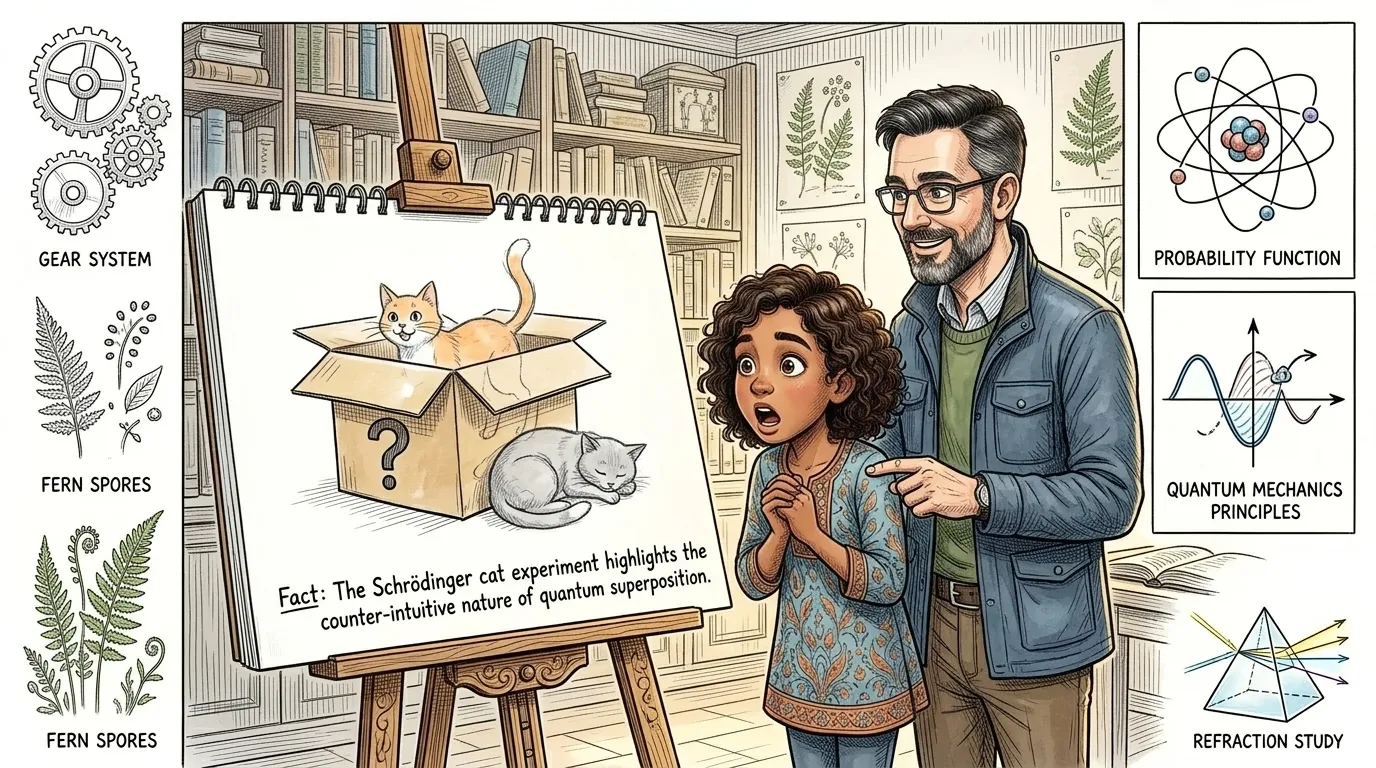
But this revolutionary idea faced resistance! How could something be both a wave AND a particle? This wave-particle duality puzzled even Schrödinger himself. He created a thought experiment known as 'Schrödinger's Cat' to illustrate the paradox.\n\n"Schrödinger's cat? Is there really a cat in a box?"\n\n Fact: The Schrödinger cat experiment highlights the counter-intuitive nature of quantum superposition. Visualized as a child might imagine it.
Page 6
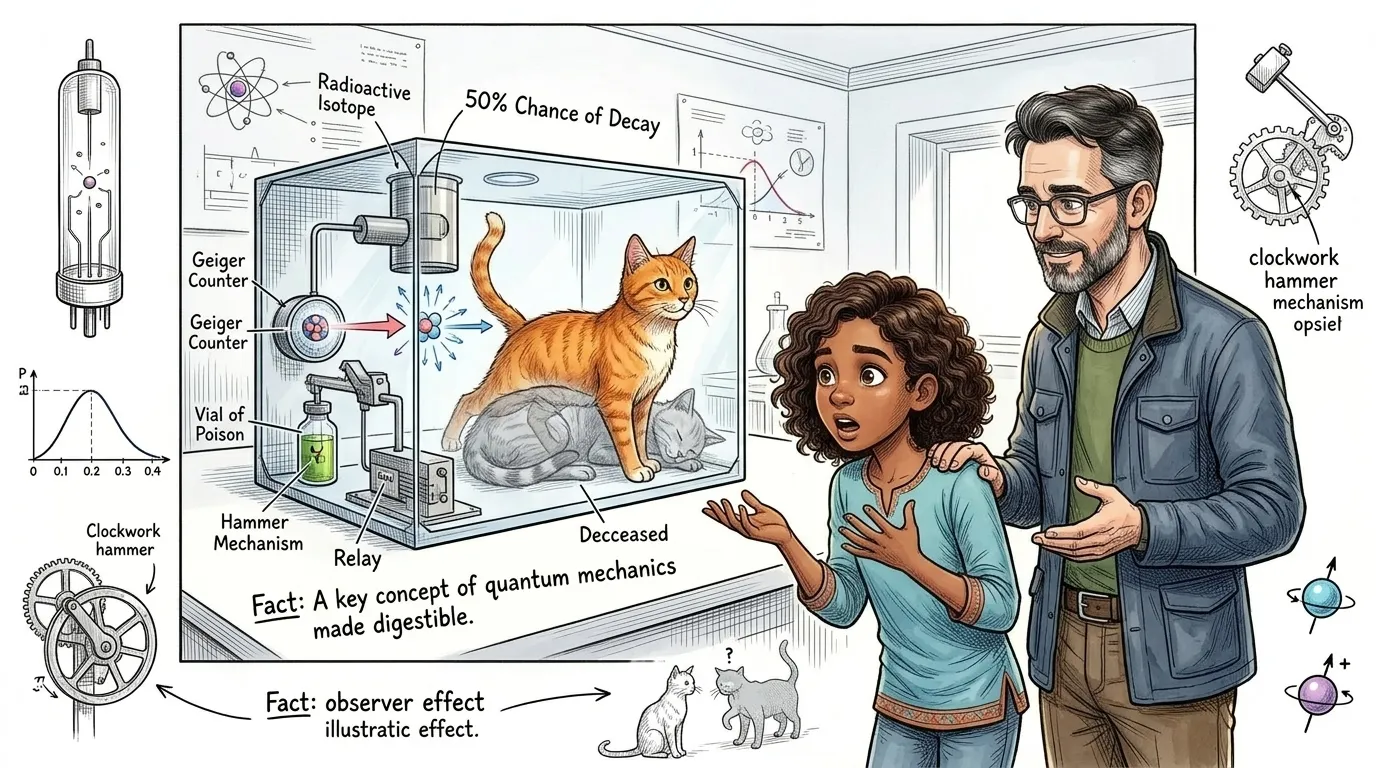
In this thought experiment, a cat is placed in a sealed box with a radioactive atom that has a 50% chance of decaying. If the atom decays, it triggers the release of poison, killing the cat. Until the box is opened, the cat is considered to be both alive AND dead – a concept called superposition!\n\n"Both alive and dead? That sounds impossible!"\n\n Fact: A key concept of quantum mechanics made digestible.
Page 7
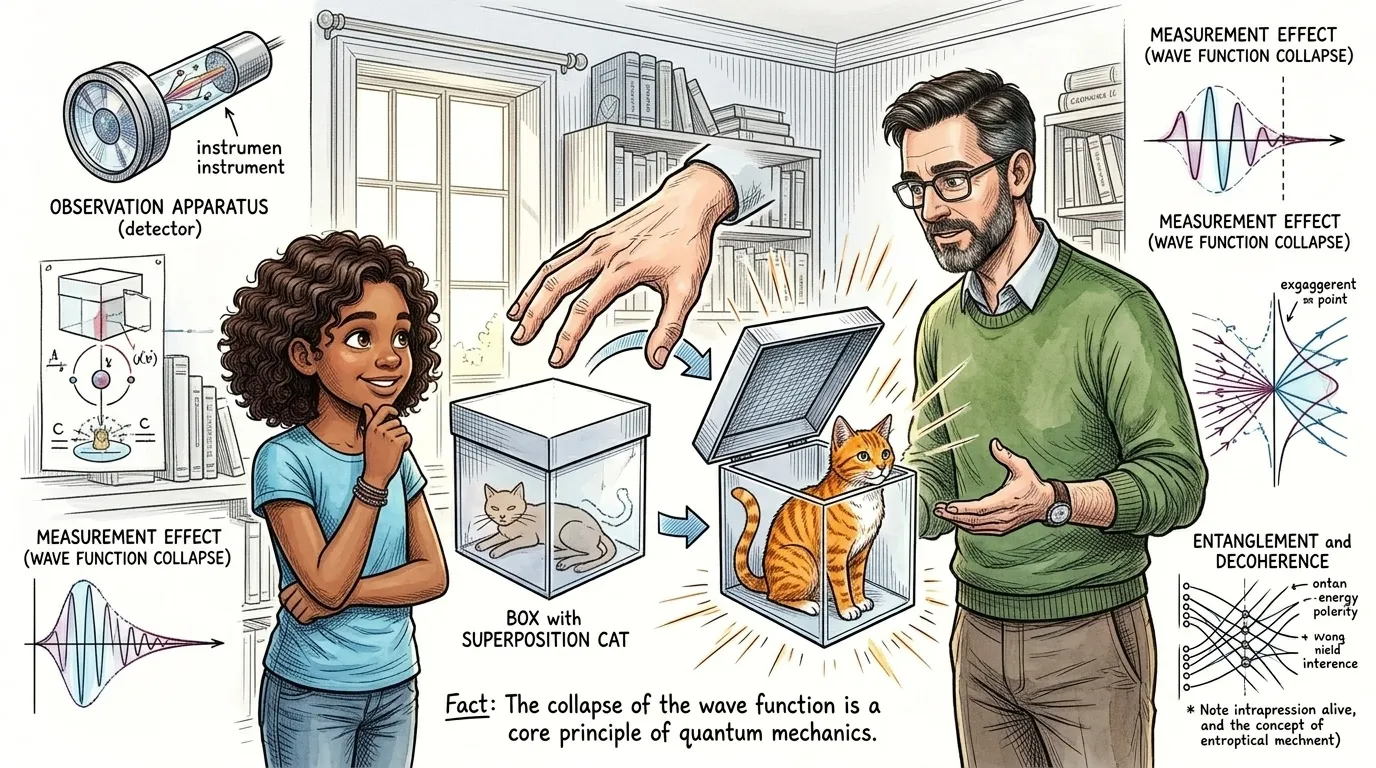
It seems bizarre because it's a quantum effect, not something we experience in our everyday lives. When we open the box, we 'collapse' the wave function, forcing the cat into one state or the other – alive or dead. This illustrates the act of measurement fundamentally changes the quantum system.\n\n"So, observing it changes the outcome?"\n\n Fact: The collapse of the wave function is a core principle of quantum mechanics.
Page 8

Schrödinger's equation has had a profound impact, enabling technologies we rely on today. From lasers and transistors to medical imaging and nuclear energy, his work laid the foundation for countless modern innovations.\n\n"Wow! He helped make all of THAT?"\n\n Fact: The legacy of Schrödinger's equation is all around us.
Page 9
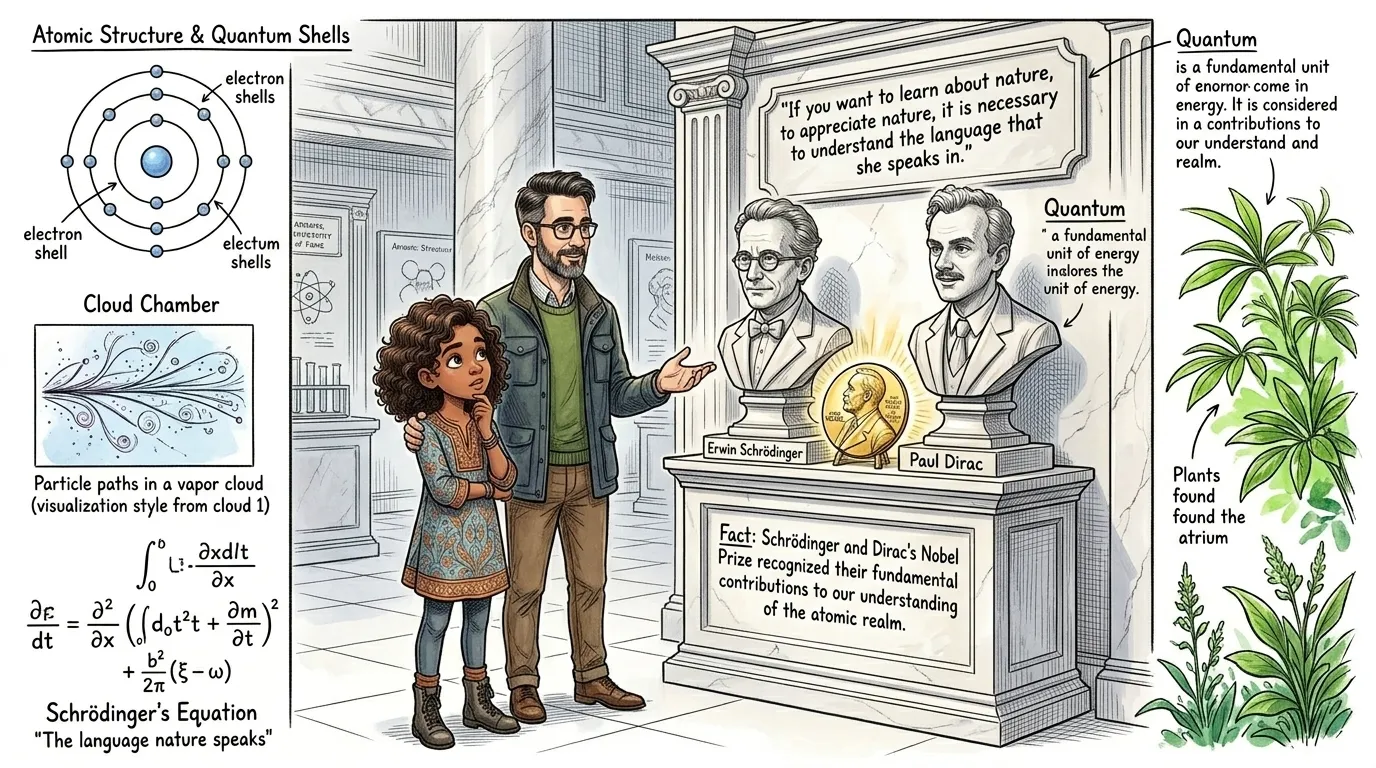
In 1933, Schrödinger shared the Nobel Prize in Physics with Paul Dirac for their work on atomic theory. 'If you want to learn about nature, to appreciate nature, it is necessary to understand the language that she speaks in,' Dirac advised. Schrödinger gave us a critical tool to understand that language, and decipher the quantum world.\n\n"What does 'quantum' mean?"\n\n Fact: Schrödinger and Dirac's Nobel Prize recognized their fundamental contributions to our understanding of the atomic realm.
Page 10
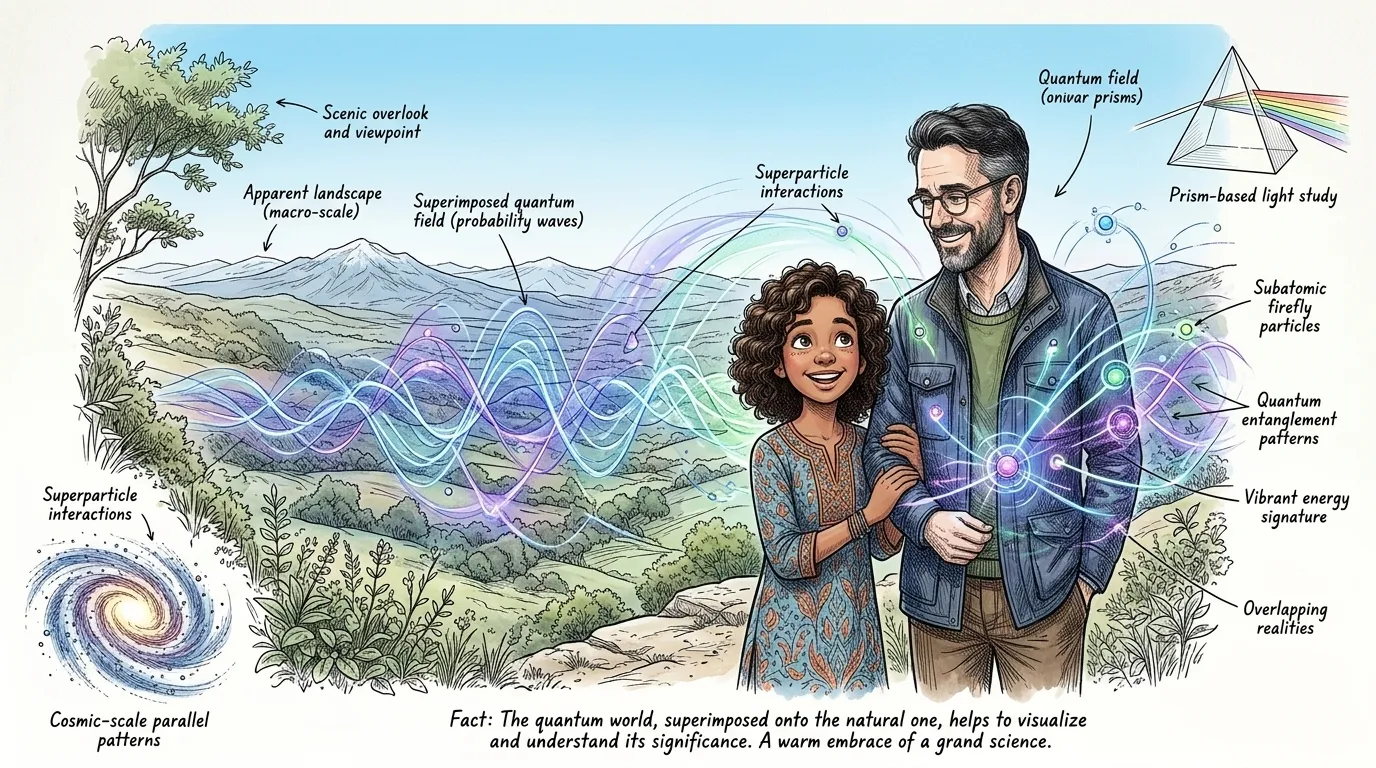
Schrödinger's work continues to inspire physicists today. While many mysteries of the quantum world remain unsolved, his equation provides a framework for exploring the deepest secrets of the universe, and visualizing the invisible.\n\n"So, he helped us see the world in a whole new way!"\n\n Fact: The quantum world, superimposed onto the natural one, helps to visualize and understand its significance. A warm embrace of a grand science.
About this story
- Location: Global
- Audience: kids (ages 6–12)
Read Wonder Science on your phone
Wonder Science is available on Android. Get Wonder Science on Google Play.