How Caves Are Carved
How Caves Are Carved — an illustrated science story, set in United States. 10 illustrated pages, free to read on Wonder Science.
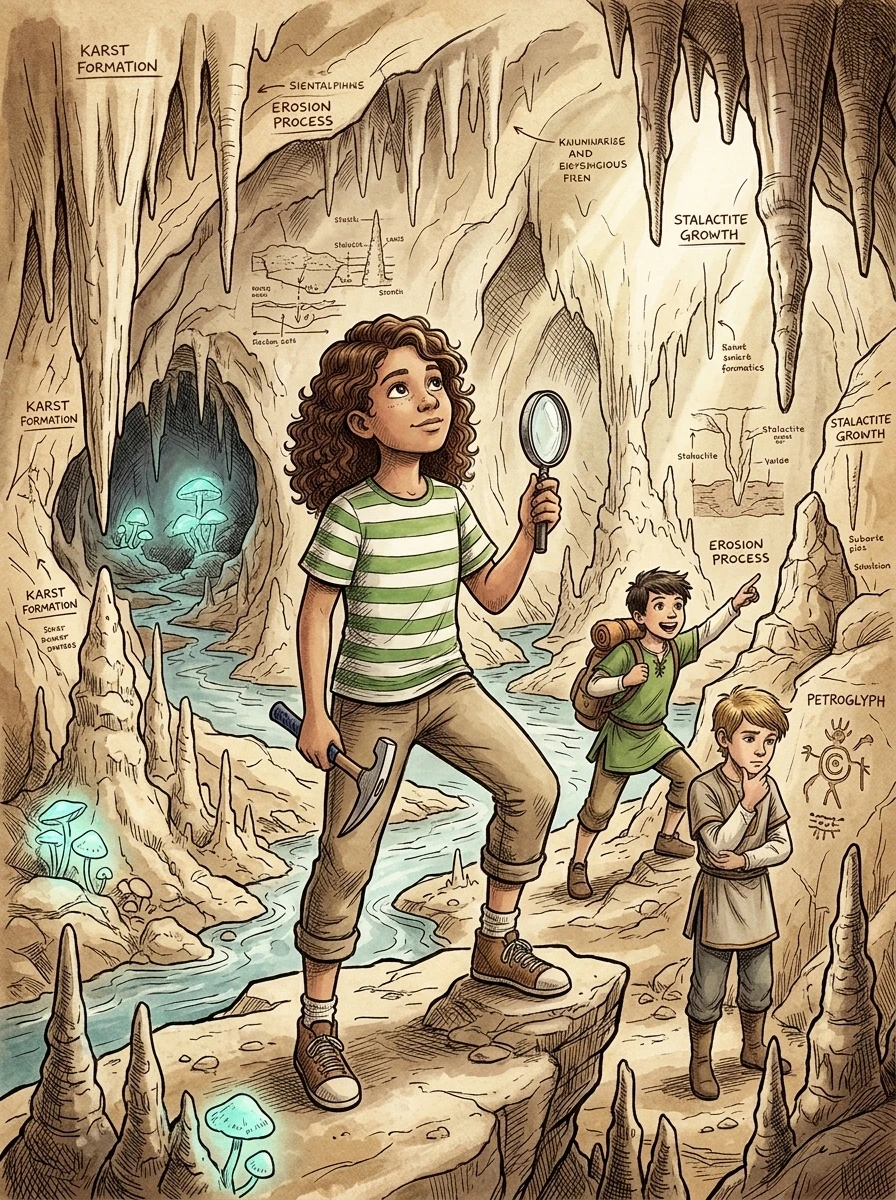
Page 1
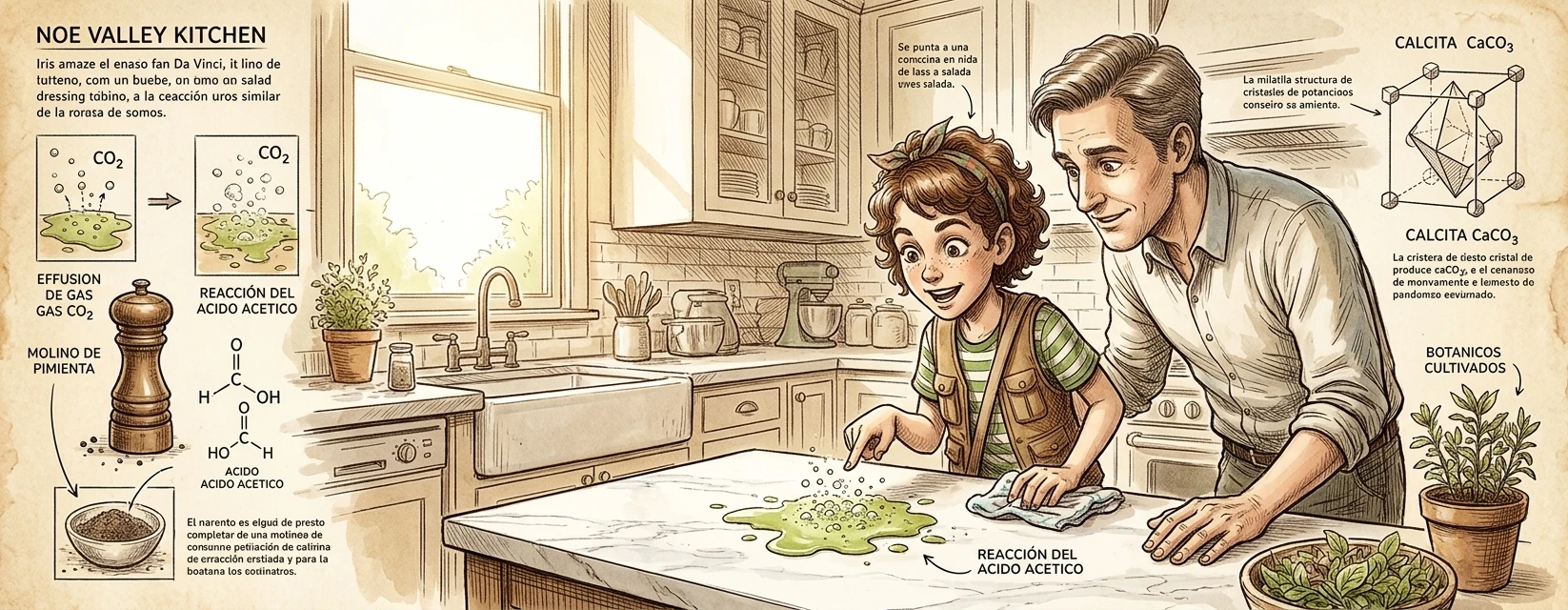
Inside their sunny Noe Valley kitchen, Iris accidentally sloshed a bit of salad dressing onto the marble countertop. "Whoops!" she exclaimed, grabbing a cloth. As she wiped, she noticed tiny bubbles fizzing where the vinegar-based dressing had spilled. "Dad, look at this," Iris said, her eyes wide with curiosity, "The stone is fizzing like a soda!"
Page 2
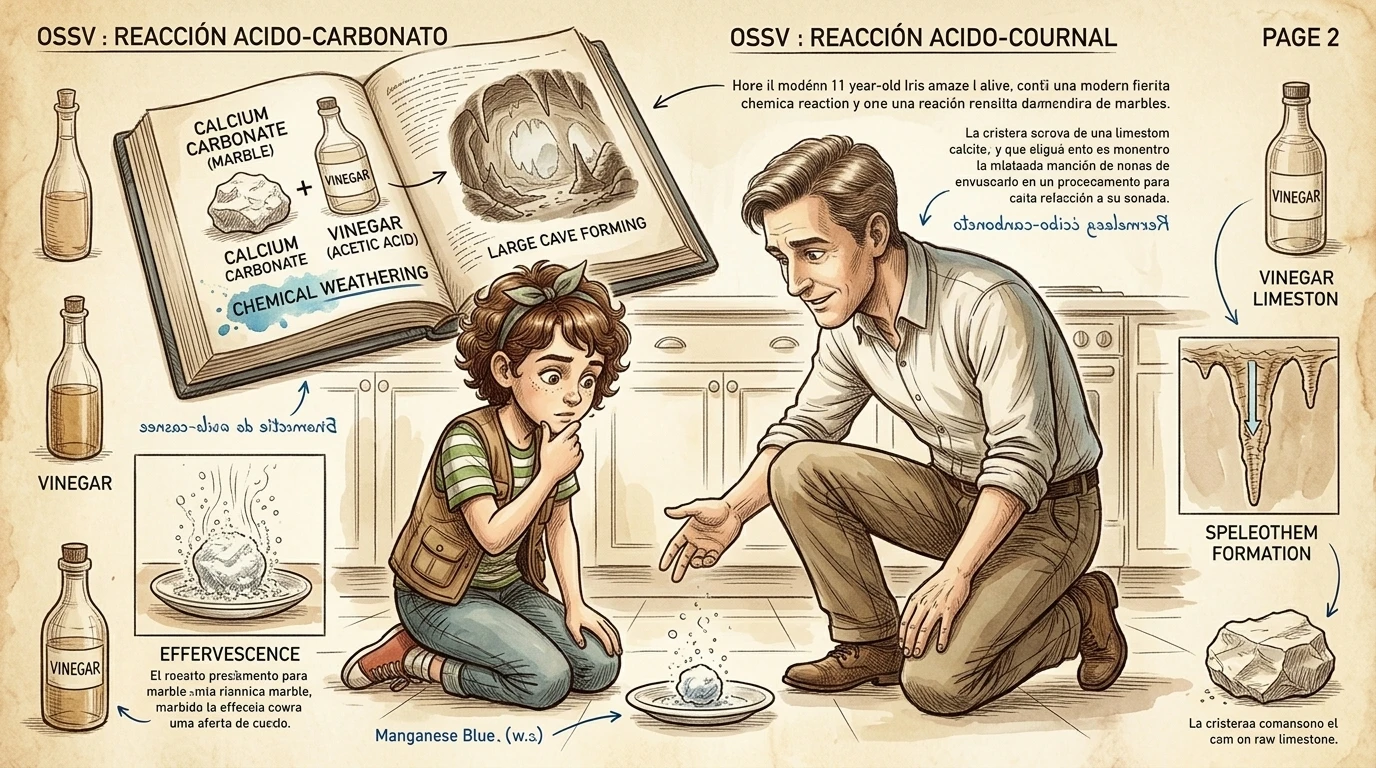
"That fizzing is a chemical reaction, sweetie," her father explained, kneeling to get a closer look. "The acid in the vinegar is reacting with a mineral in the marble called calcium carbonate." Iris looked up, intrigued. "An acid can eat away at solid rock?" she asked. "Exactly!" he replied with a smile, "It's called chemical weathering, and on a much, much bigger scale, it's how our planet carves enormous caves."
Page 3
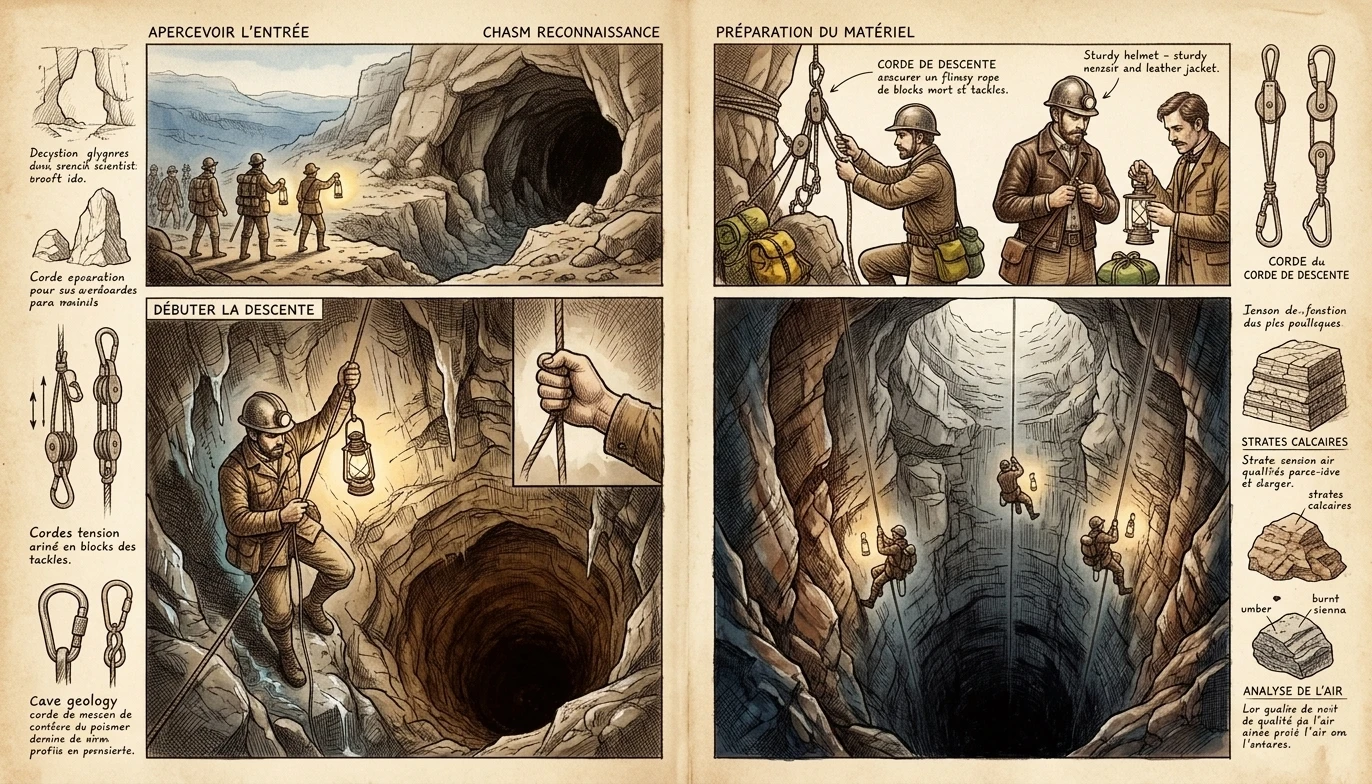
To understand this, we have to travel back to late 19th-century France, a time of bold exploration. Scientists were venturing not just to faraway lands, but also into the dark, mysterious world beneath their feet. They lowered themselves on flimsy ropes into pitch-black chasms, driven by a thirst to map the unknown.
Page 4
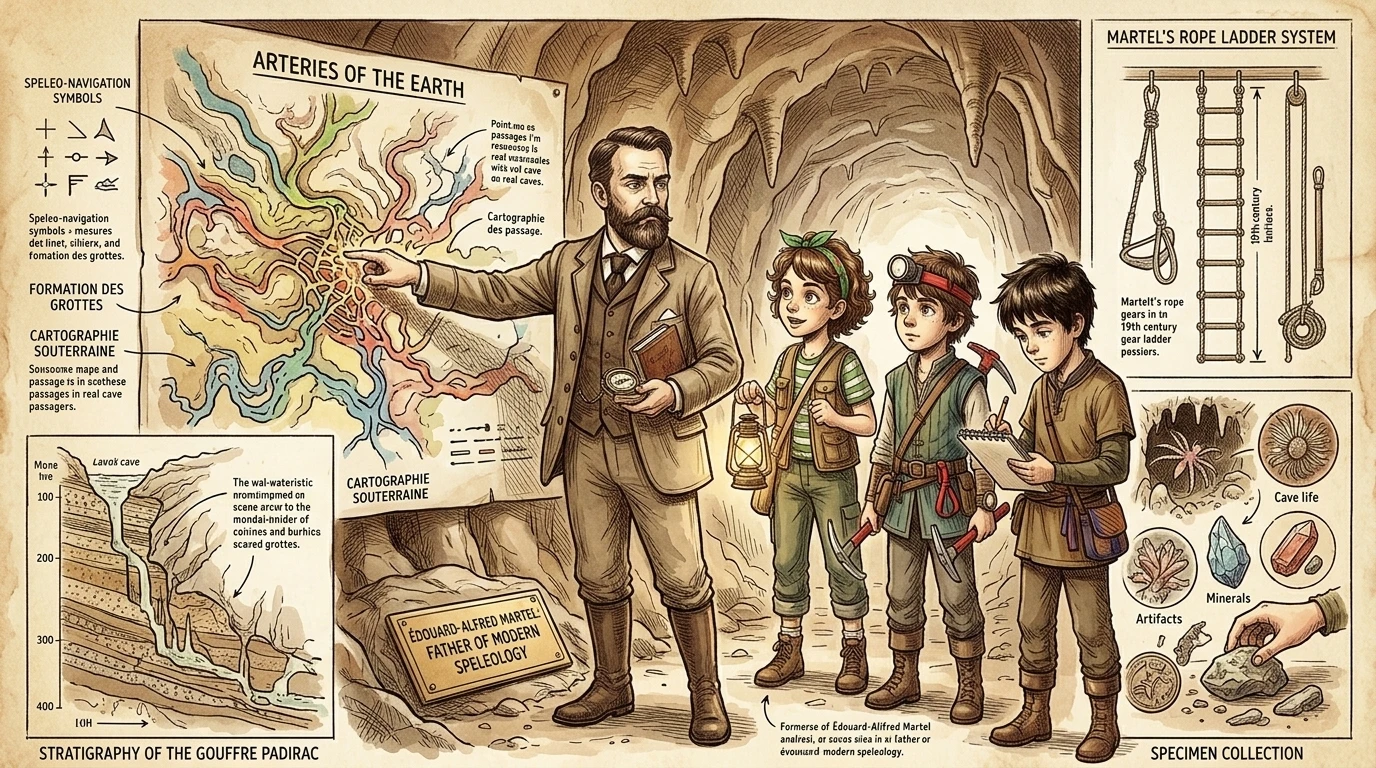
One of these pioneers was Édouard-Alfred Martel, a French lawyer who became known as the father of modern speleology—the science of studying caves. He wasn't just a scientist; he was an adventurer who explored over 1,500 caves in his lifetime. Martel was obsessed with understanding these vast underground networks that he called 'the arteries of the Earth'.
Page 5
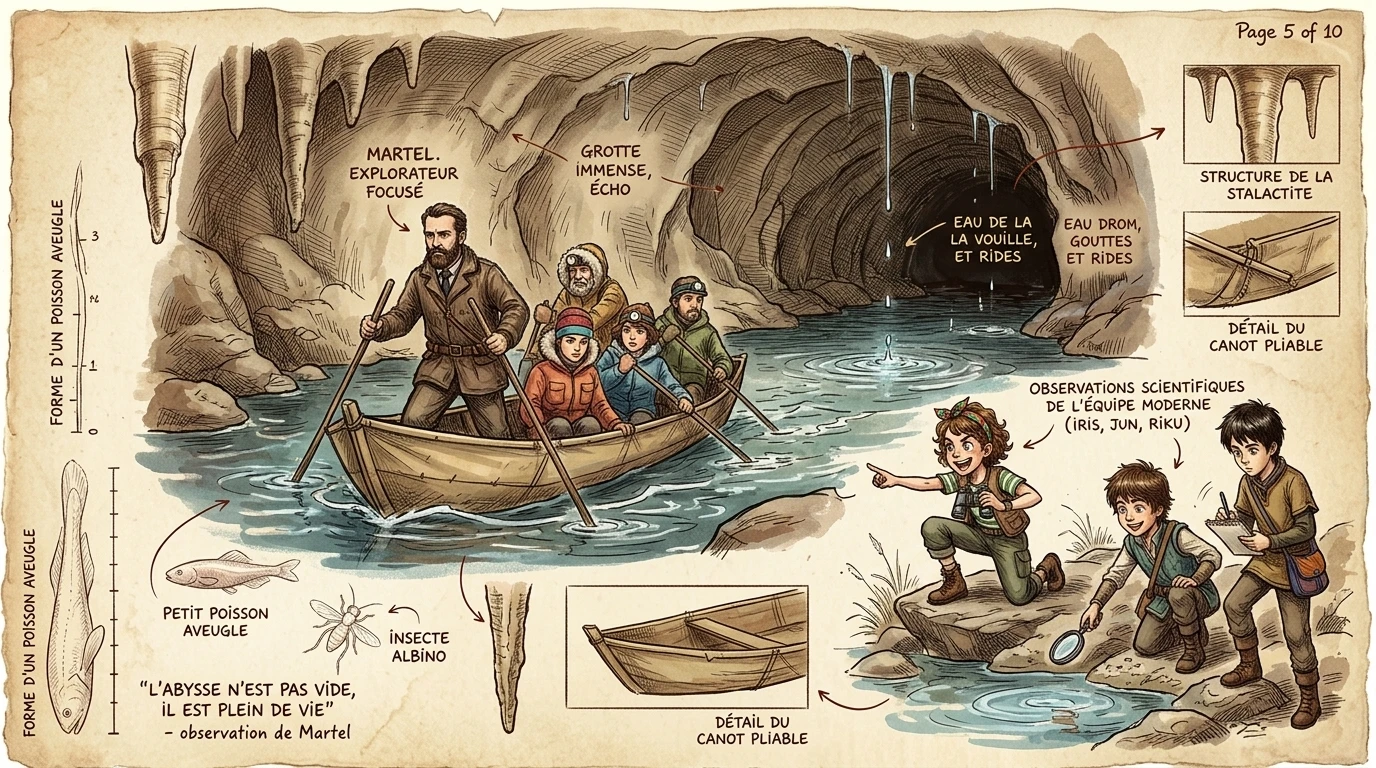
Martel and his team would navigate these dark rivers in a tiny, foldable canvas boat. He once said, 'The abyss is not empty, it is full of life,' because he realized these caves were not dead spaces. He saw that the constant dripping of water was slowly, patiently, changing everything around him.
Page 6
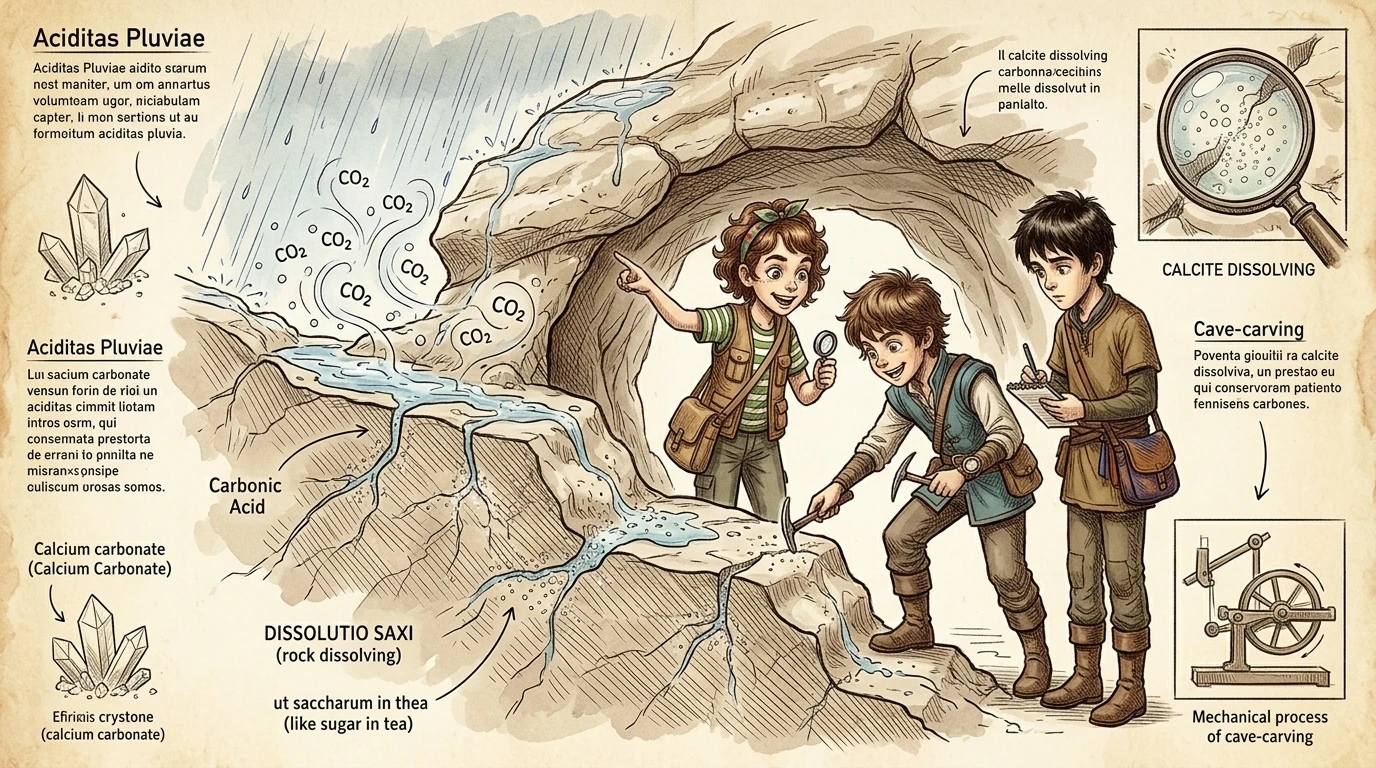
Martel helped prove that caves in limestone weren't carved by rivers alone. He understood that rainwater absorbs carbon dioxide from the air, forming a very weak carbonic acid. Over thousands of years, this slightly acidic water seeps into cracks in the rock, dissolving the calcium carbonate molecule by molecule, like sugar dissolving in tea.
Page 7
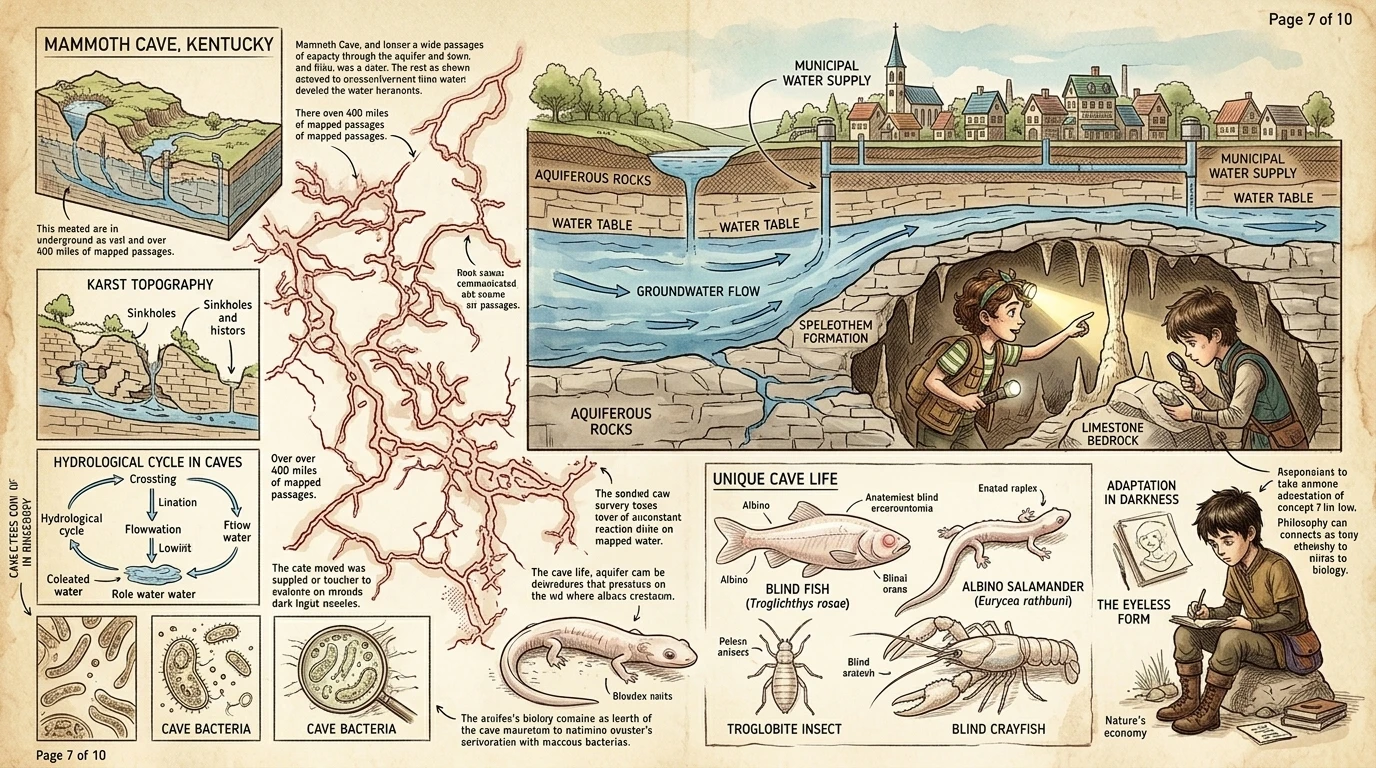
This discovery transformed our understanding of the planet! We now know that many communities get their drinking water from underground cave systems called aquifers. Scientists have also found unique creatures in caves that have evolved to live in total darkness. The largest known cave system, Mammoth Cave in Kentucky, has over 400 miles of mapped passages—all carved by dripping water.
Page 8
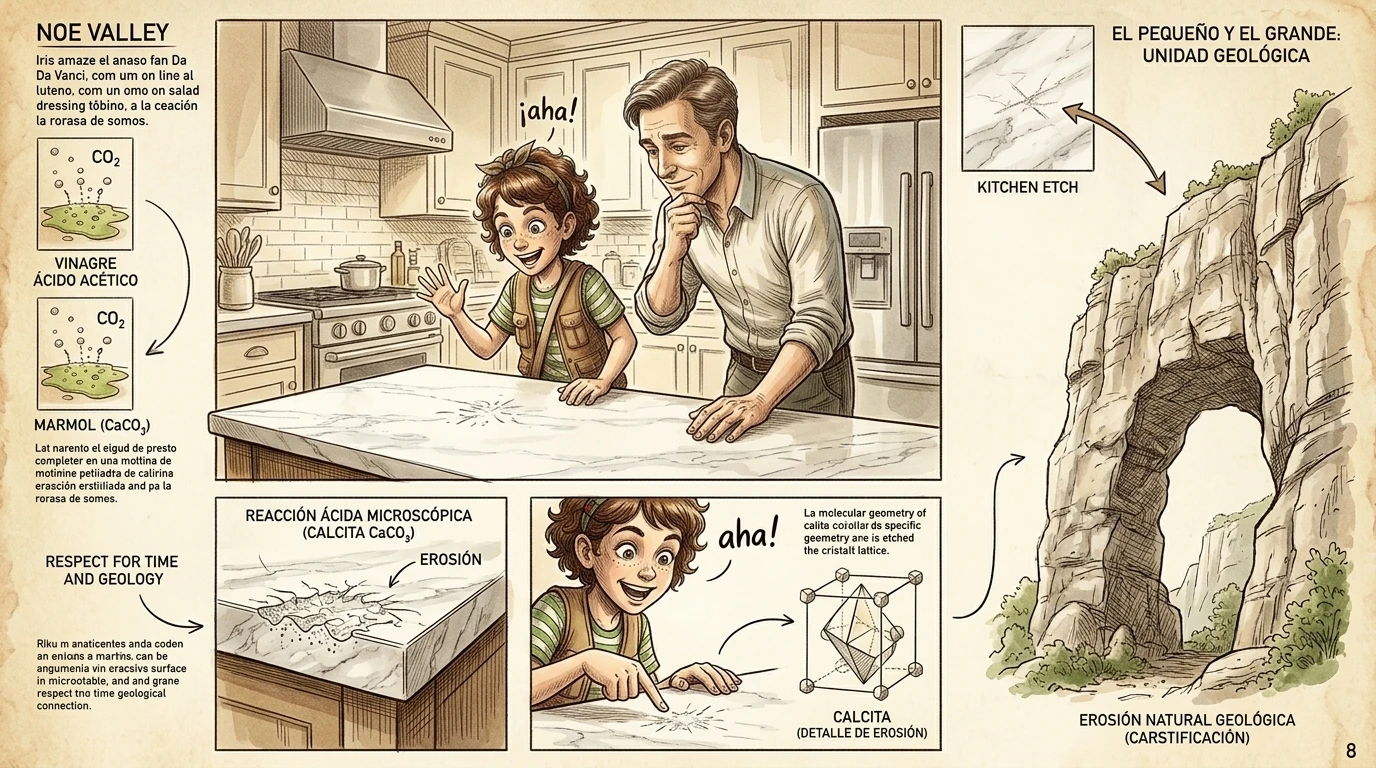
Back in her kitchen, Iris's face lit up. "So the fizz on the counter is a super-fast version of what happens over millions of years!" she exclaimed. Her father nodded, finally understanding the connection himself. "Wow! So our whole planet is a giant science experiment, slowly changing all the time," he said, looking at the marble counter with new respect.
Page 9

"It's just like how acid rain can slowly wear down old stone statues in the park," her dad added. Iris's eyes sparkled as she made another connection. "Or like a bath bomb!" she shouted, "When you drop it in water, it fizzes and dissolves away, just like the limestone!"
Page 10
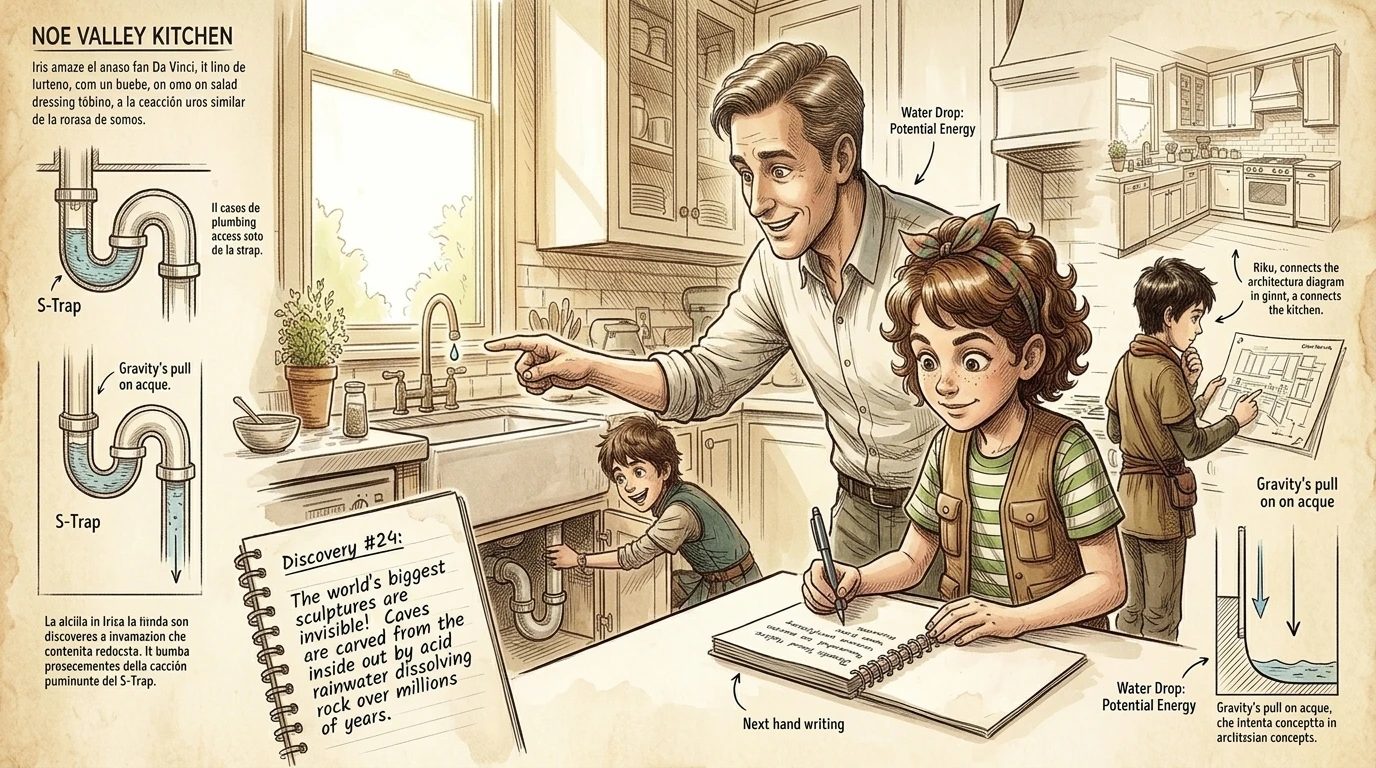
Iris grabbed her notebook and wrote: Discovery #24: The world's biggest sculptures are invisible! Caves are carved from the inside out by acid rainwater dissolving rock over millions of years. Her father smiled, then pointed to a drop of water hanging from the kitchen faucet. "So if dissolving carves the caves," he asked, "what creates those beautiful rock icicles that grow inside them?"
About this story
- Location: United States
- Audience: kids (ages 6–12)
Questions and answers
Read Wonder Science on your phone
Wonder Science is available on Android. Get Wonder Science on Google Play.