Benjamin Franklin Did Not Want the Turkey to Be the National Bird
Many believe Benjamin Franklin advocated for the turkey as America's national bird. We check the facts behind this enduring myth.
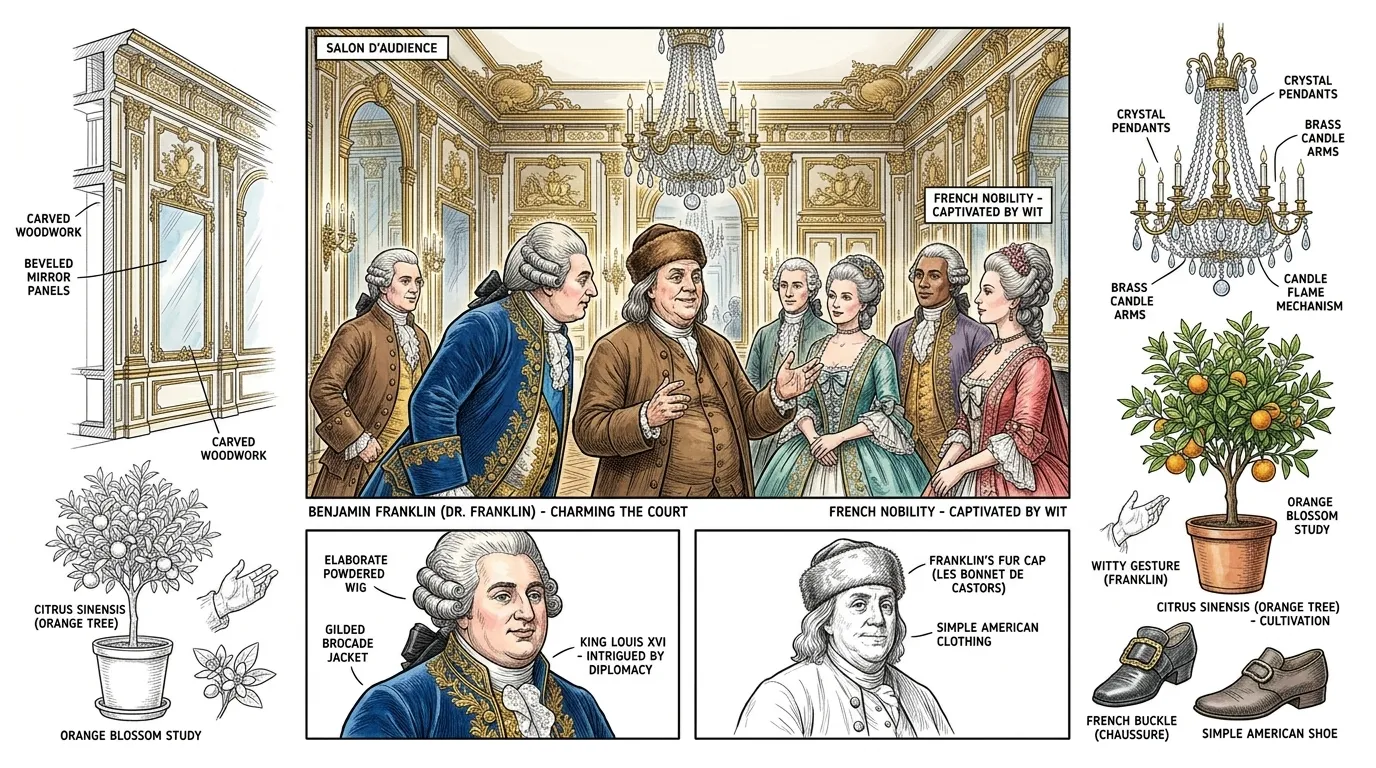
The image of Benjamin Franklin, one of America's most celebrated Founding Fathers, passionately arguing for the wild turkey to represent the young nation instead of the bald eagle is a popular and enduring story. It paints a picture of Franklin as a pragmatic, perhaps even whimsical, figure with a keen eye for the true character of American wildlife. This belief is often shared with a sense of amusement and admiration for Franklin's supposed unconventional wisdom.
- Benjamin Franklin formally proposed the turkey as the national bird.
- Franklin believed the bald eagle was a bird of 'bad moral character.'
- He saw the turkey as a more noble and courageous symbol for America.
- His comments were part of a serious debate about national symbols.
Did Franklin Formally Propose the Turkey?
The idea that Benjamin Franklin formally proposed the turkey as the national bird during the deliberations for the Great Seal of the United States is not supported by historical records. The committee tasked with designing the Great Seal, which included Franklin, Thomas Jefferson, and John Adams, did consider various symbols. However, there is no evidence in official documents or Franklin's correspondence that he ever put forth the turkey as a serious contender for the national bird. The bald eagle was eventually chosen for the Great Seal in 1782, long before Franklin's famous letter on the subject.
Franklin's Views on the Bald Eagle and the Turkey
The source of this persistent myth comes from a letter Franklin wrote to his daughter, Sarah Bache, in January 1784. In this letter, Franklin expressed his personal displeasure with the bald eagle as a national symbol. He criticized the eagle's habits, calling it a 'bird of bad moral character' for its tendency to steal food from smaller birds. He also noted that the eagle 'does not get his living honestly.' In contrast, Franklin praised the turkey, describing it as a 'much more respectable Bird' and a 'Bird of Courage.' He admired its willingness to defend its territory and its family. However, these were personal observations shared in a private letter, not a formal proposal or a serious public campaign. He was commenting on an existing decision rather than trying to influence one. You can read more about significant figures like Franklin through Wonder People.
What Franklin Really Wanted to Convey
Franklin's letter was less about advocating for the turkey and more about expressing his disappointment with the chosen symbol and, perhaps, gently mocking the perceived pomposity of some aspects of national identity. His comments were a satirical critique, highlighting what he saw as flaws in the bald eagle's character compared to the more humble but courageous turkey. It was a reflection of his wit and his often unconventional perspective, rather than a genuine desire to overturn the decision for the national bird.
Tell me, what is it you are driving at? For I am old and cannot see well.
Ultimately, Benjamin Franklin's comments about the turkey and the bald eagle were a private, critical observation rather than a public or formal proposal. While he did express a preference for the turkey's character, it was never a serious attempt to make it the national bird. The enduring story speaks to Franklin's persona as a witty and insightful observer of American life, even if the specific details are a common misunderstanding. For more historical analyses, explore other articles on WonderBooks.
Frequently Asked Questions
When was the bald eagle officially chosen as the national bird?
The bald eagle was officially adopted as the emblem on the Great Seal of the United States on June 20, 1782, by the Continental Congress. This decision was made after several committees worked on designing the seal.
What other symbols were considered for the Great Seal?
Early designs for the Great Seal included various classical and allegorical symbols. Benjamin Franklin initially proposed a design featuring Moses parting the Red Sea, with Pharaoh drowning, symbolizing God's protection of a new nation. Other ideas included classical goddesses and historical events.
Are there any other famous myths about Benjamin Franklin?
Yes, many myths surround Benjamin Franklin. One common misconception is that he discovered electricity by flying a kite in a thunderstorm and being struck by lightning. While he did conduct the famous kite experiment, he was careful not to be struck and instead drew static electricity from a key attached to the kite string.